Category: UK

  • Ickworth House – Frederick Augustus Hervey and the Grand Tour Theme

    Ickworth House – Frederick Augustus Hervey and the Grand Tour Theme

    20250413_130434

    When we entered Ickworth House the friendly volunteer explained numerous things, including that they’ve got a theme this year of the Grand Tour and hence the decorative element in the main entrance hall. A little disappointingly, there’s nothing I can find on-line from the National Trust about this focus and the curation didn’t flow very well at the house either and they had put odds and sods around the place.

    Going back, the driving force behind Ickworth House was Frederick Augustus Hervey (1730-1803), the 4th Earl of Bristol and Bishop of Derry. He was a little odd, or eccentric, whichever you prefer. On that theme, perhaps the most infamous anecdote illustrating his disregard for social and religious norms occurred in Siena. According to accounts, he deliberately threw a tureen of pasta from his hotel window directly onto a passing procession carrying the Host, the consecrated elements central to Catholic belief. The locals were not best pleased. As a more positive legacy, one of the Earl-Bishop’s most enduring legacies stems directly from his eccentric travel habits. His reputation as an epicurean and a demanding traveller, who insisted on the highest standards of comfort, cuisine and wine, became widely known across Europe. Consequently, numerous hotels seeking to advertise their quality and luxury began naming themselves “Hotel Bristol”, although there’s more on this theory at https://en.wikipedia.org/wiki/Hotel_Bristol.

    Hervey owned Ickworth Lodge, which was really just a decadent farmhouse, but he wanted to create a country house with classical elements that would surprise and delight others. He declared that he wanted to “unite magnificence with convenience and simplicity with dignity, no redundancy, no superfluity, no one unnecessary room, but the necessary ones to be noble and convenient” which seemed an admirable aim.

    The Earl Bishop travelled extensively across Europe, particularly focusing on Italy, and he wanted to move the Italian Neoclassical architecture to his Suffolk estate. Central to this was his engagement with the work of Italian architects, specifically Mario Asprucci the Younger (1764-1804). The Earl-Bishop had seen Asprucci’s work, most notably at the Villa Borghese in Rome, and commissioned him to provide designs for Ickworth. The commissioning of an Italian architect for a major English country house, based on direct experience of Italian models, highlights the cosmopolitan nature of elite architectural patronage during this period. It’s also why the house looks and feels like it does today.

    But, it’s a fascinating theme for the National Trust to pursue, I’ve wondered before just how inspirational a grand tour across Europe must have been in the 1700s and 1800s.

  • Ickworth House

    Ickworth House

    20250413_130212

    Liam and I popped into Ickworth House on the way back to Norwich and I realised that I hadn’t visited here for 40 years. I don’t wish to linger on this thought as it doesn’t fit the obvious truism (obvious to me) that I’m a millennial.

    20250413_135433

    The parkland in front of the property.

    20250413_125722

    The rather nice second hand bookshop, but I restrained myself from buying anything.

    20250413_133805

    Liam playing bagatelle, which is likely a forerunner of bar billiards. On that point, I haven’t yet mentioned in detail my day at the World Championships, I’ll get to that soon hopefully… Although there’s a lot of stuff on this blog I’m meant to be getting around to.

    20250413_132419

    I loved that they’ve put books into lots of niches around the house. If I had a large property, which is unlikely and a bit unnecessary, I’d likely do something similar and the situation would soon get out of control. Liam commented something similar, but I ignored him.

    Anyway, to set the timeline here:

    1779: Frederick Hervey (later the ‘Earl-Bishop’) inherits the Ickworth estate.

    c. 1795: The Earl-Bishop commissions initial Neoclassical designs for a new house from Italian architect Mario Asprucci the Younger. The concept is primarily for an art gallery.

    1795 / 1796: Construction begins. Irish architects Francis and Joseph Sandys adapt Asprucci’s designs and oversee the work.

    1798: The Earl-Bishop’s extensive art collection, intended for Ickworth, is confiscated in Rome by Napoleonic forces.

    1803: The Earl-Bishop dies in Italy. Construction halts, leaving the house, primarily the Rotunda, as an unfinished shell.

    c. 1821 – 1830: Construction resumes under the Earl-Bishop’s son, Frederick William Hervey (later 1st Marquess of Bristol). The main structure, including the wings, is completed. Architect John Field is involved in adapting and completing the interiors.

    1829: The 1st Marquess and his family move into the completed house. The East Wing becomes the family residence, and the Rotunda is used for display and entertaining. The West Wing remains largely unfinished.

    c. 1830: Interior fittings, including marble fireplaces, Scagliola columns, and coved ceilings, are largely complete.

    c. 1879: The 3rd Marquess commissions architect Francis Penrose for internal improvements. The Pompeian Room (decorated by J.D. Crace) and the Smoking Room are created in projecting bays off the linking corridors.

    c. 1907 – 1910: The 4th Marquess commissions architect Sir Reginald Blomfield (or possibly A.C. Blomfield) for further interior alterations, including remodelling the main staircase in the Rotunda and modernisations in the East Wing.

    1930s: Theodora, Marchioness of Bristol, renovates the servants’ quarters in the Rotunda basement, adding modern amenities like electricity and improved plumbing.

    1956: Following the death of the 4th Marquess, the house, contents, park, and endowment are transferred to the National Trust via HM Treasury in lieu of death duties. The Hervey family retains a lease on the East Wing.

    1998: The 7th Marquess sells the remaining term of the lease on the East Wing to the National Trust, ending the family’s residential connection.

    2002: The East Wing is converted and opens as The Ickworth Hotel, operated under lease from the National Trust. Childs Sulzmann Architects are involved.

    2006: The previously unfinished West Wing is completed and opened as a visitor centre, restaurant, shop, and events venue, in partnership with Sodexo Prestige. Hopkins Architects are associated with this phase.

    2018 – 2020: The major ‘Ickworth Uncovered’ conservation project takes place, involving the complete re-roofing of the Rotunda dome and East Link corridor.

    As is my wont, I’ll post numerous other things separately about the property, but I was genuinely very impressed with the volunteers here who were pro-active, engaging and keen to tell visitors about the history of the building. As I like wittering on about history, this did extend our visit somewhat, but it’s always a delight when there’s an enthusiasm from everyone involved with the project. The navigation route around the house was also carefully laid out and it was clear where to go, there has been a lot of thought put into this entire operation.

  • Maldon – Rose and Crown Pub (JD Wetherspoon)

    Maldon – Rose and Crown Pub (JD Wetherspoon)

    20250413_105015

    As Liam and I were coming back from London we did our usual thing of visiting a pub from the JD Wetherspoon chain which I haven’t visited before. The Rose and Crown, located on the town’s main road of the High Street has the bonus of being a Good Beer Guide listed pub to add to my little collection.

    20250413_102811

    The pub was operated by Punch Taverns until 2013, but was taken over by JD Wetherspoon in 2014 (opening in June 2015 after they had spent £1.6 million on the redevelopment) and they did an extensive amount of archaeological work and they’ve put a lot of that on-line, once again one of the few pub companies that takes the heritage of their venues very seriously. The structural heart of the building is from the sixteenth century, but it was extensively remodelled in the eighteenth and nineteenth centuries. It has been a licensed premises since around the 1780s, although there’s not a vast amount of information I can find about its history over recent decades.

    20250413_102848

    Part of the beer selection, there were a choice of six different ales when I visited, although there were no darker beers. I liked they must have got bored when putting the little jars with colour samples of the beer in front of the taps.

    20250413_103116

    The rest of the bar and advertising that from this week they’re selling 1664 and Poretti, although it’s unlikely I could taste these riveting lagers from each other. Anyway, there’s something for everyone….

    20250413_103143

    A taster of the Midnight Bell beer from Leeds Brewery which I’ve had before a few times, a dark and malty ale which is rather agreeable.

    20250413_103520

    Half a pint of the Copper Cascade from Stewart Brewing, which I haven’t had before, but was clean, malty, refreshing and it had a slight taste of toffee.

    20250413_102748

    The side of the pub and there’s a beer garden at the rear. The staircase to the toilets is quite narrow and relatively steep, I suspect they must have found it quite a challenge to insert that sensitively into the historic building and there are numerous low ceilings dotted around the place that taller customers need to be careful of.

    Since this is a JD Wetherspoon venue, I thought I’d see if there were any reviews that would surprise and delight me. The pub is rated towards the higher end of the spectrum for pubs in the chain and I got a positive vibe about the arrangements. It wasn’t spotlessly clean, but the team members were friendly and engaging.

    “Used to be good, I do believe it’s a case of which manager is on, my order was taken correctly then on two occasions it’s came out wrong , had to watch my friends eat , 25 mins later mine comes out. I didn’t eat it as i felt awkward and stressed because of service. No refund given, shame”

    I wouldn’t have felt awkward….

    “the pub not very comfortable Atmospheric should really be sold on to a freeholders that runs a grate pub with brilliant food and can attract the best out of people not the worst catal grid experience roll on new owners good bye nice but dim tim the present owner”

    Hmmmm.

    “Staff are dreadful. One of them is a complete liar & behaves inappropiateley. Dreadful place.”

    I wish people would give more information when they post reviews like this, a bit of drama is always exciting.

    “Rubbish beer, rubbish service by surly children. There are far better pubs in Maldon, spend a bit more and enjoy those instead of this place.”

    Rubbish beer? Hmmmm.

    “I had to take the seal of the source”

    I don’t know how some people manage to be so brave.

    “Full of men”

    Occasionally this happens in any pub….

    “Didn’t go there”

    Very helpful.

    “My partner food had aluminium foil stuck on the bottom of it, do your staff know how dangerous Ingestion of aluminium foil is !!!!!!! Perhaps Tim Martin would like to reply”

    Tim Martin didn’t reply and there was a photo of the foil which was an absolutely tiny piece. And it’s not dangerous at all, it’s non-toxic.

    Anyway, I digress once again. I liked this pub, it had a sense of history to it, the team members were friendly and the beers were well-kept. We didn’t have a need to eat on this occasion, but the food coming out look well presented and everything felt well managed.

  • London – Tower Hamlets (Borough of) – Sand Pit at East India Dock

    London – Tower Hamlets (Borough of) – Sand Pit at East India Dock

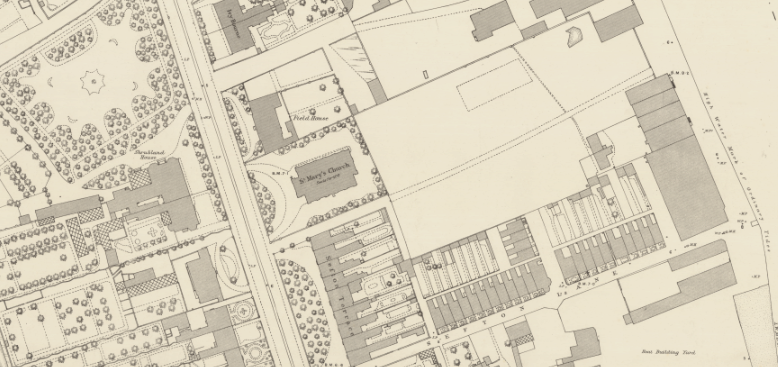
    As another one of my random asides, I often stay at the Travelodge at Docklands and it’s located in the top right of this map from the 1870s. One thing that I saw yesterday, which is a new addition, is a sand pit which is located to the bottom left of where the dock was.

    20250410_193210

    I mean, what could possibly go wrong with this?

    20250411_113804

    As an aside, what the dock area looks like now and there are already lots of residential properties and more are being constructed. There’s a new restaurant opening soon and a new Tesco Express, what more could a community want?

  • Norwich – Rumsey Wells (Two Julians)

    Norwich – Rumsey Wells (Two Julians)

    20250327_220107

    This was the third pub on the latest perambulation around Norwich that Julian and I undertook last week as a service for the people of Norfolk and Suffolk (and indeed beyond) as we continue our attempts to straddle the Waveney. I confess we haven’t done much straddling lately, but never write us off as we are brave enough to return to Suffolk for brief periods at a time.

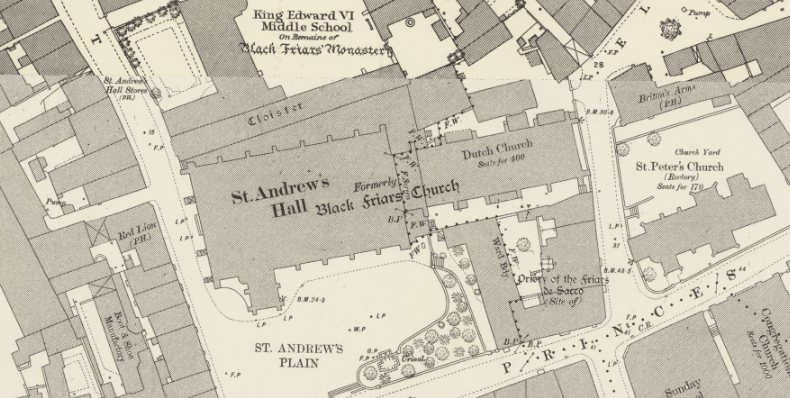
    I have digressed though. The history of the pub is complex, although it has transpired that Julian once again remembered its recent past correctly (he hasn’t entirely lost it just yet), and effectively the pub was originally the building on the right. It then lost that bit on the corner which is now a shop, but which was the main bar, but then gained the relatively large building in the middle which was a hat outfitters. George Plunkett has a rather lovely photo of the front door from 1938. There’s also a photo in his archive from 1989 which shows what is now a separate shop, but the old name remained it appears for the new shop.

    The historic pub bit of the building had opened as a wine and spirits shop, operated by Ward & Fisher (later Ward & Seaman), in the early 1820s and in 1829 the owners offered the lease for sale and noted the substantial cellars and premises that the wine merchants were operating from. The building became a pub in the later Victorian period which was known as the Shrub House and it was taken over by Lacons in 1896. In the 1970s, the corner section was lost to become a shop and the pub closed in 1979 for a few years. In 1984 it opened in its expanded form and was renamed the Blueberries and then became known as the Rumsey Wells between 1985 and 1989. It was then renamed again (I wish they’d stop doing this to pubs as it always sounds like they’ve having some identity crisis) to St. Andrew’s Tavern, but reverted once again to the Rumsey Wells in 2008. Hopefully they’ll just leave it like this now.

    20250327_220042

    The new bit of the pub. This is the former shop area which was historically run by Herbert Rumsey Wells (1877-1937) and he was rewarded by having the pub name after him. He was by all accounts something of an eccentric hatter and his family business dated back to the early nineteenth century. Visible in the above photo, this was the Wells & Son hat shop that became part of the pub in 1984. Between 1984 and 1989, the pub was run by Colin Keatley, who went on to do great things at the Fat Cat. Back to Rumsey Wells, I mentioned that he was eccentric as I got that impression from the obituary put in the local newspaper in December 1937:

    “Norwich has lost a picturesque personality by the death at his home in St. Andrew’s Street, on Wednesday, of Mr. Herbert Rumsey Wells. He was 60 years of age. With his “doggy” cap, large Inverness cape, snuffbox, and sometimes a monocle, he must have been known to many thousands of his fellow-citizens, and he was almost as well known in most of the big cities and towns of the British Isles. It was his boast that he was the most expensive cap maker in the world. He travelled the country on behalf of his firm from Land’s End to John o’Groat’s and it certainly could be said that he was his own walking advertisement.”

    You’ve got to have some confidence to say that you’re the most expensive in the world…..

    20250327_212454

    The pub today is operated by Adnams, which might be obvious when looking at the beer options. The service from the team member was efficient and polite, although it’s a little difficult here as they have a split bar and I know from past experience that it’s hard for them to see who is waiting next. Everything seemed well managed, although there were some uncovered sausage rolls that were looking a bit lost and vulnerable at the end of the bar, like pastry orphans awaiting adoption. For the truly forensic photo inspectors, they can spot them in the earlier photo, assuming they have the time and, frankly, the inclination for such detailed sausage roll scrutiny.

    20250327_212623

    The old bit of the pub is visible behind the glass. The beer inside the glass is the Double Ghost IPA from Adnams, not a beer that I’ve heard of before, but it was rather lovely with a malty, slight toffee flavour which was balanced and smooth. The beer was well-kept and served in an appropriate branded glass, not something that’s essential but I do try and mention it positively.

    The food offer here is Pieminister (which I keep calling Pieminster in error) and they had a selection of pies available at prices that weren’t unreasonable. It’s an interesting food franchise, it keeps an option open for customers, without having the huge kitchen and salary costs of a larger operation.

    The venue is a rather agreeable one, although it’s not one that I visit at all regularly. The pricing was somewhere around average and the pub was clean and organised, with a slightly studenty vibe going on. I didn’t visit them on this occasion, but they have a little courtyard area available and I think there’s a basement bar which is in operation when it gets busier. Anyway, the pub had some interesting beer choices and a quirky building history, so all rather lovely.

  • Norwich – Cinema City Bar (Two Julians)

    Norwich – Cinema City Bar (Two Julians)

    20250327_212131

    Julian suggested for the second evening visit of the night that we should visit the Cinema City bar. Now, this was a decent idea, but it’s such a complex building that there’s quite a lot of history to uncover. Julian has had some significant involvement here over the years, but I’ll let him tell those stories over a pint…. It’s an historic building which opened as a cinema in April 1978 and it was remodelled between 2004 and 2007 to add more screens. George Plunkett took a photo from around this location in 1936 and it looks relatively unchanged from the exterior. Here’s one of the frontage of the building from the same time period, showing what is now the entrance to Cinema City.

    20250327_212104

    The courtyard of the building. So, as I understand, Cinema City is formed of two buildings:

    (i) Suckling House – This is the core medieval part of the building which faces onto St Andrews Street. It’s a Grade I listed merchant’s house with origins dating back to the early 14th century (around the 1320s). It’s named after the Suckling family (Robert Suckling was Mayor of Norwich) who owned it in the 16th century and it stopped being used as a residence around 1915, today being the restaurant and bar area of the cinema.

    (ii) Stuart Hall – This hall was added to the east side of Suckling House. It was part of a restoration project funded by Ethel Mary and Helen Caroline Colman (of the Colman’s Mustard family) in 1923. They gifted the restored Suckling House and the newly added Stuart Hall (designed by local architect Edward Boardman) to the City of Norwich in 1925 for public and educational use. Stuart Hall was equipped with cinema projection facilities from early on and this is the area of the building where the cinema screens are located.

    Two medieval doorways survive in Suckling House and it was originally constructed as a hall house. Julian correctly remembered the building was descheduled in 1997, but it remains protected and is known as one of the city’s most historic buildings. It has obviously required some clever and innovative thinking to ensure that the building could be modified to become a cinema and remain in usage, but to also ensure that it remained suitably protected.

    20250327_212050

    The dining room area. I didn’t go in here as I didn’t want to disturb the sole table of diners. The building was partly demolished by the construction of a tramway, although not as much as the building opposite, but the listed building record mentions that some of it was restored back again. I am going to copy the building survey here as I think it’s a definitive record and offers a more detailed background than I can offer:

    “The Great Hall of Suckling House is generally agreed to be 14th century, although opinions about the precise date vary. The original entrance to the hall would have been through one of the two doors which face one another at the western end of the hall. This would have led into a screens passage which, on the western side led to service rooms in vaulted bays, and to the east into the open hall. The screen was probably timber, and no trace remains. The area where the cinema foyer is today was originally part of the Little Parlour, and fragments of the wall survive in the north and south walls. In the south wall at first floor level a medieval door still exists, and may represent the original entrance to the Solar from an external stair.

    The ground floor of the western range would have served as the service wing. Three vaulted bays survive, with evidence for another in the panelled room. This latter bay has fragmentary remains of vault webbing and is thought to have been the buttery, with the larder to the south, and further south were kitchens. There is much speculation about whether the service wing is earlier or later than the hall. The awkward junction between the original southern door and the vaults suggest that the two buildings cannot be contemporary. The layout of the hall follows the typical Norwich format of having the principal living rooms separated from the street by service rooms.

    Early in the 16th century a long covered passageway was added to the north of the hall, leading out from the screens passage towards the counting house. This had open sides with oak posts and decorated spandrels, one with the Grocers’ Arms and another with the arms of St Andrew. The inventory of Robert Suckling (1589) has allowed a conjectural plan of the building to be drawn up. In the 17th century the building begins to be broken up. In 1608 the buildings were divided into northern and southern sections and sold separately. The wine merchant Philip Rose who bought Suckling House from 1819 is believed to be responsible for the insertion of a cellar in the Great Hall by raising the floor. Wine merchants continued to use the building until 1914. In the 17th century the western range was refaced . The Great Gate that once stood just south of the Counting House was blocked off and incorporated into a house of six bays which appears Georgian, but is in fact just refaced.”

    20250327_212035

    A rather lovely window which has some seating located within it. There’s some stained glass at the top of the window, although it’s hard to make out from this photo.

    20250327_211301

    For reference, this is the pizza menu. The pricing is a little punchy, but it’s in quite a decadent building which is generally frequented by, let’s be realistic, a relatively middle-class audience.

    20250327_211252

    The main menu.

    20250327_210637

    That’s some ceiling arrangement.

    20250327_210629

    Spot the smoke alarm in the rafters which it feels must be entirely sub-optimal to have to change.

    20250327_210625

    The bar area and it’s perhaps a little cluttered, but they are trying to sell snacks to cinema goers, so I understand that. The service was friendly, personable and efficient, so the vibe was welcoming.

    20250327_210505

    And finally the beer, which was pretty much the only option and there’s no cask available at all. The beer is the Mosaic Pale Ale from Adnams, but this is the keg version which was light and hoppy, but a little too cold and I think it’s simply better in cask form.

    This venue is one that is probably over-looked by many drinkers in the city and I have to confess that it has never occurred to me to come here. But that’s what you get for being friends with Julian, an encyclopaedia knowledge of every watering hole in Norwich. It’s a little pricey and the beer selection is limited, but the surroundings are historic and on that basis alone, it’s worth a visit.

  • Norwich – St. Andrew’s Brewhouse (Two Julians)

    Norwich – St. Andrew’s Brewhouse (Two Julians)

    20250327_210301

    Located on St. George’s Street, this is the exterior of St. Andrew’s Brewhouse which opened as the Festival House in 1899 when it was a Bullards pub (George Plunkett has a photo which he took in 1936 of the exterior). It was briefly known as the Grocer’s Ghost in 1992, then briefly as Franco’s the following year, before reverting to its original name. In 2001, it was reopened as the Irish bar Delaney’s after a substantial renovation, before being renovated once again and opening under its current name in 2015.

    John Hostler, a local labourer of no fixed residence, was intoxicated inside the pub and had his drink removed from him in 1908, so he threatened to put in the windows. He managed to do this, causing nearly £5 damage to the large plate glass window at the pub. In his defence to the court, he said that he fell and “my knee accidentally went through the glass”, but unsurprisingly this wasn’t believed and he was sentenced to six weeks hard labour. Perhaps as an attempt to get some of their money back, the next year they were flogging tickets to see the King go by, offering “splendid uninterrupted view of the procession, with tickets from 2s 6d”.

    It was reported in the local press on 22 May 1909 that the new landlord of just two weeks, Joseph Samuel Paston, had been found dead in the pub. I’ll repost the entire article as it’s quite intriguing:
    “The Norwich City Coroner (Mr. R. W. Ladell) conducted an inquiry on Monday morning into the sad circumstances attending the death of Joseph Samuel Paston, aged 55, landlord of the Festival House public-house, St. Andrew’s, who was found dead in bed at 10.30 last Saturday morning, having evidently died from gas poisoning. Mr. P. L’Estrange was present, representing Messrs. Bullard, Ltd.—The widow, Alice Mary Paston, who is living at 43, Gertrude Road., said her husband was a retired Sergt. Major of the 3rd Dragoon Guards, and until quite recently was landlord of the Golden Star public-house, Duke-st. During the past two years his health had not been very satisfactory, and on several occasions he had received medical treatment. They had only lived at Gertrude-rd. a fortnight, during which time he applied for an appointment as caretaker, but he was unsuccessful, and in consequence he had taken over the licence of the Festival House.

    As her husband had been in the Festival House only a fortnight, their furniture had not yet been removed from Gertrude Road. The deceased had slept at the house, and witness and her little boy had slept at Gertrude Road., witness sending her husband’s meals down to him. On Friday afternoon last the deceased became somewhat queer, and he went to bed unusually early. On Saturday morning witness carried on the business of the house, and about half-past ten, thinking her husband had had a long rest, she went to his room to tell him to get up. On going into the room she found it full of gas fumes. She immediately opened a window, and on going to the bed found her husband quite dead. He had apparently passed away in his sleep. Witness was of opinion that in turning off the gas, which was immediately above the bed, he accidentally turned it on again. Her husband had been extremely happy since he had been in that house.— A son, Wm. Thomas Paston aged 12, said he last saw his father alive on Friday afternoon, when he was very queer. He corroborated the other facts of his mother’s evidence.—Detective-Sergt. Goldsmith spoke to examining the premises on Saturday evening. He thought the gas was turned on in an accidental way as the deceased was taking his arm from the burner.—A verdict of “Accidental Death” by suffocation was returned, the jury expressing their deep sorrow with Mrs. Paston in her bereavement.—Mr. L’Estrange said the deceased was a most trustworthy man.”

    20250327_202923

    The interior of the pub and it’s all rather large in size, with a lower seated area which has a restaurant and numerous floors above which are usually reserved for private parties. They have also been used as a nightclub in the past and it has gone under numerous incarnations, including as Sams Rock Nite Club. I think that sounds just a little raucous for me. It was also named Samantha’s, which I assume is the same Sam, claiming to be the only rock club in Norfolk with its resident DJ, Gary Lee. When I get my little group about pub history going, I suspect that there will be a lot of memories from people about this pub and club.

    20250327_202642

    The beer selection is mostly, but not entirely, from their own brewery set-up. I think the server was new, but he was friendly enough, with the pub feeling generally all rather clean and tidy.

    20250327_202934

    The beer I went for was half a pint of the Anglo Saxon Amber from St. Andrew’s Brewhouse. Its flavour seemed to be playing a rather successful game of hide-and-seek if I’m being entirely honest, and it’s hard not to be as I merrily score every beer I have on Untappd. A thin and quite watery brew which was rather sub-optimal, it had the charming simplicity of something your mate might proudly offer from his garden shed brewery – you praise the effort, admire the bottle and hope he doesn’t notice you didn’t quite finish it. Julian had the Oaks from Barsham Brewery and was more pleased, noting it was a nice, standard bitter. The prices are slightly higher than average for beer, but not by much, so it’s all relatively affordable.

    20250327_210247

    Flights are available….. I’ve had numerous beers from the brewery and I’ll just limit myself to saying that I haven’t ever been surprised or delighted. Well, I’ve been surprised, but not in the positive sense, as I had a Tombland Porter in December 2021 and it was hard to even get through it and I had the Grocer’s Ghost Pale Ale on the same night and discovered that it was even worse. However, others might get on better with beers from the brewery, each to their own.

    I mainly remember this as Delaney’s, a vibrant and quite loud Irish bar, which Julian reminded me used to have elevated wooden seating by the window which allowed for watching over the bar. Julian also reminded me of how he once helpfully used to sit watching the bar for trouble-makers many years ago, he’s always offered that helpful service to landlords and landladies. Back to the pub, I’ve rated the food here higher than the drink over the years, but the service has always been polite and helpful. It’s located opposite where Norwich Beer Festival is held every October (other than last year when the Halls were out of commission, hopefully not something which will happen again this year) and there’s external seating which is agreeable for people watching. It’s a popular venue and so it’s clearly doing quite a lot right, so that’s all rather lovely.

  • Food from Every Stall on Norwich Market (2025 Edition) – Week 4 and Norwich Fresh

    Food from Every Stall on Norwich Market (2025 Edition) – Week 4 and Norwich Fresh

    20250328_131338

    And the fourth week of this year’s attempt to visit every food stall on Norwich market. James and I visited this stall in 2023, his first appearance in this riveting series after he inherited this rather sacred duty from Nathan. He’s truly embracing the role now, displaying admirable dedication… primarily dedicated to finding creative ways to make the ‘random’ stall choice land squarely on the purveyor of whatever deep-fried delight he’s currently craving. His methods lack subtlety but score high on optimism.

    20250328_131550

    The stall opening hours and there’s a juice bar opposite run by the same operator. I had forgotten about this and we did consider including this last time, but we opted for stalls which sold food, so limited ourselves to this main event.

    20250328_131238

    The menu part one and the price increases since 2023 have been moderate, around 50p for each dish. The pricing was already towards the higher end of the scale for the market, so they perhaps don’t have much margin here to increase prices further. It’s an extensive list, but it’s all clearly displayed. The stall accepts cash and cards, with the service being efficient when we visited despite there being quite a queue.

    20250328_131100

    The menu part two….. I am supposed to be ordering different items from 2023 but hadn’t checked (I’ve been ill so I’ve had to limit my screen time to under twelve hours a day which has caused me some issues) what I had last time, but thought it unlikely that I’d order the same thing given the menu is quite broad. I mean, what are the odds of my getting the same again? Apparently, the odds are 100% when you’re a creature of habit whose subconscious has the culinary imagination of a beige brick….. I might as well copy and paste this from my last visit…

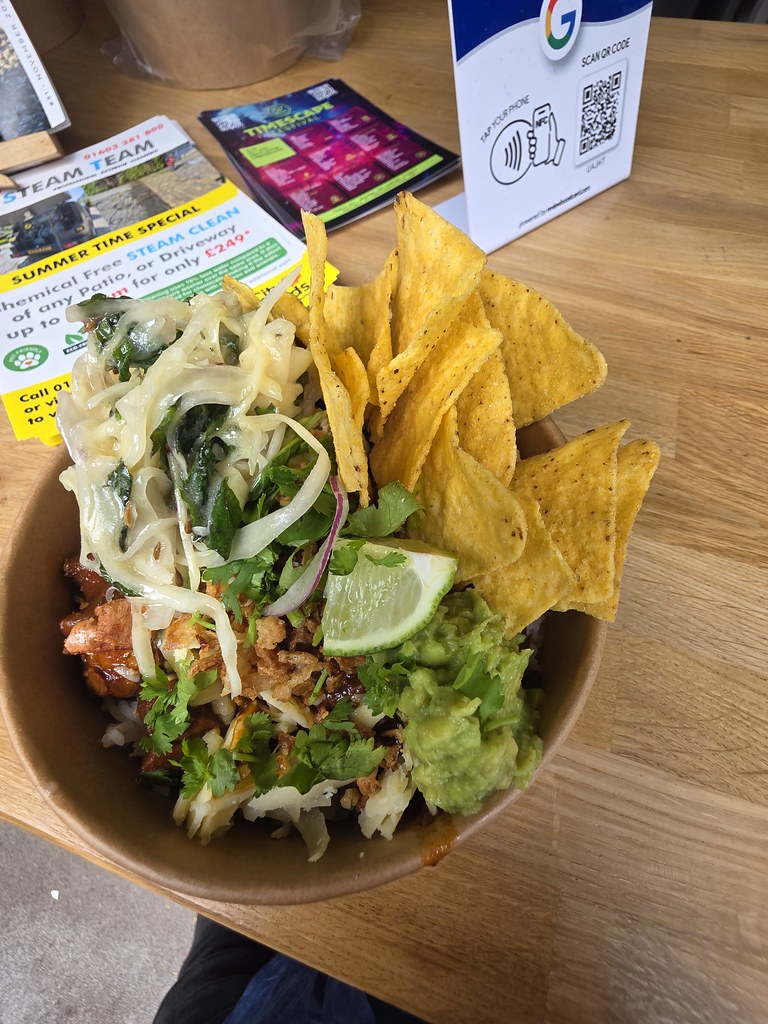
    “I decided to opt for the Korean Chicken Bowl which is battered fried chicken served with jasmine rice, chicken and vegetable dumplings, boiled broccoli, spring onion and homemade Korean sweet and sour sauce.”

    20250328_132129

    Your number’s up….. Customers are given a ticket and they wait for their number to be called. We had a wait of six minutes, which wasn’t unreasonable given that it was busy when we visited.

    20250328_132235

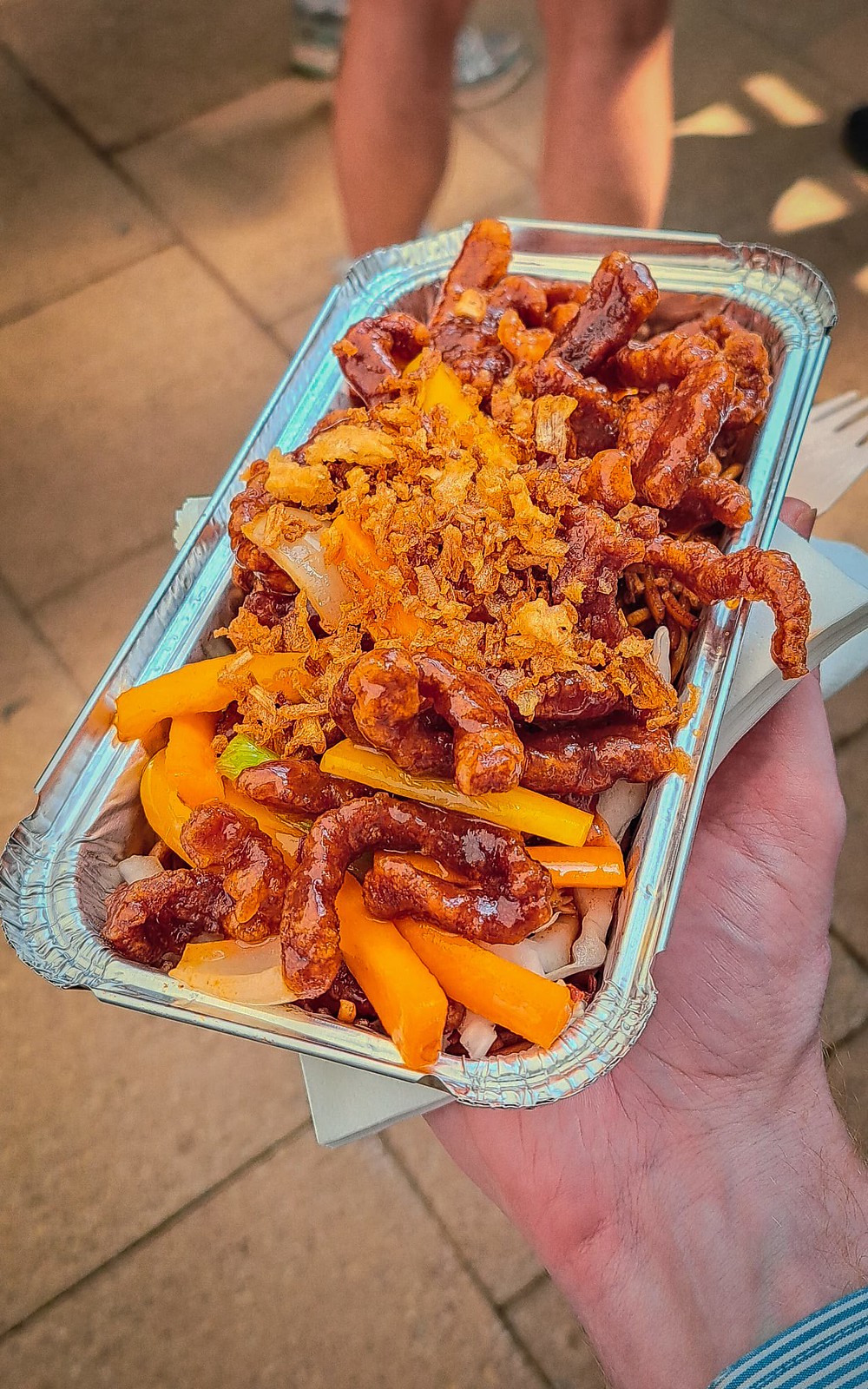
    And the food was served, looking very similar to what I ordered in 2023 although that’s not unsurprising since I ordered the same bloody thing. I will make an effort to improve on this…. Anyway, I digress. The food looked appetising and the dumplings added texture and firmness to the arrangement. The chicken could have perhaps been a little crispier, but it was tender and the sauce had a sweet flavour. The broccoli was perhaps a little too healthy, but it was soft but retained some bite. There was a depth of flavour to the whole arrangement and the rice was soft and cooked well.

    IMG-20250328-WA0003

    James and his food, which I think was the chicken dumpling ramen. I actually think my photo is better than his, but I didn’t mention this when he sent it. I asked James what he thought and he replied:

    “Ah, Julian, this is all about ramen. One must endeavour to articulate the sheer transcendental magnificence encapsulated within this quintessential paradigm of Japanese gastronomy. It is not merely sustenance, you understand, but rather an intricate, alchemical concatenation of profound flavours and textures meticulously orchestrated into a singular, Cimmerian vessel. The foundational quintessence, the broth, is an ambrosial elixir; a deeply umami-laden decoction derived from protracted, painstaking processes involving porcine or avian carcasses, desiccated piscine elements, and select vegetal constituents. Its unctuous viscosity and olfactory profundity serve as the very soul of the experience. Submerged within this veritable nectar reside the alimentary filaments – delicate, yet resilient strands, exhibiting an exquisite al dente characteristic, providing the crucial textural counterpoint. It’s not as good as a battered sausage though.”

    I think he liked it, but he did mention at the time he was getting a bit bored of it as he was eating it. He gets distracted easily.

    All told, this was a rather lovely lunch, but the price point is still a little high and so it verges into being a rather more decadent option. The server was though friendly, the service was efficient and the food had a pleasant taste, so all to the good.

  • Food from Every Stall on Norwich Market (2025 Edition) – Week 3 and Ron’s Chips

    Food from Every Stall on Norwich Market (2025 Edition) – Week 3 and Ron’s Chips

    20250327_133853

    And here we are in week three of my second time working around all of the food stalls at Norwich Market, with my friend James nobly assisting. Here’s my post from when we visited in 2023 when I enjoyed my sausage and chips.

    20250327_131606

    It’s their stall and they can put up what they like, but personally I’m not entirely sure Norwich market is really the place for political statements about the Government introducing a digital currency to control the British population. I’m not sure they could competently do that even if they wanted to, but I digress. However, I respected that the stall preferred to be paid in cash and I did that, although they do also take cards for those who want to.

    20250327_131520

    The stall was established in 1953 and is run by the third generation of the same family, so there’s some considerable heritage here. It’s not a fancy set-up, but it’s not designed to be, instead it’s a traditional British chip stand offering value and quality to refuel the workers of Norwich.

    20250327_131515

    The prices are low and some of the cheapest on the market. It was £2.90 for two battered sausages and chips in 2023 and it’s now £3.40, so it’s a relatively small increase. I did try and order cod and medium chips to have something different, but they didn’t have any immediately available and I didn’t want to wait whilst James saw his chips going cold. Which meant I had a battered sausage and small chips, deliberately not wanting anything too filling otherwise I’d need a nap in the afternoon. The cold drinks are evidently reasonably priced and the cost of the cod is very much towards the lower end of the scale (there’s a pun there that I won’t labour).

    20250327_131944

    The battered sausage and small chips. The amount of the batter was generous and the sausage would have felt well protected if it needed to go into battle, although I think it had been left in the hot hold for a while as it was going a little hard, but there was a depth of taste to it (the sausage, not the hot hold). It isn’t a butcher’s sausage, but it tasted fine and it was all at the appropriate hot temperature. The chips are thinner than those at Lucy’s (I like how there’s evidently a whole philosophy going on about potato cutting sizes) and they tasted as expected, with the portion size being generous for small chips.

    IMG-20250327-WA0001

    James was busy capturing beauty with his framing of the photo, whilst I was engaged in trying to fend off a squadron of seagulls who clearly hadn’t eaten since breakfast five minutes ago and viewed his chips as their birthright. I think he was pleased and how I protected his food (and I had nearly finished mine). On the matter of the food, James was suitably impressed and he said something along the lines of:

    “This seemingly pedestrian offering, comprising a sausage enrobed in crisp batter accompanied by fried potato parallelepipeds, ascended, quite astonishingly, to a veritable apotheosis of savoury delight.”

    Fine praise indeed. The value offered here is excellent, it’s an affordable lunchtime snack although I will definitely have to have the fish when we do this for a third time in future years. So, all in all, it’s was all rather lovely.

  • Ridgeway – Day 0 (The Savoy)

    Ridgeway – Day 0 (The Savoy)

    [I originally posted this 11 June 2018, but have reposted it to fix some broken image links]

    Screenshot_20180610-130829_Messenger

    We thought for our pub visits in Swindon that we should rely on the Good Beer Guide, so many thanks to Nathan for sending the details of pubs which were listed.

    The Savoy, which is a JD Wetherspoon pub, had made the cut and so we thought we’d go there for a quick drink and small snack.

    20180610_161944

    There was a pleasant external beer garden area, although Bev later complained about the locals when she went to examine the clientele…… This was our last chance to talk about the others before they turned up, so we made sure that we took advantage of that opportunity.

    20180610_162930

    Since the devastating removal of pastrami bagel from the menu, the chicken wrap will have to do….

    20180610_162654

    A lovely pint of Guinness, although perhaps not perfectly poured…

    20180610_165711

    There were nine real ales available, an impressive number, and they were well selected with some interesting options. The stout had a rich and pleasant flavour, with the price of £2.29 being particularly appealing. The service at the bar was also engaging, with the team member being willing to offer samples and she happily discussed the options available.

    20180610_162101

    20180610_162001

    Interior of the pub, which is a former cinema that originally opened in 1937 for ABC. It was redesigned in 1973 to add a pub at the rear and was taken over by Cannon in 1986, before closing in March 1991. It re-opened as a JD Wetherspoon pub in February 1996.