Category: UK

  • Norfolk – Hundreds and Parishes of Norfolk

    Norfolk – Hundreds and Parishes of Norfolk

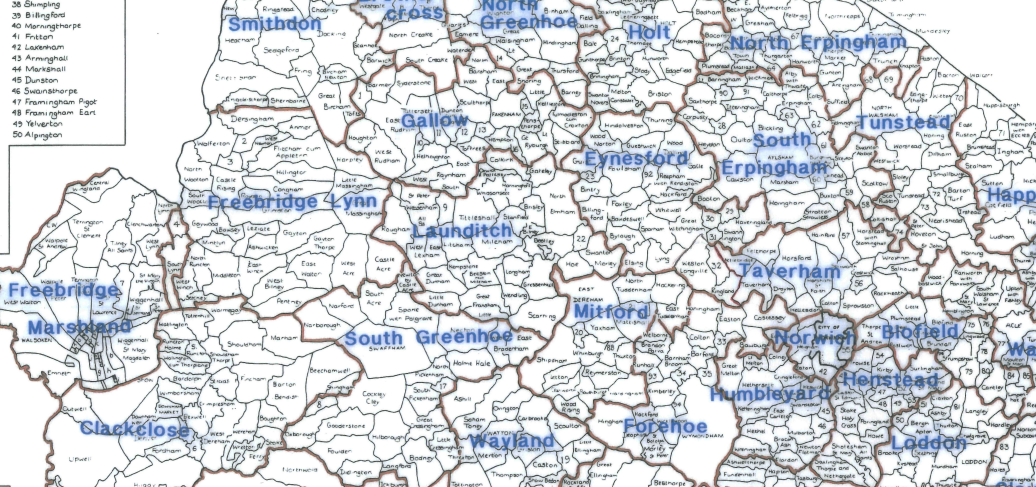
    Hundreds of Norfolk (in .pdf format)

    The hundreds are the old administrative divisions of Norfolk, in place from the Anglo-Saxon period to the nineteenth century civic reforms. I hadn’t seen this Hundreds of Norfolk map before, which has the parishes and the hundreds marked on it, which is rather useful. The PDF has been produced by the wonderful Norfolk Record Office and it’s a handy way of seeing how the old parishes and hundreds were made up. There were surprisingly few changes over the centuries, with 36 hundreds in Anglo-Saxon times and 33 by the middle of the nineteenth century.

  • London – Kensington and Chelsea (Borough of) – Victoria and Albert Museum (13th Century Doors from Gannat)

    London – Kensington and Chelsea (Borough of) – Victoria and Albert Museum (13th Century Doors from Gannat)

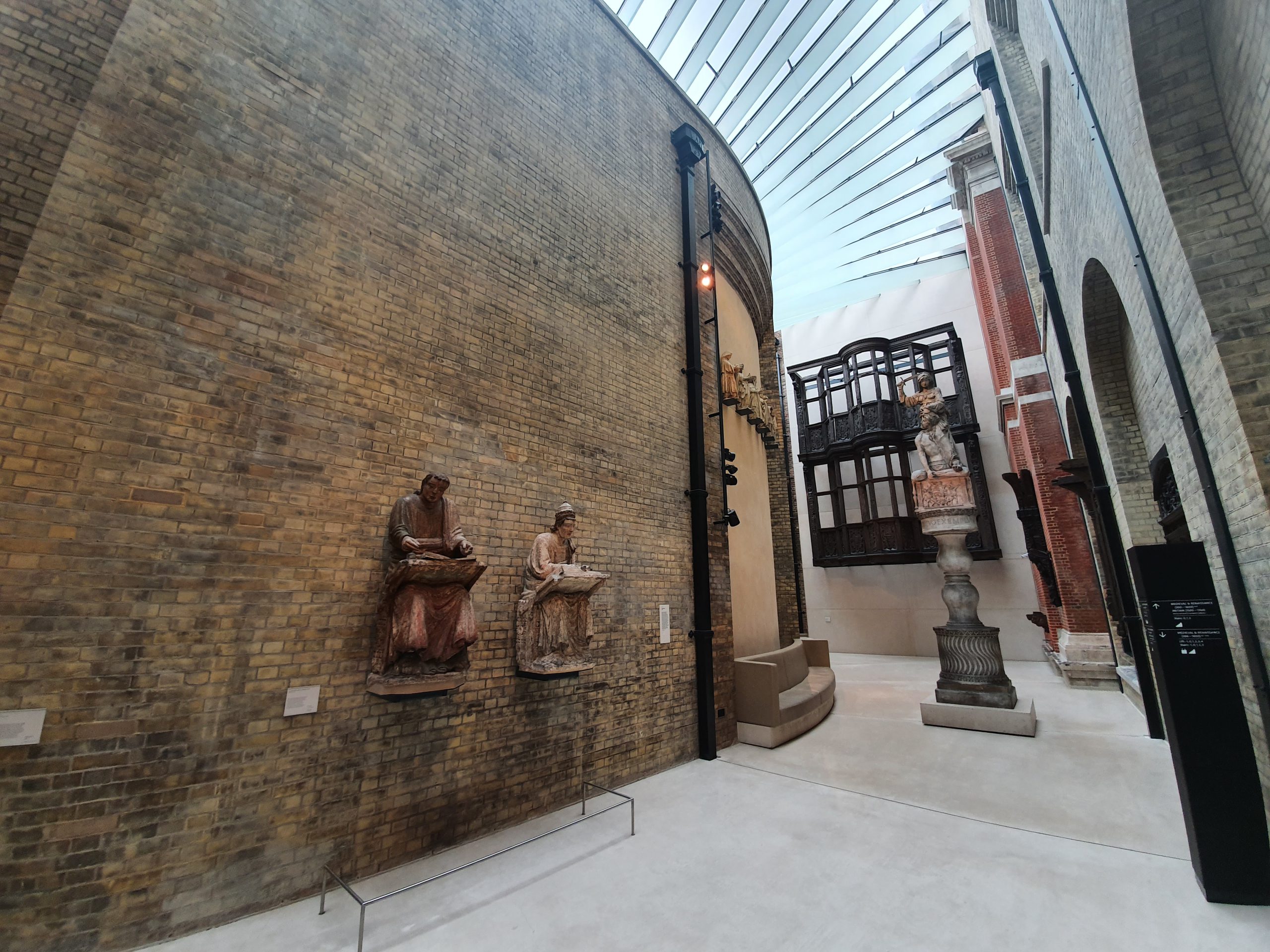
    OK, I’ll admit that this doesn’t perhaps seem like fascinating blog content. It’s some old wooden doors from the thirteenth century with ironwork and they’re from Gannat, a commune in central France. The museum has some notes about just how rare these are and how they can be dated from their design and also as it was a transitional process of how chisels were used on the iron scrollwork.

    To be honest, that level of detail is a little over my head, I just like the element of history here. These doors would have been in use for hundreds of years and at one stage they were hung upside down, which is evident from the much later keyhole and lock. It’s not known which building these doors are originally from, but such decorative iron would have been expensive, so this would have been a substantial property.

    What does interest me here is just imagining how many people used these doors over the centuries. There are several church doors in Norfolk that date from the Norman period and there’s something quite magical about the thought of just how many people have passed through the doors for baptisms, marriages, funerals and the more routine sermons (of which I’m sure at least a few have been quite dull and mundane). The next stop on the church tour that Richard and I are doing is Runhall Church, where the tower door is thought to be contemporary with the building of the tower itself in the twelfth century. More on this in the next few weeks hopefully….

    The V&A likely have these doors on display as they want to show the design of the ironwork from the period, but I just liked that things such as this have survived and are visible to the general public. For anyone fascinated by old doors (I’m not sure how big that niche is….), there is just one left in the UK which is made from wood felled in Saxon times and it’s at Westminster Abbey.

  • London – Tower Hamlets (Borough of) – Ibis Shoreditch

    London – Tower Hamlets (Borough of) – Ibis Shoreditch

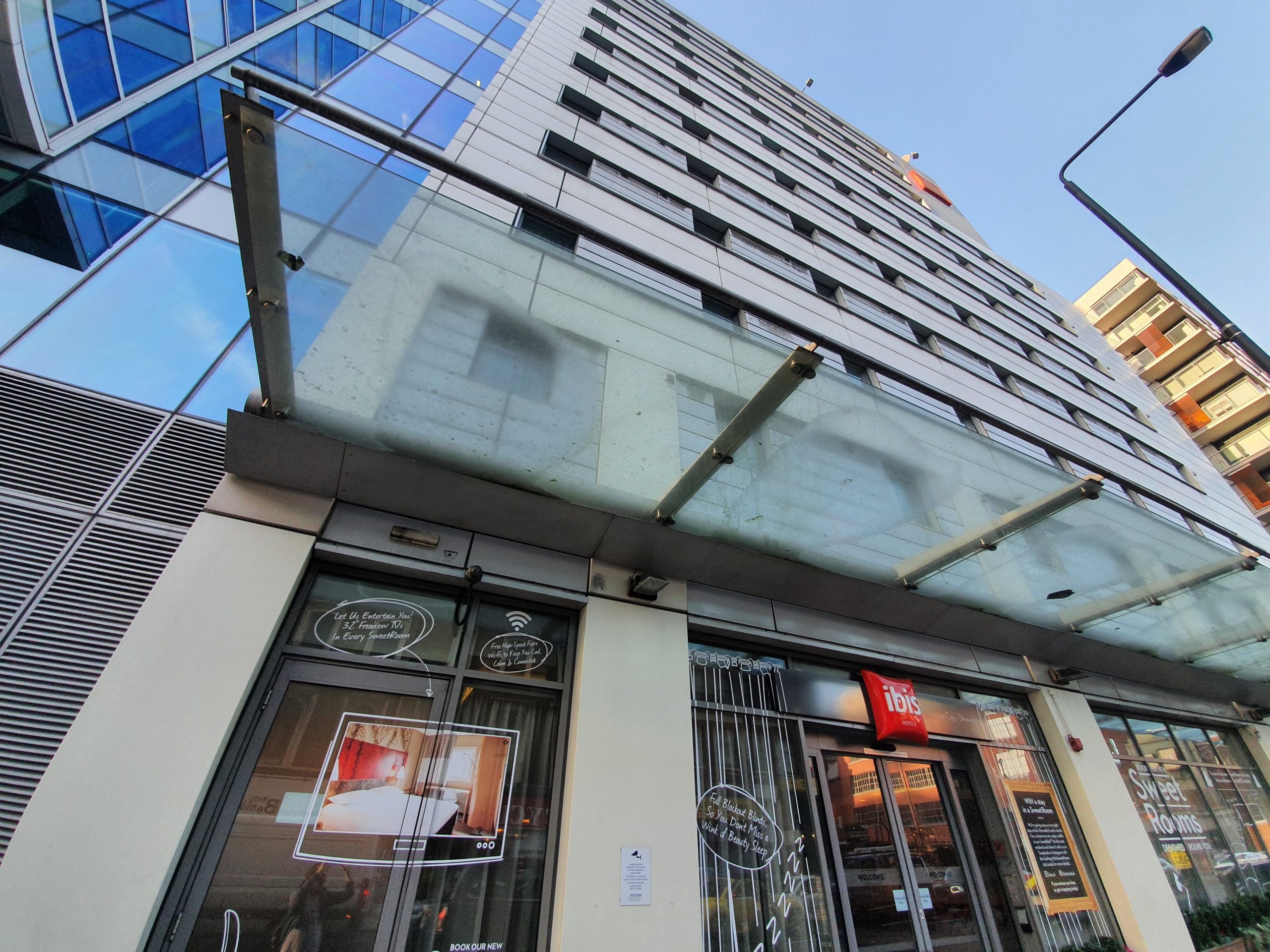
    Back a few weeks to when people could actually visit London, this is the Ibis Hotel in Shoreditch which is just a short walk from London Liverpool Street. Ideally also, it’s opposite Aldgate East Underground station, so it’s an easy hotel to get to.

    This visit was at a time when people could have a drink if they were also ordering a substantial meal. But, although the hotel was offering meals, there wasn’t much of a take-up.

    Part of the hotel’s decor, trying to give that East London theme to proceedings. The whole arrangement felt modern and welcoming, with something of an Ibis Styles type approach to the design rather than Ibis.

    This is the free welcome drink, one of the better ones which I’ve been offered. It’s not the finest in the Brewdog range, but I do very much like Punk IPA, nice and citrusy…. I look forwards to other Ibis hotels offering something slightly more exciting than Budweiser.

    The bedroom, all clean and comfortable. And it was located on the top floor and away from the elevator, just where I like. There were no noise issues either, although I’m not sure that the 348-room hotel was actually that busy. The hotel also had windows that could open, as I’m one of those slightly strange customers who likes the noise of city traffic and police sirens. It also meant that the temperature in the room was easy to control, something which I do most appreciate.

    I did very much appreciate the gesture and that’s a nice handwritten card, although secretly (well, not that secretly actually) I would have preferred chocolate…..

    Anyway, the stay as all sufficiently uneventful, which is ideally how hotel stays should be if it means that no disasters took place. Staff seemed friendly, although slightly underworked through the lack of guests, and I’ll come back here again.

  • Streets of Norwich – Barwells Court

    Streets of Norwich – Barwells Court

    Part of my Streets of Norwich project….

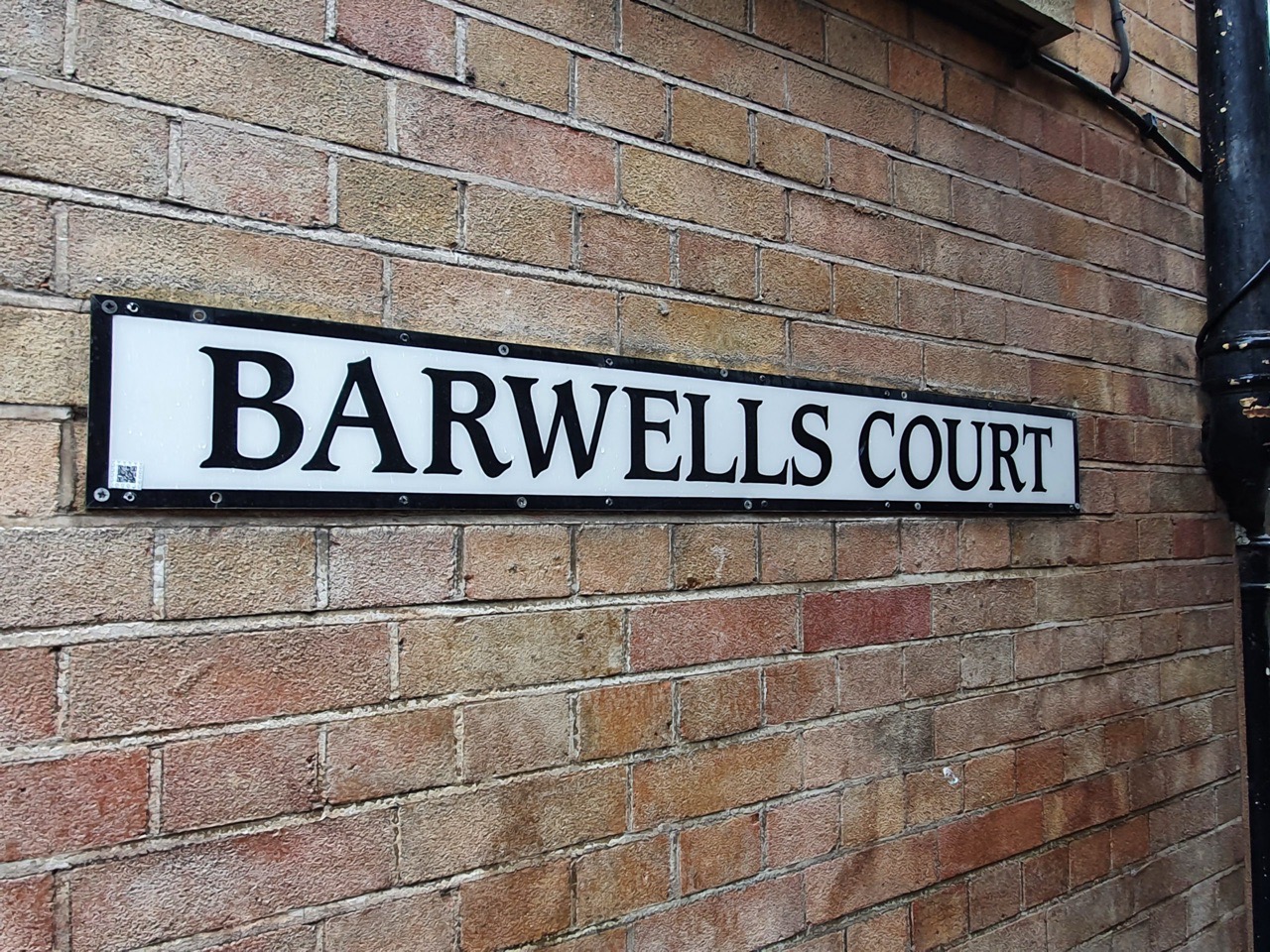
    This court connects St. Stephen’s Church to St. Stephen’s Street and isn’t the easiest of pathways to socially distance on, although fortunately I didn’t see anyone when walking down it.

    There is very little visually that is of much interest along this court, but its survival is quite remarkable as nearly every building along its route has changed over the last century. This was once where people lived and worked, but is now the rear of shops which stretch along St. Stephen’s Street. Norwich once had hundreds of courts and yards, although relatively few of them have survived in anything like their original form.

    This is the original width of the path and it has always been a thoroughfare and not just a court which has been opened up.

    This is looking towards St. Stephen’s Street and there is now a connection between the two properties which joins the buildings.

    Looking at the entrance to Barwells Court from St. Stephen’s Street, where there is now a Superdrug on one side and M&S on the other (formerly an H Samuels before M&S kept making their shop bigger).

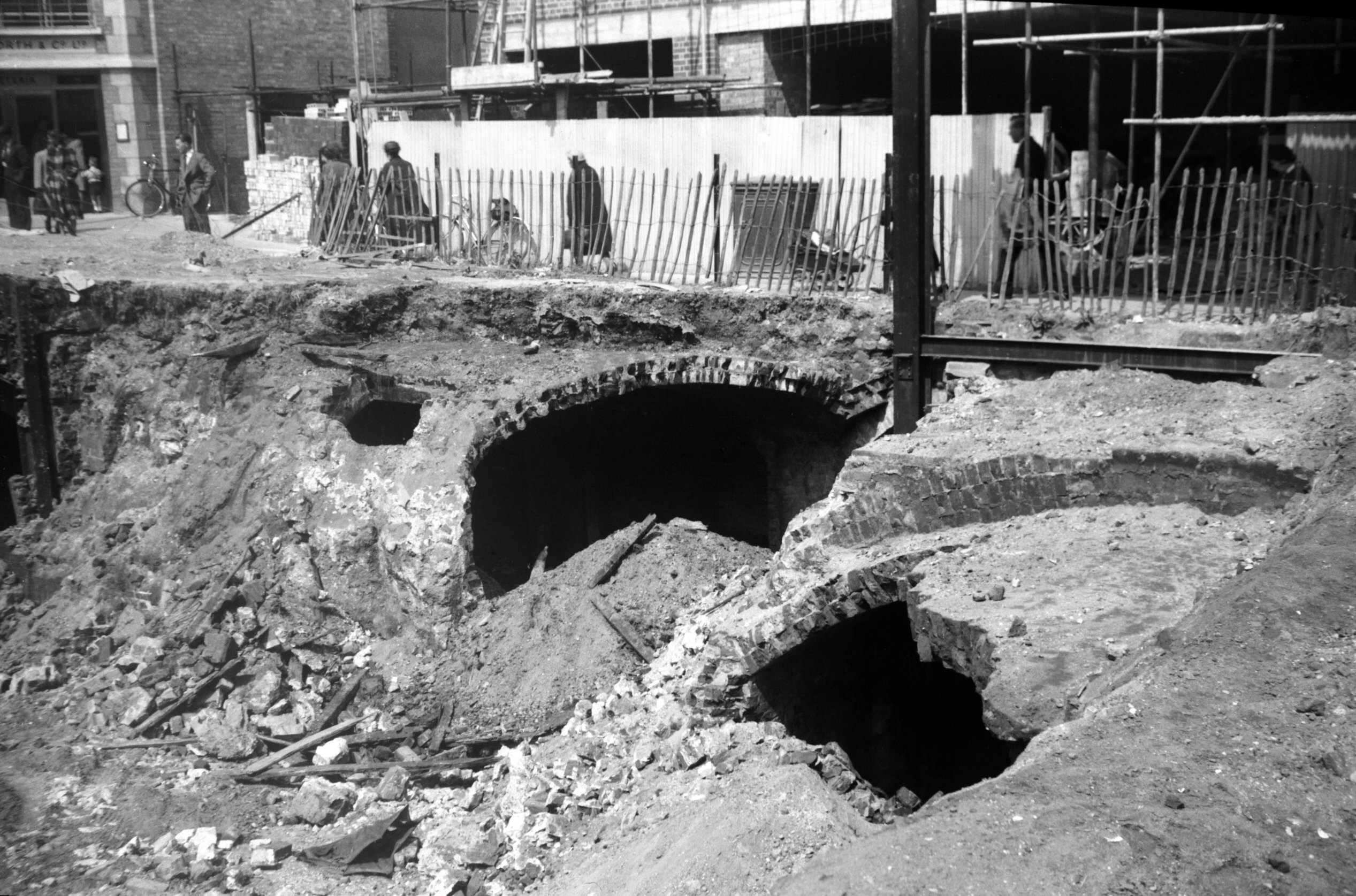
    The court takes its name from Barwells Wine Merchants, which had been set up by John Barwell (1798-1876) and he was married to Louisa Barwell, the musician and educational writer. As ever, George Plunkett has a photograph here of interest, which shows damage from the Second World War and also what was underneath what is now Superdrug, but was then the premises of Barwells Wine Merchants.

  • Streets of Norwich – Fishers Lane

    Streets of Norwich – Fishers Lane

    Part of my Streets of Norwich project…. I hadn’t forgotten about it, and perhaps in 2021 I might finish it.

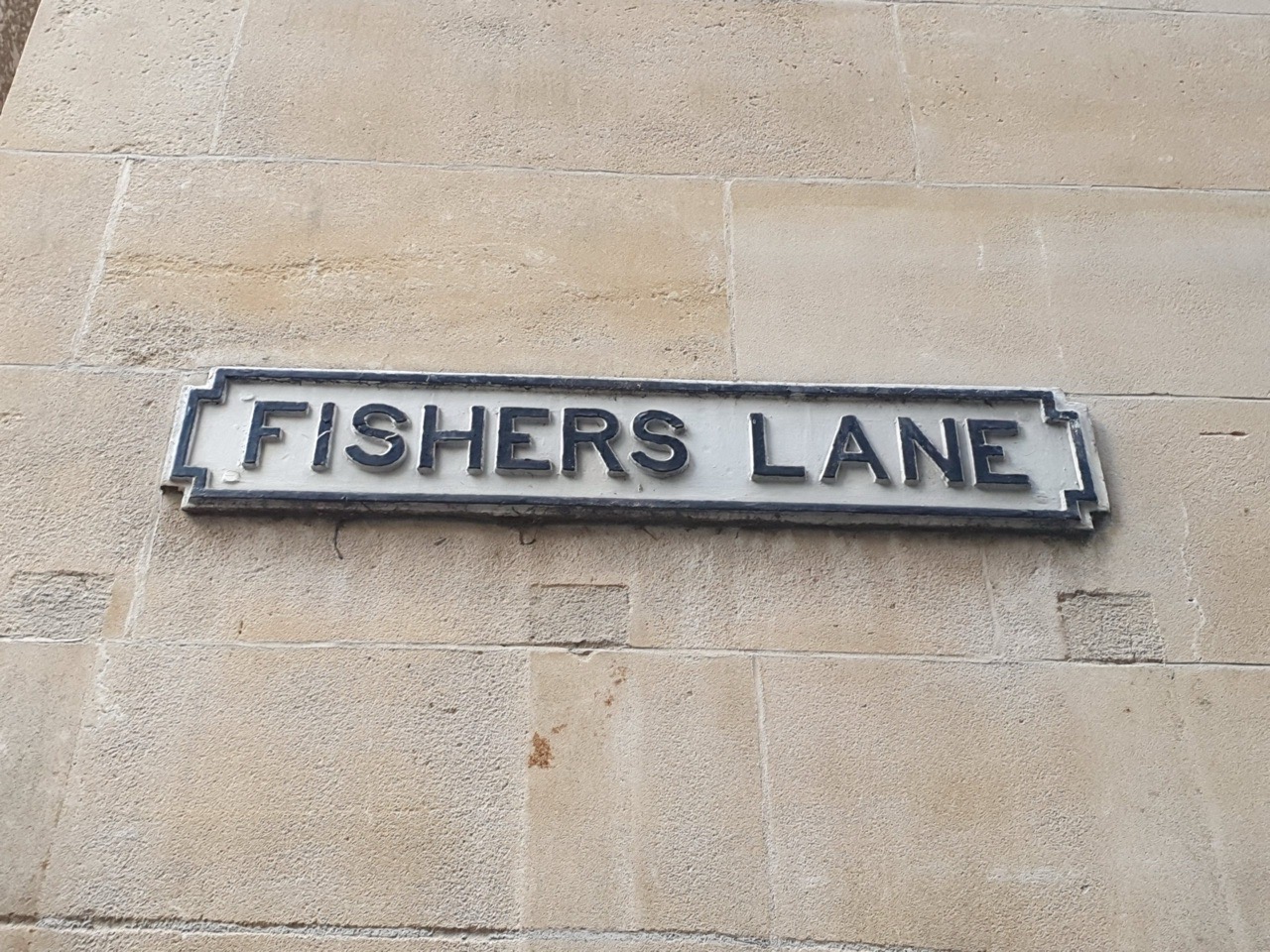
    This is Fishers Lane (Fisher Lane on the above map) which is between Pottergate and St. Giles Street. The map above is around 100 years old, the one below is around 150 years old and maps in general alternate between Fisher and Fishers Lane (as well as Fisher’s Lane).

    Clicking on the image will make the map larger and it’s possible to see there were two courts off this street, the Bear & Staff Court and Roache’s Court.

    From 1907.

    The police didn’t like the pub called the Bear & Staff and in 1908 they complained to magistrates that the customers were of a lower class and criminals frequented it. Its location, tucked away in that court, does give it a feel of being somewhat of a vibrant location. The pub sadly closed in 1910, if it had survived I imagine it would have been one of Norwich’s quirkiest drinking options. Unfortunately, the entire street has been lost, although George Plunkett was able to get a photograph of the southern side in 1938.

    The entrance to Fishers Lane from St Giles Street and that is St Giles Hotel on the left hand side.

    Sadly, most of the historic interest of this street has been lost, the entrance to Bear & Staff Court would have been around where the two buildings on the left hand side join. The ugly cladded building is Vantage House, which was used as offices by the council, but the owners have been granted permission to turn it into 44 flats. That cladding was added by Harley Facades, better known now perhaps for their work on the Grenfell Tower refurbishment. I’m not sure why the council have granted permission for it to be turned into flats (although I think they might have had limited powers to stop it as it’s a conversion), it’s not a pleasant building and I’d have thought it would have been better to demolish it and replace it with something more uniquely designed and purpose built for housing.

    Looking back to St Giles Street.

    The buildings on the other side of the road are older and are former warehouses, although nothing on the street is listed (other than the properties facing onto St Giles Street).

    Standing on Pottergate looking back up the hill.

  • British Library – British Library’s Georeferencer service

    British Library – British Library’s Georeferencer service

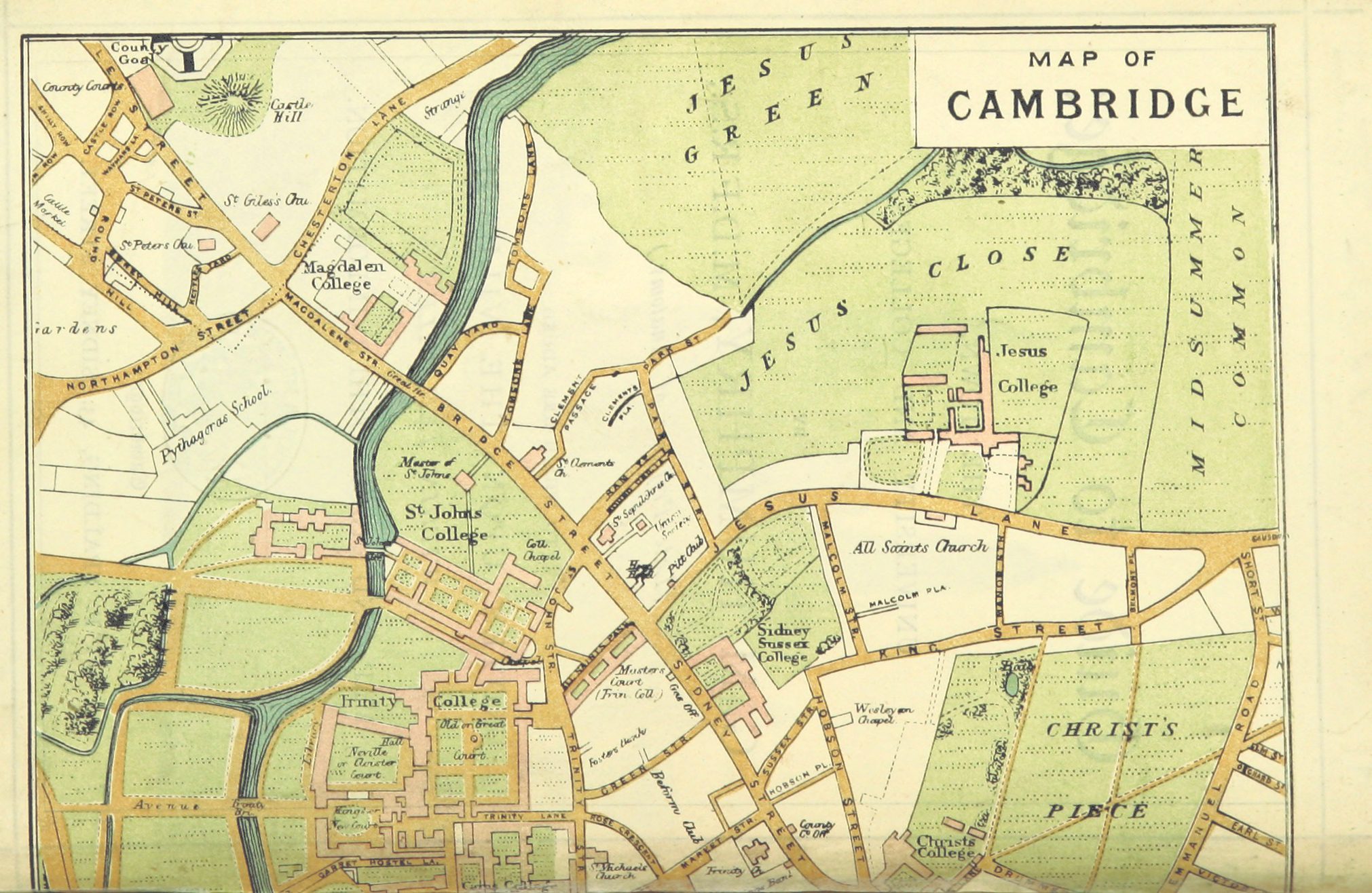
    Several years ago, the British Library placed one million images on Flickr as part of their attempt to encourage people to engage more with their collections. The above image is just one of those, it’s from the book ‘A Guide to Cambridge’ by Sir George Murray Humphry which was published in 1883.

    I rather like maps, they can be fascinating in terms of what history they show, or in a modern sense, they can inspire new travel ideas and expeditions. Having written that, I don’t use maps for navigation, I’m sold on devices which use GPS and that can show you exactly where you are on the map with a helpful blue dot.

    Anyway, the reason I mention all of this is that I noticed that the British Library have a service called the Georeferencer Service, which places the old map on top of a modern map. So, the map above is transformed at http://britishlibrary.georeferencer.com/id/11164993723. It’s not the only way to achieve this, but it’s managed well and I hope that the British Library are able to add more maps to this in the future. Individuals can assist the British Library with their efforts and there’s more information on this at https://www.bl.uk/projects/georeferencer.


  • London – Hackney (Borough of) – Hackney – St. Augustine’s Church

    London – Hackney (Borough of) – Hackney – St. Augustine’s Church

    The tower is all that is left of St. Augustine’s Church in Hackney, which was known as St. John’s Church between 1660 and 1798, the change being a recognition of the former financial involvement of the Knights of St. John. The main part of the building was demolished in 1798, with a larger replacement church being constructed nearby, which is also known as St. John’s. The tower is now the oldest building still standing in Hackney, although the initial intentions were to also demolish this when the new church opened.

    The tower is visible in the centre of this map from around 100 years ago, with the new church to the north-east of it.

    The former church could hold just 1,000 people and this wasn’t sufficient for the congregation size that wanted to attend. The new building held 2,000 people and was designed by James Spiller, who also designed London’s Great Synagogue which was unfortunately destroyed during the London Blitz.

    There wasn’t initially sufficient money to build a tower at the new church, so this part of the old structure was left standing to hold the bells. The new church didn’t receive its tower until 1814, but it was then discovered that the structure wasn’t strong enough to hold the bells, which wasn’t exactly ideal. Finally, in the 1850s, the work was completed to allow the bells to be moved to the new church, and by this time, it was decided to just leave the tower standing at the old church.

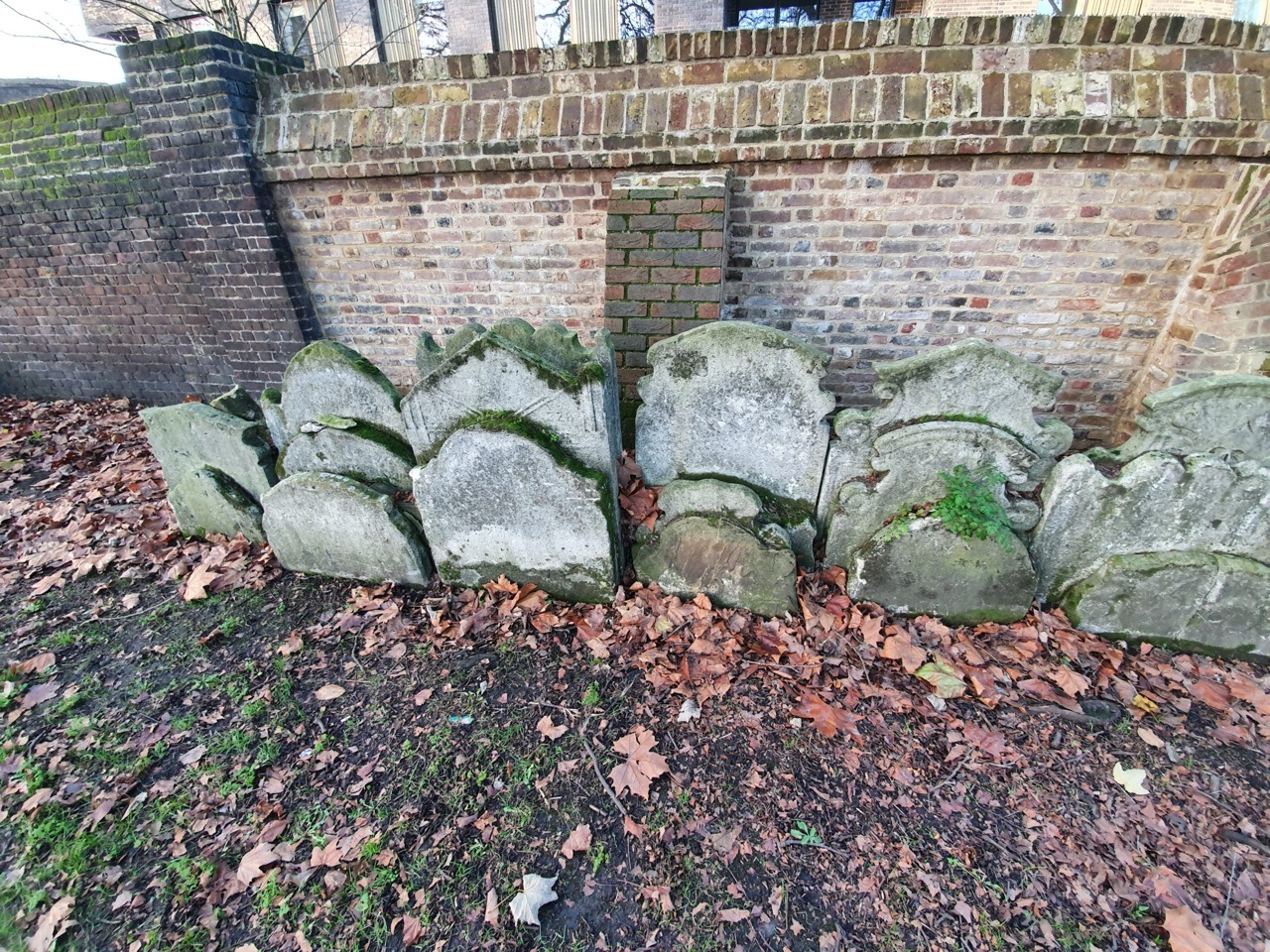
    Some of these tomb stones are from the seventeenth century and I assume that they have been moved from their former location either in the nave or from within chapels. The nave and chancel of St. Augustine’s Church had been rebuilt by Sir John Heron and Christopher Urswick in 1517 and, other than for some additions to add capacity, not much had changed by the time it was demolished.

    Where the nave once met the tower, this is also the meeting point for when tours take place as it’s possible to climb to the top of the tower.

    I’m not at all impressed at this little arrangement, where the stones from the graveyard have all been collected up and placed at the side of the park. Although, this may well have had the effect of saving some of the stones from the damage which would have been done through pollution and weathering. I don’t know when this was done, but, at a guess, I suspect it was in 1885 when the public gardens were laid out. It was certainly done by 1908, as the book mentioned in the next paragraph notes that some gravestones were lost and the rest were stacked three abreast around the outside.

    As an aside, it’s not just me who complains about the poor treatment of gravestones and nor is this a modern concern. The 1908 ‘The Fascination of London – Hackney and Stoke Newington’ book by GE Mitton noted “it is said in the demolition of the old church the monuments were shamefully treated, and some of the stones were broken up and used for paving purposes”.

    One of the memorials in the churchyard.

    Stones have been placed to mark where the corners of the old church used to be, this one marks the north-west corner.

    One of the tombs in the graveyard. There was actually another survivor from the demolition of the church in the late eighteenth century, which was the Rowe Chapel which had been built in 1614. This was kept as it was privately owned and it was protected and given a new roof. Having noted that, the demolition of the church was clumsy and without much care for heritage, it was noted at the time that the figures on the tombs lost their heads and damaged fragments were just kept in the toolshed. Unfortunately, the structure collapsed in 1877, although the chapel was still kept in situ. It was only in 1896 that the chapel was demolished and the now badly damaged monuments taken to the new church.

    Hackney is unfortunate to have lost the church that it did, although at least the remaining tower is Grade I listed. The new church, slightly surprisingly for such an innovative project, was seen by many as quite dull and plain when it opened, and it certainly looks like that internally today. I didn’t find much of interest in terms of the architecture of the new church (I say new, it’s over 200 years old), but the heritage of the former site is fascinating and a number of information boards have been put up around the site.

  • London – Tower Hamlets (Borough of) – Bethnal Green Tube Disaster Memorial

    London – Tower Hamlets (Borough of) – Bethnal Green Tube Disaster Memorial

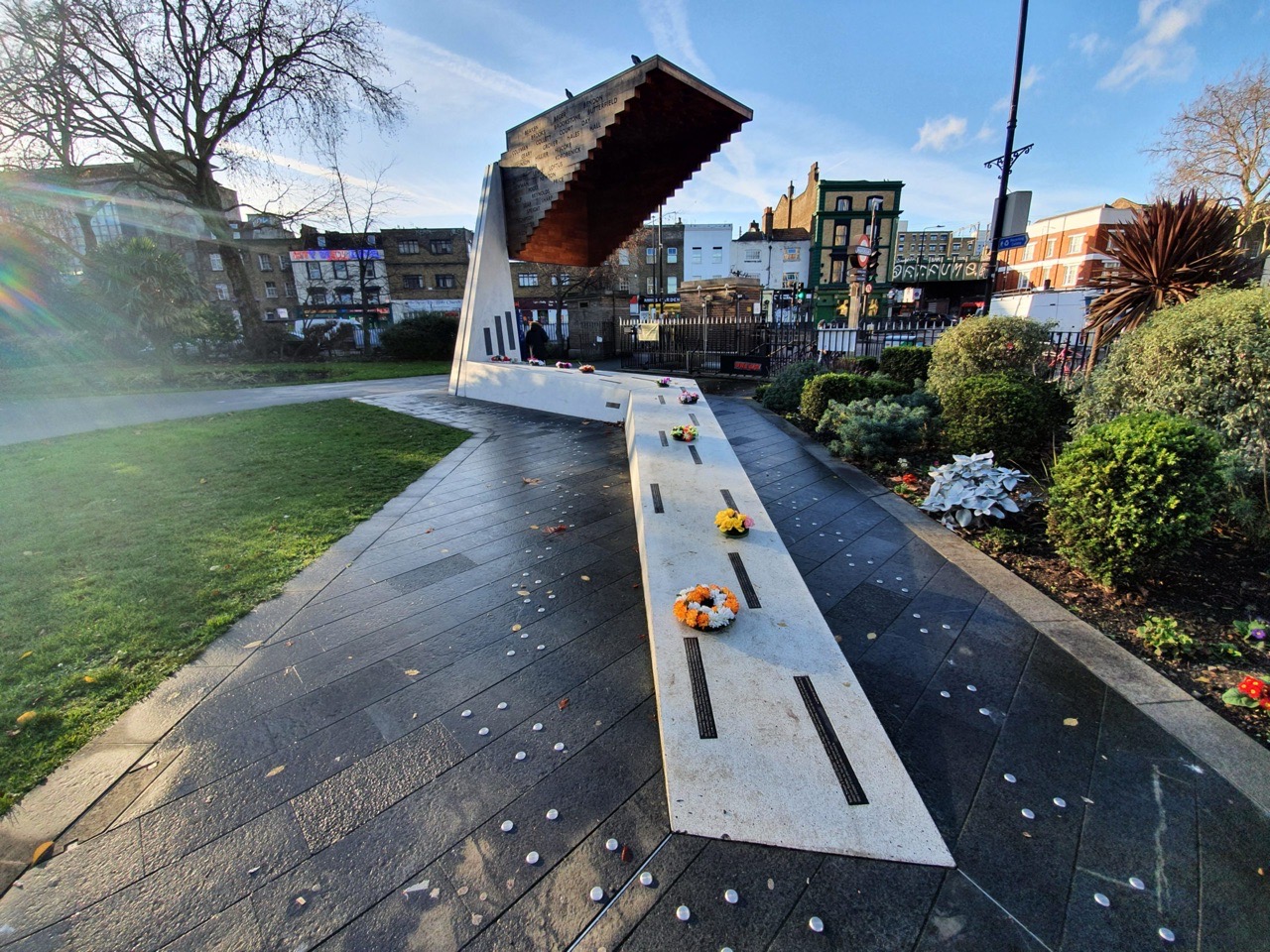
    This monument, also known as the Stairway to Heaven Memorial, commemorates those who lost their lives in the Bethnal Green Tube disaster of 1943. It’s a striking monument for what was the worst civilian disaster during the Second World War.

    During the late 1930s, the Central Line was being expanded from Liverpool Street over to locations in Essex. The construction work had nearly been completed when the Second World War commenced, but there was no track laid and the site was taken over to be used as war shelters.

    On the evening of the 3 March 1943, there was an air raid warning and many locals proceeded to the station site to find safety. Near to the bottom of the steps down a mother and daughter slipped, which led to people behind falling and then crushing those below. A total of 173 people were killed during the incident, including 62 children, with their names placed on the above panels.

    Clicking on the above photo should make this readable and it’s an account of what happened on that fateful evening. The press weren’t permitted to write about the incident, although the occasional sly mention got through, as there were fears that it might induce a national panic as well as being damaging to the morale of the nation. A report into the incident was commissioned, but wasn’t published by the Government until 1946.

    I think this looks quite sleek and elegant, with the main part of the memorial at the rear being an inverted flight of stairs. The memorial was designed by Harry Paticas, who was also one of the key visionaries behind the entire project. He had noted just a small plaque inside the station marking the event and he wanted something more visible, so that the story wasn’t entirely forgotten.

    These are quotes from survivors and although they’re a little hard to read (both at the memorial and on-line) they add some poignancy to the memorial. A comprehensive web-site was also created alongside the memorial, available at http://stairwaytoheavenmemorial.org/.

    There’s more about the incident on this video, from BBC’s The One Show.

  • London – National Portrait Gallery (Taylor Wessing Photography Prize)

    London – National Portrait Gallery (Taylor Wessing Photography Prize)

    The National Portrait Gallery (NPG) was always going to be closed this year as it is undergoing a restoration project and their timing is perhaps fortunate. But, one thing they share with other galleries is the opportunity to place artworks on-line so that interested people stuck at home can still engage with their collections.

    In this case, the NPG has created a virtual exhibition at https://www.npg.org.uk/whatson/taylor-wessing-photographic-portrait-prize-2020/virtual-exhibition where anyone can view all of the photographs and then vote for their favourite as part of their “Peoples’ Pick”. There’s information about each artwork and you can sort of stroll through the gallery, albeit with quite a lot of imagination.

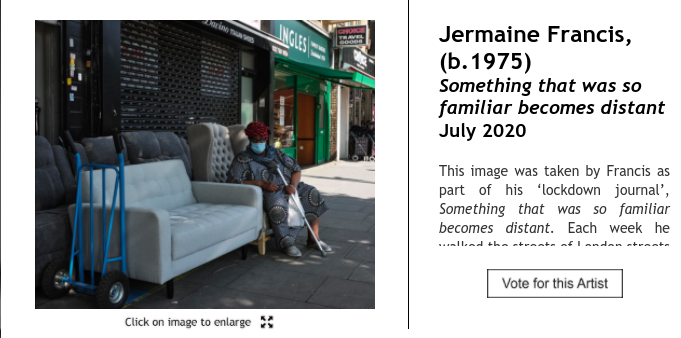
    This was my favourite and the one I voted for. The gallery notes say:

    “This image was taken by Francis as part of his ‘lockdown journal’, something that was so familiar becomes distant.”

    I don’t want to show the image in full as I’m sure it’s under copyright restrictions, but there’s something about the colourful dress of the lady in the photo combined with her blue facemask that make this very much a photo of 2020, but yet still familiar.

    The winning artist will be revealed on Monday 16 March 2021.

  • London – Greenwich (Borough of) – National Maritime Museum (Figureheads)

    London – Greenwich (Borough of) – National Maritime Museum (Figureheads)

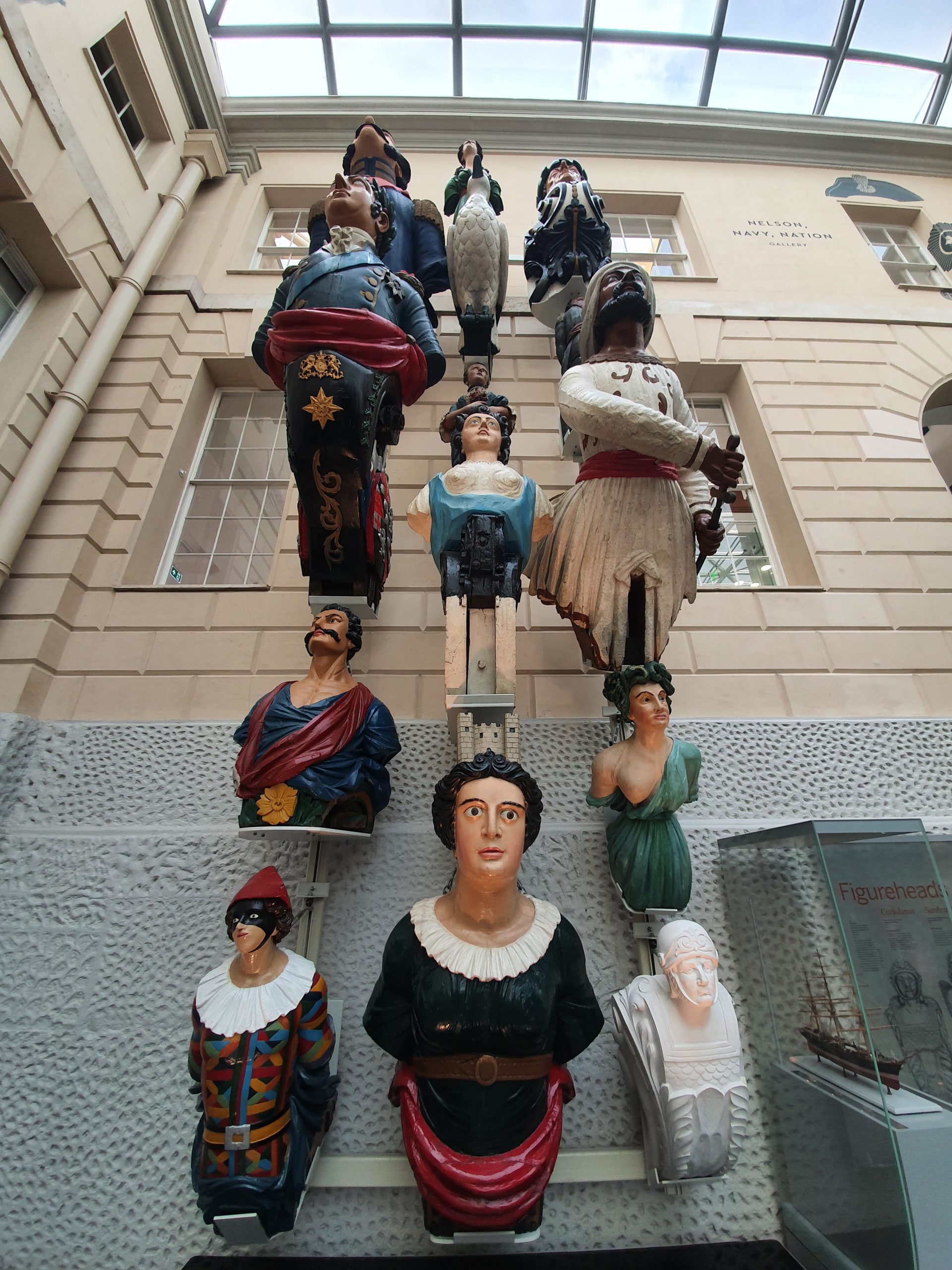
    There are many highlights in the National Maritime Museum, but these figureheads are some of my favourites in the collection. The largest collection of merchant navy ship figureheads in the world is located nearby in the Cutty Sark museum, but the ones here are Royal Navy figureheads.

    Royal Museums Greenwich operate one of the more restrictive copyright policies that I’ve seen from a museum, limiting re-use of their collection imagery. It’s possible to embed the images, but they’re relying on a Flash set-up and that’s being retired. It’s a slight shame as I would have used some of their imagery of figureheads that they don’t have on display in the museum. They’ve made quite an effort with the figureheads though, there’s a separate web-site at http://figureheads.ukmcs.org.uk/ which has 300 of them listed.

    The museum explains that back in the eighteenth century, the Royal Navy would usually have full-length figures, but cost cutting at the Navy Board saw an end to that. Some of the figureheads in existence at that point got cut back, with just the heads usually used after that.

    In the above photo, there are a few obvious figureheads which stand out. The large one on the right in the middle is from HMS Himalaya, which was built for the Peninsular and Oriental Steam Navigation Company (P&O) in 1853 and was known as SS Himalaya. After a few months, P&O realised that their ship, which was the largest ever constructed, was too big and there wasn’t enough passenger traffic to justify it. This wasn’t ideal for them, as they had just spent £130,000 on building it. However, they managed to convince the Government to buy their ship for £133,000 and it was transformed into a troopship which could carry up to 3,000 soldiers. The ship was decommissioned in 1894 and was then used as a ship to transport coal until it was sunk by the German Luftwaffe at Portland Harbour in 1940. The figurehead had been removed when it ceased to be a troopship, being stored at Devonport until 1936, when it was presented to the Admiralty.

    At the bottom left of the above photo is the figurehead from HMS Harlequin, a brig-sloop which launched in 1836. The ship was later used to transport coal and was decommissioned by the Royal Navy in 1899 and was broken up and sold for scrap in 1904. The figurehead was kept and was located on the first floor of Rigging House in the Devonport Dockyard, being donated to the Admiralty in 1936.

    Above the HMS Harlequin figurehead is the one from HMS Tribune, in the style of a Roman tribune. The ship was a wooden screw corvette which was launched in 1854, but it didn’t last long as it was sent for breaking up in 1866. I’m not entirely sure that taxpayer’s money was used entirely wisely there. The figurehead ended up in the same place as the HMS Harlequin and was also gifted to the Admiralty in 1936.

    The last British battleship to have a figurehead was HMS Rodney, which was launched in 1884 and remained in use until it was broken up in 1909. After that, with the exception of on some smaller Royal Navy ships which still used figureheads, the tradition changed to have a ship’s badge instead. This doesn’t seem quite as exciting to me, there’s something quite appealing about knowing how many sailors from the Royal Navy would have seen the figureheads on these ships and likely been quite attached to them.

    My only other comment, for what it’s worth (which isn’t much) is that the figureheads are all a bit pristine. They’ve nearly all been repainted, although not necessarily recently, so they don’t have that feel of having been on the front of the ship. The museum does have plenty of figureheads which no longer have much paint left, and I prefer these as they feel more authentic, but they’re mostly not on display.