Category: Norfolk

  • Witton – Name Origin

    Witton – Name Origin

    There are two Wittons in Norfolk, one is near Norwich and the other is near to North Walsham. This is what The Concise Oxford Dictionary Of English Placenames has to say about the Witton near to North Walsham.

    Witton, Norfolk. Widituna in Domesday Book, Wottone in 1254. Old English Widutun, a place near a wood.

    There are a few reasons as to the evolution of the place-name Witton, but most are simply a place near a wood, which explains why this is a relatively common name for a settlement. This is though different to Watton in Norfolk, which was named after a person, just to make things more confusing.

  • Witton – St. Margaret’s Church

    Witton – St. Margaret’s Church

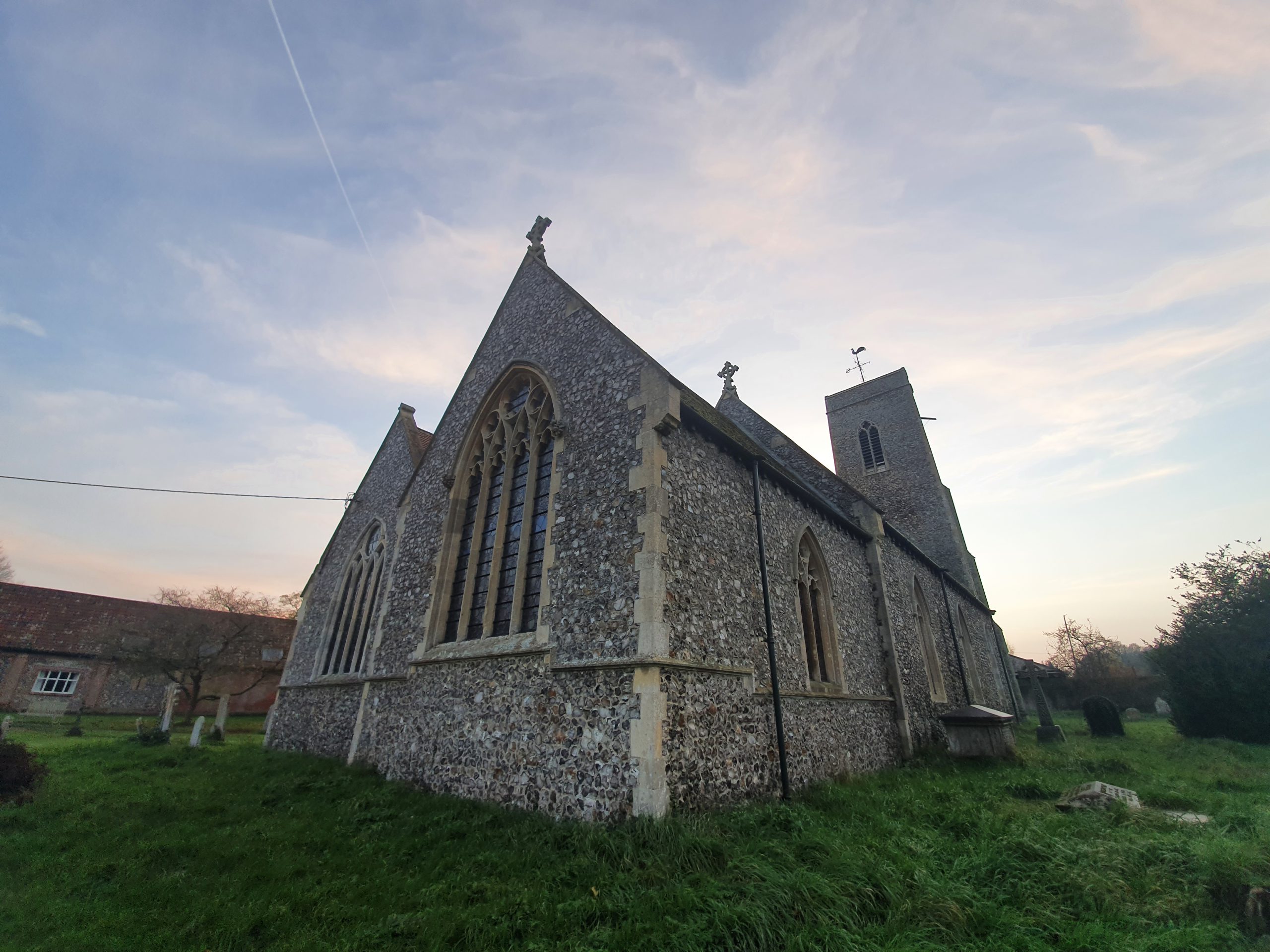
    Witton, the one near North Walsham and not the one near Norwich, is located near to the Norfolk coast in an area that no longer has many residential properties nearby. There is evidence of two Saxon windows in the nave of the church, but for the most part the current structure dates to the twelfth-century rebuild, albeit fiddled about with in the Victorian period.

    An aisle has been added to the south side of the church, but not to the north.

    Two views of the north side of the church, with the Saxon windows evident either side of the porch, which were later discoveries. The chancel was rebuilt in 1857, explaining its more modern feel.

    The chancel end of the church.

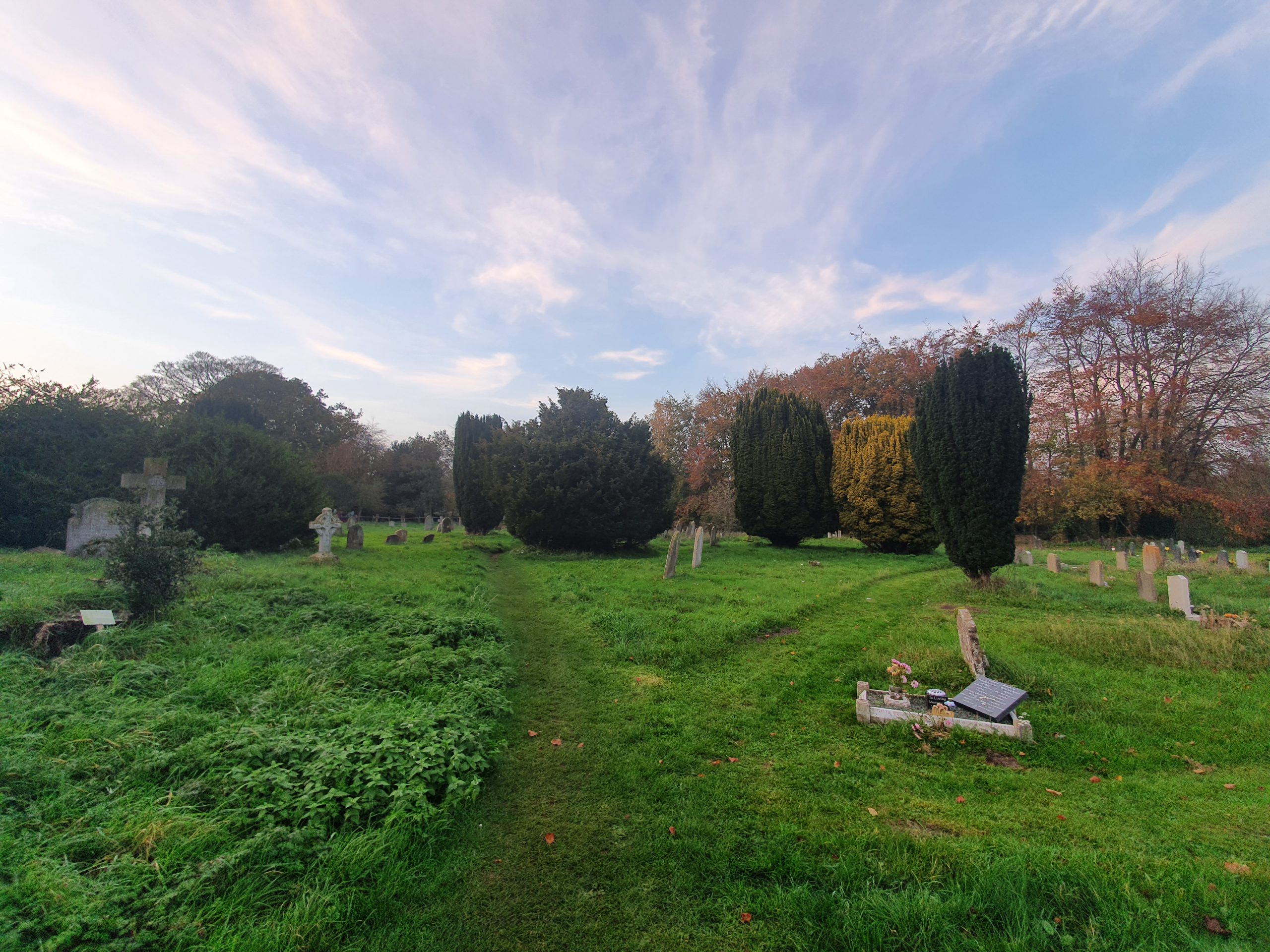
    The south porch and main entrance into the church, with its rather intriguing small window with brick surround. There’s a large graveyard around the church, with a surprising number of more recent burials given the limited amount of properties nearby.

  • Drayton – Name Origin

    Drayton – Name Origin

    In my occasional series about the name origins of places in Norfolk, this is what The Concise Oxford Dictionary Of English Placenames has to say about Drayton. And, it’s complex, as Drayton is a common placename across the UK, with numerous reasons for the evolution of the name.

    Drayton, Norfolk. Draituna in Domesday Book. 

    The book goes on to offer a series of explanations, which are based around the word ‘draeg’, the Old English for ‘to drag’. So, it’s seen as a place where something has been, or has to be, dragged, perhaps a boat, or logs. It can also mean to ‘pull up a hill’, so Drayton might be explained by being on a hill. The book doesn’t give a specific reason for the Drayton in Norfolk, but I’m going with the place where wood has to be dragged. This also fits in with the village sign, unless anyone else knows better…..

    As an aside, the word ‘dray’, better known as a beer delivery, comes from the word to be dragged, or pulled. It later became used to mean a sledge, and eventually as a way of moving beer.

  • Drayton – Village Cross

    Drayton – Village Cross

    This market cross in the centre of Drayton is one of the oldest structures in the town, rightfully a listed monument as it’s from the fourteenth century. It was restored, albeit a little crudely, in 1879 and bronze plaques were attached. It’s a little tucked away under the trees, but it is of some considerable historic note and it’s another one of those pieces of architecture that I’m surprised has survived the centuries.

    The original French inscription was visible in the nineteenth century, but it has mostly faded now. It did say:

    “Vous che prie pur l’am William de Bellomont, === Johanne sa femme, === Pater Nr === Ave Maria, === de pardona avera.”

    Or, anyone who prays for the souls of William de Bellomonte and Joan his wife will be pardoned.

    The bronze plaque, with an English translation of the original French wording that was on the cross. Although two of these plaques remain, the other two have fallen off at some point and become lost.

  • Drayton – Cock Inn

    Drayton – Cock Inn

    After a rather lovely Hike Norfolk walk, we had a little visit to the pub and there was the choice of the Cock Inn operated by Marstons or the Red Lion operated by Greene King, so we went with the former. The Cock Inn was surprisingly busy with diners, so the pub trade must be picking up somewhat. There were still plenty of empty tables, but it’s a big pub and there was an organised feel to the whole venue.

    There were three real ales available, Pedigree, Hobgoblin Gold and Cumberland from Jennings. A pretty uninspired selection and there were no dark ales or craft beers available. The best there is Hobgoblin Gold, the other two really aren’t very good and rate only slightly higher than Fosters on Untappd. Nonetheless, I went for half a pint of Cumberland and it was delicious if you like flavoured water with some food colouring. I think that the beer was well-kept, but it was so lacking in flavour, richness in taste or indeed anything, that it was hard to tell.

    The problem with these three beers is they’re all produced by Marstons, so there’s nothing innovative or exciting there from independent breweries. But, to be fair to the pub, I’m not sure that even they would claim to offer great beers here, I think they’re more after the food trade. I do wonder whether Marstons are making pubs just too sterile, but they do attract families and they offer a safe and clean environment.

    The pub’s food reviews seem broadly positive, although I was moderately humoured by the review which said:

    “The chips were inedible as was one of the burgers which was sent back into the kitchen as it was so black I could have used it to draw with.”

    Another customer made a long complaint about the food, alongside with some allegations about the cost of the beer which seemed a bit far-fetched, saying that they gave their steak to their dog when they got home.

    The pub’s response was excellent, I do so like it when they reply, and I particularly liked their last line:

    “I’m glad your dog enjoyed the steak.”

    I like the pub more for that. I was disappointed though that the pub didn’t reply to the customer who got banned for returning food too often, I’m sure that there was an exciting story there to be told.

    We sat in the garden and it was all well maintained, with these little cabins being a good idea. There’s a play area for kids and customers seemed to be enjoying their visit, it was all relaxed and seemingly well managed. It did occur to me after the event though that the pub isn’t operating a track and trace scheme, and it probably should be. For those with families, this is a pretty decent environment to bring them, safe and secure. I’m not sure that there’s anything that this pub offers that’s worth travelling for, but I’m sure it’s a positive addition to the local community.

  • Wymondham – Wymondham Abbey (Robert Dixon Print)

    Wymondham – Wymondham Abbey (Robert Dixon Print)

    This print (© The Trustees of the British Museum) is in the collections of the British Museum, created by Robert Dixon (1780-1815) in 1810. Dixon was a Norwich man, who lived in Tombland for much of his life, working as a set painter at the Theatre Royal and also earning money house painting. He was trained at the Royal Academy, also working as an architectural draughtsman, specialising in landscapes from around Norfolk and particularly coastal scenes.

    The print was purchased from James Reeve in 1902, a curator of the museum who collected works by members of the Norwich School of artists. Looking at the print, not much has really changed over the last 200 years, although fortunately the cows have been moved away from the churchyard. That’s the last thing I’d want when meandering around looking at gravestones.

    Here’s what the tower looks like today.

    And the arch which is on the print, still in nearly the same condition, a testament to how well it must have been built.

  • Wymondham – Name Origin

    Wymondham – Name Origin

    Following my little visit to Wymondham yesterday, I had a look at what The Concise Oxford Dictionary Of English Placenames said about its name origin. The town name is interesting insomuch it isn’t pronounced as it looks, it’s something more akin to ‘win-dum’.

    Wymondham, Norfolk. Wimundham in Domesday Book, Wimundehamia in 1150, Wimundeham in 1168. Wigmund’s ham.

    So this is an Anglo-Saxon name, simply meaning the settlement or village of Wigmund, which wasn’t an uncommon name at the time. It does look like it would have pronounced as it was spelled back then, with the corruption of the town name evolving over the centuries into its shorter version today.

  • Wymondham – Wymondham Abbey (William d’Aubigny)

    Wymondham – Wymondham Abbey (William d’Aubigny)

    This tablet marks that William d’Aubigny is buried near to this spot at Wymondham Abbey, the founder and benefactor of the institution in 1107. It’s not known exactly where he was buried, but it was likely in the section of the abbey used for monks, which was taken down following the Dissolution of the Monasteries.

    William d’Aubigny was likely born just after the Norman invasion of England and he was born in France, near to the village of Saint-Martin-d’Aubigny. He received the support of King Henry I, who gave him great swathes of land across Norfolk. When King Stephen ascended to the throne in 1135, William retained his power and influence at the Royal Court, but he died a few years later in 1139 and his body was brought back to Wymondham to be buried.

  • Wymondham – Wymondham Market Cross

    Wymondham – Wymondham Market Cross

    Wymondham Market Cross was built between 1617 and 1618, replacing the previous structure which had been destroyed by the great fire of Wymondham in 1615.

    There’s a staircase that allows access to the top of the building. During medieval times, this would have been the site of the market, where some punishments took place and official announcements were made.

    There’s not much decoration to the structure, but the market cross has become one of the symbols of the town. During the nineteenth century, the town’s subscription reading room was located here. The Thetford & Watton Times reported in 1899 that the reading rooms were under-funded and that the entire structure was in a “somewhat dilapidated condition”.

    H. Rider Haggard, the Norfolk born author, presided at a fund-raiser in 1899 to help finance the repairs. At a speech at the event, he explained how markets were often originally held inside a church, but they could be loud and disrupting so they tended to be moved to a more public area which would be marked by a market cross. He added that if there was a proclamation of a new Monarch, a felon to be executed, a martyr to be called to sacrifice his life for God or a pageant to take place, then it would occur at the market cross.

    Talking about the Kett brothers who led Kett’s Rebellion, with one being hanged at Wymondham Abbey, he noted that “in those days they would be called rebels and were hanged in chains, nowadays they would be called moderate liberals”. With reference to the reading rooms that were in the market cross, Haggard noted that 84% of the books taken out of the Norwich Free Library were fiction and he considered this a very good thing. He added that free libraries provided books which were good, honest works which amused and informed readers.


    The market cross in 1950.

  • Wymondham – Green Dragon

    Wymondham – Green Dragon

    This is the first time that I’ve been to the Green Dragon in Wymondham, a Good Beer Guide listed pub which is also one of the oldest in the county. The owners say that it has been here since 1371, no doubt used by those involved in the building and operation of Wymondham Abbey.

    The pub itself isn’t open for inside customers at the moment, it’s all a bit difficult to manage any safe form of distancing. What is open is the beer garden and there’s a staff member at the entrance guiding customers to their tables, which usually have to be pre-booked. The pub has also made clear what to do and where to wait, with track and trace being in operation here.

    The beer selection of the day, with no darker beers available. The staff member said that they had been getting several requests for a dark beer, but I don’t know whether it was a conscious decision not to get one, whether there’s one waiting to go on or whether they can’t get hold of anything exciting. I didn’t like to ask and sound like a difficult customer…..

    The beer garden, all nicely laid out, clean and organised. This is apparently usually where music performances, beer festivals and the like take place. It’d be interesting to see the interior when they’re open, the photos I’ve seen certainly make it look quirky and historically interesting. The listed building record notes that the current building is likely from the mid-fifteenth century and was probably constructed as a shop and private residence.

    The Lavender Honey from Wolf Brewery, well-kept, at the appropriate temperature and with a clean taste with a strong note of lavender and honey. I’m not sure that I would have wanted two, it was a bit insipid for my liking, but the flavours were interesting.

    The pub was having some problems with its logistics, we waited 24 minutes for a round and when it arrived they’d brought out one too many beers. However, this was fine, they gave it away free, so I was enormously forgiving. Although it meant I had another pint of Lavender Honey. The other pint was Trawler Boy from Green Jack Brewery, I didn’t get much from it at all, although it was smooth and well-kept.

    Service was efficient throughout, with the forgivable error of one round probably getting lost in their ordering system. Staff at the pub were engaging, friendly and polite, always welcoming. I understand a couple of pubs in the town are still closed at the moment due to social distancing not being possible, but I suspect this pub would have been busy anyway. There’s a community feel evident to it and someone new to the area could likely come to this pub and feel welcome. Staff knowledge on the drinks selection was a bit weak, but, being fair again, these are challenging times and the set-up is inevitably different.

    I didn’t order food, but others at the table did, and it was of a decent quality and not unreasonably priced. I thought the packaging look a little random at first, but when it was opened up it was well presented and the hot elements kept away from the cold. It certainly saves on the challenges of washing-up at the moment.

    All told, a welcoming pub, although for my own tastes, I would have preferred a wider selection of beers as it felt rather unbalanced. Unfortunately, the pub doesn’t respond to their negative TripAdvisor reviews, I like reading them to get a measure of how they react to problems.


    And a photo of the pub from the 1950s…..