Category: Norfolk

  • LDWA 100 – Training Walk 8 (Finding the Source of the River Wensum Part 1)

    LDWA 100 – Training Walk 8 (Finding the Source of the River Wensum Part 1)

    This was our eighth walk in preparation for the 2021 LDWA 100.


    WALK NUMBER: 8 (Finding the Source of the River Wensum Part 1)

    DISTANCE COVERED: 15.1 miles

    NUMBER OF NATHAN’S FRIENDS WE “ACCIDENTALLY” BUMP INTO: 1 (they didn’t recognise Nathan)

    SUFFICIENT BEER CONSUMED: No (all the pubs are shut)

    PUBS VISITED: 0 (not through choice)

    WEATHER CONDITIONS: Sun

    ATTACKED BY ANIMALS: No

    NUMBER OF SNAKES SEEN: 0


    Finding the source of the River Wensum. It’s not exactly the exploration of the Amazon I will admit and I’m not sure that Michael Palin will be making a television series of this. But, travel is limited at the moment and so Nathan and I had this plan to walk to the source of the Wensum which is off somewhere near Fakenham.

    However, it became apparent that using public transport or getting a lift back from Fakenham isn’t really within the current rules on travel. So, we decided to split the walk up into different sections and today we followed the River Wensum from Norwich, where it ends when it meets the Yare, to a point a few miles away and then we planned just to walk back. I thought we saw more history and river than we had anticipated, so it was a useful exercise. It means that there will be a part two (and maybe part three) to this plan, but it won’t be until we’re allowed to use public transport again.

    This was the starting point of the walk, part of the city wall and it’s actually not far from the River Wensum. We didn’t follow the Wensum for the first part of this walk, instead joining it further along as we wanted to avoid the city centre at the moment.

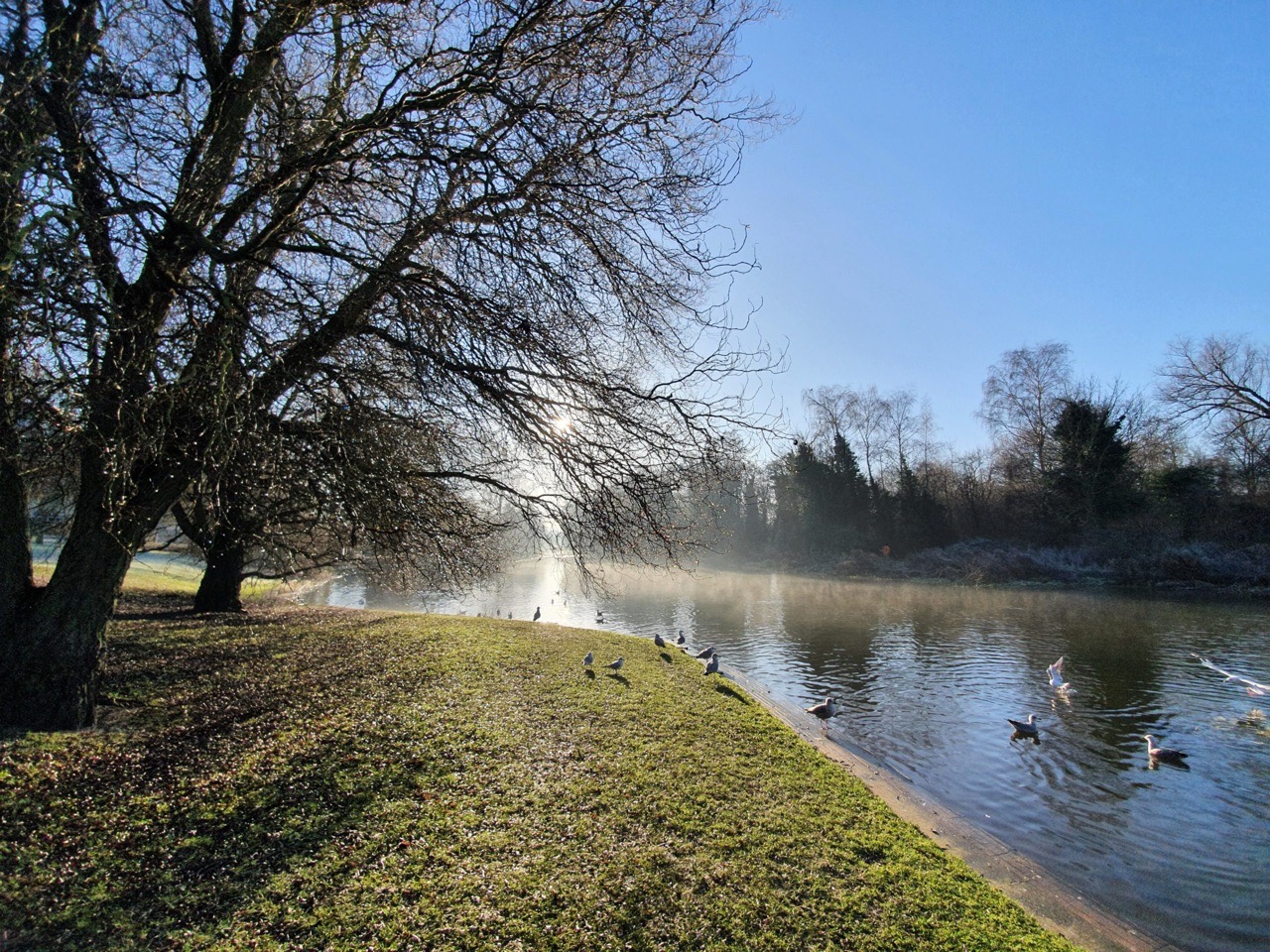
    These photos are all from the river section at Wensum Park, which looks rather beautiful in the morning. Best known now as where Nathan dumps his unwanted bread into the river, this stretch of land was purchased by the city council in 1907. This was rather forward thinking of them, a useful amenity for the people of Norwich and they built a swimming pool, paddling pool and wading pools for the locals to use. The locals responded to this by using the swimming pool as a refuse tip, so a new plan was put forwards by the council to use the area as a public park. Designed by Captain Sandys-Winsch and constructed with unemployed labour, the park was opened in 1925 and it remains in use for that purpose today.

    Just a little further along the river, this looks quite remote, but it’s actually next to the Recycling Centre at Mile Cross.

    We did plan, many years ago, to come to the Gatehouse Pub at some point, partly as it’s on the CAMRA Regionally Important Historic Interiors list. Now that we finally get here the damn thing is of course shut, but we’ll go back when pubs re-open. The pub has a large beer garden which stretches down to the Wensum and it’s built on the site of a former toll-house.

    A stretch of the Wensum just off Hellesdon Road. It was around here that I started to try and break the iced up sections at the side of the river like some kid…. I got bored of that quite quickly when I realised that I might fall into the mud.

    I read the other day in the newspaper that there are parakeets flying about all over England, which is giving some concern as they’re not a native species. And there were several in the trees here, I think they’re rather interesting birds which add some character, but maybe their invasive behaviours upset seagulls or something. Nathan used his wooing skills, which seemed to be similar to the random noises he makes to his cat, to charm the parakeets down. It didn’t work. I pretended that I thought Nathan was like Bill Oddie and it was very surprising to me the birds didn’t flock down.

    A little collection of cut down trees.

    This is the river at the junction with Hellesdon Road, near to where Marriott’s Way is. We didn’t walk on Marriott’s Way (the former railway line that got shut down in the 1960s) on the way out, instead remaining on the other side of the river bank.

    This was rather lovely for Nathan, back to where he got married last year.

    The medieval standing cross in the churchyard. The lower section is thought to have been in situ for over 700 years.

    The village sign.

    It’s now been converted into residential properties, but this was Hellesdon Mill, a formidable building.

    We did have a plan to investigate this area as it’s by the river, but it’s owned by the Environment Agency and they’ve kept their bridge firmly locked to discourage anyone from crossing it. We didn’t try.

    These photos are of Drayton Green Lanes, an area of walking that we hadn’t noticed on the map, but which let us get close to the river. It’s really nicely looked after and some volunteers from Norwich Fringe Countryside Management Project recently fixed some damaged boardwalk under the supervision of Drayton Parish Council. This bit of land, which it appears no-one ever claimed ownership of, was a quite welcome surprise.

    The walk into Drayton along Low Road, which meant that we could see the river on our left. I must admit to getting quite into this whole project by this point as although I live near to the River Wensum, it suddenly seemed to be quite magical as we walked along it towards its source. To be honest, I think I need to get out more……

    I had hoped that E Pratt and Co were doing some delicious sausage rolls as their reviews looked rather positive. They’re a local butcher, but the situation was confused (well, I was confused, which doesn’t take much) and I came to the conclusion they weren’t selling hot food as despite a carvery sign the menu boards were all for raw meat. Delicious as that probably was, I thought better of it. Marginally disappointing, I was hoping it’d be as good as Greggs.

    I did try and find some food in the Applegreen petrol station instead, but it appeared to me from the pricing that Harrods had done a take-over of the premises. There was a Tesco next door, but I didn’t want to go shopping for the sake of it at the moment when all I had wanted was chips or a sausage roll. So, I bravely left Drayton with no food.

    This is the stretch of the Wensum between Drayton and Costessey Mill. The river has been diverted, likely a very long time ago, so there are two stretches here, one which is likely the original course of the Wensum and another which is what powers the mill.

    The mill here has gone, destroyed in a fire in the 1920s.

    Nathan navigating a minor tributary of the Wensum.

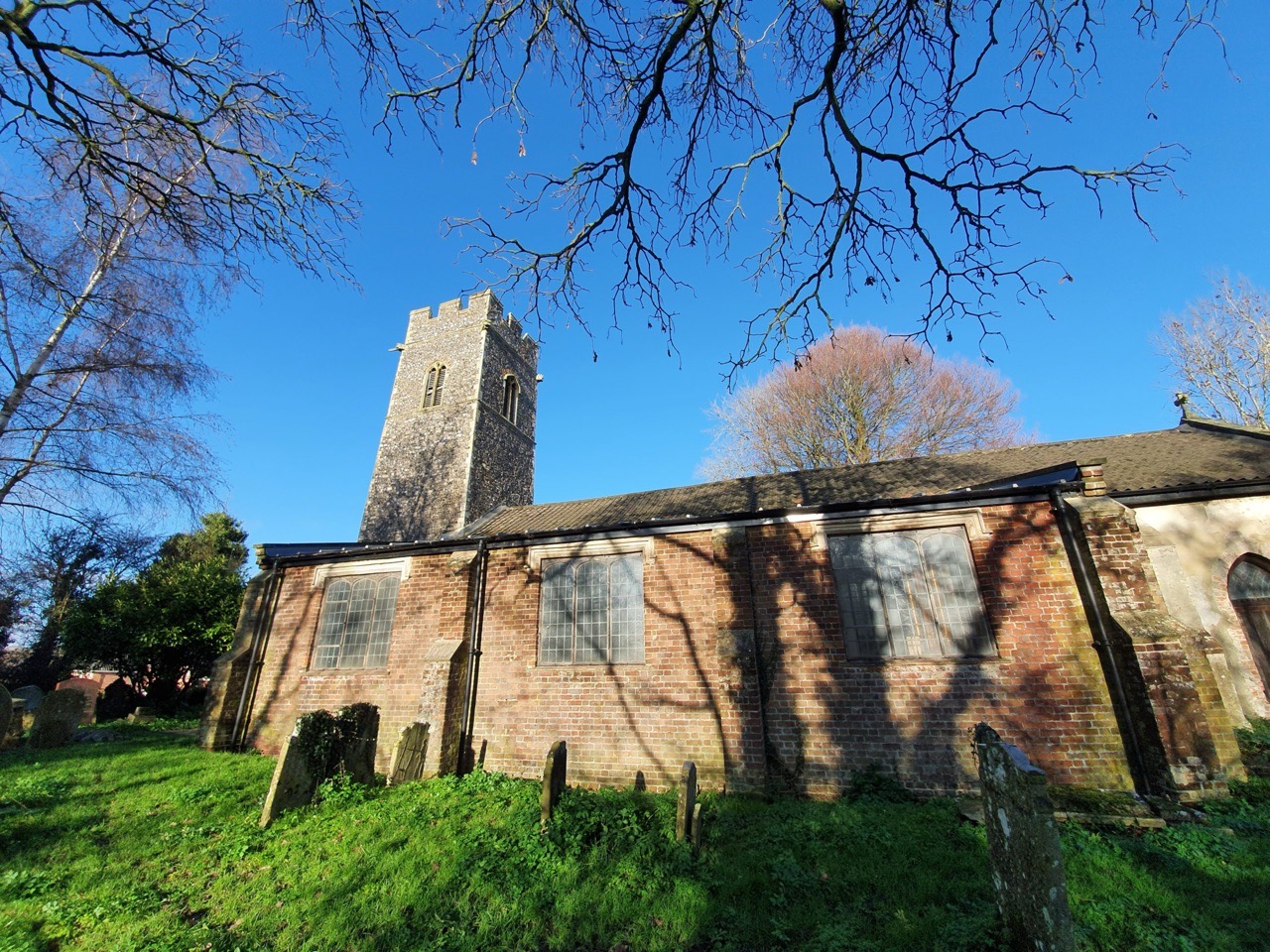
    This is St. Edmund’s Church in Costessey, which I visited briefly on Steve’s walk last year. The building’s history puzzled me, I’ll have to read up about it as there seem to be numerous additions from different periods. In short, there has likely been a church here since Saxon times, but the current one is mostly from the thirteenth century, albeit with a Victorian restoration.

    I hadn’t noticed this before, in memory of 10 members of 564 Bomb Squadron who crashed in Carr’s Hill Wood in Costessey on 7 March 1945. There was a campaign for the footpath to this site to be kept open, as it was on permissive land and the owner wanted it closed off. I don’t know what came of that, as the permissive path ceased in 2017, but I’ll find out.

    An unusual positioning of some of the older graves.

    Nathan was fascinated with the grave of Wandering Wal, and it sounds like this man had an eventful and interesting life.

    I assumed when walking by this building that it was a Victorian school, but it’s actually a hall which I think is linked to the Our Lady and St Walstan Roman Catholic Church which is located opposite.

    Although we had to walk back to Norwich at this point, nothing of huge interest happened although we discovered just how many people are walking along Marriott’s Way. And, the point of this walk was to follow the route of the River Wensum, so in a future blog post, we will continue our trail from where we finished and pick up the story again as we head off from the Taverham area. For anyone who looks on a map, they might notice that we didn’t get very far along the River Wensum, but there’s no need to rush adventure….

    As for our training for the LDWA 100….. This seems to be creeping up on us if I’m being honest and I’m not entirely sure that we’re filled with optimism. We’re confident of completing 60 miles, but more than that will be down to the Gods. Well, I say Gods, but I more mean our feet. Anyway, we’ll see what happens, but we’ve been very brave so far. There were no injuries today, other than Nathan’s slightly dodgy knee, and at least that bodes well (the no injuries part that is)
  • Framingham Earl – St. Andrew’s Church

    Framingham Earl – St. Andrew’s Church

    Although located near to Poringland, the church of Framingham Earl feels remote and peaceful.

    The locked thirteenth century porch, hiding the view of the Norman doorway within.

    The round church tower, probably dating from the early Norman period.

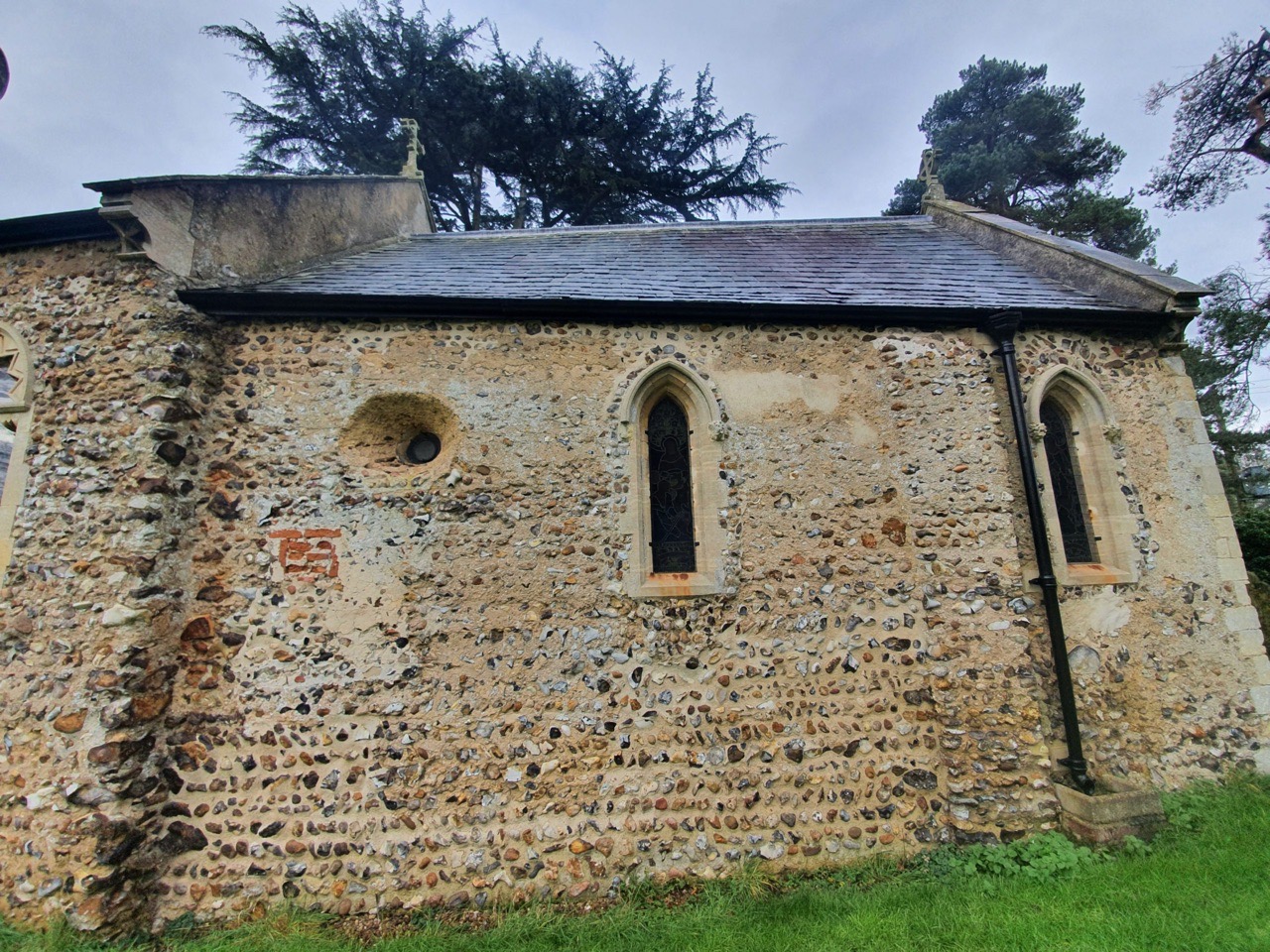
    I’ve read what a few historians have made of this and I’m not sure that I’m any the wiser as their assessments vary. Ignoring those later windows, this does look old, both in terms of the wall and what looks like a Saxon window on the left. Unfortunately, my architectural knowledge isn’t good enough to be able to add much else here, but I like to think that those who say this part of the church is Saxon are correct.

    There is definitely something magical with knowing this structure is over 1,000 years old, although at least it’s known that there has been a religious building on this site for at least that period. And investigations completed in 1984 do suggest that there was likely a Saxon apse at the end of the chancel, although that was unfortunately taken down long ago.

    An historian writing in the Eastern Daily Press back in 1876 said that he suspected there was once a Saxon apse because the wall was much more modern at the end of the church. His hunch was entirely correct, but he also noted that he was present when these circular Saxon windows were examined. He found evidence of an old grove where a wooden frame would have been, which protected against birds or weather at a time when there might not have been any glass to do that job.

    On the other side of the chancel, I think that’s another Saxon window. I note that George Plunkett also thinks it’s Saxon and I’m pleased at that, as he seems to very rarely be wrong.

    One of the church’s two mass dials.

    This one doesn’t make sense to me, it’s a mass dial but it’s upside down. Unless I’ve misunderstood its purpose, this is likely the result of the Victorian restorers.

    The grave of one of the most respected writers of the late twentieth century, Winfried Georg Sebald (1944-2001) who was killed in a car crash and is buried here as he lived nearby.

    The churchyard.

    And, on a personal note. I didn’t meander around many of the graves here, as they were mostly too modern to have much historic interest to me. I did note one particularly nice gravestone that I went to look at, before realising that it was someone in the same school year as me who died young. I didn’t know that he was from this part of Norfolk, but his gravestone and its message is beautiful. I can think of very few modern gravestones which have intrigued me, so for it to transpire to be someone I knew made it quite poignant. God bless his soul.

  • Norwich – King Street Letterbox

    Norwich – King Street Letterbox

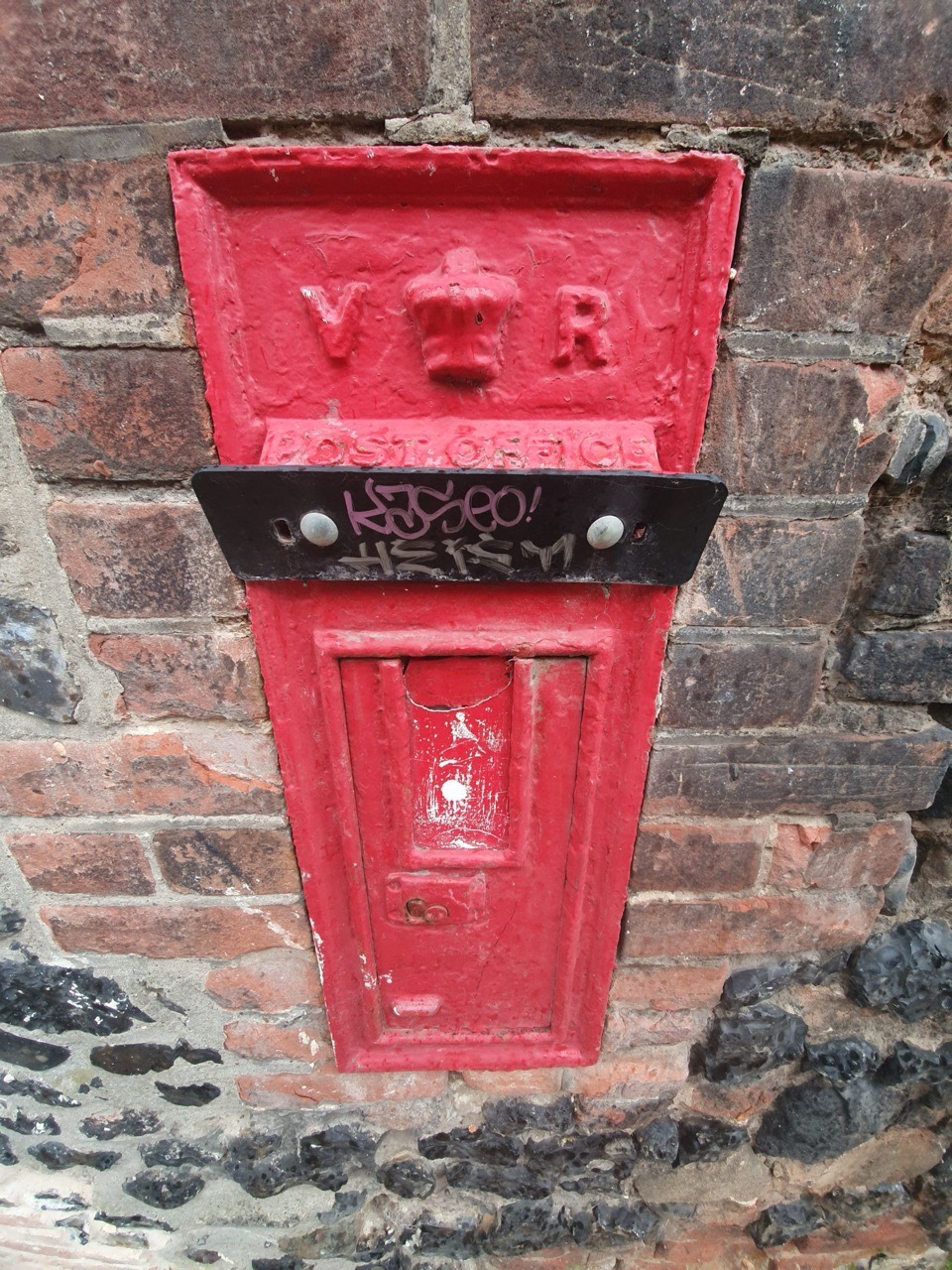
    I might mention now that I can’t pretend that this is necessarily my most interesting blog post, but this letterbox is Grade II listed so there is definite heritage value to it. It dates to around 1870, so it’s only around a decade later than the first post boxes to be introduced in the UK, and it has only been closed up recently. It’s located on Howard’s House (97, King Street) in Norwich, a remarkable survival in itself which has so nearly been demolished on a few occasions.

    George Plunkett once again doesn’t let me down, the post box is visible (just) in this photo from 1934. Even given that it has recently been closed up, there’s something quite intriguing about anything that has remained in use for so long, this would have served the postal needs of thousands of local residents in the Victorian period.

  • Poringland – The Fish Inn

    Poringland – The Fish Inn

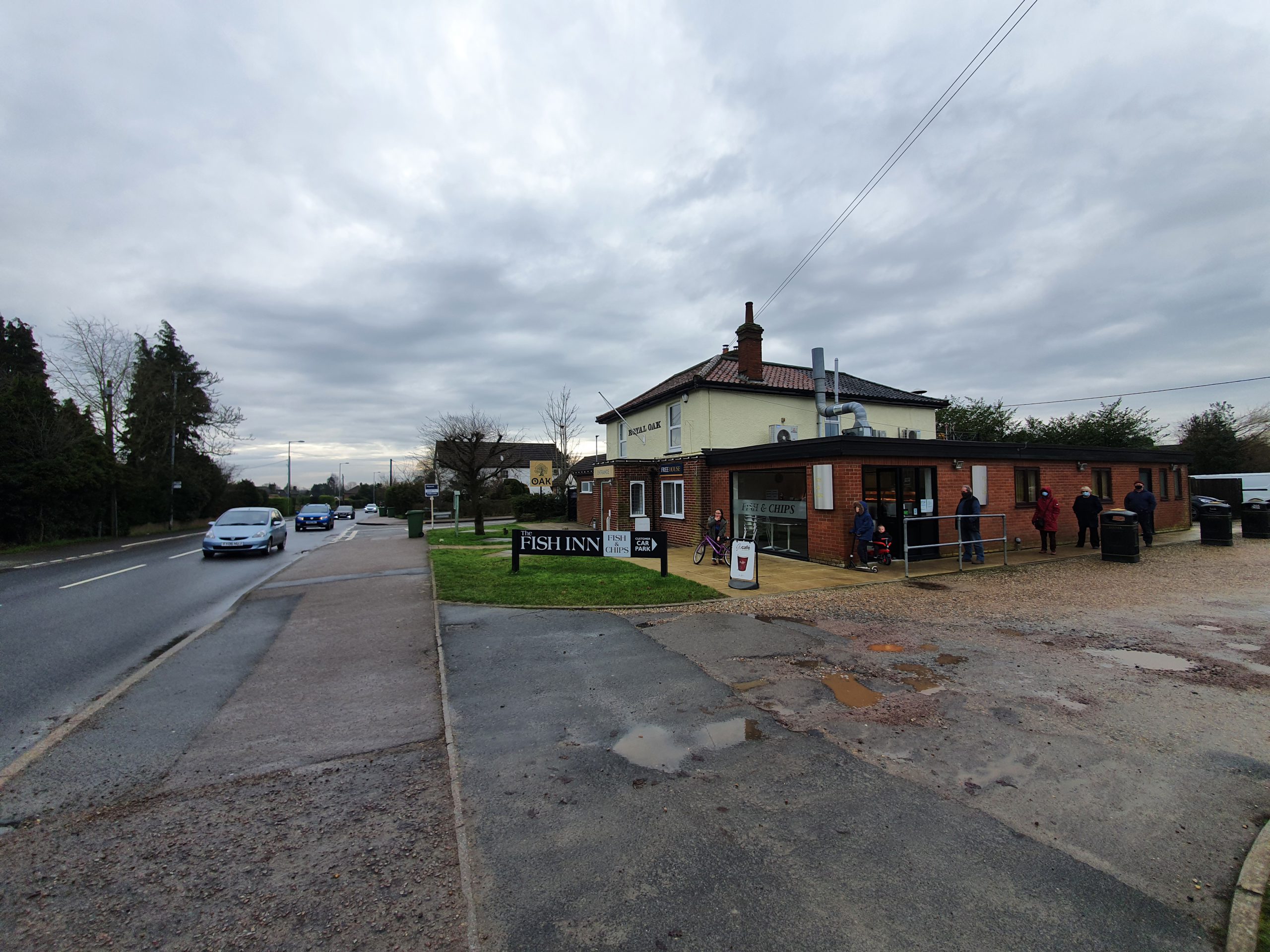
    The Fish Inn in Poringland, one of our destinations for the day. As can be seen, there was no shortage of customers waiting to get in.

    The chip shop is attached to the Royal Oak pub (which for reasons unknown has recently decided to rebrand as the Poringland Oak, but will no doubt confuse many people). This is extension is relatively new (1980s perhaps) and there are some interesting old photos of the pub at http://www.poringlandarchive.co.uk/poringland/the-royal-oak.

    I was pleased that the chip shop was open when we went, as there was no information on-line and we thought we’d just take a chance. The opening times are quite limited, but this is a temporary arrangement given current events. The lack of card payment always slightly annoys me (although I was prepared for that here as they’ve picked up some negative reviews already for this decision), but is harder to justify given the current health situation. I haven’t seen anyone paying by cheque for some time, I was moderately surprised to see that.

    Lack of contactless payments aside, the operation seemed very safe inside with only one customer allowed in at a time and large protective screens. The service was efficient and friendly, it all seemed well managed.

    The battered sausage and chips was £2.50, which is pretty reasonable. The chips were excellent and had a sufficient depth of flavour without being greasy, with the battered sausage being generic but still entirely acceptable. Sauces are extra, but salt and vinegar is available and is added by the staff member.

    The reviews for this chip shop aren’t that positive at all, but that seems a little unfair. The limited opening hours probably make this easier to run at the moment as they don’t need to have food sitting around drying up, but I had no complaints about the service or food. I probably won’t go back (although since I’d have to walk over 5 miles to get there and then 5 miles back, I was never going to be their biggest customer) as cash only places are becoming ever more rare, but perhaps they’ll change that in due course. At the moment they just have to have numerous signs up saying they don’t accept cards, no doubt because it’s such a common request.

  • Norwich – Flint Wall of Bridewell

    Norwich – Flint Wall of Bridewell

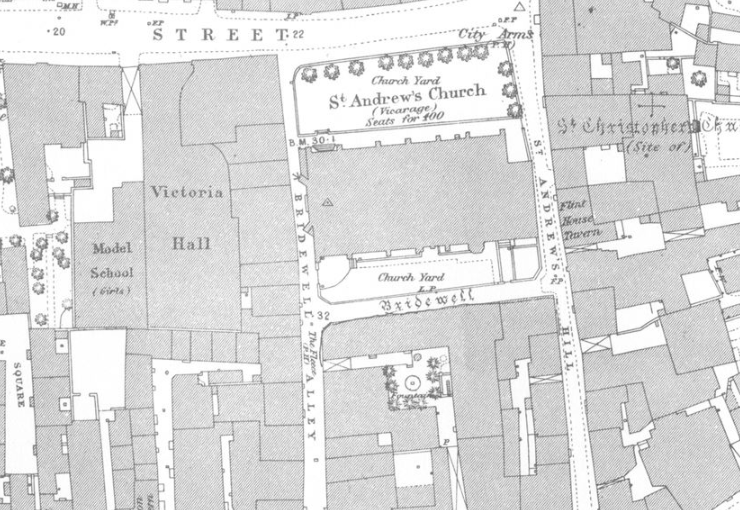
    This pathway doesn’t appear to have a name on either old or new maps, but it separates Bridewell Museum from St. Andrew’s Church. And indeed, it appears that if we could go back 500 years to take a photo, this would look nearly exactly the same. Well, other than for the paving, that might not have been as good.

    OK, this is just a flint wall on the north side of Bridewell Museum, but it has gained a reputation for being one of the finest walls of its type in the country. And I think that deserves a blog post all of its own….

    What is today known as the Bridewell was actually built as a residential property in the late thirteenth or early fourteenth century. It was upgraded by William Appleyard in 1386, and at a guess, I think that this was when this wall was constructed. The building’s use changed after 1583, when it became used to house the city’s poor and unemployed, putting them to work, which is when it became the Bridewell.

    As an aside here, a Bridewell is a prison, and it took its name from one which was set up in London that was next St. Bride’s Holy Well. The name stuck there and was then used throughout the country, although these buildings were often also referred to as Houses of Correction. Anyway, the building was badly damaged by fire in 1751, the prisoners were moved out and it was then used as a factory, warehouse, storage unit and anything else the locals could think of. In the early twentieth century, it was given to the city to be used as a museum and it is now known as Bridewell Museum, the Museum of Norwich.

    The quality of this wall is pretty impressive and I’d hardly call myself a flint expert.

    This intrigued me and I could think of only one person I knew that could tell me what this was, and that’s my fellow NORAH trustee, David Stannard. I hope he won’t mind me quoting him:

    “The Bridewell wall is a classic example of knapped flint, and the picture of the circular feature is just that, flint. Flint is amorphous, i.e. it has no crystal structure to determine the way it breaks, and this block of flint, when broken in half by a hammer has produced this curious bulb…..it is termed conchoidal fracture.

    Curiously, if you look at the picture upside down you get an optical illusion of a hole rather than a cone….so there may be a corresponding ‘hole’ somewhere else on the wall….the courses above and below show similar bulb features.”

    And he’s quite right, look at the photo upside down!

  • Norwich – St. Stephen’s Church (Gates)

    Norwich – St. Stephen’s Church (Gates)

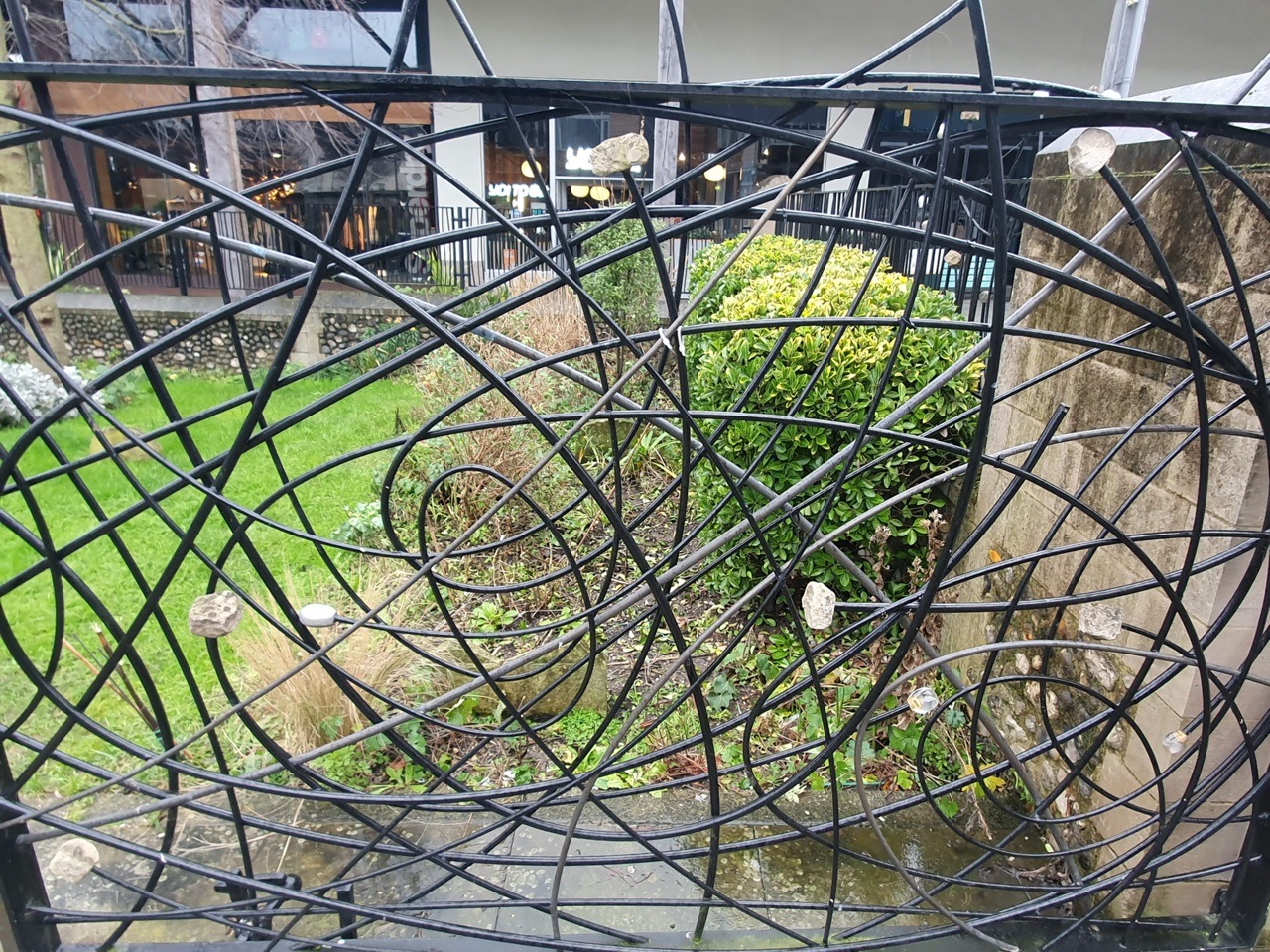
    I’ve learned something new today….. These are the gates of St. Stephen’s Church in Norwich where it meets Chapelfield (Chantry) shopping centre. I hadn’t given them much attention before, but they are finely made and add some character to the entrance to the churchyard. Anyway, what I didn’t know is that the stones set within the gate are there for a reason, they represent the stones that killed St. Stephen, who was stoned to death for his Christian beliefs.

    I admit that this probably isn’t the sort of fact that someone will want to rush to tell others, but I’ll look out for similar such projects when I visit churches dedicated to St. Stephen. As an aside, if the UK had remained Catholic, it’s unlikely we’d have anything called Boxing Day, we’d be like many other European countries and have a St. Stephen’s Day on 26 December.

  • Norfolk – Hundreds and Parishes of Norfolk

    Norfolk – Hundreds and Parishes of Norfolk

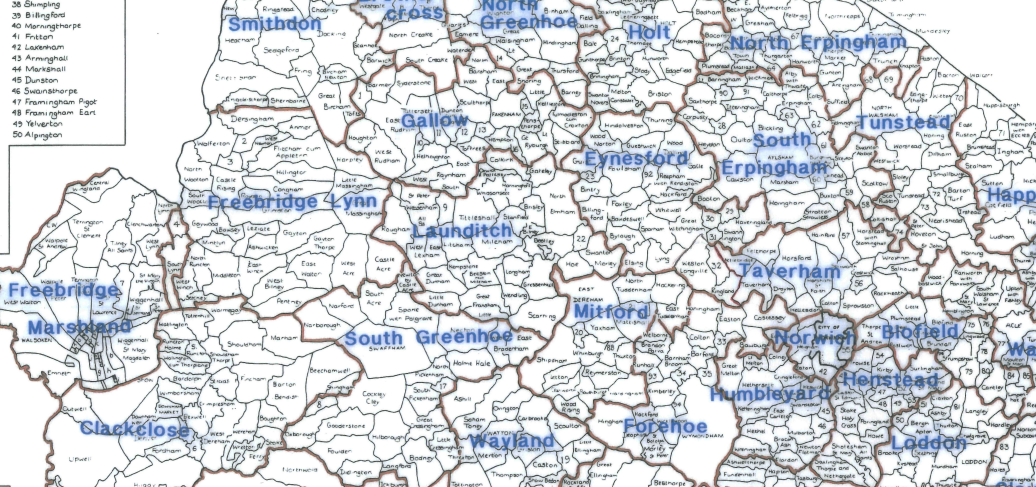
    Hundreds of Norfolk (in .pdf format)

    The hundreds are the old administrative divisions of Norfolk, in place from the Anglo-Saxon period to the nineteenth century civic reforms. I hadn’t seen this Hundreds of Norfolk map before, which has the parishes and the hundreds marked on it, which is rather useful. The PDF has been produced by the wonderful Norfolk Record Office and it’s a handy way of seeing how the old parishes and hundreds were made up. There were surprisingly few changes over the centuries, with 36 hundreds in Anglo-Saxon times and 33 by the middle of the nineteenth century.

  • Streets of Norwich – Barwells Court

    Streets of Norwich – Barwells Court

    Part of my Streets of Norwich project….

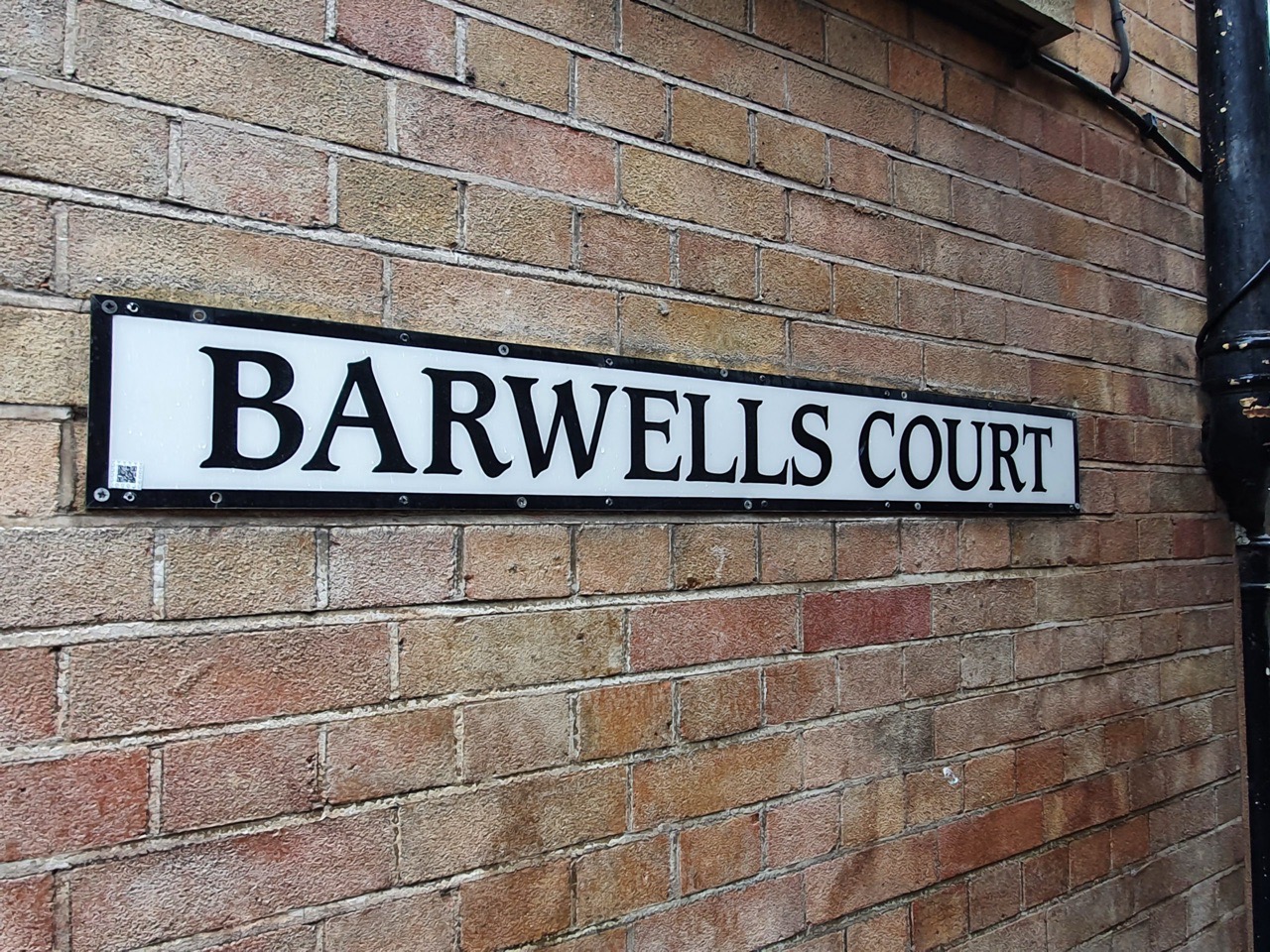
    This court connects St. Stephen’s Church to St. Stephen’s Street and isn’t the easiest of pathways to socially distance on, although fortunately I didn’t see anyone when walking down it.

    There is very little visually that is of much interest along this court, but its survival is quite remarkable as nearly every building along its route has changed over the last century. This was once where people lived and worked, but is now the rear of shops which stretch along St. Stephen’s Street. Norwich once had hundreds of courts and yards, although relatively few of them have survived in anything like their original form.

    This is the original width of the path and it has always been a thoroughfare and not just a court which has been opened up.

    This is looking towards St. Stephen’s Street and there is now a connection between the two properties which joins the buildings.

    Looking at the entrance to Barwells Court from St. Stephen’s Street, where there is now a Superdrug on one side and M&S on the other (formerly an H Samuels before M&S kept making their shop bigger).

    The court takes its name from Barwells Wine Merchants, which had been set up by John Barwell (1798-1876) and he was married to Louisa Barwell, the musician and educational writer. As ever, George Plunkett has a photograph here of interest, which shows damage from the Second World War and also what was underneath what is now Superdrug, but was then the premises of Barwells Wine Merchants.

  • Streets of Norwich – Fishers Lane

    Streets of Norwich – Fishers Lane

    Part of my Streets of Norwich project…. I hadn’t forgotten about it, and perhaps in 2021 I might finish it.

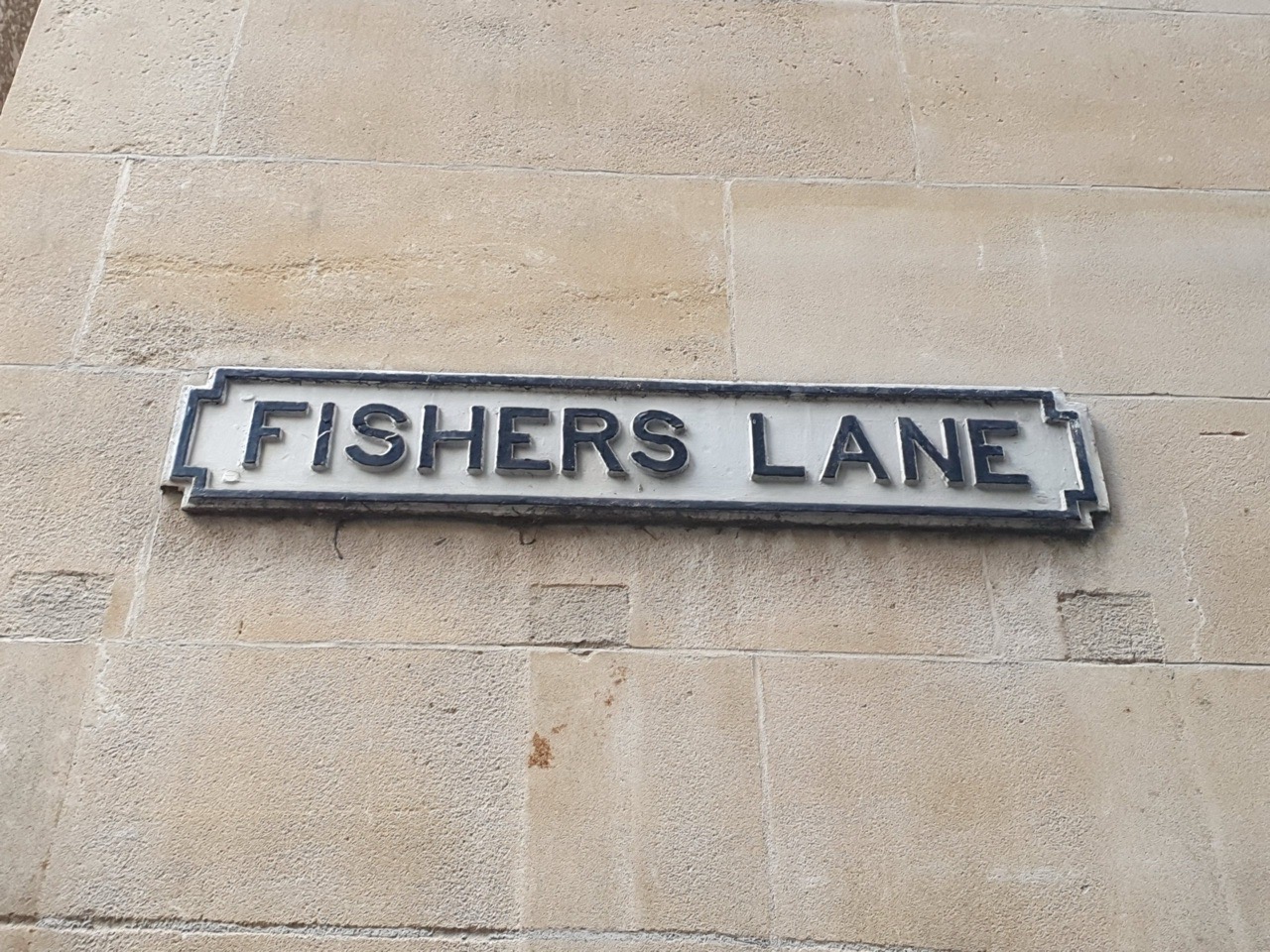
    This is Fishers Lane (Fisher Lane on the above map) which is between Pottergate and St. Giles Street. The map above is around 100 years old, the one below is around 150 years old and maps in general alternate between Fisher and Fishers Lane (as well as Fisher’s Lane).

    Clicking on the image will make the map larger and it’s possible to see there were two courts off this street, the Bear & Staff Court and Roache’s Court.

    From 1907.

    The police didn’t like the pub called the Bear & Staff and in 1908 they complained to magistrates that the customers were of a lower class and criminals frequented it. Its location, tucked away in that court, does give it a feel of being somewhat of a vibrant location. The pub sadly closed in 1910, if it had survived I imagine it would have been one of Norwich’s quirkiest drinking options. Unfortunately, the entire street has been lost, although George Plunkett was able to get a photograph of the southern side in 1938.

    The entrance to Fishers Lane from St Giles Street and that is St Giles Hotel on the left hand side.

    Sadly, most of the historic interest of this street has been lost, the entrance to Bear & Staff Court would have been around where the two buildings on the left hand side join. The ugly cladded building is Vantage House, which was used as offices by the council, but the owners have been granted permission to turn it into 44 flats. That cladding was added by Harley Facades, better known now perhaps for their work on the Grenfell Tower refurbishment. I’m not sure why the council have granted permission for it to be turned into flats (although I think they might have had limited powers to stop it as it’s a conversion), it’s not a pleasant building and I’d have thought it would have been better to demolish it and replace it with something more uniquely designed and purpose built for housing.

    Looking back to St Giles Street.

    The buildings on the other side of the road are older and are former warehouses, although nothing on the street is listed (other than the properties facing onto St Giles Street).

    Standing on Pottergate looking back up the hill.

  • Lakenham – Church of St. John the Baptist (John Mackie)

    Lakenham – Church of St. John the Baptist (John Mackie)

    It’s fair to say that I wasn’t over-excited about this church, but the churchyard of St. John’s has some interesting graves. This one puzzled me because of just how well it has been preserved. It stands on top of bricks and looks almost new, despite it dating back to 1796. I’m unsure of why this is, it gives the impression of having been moved from inside, but there’s no obvious evidence that this is what has happened.

    Anyway, it’s the tombstone of John Mackie, as well as two of his children who died in their infancy, Mary and Charles. John married Mary Aram at this church on 8 January 1778. Mary, who is buried with her father, had been baptised on 4 August 1782, but she sadly died at the age of two and was buried at the church on 16 November 1784. Charles, also buried with his father, died at the same age, being buried on 17 March 1791.

    I’m unsure how many children the couple had, but this is the baptism record for John and Mary’s son, also named John. He was baptised at the church on 29 March 1785, a reminder of how important St. John’s Church would have been to the family. Unfortunately, the younger John didn’t have that long a life, he died at the age of 33 in 1818.

    John worked as a seedsman and this is one of the ads that he placed in the Norfolk Chronicle in 1788. He must have been reasonably well known locally, as he never placed his address in these adverts, but I think his nursery was on the Ipswich Road. That means it would have likely had a prominent location for those entering and leaving the city.

    It was reported in the Norfolk Chronicle on 22 October 1796 that John had died, noting “Monday last died, Mr. John Mackie, nursery and seedsman, near this city, aged 53; whose abilities in his profession, attention to business, and obliging liberal behaviour, was exceeded only by his affection and tenderness to a disconsolate wife and family”.

    The expense of the tombstone suggests that John wasn’t a poor man and his trade seems to be one which afforded him some luxuries. He also seemed to breed spaniels, as there are numerous adverts relating to that in the local press. His business survived though after his death, it was taken on by family members who kept the Ipswich Road site operational. It evolved into Mackie and Ewing’s Nursery and the business was still trading in the late nineteenth century.