Category: Norfolk

  • Norwich – Norwich War Memorial (Wilfred Edwards)

    Norwich – Norwich War Memorial (Wilfred Edwards)

    Located in front of Norwich’s war memorial are a few stone commemorative slabs that I only noticed for the first time last week.

    This is one of them, for Private Wilfred Edwards, from the King’s Own Yorkshire Light Infantry, and it was placed here in August 2017. The date isn’t Wilfred’s death, but is from the event when his actions won him the Victoria Cross on 16 August 1917. This award was issued 628 times in the First World War, the most of any conflict as there have only ever been 1,355 recipients.

    His Victoria Cross award reads:

    “For most conspicuous bravery when under heavy machine gun and rifle fire from a strong concrete fort. Having lost all his company officers, without hesitation he dashed forwards at great personal risk, bombed through the loopholes, surmounted the fort and waved to his company to advance. By his splendid example he saved a most critical situation at a time when the whole battalion was held up and a leader urgently needed. Three officers and thirty other ranks were taken prisoner by him in the fort. Later Private Edwards did most valuable work as a runner and eventually guided most of the battalion out through very difficult ground. Throughout he set a splendid example and was utterly regardless of danger.”

    And the reason that this is commemorated in Norwich is that this is the city in which Wilfred was born, on 16 February 1893 at 76 Vauxhall Street in Heigham. I’ll leave it a Victoria Cross web-site to tell the bulk of the story, as they have far more detail than I would have collected. I like the letter sent by Wilfred’s commanding officer which he sent to his wife after Wilfred’s award was given, noting “men in my battalion keep getting honours, but I have not heard a word about mine”.

    Wilfred became a second lieutenant in December 1917 and left the military in 1919. At the time of the 1939 register, he was living at 33 Greenhill Crescent in Leeds, with his wife Belinda (born on 21 December 1892). He served again during the Second World War, this time he reached the rank of major. He died at the age of 78 on 4 January 1972 and is buried at Upper and Lower Wortley Cemetery in Leeds.

  • Marlingford – St. Mary’s Church

    Marlingford – St. Mary’s Church

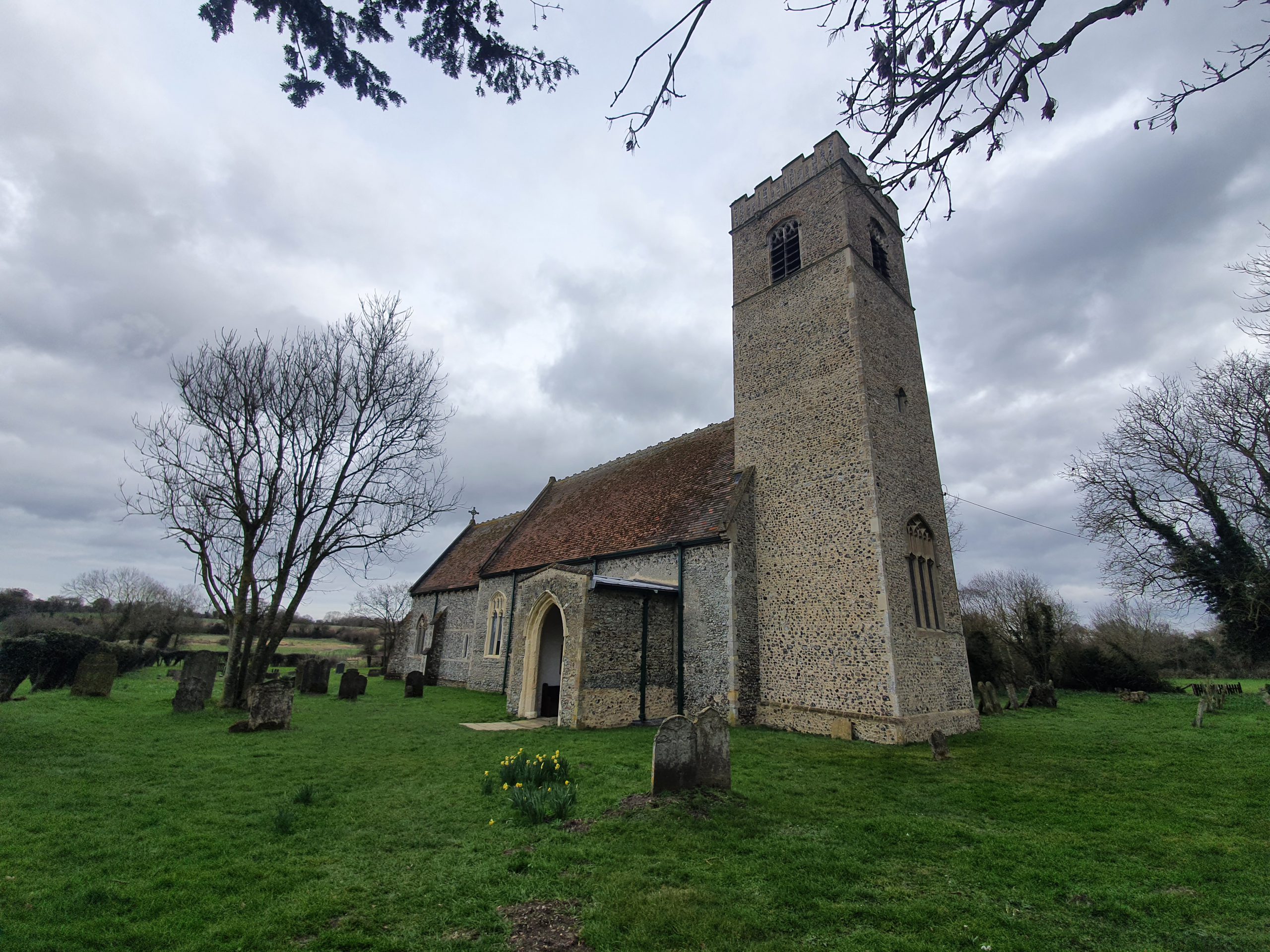
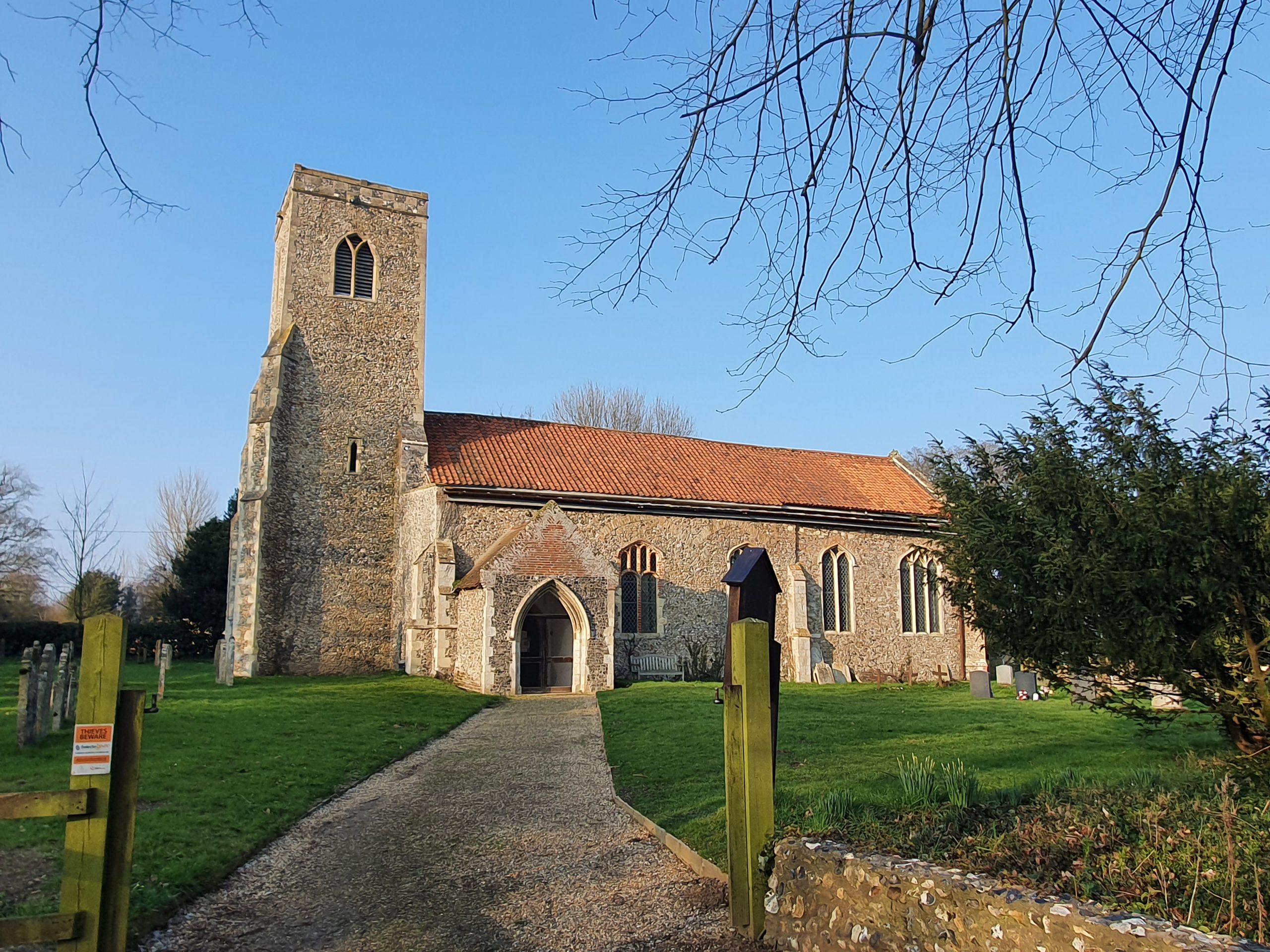
    This is St. Mary’s Church in Marlingford, a little way from the heart of the village and its pub, but very close to Marlingford Hall.

    The church is in a relatively remote setting and it does have that feeling of calm and peace.

    This entirely puzzled me, what was clearly a relatively new chancel, but with a blocked up priest’s door with brick from a similar period. It could be a design feature, as the chancel was replaced in 1816 and there was an attempt to recreate some of the heritage elements of the previous one, or it could have been a relatively sudden change in design. This door was also blocked out with ivy in the early twentieth century, so perhaps this was meant to be some sort of hidden feature.

    The tower is from the fourteenth century.

    The chancel (on the left) dates to 1816 and the north aisle (on the right) dates to 1881, although both replaced existing structures.

    The inside of the church was closed, but there looked like some interesting stained glass. There is a window inside the church which was unveiled in January 1906 to commemorate the death of Sub-Lieutenant Edward Travers Fletcher, who had died in the A8 submarine disaster. The family had to go to the Consistory Court in Norwich in December 1905 to get permission to do this, but there were no objections from the church.

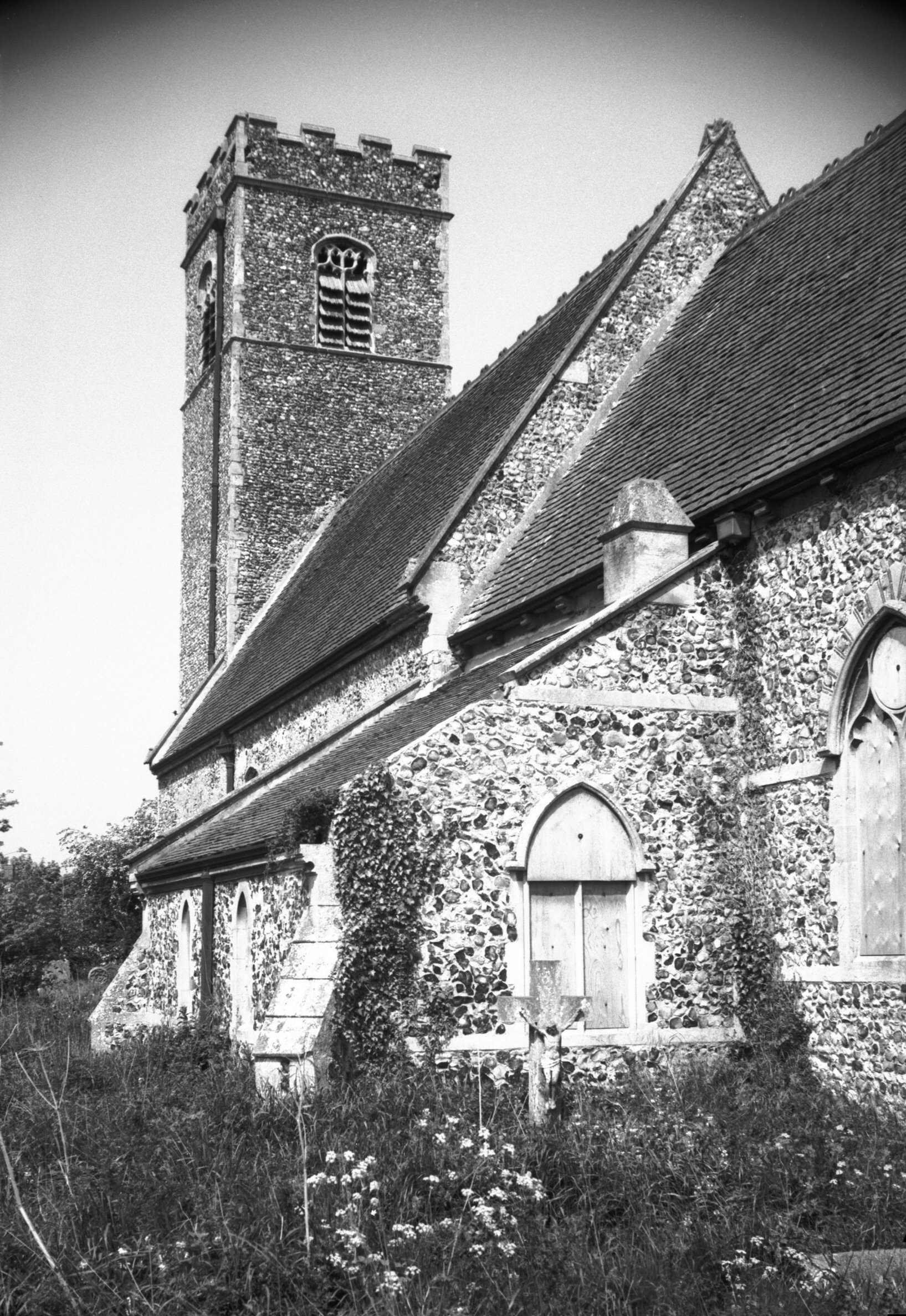
    These nails protruded from the end of the chancel wall and I was entirely unsure of why they were there. Richard suggested, I suspect wisely, that they might have been to guide ivy up the wall. Once it was thought that this helped protect buildings, now it’s clearer how much it can damage them. This photo from George Plunkett in 1940 also suggests that Richard was right.

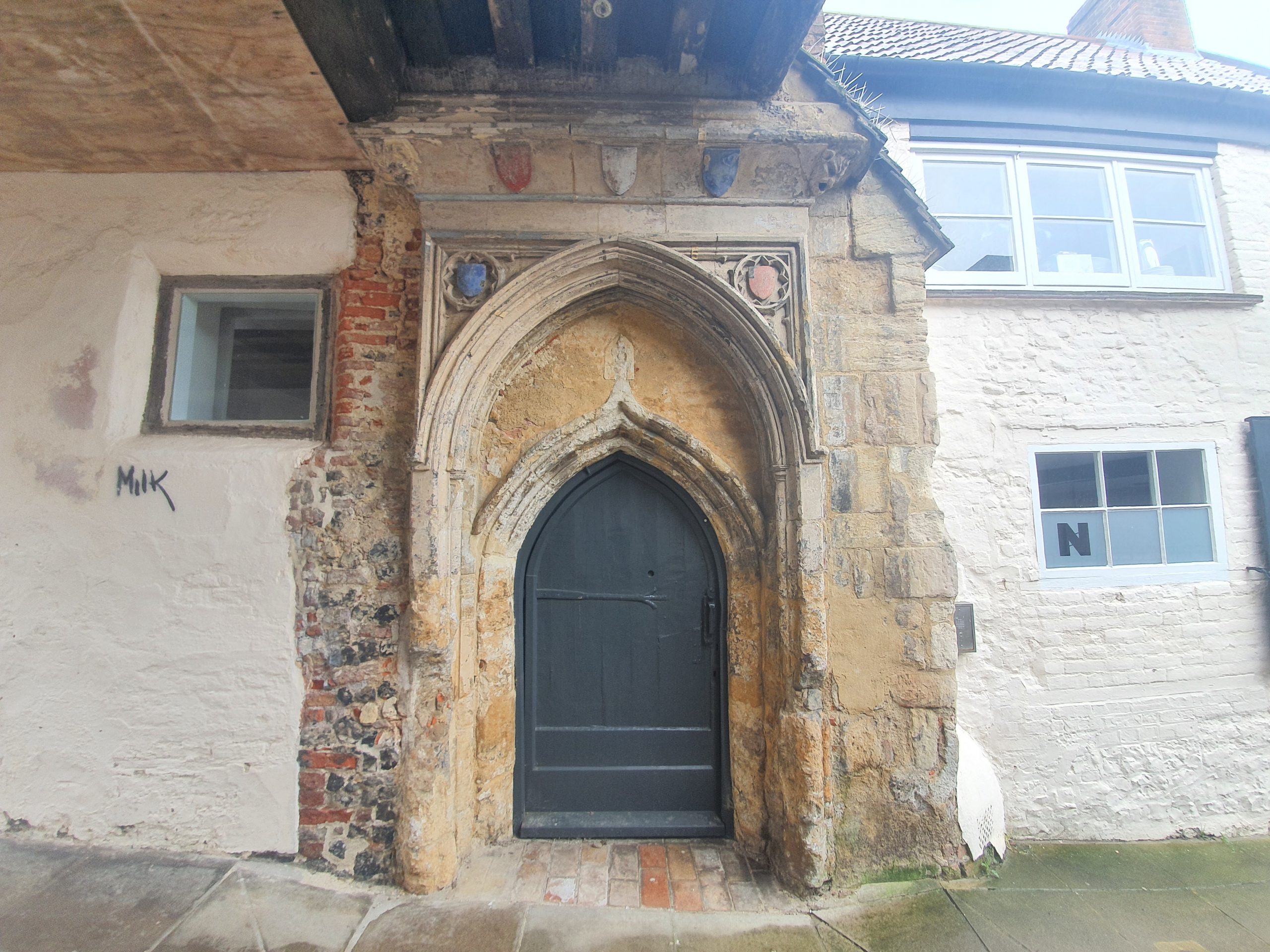
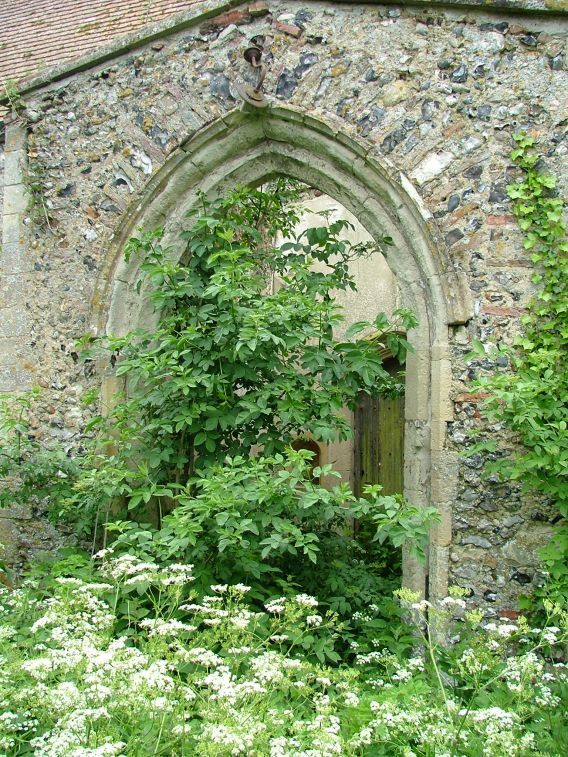
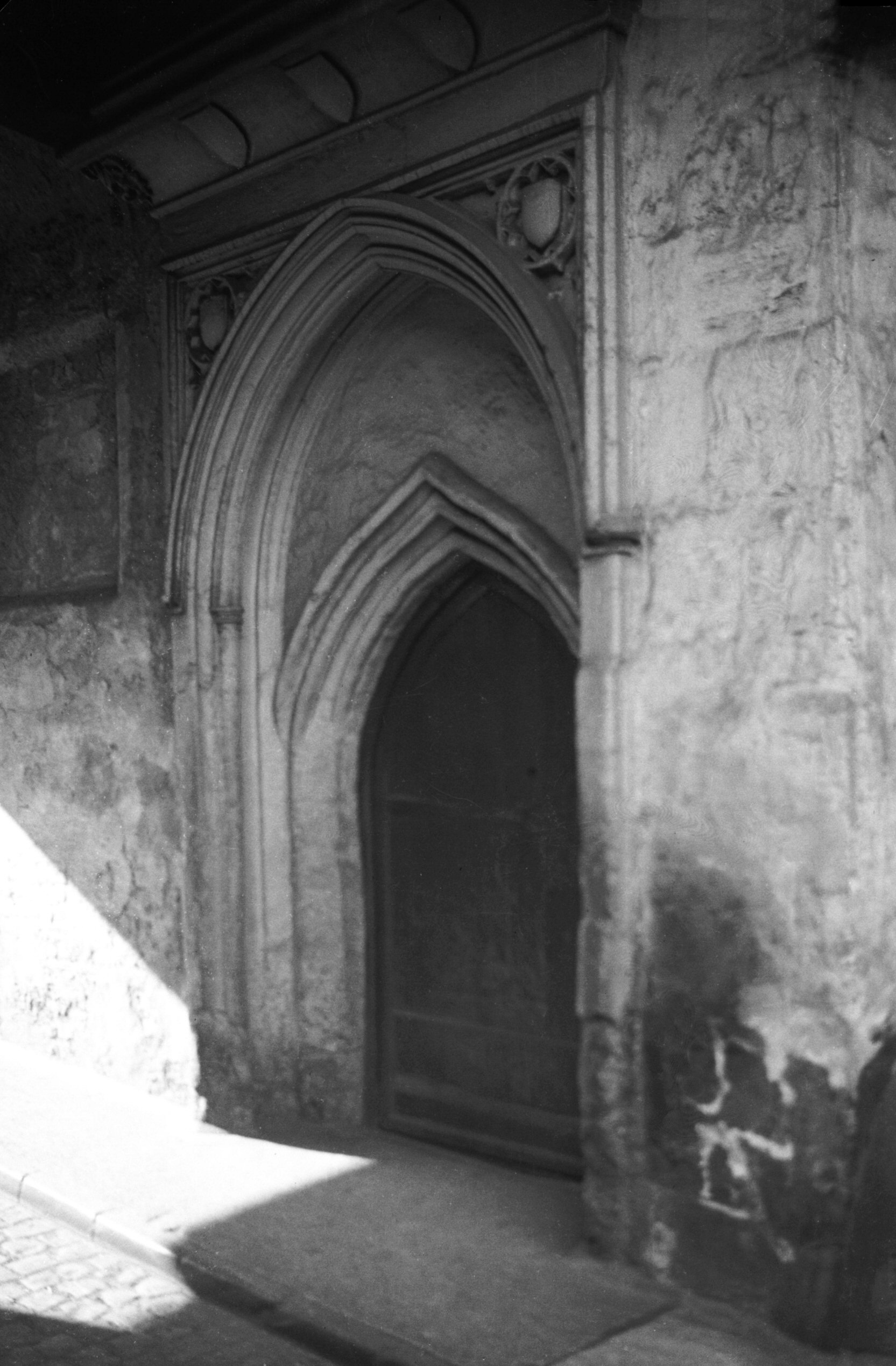
    I know that I really need to get out more, but this is a pretty stunning Norman doorway, likely from around the twelfth century. George Plunkett has a photo of the doorway from 1940 and I wonder just how many signs have been attached to that old door over the centuries.

    I’m not entirely sure what this little arrangement of what appears to be gravestones is doing here. I assume that they are a pile of broken bits of stone that have been kept in this spot, but the moss suggests they’ve been here for at least a few years.

    Marlingford Hall is clearly visible from the churchyard and is much expanded from its original early seventeenth building.

  • Norwich – St. Miles Bridge

    Norwich – St. Miles Bridge

    St Miles Bridge is the oldest iron bridge in the city (and according to the Institute of Civil Engineers – and I hope Liam is pleased that I mention them) it’s also the oldest in the area. I will quote the ICE as their explanation sounds a bit technical for me:

    “This bridge was constructed only 25 years after the world’s first at Ironbridge in Shropshire. Its construction owes much to carpentry. Designed by James Frost, it is built of iron plates and ribs which were cast in a foundry next to the bridge. These were joined together with mortise and tenon joints which were “glued” with molten lead. During construction, this “new” technology may not have been trusted. The cast iron arch ribs were reinforced with a hidden brick arch which was
    discovered during refurbishment works in the 1990s.”

    The bridge on a map from the 1870s, the iron works is the large building to the top right and at the bottom right is Bullards Brewery. As can be seen on the photo at the top of this page, there are flood markers visible which indicate just how high the water has come. George Plunkett took a photo from nearly the same spot in 1934.

    A view from the bridge of the River Wensum and what is now much less of an industrial landscape than it was once was.

    This is used by the fire service if they need to get water from the river.

    This fine looking structure, which is now a residential property, was part of the large Bullards Anchor Brewery.

    There’s another reminder of that nearby.

    This information plaque is located on the bridge, giving a brief history of the origins of the Coslany name. This is also relevant here as the bridge has often been known as Coslany Bridge. The first bridge on this spot was a wooden structure that was constructed at the end of the twelfth century (making it one of the oldest bridged river crossings in Norwich), which was replaced by a stone structure in 1521. It must have been quite a brave decision to use iron to replace that stone, especially given what ICE mentioned about how new the technology was, but it seems to have lasted rather well.

  • Norwich – Gybson’s Conduit

    Norwich – Gybson’s Conduit

    This isn’t exactly a professional looking photo, but there are cars parked in front of this rather lovely structure. That’s the excuse I’m using, and this piece of history is something I hadn’t known about before until following one of the city’s heritage trails. It’s Gybson’s Conduit (or Gibson’s Conduit), which was erected in 1578 by Robert Gybson to allow people to have access to water. This wasn’t entirely a philanthropic gesture, he wanted to take over the land on which an ancient well was sited and used at St. Lawrence’s Lane, so he needed to offer this pump/conduit if he wanted to build his new properties. Gybson was a wealthy man, as well as being Sheriff of the city, so I don’t imagine that he had many issues in securing that permission.

    In all fairness to Gybson though, he didn’t scrimp and save on his new conduit. Part of it is a little bit of an advertising hoarding for Gybson’s life and generosity, but it is also respectful to the Crown. Having noted that, Gybson seemed to be quite a controversial figure and he was later rude to some Mayors of the city, eventually finding himself stripped of his freedoms and liberties, which I suspect he was most annoyed about.

    The panels read:

    Left: THIS WATER HERE CAUGHT/IN SORTE AS YOU MAY SEE/FROM A SPRING IS BROUGHTE/THREESKORE FOOT AND THREE

    Centre: GYBSON HATH IT SOUGHTE/FROM SAYNT LAWRENS WELL/AND HIS CHARGE THIS WROWTETH/WHO NOW HERE DO DWELL

    Right: THY EAS WAS HIS COSTE NOT SMAL/VOUCHSAFIED WEL OF THOSE/WHICH THANKFUL [BE] HIS WORK TO SE/AND THERE BE NO FOES

    The conduit wasn’t originally sited here, it was moved from a nearby location into the side of the wall of the new Bullard’s Brewery in the 1860s. At least it was saved at that point, although it’s not known exactly where it was originally located. It was moved again more recently when the Bullard’s site was turned into housing and it was moved to the other side of the wall on Westwick Street (George Plunkett has a photo) to face inwards to the new residential development. Although things are often moved for the convenience of property developers, here the structure feels much safer and away from the vandalism which it suffered from before. The Norwich Preservation Trust have overseen a fine restoration effort which was completed in 2011 and they have restored the stone and added colour back to the conduit.

  • Norwich – Pykerell’s House

    Norwich – Pykerell’s House

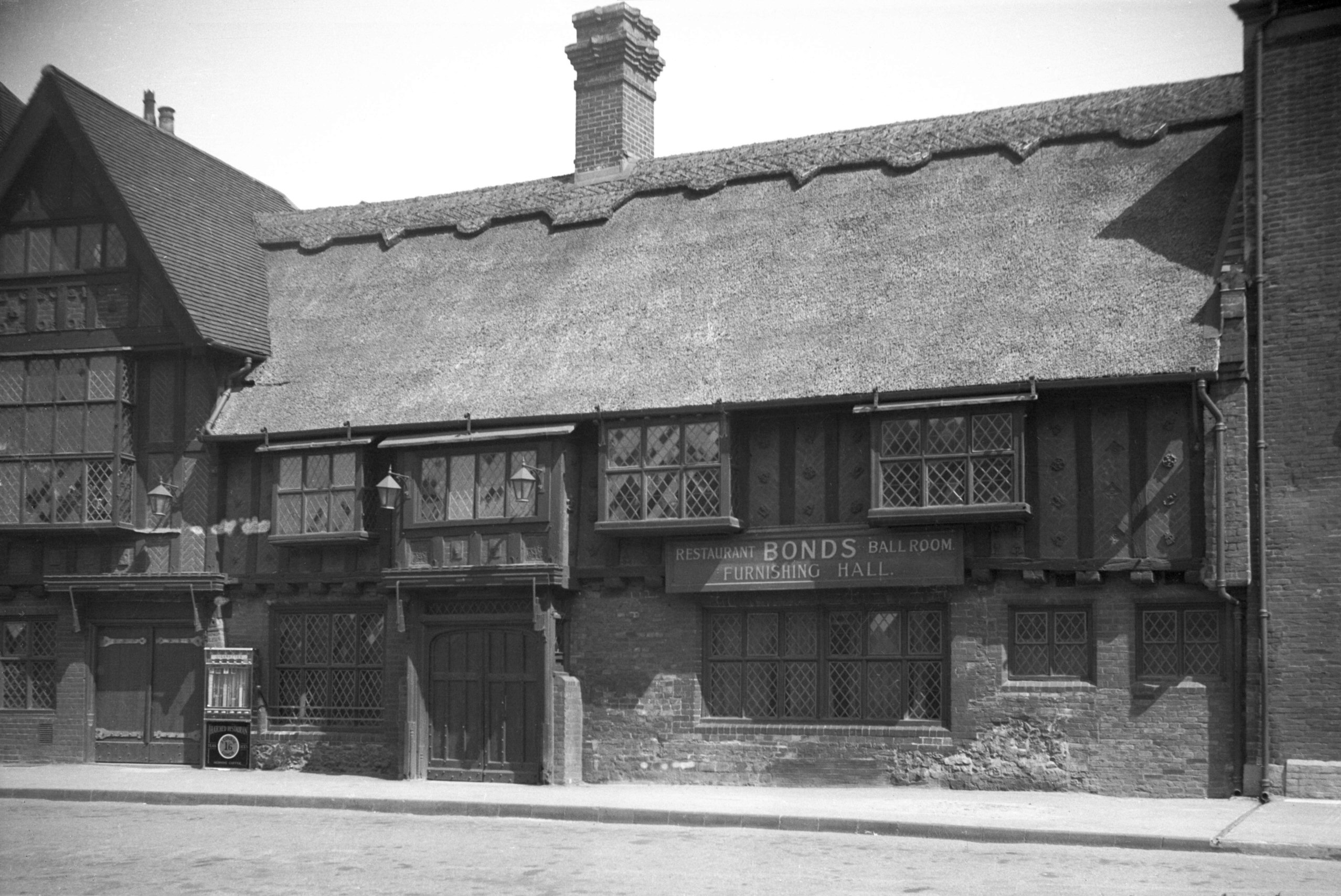
    I’ve managed to walk by this building on Rosemary Road, off St. Mary’s Plain, on probably hundreds of occasions and I’ve failed to realise that it’s one of the oldest inhabited residences in Norwich. It’s also one of only six thatched buildings still remaining in Norwich and much more lies behind this frontage that might initially be thought.

    A plaque on the wall, placed there by the Norfolk Archaeological Trust. It reads:

    “In this 15th century house, Pilgrim’s Hall and latterly Old Rosemary Tavern, lived Thomas Pykerell, mercer and thrice Mayor of Norwich in 1525, 1533 and 1538”.

    I’d add that there’s a comprehensive set of old photos and a plan of the building that was prepared by George Plunkett and it’s in the Rosemary Lane section of that web-page. He quotes the Rev JF Williams who wrote in the Archaeological Journal in 1949:

    “This is the southern part of a late 15th century merchant’s house, which seems originally to have had a further extension to the north. In the centre of what remains is a small open hall (20 feet by 16 feet) with a fine open roof of tie-beam and queen-post construction. There was a bay-window recess on either side, the moulded rear arch of that on the north side still intact, while considerable indications of that on the south side remain. In the spandrels of the arches were four shields, now blank, but which once bore (Kirkpatrick’s Notes) the arms of Pykerell with his merchant’s mark, together with the arms of Norwich City and of the Mercers’ Company. At the lower (eastern) end of the hall is the original stud-partition wall, which still retains the framework of three doors, leading to pantry, buttery and cellar. The kitchen (now no longer in existence) was probably further to the north, on the site now covered by a later building, and reached from the hall by passing through a courtyard. Early in the 16th century this end of the house seems to have been reconditioned. At the further west end is the former parlour with its large fire-place having moulded brick jambs. This room seems to have been reached by a lobby off the northern bay-window recess, in the west wall of which the top of a door-frame survives. Over this parlour is a large upper room originally reached by a separate staircase. Early in the 17th century a floor was inserted in the hall, and windows to light the upper part were made in the south wall.

    The house was apparently first known as Pilgrims’ Hall, but it seems undoubtedly to have been built and inhabited by Thomas Pykerell, mercer, who was three times Mayor of Norwich, in 1525, 1533 and 1538. In the 19th century it became a licensed house and was known as the Rosemary Tavern. It so continued until 1931, when it was included in a slum-clearance scheme, but being bought by the Norfolk Archaeological Trust, its present owners, it was reconditioned and so saved from destruction. In the 1942 blitz the thatch was entirely burnt off and much damage was done to the building. It was saved by the Ancient Monuments Division of the Ministry of Works, who prevented demolition and did such first-aid repairs as were possible at the time, but for six years it remained empty and in a semi-ruinous condition. It has lately again been reconditioned and is now one of the oldest inhabited houses in Norwich.”

    In the 1880s, the building was in use as the Rosemary Tavern and it had been a licensed premises since the 1830s and was also in use as a shop. During the attempt to reduce the number of licensed premises in the city in the early twentieth century, the Tavern’s license was lost and it closed as a pub in 1908.

    As suggested by Williams, this building is indeed a remarkable survivor, although it does feel a little out of place given the buildings around it today. That it nearly fell to slum clearance is testament to how many historic structures in Norwich were lost at that time, and ironically some would today be considered as quite desirable residences with a little (well, quite a lot of) repair.

    The damage done to the structure in the 1942 Blitz was substantial, the thatch went and most of the roof structure was very badly damaged. There must have been moments when the building, having just survived slum clearance, was seriously threatened. So, as the heritage record notes, there is much modern about this building because of the war damage that needed repairing, but it still retains its historic core. It’s a shame it’s not a pub still though, I imagine it might have looked a little like the Lattice House in King’s Lynn which shares a similar construction date and original usage.

  • Norwich – Grosvenor Fish Bar

    Norwich – Grosvenor Fish Bar

    It’s a little bit of an omission that I haven’t written about this award winning chip shop before, since I’ve been coming here since 1997. Back then it was a very well run fish and chip shop, with a takeaway on the ground floor and a sit-down table service area downstairs which felt a little tired in terms of the decor. Then it modernised and the downstairs shut with the steps down closed off, although there was then limited seating available. As the popularity increased, Christian and Dwayne opened up the downstairs again and updated the look, and since then there have been two expansions in size to the cellar eating area. And a couple of years ago a new eat-in section was opened in the shop next door, along with customers being able to get their food brought over to the Bird Cage pub opposite if they wanted a drink with their chips.

    In terms of customer service, this is continually way above average, and the location became really rather on-trend. There was talk of selling it, but that got put to one side and so the owners are staying put. For many years higher prices were resisted, although I have to say that the price of some items was starting to creep up before lockdown. Nonetheless the service, the product and the location remained excellent and so I’ve continued to visit when I can.

    So, back to today. Obviously the talk of increased seating areas and sitting in the pub are a thing of the past, or at least, just for the moment. It’s a take-away service only, although the full menu is still being served. There were a queue of around seven people in front of me and a steady number of delivery orders were being processed.

    I have to say, with no disrespect to this wonderful place, that the ordering process is a little muddled at the moment. Customers have to order at the counter area, then stand to one side, collect their food from the delivery area and then go back to the counter area to get condiments to put on the food (well they do if they want access to the full range of condiments). And of course, I got confused, because if anything isn’t made very clear to me I tend to get muddled up. Anyway, the service was as friendly as ever and everything seemed clean and tidy to meet the current requirements.

    I would normally have something to accompany the chips, but it’s a cold day and I thought that chips would suffice. Medium chips come in at £2 which is towards the higher end of the scale compared to other chip shops in the city, but still seems entirely reasonable to me given the location and quality. I was pleased that the chipotle Tabasco sauce was available, although I didn’t have any today (not least because I tend to use quite a lot of it and that might have been obvious to the staff member, so I’ll wait until Dwayne is there and ask permission first) as I sufficed with that spice stuff (I can’t remember what it’s called, possibly Classic American Chip Spice). The chips were delicious as ever, no complaints there. They are cooked in beef dripping which is a problem for some customers, although if that’s what is required to make the food taste this good, I can see why they do it…..

    Anyway, I will be back soon no doubt. All very lovely.

    And a photo from September 2020, when it was warmer and we could sit outside. Battered sausage, chips and curry sauce, all equally lovely.

  • Norwich – Earlham Cemetery (Richard Badcock Mayes)

    Norwich – Earlham Cemetery (Richard Badcock Mayes)

    This is the grave of Richardson Badcock Mayes (along with Eleanor and Richard) and is located at Earlham Cemetery in Norwich. The first mystery here is why the grave has the name Richardson, as this wasn’t his name, which was the more simple Richard. I can only assume that it’s a nickname or similar, although the probate record gave his name as Richardson.

    Richardson (and I’ll call him that on the basis that it’s what his wife put on his gravestone) was born in around 1840, but I can’t find any records of this birth. I know that he was born in Norfolk, but despite trying all manner of differing spellings of his name, I can’t find him. Nor can I find his marriage to Eleanor that would have taken place in around 1860 and nor where they were living in 1861. It’s fair to say that this isn’t ideal….

    The children were both baptised at the same time, at St. Martin’s Church in Norwich, which is located opposite to the entrance to the modern gateway to the Bishop’s Palace. I’m not sure why baptisms were done as a job lot like this, but this happened to other families as well. Anyway, the children were baptised on 21 August 1864 and Richardson’s profession was noted as being a stonemason. Richardson at last appears on the official record, by way of the electoral registers, in 1868 when he lived at Barn Road.

    At the 1871 census, the family lived at Barn Road although this street has been substantially altered since then. It was once a relatively quiet road which led up to the railway station, but the road is now part of the inner ring-road and the station has been demolished. George Plunkett has several photos of what Barn Road once looked like and the type of house that the Mayes would have lived in. At this census, Richardson was 31, Eleanor was 28, Richard was 9 and Arthur was 7.

    Richardson died on 16 May 1878 at the age of 38. Unusually, the gravestone mentions his employers and how he worked for them as a foreman for 17 years. Such a mention would usually suggest that the employer paid for the stone and this is especially likely as Richardson worked for Mr JB Childs stonemasons. It certainly wouldn’t be bad advertising for a stonemason to get his name on the grave, although since his occupation isn’t mentioned, I can’t imagine that there was any commercial imperative here.

    As for the other members of the family, Eleanor lived until 21 June 1918, when she died at the age of 78. Their son Richard had been living alone at 54 Lothian Street in Norwich following a career as a general labourer and he died on 18 March 1948, at the age of 81. As an aside, Lothian Street is located just off of Barn Road, and is visible on the map above. And as for Arthur, he had married Phoebe and had two children.

    There’s not much of a story here since the first half seems to be missing, but I do wonder what it must have been like for Richard to have stood at the grave of his mother in 1918, just over 40 years since he stood there to bury his father. Richard was about 16 when he stood there for the first time and it must have been a strange situation to be there again after such a long time delay.

  • Norwich – Missing City Sign

    Norwich – Missing City Sign

    This isn’t entirely ideal, the sign welcoming people to Norwich has disappeared, perhaps due to theft or more hopefully down to cleaning or similar. And I never cease to be amazed, well more moderately surprised, at the sheer range of articles on Wikipedia as they even have a Street Sign Theft page.

  • Norwich – Rosary Cemetery (Edwin Vickers and George Vickers)

    Norwich – Rosary Cemetery (Edwin Vickers and George Vickers)

    This gravestone at Rosary Cemetery in Norwich suggested initially that there might be something of a story, with two deaths at relatively young ages both in the same year. I’m not entirely sure I’ve found much of a story here, notably because I haven’t found out why these brothers died in their 30s.

    Edwin was born in Penkridge, Staffordshire in 1838, the son of William Vickers and Harriet Vickers. George was born in Hyde, Cheshire in 1842, also the son of William and Harriet. Edwin and George also had James and William as brothers and Martha and Emma as sisters.

    At the 1851 census, the family had moved to Norwich and were living at 24 Railway Cottages on Carrow Road in Thorpe. William was working as a journey blacksmith, with in this instance that word journey deriving from the French ‘journee’ meaning day as this was how frequently they’d be paid. It evolved from when there were masters and apprentices, with journeyman being in the middle of that scale. The family had only just moved to Norwich as William, the youngest in the family, had been born in Shropshire.

    George married Mary Anne Meek in early 1869 and it appears that their daughter Jane was born on 19 March 1869 (perhaps not an ideal situation in Victorian times). She went to St Peter Parmentergate National School and the family were living at Rising Sun Lane. Jane later went to Thorpe Hamlet Girls’ School and she left in 1881.

    At the 1871 census, George was living at the Thorolds Buildings in St Peter Parmentergate, along with his wife Mary Anne and their daughter Jane, aged 2. At the same census, Edwin was living at Castle Meadow, also in St Peter Parmentergate, along with a Maria Goatley.

    We know a little about Edwin Vickers due to an argument that took place in 1874 which led to Robert Baxter, the landlord of the Nag’s Head pub smashing Edwin’s windows. The argument was concerning who could use an out-building at the rear of their properties, although the matter was later resolved by the mutual landlord. It though tells us (I say us, but mean me….) that Edwin was a carpenter, but this is unfortunately the only information that I can find in the media of the time about either him or his brother.

    Edwin Vickers died on 22 January 1876 at the age of 37 and George Vickers died on 19 November 1876 at the age of 34. George was buried in the same grave as Edwin and I think that George’s wife remarried, hence why she isn’t listed on the grave. Why they died so young is another mystery that I can’t resolve, but maybe someone knows….

  • Norwich – It’s Snowing….

    Norwich – It’s Snowing….

    I can’t recall the last time that I was in Norwich when it was snowing, but overnight there was a reasonable covering over the city. This morning it continued to snow and so it looks like it might be here for a little while yet. This post is mostly photos, a couple of Norwich Cathedral and the rest from Mousehold Heath which felt positively Austrian in the snow….. There were already a few people tobogganing at Mousehold and I imagine there will be many more children there this afternoon.