Category: Norfolk

  • Norwich – West End Retreat (Two Julians)

    Norwich – West End Retreat (Two Julians)

    20230830_151503

    Next in our mini tour of Norwich pubs was the West End Retreat, first opened in the 1840s although the gardens are a little less extensive than they once were as the bowling green was sold off for housing at the turn of this century. An advert in the Norwich Mercury on 25 May 1859 notes:

    “To Builders, Speculators and Others. To be sold, by private contract, the well known premises called the West End Retreat. This freehold estate comprises house, containing bar and bar parlour, and other rooms, pleasure grounds, ninepin ground, stables and coachhouse; also baronial hall capable of holding 3,000 persons, conveniently fitted up with galleries, bars, etc; and also another large room with bars, and other conveniences therein, and contains, with the site of the buildings, about 2.25 acres. The above is admirably adapted not only for a public house and pleasure gardens, but also for building purposes.”

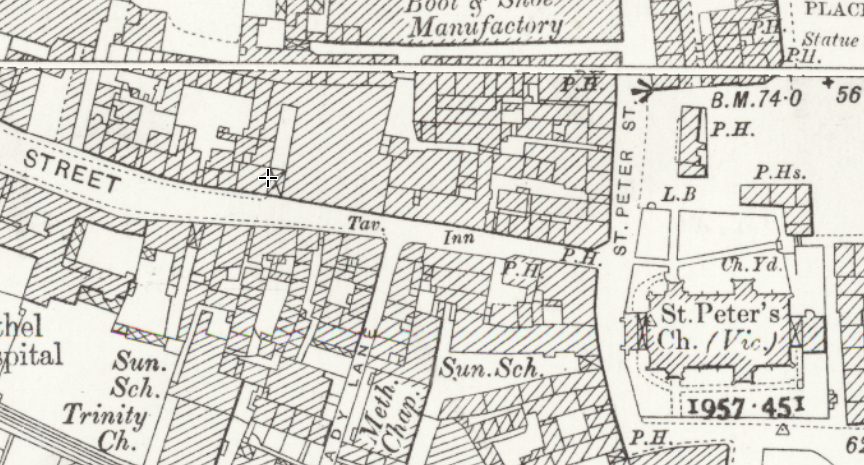
    The extent of the bowling green is visible from this map from the 1870s.

    On 4 August 1860, the Norfolk News mentioned the case of a 16 year old who had smashed the windows of the home belonging to his parents and they said they didn’t know what to do with him. He kept going out and getting drunk, with the Chief Constable of the police commenting that “the Orchard Gardens, the West End Retreat and such like places were perfect sinks of iniquity”. Those pubs are the favourites of Julian S, I can imagine he’d be there until late in the evening… The Mayor told the Chief Constable to arrange visits so that the magistrates could take action, but the pub continued trading despite its reputation.

    I won’t spent too long on the history of this pub, but there were no shortage of press reports of fights, disturbances and issues at the pub throughout the 1860s to 1890s. It would be fair to say that the pub seemed to be attracting all manner of issues, it wasn’t a pub at ease with itself, although I make no comment on what happened in the twentieth century but matters seemed to calm down judging by newspaper reports. The structure was though damaged during air raids during the Second World War and so there was some rebuilding necessary. I will though quote from CAMRA in what appears to from around 2010.

    “Built in the early twentieth century it retains the floor-plan of two bars and an off-sales. The little altered interior from c.1960 is rare and due to the fact that the pub was run by Jan & Jack Wakefield for 37 years until they retired in 2005. On the right the public bar with a ‘1’ on the door has a 1960s flat roof extension which almost doubles its size and retains an old counter which has a new top over a Formica one, 1960s bar back with an old till drawer and old Bullards Ales window. Opposite the front door is the separate off-sales with a ‘3’ on the door and a red Formica top counter – intact off-sales like this are very rare. The former lounge on the left with a ‘2’ on the door is now a games room which retains its 1960s counter with a red Formica top, classic 1960s bar back but the fireplace has been lost. To the right is a now disused bowling green which is due to be sold as building plots.”

    It’s evident that someone has recently removed all of this, as CAMRA now note:

    “A pub interior of limited or no national historic interest.”

    20230830_144548

    The remainder of the pub’s gardens, with the building on the right being placed on what was the bowling green.

    20230830_144852

    This was my only interior photo as it was quite busy and I didn’t feel entirely comfortable going around taking too many photos of the arrangements. The service was polite and immediate, although there were no real ales available. The customers mostly seemed to be regulars and I can’t say the welcome was unfriendly but I suspect our presence was noted. Incidentally, the document above relates to the Bricklayers Arms on Bull Close which closed in 1995.

    20230830_145011

    There weren’t many seats available, so we went out into the garden area for our drinks, something which is most unlike us.

    20230830_145024

    It’s not Stella, as I would never be seen drinking that, it’s instead Camden Hells and it tasted as expected and was reasonably priced.

    20230830_144612

    We had some company in the garden.

    20230830_144600

    It appears that new owners have taken over the pub relatively recently, so it’s not clear whether the fish and chips will be making a return. Indeed, I can’t find out much from social media or the venue’s web-site exactly what is going on.

    All told, this is another pub survivor and we should be most grateful for that. It was busy on a weekday afternoon which is the sign of a proper community pub, with the welcome being warm and friendly. They accept card and cash, with the surroundings feeling inviting and clean. The lack of real ales is sub-optimal, but that might have just been a temporary matter as one pump clip was just turned around so perhaps there’s one available at the weekends. There’s plenty of external space and I hope that they get the fish and chips going again, a most agreeable situation for those visiting the pub.

  • Norwich – Nelson Pub [closed] (Two Julians)

    Norwich – Nelson Pub [closed] (Two Julians)

    20230830_143845

    This is quite sad to see, the Nelson seems to be long-term closed and there doesn’t appear to be any activity going on at the moment that suggests that it might open again. The pub first opened in the 1850s and it’s fortunate that it’s still here as the owners attempted to demolish it in 1989 to build eight homes.

    20230830_143909

    Located on the junction of Nelson Street and Armes Street, this is in a residential area and not far from the Fat Cat, so it certainly has some potential.

    20230830_143841

    Unfortunately for the venue, it’s owned by Stonegate and that often means a tied pub and a hefty rent package so it would be a brave person who takes this on. Also, since it’s September and the open day was on 15 March, that doesn’t suggest they’ve found such a brave person yet. Likely Stonegate will spend £300,000 doing up the inside of the pub in some generic manner and then jack the rent up to something unachieveable. At the moment, and in support of Stonegate, they’re currently advertising the rent of this at £17,500 per year which is much lower than I’d expect from them although there are caveats to that.

    Stonegate themselves describe this pub as:

    “The Nelson is situated in a residential suburb to the Northwest of the city just outside the inner ring road and is considered a very traditional wet led venue. The décor is traditional, with a modern touch which creates a warm and relaxed atmosphere and welcomes the surrounding local community with traditional pub games and live sports. The pub has two distinct trading areas, which are divided by a double-sided central bar servery. The bars have a traditional style, fitting with the theme of the pub; one area having a pool table with space for up to 30 covers and the other approximately 50 covers. The Nelson also boasts an outdoor covered beer garden with a patio and spacious lawn, a great selling point during the summer season which has the potential to be very popular. Another great facility of this pub is its outbuildings which may be very useful for storage for the future publican. The light and spacious private accommodation consists of three-bedrooms, a lounge and a kitchen, ideal for a family. Stonegate Pub Partners are seeking an experienced publican who is willing to immerse themselves within the local community and maximise revenue.”

    I’m not convinced that this will re-open, but the community would no doubt benefit by having another pub open in this area.

  • Norwich – Fat Cat (Two Julians)

    Norwich – Fat Cat (Two Julians)

    20230830_143522

    Julian and I decided to postpone a more rural visit to the further reaches of Norfolk in favour of a Norwich based tour, as I needed to be back for bar billiards. Julian S refers to this as something like bare knuckle stick action, but he doesn’t understand sport in the way that I do, although at times I wonder if he might just be right. When talking to people outside Norwich, the Fat Cat is one of the pubs that most people identify with the city as it has a long tradition of being a destination real ale pub since it opened in 1991. It has won many CAMRA awards, not least the National Pub of the Year twice, and is also listed in the Good Beer Guide. The pub, located on West End Street, had first opened in the late 1860s and was known as the New Inn until 1991, when it took its current Fat Cat name under the ownership of Colin Keatley. He had previously run the White Lion on Oak Street, which is today one of the best pubs in the country despite the landlord’s ability to lead me astray, but we won’t go too far down that line on this blog post.

    20230830_140106

    Some of the extensive range of real ales, of which they had around twenty which shows just how much they’re selling here. There were also ciders and craft beer options, but the real ale selection was well balanced and all major beer types were covered. Breweries included Titanic, Thornbridge, Green Jack, Oakham to name just a few, along with the beers brewed in-house by the Fat Cat Brewing Company. Julian and I are very punctilious in every possible way, so we knew we had just time for one beer here despite the number of tempting and almost seductive options.

    20230830_140718

    The beers are keenly priced, with one lower priced option which is a marvellous idea for a pub. It’s not cheap visiting pubs today given the cost of living increases, so affordable options are much appreciated and venues might find that they’re a necessity if matters continue as they are.

    20230830_140721

    And more of the beer selection.

    20230830_140213

    I went for the Marmalade Cat from the Fat Cat Brewing Company, which was well kept, fresh and suitably full bodied. Julian S also commented positively about his Citra from Oakham Ales.

    20230830_140206

    There’s plenty of character to the pub and there’s no shortage of beer memorabilia about the place. That door leads to another seating area which is often used for meetings and the like.

    20230830_141208

    Decorations attached to the ceiling. I would never dare do this in a pub that I had, I’d be nervous one would fall on someone’s head. I admire their confidence, or at least, I am realistic about my own DIY abilities. But, I digress.

    20230830_142728

    There’s one long central bar and the venue has been extended on numerous occasions over the years. Although we visited on a quiet afternoon, I understand that it’s often very busy and it’s not always easy to find a seat. There was a mixture of regulars and also I got the impression a couple of visitors new to the pub who had heard about its reputation.

    20230830_142735

    Some old pub signs and unfortunately the King’s Head at Worstead and the Shropham Three Horseshoes are no longer with us other than as memories.

    I haven’t been to this pub for nearly ten years and by chance, I was to visit it again the following evening for a CAMRA planning meeting for the Norwich Beer Festival. I was pleased to return, the choice of real ales was as good as anywhere in Norfolk and the service was immediate and friendly. I’m also pleased that I don’t need to write anything negative about this visit, as it would have been just a little sacrilegious to be critical of this fine establishment. Although, for the record, Julian and I are not easily kowtowed, so I would have mentioned any issues that arose, but I’m pleased to say there was nothing negative.

  • 200 Years Ago : Mental Health in the Early Nineteenth Century

    200 Years Ago : Mental Health in the Early Nineteenth Century

    In my series of posts from 200 years ago this week, there were two stories in the same issue of the Norfolk Chronicle and Norwich Gazette which I noticed. These type of stories are very common, so there’s nothing unusual with this, but it’s a reminder of how bad mental health was in the early nineteenth century and how this isn’t just something that is a modern situation as some people I’ve heard have suggested. There’s nothing new about struggling with life, as these two stories suggest.

    Firstly, from Great Yarmouth:

    “An unfortunate female threw herself into the river, near the bridge on the north side, about one o’clock on Wednesday morning; first deliberately taking off her cap, and placing it on the ground, she floated under the bridge, and had it not been for her clothes keeping her buoyant, she must inevitably have met with a watery grave. An alarm was immediately given by the watchman near the bridge, when she was got out with great difficulty, her clothes fortunately caught the rudder of a boat lying under the bridge, or she must have been drawn under by the rapidity of the current and would not have risen again. Jealousy is assigned as the cause of this imprudent act.”

    Mental health issues and insecurity were perhaps the real cause of the act, but this is from 1823 and it feels wrong to judge.

    Secondly, from Oulton, near Lowestoft:

    “An inquest took place before JE Sparrow, coroner, on the body of Susan Sewell, who on Friday 8 August put an end to her existence by hanging herself in a shed contiguous to her dwelling. It was stated in evidence that the deceased was upwards of 75 years of age and had the misfortune to lose her husband by an accident about three months ago, which calamity appeared to preyed so much upon her mind as to lead to self-destruction.”

    And that’s it, a tragic story of what was perhaps a lonely lady who felt she had no other options and I assume nowhere else to go. It all feels like a tragedy to me, but what has changed recently is attitudes to depression and mental health. It has clearly always been there since time immemorial, but at least now it is better understood and there are ways of tackling it.

  • 200 Years Ago : Youths and their Weapons in King’s Lynn

    200 Years Ago : Youths and their Weapons in King’s Lynn

    Continuing on my series of posts from newspapers of exactly 200 years ago, this short article is from the Norfolk Chronicle and Norwich Gazette. The newspaper was published on 30 August 1823, although it related to an incident of the week before in King’s Lynn.

    “Friday last a youth named Tooke was shooting near this town, when the piece burst, and so lacerated his hand that immediate amputation was necessary. The frequent practice of young persons carrying fire arms to shoot small birds, etc, in the vicinity of this town, cannot be too highly reprobated, as several accidents have occurred, and at times it is really dangerous to walk on the public road.”

    It’s perhaps interesting that at the point when this article was published, there were no gun control laws at all in the country. Anyone could carry anything they wanted for whatever purpose. The first legislation which limited this right was with the Vagrancy Act of 1824 where former soldiers from the Napoleonic Wars were often found homeless and in possession of weaponry. The Government weren’t too bothered with the homeless bit, but they felt it sub-optimal to have too many people with guns.

    The back story to this also is that the right to bear arms in the United States at that point came from the position in England. In the new United States the population wanted weapons to defend themselves from not just each other, but also from the Government. Their position on such matters has hardly changed in 200 years, leading to no shortage of guns there. I’m pleased in the UK that today we don’t have the situation of youths in King’s Lynn damaging themselves and each other with weaponry, it would make trips there feel like they had just a little too much jeopardy.

  • 200 Years Ago : Norwich Library and the Arguments for an Increase in Subscriptions

    200 Years Ago : Norwich Library and the Arguments for an Increase in Subscriptions

    During 2020, when there wasn’t exactly a great variety of things to do, I riveted and bored my loyal two readers with a series of posts from old newspapers. I’ve been meaning to do this more regularly, so here we go….. This article is from the Norwich Mercury of 29 August 1823, exactly 200 years ago. It’s all to do with the public library in Norwich, which caused all manner of debate from primarily the middle classes of the time and the newspaper had its own view it wanted to put forwards.

    An article read:

    “The communications to us upon this subject are this week so numerous, that in order to do justice to the strong interest excited, and at the same time to preclude filling our columns with the repetitions involved in the insertion of all the letters we have received, we are compelled to have resource to a summary of our own, in which we hope to give our readers a clear view of the case, while we shall avoid reiterating the disgraceful charges and recriminations which we are sorry to find bandied between the members of two establishments, the Public Library and the Literary Institution, both capable of great public advantage.”

    This is a reminder of how the media at the time really said what it thought, there’s something delightful about phrases such as “disgraceful charges and recriminations”. The first public library in the city was the Norwich City Library established in 1608, which became a lending library in 1716. This evolved into the Public Library, which had been a separate body started in 1784, which spent decades arguing about management and structure before the 1850 Public Libraries Act was passed which changed matters somewhat. Anyway, in 1822, there was the creation of the Norfolk and Norwich Literary Institution and all hell broke loose with rival members sneering at the other. And the Public Library had no money, but more on this in the article.

    “We shall simply observe, that if, as some of the letters addressed to us assert, there is a regular design, systematically pursued among certain subscribers to the latter to put down the former, and if, as others affirm, no such design exists – nothing can be more easy than to disprove the imputation. Those members who belong the Literary Institution have nothing to do but to abstain from taking any part in the transactions of the old Library meeting, a mode of proceeding recommended alike by delicacy and disinterestedness, and the charge falls to the ground; but if, on the contrary, they should be found in active hostility to the advance of the subscription, it will be difficult if not impossible for them to account satisfactorily and honourably for a desire to prevent the improvement of the existing plan of management.”

    What a wonderful middle class debate this would have been, subscribers writing angrily to the papers about the subscribers of the other organisation.

    “We say this much merely to meet the statements of our correspondents; for our own impression is, that after the convincing case of necessity the special committee of the Public Library has made out, every gentleman connected with the Literary Institution will, as a mere matter of honourable feeling, decline to oppose a measure so indispensable to the very existence of the library, as an increase of the subscription. The statement in their Report, on which we ground our opinion, is as follows:

    ‘We next proceeded to examine the finances of the library, and believe the following to be a correct estimate of the necessary annual expenditure, according to the existing laws, independently of the purchase of new books, viz’”

    Delighted as I with the letters page of the magazine Viz, it feels a shame this word (short for videlicet) meaning ‘as follows’ has mostly fallen out of use. But I digress, there’s an angry library discussion being had here. Back to the library report:

    “‘Rent 15l, rates & taxes 12l, repairs 10l – total 37 0

    Payment to trustees 25l, insurance 6l – total 31 0

    Librarian 56l 15 s, messenger and cleaner 14l 10s – total 71 5

    Coals 18l, candles 7l, sundry expenses 14l – total 39 0

    Binding 40l, printing and advertising 7l – total 47 0

    Periodicals 45l, old books replaced 15l – total 60 0

    NB, this statement includes the expence [sic] of the library being open in the evening, which (having been only suspended for the last season by the vote of October 1 1822), recommences on the 1st of September next, according the 13th law.

    It appears, therefore, that we have a permanent expenditure of 285l 5s which must be provided for before any part of our income can be available for the purchase of new books. Supposing then that the actual number of effective subscribers should continue at 490, the present subscription of 12l would produce 291l, leaving only a surplus of 8l 15s, applicable to that purpose, except any sum which may be received for fines, the amount of which is uncertain, and cannot be estimated at more than 15l. On these data we cannot hesitate to express our decided opinion, that it is impossible to carry on the library with the present subscription, and that we deem it absolutely necessary to adopt some new regulations, in order to prevent a more extensive diminution of our numbers.”

    This seems typical of some libraries today, they managed to spend nearly their entire income on wages, trustees, heating and librarians with nearly no money available for new books. The newspaper continued its view:

    “This is decisive. This shews [this word has fallen out of usage, but I prefers it to shows] that it is impossible to carry on the library with any degree of satisfaction to the subscribers, unless the subscription be raised, whilst the defalcation in the subscriptions is attributable almost entirely to the want of new books. The opponents of the measure proceed upon the following principles: –

    1 – That a more economical administration of the finances would suffice for all the purposes contemplated by an advance of the subscription.

    2 – That all former attempts to this end having failed, such a proposition should not be resumed.

    3 – That as the original intention was to institute a cheap source of amusement and information, the principle ought not to be departed from.

    4 – That the subscribers will withdraw, if the subscription be raised.

    5 – That evening attendance is unnecessary, as not applying to more than a few of the subscribers.

    These, so far as we can collect them, are all the objections. We shall then take them in their order”

    I’m getting genuinely excited now to see what the Norwich Mercury proposed, despite the reality that I’m about 200 years late to this debate.

    “Is it possible to conceive that 8,000 volumes can be lodged and commodious accommodation provided for 500 subscribers who may demand admission to the library, at a less rate than 37l per annum? We believe no one avers [meaning ‘states the case’] that a cheaper arrangement could be made, and if we examine the other items, all that could possibly be appropriated to the current demands of the subscribers for books (taking the sum reserved for building to be a prudent provision) is from the item of 39l for coals, candles and sundries. A part and only a part can be deducted, and if we estimate this portion at 17l we leave about 25l in the hands of the Committee for the purchase of new books, beside periodicals. There is not a periodical work admitted into the Library, which is not of acknowledged celebrity and high character. Is there are any man who is at all acquainted with the fertility of modern literature, who will pretend to assert that 25l per annum is any thing like an adequate sum to provide for the most literary appetite of 500 persons? No one will we conceive be found hardy enough to stand up in the face of the society and make such a statement. Such a sum will scarcely purchase even the poetry and novels of the day – productions that are every where the topics of conversation, and which not to have read, almost stamps the individual with the inevitable shame of the darkest and most careless ignorance.”

    I love this, someone who is not up-to-date with novels is guilty of “careless ignorance”. But, then again, there wasn’t much else to do in terms of entertainment back in 1823.

    “These are the most common objects of enquiry, and must be supplied. But ought the provision for a community of 500 persons to be limited to the circulation of these the lowest perhaps though the objects of literary curiosity most in demand? Certainly not. How then is the just and natural desire of the subscribers to be satisfied without an advance of the subscription, and if this desire be not satisfied, is it to be supposed that the subscribers will not withdraw? We conceive they certainly will withdraw, for who will be content to sit down in the assurance of not being able to obtain a sight of any new books without a constant struggle for priority, frequent disappointment and generally not till a long period after its appearance?”

    They’re right here IMO…..

    “Such conditions, and these every dispassionate reader must see are the actual conditions imposed by keeping the subscription at its present rate, would infallibly drive the Society to dissolution. In conclusion we do not hesitate to declare our belief, that the finances of the Library have during the last year been managed with the most rigid economy; and we entertain no doubt that the worthy president will be able to sustain our confident assertion by the most complete and satisfactory proofs. As we have stated in a former article, that plan for a Library designed for the use of the Public, appears to be the most efficient and excellent, which includes at the least expence the greatest quantity of books most universally necessary and desirable. The Public Library is designed for the many, and if the subscription of one guinea be carried, it will, we apprehend, as exactly as can be apportioned, enable the committee to sustain this its original character of general utility.

    All very reasonable, no new books means members will leave…

    “The second ground of opposition is too futile, and we must say too obviously an interested one to need refutation. Every society must always enjoy the privilege of improving itself according to its progress and its means.”

    They didn’t debate that second point for long.

    “The third argument contains in itself the seeds of its own destruction. When the Public Library was first planned, a sum was named, which was then, in the comparatively infant state of the demand for books deemed sufficient for the purpose. It was an experiment untried in Norwich. The charge for the custody and repair of a large library had not then accrued. The number of periodicals necessary, nay indispensable, was nothing like what it is now. Those who originated the establishment naturally anticipated that the means would extend themselves as the objects of the Society extended. It seems a justifiable, nay an inevitable assumption, that as the property increased, as the stores of amusement and of information became a larger, a corresponding disposition would arise in the public to contribute a larger sum for the power of augmented enjoyment and augmented instruction.”

    This is true, they were just a generation too early with this thinking…..

    “And what is the fact? Why, because this disposition was either repressed by supposed obstacles to improvement which an imperfect mode of choosing the committee presented, because such an augmentation was rejected, a new institution has been set on foot, to which the subscription is not only not unmeasured in the niggardly way it is suggested the subscribers to the old library to dole out their support, but it is assessed at two guineas, more than thrice the amount of the contribution (12s) per annum to the Old Library. Here than example goes completely against precept. Here is an instance which shews the consequences of not meeting the fair exigencies [needs] of the times and circumstances on the one hand, and on the other, which practically demonstrates the evils of a parsimonious and the benefit of a liberal spirit.

    In the instance of the Old Library, One Guinea a year is to be refused, we are told, for access to eight thousand standard volumes and a corresponding accumulation of new publications, while Two Guineas a year are not considered too much for the power of reading four thousand volumes, and a similar accession of the works of the day. With a proof to complete before their eyes, it seems next to impossible that the subscribers should not perceive the necessity and advantage of making the comparatively insignificant addition of 9s per annum to their present payment, which, operating over so large a number, would be as efficacious as double the amount over a smaller body. This comparison is but a tribute of respect to the spirit of the supporters of the New Institution, which really cannot be too highly applauded.”

    There’s a parallel here with the closure of public libraries over the last ten years, it’s a short term cost saving with massively damaging long-term results.

    “The fourth ground we look upon to be most palpably unfounded. Nor is it possible to conceive that the addition of so trifling, so paltry a sum as nine shillings  year, or twopence farthing a week, can be an object to any man who either has opportunity or inclination to read. And what is the alternative, what if he does withdraw? Where can he go to compensate himself so cheaply? No where. The supposition then is palpably absurd.

    They seem right here, a small increase in the subscription with an obvious immediate benefit, would likely not lead to a mass withdrawal of members.

    “The evening attendance appears to us to be a question of expediency, dependent upon the actual advantages that are expected to be derived. It seems to us to be of some importance to open to literary men the most ample opportunity of reference, and most especially to the youth of such a city as Norwich, the power if passing an evening amidst such sources of intelligence and gratification as the Old Library affords. And here again example may be pleaded. Other institutions, both in this and other places, have all considered such an addition to the benefits of an establishment indispensable. Why then is the Public Library of Norwich, with an ample list of subscribers, to be denied a similar privilege?”

    It’s an interesting point, where else will people go in the evening and especially younger people? I’m not sure the inns and taverns of the city had a reputation for peace and tranquility at this time.

    “Thus we have considered all the objections that have been sent to us against the proposed increase of subscription, and we hope we may have satisfied the minds of the subscribers at large, both by reasoning and example, that the proposal of the special committee ought to be supported and carried on the ground of general improvement. The Public Library, as the first establishment is endeared to the subscribers by time. It had disseminated an immense proportion of pleasure and information – it has indeed been the moving spring of general, of popular intellectual attainment for the city and county for a very long period. It has amassed a very respectable, nay a very valuable body of books for reading and reference, and in all departments of literature. Its affairs are administered in the most disinterested, in the most economical, and most upright manner. The only law which appeared to militate against the best mode of government will now probably be abrogated, and an unexceptionable method of choosing the committee substituted. The simple fact that the Committee is now self-elected as it were – that of 599 subscribers, 587 are precluded from the nomination of a single member of the directing body, and that the society has thus no effectual control over its executive, will be quite sufficient to work the requisite reformation.”

    I love a bit of politics, the suggestion that there’s a gap between the members and the trustees. It’s likely that’s where the problems arose.

    “It will be rendered, by the advance proposed, the cheapest accessible source of literary pleasure, as well as the most comprehensive, for these terms are of course relative, and take their meaning from the sum subscribed, the number of books already accumulated, and the additional publications that sum will purchase. With all these recommendations it may then be safely submitted to the candour of the subscribers, as well as to their sense of their own interests, whether they will, by the trifling addition of nine shillings a year, secure to themselves the advantages we have enumerated, or whether, in defiance of reason and of those interests, they will shut their eyes upon the inevitable consequence of the increased expence occasioned by the increase of their property, and abandon the child of their care and delight to a premature dissolution. We have better hopes of the good sense of our fellow citizens, and we shall continue to believe, that they will cordially co-operate to preserve to the county and city this excellent and this cheap source of entertainment and instruction, and to give it the renovation, which promises so much of both for the future.

    Without the addition, it is not to be concealed or glossed over, the Public Library will lose its efficacy and attraction, and will die a lingering death. With the addition, it will revive, will flourish and continue to extend the circle of its greatly beneficial agency in promoting knowledgeable and happiness as the derivative of knowledge to multitudes (for the subscribers are units representing families) who in the event of its dissolution, will be deprived of this cheap and excellent source of gratification and improvement.”

    One of the other reasons I’ve typed this article up from 200 years ago is just how measured, sensible and controlled the local media were. I can’t imagine a story of such clarity and understanding appearing in the EDP today, there’s something perhaps alarming that all this time on the quality of debate in the printed media has fallen. The logic behind the article made sense and it’s clear that the editor of the newspaper was aware of how important libraries were and how they needed to extend their reach. That of course happened with later legislation requiring councils to provide free public libraries, but this wouldn’t have felt inevitable at the time. Finally, thank goodness for the public libraries of Norwich.

  • Food from Every Stall on Norwich Market – Week 20 and Coral Bay

    Food from Every Stall on Norwich Market – Week 20 and Coral Bay

    20230822_131833

    This week’s expedition on my quest to visit every food stall on Norwich Market was Coral Bay which offers Caribbean food. It’s not a cuisine that I know particularly well, other than some visits to the national Turtle Bay chain and a few pub meals over the years, but it’s always appealed.

    20230822_131806

    The menu and we went for two Jerk Chicken meals for £13 as part of the lunch deal. The service was efficient, prompt and warm with no waiting time when we ordered. The stall accepts card and cash with everything looked clean and organised.

    20230822_131831

    The patties in the warmer. The signage at the stall notes that this is a family operated business and they also have a restaurant in Gorleston.

    20230822_131904

    There are sauces to add to the food which we took advantage of to further spice up proceedings.

    20230822_132018

    The jerk chicken was served with salad, coleslaw and rice. The chicken was tender, moist and just fell off the bone which was all rather delightful. I was also pleased that the chicken skin was crispy, just as I like it. The coleslaw was creamy, the salad added texture and the rice handily absorbed all the BBQ and hot sauce I poured on it. There are a couple of seats at the end of the stall for customers so we sat there to eat the food, since I’m paranoid about the seagulls swooping down as soon as I leave the safe confines of the market.

    This was one of my favourite meals at the market as it was reasonably priced, the menu looked interesting and the quality was high. James also viewed the meal positively and he appreciated the availability of hot sauce, since that’s something that he drinks throughout the day in the way that others drink water. Other customers were offered a loyalty card which we weren’t, but there was an inviting feel to the whole arrangement so I’d happily recommend it to others.

    As an aside, we’ve only got seven venues left to try now, including both of the chips stalls operated by Lucy’s, which is where James and I have been eating for what seems like a decade. Will our traditional favourite win through, or have we been so surprised and delighted by the other stalls that we’ll be looking for pastures new? The anticipation is building…. (well, it isn’t as no-one is likely to care about this, but I like a little bit of drama).

  • Food from Every Stall on Norwich Market – Week 19 and Reggies

    Food from Every Stall on Norwich Market – Week 19 and Reggies

    20230816_131056

    Week 19 and my plan to eat at every Norwich Market food stall saw us visiting Reggies, which has been going for more than 60 years and is something of a staple of the market.

    20230816_130558

    The stall’s clear and well presented menu, but they have a set-up which means it’s not entirely clear where you’re supposed to stand to order. On the plus side there are numerous ledges to lean on so there’s no need to leave the area and risk seagull attack to eat the food. The set-up meant it took them a while to notice me but the service was polite and I went for a BLT sandwich. It cost £3.50 and they accept cards and cash, with everything feeling clean and ordered.

    20230816_131402

    James did think about getting that Reggie’s Belly Buster, but he went for a less decadent bacon and sausage sandwich instead. My BLT roll was served promptly, but I’m afraid that I may have been rather spoiled by Deb’s a couple of weeks before. The set-up there meant I could ask if they could cook the bacon a little longer as I like it crispy and they pro-actively offered to remove the fat which was marvellous but not something I’d ever ask to be done for me unless asked. This roll had two pieces of bacon, of which one was slightly grey, and it was just a little overly fatty for my own tastes (which are quite specialist I confess) and I can’t say it had much depth of taste. The tomato was quite soft and it did have some flavour, but the lettuce was only just present. There was nothing specifically wrong with the whole arrangement, but it wasn’t for me.

    Although the whole set-up wasn’t for me, I will have to caveat this by noting the market stall is popular and given they’ve been going for decades they clearly know what they’re doing. But these market tours are something of a voyage of discovery and each stall will cater for the needs of particular customers and I think Deb’s is the venue serving this type of food that has surprised and delighted me the most. However, I’m sure there are some wonderful breakfast items at Reggie’s and a visit here is still recommended so that everyone else can find the market stall much suited to them.

  • King’s Lynn – Two Julians (Part One)

    King’s Lynn – Two Julians (Part One)

    20230815_132121

    We were going long haul on our latest visit as part of the Two Julians (visit our back catalogue of trips at http://www.norfolksuffolk.org.uk/) and our plan to eventually visit every pub in Norfolk and Suffolk. The Excel bus to King’s Lynn cost me just £2 and it was even better for Julian who travels for free. The pubs we visited were:

    The Lattice House

    Maids Head

    The Eagle

    Bank House

    Wenns

    There will be another visit to King’s Lynn in due course in our rigorous research efforts. It was positive to see the Lattice House reopened as the pub is in such an important and interesting historic building it seemed a great shame for it to be closed. The Maids Head and the Eagle were both Craft Union pubs with cheap prices, whereas the Bank House was a grand decadent building which was for a long time a bank. The Good Beer Guide listed Wenns was probably my favourite venue of the day.

    20230815_140231

    As we were in the area, I tried once again to visit St Nicholas’ Chapel but they have limited opening hours and I’ve never been able to go in. One day…..

    20230815_140624

    King’s Lynn is often under-rated, but it has some of the best medieval buildings in the region and I keep finding new things on my visits to the town. This is the gateway to the monastery run by the Austin Friars, where Kings and Princes would have stayed when coming to what was then Bishop’s Lynn.

    20230815_170436

    King’s Staith Lane, one of the atmospheric roads leading down to the river.

    20230815_201514

    And the bus back home after another tiring research trip. We straddle the Waveney so you don’t have to….

  • King’s Lynn – Wenns Chop & Ale House (Two Julians)

    King’s Lynn – Wenns Chop & Ale House (Two Julians)

    20230815_181117

    The fifth and final pub on our study tour to King’s Lynn was Wenns, which I’ve visited a few times before and I’ve always been suitably impressed. For anyone who has more time on their hands than they know what to do with, here’s my first visit and here’s when I went with my friend Łukasz for food. The venue’s name does make it sound food based, but plenty of customers just visit for a drink and they are listed in the Good Beer Guide.

    20230815_170902

    The beer selection and we both went for the Juice Rocket from Three Blind Mice, but there was also Directors from Courage and Fever Pitch from Marston’s. The service was prompt and efficient, with the venue being relatively quiet. Prices are a little higher than in the other pubs, but they weren’t unreasonable.

    20230815_171101

    Hazy and with plenty of juicy flavour to it, I’ve never had a bad beer from Three Blind Mice. I will be making another visit to Three Blind’s pub in Ely, the Drayman’s Son, at some point.

    20230815_171140

    There’s a cafe bar feel to the venue, which also offers accommodation. I find the surroundings comfortable here and there are numerous different seating areas available. As I discovered last time when playing Jenga, there are also plenty of games to amuse customers as well. We decided against rushing for the bus back to Norwich and instead lingered here as it all felt suitably pleasant. This remains one of my favourite locations in King’s Lynn and I like the mixture of cask and keg.