Category: London

  • London – Tower Hamlets (Borough of) – Ibis Shoreditch

    London – Tower Hamlets (Borough of) – Ibis Shoreditch

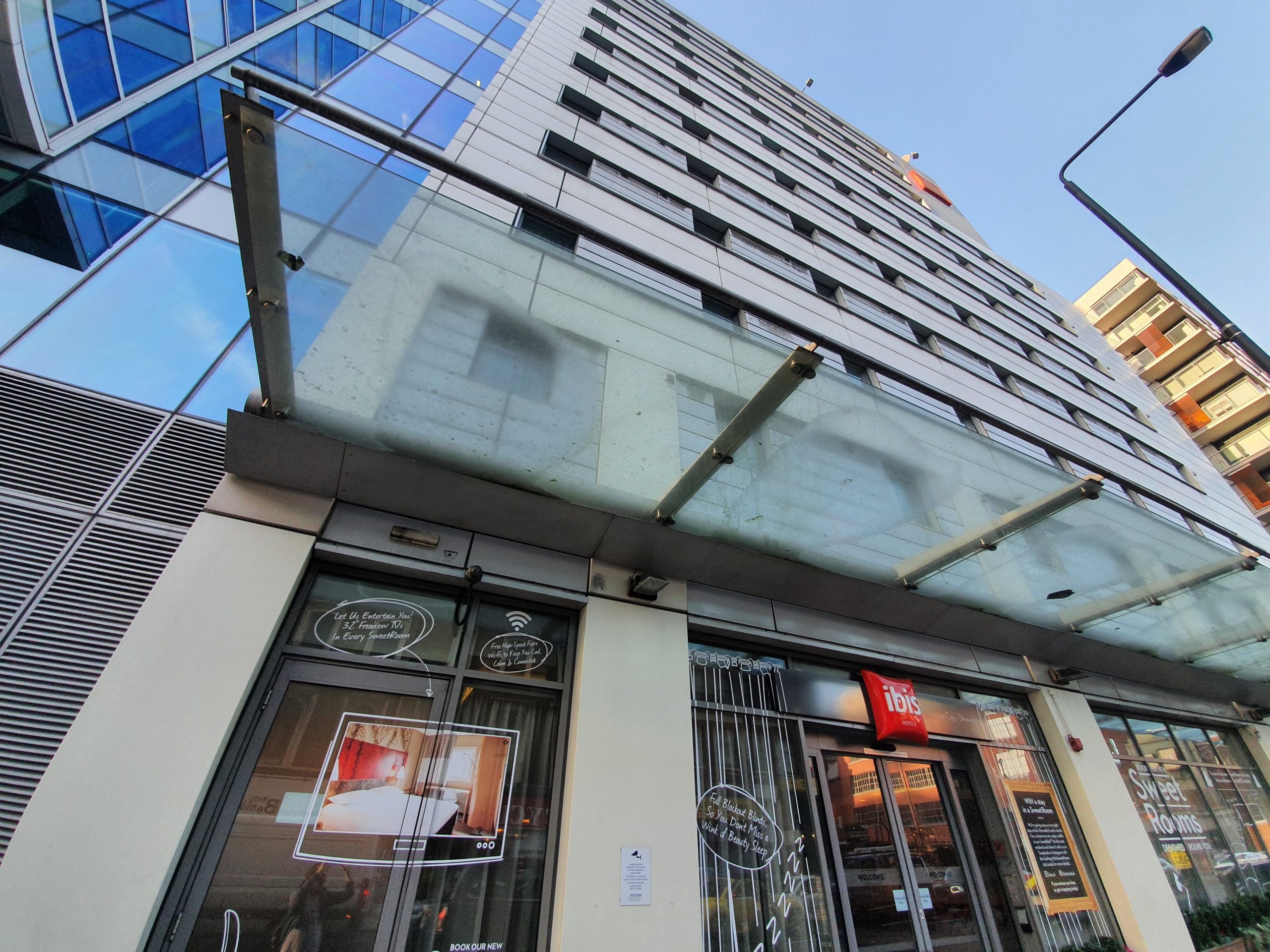
    Back a few weeks to when people could actually visit London, this is the Ibis Hotel in Shoreditch which is just a short walk from London Liverpool Street. Ideally also, it’s opposite Aldgate East Underground station, so it’s an easy hotel to get to.

    This visit was at a time when people could have a drink if they were also ordering a substantial meal. But, although the hotel was offering meals, there wasn’t much of a take-up.

    Part of the hotel’s decor, trying to give that East London theme to proceedings. The whole arrangement felt modern and welcoming, with something of an Ibis Styles type approach to the design rather than Ibis.

    This is the free welcome drink, one of the better ones which I’ve been offered. It’s not the finest in the Brewdog range, but I do very much like Punk IPA, nice and citrusy…. I look forwards to other Ibis hotels offering something slightly more exciting than Budweiser.

    The bedroom, all clean and comfortable. And it was located on the top floor and away from the elevator, just where I like. There were no noise issues either, although I’m not sure that the 348-room hotel was actually that busy. The hotel also had windows that could open, as I’m one of those slightly strange customers who likes the noise of city traffic and police sirens. It also meant that the temperature in the room was easy to control, something which I do most appreciate.

    I did very much appreciate the gesture and that’s a nice handwritten card, although secretly (well, not that secretly actually) I would have preferred chocolate…..

    Anyway, the stay as all sufficiently uneventful, which is ideally how hotel stays should be if it means that no disasters took place. Staff seemed friendly, although slightly underworked through the lack of guests, and I’ll come back here again.

  • London – Hackney (Borough of) – Hackney – St. Augustine’s Church

    London – Hackney (Borough of) – Hackney – St. Augustine’s Church

    The tower is all that is left of St. Augustine’s Church in Hackney, which was known as St. John’s Church between 1660 and 1798, the change being a recognition of the former financial involvement of the Knights of St. John. The main part of the building was demolished in 1798, with a larger replacement church being constructed nearby, which is also known as St. John’s. The tower is now the oldest building still standing in Hackney, although the initial intentions were to also demolish this when the new church opened.

    The tower is visible in the centre of this map from around 100 years ago, with the new church to the north-east of it.

    The former church could hold just 1,000 people and this wasn’t sufficient for the congregation size that wanted to attend. The new building held 2,000 people and was designed by James Spiller, who also designed London’s Great Synagogue which was unfortunately destroyed during the London Blitz.

    There wasn’t initially sufficient money to build a tower at the new church, so this part of the old structure was left standing to hold the bells. The new church didn’t receive its tower until 1814, but it was then discovered that the structure wasn’t strong enough to hold the bells, which wasn’t exactly ideal. Finally, in the 1850s, the work was completed to allow the bells to be moved to the new church, and by this time, it was decided to just leave the tower standing at the old church.

    Some of these tomb stones are from the seventeenth century and I assume that they have been moved from their former location either in the nave or from within chapels. The nave and chancel of St. Augustine’s Church had been rebuilt by Sir John Heron and Christopher Urswick in 1517 and, other than for some additions to add capacity, not much had changed by the time it was demolished.

    Where the nave once met the tower, this is also the meeting point for when tours take place as it’s possible to climb to the top of the tower.

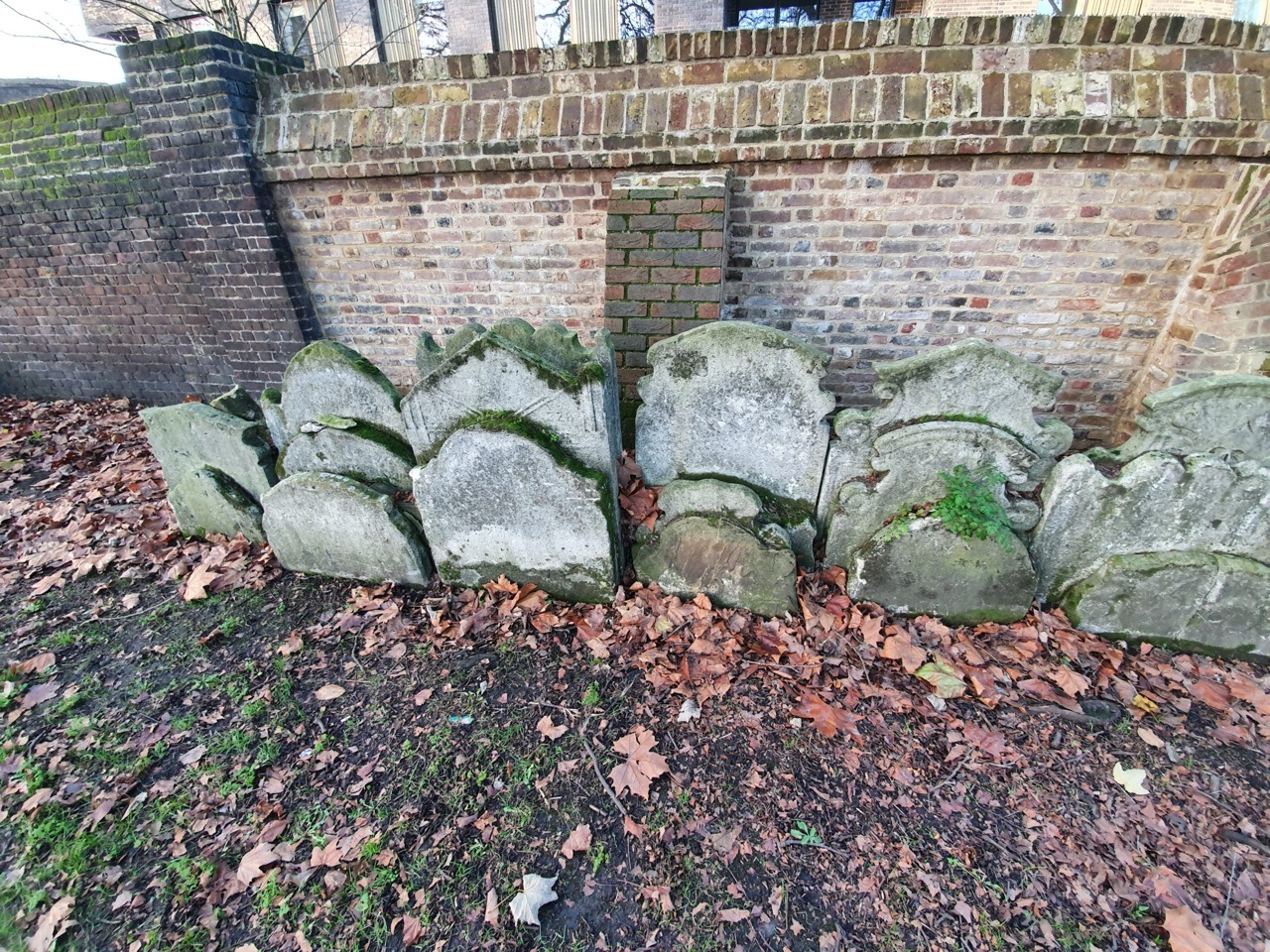
    I’m not at all impressed at this little arrangement, where the stones from the graveyard have all been collected up and placed at the side of the park. Although, this may well have had the effect of saving some of the stones from the damage which would have been done through pollution and weathering. I don’t know when this was done, but, at a guess, I suspect it was in 1885 when the public gardens were laid out. It was certainly done by 1908, as the book mentioned in the next paragraph notes that some gravestones were lost and the rest were stacked three abreast around the outside.

    As an aside, it’s not just me who complains about the poor treatment of gravestones and nor is this a modern concern. The 1908 ‘The Fascination of London – Hackney and Stoke Newington’ book by GE Mitton noted “it is said in the demolition of the old church the monuments were shamefully treated, and some of the stones were broken up and used for paving purposes”.

    One of the memorials in the churchyard.

    Stones have been placed to mark where the corners of the old church used to be, this one marks the north-west corner.

    One of the tombs in the graveyard. There was actually another survivor from the demolition of the church in the late eighteenth century, which was the Rowe Chapel which had been built in 1614. This was kept as it was privately owned and it was protected and given a new roof. Having noted that, the demolition of the church was clumsy and without much care for heritage, it was noted at the time that the figures on the tombs lost their heads and damaged fragments were just kept in the toolshed. Unfortunately, the structure collapsed in 1877, although the chapel was still kept in situ. It was only in 1896 that the chapel was demolished and the now badly damaged monuments taken to the new church.

    Hackney is unfortunate to have lost the church that it did, although at least the remaining tower is Grade I listed. The new church, slightly surprisingly for such an innovative project, was seen by many as quite dull and plain when it opened, and it certainly looks like that internally today. I didn’t find much of interest in terms of the architecture of the new church (I say new, it’s over 200 years old), but the heritage of the former site is fascinating and a number of information boards have been put up around the site.

  • London – Tower Hamlets (Borough of) – Bethnal Green Tube Disaster Memorial

    London – Tower Hamlets (Borough of) – Bethnal Green Tube Disaster Memorial

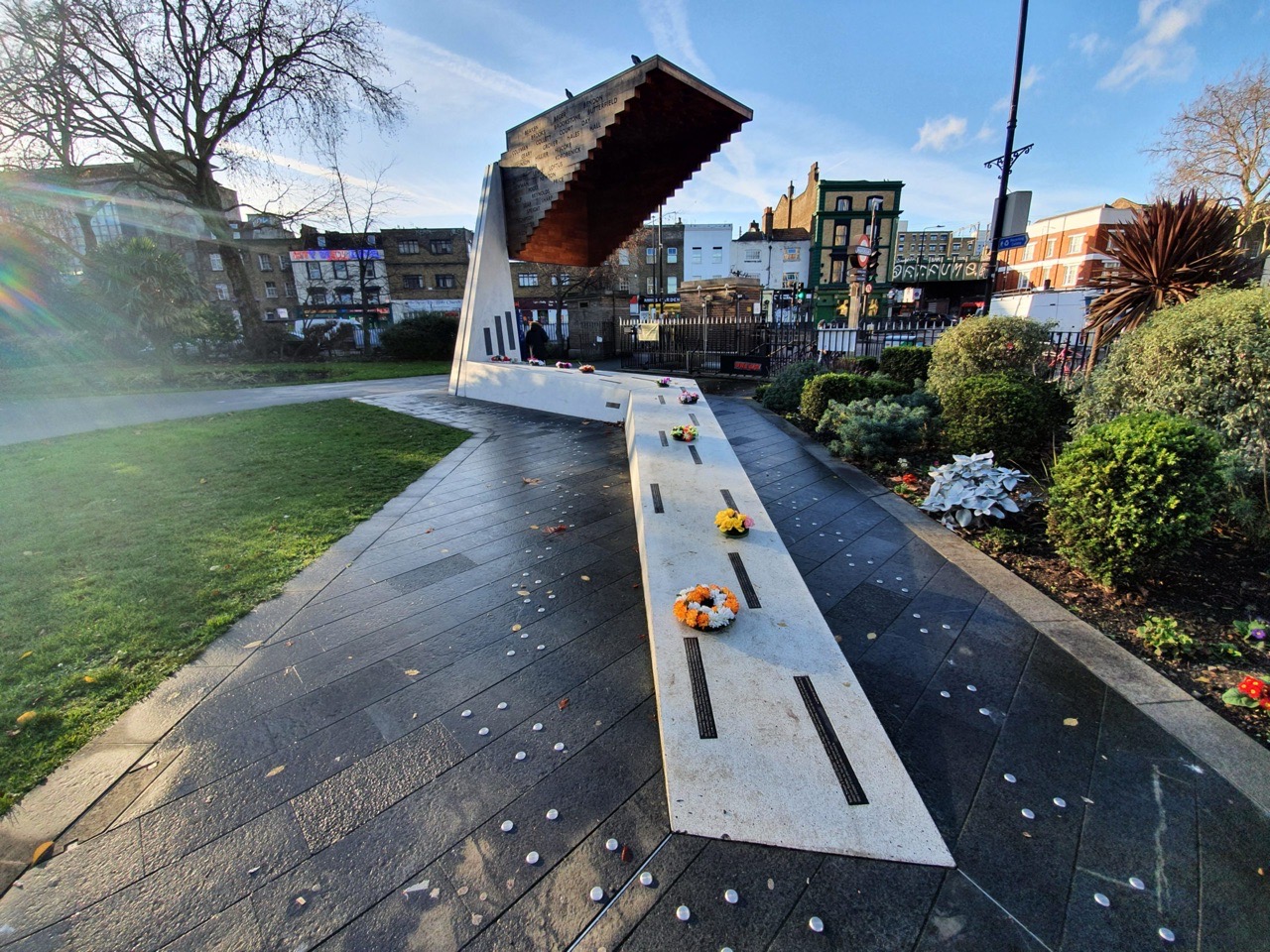
    This monument, also known as the Stairway to Heaven Memorial, commemorates those who lost their lives in the Bethnal Green Tube disaster of 1943. It’s a striking monument for what was the worst civilian disaster during the Second World War.

    During the late 1930s, the Central Line was being expanded from Liverpool Street over to locations in Essex. The construction work had nearly been completed when the Second World War commenced, but there was no track laid and the site was taken over to be used as war shelters.

    On the evening of the 3 March 1943, there was an air raid warning and many locals proceeded to the station site to find safety. Near to the bottom of the steps down a mother and daughter slipped, which led to people behind falling and then crushing those below. A total of 173 people were killed during the incident, including 62 children, with their names placed on the above panels.

    Clicking on the above photo should make this readable and it’s an account of what happened on that fateful evening. The press weren’t permitted to write about the incident, although the occasional sly mention got through, as there were fears that it might induce a national panic as well as being damaging to the morale of the nation. A report into the incident was commissioned, but wasn’t published by the Government until 1946.

    I think this looks quite sleek and elegant, with the main part of the memorial at the rear being an inverted flight of stairs. The memorial was designed by Harry Paticas, who was also one of the key visionaries behind the entire project. He had noted just a small plaque inside the station marking the event and he wanted something more visible, so that the story wasn’t entirely forgotten.

    These are quotes from survivors and although they’re a little hard to read (both at the memorial and on-line) they add some poignancy to the memorial. A comprehensive web-site was also created alongside the memorial, available at http://stairwaytoheavenmemorial.org/.

    There’s more about the incident on this video, from BBC’s The One Show.

  • London – National Portrait Gallery (Taylor Wessing Photography Prize)

    London – National Portrait Gallery (Taylor Wessing Photography Prize)

    The National Portrait Gallery (NPG) was always going to be closed this year as it is undergoing a restoration project and their timing is perhaps fortunate. But, one thing they share with other galleries is the opportunity to place artworks on-line so that interested people stuck at home can still engage with their collections.

    In this case, the NPG has created a virtual exhibition at https://www.npg.org.uk/whatson/taylor-wessing-photographic-portrait-prize-2020/virtual-exhibition where anyone can view all of the photographs and then vote for their favourite as part of their “Peoples’ Pick”. There’s information about each artwork and you can sort of stroll through the gallery, albeit with quite a lot of imagination.

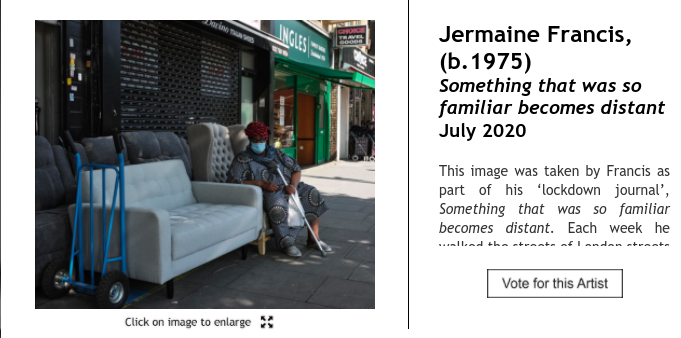
    This was my favourite and the one I voted for. The gallery notes say:

    “This image was taken by Francis as part of his ‘lockdown journal’, something that was so familiar becomes distant.”

    I don’t want to show the image in full as I’m sure it’s under copyright restrictions, but there’s something about the colourful dress of the lady in the photo combined with her blue facemask that make this very much a photo of 2020, but yet still familiar.

    The winning artist will be revealed on Monday 16 March 2021.

  • London – Greenwich (Borough of) – National Maritime Museum (Figureheads)

    London – Greenwich (Borough of) – National Maritime Museum (Figureheads)

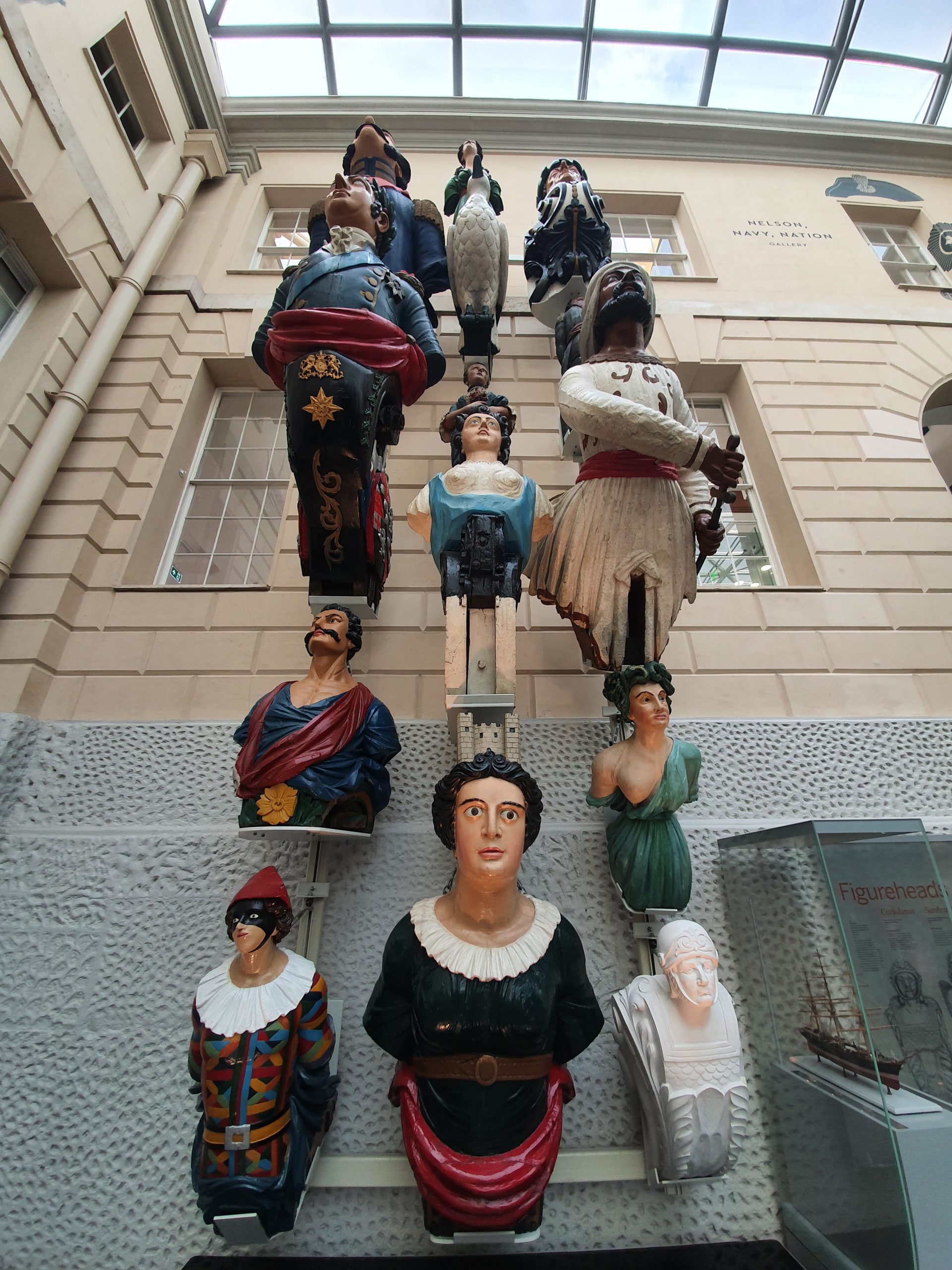
    There are many highlights in the National Maritime Museum, but these figureheads are some of my favourites in the collection. The largest collection of merchant navy ship figureheads in the world is located nearby in the Cutty Sark museum, but the ones here are Royal Navy figureheads.

    Royal Museums Greenwich operate one of the more restrictive copyright policies that I’ve seen from a museum, limiting re-use of their collection imagery. It’s possible to embed the images, but they’re relying on a Flash set-up and that’s being retired. It’s a slight shame as I would have used some of their imagery of figureheads that they don’t have on display in the museum. They’ve made quite an effort with the figureheads though, there’s a separate web-site at http://figureheads.ukmcs.org.uk/ which has 300 of them listed.

    The museum explains that back in the eighteenth century, the Royal Navy would usually have full-length figures, but cost cutting at the Navy Board saw an end to that. Some of the figureheads in existence at that point got cut back, with just the heads usually used after that.

    In the above photo, there are a few obvious figureheads which stand out. The large one on the right in the middle is from HMS Himalaya, which was built for the Peninsular and Oriental Steam Navigation Company (P&O) in 1853 and was known as SS Himalaya. After a few months, P&O realised that their ship, which was the largest ever constructed, was too big and there wasn’t enough passenger traffic to justify it. This wasn’t ideal for them, as they had just spent £130,000 on building it. However, they managed to convince the Government to buy their ship for £133,000 and it was transformed into a troopship which could carry up to 3,000 soldiers. The ship was decommissioned in 1894 and was then used as a ship to transport coal until it was sunk by the German Luftwaffe at Portland Harbour in 1940. The figurehead had been removed when it ceased to be a troopship, being stored at Devonport until 1936, when it was presented to the Admiralty.

    At the bottom left of the above photo is the figurehead from HMS Harlequin, a brig-sloop which launched in 1836. The ship was later used to transport coal and was decommissioned by the Royal Navy in 1899 and was broken up and sold for scrap in 1904. The figurehead was kept and was located on the first floor of Rigging House in the Devonport Dockyard, being donated to the Admiralty in 1936.

    Above the HMS Harlequin figurehead is the one from HMS Tribune, in the style of a Roman tribune. The ship was a wooden screw corvette which was launched in 1854, but it didn’t last long as it was sent for breaking up in 1866. I’m not entirely sure that taxpayer’s money was used entirely wisely there. The figurehead ended up in the same place as the HMS Harlequin and was also gifted to the Admiralty in 1936.

    The last British battleship to have a figurehead was HMS Rodney, which was launched in 1884 and remained in use until it was broken up in 1909. After that, with the exception of on some smaller Royal Navy ships which still used figureheads, the tradition changed to have a ship’s badge instead. This doesn’t seem quite as exciting to me, there’s something quite appealing about knowing how many sailors from the Royal Navy would have seen the figureheads on these ships and likely been quite attached to them.

    My only other comment, for what it’s worth (which isn’t much) is that the figureheads are all a bit pristine. They’ve nearly all been repainted, although not necessarily recently, so they don’t have that feel of having been on the front of the ship. The museum does have plenty of figureheads which no longer have much paint left, and I prefer these as they feel more authentic, but they’re mostly not on display.

  • London – Kensington and Chelsea (Borough of) – Norland Square Railings

    London – Kensington and Chelsea (Borough of) – Norland Square Railings

    There are many things that annoy me. These include people being loud in libraries, Greggs running out of sausage rolls and people putting their feet on the seats of trains. There are other things as well of course (crime and corruption aren’t great either), but I’ll limit myself here. Historically there’s one particular decision which is annoying and it has wrecked many parks, gardens, buildings and churchyards across the country, which was when iron was collected for the war effort.

    It’s not the collection of the iron that’s the problem here, it’s that historians seem to agree that only around 25% of it was used. And the Government never stopped collecting it, despite it being clear that they didn’t need any more. Paperwork has been “lost” by Government departments and it’s widely thought much of the iron was just dumped after the end of the Second World War. Perhaps it was good for morale and making people feel involved, but it simply caused more anger later on when the truth started to out.

    Now that I don’t live in London, I’m no longer a member of the London Library at St. James’s Square, but I’m pleased to note that £500,000 has been spent restoring the railings there. There’s further information at https://www.stjamessquaretrust.co.uk/railings-project and it’s a worthwhile project. But, at least some railings had already been put back here, in so many other locations across the country all that remains eighty years on are the stumps of the railings. Churches suffered terribly from this, as well as many residential property owners. Although, as with many things, other wealthy property owners found reasons for their iron not to be taken in the first place, whilst those of more limited means were busy tearing up their front gates.

    Lord Hemingford in 1943 queried this whole arrangement, although he wasn’t give much succour when he said in the Lords:

    “To go a little lower down the social scale, I saw only the other day a row of very small cottages, I suppose cottages with not more than four rooms at the outside, with their small gardens in front of them, many of them tended with very great care, where the railings—which can have been of very little use to the Government, for they were not much more than wire made into an upright fence—have been taken away from the front of the gardens. I cannot but imagine that those railings were useless for the purpose for which they were taken, and must have been among those which have since been sold by the Ministry of Supply.”

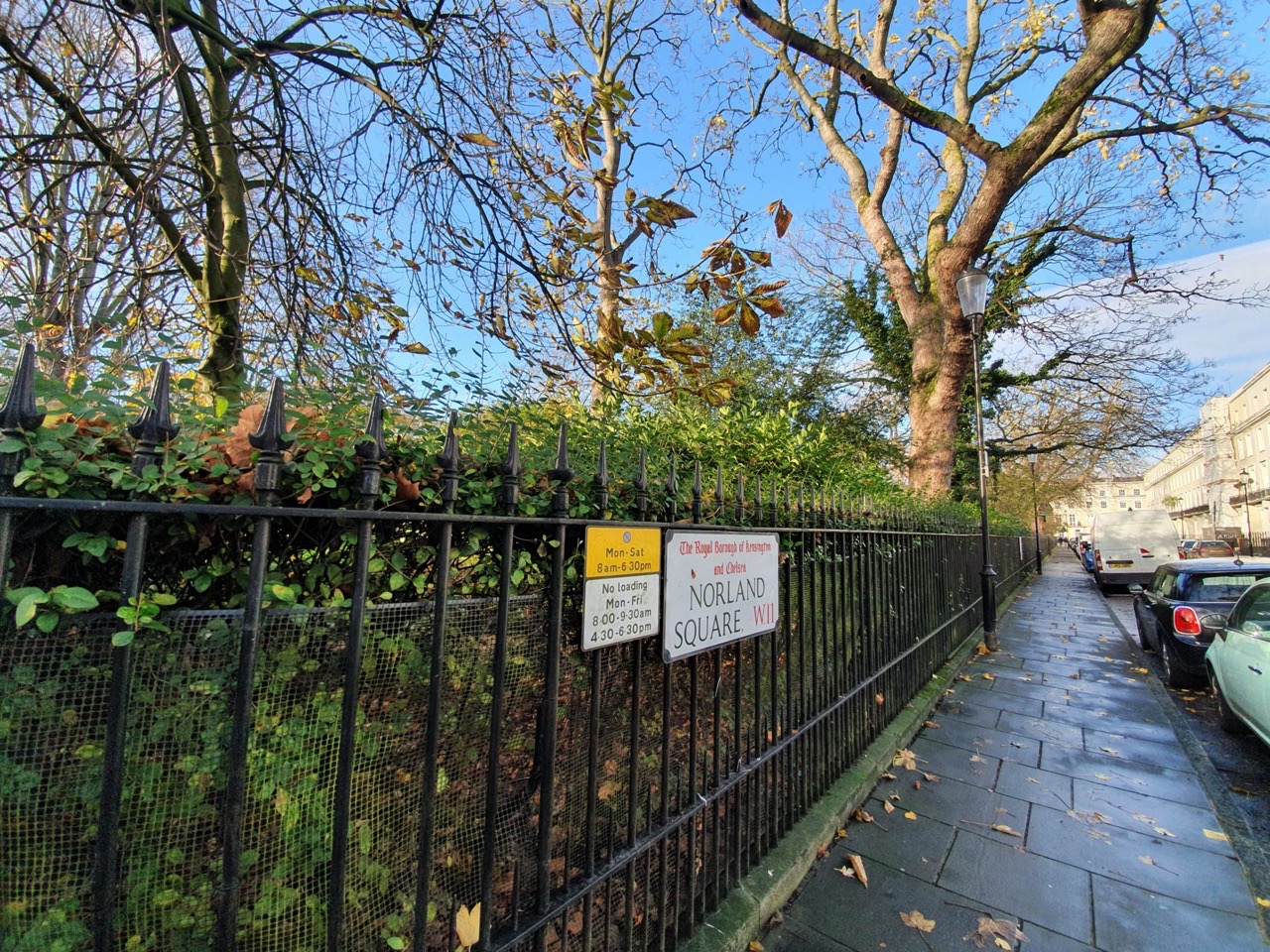
    And, the reason I mention all of this is that the photo at the top is of Norland Square Gardens, with their lovely iron railings. These date to 2007, when Susan Walkers Architects (who are engaged with the St. James’s Square project) and the Cast Iron Co. Ltd produced these new railings for the gardens, funded by the Norland Square Garden Committee. They’re not overly decorative, but they define the area much better than some generic chain-link fence or indeed nothing at all.

    There seems to have been a little bit of a wave of these transformations over recent years, but mostly they seem limited to wealthy areas of London or to property owners with some money. Perhaps it’s time to fund the restoration of iron railings back to churches, parks and many other locations where they were taken from, an apology from the Government that this scheme to collect iron wasn’t stopped when it was realised that it wasn’t productive.

    There’s a video of the patrotic need for this at https://www.britishpathe.com/video/park-railings-for-munitions.

  • Greater Anglia : London Liverpool Street to Norwich

    Greater Anglia : London Liverpool Street to Norwich

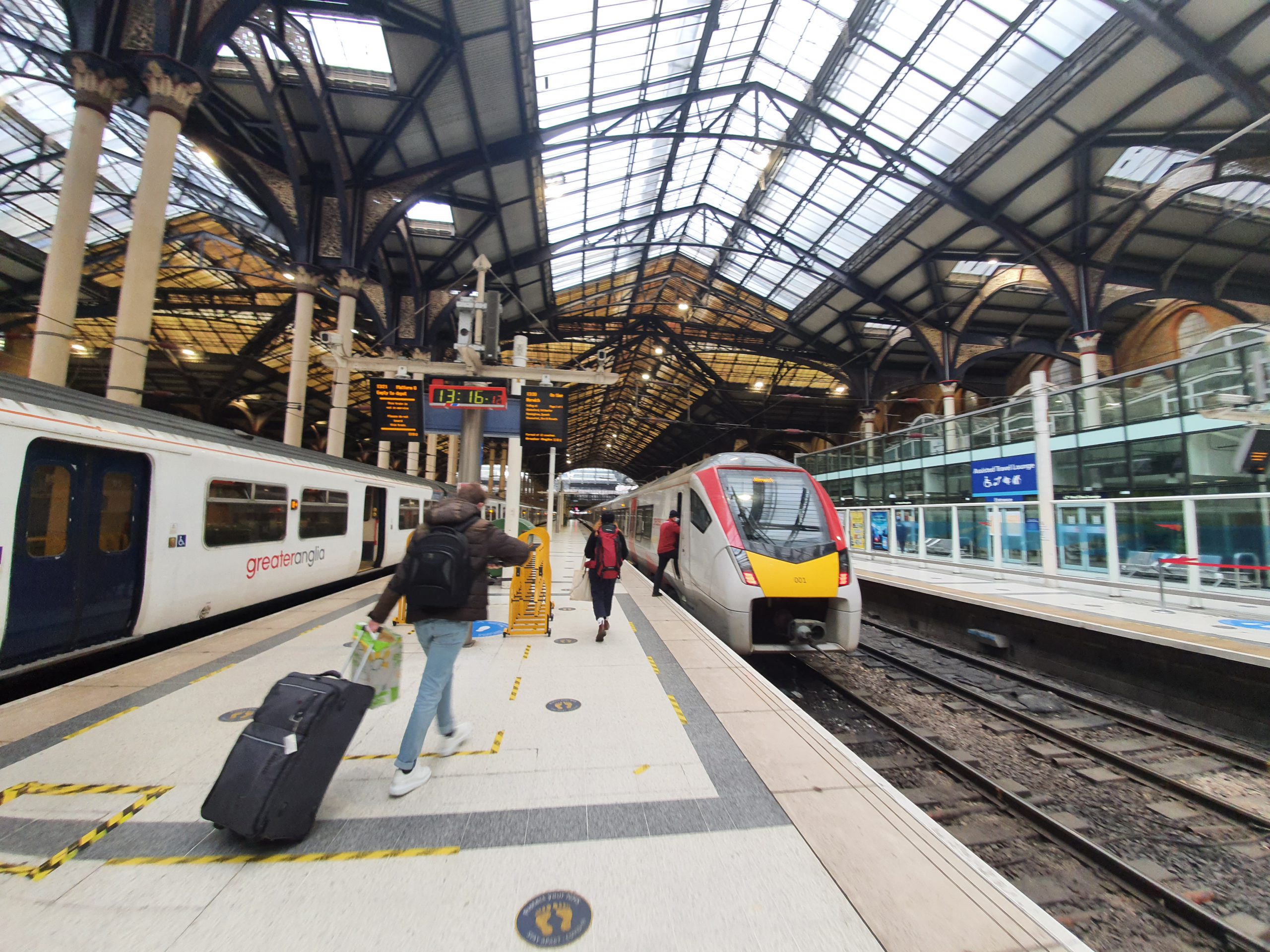
    The Prime Minister hadn’t quite made his latest announcement (or u-turn if you prefer) by the time that I was about to board the 13:30 Greater Anglia train back to Norwich from London Liverpool Street. But, when that statement was made, it was effectively saying that London was now entering Tier 4 and that from midnight the residents of the city shouldn’t leave the area. Things appear to have gotten worse with a new virulent strain of the virus, which is not ideal at all.

    There were reports in some elements of the media that there were huge flurries of Londoners rushing out to the countryside, although that appears to have been dismissed by the rail companies who said few trains were actually full. Either way, the train that I was on didn’t seem particularly busy, so I had a block of four seats around a table to myself for the journey. And, for those who note my annoyance on this matter when Stansted Express trains are pushed into service, this train did actually have tables. I bought my ticket over a week ago, another bargain priced £10 advance single fare.

    The most interesting part of the journey for me was annoyance at myself for either being asleep or not paying attention, I can’t remember which (and couldn’t at the time, so I was probably asleep) whilst pulling into what I think was Manningtree station. The driver made a furious announcement, although made professionally, that he had been forced to sound the train’s horn as he nearly hit a passenger’s bag which was being carried so near to the platform as to have actually been mostly off of it. The driver said several times, in excess of four, that the person responsible was a male, in carriage D and with a duffel bag. I was positively disappointed not to be in the carriage as otherwise I could have looked and tutted, to show my British displeasure, at this act of idiocy. I say idiocy, as that’s what the driver called it, along with other words.

    Anyway, I quite liked that the driver made his coffee order over the announcement system and that the refreshment team made one back, apologising for not having the biscuit he wanted. It was sufficiently light hearted to add some humanity back to the journey and I think it calmed the annoyed driver down.

    And here we are back in Norwich, on time and that really is the end of my travel for 2020. I didn’t think in early November that I’d be travelling again in 2020, but this twelve-night stay in London was worthwhile and interesting. What I’m more disappointed about now is that travel in early 2021 is looking effectively impossible. I’m likely to cancel my trip to Bilbao, whereas British Airways have already cancelled my trips to Lisbon and Dublin. I can’t imagine that I’ll be going to Inverness or Palma either, which are both in January, although haven’t yet been cancelled by British Airways.

  • London – Hackney (Borough of) – Hackney – Travelodge

    London – Hackney (Borough of) – Hackney – Travelodge

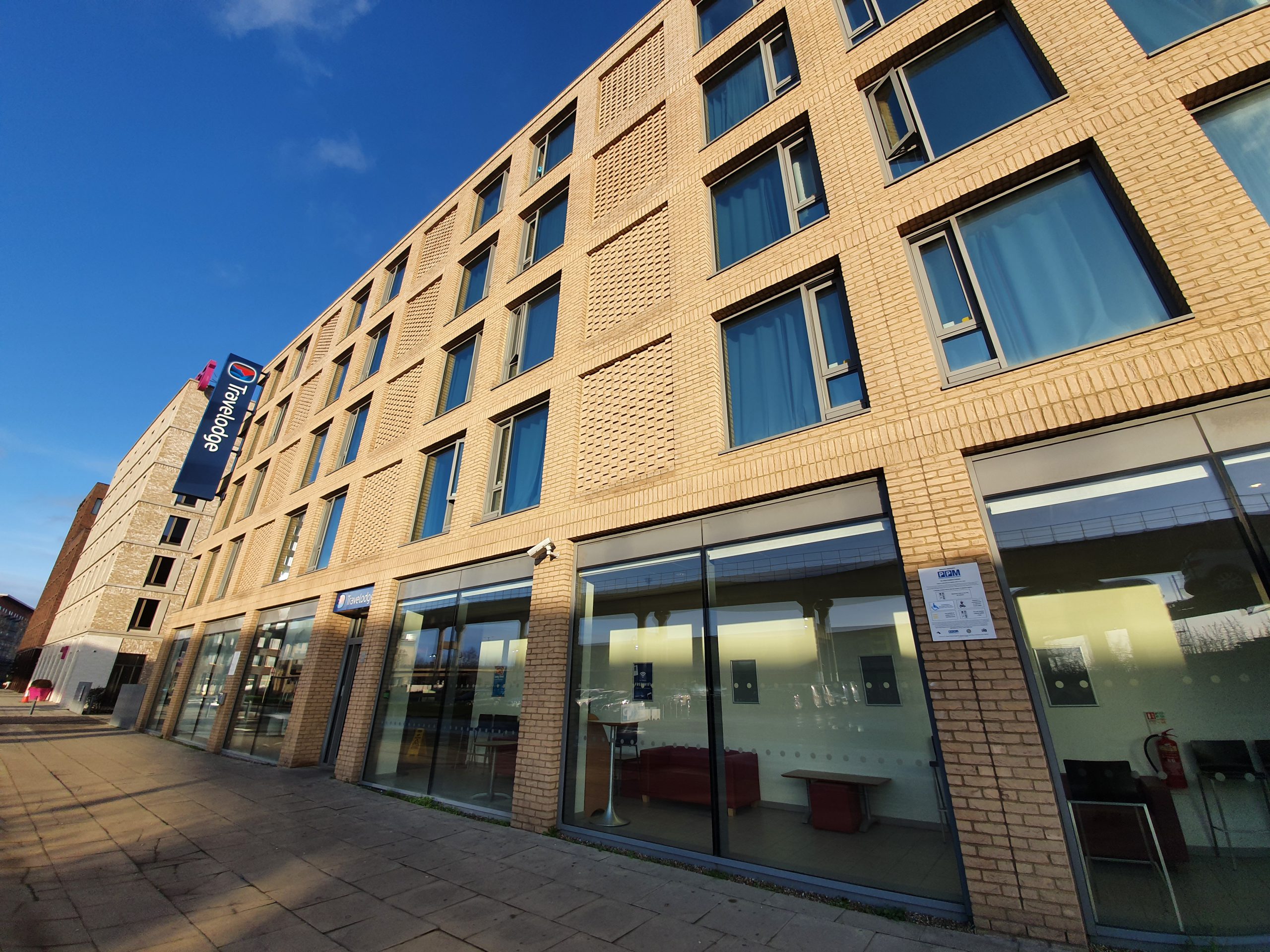
    The Travelodge in Hackney is on the left-hand side of this photo (in the building, not the railway station platform as even Travelodge haven’t got rooms that basic), easy to reach from the city centre by bus or London Overground. In terms of noise, I like the sound of trains overnight, but then again, I’ve long since decided that I like urban sounds (I mean in relation to the background noise of a city, not a type of music) such as this to feel the most rested. My tolerance of noise is less liked by some others though judging from their reviews about being kept awake.

    There is a shared door with Kip Hotels to get into the building, a slightly unusual set-up of two rival hotels with one entrance.

    Anyway, let me at least try to paint some kind of picture of the scene on arrival. I entered the reception area and an alarm was going off throughout the building. The receptionist looked stressed, she now had two waiting guests and she didn’t know why the alarm was going off. She ran out of reception looking quite harassed by the situation and went to investigate why her hotel wasn’t working properly. It’s not an ideal welcome to be honest.

    Then a man with his two sons (or I assume they were his) came into reception and it’s fair to say that these children were not the quietest that I’ve ever encountered. The receptionist comes back at this point and apologises for the wait, but she says she needs to keep investigating as she can’t work out why an alarm is going off. At this point, the man explains that his two kids might have been the cause of the alarm due to a tripping incident near the lift. This was a relief for the receptionist, she now knew why her hotel was broken. She disappeared off to try and turn the alarm off, but she seemed pleased that she understood what had happened.

    Another staff member appeared, who was a sea of calm in a reception where two children were running around screaming and an alarm was going off. She dealt with the customer in front of me and ensured he was content, before trying to assist the man with his two children. I had by this point moved out of the queueing arrangement to stand near the wall, which stopped the two loud children running around me. The man kindly mentioned that I had been first, but I’m a helpful sort of person and I let him go ahead as he needed a new keycard. This altruistic behaviour of mine was, if I’m being honest, also useful to discover what part of the hotel the kids were located in so that I wasn’t near to them. I have a feeling that the receptionist guessed this, I was placed on the ground floor which was as far as possible to have been placed away from the kids.

    I’d add that the children weren’t bad, but they seemed to be quite loud and I like the noise of trains and traffic, I’m less good with the sound of exuberant children. Anyway, I digress.

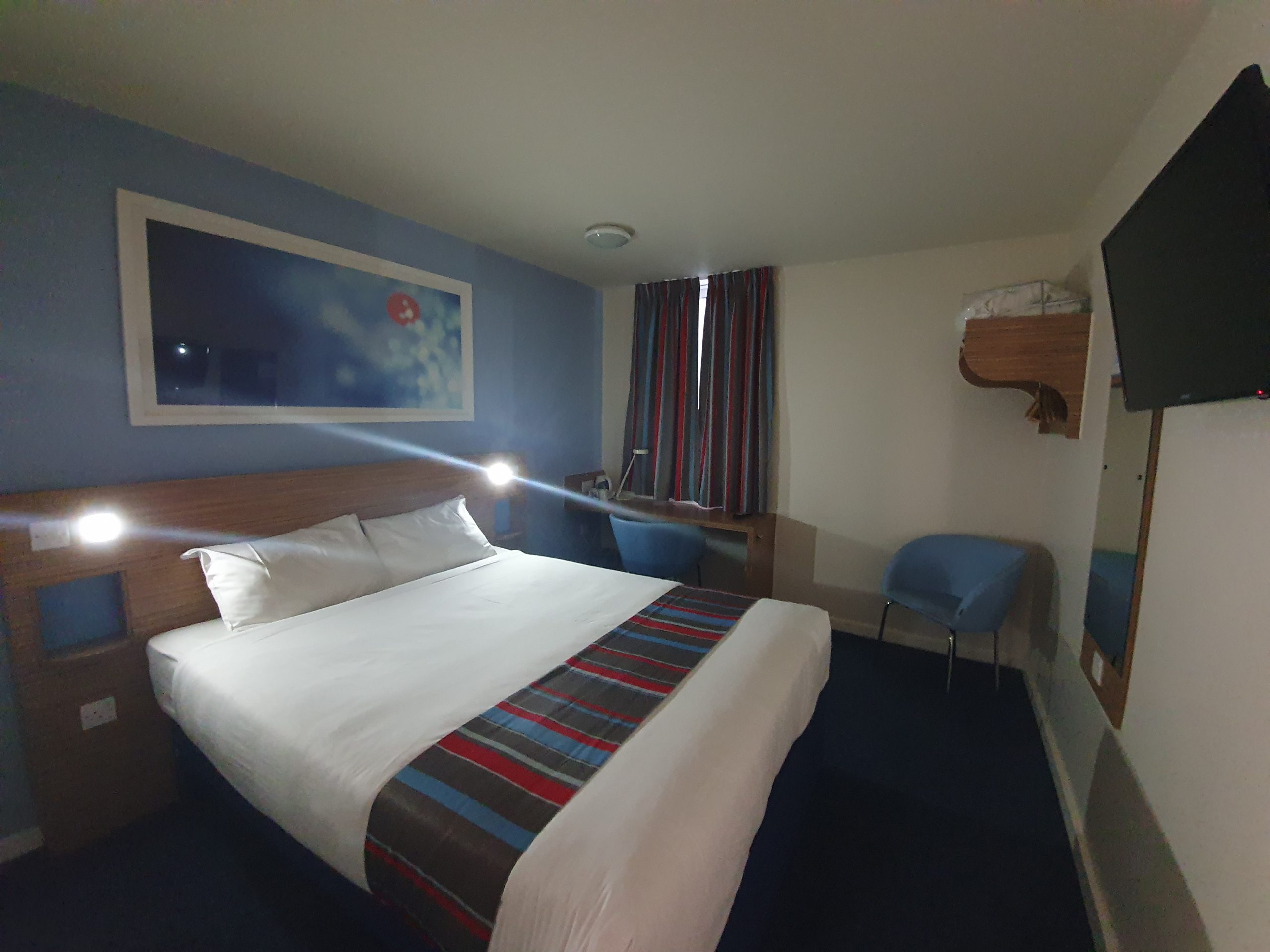
    The bedroom was fine, it’s not the largest Travelodge room that I’ve had, but it met my requirements. It had a door, a window that opened, a ceiling, walls, a bathroom, a carpet that didn’t stick, clean bedsheets, a desk, a bin, a kettle, towels and a light. There are quite a few requirements there, but I think that some of them are quite basic needs. And, I heard no more noise either internally or externally until I checked out, although I’m unsure how many guests there actually were in the rest of the building.

    I didn’t see any staff members when checking out and if it wasn’t for the excitement of check-in, I feel I might have found the whole experience just a little unnotable. This room cost under £20 for the night, which is ridiculous for a London hotel the week before Christmas. But, we live in interesting times….

  • London – Newham (Borough of) – Travelodge ExCeL

    London – Newham (Borough of) – Travelodge ExCeL

    This isn’t a good time for hotels in London, and I can’t imagine many times where Travelodge have been selling off rooms in the capital at under £20 just a couple of nights before the stay. So, this looked like a rather good price and the hotel is conveniently located next to a DLR station, and also next to where I stayed last week at the Holiday Inn Express.

    My expectations were frankly a little low, a room of £20 and some not great recent reviews didn’t fill me with confidence. In reality, it was all absolutely fine. There was no noise internally or externally, the room was clean and the staff member at reception was friendly and helpful. It was also useful that the staff member asked if I wanted a floor on a lower floor or at the top, so I went with my standard “top floor, away from lift” option. The room wasn’t enormous, but it was perfectly sufficient and there was free tea and coffee. Definitely hard to complain at under £20 per night.

    To my slight surprise, this was a slightly better built hotel than the Holiday Inn Express that’s next door. That hotel has been built with no individual air conditioning units and no facility to open windows. The Travelodge had gone for the approach of a window that opens to cool things and a heater to heat. I like such simple solutions, although it might be too hot in the summer (one reviewer said it was and they gave up with their room to sleep in the hotel’s bar). But I’m sure they offer fans then. The room could have done with some plug sockets near to the bed, but perhaps they’ll be put in when the hotel is refurbed.

    As an aside, one thing that annoys me slightly is the hotel’s response to reviews, which is pretty much always the same. There are all manner of reviews, from staff members bursting into a room when a customer was changing to a few allegations of theft and bed bugs, all with the exact same response from the hotel as they replied to someone who mentioned they found a hair on the floor. I like reviews from managers who just tell the truth, they’re more entertaining.

    Anyway, all rather good value for under £20.

  • London – City of London – London Mithraeum

    London – City of London – London Mithraeum

    A few years ago I went to the Cavern Club in Liverpool and was moderately disappointed to discover that it’s not quite in the same place as the original. In 1973, British Rail decided that they must definitely have the site of the Cavern Club (although they were prepared to build elsewhere if they were given some extra money to pay for their costs) and so they compulsorily purchased it, filled it in, then decided they didn’t want it. An attempt was later made to excavate the site which wasn’t entirely successful, so the current Cavern Club is sort of where the old one was with some of the same bricks.

    And, I mention this tangential story because this is what has happened to the London Mithraeum. Not British Rail this time, but Legal & General and the construction of their far from beautiful Bucklersbury House. It would have been possible to redesign the building and keep the Roman finds, but the Government announced it would cost £500,000 and they weren’t spending that. However, it shouldn’t be under-estimated just how interested Londoners were, it attracted unprecedented interest for historic remains and the site was being opened three hours earlier than anticipated in its last week, such were the number of people who wanted to see it. These were challenging times for London in the mid-1950s where much was still being rebuilt following the war, so there was a great deal of positivity when this Roman structure was being uncovered.

    The end result was that they shoved out the Roman remains into the street and called it a compromise. Perhaps less a compromise and more of a sell-out. There was talk of just destroying the site entirely, so the option chosen did at least save the stones. Anyway, Bucklersbury House has now gone and been replaced by a lovely new building designed by Fosters & Partners. And it’s in the cellar of that new building that this temple now resides once again.

    The hole that was dug for the Legal & General building. There’s a lot of history, including some interesting video of people there in the 1950s, at the official web-site at https://www.londonmithraeum.com/about/. Given the quantity of information there, I’ll just borrow a little of their text to ensure my history is correct.

    “The site lies over the course of one of London’s lost rivers, the Walbrook. Nearly 2,000 years ago when Londinium was founded by the Romans, this river marked the limits of their first settlement. In the 3rd century AD, nearly 200 years after the founding of London, a Roman Londoner, built a temple to the god Mithras on this reclaimed ground, next to the river.

    The mysterious cult of Mithras first appeared in Rome in the 1st century AD. It spread across the Empire over the next 300 years, predominantly attracting merchants, soldiers and imperial administrators. Meeting in temples which were often constructed below ground, these were private, dark and windowless spaces. The mythological scene of Mithras killing a bull within a cave, the ‘tauroctony’ is at the heart of the cult, and its full meaning is subject of much speculation.”

    But, going back in this story a little bit, there’s a ground floor entrance to the new Bloomberg Building which gives access to a museum and public space. The first surprise was seeing my friend Steve, who had coincidentally booked the exact same time to visit the same location. And there was one other person (who we didn’t know) booked for this time, as although the tickets are free, they need to be pre-booked at the moment. And we chose the right day to book our tickets to visit, as changing tier restrictions meant that this was to be its final day of opening for the moment.

    This is the first part of the experience. I’m not sure they call it an experience, but it’s a word that perhaps adds an extra dimension to a visit, so I’m using it. The staff member who welcomed us gave a spirited explanation of it. The other person vaguely looked at it and walked off, whereas Steve and I decided we would make an effort to look at it and pretend to understand it. I’m not sure that we did, and I did think this would be a handy spot for a cafe. I’m not sure that’s what the artist had intended me to think, but there we go.

    Some of the finds are now on display, although 14,000 items were found, so I’m not entirely sure where the rest are. Going downstairs, and before getting slightly lost, we found the second part of the museum, where there are some screens giving more of the site’s history.

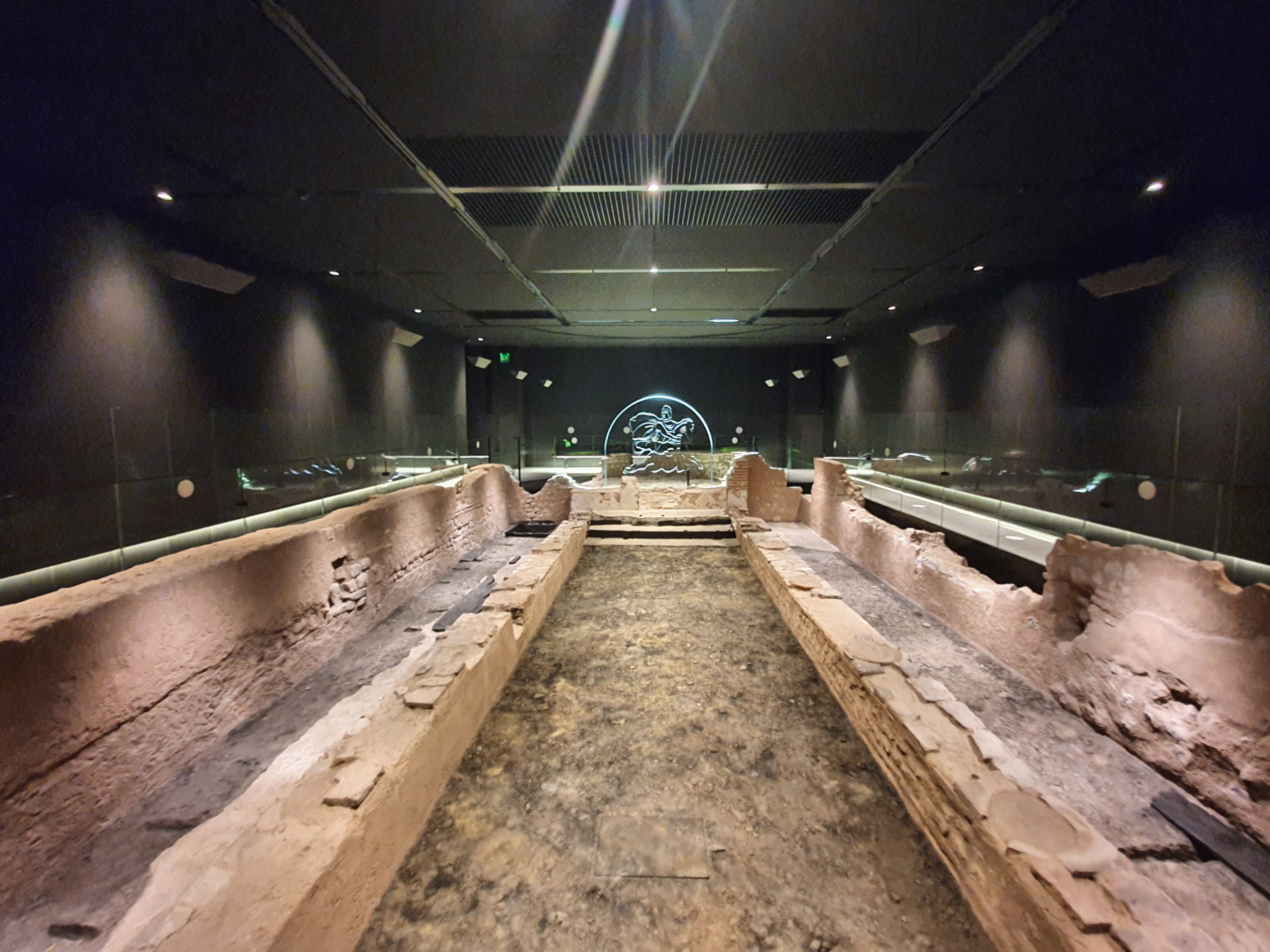
    And, this is the centrepiece of the attraction located down another flight of stairs. I understand there’s usually some form of audio-visual experience for visitors before entering here, but for reasons unknown, the current health situation makes that impossible.

    And another photo of the Roman remains with visitors being able to walk around the outside. I couldn’t help be distracted by the neatness of the stones, it all felt too polished and modern. And the reasons for this are clear, namely that when they moved it to an outside location and slightly crudely rebuilt it, much of the original was lost in terms of the mortar and indeed its authenticity. Eric Morecambe’s line is often quoted, but there’s an element of truth to say that “there are all the right stones, but not necessarily in the right order”.

    There’s an article in the Sphere on 23 October 1954 with a photo of a wall being built, subtitled “workmen are rebuilding the lower walls with the stones made by Roman masons”. I’m not convinced that there was complete archaeological rigour going on with the rebuilding, although this seems to have been glossed over a little in the telling of the temple’s story.

    But, I have no complaint with the efforts made by Bloomberg, they’ve restored some dignity to this site after some rather casual and off-hand treatment of it over the last few decades. The web-site they’ve created is informative and useful, with the reviews of the museum nearly all veering towards the very positive. And there’s been some magic put back to these stones, in whatever order they’ve been relaid. A visit isn’t likely to take much more than thirty minutes, but I’m glad that I got to see this site at Walbrook.