Category: Kensington and Chelsea (Borough of)

  • London – Kensington and Chelsea (Borough of) – National Army Museum (Leg Bones of John Fraser)

    London – Kensington and Chelsea (Borough of) – National Army Museum (Leg Bones of John Fraser)

    The National Army Museum is a perfect reminder of just how painful, messy and disastrous war is, there are a lot of stories of agony here. This one isn’t different, these are the leg bones of John Fraser who lost them in Gibraltar in 1782. He thought he’d like to keep them so that they could be interred with the rest of him when he died.

    Fraser served in Gibraltar between 1780 and 1782, but he came home after losing his leg, which seems sensible. He did though become a captain of an invalid unit and he returned to Gibraltar a few years later as a judge advocate. He was perhaps fortunate to survive such a loss, living until 1843 when he died at the age of 83. He was buried at St Barnabas’ Church in Kensington, leg included, but for some reason they decided to remove it again during later work at the church. I’m not entirely sure that he would have been thrilled….

  • London – Kensington and Chelsea (Borough of) – National Army Museum (Child’s Shoe from Siege of Cawnpore)

    London – Kensington and Chelsea (Borough of) – National Army Museum (Child’s Shoe from Siege of Cawnpore)

    This is another emotive exhibit in the collections of the National Army Museum, a child’s shoe recovered from the well at Cawnpore. This was an uprising in India in what is now known as Kanpur, where for numerous reasons, there was a siege which forced British troops and residents to defend themselves. Nana Sahib led the rebellion against the British, seemingly as he hadn’t received a pension from the East India Company that he had wanted.

    Anyway, making a long story quite short, Sahib’s forces killed hundreds of women and children and threw their bodies into a well. The British soon recovered the territory, and committed a brutal shock and awe policy in retaliation with many locals humiliated and killed. This shoe belonged to one of the children who was killed, a reminder of a bloody siege.

  • London – Kensington and Chelsea (Borough of) – National Army Museum (Earl of Uxbridge Loses his Leg)

    London – Kensington and Chelsea (Borough of) – National Army Museum (Earl of Uxbridge Loses his Leg)

    Here’s a lovely cheery display at the National Army Museum, the saw which was used to cut the Earl of Uxbridge’s leg off. The note by the exhibit explains that “the Earl remained composed throughout the operation and his only comment was that the saw appeared somewhat blunt”. A stiff upper lip and all that… I can say, with some confidence, that if I was in the military I would be more vocal with my annoyance about such a situation.

    The little incident took place during the Battle of Waterloo when a cannon ball, one of the last to be fired that day, hit the Earl in the leg. It’s said (well, it’s written on Wikipedia) that he turned to Wellington and said “By God, sir, I’ve lost my leg!” and the response was “By God, sir, so you have”.

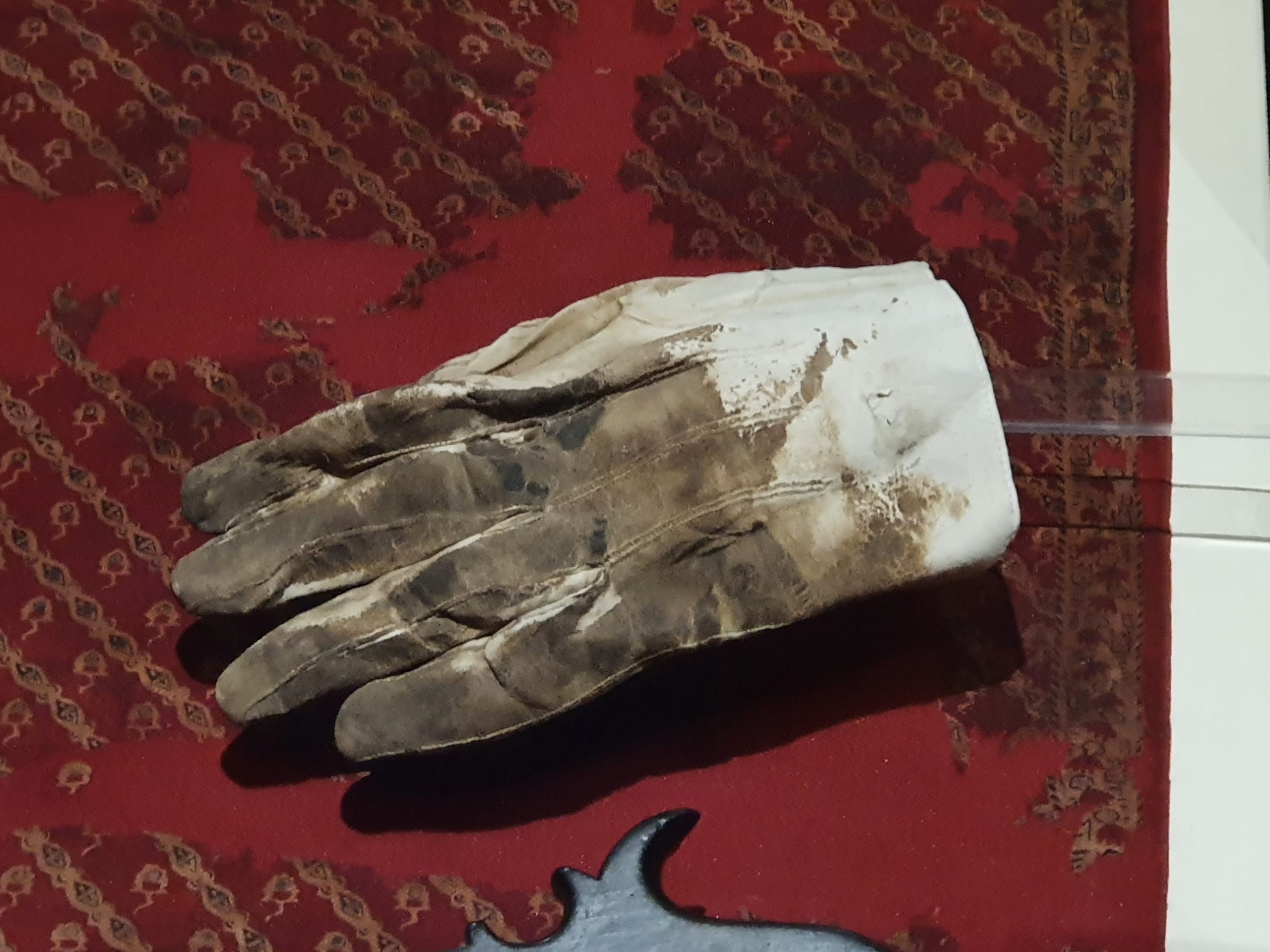
    The glove that was worn by Thomas Wildman, the Earl of Uxbridge’s aide, which got covered in blood when his master’s leg was sawn off. What a delightful day that must have been for all concerned. The Earl of Uxbridge, more commonly known as Henry Paget, was born in 1768 and he died in 1854.

  • London – Kensington and Chelsea (Borough of) – Brompton Cemetery (Joseph Thomas Bowskill)

    London – Kensington and Chelsea (Borough of) – Brompton Cemetery (Joseph Thomas Bowskill)

    This grave at Brompton Cemetery commemorates the life of Joseph Thomas Bowskill, born in 1923, the son of Joseph and Alice Bowskill. He was married to Marjorie Ruth Bowskill and they lived in Brighton.

    He was part of the Royal Air Force Volunteer Reserve and was a leading aircraftman, service number 1385868, working from RAF Weston-on-the-Green. Joseph died at the age of 22 on 1 April 1945 when his aircraft crashed shortly after take-off near to his airbase, also killing his two fellow crew members, William Callander and Harry Norman Skelton. He was buried on 7 April 1945, just a few weeks before VE Day and the cessation of military action in Europe. Marjorie, his wife, died in the Westminster area in 1973 at the age of 51.

  • London – Kensington and Chelsea (Borough of) – National Army Museum (Ruhleben Fighting City)

    London – Kensington and Chelsea (Borough of) – National Army Museum (Ruhleben Fighting City)

    This sign at the National Army Museum is from the area of Berlin that the British used to train for any attack on the city from the Soviets. The sign dates from around 1985 and the site was made to look like a city centre, even with some train carriages to add to the realism. The United States military had their own mock-up city nearby, known as Doughboy City. Ruhleben has survived today and is used by the German police for shooting practice.

    If the Cold War had taken place and fighting had broken out in Berlin, the troops that trained here would have been the ones who were called into action. Today, the area is a little more mundane, there’s a McDonald’s and an Aldi nearby. There’s a lot to be said for peacetime….

    https://de.wikipedia.org/wiki/Fighting_City#/media/Datei:Fighting_city_ruhleben_Berliner_Polizei.jpg

    And here’s what it looks like today. Well, in 2018 I think.

  • London – Kensington and Chelsea (Borough of) – Brompton Cemetery (Richard William Shimes)

    London – Kensington and Chelsea (Borough of) – Brompton Cemetery (Richard William Shimes)

    This grave in Brompton Cemetery commemorates the life of Richard William Shimes, the son of William and Edith Elizabeth Shimes (nee Green), who lived in Chelsea, London. Richard was born in the final quarter of 1918. The 1921 census won’t be released until the beginning of 1922 and Richard doesn’t appear on the 1939 register, perhaps because he was already in the military. Edith appears as a housewife, living at 297 Guinness Buildings in Chelsea with her son Charles who was a gas-fitter and another person whose details have been redacted.

    Richard joined the RAF as an aircraftman and his service number was 534975. He died on 20 March 1941 at the age of 22 and was buried on 28 March 1941.

    And there’s little more story I can find to tell on this one, he’s even listed on one site as one of the few airmen that further information isn’t available on. Until his military records are released, this grave feels just that bit anonymous. Unless I’ve missed something obvious (which is always highly likely).

  • London – Kensington and Chelsea (Borough of) – Ibis Styles Kensington (Fifth Visit)

    London – Kensington and Chelsea (Borough of) – Ibis Styles Kensington (Fifth Visit)

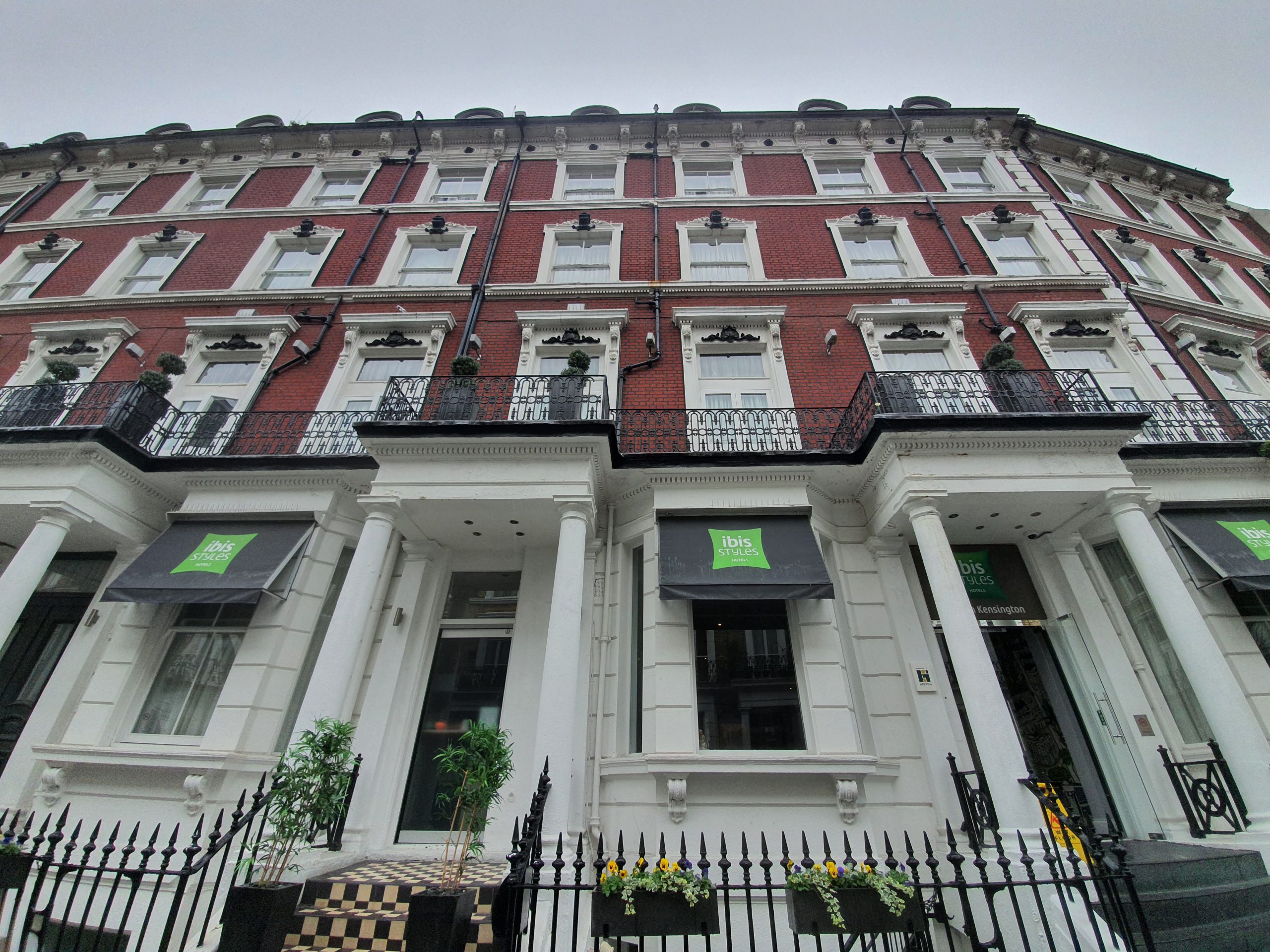
    If my blog had a higher readership then I probably wouldn’t post about this hotel, but it hasn’t, so I will. The reason is that this Ibis Styles is offering continually cheap prices, whereas their fellow Accor hotels are charging more again. It seems they’re keen to fill the hotel, whereas other hotels are trying to stabilise pricing, but I don’t know. Either way, this is what I think is my fifth visit to this hotel and I’m hoping that these lower prices continue.

    I booked a single room, but it was again upgraded to a double room. I’ve still yet to get the same room twice in my game of room bingo that no-one else is going to be interested in. The room isn’t overly large, but it’s clean and comfortable. The bathrooms in this hotel are generally small, but the rooms have been carved out of former residential properties which didn’t used to have shower facilities in every room and space is at a premium.

    The Tiger was the welcome drink I went for (I won’t tut again that the hotel could do more here), which isn’t high on my list of favourites, but it adds some variety to proceedings. There’s a rather more decadent kettle in this room than in the other ones….

    My room was on the third floor which offered some quite decent views, mainly of pigeons flying about.

    The basic breakfast is included and hasn’t much changed over recent weeks, it’s all acceptable given the low room rate. This sort of set-up is quite simple for guests and the hotel, it’s a fair compromise to the whole breakfast arrangement.

    Anyway, although I’ve written about this hotel before and can’t add much, it’s served me well over recent weeks. It’s a short walk from Earl’s Court underground station and is near to numerous shops and restaurants. There’s a 24-hour reception and a bar area which has a basic range of drinks, crisps, noodles and the like. And the staff here have always been friendly, so although I haven’t had any challenging problems for them, I suspect they’d be happy to resolve them.

  • London – Kensington and Chelsea (Borough of) – National Army Museum (Captain Sir Tom Moore)

    London – Kensington and Chelsea (Borough of) – National Army Museum (Captain Sir Tom Moore)

    The museum is quite proud of this new addition to their collections, an official painting of Sir Tom Moore (or Captain Tom) by the artist Alexander Chamberlin, himself a former British army officer. Moore became famous in 2020 for his fund-raising efforts in walking 100 laps of his garden to raise a little money for the NHS Charities Together. This attempt to raise a little money ended up being just under £40 million, perhaps slightly more than he had initially anticipated. Moore, who is 100 years old, joined the British Army in 1940 and served in India and Burma.

    Moore said about the unveiling of this painting in August 2020:

    “It is wonderful to know that the portrait will be displayed at the National Army Museum to connect the public with this history, and I hope it continues to help tell the history of the British Army for decades, maybe even centuries, to come.”

    All rather lovely.

  • London – Kensington and Chelsea (Borough of) – Brompton Cemetery (Geoffrey Donovan Hadley)

    London – Kensington and Chelsea (Borough of) – Brompton Cemetery (Geoffrey Donovan Hadley)

    Located at Brompton Cemetery, this is the grave of Geoffrey Donovan Hadley. Geoffrey was born in Brixton (then in Surrey) in 1893 and he served in the 4th Dragoon Guards (Royal Irish), with service number D/7987. His sign-up papers have survived, he was working as a clerk when he volunteered to join the army, but this was before the First World War, on 19 March 1913 having completed his medical on 17 March 1913 and he went to Seaforth Barracks near Liverpool on 20 March 1913.

    The records give lots of information about what he looked like, he was 5″7′ tall, he was 11.6 stone in weight, his waist was 35 inches, he had blue eyes and brown hair. He was Church of England, he had a pulse of 100 and he had a linear scar on his face, on the left-side of his forehead.

    He died on 12 November 1914 at the age of 21 at the First London General Hospital in Camberwell, so he must have been injured on the battlefield and transported home although the records don’t give information about this. He was in the military for a total of one year and 249 days, which was carefully worked out by the authorities. His next of kin was listed as his father Edwin James Hadley and his step-mother, Mary J Hadley, who lived at 37 Comyn Road in Clapham, a residential property which is still there today.

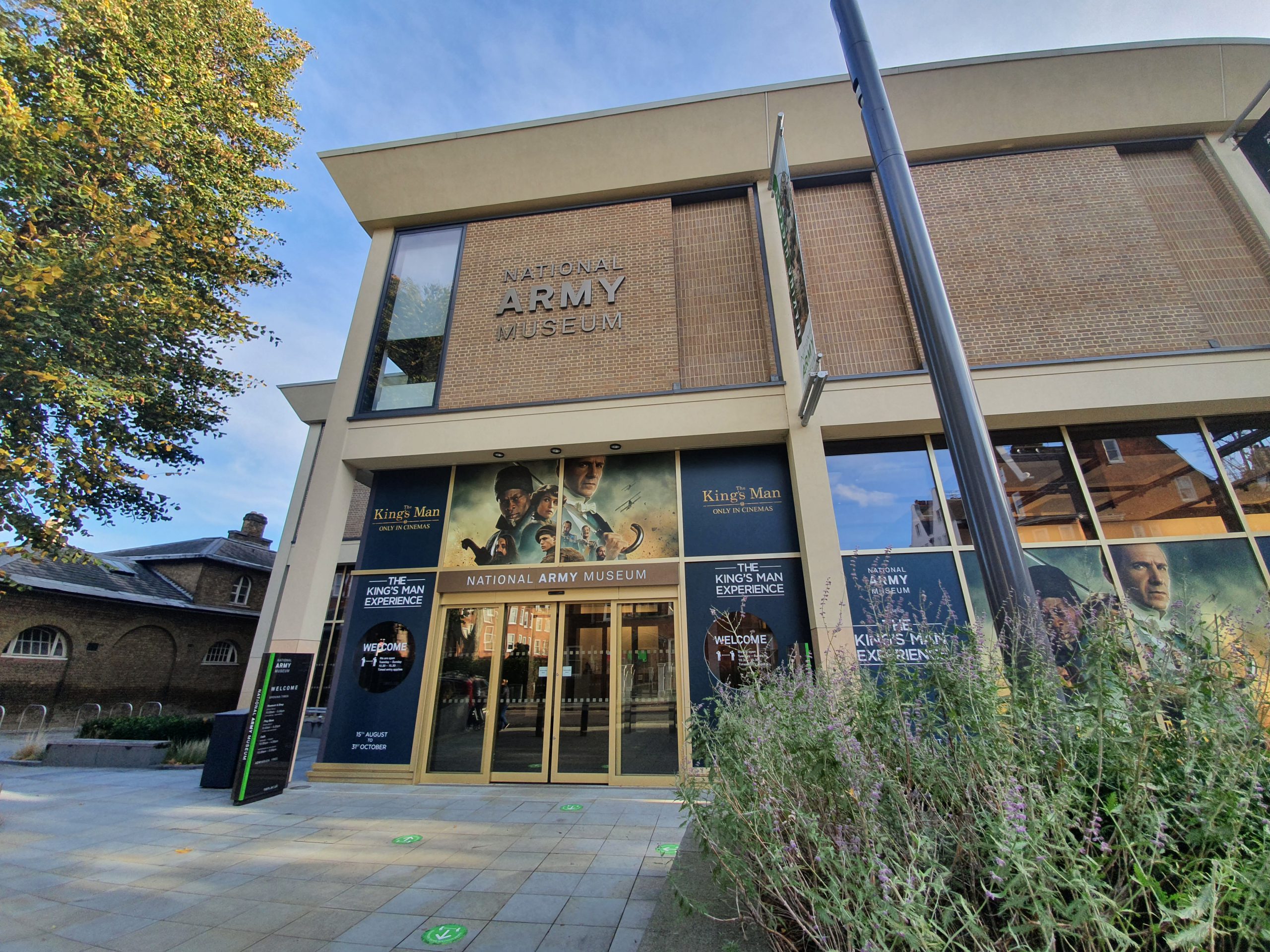
  • London – Kensington and Chelsea (Borough of) – National Army Museum (The King’s Man Film Set)

    London – Kensington and Chelsea (Borough of) – National Army Museum (The King’s Man Film Set)

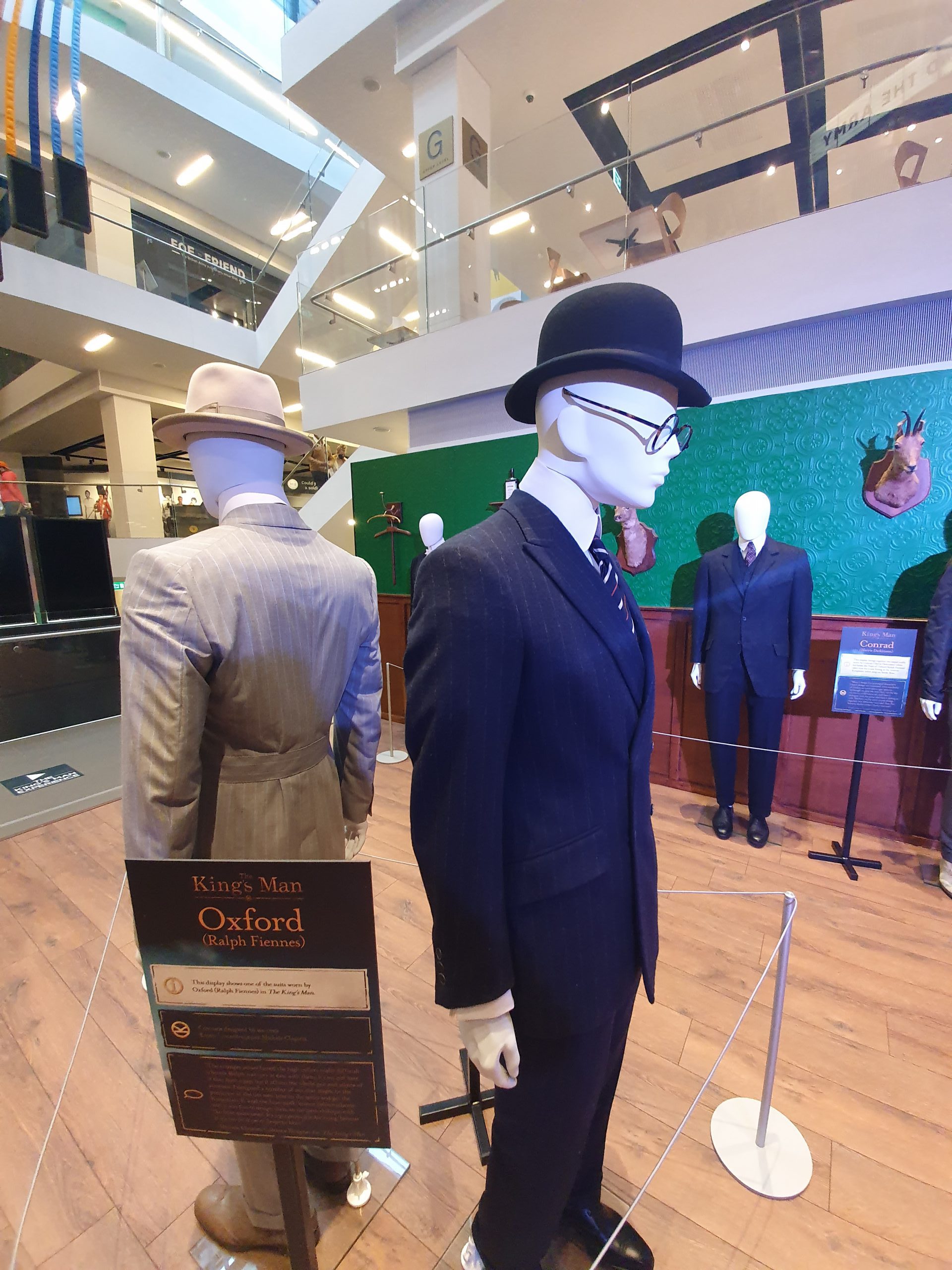
    This post is mostly just photos and it’s of the set of the King’s Man film, which is the third film in the Kingsman series and also the prequel, just to make things more confusing. The film is meant to be released in February 2021, although I’m not sure that anyone knows what is happening with the world of cinema at the moment. The film was initially meant to be released in late 2019, so the production team are probably quite fed up with the whole thing at the moment.

    Anyway, it was evident from the displays at the National Army Museum that a lot of attention and care has gone into the clothing and sets, they’re detailed even when standing close up. And now that I’ve seen these props in real life, I might actually watch the film. I have seen the first in the series, but not the second, with this prequel being from the time of the First World War and the run-up to that.