Category: Random Posts

  • Dictionary of the Vulgar Tongue – Day Four

    Dictionary of the Vulgar Tongue – Day Four

    The Dictionary of the Vulgar Tongue was first published at the end of the eighteenth century, and given that the Coronavirus crisis is giving too much time to read books, I thought I’d pick a daily word from it until I got bored…..

    Apple-Pye Bed

    This is of course an expression still in use today, the practice of doubling up sheets so that someone can’t get into bed. The dictionary notes that “it’s a common trick played by frolicsome country lasses on their sweethearts, male relations or visitors”.

    I was also intrigued at the spelling of the word pye, I thought that had gone out of use earlier than it had, it was still persisting in the nineteenth century given the above graph. For those fascinated by the evolution of language, there are two distinct possibilities of how this term came about. Some thing that it’s from an apple pie turnover, where the pastry is folded over. Others say it’s from the French nappe pliee, which is a folded sheet.

  • Dictionary of the Vulgar Tongue – Day Three

    Dictionary of the Vulgar Tongue – Day Three

    The Dictionary of the Vulgar Tongue was first published at the end of the eighteenth century, and given that the Coronavirus crisis is giving too much time to read books, I thought I’d pick a daily word from it until I got bored…..

    Anabaptist

    The traditional meaning of this word is to describe the religious movement that believes baptism is only relevant and meaningful if it’s done by free choice. So being baptised as a baby wouldn’t count, as it wouldn’t be a conscious decision of behalf of the child.

    Anyway, that’s not the slang meaning, which is “a pickpocket caught in the fact, and punished with the discipline of the pump or horse-pond” according to the dictionary. This ‘caught in the fact’ is interesting, not a phrase I’ve heard before, but it seems to be a common nineteenth century alternative to ‘caught in the act’. The link is that if a criminal is ducked into water for his crime that this is like a new baptism, hence the use of the word anabaptist.

    I’m not sure how common the usage of this word was, nearly every mention on-line is from the dictionary itself, with no obvious usage in earlier newspapers. Given that we don’t tend to punish criminals by chucking them in water any more, I can’t see this being a word brought back into usage.

  • Dictionary of the Vulgar Tongue – Day Two

    Dictionary of the Vulgar Tongue – Day Two

    The Dictionary of the Vulgar Tongue was first published at the end of the eighteenth century, and given that the Coronavirus crisis is giving too much time to read books, I thought I’d pick a daily word from it until I got bored…..

    Alderman

    An alderman is an elected, or indeed unelected, member of a county or borough council, but that isn’t what this dictionary defines. Instead, in the seventeenth to nineteenth centuries, an alderman was also a roasted turkey which was garnished with sausages, with these representing the gold chain worn by the council member.

    As an example (thanks to Greens Dictionary of Slang), in the book ‘The Life and Trial of James Mackcoull’, the line “Mackcoull suggested, that they should, in place of an alderman, have a goose and green pease for supper” appears. The word alderman in its original meaning has fallen out of favour in recent decades, now they’re referred to nearly entirely as mayors or councillors. That has also meant that this alternative name for a roasted turkey has fallen out of favour and has been rarely used since the nineteenth century. Which is perhaps a shame as I like the word…..

  • Dictionary of the Vulgar Tongue – Day One

    Dictionary of the Vulgar Tongue – Day One

    The Dictionary of the Vulgar Tongue was first published at the end of the eighteenth century, and given that the Coronavirus crisis is giving too much time to read books, I thought I’d pick a daily word from it until I got bored…..

    Affidavit Men

    Not so much vulgar, but a piece of history that is new to me. These were men who used to hang around courts and places such as Westminster Hall in the eighteenth century and they’d be willing to lie and swear on oath, for a fee of course. Incidentally, trials did once take place in Westminster Hall, including the ridiculous trial of Warren Hastings, which lasted for 7 years and he was eventually found not guilty.

    There was a tongue in cheek newspaper article in July 1776 which advertised for affidavit men, saying:

    “They must be none of your squeamish men, but swear in the face of conviction, for which the following rewards will be given.

    A direct lie – 2 pounds 2 shillings 0 pence

    An indirect lie – 1 pound 1 shilling 0 pence

    An oblique lie – 0 pound 10 shillings 6 pence

    The naked truth – 0 pound 0 shillings 0 pence

    Polling twice – 21 pounds 0 shillings 0 pence”

  • Travel and the Coronavirus…..

    As the coronavirus surges around the world, it all makes for a different few months for me, with travel cancelled, LDWA and Ramblers events cancelled and pubs likely closing throughout the country. Hopefully everyone I know (and those I don’t) can stay safe and at least it’s a chance for me to post some photos that I never quite round to……

  • Poland and Credit Cards

    For anyone who might be wondering what the level of credit card acceptance is like in Poland, I’ve managed to find nowhere over the last month that doesn’t accept them. I took out some Polish money when I arrived in the country a month ago, and I still have all of it. I like paying by card, primarily as I get Avios points, but also because it prevents waiting for change, getting the wrong change or being confused about how much to pay.

    Even in the smallest bars, where I had initially expected them not to accept cards, they do so willingly. Indeed, the same is true of cafes that I’ve visited, with the vast majority of other customers I’ve seen doing the same.

    Such a very modern country…..

  • Müllermilch Pistachio

    Müllermilch Pistachio

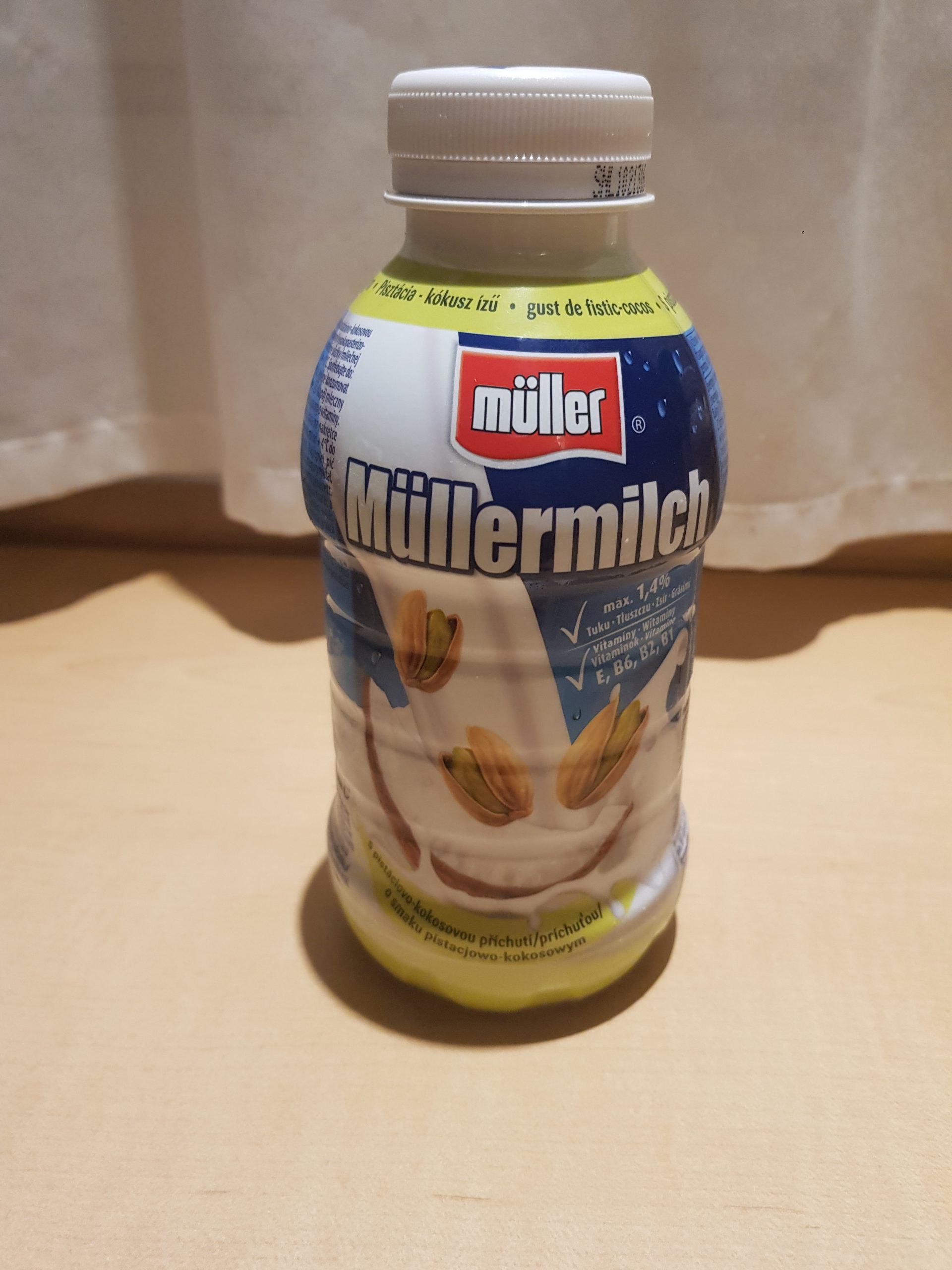
    I’ve meant to post about this before, since it’s the drink I keep buying when meandering by nearly any convenience store in Poland. I don’t think I’ve even seen Müllermilch in the UK, although I’m sure it’s available somewhere, but this pistachio version is pure decadence in a plastic bottle. Marvellous…

  • Random Polish Learning

    I’m doing my normal learning of a few Polish words per day. Putting to one side getting this random image when on a train, how often is this really going to be used by someone trying to learn Polish? I’m forever in bars wanting to sneak into a conversation with the barman about how trains derail.

  • Good Beer Guide 2020 or the Good Pub Guide 2020?

    Since I’ve been asked about this….

    There are two books published every year which both recommend pubs which should be visited, the Good Beer Guide and the Good Pub Guide.

    I’ve had a browse through the Good Pub Guide and, although I appreciate everyone has different views, there are some really surprising and generic choices in there. Without denigrating any particular location, there are some listed pubs which are bland and lacking in any depth of beer options. And very many interesting pubs in areas that I know, which have a really good atmosphere, excellent craft beer choice, innovative real ale and engaging staff are all missed out.

    The Good Pub Guide also claims it’s independent, which I don’t deny, but then takes advertising from breweries and pubs. And then, the book admits, “the pubs featured as main entries do pay a fee”. So, for me, it’s meaningless, however well intentioned that is. They then claim that they’re “the only truly independent guide of its kind”, but I’m not sure how the Good Beer Guide is somehow in hock to anyone.

    The Good Pub Guide seems to really focus on mid to high end pubs which serve food, with few exceptions. If it was rebranded as the good pub food guide, then it might perhaps make more sense. But how they’ve managed to miss nearly every micro-pub, community pub, craft beer pub and quirky pub is surprising for a guide that has been published for so long. In some relatively large towns and even some cities, the Good Pub Guide has nothing to offer at all. The emphasis on country pubs is heavy, and there are a few areas which seem to have several pubs all clustered near together which doesn’t fit right with me.

    Whereas, the Good Beer Guide has rarely failed to let me down, indeed, not one choice has ever felt inappropriate. And some pubs in there have been real finds, with some fantastic craft beer and real ales, but also historic buildings and perhaps most importantly of all, a great atmosphere and service. The Good Beer Guide is up-to-date, they don’t sneer at pubs that might be cheaper and I like their often humorously pithy comments and summaries of the locations they’ve recommended. Indeed, the Good Pub Guide gives similar space to every entry, without really sometimes having much to say, whereas the Good Beer Guide does feel that it speaks its mind.

    By a country mile, I’d recommend the Good Beer Guide for anyone who wants pubs with character.