Category: Warsaw

  • Warsaw – Museum of Warsaw (Ravensbrück Concentration Camp Uniform)

    Warsaw – Museum of Warsaw (Ravensbrück Concentration Camp Uniform)

    Just a few more posts left about my visit to the Museum of Warsaw a couple of weeks ago.

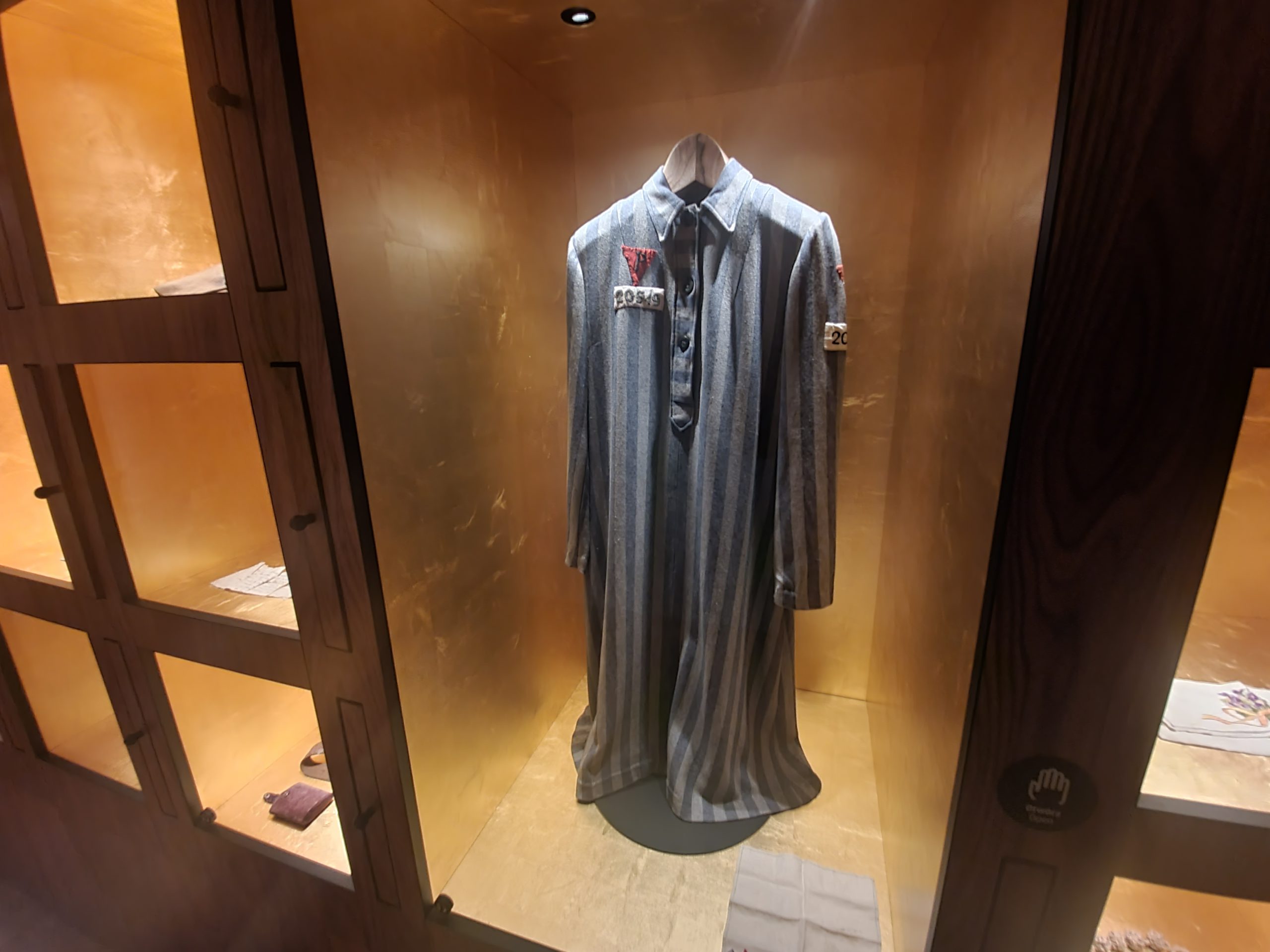
    Concentration camp uniforms are always challenging exhibits for any museum, a tangible reminder of the horrors that took place during the Second World War.

    This uniform is marked with a ‘P’, meaning that the prisoner was Polish and this is from Ravensbrück concentration camp. It was owned by Maria Bortnowska (1894-1972) who was an activist for the Polish Red Cross and also a fighter in the Polish Home Army. Unfortunately, she is an another victim of the Soviet takeover of Poland after the end of the Second World War, as she started to investigate the Katyn Massacre where hundreds of Poles were killed by the Soviets. She was imprisoned, although the authorities had to release her when evidence came in from other survivors at Ravensbrück about her good conduct. Maria’s family donated the uniform to the museum in 1973 and I think it’s one of the most exhibits in their collection.

  • Warsaw – Mały Powstaniec (Little Insurrectionist Statue)

    Warsaw – Mały Powstaniec (Little Insurrectionist Statue)

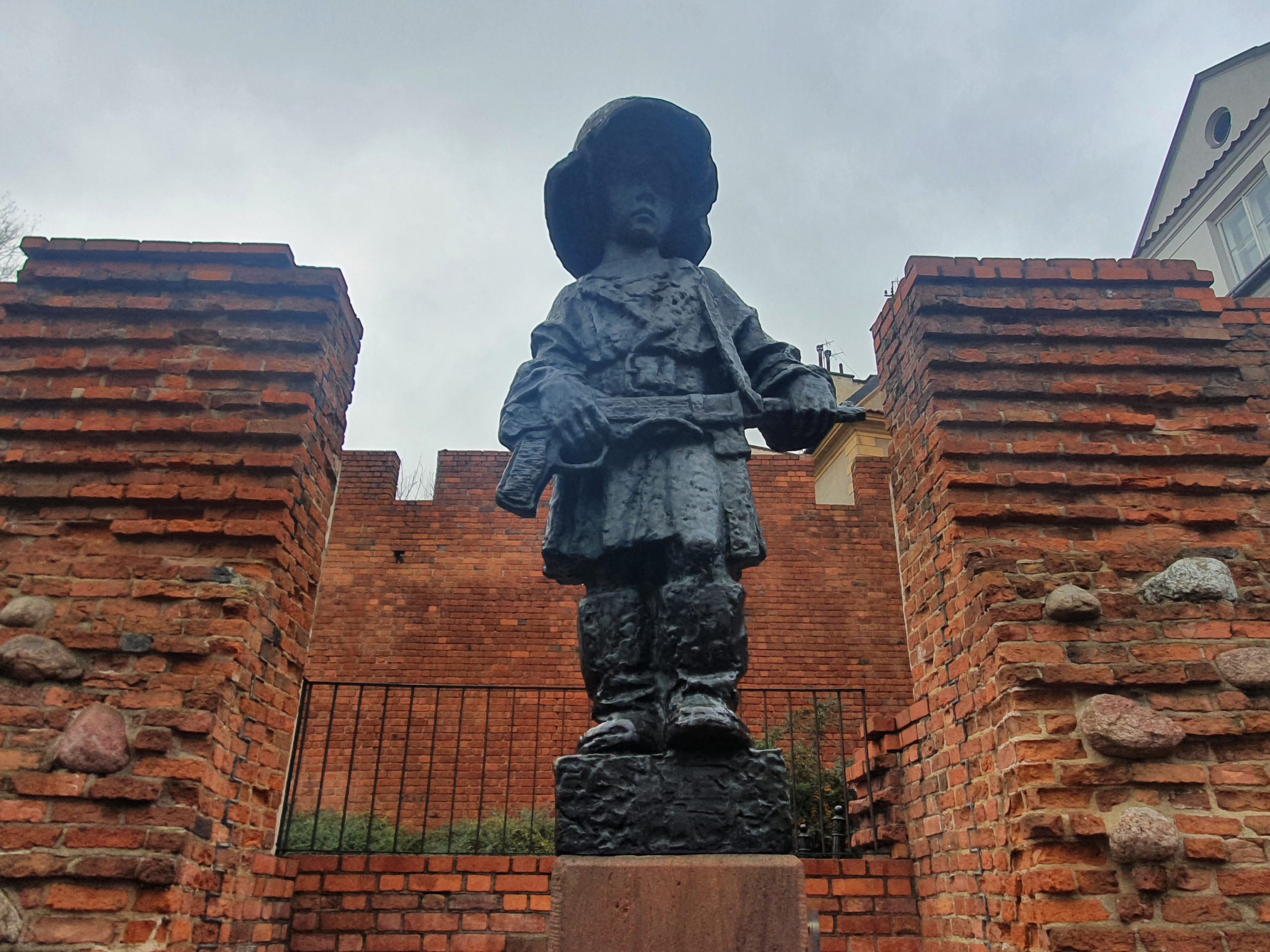
    This statue has become something of an icon of Warsaw in recent years and is located just outside of the external defensive  wall of the Old Town. The imagery was designed by Jerzy Jarnuszkiewicz in 1944, before later being used in this statue.

    The monument commemorates those child soldiers who found themselves in the Warsaw Uprising in 1944. The helmet is deliberately over-large, to show the innocence of youth.

    The military equipment is German and was used by those in the Polish Home Army after they had seized it from the occupiers as part of the Warsaw Uprising.

    The old town wall is visible in the background and the statue is located on the former eighth tower of the perimeter.

    The bronze statue was funded by the Polish Scouting and Guiding Association, hence the plaque on the side. Jerzy Jarnuszkiewicz, the original artist, allowed the imagery to be used for free, with the Scouts collecting 1 million zloty (around £200,000) from fundraising to pay for it.

    The plaque which notes that the statue was unveiled on 1 October 1984 and the guest of honour was Jerzy Świderski (1929-2017) who fought in the Home Army at the age of just 14. Jerzy lost his brother Bohdan Świderski during the Warsaw Uprising, but he survived it and became a Professor of Medical Science. It was unusual for the Soviet authorities at the time to allow this sort of imagery and depiction of the Warsaw Uprising, they’d spent some decades trying to belittle the bravery of the Polish Home Army.

  • Warsaw – Nine Men’s Morris Board

    Warsaw – Nine Men’s Morris Board

    This exhibit is on display in the cellars of the really quite marvellous Museum of Warsaw. I confess to not having heard of this game before, but it has been played since as early as the Roman period, and appears to have been relatively common. This particular board is made from clay and was discovered during excavations of the Royal Castle in 1971 and it’s thought to date from the seventeenth century.

    For anyone who wants to know the history of the game, there’s more information at https://en.wikipedia.org/wiki/Nine_men%27s_morris. What fascinated me about this game is that they’ve discovered it etched into the cloister seats at Norwich Cathedral, I assume by some youngsters who wanted to amuse themselves during some less than interesting hours sitting and singing. As an aside, it seems that if two experts play the game then it always ends up in a draw, which isn’t an ideal situation.

  • Warsaw – Municipal Tourist House

    Warsaw – Municipal Tourist House

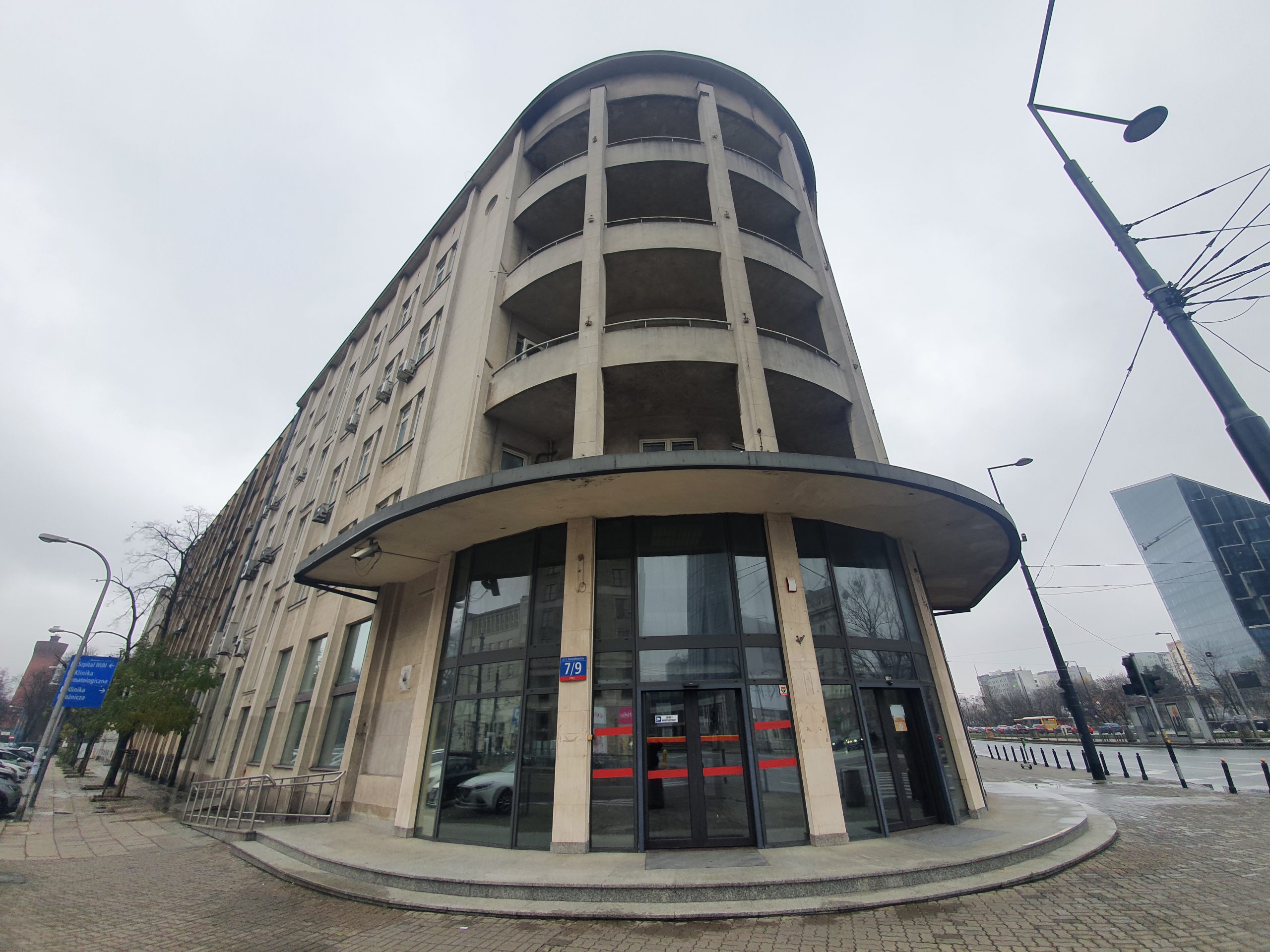
    On another of my flights of fancy for this blog, this building seemed to stand out a little to me in Warsaw and it felt like it had a bit of heritage to it. Unfortunately, the destruction of the city during the Second World War makes buildings like this seem relatively rare.

    Fortunately, there was an intepretation board available to give some extra information about its history.

    Here’s a photo of the building being constructed in the mid-1930s, so it is a pre-war construction. What is perhaps the most interested element of its history, or is to me anyway, is that it was used by the Polish Home Army when they were trying to take control of Warsaw from the Germans.

    It was used as a bastion and was under the command of Captain Witold Pilecki (above in his Auschwitz photo) who I can only describe as a completely heroic person. This is a man who volunteered to get captured in 1940 to be able to infiltrate Auschwitz and he was one of the figures who was able to tell the world what was going on there. He then promptly escaped before coming back to Warsaw to fight in the Warsaw Uprising, a man of immense bravery. Unfortunately, the Soviet controlled communists didn’t take to this Polish hero and he was executed in 1948 following a show trial, despite Pilecki having had the chance to escape Poland and save his life. Since the collapse of communism, Pilecki’s reputation has been restored and he is a national hero.

    The street that the property is located on is Plac Starynkiewicza, named after this man, Sokrates Starynkiewicz, a Russian general who also served as the 19th President of Warsaw. By all accounts, he seemed to have been pretty competent, delivering the city’s first horse-drawn trams, the first telephone lines and Warsaw’s first sewer and water supply. When he retired from office, he decided that he’d like to stay in Warsaw and he remained there until he died in 1902.

  • Warsaw – Stacja Muzeum

    Warsaw – Stacja Muzeum

    This was one of the few remaining museums in Warsaw that I hadn’t been to, so when Richard was in the city for a few days, we had a little meander along on the free admission day which is on Mondays. It’s a fascinating building in itself, which was constructed after the Second World War and was the city’s main railway station until Warsaw Centralna opened in the 1970s.

    And that’s what it looked like during its period of operation.

    It’s quite sad really as the Poles had built themselves a lovely new railway station, as shown in the above photo, which was nearly finished by the outbreak of the Second World War, but the Germans destroyed it. That meant that the Poles had to use these temporary facilities for way longer than they perhaps needed to.

    This is the entrance to the museum and was also the rear entrance to the railway station when it was in use.

    We were given our free ticket passes by a friendly staff member at the entrance and the main waiting hall is the first sight for visitors to the museum.

    There are plenty of small trains on display, with the information being available in English and Polish.

    This is the same room when the building was being used as a railway station.

    A reconstruction of the railway station’s cafe arrangement.

    An old signalling installation.

    Some of the equipment which would have been in the signal box.

    A recreation of a ticket office.

    And a collection of clocks. There are two main rooms in the museum and it takes around thirty minutes to go around these. But then there are the outdoor displays, which are relatively substantial. It seems that the future of the museum has been confused for a few years and there has been talk of them moving out of these building somewhere else. I very much like the heritage of this building though, it seems to be a location that should be used as a museum. However, it’s also clear that there isn’t enough external space for all of the trains and carriages that they have, which they claim is the largest collection of rolling stock in Europe.

    This is a postal train that before the Second World War was used by a private railway company in Lower Silesia, which was then part of Germany. That part of the country was given to Poland after the end of the conflict and this train was seized as part of that process, becoming part of the Polish State Railways. The train remained in use until 1976 when it was then used in a number of films, before eventually becoming part of the collections of this museum.

    The old post-box on the train.

    It wasn’t possible to go in most of the trains, but this was one of the exceptions.

    There are some sizeable engines in the collections of the museum.

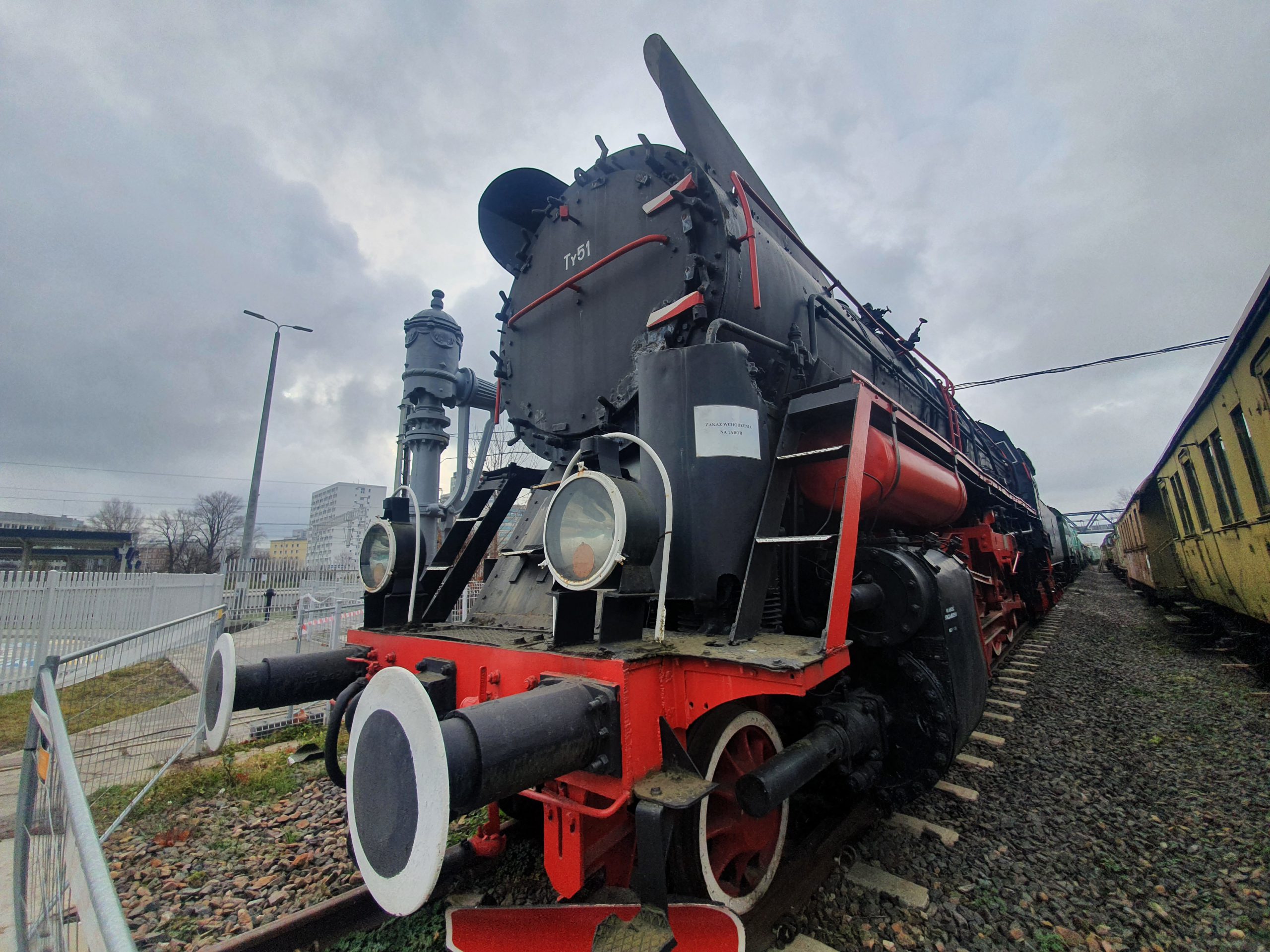
    This is a steam locomotive that was constructed by the Germans and brought into usage in 1940, with a maximum speed of 150kmph, which was later reduced slightly. The Polish railways took nine of these over after the end of the Second World War, with this one remaining in use on the network until 19 February 1967.

    I’m more interested in the railway network and carriages than the actual steam engines, but this is a beautiful looking train. It was built by the Polish in 1926 for passenger use, with some assistance from the Austrians. During the Second World War it was first taken by the Soviets for their usage, then it was taken by the Germans for their usage, before being returned to the Polish State Railways on 20 July 1948. It remained in use by them until 17 April 1970, the last surviving of its kind. Given that it was used by three different nations during its history, I do wonder what cargo it hauled during its time in operation.

    This was one of my favourite outdoor exhibits, a slightly rickety diesel carriage which was manufactured in Budapest in Hungary in 1954. It remained in use until June 1986, at which point it was given to this museum. It hasn’t yet been restored and I personally rather hope that it isn’t, as there’s something more authentic about seeing it in this state. Although it’s a shame that it can’t be covered somehow to prevent any worsening of the condition, particularly the peeling paint.

    It was possible to peer inside the carriage, and it’s fair to say that the interior isn’t the most decadent.

    It did though have a toilet.

    It was possible to look into this train.

    And here’s a photo of Richard having a little look in, after having bravely climbed up.

    This was quite a substantial museum in size and I thought it was an enjoyable place to visit, although it’s clear that they need some more financial assistance to take it to the next level. I hope that they remain on the same site, it was actually quite exciting (I accept that I need to get out more with comments like that….) to be in what was effectively the country’s most important station in the 1950s and 1960s, despite being of a relatively small size. Although we visited on free admission day, the entrance is otherwise cheap to get in (14zl, which is under £3), so is very much worth a visit.

  • Warsaw – Museum of Warsaw (Jan Połubiński Portrait)

    Warsaw – Museum of Warsaw (Jan Połubiński Portrait)

    Another random post of a painting that I thought was a little different.

    This is one of the paintings in the collection of the Museum of Warsaw, and it is of the general Jan Połubiński. I wonder exactly what sort of impression that the artist, F. Kiełpiński, was trying to give when he painted this in 1835. I’m not really sure that it paints him (literally in this case) in a particularly positive light. His face doesn’t exactly look full of love and it half gives the impression that he’s in bed, rather than in an important military uniform.

    What I do like is that the gallery have provided a photo of the rear of the painting on their web-site, which often tells an interesting story of its own.

    This painting was completed in the same year by the same artist and the sitter’s name has the same surname, so I’ll guess that this is perhaps the wife of the general. I think she’s come off better of the two here and she doesn’t look like she’s in bed.

    Anyway, I digress.

  • Warsaw – Chopin Airport Bolero Lounge

    Warsaw – Chopin Airport Bolero Lounge

    The last time I visited this lounge was in February 2020, when the travel situation was, I think everyone would agree, somewhat different. It’s one of several lounges at the airport, but it’s the most convenient for British Airways flights which have to depart from outside of the Schengen Zone gates. I remember last time that the signage to this lounge is pretty poor, which meant I only got lost once this time trying to find the damn thing as I sort of remembered where it was.

    The staff looked confused when I came in, which is never a situation that I find ideal. I think they were just more surprised that I was in the lounge that early, which was a little over three hours before the flight. The lounge actually allows for visits which are four hours before the flight, but for those with baggage they can’t check-in until two hours before, whilst most people don’t arrive so early to the airport. But, I do and that meant I was the only person in the lounge for the best part of an hour. The staff didn’t seem annoyed though and were always perfectly polite, so that was handy.

    It’s an oddly laid out lounge in terms of a lack of seating with higher tables, with these lower chairs not being as a popular. Although, by the time I left, all of the seating was in use.

    I assume that lounges in airports are exempt from the new maximum numbers rule that Poland has introduced, as all the tables were taken by the time of the flight and it did feel quite full.

    I think this was the only area that they discouraged seating at, although it would still be possible as the chairs were in place.

    I was delighted to see that the chocolates were still there. Last time I came to a lounge at this airport, the staff were handing out all of the food and drink as opposed to there being any self-service. It was hard to ask for as many chocolates and packs of honey roasted peanuts as I wanted with that set-up, but there were no issues here.

    The hot drinks area, with a wide selection of different teas.

    Coffee with chocolate and some form of cake, the type of which I’ve forgotten, but it was better than it looks.

    From 11.00, there is food served on trays and there’s a choice of five different meals, although it’s probably OK to get a second one. This one was the salami and cheese ciabatta, along with a salad of ham and pineapple which sounded dreadful. However, Green Eggs and Ham and all that, as the salad was really pleasant, the ham added texture as it was in little lumps (perhaps cubes sounds most tasty) and the pineapple added sweetness.

    There were a few beers to choose from, this one was entirely adequate, although it’s not going to win any international craft beer awards I think it’s fair to say.

    Other than how the busy the lounge was, which didn’t feel entirely appropriate given the current health situation, this was a really relaxed and comfortable visit. Staff were efficient and the lounge was clean, with plenty of food and drink. I do wonder whether they need to create more space for this lounge if visitor numbers are going to remain high, just to make everyone feel more comfortable.
  • British Airways (Warsaw to London Heathrow T5)

    British Airways (Warsaw to London Heathrow T5)

    After a few weeks in Poland, it was unfortunately time to come back with a feeling of uncertainty of how the PCR test thing was going to work out in Heathrow. I left the Mercure Airport hotel at 08:45 to catch my flight at 12:45, expecting to get to the lounge at 10:00 sort of time (which is for me cutting it very fine). Everything went right with the train to the airport, there was no wait at the security area (indeed, there were no other passengers which felt really odd) and the customs check didn’t take long, so I was at the Bolero Lounge by 09:30. But more about that bit of today in another post.

    There it is, the BA847 service from Warsaw to London Heathrow T5 which was departing a little late due to being held up on the outbound flight to Poland.

    Arriving at the gate shortly before boarding commenting, I heard the gate staff call Groups 1 to 3 and I was the second person to board. Well, I should have been the second to board, but the staff member refused me boarding saying that my mask wasn’t sufficient for British Airways. To cut a long story short, this led to a rush to find a member of the airport staff to help me find a shop selling them, as the member of gate staff was absolutely hopeless in offering assistance.

    What actually happened here, which became apparent after I spoke to a member of LOT Polish airlines at the airport is that the staff member had got the rules wrong, as British Airways and LOT Polish (who have their hub at Warsaw Chopin Airport) have different mask policies. However, if I had gone to discuss that point I was in serious danger of missing the flight and likely being off-loaded for being unhelpful. I have no intention of being uncooperative at an airport, there are too many downsides…. Fortunately, the airport staff member and a member of shop staff managed to sell me the required mask. I was able to board, but only just and it wasn’t an ideal situation.

    After boarding, the crew member confirmed that my mask met the requirements of British Airways, but they handed out masks anyway on boarding to anyone who didn’t have one. I’ve spoken to British Airways  who have apologised for the gate staff. It doesn’t much matter now as these are challenging times for all staff at airports, but I would have been quite annoyed if I had missed the flight. I assume if I had returned to the gate without the mask that some other airlines I wasn’t flying with required then someone might have spoken to the crew to check the situation, but it’s not really worth risking that.

    I shall drink one extra beer in the British Airways lounge next time I’m in it to compensate for the situation as I’m petty like that. But it wasn’t British Airways staff who were unhelpful here, so they’re still my favourite airline. And LOT Polish Airlines, who I suspect the gate staff are usually working for, are part of Star Alliance anyway and I’ve only got eyes for Oneworld airlines.

    This was the British Airways aircraft I was struggling to board and its livery is certainly distinctive. It’s aircraft G-TTNA, A320neo which was delivered to BA in April 2018. It was repainted a couple of months ago as it was used in the COP26 talks in Scotland, showing the contribution of the airline industry to tackle the climate crisis.

    An Airbus spokesperson said at the time:

    “We’re delighted to be partnering with BA on this journey and feel proud BA has chosen one of our A320neos to highlight the importance of sustainability for the future of the industry.

    The aircraft has 20% less fuel burn & CO2 emissions compared to A320ceo and 50% less noise so it’s a great choice and I am looking forward to seeing the new livery in the sky. BA is committed to a sustainable future and contributing positively to climate change mitigation and adaptation. We will achieve the ambition of a net zero carbon emissions industry by 2050 through cooperation and collaboration and this initiative is a clear example of that.”

    It’s a nice concept, although it’s very hard to identify it as a British Airways aircraft at a distance and it puzzled me for a little while (not that that really takes much).

    I deliberately moved out of my exit row seat the day before the flight, as I find it more faff trying to fit my bag into the overhead lockers above those seats. That would have been especially true on this flight due to boardinggate, so I was pleased that I had put myself in an aisle seat near to the rear of the aircraft. I had forgotten how little leg room there is, but it’s fine for a short distance flight and there was no-one in the middle seat. Everything was I expected, other than the USB power at my seat wasn’t working, although I could have used one on a different seat if I had needed to.

    The free snack and water (I took the photo later, I didn’t have a pillow on board) which was offered. The crew were engaging, efficient and pro-active, another near perfect service from British Airways staff. The pilot, a bastion of professionalism (as they nearly always are) made appropriate and useful announcements, including telling us that we were arriving in Heathrow having made up most of the lost time. The aircraft was clean and the crew were handing out disinfectant wipes from a basket on boarding (the same basket that the masks were in).

    Anyway, another excellent flight from British Airways only impacted by the airport’s gate staff, but maybe that’s what Star Alliance customers are used to flying from the airport so that’s fair enough.

    Incidentally, I know some people have experienced long delays at the border at Heathrow T5, but I was through in under one minute, just ready to go and take a PCR test. After I managed to board, the flight and arrivals process was effortless, so all rather lovely.

  • Warsaw – Museum of Warsaw

    Warsaw – Museum of Warsaw

    I’ve never been to the Museum of Warsaw before, as it has either been shut, being refurbished, or closed for some other reason. So, when Richard was here last week, we both went to the museum on the free entry day which is currently on Thursdays. I’ve written separately about some of the individual exhibits, and these posts can be found at https://www.julianwhite.uk/tag/museum-of-warsaw/.

    The museum is formed out of a series of medieval townhouses which have been joined together, all of which is quite evident in the cellars.

    This is what Warsaw’s Old Town looked like after the Germans had finished with it in 1945, nearly completely destroyed. The image can be made larger by clicking on it, with what is now the museum being those buildings to the right of the main square in the centre of the photo.

    The museum tour starts in the cellars of the buildings, which have survived to a large degree although have required substantial repair and renovation. There are plenty of steps like this going nowhere, but which were once access points to the basements of the various properties.

    In the cellar exhibition there are some models of buildings in the city, one of the few sections which addresses post-war Warsaw and the reconstruction.

    Some seventeenth century scissors that were discovered during excavations at the Royal Castle in 1972. One result of such destruction of Warsaw is that when it was being rebuilt, many older artefacts were discovered. To this day, when buildings and pipes are constructed, the remains of pre-1945 buildings are often found, the foundations hidden just before the ground.

    We spent around thirty minutes looking around the cellars and the exhibitions there, but were surprised that there wasn’t more to the museum as we thought that was the end. I noticed some people said that they had spent two to three hours there, so I wondered if they’d had a little sleep in the cellar or something to justify that length of visit. It then transpired to us that the cellars were just a small part of the museum……

    What was once a courtyard has now been given a glass roof and displays some old finds from around the city. With regards to the navigation around the museum, it is generally very good, but there are areas where things become a little confusing because of the complex layout of the building. There are staff around the museum though guiding visitors, so we didn’t go too far wrong before being put back on track.

    One of my favourite areas was the room full of maps.

    I looked at several old maps of the city, but it’s very hard to get an understanding of the layout of Warsaw as it was, just because of how many changes there have been over the last century.

    One of the galleries of paintings.

    Some of the lovely ceilings have been restored. This museum was actually founded in 1936, so wasn’t a result of the Second World War, although they only had three properties at that time. Their collections and buildings were destroyed during the conflict, but the determination to persist and grow as a museum remained. The buildings were restored as closely as they could to the originals, with the work taking place from 1948 until 1954.

    Not a complaint by any means, but there seemed to be no end of rooms to visit, all with plenty of exhibits. They were laid out well and all of the displays were in both English and Polish. The museum seems to want to focus primarily on Warsaw as a city and not get too dragged into the Second World War period too much, which is sensible as there’s centuries of history to explain and not just a few years. This period is also well covered by other museums in the city such as the Warsaw Uprising Museum and the POLIN museum, but I was surprised how little information there was about the post-war rebuilding of the city.

    At the top of the museum is the observation point which requires some climbing up several flights of stairs. It’s fair to say that Richard and I were both very brave in our explorations up to the top. There was very little complaining and just lots of praise of how brave that we’d been.

    These are the views over the market square, with the Christmas market being laid out in the centre.

    Looking back up after our bravery.

    Towards the end of the museum route there is a room of old postcards of Warsaw, all well presented. I have to say that we’d been in the museum for over two hours at this point and so we decided that we’d seen enough, but there is enough to see to justify a longer or repeat visit. This is a really well organised museum with an awful lot of information about the city and I learned plenty of new things, although sometimes the displays felt a bit random and the museum route doesn’t perhaps flow beautifully. Despite that, definitely a recommended museum and although we went on free entry day, it’s only ever a few pounds to get in.
  • Warsaw – Ibis Styles Warszawa Centrum

    Warsaw – Ibis Styles Warszawa Centrum

    I’ve stayed at this relatively new hotel before, it’s not really that central, but I liked it previously. It’s also next door, and indeed the hotel is visible to the left in the above photo, to the Ibis Budget that I stayed in last week. The check-in was swift and efficient, with a slightly early check-in being possible which was useful.

    The room is colourful and I like this sense of informality and fun.

    The shower arrangement wouldn’t be ideal for everyone, where a curtain can open it up to the rest of the room.

    The view of the ceiling from the bed. It’s definitely not for everyone, but it is better in my view to sterile and dull. Incidentally, despite this being a new build hotel, they did have windows that open, which is now a requirement of mine in hotels (although it’s sometimes hard to work out which ones have sealed up rooms, but fortunately it’s very few Accor hotels in Poland).

    The welcome gift, these chocolate pastries were delicious.

    I went to the bar to get a welcome drink and was pleased to be offered a choice of five craft beers, as well as the more standard options that are available in Accor hotels. This is a great little enterprise and is a change to when I last visited and had no decent choice at all.

    The breakfast in the morning is included in the room rate and it’s all a little oddly laid out in the space that they have. I found it slightly illogically laid out, but I often find things complex so that didn’t concern me. Some of the items weren’t perhaps of the best quality, although they’ve got a lot of fruit for guests to make juices from which is a decent idea. They’ve also got the honey arrangement that I’ve only previously seen at the Crowne Plaza in Dublin where I stayed a few weeks ago. There were some hot items as well such as scrambled eggs and sausages, although these didn’t look overly appealing. Anyway, there was plenty of choice and other guests seemed happy.

    I liked this whole hotel and paid for it using the Accor rewards points offer, so that was all rather handy. It was spotlessly clean throughout and the staff were always helpful. I thought it was slightly odd that coffee is provided downstairs free of charge at all times, but they provide kettles and tea in the rooms. This is a hotel that I’d come back to though, a really quite lovely stay and there were no noise issues either internally or externally.