Category: Poland

  • Grudziądz – Church of the Immaculate Heart of Mary

    Grudziądz – Church of the Immaculate Heart of Mary

    [I originally posted this in June 2018, but I’ve reposted it to fix the broken image links]

    20180620_133623

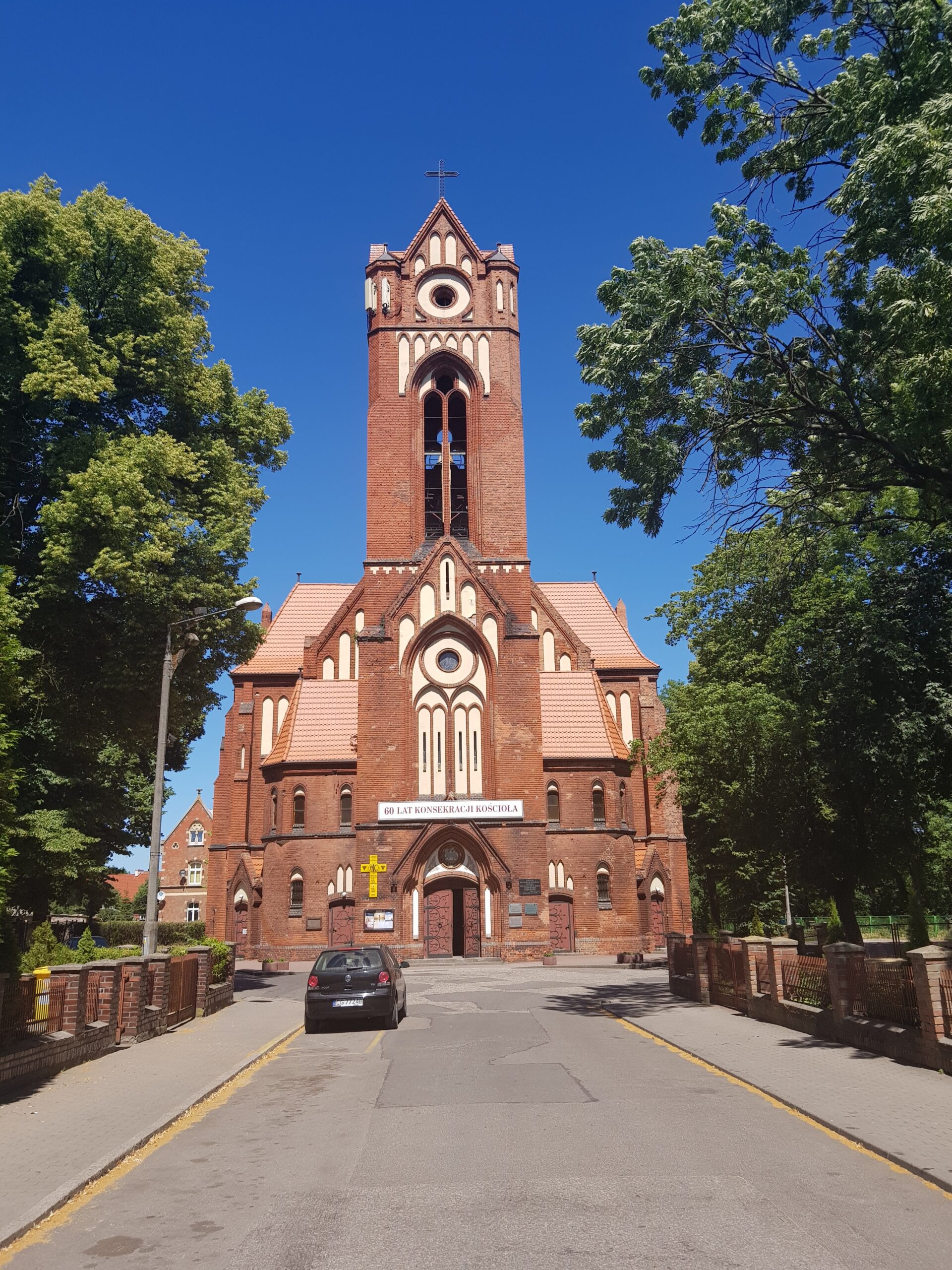
    There are a few buildings in the city, including the nearby former Post Office, which were constructed when Grudziądz was part of the Prussian Empire.

    This looked rather Prussian and it was constructed in the last few years of the nineteenth century. It remained a Lutheran church until after the end of the Second World War, when it became a catholic church.

    20180620_133719

    The church was damaged during the Second World War, but was quickly reconstructed.

    20180620_133806

    Unfortunately, the main part of the church was closed, but there were information boards in the porch. Looking through the glass doors, the interior seemed quite plain. All of the interior from the late nineteenth century has sadly been lost.

  • Grudziądz – St. Francis Xavier Church

    Grudziądz – St. Francis Xavier Church

    [I originally posted this in June 2018, but have reposted it to fix some broken image links]

    20180620_131612

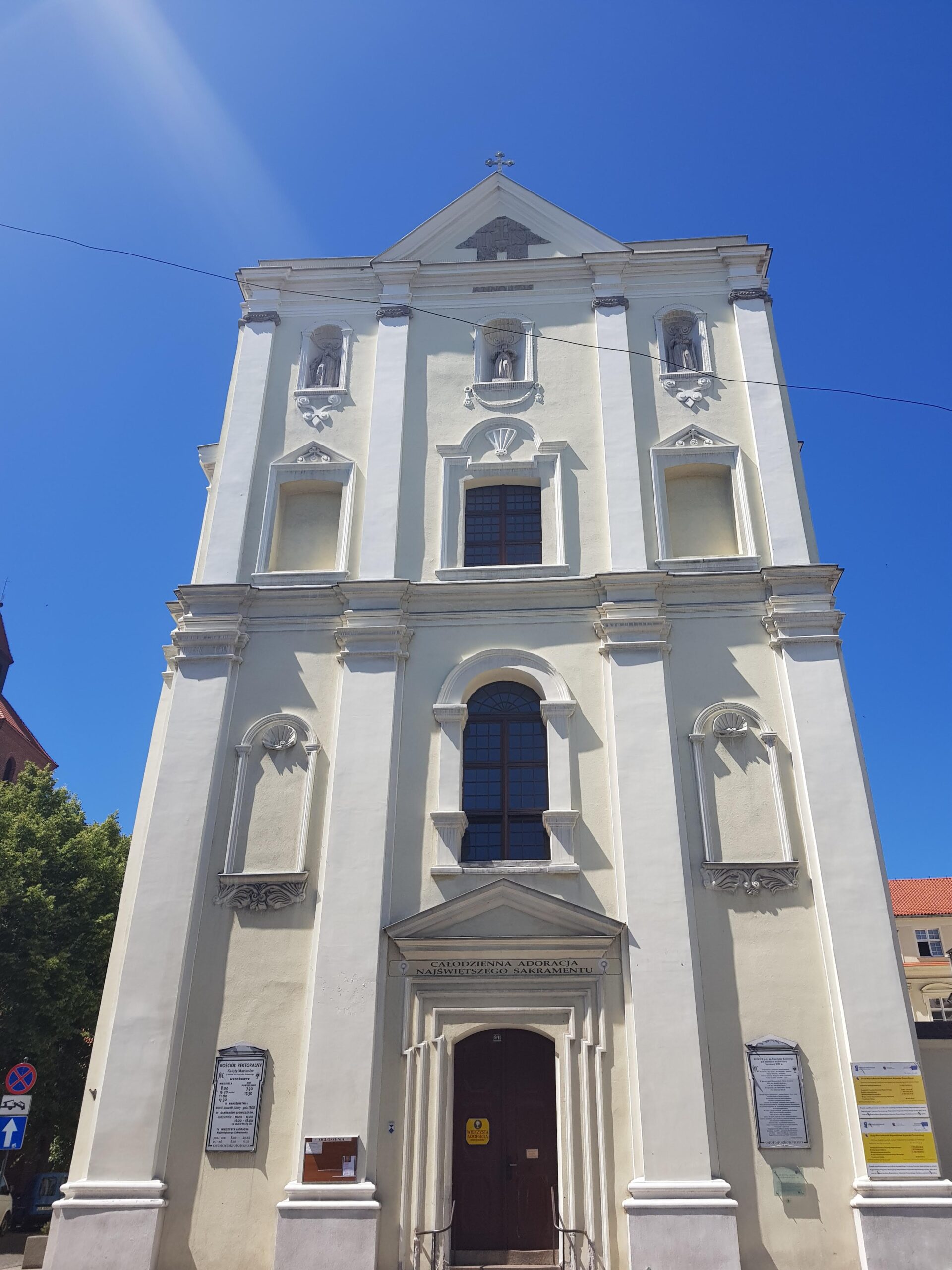
    St. Francis Xavier Church is centrally located and was built in the baroque style in the late seventeenth and early eighteenth centuries. The high altar is of particular interest  and goes to the full height of the nave. It was also a busy church during my visit and that was entirely of worshippers, rather than just visitors to the building.

    20180620_131126

    The altar was funded by Jan Czapski who was then the Governor of Chelmno and also a Great Crown Treasurer.

    20180620_131129

    I couldn’t find the date of the grand pulpit, but it seems contemporary with the altar, and this is again richly decorated.

  • Grudziądz – Banks of the River Vistula

    Grudziądz – Banks of the River Vistula

    [I originally posted this in June 2018, but have reposted it to fix some broken image links]

    20180620_092551

    20180620_092811

    20180620_092826

    20180620_093542

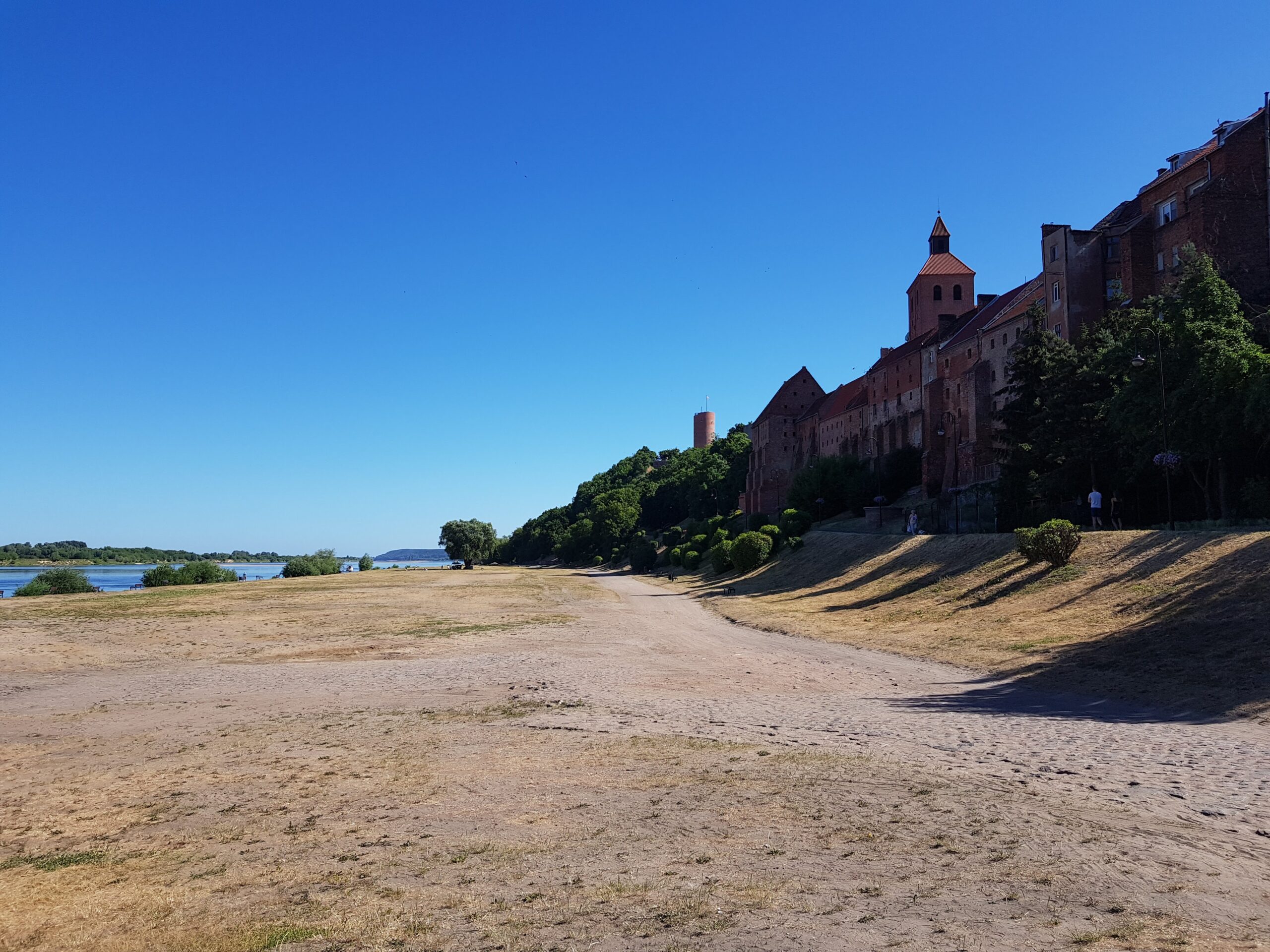
    I didn’t expect such a quiet and riverside area so close to the city centre. Very peaceful and there are lots of seats along the river.

    The Vistula is the longest river in Poland, and also goes through Krakow, Warsaw and Gdansk.

    20180620_094133

    I was surprised to see an orangey yellow bus randomly parked here with no-one in it. Clearly so were the police as a few minutes later a car came with lights flashing. After some investigation from the police it was given a ticket.

  • Grudziądz – Bronisław Malinowski Bridge

    Grudziądz – Bronisław Malinowski Bridge

    [I originally posted this in June 2018, but have reposted it to fix a broken image link]

    20180620_113736

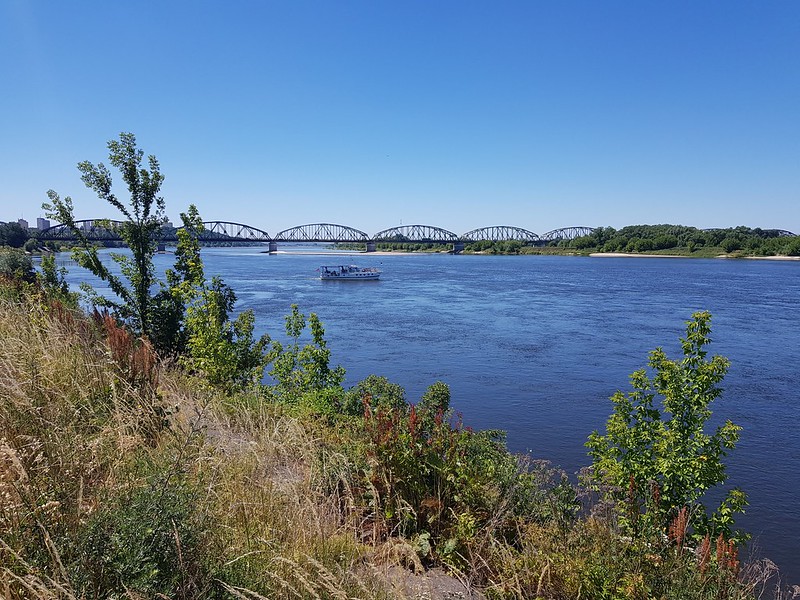
    This rather industrial bridge overlooks the city and is both the main road and rail entrance. It is named after Bronisław Malinowski, an athlete who died on the bridge in a car accident in the 1980s.

    It was first opened in 1879, when under German occupation, and it remains the longest road and rail bridge in Poland.

    The bridge was reconstructed after the Second World War, having been destroyed first by the Polish to slow the German advance and then by the Germans as they were withdrawing.

  • Warsaw – Metro System : A2 Natolin (Visiting Every Station)

    Warsaw – Metro System : A2 Natolin (Visiting Every Station)

    20250405_110328

    Next in my series of visiting every metro station on the Warsaw network was Natolin and, I have to admit, I did struggle to find a great deal of interest around here as it was so residential. It’s relatively near to two other stops, limiting the option to walk a little further in search of excitement.

    20250405_110401

    The sun was shining and it was too hot. Not that I moan about the heat…. The metro station takes its name from the district that it’s located in, Natolin.

    20250405_110630

    I found a small park nearby, Park Lasek Brzozowy, or ‘Birch Wood Park’. It’s nice, but I wouldn’t recommend that people come from other countries just to visit.

    20250405_111003

    I went to walk around a housing estate, trying desperately to find anything old.

    20250405_111248

    A little shopping centre.

    20250405_111437

    Going back into the metro station. The metro station was on the first stretch of the network that opened, on 7 April 1995.

    20250405_111459

    The decoration on the platform.

    20250405_111513

    It wasn’t overly busy.

    20250405_111521

    The plan of the metro station.

    20250405_111606

    And leaving…. I must admit, this is likely to be one of the dullest metro station reports and I likely set the bar quite low with the whole concept. But, I don’t rule out going back and trying to find something which will surprise and delight my two loyal blog readers.

  • Warsaw – Archaeological Finds at Pałac Saski w Warszawie (Saxon Palace)

    Warsaw – Archaeological Finds at Pałac Saski w Warszawie (Saxon Palace)

    20250422_124245

    I’ve followed the progress at the Saxon Palace in Warsaw for some years and it’s all looking very exciting. It was destroyed during the Second World War, like nearly everything else in Warsaw, but finally the Government is kick-starting change at the building. But, as some more detailed history…

    Initially, the site was occupied by the Morsztyn Palace, a baroque structure built in the latter half of the seventeenth century. In 1713, King Augustus II the Strong (I love names like that), who was the first of Poland’s Saxon kings, purchased the palace and initiated its expansion and transformation into a grand royal residence. This project, overseen by prominent architects, gave rise to the Saxon Palace and the development of the surrounding Saxon Axis, a significant urban plan that included the Saxon Garden. The palace became a cultural hub, even more decadent than Wetherspoons.

    Over the following decades, the palace complex expanded with the addition of adjacent noble residences, including the Brühl Palace and the Blue Palace. However, after the death of King Augustus III, the Saxon Palace lost its status as a primary royal residence and gradually fell into decline, though it remained in Saxon hands and was rented out to whoever would have it. In 1794, during the Warsaw Uprising, a major battle took place in front of its eastern side which I suppose would have added some excitement to the evening for the residents. In the early nineteenth century, the Warsaw Lyceum was housed in the palace and the family of Frédéric Chopin resided there for several years. After Poland regained independence following the end of the First World War, it became the headquarters of the Polish General Staff and, in 1932, Polish cryptologists working within the palace achieved the groundbreaking feat of breaking the German Enigma cipher. Then the Germans blew it up in December 1944. Only a few fragments of the central arcade remained survived and that has housed the Tomb of the Unknown Soldier, but recently there have been plans to restore the building to surprise and delight residents and visitors.

    20250422_124407

    There’s a bit of an archaeological dig taking place and these are some of the finds that they’ve located.

    20250422_124416

    This is a fragment of stone cladding from the former Beck Pavilion.

    20250422_124445

    A fragment of a sculpture.

    20250422_124424

    Some glass bottles from the second half of the eighteenth century.

    20250422_124501

    A ceramic pot with a handle from the second of the eighteenth century and a Kiddish cup from the first half of the twentieth century. There’s a lot of poignancy in the latter, this would have been owned by one of the large Jewish community who lived in the city, but who were nearly entirely wiped out during the Second World War.

    20250422_124543

    The remains of the central arcade.

    20250422_124547

    The Tomb of the Unknown Soldier.

    20250422_124626

    20250422_124700

    The archaeological dig.

    20250422_124724

    And the Tomb of the Unknown Soldier again. I didn’t want to take photos of the two members of the Polish military who were guarding it, although I don’t think that there are any restrictions on doing so (within reason). They are planning to open a new building by 2030 and I will watch developments with interest…..

  • Warsaw – Execution of 70 Poles on 14 December 1943

    Warsaw – Execution of 70 Poles on 14 December 1943

    20250422_123832

    This memorial is located on ul. Wierzbowa, opposite the Polish National Opera building. Although the situation in Warsaw had been terrible since the German occupation, the Nazi terror had increased in the city primarily because of the appointment of SS-Brigadeführer Franz Kutschera as the SS and Police Leader (SSPF) for the Warsaw District on 25 September 1943. In a system of evil, he was one of the worst examples of hate and it’s no real surprise that special efforts were made by the Polish Army to execute him which is something they achieved on 1 February 1944.

    The campaign of terror that took place in Warsaw involved various branches of the Nazi occupation apparatus. Roundups were typically conducted by officers from the Gestapo (the Secret State Police), the SD (Sicherheitsdienst – Security Service) and the Ordnungspolizei (Order Police) which were all often supported by members of the Waffen-SS. In some instances, regular members of the Wehrmacht (German Army) and Luftwaffe (German Air Force) as well as members of the Hitler Youth, also participated in these operations.

    One of the executions on 14 December took place in full view of the public at ul. Wierzbowa 9/11, located near Plac Teatralny (Theatre Square) – a prominent and culturally significant space in central Warsaw. The selection of such a visible and symbolic location aligned with the Nazi tactic of leveraging public executions for maximum psychological effect and intimidation, they wanted fear. By staging the killing near a major square and theatre, the occupiers not only took lives but also defiled a key emblem of Polish civic and cultural identity, intensifying their message of terror and asserting total control over the heart of the city. As if things weren’t bad enough for the remaining Poles, the German leaders wanted to ramp up the pain even more.

    The seventy condemned prisoners would have been transported by truck from Pawiak prison under heavy guard and the Nazis wanted this to be seen by as many people as possible. It’s not entirely clear which prisoners were murdered that day, but they included members of the Polish intelligentsia, political prisoners, resistance fighters and likely just some members of the public just randomly arrested on the whim of some Nazi guard.

    20250422_123835

    The informational sign located underneath which mentions the execution of seventy Poles rather than the one hundred and thirty Poles that are mentioned on the stone memorial. The reason for this, I think, is that they included those killed on the same day on ul. Bonifraterska, again murdering prisoners from Pawiak prison.

  • Warsaw – Complex Pedestrian Crossings

    Warsaw – Complex Pedestrian Crossings

    20250422_123748

    As another random, and to be fair irrelevant, post…… There are a few of these crossings dotted around Warsaw and I’m always slightly confused when using them as although they are logical in their appearance, car drivers often look very confused at them. Warsaw pedestrians seem confident with them, but I’ve watched car drivers and there’s some sharp braking and erratic driving going on rather frequently at them.

  • Warsaw – Muranow Craft Beer

    Warsaw – Muranow Craft Beer

    20250421_193418

    I’ve managed to visit just about every craft beer bar in Warsaw, but this one is new to me and the beer list at https://craft-beer-muranow.ontap.pl/ looked intriguing.

    20250421_192959

    The outside seating area was full, but I wasn’t engaged with that, especially as the inside was spacious and felt welcoming.

    20250421_190608

    These photos might make it look quiet, but they were doing a decent trade during the time that I was there. There’s an upstairs area to the venue as well.

    20250421_185627

    The beer list was neatly presented on the wall and was clearly visible to customers.

    20250421_185741

    And a food menu. The service was friendly, efficient and engaging, so it all felt a welcoming environment.

    20250421_190311

    I went for the Ju-Rajska Pomarańcza from Browar na Jurze. I liked the initial orange flavour of this, but thought it thinned out quickly, although the taste remained pleasant and I was pleased with my choice. The brewery is from Zawiercie, which isn’t overly far from Katowice, and it’s not a brewery I’ve had a beer from before.

    Definitely a decent little bar and they have a fridge of some intriguing craft beers as well to add to the offer. The service was friendly, there was an excellent choice of beers and styles with the pricing being reasonable. So that’s yet another place I’ve got to keep coming back to.

  • Warsaw – Maharani

    Warsaw – Maharani

    20250421_194700

    Since it was my last night in Warsaw yesterday for what might be nearly a week, I thought I’d pop into this Indian restaurant near the Old Town which is well reviewed on-line. I’m not sure I had intended to have an evening meal as I’ve been skipping them recently given I’ve opted for larger breakfasts, but sometimes I must have what my heart desires….

    20250421_203306

    It wasn’t busy inside, but it was a little busier in the seating area outside. I can’t be doing with all of that sitting outside thing, there are insects, cigarette smoke and people everywhere, I’m much happier away from all those distractions. I was greeted promptly and at least offered the choice of sitting inside or outside, so my first impressions were positive.

    20250421_200207

    Some decorative elements in the window.

    20250421_200848

    I went for a bottle of Kingfisher, initially opting for a large one but as they ran out I thought a standard size bottle would suffice, although I didn’t have much choice in that. It’s not the greatest beer in the world and I’d love if they stocked Funky Fluid, but I do retain some air of realism that this isn’t going to happen.

    20250421_201320

    The food was served promptly, after around ten minutes, with everything being well presented. I quite like spicy Indian food, not in some British showing off style after six pints of lager, it’s just what feels authentic to me and adds to the flavour. Often things are rather toned down in some parts of central and eastern Europe, but I thought I’d go for the Chicken Kashmiri which has the maximum three spice stars in the restaurant’s menu. I was surprised and delighted that the food was not only served with plenty of spice, but the rich sauce also had a depth of flavour and taste. There was a generous amount of tender chicken in the sauce, with the lemon rice having the suitable amount of lemon it. The naan bread was light, crisp and rich in flavour, with the whole arrangement being one of the best Indian meals I’ve had in some time. There was an air of authenticity about the atmosphere and surroundings, with the restaurant being clean and organised. The spiral stairs down to the toilet also added some extra excitement to proceedings.

    The food and drink cost a total of £11, which I thought was really excellent value for the quality received. I’ll definitely look at coming here, it’s one of the best Indian restaurants that I’ve visited in Warsaw and the team members were personable and warm. Actually, they were a little informal in places, but I’m hardly known for my liking of overly formal situations. I was pleased with the meal and I can see why the on-line reviews are so positive.