Category: Poland

  • Bialystok – Fashion World Trade Center

    Bialystok – Fashion World Trade Center

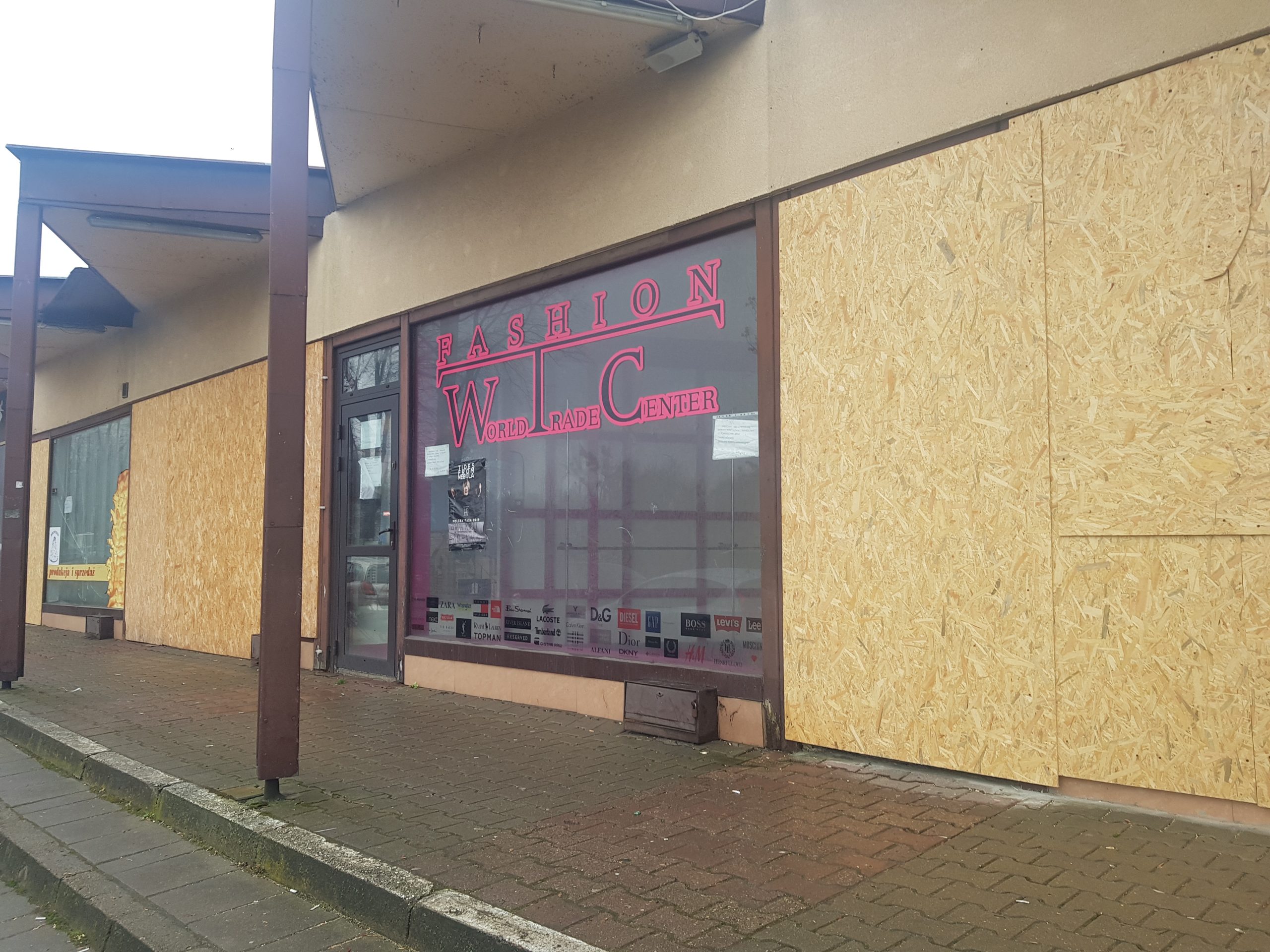
    World Trade Centers are usually members of the World Trade Centers Association, usually in grand buildings and having quite noble motives. I wonder whether this shop in Bialystok was perhaps being just a little aspirational with its naming. I think there are only two officials WTCs in Poland, in the cities of Warsaw and Poznan.

  • Warsaw – Same Krafty Multitap

    Warsaw – Same Krafty Multitap

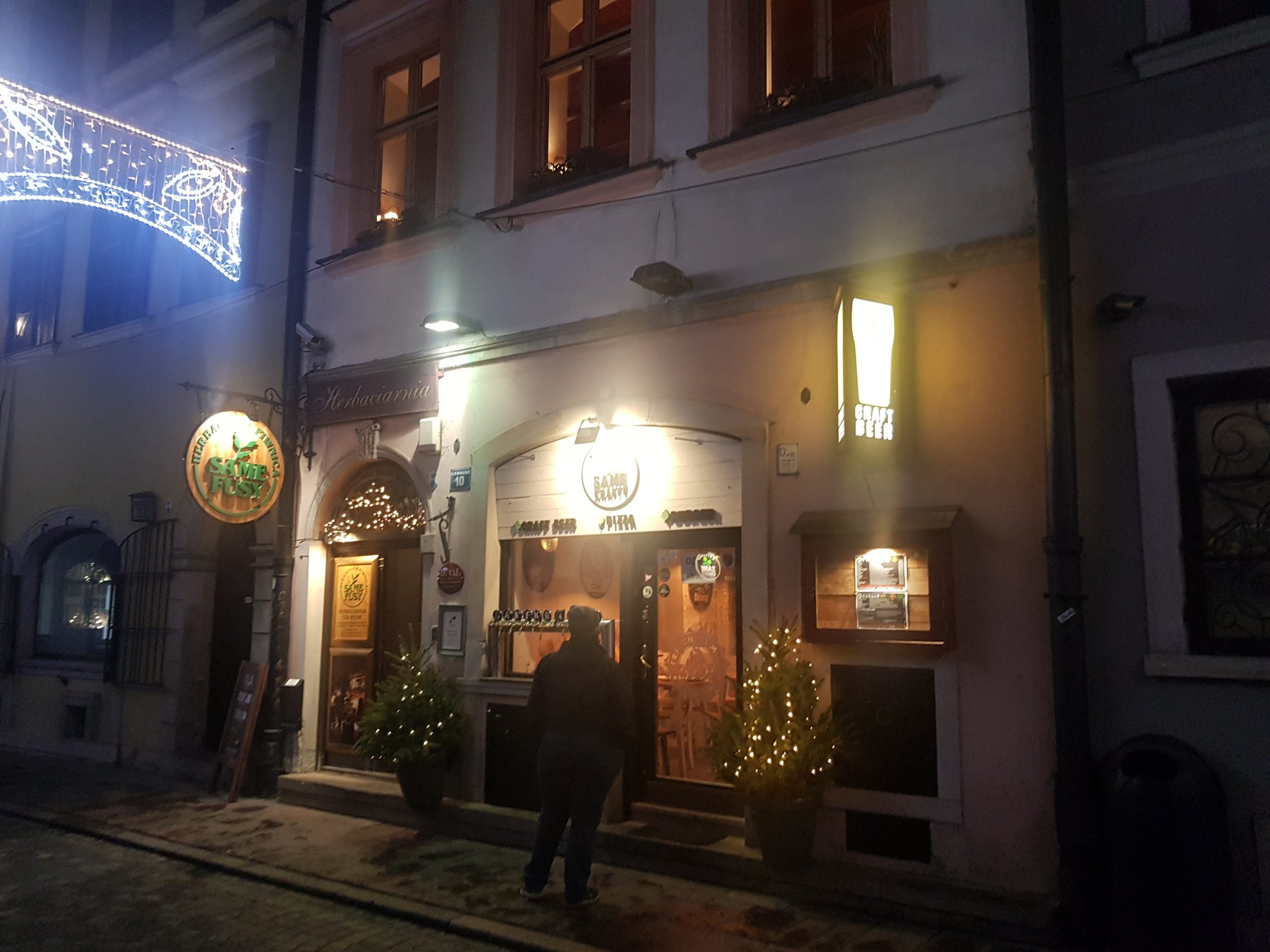
    There aren’t a large number of craft beer options in the old town area, perhaps the best two are this one and Restauracja Maryensztadt.

    The specialism is in not just craft beer, but also in pizza, two things that go beautifully together. There’s a more restauranty area and a bar area, something useful for those who just want a drink and don’t want to get in the way as there are a limited number of tables.

    An extensive enough list of beers, all clearly presented. Four of the ten beers are dark options, which is a percentage that I wish was replicated in every bar specialising in craft beer, or indeed, real ale.

    The beer, which was at the appropriate temperature and tasted fine. The unfortunate consequence of my writing this up a few days after going there is that I’ve forgotten which one I ordered…. I need to get out more to sharpen my memory skills.

    This was a slight error on my behalf, as the pizza is bigger than it looks in this photo. It actually takes up a chunk of the table and I apologised when it was served as it was clearly too big for one person, the extra-large size. I didn’t entirely need someone commenting on another table about “look at the size pizza that man is having” either, but I ignored them.

    The pizza was a little under 17 inches and bear in mind that Domino’s say their extra-large 16 inch pizzas feed five to six people. Now that is ridiculous, these five or six people must be toddlers, but nonetheless, I could have perhaps limited myself to a medium pizza. My confusion was that the pizzas were listed in centimetres and I got muddled up…. However, the extra large wasn’t much more in cost than the medium, and since I ate the whole pizza anyway (just), I’m glad I got the one that I did.

    Anyway, I digress, the Diavola pizza was delicious, lots of pepper, jalapenos and salami, with a thin base which had the appropriate amount of crispiness. I was glad that it was a thin pizza, there’s a limit to how much dough I could have ploughed through on a pizza this size. It also wasn’t so greasy that I dripped liquid all over the table as well, so I considered that it must be healthy.

    The cost of this meal was a little ludicrous by Polish standards at around £12, but I didn’t need to have a large beer and the extra large pizza. The quality was high, the service was wonderfully friendly and the environment was clean and comfortable. A nice place, very relaxed.

  • Warsaw – Tram Seat Pattern

    Warsaw – Tram Seat Pattern

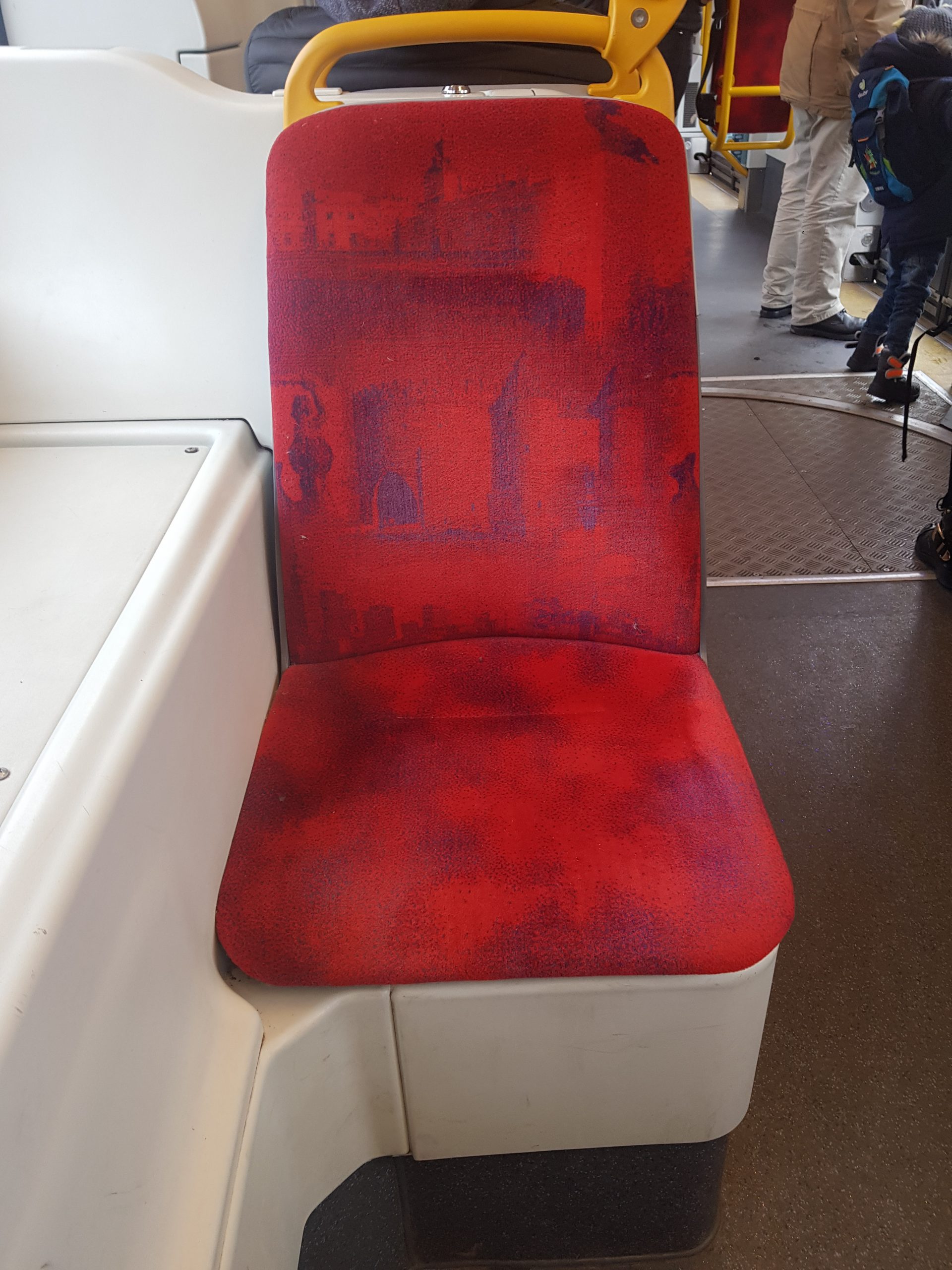
    It’s taken me several tram journeys to notice the pattern on the tram seats, scenes of historic Warsaw landmarks. Very nice.

  • Warsaw – Artezan

    Warsaw – Artezan

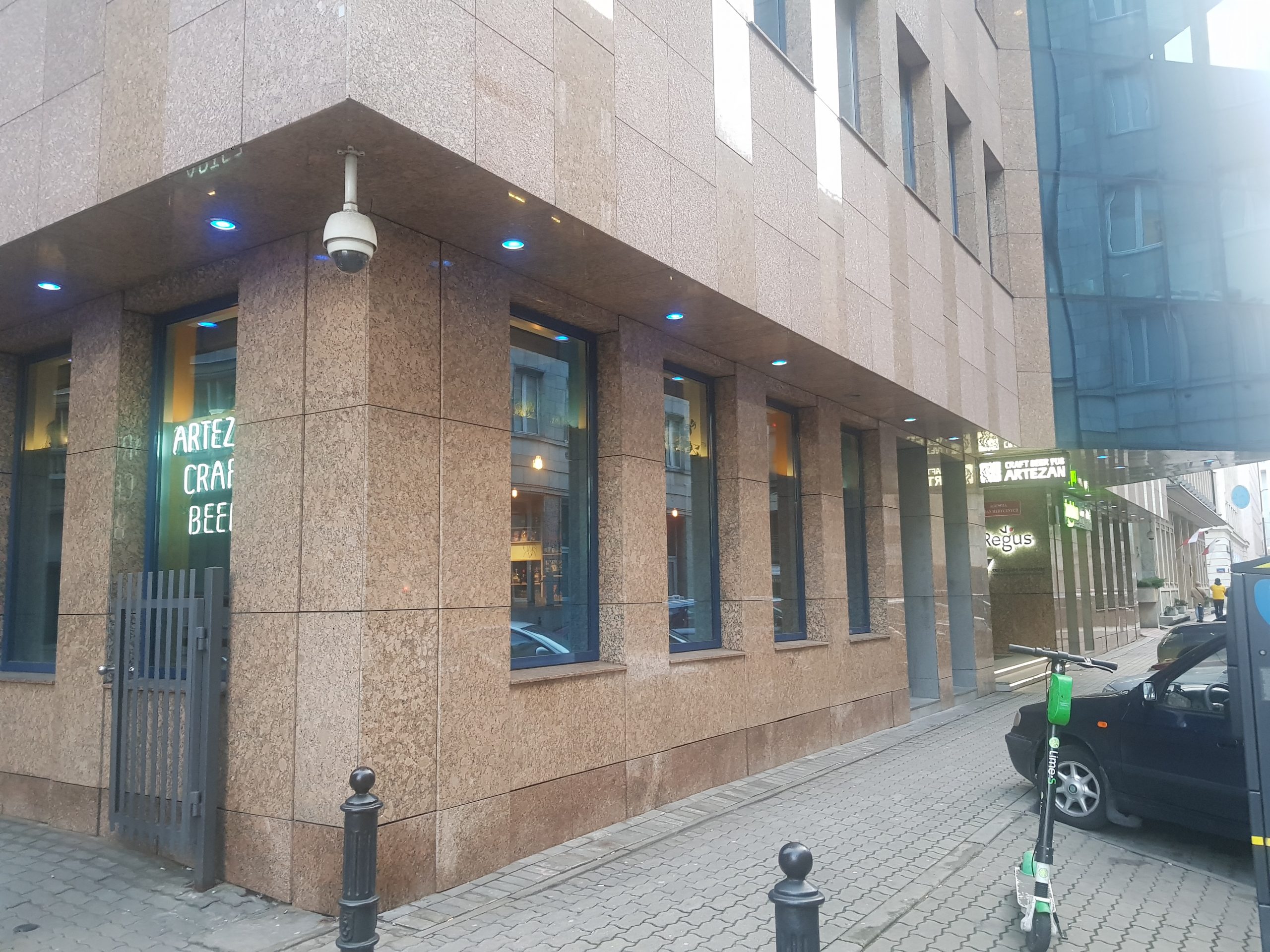
    Located in what is becoming the craft beer sector of Warsaw, this is a well reviewed bar which specialises in, well, craft beer. It wasn’t very busy when I went in, by which I mean that I was the first customer of the day. The member of staff was outside when I went in, I suspect he was slightly surprised to see a customer on a Sunday afternoon, but nonetheless he was friendly and helpful throughout.

    The range of beers, clearly displayed on a board behind the bar. I was pleased to see a couple of dark options, but the choice was wide and most beer styles were represented on the board. There were also bottles for those who weren’t satisfied and delighted with the options from the tap.

    The ‘One of Each’ from Browar Artezan, one of the beers which the bar makes themselves. Expensive by Polish standards, starting with an imperial stout is always a brave decision, but a strong burst of flavour seemed a sensible idea to me after visiting the Warsaw Uprising Museum. The beer was at the appropriate temperature and had a richness and depth of flavour, although it seemed limited to a quite chocolate flavour and not much else in terms of additional aftertastes. Still, it was refreshing, although ideally it needed just a little something else. I like a bit of subtlety.

    Another customer did come in whilst I was in the bar, which was spotlessly clean and organised. It apparently gets busy on weekend evenings and it’s the sort of contemporary style environment that I like. All very lovely.

  • Warsaw – Warsaw Uprising Museum

    Warsaw – Warsaw Uprising Museum

    I visited this museum before and I think it’s the first historic attraction that I went to in Poland. Here we are, several hundred Polish historical experiences and several years later, and I thought it’d be good to pop back to the museum. It was free entrance today, being Sunday, so I knew it’d be busy, but that also saved me 25zl (around £5). I went to collect my free ticket from the cash desk and there was a short queue, but it only took around 30 seconds to get my ticket. The staff member was friendly, although I imagine he got fed up with issuing bits of paper to people all day for free.

    I’ve also posted about the City of Ruins video and the Printing Press separately.

    This was the exhibit which I found the most though-provoking, a simple city telephone directory. By the end of the Second World War, there were only around 1,000 people living in the central part of Warsaw, out of the over 1 million who lived there before the war had started.

    The replica of the Liberator aircraft I mentioned in the City of Ruins post.

    There’s a large cinema screen in the museum, and there are smaller set-ups as well. This part of the museum is quite open plan and there’s lots of space, other parts are more hemmed in and cramped. At the base of the cinema screen there’s an underground exhibit, which it’s probably easy to miss for those not paying attention.

    On the large screen there was footage of the Warsaw Uprising, amazingly some of the film made by Poles was saved and was able to be made into a video. The Soviets apparently managed to lose, no doubt deliberately, the footage in 1946, but other copies were found.

    A recreation of the city’s sewer network, which is how members of the Warsaw Uprising were able to move about parts of the city. The recreation is dark, I used a flash to get this photo.

    By the time I left the museum, the queue to get in had got relatively sizeable. The brick building towards the back is the ticket desk, with the entrance to the museum area to the right of this photo. At this point there was likely around a 20 to 30 minute to get in, so I was pleased that I had arrived earlier on during the day.

    I found that the navigation around the museum was just a little confusing, I frequently found myself not entirely sure where I was going. Fortunately, nor did anyone else, so no-one really seemed to care or mind. But, I like going around the museum in vaguely the way that the curators intended. I stayed for just under two hours, but those who wanted to see everything would no doubt need longer than that.

    Overall, I really like this museum and it tells its story in a compelling manner. It was far too busy to enjoy properly though, which is no criticism of the museum, but for anyone wanting to look at the exhibits and read everything, it’s probably best to come on another day of the week which isn’t free admission Sunday. Despite the quite challenging nature of the material, the museum also seemed to engage children though and they liked collecting the bits of paper which told them what happened on each day.

  • Warsaw – Warsaw Uprising Museum (City of Ruins)

    Warsaw – Warsaw Uprising Museum (City of Ruins)

    For anyone who visits the Warsaw Uprising Museum, it’s worth hunting out the little theatre section near to the replica Liberator aircraft. The Liberator was a US military aircraft and was used in relief flights to try and assist the Poles engaged in the Warsaw Uprising. The video of the City of Ruins lasts for five minutes and it’s in 3D, with glasses provided by the staff, giving a view of the destroyed Warsaw that someone on a Liberator aircraft might have seen at the end of the Second World War.

    The video is twelve years old now, so perhaps they can now do more with effects, but it was a sobering reminder of how Warsaw looked in 1945 after it was nearly entirely destroyed by the Germans. The museum was busy when I visited, since it was free admission day, but I had a wait of only around ten minutes to see the video. They can only fit 25 people into the theatre screen at a time, so there can be a little of a wait sometimes.

    The museum director said a few years ago:

    “If you have not seen it with your own eyes, individual photos from the war will not show it. It is only by visualising the destruction of the film that you will get an idea of ​​what Warsaw really looked like right after the end of the war, and from which ruins it had to rise.”

  • Warsaw – Warsaw Uprising Museum (Printing Press)

    Warsaw – Warsaw Uprising Museum (Printing Press)

    There’s a recreated printing press at the Warsaw Uprising Museum and they’ve got it going so that they can produce copies of genuine posters which were made by those courageous Poles fighting against the odds against the Germans during the Warsaw Uprising. There’s something amazing that even in a city which had been so overwhelmed that resourceful men and women could produce newspapers, posters and propaganda. It was also necessary to have a way of being able to call people to arms and to start a revolution against the occupiers.

    There were official Polish newspapers which were printed in Polish, but they were authorised by the Germans and were heavily censored. Their aim was to cause division and mistrust within the Polish community, so it was essential that this misinformation was countered by more authentic news. There were over 100 different titles produced during the war by the underground movement, which was a serious risk as the Germans would have likely killed anyone involved. And it wasn’t just the printing of this material, it was the distribution of it.

    I don’t normally take souvenirs back, but I liked this one, so I kept the poster that they gave to me from the printing press.

  • Bialystok – General von Driesen’s Villa

    Bialystok – General von Driesen’s Villa

    There aren’t very many wooden buildings in Bialystok, too many fires have put paid to that piece of the city’s heritage. There are though two surviving wooden residences, with this being one of them. The building is named after its first owner, General von Driesen, who purchased this plot in 1889 and constructed this wooden house on it.

    Driesen sold the building to Abraham Tyktin, a city merchant, in 1898 and then it was later sold to Adela Hasbach, the wife of a cloth factory owner. It was purchased in 1984 by the National Publishing Agency, but then sold to the museum service in 1990. Today, the building is used as a sculpture museum, hence the artwork at the front of the property.

  • Bialystok – Love Locks

    Bialystok – Love Locks

    I won’t complain here about love locks, as I’ve done that on previous occasions. But I’m impressed by the very half-hearted effort made here by the residents of Bialystok. Try and spot the love lock in the above photo….

    Here it is.

  • PKP Intercity : Bialystok to Warsaw

    PKP Intercity : Bialystok to Warsaw

    The entrance to Bialystok railway station.

    Standing on the footbridge over the platforms, the train on platform 3 is the one that I was boarding. There’s a story, albeit of limited interest to anyone, about that. I’m always moderately nervous about boarding the wrong train, so I was confused that there were quite a lot of people on the platform who weren’t getting on the train.

    I was confused as the yellow departures sheet suggested that there were no other trains departing, so the train that was on platform three should be the only one to get on. Not least that it also had the train number and Warsaw on it, but I pondered why not everyone was getting on it. So, I faffed around taking some photos before boarding.

    Here’s one of them. Anyway, at this stage, a shiny intercity train pulls in, seemingly quite delayed and that was the reason that people were waiting. So I decide it’s time to board the train that I’m meant to be getting on and head to my seat. There are no other passengers on the carriage other than the person sitting in the aisle seat, next to my seat and she has just that second sat down and made herself comfortable. I hate such situations, it would look ridiculous if I make her get up to let me in and then we’re the only two on the carriage for the journey. So I sit nearby, until someone hovers nearby to where I’m sitting and I guessed that I was in their seat (I wasn’t as it transpired) before then deciding I’d move to my originally allocated seat. There’s a Very British Problems post about just this sort of situation….

    Bialystok railway station, which is being heavily renovated at the moment, although they’ve still got another year to go before it’s all finished. The newly restored building looks excellent and they’re renovating stations along the railway line, so this arterial route from the city to Warsaw is likely heading for increases in passenger usage.

    Around half-way through the journey, the train stopped at Małkinia Górna railway station. I felt an urge to check Wikipedia about this station and I found out, although really should have known, that this was the connecting line to Treblinka concentration camp. If I’d thought about it in advance, I’d have got a train ticket to here and then walked to the site of the camp before getting a later train to Warsaw. There isn’t much at Treblinka, but I’ll like to see the memorial and I think there’s a small museum there.

    I had expected a compartment / corridor train, solely because that’s what the rail company used on the train to get me to Bialystok a few days before. But, it was a more traditional type of carriage, which was comfortable although lacked power and wi-fi.

    And safely back into Warszawa Centralna, exactly on time. The journey had again cost £6 and lasted for around two and a half hours. All very easy once again….