Category: Poland

  • Częstochowa – Jewish Ghetto Memorial and Transportation Railway

    Częstochowa – Jewish Ghetto Memorial and Transportation Railway

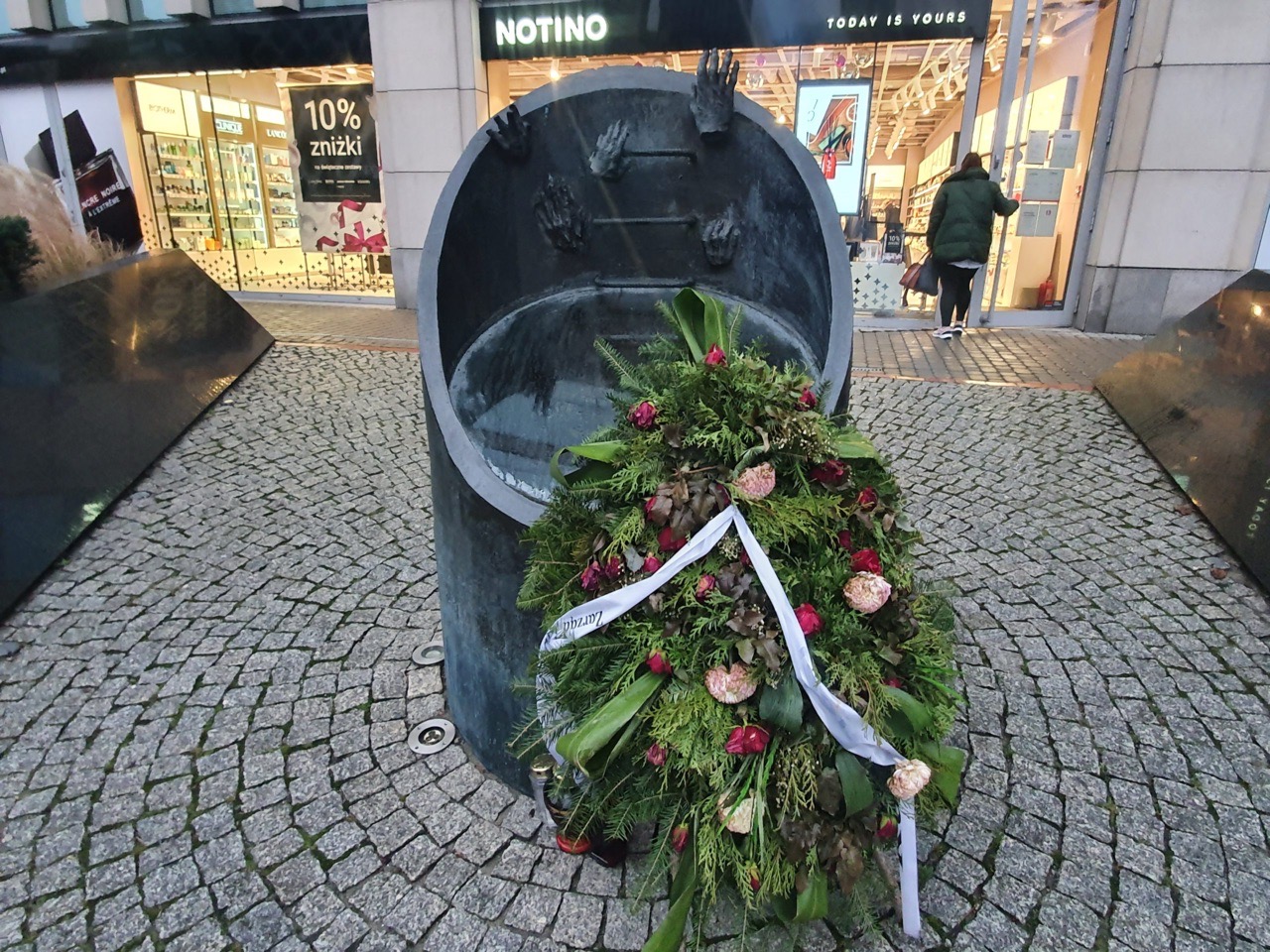
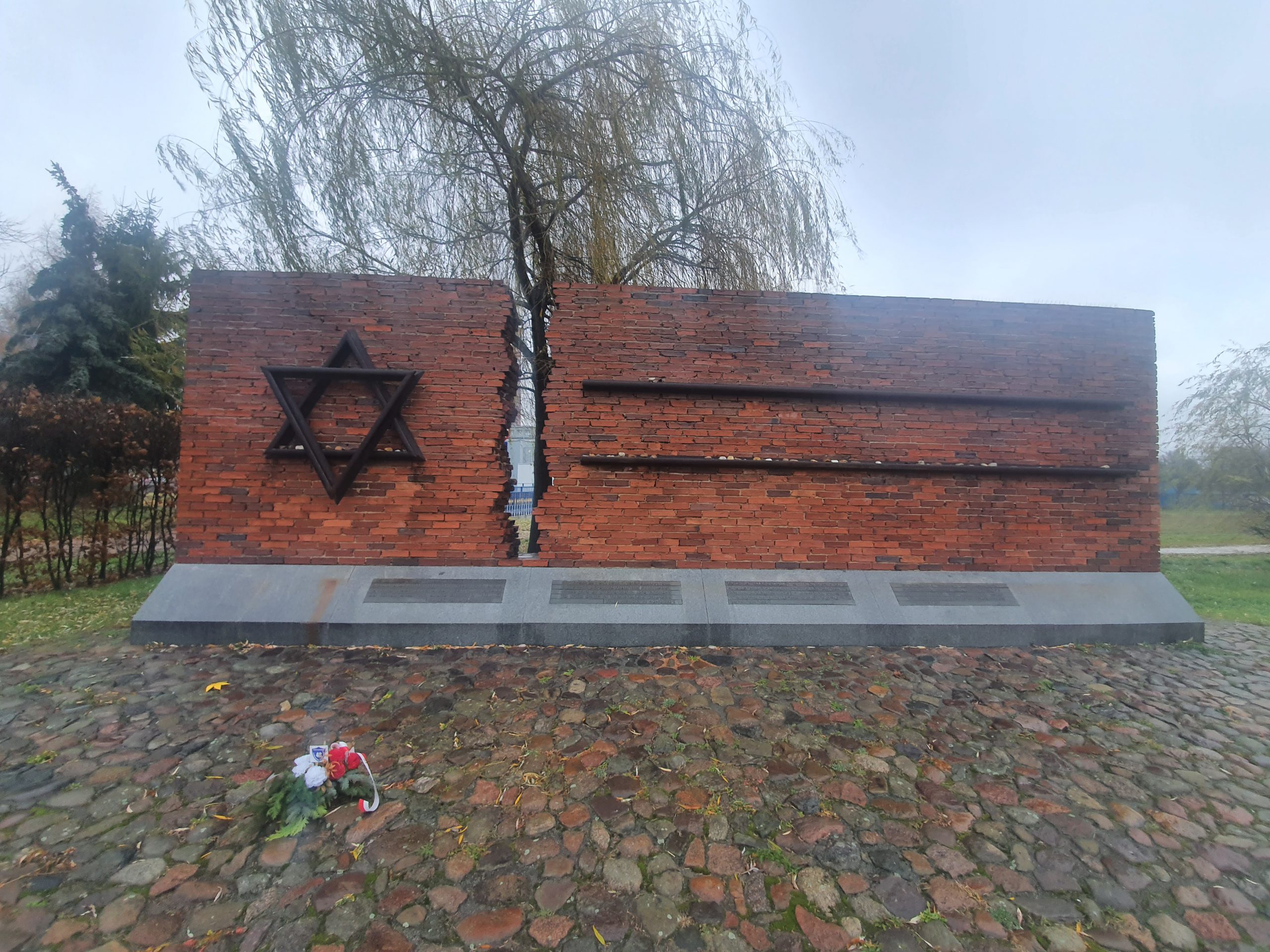
    I only discovered this towards the end of my stay in Częstochowa, there’s not much really made of it, but it’s a well designed memorial to mark where part of the city’s Jewish ghetto was located during the Second World War. The ghetto was relatively short-lived, it was created in the spring of 1941 and liquidated between late September and early October 1942. Over 40,000 Jews from the city were sent to concentration camps and 5,000 were sent to work at the HASAG factory. Very few survived the ghetto, concentration camps and work camps, with the post-war Jewish population being around 3,000 and many of those decided to leave the city.

    The memorial has the Jewish star on the left and railway tracks on the right, with a large crack to signify the break between the Jewish community in the city and those sent by train to concentration camps.

    This is a thoughtful addition to the memorial, quite bleak in its minimalism. It shows some of the transportations which took place from Częstochowa to Treblinka concentration camp. The monument was designed in 2009 by Samuel Willenberg (1923-2016) and it’s hard to imagine someone more appropriate to create this imagery. Samuel was a local man who was sent to Treblinka and then managed to escape before getting to the country’s capital to fight in the Warsaw Uprising in the Home Army. He escaped German clutches again and spent the post-war period as an engineer and sculptor, ultimately becoming the last living survivor from Treblinka. Untold amounts of bravery and a national hero, and it seems a positive idea to rename the former Umschlagplatz with the name Samuel Willenberg Square.

    It shames the city, by its own admission, that this monument was desecrated and vandalised a few months ago. It was swiftly repaired, but it caused huge upset amongst many parts of the community.

    This is more of a problem, it’s the remains of the railway station and is located next to the memorial as it’s where the transportations left from.

    The building is in urgent need of repair and I understand that the city has failed to buy it.

    It’s fair to say that the state of this former railway station is far from ideal and I hope that some plan can come together to save it before it entirely falls down. I’m not sure, judging by the condition of the building, if the authorities have much time left.

  • Częstochowa – Piwiarnia Piw Regionalnych Multitap & Pub

    Częstochowa – Piwiarnia Piw Regionalnych Multitap & Pub

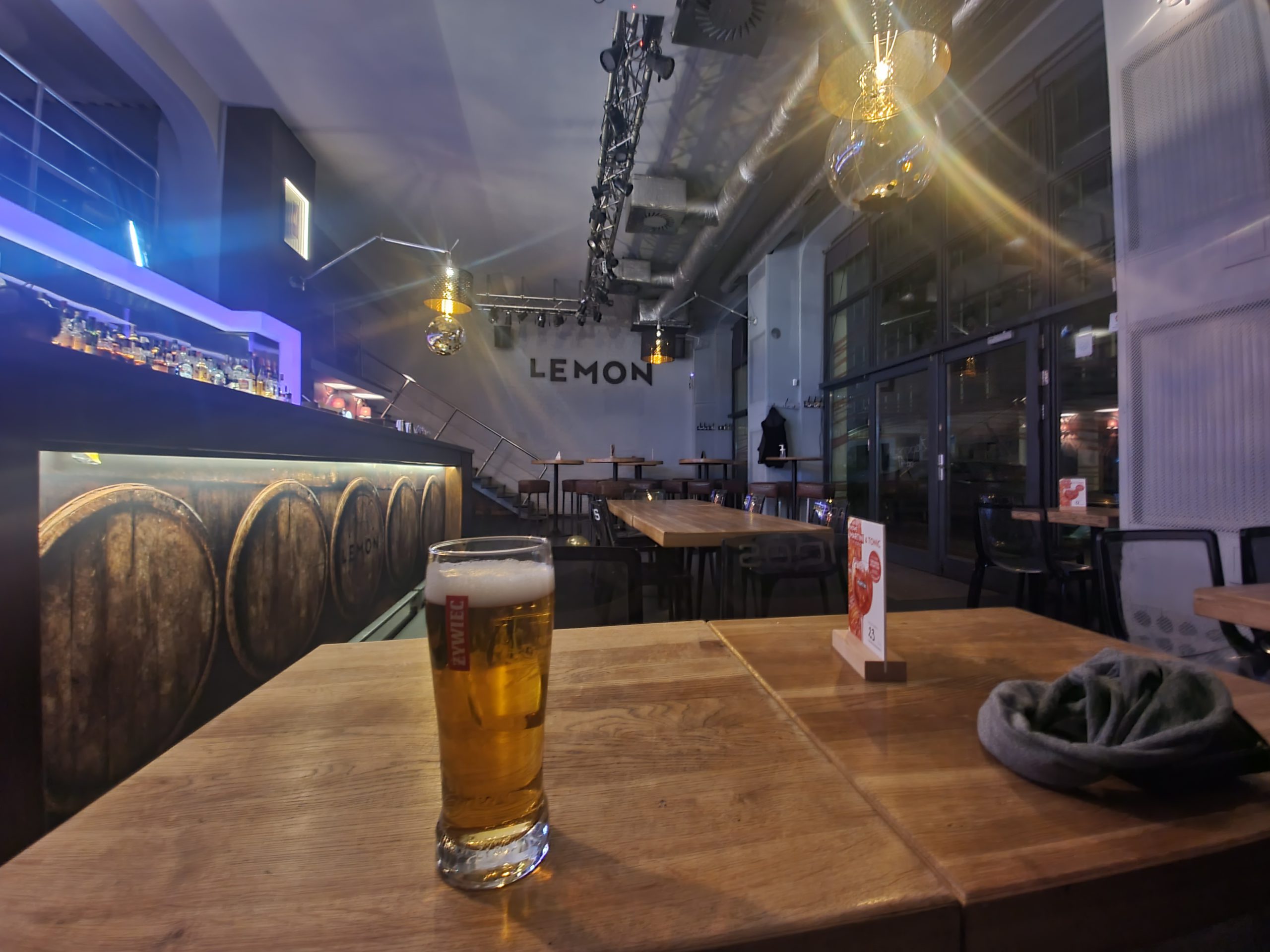
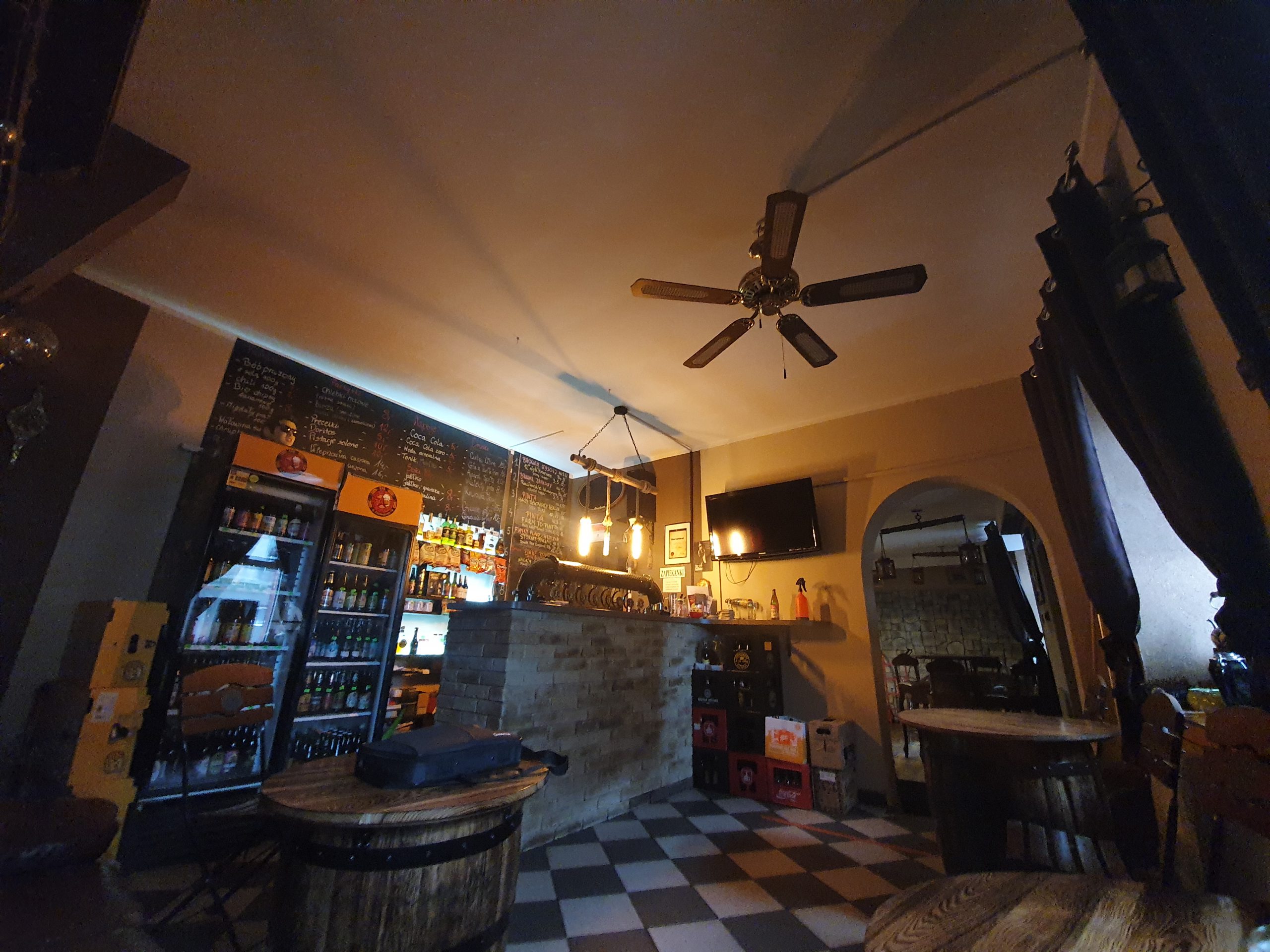
    Going back a couple of weeks to my little trip to Częstochowa in Poland, this was one of the few craft beer bars that seemed to be open at times that I could visit. It’s located not too far from Jasna Gora, so they might get something of a tourist trade to add to their local custom.

    Very nicely done, the list of available craft beers is chalked up on the boards outside the entrance. I like it when they’re chalked up above the bar, but tempting in customers walking by seems a particularly clever idea. I thought that the beer selection had a suitable range of different styles and from a number of different breweries, so it all felt well thought through.

    It wasn’t packed when I visited, but the atmosphere was warm and homely. It was slightly awkward when I went in as there was quite a lively discussion going on between what looked like an angry Polish man and the barman. I stood there trying to look nonchalant in my British manner, but probably to not much success. As the discussion finished after a couple of minutes I ordered my beer and the angry Polish man came back to talk to me, telling me that his daughter was working in London. It transpired that he wasn’t an angry man, he was a friendly character with an excellent English speaking ability.

    I went for a Stormy Pacific from Funky Fluid brewery who are based in Warsaw, and this was a very decent Double New England IPA. It felt an odd environment to be drinking it, a quiet bar in a relatively rural Polish city with a traditional atmosphere, but yet it was an on-trend and quite exciting beer. The prices were moderate for the quality of the beer, but these are premium products and I’m impressed at how the bar owner has managed to get quite a local following and such positive reviews.

    There weren’t any other customers during the time I was in my little corner and the barman was off doing some bar related things judging from the banging of barrels and the like. That meant I just sat and read a book on my phone for an hour, really quite comfortable in this warm environment. Certainly not a bad way to spend a Saturday afternoon and I very much hope bars like this continue to open up across Poland. I’ve seen the future and I like it……

  • Warsaw – Warsaw in 1937

    Warsaw – Warsaw in 1937

    I think that this is the best pre-war that I’ve seen of Warsaw, showing the normality of the city in 1937.

    There are numerous video clips of the Old Town Market Place and specifically what is now the Museum of Warsaw. Just a few years later, the square was destroyed, although fortunately carefully reconstructed.

  • Warsaw – Cukiernia Sowa (ul. Grochowska 207)

    Warsaw – Cukiernia Sowa (ul. Grochowska 207)

    One of the reasons for this little blog is to help remind me where I’ve been, which is important when trying to visit all of the outlets of Cukiernia Sowa in Poland. I have to some way to go as there are in the hundreds and I’ve been to under ten, but it’s good to be aspirational. I also keep forgetting to visit the couple of branches that the company has recently opened up in London, there’s one in Ealing and another in Sutton at the moment.

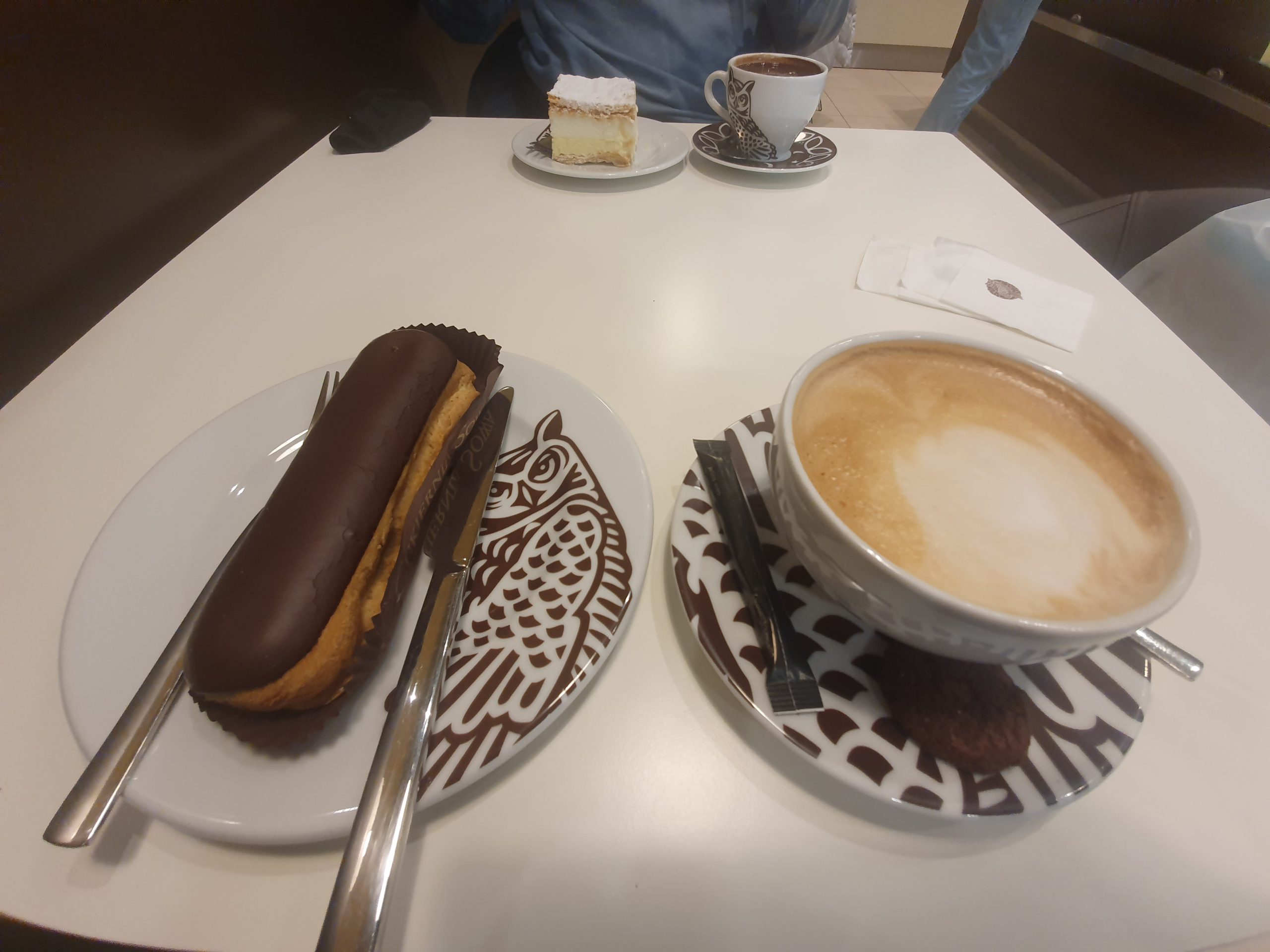
    This outlet is in a shopping centre and it’s only got a couple of tables, which makes getting a seat quite challenging. When we visited it was a little awkward as the seats were taken, but a friendly Polish man said that we could sit with him and he was leaving soon anyway.

    The sole staff member didn’t speak English, which is a little unusual, but we were outside of the central tourist area and she was endlessly helpful with Richard’s requirements.

    Richard went for some cake and a very decadent hot chocolate, which looked very appetising. I went for my standard order of an eclair and a latte, all carefully presented and as tasty as I remember. This remains one of my favourite Polish chains, with the environment being clean, the service friendly and the food and drink of an excellent quality. Indeed, looking at this photo is making me miss Poland….

  • Warsaw – Museum of Warsaw (The Construction of the Central Railway Station)

    Warsaw – Museum of Warsaw (The Construction of the Central Railway Station)

    I’m still working through my little collection of photos of things that interested me from my visit to the Museum of Warsaw a couple of weeks ago and this one is an artwork by Edward Dwurnik (1943-2018) which is located in the Room of Warsaw Views.

    Dwurnik managed to paint over 5,000 artworks during his career, including numerous paintings of the capitals of European Union countries. The above artwork was painted in 1974 and shows the construction of Central Railway Station in the early 1970s, with structures built on top of the railway lines which were already there.

    Also in the artwork is the Palace of Science and Culture on the left, which was a relatively new building at the time, as well as what is now the Novotel Warsaw building on the right. It captures a Warsaw in a time of upheaval, although to be fair, it has had quite a lot of those over recent decades. The painting was created for the 5th Festival of Fine Arts in the city and was put on display at the Zachęta National Gallery of Art. It was then acquired by the city’s Art and Culture Department the in 1975, before being given to the Museum of Warsaw in the following year.

  • Warsaw – Jabeerwocky Craft Beer Pub (Visit 3)

    Warsaw – Jabeerwocky Craft Beer Pub (Visit 3)

    Just a short post because, as the title suggests, I’ve written about this bar in Warsaw twice before (visit 1 | visit 2). But, I very much like the welcome here and I visited a few times during my latest sojourn to the city. It might not have the most beers available compared to some other craft beer bars in Warsaw, but it has some of the most innovative and interesting.

    This is the insanely good Noa Pecan Mud Cake Stout from Omnipollo, beautifully decadent and the aftertaste was exactly the same as eating a rich chocolate cake. It’s 11% and is reviewed at 4.22 on Untappd, which is towards the higher end of the scale. On a visit on my own the week after, I had Podbipięta from Browar Łańcut, another superb beer which is 12% and has been finished in Bourbon barrels. That beer was just as decadent and also scored 4.22 on Untappd. And beer of that quality during my recent visits has to be noted….

    And the chorizo pizza was as good as ever, keenly priced (just over £5) and a beautiful complement to the beer.

    As a craft beer bar, this is definitely one of the best in Warsaw, with the service being friendly and the environment clean and comfortable. All really rather lovely.

  • Warsaw – Museum of Warsaw (Ravensbrück Concentration Camp Uniform)

    Warsaw – Museum of Warsaw (Ravensbrück Concentration Camp Uniform)

    Just a few more posts left about my visit to the Museum of Warsaw a couple of weeks ago.

    Concentration camp uniforms are always challenging exhibits for any museum, a tangible reminder of the horrors that took place during the Second World War.

    This uniform is marked with a ‘P’, meaning that the prisoner was Polish and this is from Ravensbrück concentration camp. It was owned by Maria Bortnowska (1894-1972) who was an activist for the Polish Red Cross and also a fighter in the Polish Home Army. Unfortunately, she is an another victim of the Soviet takeover of Poland after the end of the Second World War, as she started to investigate the Katyn Massacre where hundreds of Poles were killed by the Soviets. She was imprisoned, although the authorities had to release her when evidence came in from other survivors at Ravensbrück about her good conduct. Maria’s family donated the uniform to the museum in 1973 and I think it’s one of the most exhibits in their collection.

  • Warsaw – Mały Powstaniec (Little Insurrectionist Statue)

    Warsaw – Mały Powstaniec (Little Insurrectionist Statue)

    This statue has become something of an icon of Warsaw in recent years and is located just outside of the external defensive  wall of the Old Town. The imagery was designed by Jerzy Jarnuszkiewicz in 1944, before later being used in this statue.

    The monument commemorates those child soldiers who found themselves in the Warsaw Uprising in 1944. The helmet is deliberately over-large, to show the innocence of youth.

    The military equipment is German and was used by those in the Polish Home Army after they had seized it from the occupiers as part of the Warsaw Uprising.

    The old town wall is visible in the background and the statue is located on the former eighth tower of the perimeter.

    The bronze statue was funded by the Polish Scouting and Guiding Association, hence the plaque on the side. Jerzy Jarnuszkiewicz, the original artist, allowed the imagery to be used for free, with the Scouts collecting 1 million zloty (around £200,000) from fundraising to pay for it.

    The plaque which notes that the statue was unveiled on 1 October 1984 and the guest of honour was Jerzy Świderski (1929-2017) who fought in the Home Army at the age of just 14. Jerzy lost his brother Bohdan Świderski during the Warsaw Uprising, but he survived it and became a Professor of Medical Science. It was unusual for the Soviet authorities at the time to allow this sort of imagery and depiction of the Warsaw Uprising, they’d spent some decades trying to belittle the bravery of the Polish Home Army.

  • Warsaw – Nine Men’s Morris Board

    Warsaw – Nine Men’s Morris Board

    This exhibit is on display in the cellars of the really quite marvellous Museum of Warsaw. I confess to not having heard of this game before, but it has been played since as early as the Roman period, and appears to have been relatively common. This particular board is made from clay and was discovered during excavations of the Royal Castle in 1971 and it’s thought to date from the seventeenth century.

    For anyone who wants to know the history of the game, there’s more information at https://en.wikipedia.org/wiki/Nine_men%27s_morris. What fascinated me about this game is that they’ve discovered it etched into the cloister seats at Norwich Cathedral, I assume by some youngsters who wanted to amuse themselves during some less than interesting hours sitting and singing. As an aside, it seems that if two experts play the game then it always ends up in a draw, which isn’t an ideal situation.

  • Warsaw – Municipal Tourist House

    Warsaw – Municipal Tourist House

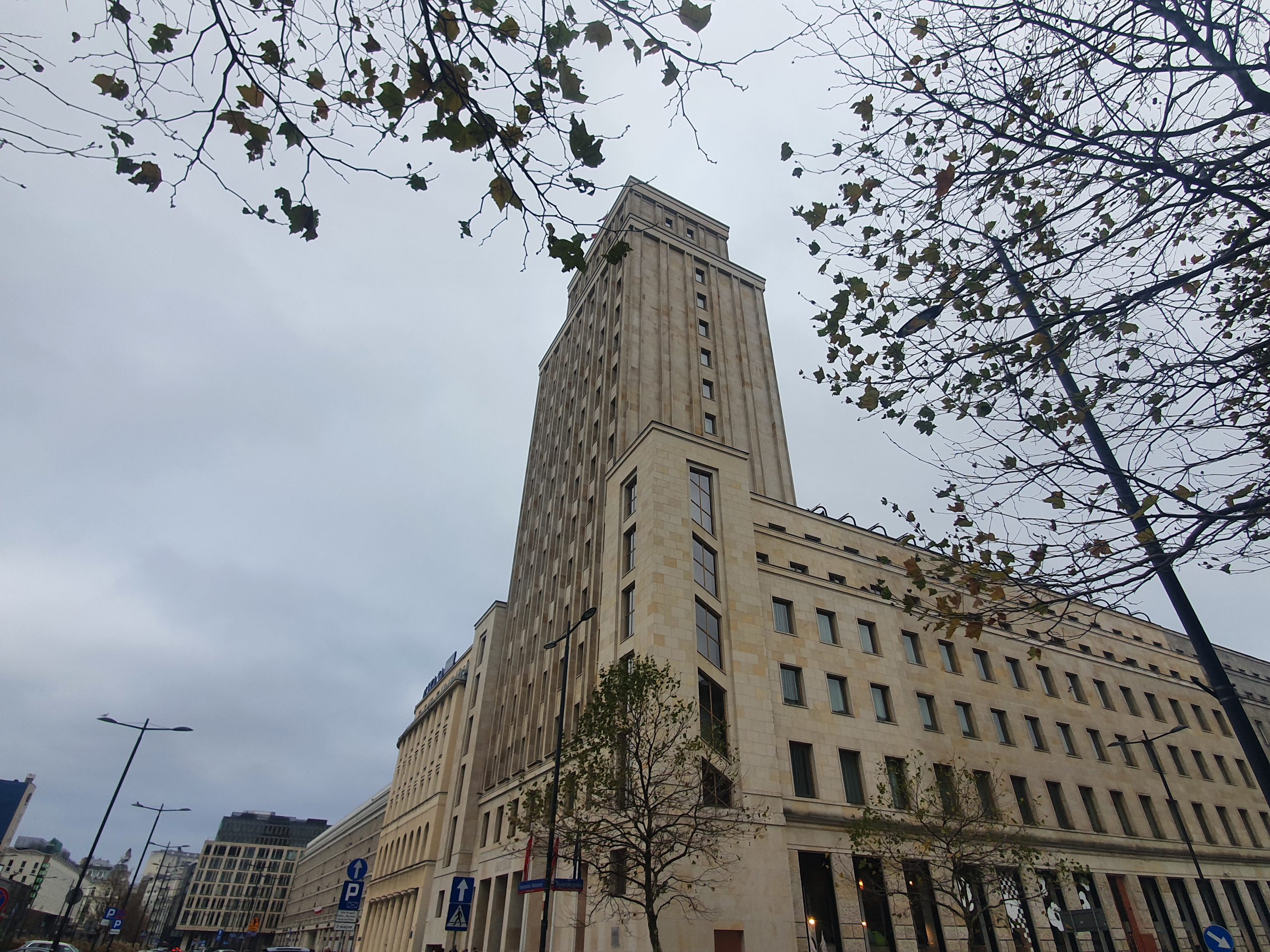
    On another of my flights of fancy for this blog, this building seemed to stand out a little to me in Warsaw and it felt like it had a bit of heritage to it. Unfortunately, the destruction of the city during the Second World War makes buildings like this seem relatively rare.

    Fortunately, there was an intepretation board available to give some extra information about its history.

    Here’s a photo of the building being constructed in the mid-1930s, so it is a pre-war construction. What is perhaps the most interested element of its history, or is to me anyway, is that it was used by the Polish Home Army when they were trying to take control of Warsaw from the Germans.

    It was used as a bastion and was under the command of Captain Witold Pilecki (above in his Auschwitz photo) who I can only describe as a completely heroic person. This is a man who volunteered to get captured in 1940 to be able to infiltrate Auschwitz and he was one of the figures who was able to tell the world what was going on there. He then promptly escaped before coming back to Warsaw to fight in the Warsaw Uprising, a man of immense bravery. Unfortunately, the Soviet controlled communists didn’t take to this Polish hero and he was executed in 1948 following a show trial, despite Pilecki having had the chance to escape Poland and save his life. Since the collapse of communism, Pilecki’s reputation has been restored and he is a national hero.

    The street that the property is located on is Plac Starynkiewicza, named after this man, Sokrates Starynkiewicz, a Russian general who also served as the 19th President of Warsaw. By all accounts, he seemed to have been pretty competent, delivering the city’s first horse-drawn trams, the first telephone lines and Warsaw’s first sewer and water supply. When he retired from office, he decided that he’d like to stay in Warsaw and he remained there until he died in 1902.