Category: Malta

  • Malta – Northern Region – Mellieha – Tal-Puzzu

    Malta – Northern Region – Mellieha – Tal-Puzzu

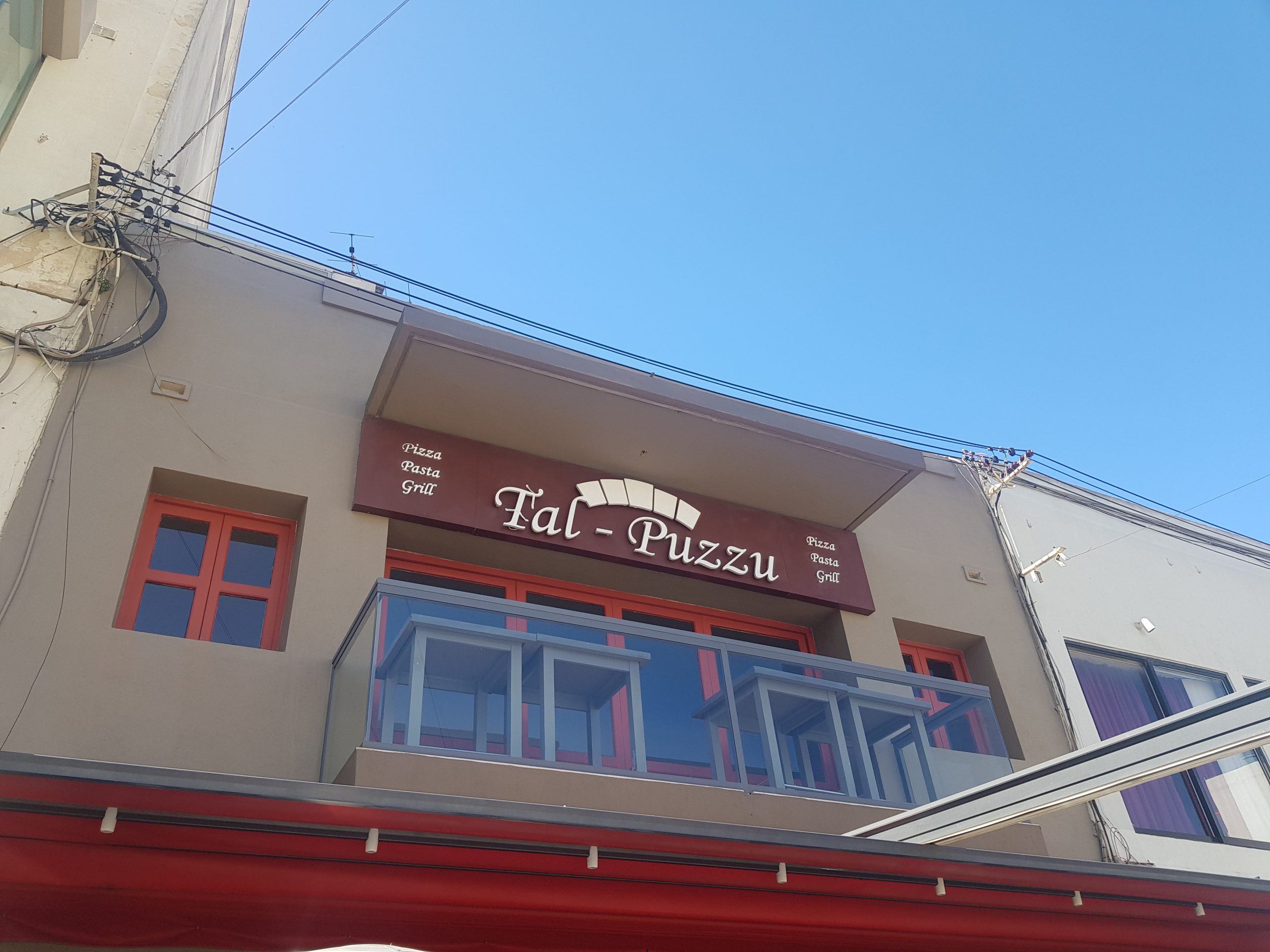
    To celebrate not getting run over on the road (more on which later) we thought that a little stop for lunch would be useful. Our walk had ended in Millieha and I had a sudden craving for pizza, which isn’t an entirely rare experience (the craving for pizza that is, not ending up in Millieha).

    I thought about beer, but a refreshing cold drink of Pepsi seemed more suitable, especially as craft beer wasn’t mentioned on the menu. This might be something that I go on about a lot this week….. We opted for the eating outside option at this restaurant and hoped that we wouldn’t be stuck with smokers nearby, although fortunately that eventuality didn’t come to pass. The restaurant was never full, but it remained suitable busy throughout, a mix of local and visitors to Malta.

    And the diavola pizza, which was perfectly acceptable and I think they have their wood fired pizza oven. A thin and beautifully crisp base, lacking perhaps a little in tomato flavour from the sauce (I like a rich tomato sauce on the base), but the toppings had some heat to them and for a lunch-time snack it met my needs. A number of reviews said that the rabbit was one of the specialities of the restaurant, but I’m deliberately not eating that, however much of a national delicacy and tradition it might be.

    Liam’s subtle little calzone, which had ham, mushrooms, tomato, mozzarella and, for some reason, egg, in it. But, it all worked well apparently. All the food seemed freshly made and was at the appropriate temperature, so I felt that we got value for money for the lunch.

    The service at the restaurant was attentive and polite, everything arrived promptly and they had balsamic vinegar from Modena, reminding me of Richard and his gift buying last weekend in Florence. After the meal it was time for some more discovery of the country’s history, with Liam discovering just how tiring this life of exploration actually is. I tell people that, but they often don’t believe it.
  • Malta – Northern Region – Bugibba – Michele’s Cafe

    Malta – Northern Region – Bugibba – Michele’s Cafe

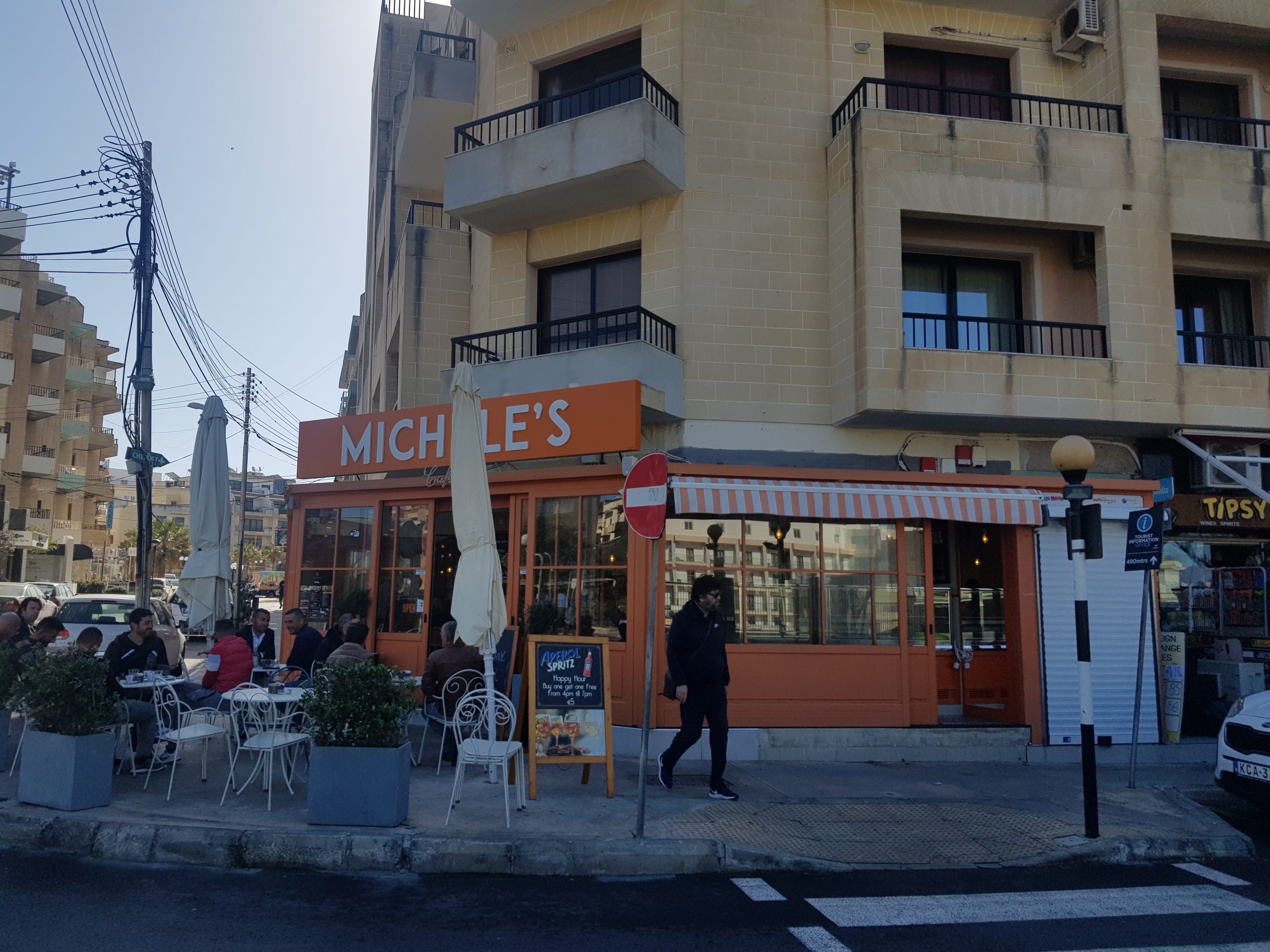
    We had a choice of any cafe in Bugibba for breakfast, but this one was well reviewed so we walked out of our way to go and find it. The welcome at the cafe was prompt and genuine, although we probably could have ordered at the table rather than at the counter. Nonetheless, the staff brought out the food and drink and there was a relaxed and comfortable atmosphere. Many of the customers were sitting outside, but inside looked much more appealing to me away from the road.

    The cakes looked well presented and appetising, a rather delightful sight in the morning.

    The coffee had a touch of richness and appears to be Lavazza coffee, a reminder of Wetherspoons, although it tasted absolutely fine. The environment was clean and the cafe seemed to have as many locals in it as visitors, nearly always a positive sign. It’s also located opposite the town’s bus station, so a handy time to get a quick drink and snack.

    The Cannoli was sweet with a firmness to the fried pastry, with pistachios at either end to add even more texture and a creamy interior which I assume had ricotta in it. Liam went for a croissant and the prices for this little assortment were very reasonable, just over £3 each. The cafe got quite busy when we were there and they also offer full meals, seemingly getting ready to serve their roast dinners for Sunday lunches.

    So, a rather lovely start to the week of dining in Malta, a genuinely friendly little cafe and I can imagine that the quality of the meals that they serve is high. We could have stayed here for hours, but there is so much to explore, so we forced ourselves out into what was becoming an increasingly warm Bugibba….

  • Malta – Northern Region – Bugibba – Bugibba Salt Pans

    Malta – Northern Region – Bugibba – Bugibba Salt Pans

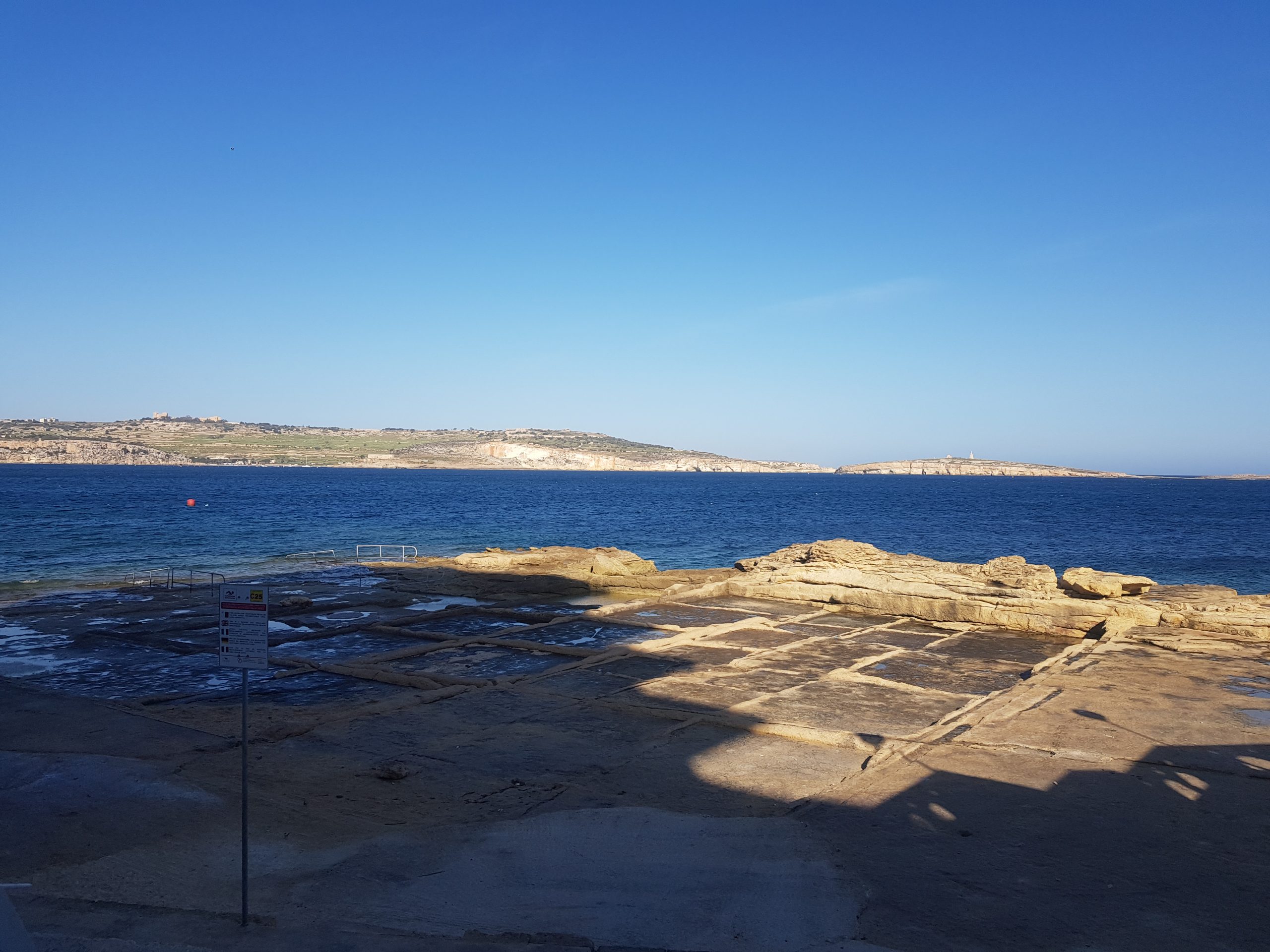
    These salt pans have, according to the historical information board next to them, been here for “a very long time”, with other sources suggesting that they’re probably Roman. They were rediscovered recently having been covered by the sand, once used by the locals to extract salt from the water. The sign also notes that the workmanship is much better than in other salt pans across the islands, with a level of professionalism to the set-up. Unfortunately, these salt pans were vandalised with paint a few years ago, but were swiftly repaired.

  • Malta – Safely at Gatwick Airport

    Malta – Safely at Gatwick Airport

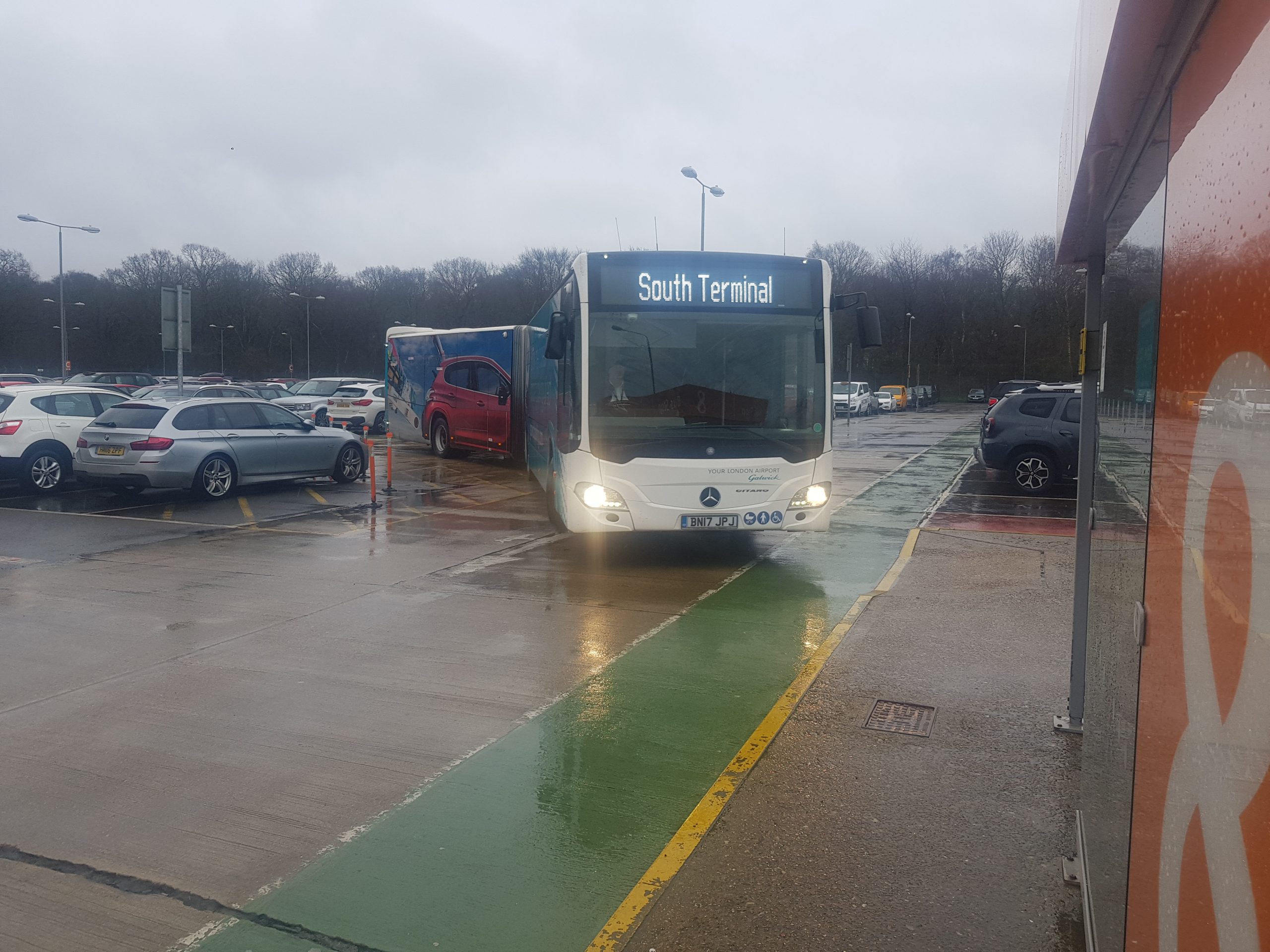
    Unusually for me I arrived at Gatwick Airport by car, thanks to Liam’s excellent driving skills, which made for a smooth and easy journey. In three hours and ten minutes we had gone from being in Norwich, parking at Gatwick’s car park, getting Liam’s ticket re-issued (long story), through security (which Liam messed up) and into the lounge.

    So that means six hours or so in the lounge. I think we’ll cope.

  • Malta – Gozo – Victoria – Gran Castello Historic House

    Formerly known as the Folklore Museum, this museum is formed from several former residential properties in the Cittadella. The properties would have been for the more wealthy local residents and were rather grand townhouses. They were merged together to form a museum in 1983 and there are displays about various trades and skills.

    Graffiti on one of the walls, 1848 if my knowledge of Roman numerals works out…

    The view over the rear gardens.

    A view of the rear of one of the properties.

    Some, er, equipment.

    Clothing as it might have appeared in the eighteenth century.

    I can’t disagree that there are a lot of stairs in the buildings, but I’m intrigued as to what on earth this person thought that the museum could do about it. I suppose they could have demolished the buildings and constructed a new one without stairs. This must be one of the few properties that Heritage Malta have where putting a lift in would be next to impossible and they’d also likely need to put three lifts in.

    I’m not overly engaged by folklore museums, but this location had the advantage that it was located within an interesting building with plenty of history of its own. The museum is well laid out and tries to tell the story of how people lived and worked in Gozo over the centuries. It was a bigger museum than I had expected as well, with plenty of hidden corners to explore around the buildings.

  • Malta – South Eastern Region – Valletta – Royal Opera House (Pjazza Teatru Rjal)

    The city’s royal opera house was built in 1866 and was designed by Edward Middleton Barry, who had also designed London’s Royal Opera House a few years before. The new opera house in Valletta pleased and delighted the people of the city until it burnt down in 1873. Not set back by this minor disaster work started again on the rebuild and it opened again in 1877.

    All was well with the building until it collapsed on 7 April 1942 after being bombed by the Germans during the Second World War. The British decided that they’d demolish what was left to avoid any further injury, although since Malta was the most bombed location during the Second World War I’d have thought that the ruins were the least of the concerns that the local population had to deal with.

    Anyway, the efficient and effective post-war government roared into action and managed to achieve precisely nothing in terms of rebuilding the opera house. Money was approved in 1955 to fund a new building, but it wasn’t spent and there were then decades of delays. It was decided that the locals could use the central area of the building as a car park, which didn’t seem a particularly useful way to utilise this prime piece of real estate.

    In the 1980s the architect Renzo Piano contacted the government and made some recommendations about how the site could be used. The government once again roared into action and twenty years later they had again achieved nothing. However, in 2008 a decision was made to renovate the site and by 2013 the new open theatre was unveiled. It had taken just 71 years to resolve the problem……

    One of the former entrance doors to the opera house.

    The new open air theatre structure has been placed inside the original walls without impacting on them. The new building has been controversial as there were numerous suggestions as to how the site could have been redeveloped, but it is now known as the Pjazza Teatru Rjal.

    The pillars show how large the original opera house was.

    And to make it even easier to imagine, here’s what it looked like in 1911.

    It’s positive that the site has been reused and Renzo Piano has done an excellent job, as he has with the city’s new gate and the Parliament building which is located next door. It’s just a shame that it took the government so long to actually do anything with the ruins of the building.

  • Malta – South Eastern Region – Valletta – Muza

    Muza is the new art museum in Valletta which relocated and opened in its current location at the end of 2018. My visit came just a couple of weeks after they opened, so everything seemed quite new and modern. Although I didn’t like the stairs inside the building, but I mentioned them elsewhere….

    The gallery has been opened in the Auberge d’Italie building which dates back to the late sixteenth century. Over the centuries the building has been used as a Post Office, a school of arts, a courthouse and a military headquarters.

    The signage in the museum isn’t really very good, although I’m sure that they’re planning to address this. I had a Heritage Malta pass so I didn’t go to the ticket office and instead headed to what I thought was the entrance so that they could scan my ticket. That worked, but the museum seemed very small, but it transpired that I had just visited the temporary exhibition which is on the ground floor. Fortunately a staff member told me as I was leaving…..

    Anyway, above is a plaster portrait of HRH the Prince of Wales, sculpted by Vincent Apap, one of the most famous Maltese sculptors in recent history.

    This is the last artwork by Victor Pasmore and it was found on his easel when he died in 1998. The information panel explains that “it is a synthesis of his style in Malta, featuring simple forms, dynamic lines and symbols”. I haven’t got the slightest clue what the artwork, which is titled Bla Titlu (this actually means ‘without title’ in Maltese, so I suppose it isn’t really titled), is about.

    This artwork is by the Maltese Emvin Cremona and is a mixed media piece created in 1969. I have absolutely no idea what this is supposed to be about, which was a theme I was discovering about this exhibition.

    St. Anthony the Abbot, a sculpture in plaster by Vincent Apap, one of his earlier works having been created in 1932.

    This is the design created in 1917 by the Maltese sculptor Antonio Sciortino for a project to mark the unknown soldier. Despite many years of work the structure was never built.

    Another work by Antonio Sciortino, this one is a model for a monument of Anton Chekhov, which was in this case constructed.

    I like medieval triptychs, but this is a contemporary interpretation which was created in 1945 by the Maltese artist Anton Inglott.

    Everything above was in the temporary exhibition, so I then made my way up the stairs to the main collection. The museum was surprisingly quiet, although it was also much larger than I had anticipated. There were gaps where signs and panels should be, but I assume that this is simply because the museum has just opened and they weren’t quite ready.

    An early map of Valletta.

    This is the ‘Raising of Lazarus’ which was painted in the late sixteenth century by the Italian artist Andrea Vicentino. Of note is that this is one of the few works which has survived which was once hung in the Grandmaster’s Palace.

    This painting of ‘Madonna and Child’ looks older to me, but is actually from the late nineteenth century, although the painter is unknown.

    One of my favourite works in the gallery, this is a view of the Grand Harbour’s entrance, painted in oils in the early nineteenth century by Thomas Lyde Hornbrook.

    An interesting cartoon from 1803 representing the evacuation of Malta.

    Overall, I liked this museum and the design felt contemporary and modern, befitting the new building. I also very much liked that there were numerous information panels relating to the history of the building itself, which has gone through numerous transformations over the centuries. The layout was though just a little confusing and I hope no visitors manage to miss the main part of the museum and instead just see the downstairs exhibition area.

  • Malta – South Eastern Region – Valletta – Muza (Stairs)

    Muza is Valletta’s new art museum, and more on which in a separate post. But I feel the need to comment on the internal steps inside the museum, which I noticed a couple of other people stumble on. I’m not sure how this design got through the planning process but perhaps it was just me who found it slightly difficult to identify the edges of the steps. Well, and the other people I saw stumbling.

  • Malta – South Eastern Region – Valletta – Palace Armoury

    The Palace Armoury is part of the huge collection of armour that the Knights of the Order of St. John once possessed. Unfortunately chunks of it were stolen by Napoleon’s troops during the Napoleonic Wars and the storage area has moved to two former stable blocks, but solely because the original room upstairs was taken over by the Parliament of Malta.

    Collection of cannons.

    There were a lot of the various pointy weapon things attached along the walls. I can quite imagine an invasion requiring the Knights to come into a warehouse like this full of weapons and armour, taking what was appropriate. This is incidentally one of the largest collections of weapons in the world which is still located in the original building.

    It’s thought that this suit of armour was designed for the Grand Commander Jean Jacques de Verdelain, who lived from 1595 until 1678 and he was the nephew of Grand Master Hugues Loubens de Verdalle. I suspect there’s an element of guess work here, but it makes the armour feel more relevant when there’s a connection to a particular person.

    Some of the wax figures were quite realistic…..

    These are morions, or open helmets, which were used in the sixteenth and seventeenth centuries.

    The collection, even in its depleted state, is still extensive in size. Originally the collection of weapons and armour would have been sufficient to arm thousands of soldiers.

    A decorative shield.

    Chain mail which was worn under the armour and which looks heavy and clunky.

    There was a free audio guide available but the staff member forgot to tell me that, and it only became apparent when I reached the state rooms which are in the same building. Not that it really mattered, I’m not that engaged with audio guides and there was plenty of descriptive information on the panels. There are a few negative reviews about this audio guide process and it is a bit clunky.

    Overall, it’s an interesting enough museum although weaponry doesn’t overly thrill me and I tend to glaze over displays of guns and armour. However, it was clearly laid out and the highlight was seeing the armour which they had tried to associate with particular military leaders and Grand Masters from the period. The new location of the former stable block is a bit run down though, and perhaps a little bit of modernisation might be useful to the whole arrangements.

  • Malta – Southern Region – Birżebbuġa – Għar Dalam

    Located just to the north of Birżebbuġa is this prehistoric cave which is where the first evidence of human life on Malta is recorded, dating back nearly 7,500 years.

    The skeleton of a brown bear, one of the many animals which died in the cave.

    Part of the museum collection of the bones and other remains which were found at the site. There is a real focus on quantity, which isn’t unusual for the time, rather than displaying the most important pieces, but it looks quite impressive when entering the room.

    The museum has rather started to heap things up now, although I doubt that these displays have changed much in many years. I quite like the heritage of the displays in many ways, although the museum does perhaps need a little bit of an update.

    When they excavated the caves they found a series of different layers of bones and detritus, this is the deer bone layer dating to the period of 13,000 to 18,000 years ago.

    After the museum visit is the walk down to the cave, which I managed to time beautifully between two school groups. It’s very lovely that school groups come to look at historic sites, but I prefer them to do it just before I arrive and just after I leave.

    Views of the countryside whilst walking down to the caves.

    The entrance to the caves, fenced off to prevent vandalism which has unfortunately been a problem at this site in the past.

    An example of the different layers which were found at the site.

    The walkway, looking back towards the entrance.

    Views inside the cave.

    Visitors are limited as to how far they can go in case they stand on a woodlouse.

    This is the hippopotamus layer and these were on the islands until around 10,000 years ago. There’s also evidence of dwarf elephants which are when larger animals become smaller when in a confined area, such as Malta, because there wouldn’t otherwise be enough food available for them.

    Overall, a fascinating site, although more information panels at the site might have been useful to ascertain exactly what some features were. I had my Heritage Malta pass, but the entrance was only a few euros, worth it to imagine humans occupying these caves so many thousands of years ago.