Category: France

  • Limoges – Oradour sur Glane

    Limoges – Oradour sur Glane

    [I originally posted this in July 2018, but have reposted it to fix the broken image links]

    Many years ago I watched the landmark World at War series, produced in the early 1970s and at the time the most expensive documentary ever produced. The very first episode begins with some film of Oradour sur Glane, and I’ve remembered that for some time, and I’ve wanted to visit the site.

    So, I decided to spend the day here and got the bus from Limoges. I’ll do another blog post about that, as it’s not the easiest bus to find, and I noted that there were no other tourists using the service.

    So, back to what Oradour sur Glane is. In 1944, the German military entered the town one summer’s day and started to round everyone up. The process didn’t take that much time, the citizens were compliant and rather confused as to what was going on.

    Oradour at the time was part of Vichy France, so the section of France that was self-governed, almost as a puppet state. However, it wasn’t controlled militarily to the same degree as the occupied part of France, and the local French police force were expected to keep order across the territory. So, the villagers of Oradour weren’t used to seeing Germans in the town, something limited usually to just a couple of Germans soldiers perhaps visiting a restaurant.

    The men were taken to various garages and barns across the town, and the women and children were taken to the town’s church. It was said that the men were shot by machine guns in the legs, so as to harm them, but not kill them. They were then set on fire, so for most, they were burned alive.

    The women and children in the church heard the shootings across the otherwise quiet town. The women did their best to comfort the children, but the Germans used a suffocating gas to try and kill those inside. They then finished their killing with machine gun fire, to catch anyone who had survived.

    The Germans killed 642 people on that summer’s day in June 1944. Of those, 205 were children.

    There is no questioning this chain of events, but there is much historical debate as to what happened here to cause this. It was one of the worst war crimes ever committed and it took place without warning or because of any particular reason.

    The German military were, for the most part, disciplined and effective in implementing orders. There’s no doubt that there are very many war crimes throughout the German occupied territories over the period of the Second World War, but they were usually official sanctioned from senior Nazi figures. Concentration camps were used to kill millions of Jews and political prisoners, Warsaw was bombed to try and prove a point, that reprisals wouldn’t be tolerated.

    So, this gives a problem as to what happened in Oradour. Adolf Diekmann was the military commander who went to Oradour, and it was he who ordered the killings of everyone in the town. Diekmann was killed just a few weeks later on Normandy, meaning that the story of what he was ordered to do was never revealed. But, senior German military officers who had given him his commands were said to have ordered him to take thirty men hostage to try and use as a ransom for the return of a German officer who had been seized by the French resistance.

    So, either Diekmann entirely ignored what he was told to do, or he really had been told to kill hundreds of people to act as a warning to those involved with the French resistance. That the French resistance were a problem to the Germans in undeniable, but if Oradour was meant as a warning, then why didn’t the Germans publicise it? Instead, they covered it up as best they could. And why would Diekmann ignore orders, if he was a loyal German officer?

    So, the attack remains a mystery in its intentions. It is likely that it was a response to the attacks made on the Germans by the French resistance, but it has been suggested by some historians that the Germans had the wrong facts and perhaps entirely the wrong town.

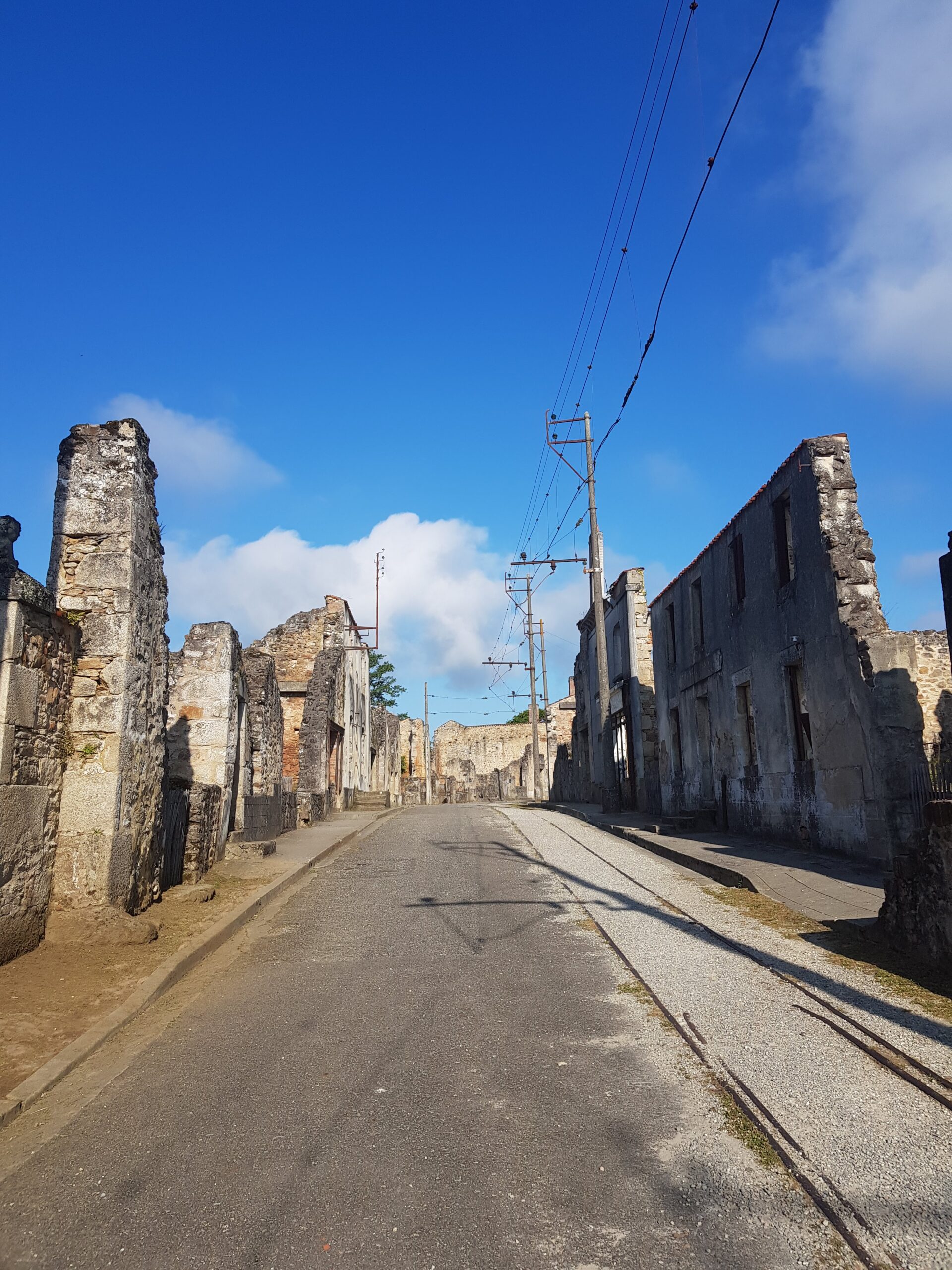
    One decision was made after the end of the Second World War, which was to keep the ruins of the town undisturbed and to not repair the damage done. A new town was created, just a short distance away, and the former site was to be kept as a permanent reminder of the massacre which took place here.

    That brings me to my visit. I was there at the opening of the museum and I went straight through to the former village site, instead of going to the museum section first. This meant that I had the first half hour of the site to myself, which means that I was able to take the photos that I wanted.

    I did take a lot of photos today, and I also made sure that I took photos of the signs which described what each building was. I’ve just uploaded en masse some of the photos, just to give an indication of the size of the site and what’s there, with apologies for the lack of tagging in some of them. If anyone is particularly intrigued by an individual property, message me, and I’ll bore you for ages with what they all were.

    20180703_083358

    The old town is now sealed off, so that visitors have to go through the visitors centre. Above is where the road used to go straight down, but it now bends off to the right.

    20180703_085827

    The visitor centre, which has a museum, shop, toilets and an information desk. Visitors can just walk straight through the entrance area if they don’t want to visit the museum area. Visitors also aren’t allowed to take photos in the museum area, just in the main part of the site.

    20180703_090417

    This is what visitors see when they come up from the underground passage which goes under the road from the visitor centre.

    20180703_091945

    20180703_091921

    Walking around did feel very surreal, as if this was some sort of open air museum. The beautiful sunny day meant that it didn’t feel like the site of a massacre, and so coming across signs noting people died on a particular spot was always a shock. I also found it interesting to see the buildings themselves, and all of the different layers of history within them, such as when extensions had been added or there were changes in building styles.

    20180703_091433

    20180703_090732

    20180703_090833

    Above a number of photos along the main road of the former town, showing that it was a relatively substantial settlement. What look like power lines in the above two photos are tram lines, as there was a tram service which operated to Limoges.

    On the day of the attack in 1944, a tram came into the town from Limoges, and the Germans stopped it. They shot dead the engineer and sent the tram and its driver back to Limoges, a decision that didn’t quite make sense to me. Nor did the fact that the tram then picked up more passengers and went back to Limoges, where it was stopped again. The passengers were allowed to go free, as long as they didn’t go into Oradour, but it’s another strange sequence of events which suggests that there was some considerable confusion on the day.

    20180703_090920

    20180703_090952

    20180703_091240

    20180703_091047

    20180703_091036

    20180703_091018

    20180703_091054

    20180703_091027

    20180703_091014

    The above photos are of the church, where the women and children of the town were killed. The lump of metal are the bells, which melted in the heat of the fire which was started after the killings. There are also bullet marks still visible in the walls of the church.

    20180703_092101

    20180703_090610

    20180703_090619

    20180703_090640

    The exterior of the former town garage.

    20180703_091515

    20180703_092223

    There are several of these markers around the site, they show where the men were killed during the day.

    20180703_090913

    20180703_091653

    20180703_092229

    20180703_091728

    20180703_091749

    20180703_102208

    There’s an underground memorial on the site to those who died here, although I feel it’s a slightly strange design. I’m not sure why it needs to be underground like this, but it does feel quite atmospheric.

    20180703_102733

    A sign in the memorial centre.

    20180703_102501

    A list of those who died in the Oradour massacre.

    20180703_102541

    20180703_102346

    20180703_102552

    20180703_102354

    20180703_102559

    20180703_102446

    20180703_102244

    20180703_102801

    20180703_102518

    20180703_102253

    20180703_102757

    20180703_102431

    20180703_102642

    20180703_102412

    20180703_102655

    20180703_102438

    20180703_102631

    20180703_102403

    20180703_102649

    The above photos show the range of material which was found in the houses following the looting and destruction of them. Much of the material, particularly that relating to children, is rather emotive.

    20180703_101057

    20180703_100946

    20180703_092929

    20180703_095349

    20180703_101006

    20180703_094440

    20180703_095901

    20180703_093252

    20180703_093122

    20180703_095950

    20180703_093036

    20180703_095929

    20180703_092648

    20180703_093258

    20180703_092521

    20180703_092800

    20180703_100802

    20180703_095122

    20180703_100411

    20180703_092547

    20180703_092808

    20180703_094245

    20180703_092833

    20180703_092847

    As can be seen from the above lettering, this was once the town’s tram station and I’m intrigued that the trams went such long distances.

    20180703_100528

    20180703_100543

    20180703_100756

    20180703_092434

    20180703_093409

    20180703_101502

    20180703_101527

    20180703_101821

    20180703_101830

    20180703_101342

    20180703_102004

    20180703_101617

    20180703_101416

    20180703_101836

    Above are photos of the town’s graveyard, which is within the enclosed historic site. Many of those killed have graves here, and they’re all remembered at the official memorial. The coffins with bones in are another reminder of the horrors of the massacre, but the graves are well tended and dignified. Some of the graves have photos on them of those were killed, which adds a more personal feel to them.

    20180703_095245

    This phone box felt out of place, and it wasn’t actually here when the Germans raided the town. It was installed shortly afterwards for the visit of Charles de Gaulle when he came to see the damage done at Oradour.

    20180703_095147

    As an historical site, I’m very pleased that I got to visit Oradour sur Glane after so many years of knowing about it. It wasn’t busy, which meant that I felt that I got a fuller experience. I’d also recommend that others go if they’re interested in history and I’m sure most people would find their experience memorable.

    I did though note that someone left a negative review on TripAdvisor about the site. They said that it was a bit boring, and perhaps there could be some reenactments at the site to make it more interesting. A more stupid idea I don’t think I’ve ever heard, if they ever let people dress up as Nazis to reenact a massacre then I think I’d be the first to be writing a letter of complaint. Fortunately, wiser heads have prevailed and the site is dignified, peaceful and well maintained.

    A newspaper article published in the Liverpool Echo around a week after the massacre. It’s an interesting first perspective as to what was being reported at the time. It’s a little hard to read as it’s a screenshot, but it’s just readable if you click on the image and stare closely at the screen….

    20180703_083431

    This sign is present on the main exits to the site. Remember.
  • Limoges – Oradour sur Glane (Bus Journey)

    Limoges – Oradour sur Glane (Bus Journey)

    [I originally posted this in July 2018, but have reposted it to fix the broken image links]

    I mentioned in my main blog post about Oradour sur Glane that the bus situation to get there was a little complex. So, in case anyone in future stumbles across this blog and wants surety on where to go, then I hope that this might be of some use.

    One of the problems that I faced was that all of the bus timetables on posters, at bus stops, bus stations, in publications and on-line are mostly for the local bus company. They include Oradour on the map, but they mark it as “en car” which isn’t perhaps immediately obvious. But, by this, they mean get the alternative bus service, which has a web-site at http://www.moohv87.fr/ (and which has timetables).

    So the bus company that goes to Oradour from Limoges is a different one, and it does run services throughout the year. The service seemed reliable and although a little infrequent, it’s cheap and an efficient way to get to the historic site.

    20180702_123239

    There are a number of stops in Limoges which the bus goes through. Personally, I ignored them all and just went to the railway station, because that’s where the service starts. It’s easier to catch a bus at the start point and you’re more likely to get a seat, although that proved to be a little irrelevant….

    The service you need is the number 12 bus, although there’s also a 14 bus which does the same route which runs from early July to early September every year.

    20180703_073537

    Above is the bus at the city’s main railway station, and the bus station is accessed by going into the main terminal and turning right. It’s clearly signed, just go past the ATM and vending machine (well, there are tens of vending machines, but follow the signs) and it goes out through an elevated walkway and then down to the bus platforms.

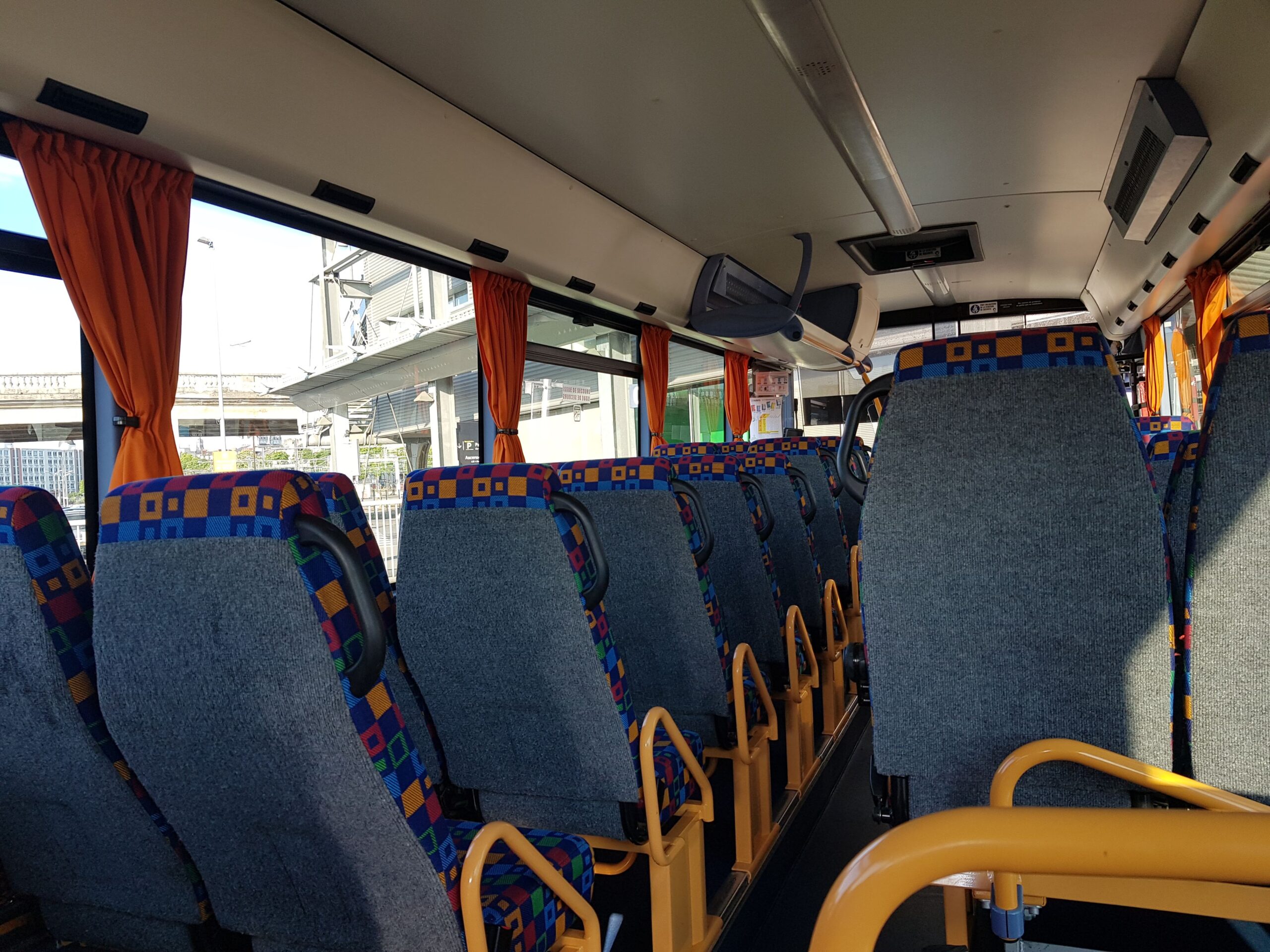
    20180703_075603

    I was the only passenger…. It seemed a shame that the bus service didn’t seem well used, but I wasn’t entirely surprised. The driver was incredibly friendly and she was quite engaging about the whole process. A single fare is €2 and you can buy two tickets at the same time to avoid needing to get a return, although there’s no cost saving for doing this. The ticket needs to be validated in the machine by the driver, but they can help with this. Or, just stand there looking confused, they’ll have to help if they’re not pro-active. The bus driver seemed willing to offer change as well, although it’s best to have the correct money of course.

    20180703_083223

    This is the bus stop at Oradour sur Glane, and it’s in the centre of the new town. It’s only though a five-minute walk to the visitor centre to see the ruins of the old town. The bus stops at Limoges in the same place that it departs from later on in the day.

    20180703_083221

    And here is the timetable at Oradour to get back to Limoges. Overall, for €4 return I thought that the service was excellent, with the bus being clean and comfortable. I’m sure that it could perhaps be better advertised, as I’ve seen many tourists just get taxis, but these cost around €50 each way, so not very cost effective unless it’s for a group.

  • Limoges – Musée National Adrien Dubouché

    Limoges – Musée National Adrien Dubouché

    [I originally posted this on 1 July 2018, but have reposted it to fix the broken image links]

    20180701_140522

    This blog post is about a pottery museum. Now, at first, that might sound something which is of rather limited interest other than to Andrew. But, it was more accessible that I expected and it was carefully and thoughtfully laid out. My first impressions from the exterior of the building were that it looked a grand institution, and it has a long history given that it was first established in the middle of the nineteenth century.

    20180701_140611

    The former entrance to the museum was through the grand frontage in the top photograph, but a more recent expansion to the building has created a new entry point.

    20180701_144242

    Above is the original entrance hall to the museum, with its decorative flooring and sweeping stairs to the upper levels.

    20180701_140616

    The external exhibit is made up of colourful pieces of pottery which have been mis-shapen and attached to a wall. It looks interesting and sets the tone for the rest of the museum visit, which is a narrative that isn’t too formal.

    20180701_142151

    I had intended to buy the Limoges City Pass to give me free entrance to the museum, but it has transpired that there was no admission charge today because it’s the first Sunday of the month. I thought that the museum would be a lot busier because of that, but it’s a spacious building and it never felt at all crowded.

    The staff member at the entrance was helpful and engaging, explaining what was in the museum and how to get around it. There’s also a free English translation available on iPad, although they need a form of ID and payment to be left with them to ensure they get the iPad back.

    20180701_141623

    The first part of the museum is on the mezzanine level and it’s an introduction to porcelain and pottery. I must admit that I was distracted at this point by the extreme heat that I had walked through to get the museum, so I spent the first fifteen minutes trying to cool down.

    The photo above shows the process of making decorative plates, from their initial firing to the end result which includes the different layers of decoration. I don’t think I could have a career in this type of thing, it sounds like a process fraught with things that could go wrong….

    20180701_142157

    One of the long galleries with porcelain and pottery being displayed, all spacious and well presented. I liked how although the environment was clearly nineteenth century, the use of modern signage and presentation methods made the museum feel rather contemporary.

    20180701_142741

    One thing I did like is that there was an entire room dedicated to explaining how the museum had come to exist, and how it developed. The current purpose-built location is the third home for the museum, with the second home being a former lunatic asylum. I’m sure that didn’t quite have entirely the right aesthetics for the museum, so above are the original drawings for the new building.

    20180701_143151

    This colourful pieces of pottery are from the earlier part of the museum collection, with the potters starting to be able to add colours and detailed decoration to the products.

    20180701_143138

    Another early decorative plate.

    20180701_145333

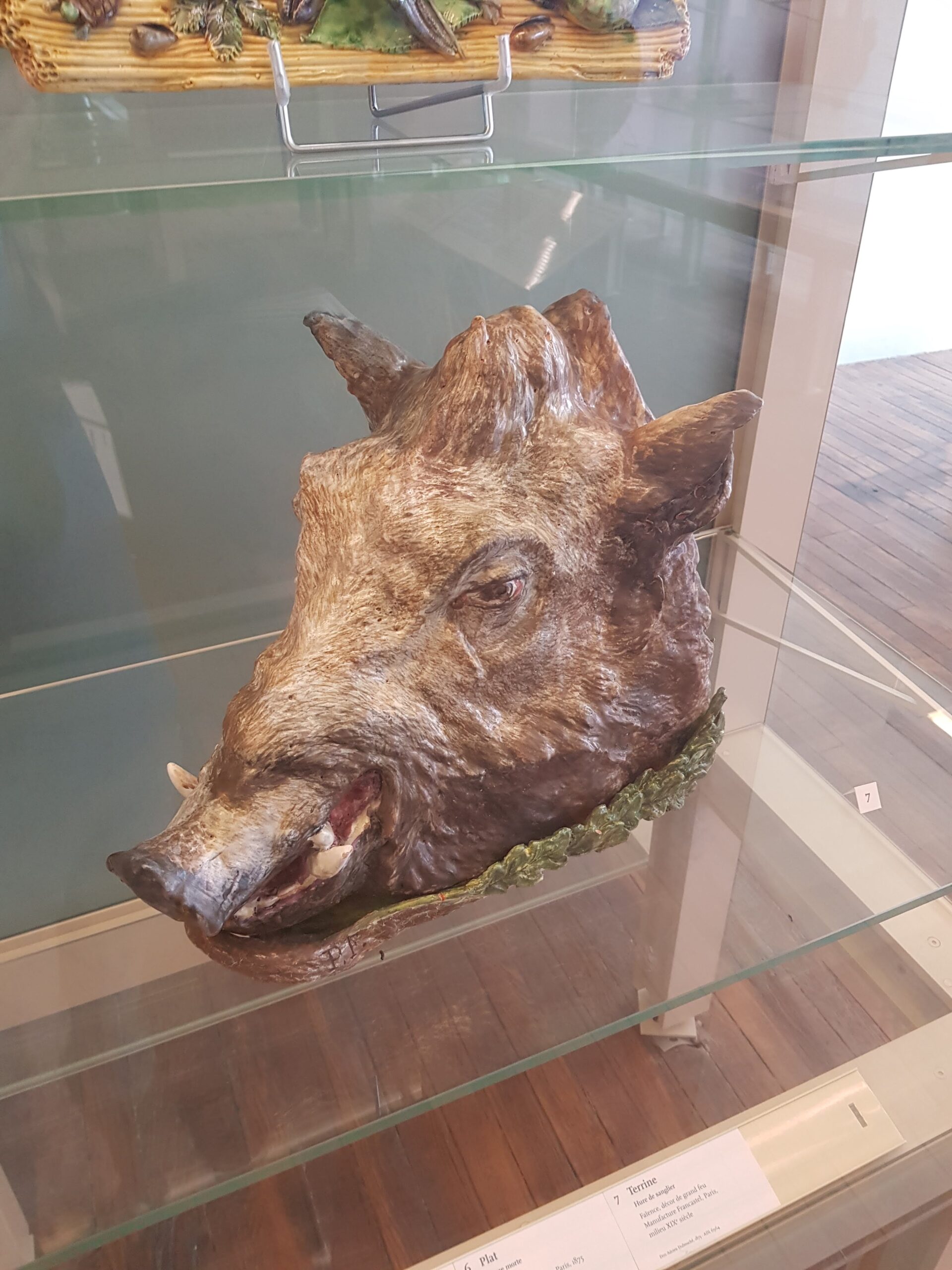
    I’m not sure that I’d want this on my mantelpiece… Well, I don’t have a mantelpiece, but if I did, I wouldn’t want it there….

    20180701_150620

    On that theme, this is a photo of a small section of a much larger piece. The snakes depicted on it are I’m sure very lovely for those who like snakes, but I can’t think of any pottery I’d want less on display in my home. Well, I can, but my point remains sort of valid.

    20180701_144944

    20180701_144840

    The above two photographs are of Meissen pieces, and I’ve heard of this German porcelain producer. I think primarily because it was mentioned in one of the Steptoe and Son episodes.

    20180701_143755

    In the fifteenth century (I didn’t know this, I learned this at the museum!) potters in China were able to develop polychrome decoration. This process really meant that they had five colours to work from, so the pieces which they made started to become more decorative.

    20180701_144344

    Spanish faience pieces from the seventeenth century. No, I hadn’t heard of the word until the information on the iPad explained it to me. It’s an Italian term for a certain form of tin-glazed pottery.

    20180701_150002

    This piece puzzled me for some time, it’s modern and made from porcelain and metal. Well, that’s what the description said, but it honestly looked like a leather bag to me even up close. If it actually is pottery, and I have no reason to doubt that it isn’t since it’s in a pottery museum, then this is an incredible piece of work.

    20180701_145826

    I had no idea, which is primarily because I have no clue about art, that Picasso designed pottery. And above is one of his pieces, which does have a certain depth to it which I like.

    20180701_151226

    20180701_151238

    20180701_151201

    The above three photos are of items which were on the table of modern ceramics, make of those what you will…

    20180701_145948

    I’m not sure what this is meant to represent, but it looked fun. It’s called Space Mountain and was produced (or crafted, whatever the best word is) in Paris in 2013.

    So, overall, I thought this was a really novel and interesting museum, somewhere that I might not have usually gone. The history of porcelain and pottery making was explained, and I liked how the iPad was clearly laid out for those who didn’t speak French. My visit here lasted for around ninety minutes, but I’m sure those with a deeper knowledge of pottery would want to stay for much longer. Another friendly and welcoming museum, very lovely!

  • Limoges – Rue de la Boucherie

    Limoges – Rue de la Boucherie

    [I wrote this post in July 2018, but have reposted it to fix some broken image links]

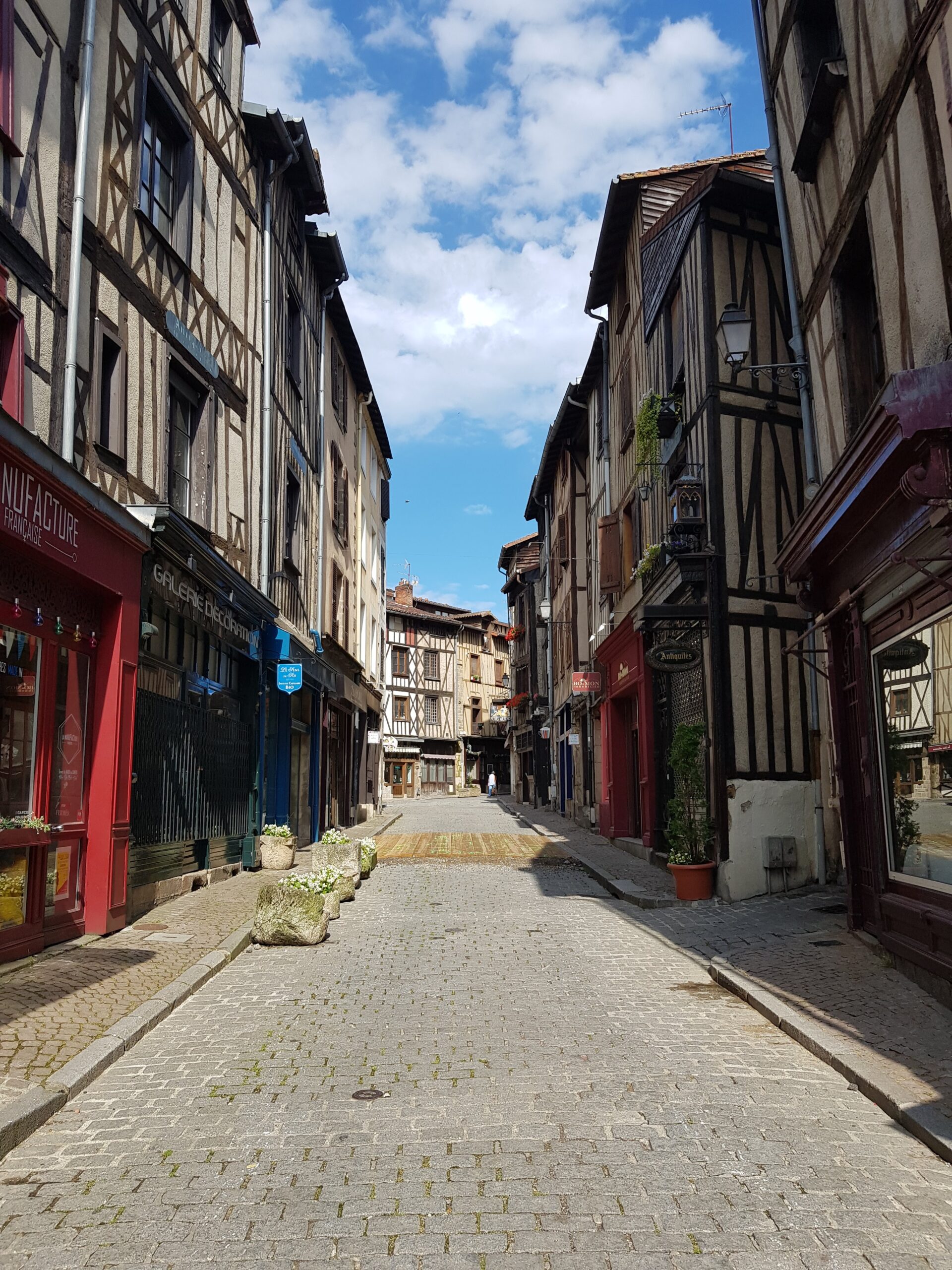
    Rue de la Boucherie, or the Street of the Butchers, has become one of the tourist destinations of Limoges because of the attractive nature of the properties which are on it. The Shambles in York has become a similar tourist destination for the same reason, although the properties couldn’t be much more different.
    The street has been the home to butchers and their shops since the Middle Ages, with some of the properties still owned by the families who have traded here for many years. There are 52 homes along the street, which date from as early as the thirteenth century.

    20180702_103059

    Also on the street, although unfortunately there’s a van in front of it in my above photo, is La Chapelle Saint-Aurélien, a small chapel in the street (I visited inside later in the week, when there wasn’t a van in front of it). This is owned by the Guild of Butchers and dates to the fifteenth century.

    Below are some other photos of the street. There was some construction work at the end of the street with scaffolding up, because there was a relatively large fire which badly damaged some of the properties in February 2018.

    20180702_103216

    20180702_103225

    20180702_103045

    20180702_103053

    20180702_102916

    20180702_102945

    20180702_103034

  • Limoges – St. Michel des Lions

    Limoges – St. Michel des Lions

    [I originally posted this in July 2018, but have reposted it to fix some broken image links]

    20180701_132822 (1)

    This Gothic style church is in the centre of Limoges and was mostly primarily constructed between the fourteenth and sixteenth centuries. There is though some interior work, primarily the exterior walls, which dates to the twelfth century.

    20180701_131849

    From the eastern end of the church, the ball on top of the spire is rather unusual. It dates from 1810 and was added when the previous spire fell down after being hit with lightning. The military commander who was in charge of replacing it thought that it would look better with a ball, so it was duly added. It has since caused some controversy, some like it, some don’t….

    20180701_121717

    The exterior is guarded by two stone lions, hence the name of the church.

    20180701_132736

    20180701_121727

    These aren’t perhaps the fiercest lions that I’ve ever seen. I fear that weathering has rather taken its toll over the years.

    20180701_132312

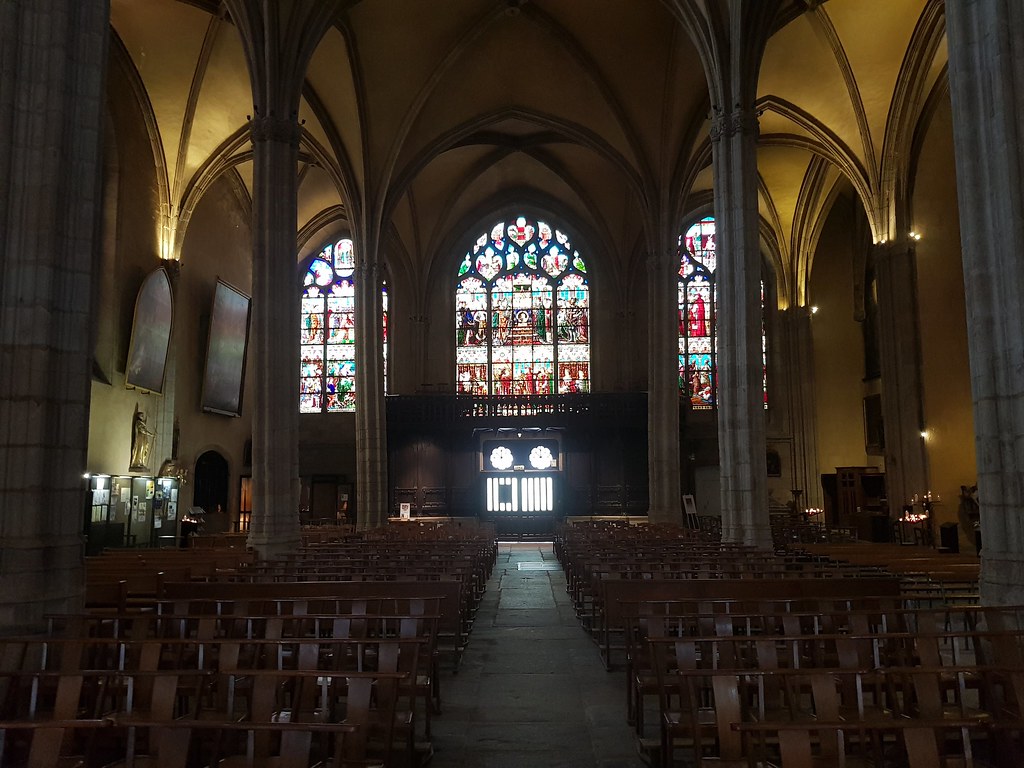
    Inside the church the nave is relatively plain in terms of decoration and the columns are thin and slender. Indeed, there is a problem here…. The columns are so thin and slender that the pillars are actually bending, as is particularly visible by the ones at the rear. Although they supported the roof for many centuries, work has now taken place to ensure that they are no longer load bearing. Just in case….

    20180701_132635

    A wider view of the nave.

    20180701_132533

    20180701_132421

    Two photos of the interior of the church. I had a slightly limited amount of time in the church as I had visited just after mass had finished, and I got the impression that they were looking to close up. However, it’s a glorious church and there are numerous side chapels located in the aisles.

  • Limoges – O’Panda

    Limoges – O’Panda

    [I originally posted this in July 2018, but have reposted it to fix some broken image links]

    20180704_115000

    I forgot to eat anything yesterday, so today I thought that I’d do the reverse, and eat a lot. Which meant a trip to the O’Panda Chinese buffet, which is part of a small national chain. That would certainly help recover the lost calories that I didn’t eat yesterday.

    Although, to be honest, technically I didn’t forget to eat yesterday. I never forget to eat. But it was so hot that I just managed to survive on cold Yop yoghurt drinks for the entire day….

    O’Panda is a large restaurant, which can seat over 250 people, and when I got there just before opening time there was already a small queue. This is clearly where the locals eat, and I can’t criticise them for that. It’s a shame that it isn’t a little more central though, since it took me over thirty minutes to walk there from the centre of Limoges.

    20180704_115522

    There were lots of food counters visible, although looking neat and tidy. And very appetising, but I sat patiently and waited for my drink order to be taken before rushing off to the buffet table. On which point, and bearing in mind I was so hot, I was delighted to discover that they give you a litre bottle of ice cold tap water for free. Given that water is often charged for, this was a most useful bonus to my fruit based Fanta I’d ordered.

    20180704_115554

    Sometimes you just wish Dylan and Leon were around. They’d have liked this.

    20180704_120449

    Cold meat selection, now Cosmo need to do better in this regard in Norwich….

    20180704_120454

    I was delighted to find that there was a large salad section. Well, not particularly delighted at that, but more specifically delighted that they had sun-dried tomatoes.

    20180704_120543

    20180704_115538

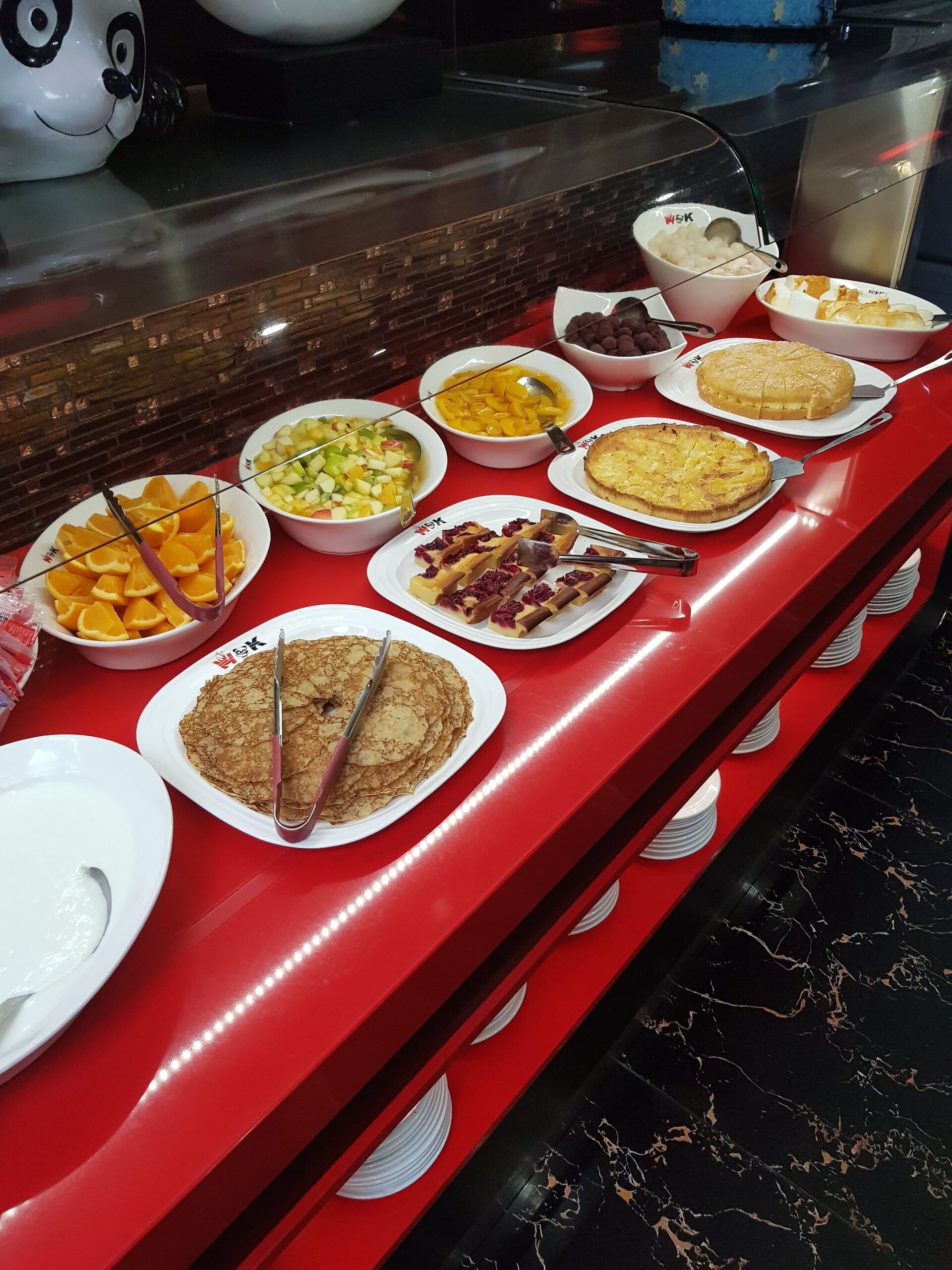
    The desserts selection was simply marvellous as there were doughnuts, profiteroles, cakes and more importantly than all, an ice cream freezer. This could well be a favourite location of Dylan and Leon should they ever get the chance to visit…

    Given the ridiculously hot temperatures outside this ice cream freezer was a real delight, and I had to be careful on my many trips to top up that the staff didn’t think I was being ridiculously greedy. So I walked different ways, meaning I’m sure that they didn’t notice.

    Overall, I thought that the whole meal was perfectly acceptable. The environment was clean, the staff were engaging and friendly (and I managed the whole transaction in French, which was a bonus) and the food was neatly labelled.

    OK, the quality of some items such as the onion rings and calamari wasn’t top notch, but it was acceptable. But, I’m giving them a recommendation because of the ice cream, it’s just what was needed on a hot day. The total cost was around £15 including a drink.

  • Limoges – Jean Burger

    Limoges – Jean Burger

    [I originally posted this in July 2018, but have reposted it to fix some broken image links]

    20180702_121419

    A visit here is part of my on-going plan to dine at the best rated burger restaurant in every city that I go to. Jean Burger is very slightly away from the main tourist areas of Limoges, but only a short walk to get here. It’s easy to find as the signage is clear and it faces a main road.

    20180702_114835

    I liked this, located just outside of the main door. It’s easy to understand, it’s clear and it’s not too gaudy. Restaurants with complex prix frie arrangements perhaps just make themselves look unwelcoming to visitors.

    20180702_120218

    And this is beautiful in its implementation. Being British, I’m often not entirely sure what to do when entering a restaurant or cafe. Is there table service? Do I order at the counter? Do I take a seat myself? Is the food brought over or do I collect? The arrangements here are easy to understand and the menu is visible again for those who need a reminder.

    The server was full of energy and he was more than willing to explain the menu and the options available. It was a true friendly welcome, and there was a pride in the different burgers, hot dogs and sides that customers could choose from. I went for the Basque burger, which the server then said was his favourite, which had cheese, chorizo and rocket.

    20180702_115448

    The server said that the burgers were served rare, which is to be expected in France. I usually think I’m being brave when ordering burgers to be medium, and that is my usual preference, but I went with the flow of having a burger that was only partly cooked. It’s important to get the full experience…. Oh, and they had Dr. Pepper, my preferred drink in the United States, so that was a bonus.

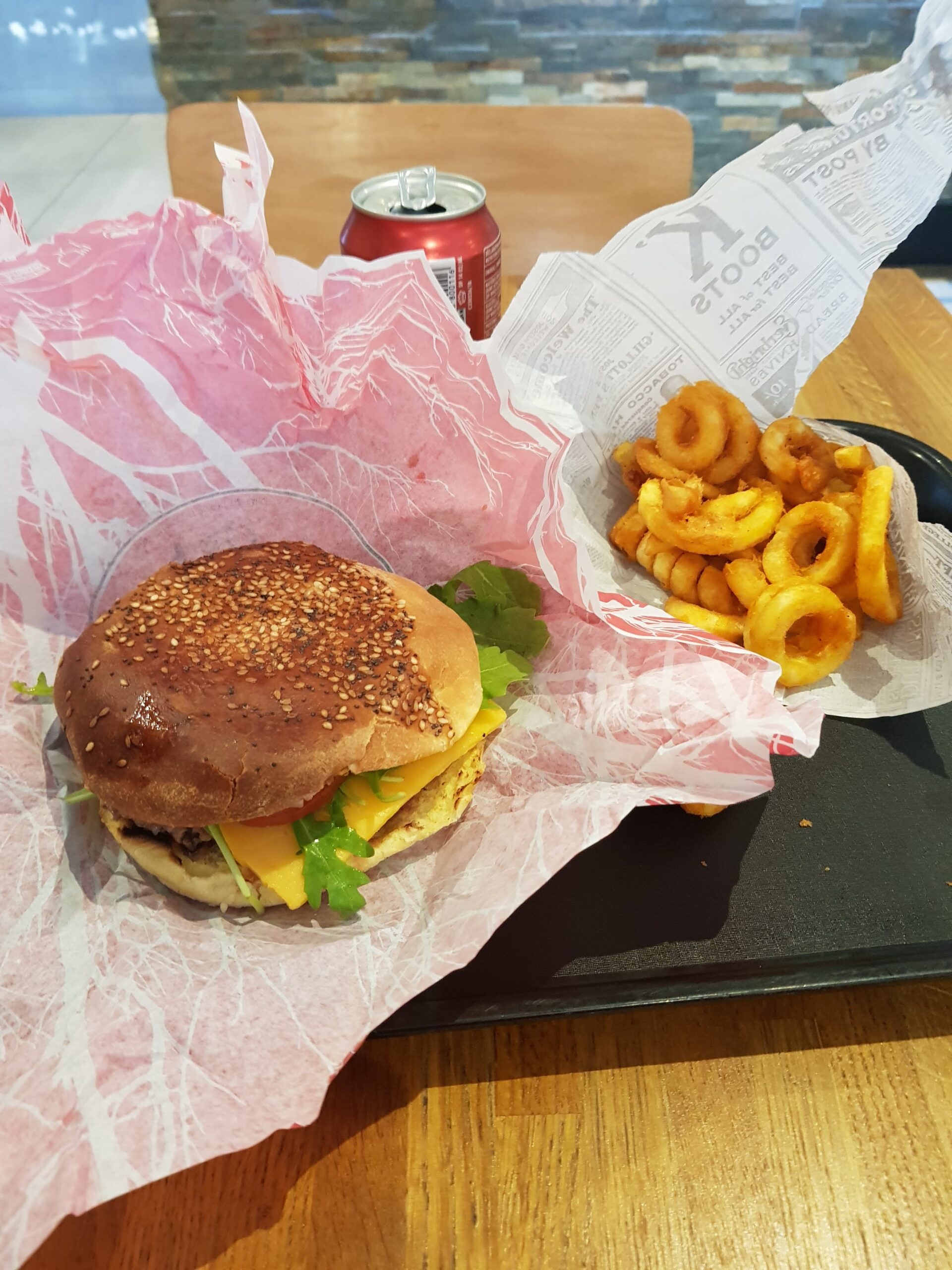
    So, the food. The curly fries were excellent, there weren’t greasy, they had a pleasant seasoning on and they were firm on the exterior and fluffy on the interior. The burger bun was particularly good and was one of the best I’ve had, with a crispy texture and a real depth of flavour. The burger itself was rare, and that is a texture I’m not entirely used to, but the quality was excellent. It had a pleasant flavour and the other ingredients in the burger added extra taste and crunch.

    Overall, I thought that this was a well run location, with customer service really under-pinning all that they did. I got there at 11:50, deliberately just before lunch as I had read that it got busy. And busy it definitely got, but with an interesting range of clientele. There were school children, older customers, staff seemingly on a lunch break and the atmosphere was laid back and comfortable. I didn’t see any other tourists to the city, or not that were obvious to me, but it’s clear from reviews that they do get a lot of them. Definitely recommended.

  • Limoges – La Mie Câline

    Limoges – La Mie Câline

    [I originally posted this in July 2018, but have reposted it to fix the broken image links]

    20180701_131622

    There’s one problem with mainland Europe. There’s no Greggs. However, France does have the La Mie Câline chain, which is broadly similar in principle. It also today had the substantial advantage of being nearly the only place open in the centre of Limoges on a Sunday.

    20180701_124012

    The cakes were beautifully presented and looked appetising. It was also possible to buy the entire cake, which I must admit I was quite tempted to do. But, that seemed just a little greedy. The shop also sold ice creams, filled baguettes and fresh bread. The team member in the shop was also particularly friendly, so the purchasing process was made much easier.

    20180701_124253

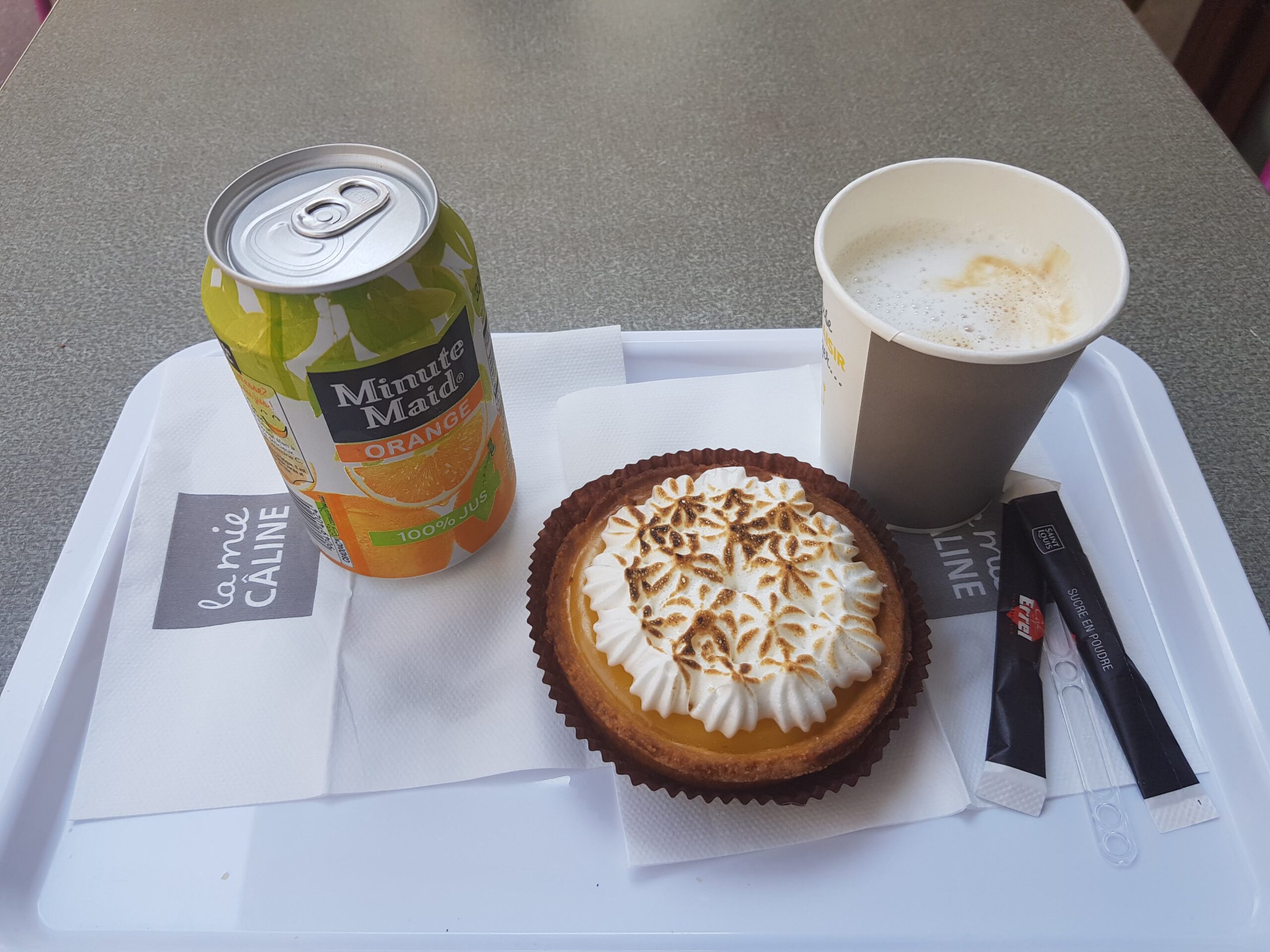
    A latte, an orange juice and a meringue lemon tart came to the grand total of around £3.50, which seemed very reasonable to me. There was also a small outside seating area which was rather pleasant, especially as it was in the shade and away from the city’s blazing heat.

    Was it all as good as Greggs? Well, that would be unfair on the French to expect any location to reach the excellence that is Greggs. However, it was perfectly sufficient, and I’d go again.

  • Limoges – Limoges City Pass

    Limoges – Limoges City Pass

    [I originally posted this in July 2018, but have reposted it to fix the broken image link]

    I thought that this would be an excellent opportunity to comment on Limoges’s city pass, which gives entrance to 20 different locations, as well free access to public transport and discounts on other services.

    It’s offered in three forms, (i) a 24-hour card, (ii) a 48-hour card and (iii) a 72-hour card which cost €15, €20 and €30 respectively. The 48-hour card seems to offer the best value for those wanting to visit the sites in Limoges itself, as it will take a couple of days to get around all of them.

    Some of the locations which are offered, such as the city zoo, are beyond the easy reach of public transport. Those with access to a car will get much better benefit from the pass, as there are numerous different attractions which can then be accessed.

    Some of the attractions, such as the Reynou Zoo, are relatively expensive and a standard admission costs €16. This is more expensive than the 24-hour card, so it does offer value for money for those wanting to visit these attractions. Also included are the majority of the city museums, which are relatively affordable to enter anyway, but this adds to the value.

    In addition, it’s possible to use the local buses for free, as well as a ride on the city’s mini-train. Bikes and scooters can also be hired for free on one occasion when using the city pass, and there are discounts for numerous hotels and restaurants in Limoges.

    Anyway, this is all of a bit irrelevant in my case. I went to the tourist information to purchase the card and they got the 48-hour card ready for me. The procedure to buy the card was easy and the staff member at the tourist information was helpful and engaging. It was at this moment the staff member mentioned something rather important, it was the first Sunday of the month…..

    I had forgotten that it was the first Sunday of the month, as July has come round rather quicker than I anticipated. And that meant one thing, all of the museums in the city were free today anyway. Which then negated the entire value for the card, so I didn’t buy it. I did though appreciate the honesty of the staff member, as I’d have felt hard done by if I’d bought it and then the museums told me it was free entrance anyway.

    But, for anyone visiting Limoges, the pass is very worthwhile. There’s more information at http://www.limoges-tourisme.com/.

  • Limoges – Quiet Streets

    Limoges – Quiet Streets

    [I originally posted this in July 2018, but have reposted it to fix some broken image links]

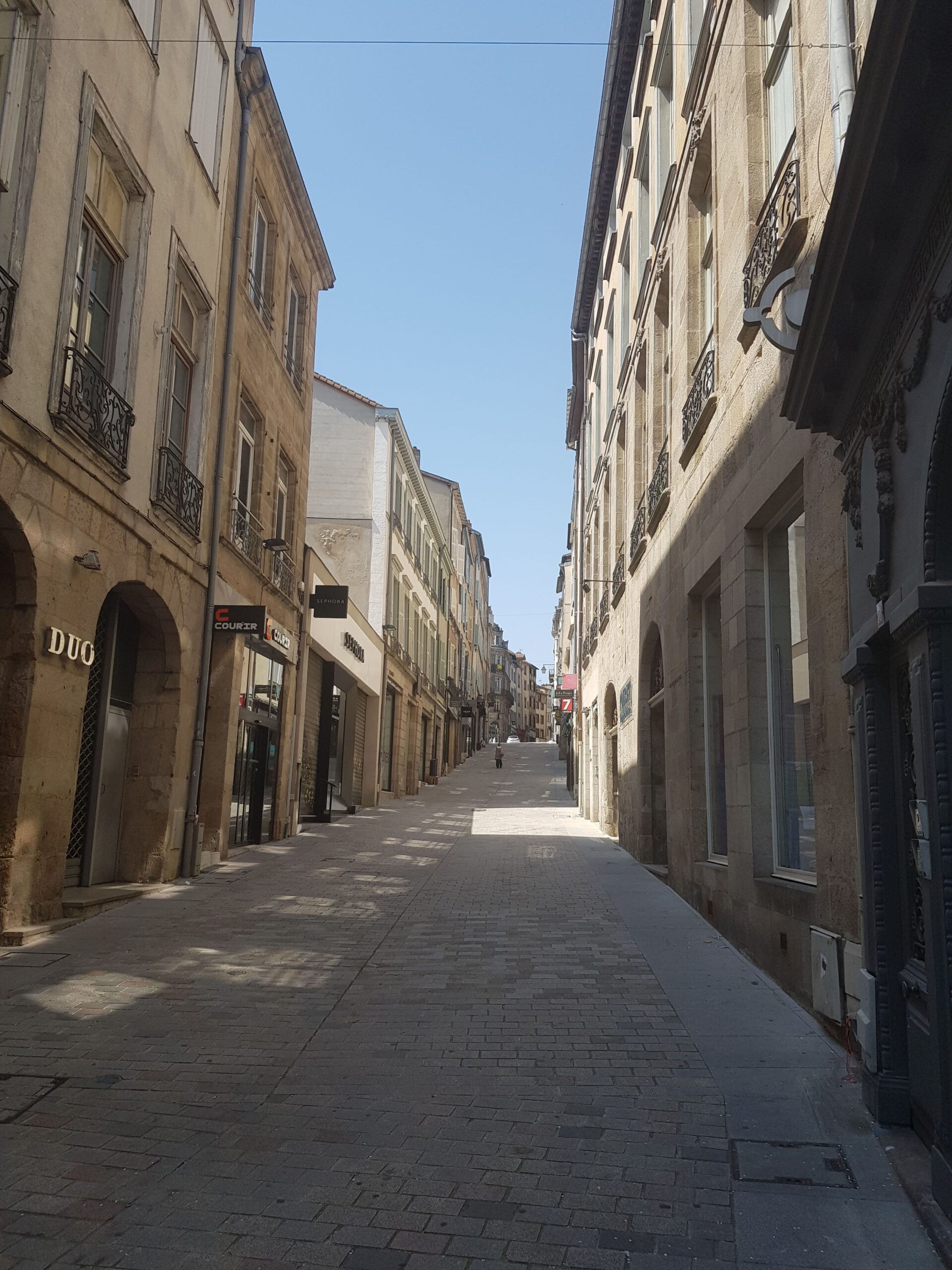
    It’s Sunday morning and it’s too hot. Again. The excitement for the locals of seeing their national football team win yesterday evening in the World Cup thing must have also caused a few headaches this morning.

    Like most parts of France, it’s very quiet on Sunday mornings, primarily because nearly everything is shut. It does though have the advantage of meaning the streets aren’t busy and there are few cars on the road.

    20180701_121635

    20180630_102936_001

    20180701_121343

    20180701_121823

    20180630_113343

    20180630_113423

    20180701_120347