Category: Croatia

  • Split – Booking.com Resolves an Accommodation Problem

    Split – Booking.com Resolves an Accommodation Problem

    It’s fair to say that I’m not entirely convinced by apartments when travelling overseas. In many cities they’re doing some damage to the local housing market so that locals can’t afford to live in their community which feels entirely sub-optimal. I always prefer hotels where I can check in without some complex sequence of messages, access instructions and attempts to locate the entrance. However, as Jonathan correctly pointed out, for much of Bosnia and Herzegovina there was a shortage of hotels and so apartments were our only real option. That also proved to be the case in Croatia, where again the number of hotels was often relatively low.

    In the main, it all went OK for us, with Jonathan in charge of getting in touch with the property owners. We had a wait or two to get in some places, and one we couldn’t initially find, but it did work out. It was also inexpensive, with an entire apartment often costing less than £30 for the night between us.

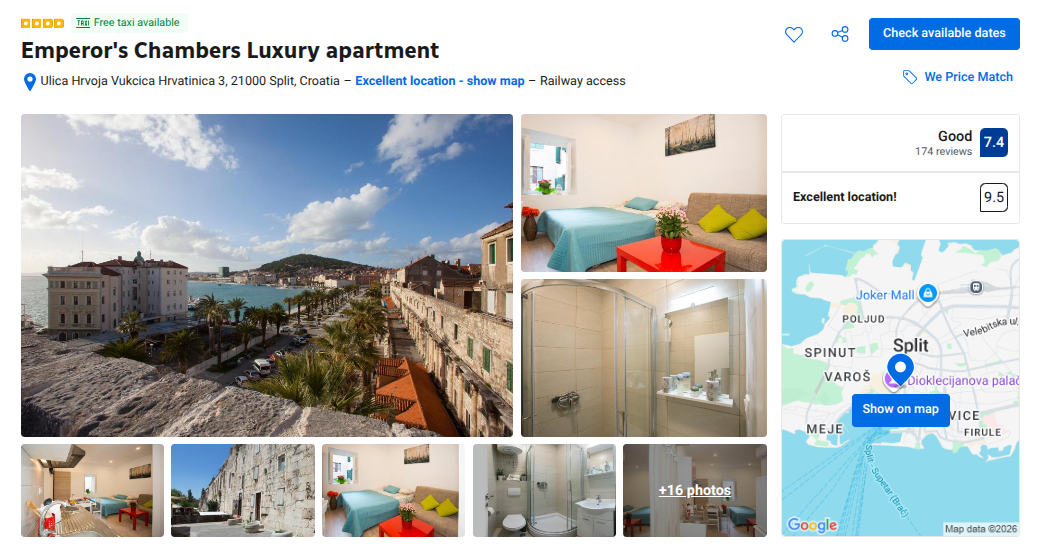
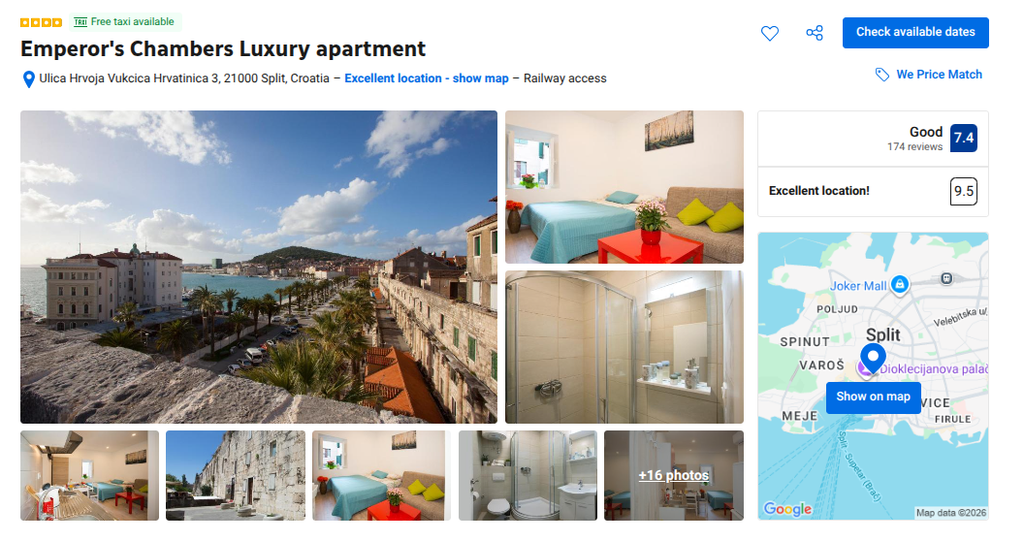
    Matters did not go well in Split, where we were already short on time because we had only one evening in the city. We had deliberately booked centrally, paid more for the convenience and found the property relatively easily. On arrival, however, we were given a tiny alternative which did not match the more expensive accommodation shown in our reservation. When we raised the discrepancy, the owners refused to provide the accommodation we had booked or offer an acceptable solution, despite having the opportunity to do so. It felt very much like a bait and switch, and I was not prepared to stay there and simply accept the situation.

    Booking.com handled the situation very positively. Its customer service team agreed that the accommodation did not match the reservation, arranged a full refund and helped us secure an alternative at short notice. The replacement was not entirely flawless, but it was a substantial improvement and allowed us to continue with our evening in Split rather than spending it engaged in increasingly detailed accommodation negotiations. Indeed, there were nearly no hotels available in the city, so we were quite dependent on Booking.com coming up with some solution.

    I subsequently found reviews from other guests describing similar experiences, which suggested that this was not an isolated mistake. The moral of this little story is to reject inadequate accommodation immediately and raise the discrepancy with Booking.com. In my experience, the company has traditionally been effective at protecting customers and its platform when a property does not match the listing. On this occasion, the owners refused to provide what we had paid for, but Booking.com ensured that they did not benefit financially from doing so. With the problem finally resolved, we were able to explore Diocletian’s Palace and enjoy the delights of Split rather than spending our only evening arguing about accommodation.

    As for me, I switched to hotels for the rest of my trip and I’m pleased to say that there were no disasters.
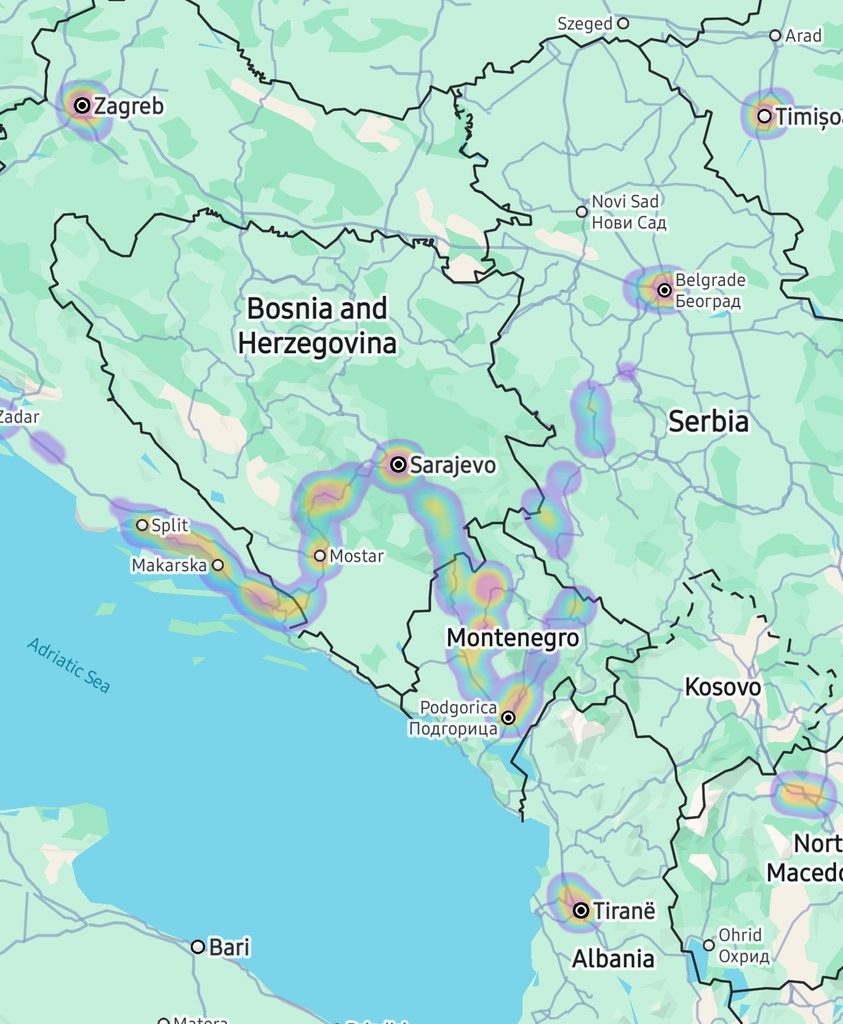
  • Balkans Trip – Map and Summary

    Balkans Trip – Map and Summary

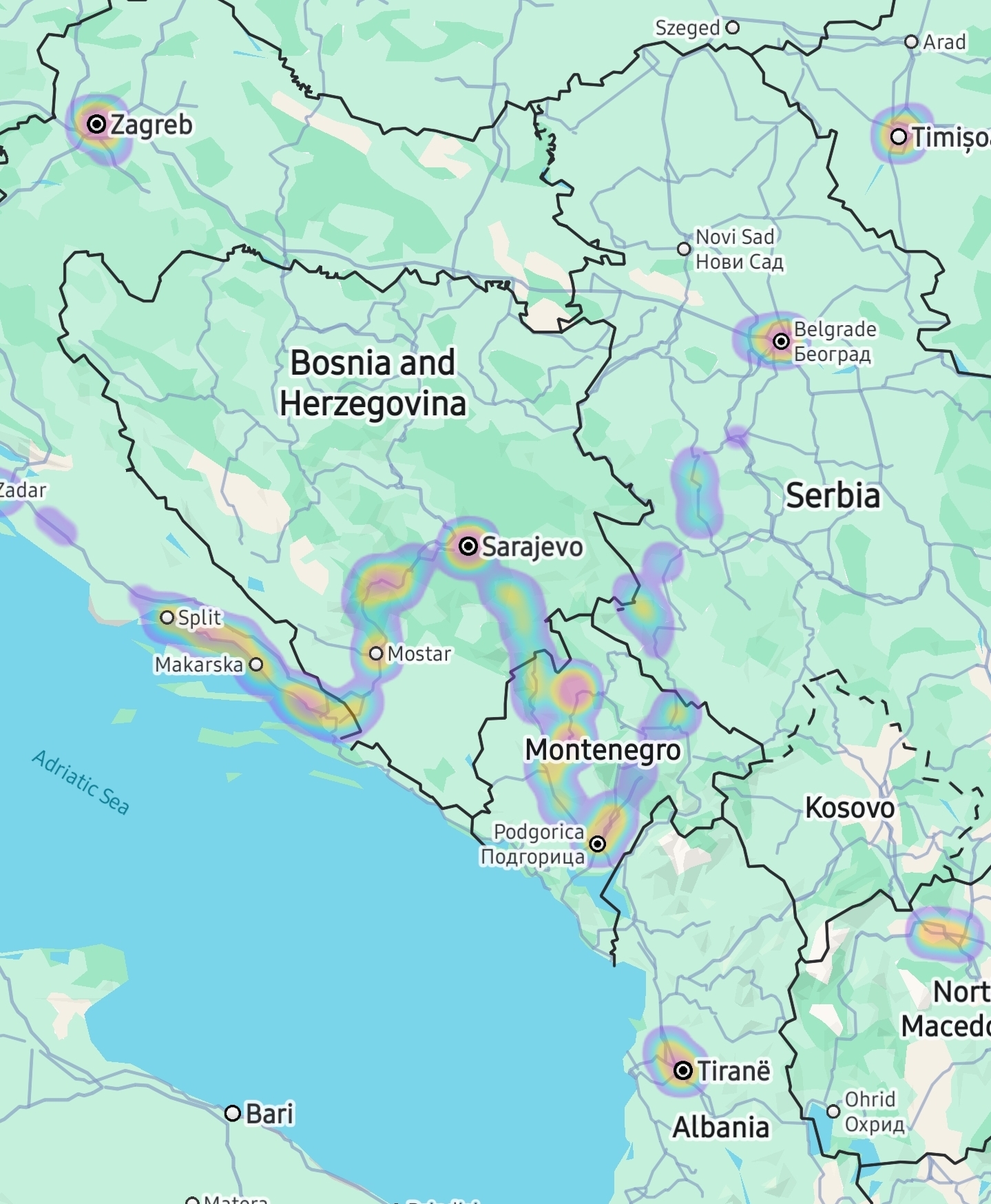
    Part of the reason for my Balkans trip was to fill some gaps in my travels. I had previously visited Belgrade, but nowhere else in Serbia, while Montenegro and Bosnia and Herzegovina were entirely new countries for me.

    The map shows the route we followed and the locations where my photographs were taken. But as something of a reminder for those who haven’t bothered reading any of my previous blog posts, after two preliminary nights in Luton, which remained stubbornly outside the Balkans despite the title of the series, I flew to Belgrade in Serbia. I spent several days exploring the city, including Belgrade Fortress, the Church of Saint Sava, the National Museum of Serbia, the River Sava waterfront and a growing number of restaurants and craft beer bars. I had a final KFC before Jonathan joined me there before we continued south by rail into my first new country, namely Montenegro.

    Our journey into Montenegro followed the spectacular Belgrade to Bar railway as far as Podgorica, changing trains at Bijelo Polje. We spent one night in Podgorica before travelling by bus to Žabljak, our base for two days of walking in Durmitor National Park and its beautiful scenery. I’m pleased to note that we didn’t encounter any bears, snakes or lions, so that was a result. The highlights there included Black Lake, the forests and mountain scenery around the town, and the walk to the Ćurevac viewpoint above the Tara River Canyon. From Žabljak we continued to Nikšić, where we explored Bedem Fortress, the Cathedral Church of Saint Basil of Ostrog and several reminders of the city’s Roman, Ottoman and Yugoslav history.

    We left Montenegro aboard an impressively dilapidated minibus and crossed into Bosnia and Herzegovina near Hum. The exciting journey passed through Foča before depositing us at East Sarajevo Bus Station, rather farther from central Sarajevo than its name had encouraged us to expect. In Sarajevo we visited the site of the assassination of Archduke Franz Ferdinand, travelled by cable car to Mount Trebević, walked along the former Olympic bobsleigh and luge track and spent an extensive amount of time in the National Museum of Bosnia and Herzegovina being inspired by their unusually expressive stuffed lion.

    The next coach journey was no less beautiful and followed the River Neretva through Konjic and Jablanica to Mostar. We crossed the reconstructed Stari Most, saw buildings still carrying damage from the Bosnian War and visited the Sniper Tower, the Partisan Memorial Cemetery and the city’s unexpectedly prominent statue of Bruce Lee. Mostar combined beautiful Ottoman architecture with much more visible evidence of recent conflict than anywhere else on the trip and I certainly learned a great deal of history during the trip.

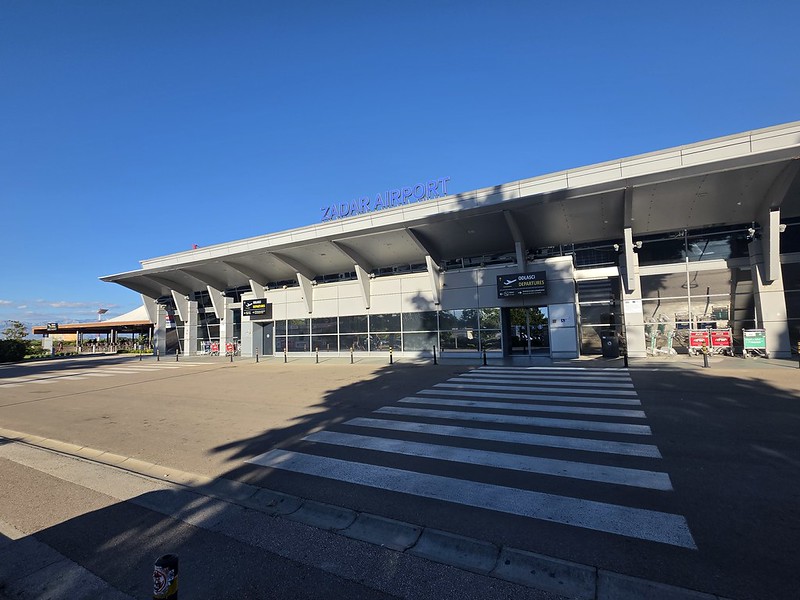
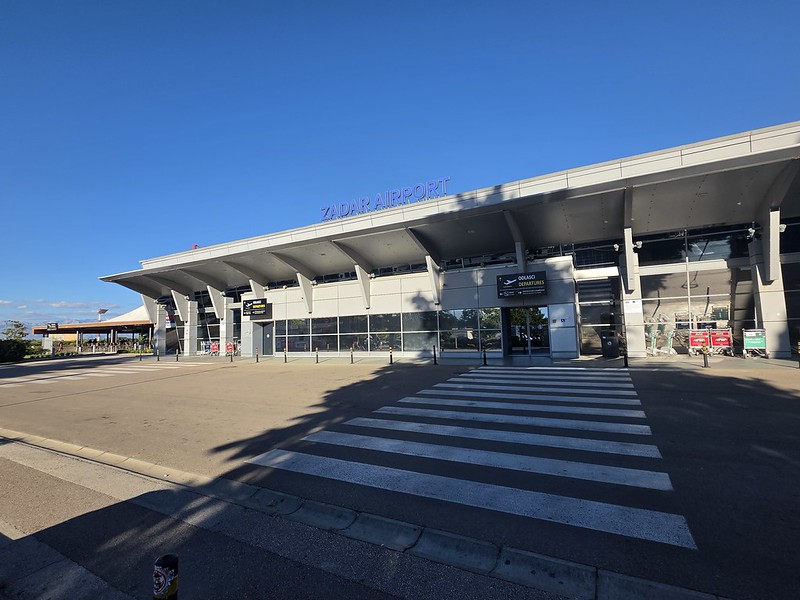
    From Mostar we travelled into Croatia, following the Adriatic coastline past the Baćina Lakes, Drvenik, Makarska and Omiš. We had one evening in Split, where we explored Diocletian’s Palace, including the Silver Gate and the Vestibule, before eating at Tunaholic. Jonathan and I parted company the following morning and I continued alone to Zadar, where I walked through the historic centre, ate pizza and eventually reached the airport after discovering that the airport buses had collectively abandoned card payments. Not that I’m going to dwell on that, nor on the rather unimpressive airport itself.

    Looking back, Durmitor provided the finest scenery, Sarajevo the most thought-provoking history and the journey from Mostar to Split the best views from a coach. Mostar made the strongest visual impression, while Belgrade remained the city where I could most easily have spent longer. Jonathan was notionally responsible for transport, while I managed snacks, complaints and the ongoing classification of arrangements as sub-optimal. It was an effective division of labour.

    The trip covered four Balkan countries and eight principal destinations using aircraft, trains, coaches, buses, one questionable minibus and a cable car. There were beautiful railways, mountains, historic cities, excellent museums and some memorable food, accompanied by extreme heat, collapsing seats and occasional uncertainty over whether the transport arrangements existed in quite the form advertised. I then flew from Zadar to Warsaw before continuing towards Georgia, because returning directly home would apparently have represented an unacceptable outbreak of simplicity.

    All of this means that my remaining European unvisited destinations are Iceland, Kosovo, Moldova and several city-states that I have somehow managed to miss so far. I’m hopeful that in 2027 I can visit all of those and maybe start travelling more long-haul again, something I haven’t done for a few years.

  • Balkans Trip Day 16 – Wizz Air Flight from Zadar to Warsaw Chopin Airport

    Balkans Trip Day 16 – Wizz Air Flight from Zadar to Warsaw Chopin Airport

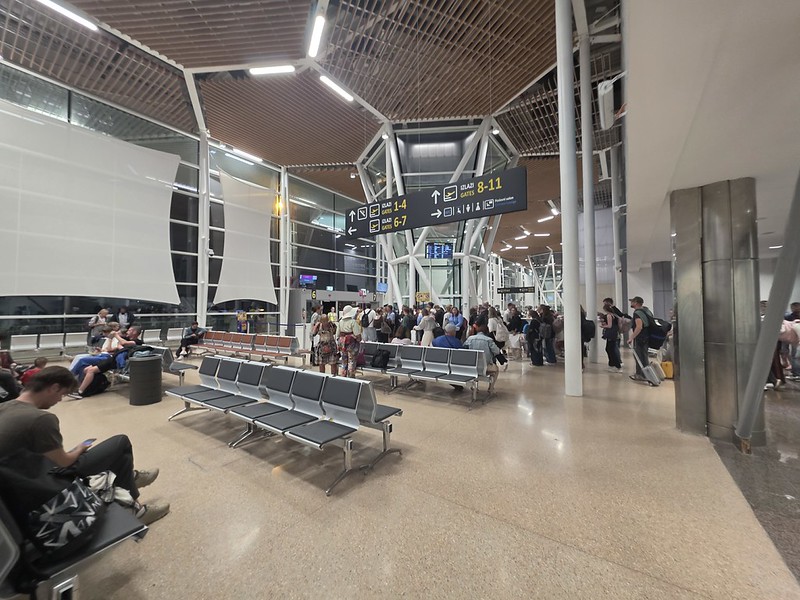
    After the excitement of getting to Zadar Airport, the rest was something of an anti-climax. The airport is very much lacking in seating, so I found a place to sit and wait outside, but it all felt a little sub-optimal. There were no seats at all in arrivals and just a handful in departures.

    Matters didn’t improve when I tried to go through security, as my boarding pass was rejected and I was told to return in twenty minutes. I did, only for it to be rejected again and for another twenty-minute wait to be imposed. After the third attempt failed, I asked when passengers were actually allowed through. The security officer replied, “We never know,” which didn’t fill me with much confidence about their operations.

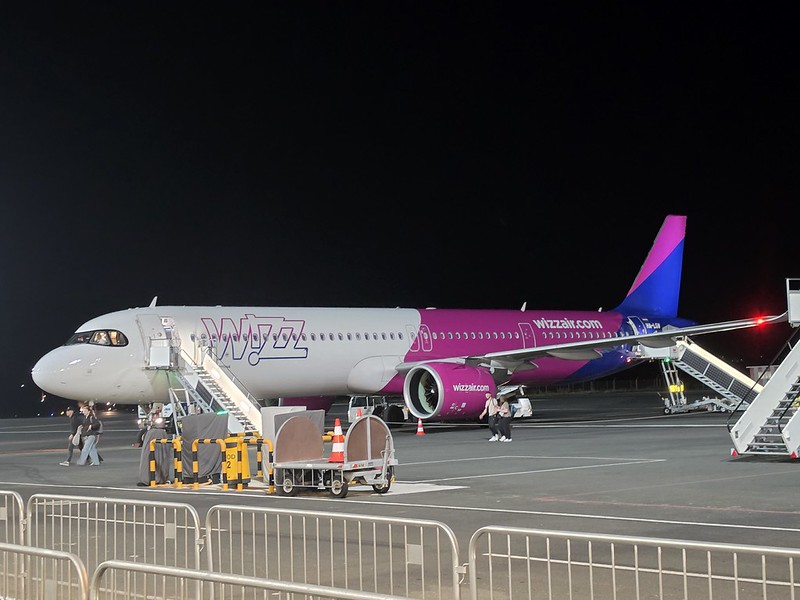
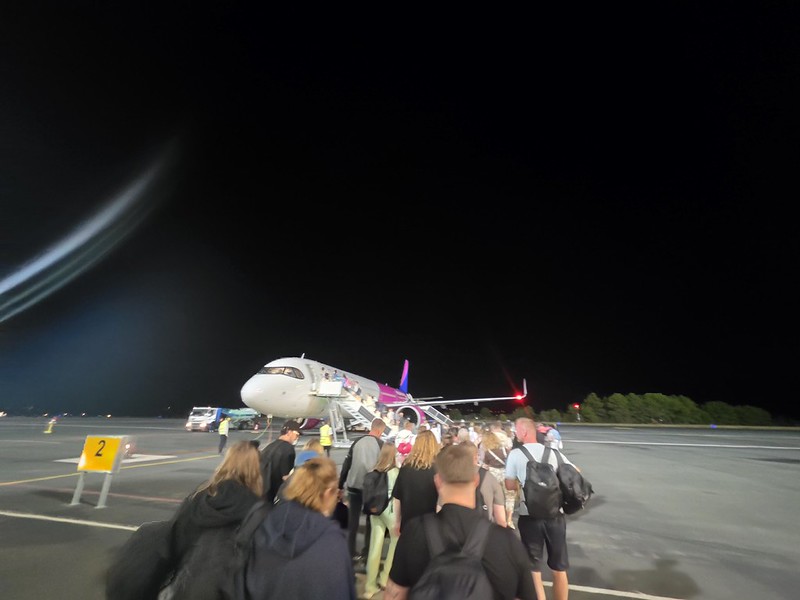
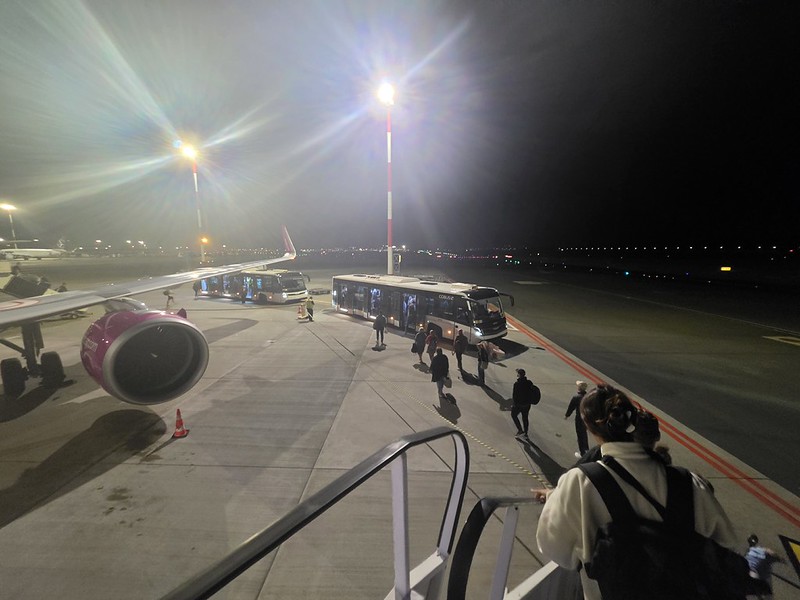
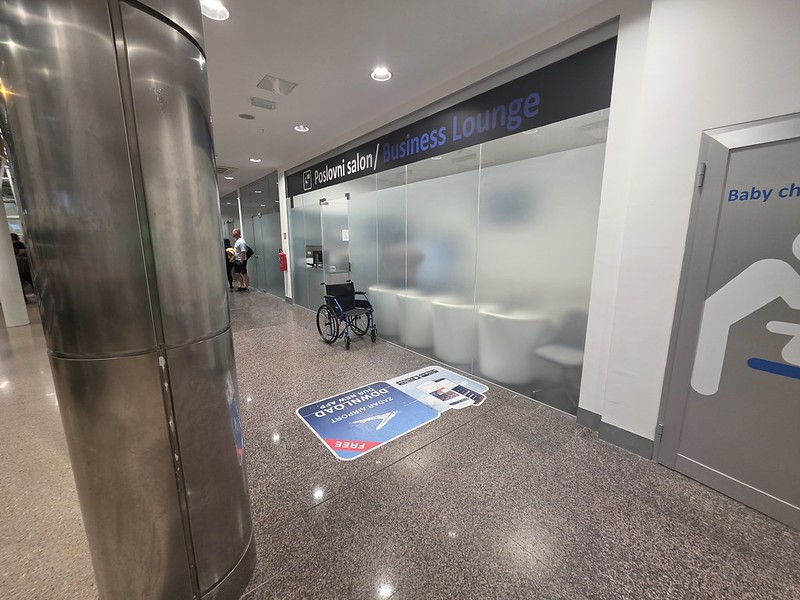
    After popping into the lounge I watched the boarding commence and it was, as nearly always with Wizz Air, efficient and well managed.

    The aircraft was HA-LGW, which has previously taken me from London Luton to Wrocław.

    The seating gods had given me an aisle seat so that was most agreeable for the flight, which took around two hours. The flight was busy but once again beautifully uneventful, which is just as I like them. We landed around fifteen minutes early, although this probably owed more to Wizz Air’s generous timetable padding than any unusually enthusiastic flying by the pilot. One person applauded when the flight landed, but I’m pleased to record that they were ignored. There was the usual attempt by several passengers to push past everyone else when disembarking, a process that I’ve never entirely understood.

    Oh good, a bus from the aircraft to the terminal at Warsaw. Unusually for this generally efficient airport, there was a delay of around half an hour before the buses arrived, which isn’t something I’ve experienced at Warsaw Chopin before. However, I was in no rush as I would be staying at the airport for a few hours before my flight to Georgia. Despite the delay, I still reached arrivals more quickly than those who had pushed past me, but I decided not to dwell on that modest victory. Given that this was a Schengen flight, there was no border control to go through, which made matters a little easier.

    And this marks the end of the Balkans series of posts. Well, it does chronologically, although I am now going back to fill in several gaps, meaning that even the conclusion requires further instalments. It had been a rather lovely way to spend a couple of weeks, taking us through Serbia, Montenegro, Bosnia and Herzegovina, and Croatia without any genuinely serious transport disasters. By the standards of this trip, that represented considerable organisational success by Jonathan and me if I may say so myself.
  • Balkans Trip Day 16 – Zadar – Zadar Airport Business Lounge

    Balkans Trip Day 16 – Zadar – Zadar Airport Business Lounge

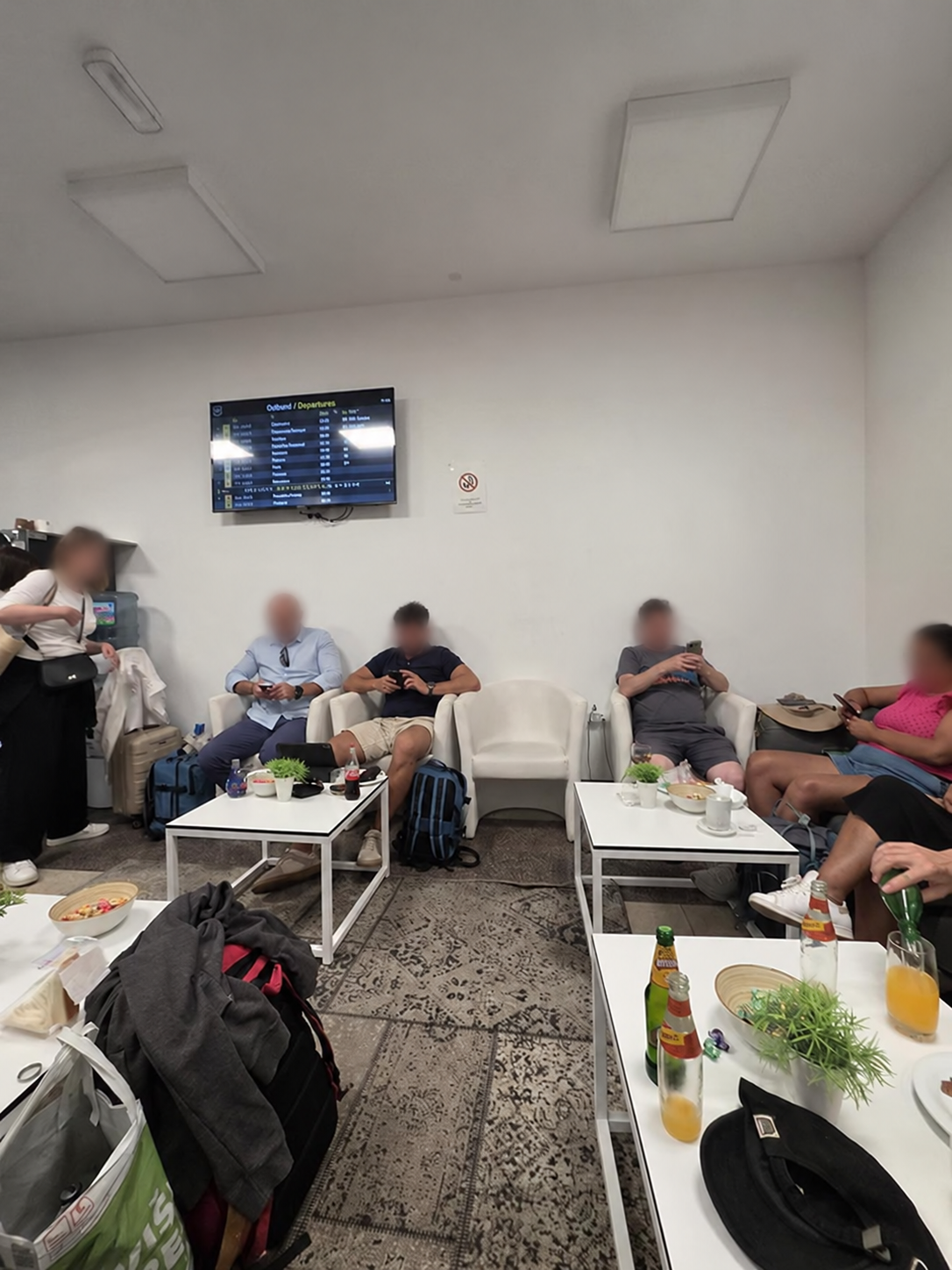
    The airport lounge in Zadar is small, with seating for only around twelve people and so there was no guarantee that I’d get in. When I arrived, the receptionist checked and she confirmed that there was enough space for me, so I took the only unoccupied seat and thought it was all a bit intimate. Indeed, I had to ask a helpful German couple if they could plug my laptop cable in as the plug socket was nowhere near me and quite near to them. It’s good to chat I suppose.

    The receptionist was polite to me, although she was perhaps a little direct to a couple of other people coming in, but she is trying to manage quite a small space and that would likely get to me after a while. There were three people who were refused entry into the lounge because of a lack of space and she told them to sit near the entrance and she’d call them when there was availability. It all felt a little sub-optimal.

    I usually try to avoid taking photographs containing identifiable people, but almost the entire lounge fitted into a single frame, making that rather difficult. Given that little challenge, I’ve blurred the faces, but it demonstrates how little space there was.

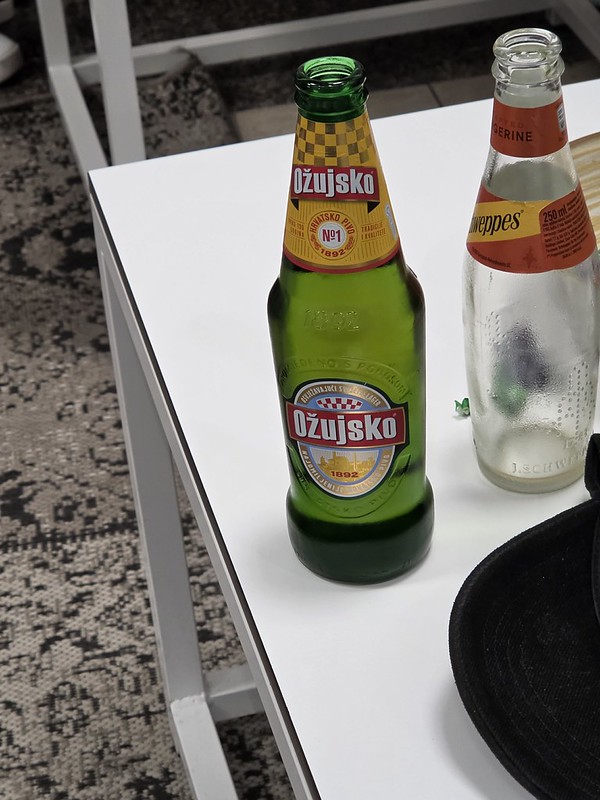
    There were a couple of beers, so I thought that I’d take the opportunity to try the Ožujsko beer from Zagrebačka Pivovara which was light, dull and uninspiring. There was also a range of soft drinks in the fridge, while the receptionist prepared hot drinks on request. I tried a few different Schweppes drinks to ensure that I remained suitably hydrated for the flight.

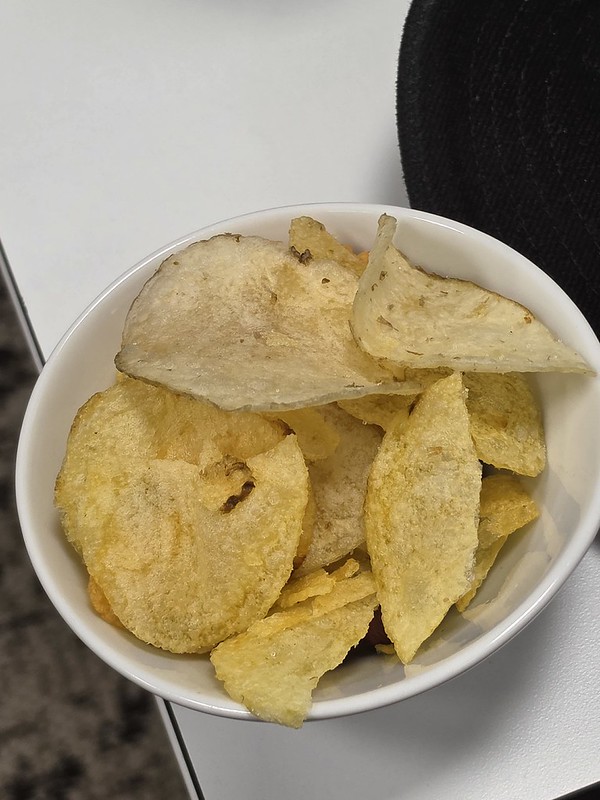
    There were some odd-looking pre-packed sandwiches that I decided to ignore, so crisps were the mainstay of my food intake in the lounge. I couldn’t work out how to access the cupboard containing the crisps, so I waited patiently for somebody else to access it so that I could carefully watch their technique. I didn’t want to cause a scene or appear to have been defeated by a cupboard.

    As this was included in my annual lounge pass, it was a perfectly good way to spend a couple of hours, have some notionally free crisps, beer and soft drinks all whilst charging my devices. I’m not sure that I’d pay to go in here though, the selection was limited and gaining admission appeared to depend partly on timing and partly on whether eleven other people had already had the same idea.

  • Balkans Trip Day 16 – Zadar – Airportbusgate

    Balkans Trip Day 16 – Zadar – Airportbusgate

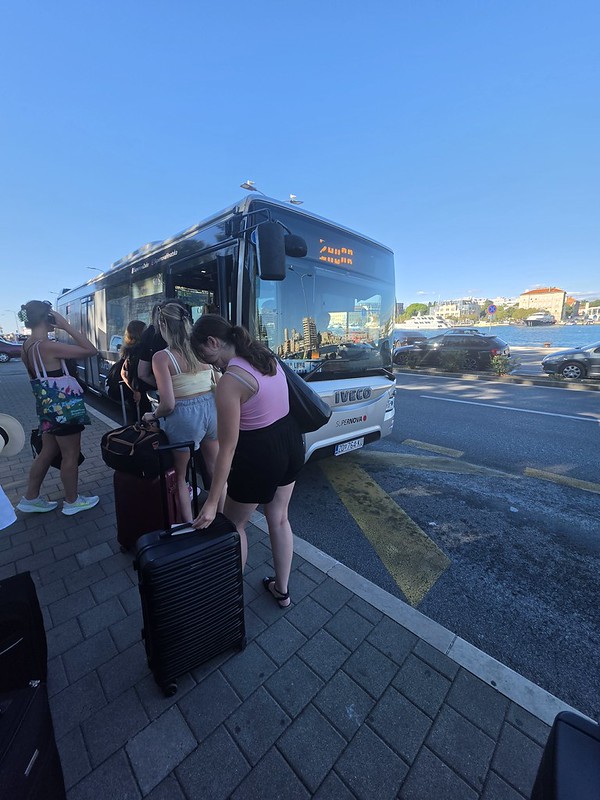
    My initial plan was to get the airport bus to, well, the airport. As can be seen here, I was doing very well with this strategy, until a customer in the queue told me that the card machines had all broken on the buses. As a card only person and with no Jonathan available, that meant matters were becoming more complex. The bus driver told me that there was another bus, but when pushed slightly, he admitted that the card machine was broken on that too. I did think to myself that this wouldn’t happen in Poland, but I decided not to say anything.

    So, I came up with a plan. It’s quite hard for me to withdraw money due to how my card set-up works, and it would cost around €7 in fees to do so anyway on top of what I drew out. I had a look at Uber and realised that a taxi would cost €13. My plan was to walk towards the airport while waiting for the Uber fare to fall. Against all reasonable expectations, this strategy actually worked. I watched the price decline from €13 to €11 and finally to €9, transforming an inconvenient walk into a very small but surprisingly satisfying exercise in transport market speculation.

    At that point, I ordered the Uber, which immediately sent a message to my friend Liam as part of my security settings. This was a pleasant little interruption for him, as he had presumably begun his day hoping to become my remote Croatian transport supervisor. The driver arrived promptly and, with all that arranged, I reached the airport safely and in good time for my flight to Poland.

  • Balkans Trip Day 16 – Zadar – Pizzeria Tri Bunara

    Balkans Trip Day 16 – Zadar – Pizzeria Tri Bunara

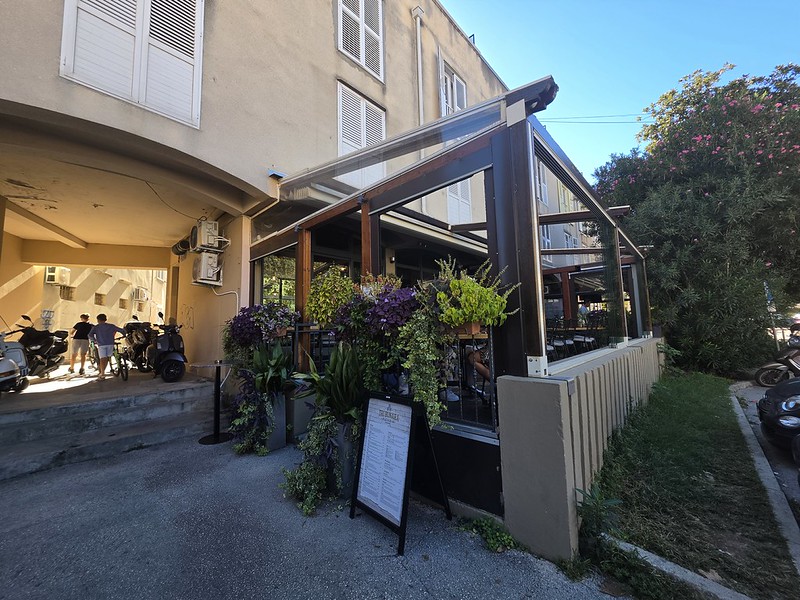
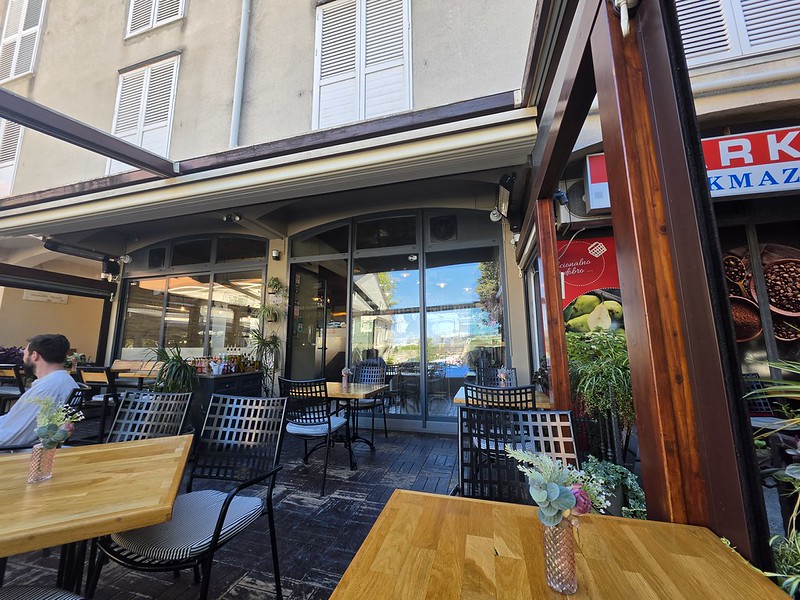
    By now I was back on my own, I thought I’d pop and get a pizza and a beer as that seemed a sensible decision. Pizzeria Tri Bunara was well reviewed and it also had some seats on its terrace and so I opted for that.

    I selected a table for two, while customers who occupied tables substantially larger than their groups required were soon repositioned by the waiter. I approved of this positive intervention and it added some drama to proceedings.

    I was served promptly and the waiter seemed friendly and helpful, so this seemed a pleasant place to spend an hour or so. Some local cats provided additional entertainment by meandering through every now and then, making it feel like a basic cat café without the tiresome requirement to pretend that I had visited primarily for the cats.

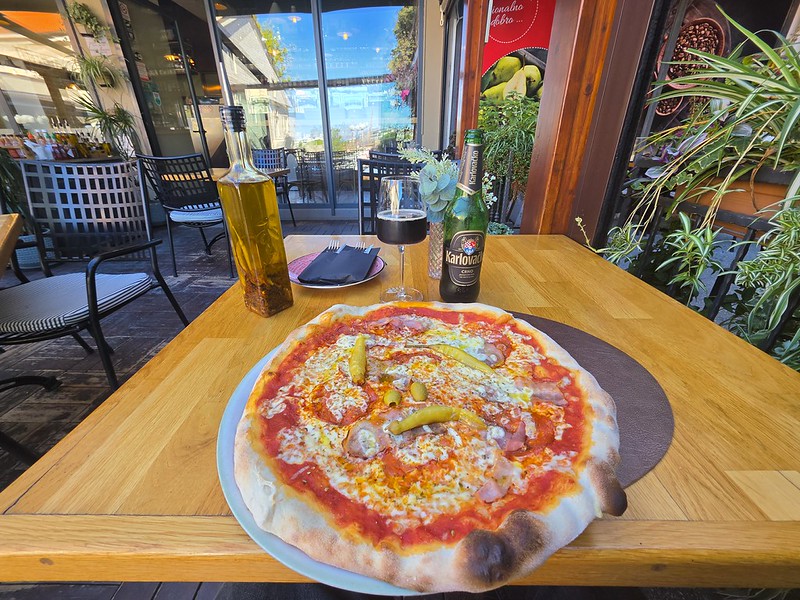
    The pizza arrived after around ten minutes and was larger than I had expected, which immediately pleased me. I had ordered the Picante, topped with salami, spicy pepperoni, bacon and whole pickled green chillies. The chillies added some welcome heat and acidity, while a bottle of chilli oil was provided immediately on request. The pizza tasted freshly made, with a generously topped centre and a well-risen crust.

    The beer was Karlovačko Crno, a 6% Croatian dark lager brewed using three varieties of malt. It had a roasted, caramel character and rather more flavour than some of the pale lagers I had encountered during the trip, so it proved a good companion to the pizza.

    I spent a relaxing hour watching the world go by and observing further customers being repositioned by the waiter. The prices were reasonable, the pizza and beer were both enjoyable and it was nearly time to make my way towards the airport. Jonathan had left me unsupervised, but surely nothing could now go wrong.

  • Balkans Trip Day 16 – Coach Journey from Split to Zadar

    Balkans Trip Day 16 – Coach Journey from Split to Zadar

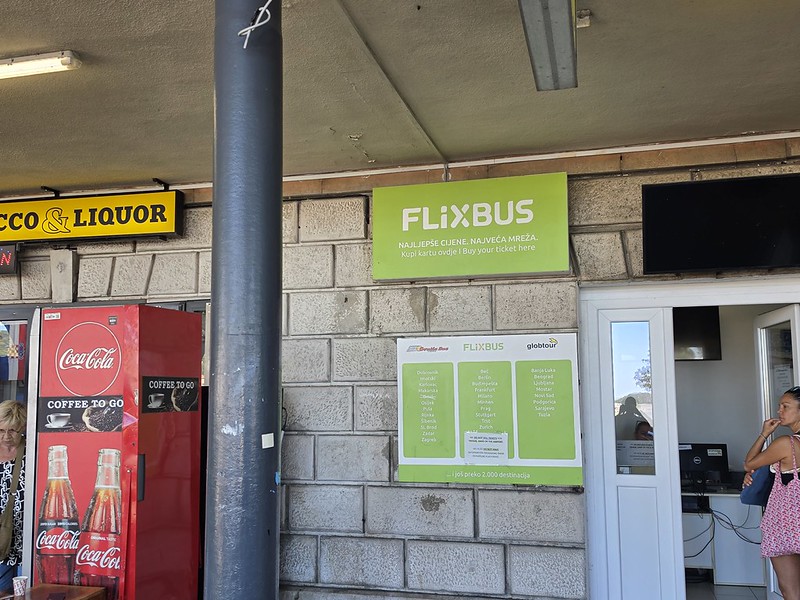
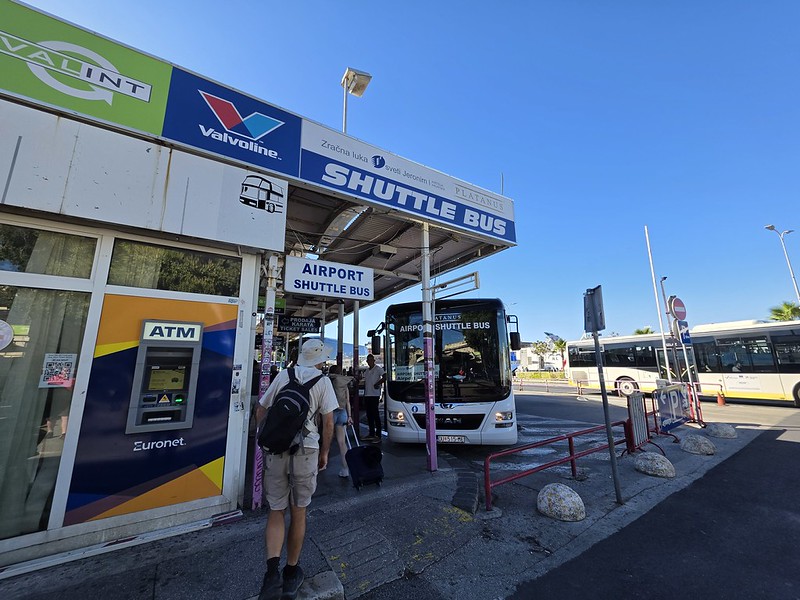
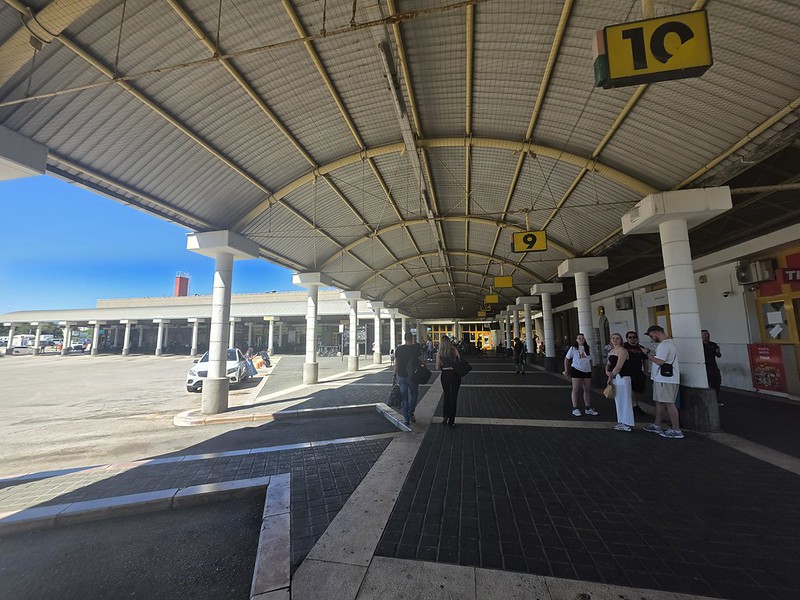
    This was the final day of the Balkans trip, with Jonathan getting a later coach to Zadar and flying out the next day, whilst I had an evening flight to Warsaw. This is the coach station at Split and the ticket office here makes clear that they can’t help with locating the coaches and although it’s fair that it’s not something they can help with, perhaps the coach station management might want to improve matters here.

    Jonathan had come with me to ensure that I got the right coach, or, more precisely, to check that I had gone.

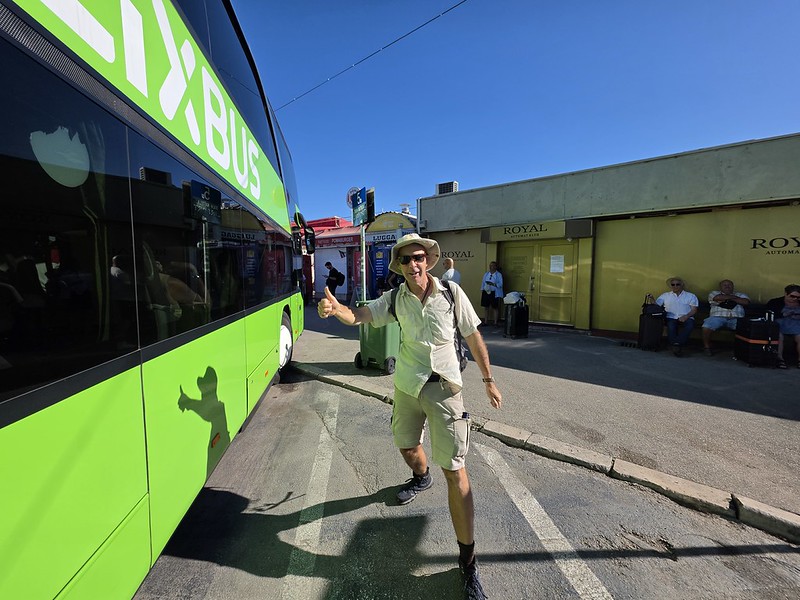
    Although I had booked a FlixBus, it noted that it was operated by a third party and wouldn’t have their branding. It transpired that it did and after checking with the upbeat and helpful driver that I was boarding the right coach, I was ready to board marking the end of another memorable trip.

    Jonathan waved me off, his thoughts presumably already turning towards his return to Norwich the following day. He was perhaps also relieved that responsibility for my geographical whereabouts had finally passed to somebody else. Although I didn’t know this at the time due to my last-minute booking habit, I was still to visit Warsaw, Kutaisi, Katowice and Barcelona before I got back to the UK. No point in keeping things simple and that means my loyal blog readers still have plenty more posts to wade through.

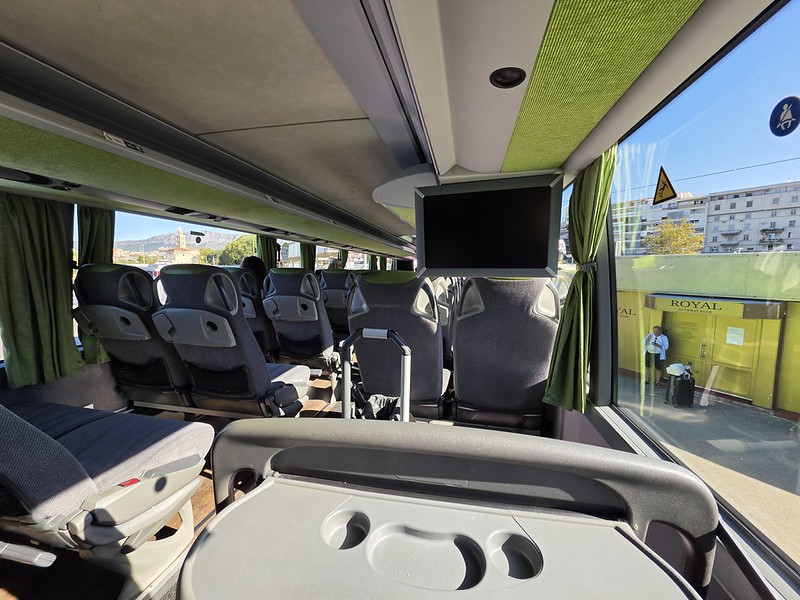
    Although the coach was at capacity, boarding early meant that I got a decent seat on the upper deck. The coach was clean, although the power sockets didn’t work and the air conditioning was struggling to do much useful, but it was a cheap and cheerful way of moving along the Croatian coastline with the ticket costing £11. There are also regular services in case something goes a bit wrong with the whole arrangement.

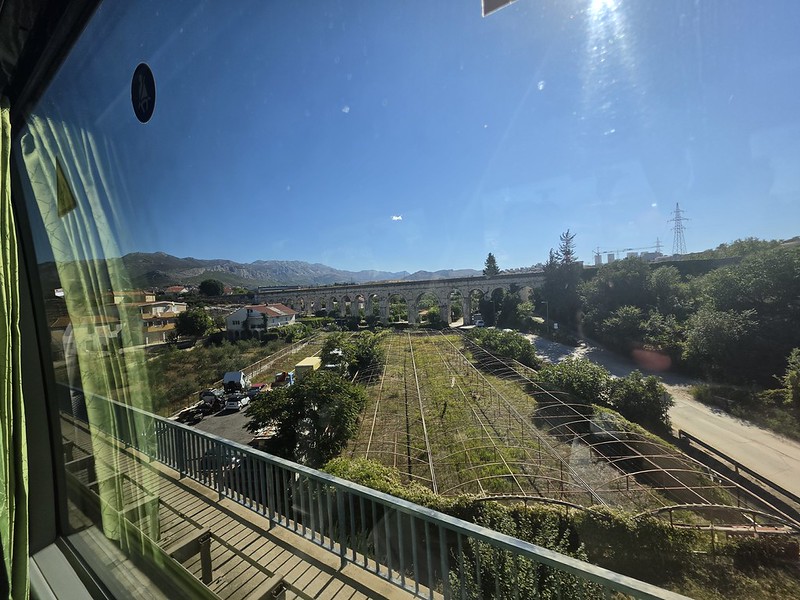
    Leaving Split I got to see Diocletian’s Aqueduct which was constructed in the early part of the fourth century, at the same time as Diocletian’s Palace that we had looked around the previous evening.

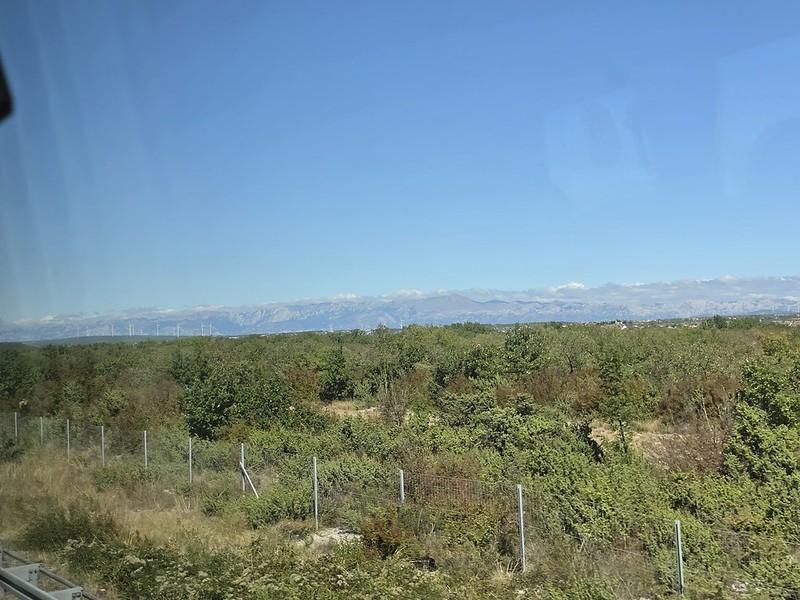
    The countryside near Pristeg, with the Velebit Mountains visible in the distance. After several days beside the Adriatic, the route now felt noticeably drier and more rural, although I felt that I had enough photos of the countryside through the window to last me for a while.

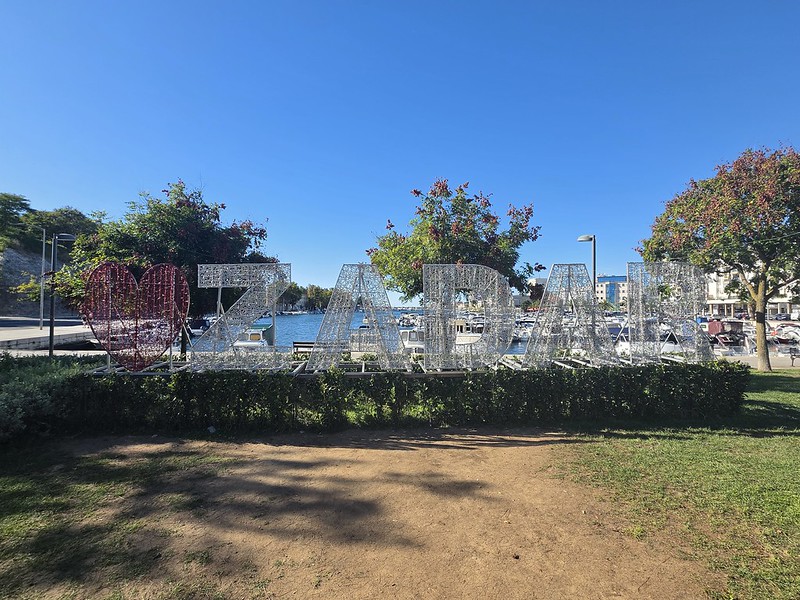
    Safely into Zadar coach station on time and with a thirty-minute walk to the historic heart of the city, slightly longer than I had been hoping for in the hot weather. I’m not sure whether I’ve actually mentioned in recent posts that it was getting a bit hot again on the Croatian coastline.

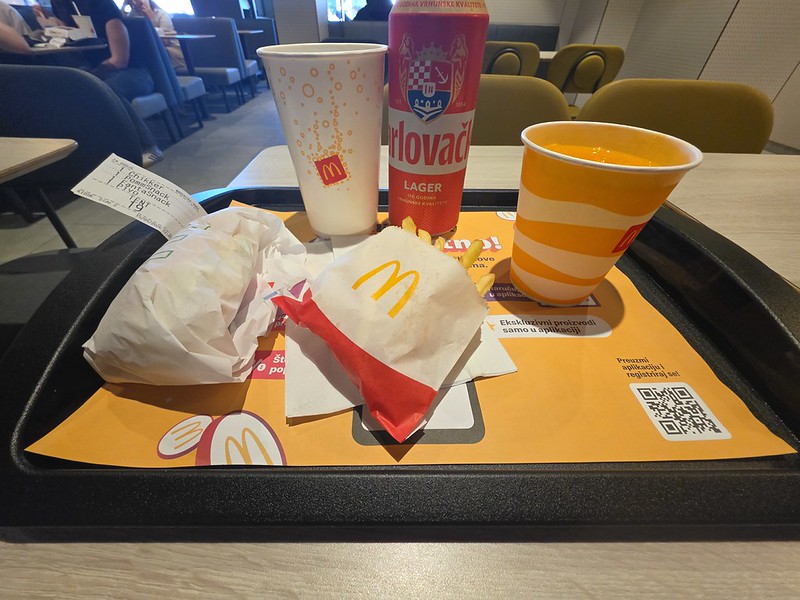
    Since there was a McDonald’s at the coach station, I used the opportunity to charge my devices and ordered a cooling Fanta and a beer. McDonald’s providing electricity, air conditioning and alcohol (of sorts) immediately made it one of Zadar’s more useful cultural institutions.

  • Balkans Trip Day 15 – Split – The Vestibule of Diocletian’s Palace

    Balkans Trip Day 15 – Split – The Vestibule of Diocletian’s Palace

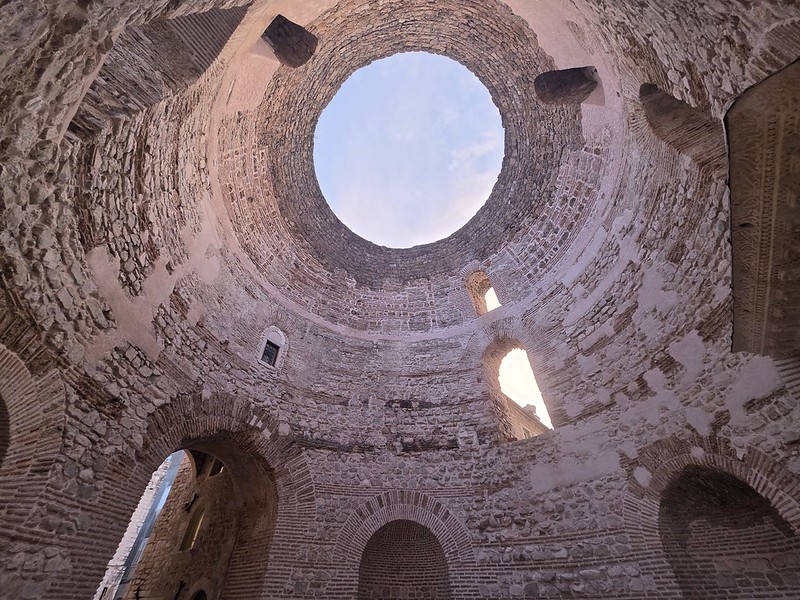
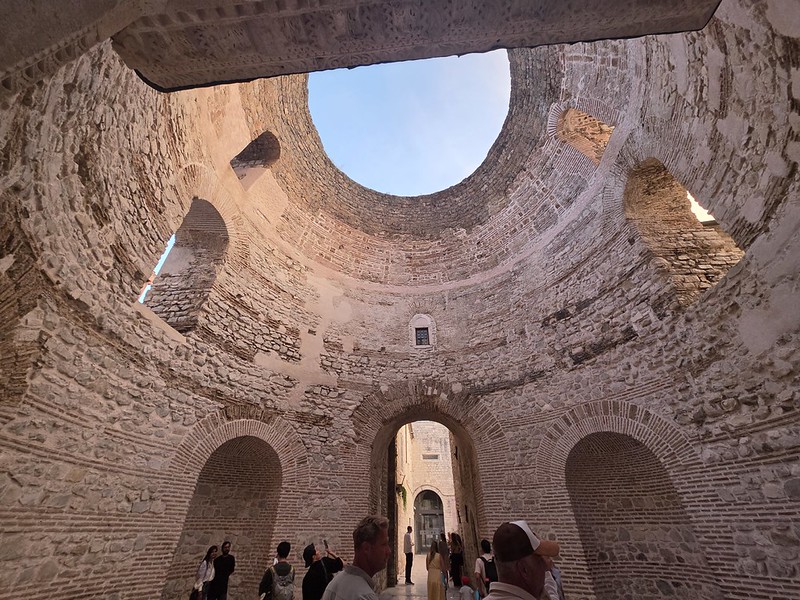
    Continuing our rapid exploration of Diocletian’s Palace, Jonathan and I entered the Vestibule, the monumental antechamber which once connected the public Peristyle with the emperor’s private apartments. Constructed around the beginning of the fourth century, the building appears rectangular from outside but contains this imposing circular interior. Its dome has long since disappeared, leaving the large opening, which is slightly sub-optimal when it’s raining.

    Beside the Vestibule is the Ethnographic Museum, which also provides access to more of the historic complex and a terrace overlooking the remains of the former cupola. We had only one evening in Split, though, and choices had to be made before Jonathan discovered that I had scheduled seventeen hours of sightseeing into approximately three. It also gives me a reason to go back in the future, although my list of cities I need to return to is growing ever longer.

    The original interior would have been considerably more decadent than the exposed stone surviving today. Niches once contained statues, the circular walls were whitened and the great cupola was decorated with colourful mosaics which reflected the light. The Vestibule formed part of the carefully controlled ceremonial route towards the imperial residence, ensuring that anyone granted an audience had been suitably pre-impressed before Diocletian had even appeared. It appears that Roman emperors understood the need for a dramatic entrance to surprise and delight visitors without troubling themselves too much with the associated decorating costs.

    The chamber remains impressive despite losing nearly all its decoration, helped by the height of the walls and the acoustics created by its circular form. Like most other parts of the Palace that were free to visit, it was rather packed with visitors, nearly all attempting variations of the same photograph directly upwards. Despite the crowds, this was one of the most memorable surviving spaces within the Palace and gave a sense of the scale of the building.

  • Balkans Trip Day 15 – Split – The Silver Gate of Diocletian’s Palace

    Balkans Trip Day 15 – Split – The Silver Gate of Diocletian’s Palace

    Jonathan and I only had one evening in Split and so we started at its most important site, namely Diocletian’s Palace. This was constructed around the beginning of the fourth century as a fortified retirement residence for Diocletian, although the buildings and streets within its walls gradually became the centre of Split itself.

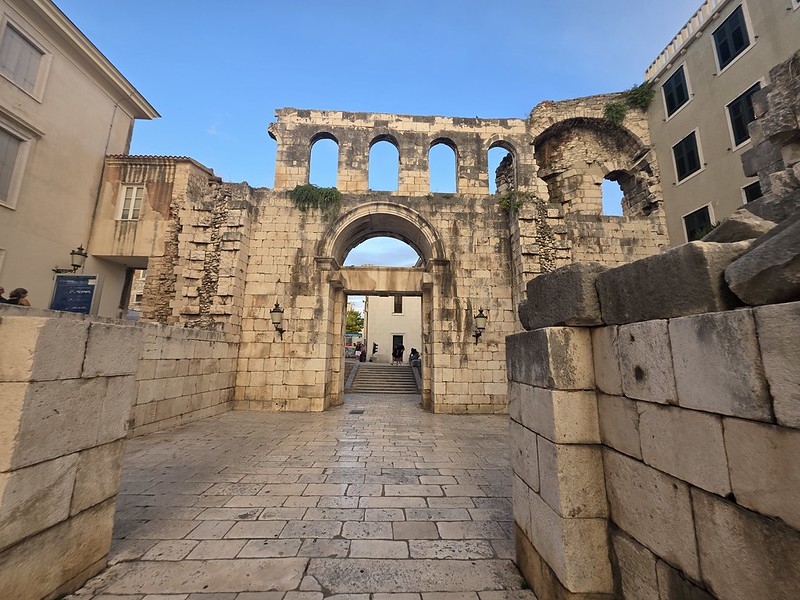
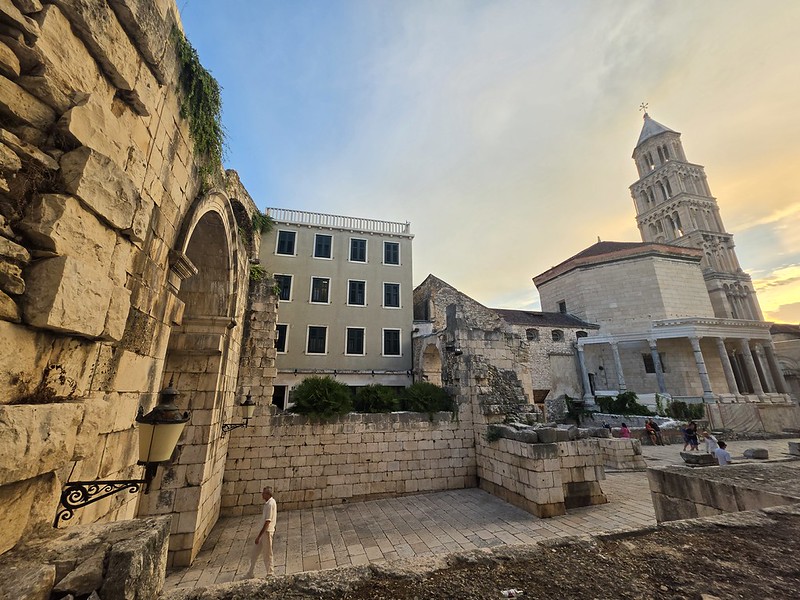
    This photograph shows the Silver Gate, the eastern entrance to the complex, alongside the former imperial mausoleum which was later converted into the Cathedral of Saint Domnius. Known to the Romans as the Porta Orientalis, the gate opened onto the decumanus, the principal street running east to west through the palace towards the Iron Gate.

    Today, it’s very much a busy part of the city and the heart of its historic centre. It was a pleasant time of day to visit with the colourful sky, although lots of other people had a similar thought so there was some battling through the crowds to get around. Unlike during much of our time travelling around the Balkans, this felt like a city dominated by tourism and the vibe was very different.

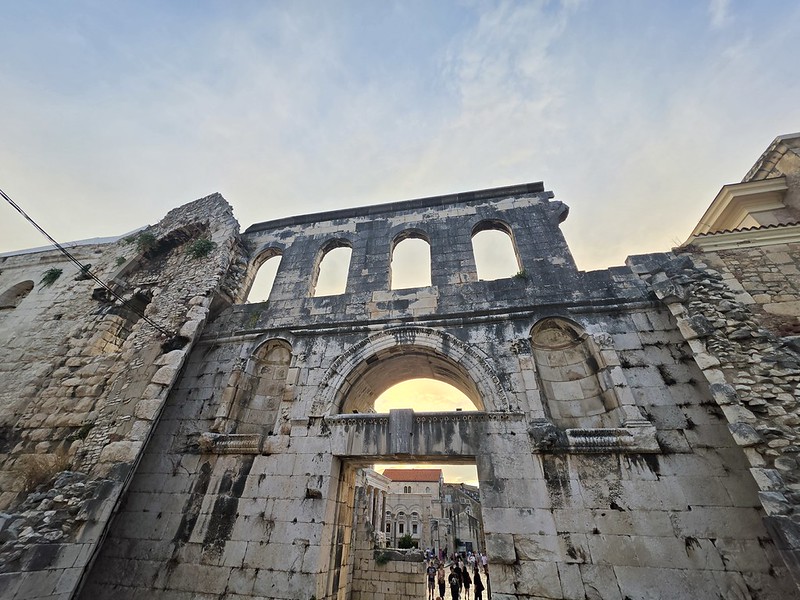
    Seen directly from the front, the Silver Gate reveals rather more of its Roman design. Despite the name, it was built from limestone rather than an unexpectedly extravagant quantity of silver and was more modestly decorated than the Golden Gate on the northern side of the palace. It originally formed part of a more complex and decadent two-stage entrance, with outer and inner gateways creating a controlled defensive passage into the complex.

    The two recessed niches on either side of the main arch probably once contained statues, long since lost, while the row of openings above belonged to the upper level used by the palace guards. It still felt like a proper defensive entrance, and enough survived for me to imagine how imposing it must have appeared to anyone approaching the palace without the correct authorisation.

    The gate’s present appearance is partly the result of a substantial twentieth-century reconstruction. It had been blocked from the Middle Ages and remained closed until 1952, when the war-damaged Baroque church known as Dušica was demolished and the ancient entrance was reopened. The work exposed the Roman gateway and lowered the surrounding ground to reveal sections of the original paved route.

    A photograph displayed at the site showed how the gate looked before the surrounding ground was lowered. It had been considerably less imposing, so I was pleased that the work had brought its appearance closer to the original Roman arrangement. The Silver Gate was used ceremonially in 2000 when Pope John Paul II passed through it on his way to the Cathedral of Saint Domnius. My own passage attracted less attention, although this made it substantially easier to take photographs.

  • Balkans Trip Day 15 – Split – Tunaholic

    Balkans Trip Day 15 – Split – Tunaholic

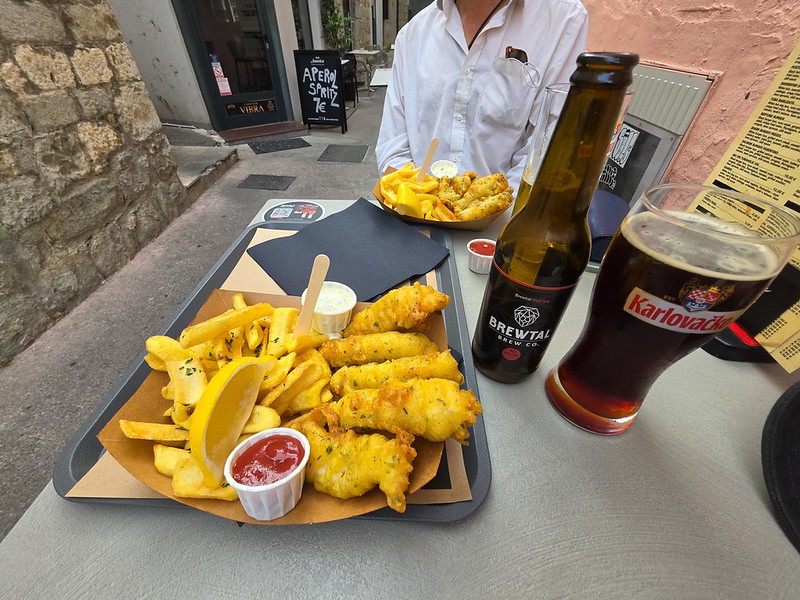
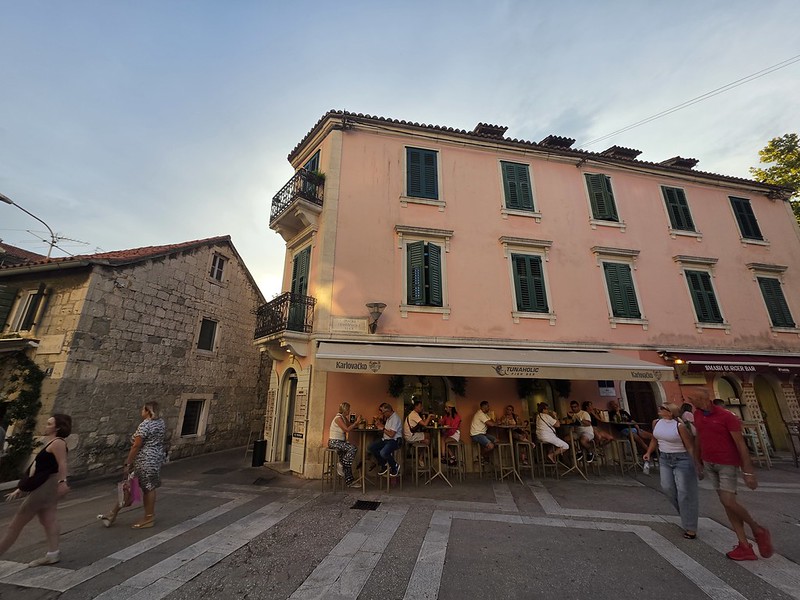
    Our evening meal in Split was at Tunaholic, a centrally located fish restaurant which has picked up plenty of positive online reviews.

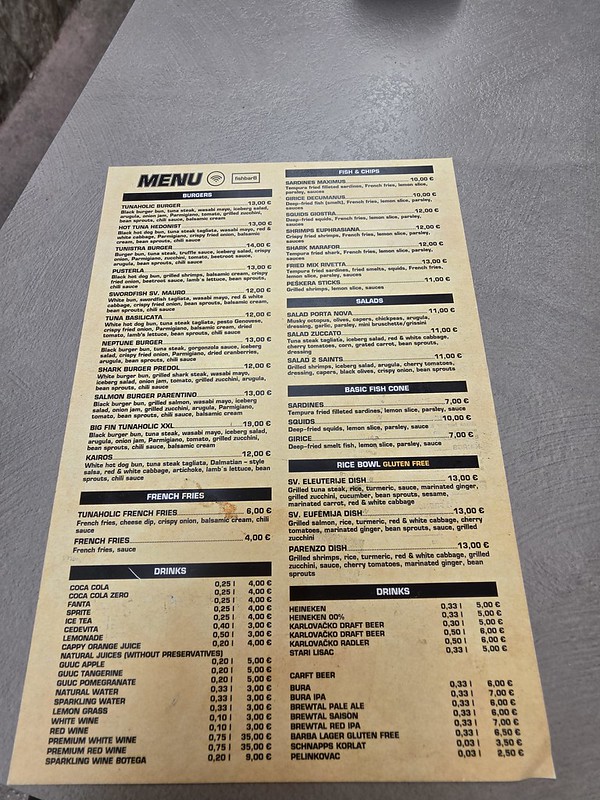
    The menu wasn’t overly large, which seemed a positive sign in terms of freshness, but there was still a reasonable range of dishes to choose from.

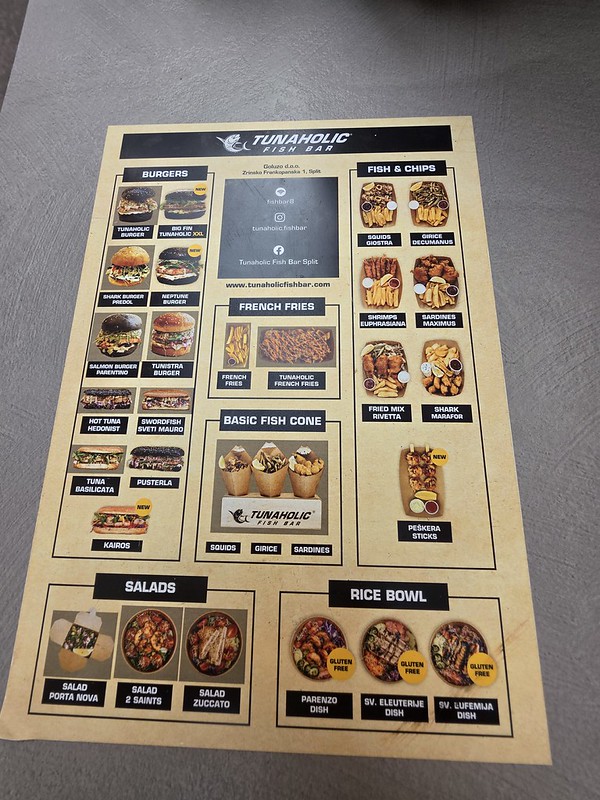
    The menu also included photographs, removing the dangerous possibility that either of us might have to order entirely on trust. I must have been in an exceptionally good mood because I also agreed to sit outside voluntarily.

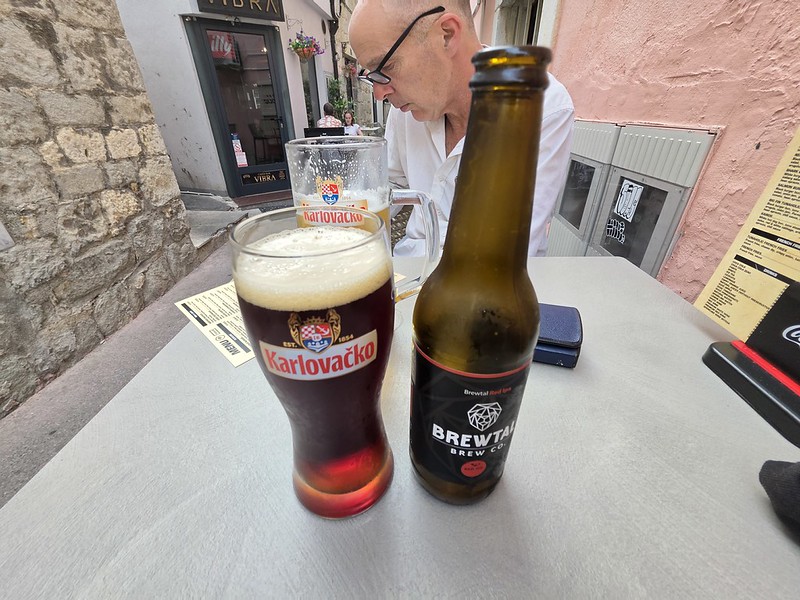
    They had craft beer alongside some draft options and although they didn’t have the one I ordered, I was content with their recommendation of the Brewtal Red Ipa from Brewtal Brew Co. It was malty with a taste of toffee and I thought that it went well with the fish.

    Jonathan ordered the Sardines Maximus, while I selected the Shark Marafor. I’m not sure that I had ever eaten shark before, but it was tender and full of flavour, while the tempura batter was crisp and well seasoned. The chips were crisp outside and fluffy inside, and the portion was generous.

    This was one of my favourite dining experiences of the entire Balkans trip, which was particularly apt since it was the final night of our trip before we parted ways. I was certainly surprised and delighted by this one and even sitting outside had failed to cause a crisis. Tunaholic had substantially exceeded my expectations and what more could I ask for? I even left a tip at the end when paying…..