Blog

  • Torun – Torun Castle (Masks of Shame)

    Torun – Torun Castle (Masks of Shame)

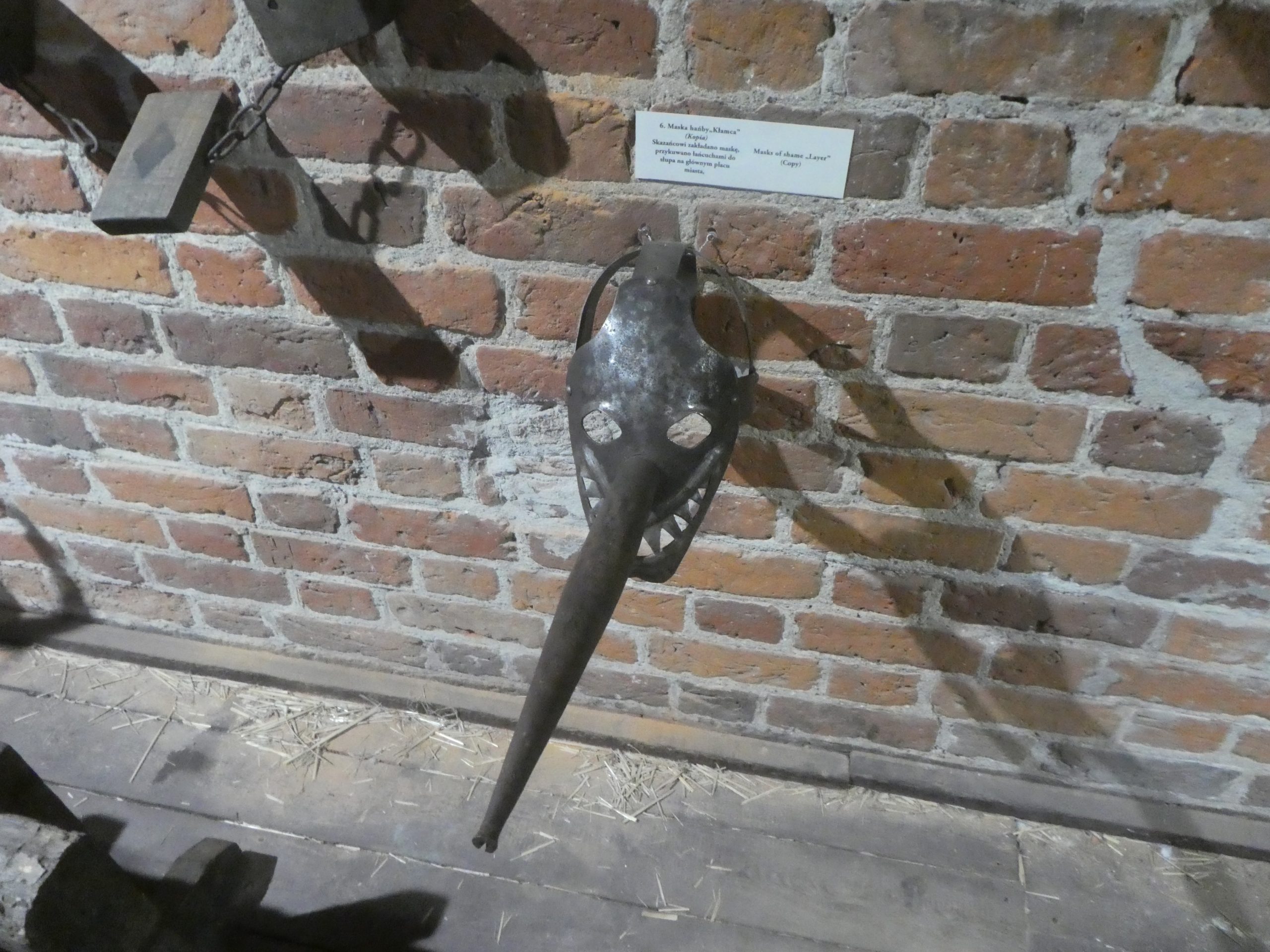
    These are modern copies in Torun Castle, but they’re intriguing nonetheless, they’re masks of shame (known as Schandmaske in German and Maski Wstydu in Polish) which were used during the medieval period. They were worn by those being punished for various misdemeanours, from gossiping to married couples arguing. The masks were designed to humiliate and encourage others not to behave in the same manner, with the victim sometimes also being placed in stocks at the same time. The practice went on until the eighteenth century in a few places, with some masks also being designed to cause significant discomfort and pain.

    And some more….

  • Torun – 100 Years Since Returning to Free Poland

    Torun – 100 Years Since Returning to Free Poland

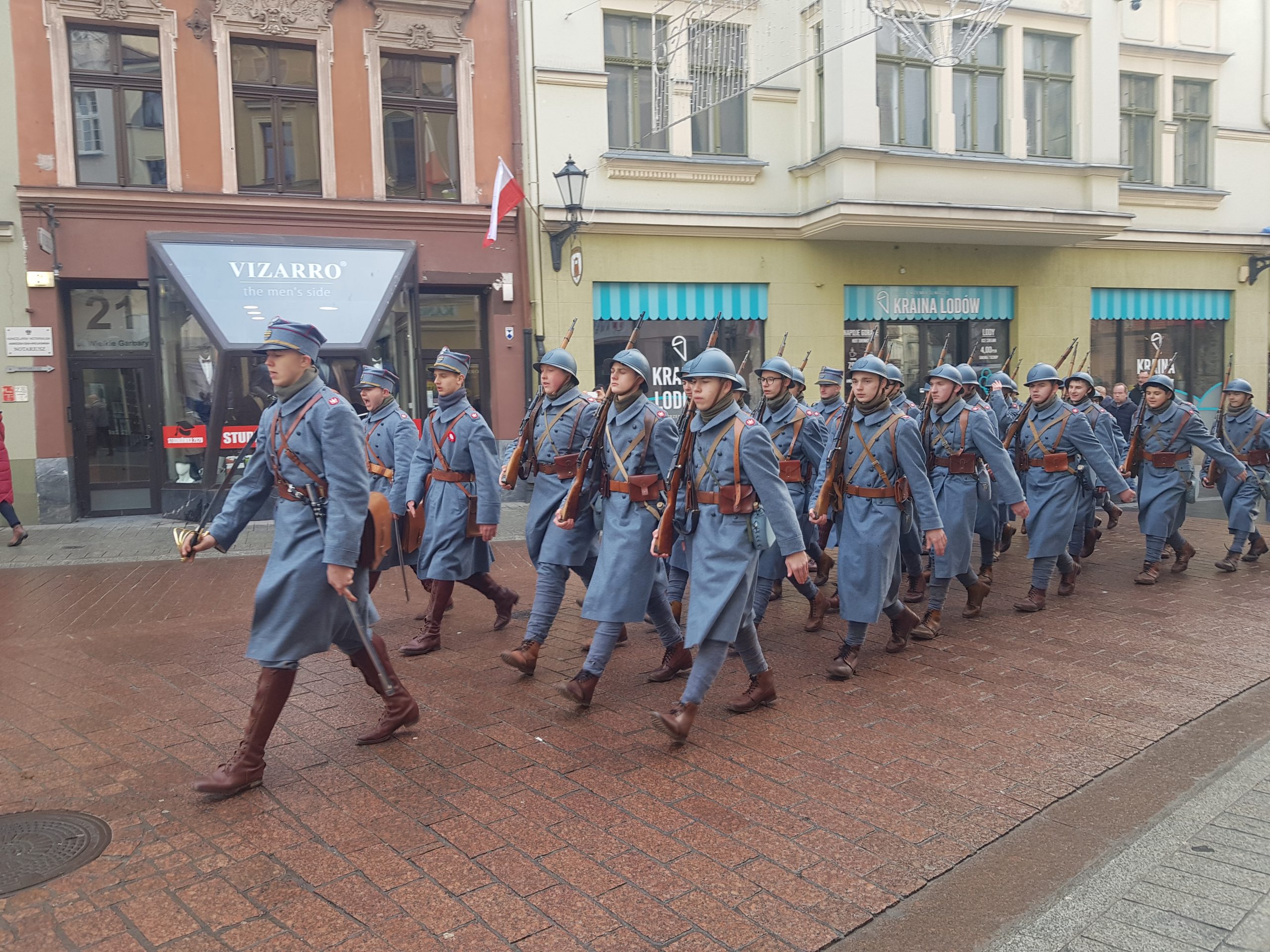
    There are a series of events taking place today in Torun, marking the return 100 years ago of the city to Free Poland and the Second Polish Republic. One of the events which was held was a reconstruction parade using re-enactment societies of when Polish troops walked into the city to be given the keys to the gates.

  • Torun – Litter Situation

    Torun – Litter Situation

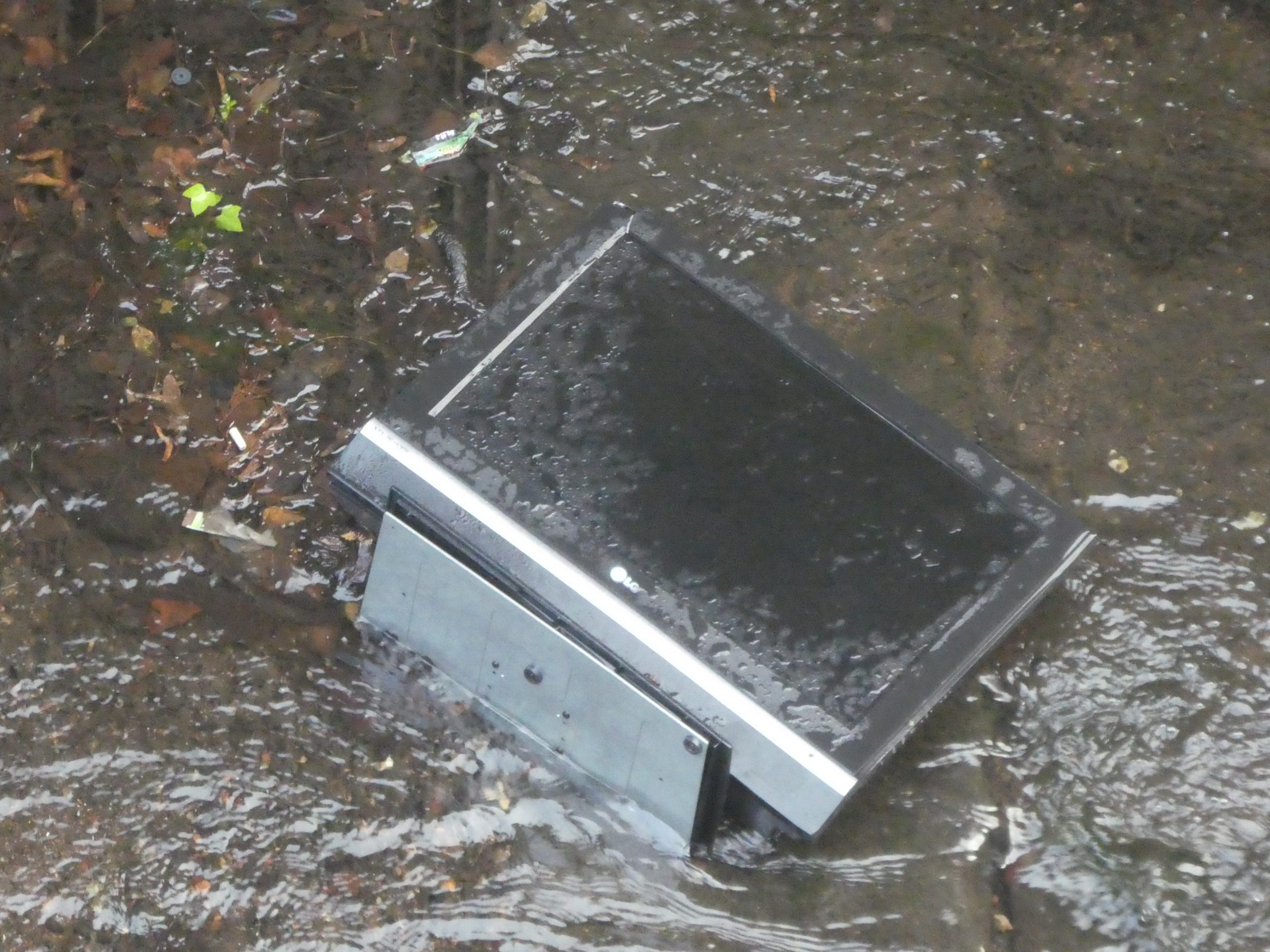
    Torun is one of the cleanest cities that I’ve visited, although that isn’t rare within Poland where litter doesn’t seem to be a substantial problem. So, I thought it was rare to see something dumped in a water course.

    Otherwise a pretty little area of the city. However, note the white van driving towards the area.

    Two men jumped out of the van, peered over at this dumped television and looked bemused, before ensuring that it was removed. All very efficient.

  • Torun – River Vistula

    A view of the River Vistula from near Torun.

  • Torun – Pomnik Stefana Łaszewskiego (Monument to Stefana Łaszewskiego)

    Torun – Pomnik Stefana Łaszewskiego (Monument to Stefana Łaszewskiego)

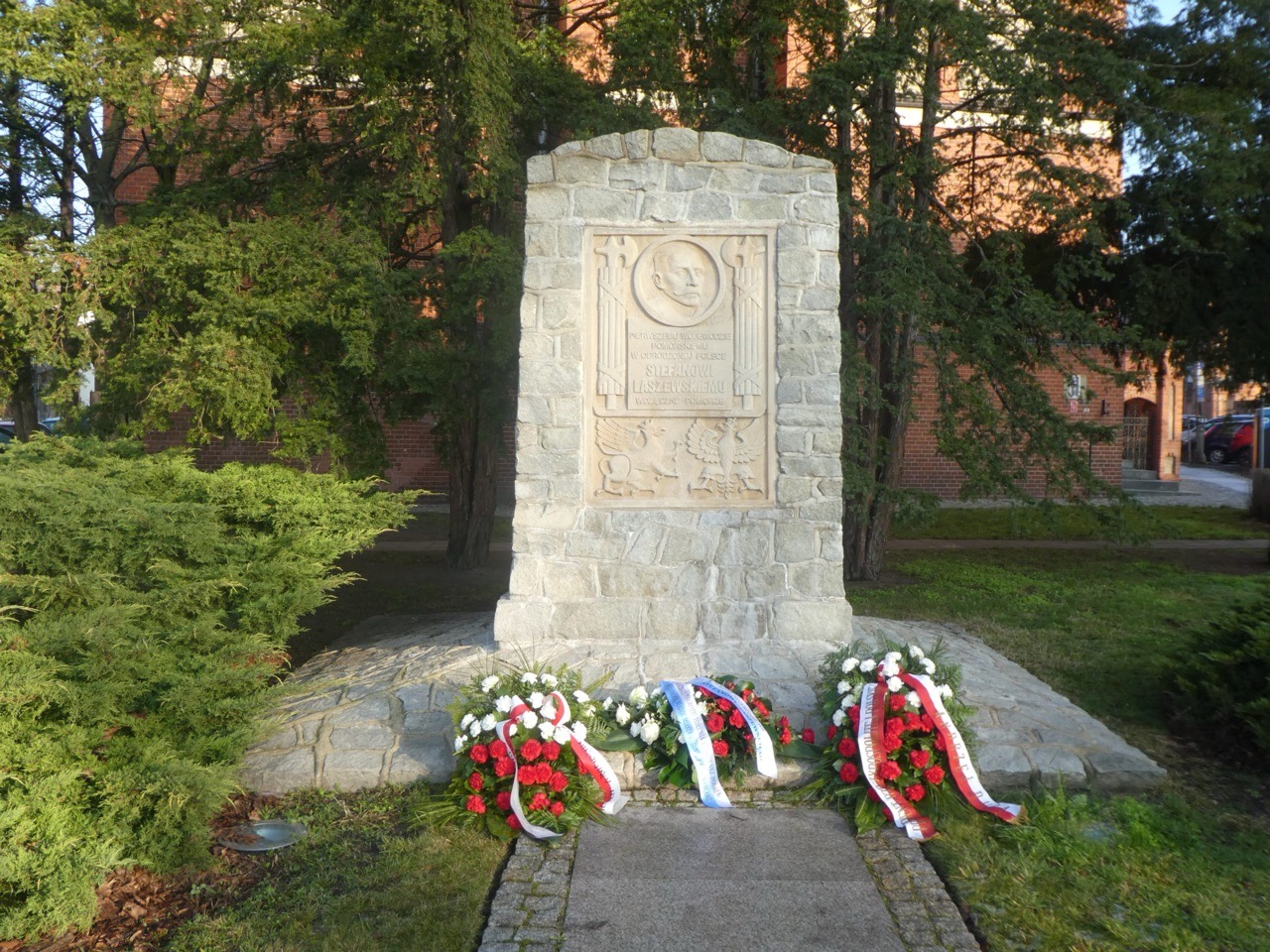
    This monument commemorates the life of Stefana Łaszewskiego, a Polish lawyer and politician who also served as the first head of the new Pomeranian Voivodeship in the Second Polish Republic. The Voivodeship, or region, existed only between 1919 and 1939 and its capital city was Torun, in the area that had previously been part of West Prussia.

    Łaszewski held the role from 1919 until 1920 and he later went on to become one of the Presidents of the Supreme Administrative Court. The first monument was installed in May 1925, but was destroyed by the Germans soon after they invaded the city in 1939. This current replacement memorial was installed in 1997 and is made of granite with a sandstone tablet in the centre.

  • Torun – Ruins of St. Nicholas Church

    Torun – Ruins of St. Nicholas Church

    Work started on the Church of St. Nicholas in 1263 on land given to the Dominicans by the Teutonic Knights. The church was located just outside of the city walls, although it later came within the boundaries of the new town area of Torun. It was expanded in the 1430s, but had a difficult time over the centuries due to location near the city walls, which made it vulnerable to attack.

    The church was the only one in Torun which remained Catholic and it was a wealthy institution which was well funded. There were over twenty altars and there were monastic buildings attached to the main part of the church. It was damaged during sieges in 1658 and 1703, by fires in 1423 and 1764 and then, most seriously, during the Napoleonic Wars in the early nineteenth century. The Benedictine order left in 1820, with the church buildings then turned into a warehouse, although a decision was made to demolish it entirely in 1834. The valuables of the church were carefully transported to other religious institutions, with some of the stained glass now on display in one of the city’s museums.

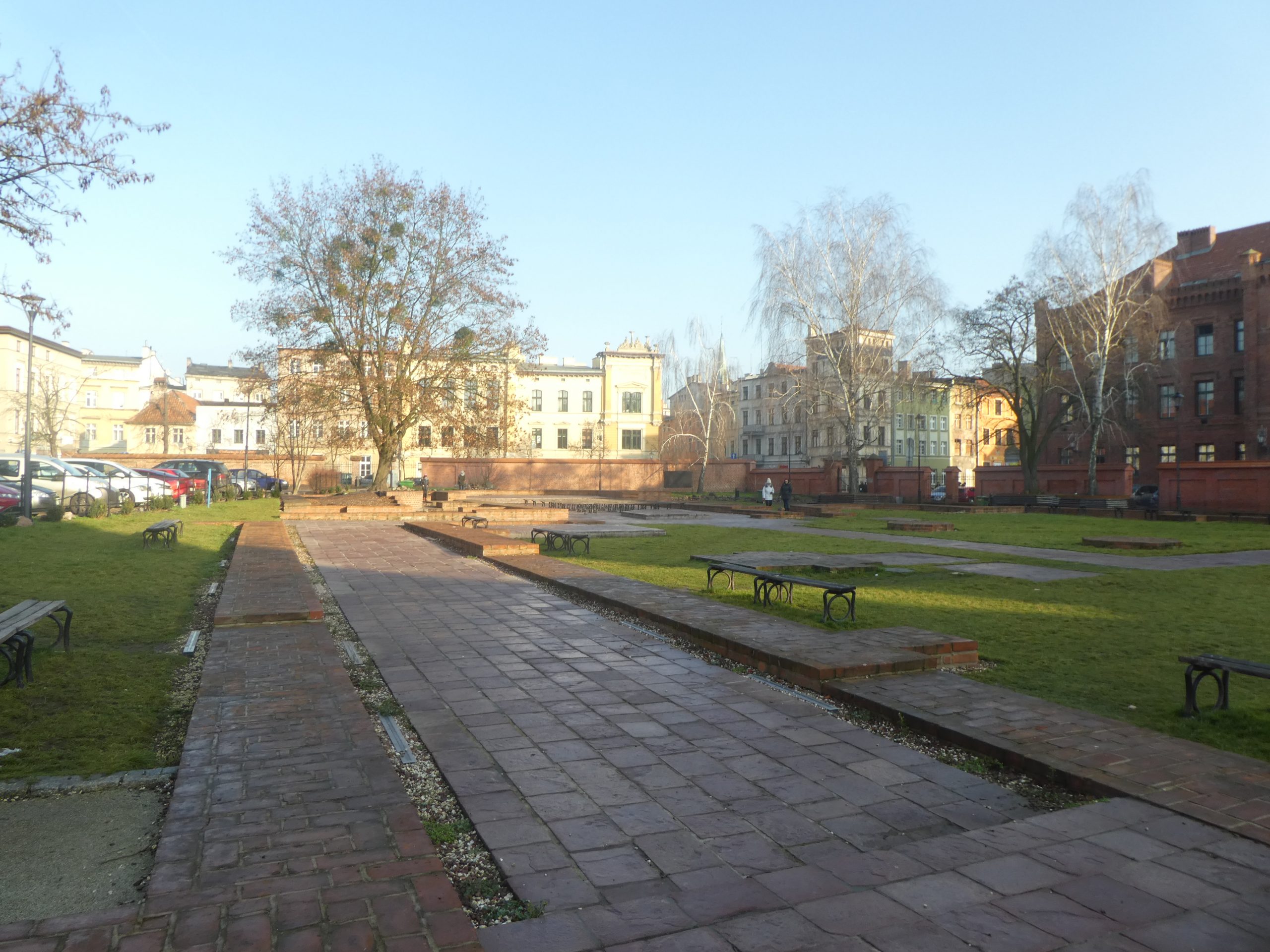
    Brickwork has been added to make it easy to understand the original layout of the building, with the chancel above.

    A side chapel leading to the chapter house doors.

    The nave, with access to the monastery at the rear from what was St. Katherine’s Chapel.

    And this is what it used to look like. All nicely done, with a small park area where people can sit and ponder what used to be here. Or, indeed, think about their lunch, whichever they prefer.

  • Torun – Camino de Santiago

    Torun – Camino de Santiago

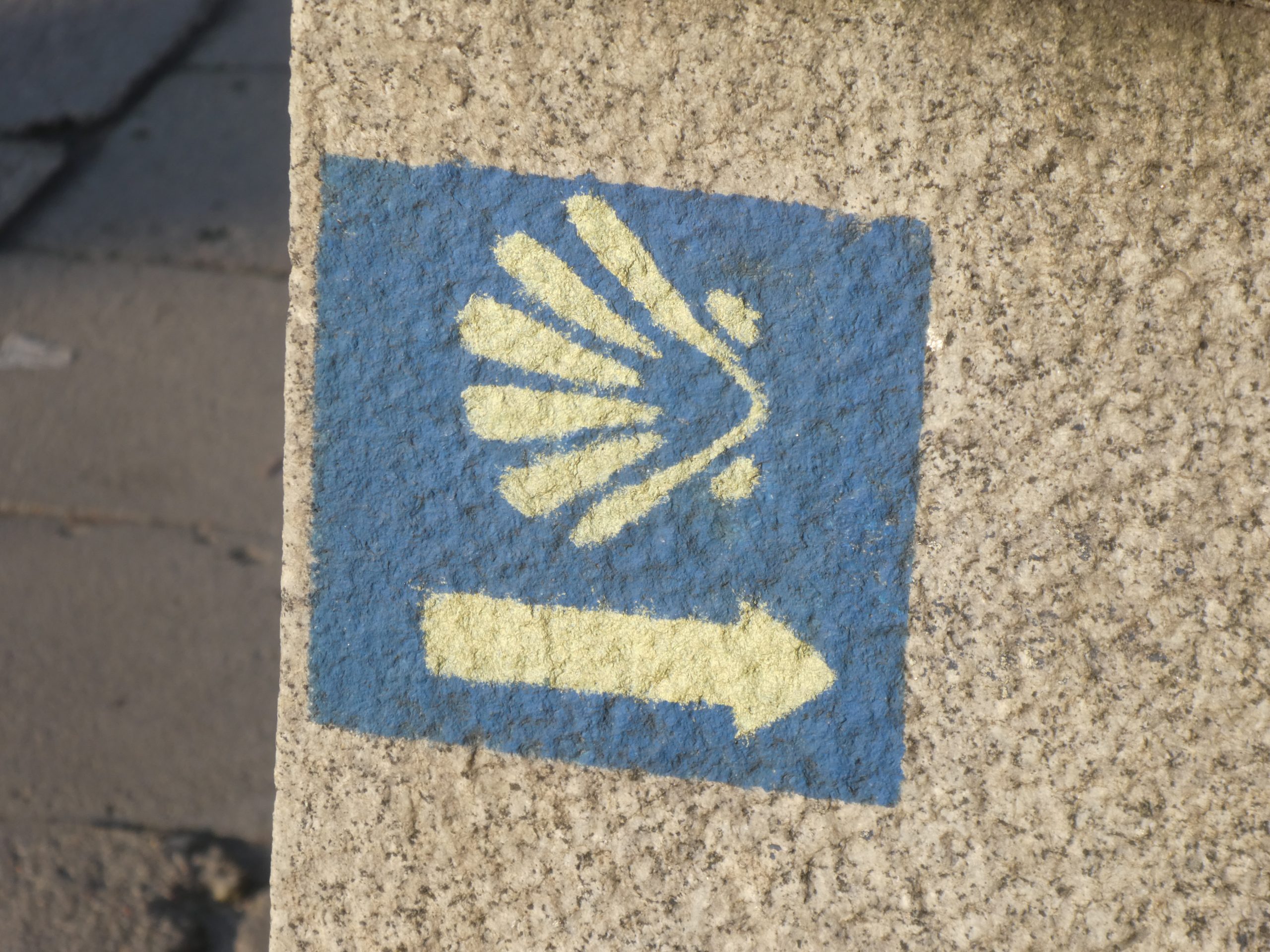
    It’s quite a way from Santiago in Spain from here in Torun, but the authorities in the city have been making efforts recently to publicise the route. There are now markings throughout the city and Torun is on the Polish Way, one of the routes of St. James. There was a decline in pilgrimages following the Reformation, but it would have been a substantial act of self-sacrifice for anyone to walk from Poland to Santiago. For those wanting to walk a quieter section of the Camino, this is certainly a part of the route to consider.

    The route in Torun is:

    ul. Turystyczna,
    ul. Winna,
    ul. Winnica,
    ul. Traugutta,
    ul. św. Jakuba.
    Rynek Nowomiejski,
    ul. Browarna,
    ul. Piernikarska,
    Bulwar Filadelfijski,
    Monastery Gate,
    ul. Pod Krzywą Wieżą,
    Rapacki Square,
    Józef Piłsudski Bridge,
    ul. Dybowska.


  • Torun – Museum of the History of Torun

    Torun – Museum of the History of Torun

    I wasn’t overly impressed by the Copernicus museum when I visited yesterday, I thought that the technology was badly used and the curatorship seemed weak. The Museum of the History of Torun seems to be run by the same overseeing organisation, so my expectations weren’t particularly high.

    The museum was though a tour de force of curatorship and technology, which felt professional throughout. Someone has worked out the signage, everything is in order and the displays are all accessible. There’s also a reasonable amount of technology, all working well and all adding something to the displays. And, the small display on Copernicus was presented so well that I managed to find out numerous things that I hadn’t known, despite visiting a museum dedicated to him the day before.

    The tour starts downstairs in a room with a large screen and there’s opportunity to watch around 15 different videos. The only slight limitation with this is that you have to select a language, so if there are multiple visitors then it’s a bit awkward trying to hog the controls. But it didn’t matter for me, I was the only one there.

    This is clever, the arrow changes depending on which direction you’re approaching it from. This is useful as there’s a bit of a double-backing needed to ensure visitors get to where they need to be and I’ve never seen this use of technology before.

    Some stone bricks from Torun Castle which was built by knights from the Teutonic Order. The knights irritated the locals and it got pulled down in 1454, but it’s nice to see some remnants from it. The ruins of the castle do still exist, which I hope to visit at some point over the next few days.

    The signage on these says that they’re copper slices, but I think these are what I would call copperplate and they may have been found on a shipwreck.

    The two white things are pawns from a game, along with keys and knives. The item in the top left is a rattle.

    A coat of arms for Torun, dating from the nineteenth century.

    A door from a house on Rynek Staromiejski 9, which dates back to around 1630 until 1640.

    A 1969 bust of Lenin.

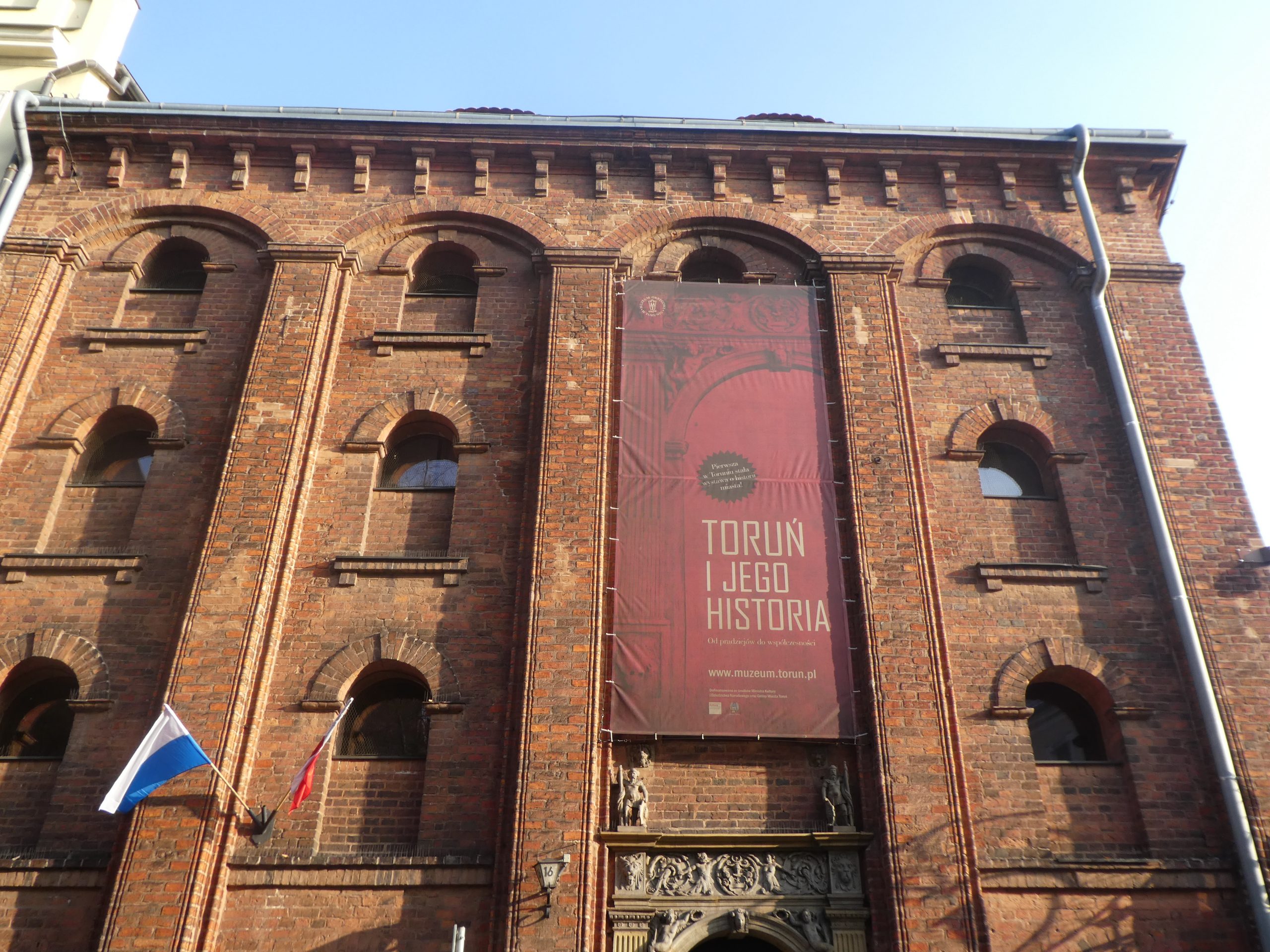
    I thought that this museum was well put together and represented excellent value for money at just over £2. There’s plenty to see in the rooms and perhaps one of the few limitations was that the information about some of the exhibits was just a little lacking in detail. The building that the museum is located in has some considerable heritage as well, originally constructed as a tenement house for the Esken family, which was later turned into a granary.

    There’s an impressive amount of text in the rooms, something that I like as visitors can decide whether they want to read it or not. The staff were friendly and I left the museum feeling that I knew a lot more about the history of Torun.

  • Torun – Neko Cafe

    Torun – Neko Cafe

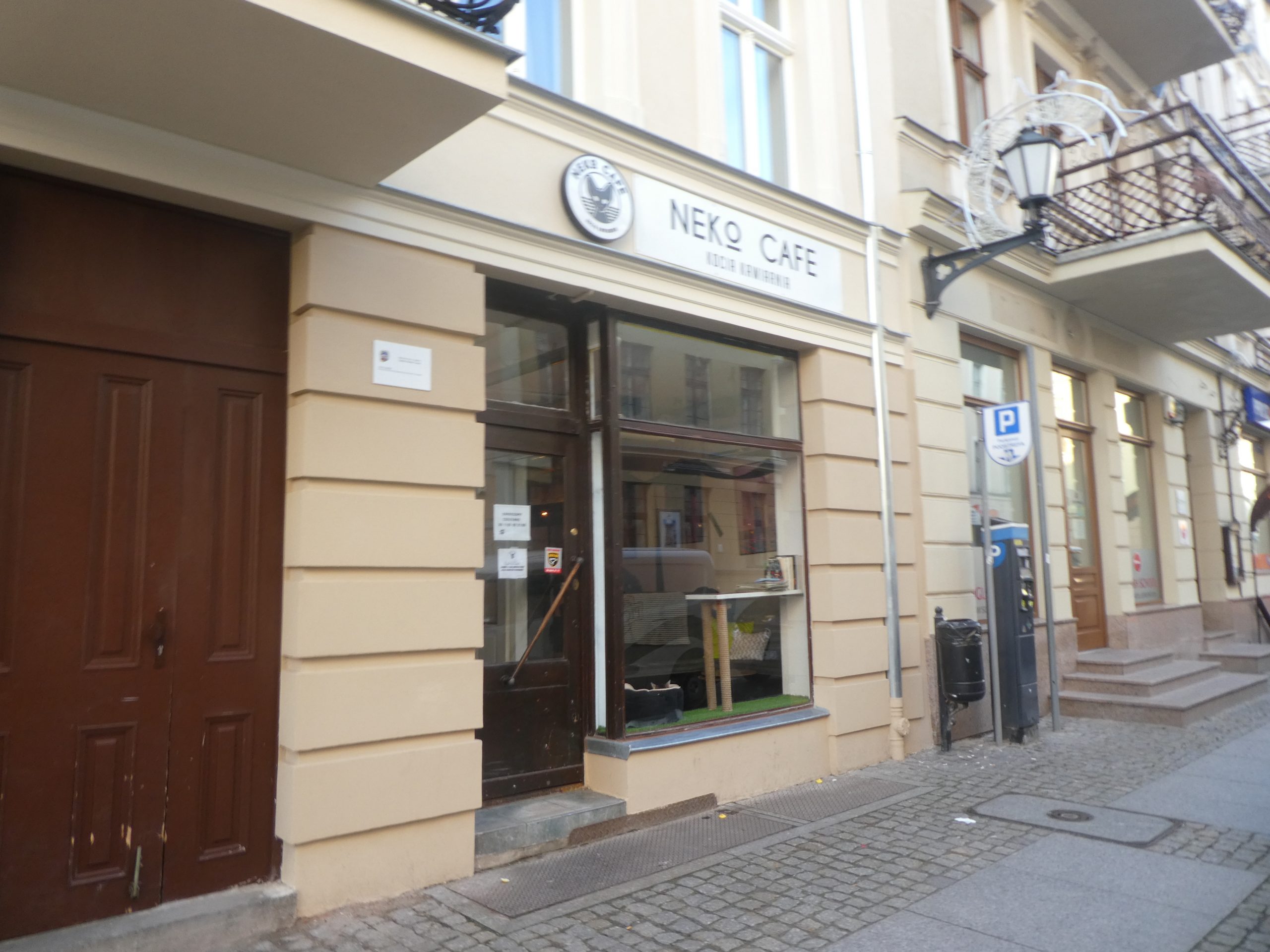
    There’s a slow and steady increase in the number of cat cafes, where visitors can sit amongst cats in a cafe environment. The kitchen and till area is deliberately closed off from the main part of the cafe, for hygiene reasons, and there’s a careful door arrangement near the entrance to stop any cats from sneaking out of the premises.

    There was a friendly welcome, so I ordered a coffee. There was food available, although I didn’t see any menus or idea of what exactly what was on offer. The service was always helpful though, I assume the staff rather quite enjoy working amongst all of the cats (or at least, it’d be an irritating job for someone to have who hated cats). The coffee tasted of a good quality as well and was reasonably priced at around £2.

    The interior of the cafe, which was relatively busy, although not full.

    Some of the cats.

    Then a little pussy cat comes over to the table.

    Intrigued by my camera.

    And having a little look at the screen.

    All very lovely, although there didn’t seem to be any published rules as I’ve seen in other cat cafes which tries to regulate the conduct of the customers on how they interact with cats. The cats all looked happy though, with plenty of areas they could go and hide in if they wanted.

  • Torun – Church of the Blessed Virgin Mary

    Torun – Church of the Blessed Virgin Mary

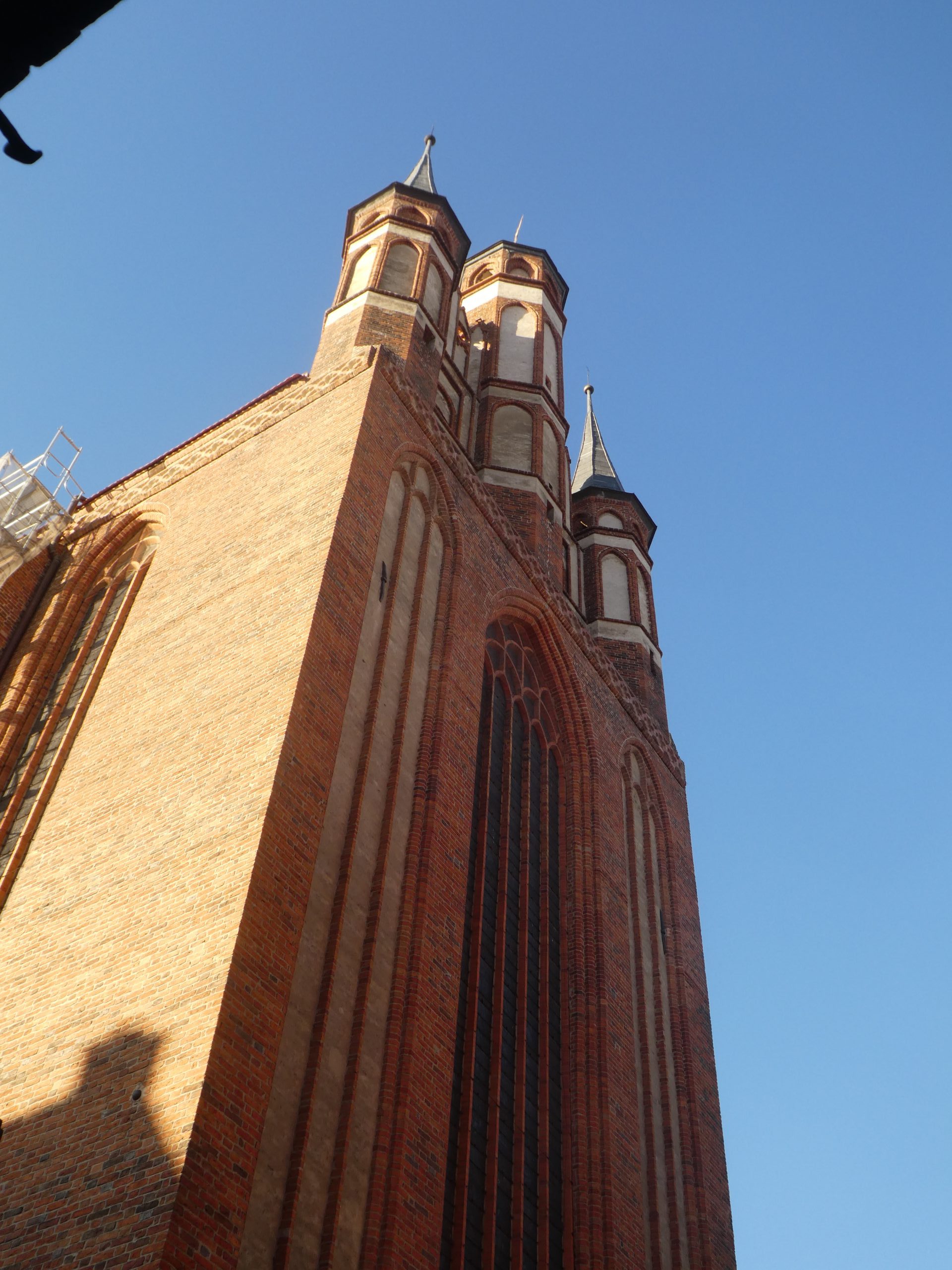
    The Church of the Blessed Virgin Mary (or in Polish, Kościół Wniebowzięcia Najświętszej Marii Panny w Toruniu) is one of the most beautiful historic churches that I’ve visited, although I found it a very challenging building to understand and there is much that I didn’t comprehend. The church is currently undergoing some renovations part-funded by the European Union and there’s not currently any literature to guide visitors.

    The nave of the church and the rood screen, which dates to the eighteenth century. There is some scaffolding visible as well which is either supporting the building, which has had problems before with leaning, or it’s for the renovation.

    The floor is a patchwork of mostly damaged stones, there’s lots of heritage there.

    There are no shortage of wall paintings in the church.

    One of the tombs in the church.

    More wall painting and what I think is a nineteenth century stained glass window. There are three naves in the church, which once all had their own individual roofs, but they were given one large single roof in 1798.

    I couldn’t ascertain the age of this arch, but I assume it’s from the earliest stage of the church’s history. And, this is the fourth church on the site, with the first having been built here in the early thirteenth century. Work started on the current church in the late fourteenth century, with the work overseen by the Franciscan friars. I hadn’t realised that Franciscan buildings don’t have towers, hence why the construction is as it is.

    Things changed somewhat in 1557, when the church was taken over by the Protestants until what is wonderfully known as the Torun Tumult of 1724. The unfortunate consequence of this tumult, which were battles between Catholics and Protestants, were punishments including the death penalty and some buildings were damaged or destroyed. From 1724, the church was given to the Bernardine friars, who looked after it until it was taken over by the parish in 1821 when the order was dissolved. The church had been badly damaged during the sieges of Torun in 1809 and 1813, so necessary repairs were undertaken between 1825 and 1830.

    The Christmas nativity scene, which I’d have thought must be going soon since it’s now the second half of January.

    The architecture of this building is so complex and I was conscious that I didn’t understand it and I’m sure that I missed some interesting and intriguing pieces of history. Nonetheless, it’s a glorious church and it felt like it had some considerable heritage. It was also the coldest church, in temperature terms, that I’ve ever been in, with quite a dark feel in places where the light couldn’t get really permeate. However, that gave the building even more atmosphere, it felt all quite spiritual.