Blog

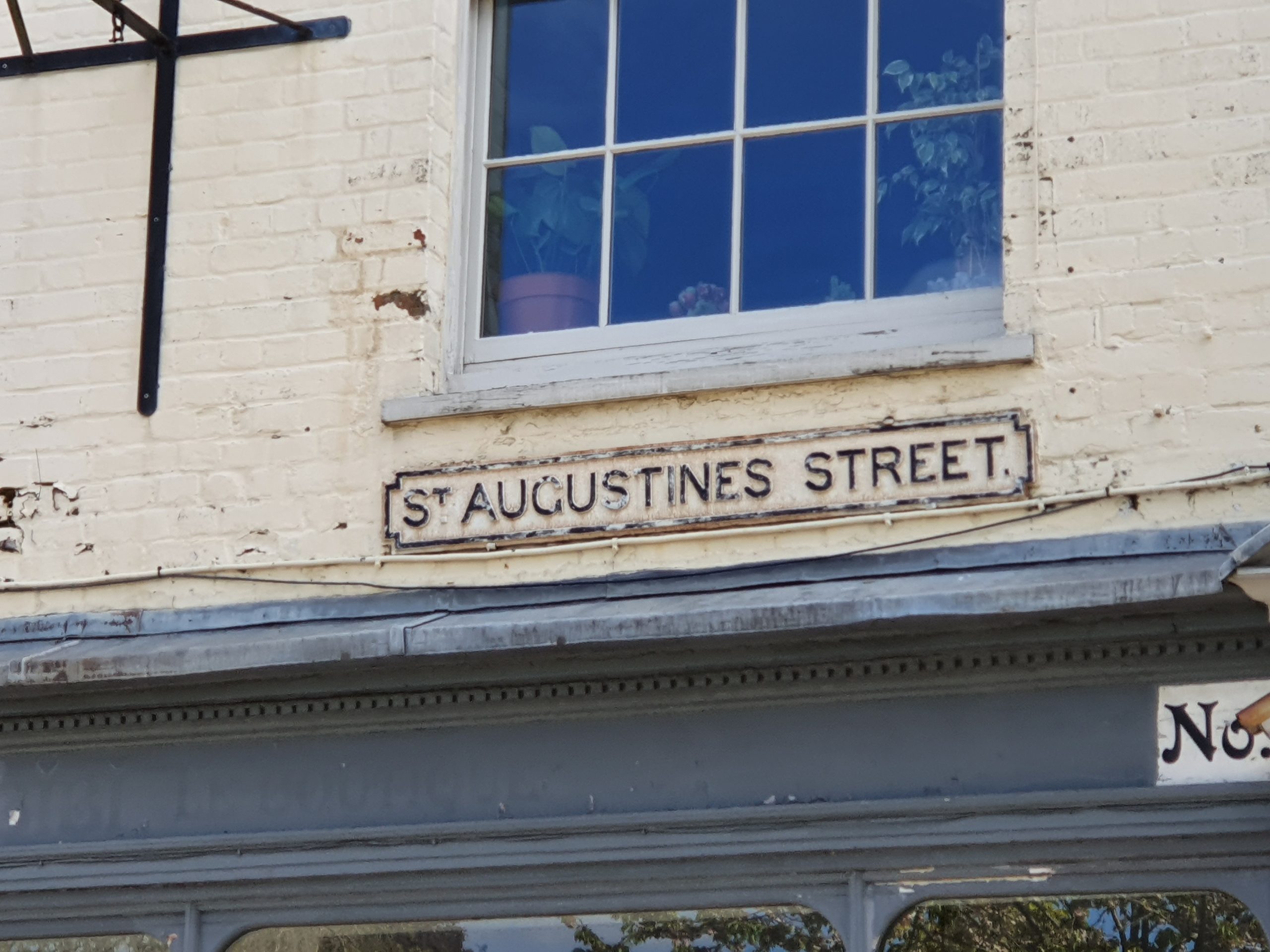
  • Streets of Norwich – St. Augustine’s Street (West Side)

    Streets of Norwich – St. Augustine’s Street (West Side)

    Part of my Streets of Norwich project….

    This is how St. Augustine’s Street looked at the beginning of the nineteenth century. Starting in this post just with the buildings on the west side of the street.

    The road starts with St. Augustine’s Church, but more on this in another post as I went on a tour of this rather lovely church and have plenty more photos. But, what is perhaps of most obvious note about the building is its brick tower, which dates to the seventeenth century and is the only one of its type in Norwich.

    This is the entrance to Winecoopers Arms Yard, the building that juts out is the former pub of the same name (without the word yard at the end obviously). The buildings on the far left, next to the trees, are mostly all listed and were constructed in the early nineteenth century as shops and residences.

    The building on the right-hand side (and indeed those attached to it along the street) are listed, as they’re seen as important examples of early nineteenth shopfronts. The corner building itself was once the Sussex Arms public house which traded from the 1850s until it was closed by Bullards in 1963.

    The building in white was the Royal Oak public house, the pub sign was once where there’s a stretch of white wall which looks like it could have a window. The pub had started trading in the late eighteenth century and survived until the late 1960s, when it was converted into a residential property.

    Stretching into Bakers Road, this is the side of the Staff of Life public house. It was opened in the 1830s as a bakery and pub, remaining open until 1971, despite being damaged during the Second World War.

    Not much has really changed on this side of the street, the buildings have changed their uses, but most of them have survived. Some of the yards have been closed off, but again, many of the structures in them remain. The element that has changed the most is that this is no longer an upmarket shopping street, as it was split off from the main shopping area by a clumsy road development that lost Botolph Street. The tone of the street changed and most of the shops closed and the area didn’t have the best of reputations.
  • April 2020 Travel – Thanks Google…..

    April 2020 Travel – Thanks Google…..

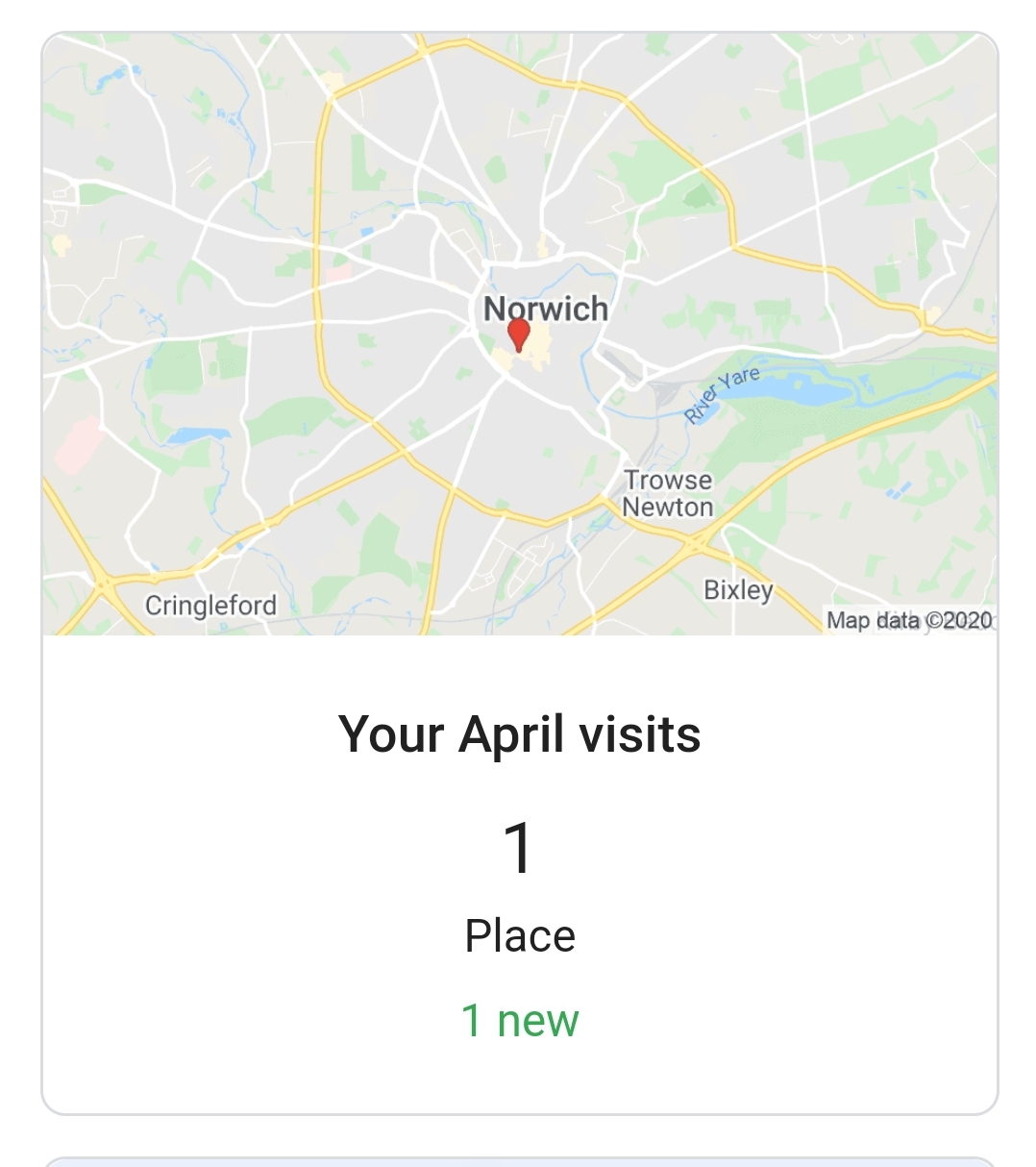
    I like getting the monthly e-mail from Google telling me how far that I’ve travelled in the month, it’s a reminder that they can see at all times where I am, but I like looking at the numbers. That flippancy would probably irritate at least some privacy campaigners, but there we go. The data above is for the last four years and it makes me feel happy.
    But, Google reminded me today just what the impact of Covid-19 was on my travel arrangements in April 2020.

    And, yes, this has been my monthly highlight. It’s made for slightly more challenging blogging, I’ve had to start hunting through a lot of older photos and miscellaneous rubbish to amuse myself during the month. And realistically, no-one else.

  • LDWA – Outdoors Fitness and Adventure

    LDWA – Outdoors Fitness and Adventure

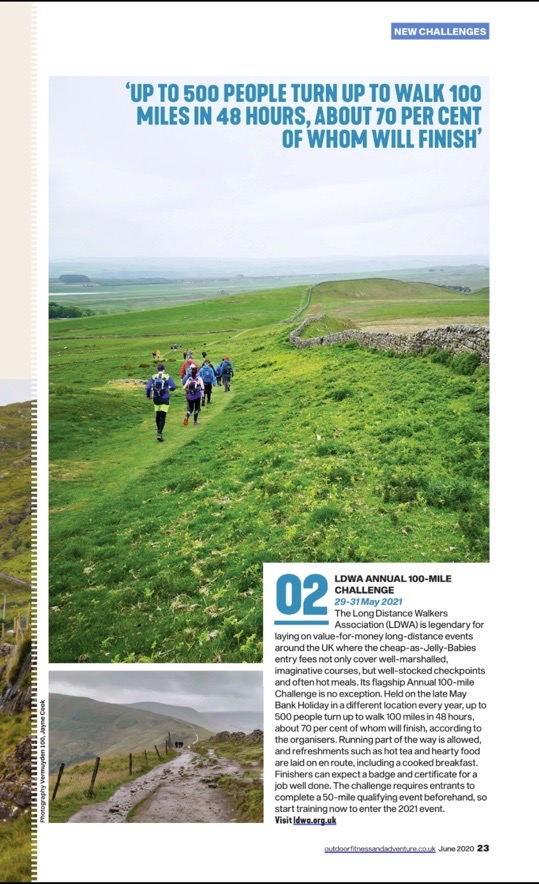
    And a very nice little piece in this month’s Outdoors Fitness and Adventure magazine about the 2021 LDWA 100. The photo is the one I sent from Norfolk & Suffolk’s very own Jayne Cook, with the helpful journalist changing the text at the last minute as we finalised where next year’s 100 would actually be held given the impact of Covid-19……

    I’m almost quite excited for this 100…..

  • London – British Museum (Ship Tavern, Great Yarmouth)

    London – British Museum (Ship Tavern, Great Yarmouth)

    I usually visit the British Museum three or four times a year, something which is a little difficult to do with the current virus situation, primarily because it’s shut. However, they’ve placed hundreds of thousands of images on their web-site, so this will have to do me for the moment. The images can be used non-commercially, as long as the British Museum is credited. So, this is their credit.

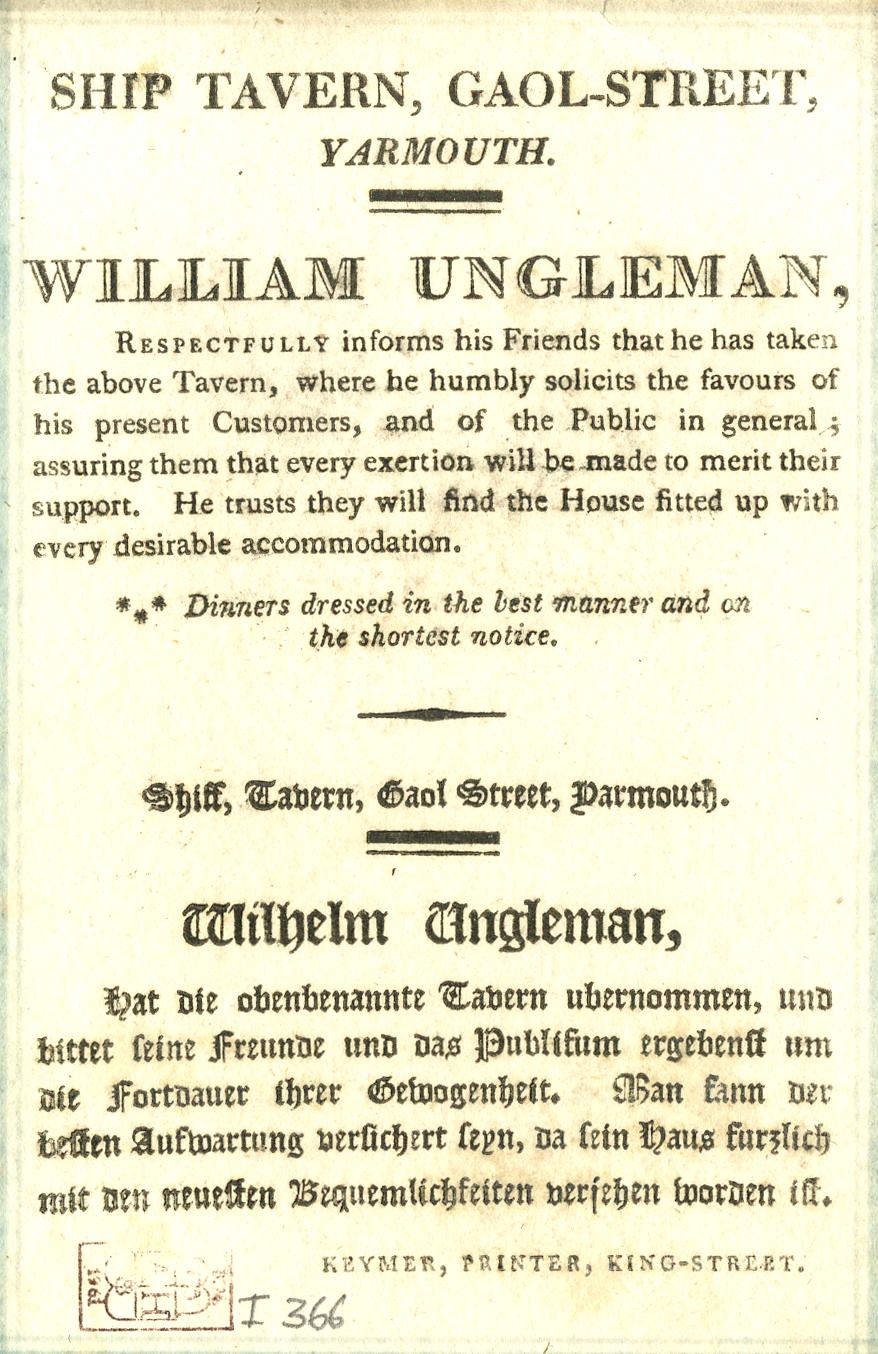
    I’m not sure that there’s much advertising from pubs at the turn of the nineteenth century surviving, especially not in two languages. But this advertising card in English and German is now in the collection of the British Museum and they acquired it in 1960 from the estate of Sir Ambrose Heal. Heal was a collector of trade cards, and had a large number in his collection, as well being the chairman of Heal’s on Tottenham Court Road, which is still trading.

    The Ship Tavern is though sadly no longer trading, it lasted from the 1760s until 2010, being located next to Row 84 in the town. But there’s something quite captivating about how multi-national the docks and port of Great Yarmouth once were. Indeed, in 1797 this pub had welcomed (I use welcomed slightly loosely here….) Dutch naval prisoners from the Battle of Camperdown. As for William Ungleman who produced these trade cards, he ran the pub between September 1809 and 1819, but I have no idea where he went after that.

  • Brandon – Brandon Railway Station (Again)

    Brandon – Brandon Railway Station (Again)

    A couple of years ago I posted about Brandon railway station, a pretty and quaint station which is a little similar in style to nearby Thetford railway station. Thetford is partially closed up, but Brandon is entirely closed up and the station buildings are falling down. And now there is a plan to demolish them entirely, which has seemingly been passed by the local council.

    Much as Greater Anglia annoy me occasionally, I’ve still been very impressed generally about their responsibility towards their railway infrastructure. But, it looks to me that there’s been a slight failure of communication here from Greater Anglia, who have presented nearly nothing about what they’re doing to mitigate the historic loss if the station buildings are demolished.

    I post on this blog quite a lot about the dreadful mistakes made in the past, indeed, just yesterday I whittled on about the demolition of a street in Norwich which was turned into a beautiful car park. And here, in Brandon, that’s what Greater Anglia wants to build. A car park that apparently needs the demolition of the station buildings, even though building a car park wouldn’t require their demolition so that all seems something of a misnomer. Perhaps the building is too far gone, but there’s no talk about saving any interiors, about keeping any part of the structure, about keeping the facade or indeed anything.

    There’s a news release from Greater Anglia which really seeks to shift the blame onto the Railway Heritage Trust, which strikes me as clever, but unfortunate. The news release seems clumsy to me as well, I’m really not sure that many people reading it are that engaged about improving drainage on the site that could be achieved by demolishing some buildings of not inconsiderable heritage.

    Personally, I think the demolition is something that will be regretted in years, rather than decades, but Greater Anglia does perhaps owe it to the public to actually state what they’re doing to preserve what heritage they can, rather than applaud their exciting new car park. Their logic about how it has been falling down for years with nothing being done also perhaps says more about Greater Anglia’s corporate responsibility rather than anything else. They’re spending a million pounds on this project and I’m struggling to see how they can manage to save absolutely none of the heritage in any shape or form with that level of funding.

    To those heritage groups fighting for the railway station, good luck….

  • Narbonne – Eglise Notre-Dame de Lamourguier (and Narbo Via Museum)

    Narbonne – Eglise Notre-Dame de Lamourguier (and Narbo Via Museum)

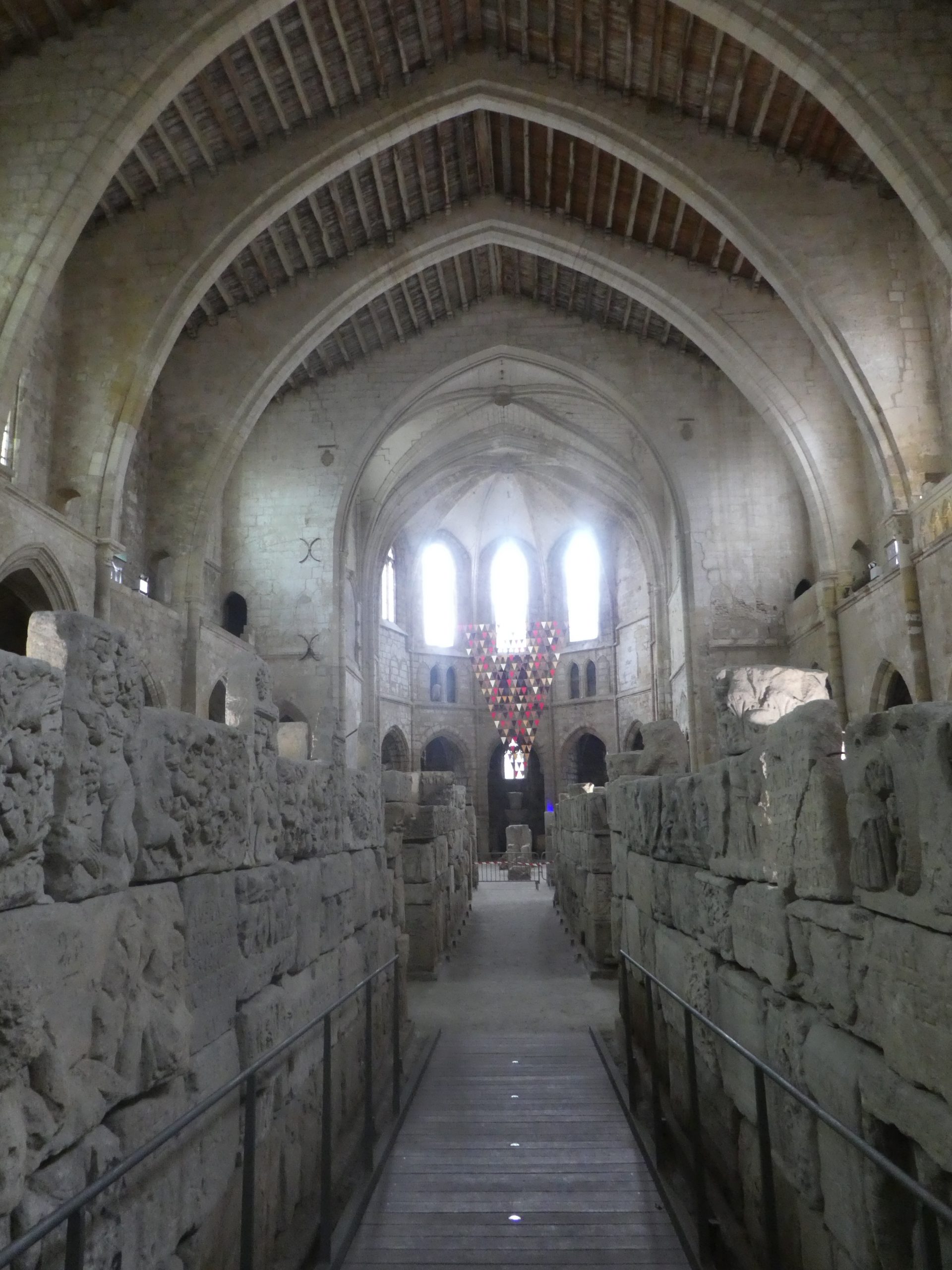
    This is Eglise Notre-Dame de Lamourguier in Narbonne, a beautiful thirteenth century Gothic church. I visited in 2017, not just because it looked an interesting church, but because it housed nearly 2,000 blocks from the Roman period. They had been used in the construction of the city walls in the sixteenth century and when in the 1860s the walls were taken down, they clearly didn’t know what to do, so they dumped them all in the church. And there they remained until very recently, although fortunately, I saw them in situ.

    When I visited I tried the door and it was shut. I assumed that I had misunderstood the opening times or that they were perhaps a little fluid, so I meandered off, probably slightly grumpy. A staff member then rushed out of the door and said something random in French (it probably wasn’t random to her), which transpired to be her telling me she had forgotten to unlock the doors and had wondered why the museum was quiet. Fortunately, I banged about on the door because I’m slightly clumsy, so she heard me. Very friendly welcome incidentally, I was given a sheet in English telling me what to look out for.

    I accept that this looks like some arrangement that I’ve set up, stacking up thousands of pieces of Roman stone in an historic building.

    Perhaps at first it looked like it might all fall down, but it was in fact all quite safe. Or, at least, I didn’t knock anything over. So, here are some photos of the stone and it’s pretty clear to me now that I’ve forgotten to take a photo of the information sheet, so I have no bloody idea what half of this is. Or indeed any of it. But I know I spent well over an hour looking for the stones the curators thought were of particularly importance.

    I thought that this was quite magical, especially as I was the only person meandering their way around the museum, which was primarily I suspect because the staff member had forgotten to open it.

    One sad thing though, and as usual, I’ve found something to moan about. I visited here in 2017 and I’ve discovered that they’ve moved all this to a brand new museum designed by Foster & Partners. The museum isn’t quite yet open and having looked at the plans that have been published, I completely hate the new building.

    This looks hideous to me, creating a sense of distance between the stones and the visitor, and instead getting them to use a screen to no doubt find out more. They’re stacking up these items up so they can’t been engaged with and it looks like an Amazon warehouse, bright, but not really conducive to a useful visitor experience. If that means you can see the objects up close like at the National Railway Museum stores, then that is quite marvellous, but in the image above the barrier that forces visitors several feet away from the stones is visible. The plan is to split the nearly 2,000 stones that were in the church so they heap a load in a wall which has no relevance to anything, and put hundreds of others of them in a reserve store. A great deal of bloody use they’ll be there.

    This is the other design image. Well, what a lovely cafe the museum will have. Who needs heritage when you can have a lovely cafe?

    I’ve spent a little time trying to find out what the reaction of other people in the locality is, as I tend to have an instant dislike to museums where they put technology ahead of the thing they’re meant to be displaying. I haven’t found much, but what I have found is pretty negative about the presentation of the stones and one person has said they’ve shoved them all behind wire mesh. Anyway, since the museum isn’t open yet and I haven’t visited it in its new location anyway, perhaps it’s all lovely and better than I expected.

    But, I still love how the stones were presented in the Eglise Notre-Dame de Lamourguier, making it one of the most memorable museums that I’ve visited.

  • Streets of Norwich – Nunns Yard

    Streets of Norwich – Nunns Yard

    Part of my Streets of Norwich project….

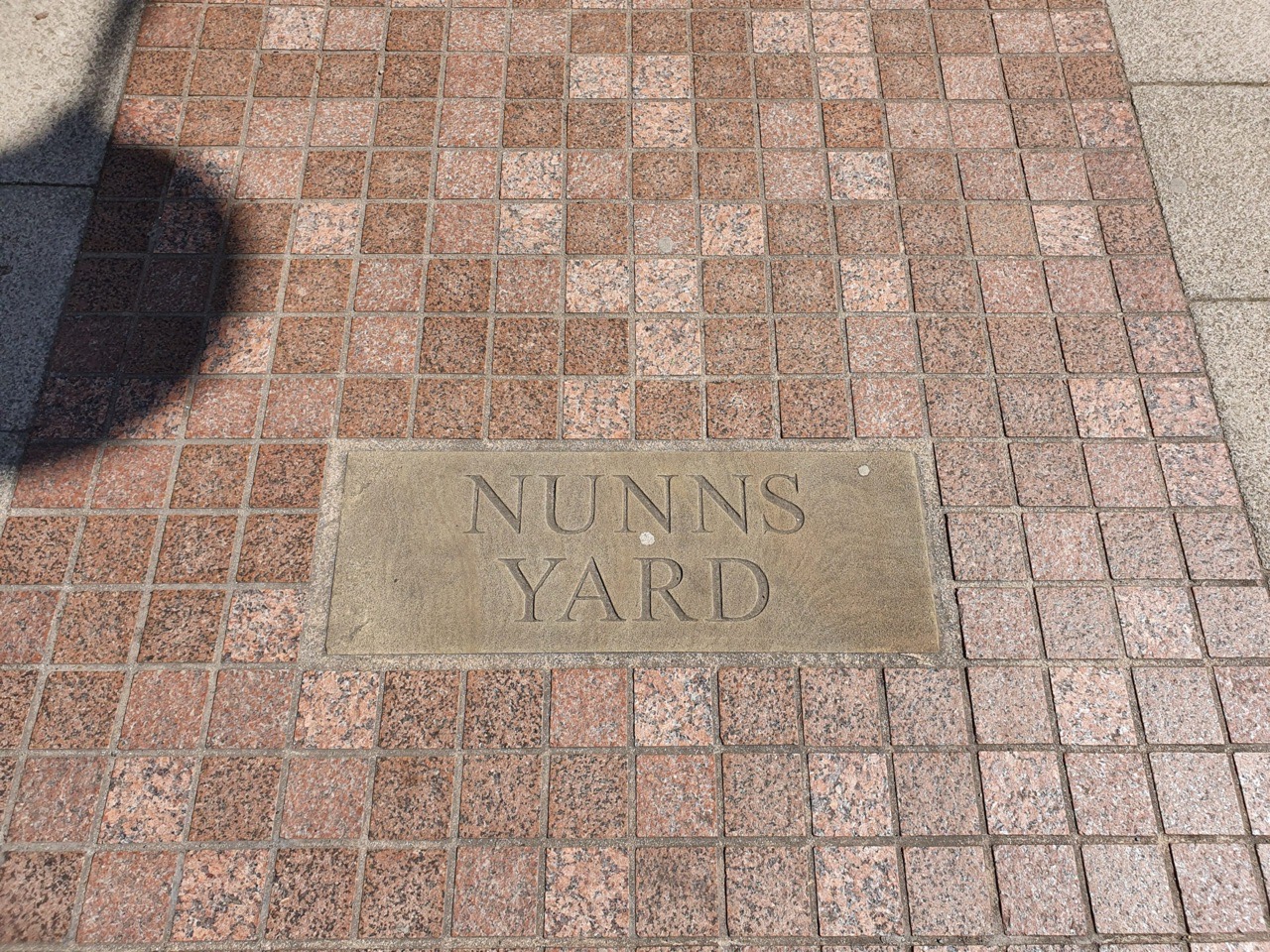
    I like how the council have placed several of these tablets on the pavement along St. Augustine’s Street, noting where a number of yards are located.

    The yard is now closed off and its named after the Nunn family who ran a number of businesses in this locality in the early nineteenth century. Looking at some old census records for this yard, it’s notable just how many people lived in each household. In one house, the head of which was Charles Coxford, there were seven people in a small property (and some along this street had twice that number), including three lodgers.

  • London – British Museum (Bishopgate Bridge by John Thirtle)

    London – British Museum (Bishopgate Bridge by John Thirtle)

    I usually visit the British Museum three or four times a year, something which is a little difficult to do with the current virus situation, primarily because it’s shut. However, they’ve placed hundreds of thousands of images on their web-site, so this will have to do me for the moment. The images can be used non-commercially, as long as the British Museum is credited. So, this is their credit.

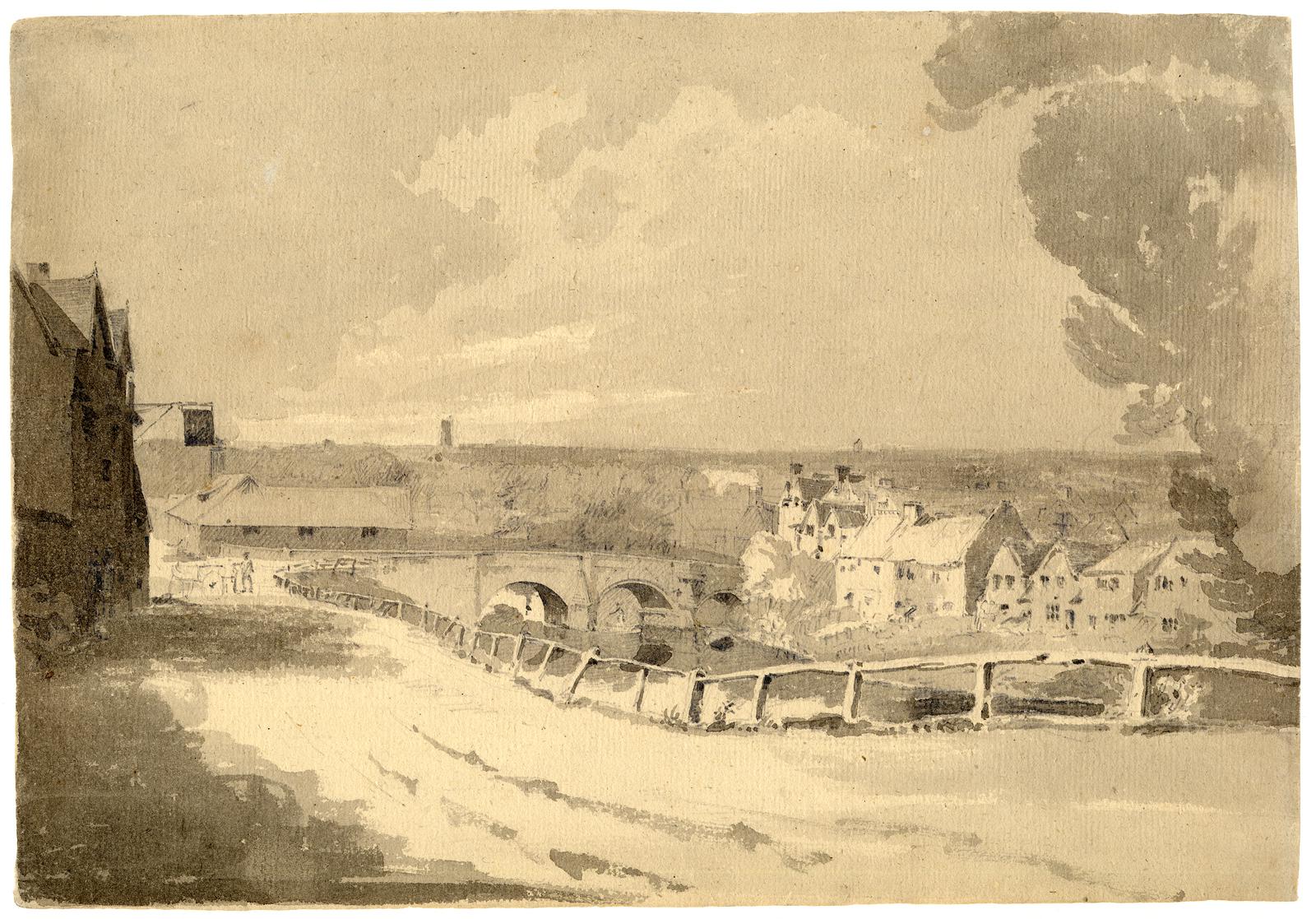
    This drawing was made by John Thirtle, likely at the very end of the eighteenth century or the early part of the nineteenth century. The museum purchased the drawing from Andrew Wyld in 1977, a dealer in fine art. Like nearly everything I seem to look up, this artwork isn’t on public display and they don’t seem to have used it in any exhibitions or the like. It’s a pen and grey ink drawing with a grey wash, showing Bishopgate Bridge. Thirtle is buried in the Rosary Cemetery, a reminder to myself that I should go and have another investigation there as I haven’t visited in a while.

    I think this photo was taken from around the same place as the above drawing was made, I was slightly hampered by three things. One were bushes, one was a big tree and the other was a blasted fence where I wanted to stand to take the photo. I didn’t fancy having any little incidents by climbing over that small fence and falling into the River Wensum, so this is the best that I could safely get.

  • Dictionary of the Vulgar Tongue – Day Fifty

    Dictionary of the Vulgar Tongue – Day Fifty

    The Dictionary of the Vulgar Tongue was first published at the end of the eighteenth century, and given that the Coronavirus crisis is giving too much time to read books, I thought I’d pick a daily word from it until I got bored…..

    Buffle-Headed

    Well, that’s day 50 of this virus thing reached, and I haven’t yet got bored of these words from the dictionary, although I’m surprised that I’m still on the letter B. Anyway, this is one of my favourite phrases so far, the dictionary defines it as “confused or stupid”, so I feel that I can get this into conversation a lot. The word ‘buffle’ used to be an alternate word for buffalo (it’s still the French word), but it also means “to be puzzled”. I can’t find any dictionary link this to the word ‘baffle’, but it’s hard to see that it isn’t linked, given that it means the same.

    There’s not much use of the word buffle-headed today, with the exception of it being used in reference to a bird. The Bufflehead is a small sea duck, and it takes its name as its head looks like a buffalo. Well, I don’t think its head looks anything like a bloody buffalo, but that’s what the OED says. Sadly, it’s now an archaic term, but any word that means “dull, stupid or blundering” should be brought back into use, as we don’t have enough words for that.

  • Dictionary of the Vulgar Tongue – Day Forty-Nine

    Dictionary of the Vulgar Tongue – Day Forty-Nine

    The Dictionary of the Vulgar Tongue was first published at the end of the eighteenth century, and given that the Coronavirus crisis is giving too much time to read books, I thought I’d pick a daily word from it until I got bored…..

    Bufe Nabber

    I’ve found no evidence that this phrase was used in any book or magazine, although it’s marked as criminal slang, so it was likely used informally and verbally. The dictionary defines this as “a dog stealer”, which is interesting insomuch that this was a crime that was clearly a problem in the late eighteenth century, an early version of dognapping. And “bufe nabber” is a more exciting term for the crime than dognapping. Another one to get back in the vernacular.