Blog

  • LDWA 100 – Q & As with Rob Newell

    LDWA 100 – Q & As with Rob Newell

    This page is all part of my effort to walk the 2021 LDWA 100.

    My latest series of posts is asking some more professional walkers who have actually completed the walk about how they have got on. And today’s beautifully crafted questions have been answered by Rob Newell, from Norfolk & Suffolk group, who has completed two 100 events and has a Twitter account at https://twitter.com/RobMarlinsUK. A fan of David Morgan, I’ve always thought that Rob has a huge advantage with his height and this is why he can complete events faster than me. But, as he himself says, it’s not about the time and it’s not a race. Although secretly, if I’m near to the end of an event I try and rush myself past anyone I possibly can who is ahead in the hope of moving a few places up the results table…..

    Anyway, I digress. Back to Rob.

    Q. When was your first 100?

    The Cinque Ports 100 in 2018

    Q. When you finished your first 100, did you think you’d do another?

    Yes, definitely. The experience of the Cinque Ports 100 was so amazing I knew I had to do more.

    Q. You once nearly retired on a 100, but carried on to finish. How did you get the mental strength to carry on?

    On the Hadrian Hvndred I got a chill going over the top of Cross Fell in some of the most atrocious stormy weather I have ever walked in. The conditions over the next climb at High Cup Nick just compounded the problem. I came off the mountain shivering and walking very, very slowly. Morale hit rock bottom and I knew it was all over. I approached the checkpoint, a draughty barn and was welcomed by Graham Smith and the Kent LDWA. He asked me how I was and I said not good, but rather than take my tally card he comforted me in the fact I had loads of time. But as soon as I sat down I couldn’t stop shivering, the feeling that I had failed took over and I burst into tears. I was wrapped in blankets and a hot water bottle but after several cups of hot soup and tea later I felt better and was encouraged to keep going.

    Mentally I overcame the remaining distance by determination to finish and by splitting the remaining distance in my head. I had 7 miles to think about to the next checkpoint, not the 30 miles I had left. This is essential at the start of the 100, don’t think about the distance or it will become overwhelming. Instead split it up between checkpoints and the notable areas on the challenge, it’s not as daunting

    Q. What would you pick at a checkpoint, two sausage rolls, one chicken bake or one steak bake?

    Ideally would alternate between each checkpoint but if I had to choose one it would be the Chicken Bake

    Q. How important are the marshals to you at checkpoints on longer challenge events?

    The marshals are vital, welcoming you in, checking that you are ok and making sure you have enough food and water before setting off again. Later on in the events they really care for the bewildered walkers as they stumble into the checkpoint, getting drink and food for you and offering some friendly encouragement

    Q. Do you recommend others consider using walking poles?

    I personally like poles on longer events as they take pressure off my legs and knees plus helps me straighten my back. I think this along with the right hydration helps prevent strain on the legs. I use Pacer Poles as the get me into a rhythm. However they can be annoying as they are unwieldy when trying to read the route description! So I now only use on long events.

    Q. Have you hallucinated towards the end of a walk?

    Yes, a Roman chariot but with 4 people with Georgian style wigs at the end of the Cinque Ports (it was actually a bush) and there were people standing by the trees in the woods near Hexham racecourse on the Hadrian Hvndred who were actually not there. I said hello to a few of them!

    Q. Other than your area of Norfolk & Suffolk, where would you most like to walk a 100 event in the UK?

    Scottish Highlands or the Isle of Wight

    Q. Are you more reliant on the route description or the GPX file?

    GPX file, however I do try to follow the description and then use GPX as a back up

    Q. Have you been scared of a sheep / cow / snake / pig / seagull or similar on a challenge walk?

    On the Wye Valley 50 during the night I looked down a valley to see thousands of little lights shining back at me, I then realised they were sheep! Also on The Harvest Hobble in Lincolnshire a farmer opened a gate to let a herd of cows out as I walked past, about 50 cows then followed me for half a mile.

    Q. What’s the snack of choice that you take with you on the 100?

    Fredos!

    Q. Do you think you’ll keep on doing the LDWA 100 every year?

    Yes!

    Q. Is your 100 certificate proudly displayed on the wall at home?

    Yes!

    Q. To those people who are thinking about taking part in their first challenge event, maybe just 18 miles, what advice would you give them?

    Do a few warm up walks slowly building up the distance, experiment with socks and footwear to find the most comfortable solution for your feet. On the day keep hydrated and don’t worry about the speed of others, it’s not a race.
  • LDWA – Group Walking is Back

    LDWA – Group Walking is Back

    Well, how lovely, group walking is back from next week in England with LDWA groups, albeit with a requirement to follow the guidelines set down by the LDWA NEC. But, it’s a start at least of getting walking back to some sort of normality….

  • Hassingham – St. Mary’s Church

    Hassingham – St. Mary’s Church


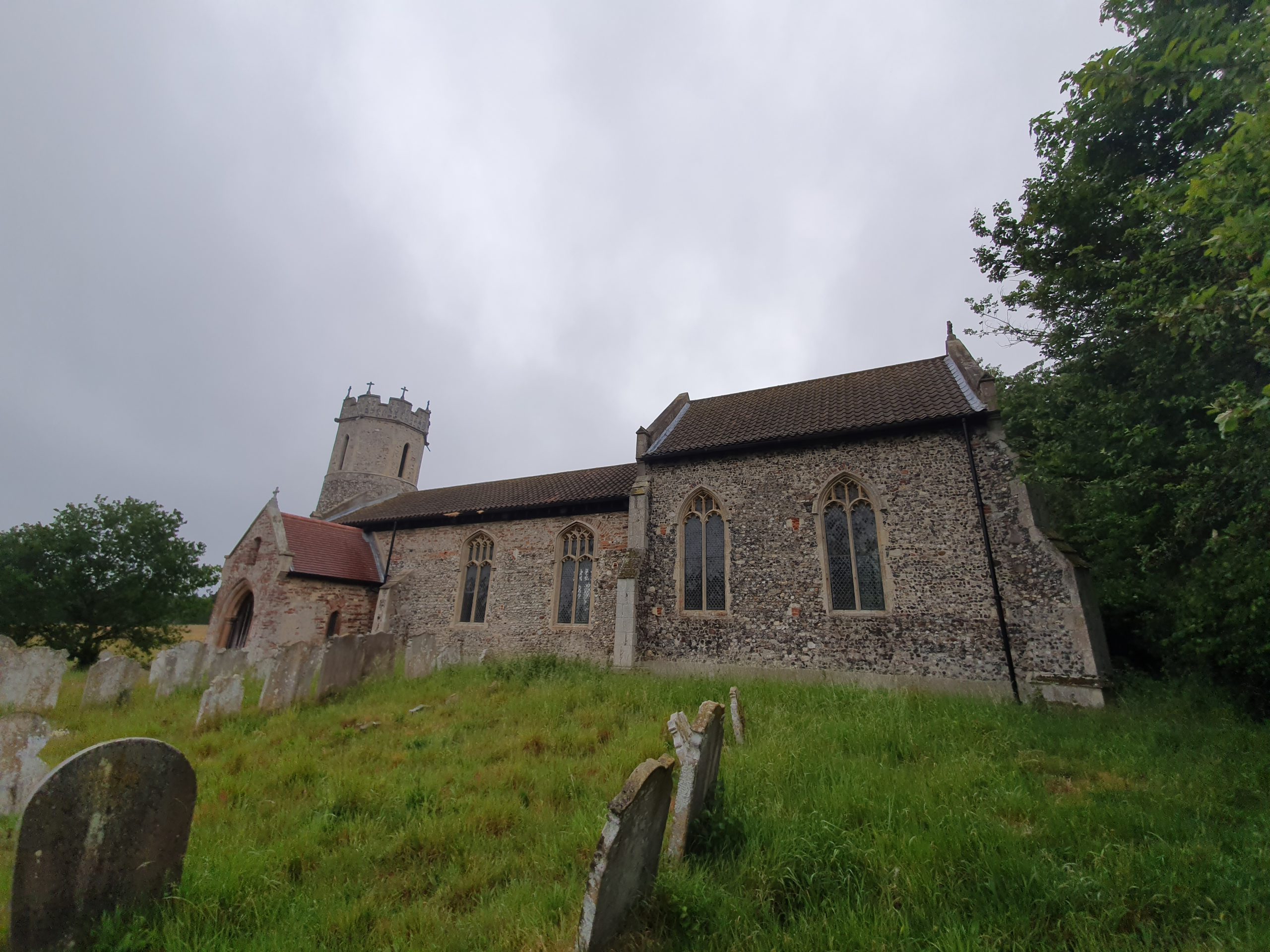
    We visited this church at the end of a walk a few days ago, just as the weather started to look a little bleak. Perhaps that added to the majestic beauty of this rather remote church though. There was probably some sort of Saxon religious building here, although the structure now dates primarily to the twelfth and fifteenth centuries.

    Some of the church looks modern, but this is because of a serious fire in the late 1960s which meant that nearly everything inside was lost and the roof was also destroyed. Fortunately, the situation at Bixley was avoided and the church was rebuilt, but this time no longer with a thatched roof.

    The round tower is from the twelfth century if the listed building record is accurate, and they usually are, although it just looks a bit older to me. The top bit of the tower, which I’m not entirely sure fits in, was added in the fifteenth century.

    Wikipedia notes, so it must be true, that William Haslam was the vicar here in the 1860s and he managed to be converted into a more evangelical approach by listening to his own sermon. That’s one persuasive vicar…..

    There is also the beginning of an interesting story which was repeated in the Norfolk News in 1888 from times long past, which is that the notorious criminal Bartholomew de Devonshyre killed Adam Wyre in Hemblington and then rushed to Hassingham to seek sanctuary at St. Mary’s Church. Unfortunately, there was no mass media at the time and details on this story are somewhat hard to find.

    Not relating to the church, but instead to Broad Farm opposite, there was a huge invasion of coypu in 1960. The local farmer, Wesley Key, said “we catch coypus at the rate of fifty a week, but they still multiply as fast as ever”. Fortunately for the farmer, these have now been eradicated from the British countryside, but I have visions of the coypu over-running the church as well…..


  • Dictionary of the Vulgar Tongue – Day Ninety-Three

    Dictionary of the Vulgar Tongue – Day Ninety-Three

    The Dictionary of the Vulgar Tongue was first published at the end of the eighteenth century, and given that the Coronavirus crisis is giving too much time to read books, I thought I’d pick a daily word from it until I got bored….

    Croakumshire

    Defined by the dictionary as “Northumberland, from the particular croaking the pronunciation of the people of that county, especially about Newcastle and Morpeth, where they are said to be born with a burr in their throats, which prevents their pronouncing the letter r”.

    This is a handy reminder of the videos produced by Simon Roper on the evolution of language, although the word that was chosen by, I assume, southerners could have been a little more polite about the residents of Newcastle. I’m not sure that the term was that widely used, given that it appears very rarely in print. And, it’s a reminder of the shifting county boundaries, Newcastle was once part of Northumberland, before being defined as its own county and now it’s been shunted into Tyne and Wear.

  • Norwich – Waterloo Park Area Photos

    Norwich – Waterloo Park Area Photos

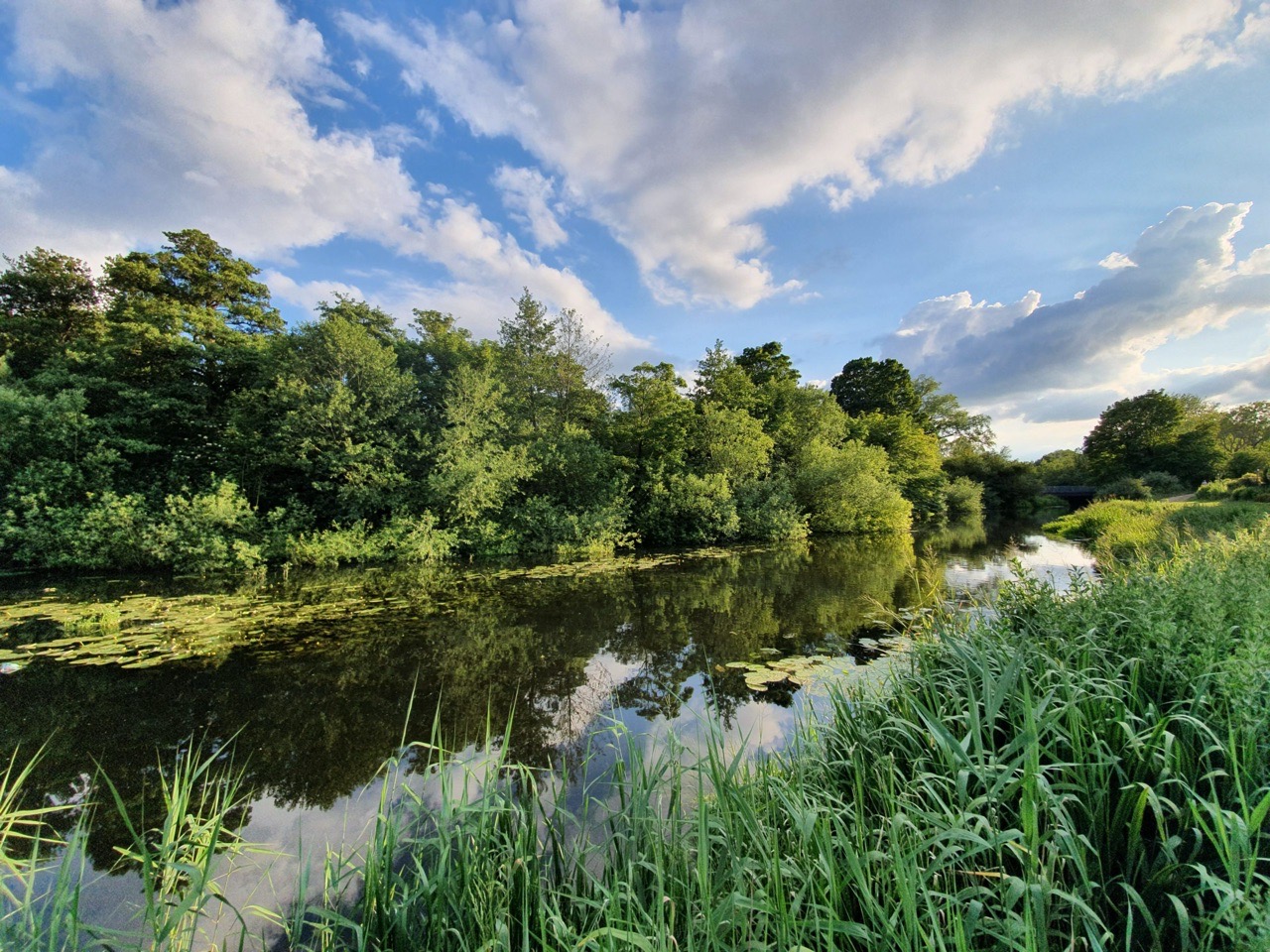
    Just photos of the Waterloo Park area, along with Wensum Park and the Marriott’s Way, which is the former rail line between Norwich and Aylsham. It’s a reminder of much green space there is in areas relatively near to the city centre.

  • Shotesham – Photos

    Shotesham – Photos

    Some of the photos that I didn’t upload from the Shotesham walk a couple of weeks ago….


  • Norwich – Greggs (Re-opened)

    Norwich – Greggs (Re-opened)

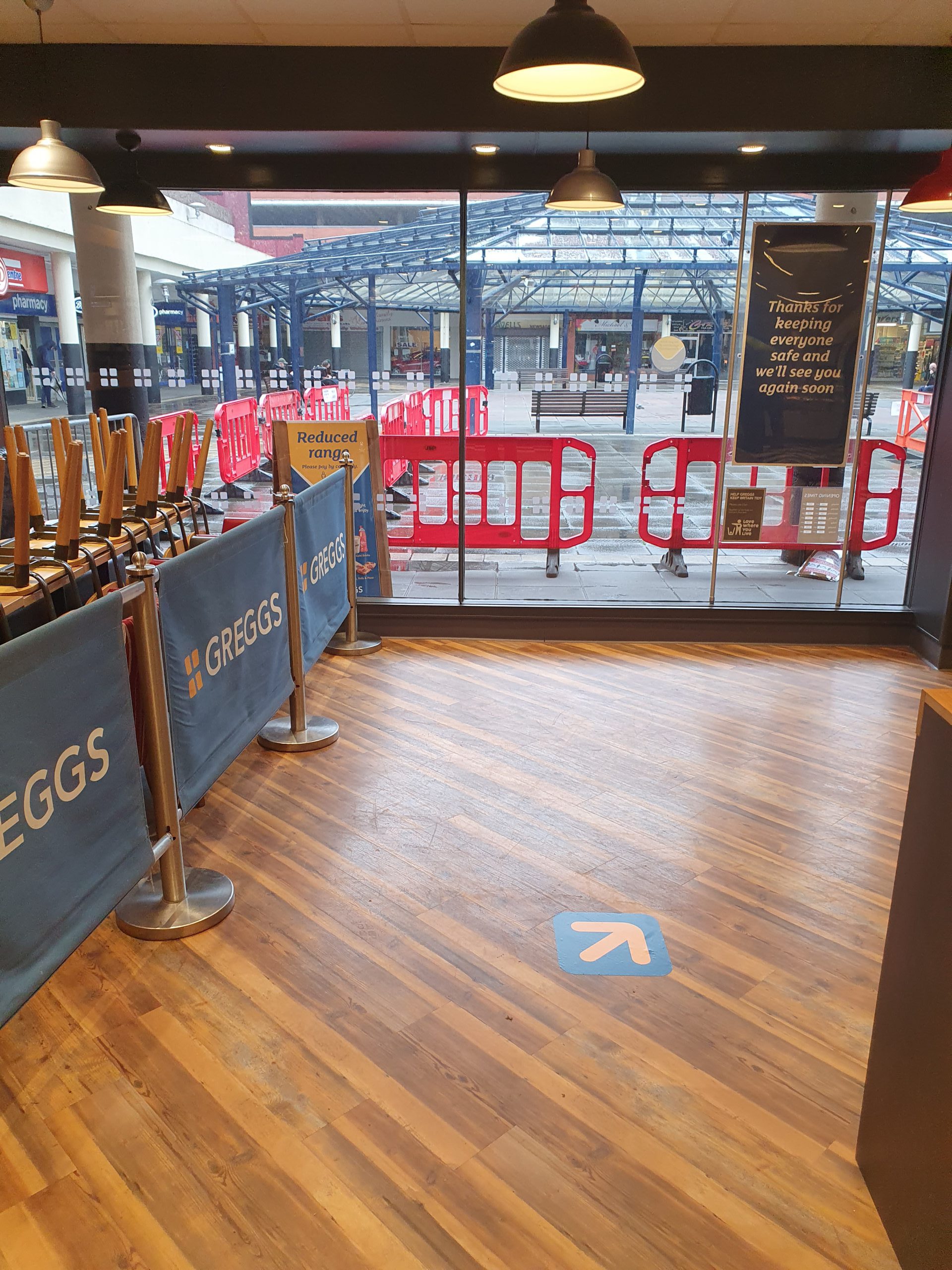
    So, today is the day that Greggs re-opened. I thought it a bit ridiculous to get there at 09.00 which was the time that they formally opened their doors, there are many other important things to think about in life at the moment. Getting there at 09.00 would have looked desperate.

    At 09.21 I arrived at Greggs in Anglia Square, just for a sausage roll at the moment. It seemed excessive to get too excited and start ordering more exotic items, slow and steady is important.

    I thought at first that these were queue barriers. Indeed, they might well have been, but since it was pouring with rain, there was no queue.

    Looking good…. Well, bar that steak bake which has burst with excitement.

    Nice and clear.

    And there we go, life is returning to normal.

  • Smithsonian Magazine – Charlie Papazian

    Smithsonian Magazine – Charlie Papazian

    There’s an excellent article in this month’s Smithsonian Magazine about Charlie Papazian, a craft beer pioneer in the United States. I hadn’t realised that in the early 1970s, it was illegal to home-brew in the United States, probably some legacy from the Prohibition era when a nation feared the consumption of alcohol.

    The author of the article, Matthew Shaer, asked Papazian:

    “Could you have back in the 1970s have imagined walking into a brewery and ordering a peanut-butter-and-jelly-flavored stout?”

    Papazian replied:

    “It’s difficult to stress how different things were—at every level”.

    Quite right and, incidentally, that stout sounds delicious….

    There are two paragraphs in the article which are a reminder of just how far craft beer has come, and I agree with the “largely interchangeable” comment from the author….

    “Today, when many states in the nation are home to 100 breweries and some states count six or eight times that number, it seems almost impossible to imagine that beer was a relatively uniform and even uninspired commodity for most of recent American history. Lagers pale in color and low in alcohol were popular as refreshment but did not engender much connoisseurship or olfactory debate. It was the stuff you slugged back after mowing the lawn on a hot day.

    In 1949, the year Papazian was born, the market was almost entirely dominated by big corporations that specialized in largely interchangeable German-style beers: Miller, Pabst, Budweiser, Coors. “I grew up in a mid-century culture, where with food, it was cool to be homogeneous,” Papazian recalled. “You turned on the TV, and it was Velveeta cheese, it was frozen dinners, it was white bread. Wonder Bread! Flavor diversity wasn’t really a thing.”

    I don’t know anything about Papazian other than what’s written in this article, but it sounds like he has made a fine contribution to craft beer…..

  • Florence – Museo degli Innocenti (Christ the Redeemer by Vincenzo Ulivieri)

    Florence – Museo degli Innocenti (Christ the Redeemer by Vincenzo Ulivieri)

    This representation of Christ the Redeemer was painted by Vincenzo Ulivieri, or perhaps Francesco Morandini (also known as Poppi) but I’ve lost something in translation as the gallery states this was painted in 1530 on wood. That might make sense, but the same gallery information board says Ulivieri lived from 1565 until 1600 and Morandini lived from 1544 until 1597, so something doesn’t quite work there.

    Dating of the painting to one side, it’s a copy of the artwork painted by Andrea del Sarto in around 1515 for the Santissima Annunziata. This copy was commissioned by Vincenzo Borghini, a Benedictine monk who was the rector, or prior, at the Ospedale degli Innocenti from 1552. To my untrained eye, the painting of the face looks a little crude, but the colours remain rather vibrant and the face of Christ looks warm and compassionate.

  • LDWA 100 – Q & As with David Morgan

    LDWA 100 – Q & As with David Morgan

    This page is all part of my effort to walk the 2021 LDWA 100.

    In the first part of my new series of probing interviews (OK, not that probing, this isn’t the Daily Mail, although perhaps in a few months maybe the readers of this blog will demand sensationalism….) with experienced LDWA 100 walkers. And there can be few people more cool, calm and collected than the LDWA’s national chair, David Morgan. I can say, if there wasn’t an IT fund to raise money for, I suspect we in Norfolk & Suffolk might be raising money to fund a statue in somewhere like Fakenham of this towering walking figure.

    My efforts to walk the 100 will be more like Alan Partridge, but they all count…. You can follow David on Twitter at https://twitter.com/ldwachair.

    So, here we go. People may be surprised that I wrote these questions and not someone like Jeremy Paxman, as I feel they cover the important parts of walking.

    Q. When was your first 100?

    I entered my first 100 mile walk in 1995. I retired at the breakfast point and was wholly underprepared for the mental challenge that the Shropshire 100 offered. I’d not been required to complete a qualifier and I know that if I’d walked 50 miles, I’d have been better prepared. The first 100 that I finished was the Yorkshire Dales 100 in 1996.

    Q. Were you nervous before starting that first 100?

    I wouldn’t say that I was nervous, but I was apprehensive about the challenge that I faced.

    Q. When you finished your first 100, did you think you’d do another?

    I said ‘Never Again’. And we know what happened to that statement!!

    Q. Is completing the 100 just as much about being a mental challenge as a physical one? What would you say to people who are easily distracted and might want to stop to pop in a pub or a Greggs en route?

    I think that the 100 is definitely more of a mental challenge than a physical one. That’s not to underestimate the physical effort required, but it always seems possible to put one foot in front of the other if the mind tells you it’s possible.

    Being distracted by food is a good thing! The way to approach that distraction is to convince yourself that you’re providing the body with calories for later on in the walk. If you have a pint, limit yourself to one. I know lots of people who have done that and I like to have a bottle at the finish waiting for me as an incentive!

    Q. When you’re tired and parts of you are hurting which you don’t want to be hurting, how do you get the motivation to keep going?

    It’s that mental battle again. Focus on the surroundings, the beauty of what you are walking through and take your mind off the pain that you might be experiencing. If it’s at night, it’s often possible to focus on views, particularly when high on a hill or gaze at the stars and enjoy what’s above!

    Q. Have you hallucinated towards the end of a walk?

    I’ve only hallucinated once and that was in 1996 on my first 100. I could see faces in rocks and as I climbed a large hill towards Malham, the path that had become very muddy in the rain became a pink colour.

    Q. What practical advice do you have about foot care? For example, is Sudocrem useful and do you recommend changing socks regularly?

    I don’t use Sudocrem on my feet; I save that for other body parts and use it liberally!

    As for my feet, I always smear them with Vaseline and always wear two pairs of socks. One thin pair next to my feet and a slightly thicker pair on top of that. I change my socks and reapply Vaseline every 15-20 miles. I haven’t had a blister on a 100 in over five years since pursuing this approach.

    Q. You get to a checkpoint and have to choose. Two sausage rolls or one steak bake?

    Tough choice. Quantity or quality? I think I’d go for one steak bake!!
    Q. Are your spirits lifted when being welcomed into LDWA checkpoints?

    Definitely. LDWA volunteers on the 100 instinctively know what you need. The kindness and support offered is humbling. Wonderful people will take your mug and get a cup of tea whilst others will get you food. Others will see when entrants need a bit more TLC and will help them recover before sending them on their way. Marshals do not want to see people retiring at their checkpoints and will do everything they can to help people succeed.

    Q. Is it acceptable to have a little craft beer when 80 miles into the 100 miles?

    Definitely!! If it lifts your spirit, why not?!

    Q. Do you prefer route descriptions or GPX?

    I use both. I prefer to navigate by route description primarily, but use my GPS when a path junction is unclear. I prefer the route description because it helps to keep my mind active and to also ensure that I know exactly where I am in the route description. I particularly like to navigate at night time by the route description and often assume that 100 yards takes about 1 minute to walk. So, if I see a 1000 yard stretch, I can relax for about 8 minutes before ‘switching on’ and looking for the next feature.

    Q. Have you been scared of a sheep / cow / snake / pig / seagull or similar on a challenge walk?

    A badger ran out in front of me on the 2017 North Yorkshire Moors 100 and I jumped backwards as it startled me! I admit my heart did miss a beat!

    Q. To those people who are thinking about taking part in their first challenge event, maybe just 18 miles, what advice would you give them?

    Enjoy the experience, engage in conversation with other walkers, focus only on the next checkpoint, enjoy the hospitality that the LDWA is famous for and once you’ve finished, look forward to booking yourself onto the next adventure.