
It was a delight that Maria led the first Legstretchers walk as we returned to walking longer distances. And not only did she lead the September walk, but she’s leading the one in October as well.
Just photos here….


It was a delight that Maria led the first Legstretchers walk as we returned to walking longer distances. And not only did she lead the September walk, but she’s leading the one in October as well.
Just photos here….
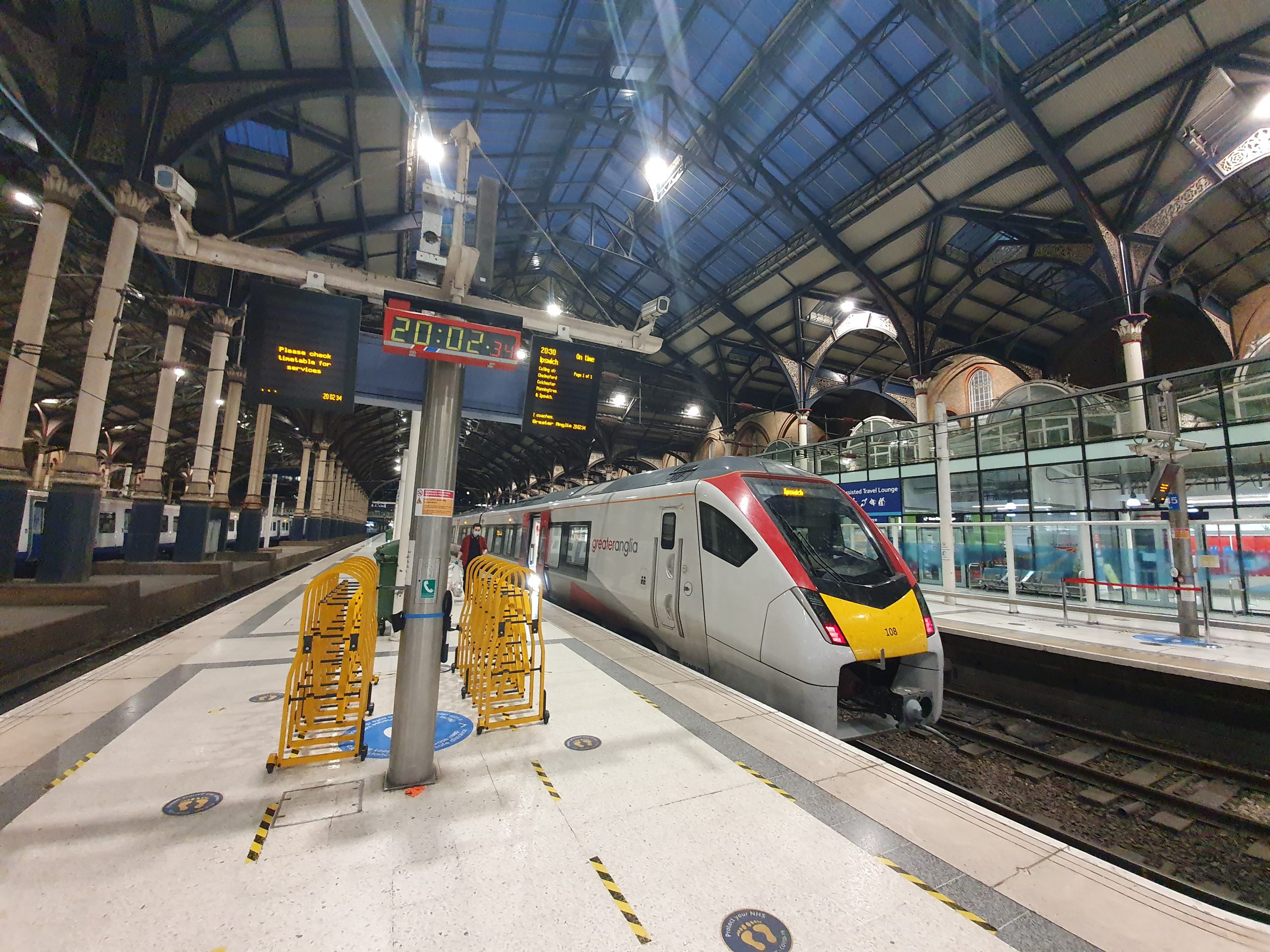

And, here we are again, at London Liverpool Street with a rail service back to Norwich. Or, in this case, a service to Ipswich and a bus took me the rest of the way. I was placed to note that the toilets are back open at London Liverpool Street, all newly remodelled and still free of charge.

The trains are announced much earlier than they used to be, half an hour before the departure time in this case. I was one of the first couple of people to board, as is evident in the above photo.

The carriages were from the Stansted Express service, the 745/1 FLIRT cars, which I think are the same (with one caveat below) as the standard services from Norwich to London Liverpool Street. But, I don’t know my trains well enough to say (write) that with any certainty.

One difference is evident inside, there are no tables at any of the seats and there is some extra space for cases. I don’t know why there are no tables, it’s a bloody nuisance, and I imagine it’s another one of Jamie Burles’s good ideas. There are though power sockets and everything worked as it should, with the train being clean and well presented.

Another shot of the carriages. The service ran to schedule and the conductor seemed friendly enough in his announcements, although they kept breaking up. He said when we were near to Ipswich that the bus replacement service would depart from Platform 1, which entirely confused me. He changed this when we pulling into Ipswich to say that the bus service was now operating from outside the front of the station and this did make more sense. He’d probably had a long day. There were only two of us in the end carriage and although the other carriages were a little busier, it was still a relatively quiet service.

I’ve moaned, indeed moaned quite a lot sometimes, about how bus replacement services can be really badly managed. Although at least there were staff around, unlike the little incident that Nathan and I had with Deutsche Bahn last year. This was really rather good, there were staff making clear announcements that customers going to Stowmarket and Diss needed to get a certain bus, with those going to Norwich needing another. All very clear. The service was operated by Wrights Coaches, who I haven’t heard of, and everything seemed professional with them.

I think there’s a vague plan to try and get buses fitted with seatbelts when they’re used on bus replacement services, but there’s no such requirement at the moment. Ideally, perhaps, there would be. But, the bus was clean and not over-filled, it was all comfortable enough.

And back safely into Norwich, four minutes ahead of schedule. The fare was the usual £10 (I say usual, it isn’t always that price, but it’s the price that I’m prepared to pay, so it’s become my usual) which I think is pretty decent value for money. The bus section of the journey is always a faff, but it was handled as well as it could have been, and full marks to Greater Anglia. Although they need tables on their trains, as I like them.
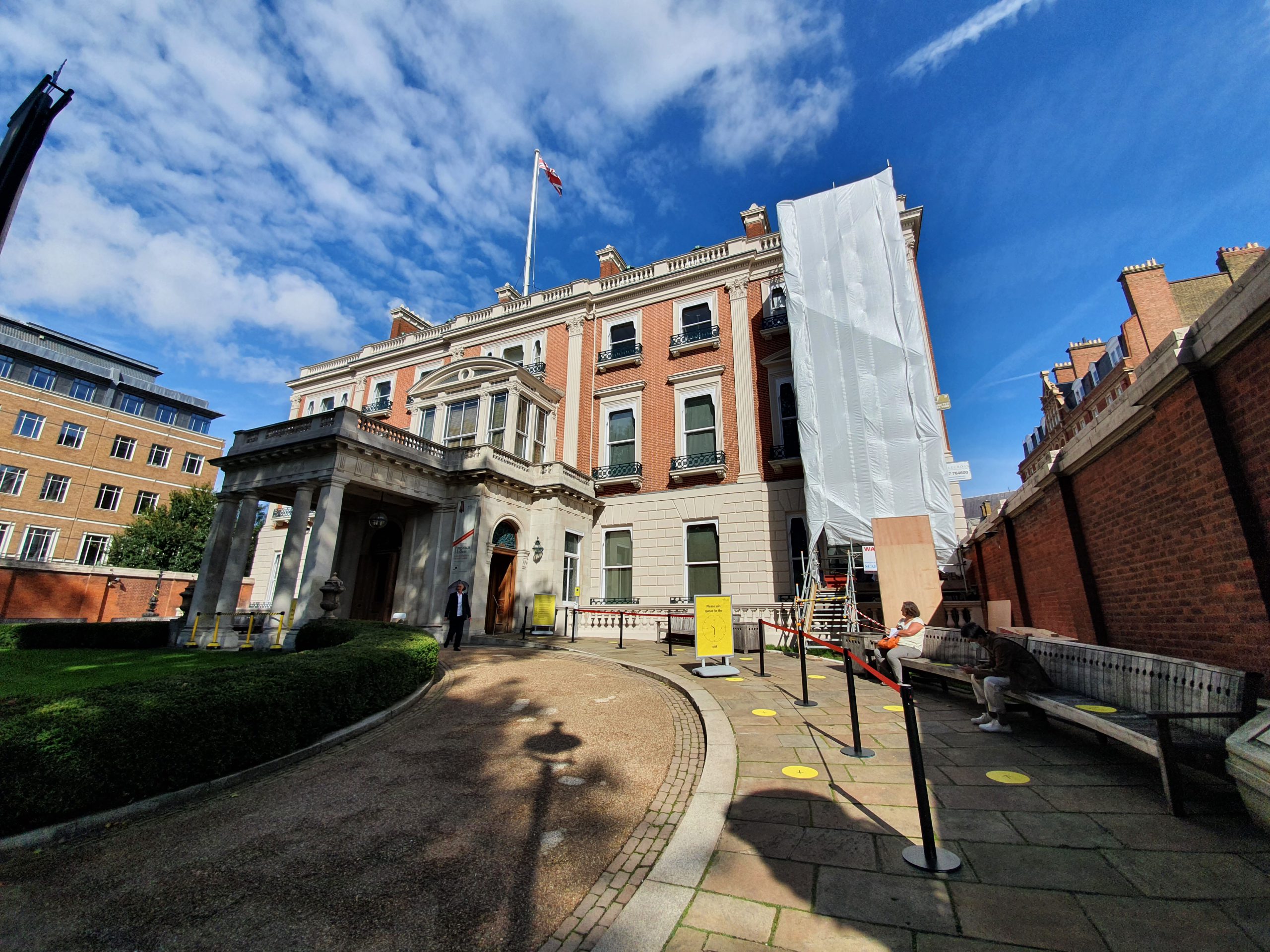

Canaletto, one of the few artists whose works are recognisable from the other side of a gallery, painted this artwork in either the late 1730s or the early 1740s. I hadn’t realised how many of his works that the Wallace Collection holds, one of the highest number in the world.

The painting has an exquisite amount of detail, although the artist shuffled some things about to fit them in the artwork. Artistic licence and all that…. The paintings would have usually been purchased by those on a Grand Tour, a permanent reminder of the things that they had seen on their travels.
The gallery notes (far better than I can), in its long description, that:
“The figures in the foreground represent different levels of Venetian society; from the seated beggar on the left, the merchants in the centre, and the priest and lawyer engaged in conversation on the right. There is the customary assortment of sea vessels in the picture, including a burchiello, or passenger boat, being towed in the middle ground. This is a superb example of Canaletto’s attention to composition. The triangle of the foreground terrace – framed by the temporarily-docked burchiello with the detail of passengers embarking – is matched by the boat in the middle of the painting. Its two masts are in turn replicated in the vertical soar of the Campanile di San Marco and the dome of Santa Maria della Salute.”
It’s not known when Francis Seymour-Conway, the 1st Marquess of Hertford, purchased this painting, but he had been on a Grand Tour to Italy in the late 1730s. It then remained in the family collections until the house and artworks were given to the public in the late nineteenth century.
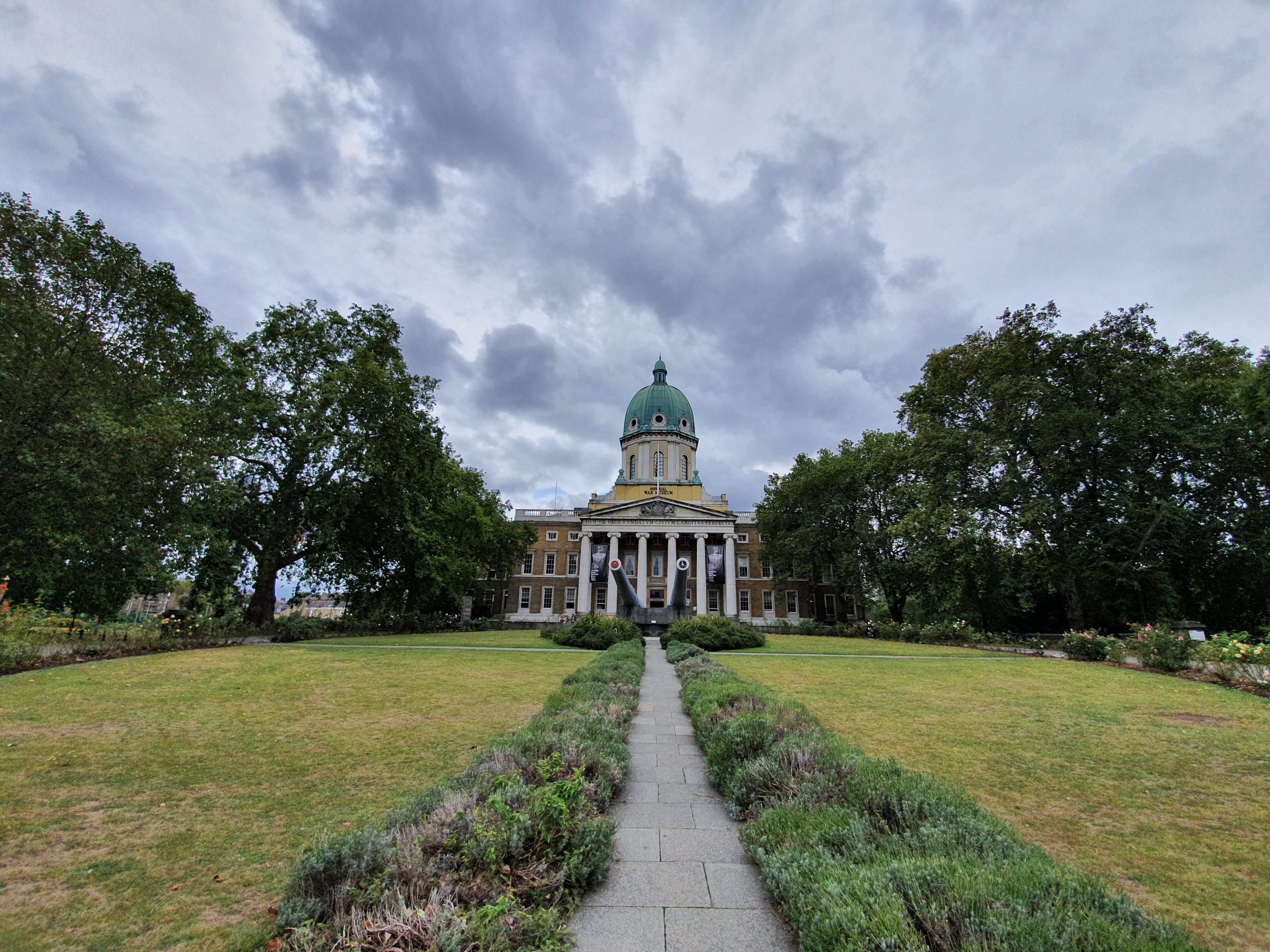

I’ve been having another look at the photo collection of the Imperial War Museum and this is something I haven’t seen before (© IWM HU 88869). It’s an image taken at Prague Airport on 12 January 1939 of Peter Needham, a half-Jewish Czech boy, with his parents. He was part of a Kindertransport flight bringing him to safety, one of around 10,000 children that the UK accepted. Being realistic, he would have likely died if he hadn’t have had this opportunity.
Fortunately, the other side of this tale exists, and Peter (original surname of Niethammer) flew into Croydon Airport and had a happy life in the UK. His mother lived until 1993 and his parents had already commenced divorce proceedings.
An interview with Peter noted:
“Peter Needham (previously Niethammer), was born in May 1934 in Teplice, Czech Republic (then Czechoslovakia). His Lutheran lawyer father, Fritz, was born in Aachen, Germany, on 6 February 1900; his assimilated Jewish mother Anna (nee Bergman), an economic research worker, was born in Most (previously Brux) on 5 November 1910. However, following the September 1938 Munich Agreement ceding the Sudetenland region to Nazi Germany, they divorced, and Anna took Peter to her wealthy parents’ home in Radic, near Prague, of which he retains happy memories.
Jews, though, were not entirely safe. After Anna’s discussion with German clergyman, Wilhelm (William) Wallner, The Barbican Mission to the Jews helped fly Peter, aged 4, from Prague to Croydon Airport, London, on 12 January 1939 with some 20 other children. She escaped soon after, then her parents on 31 March 1939. Peter’s uncles Hans and Seppl also escaped. Germany invaded and occupied rump Czechoslovakia mid-March 1939; a relative subsequently perished in the Holocaust.”
His full story is at https://www.ajrrefugeevoices.org.uk/RefugeeVoices/Peter-Needham.
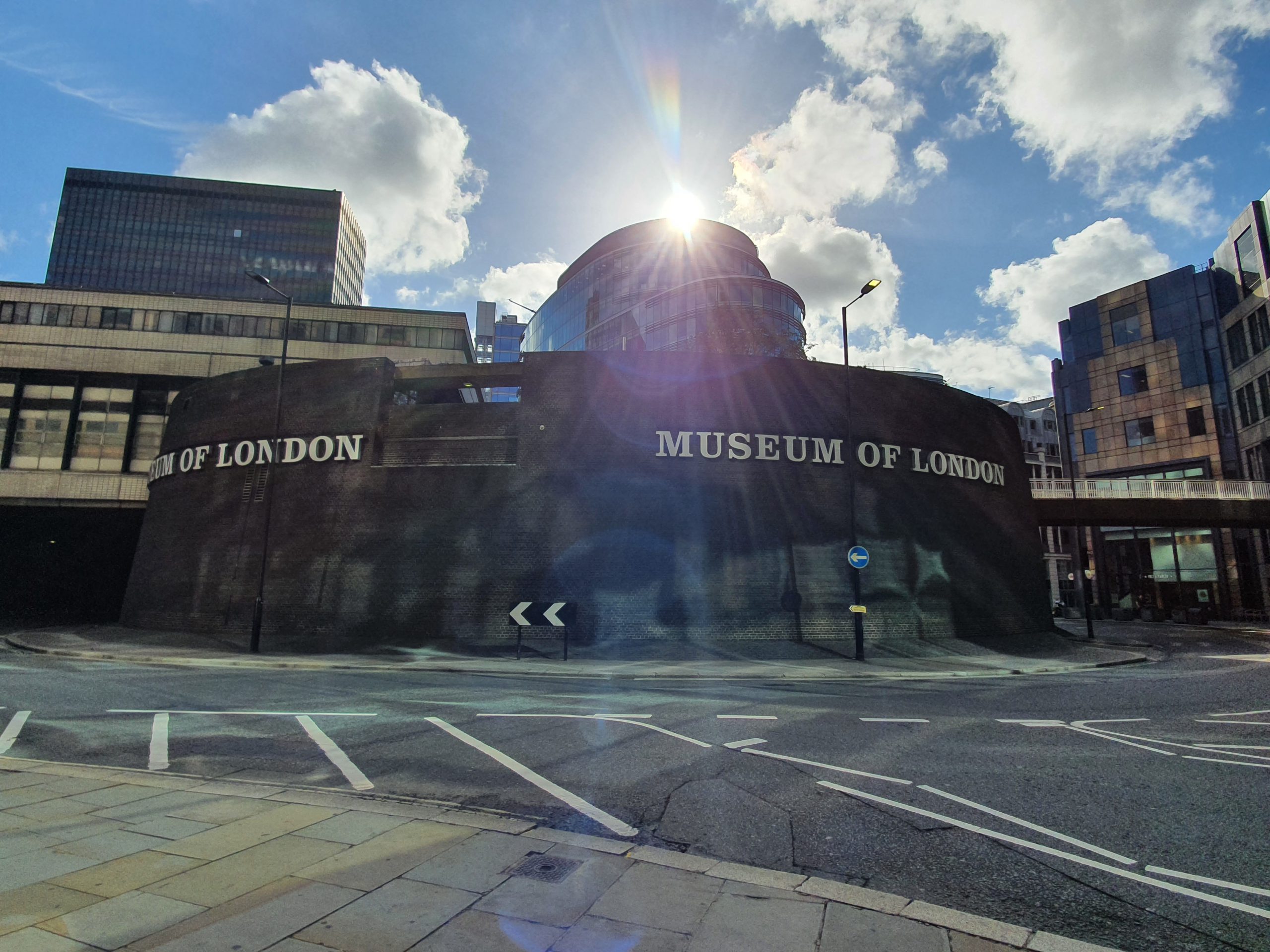

This might not look the most exciting of exhibits at the Museum of London, but there’s a lot of heritage in it. It’s a combined lump of smashed glass and window lead from Merton Priory, which would have been caused during the Dissolution of the Monasteries. It’s not known how old the glass and lead is, but it’s probably from the mid to late fifteenth century.
Normally, this would have been carried away by those demolishing the building, but somehow it was overlooked and it was only discovered during excavations of the site between 1986 and 1990. It was quite a fall for the wealthy priory, which in 1437 had held a ceremony in honour of King Henry VI. The site is now a Sainsbury’s supermarket, which isn’t ideal (other than for shoppers) although the foundations of the chapter house remain. Not much else is left, materials were mostly taken to Nonsuch Palace, which in turn was demolished in 1682 to pay off gambling debts. But, at least some of the lead has survived, perhaps not in such a glamorous format as its design intended, but still here as a reminder that the priory once existed.

This sign, now in the Museum of London, dates back to 1929 when it would have been a little exotic in its styling (there would have been light bulbs behind it to provide sufficient illumination), designed to appeal to American tourists to the hotel. I like that museums keep quirky things like this, it reminds me of the Neon Museum in Las Vegas (I accept they have more than one sign though).
The name of the bar at the Savoy, the American Bar, was also evidence of who it was trying to target, namely those wealthy American visitors to London. The bar, which was most decadent, was one of the first in the city to produce a cocktail menu and this was seen as most sophisticated. The museum notes that the grill restaurant would have served “terrapin, clams and oysters imported directly from the US”. I’m not sure about the terrapin….
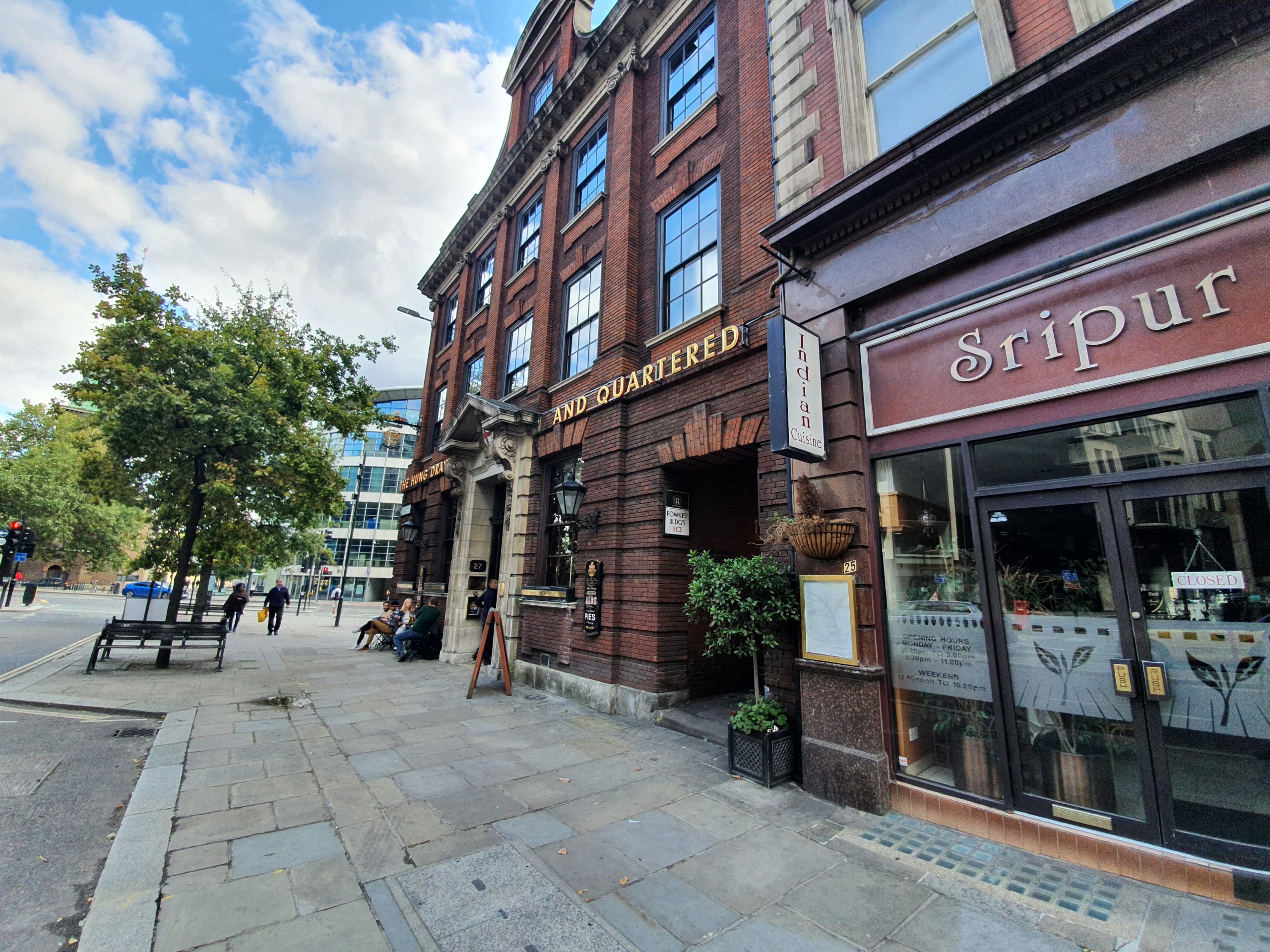
[NB – since I wrote this, the pub has entered the Good Beer Guide]

I’m going to try not to comment that I think this pub name should be the Hanged, Drawn and Quartered. Even Wikipedia agrees that Hung, Drawn and Quartered is wrong, with meat being hung and humans being hanged. However, I won’t dwell….. This is a Fuller’s pub located near to the Tower of London, which has always seemed busy when I’ve walked by in the past (the pub that is, not the Tower of London, although that is generally busy too).

The beer choice didn’t surprise and delight me, but at least there were three options to choose from.

The London Pride was at the appropriate temperature and tasted as it should have done.


It’s fair to say that the pub wasn’t packed. However, there were a couple of customers who came in, but they sat outside. This enabled me at least to get photos of the interior, in what is a clean and comfortable location. There were three bar staff and two kitchen staff, so I’m not sure they were making a fortune at the pub, but everything seemed professional managed.
The service was engaging and welcoming, the staff were keen to greet customers at the door, although that wasn’t difficult given there weren’t many of them coming in. The environment was clean and comfortable, with the track and trace being properly implemented. The drinks prices are reasonable, although the food prices are towards the higher end of the scale.
The reviews of this pub aren’t too bad at all, indeed, it’s clear that the customer service is actually excellent here. The pub responds with some integrity and professionalism to any negative reviews, and it just all feels well managed. In all fairness, this was a much better pub that I had expected given that it would have been easy to turn it into a tourist trap given its location.
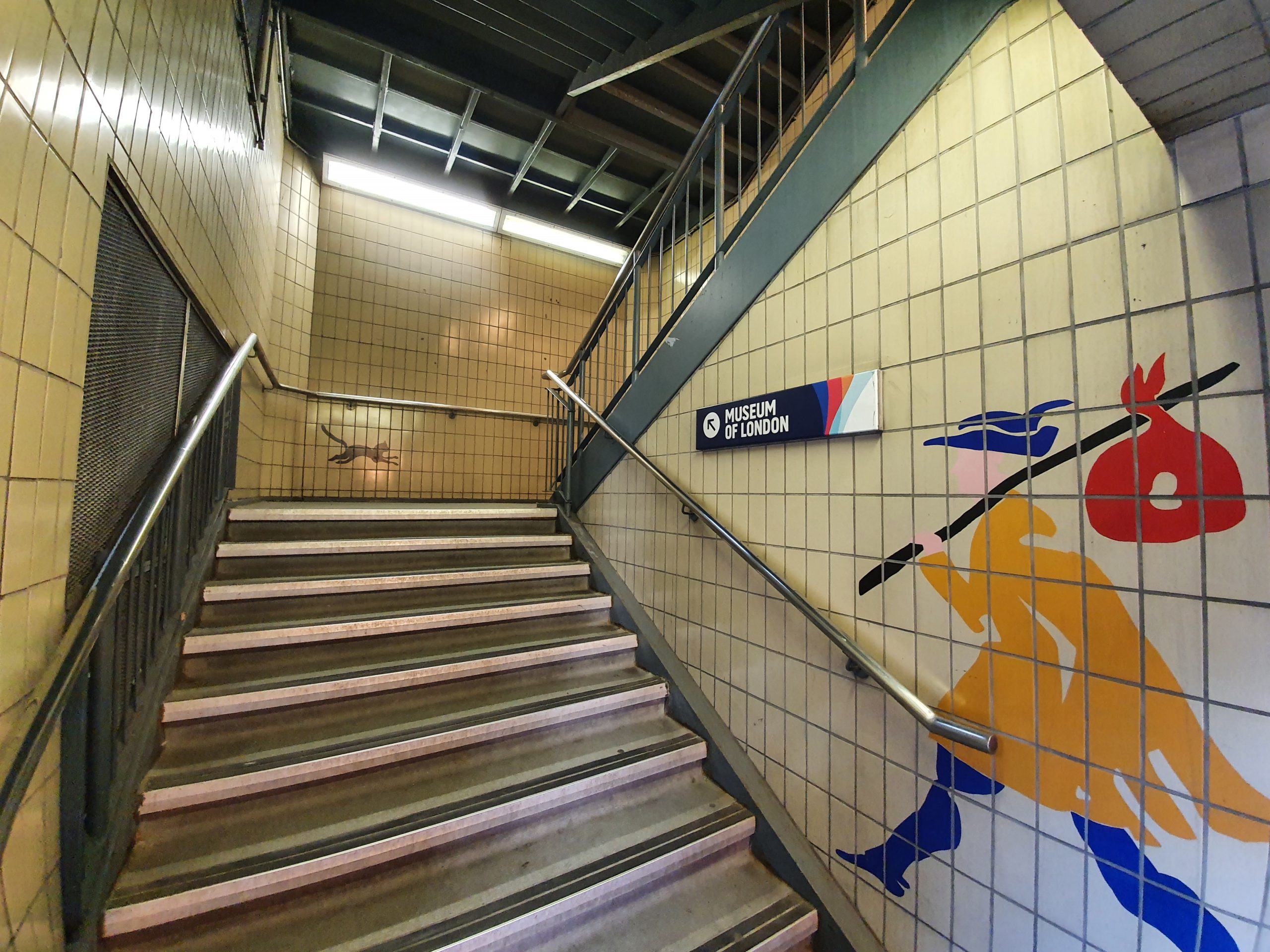

There have been numerous Newgate prisons over the years, but the medieval one was destroyed during the Great Fire of London in 1666. The new one was designed by Sir Christopher Wren and opened in 1672, but work started in 1770 on a more modern building. No doubt much to the annoyance of the authorities, the new prison that hadn’t yet quite opened was destroyed during the Gordon Riots of 1780 (the worst rioting in the city centre of London that has ever been seen).
So, they started again, with the new prison buildings being completed in 1782. This door, dating from that time, is on display at the Museum of London and it’s fair to say that its wooden and iron construction makes it look well-built and secure. The prison itself survived until 1902 and it was pulled down in 1904, with the Old Bailey building constructed on the site.
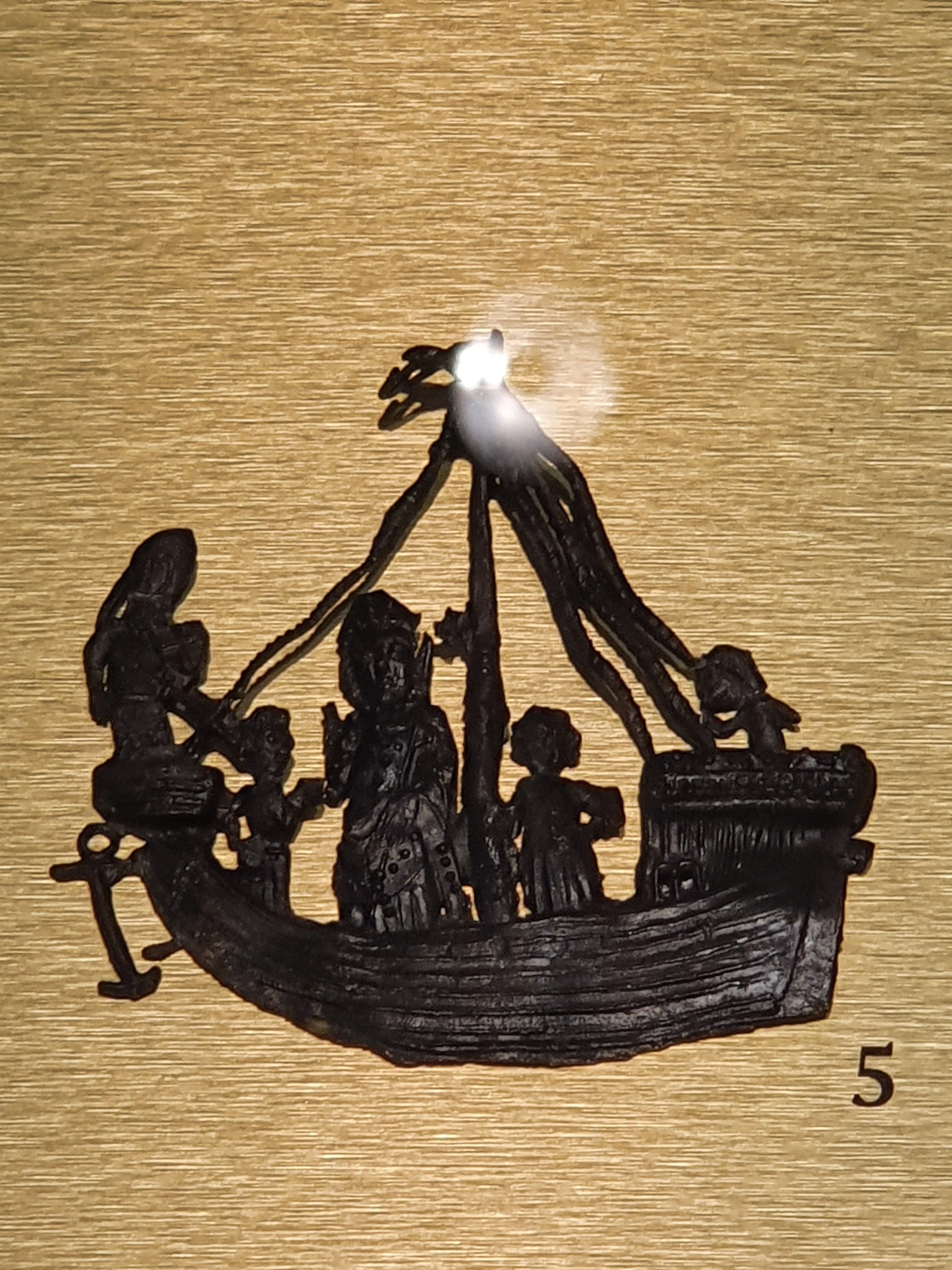

The Museum of London has placed some of its large collection of pilgrimage badges on display, part of what was meant to be an exhibition marking 850 years since the death of Thomas Becket. I like pilgrimage badges, they were produced in vast quantities and modern examples still exist for those who walk routes such as the Camino de Santiago (many other routes also exist, although that’s the one I did and so that’s the one that’s getting mentioned here).
This badge is made from pewter and dates to the end of the fourteenth century, marking when Thomas Becket returned from exile in 1170. He was murdered in Canterbury just a few weeks later by knights who misunderstood what King Henry II wanted. There are numerous figures on the badge, there’s Becket himself, along with a knight, a clerk, a companion of Becket and sailors.
Pilgrimage badges aren’t rare, but they all hold the same historic value that it was likely a treasured possession of someone who had gone on a pilgrimage, often a dangerous journey, and it would have been of great symbolism to them.
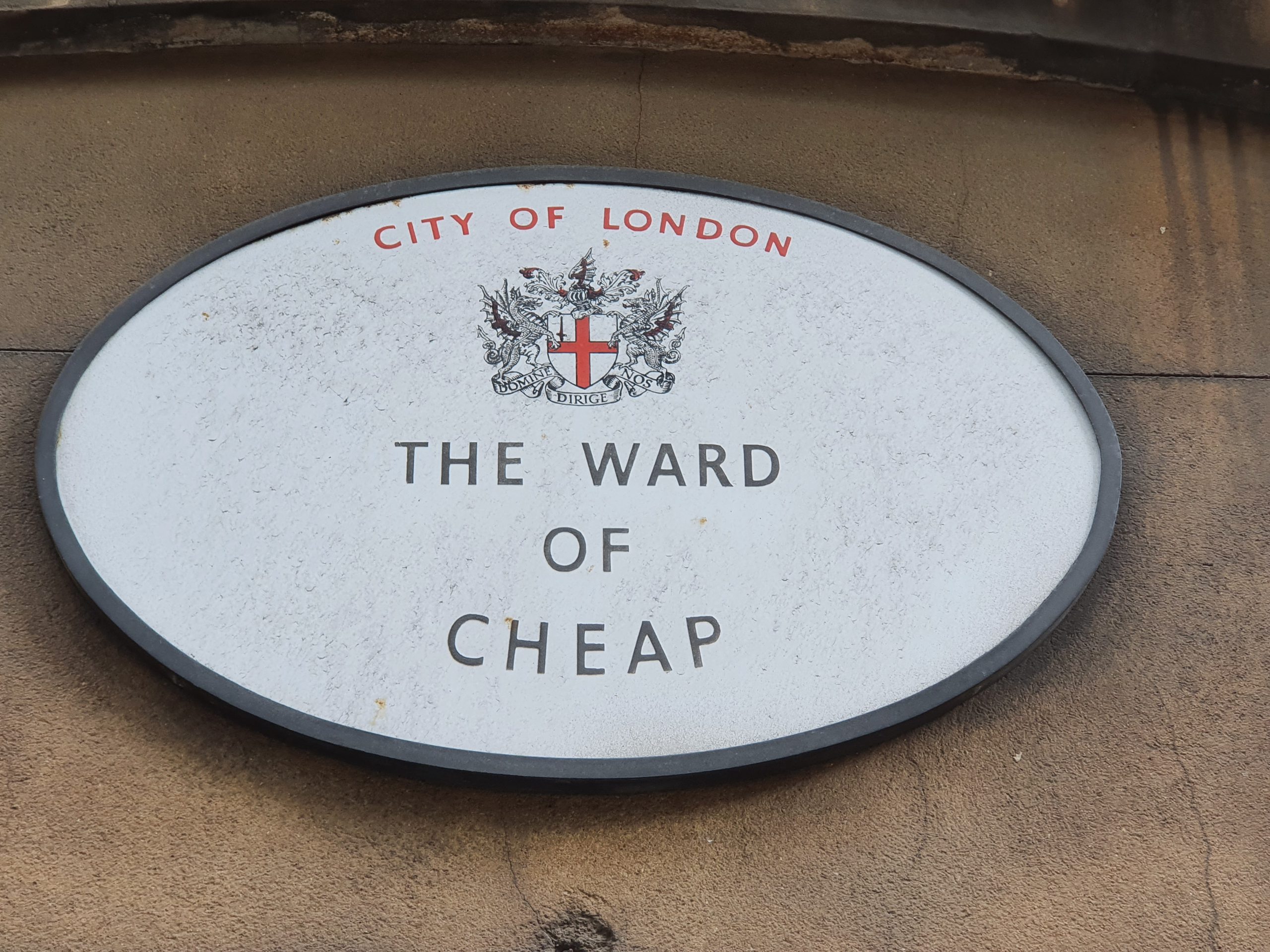

I like this sign, but the modern meaning of the word isn’t the same as the old meaning, which is from ‘chep’, meaning market, derived from the old English ‘cēap’. However, they’re linked, as the modern meaning evolved from a fifteenth-century phrase which was ‘good cheap‘. That means a decent deal from a market-trader, so there’s a pleasant circular nature to all of this.