Blog

  • Dictionary of the Vulgar Tongue – Day 224

    Dictionary of the Vulgar Tongue – Day 224

    The Dictionary of the Vulgar Tongue was first published at the end of the eighteenth century, and given that the current health crisis is giving too much time to read books, I thought I’d pick a daily word from it until I got bored….

    Noddle

    This word is defined by Grose as meaning “the head” and it’s still in use today in the form of phrases such as “use your noddle” and also with a financial company recently taking the name.

    Still in use, but it has been declining over the last century. As for the word origin, it’s known that it was used during the later Middle English period, but none of the dictionaries have found where it came from…..

  • Redlingfield – Redlingfield Memorial

    Redlingfield – Redlingfield Memorial

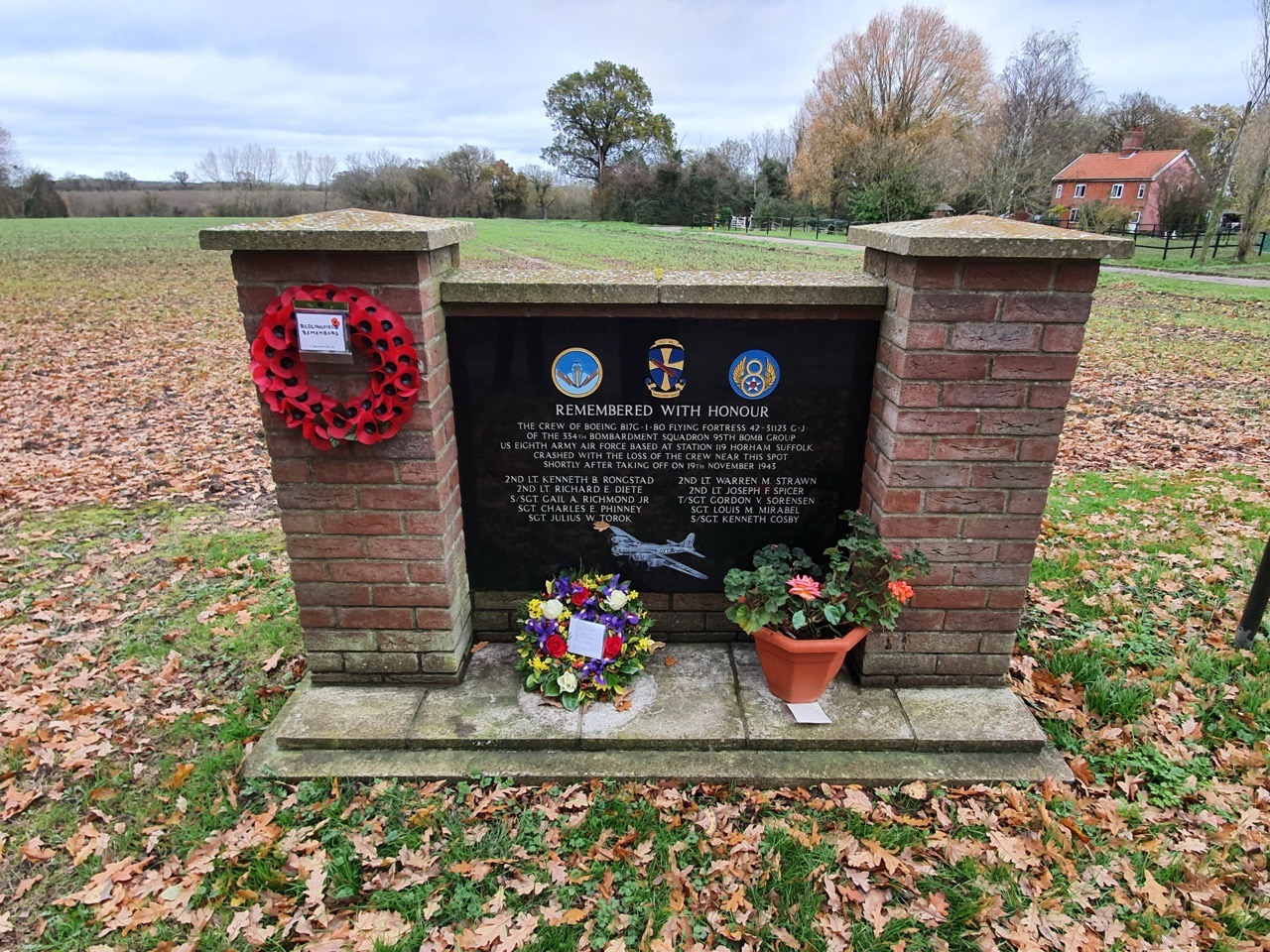
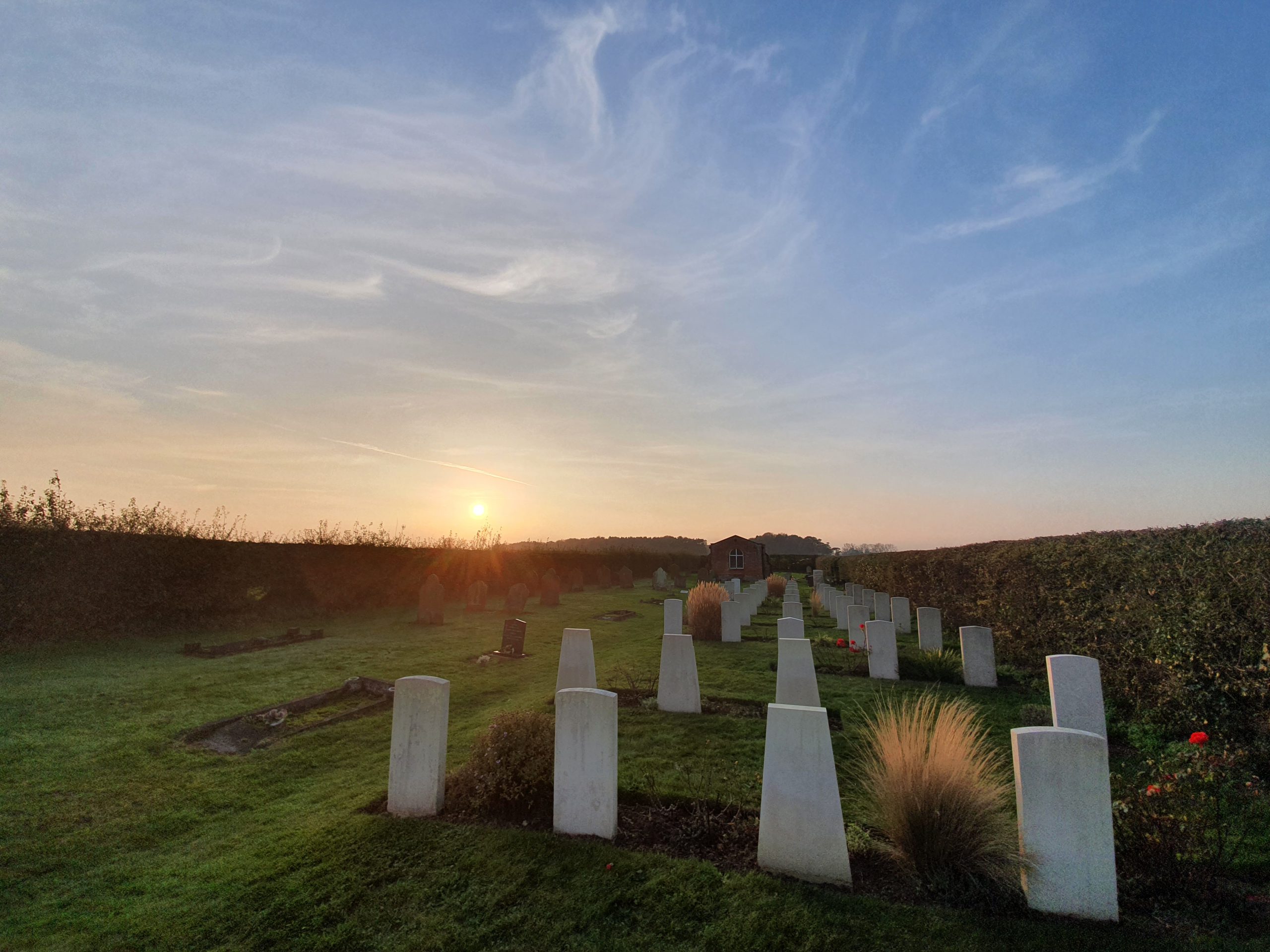
    This memorial was placed here in 2010, commemorating the ten crew who lost their lives on 19 November 1943, when the B-17G aircraft (registration 42-31123) they were in crashed at this site.

    This is the land behind the memorial, by the village green in Redlingfield. The aircraft had taken off from nearby RAF Horham and failed to reach the flying speed that it needed, so the pilot attempted to bank the plane to return to the airfield and it then stalled and lost power.

    There’s a memorial sign nearby which gives some information about the ten men who died:

    Pilot 2nd Lt Kenneth B Rongstad (born in 1922, single and worked as a photographer in Montana)

    Co-Pilot 2nd Lt Warren Franklin Mansfield Strawn (born in 1919, single and worked as a doorman in Missouri)

    Navigator 2nd Lt Richard E Diete (born in 1920, single and worked as a photo engraver in Illinois)

    Bombardier 2nd Lt Joseph F Spicer (born in 1920, single and worked as a printer in Illinois)

    Flight Engineer Staff Sgt Gail A Richmond Jr (born in 1924, single and worked as a tool worker from Pennsylvania)

    Radio Operator Staff Sgt Gordon V Sorensen (born in 1919, married and worked as a chauffeur and driver in Michigan)

    Tail Gunner Staff Sgt Kenneth Cosby (born in 1921, single and worked as a clerk in Ohio)

    Turret Gunner Sgt Ball Charles E Phinney (born in 1915, single and worked as a driver in New York)

    Waist Gunner Sgt Right Julius W Torok (born in 1919, divorced and worked as an aviation worker in Connecticut)

    Waist Gunner Sgt Left Louis M Mirabel (no details known)

    Which is certainly a wide spread of jobs and places of origin from across the United States, united only really by relative youth.

    (Copyright American Air Museum / Imperial War Museum, UPL 14979)

    BACK ROW

    S/Sgt Gordon V.Sorensen (radio), Sgt Julius W.Torok (right waist gunner),
    Sgt Charles E. Phinney (ball turret),Sgt Louis M. Mirabel (left waist gunner),
    Sgt Aloysious L. Godek, S/Sgt Agnew R. Eckert

    FRONT ROW

    2nd Lt Kenneth B. Rongstadt (pilot), 2nd Lt Strawn (co-pilot),
    2nd Lt Richard E. Diete (navigator), 2nd Lt Joseph M. Spicer (bombardier)

    Eckert and Godek weren’t in the crew when the aircraft crashed and the photo doesn’t include Cosby and Richmond.

    There’s more information at http://redlingfield.onesuffolk.net/home/local-history/the-second-world-war-2/b-17-crash-view-from-the-village/.

  • 27 Mile Walk from Eye

    27 Mile Walk from Eye

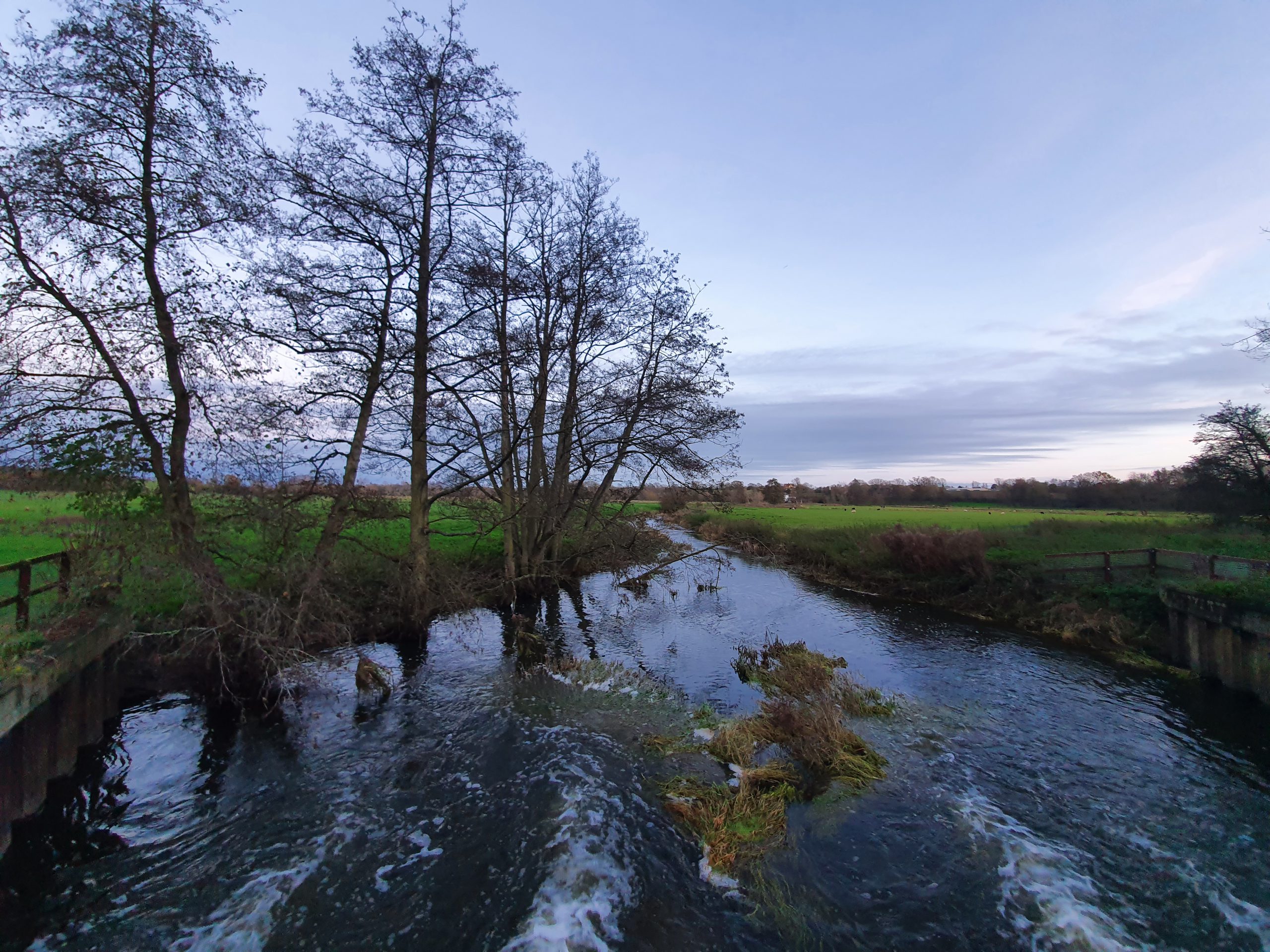
    I’ll write up separately some other interesting elements from this walk, but this was a rather lovely 27-mile walk today, starting from Eye.
    So, some photos from a day where we were fortunate with the weather. I haven’t turned some of the photos from portrait to landscape, so it might be necessary for anyone reading to turn their phone or computer…..

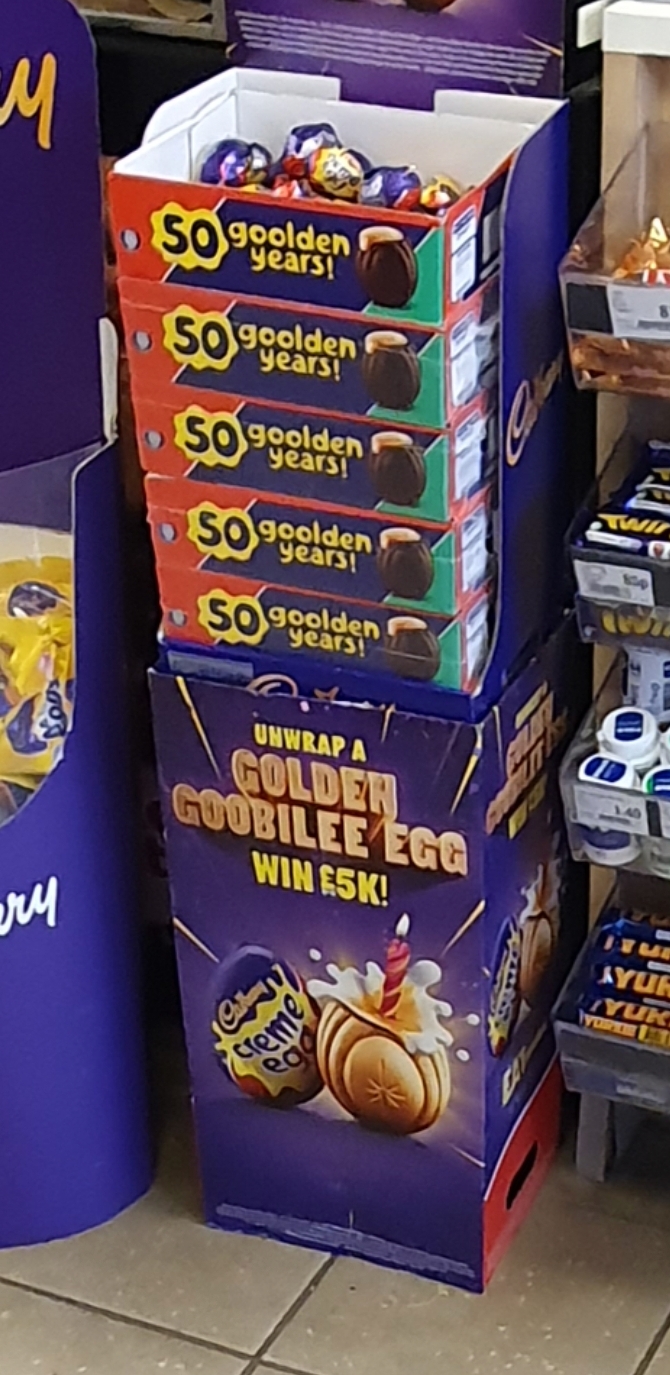
  • Cadbury’s Creme Eggs – 50 in 2021

    Cadbury’s Creme Eggs – 50 in 2021

    Nothing says Christmas better than the arrival of Cadbury’s Creme Eggs in the shops…..

    They’re 50 in 2021….

  • Norwich – Rosary Cemetery (Isaac Brett & Lucy Brett)

    Norwich – Rosary Cemetery (Isaac Brett & Lucy Brett)

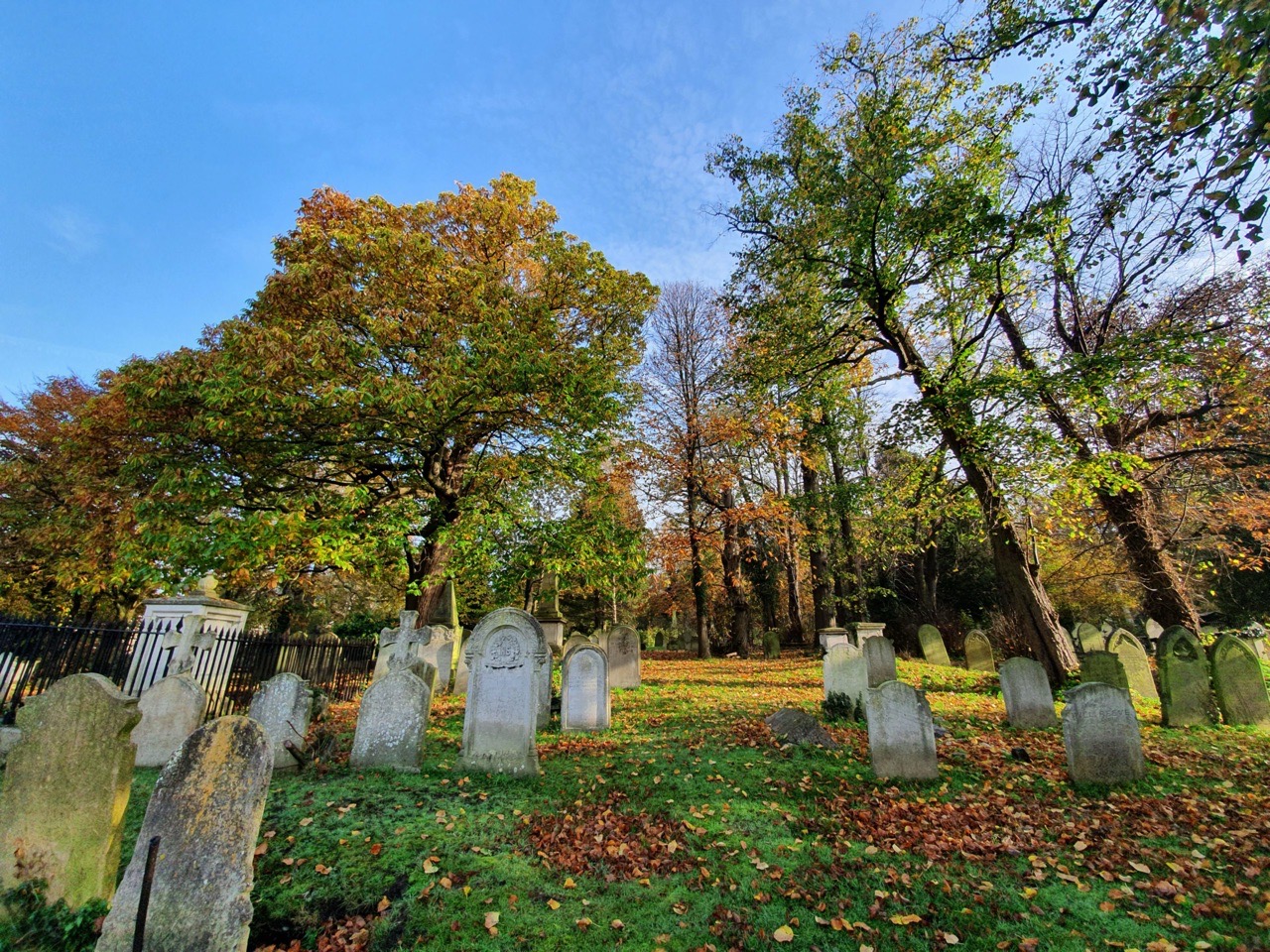
    Since I’ve been grounded again by the Government, I thought I’d meander around the Rosary Cemetery located near to me in Norwich, in an attempt to see what stories lie there. It might not be the most fascinating blog content, but it’ll keep me quiet for a few weeks….

    This isn’t entirely ideal in terms of reading the inscription on the grave, and I’m not going to fiddle about with shrubbery on a gravestone. I can just imagine half the stone will come off in my hand, probably with a gaggle of people happening to walk by when that’s happening. So, the easiest alternative is to hack around on findagrave, a web-site which has many names already listed.

    Although the details aren’t entirely accurate on findagrave (which is understandable – look at the state of that ivy….), it was enough to work out that this is the joint grave of Isaac Brett and Lucy Brett.

    Isaac Brett was born in Caston, a village located near to Attleborough, and he was baptised on 12 July 1798. He was the son of George Brett and Mary Brett, and he remained in the area as in the 1841 census he was living nearby with his wife at Gap Farm at Rockland St. Peter.

    His wife was Lucy Howell and he married at Caston church, the same place where he had been baptised, on 7 January 1828. Lucy had been born in Norwich in 1802 and had seemingly moved to be nearer to where her husband lived.

    At the 1851 census, Isaac and Lucy had moved and were living alone at Upper King Street in Norwich, with the enumerator noting that Isaac was a shoe maker and he employed six men. They were living at the same address at the 1861 census, this time living with their 11-year old grandson, John Page, who was already working as a banker’s clerk.

    Isaac died on 15 January 1863 at the age of 64, leaving effects valued at just under £450 (around £30,000 in today’s money) to his wife. At the 1871 census, Lucy was living with another one of her grandsons, George Page, who was aged 13. By 1881, Lucy had moved in with her grand-daughter, 33-year old Lucy Raven, who was living with her family near Mulbarton, having married Benjamin Raven who was 23 years older than her.

    Lucy was still living with her grand-daughter at the 1891 census, but they had now moved to Stratton St. Mary (as an aside, this, alongside Stratton St. Michael were merged to become Long Stratton) and Lucy died shortly after the census was taken, on 10 April 1891 at the age of 89.

    There’s not an amazing story here that I’ve yet found, just a family which seemed to stick together, but I’m intrigued as to the work that Isaac Brett did. He looks like he was a hard-working shoemaker, especially as he was employing several men, but I’ve yet to find out much more about him. Hopefully, I’ll return to this in the future…..

  • Norwich – Rosary Cemetery (Henry Brett)

    Norwich – Rosary Cemetery (Henry Brett)

    Since I’ve been grounded again by the Government, I thought I’d meander around the Rosary Cemetery located near to me in Norwich, in an attempt to see what stories lie there. It might not be the most fascinating blog content, but it’ll keep me quiet for a few weeks….

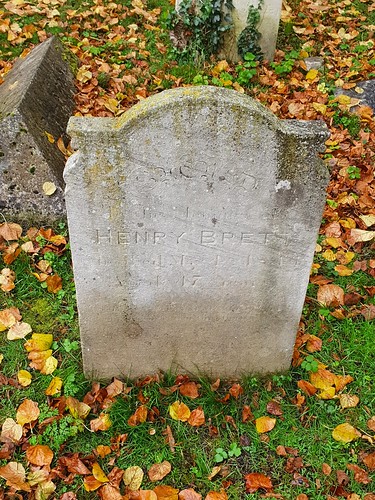
    henrybrett

    Unfortunately, there’s not much story to be told here. But, on the grounds that I might find something else in the future, or someone might tell me more in the years to come, this is what I know so far.

    Henry was baptised on 27 October 1797 in Swaffham, the son of William Brett and Elizabeth Brett.

    He was probably married (by probably, I mean I’m not sure it’s the right person, rather than this being some kind of half marriage) to Ann Reynolds in Plumstead by Holt church on 19 October 1819. If this is the correct couple, neither of them could read or write, which wasn’t uncommon, but suggests a background of limited money in the families.

    In the 1841 census, he’s listed as living on Mousehold Heath, along with his wife Ann, their daughter Elizabeth and two 15-year olds who I don’t know the link to, Ann Royall and Edward Fake (I think the transcriber might be wrong on that name, but I can’t read it either to improve on it).

    Henry passed away on 4 May 1844, at the age of 47 years old. The Norfolk Chronicle duly reported this, adding that he was a farmer in Thorpe Hamlet. The gravestone has been attacked by foliage or weeds over the decades, so the bottom half is too hard to read.

    So, annoyingly, that’s it for the moment, but I’m intrigued by who this farmer was on Mousehold Heath and where exactly he lived.

  • Micro-Adventures (Norwich)

    Micro-Adventures (Norwich)

    Unfortunately, the whole lockdown thing has meant that Nathan and I haven’t made much progress with our GeoGuessr project. That’s picking a random place using GeoGuessr and then just going there using public transport, wherever in the UK that place might be. The aim is less the destination, more the journey. We’ve only done two, but the idea of finding a story anywhere has worked out so far.

    Since I can’t go very far at the moment, that reminds me that I should try something vaguely similar by walking (no needless travel during lockdown….) to some places that I’ve been meaning to go for a while. And then seeing if I can possibly find a story from the journey there, which might be pushing it, but we’ll see how we go. If I can’t, the story will entirely be about the destination.

    With the help of the listed building map, I’ve found these scheduled monuments and/or listed buildings. My plan is to walk to these separately over the next few weeks, so:

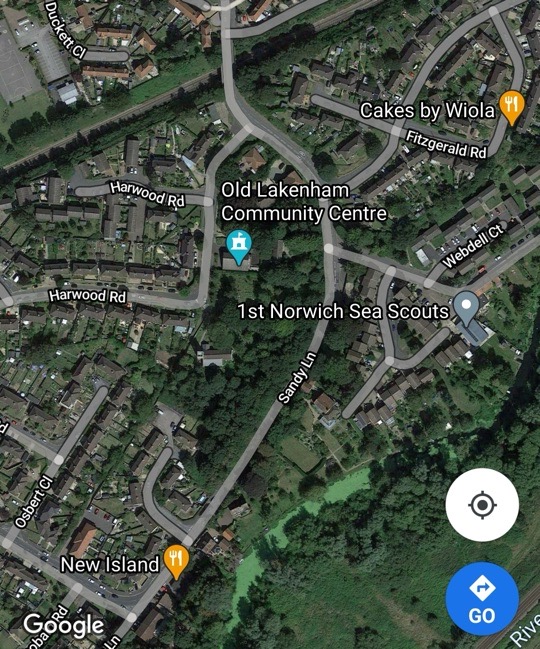
    (i) Old Lakenham Parish Church (hence why there’s a screenshot of Lakenham as the image….)

    (ii) Earlham Cemetery

    (iii) Remains of St. Bartholomew’s Church

    (iv) Boundary Cross on Drayton Road + Standing Cross at St. Mary’s, Hellesdon

    (v) Intwood Church

    (vi) Cringleford Bridge

    (vii) Tumuli at Eaton Heath

    I had wanted to visit a Saxon cemetery, Second World War listening post and other sites that were scheduled monuments, but they seem inaccessible without straying off footpaths. And I don’t want to be doing that just at the moment…

    I’ll come back to this page and link these walks in when I’ve done them (and they may be incredibly boring, but there we go…..).

  • Dictionary of the Vulgar Tongue – Day 223

    Dictionary of the Vulgar Tongue – Day 223

    The Dictionary of the Vulgar Tongue was first published at the end of the eighteenth century, and given that the current health crisis is giving too much time to read books, I thought I’d pick a daily word from it until I got bored….

    Nix

    A very short and sweet definition, meaning simply “nothing”. Grose is one of the first people to define this word, so it is listed as being from the late eighteenth century when he published his dictionary, but it was likely in use much earlier. It’s a derivation of the German word “nichts”, which has the same meaning.

    Using Google Ngram’s full time frame over several centuries, the word has remained in relatively constant use. The earlier dates are statistically probably erroneous though. As an irrelevant aside, I’m surprised that this word didn’t become more mainstream and didn’t slip into the vernacular.

  • Scottow – Scottow Cemetery (Alan Towle)

    Scottow – Scottow Cemetery (Alan Towle)

    This grave at Scottow Cemetery commemorates the life of Flying Officer Alan Towle. His address is listed as St. George’s Avenue in Bridlington, but he was married to Barbara Towle, who lived at Fern Cottage, Lower Street in Horning.

    Towle died at the age of 24 on 29 December 1953, when his aircraft crashed at a location between Darlton and Tuxford in Nottinghamshire. He was flying in a De Havilland Venom Jet, a relatively new aircraft that was still being launched across the RAF, replacing the Vampire Jet.

    The Yorkshire Post reported an eye-witness who said:

    “I was half a mile away on the top of a hill when I saw the plane flying low. The pilot appeared to be trying to make a forced landing. The plane, however, suddenly lifted sharply and rocked, and having lost flying speed crashed and burst into flames”.

    The newspaper added:

    “Another eye-witness, Mr. H Murdock, a farmer, of Darlton, said ‘the pilot was thrown clear of the blazing portion of the plane, but still trapped in some wreckage. One of our men, Reg Turner, ran up and pulled the pilot clear, but he was already dead”.

    The Aviation Safety web-site has more information on what went wrong on that night:

    “DH.112 Venom NF.2 WL829 was first flown at De Havilland’s at Chester on 11/08/53. On 29/12/53 the aircraft had been collected from 48 MU at RAF Hawarden, Chester, for delivery to 23 Squadron at RAF Coltishall, Norfolk. While en route on the delivery flight, the pilot reported that he was experiencing difficulty with the engine and could not get more than 5,000 rpm from the engine, with consequent reduced power. The pilot therefore decided to divert to RAF Worksop in Nottinghamshire.

    He then next reported that the engine problems were getting worse, and he would not be able to make RAF Worksop. He then decided to attempt a forced landing into a field 2.5 miles north-east of Tuxford, Nottinghamshire. On final approach, during this attempted emergency landing, the nose of the Venom lifted, the aircraft stalled and crashed, diving into the ground at a low altitude and killing the pilot.”

  • London – Westminster (Borough of) – White Horse

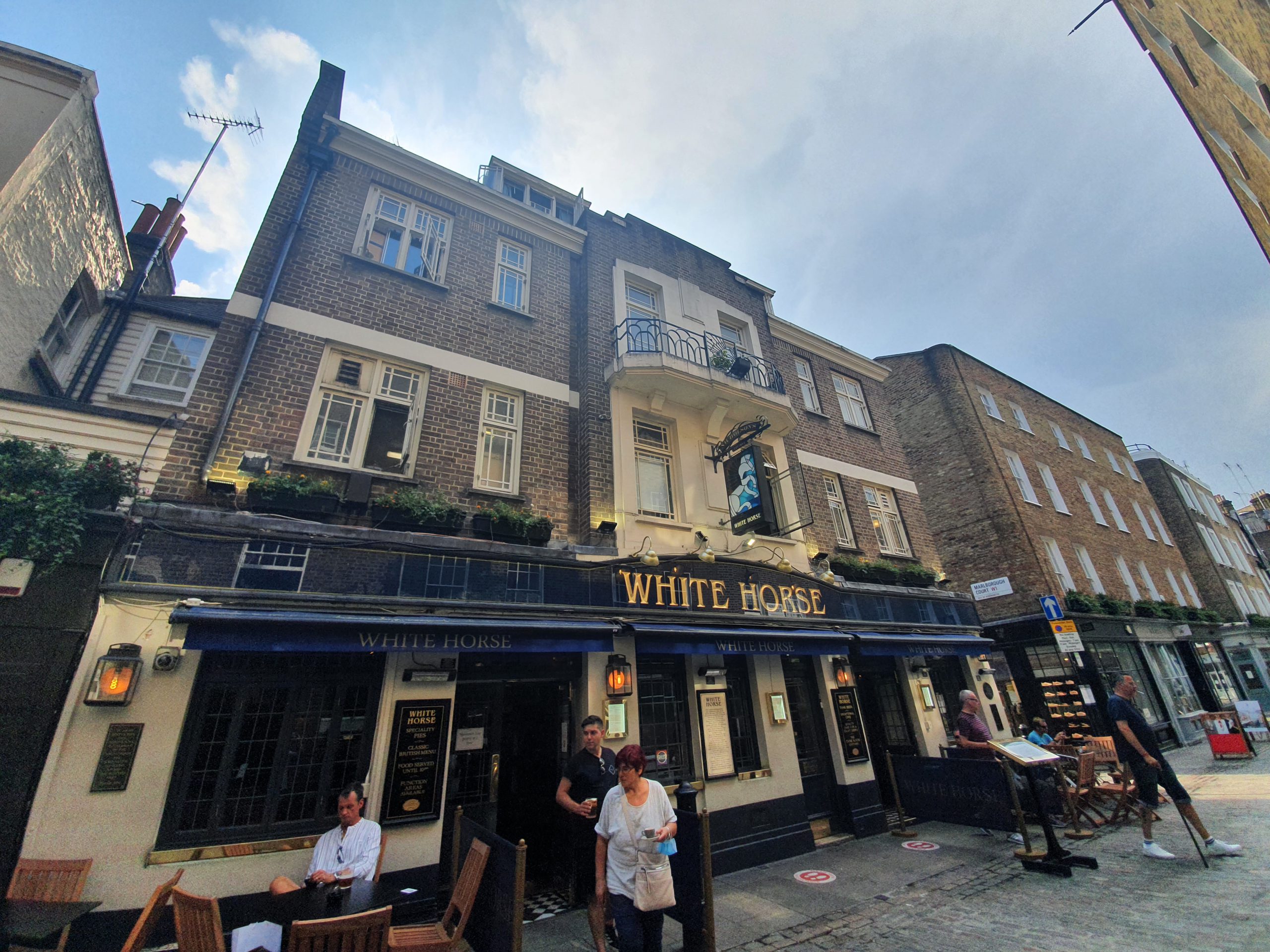
    London – Westminster (Borough of) – White Horse

    This isn’t a recent visit, I went to this Nicholson’s pub in Soho back in August, when things looked a little more hopeful for the hospitality industry…..

    I like pubs which have signs explaining their history, including why so many pubs have the name ‘The White Horse’. Incidentally, there are lots of pubs called ‘The Black Horse’, many of which are named after Dick Turpin’s horse because of the mystery and intrigue that caused. In short, this pub was rebuilt in 1939, replacing the earlier 1718 pub of the same name, and the exterior of the new building has some Art Deco features.

    Everything felt safe and there was a staff member at the front door welcoming customers and taking them to their seats. I visited in the early afternoon and it did get a little busier, although the outside seating area was always busier with customers people watching (on my visit I preferred sitting inside phone watching in case anything exciting was happening on social media).

    I have to add here that Nicholson’s gave this pint away to me via a promotion on their app, so I can’t much complain about the range of drinks. But, there were no dark ales and another customer later asked for the same, we were both told that they had Guinness and that was it.

    This was the Nicholson’s Pale Ale (made for the company by St. Austell Brewery), perhaps just a little unexciting, but drinkable with a depth of taste to it at least. Nicholson’s seem to have a habit of pushing drinks that aren’t beer, instead particularly advertising gins and other spirits, but they do have some marvellously historic pubs in their estate that are worth visiting in their own right.

    As an irrelevant aside here, I’m moderately confused why the pub has this on the front page of their web-site:

    “It’s only 12 minutes on foot from Bond Street Underground Station.”

    It’s also only four minutes walk (according to Google) from Oxford Street underground station, which is on the same line and around the corner from the pub. Strange…

    Anyway, most of the recent reviews are positive and the staff here were friendly and helpful. Food is a bit richly priced, but the White Horse focuses on their selection of pies which is part of the Nicholson’s aim to push a certain style of food in each of their pubs. I’m not entirely sure I’d return here as the beer selection isn’t really exciting enough (even before the current restrictions) in an area with plenty of competition.