Blog

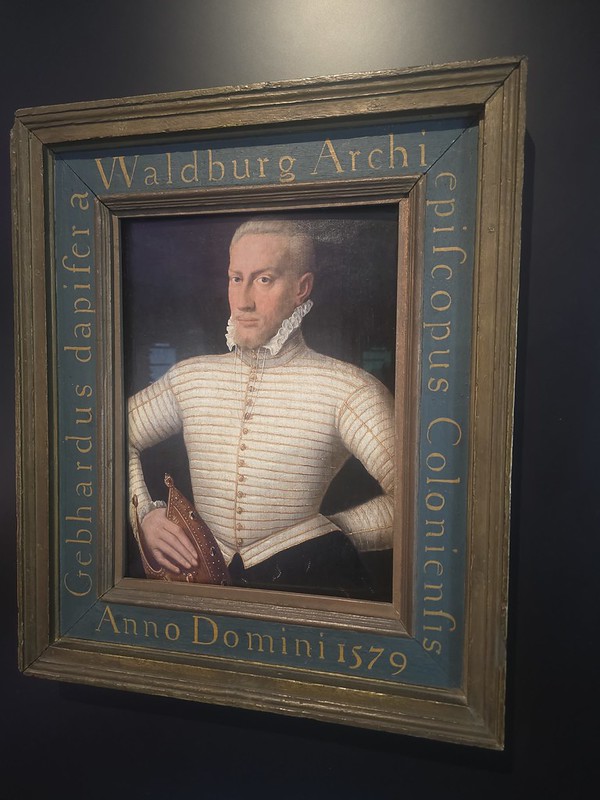
  • Cologne – Kölnisches Stadtmuseum (Painting of Gebhard Truchsess von Waldburg)

    Cologne – Kölnisches Stadtmuseum (Painting of Gebhard Truchsess von Waldburg)

    Gebhard Truchsess von Waldburg (1547-1601) was the Archbishop-Elector of Cologne and enjoyed the kind of job security most would kill for, until he met Agnes von Mansfeld and decided that a Protestant marriage was more convenient for his needs.

    In a move that local Catholics found rather sub-optimal, he converted to Calvinism and tried to turn the Archbishopric into a secular family heirloom. This attempt to “have his cake and marry it too” ignored the situation where if you stop believing in a Church’s theology, you might actually want to leave it.

    The resulting five year long Cologne War was partly the outcome and Gebhard’s defiance managed to annoy the Pope enough to earn him an excommunication and sparked a continental mess that dragged in Spanish and Dutch armies. Despite his grand ambitions of a secular dynasty, his Protestant allies eventually realised that subsidising a romantic rebellion was a poor investment, leaving Gebhard to flee his burning residence in Bonn.

    Gebhard ended his days as a cathedral dean in Strasbourg, a significant step down from Prince-Elector. He’s still buried in Strasbourg cathedral, but his legacy is still relevant because Gebhard failed to transform Cologne into a secular Protestant duchy and so the territory became a vanguard of the Counter-Reformation. The artwork in the photo was painted in 1579 when all was well and before his little relationship issues was one of the reasons that a number of nations started to fight each other.
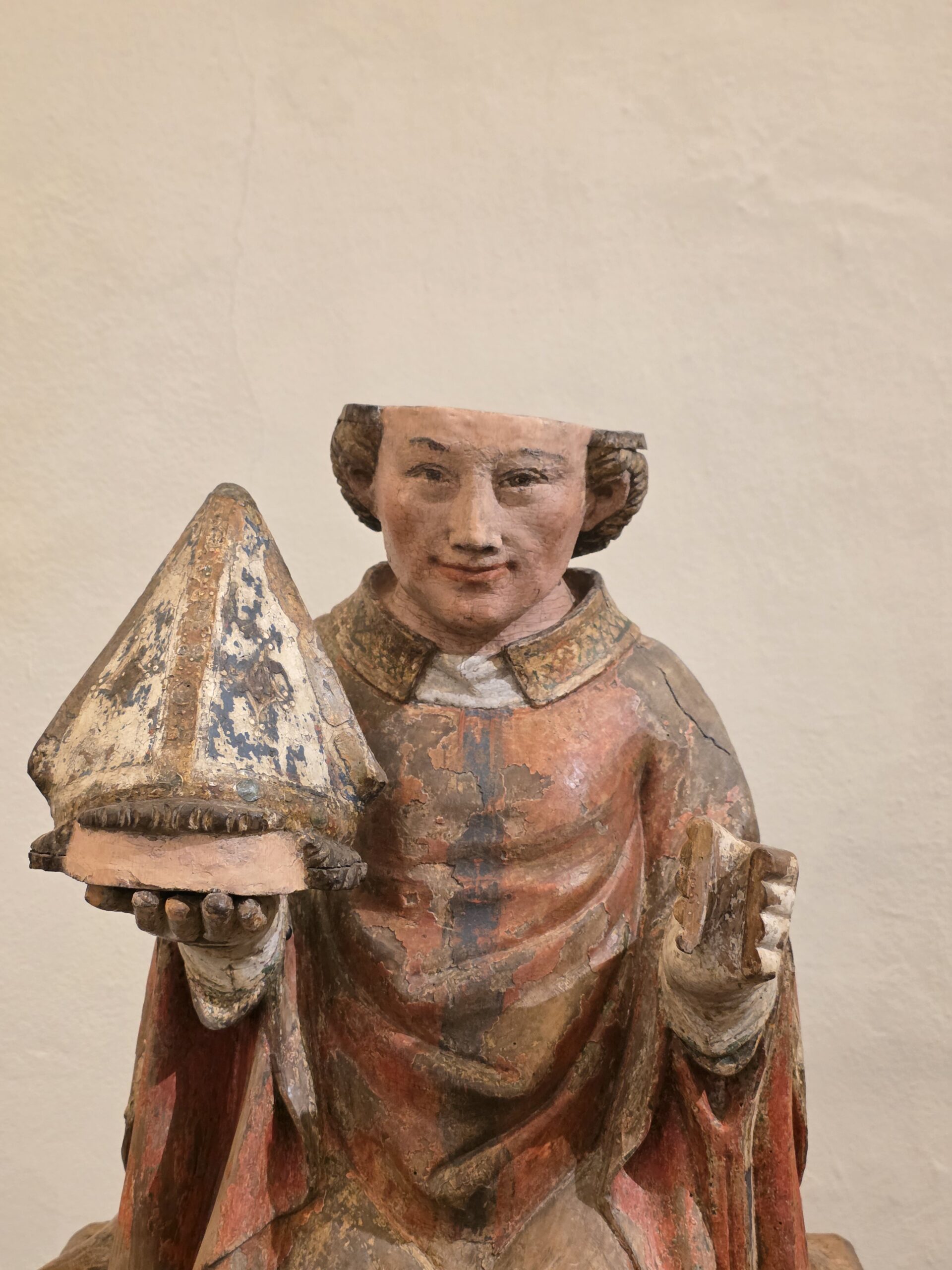
  • Cologne – Schnütgen Museum (St. Denis Sculpture from Early 1300s)

    Cologne – Schnütgen Museum (St. Denis Sculpture from Early 1300s)

    I had initially thought that this sculpture from the early 1300s had been damaged at some time over the centuries. But, it’s actually a representation of St. Denis. As for this story, St Denis had his head cut off because third century Roman authorities were not especially keen on Christians, which was, from his point of view, rather inconvenient and somewhat sub-optimal. According to the legend, he then picked up his own head and carried on walking, which is an extremely strong commitment to making an entrance and must have come across as very brave. So the skull came off in a martyrdom, but the story became famous because St Denis apparently treated decapitation as more of a setback than a full stop.

    The exhibit was moved from the city’s Wallraf-Richartz Museum in 1929 and it was made in Cologne. It’s made from walnut and it looks like the colours were quite vibrant.

    I did my usual thing of reverting to AI to see how it might have looked, but ChatGPT wasn’t having any of it. It decided that it was a violent image and noted:

    “We’re so sorry, but the image we created may violate our content policies. If you think we got it wrong, please retry or edit your prompt.”

    Google Gemini doesn’t have the same sensitive tendencies, but I think it might have gone a bit full on colour here.

  • Cologne – Schnütgen Museum (St. Peter Sculpture from Early 1300s)

    Cologne – Schnütgen Museum (St. Peter Sculpture from Early 1300s)

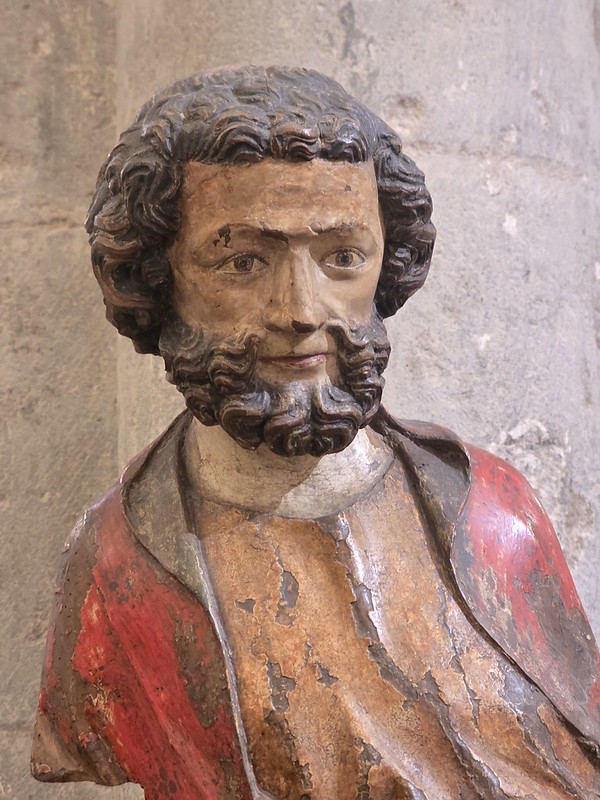
    Despite his arms having fallen off, this is St. Peter as apparently he can be identified by his hair. I’d add that I wouldn’t have known that, this is the view of the museum and I have no reason to doubt them.

    The museum notes that this was made in the city and was inspired by the Cologne Cathedral sculptors and perhaps this is also from the same building. It dates from between 1315 and 1320 and is made from walnut.

    He looks like a cheery soul and this polychrome sculpture is in quite a solid state of repair given its age. It’s a shame that more isn’t known about its provenance and what churches it has likely spent most of its time in, but I doubt that it has been out of Cologne for very long.

    And back to AI to show what it might have looked like.

  • Cologne – Library of Things at the City Library

    Cologne – Library of Things at the City Library

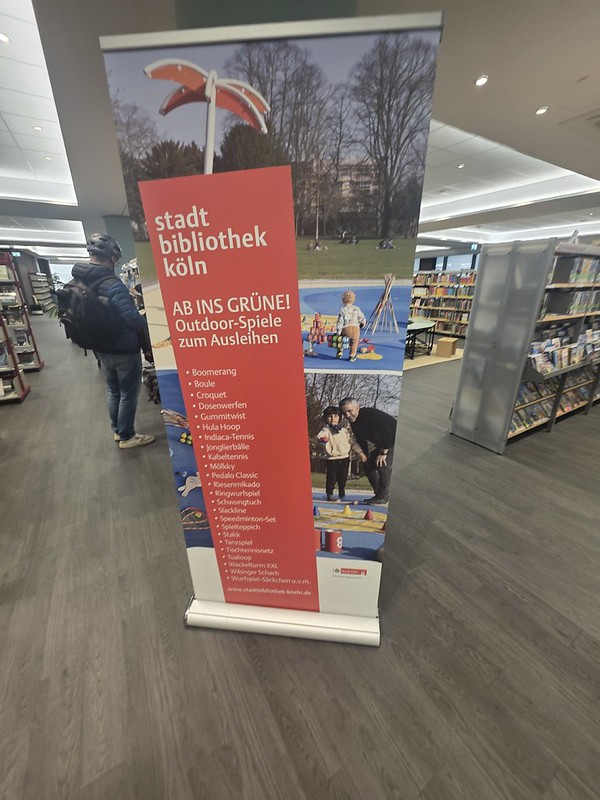
    Cologne’s city library offers a practical little “library of things” alongside its books, allowing people to borrow outdoor games and leisure equipment rather than buy them. I think that it’s a rather sensible arrangement, especially for items people may only use occasionally, and it helps turn the library into a wider community resource. A very nice little idea.

    There you go, you can borrow:

    Boomerang
    Boule
    Croquet
    Tin can throwing game
    Cornhole
    Hula hoop
    Indiaca tennis
    Jumping ropes
    Skittles
    Mölkky
    Pedalo Classic
    Giant Mikado
    Giant bowling game
    Slackline
    Speedminton set
    Quoits / ring toss
    Stilts
    Throwing game
    Twister mat
    Viking chess XXL
    Ladder golf

  • Cologne – Drachen City Chinese

    Cologne – Drachen City Chinese

    I’m not sure that this counts as traditional German cuisine, but there we go. It’s the Drachen City all you can eat Chinese restaurant, although I’m not entirely sure that there was much Chinese about it either.

    There was a friendly welcome and the restaurant was quite busy for a Friday afternoon. There’s a reasonably wide selection of different items available, including some more healthier options. The server who took my order came over with a microphone and I wondered if there was some sort of welcome every customer had to make, but it was just him talking to the kitchen about what food needed replacing.

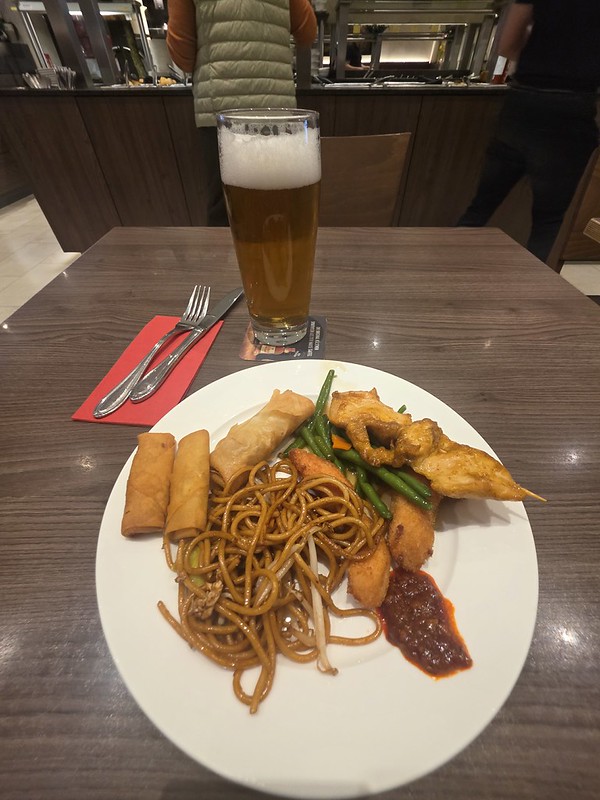
    This is the Gaffel Kölsch served in entirely the wrong glass, but I don’t think that it would have made much difference. The beer was clean, light and uninspiring, but at least it didn’t intrude on the flavours of the food.

    I don’t claim to be classy, as that heap of noodles, spring rolls, battered chicken, chicken skewers and green beans shows. It all tasted fine, nothing exceptional, but perfectly acceptable. They had overdone the salt though, although perhaps if I hadn’t had three platefuls then I might not have noticed.

    There was never any depth of spice to the food, although one of the sauces that I piled up had some heat which placated me somewhat. There was quite a focus on chicken above all other meats, but that is something that is fine for me. As another plus, as the food was constantly replaced it was all hot and nothing looked like it had been lingering for long.

    To balance out the salt, there’s a heap of cherries in a sugary sauce. And some bubblegum ice cream, as that’s definitely a staple item in Shanghai.

    The pricing was all very affordable, around £14 for the unlimited food and the customer base seemed primarily local people rather than tourists. The food was replaced promptly and there was also a salad area, but I forgot about that when collecting food.

    The restaurant was all clean, efficient and well managed, so I can see why it’s well reviewed online. Although I didn’t get a fortune cookie like the other tables, perhaps my future is so secure I don’t need it impacted by cookies trying to divert fate.

  • Cologne – Rautenstrauch-Joest Museum (The Museum is Changing)

    Cologne – Rautenstrauch-Joest Museum (The Museum is Changing)

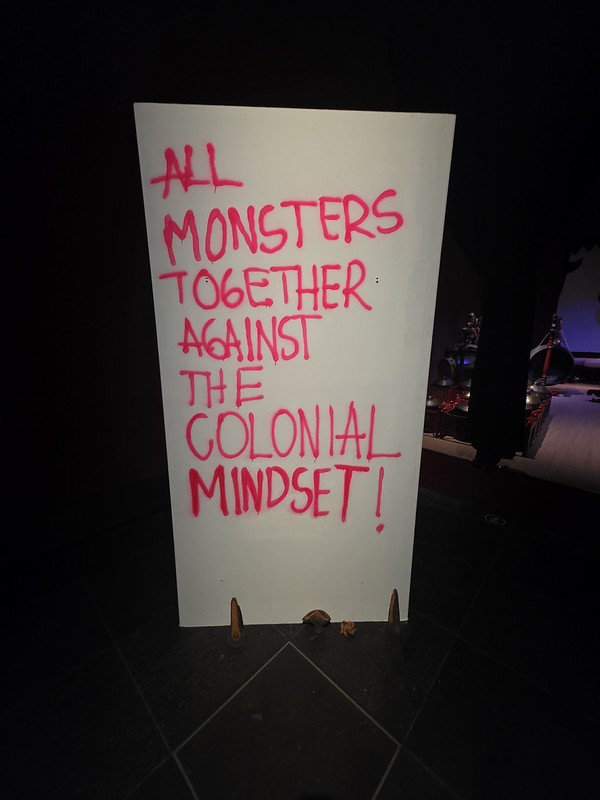
    This museum was founded in 1901 based on the private collection of Wilhelm Joest and it has historically functioned as a repository for approximately 60,000 artefacts and 100,000 photographs from Africa, Asia, the Americas and Oceania. In recent years, under a new direction, the museum has moved away from the “cabinet of curiosities” model, instead focusing on decolonisation and restitution. It’s designed to be a ‘woke’ venue, but using the word in a positive manner to be inclusive and to redefine how the collections are shown.

    I’m not entirely sure where the museum is going with this, as their website doesn’t explain and I didn’t understand it when it was there. I don’t know whether they mean the museum, the exhibition or the wider global community. I’m assuming they mean that indigenous collections are not rooted in the past, they are still relevant and not part of history.

    I think it’s true that some of the museum’s original collection notes from the early twentieth century treated the indigenous exhibits as something which were rather basic and inferior. There was certainly a colonial mindset when this museum was put together.

  • Cologne – Rautenstrauch-Joest Museum (Chicha Posters)

    Cologne – Rautenstrauch-Joest Museum (Chicha Posters)

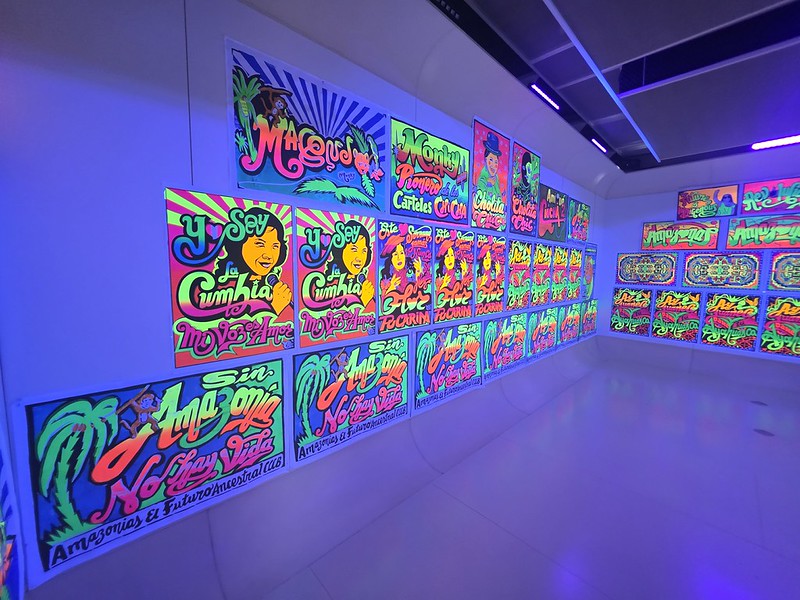
    I’ll be mentioning this a few times, but I found this museum slightly hard work as the curation seemed a little muddled to me. But, understanding is important, so I’ve used AI to try and piece together the messaging the museum was trying to display. I’d add that I’ve scoured the museum’s website, but they haven’t really burdened themselves with explanations, so I’ll have to make them up as best as I can.

    ChatGPT comes up with a meaning:

    “So the museum piece is probably doing two things at once. It is showing individual posters as graphic art, but it is also recreating the overwhelming feel of seeing them in numbers, as part of a visual environment rather than as one polite framed object. In other words, the installation is preserving something that originally lived on streets, walls and music scenes, and bringing that noisy, popular world into the rather cleaner and more controlled arrangement of a museum gallery. That contrast is part of the point.”

    Google Gemini goes with:

    “The exhibit also explores the intersection of local struggle and global solidarity, as seen in the juxtaposition of traditional tropical cumbia icons with modern civil rights imagery like the “Black Lives Matter” movement. This layering of meaning transforms the posters from simple concert advertisements into complex political artefacts that advocate for justice and recognition for marginalised communities. By placing these works in a museum context, the display validates a form of “street” aesthetics as a sophisticated language of resistance, proving that the bold, clashing colours are not merely decorative but are essential to the visibility of those who have historically been sidelined by mainstream culture.”

    I’m not very artistic and I had to look the word ‘cumbia’ up, but apparently it refers to a number of musical rhythms and folk dance traditions of Latin America.

    I’ll go with that, it’s an art form with a political message that is relevant to visitors. It gives visibility to those who perhaps need it the most and it also looks visually appealing in the museum. So there we go, I think that makes sense.

  • Cologne – BackWerk

    Cologne – BackWerk

    I’m always on the lookout for national bakery chains to compare with Greggs, and BackWerk are one of the largest in Germany. I have been to the one in Trier, but that was seven years ago and so I thought it was time to visit again.

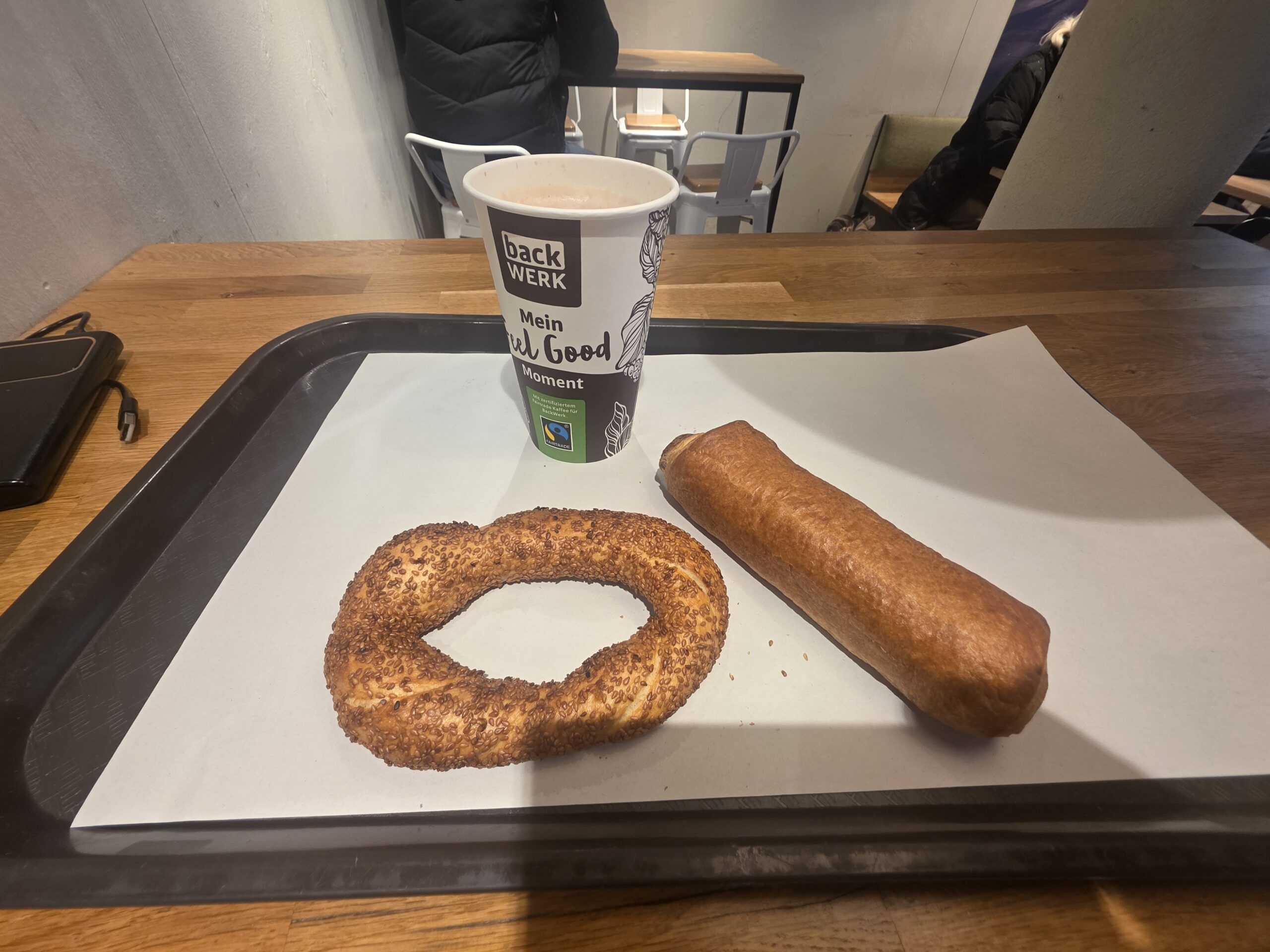
    The arrangement here is that customers grab a tray, then grab a tray liner (or in my case, grab a tray, look confused and then abandon the tray with my phone on it to hunt for a tray liner which were actually located by the trays) and deposit various products on it before going to the till. The team member here was chirpy and welcoming, it was a perfectly pleasant vibe.

    Another one of my nutritious lunches…. That’s a mocha, with a sausage roll and something that tasted like a pretzel but was in the shape of a simit. I wouldn’t say that anything was particularly sparkling, the mocha had a pleasant hot chocolate taste, the sausage roll was a bit basic and the other thing was perfectly acceptable. Nothing to complain about, but I’m not sure that it has the sophistication of Greggs.

    The surroundings were comfortable, there were a couple of people getting working done on laptops and some people meeting up for drinks. I like that sort of vibe and there were quite a few seats available. They have a few outlets in Cologne, this is the one at Neumarkt 2-4. I’d certainly visit again, they had a lot of different products and I feel that I need to explore some more of them.

  • Cologne – Augustiner am Heumarkt Bar

    Cologne – Augustiner am Heumarkt Bar

    I thought that as I was in Cologne that I’d better visit a couple of bars and this is a Bavarian restaurant which specialises in Augustiner beers.

    I’d add that it was a bit hot to be sitting outside, but I thought I’d embrace summer. Although I was annoyed it was too hot, at least there were no insects ready to sting me. In many ways, sitting outside is an annoyance, as I have to turn my screen brightness up, so it’s more efficient battery wise to just look at my phone inside. But I suppose there’s people watching, one of the highlights of my life as I don’t get out much.

    The service was friendly and efficient, with the whole environment feeling quite relaxed. I had checked in advance that they accepted cards, but I also thought I’d better check with the waitress and she confirmed that would be fine. I was pleased to note that no-one was smoking near me, I wouldn’t want that impacting the taste of my beer.

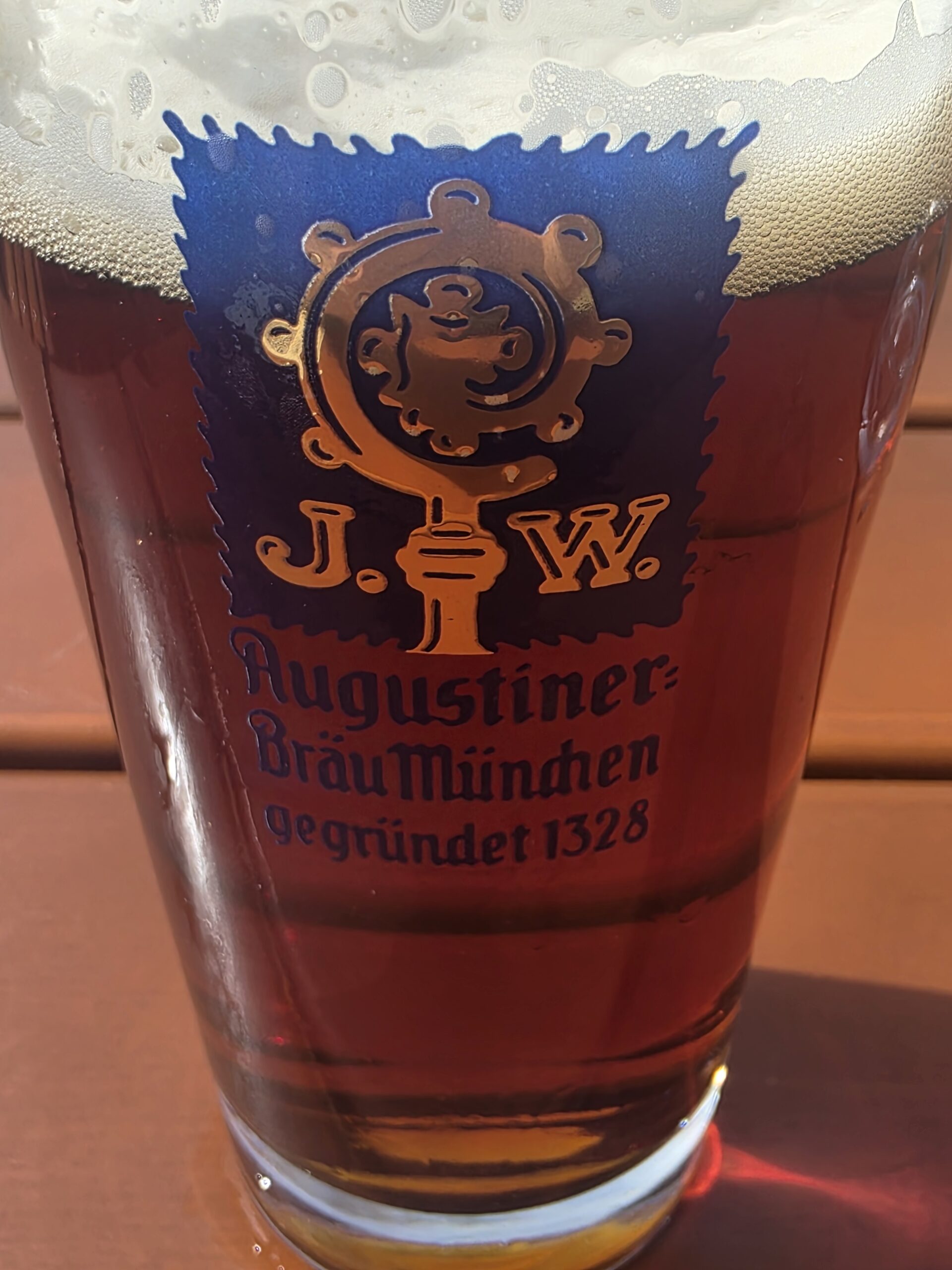
    Every customer gets a glass with their own initials on. The beer was the Augustiner Dunkel, and it was pleasant enough with notes of toffee and caramel, with the drink being slightly sweet.

    It was easy to pay at the end, although there’s a new trend in Germany to leave a tip, so I just left the 10% suggested tip to avoid any diplomatic incidents. I rather liked this venue, it’s very well reviewed and the Bavarian focused dishes looked plentiful and as expected. There were a few different beers to choose from as well from the brewery, with the prices being moderate.

  • Cologne – Kölnisches Stadtmuseum (Cologne Ballot Box)

    Cologne – Kölnisches Stadtmuseum (Cologne Ballot Box)

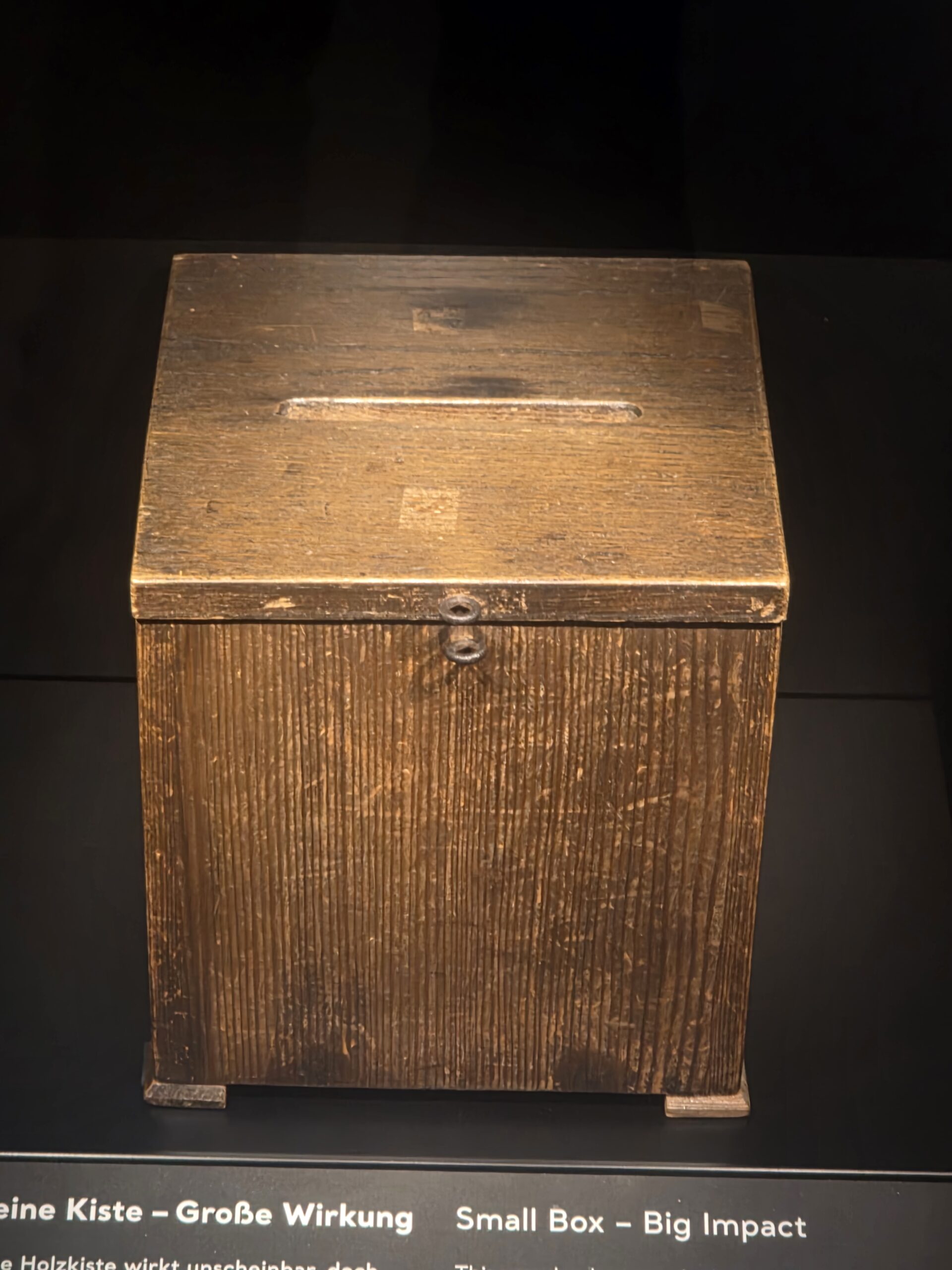
    I really like exhibits like this and when taking the photo I accidentally included the “Small Box – Big Impact” headline which does sum this up quite well. It’s the wooden ballot box that was used by Cologne City Council to make decisions between 1945 and 1957. With some foresight, the Mayor in 1957, Theo Burauen (1906-1987), decided to hand it over to the city museum. It seems that as a city mayor, he was a very popular one and it must have been a challenge to try and guide the city away from the Nazi era into a new future.

    So, it’s a wooden box, but I liked it, this is the restoration of democracy in action.