Blog

  • Norwich – Norwich Castle Museum (Altarpiece from Around 1450)

    Norwich – Norwich Castle Museum (Altarpiece from Around 1450)

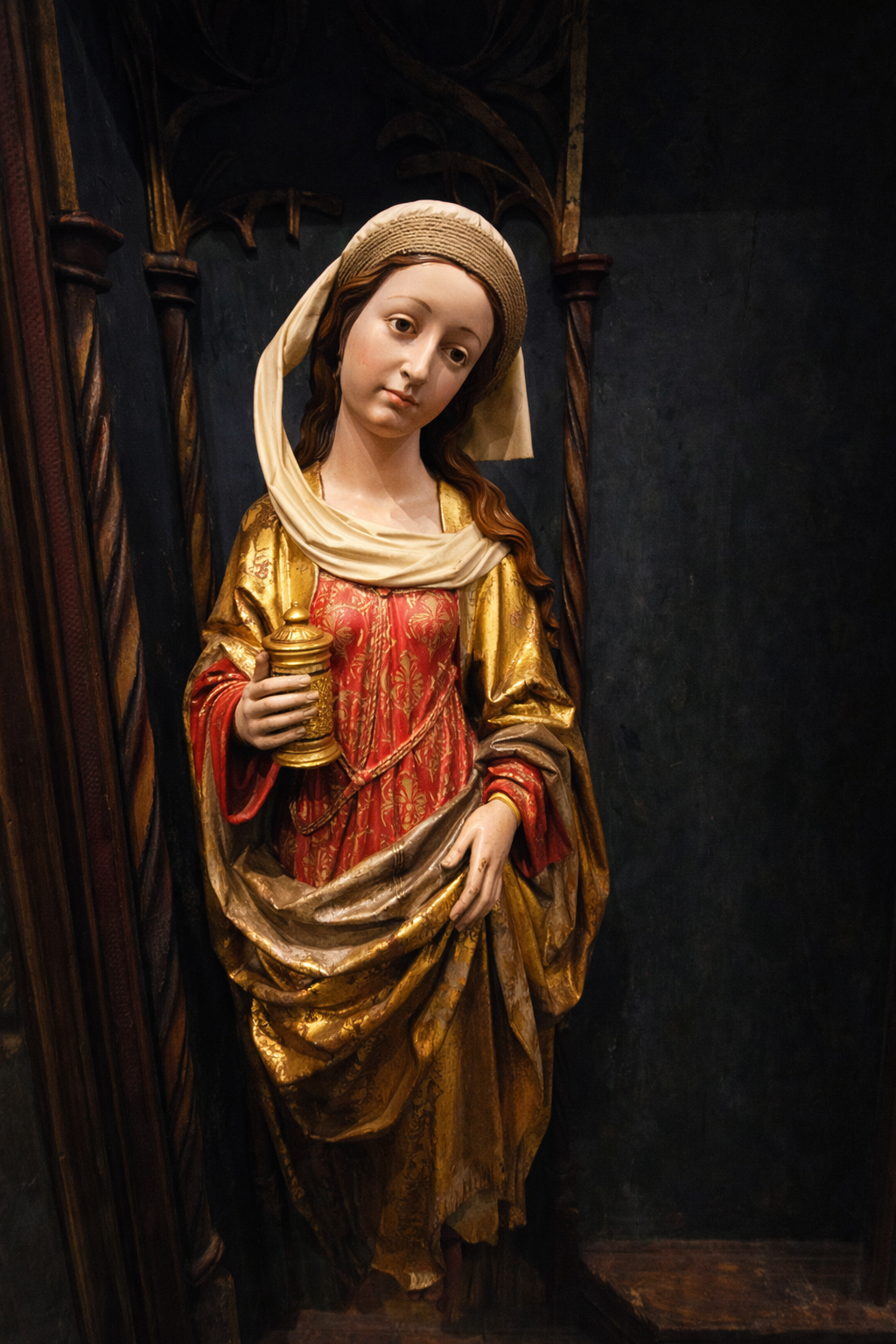
    I think that this is really rather lovely, it’s an altarpiece that once stood at the east end of a church. The doors with the decorated wings are missing, but it has retained much of its colour although some of this appears to have been through restoration (not that I claim to know what I’m talking about, but it feels over-restored to me and a bit too new). The museum simply notes that this is from around 1450, it’s from South Germany and they don’t know what church it’s from.

    Unfortunately, it’s not clear who owns this as it’s not listed in the collections of the British Museum or Norfolk Museums Service, but it’s probably the latter.

    The museum doesn’t know who this is, other than it’s a female saint. I asked AI for ideas and it claims that this is St Mary Magdalene with “extreme confidence” which is rather strong. It also notes that it is likely to be from Germany and dates to around 1490, so it’s not much disagreeing with the museum on that.

    Obviously, I asked AI what the statue would have once looked like. Yet again, I am surprised and delighted at this.

    Not much doubt about the Virgin Mary, the central figure.

    The museum notes that this is “probably St. Barbara”, and I’ve felt the need to ask AI and it agrees. I’m conscious that AI isn’t necessarily always accurate, but it generally ties into what knowledge is known, so I’m getting ever more confident.

    As the sculpture looked a bit surprised, I asked AI to bring this one back to life as well, and it now looks more pious.

    On this, I wanted to know whether this would have been in a German church or an English church. AI has given me a series of references to show that this was highly likely made in Germany, as many altarpieces were, and shipped to England. It is confident on this as apparently the three saints portrayed were the ones most commonly requested by the English market.

    Even if AI is wrong on some details, I like the background knowledge that it gives me on nearly every exhibit. I do rather think that the museum could be doing a little more here, adding depth
  • Norwich – Norwich Castle Museum (Fragments from the Duke of Norfolk’s Tomb)

    Norwich – Norwich Castle Museum (Fragments from the Duke of Norfolk’s Tomb)

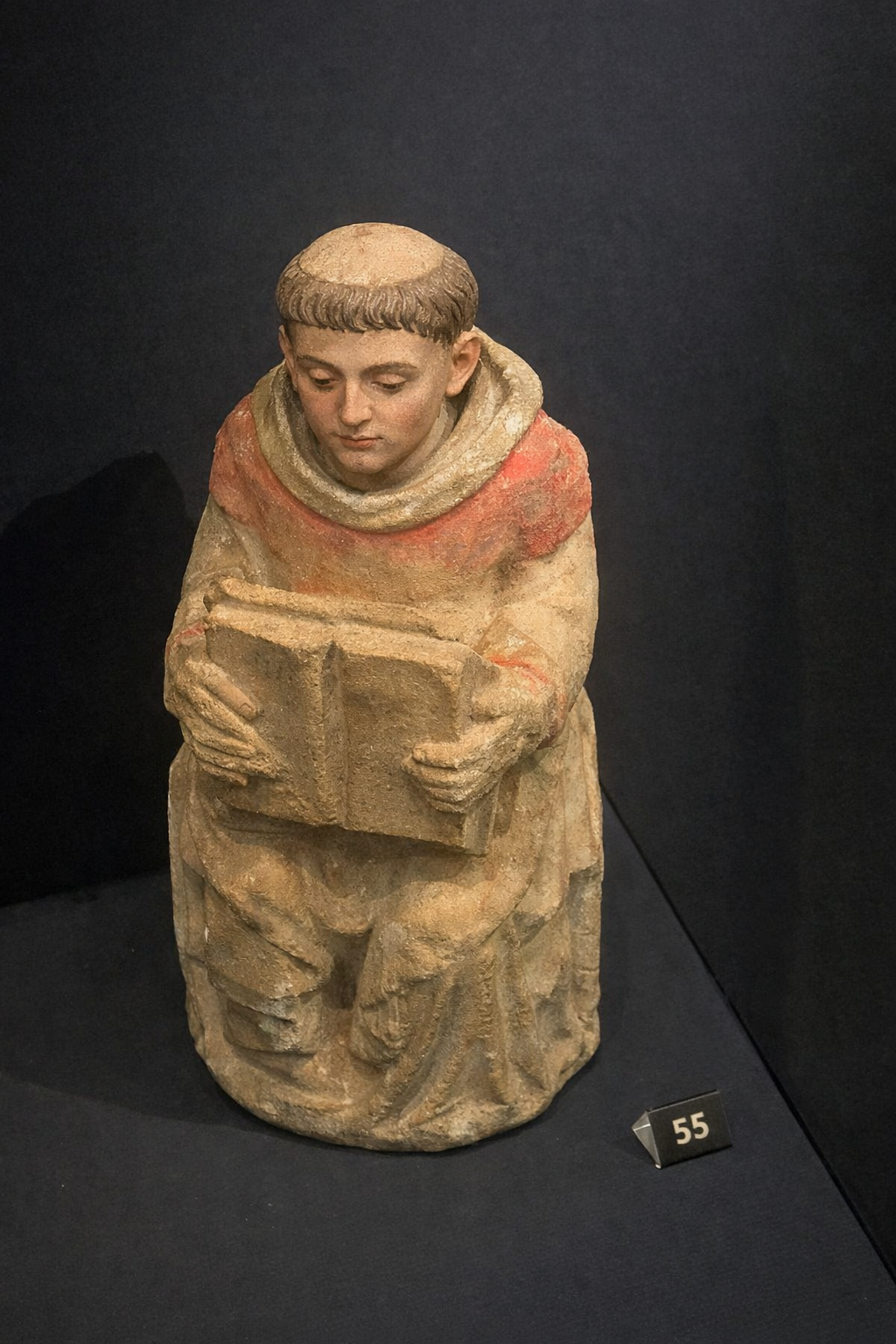
    These are bits of the tomb belonging to Thomas Howard, Duke of Norfolk (1425-1485), who had a rather decadent set-up at Thetford Priory. Unfortunately for him, the monastery was dissolved in 1540 and despite the pleadings of numerous nobles, the church and tomb were destroyed in 1547. I’ve been to the remains of Thetford Priory a few times, but it seems that I have failed to take a photo of where the tomb once stood. I’ll pop back at some point….

    Some praise to AI here, I asked it to bring the statue back to life with the angel that might once have been here. AI thinks that it was a monk and not an angel, and I think it might well be right. Once again, I rather like what AI has done here.

    The grieving family, who remained Catholic, decided to create a new tomb at St Mary-at-Lambeth, but this was recklessly destroyed by the Victorians when they decided to rebuild the church. In turn, that church was nearly demolished in the 1970s when it became redundant, but fortunately, that at least has been saved.

    I understand that these bits of the tomb were recovered in the 1930s, although I can’t find the items in the collections of either Norfolk Museum Service or the British Museum to be able to discover more about that.

    There was certainly some decorative effort made with this tomb, which must have been of a substantial size. I really rather like that these bits have survived as if the story had been different and the church not demolished, then it’s likely that the tomb would still be there today. I wonder what the work crew tasked with smashing up the tomb would have thought…..

  • Norwich – Norwich Castle Museum (Bed Chamber)

    Norwich – Norwich Castle Museum (Bed Chamber)

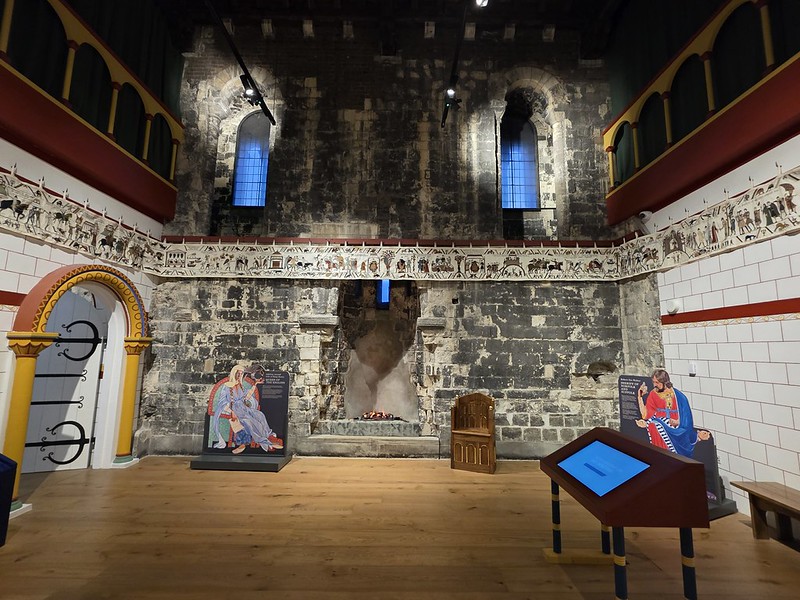
    No, this isn’t a Travelodge with the sofa removed which gives it large amounts of floor space with a bed shoved in a middle, this is the third room that has been recreated at Norwich Castle, the other two being the Great Hall and the Chapel.

    I’ve visited what Historic Royal Palaces say about this and they write about rugs on the floor, large wooden pieces of furniture placed around the room, probably a table, a roaring fire (I do accept that Norwich Castle can’t do this) and maybe even more decorative and colourful (although Norwich Castle has done this to some degree) design.

    Far me it for me to moan, but all told, I think this is a generally a slightly shoddy arrangement where the museum hasn’t provided many information boards at the site, or details online (unless you hunt back through a really rather excellent site transformation blog they wrote several years ago whilst the work was ongoing and which isn’t linked from their website anywhere that I can find), about how they’ve decorated these rooms.

    The craftspeople they’ve had do work on the bed, the doors and numerous other elements have all been done to a very high standard, but there’s little mention of the work that’s gone into this so that visitors can find out more or gain an understanding into the quite expensive projects. As an example, there have been thousands of hours of work on the tapestry by volunteers, but you wouldn’t know that from the museum’s website, although they have referenced it on their blog.

    I rather get the impression that the museum ran out of time (and probably money and enthusiasm), so they’ve done their best in the time that they’ve had available. Anyway, I’m pleased that they’ve created the The Gallery of Medieval Life downstairs, but I was a little underwhelmed with these three rooms as I like information and attention to detail in explaining the history. Hopefully, as they have all this information, it’ll be added to their website in due course.

  • New Countries Visited in 2025

    New Countries Visited in 2025

    With my last flight of the year completed a couple of weeks ago, that concludes my international travel for 2025.

    I visited a fair number of countries again, including Czech Republic, Estonia, France, Germany, Greece, Hungary, Italy, Lithuania, Poland, Portugal, Romania and Switzerland.

    New countries for me included Albania, Austria, Cyprus, Liechtenstein, Slovakia and Slovenia. That leaves me just with Sweden to visit so that I’ve completed every EU country, and just Nicosia (Cyprus) and Stockholm (Sweden) to visit so that I’ve been to every EU capital.

    As for my favourite city of 2025, it was without doubt Warsaw, but that is unlikely to surprise many people.

    I didn’t go further than Europe, not least as my Wizz Air pass gave me plenty of options to explore European countries a little more. I’m looking forward to seeing what surprises and delights I’ll find in 2026……

  • Wizz Air (Warsaw Chopin Airport to London Luton)

    Wizz Air (Warsaw Chopin Airport to London Luton)

    I decided that it wasn’t worth leaving the airport as my inbound flight from Madeira reached Warsaw at around 22:45 and my outbound flight to London Luton airport left at 06:00. I would have only reached a city centre hotel by 00:00 and then had to leave it at 03:00, which felt a little wasteful.

    There was an hour left in the landside McDonalds before it closed, so I used that opportunity to get a little snack and charge my devices up. Although, it transpired that there were numerous power outlets dotted around the landside area of the terminal.

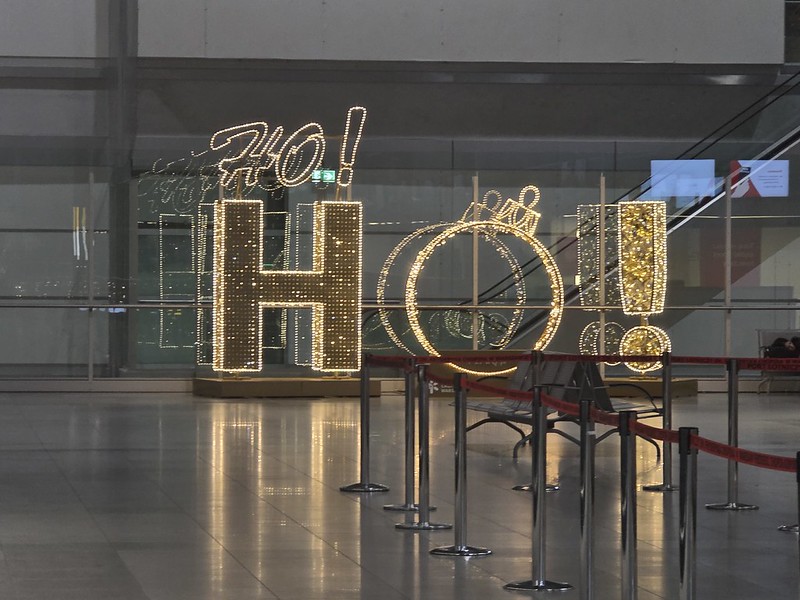
    Very Christmassy.

    It was all a bit decadent for me, but they’d certainly made an effort with their Christmas decorations.

    I had a little meander around the airport to pass the time, watching an Irish passenger having an argument with the armed airport police after they told him not to leave his bag unattended. They won that argument with their line “would you like to discuss this in an interview room?” in perfect English, which I felt was suitably friendly and he backed down.

    I bought these from the shop as breakfast as the lounge didn’t open until 05:00 and it’s the other end of the airport from my gate, so I didn’t want to risk it.

    I was one of the first people through to the airside area.

    Who needs sleep when you can explore a mostly closed airside terminal?

    I found a seat with a power outlet and made a determined effort not to fall asleep and miss my flight. There were clear announcements from the gate staff and the boarding process was once again clearly signed and operated efficiently.

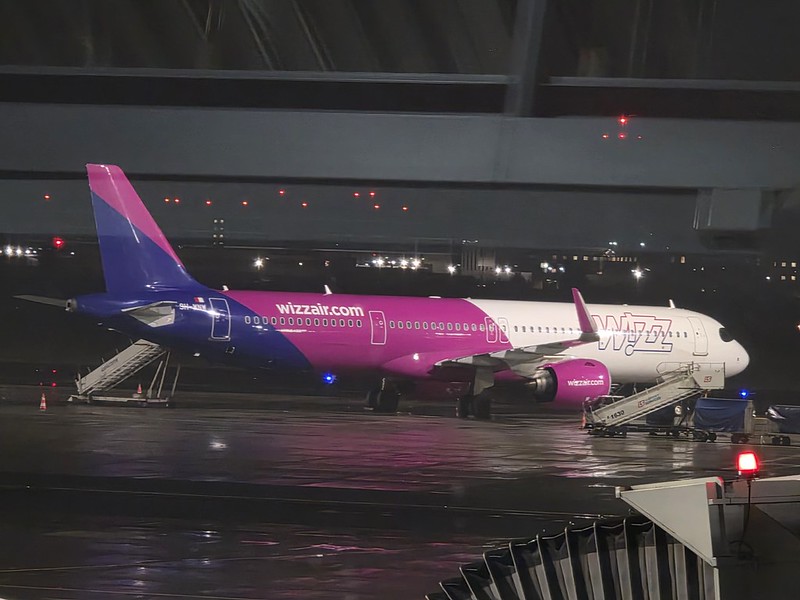
    The aircraft was around a five minute bus journey from the terminal, it wasn’t the most pleasant of transfers given how many people they’d shoved on the bus. It felt a little endless and I’m sure we went via the city centre.

    It was aircraft registration 9H-WNW, another new plane for me. The seating Gods had given me an aisle seat and I decided that I would now have a little nap on the flight home. Everything went to plan with the flight, with helpful crew, clear updates from the pilots and the aircraft was clean and tidy.

    With that, it was a walk to Luton Airport Parkway railway station, the one that I’ve decided is the worst run in the country, before getting a train to St. Alban’s, confusing the gateline staff, then returning to Norwich via London, Cambridge and Ely. All really rather lovely and that was the end of my travels for the year…..

  • Kiev – Chicken Kyiv

    Kiev – Chicken Kyiv

    [This is a post from November 2018 when Jonathan and I were in Kiev, in rather different times for Ukraine. This is one of the few posts on the blog where the images were broken, so I’ve fixed them. Unfortunately, this restaurant closed a few years ago, but I think it’s the location for where the new Italian restaurant Sarto opened a couple of weeks ago]

    Not the best exterior photo, but we thought that to mark our final night in Kiev we should go to a restaurant which specialises in Chicken Kiev. I actually didn’t even realise that this was a real dish, I thought it was something that had been created in the UK, showing my distinct lack of culinary knowledge….

    I have to say that this is the best looking menu that I’ve seen in any restaurant. It’s styled in the form of a pop-up book and some real attention has been given to its creation. Although I’m not entirely sure that they’ve done their flagship dish of chicken kiev much justice….

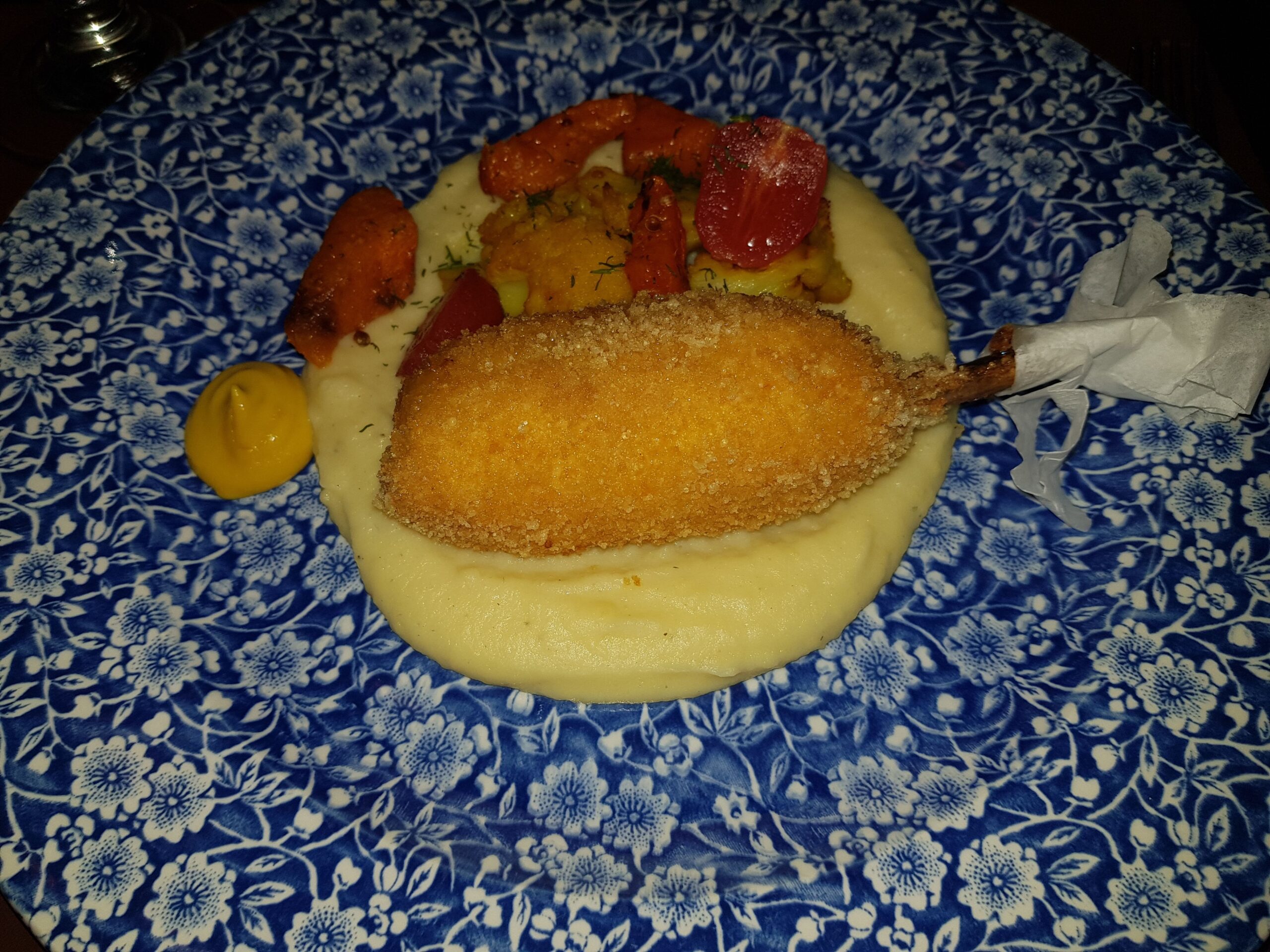
    This does appear to be a meal served at Wetherspoons because of the plate used, but it is genuinely from Kiev…. The restaurant claim that they were developing this dish for four years and judging by the number of them being served to other customers, it appears to be their most popular dish. Which would make sense since they named the restaurant after it…..

    The chicken kiev was served on a bed of truffle mashed potato and there was  a sauce with tomatoes. The chicken was excellent, succulent and tender with plenty of flavour. The mashed potato was smooth and the tomatoes added a little texture to the dish. I wasn’t quite sure if the sauce inside was meant to have garlic in, which I imagine it was, but I couldn’t detect it and that would be quite an omission if I managed to miss it. The meal was well presented and of a reasonable portion size, although not excellent.

    This dessert was exceptional and is a Kiev cake, which I’ve never previously heard of. Before ordering it I did a quick check on-line of what was in it, discovering that there was meringue, buttercream and cashew nuts. It sounded acceptable, but the dessert that arrived exceeded those expectations. The meringue was light and fluffy, there was a pleasant nut flavour running through it, it was moist and not overly sweet. Beautifully presented and it had a real depth of taste.

    There were lots of fun design elements inside the restaurant, including this chicken thing. The service in the restaurant was attentive, polite and engaging, although the waiter certainly did his best to upsell, although it didn’t feel too forced. The staff in the restaurant seemed professional and keen to help, although it wasn’t as busy as I thought it might be.

    I discovered later that the restaurant has a secret bar which I would have visited, although since it was a secret, I didn’t. Maybe next time.

    Honey vodka, which was surprisingly drinkable without a harsh after-taste. Although, this was the only negative about the restaurant, that it was served as 100ml, but priced on the menu as 50ml. The staff member said that was how the restaurant did it and it was impossible to order a 50ml. But since the menu was priced as 50ml, that didn’t entirely make sense to me. But as we had already worked out the total price and left a tip, that extra cost just came out of that, so it was really a lose-lose for everyone.

    Anyway, that minor issue apart, I feared that this would be a little bit of a tourist trap, but it was a professionally run and pleasant environment. The food quality was high and that dessert was one of the best that I’ve ever had. The meal, including a main, dessert, beer and vodka came to under £6, pretty reasonable for a decent restaurant in the capital of a country.

  • Wizz Air (Madiera to Warsaw Chopin Airport)

    Wizz Air (Madiera to Warsaw Chopin Airport)

    20251210_115313

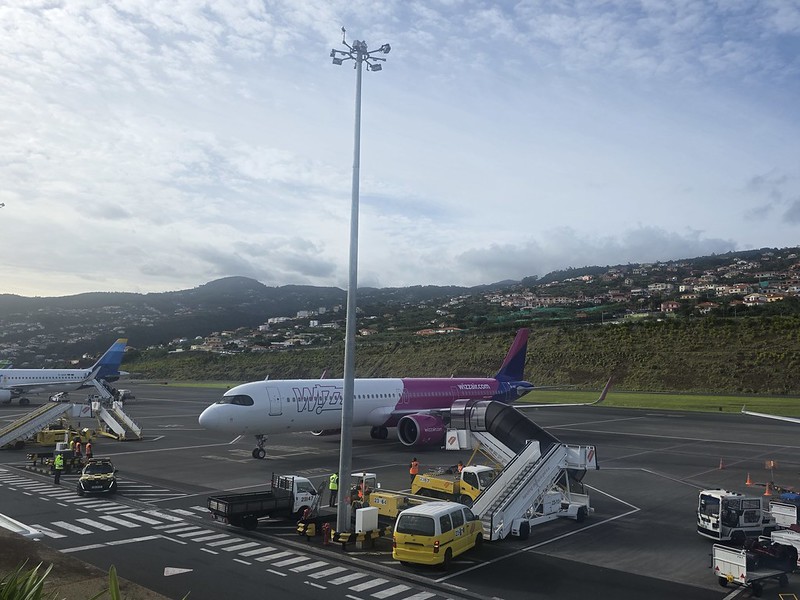
    I will return to some more Funchal posts, but to continue the year’s travel, here I was back at Madeira Airport, named after Cristiano Ronaldo. It’s one of the more beautiful vistas that I’ve seen from an airport terminal building.

    20251210_122654

    There were no lounges for me to visit at the airport, so I popped to Burger King as there were some power outlets.

    20251210_120841

    A beer and a burger, very decadent…. It was a very clean and organised Burger King, buying the burger and beer outside of a meal deal proved to be cost effective as well.

    20251210_142459

    As the temperature was pleasant, I went back outside to have a little sit down in the sun.

    20251210_142457

    And after that excitement of looking at the Atlantic, it was time for the flight. Going through security had some drama as a guy with his family decided to open the barriers up and cut through. The guy at security called over “sorry, I didn’t know you worked here”, to which the barrier mover said “I don’t, I’m a passenger” and the retort was “if you don’t work here, why do you think you can change the security process?” before making him go all the way back around. This amused me, but I don’t get out much.

    20251210_151702

    The airport has a viewing terrace so I went to record an easyJet flight land, with this being the Wizz Air aircraft I’d be taking to go back to Warsaw.

    20251210_154536

    The boarding process was organised and efficient, with a staff member checking that passengers weren’t boarding with excessively sized bags.

    20251210_155124

    Walking to the aircraft, which was 9H-WAF, which had taken me from Dortmund to Vilnius earlier in the year.

    20251210_165910

    Given that this was a five and a half hour long flight, I was so delighted that the seating Gods gave me an aisle seat that I purchased a chicken noodle from the trolley to help break up the journey a little. A flight this long in Wizz Air seats with a bag at my feet was a bit long, I’ll be more cautious of this in future.

    The crew were, once again, professional and personable, quietly going up and down the cabin a few times with the trolley and collecting rubbish. The aircraft was clean, the announcements were clear and I can’t say that the flight went quickly, but it didn’t feel too onerous and I had paid only £8.99 which felt like a bargain.

    20251210_222216

    And landed safely in Warsaw, although I wasn’t leaving the airport as I had another flight to catch a few hours later.

  • Funchal – Sacred Art Museum of Funchal (Saint Benedict)

    Funchal – Sacred Art Museum of Funchal (Saint Benedict)

    20251209_101941

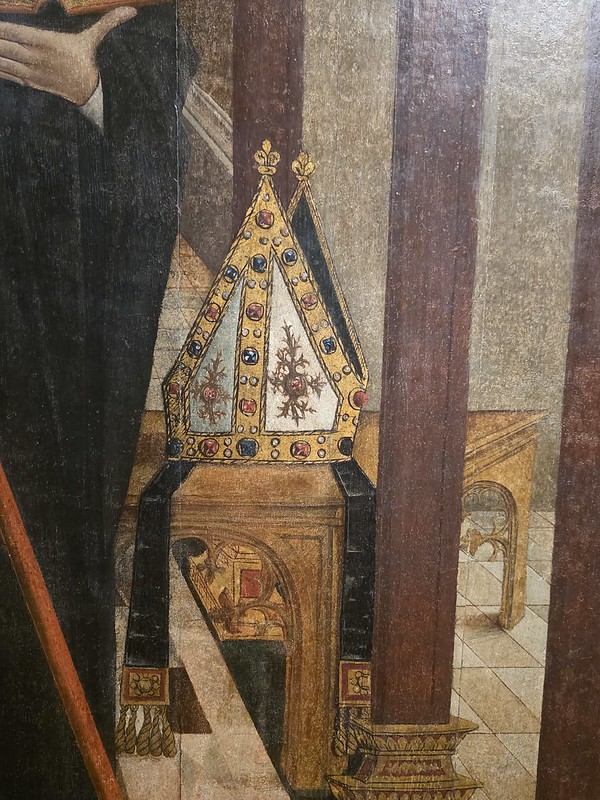
    There’s a lot to be said for paintings where the gallery isn’t actually sure who is in the image, that ensures that there’s room for some debate. The gallery knows it’s from Funchal Cathedral, they think it’s from Portugal, they think it’s fifteenth century and they think it might be St. Benedict.

    20251209_101947

    A close-up of the mitre and ChatGPT agrees, noting:

    “This is almost certainly St Benedict of Nursia. The clues are the black monastic habit (Benedictines are traditionally shown in black), the open book (his Rule, or monastic learning more generally) and the abbot’s crozier (the staff, marking him out as an abbot or founder figure rather than just “generic monk”). The very calm, frontal pose in a grand architectural setting is also a common way Renaissance and late medieval painters present major founders and reformers: not mid miracle, more “here is the authority figure, in his element”.”

    Incidentally, Benedict is known for his guidelines on how to be a decent monk, and I rather like the:

    “Chapter 30 directs that a wayward brother who has left the monastery must be received again, if he promises to make amends; but if he leaves again, and again, after his third departure all return is finally barred”

    Even Christians have their limit of tolerance it seems.

    Going back to AI, which I know is now a running theme on this blog, but I asked it about the age of the painting and it noted:

    “Visually, it’s very much in that early Renaissance habit of showing a saint as a solid, frontal presence in a carefully constructed architectural space. The big tell is the perspective: the receding arcade, the coffered or ribbed vaulting and the tiled floor are all doing that 15th-century “look, I can do depth properly” thing. The gilded decorative bits around the arches feel like a hangover from late medieval taste, which is also common in the earlier part of the Renaissance rather than the later, more fully naturalistic 16th century. I would put it plausibly at say 1480 to 1510.”

    That’s entirely in keeping with what the gallery thinks and I rather like the way in which this logic on dating is being explained. Work on Funchal Cathedral was coming to an end in 1508, so my best guess (helped by AI) is that they acquired this for when it opened.

  • Funchal – Sacred Art Museum of Funchal (George and the Dragon)

    Funchal – Sacred Art Museum of Funchal (George and the Dragon)

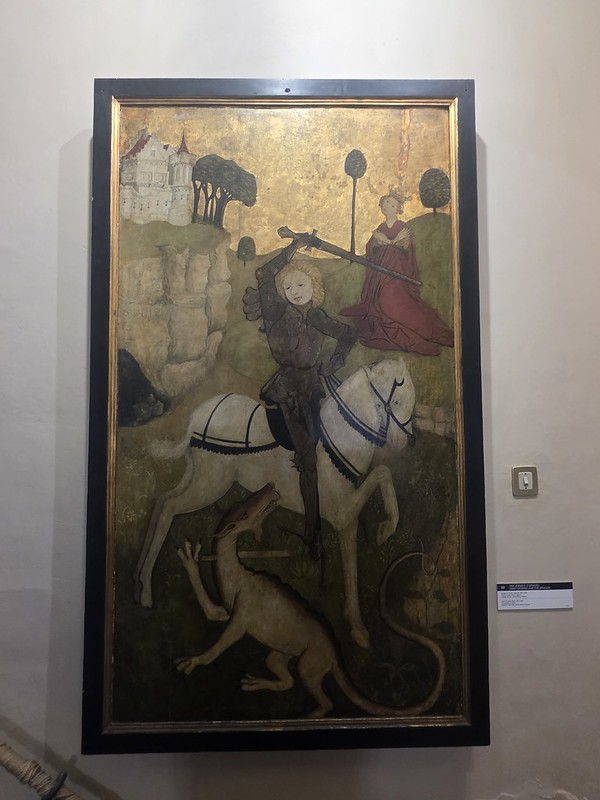
    This is a painting of George and the Dragon and the museum doesn’t know the artist, although it suggests that it was painted between 1401 and 1425 in northern Europe. That gold background, likely using gold leaf, was used to indicate heaven, so this is a sacred story and not a bit of Norfolk everyday weather.

    Despite it showing claws and teeth, I’m not entirely sure that the dragon was perhaps as scary looking as it could have been, nor, I think it’s fair to say, is the artist exactly George Stubbs with that horse painting. But, it’s got that rather positive imagery of the brave St. George saving the princess from the nasty serpent, I can imagine this quite sizeable artwork being displayed in a medieval church.

  • Funchal – Sacred Art Museum of Funchal (Sculpture of Saint Blaise)

    Funchal – Sacred Art Museum of Funchal (Sculpture of Saint Blaise)

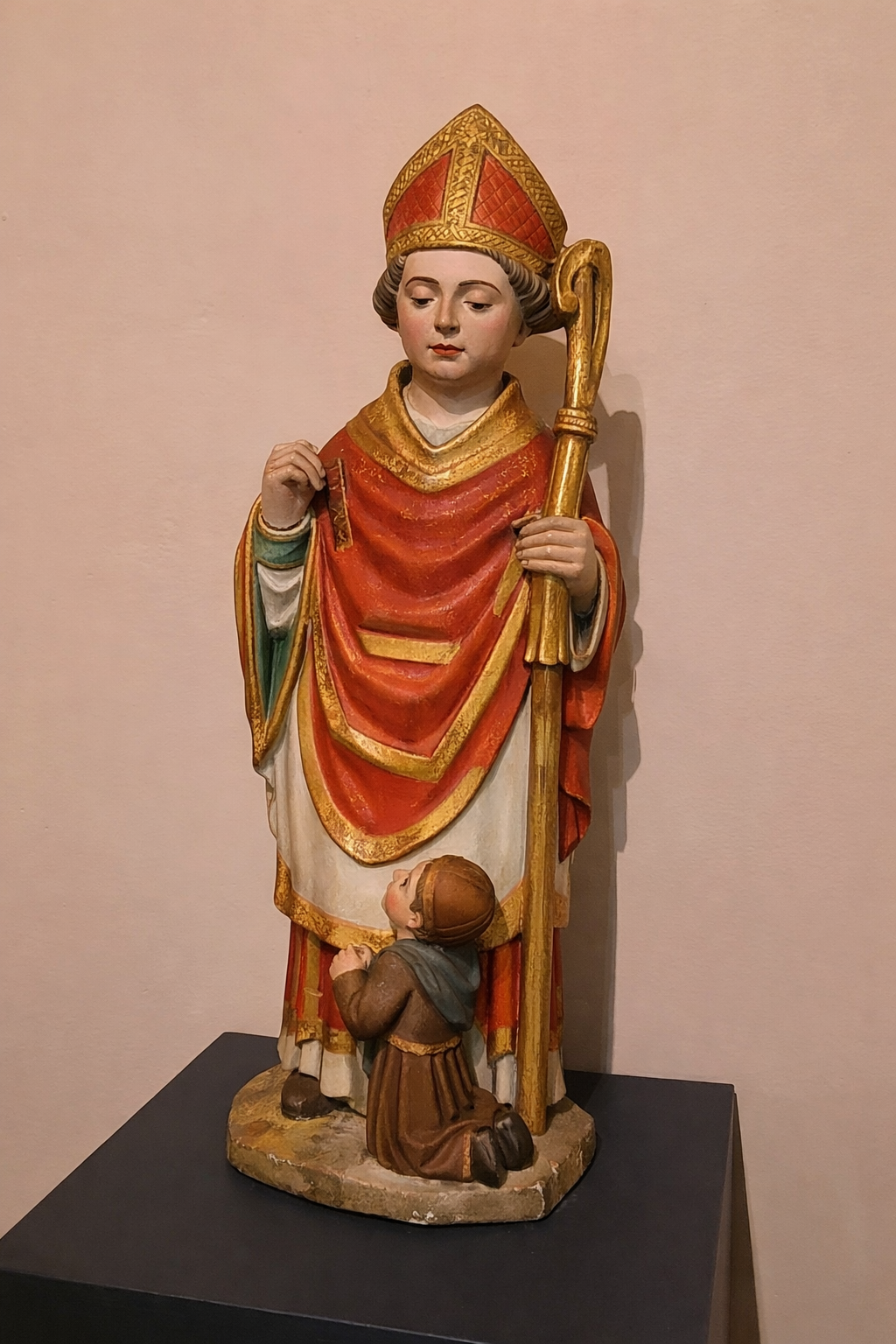
    This is a limestone sculpture from the period 1490 to 1510, once in the church in Gaula, Santa Cruz which is on the island of Madeira. It depicts Saint Blaise who became famous because he saved a child who had a fish-bone stuck in their throat, apparently by praying enthusiastically. He was then known as someone quite good at dealing with toothache, throat issues and general health issues relating to the head. He’s the patron saint of Dubrovnik and the English town of St. Blazey is named after him.

    Emperor Licinius, who was meant to be quite helpful towards Christians initially, didn’t entirely like Saint Blaise, so he had him beheaded. That feels slightly unreasonable, but I suppose they were different times.

    But, back to the limestone sculpture that I liked. There are some polychrome traces, so this was once painted rather than being bare limestone. The church in Santa Cruz opened in 1530, although it was later replaced with a more substantial affair. I assume that this was once located in a niche in the church, but I’m not sure how it made its way to the museum.

    And I’ve gone to AI to show me what this sculpture might once have looked like when painted. This seems like a remarkably decent attempt at recolouring the sculpture, it genuinely feels like it has been brought back to life.