Blog

  • Liverpool Weekend (Day Three) – The Dead Crafty Beer Company

    Liverpool Weekend (Day Three) – The Dead Crafty Beer Company

    20230910_145717

    After a busy morning of visiting galleries and museums, Bev demanded that we go to a craft beer bar. Always eager to please, I felt that this was a rather good idea. After rushing Bev and Susan across the road, we went to visit The Dead Crafty Beer Company.

    20230910_141527

    It’s rare to see this set-up now, most venues got rid of it in 2022. We had a little bit of a wait for a team member to see us, but we were then shown promptly to a table.

    20230910_141644

    It was clean internally and the atmosphere was pleasant. Not being negative as I’m sure it works for most customers, but I didn’t like the table service arrangement. I had already chosen my beer on Untappd on the way there and it meant I was sitting there for some minutes without being able to order, whilst Bev faffed about choosing. Despite my trying to pay for mine individually when he took the order, the team member ignored me. Instead, the team member then came over and tried to charge the entire table for drinks rather than just allowing payment at the bar. Rather than unpick that mess, Susan kindly bought my drink as I think she was impressed with my tour guiding 🙂

    20230910_142035

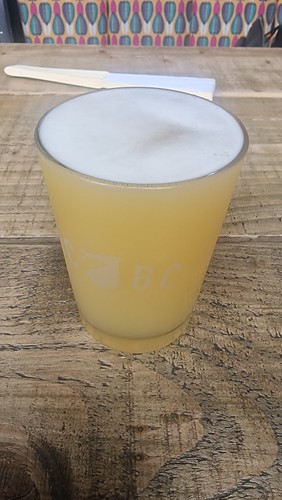
    I’m not sure I felt the team member was entirely happy with us wanting to pay separately, but there we go. He also didn’t seem entirely impressed at Bev’s choice of drinks for various reasons. The beer I went for was the Separate Self from Verdant which was suitably dank and rather delicious, with the pricing being reasonably for a premium beer. I had wanted to try another two beers, but despite sitting two feet away from the bar I had to wait for table service to be offered and it wasn’t when I needed it and I wasn’t quite sure of the protocol of going to the bar. The beer selection is though well curated and there are some intriguing options on the menu.

    I didn’t feel the love here unfortunately. I’m used to going to the bar, engaging with the team member about the options, boring them about my obsession with Untappd and then paying or being offered a tab. Instead the table service just felt a little awkward, although I appreciated that they had their menu on Untappd which made things much easier. Their web-site is also excellent with their range of beers in the fridges being listed, although I only realised they had these after I had left. If I had realised the extent of the beers in the fridges, I would have likely bought a couple, they have some delicious options from Three Hills.

    The reviews are generally very positive though, so I have to note that they are surprising and delighting their customers which means that everyone is happy with the arrangement. They’ve also been trading for many years, so it’s evident that they know what they’re doing and they’ve also won numerous awards. It was still a positive experience, but I did feel uncomfortable at some points.

  • Liverpool Weekend (Day Three) – 1450 Cockleshell Badge from Camino

    Liverpool Weekend (Day Three) – 1450 Cockleshell Badge from Camino

    20230910_134041

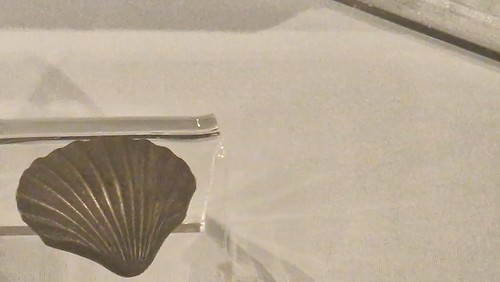
    This is a cockleshell made from tin which dates to around 1450 and would have purchased by someone walked a camino to Santiago de Compostela. I didn’t purchase any little trinkets when I walked there as part of a camino a few years ago, but it was the sort of thing that Bev liked collecting up to nail on her walls at home alongside the dead squirrel or whatever it is. Looking at this item dating from so long ago did bring back some happy memories of my brave pilgrimage.

    I’m posting this really to show off my new knowledge about the camino, which is that there are estimates of 100,000 to 500,000 people a year completing the pilgrimage to Santiago de Compostela in the middle ages. This is a ferociously large total, not that far off the number who walk it today and I discovered recently on YouTube how many English people went to walk this route. They would purchase or acquire a list of locations that they needed to visit and simply seek directions to the next village or town when they reached the previous one. Who needs Google Earth with a strategy like that? It meant that a lot of relatively poor people were completing this pilgrimage route and it is thought that theft from these pilgrims along the way was relatively rare. Theft inevitably happened, but the main issue for many was the rather challenging nature of the walk without resilient clothing and shoes. I’d say though that the bravery someone must have had to embark on this adventure must have been substantial and it would have taken a long time without Ryanair to fly them to a location relatively near to the start.

  • Streets of Norwich – Mountergate

    Streets of Norwich – Mountergate

    Part of my Streets of Norwich project…. [updated in September 2023]

    Screenshot-2020-05-14-at-12.50.16

    Mountergate has also been referred to as the southern end of St. Faith’s Lane and the small section where it meets Prince of Wales Road is now better known as Eastbourne Place. The road name comes from the corruption of the parish name of St. Peter Parmentergate, which over time became Permountergate, and then Mountergate (and Mountergate Street).

    20200512_102418

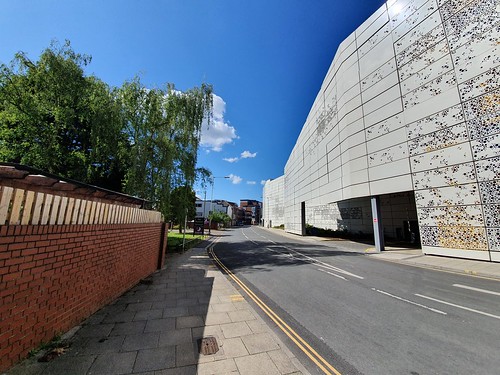
    Norwich City Council is very proud of its car parks and they put to one side perhaps too readily an English Heritage report asking them to reconsider building this. I’d rather that the council were proud of Norwich’s heritage and stopping knocking things down, but there we go. This is likely another one of those decisions that will be regretted in thirty years, although the building on the front part of this site was in fairness of no great historic loss.

    20200512_102534

    As can be seen here, the car park beautifully blends into its environment.

    20200512_102601

    There’s a road opposite the car park which leads to the Premier Inn and riverside walk.

    20200512_102610

    On the left of this photo is a building which has been left empty since around 2005, whilst the beautiful car park still keeps going on the right.

    20200512_102641

    The same neglected building from the front.

    20200512_102631

    When certain Norwich City councillors were excitedly talking about their new car park, they were asked by some heritage bodies to moderate their plans to try and save the historic fishmarket site. The fishmarket buildings weren’t that appealing visually, but there was historic interest to them, even though they had only been constructed in 1914 when they moved from their previous site on St. Peter’s Street.

    English Heritage said:

    “The complete demolition of the fishmarket would result in the loss of this heritage interest and the buildings’ contribution to the historic environment. We would urge the council to consider alternative uses of part of the site that would allow retention of the fishmarket, but also alternative designs for the car park.”

    So, there was potential for the council to change their plans slightly to build their car park, but to save some of the fishmarket site. What the council actually did was ignore all of that, but they did save the plaque which they’ve attached to their lovely new car park. So, when people come to have a look at the fishmarket site, which was of historic note albeit very run-down, they can now see where it was. Great.

    There was a question asked of the council at the time about surely their own public transportation plans were failing if their only solution was to keep building car parks. I’m not sure they came up with an answer to that.

    Anyway, there’s no point in being negative. One advantage in the council knocking down sites of interest is that there are fewer listed buildings for me to note.

    20200512_102701

    This is one listed building that remains, a seventeenth-century former factory site which still has some character to it, even though there have been a couple of extensions in the eighteenth and nineteenth centuries when it was used in the manufacture of boots and shoes. Behind it is St. Faith’s House, which fronts onto Baltic Wharf.

    20200512_102742

    A more modern office building, and then the entrance to the new St. Anne’s Quarter building development. Somewhere along here was the site of the Orchard Tavern, which was the only pub located on Mountergate.

    Screenshot-2020-05-15-at-14.51.20

    The pub was badly damaged during an air raid in 1940 and the owners, the Lacon Brewery, decided that they wouldn’t rebuild it.

    Taking a look at the 1939 Register, St. Faith’s Tavern was located at 17 Mountergate and the landlord Fred Furze lived on the premises with his wife, Melinda. The pub closed in 1961 and it was once located at the corner of Mountergate and Synagogue Street.

    20200512_102842

    Everything on the left has been lost to the St. Anne’s Quarter site (although much had already been lost to war damage), but the wall on the right-hand side has been retained.

    20200512_102922

    And that wall leads to this gate, which led into where the Rose Lane iron-works are marked on the map. Now replaced by the Parmentergate Court housing project, at least this element has been kept as part of the site redevelopment. George Plunkett, who I’ve never known to be wrong on anything, wrote that the walls were from the Co-op shoe factory and were “retained as a baffle against traffic noise for Parmentergate Court”. Another source says they’re the old iron-work walls, and I have no idea which they are, unless both were at the site at the same, or different, times. On balance, I can’t imagine Plunkett was wrong though.

    20200512_102943

    The road, which is pedestrianised at this point, then meets King Street and straight over is Stepping Lane. A century ago, there would have been a road on the left-hand side, which was where Synagogue Street once stood. Much of this was lost during air raids in the Second World War, with the synagogue the street was named after being badly damaged, and then moved to a new site on Earlham Road in 1948.


  • Streets of Norwich – Ninham’s Court

    Streets of Norwich – Ninham’s Court

    Part of my Streets of Norwich project…. [updated in September 2023]
    20210118_114544

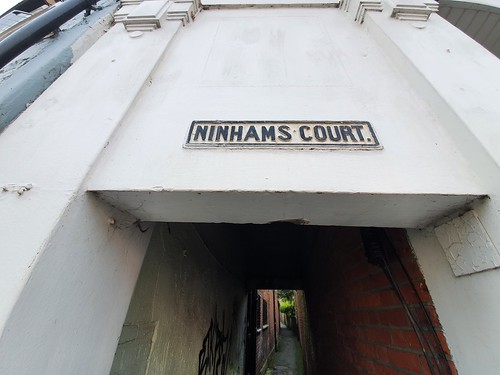
    Ninham’s Court is a thoroughfare which connects Bethel Street to Chapelfield and it hasn’t changed its route over the last few centuries.

    Screenshot-2021-01-22-at-08.35.01

    In this 1880s map, the thoroughfare was known as Masters Court and it takes its current name from the artist Henry Ninham, who lived at one end of the street. Ninham, who lived at the Chapelfield end, was a landscape artist and member of the Norwich School of Painters. He rather helpfully painted and drew many images of Norwich’s yards, courts and old buildings, with these sometimes being the only memory of them since they have long since gone.

    20210118_114546

    20210118_114609

    20210118_114624

    20210118_114643

    20210118_114648

    20210118_114704

    Photos from the route of Ninham’s Court, which is a narrow passage which reminds me somewhat of the rows in Great Yarmouth. The moss growing on the wall adds some atmosphere, but otherwise this isn’t really a street that anyone should necessarily travel to visit…..

    20210118_114627

    This photo is of limited use here (but George Plunkett can help here with this photo and also this one), but along the route are some houses which were likely built in the sixteenth century, although the fifteenth century undercrofts of older structures remain. This is the text about this property from the new city council’s heritage walk, which is what took me down this thoroughfare in the first place:

    “In the alley is the house of Nugent Monck, who founded the Norwich Players here in 1911. His company first performed in the large drawing room, which accommodated a small stage and an audience of about 70 people. Their popularity meant he needed more space and moved to the site of the current Maddermarket Theatre in St. John’s Alley.”

    There was an article in the Norwich Mercury in September 1896 where freehold properties were for sale in the alley, split across nine lots with an annual rent of £204 12s.

    One resident of note was Robert Briggs, whose death the Norwich Mercury announced in 1901. He had become something of a notable character locally as he was the last Norwich survivor of the famous 1854 charge of the Light Brigade at Balaclava.

    There was a tragedy on the alley in January 1911 when three year old Ada Louisa Waterson perished in a fire. Her mother had left her, and her tied up to a chair baby sister, whilst she went off to walk to Cow Hill for fifteen minutes. When she returned she saw smoke and then realised that Ada had died by burning, likely by wearing flannelette. The Coroner was most unimpressed, he condemned the mother saying that it was deplorable that children had been left unprotected.

  • Liverpool Weekend (Day Three) – The Fever Van by Lowry at Walker Art Gallery

    Liverpool Weekend (Day Three) – The Fever Van by Lowry at Walker Art Gallery

    20230910_124804

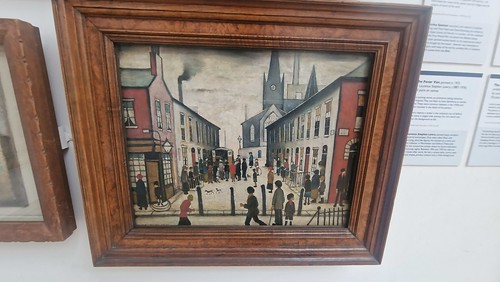
    Welcome to the occasional series of art posts when I know next to nothing about the artwork but merrily write stuff anyway for my two loyal readers. But, it’s rather good (the artwork, not my posts). It’s entitled ‘The Fever Van’ and it’s by Laurence Stephen Lowry (1887-1976), painted in 1935.

    The gallery notes:

    “‘The Fever Van’ shows an ambulance arriving to collect a patient from a small terraced house. The sufferer probably has diptheria [sic] or scarlet fever, both highly contagious diseases and widespread in industrial Britain in the 1930s. A lack of vaccinations meant that such diseases were frequently fatal.”

    Although I particularly like this comment from Lowry:

    “Accidents interest me – I have a very queer mind you know. What fascinates me is the people they attract. The patterns those people form, and the atmosphere of tension when something has happened… Where there’s a quarrel there’s always a crowd… It’s a great draw. A quarrel or a body.”

    It’s a reminder how prevalent diseases were in the last century, with routine vaccinations against diphtheria not taking place until the 1940s and scarlet fever had only been addressed in the 1930s. I hadn’t realised how effective diphtheria vaccines were, seeing a reduction in cases from 46,000 in 1940 to 962 in 1950, with a corresponding fall in deaths from 2,480 to 49.

    With great foresight from the Walker Art Gallery, they purchased it directly from Lowry in November 1943. His mother had died in October 1939, before he had gained the formidable reputation that he now has, and it’s noted that he regretted that she didn’t see the impact that her son’s works were having. The painting just seems bleak to me, there’s the obvious sadness of the ambulance, but the whole atmosphere feels grey and industrial. But, that’s something of the point of the painting and I found myself quite drawn to this snapshot of the age. It’s also reminded me that I must visit the Lowry Museum in Salford at some point, another location that I’ll put on the list that perhaps one day I’ll complete ticking things off.

  • Liverpool Weekend (Day Three) – Steve Departs at the Walker Art Gallery

    Liverpool Weekend (Day Three) – Steve Departs at the Walker Art Gallery

    20230910_112708

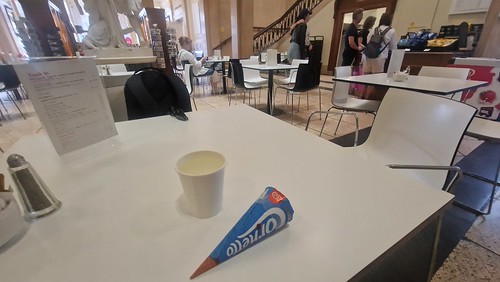
    It was the end of the weekend for Steve, as he had to go and board a train back to Norwich given that he needed to back by the end of Sunday. We tried to support the Walker Art Gallery, which is free to enter, by visiting their cafe but the whole arrangement was just a little sub-optimal. The cafe’s web-site advertises that they have hot food from 11:30, but at the cafe the signage said hot food started at 12:00 and the menus on the table said that hot food started from 11:00. It transpired that they were all wrong and hot food started at before 11:00, but it was all too late when we realised as everyone had already ordered cakes and coffee. Well, I hadn’t, I had a Cornetto and tap water as I’m not very decadent.

    Anyway, the Cornetto was delicious (and apparently the cakes were also entirely acceptable) and the staff were helpful. But it is always sad to see someone leaving, although after Steve had gone then Susan, Bev and I managed to get talking about death for thirty minutes so that really cheered everyone up. With that, it was time to explore the rest of the Walker Art Gallery, a fine institution and I was only slightly worried that I had to cope with Bev for a day without Steve’s sensible interventions.

    It all means that some of the party didn’t get their Traditional Scouse with pickled red cabbage and a bread roll, but maybe we’ll all return soon enough.

  • Streets of Norwich – Old Mint Yard

    Streets of Norwich – Old Mint Yard

    Part of my Streets of Norwich project…. [updated September 2023]

    20200502_093641

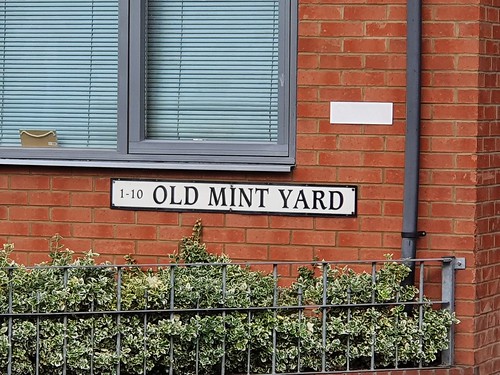
    This yard is located off of Fishergate, and I hadn’t paid much attention to it until reading that it was likely the home of Norwich’s mint in medieval times, which produced this coin.

    20200502_093645

    There’s not much left in this yard area now, just a car park. There’s very little information about the yard on-line, although in 1900, Mr H.O. Greengrass of Norwich charged £69 10s to make the old yard up as part of improvements schemes across Norwich.

  • Streets of Norwich – Watts Court

    Streets of Norwich – Watts Court

    Part of my Streets of Norwich project…. [updated in September 2023]

    Screenshot-2021-01-23-at-08.20.54

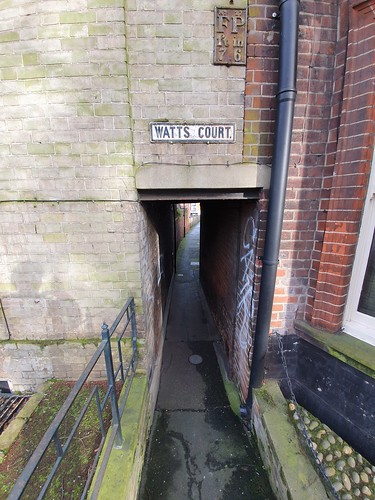
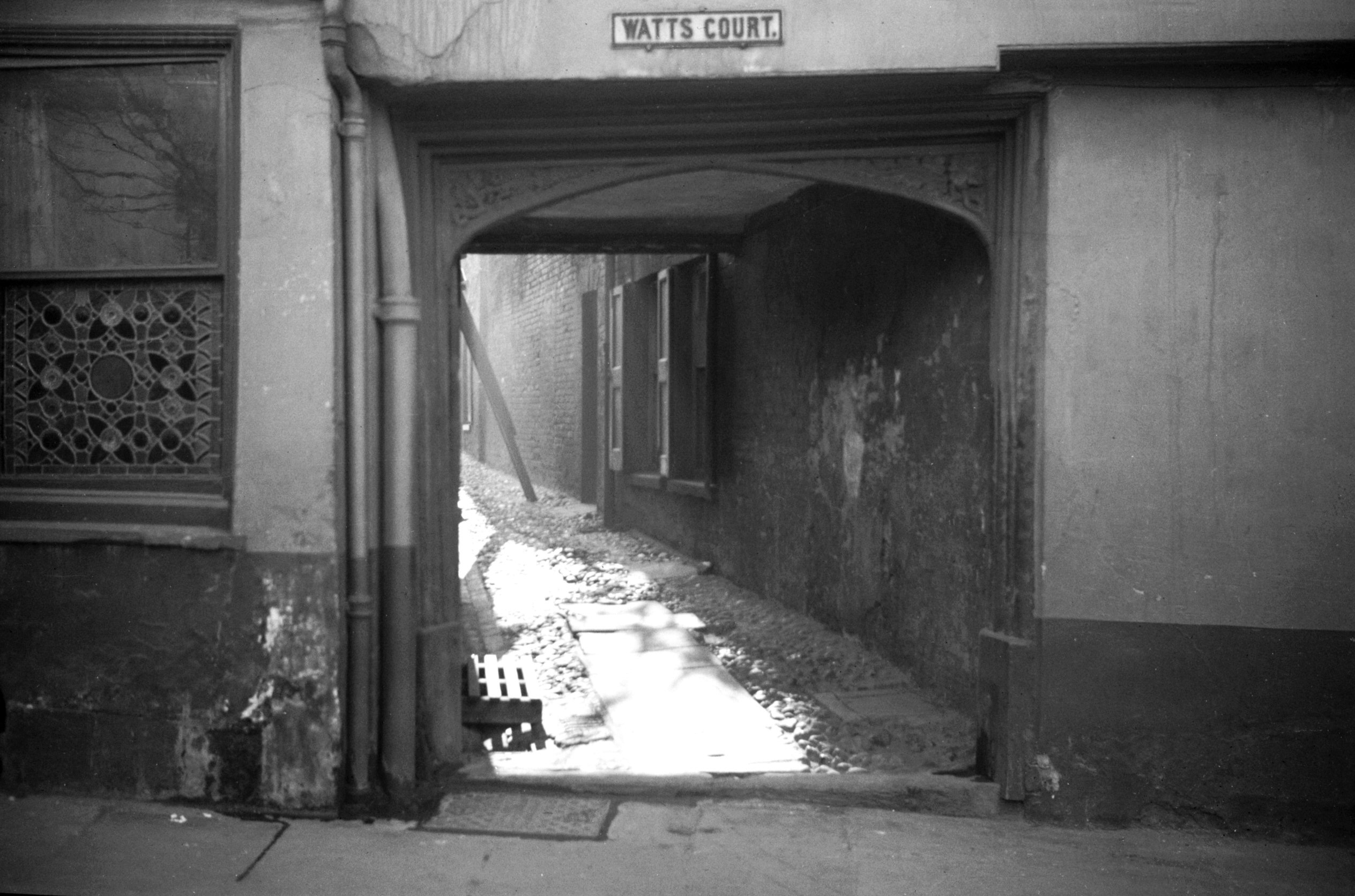
    Watts Court connects Chapelfield and Bethel Street, running parallel with Ninham’s Court. It’s likely named after John Langley Watts, a former Mayor of Norwich and whose memorial is still in situ inside All Saints’ Church, Westlegate.

    20210118_114138

    The Chapelfield end of the court, which isn’t the most decadent entrance…. And I mention this because at the other end, on Bethel Street, there was until the Second World War a rather lovely original Tudor surround to the court, unfortunately, lost in 1942 in the Blitz. George Plunkett, reliable as ever, has a photo of this entrance that he took in 1935. There’s nothing there now, the buildings here have been removed and not replaced.

    20210118_114145

    20210118_114156

    20210118_114205

    Photos of the court along its length, there are traces of history in the old wall, but unfortunately, most of interest has been lost.

    One resident in 1849 was John Shenfield, who lived at number 42, but his business as a chair maker and lodging house keeper must have encountered problems as he was declared an insolvent debtor. This process meant that he had to attend the Guildhall to discuss his financial matters with the court. An insolvent debtor was different from a bankrupt, it wasn’t until 1861 that insolvent debtors could apply to become a bankrupt. It would have been a worrying moment for John Shenfield, as insolvent debtors could be kept indefinitely in a debtors’ prison.

  • Liverpool Weekend (Day Three) – Limestone Stela of Ni-ankh-tet at World Museum

    Liverpool Weekend (Day Three) – Limestone Stela of Ni-ankh-tet at World Museum

    20230910_102421

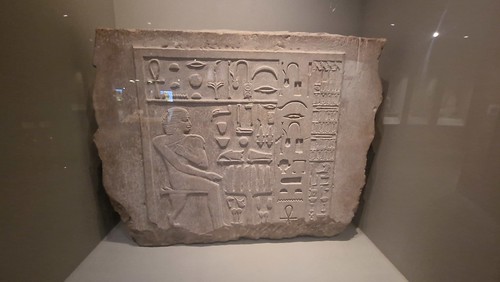
    I had to Google what a ‘stela’ was and after I insisted to Google that I hadn’t just mis-spelt ‘stella’ (which is a drink I’d never search for) it informed me that it was a stone slab which was erected as a monument. The museum’s description is:

    “Slab stela of Ni-ankh-tet, royal acquaintance, director/controller of scribes connected with petitions (or iah?) and scribe of reversion offerings of about late 3rd Dynasty or early 4th Dynasty. Sunk and raised relief with a combination of vertical and horizontal inscriptions. The deceased is seated before a table of offerings. With his right hand he reaches out towards the table of bread loaves, while with his left he grasps the shoulder knot of his garment in his clenched fist. At the top right side is a register list of linen of various fineness. The bottom part of the stela is broken away.”

    As this isn’t going to be an Egyptian history blog, for one reason I know nothing about it, I was just going to witter on about the age of this, which is from 2686 to 2494 BC making it a remarkable survival given its age. It was discovered by Joseph Sams in 1833 who owned it until 1850 when he sold it to Joseph Mayer, who donated it to the museum in 1867. The number of people who have seen this stone at the museum must outnumber how many saw it when it was in situ.

    It’s not known when the excavation took place, but Joseph Sams (1784-1860) was a book-seller and antiquities dealer, so he was likely hawking around the area waiting for these items to be uncovered. Joseph Mayer (1803-1886) made his money as a jeweller and then started to build up an art collection of some considerable size, which he donated in its entirety to the World Museum (or the William Brown Library and Museum as it then was).

    I find these exhibits particularly fascinating as a reminder of how advanced the Egyptian civilisation was and wondering what the original stone carver would have thought of thousands of people in Liverpool looking at their handiwork…..

  • Liverpool Weekend (Day Three) – Aquarium at the World Museum

    Liverpool Weekend (Day Three) – Aquarium at the World Museum

    20230910_100757

    I love a good aquarium and I had hoped to visit the Deep in Hull, but a rail strike put paid to that little plan. Anyway, there’s a small aquarium set-up at the free to enter World Museum which is the first location that we headed to on the Sunday. In this photo, we have some fish.

    20230910_100928

    And some more fish. I’m not a marine biologist, so that’s as far as I’m going on this.

    20230910_100948

    A sea anemone I think. I wouldn’t be surprised if I win some sort of environmental blog of the year award this riveting and penetrating content like this.

    20230910_101139

    This looked like a little shark. Anyway, back to marginally more useful commentary, this set-up is more recent, but the museum received its first aquarium displays in 1857 which was the second such facility in the world. The first was in 1853 when the ‘Marine Vivarium’ opened in Regent’s Park Zoological Gardens in London.

    20230910_101114

    I say nothing but this allowed children and short adults to have a look at the fish from a different angle. It’s a pleasant floor to explore, with the plenty of information about the environmental impact on marine life. I obviously wasn’t entirely observant, as I note the aquarium has chocolate chip starfish, hermit crabs and a lobster, all of which I missed. It’s only a small part of the museum, but probably one of the more popular areas for kids, along the dinosaur displays.