Blog

  • Ickworth House – Frederick Augustus Hervey and the Grand Tour Theme

    Ickworth House – Frederick Augustus Hervey and the Grand Tour Theme

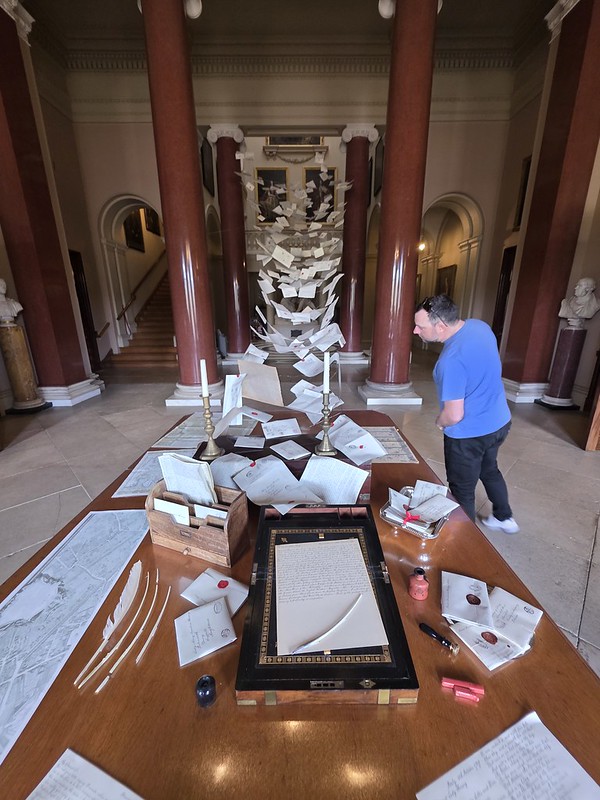
    20250413_130434

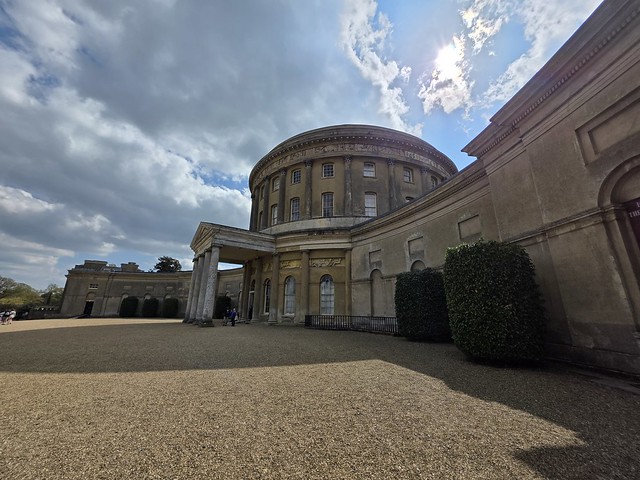
    When we entered Ickworth House the friendly volunteer explained numerous things, including that they’ve got a theme this year of the Grand Tour and hence the decorative element in the main entrance hall. A little disappointingly, there’s nothing I can find on-line from the National Trust about this focus and the curation didn’t flow very well at the house either and they had put odds and sods around the place.

    Going back, the driving force behind Ickworth House was Frederick Augustus Hervey (1730-1803), the 4th Earl of Bristol and Bishop of Derry. He was a little odd, or eccentric, whichever you prefer. On that theme, perhaps the most infamous anecdote illustrating his disregard for social and religious norms occurred in Siena. According to accounts, he deliberately threw a tureen of pasta from his hotel window directly onto a passing procession carrying the Host, the consecrated elements central to Catholic belief. The locals were not best pleased. As a more positive legacy, one of the Earl-Bishop’s most enduring legacies stems directly from his eccentric travel habits. His reputation as an epicurean and a demanding traveller, who insisted on the highest standards of comfort, cuisine and wine, became widely known across Europe. Consequently, numerous hotels seeking to advertise their quality and luxury began naming themselves “Hotel Bristol”, although there’s more on this theory at https://en.wikipedia.org/wiki/Hotel_Bristol.

    Hervey owned Ickworth Lodge, which was really just a decadent farmhouse, but he wanted to create a country house with classical elements that would surprise and delight others. He declared that he wanted to “unite magnificence with convenience and simplicity with dignity, no redundancy, no superfluity, no one unnecessary room, but the necessary ones to be noble and convenient” which seemed an admirable aim.

    The Earl Bishop travelled extensively across Europe, particularly focusing on Italy, and he wanted to move the Italian Neoclassical architecture to his Suffolk estate. Central to this was his engagement with the work of Italian architects, specifically Mario Asprucci the Younger (1764-1804). The Earl-Bishop had seen Asprucci’s work, most notably at the Villa Borghese in Rome, and commissioned him to provide designs for Ickworth. The commissioning of an Italian architect for a major English country house, based on direct experience of Italian models, highlights the cosmopolitan nature of elite architectural patronage during this period. It’s also why the house looks and feels like it does today.

    But, it’s a fascinating theme for the National Trust to pursue, I’ve wondered before just how inspirational a grand tour across Europe must have been in the 1700s and 1800s.
  • Ickworth House

    Ickworth House

    20250413_130212

    Liam and I popped into Ickworth House on the way back to Norwich and I realised that I hadn’t visited here for 40 years. I don’t wish to linger on this thought as it doesn’t fit the obvious truism (obvious to me) that I’m a millennial.

    20250413_135433

    The parkland in front of the property.

    20250413_125722

    The rather nice second hand bookshop, but I restrained myself from buying anything.

    20250413_133805

    Liam playing bagatelle, which is likely a forerunner of bar billiards. On that point, I haven’t yet mentioned in detail my day at the World Championships, I’ll get to that soon hopefully… Although there’s a lot of stuff on this blog I’m meant to be getting around to.

    20250413_132419

    I loved that they’ve put books into lots of niches around the house. If I had a large property, which is unlikely and a bit unnecessary, I’d likely do something similar and the situation would soon get out of control. Liam commented something similar, but I ignored him.

    Anyway, to set the timeline here:

    1779: Frederick Hervey (later the ‘Earl-Bishop’) inherits the Ickworth estate.

    c. 1795: The Earl-Bishop commissions initial Neoclassical designs for a new house from Italian architect Mario Asprucci the Younger. The concept is primarily for an art gallery.

    1795 / 1796: Construction begins. Irish architects Francis and Joseph Sandys adapt Asprucci’s designs and oversee the work.

    1798: The Earl-Bishop’s extensive art collection, intended for Ickworth, is confiscated in Rome by Napoleonic forces.

    1803: The Earl-Bishop dies in Italy. Construction halts, leaving the house, primarily the Rotunda, as an unfinished shell.

    c. 1821 – 1830: Construction resumes under the Earl-Bishop’s son, Frederick William Hervey (later 1st Marquess of Bristol). The main structure, including the wings, is completed. Architect John Field is involved in adapting and completing the interiors.

    1829: The 1st Marquess and his family move into the completed house. The East Wing becomes the family residence, and the Rotunda is used for display and entertaining. The West Wing remains largely unfinished.

    c. 1830: Interior fittings, including marble fireplaces, Scagliola columns, and coved ceilings, are largely complete.

    c. 1879: The 3rd Marquess commissions architect Francis Penrose for internal improvements. The Pompeian Room (decorated by J.D. Crace) and the Smoking Room are created in projecting bays off the linking corridors.

    c. 1907 – 1910: The 4th Marquess commissions architect Sir Reginald Blomfield (or possibly A.C. Blomfield) for further interior alterations, including remodelling the main staircase in the Rotunda and modernisations in the East Wing.

    1930s: Theodora, Marchioness of Bristol, renovates the servants’ quarters in the Rotunda basement, adding modern amenities like electricity and improved plumbing.

    1956: Following the death of the 4th Marquess, the house, contents, park, and endowment are transferred to the National Trust via HM Treasury in lieu of death duties. The Hervey family retains a lease on the East Wing.

    1998: The 7th Marquess sells the remaining term of the lease on the East Wing to the National Trust, ending the family’s residential connection.

    2002: The East Wing is converted and opens as The Ickworth Hotel, operated under lease from the National Trust. Childs Sulzmann Architects are involved.

    2006: The previously unfinished West Wing is completed and opened as a visitor centre, restaurant, shop, and events venue, in partnership with Sodexo Prestige. Hopkins Architects are associated with this phase.

    2018 – 2020: The major ‘Ickworth Uncovered’ conservation project takes place, involving the complete re-roofing of the Rotunda dome and East Link corridor.

    As is my wont, I’ll post numerous other things separately about the property, but I was genuinely very impressed with the volunteers here who were pro-active, engaging and keen to tell visitors about the history of the building. As I like wittering on about history, this did extend our visit somewhat, but it’s always a delight when there’s an enthusiasm from everyone involved with the project. The navigation route around the house was also carefully laid out and it was clear where to go, there has been a lot of thought put into this entire operation.

  • Maldon – Rose and Crown Pub (JD Wetherspoon)

    Maldon – Rose and Crown Pub (JD Wetherspoon)

    20250413_105015

    As Liam and I were coming back from London we did our usual thing of visiting a pub from the JD Wetherspoon chain which I haven’t visited before. The Rose and Crown, located on the town’s main road of the High Street has the bonus of being a Good Beer Guide listed pub to add to my little collection.

    20250413_102811

    The pub was operated by Punch Taverns until 2013, but was taken over by JD Wetherspoon in 2014 (opening in June 2015 after they had spent £1.6 million on the redevelopment) and they did an extensive amount of archaeological work and they’ve put a lot of that on-line, once again one of the few pub companies that takes the heritage of their venues very seriously. The structural heart of the building is from the sixteenth century, but it was extensively remodelled in the eighteenth and nineteenth centuries. It has been a licensed premises since around the 1780s, although there’s not a vast amount of information I can find about its history over recent decades.

    20250413_102848

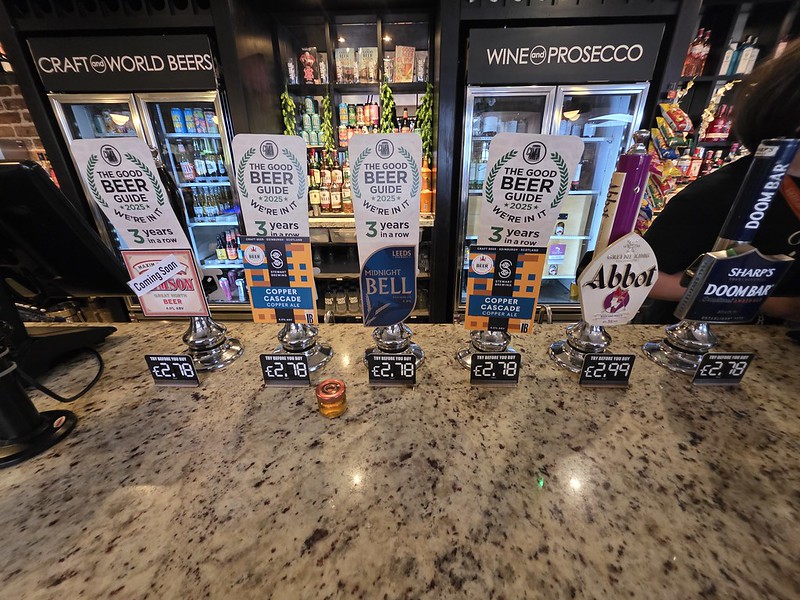
    Part of the beer selection, there were a choice of six different ales when I visited, although there were no darker beers. I liked they must have got bored when putting the little jars with colour samples of the beer in front of the taps.

    20250413_103116

    The rest of the bar and advertising that from this week they’re selling 1664 and Poretti, although it’s unlikely I could taste these riveting lagers from each other. Anyway, there’s something for everyone….

    20250413_103143

    A taster of the Midnight Bell beer from Leeds Brewery which I’ve had before a few times, a dark and malty ale which is rather agreeable.

    20250413_103520

    Half a pint of the Copper Cascade from Stewart Brewing, which I haven’t had before, but was clean, malty, refreshing and it had a slight taste of toffee.

    20250413_102748

    The side of the pub and there’s a beer garden at the rear. The staircase to the toilets is quite narrow and relatively steep, I suspect they must have found it quite a challenge to insert that sensitively into the historic building and there are numerous low ceilings dotted around the place that taller customers need to be careful of.

    Since this is a JD Wetherspoon venue, I thought I’d see if there were any reviews that would surprise and delight me. The pub is rated towards the higher end of the spectrum for pubs in the chain and I got a positive vibe about the arrangements. It wasn’t spotlessly clean, but the team members were friendly and engaging.

    “Used to be good, I do believe it’s a case of which manager is on, my order was taken correctly then on two occasions it’s came out wrong , had to watch my friends eat , 25 mins later mine comes out. I didn’t eat it as i felt awkward and stressed because of service. No refund given, shame”

    I wouldn’t have felt awkward….

    “the pub not very comfortable Atmospheric should really be sold on to a freeholders that runs a grate pub with brilliant food and can attract the best out of people not the worst catal grid experience roll on new owners good bye nice but dim tim the present owner”

    Hmmmm.

    “Staff are dreadful. One of them is a complete liar & behaves inappropiateley. Dreadful place.”

    I wish people would give more information when they post reviews like this, a bit of drama is always exciting.

    “Rubbish beer, rubbish service by surly children. There are far better pubs in Maldon, spend a bit more and enjoy those instead of this place.”

    Rubbish beer? Hmmmm.

    “I had to take the seal of the source”

    I don’t know how some people manage to be so brave.

    “Full of men”

    Occasionally this happens in any pub….

    “Didn’t go there”

    Very helpful.

    “My partner food had aluminium foil stuck on the bottom of it, do your staff know how dangerous Ingestion of aluminium foil is !!!!!!! Perhaps Tim Martin would like to reply”

    Tim Martin didn’t reply and there was a photo of the foil which was an absolutely tiny piece. And it’s not dangerous at all, it’s non-toxic.

    Anyway, I digress once again. I liked this pub, it had a sense of history to it, the team members were friendly and the beers were well-kept. We didn’t have a need to eat on this occasion, but the food coming out look well presented and everything felt well managed.

  • Warsaw – View of the City from 1850

    Warsaw – View of the City from 1850

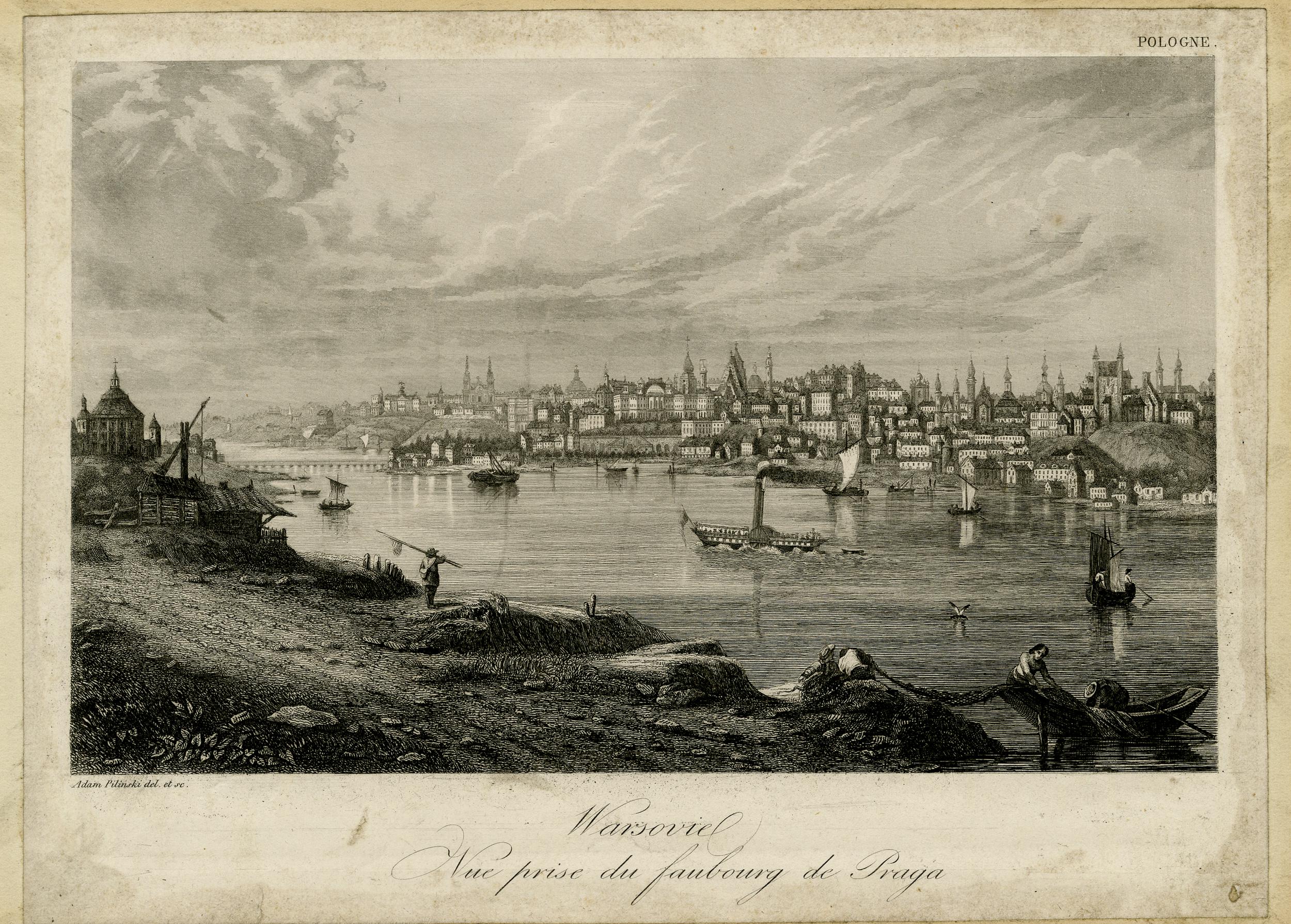
    Slightly randomly, as is the central theme of this blog, I rather liked this view of Warsaw from around 1850 as I hadn’t seen it before. Created by Adam Pilinsky, it’s from the Praga side (or east bank) of the city looking into the central area that is now known as the Old Town.

  • London – Tower Hamlets (Borough of) – Sand Pit at East India Dock

    London – Tower Hamlets (Borough of) – Sand Pit at East India Dock

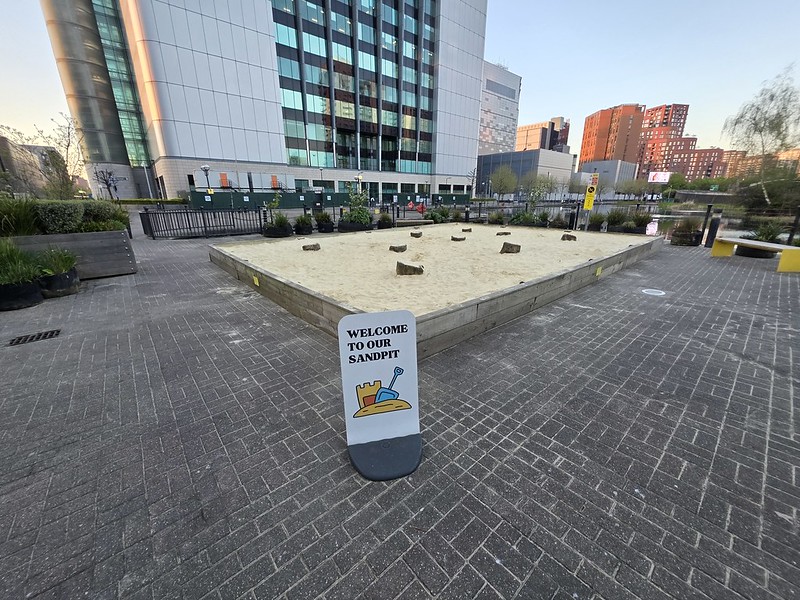
    As another one of my random asides, I often stay at the Travelodge at Docklands and it’s located in the top right of this map from the 1870s. One thing that I saw yesterday, which is a new addition, is a sand pit which is located to the bottom left of where the dock was.

    20250410_193210

    I mean, what could possibly go wrong with this?

    20250411_113804

    As an aside, what the dock area looks like now and there are already lots of residential properties and more are being constructed. There’s a new restaurant opening soon and a new Tesco Express, what more could a community want?
  • Ridgeway – Day 2 (Lamb Inn)

    Ridgeway – Day 2 (Lamb Inn)

    [I originally posted this in June 2018, but have reposted it to fix some broken image links]

    So, we left on morning two of our adventure from the Lamb Inn in Marlborough. I felt that the stay had been positive as the staff were friendly, the pub was clean and the environment was quiet. It was a shame that they weren’t currently doing food in the evening, but the Green Dragon kept us entertained.

    20180612_081440

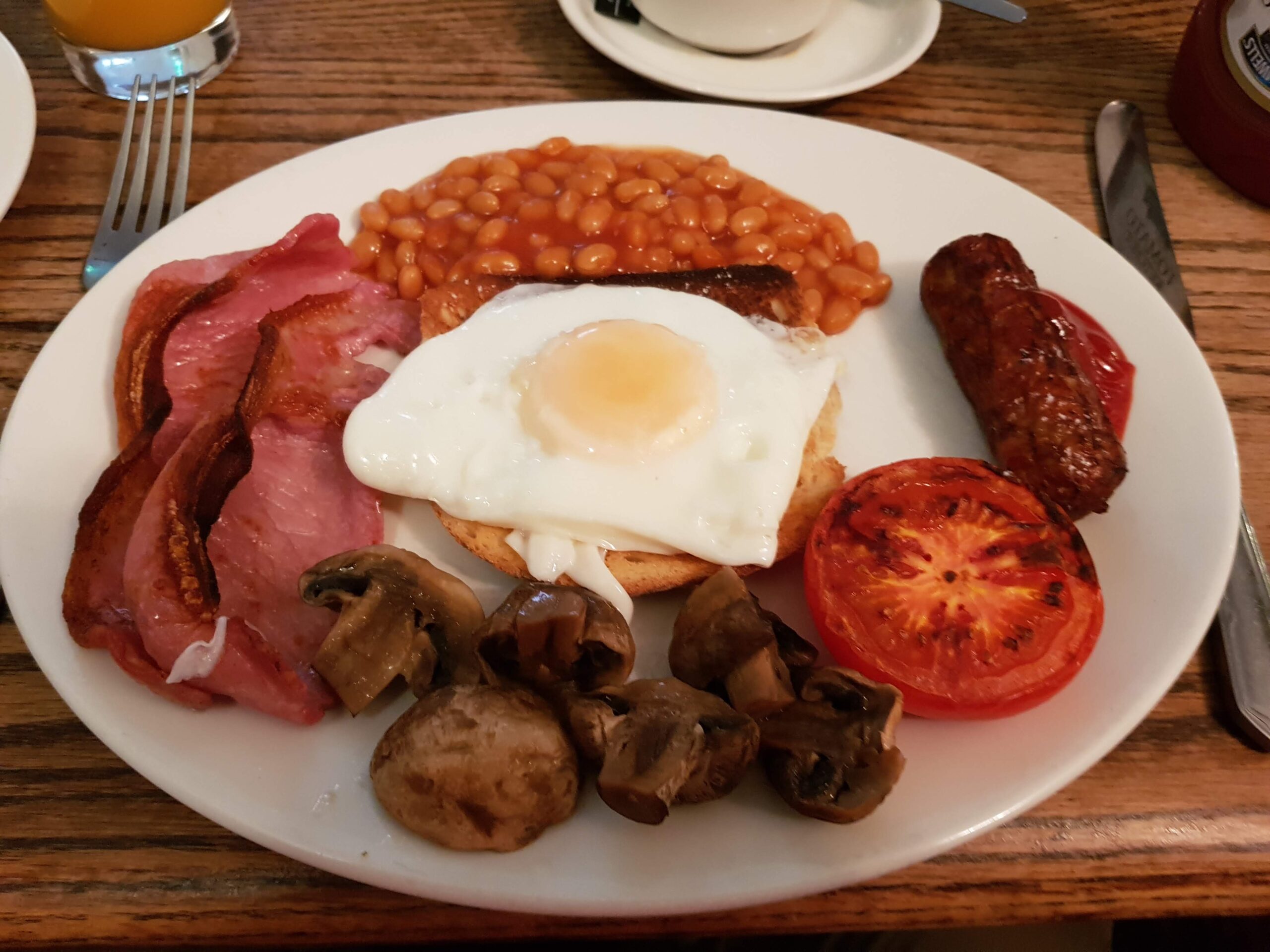
    I thought that the breakfast was lovely, crispy bacon, tasty sausage, well cooked egg and beans. Bev complained obviously, but not a lot. Sorry, that makes her sound like Paul Daniels. The mushrooms were surplus to my requirements and were despatched promptly to Dave. The pub didn’t ask how we wanted the eggs cooked or whether wanted every component part of the meal, but the service was efficient, polite and welcoming, so that sufficed for me.

    20180612_075647

    I had to have Coco Pops, to watch the milk go chocolatey  🙂

    20180612_084722

    The exterior of the pub.

    20180612_074626

    Before breakfast Dave, Steve and myself had popped to the little bakers on the High Street to get some provisions for the day. We were very impressed with the quality of the food and drink. I’d go there again.

  • Ridgeway – Day 2 (Shuttling About)

    Ridgeway – Day 2 (Shuttling About)

    [I originally posted this in June 2018, but have reposted it to fix the broken image link]

    Maggie was kind enough to pick five of us from Marlborough from where we were staying. We claimed that it was because it was most efficient time-wise, but it was actually because we couldn’t be bothered to walk.

    No, that’s not the Queen Mother or the Pope waving from the back seat, it’s Bev.

  • Ridgeway – Day 2 (Summary)

    Ridgeway – Day 2 (Summary)

    [I originally posted this in June 2018 but have reposted it to fix some broken image links]

    DISTANCE WALKED: 19.6 miles

    BRAVEST PERSON: Julian (for exceptional bravery in the heat) and Steve (for exceptional bravery with hayfever)

    QUOTE OF THE DAY: “Susanna won’t share with me now that I’ve spoiled her stone myth” – Steve  “They don’t call me donkey Dave for nothing” – Dave  “Gordon is going nowhere near my thumb” – Dave   “My thumb is above average” – Dave   “What’s going on between your legs Bev?” – Julian   “I like nuts. But not Andrew’s” – Susanna   “I can’t even use that in the blog, it’s beyond the pale” – Julian   “No, get a shot now before the meal, spice it up” – Dave   “Mine was conceived on a bar stool” – Susanna    “What goes on in High Barn stays in High Barn” – Steve M   “Just don’t tell Andrew” – Bev   “Suddenly Steve’s head went down” – Dave   “I’ll help you in ” – Steve M   “Our bathroom is shared” – Maggie “Do you knock once for a cup of tea, twice for something else?” – Dave  “We’ll just wang out the back” – Dave


    Well that was an emotional day. We started off with breakfast in our pub, which was excellent. Well, I thought it was excellent with a full English and cereals. Bev complained about the egg, the bacon and the sausage. I thought the sausage was delicious and enjoyed half of Bev’s sausage.

    Maggie was kind enough to drive us back from Marlborough back to the path, which meant two separate trips. We started off walking along the route and it was nice that the temperature was lower than yesterday. Steve struggled with hayfever, but he was very brave and only mentioned it a couple of times. He’s a real role model for Bev.

    Bev complained quite a lot. Mainly towards the end of the day, but not exclusively. I can’t post this on the blog as it’s 18-rated and not X-rated, but Bev explained what she has done at Wayland’s Smithy. Honestly, I was shocked. And then that led to a revelation about what Maggie liked doing outside.

    Fortunately, Dave, Steve and myself had gone to Greggs. Bev and Susanna spent 45 minutes in Waitrose and bought a lot of middle class produce. But that meant at least I had a delicious Greggs spicy chicken roll at lunch-time and that was excellent.

    We went to look at the Uffington White Horse and Bev guided us towards where it was. After that guiding I then guided us to where it was, and it was an impressive site. Well, what we could see of it. But, Bev found a penny from 1908 and she kindly donated it to me, so she was flavour of the hour.

    The white horse was impressive because of its location in the surrounding landscape. Susanna spoke a load of gibberish about standing stones and Bev remorsefully mocked here for several hours.

    But the highlight of the day was the pebble that Bev wanted everyone to see. Now, I liked it, but there was a lot of angry people at Bev. It was an historic stone though that was of local importance, and was worth seeing. It’s known as the Blowing Stone and is a sarsen stone with numerous holes in, which is capable of making loud sounds if blown correctly.

    The last hour of the day was walking to the hotel, which was off the main route and to be honest, I could hear Bev 200 yards away complaining. Susanna meanwhile went diving into a bush.

    As for the evening meal, well, that was a drunken mess. Seven people, fifty shots and lots of great food, what could possibly go wrong? Well, quite a lot….. More on that will be detailed in my posts about day two that I’ll make tomorrow….

  • Ridgeway – Day 1 (Julian’s History Walk)

    Ridgeway – Day 1 (Julian’s History Walk)

    [I originally posted this in June 2018, but have reposted it to fix the broken image links]

    What more could the group want after a lovely meal and drink than a lovely little walk around Marlborough? I thought we could have a 45-minute walk around the town, even though it transpired to be two hours. But that just shows how rather exciting my walk was.

    I pinched the walk from the Marlborough town web-site and it was a tour of the blue plaques of the town. I rated the walk as 10 out 10, and Bev only complained three times, so that showed just how good it was.

    The highlight for me was discovering that Thomas Wolsey was ordained in the town’s church in March 1498, so I was rather impressed with that. We also went to look at Marlborough School and the security guard ran out to see what all the noise was about.

    I didn’t like how former gravestones had been used as a pathway outside the church, eroding them away so that they’re lost for future generations.

    I was pleased to have visited the town though, so much history and some rather interesting courtyards and rows which went to the back of the properties. Much was lost in the town’s great fire, but the rebuilding that took place is mostly still there.

    Below are some photos of the walk.

    20180611_205010

    20180611_205707

    20180611_204753

    20180611_205751

    20180611_212337

    20180611_205647

    20180611_211508

    20180611_205402

    20180611_204645

  • Ciechanów – Choo Choo Train

    Ciechanów – Choo Choo Train

    20250409_090804

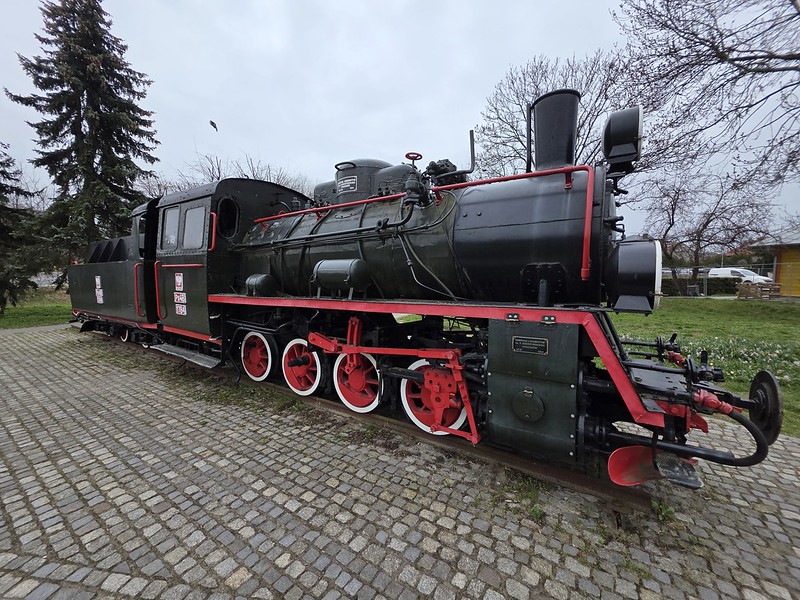
    This is a narrow-gauge locomotive from 1957, a legacy of the need to Poland’s heavily damaged transport infrastructure rolling stock quickly and efficiently following the damage done during the Second World War. Minimising development time and utilising existing, reliable engineering principles allowed Fablok (then operating under the name Fabryka Lokomotyw im. F. Dzierżyńskiego ) to initiate mass production relatively swiftly. This locomotive was linked to the Ciechanów Sugar Factory (Cukrownia Ciechanów) which was a significant industrial enterprise in the city for over a century. Its establishment in 1882 coincided with a period of notable industrial growth in Ciechanów, which also saw the founding of a brewery in 1864 and the arrival of the standard-gauge Vistula River Railroad in 1877.

    20250409_090811

    The front of the locomotive. Following the cessation of regular narrow-gauge operations and the closure of lines like those around Ciechanów, the Narrow-Gauge Railway Museum in Sochaczew became the principal repository for withdrawn locomotives and rolling stock. Established formally in 1986 on the site of the former Sochaczew County Narrow Gauge Railway, the museum amassed one of Europe’s largest collections of narrow-gauge vehicles. This train was sent there, but was purchased by the authorities in Ciechanów in 2011 and it was installed at this site in 2018 after some repairs to the locomotive.

    20250409_090757

    The translated text reads:

    “1896 – Construction of the railway line from Jawor to Chełmsko Śląskie begins (extended to Lubawka in 1899)
    1899 – Opening of the Lubawka – Krzeszów section
    1900 – Opening of the Krzeszów – Kamienna Góra section
    1945 – Railway taken over by PKP (Polish State Railways)
    1954 – Change of track gauge from 750 mm to 785 mm
    1960 – Closure of the Jawor – Chełmsko Śląskie section
    1979 – Suspension of passenger transport on the Kamienna Góra – Krzeszów – Lubawka route
    1986 – Closure of the Lubawka – Krzeszów section
    1988 – Closure of the Krzeszów – Kamienna Góra section
    1991 – Railway liquidation

    The Chełmsko narrow-gauge railway, initially steam-powered, reached from Jawor to the town of Ciechanów.”

    20250409_090815

    Translated, this sign reads:

    “The narrow-gauge steam locomotive, series Px48, number 1784, from the Feliks Dzierżyński factory in Chrzanów, was produced in 1954. In Ciechanów, it worked on the sugar factory railway until 1993. After the liquidation of the sugar factory railway, it was transferred to the Museum of Narrow-Gauge Railways in Sochaczew. In 2011, it was repurchased by the city of Ciechanów and restored. It is currently exhibited on Sienkiewicza Street. In 2012, it was entered into the register of movable monuments.”

    It won’t surprise either of my two loyal blog readers to discover that I’m not an expert in redundant railway lines in Ciechanów, but the former line is evident from this overhead map.