Further to my post about the work of the Misericordia Brothers, the below photograph shows them picking up a wounded person in Florence as one of their acts of charity.
It seemed to take a lot of people to collect the injured person, but there we go, I’m sure that it was a publicity shot. Not that any of the individuals would benefit from the publicity given they were anonymous, but at least the organisation’s work was highlighted.
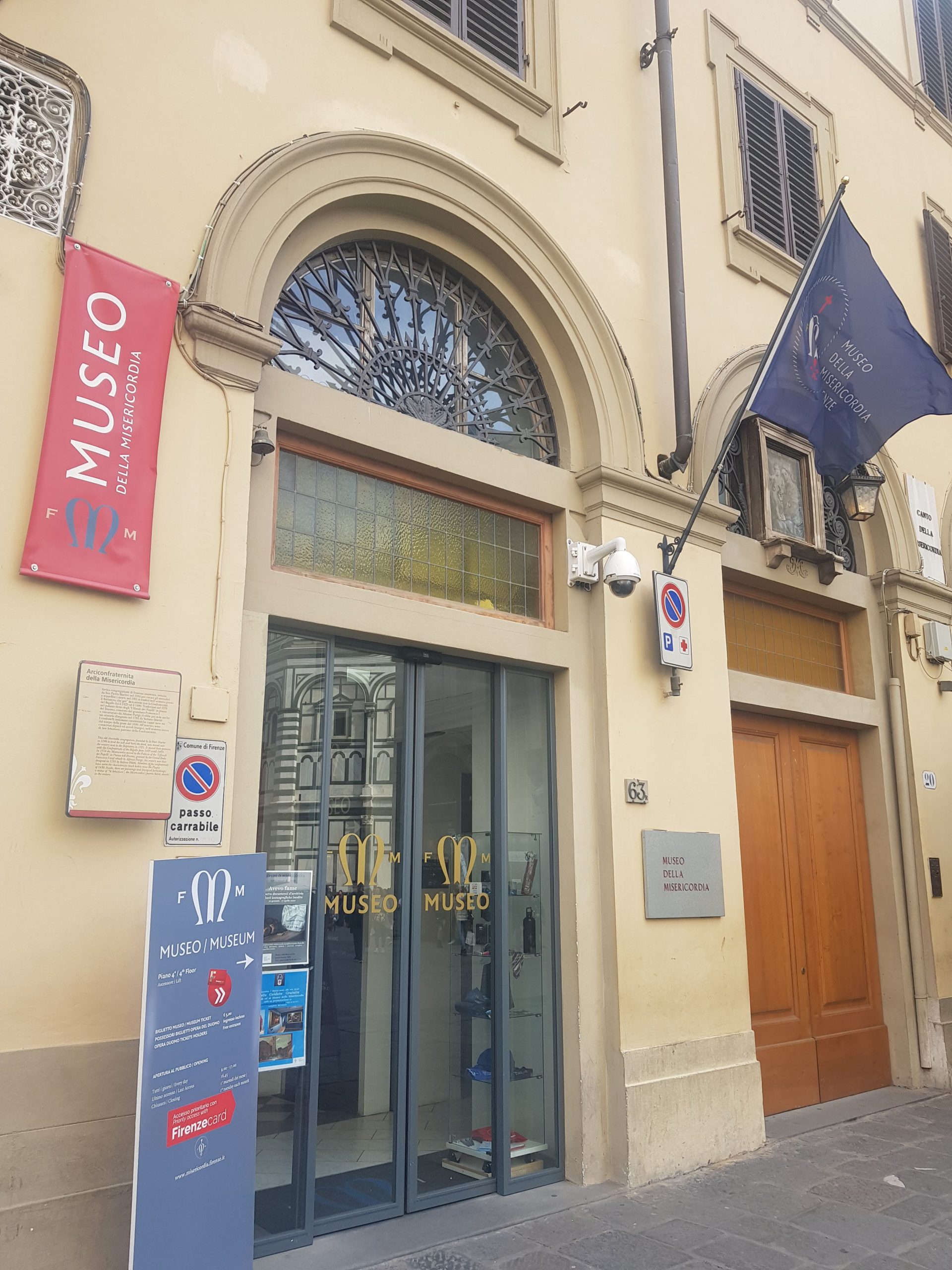
As a background, the Museo della Misericordia is a museum in Florence which highlights the centuries of charitable work from the Brothers of Mercy. The charitable work had to be conducted anonymously, which personally I’d consider a right nightmare, I’d at least want to be recognised for all my goodness. Although I suppose it makes it easier for those who get bored offering their charity, they can sneak off and they won’t be recognised.
Anyway, it’s that requirement for anonymity that is behind this painting of the charitable work which the members of the Brothers of Mercy were responsible for. To this day, the charity is still engaged in helping the injured and sick, providing social transport, medical help at sports matches and home care. This artwork is by Pittore Fiorentino and was painted in the second half of the nineteenth century. At first, it all looks a bit sinister, it’s only when looking for longer that the selfless acts of kindness are noticeable.
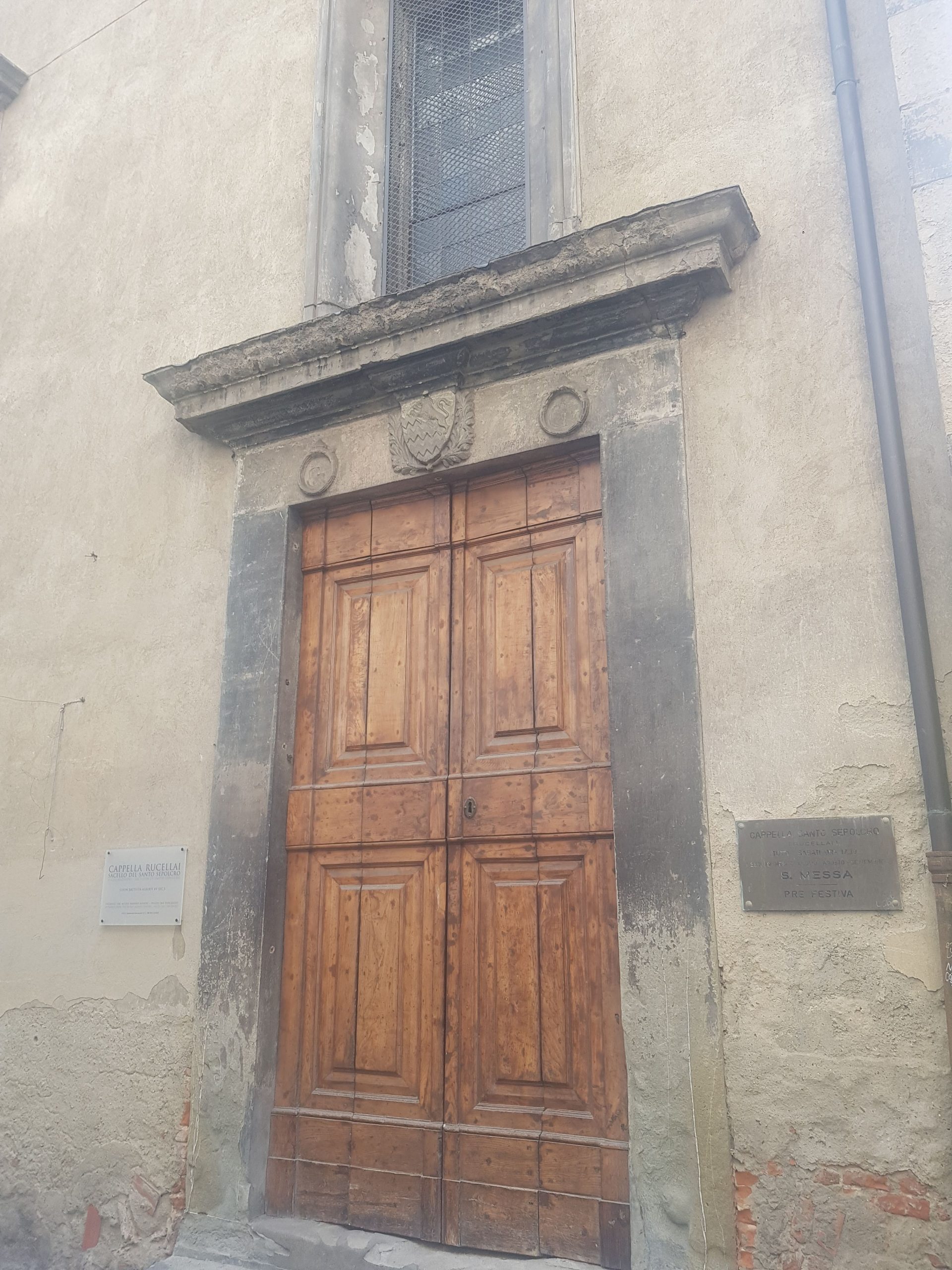
The Rucellai Sepulchre is the tomb of Giovanni di Paolo Rucellai, located in a private chapel which is known as the Rucellai Chapel. It’s part of the San Pancrazio Church, which has now been decommissioned and is used as a museum. Tours to this private chapel have only been available for a few years and it’s a quiet and dignified chapel.
This is the altar of the chapel. Rucellai obtained his money from the wool trade, although he also became involved with politics and the arts within Florence. He lived from 1403 until 1481, when he was laid to rest in the tomb which he carefully planned and funded.
This is the sepulchre itself, standing proud within the chapel. The chapel dates to around 1417, with work on the sepulchre lasting from around 1458 until 1467. The sepulchre was designed by Leon Battista Alberti, who was responsible for many other buildings throughout Florence.
The front of the sepulchre.
Inside the sepulchre, through the little door. There are frescoes inside the tomb, although I didn’t know whether I was meant to be prodding my camera inside, so I didn’t investigate too far.
There’s something a little sad that the owner of this tomb had thought that he would remain within an active church for eternity. Instead the main part of the church became a tobacco factory in the nineteenth century, although is rather more dignified today as a museum. At least though this chapel has remained intact, it could have easily been demolished or remodelled when the church itself became used for different purposes.
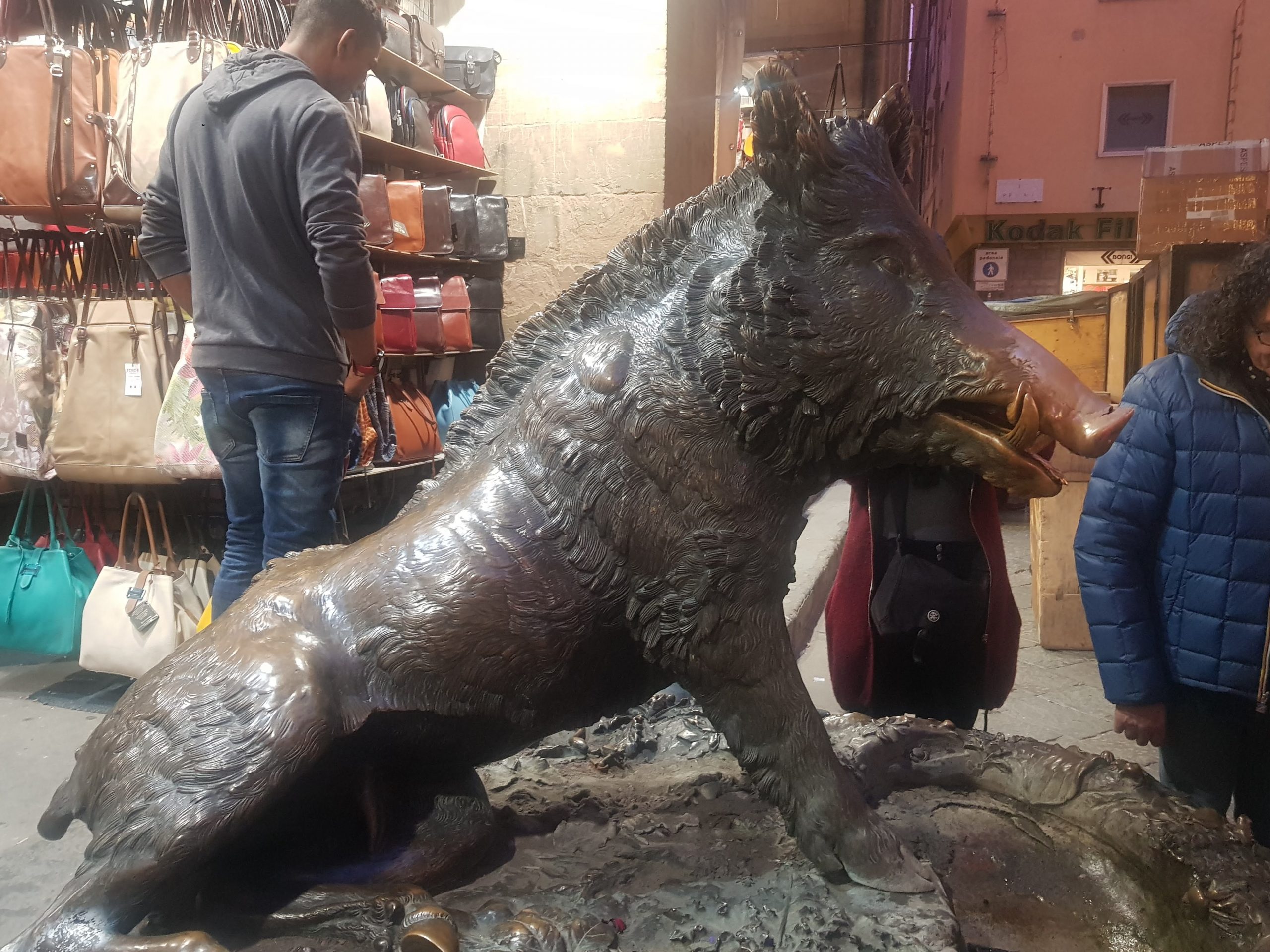
Porcellino means piglet in Italian and there has been a bronze sculpture at Mercato Nuovo since at least the early seventeenth century, although this is a modern copy from 2008. The sculpture is part of a fountain and initially this was part of the system to get clean water for the market traders.
The original sculpture by Pietro Tacca is now safely in the Museo Bardini and it was considered good luck, and would ensure a return to Florence, for anyone who put a coin in the sculpture’s mouth and then rubbed his snout. From the state of Porcellino’s snout, it’s clear that very many people take part in this tradition, although I decided against it as there was a queue and I had more museums to get to.
Actually, I rather suspect that some clever market manager at some stage many centuries ago thought that this was a marvellous idea, get people to come to the market, shove coins through their sculpture and then tell them that it’s good luck. I suspect that the people with the most good luck here are the market managers, but nonetheless, it’s popular with children at least. Incidentally, it’s only really those who put coins which fall through the grate who get the good luck and by fortunate chance, it’s the heaviest coins which are more likely to do this. To their credit though, the money is today given to charity, to the Opera della Divina Provvidenza Madonnina del Grappa, so it’s all in a good cause.
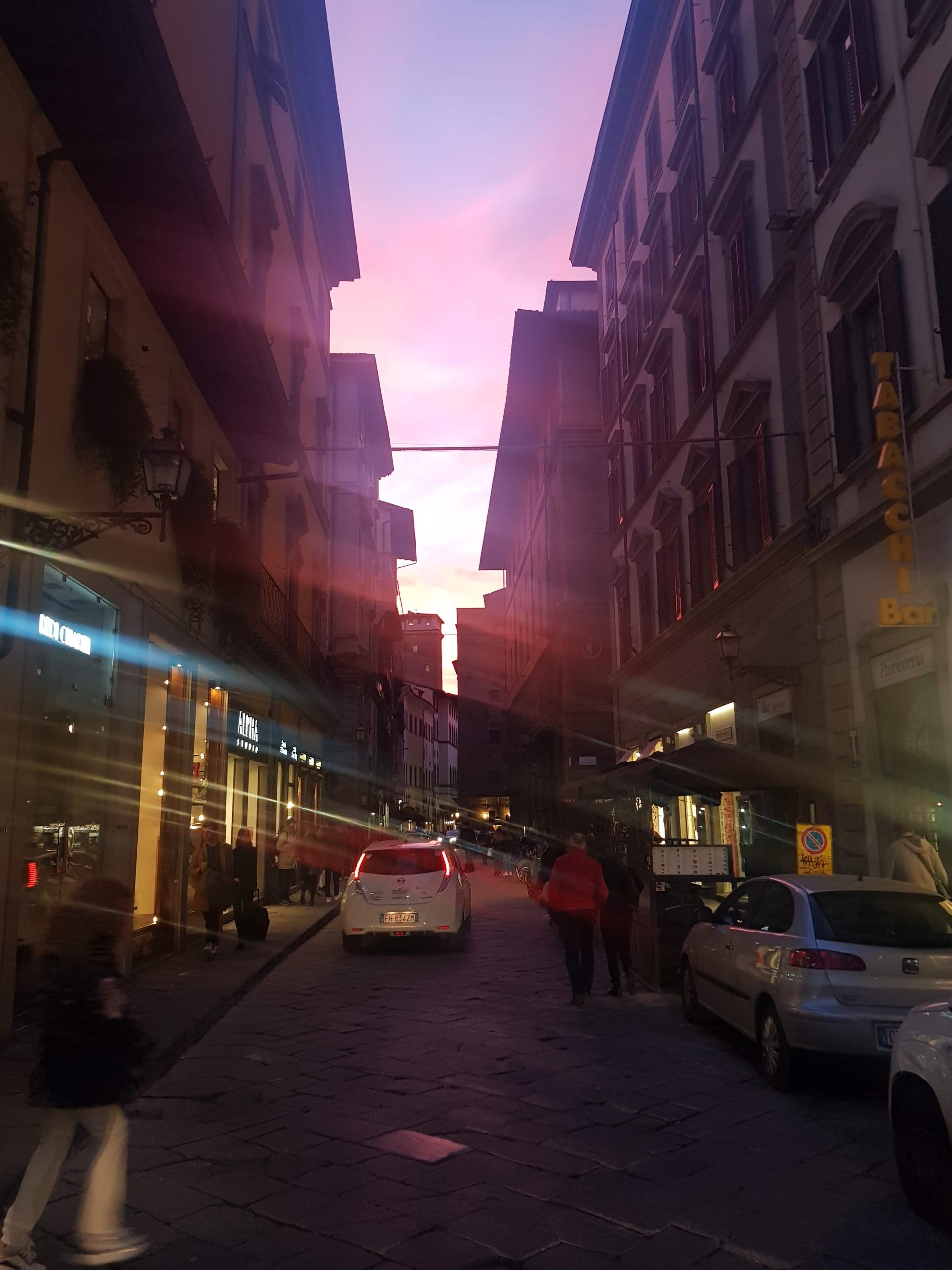
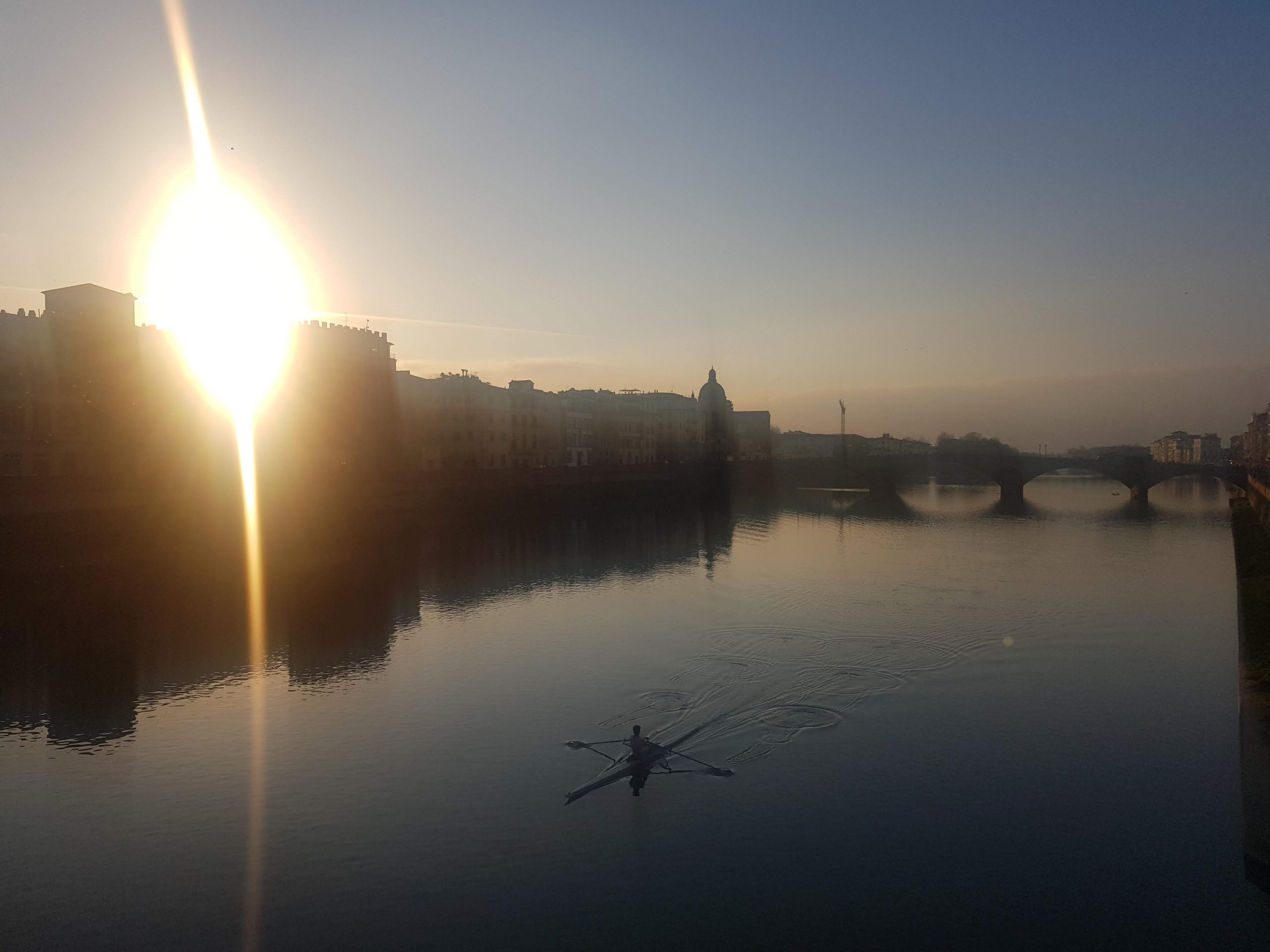
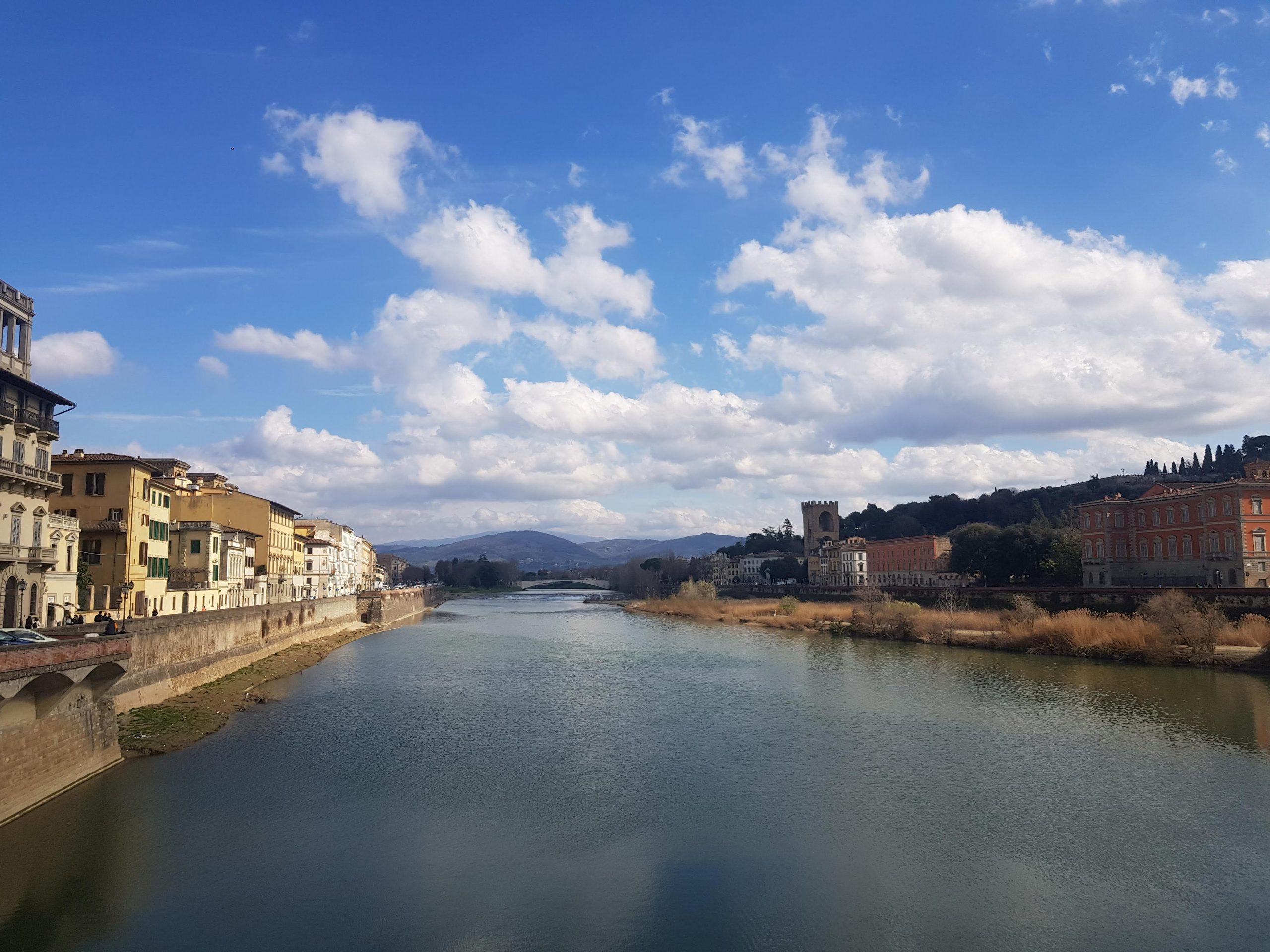
These photos aren’t edited, but do show just how bright the sky was during the evening…. Unfortunately, they’re also a bit blurry, but there we go, can’t have everything.
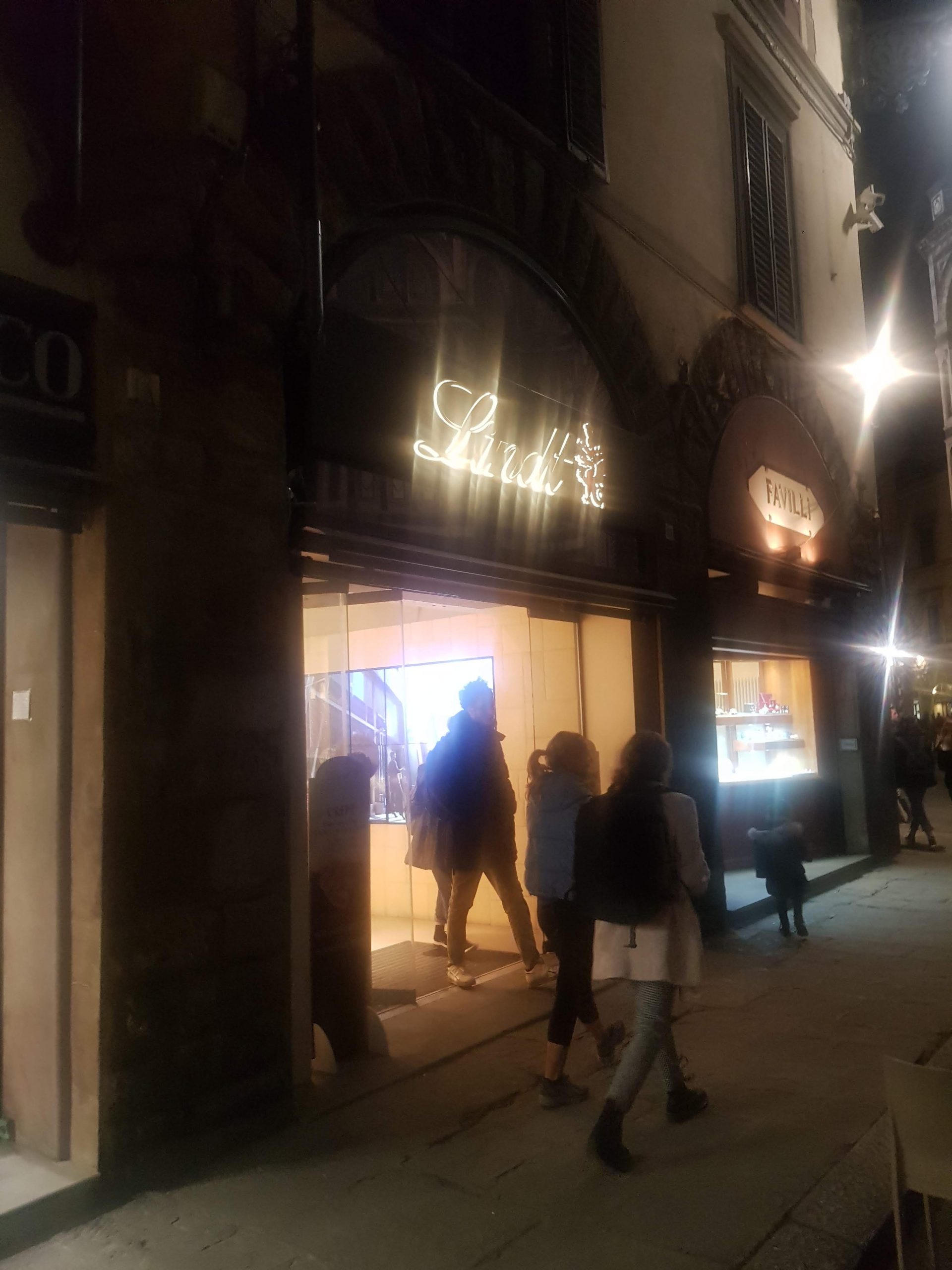
When we were meandering around in the evening, we stumbled across the Lindt Store, centrally located in Florence near to the Cathedral. It looked exciting with the vibrant colours and it was even more exciting when we got a free chocolate when we entered the store…..
Definitely colourful, although the prices seemed just a little combative…..
There were also bars of chocolate for those who preferred a more intense taste, especially that 100% cacao one….
A lovely shop though, which also has a cafe at the rear which we intended to come back to, although never quite found the time. Looking at the prices for the cafe, these seem very reasonable, so if I make it back to Florence one day I might pop in for a hot chocolate as these are apparently the pinnacle of liquid richness.
OK, I’ll start with the bad visit, which was the second one that I made. I had booked to go to the bar via The Fork, which had otherwise worked brilliantly this weekend, and would give me a 20% discount. Unfortunately, despite the bar having that booking they decided against opening which is fine if they had bothered to tell me. So, probably best not to book for this bar unless visiting in the evening.
Anyway, back to the first visit, which was much better.
The Brewdog in Florence is smaller than most of the others in the chain that I’ve been to, which is also reflected in the smaller selection of beers. However, the selection is still well-balanced and there was plenty of choice available. I had the Zombie Cake porter and it tasted as I expected, rich with plenty of chocolate in flavour, as well as some vanilla. The prices were as I’d expect from Brewdog, it’s not the cheapest, but the quality is pretty much guaranteed.
The bar was relatively compact, but there was a reasonable amount of seating available as there are two floors to the building. The welcome at the bar was friendly and immediate, with the staff member being engaging, helpful and polite. All rather lovely.
The downstairs of the bar, which shows live sports and can I understand get a little crowded in the evening at times.
This is the well, one of the features of the downstairs bar, which also felt slightly damp (the downstairs that is, not the well which was had no water in it at all). The atmosphere was laid back on the first visit, it’s a safe and comfortable environment.
I was so pleased with the first visit that I decided to go back for food, but as mentioned earlier on, the bar didn’t open. There’s one thing opening late as there are likely many reasons, but perhaps it’d be helpful just to alert customers rather than just ignore the situation. It might have been that they opened just a little late, but if I had known, I could have waited, but I’m not going to stand outside for what might be hours. So, unfortunately, I can’t say much about the food, but I like that they’ve got some localisation going in, rather than just having the standard menu which we have in the UK. Incidentally, they have free snacks in the evening, although I’m not sure between what times, although I suspect they’re probably erratic…..
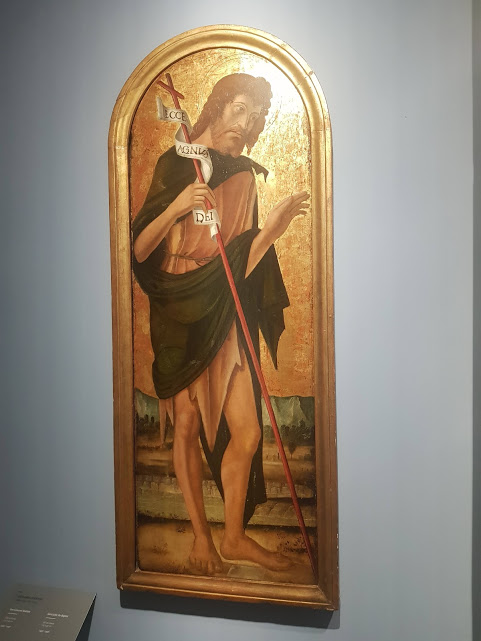
Giovanni Martini was born in Udine in the 1470s and died in the city in 1535, having painted mostly religious images throughout his career. This image of Saint John the Baptist was painted in the early 1490s and I hadn’t realised that the Ecce Agnus Dei on this painting means “Behold the Lamb of God”, the words used by John Baptist before baptising Jesus. It’s one of the more sympathetic portrayals of John the Baptist that I’ve seen, quite an elegant artwork.
Martini spent most of his time in Friuli, north of Venice, so I’m not sure if he ever visited Florence. The National Gallery in London have another of Martini’s works, which is a panel painting which would have been used as an altarpiece. It was in such poor repair that the gallery didn’t show it, but recently a significant project was undertaken to restore it and bring it back on display, with details at https://www.nationalgallery.org.uk/whats-on/complex-conservation-an-altarpiece-in-need-of-attention.