The Dictionary of the Vulgar Tongue was first published at the end of the eighteenth century, and given that the Coronavirus crisis is giving too much time to read books, I thought I’d pick a daily word from it until I got bored…..
Anabaptist
The traditional meaning of this word is to describe the religious movement that believes baptism is only relevant and meaningful if it’s done by free choice. So being baptised as a baby wouldn’t count, as it wouldn’t be a conscious decision of behalf of the child.
Anyway, that’s not the slang meaning, which is “a pickpocket caught in the fact, and punished with the discipline of the pump or horse-pond” according to the dictionary. This ‘caught in the fact’ is interesting, not a phrase I’ve heard before, but it seems to be a common nineteenth century alternative to ‘caught in the act’. The link is that if a criminal is ducked into water for his crime that this is like a new baptism, hence the use of the word anabaptist.
I’m not sure how common the usage of this word was, nearly every mention on-line is from the dictionary itself, with no obvious usage in earlier newspapers. Given that we don’t tend to punish criminals by chucking them in water any more, I can’t see this being a word brought back into usage.
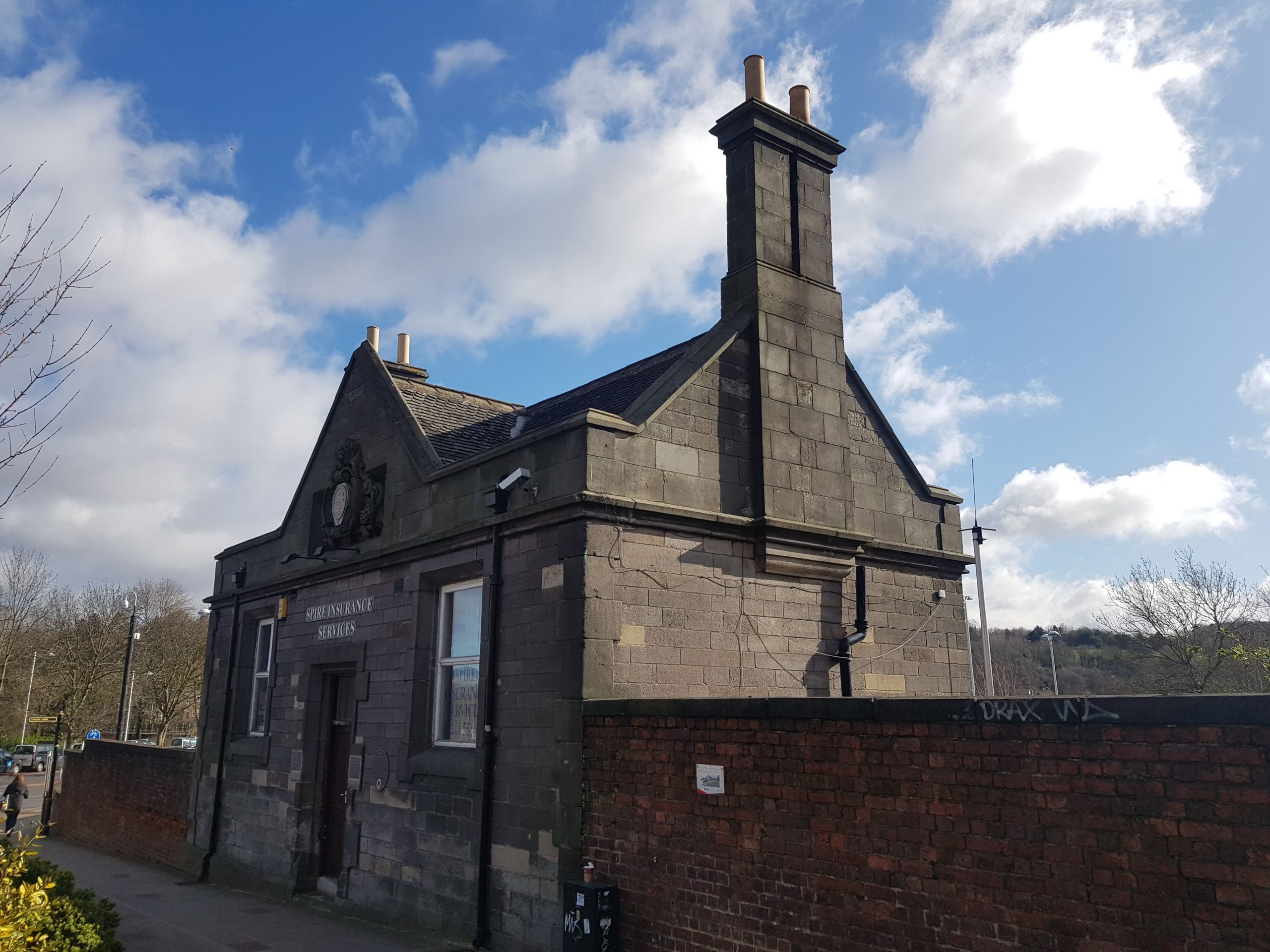
This building, located just to the front of Chesterfield railway station, doesn’t look overly exciting in its slightly isolated landscape, but it’s noted as being the only surviving building from the town’s original 1840 station complex.
Here’s the sign on the front of the building, designed by Francis Thompson. There’s just one little problem, although the building is of a similar design to the first railway station, it might not relate to the station complex itself according to some writers. Which does leave the question of why exactly it was built, something which I can’t work out the answer to and which, like many things, there appear to be numerous answers to.
A side view of the building, which fronts onto Corporation Street, and once sat at the end of the freight lines which are no longer there having been replaced by the station’s car park. Looking at old maps, the building seemed to stretch for longer, so something to the side of the current structure has been demolished at some point.
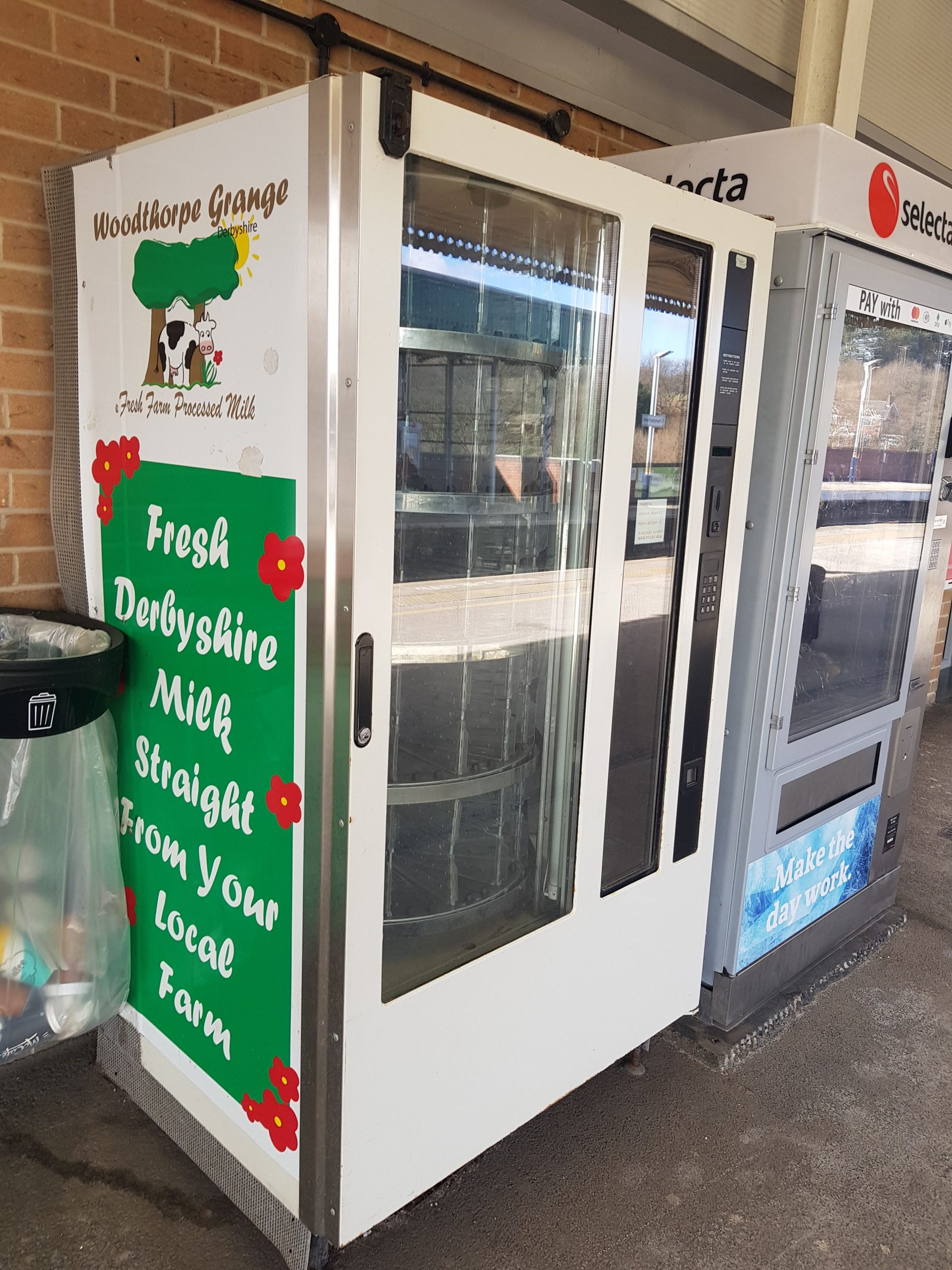
I’ve never seen a milk vending machine, but it seems a good idea. This one was installed at the platform of Sheffield railway station in 2016 by the Woodthorpe Grange Farm. Unfortunately, when I was there in March 2020 the machine was turned off and there was nothing inside, so it’s either just not been restocked or it was a failed project and no-one has removed the machine yet. I hope it’s the former, it’s a handy way for people to get milk on their way home and it supported the efforts of a local farm.
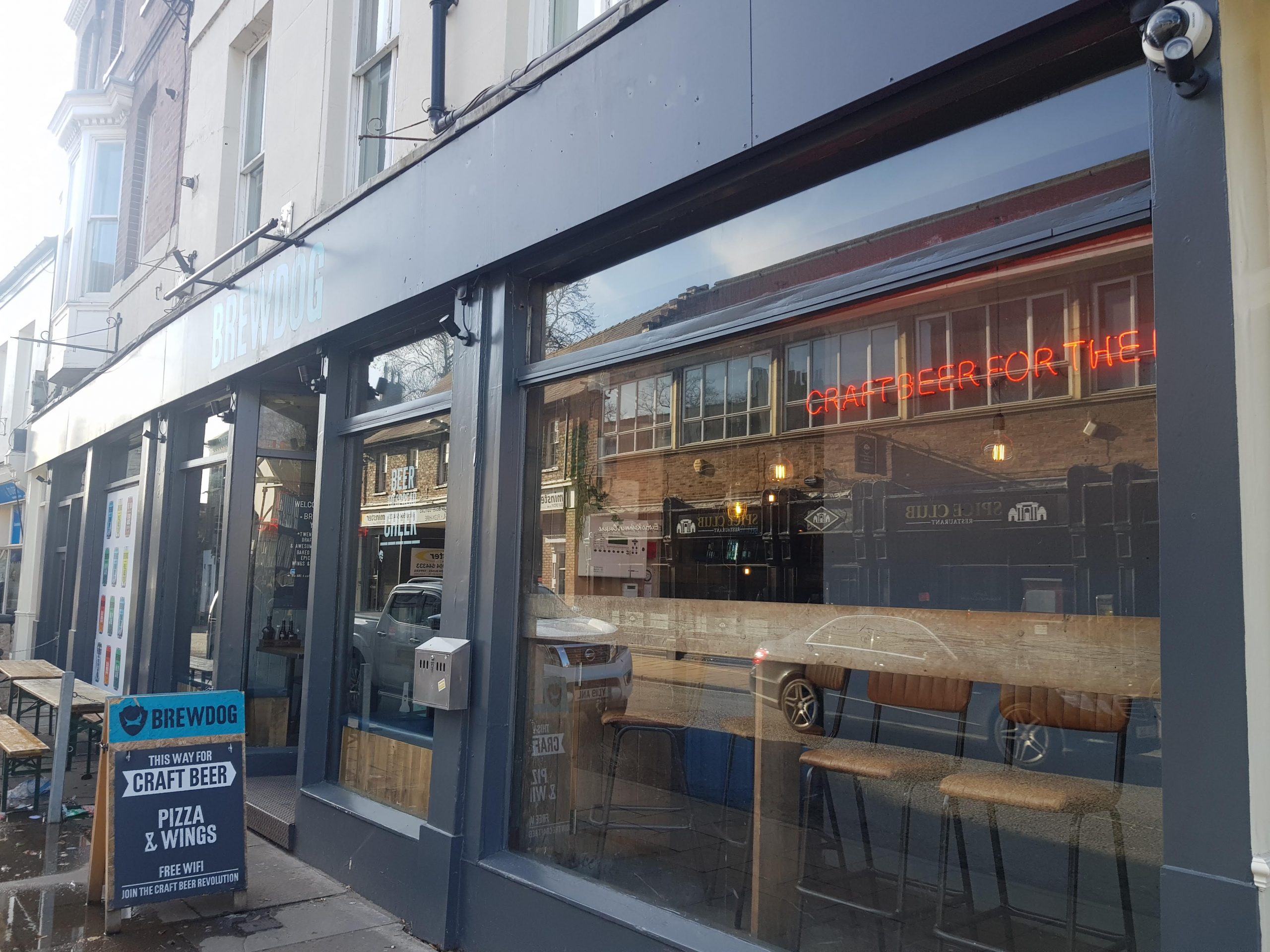
I’m writing this shortly after the Prime Minister’s announcement that all pubs, bars and restaurants should close from tonight. It was a week ago today that I was in Brewdog in York, feels much longer given how much has changed with the virus situation. Anyway, it’ll all blow over soon hopefully.
I hadn’t realised that there was a Brewdog in York, it was only walking by that I happened to notice it, a reminder that I need to look at their list of UK pubs more often. Well, after this virus has finished faffing about with the British pub scene anyway.
The staff member was friendly and helpful, something that the chain tends to get right. Not the most vibrant of atmospheres, since there was only one other customer on a Friday afternoon, but I didn’t require a nightclub feel, so all was well.
I opted for the Velvet Merkin by Firestone Brewing, all the way from California. It’s not cheap, at just over £10 per pint, but this isn’t a drink that needs to be purchased in such a large measure. It felt like its 8.5%, with this being the barrel aged version of the brewery’s Velvet Merlin beer. The beer was marvellous, rich in initial flavour and there were afternotes of chocolate, vanilla and coffee. A multi-layered drink and very decadent, an excellent guest choice from Brewdog.
The packed bar….. Everything felt welcoming about the location though, no loud music, the temperature was appropriate and the toilets were clean and fully stocked, something particularly important at the time.
There are a few different sections to this Brewdog, this is the seating area at the rear. It makes me feel rather quite sad to know that for several weeks this bar, and tens of thousands of others, will be closed.
Anyway, the pub is well reviewed on-line, but I felt the need to have a little look at the grumpy reviews on TripAdvisor. This is one of the 1/5 reviews, they didn’t like what I would call the on trend decor:
“The worst part though is the venue itself. It’s like walking into a building site. What a total mess it looks. Maybe they are trying to be trendy I don’t know but it’s a right tip. Rough walls, filthy floor, cables and tat hanging from the roof. The bar is made of outdoor road paving slabs that looked like they hadn’t had a wipe down in days. The front of the bar is just rough old pallets with bloody great splinters sticking out.”
And another unhappy customer who didn’t like the design:
“The decor is a dump.. think it’s meant to be trendy, but it’s still a dump… and beer at up to £12.50 a bottle… mmmm don’t think I will bother again..”
On a matter of principle, a really innovative craft beer bar is inevitably going to have bottles at over £10, such as the cost of importation.
“Shame. I loath decorating and DIY so why would I feel relaxed in a placed that intentionally gives itself the ambience of a renovation project?”
And another one, the bar seems to get more complaints about its decor than anything else.
I imagine there’s quite a student feel to this bar on evenings throughout the year, it’s on the infamous Micklegate bar crawl and it’s all suitably on-trend. I liked this Brewdog though, and the staff member remembered what I’d ordered and asked if I’d enjoyed it. Now, I accept that this wasn’t a huge feat of memory given the number of customers, but it’s still a nice touch.
I booked this hotel as part of the Black Friday offer from Accor, all the way back in December. It was the last of the 50 or so room nights that I’d booked in this offer across January, February and March, all fortunately taken before the virus has limited my travel somewhat.
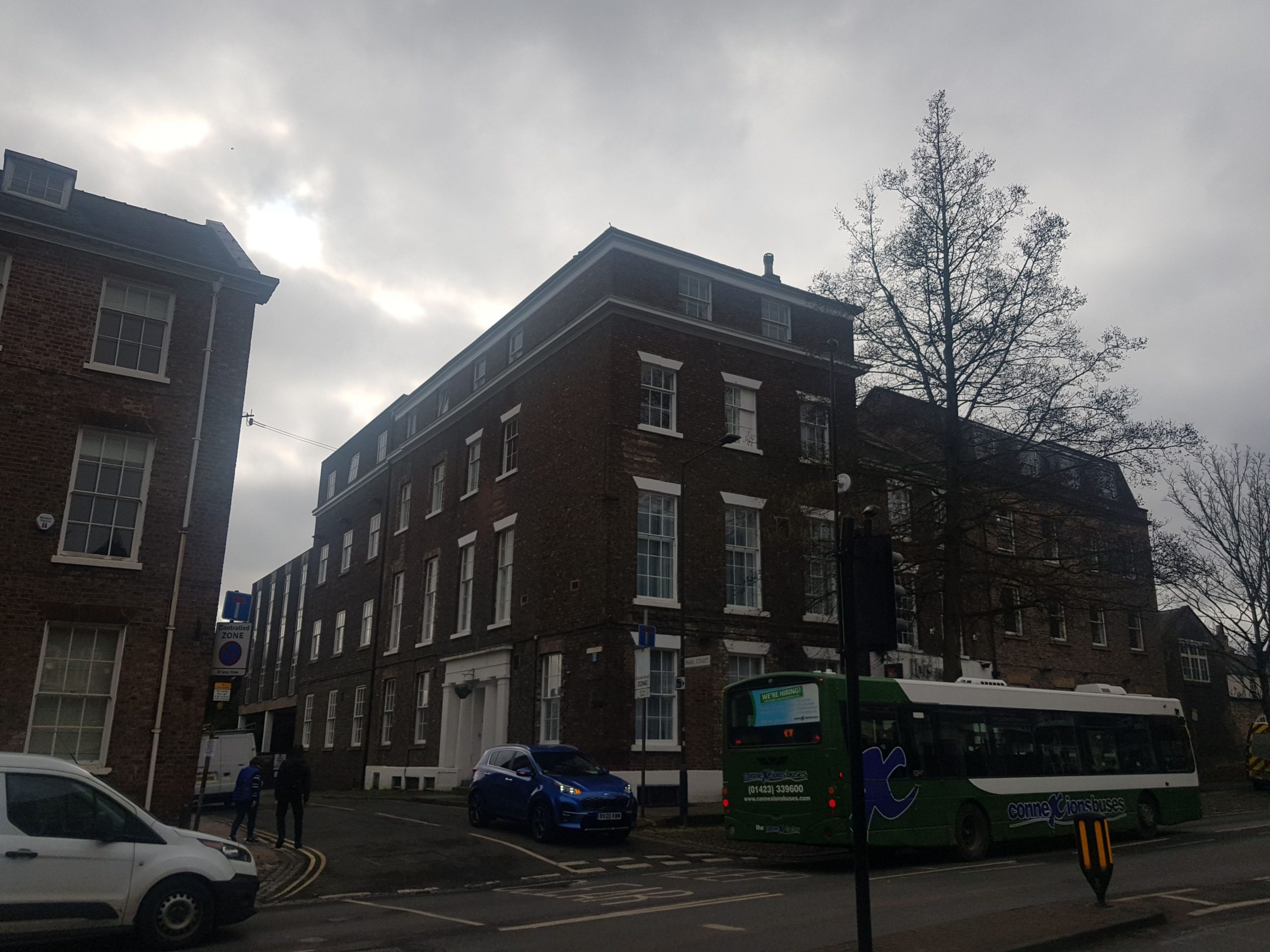
The Ibis York Centre isn’t in the heart of York, but it’s a short walk to the railway station and was convenient enough for me. It’s rated badly, TripAdvisor put it at 46th out of 47 hotels in York, so there’s clearly some work to do.
This was the room that I was given, although it transpired that the lock didn’t work and so I couldn’t lock the room. Two staff members came to resolve it before the maintenance man was called, although it transpired that he had gone home. I was given another room promptly enough though, it was all handled well. The room was basic, no welcome amenity, but it was all clean and comfortable. Reading some reviews of the hotel, the door locks do seem to be a problem, and some guests can only resolve that by slamming the doors, which might be their only option, but still disturbing for others.
The beer selection was very weak, although that’s not surprising for a hotel bar which isn’t even in the very centre of a city. I asked for a Bud, to which the staff member said they didn’t have any. I could see the bottle, so I tried again and thought he’d misheard me, he then said they don’t sell Bud. I asked for a Budweiser, and got my Bud. Although the barman decided that he wouldn’t offer me a glass with my exciting bottle of Bud.
The breakfast was fine, to the side there was a hot selection of bacon, sausages and hash browns, with cereals, muffins and other standard Ibis fare in the central section. It took the staff some time to replenish empty items, but that was more down to how busy they were than any lack of effort. My breakfast came included with the room price, otherwise I’d have probably passed over it and walked into York to get something a bit more exciting.
The hotel has a newer wing to it, which is badly built and gives limited sound protection between floors, so Ibis are always going to have problems here. I suspect they’d probably be better off giving up with this building as I can’t see that they’ll ever shift off near bottom spot with the noise problems in the hotel, although having written that, I didn’t personally get too disturbed.
If they are committed to the building, it does need a modernisation of the rooms as well, they’re feeling a bit battered and the bathrooms certainly need some attention to bring them up the standard of Ibis hotels, which frankly isn’t that high a bar to reach. The manager responded in one review written by a disgruntled guest that the hotel is formed of three separate historic buildings, but that a modernisation programme is being considered.
The staffing in the hotel was generally pretty good, although I wonder whether the hotel management should just leave Accor and run this as an independent budget hotel, or switch to being an Ibis Budget. The hotel was around £40 including breakfast, which I thought was perfectly acceptable, although usually the hotel is more expensive then this.
The Dictionary of the Vulgar Tongue was first published at the end of the eighteenth century, and given that the Coronavirus crisis is giving too much time to read books, I thought I’d pick a daily word from it until I got bored…..
Alderman
An alderman is an elected, or indeed unelected, member of a county or borough council, but that isn’t what this dictionary defines. Instead, in the seventeenth to nineteenth centuries, an alderman was also a roasted turkey which was garnished with sausages, with these representing the gold chain worn by the council member.
As an example (thanks to Greens Dictionary of Slang), in the book ‘The Life and Trial of James Mackcoull’, the line “Mackcoull suggested, that they should, in place of an alderman, have a goose and green pease for supper” appears. The word alderman in its original meaning has fallen out of favour in recent decades, now they’re referred to nearly entirely as mayors or councillors. That has also meant that this alternative name for a roasted turkey has fallen out of favour and has been rarely used since the nineteenth century. Which is perhaps a shame as I like the word…..
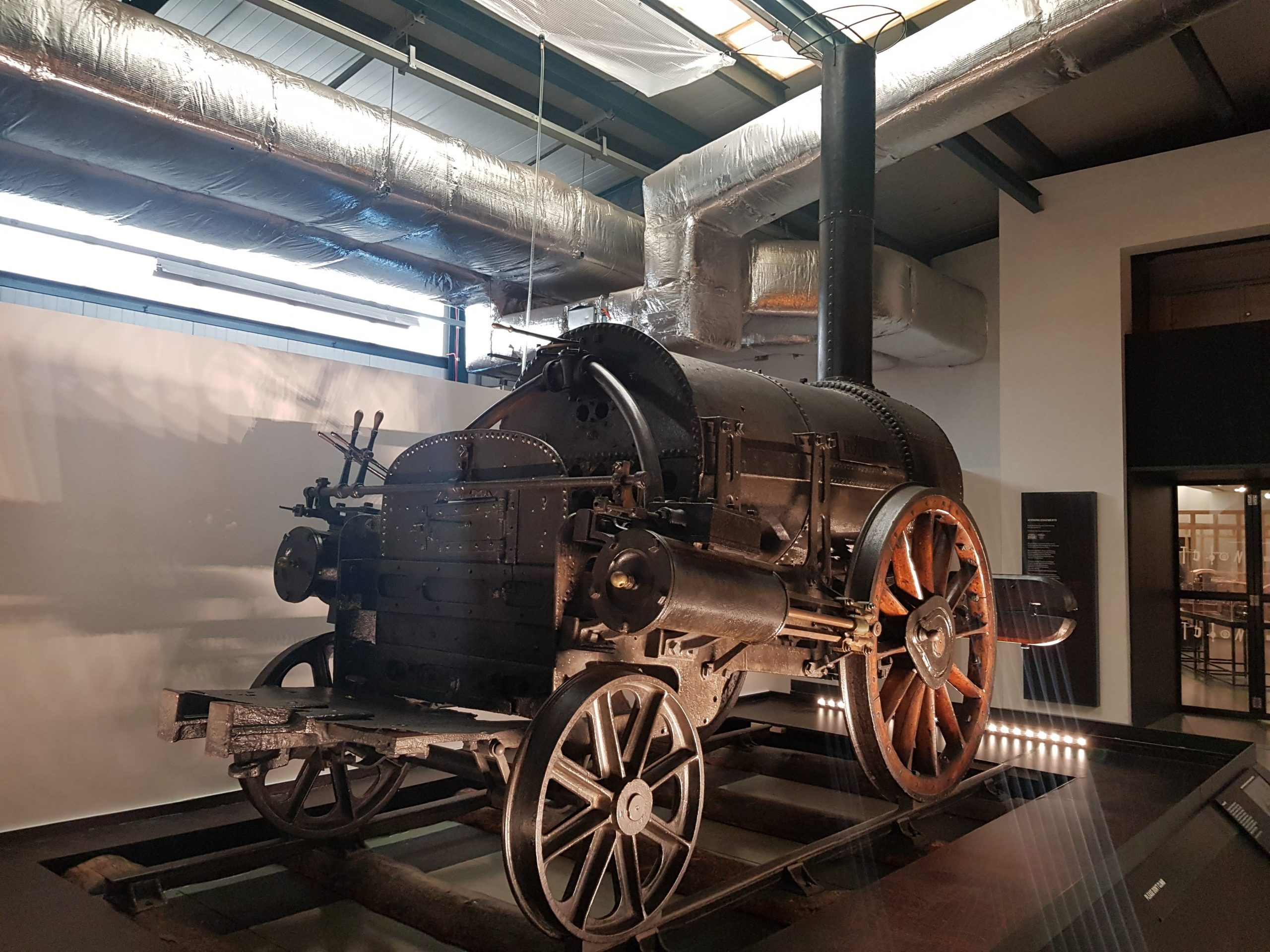
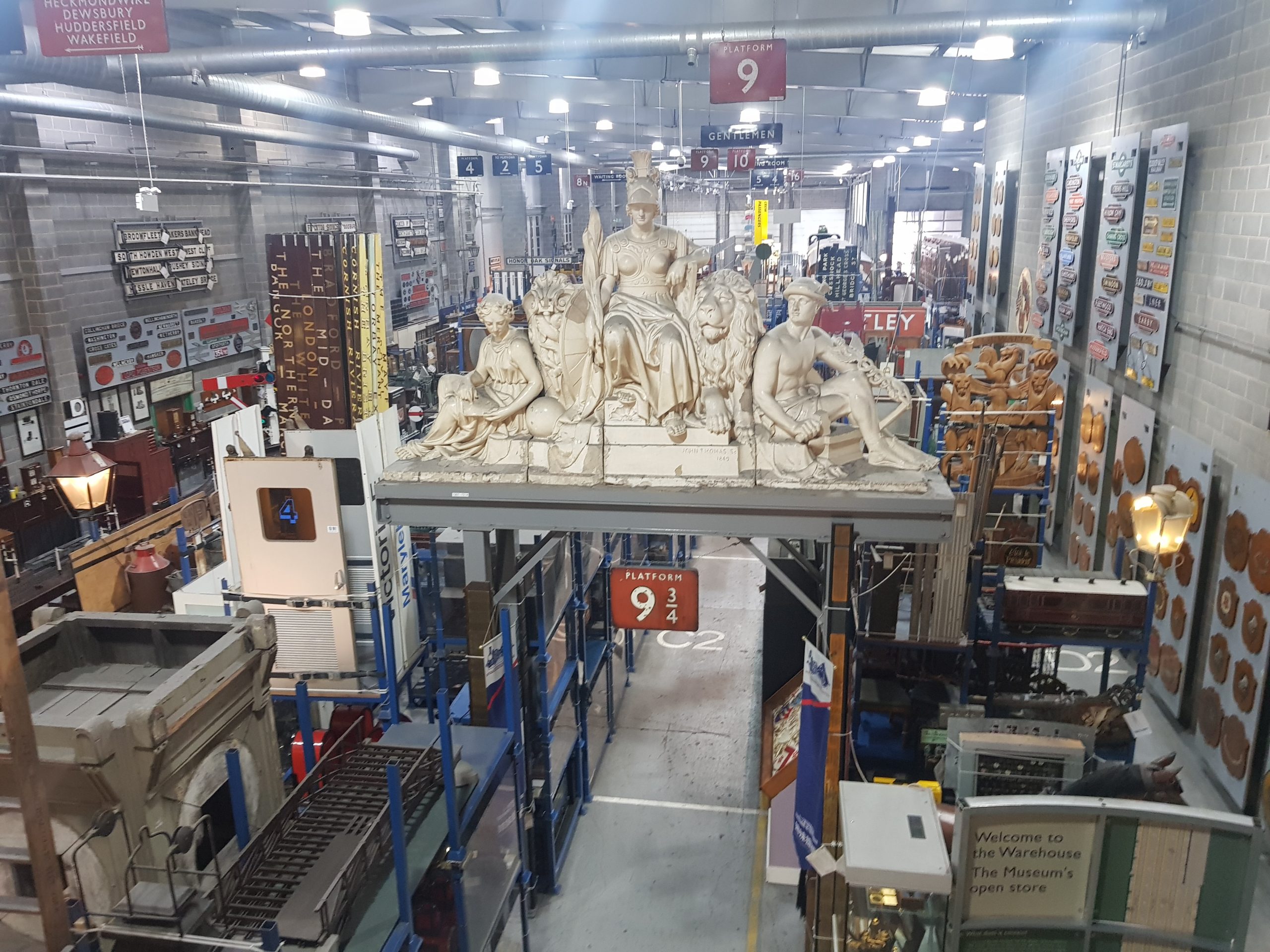
I’ve posted about numerous more peripheral exhibits that intrigued me in the National Railway Museum’s store, but it’s the original Stephenson’s Rocket that must be one of the museum’s most important in historic terms.
I haven’t seen this locomotive at the museum before, as it only arrived here in 2019 after it spent a period at the Science and Industry Museum in Manchester and before that, the Newcastle Discovery Museum. Prior to that, it was at the National Science Museum in London (other than for a short spell in Japan and York) and I’m sure I must have seen it there, but like most things, I’ve forgotten.
The locomotive has been well cared for most of its history, although it has also been modified and knocked about a bit since it was originally built in 1829. It was given to the Patent Office Museum in London in 1862, which later became the South Kensington Museum and much of their collection was taken over by the National Science Museum. It’s there that the locomotive remained until 2018.
It is a thing of beauty, designed by Robert Stephenson and it was the winner at the Rainhill Trials when five different locomotives were entered into a competition to be used on the Liverpool & Manchester Railway. The other four locomotives didn’t finish the 1.75 mile length of track that had been laid out, so the contract went to Robert and George Stephenson. It must have been an exciting day, the Liverpool Mercury went into some detail about the locomotives, treating the five competitors like it had been some grand horse race.
The first day of the locomotive’s use was a grand affair, attended by none other than the Prime Minister of the time, the Duke of Wellington. The first day wasn’t an entire success as the locomotive ran over, and killed, William Huskisson, the then MP for Liverpool. This gave him the unwanted honour of being the first person to be killed in a railway accident on the publicly operated rail network.
Not much is known about what happened to the locomotive during its working life, the initial excitement in the newspapers tailed off somewhat. It’s moderately surprising that the locomotive wasn’t just scrapped given that railway heritage couldn’t have been much of a thing in the 1850s. But, here it remains today, on display at the National Railway Museum until at least 2030.
And another item in the National Railway Museum’s stores…..
This might not seem exciting at first (or perhaps at all), but it’s a keystone from a decorative arch on the Stockton & Darlington railway. On one side there’s a human head and on the other are grapes. The notes for this item state that it comes from Stockton railway station, now known as Thornaby railway station. The Stockton & Darlington railway was the first public network in the world to use steam locomotives and it opened in 1825, so the 200th anniversary isn’t that far away.
And another in what I consider interesting items located at the store of the National Railway Museum in York.
This is why having a large store at the National Railway Museum is such a marvellous idea, it allows them to display items which most people probably have little interest in, but they’re still a reminder of the history of the rail network. Unfortunately, the museum don’t seem to know which station this particular machine was from, but it does state that it’s a B8050 ‘Quickfare’ machine. Wikipedia mention that there are none of these left on the network, other than on the Isle of Wight where a few remain in use. I have no knowledge of railway ticket machines but I liked looking at it 🙂
The Dictionary of the Vulgar Tongue was first published at the end of the eighteenth century, and given that the Coronavirus crisis is giving too much time to read books, I thought I’d pick a daily word from it until I got bored…..
Affidavit Men
Not so much vulgar, but a piece of history that is new to me. These were men who used to hang around courts and places such as Westminster Hall in the eighteenth century and they’d be willing to lie and swear on oath, for a fee of course. Incidentally, trials did once take place in Westminster Hall, including the ridiculous trial of Warren Hastings, which lasted for 7 years and he was eventually found not guilty.
There was a tongue in cheek newspaper article in July 1776 which advertised for affidavit men, saying:
“They must be none of your squeamish men, but swear in the face of conviction, for which the following rewards will be given.