Author: admin

  • Bialystok – White Bear Cafe

    Bialystok – White Bear Cafe

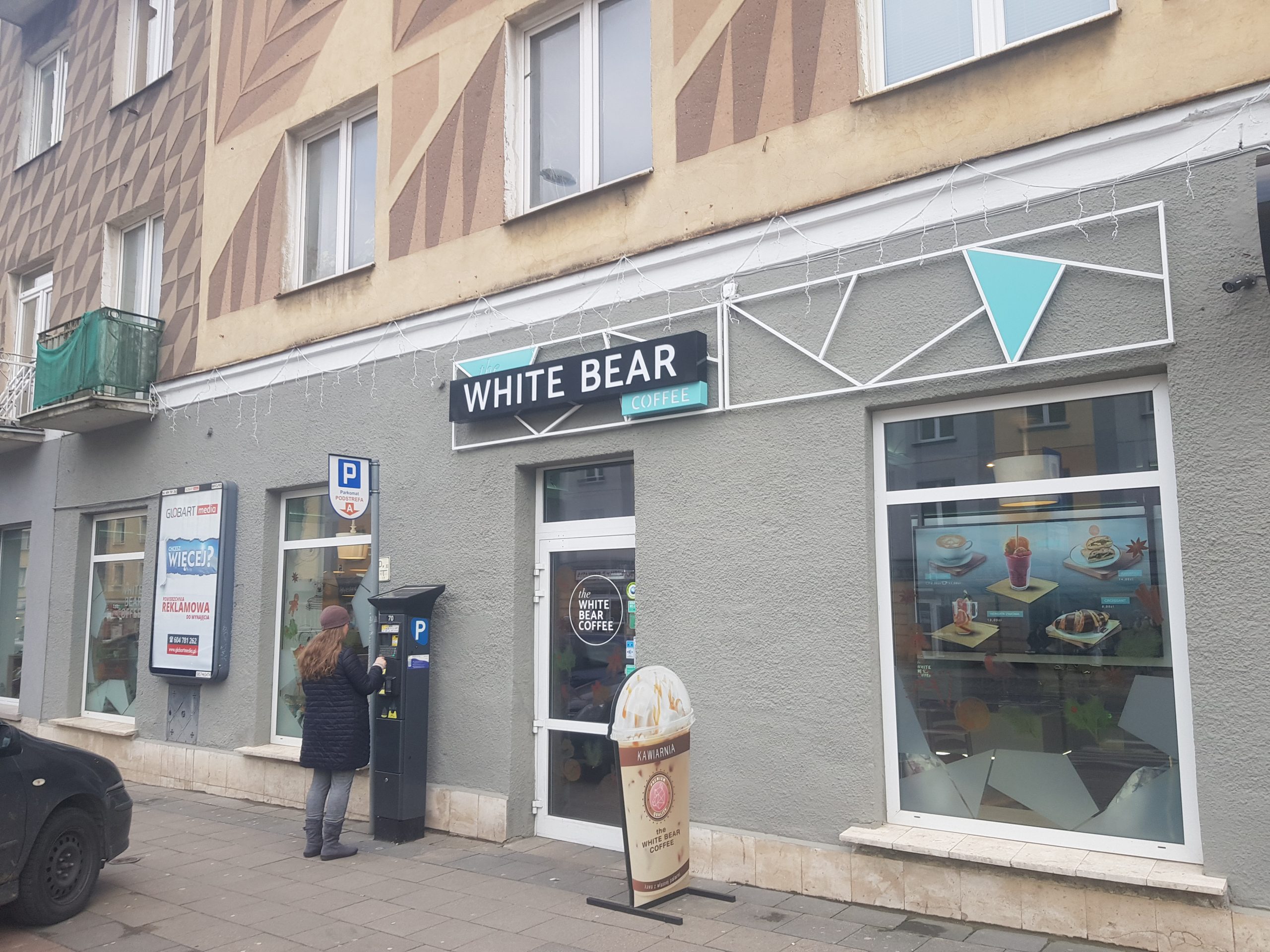
    There are not many locations in Bialystok which have a branding and styling which makes them appear accessible for visitors to the city. This very well-reviewed cafe gave me the impression of being a contemporary place to visit, and it didn’t disappoint in that regard. Or indeed, in any regard come to think of it.

    There’s a bit of a bear theme….

    The selection of cakes. Ordering is at the counter and the staff member was welcoming and engaging, with customer names being called out when the order is ready.

    I’m not entirely sure what I ordered here, but it had a pleasant taste and I don’t see red currants as often as I once did.

    Very lovely coffee, a richness of taste and it was served at the appropriate temperature, namely not one that was boiling hot. I don’t quite understand the linkage, but the cafe owners appear to be involved with the coffee industry and that might explain the quality of the drink.

    This is another one of those cafes where it’s clear that it’s popular with locals and visitors to the city. There were people meeting for a coffee, someone working on their laptop and someone reading a book, all suggesting a comfortable environment where customers feel welcome. The prices are reasonable and, perhaps without even trying to be, this is beautifully on-trend.

  • Bialystok – That Which is No More (Barbican Mission Church)

    Bialystok – That Which is No More (Barbican Mission Church)

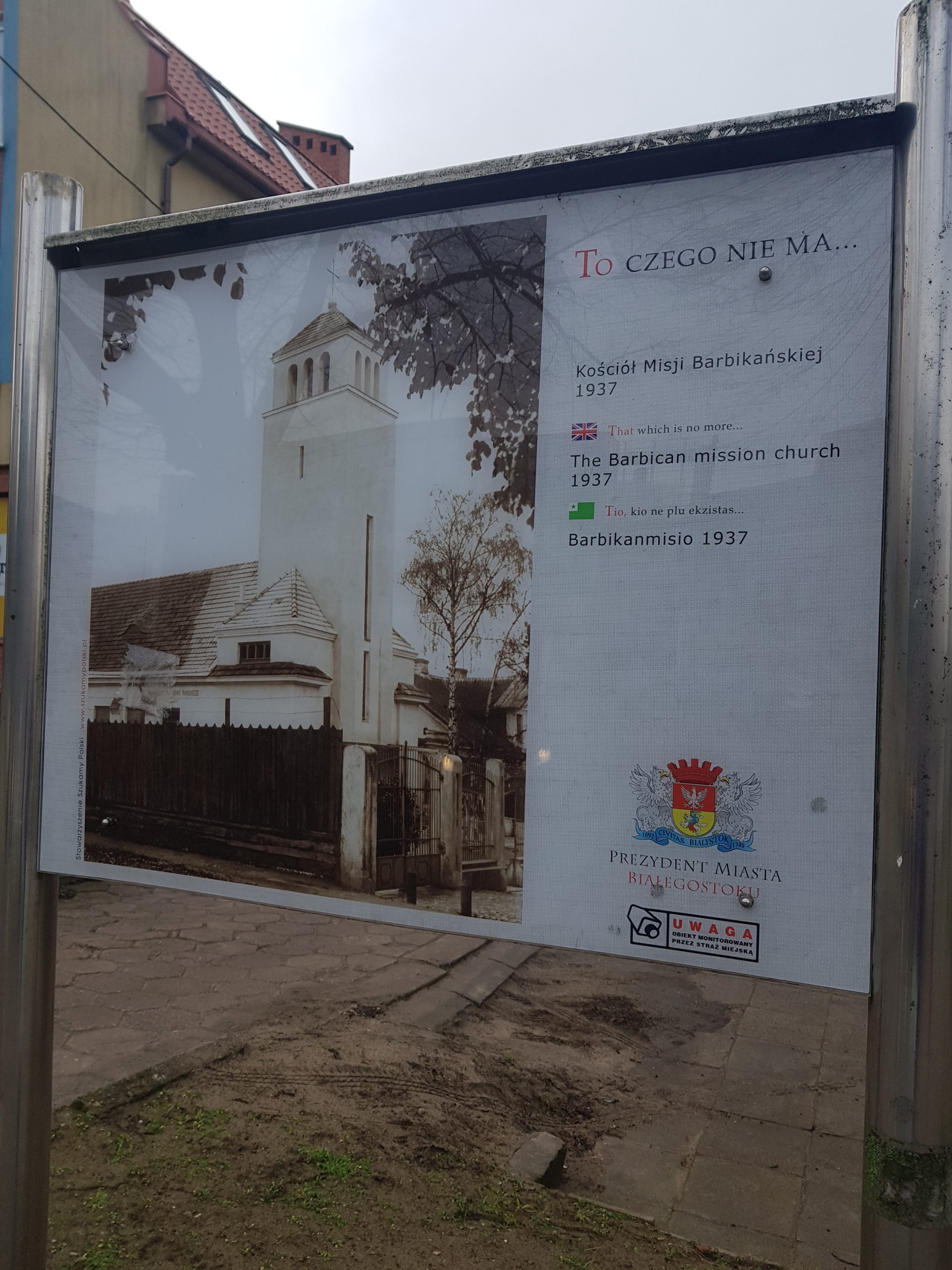
    Another in the “That Which is No More” series which are located around Bialystok, this is a photo of the Barbican Mission Church from 1937. The church was built between 1927 and 1930 and it was designed to convert Jews to Christianity, something which seems to have been not uncommon in this part of the country.

    And here’s what is here now, or at least, this is where the sign is. The building also seems to have been known as the Anglican Mission Church, although I’m unsure of when it was demolished.

  • Bialystok – Pomnik Bohaterów Ziemi Białostockiej

    Bialystok – Pomnik Bohaterów Ziemi Białostockiej

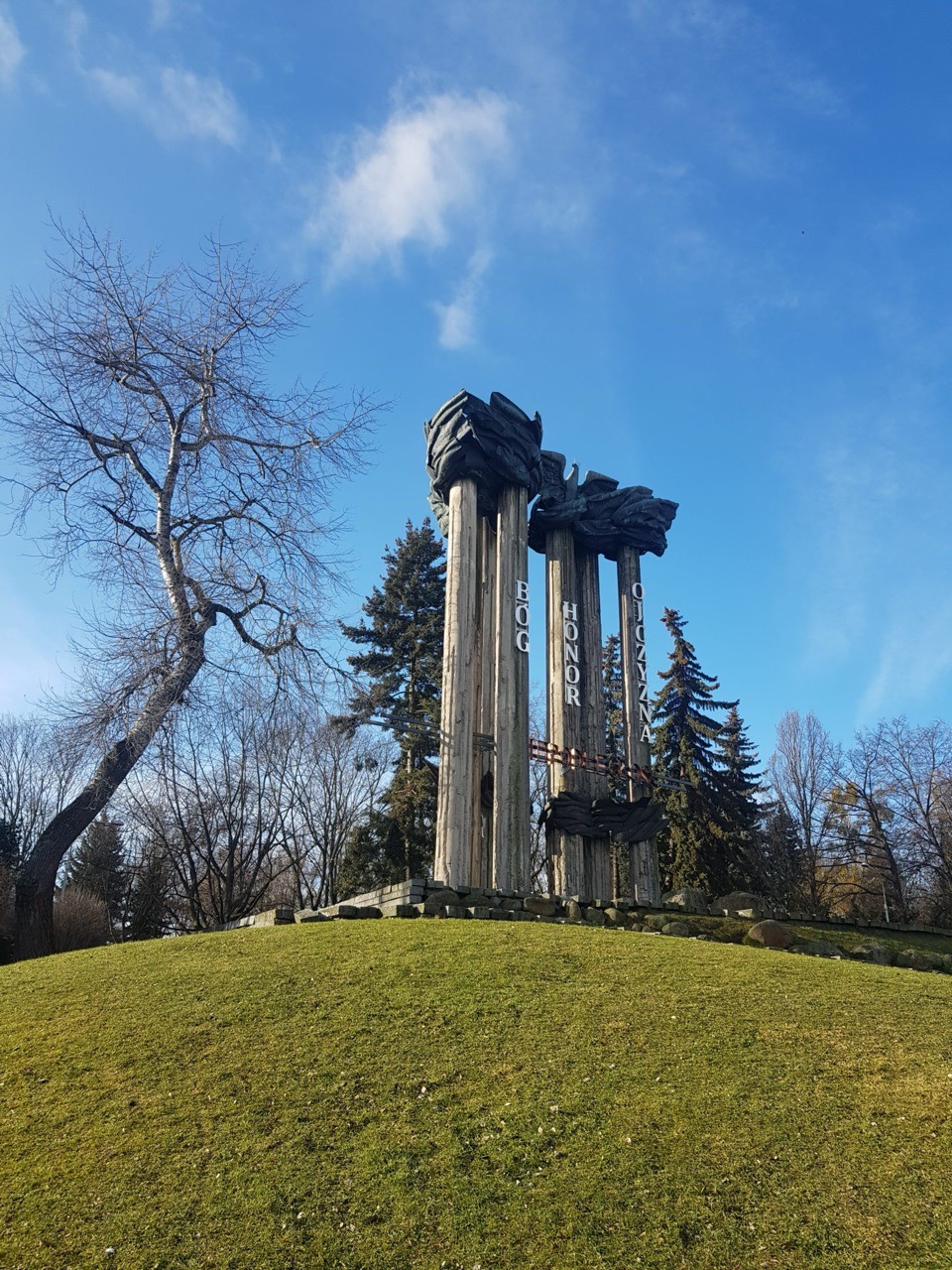
    This subtle little centrally located monument was erected in 1975 and commemorates those who were killed fighting for a free Poland. Unveiled in October 1975, it’s made of concrete and stands seventeen metres in height. The words on the pillars mean “God, Honour and Homeland”, although these are more modern additions which have been controversial to say the least.

    More photos of the monument, which is in need of some repair judging by the state of some of the concrete.

  • Bialystok – That Which is No More (The Zaludowski’s House)

    Bialystok – That Which is No More (The Zaludowski’s House)

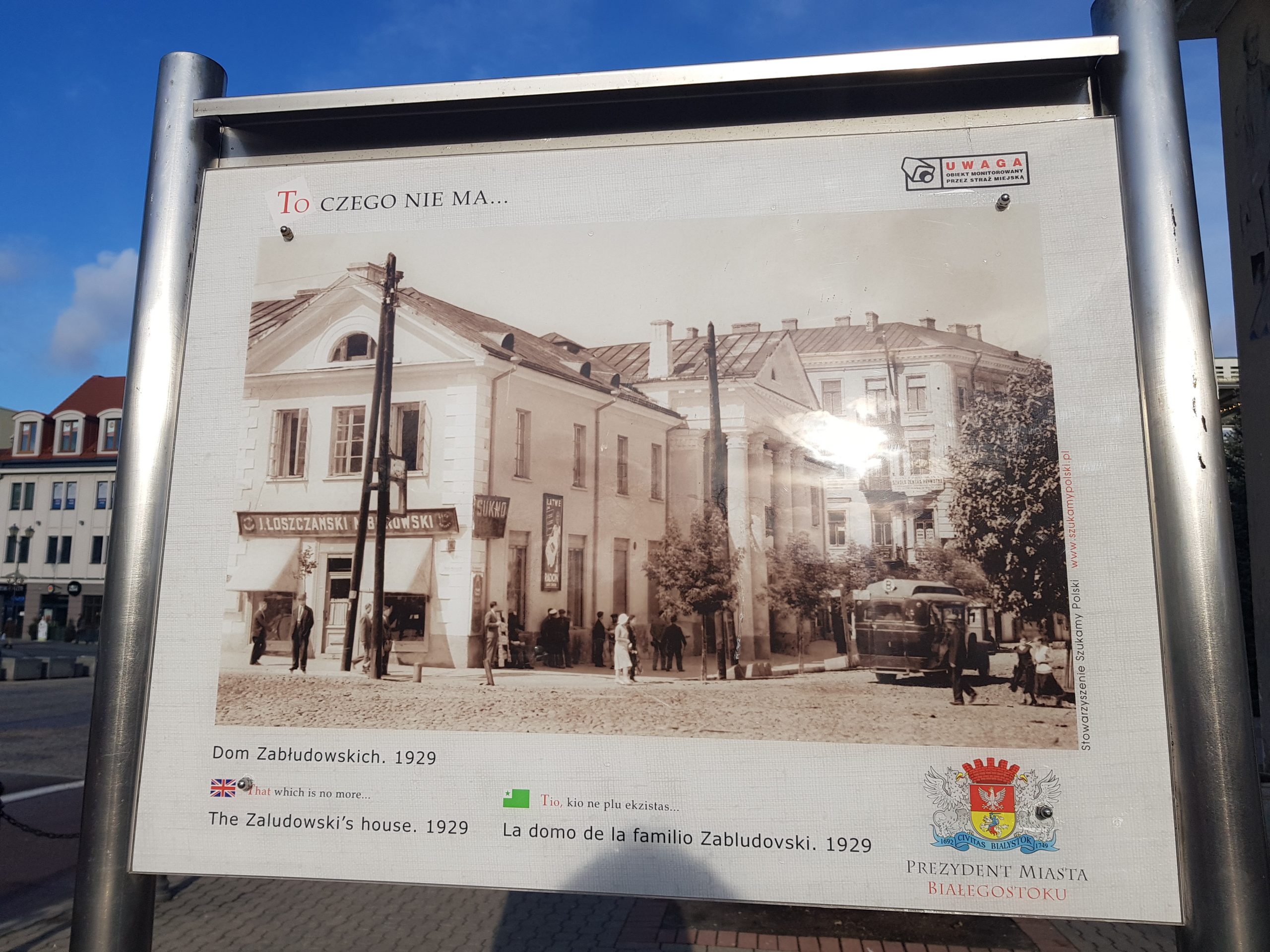
    I know nothing more about this project, other than it’s a reminder of what was once here in Bialystok that no longer stands. There was a large Jewish population in Bialystok before the Second World War, and its decimation meant much inevitably changed, let alone all the other upheaval which took place in the post-war city. The above photo was taken in 1929, but the only downside is that I can’t locate at the moment any more information about this building.

    I think that this is the area today, but there are no anchors to really pin down where the property once stood.

  • Bialystok – Kinooko

    Bialystok – Kinooko

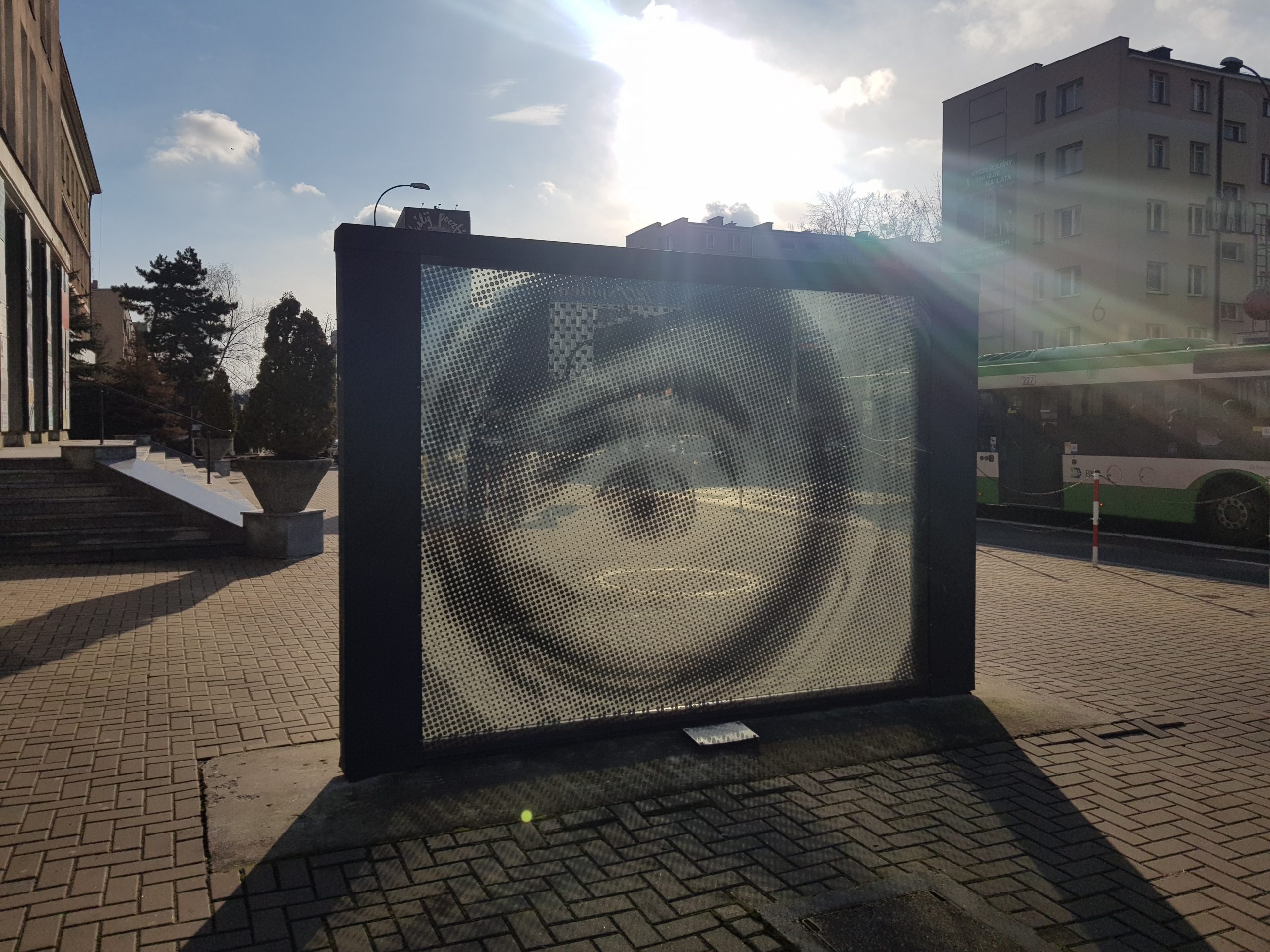
    This urban art project was installed in 2011, designed by Aleksandra Czerniawska, a local artist. The artwork is meant to show different things depending on which the direction the viewer looks at it from. From one side it’s a eye in a camera frame.

    From the other, it’s some sort of dish. At least, I think that’s what it’s meant to be, this is one of the art installations which doesn’t have an English translation to explain the concept a bit more. Indeed, I suspect that I might have made that bit up, but that’s what it looks like to me. Anyway, it’s eye catching though, but excuse the pun there… It’s apparently a nod towards the work of Dżiga Wiertów, a Soviet documentary maker who was born in the city.

  • Bialystok – Puppet Sculpture

    Bialystok – Puppet Sculpture

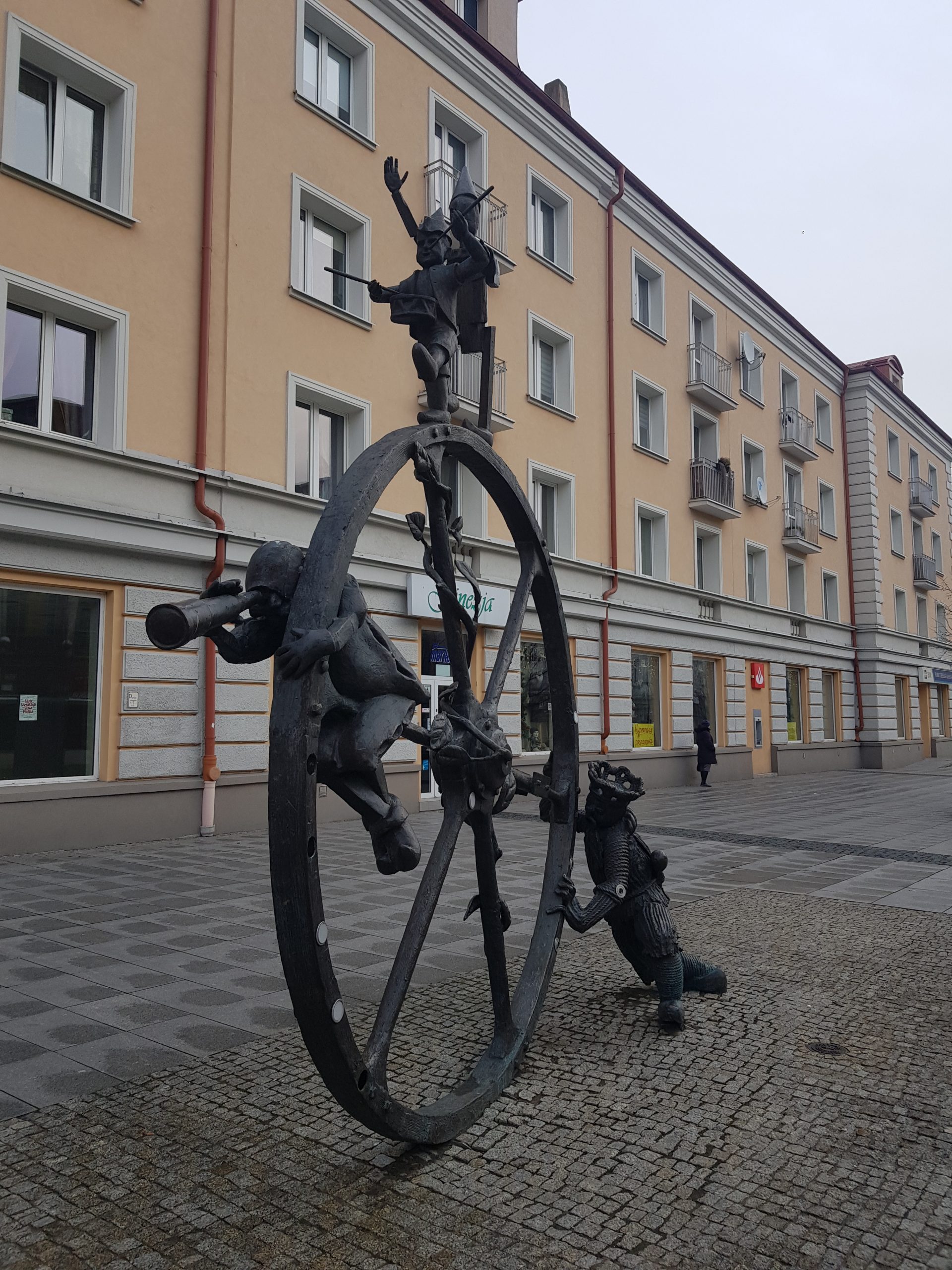
    This considerably sized bronze sculpture weighs over a ton and is a reminder of puppetry in the region over the centuries.

    There is also a puppet theatre in Bialystok which was opened in 1953, moving into its own premises in 1979, which was the first purpose built puppet theatre building in Poland.

  • PKP Intercity : Warsaw to Bialystok

    PKP Intercity : Warsaw to Bialystok

    I’ve written about the train I took last week from Warsaw to Kielce, so I won’t repeat too much of the same information.

    I’ve been to Warszawa Centralna railway station many times before, although I realised that I’d never seen the waiting area. It’s not surprising on reflection, the platforms are on level -1 and the large waiting room area is on level 2, so three floors up.

    Nicely reassuring, I can see that my carriage will be at the front of the train. It’s quite a short train, with just five carriages. There are several stops en route, with the service taking just over two hours.

    Confirmation of the platform number, I do like it when they make it nice and easy.

    And here comes the train, arriving around fifteen minutes before its estimated departure time. There’s clear signage on the train where it’s going, which gives me lots of reassurance.

    Image result for very real british problems trains

    Brits at least need that reassurance….

    And it’s a compartment train (or corridor train, I’m never sure of the difference), something which I still see on mainland Europe, but they got rid of on UK trains decades ago. They seem to be on their way out in Poland though as well, all of the newer trains that I’ve seen have open carriages, so I imagine these will taken out of services over the coming years.

    I personally prefer open carriages, but there’s a slightly strange social dynamic that occurs with these compartments which is interesting. On an open train, where there is no division within the seating, I’ve never seen in Poland anyone say anything to someone in the nearby area when they leave the train. Here though, there seems to be some social etiquette of saying hello when entering the carriage and goodbye when leaving the carriage, which is of course a complete anathema to British people in terms of social engagement.

    Image result for very real british problems trains

    This is British social etiquette on trains.

    Image result for very real british problems trains

    Compartment trains also leads to this Very British Problem.

    Safely in Bialystok.

    Looking down on the train from the bridge, which terminated here (I mean the train terminated here, not the bridge). The train arrived into Bialystok on time and the entire process of boarding it and finding the seat was again very easy, almost idiot proof. The fare was £6, which was about the same as the Flixbus, which again seems rather good value for money to me.

  • Accor Hotels – New Ibis Rooms

    Accor Hotels – New Ibis Rooms

    Further to my post about the new Ibis rooms…..

    I’ve been looking into this a bit today, such is the joys of train travel and spare time. So, Ibis have launched some new hotels with their concept, the one I think is dated and won’t meet the needs of younger guests and business guests. The new social hub thing is brilliant, on trend, although they probably need to speed up the roll-out of coffee shops or craft beer elements to the ground floor, to bring in more non customers. Their desire to get people into their social spaces, both guests and visitors, is ahead of the curve.

    But, back to the rooms. The real danger with commenting is that any individual only ever does so from their own perspective, so without the big data that the company themselves have. Sometimes the company know a change will be unpopular, but they can see that it’s working on a wider basis, so it’s worth persisting with.

    Ibis have already rolled out their new room to a few hotels, so there are some numbers which we can see already.

    This is their new flagship, the Ibis Tallinn Center, with the new room design since the outset. And, that figure isn’t looking good. What Ibis called their most modern and innovative room, in a sparkling new hotel with everything shiny and contemporary, is scoring a 3.4 out of 5. That’s low, very low, it’s about the same as the reviews for their cheapest of brands, Ibis Budget. The raw figure is also worse than it looks, as some guests really like the new room design, so they’re going to mark that higher than they normally would, so there must be some very negative opinions amongst the other reviewers. I found 26 negative reviews about the lack of desk, none of which the hotel addressed directly.


    If we look at two hotels I’ve stayed in over the last couple of weeks, with the old Ibis design, they’re scoring at 4.0 out of 5 and 3.7 out of 5. Taking into account that these rooms are older, these should be scoring a fair bit under their flagship hotels.

    The problem is that Accor’s press team hasn’t mentioned on-line their new room design since mid-2019, after a huge burst of publicity. They have though mentioned quite a lot about their new Greet concept, which has rooms which are modern, contemporary and quirky. I have no idea why they haven’t run with the Greet room design for their Ibis hotels, or the Ibis Styles concept.

    This is a Greet hotel which opened at around the same time the Ibis in Tallinn opened, with their room score 4.1.

    Based on this, I’m going to have a guess here that the Ibis rollout of rooms is amended in 2020, to bring the rooms back to some form of comfort and modernity…..

  • Warsaw – Ibis Warszawa Stare Miasto

    Warsaw – Ibis Warszawa Stare Miasto

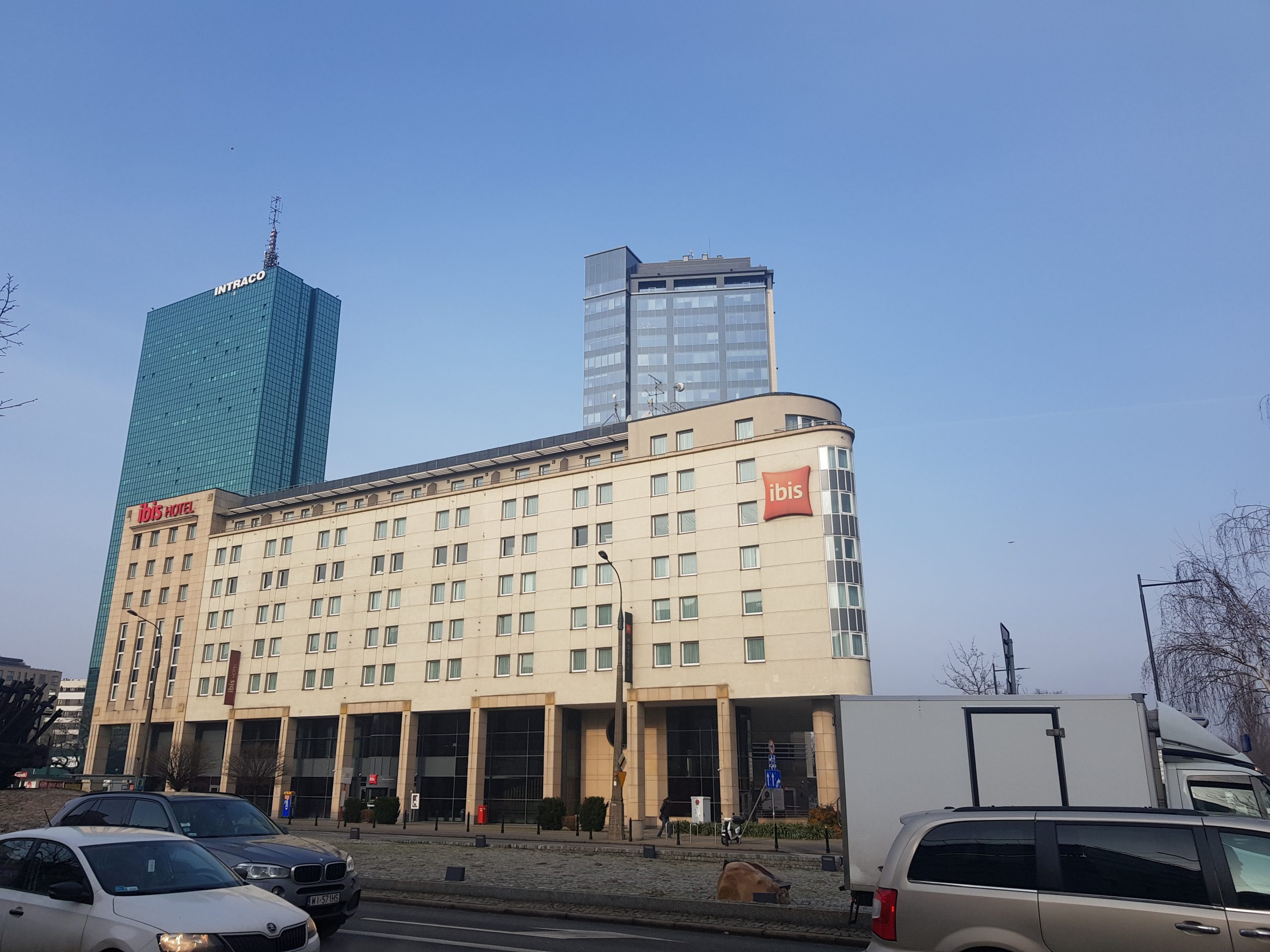
    This is the seventh Accor hotel in Warsaw that I’ve stayed in over the last couple of years, and the fifth this month, and it’s also the one I’ve liked the least and the only one that I wouldn’t stay at again. I posted separately about how Ibis are seemingly moving away from what I personally would like, with this hotel being the cause of that post.

    Irritatingly though, for an Ibis hotel, the breakfast, the welcome and the design of the public areas was well ahead of the curve for the brand. The public areas do have that community feel, although they need to go further, whether it’s by implementing some form of coffee shop or some form of specialism, such as my own favourite of craft beer. The first impressions for guests at this hotel is, I’d imagine, a really positive one as it’s airy, bright and contemporary in style.

    I’ve already posted that I don’t like the room, I think it looks dated, although it’s the lack of functionality that is primarily why I don’t like it. There used to be a lovely desk and chair under that window. Ibis used to be proud of that, in the booking confirmation for this stay it even mentions “a large desk”.

    Incidentally, the room does still have a door, this hasn’t been removed yet. In terms of cleanliness, it was spotless, with the bathroom feeling modern and contemporary. This also isn’t the brand standard for the new room that Accor sent to me last year, all three of their room designs had desks in, albeit not as large as I’d personally like, so I’m not sure why at this stage they’ve changed.

    The room’s climbing frame and play area. As an aside, the bed was very comfortable. Although since there’s no chair now, I suppose it has to be.

    Just as my opinion, this is a really poor design, I’m conscious that a couple of airport lounges introduced these, then had to take them back out again. Anyone with an adapter, so the USA, the UK, much of Asia and the like, may struggle as they’re recessed. That leaves one power point in the room. I don’t understand why they can’t just keep things simple and have a power socket on the wall that everyone can use. Design improvements are meant to make things easier, not present the guest with more difficulties.

    I digress slightly, but a few years ago, Marriott hotels had this marvellous idea that they’d take the desk out of hotel rooms. They claimed this was what the younger generation wanted, that guests didn’t want formal desks, they wanted informality and they could always sit on their bed with their laptop or just use public spaces. It was a little bit of a PR nightmare for the company and the policy was scrapped during the fit-out process, it had misunderstood the needs of millennials, let alone everyone else. I’m also pretty confident that in a year’s time that Accor will be doing the same, saying that they’re evolving the room design by re-implementing larger desks.

    Anyway, back to my normal drivel, this is the welcome drink voucher. The check-in process was seamless, the staff member particularly engaging and everything felt clean and modern. I’m pleased to note that this hotel still has a check-in desk, although Ibis are apparently ditching them so that customers have to queue up at the bar. I have no idea how Accor have come to the impression that this is a great idea, although they have access to far more customer data than I ever will, so I’m sure they’ve got good reason. Although, I still think customers want to be receive a proper welcome from a staff member at the check-in desk, they often don’t want to check-in at a computer, or by trying to find a member of bar staff padding around with a device to check them in.

    This is the standard beer offered by Ibis as a free gift, all acceptable if not particularly exciting.

    And a lovely touch, very much appreciated.

    For a few seconds I wondered what was going on here, but it’s just the floor being protected whilst they go through ruining the rooms with the new design.

    Breakfast was much better than the standard Ibis fare, I’m not sure why they’re going further than the brand standard. My Polish friends know what I think of smalec, but it’s a delicacy which it’s good to see for those who want to try it. The range of cold meats isn’t the usual Ibis standard either, it’s much better, which I very much approve of, with a wider selection of breads.

    All told, and excluding what I personally consider to be a dysfunctional room, this is one of the best Ibis hotels that I’ve been to. The cleanliness, staff friendliness and attempt at localisation at breakfast are all really positive, although I’m always easy to please by giving me free chocolate. But, a desk and chair in the room is essential for me, if not for others, so this is a hotel I won’t be revisiting.

  • Ibis – New Room Designs of Agora and Plaza – My End of the Road?….

    Ibis – New Room Designs of Agora and Plaza – My End of the Road?….

    Accor did send me last year photos of their new room concepts, which I thought looked faintly ridiculous, but I hoped that they’d be toned down. This is the first time today that I’ve seen the new Agora room design, and it’s probably the most dysfunctional room I’ve been in at any chain hotel.

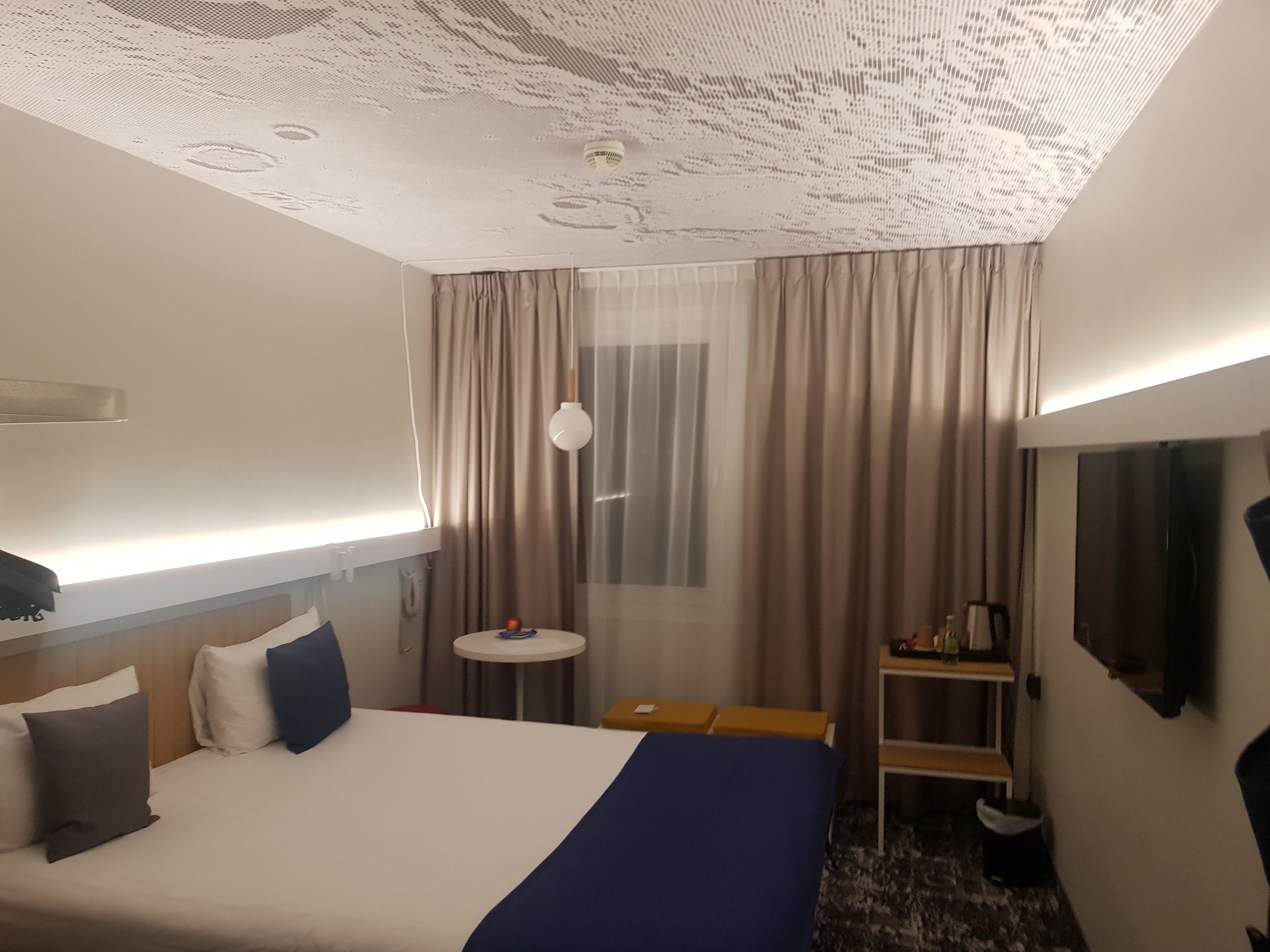
    I don’t much like the design, it feels too old-fashioned to me, but that’s a matter of personal taste of which I’m not too bothered about. I spend enough nights in Ibis Budget to not worry about such fripperies. But the new room design has removed the desk that was in every single room, and taken away the comfortable chair to be replaced with one for a child. There’s also some weird 1970s effect on the ceiling that looks like artexing at first, does everything have to be aimed at the older generation in terms of general room design?

    I’d add that Agora is one of three room designs being rolled out, with each hotel being able to choose which one they want. The other two, Plaza and Square, are less ridiculous, but I can’t say I find either of these particularly engaging either, although they do appear to have at least some form of desk.

    The whole thing looks like a throw back to the 1970s, clunky and extraneous. The next problem for me is that there’s now just one plug socket in the room which is on a wall. I accept there are two in a new strip panel, but anyone with an adapter can’t use them as they’re recessed. I have no idea what bright spark thought that one up, but a plug socket on the wall is fine with me, they don’t need to be modernised.

    But, Ibis have decided to make some other changes. They want music to be at the heart of everything that they do, which isn’t going to end well. We had the situation where they shut the bar and restaurant of their Kielce hotel so a band could play. Music isn’t in my view their answer if they want to bring people together, they need to create areas which are focused around on-trend features such as craft beer or elements that get people talking, even if that’s just a coffee shop. If hotels want to capture the digital nomads (a horrible phrase, but Accor have used it) then they need to be on-trend, not move away from modernity. And, they’ve decided to take away reception desks and get customers to check-in at the bar. Muddled and fiddly, why can’t customers just talk to a staff member at the reception desk?

    But the most confusing thing about all of this is that I’m meant to be the customer that the Ibis brand is now targeting. A customer who uses them frequently, who would use their public spaces when not staying with them, who travels so much that they do a lot of work whilst in the hotel, but who also finds joint public spaces highly beneficial to productivity. So, Accor have come in with a new concept that is meant to appeal to people like me, but they’ve delivered something which seems to be primarily aimed at pensioners who don’t work in the room and like design throwbacks.
    All rather disappointing, since Accor are planning to have this concept rolled out in all of their hotels by 2022. Since I’m heading towards being Accor Platinum in a few weeks, I do feel slightly loyal to the Accor brand, but I’ll be looking to switch down to Ibis Budget or stay in Mercure instead. My custom is of little relevance to them as just one person, but what’s most frustrating is their design brief seems to describe me as their target market. Their statement that:

    “According to Ipsos, 80 per cent of respondents want new hotels to be social venues which accommodate both hotel and non-hotel guests. Ibis is therefore keen on transforming its lobbies into social hubs, where guests can relax, dine, meet and work. New food and beverage propositions will also be introduced to attract external customers as well as hotel guests.”

    Is entirely right, social venues and joint working is absolutely the future. Perhaps having a room with a desk and power points that are accessible might be a good starting point though.