
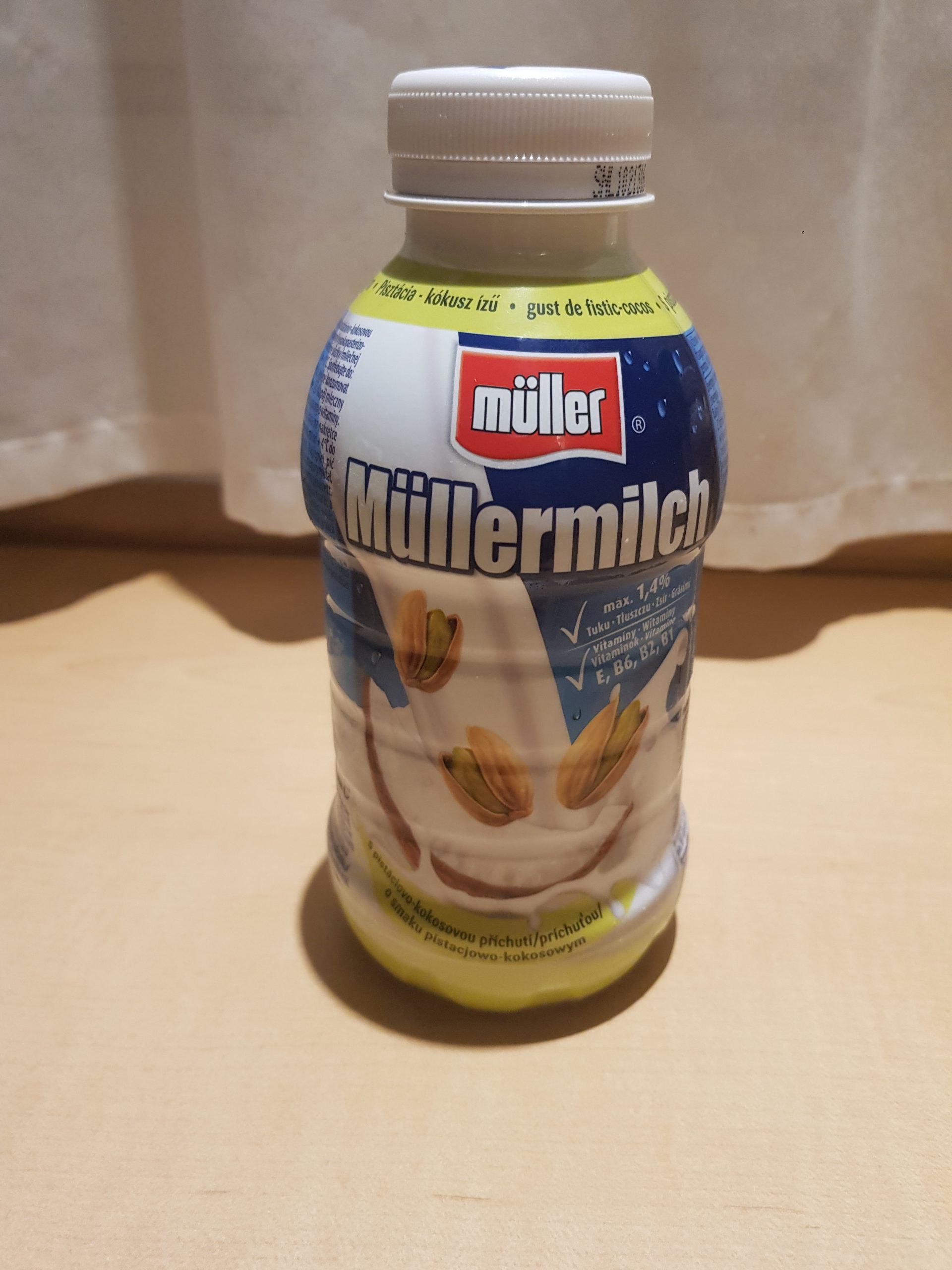
I’ve meant to post about this before, since it’s the drink I keep buying when meandering by nearly any convenience store in Poland. I don’t think I’ve even seen Müllermilch in the UK, although I’m sure it’s available somewhere, but this pistachio version is pure decadence in a plastic bottle. Marvellous…
Author: admin
-
PKP Intercity : Bialystok to Warsaw
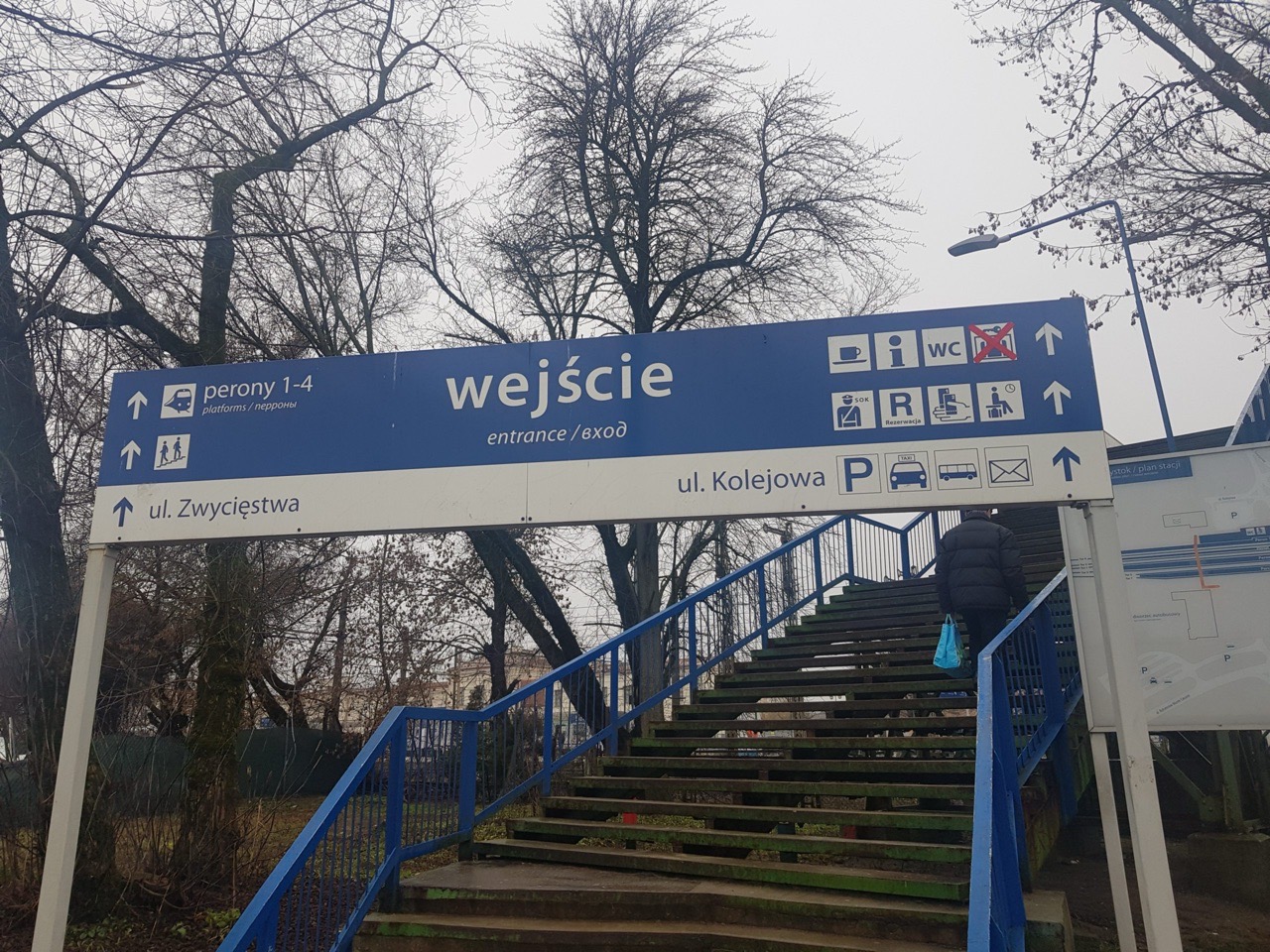
The entrance to Bialystok railway station.

Standing on the footbridge over the platforms, the train on platform 3 is the one that I was boarding. There’s a story, albeit of limited interest to anyone, about that. I’m always moderately nervous about boarding the wrong train, so I was confused that there were quite a lot of people on the platform who weren’t getting on the train.

I was confused as the yellow departures sheet suggested that there were no other trains departing, so the train that was on platform three should be the only one to get on. Not least that it also had the train number and Warsaw on it, but I pondered why not everyone was getting on it. So, I faffed around taking some photos before boarding.

Here’s one of them. Anyway, at this stage, a shiny intercity train pulls in, seemingly quite delayed and that was the reason that people were waiting. So I decide it’s time to board the train that I’m meant to be getting on and head to my seat. There are no other passengers on the carriage other than the person sitting in the aisle seat, next to my seat and she has just that second sat down and made herself comfortable. I hate such situations, it would look ridiculous if I make her get up to let me in and then we’re the only two on the carriage for the journey. So I sit nearby, until someone hovers nearby to where I’m sitting and I guessed that I was in their seat (I wasn’t as it transpired) before then deciding I’d move to my originally allocated seat. There’s a Very British Problems post about just this sort of situation….

Bialystok railway station, which is being heavily renovated at the moment, although they’ve still got another year to go before it’s all finished. The newly restored building looks excellent and they’re renovating stations along the railway line, so this arterial route from the city to Warsaw is likely heading for increases in passenger usage.
Around half-way through the journey, the train stopped at Małkinia Górna railway station. I felt an urge to check Wikipedia about this station and I found out, although really should have known, that this was the connecting line to Treblinka concentration camp. If I’d thought about it in advance, I’d have got a train ticket to here and then walked to the site of the camp before getting a later train to Warsaw. There isn’t much at Treblinka, but I’ll like to see the memorial and I think there’s a small museum there.

I had expected a compartment / corridor train, solely because that’s what the rail company used on the train to get me to Bialystok a few days before. But, it was a more traditional type of carriage, which was comfortable although lacked power and wi-fi.

And safely back into Warszawa Centralna, exactly on time. The journey had again cost £6 and lasted for around two and a half hours. All very easy once again….
-
Bialystok – Ibis Styles
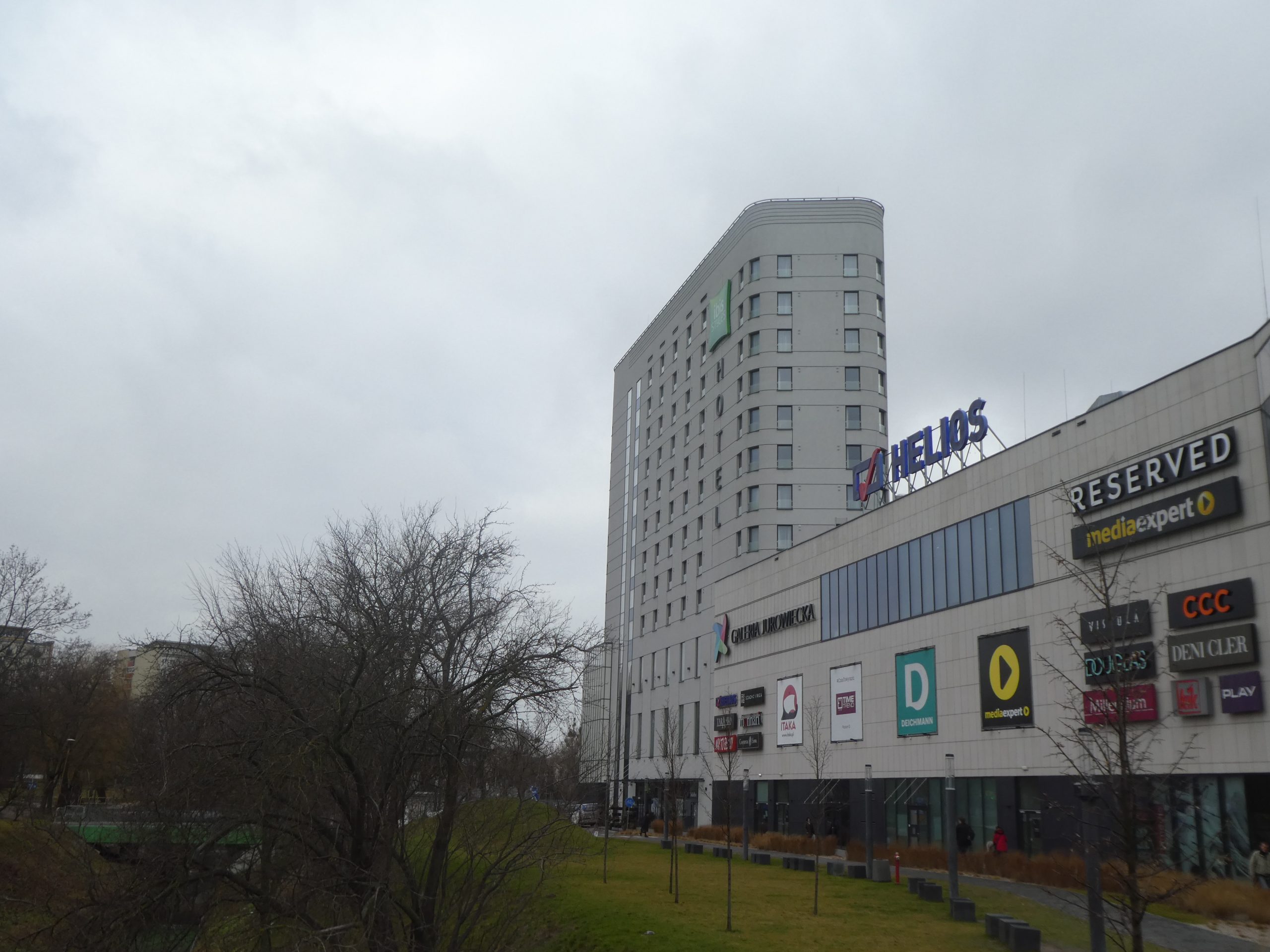
This has been one of my favourite hotels, although it wasn’t a subtle Ibis Styles, it was an enormous bulk of a building towering over the shopping centre which it’s attached to.

The view from my room over central Bialystok, which I very much liked. It also had large windows which made gazing out of the view much easier. The air conditioning and room heating worked to my satisfaction and the wi-fi was also fast and efficient.

A room with a desk and chair, something which certain Ibis room designers would be horrified by. I’m not sure why I booked a twin room, I can only imagine that either it was all that was available, or that I’m an idiot. There was effectively no internal or external noise disturbance, this felt a particularly well constructed building to manage to avoid such noise leakage.

I thought the water and biscuits were welcome gifts, but they were generally restocked every day, so they might be a standard offering. Anyway, a nice touch.

Every Ibis Styles has a theme, something I think is a really positive idea, giving lots of design options to play with and giving it an element of uniqueness. I’ve had Ibis Styles focused around the Romans and space, with this hotel going for birds.

The drinks voucher.

And the drink I went for. I’m not sure that they had any darker beers, although the staff member had a look for some options and although this was a lighter option, it was something different to Zywiec.

The hotel provides free coffee and tea at all times, they’re available at a little desk near to the reception area.

Part of the salad offering at breakfast.

Fruit.

They had waffles that guests could make, although I’m not too engaged with that, but these are the toppings for those or for the pancakes, which I’m also not that engaged with…. They did though have a coffee machine which also did some rather excellent hot chocolate.

And there were cereals to be had as well. The breakfast area was never that busy and it was kept spotlessly clean by the staff. They were a bit overwhelmed on the Saturday and didn’t seem to be restocking food very efficiently, but on the other four days it was all kept fully stocked.
The prices for this hotel are reasonable, something usually around £35 to £40 per night, although my room was around £27 per night including breakfast as part of an Accor offer. The staff were always friendly, the public areas were clean and it’s a centrally located hotel just a short walk from the city.
-
Bialystok – Legend of Giants
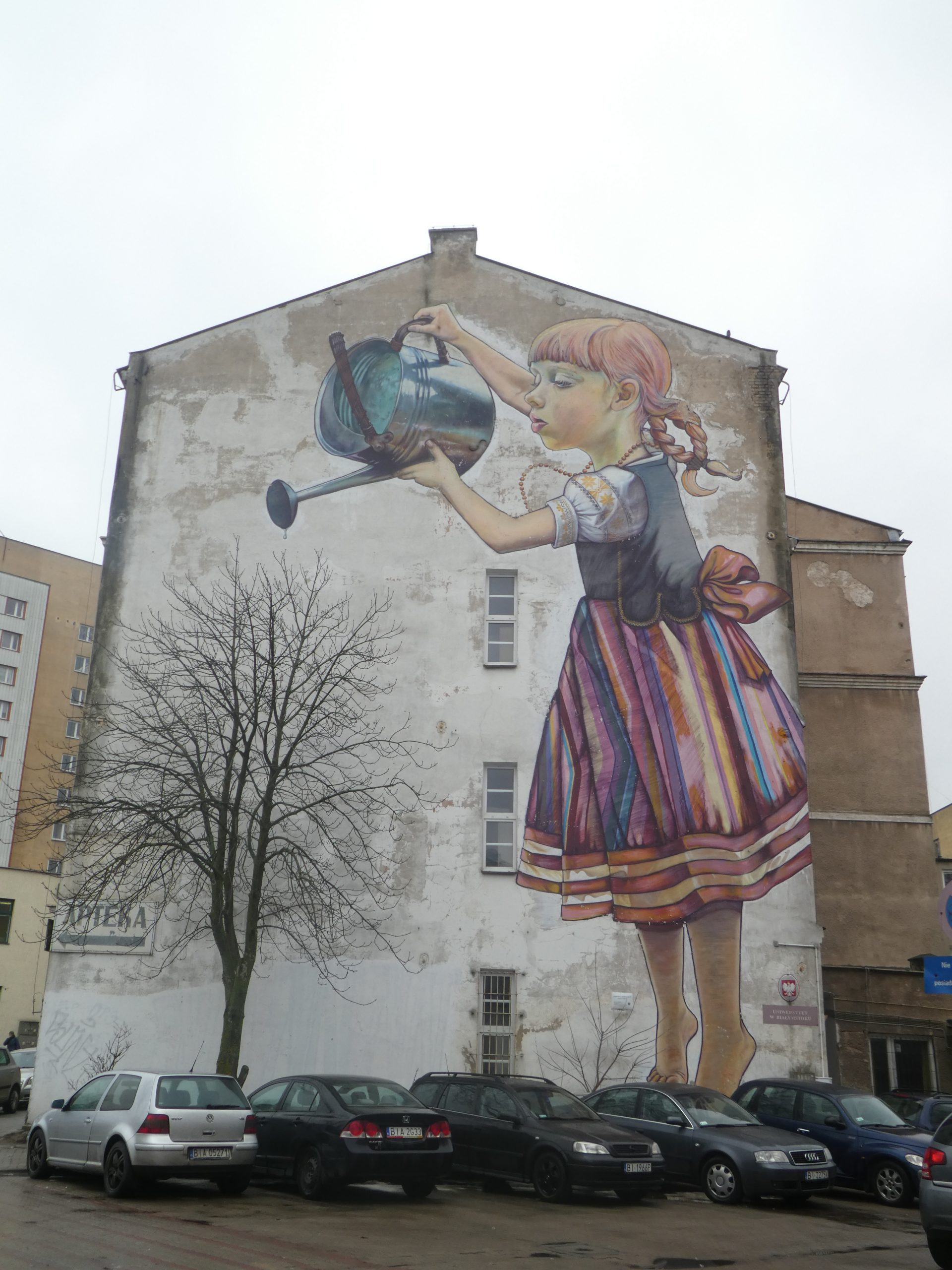
There are some outstanding murals in Bialystok, but this one located on al. Józefa Piłsudskiego is perhaps one of the best in the city and also one of its better-known. Created by Natalia Rak in between 20 and 30 September 2013, it uses a real tree as part of the artwork. The artwork has faded a little over the years, but it is still just as impressive.
-
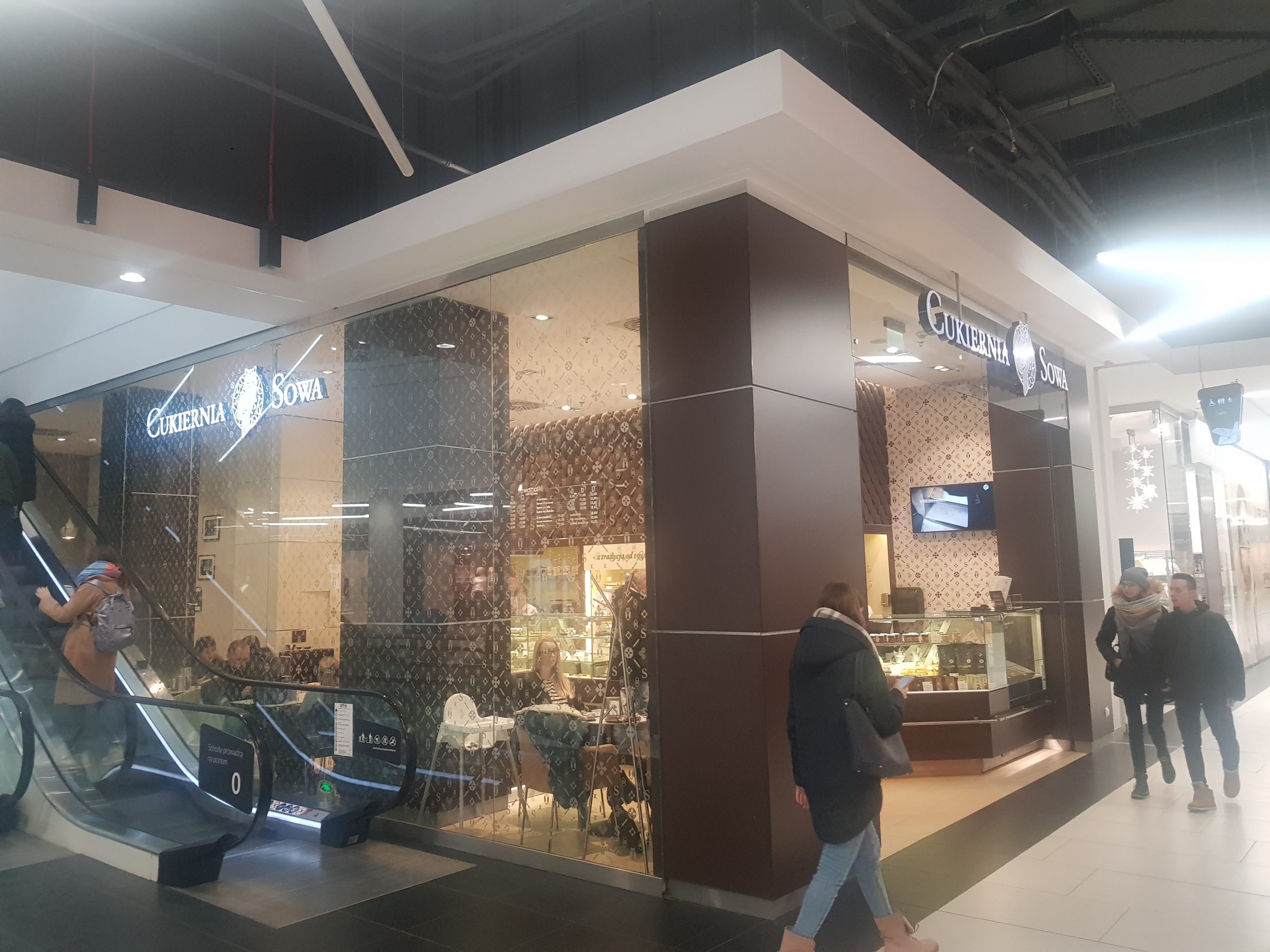
Bialystok – Cukiernia Sowa
I went to the Kielce outlet of this national chain last week and couldn’t resist quickly visiting one of their two outlets in Bialystok city centre.

Tasty looking doughnuts and the staff member was impeccably polite and helpful. The prices are reasonable and lower than some of the other international coffee chains that operate within Poland.

A chocolate eclair, with plenty of confectioner’s custard inside, with a large coffee which had a rich and decent taste to it. The cafe was clean and organised, with a relaxing and comfortable atmosphere. This chain really is becoming my new Greggs in Poland…..
-
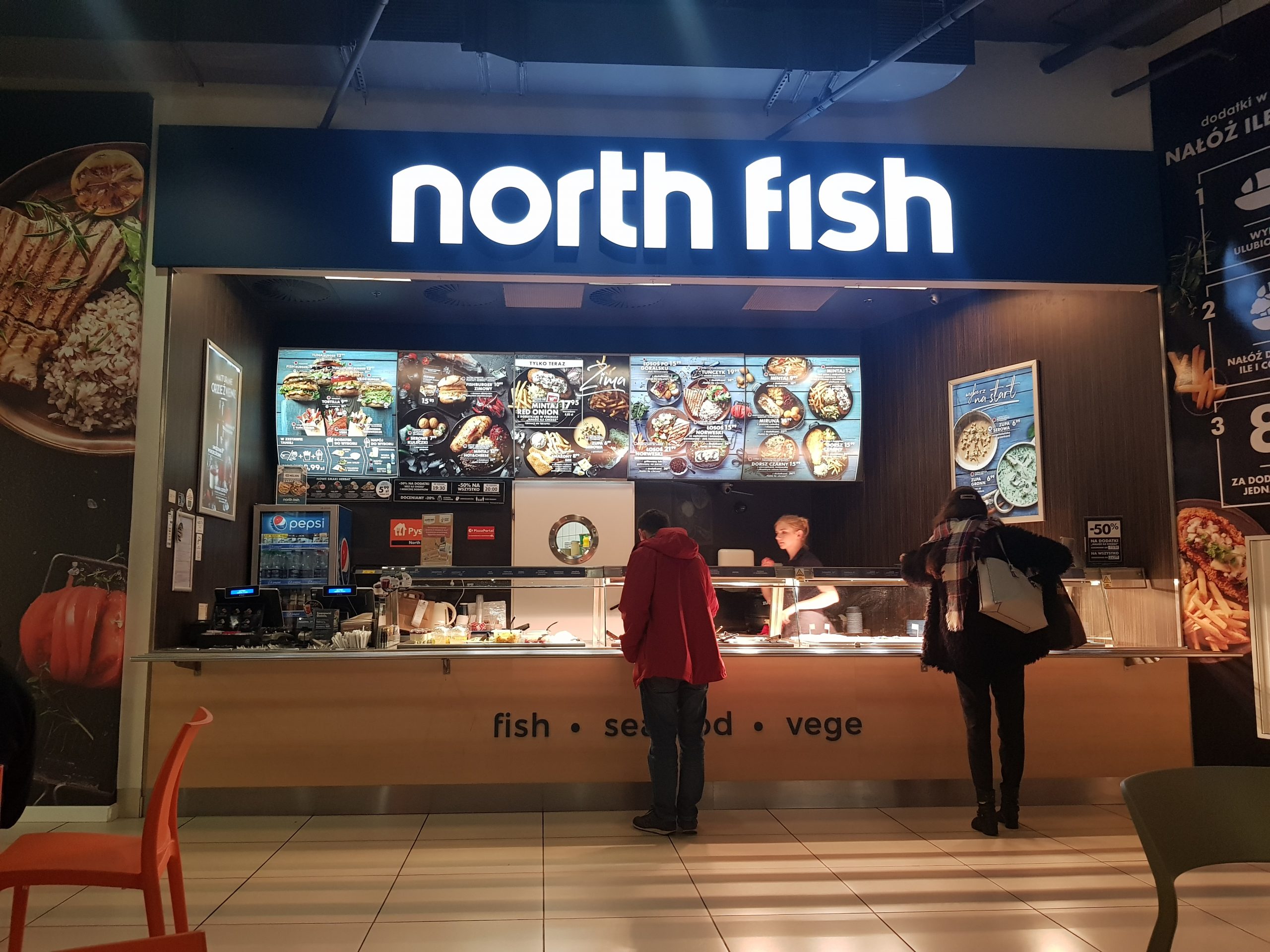
Bialystok – North Fish
North Fish is part of a national Polish chain run by a company called North Food, who also operate another food concept which is John Burg. I visited that John Burg restaurant in the Galeria Echo mall in Kielce last week, which is the same shopping centre where North Fish was started from in 2002.

The reason I thought I’d visit an outlet is that they’re commonplace in shopping centres around Poland, but I’ve never been to one. And, I am quite drawn to fast food chains and their bright lights and shiny menu boards…. North Fish restaurants usually appear to be well attended, with the reviews also being of a higher average than other food court options.
I have to admit to not quite understanding the ordering process, but it seems to revolve around selecting a fish element and then the customer helping themselves to chips or salad elements. The staff member who served me didn’t speak English, so although I could order what I wanted easily enough by pointing and speaking Polish (well, nearly entirely pointing if I’m being honest), there was no explanation of the ordering process or promotions possible on this occasion. The service was always polite though, with the process seeming efficient and well managed.

I’m not entirely sure what this fish is, but it tasted of cod to me and flaked away as I’d expect cod to do. So, I’m going to call it cod. And it was an excellent piece of fish, tender and full of flavour, with the batter being soft, but still retaining some crunch and a decent amount of taste. The chips were fine, nothing exciting, but they also retained some bite, although I didn’t see any opportunity to get sauces and this needed some tartare sauce to raise it up a level. The berry smoothie was excellent, lots of bits of fruit in it and it seemed freshly made.
I didn’t have a clue how much this was going to cost and it came to £6 for the food and drink, which seemed to be reasonable to me. I understand that there are discount vouchers and promotions available, so I’m sure there were better value options to those who understood those, but as a first visit to this chain, it struck me as a positive experience. I do remember, I think it’s in Warsaw, that they have an outlet with an ordering panel, and I might visit that as the ordering by kiosk option will likely give me a better oversight to the menu and the possible promotions. I can see the attraction though of North Fish.
-
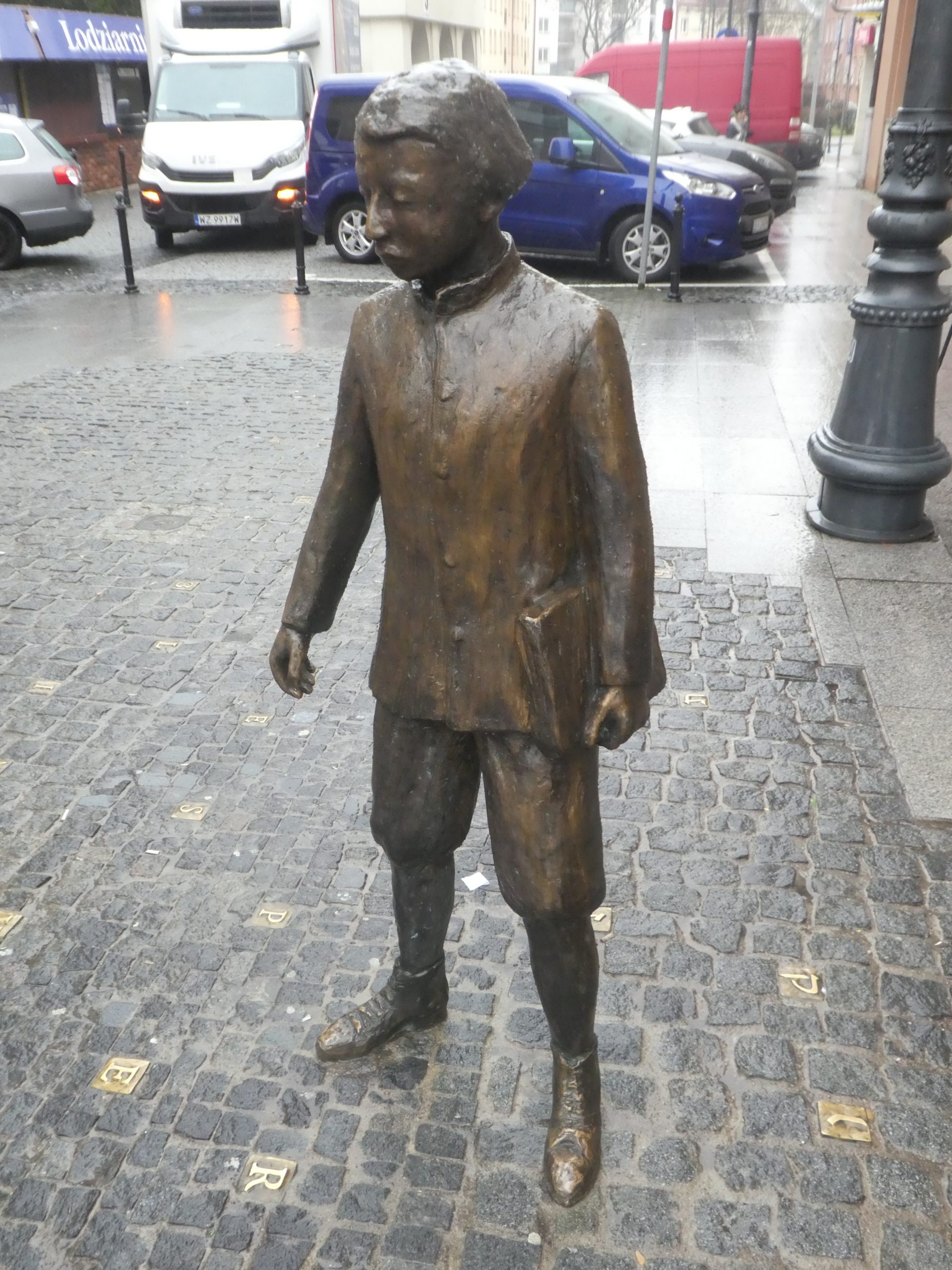
Bialystok – Young Zamenhof Monument
This interesting statue is of the young Ludwik Lejzer Zamenhof, the man (or boy at the time) who invented the international language of Esperanto. It’s a relatively recent addition to the street scene, having been unveiled on 14 April 2019, the 102nd anniversary of Zamenhof’s death.

The plaque located near to the statue, in an area which has now been pedestrianised since it was unveiled. It’s located at the end of the street named after him, ul. Zamenhofa, where it meets the market square.

Letters around the statue.
-
Bialystok – 1939 Video
This is quite sad in many ways, as nearly all the Jews in this film would have been killed in the years after this video was made. Some of the footage is from 1939 and the city’s Great Synagogue is also in the film.
-
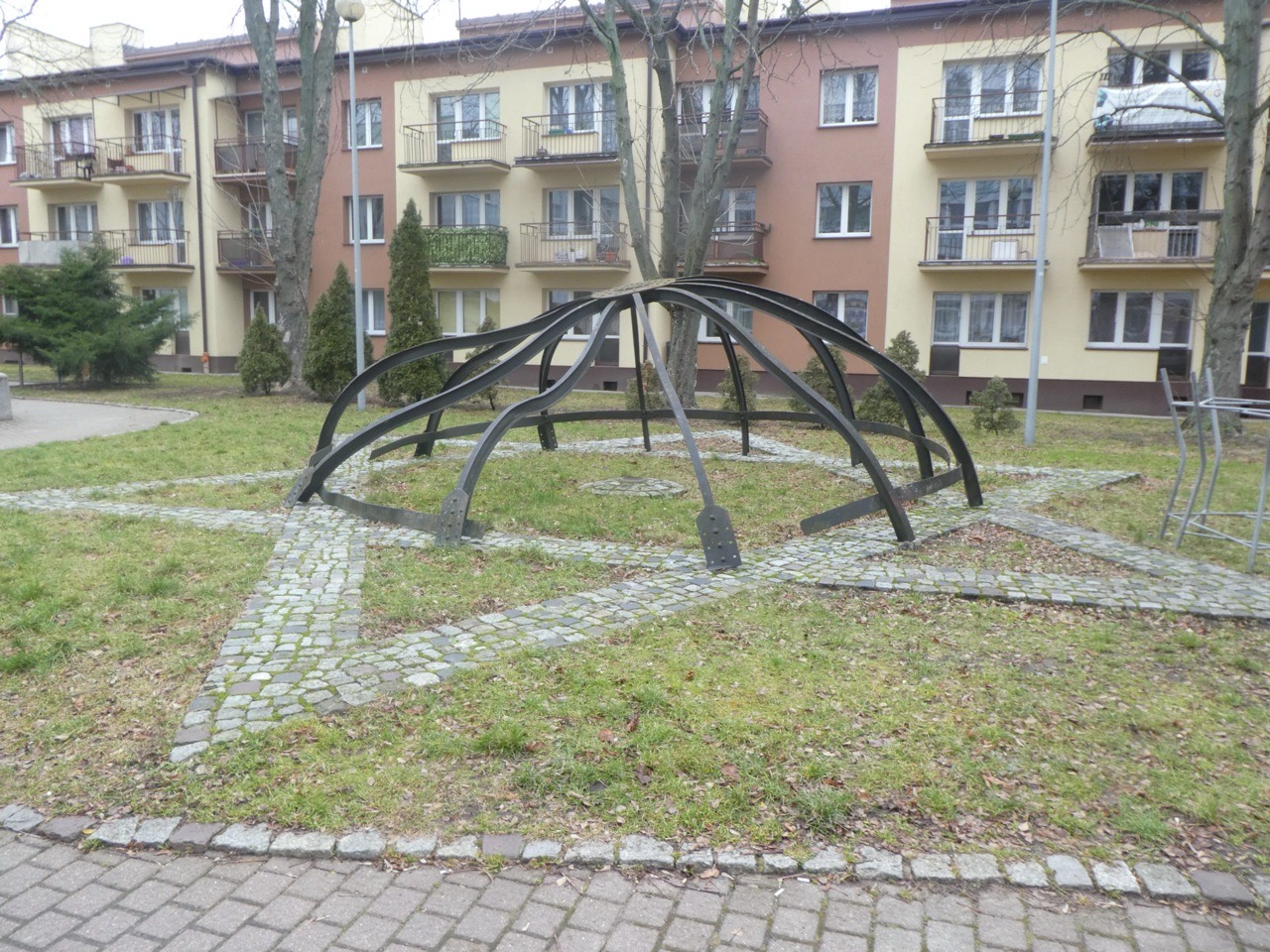
Bialystok – Great Synagogue
This is the memorial to the Great Synagogue of Bialystok which once stood here, sadly destroyed by the Nazis.

A postcard of how the building, constructed between 1909 and 1913, once looked. At the time, around half of the city’s population was Jewish and there was a strong community which seems to have integrated relatively well, although there were some points of difference between the Polish population and the Jews. The Germans took over Bialystok at the beginning of the Second World War, but it was handed back soon after to the Soviets as part of the Molotov–Ribbentrop Pact. That subsequently fell apart and the Germans took the city back again on 27 June 1941.
The Nazis took little time in attacking the city’s Jewish community on the same day they took Bialystok, and Jews were forced into the streets and some were killed immediately, but many took sanctuary in the synagogue. Over 2,000 men, women and children were in the synagogue when the Nazis set fire to it, blocking the exits at the same time. Nearly all of those people died, along with another 1,000 Jews who had been killed elsewhere in the city on the same day.

The memorial was added in 1995 and comprises of this stone and the metal structure in the top photo, which depicts what the synagogue roof looked like after it had collapsed following the end of the fire. It’s nicely done, but it’s not that easy to find, with little signage towards to it. It’s also hard to understand where the footprint of the original building was, as the monument is in the middle of a courtyard area today.
I tried to look at how the international media reported the incident and it’s clear that it took some time for the details to come out. Initially, the reports said that 500 Soviets were held in the synagogue until a ransom was paid by their families, and after few days of non-payment, they were killed. There was a reference to the scale of the murder in late 1941 and separately the British United Press and Reuters also mentioned that 300 Jews had been killed after being held for three days without food. So although the information had got out in part, it was only in late 1942 that the details of the killing were widely reported. Perhaps few people could have believed at that stage that the Nazis would commit a crime of such a scale.
-
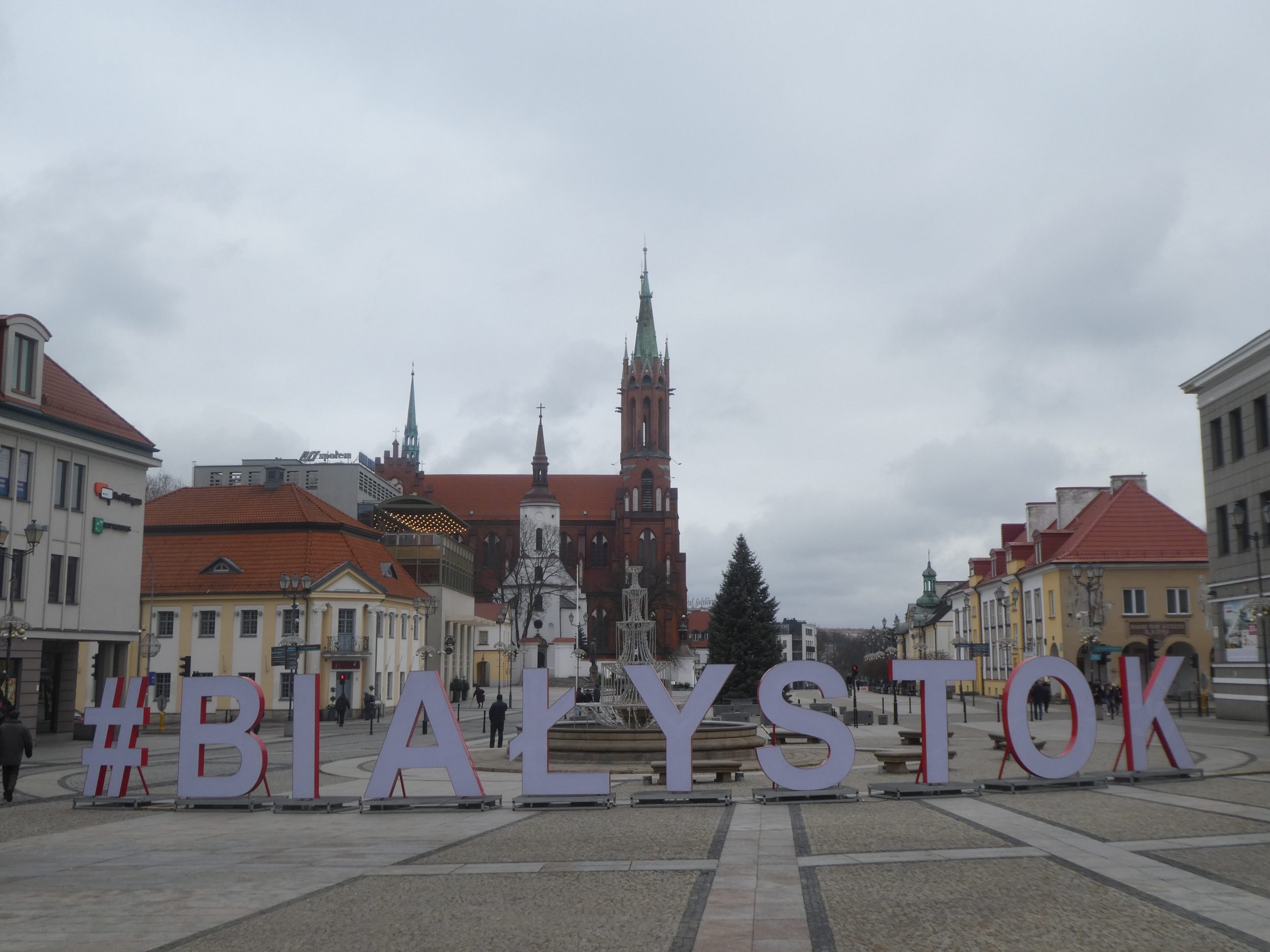
Bialystok
Bialystok doesn’t get many tourists, although the European Union and the local authorities are trying hard to change that. Cities such as Krakow, Warsaw and Gdansk capture the international travellers and many who come to this part of Poland are heading for the Masurian Lakes.
Bialystok seems proud of its heritage, which is complex and from many different communities, as the city says on information boards, “Poles, Jews, Germans, Russians, Belarusians, Lithuanians, Ukrainians, Tatars and Gypsies lived here side by side”. In the late nineteenth century, 75% of the population were Jews, although little of that heritage remains in the city today. It’s also the city where Esperanto was established, another reminder of its multi-ethnic heritage, with L. L. Zamenhof creating the language when he was still at school.
The city feels to me almost more Russian (and until 1918 it was Russian) or Ukrainian than Polish, not because of its people, but because of its architecture, its businesses and its general vibe. And it doesn’t feel as wealthy as other Polish cities that I’ve been to, perhaps Lublin feels the most similar to it from the places that I’ve been.
Although without exception they have been polite, I’ve yet to have visited a Polish city with as many people begging or asking for money. Given that these men and women are clearly not expecting tourists to donate to their cause, their persistence in approaching locals is admirable. There are also plenty who are looking for money in other ways, street musicians are relatively common in Bialystok and the locals seem to reward them for their efforts.
There’s clearly a lot of money coming into Bialystok, there have been huge efforts to improve the Palace which is of substantial economic importance and funding has been made available for new museums. That will no doubt help with visitor numbers, although the whole tourist industry is underdeveloped, not least in the provision of cafes and bars that might appeal to those from outside of Poland. Although, this is another challenge, this is something of a border area, so the city is just as focused on attracting visitors from Belarus, Lithuania and Ukraine as it might be from western European countries.
I’ve yet to experience an unfriendly Polish city, but Bialystok seems to be one of the most welcoming to visitors, it just has that slightly soft edge to it. That’s might be slightly surprising given that the city otherwise seems quite hard-edged with most other things, but perhaps it is hopeful of attracting more visitors and bringing in more wealth. Unemployment was high in the area, but is on its way down, but there’s progress to be made.
There are two shopping centres, which both appear to be popular, although the main shopping street doesn’t have the same vibrancy. It also perhaps needs pedestrianisation as it’s a grand main street and most Polish cities, and indeed international cities, have taken the steps to try and take cars away to improve the shopping and recreation options. And certainly much more needs to be done to promote the heritage of the city, although it’s clear that efforts are underway to improve signage.
So, Bialystok is a wonderfully friendly and charming city, but I can’t help thinking that in ten years it’ll be very different.


