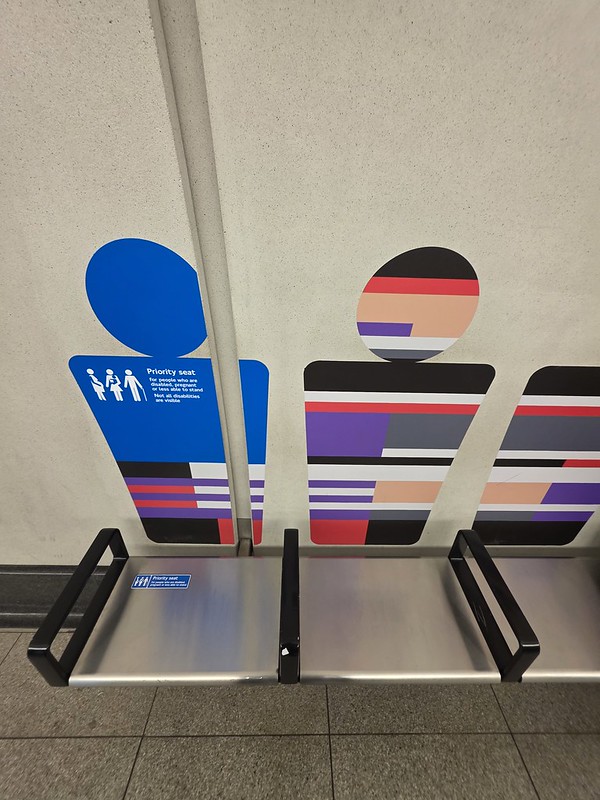
I thought that it would be a marvellous idea for Liam and I to go a slightly convoluted way back to the hotel after the LDWA Capital Challenge to see these new stickers that TFL had put at some stations along the Elizabeth Line last week. The stickers have the moquette design that is used on Elizabeth Line trains, with a total cost of £30,000.
The sleek, pale wall panels, admired for their minimalist aesthetic, had instead become rather unintended canvases for human outlines which was seen by TFL as sub-optimal. TFL said that they would ensure that the stickers blended in and added:
“The Elizabeth Line has been hugely popular, and with high footfall comes unexpected wear. These stickers are a simple, cost-effective way to maintain the appearance of the stations while reducing maintenance needs.”
Liam pretended he was really excited at this piece of infra-structure development.
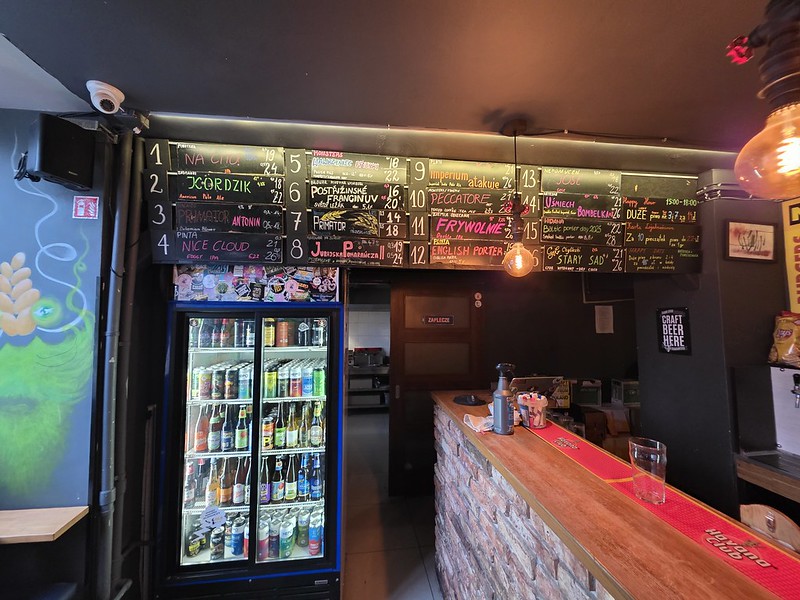
I’ve managed to visit just about every craft beer bar in Warsaw, but this one is new to me and the beer list at https://craft-beer-muranow.ontap.pl/ looked intriguing.
The outside seating area was full, but I wasn’t engaged with that, especially as the inside was spacious and felt welcoming.
These photos might make it look quiet, but they were doing a decent trade during the time that I was there. There’s an upstairs area to the venue as well.
The beer list was neatly presented on the wall and was clearly visible to customers.
And a food menu. The service was friendly, efficient and engaging, so it all felt a welcoming environment.
I went for the Ju-Rajska Pomarańcza from Browar na Jurze. I liked the initial orange flavour of this, but thought it thinned out quickly, although the taste remained pleasant and I was pleased with my choice. The brewery is from Zawiercie, which isn’t overly far from Katowice, and it’s not a brewery I’ve had a beer from before.
Definitely a decent little bar and they have a fridge of some intriguing craft beers as well to add to the offer. The service was friendly, there was an excellent choice of beers and styles with the pricing being reasonable. So that’s yet another place I’ve got to keep coming back to.
Since it was my last night in Warsaw yesterday for what might be nearly a week, I thought I’d pop into this Indian restaurant near the Old Town which is well reviewed on-line. I’m not sure I had intended to have an evening meal as I’ve been skipping them recently given I’ve opted for larger breakfasts, but sometimes I must have what my heart desires….
It wasn’t busy inside, but it was a little busier in the seating area outside. I can’t be doing with all of that sitting outside thing, there are insects, cigarette smoke and people everywhere, I’m much happier away from all those distractions. I was greeted promptly and at least offered the choice of sitting inside or outside, so my first impressions were positive.
Some decorative elements in the window.
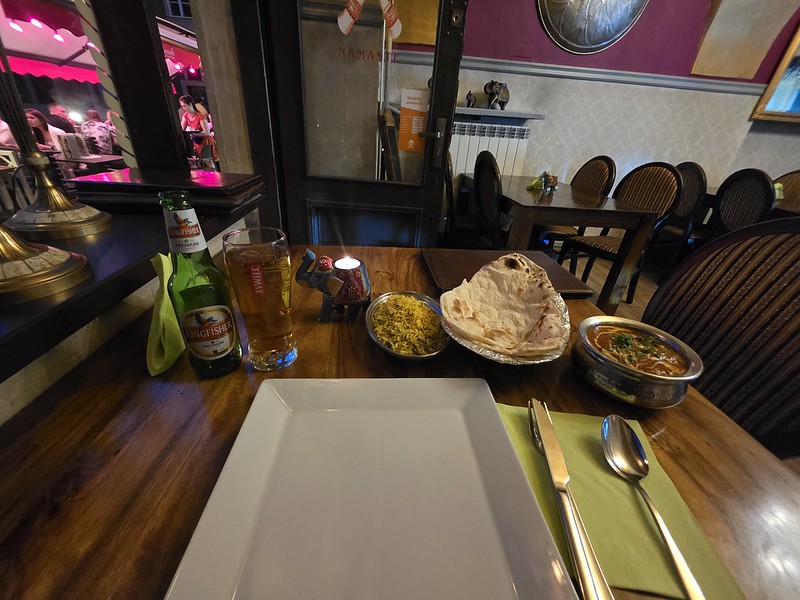
I went for a bottle of Kingfisher, initially opting for a large one but as they ran out I thought a standard size bottle would suffice, although I didn’t have much choice in that. It’s not the greatest beer in the world and I’d love if they stocked Funky Fluid, but I do retain some air of realism that this isn’t going to happen.
The food was served promptly, after around ten minutes, with everything being well presented. I quite like spicy Indian food, not in some British showing off style after six pints of lager, it’s just what feels authentic to me and adds to the flavour. Often things are rather toned down in some parts of central and eastern Europe, but I thought I’d go for the Chicken Kashmiri which has the maximum three spice stars in the restaurant’s menu. I was surprised and delighted that the food was not only served with plenty of spice, but the rich sauce also had a depth of flavour and taste. There was a generous amount of tender chicken in the sauce, with the lemon rice having the suitable amount of lemon it. The naan bread was light, crisp and rich in flavour, with the whole arrangement being one of the best Indian meals I’ve had in some time. There was an air of authenticity about the atmosphere and surroundings, with the restaurant being clean and organised. The spiral stairs down to the toilet also added some extra excitement to proceedings.
The food and drink cost a total of £11, which I thought was really excellent value for the quality received. I’ll definitely look at coming here, it’s one of the best Indian restaurants that I’ve visited in Warsaw and the team members were personable and warm. Actually, they were a little informal in places, but I’m hardly known for my liking of overly formal situations. I was pleased with the meal and I can see why the on-line reviews are so positive.
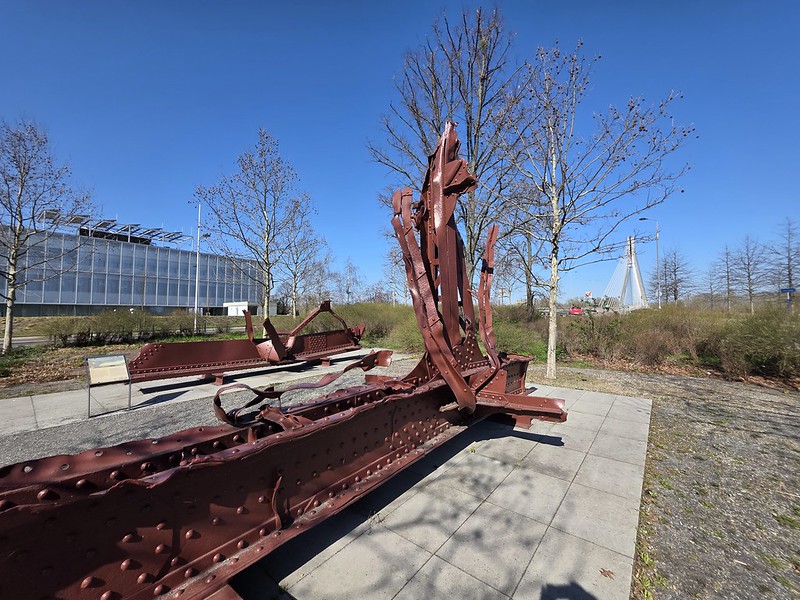
It’s something of a grand title for these bits of bridge that are on display near the Vistula, but they do have an important heritage. It’s commemorating all of the bits of bridge that have been discovered at the bottom of the river since the Warsaw Uprising in 1944. They were lifted out of the river after seventy years by the Road and Bridge Research Institute in Warsaw. The name comes from ‘Ponte’, which is the Latin for bridge, and, well, ‘Museum’. I suspect my cleverer readers would have worked that latter part out themselves though. This little arrangement of bridge parts opened in 2014 and it’s stayed here near the river since then.
Warsaw’s bridges were systematically targeted and destroyed, first by retreating Russian forces on August 5, 1915, and later by German troops during the Warsaw Uprising on 13 September 1944. So, it’s time for a table:
Bridge Name
Construction Dates
Key Historical Notes
Kierbedzia Bridge
1859–1864
First permanent steel bridge in Warsaw; Destroyed WWI (1915) & WWII (1944)
Poniatowski Bridge
1904–1914
Destroyed WWI (1915) & WWII (1944); Rebuilt multiple times
Bridge under the Citadel
1873–1875
Located near present-day Gdański Bridge; Destroyed WWI (1915) & WWII (1944)
This is Kierbedzia Bridge, the first permanent steel bridge in Warsaw which was constructed between 1859 and 1864. It was designed by Stanisław Kierbedź and was a six-span steel riveted truss structure of the American type, vital for the city’s expansion and economic life. Its history mirrored Warsaw’s fortunes, being destroyed first by retreating Russian forces in the First World War (5 August 1915) and then by German forces in the Second World War (13 September 1944).
This is Poniatowski Bridge which was built between 1904 and 1914. This was also destroyed during both the First and Second World Wars, in 1915 and then also on 13 September 1944. It must have annoyed the civil engineers who had built the thing, it stood for just one year before the Russians destroyed it. The replacement bridge opened in 1925, so that one managed to last nineteen years before it was destroyed.
This is the Bridge under the Citadel which was a railway bridge constructed between 1873 and 1875, located on the site of what later became Gdański Bridge. Once again, this was destroyed in 1915 and 1944.
These lumps of twisted steel are quite powerful, showing the determination to get them built to aid the country’s economy and then seeing them destroyed for defensive reasons in both World Wars. Fortunately, the replacements since the Second World War have fared somewhat better.
Next on our perambulation a couple of weeks ago was Stranger’s Tavern which has somewhat of a complex history to unpick. Firstly, Julian found the railings outside the pub a handy place to lock his bike up and to also keep an eye on it when we were seated inside. Once that faffing about was done and I watched the police doing something next door with a food delivery driver, we were ready to enter.
The story starts with the Three Pigeons pub which was located opposite where the pub today is now located. The current location is under the ‘HAR’ of Charing in the above map. This has been a pub from the mid eighteenth century located where Westwick Street and St. Benedict’s Street met, but the building was demolished for road improvement works in the 1890s. In 1869, there were allegations of election bribery taking place at the pub although the investigators only found evidence of intoxication of voters. I sometimes wonder whether this (the intoxication, not necessarily the bribery) should be encouraged again to see if voters make more sensible decisions after a couple of beers.
This map, from around 1900, shows where the pub was moved to. Morgans Brewery operated the venue until the 1940s, then it became owned by Tollemache & Cobbold. In 1977, the pub was renamed the Hog in Armour and that’s how I remember it over twenty years ago when my friend James and I played pool upstairs. That’s now been turned into a cocktail bar which is separately branded today, but I digress. It was renamed the Mash Tun in 2014 and then the Strangers Tavern in 2019. I quite like the Three Pigeons name myself, but there we go.
An advert from 1881 and there are a couple of interesting things there, including the bagatelle table (the fore-runner of today’s bar billiards), but also the annual bread, cheese and celery supper. I’m not bothered about the celery, but the rest of the supper sounds amazing.
Incidentally, in 1930, the local press reported:
“Mr. Lindley, at the Three Pigeons, near Charing Cross, has a hog, which is allowed to be the largest ever seen in this city (Norwich). Its dimensions are 9 feet in length, 5 feet high, 9 feet round the body, and the neck measures 4 feet 4 inches round; his weight is computed to exceed 50 stone.”
50 stone?!?! Handy for the later name of the Hog in Armour though.
The bar was entirely devoid of customers when we entered, but it was contemporary and clean in its design.
I had expected something rather more generic, but I think it’s fair to say that both Julian and I were surprised and delighted. There was a broad range of craft beers and the team member behind the bar was knowledgeable, engaging and enthusiastic. Well, I say we were both delighted, but they don’t serve real ale (those two lines that look like cask are actually cider) so Julian could have been more delighted, but at least the craft options were intriguing.
The keg selection which is a little hard to make here unfortunately, but there were some beers from breweries that I hadn’t been aware of and it’s always good to see beer from Brew York.
I opted for the Ben & Terry’s Peanut Buttercup from Bianca Road Brew Co, a London brewery who were new to me. Lots of peanut butter, smooth and rich, this was nearly quite a decadent beer. Julian went for a beer from the same brewery, the Hay-Z which is a pale ale and it was a fresh and fragrant little number.
The team member said that the bar was doing well, although it’s always seemed a bit empty when I’ve gone by, but it’s possible that they get a decent crowd in during weekend events. They don’t seem to serve food other than bar snacks, so it’s a primarily wet-led venue. I actually really liked the pub, it offered beers that were a little different, the service was friendly, the team member who served us was knowledgeable about beer and I felt welcome during the visit. All really rather lovely and I think that they deserve to be busier.
Finally, for anyone who wants to see what the Hog in Armour looked like in the 1980s, jump to 12 minutes in of this Tales of the Unexpected video. Also note the appearance of Clive Swift, later better known for his role in Keeping Up Appearances.
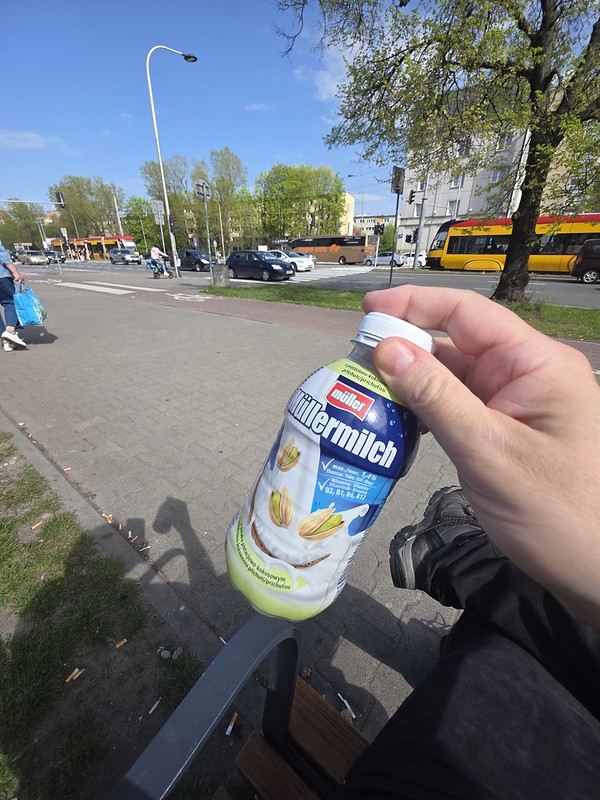
I know I’ve posted about these (several times), but I think I’m on the verge of becoming addicted to them. One day maybe Muller will stop passing UK customers off with Frijj drinks and it will move these decadent delights across…. And not only do they give British customers a worse product, but they put it in a smaller bottle than the Poles get. Not that I go on about this a lot, although I suspect I’ll post again in about six months.
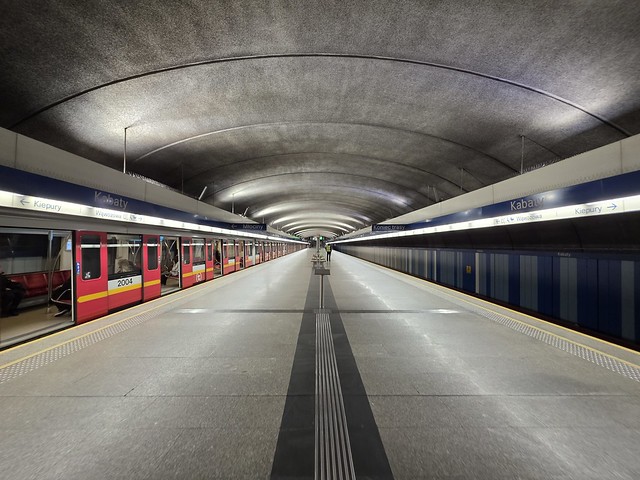
Next on my little mission to visit the area around every metro station on the Warsaw network was Kabaty which is at the southern end of the M1 line. The physical commencement of the M1 line was officially marked by the driving of the first steel pile for the tunnel support structure in the Ursynów district on 15 April 1983 and this station opened on 7 April 1995, one of the first ones to open on the network.
As a separate note, there’s excellent signage across Warsaw.
This stone commemorates the life of Andrzej Ciołek of Żelechów (c. 1380 – c. 1448), a Polish Knight and Statesman. Rather notably, in 1404, he undertook a pilgrimage to Santiago de Compostela in Spain, reflecting his devoutness and I can imagine that it felt a long way from home at the time.
It’s rather residential, which does limit me a little bit in this riveting post. A lot of this was empty fields when the metro station was first constructed, so there’s not a huge amount of history immediately visible around this metro station.
Some sculptures in Park Przy Bażantarni. The name of the park translates to ‘By the Pheasantry’ referring to the historical royal pheasantry (Bażantarnia) that once stood nearby during the eighteenth century when the area was part of royal hunting grounds.
A decorative bridge in the park.
The Church of Blessed Władysław of Gielniów (Kościół Błogosławionego Władysława z Gielniowa), dedicated to a fifteenth century Polish Franciscan friar, preacher and poet known for his deep piety and role in promoting vernacular Polish religious hymns. He is one of Poland’s national patrons and the church has something of a modern design.
Inside the station which is quite industrial and the architectural identity, like the other stations on the initial M1 segment, was shaped during the 1983-1985 design phase led by Metroprojekt, with Jasna Strzałkowska-Ryszka as the lead designer. It’s notable incidentally that there are no advertising hoardings all along the station which is somewhat different to many other countries around the world, the initial intention was to deliver an uncluttered public space.
The station is on the first stretch of the line that opened on the network on Friday 7 April 1995 and it’s a heavily residential area. The station took its name from the local area and the etymology of ‘Wierzbno’ itself traces back to the Polish word ‘wierzba’ meaning willow tree. While the initial Ursynów sections often utilised the cut-and-cover method, the segment running through Mokotów, including the area beneath Aleja Niepodległości where Wierzbno is located, predominantly employed underground tunnelling techniques, often carried out by experienced miners. The construction took nine years in total from when they started, but Poland had gone through some rather seismic political changes during this time.
Translated, this sign says:
“Ksawerów Street – Originally the name of the estate of Ksawery Pułowski (a landowner, collector and philanthropist), established in the mid-19th century near Królikarnia, which was also his property. Over time, the name became the name of the street.”
And the street itself.
Nearby is Park Granat which takes its name from Grupa Artyleryjska „Granat”, or the “Granat” Artillery Group which was a military unit of the Polish Home Army during the Second World War.
As a general comment, the city has a lot of beautiful parks.
There’s a memorial to the Granat unit in the park which specifically highlights the unit’s courageous fight during the Warsaw Uprising in the Mokotów district, which lasted from 1 August to 27 September 1944. The group fought significant battles in this area, suffering heavy casualties (around 230 killed out of 520 who participated). Some of the bravest of the brave.
In this voyage of discovery, I didn’t realise that there was a sculpture park nearby, Park Rzeźby w Królikarni. It’s operated by the National Museum in Warsaw and they have sculptures of various ages located in this eighteenth century garden.
This marble sculpture dates from 1985 and is ‘The Kiss’ by Maria Papa Rostkowska (née Baranowska, 1923–2008). During the war, she was active in the Polish resistance and she participated in the Warsaw Uprising of 1944 (as a messenger for the People’s Army) and along with her first husband Ludwik Rostkowski she helped rescue Jews from the Warsaw Ghetto. For her wartime bravery, she was awarded the Order of Virtuti Militari, Poland’s highest military decoration.
This bronze sculpture dates from 2017 and is ‘Flor Diente’ by Xawery Wolski (1960-). The information panel notes that the work intentionally refers to the shape of a seed, tooth or flower bud, representing the unshakeable continuity of nature.
A memorial to the Home Army.
This concrete sculpture dates from 1935 and is ‘Wild Boar’ by Stanisław Komaszewski (1906-1945). He studied at the Academy of Fine Arts in Warsaw and exhibited internationally, but his career was brought to a premature end due to the Second World War and much of his artwork was destroyed during the conflict. He fought in the Warsaw Uprising and was arrested and then imprisoned in Dachau concentration camp and from there he was transferred to the Natzweiler-Struthof subcamp in Mannheim-Sandhofen, Germany, where prisoners were subjected to forced labour under brutal conditions at the Daimler-Benz factory. He died there on 24 January 1945 at the age of just 38.
This granite sculpture dates from 1887 and is ‘Dog’ by Edouard-Léon Perrault (1828-1888). It was acquired by the museum just after the end of the Second World War and either this, or a copy, was displayed at the Salon in Paris in 1887.
The palace here was destroyed during the Second World War, but was reconstructed and in 1965 it opened as a museum dedicated to Xawery Dunikowski.
View from the rear of the palace.
The back of the palace, it’s very English country house and when the gardens were laid out originally that was their intention.
This granite sculpture dates from 1974 and is ‘Horizons’ by Magdalena Więcek (1924-2008). Born in Katowice, she studied painting and sculpture after the end of the Second World War, first at the State Higher School of Visual Arts in Sopot (1945-1949) and then at the Academy of Fine Arts in Warsaw (1949-1952) where she studied under Franciszek Strynkiewicz. Her early works in the 1950s were created during the Socialist Realist period and included figurative sculptures like Górnicy (Miners) and Matka (Mother). The information panel notes that an important aspect of perceiving the sculpture is how it changes along with the movement of the observer.
An old bridge which leads to the palace.
The old external wall of the palace.
Back into the network.
The interior and this is one of stations that was built as a civilian shelter in case some sort of global war broke out. That proved expensive and was dropped from later sections of metro building.
The station map.
It’s not the most decorative, but it’s functional.
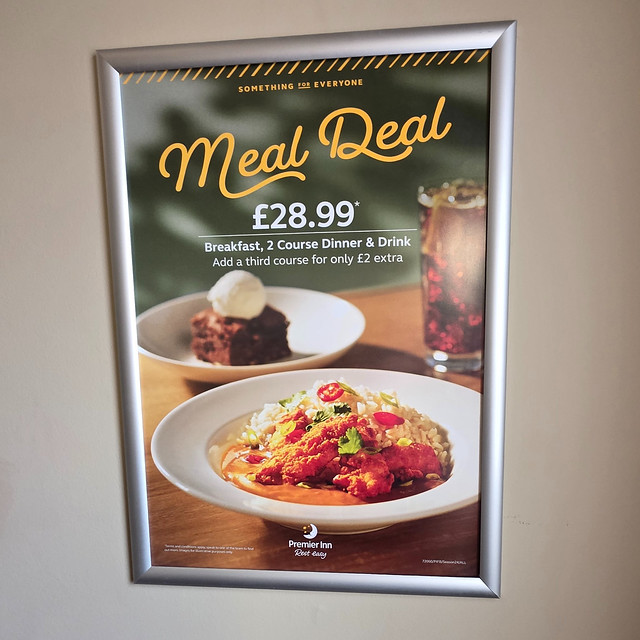
As Liam and I had completed the LDWA Capital Challenge earlier in the day, we thought we’d amend our original plans for us to drive somewhere (well, for Liam to drive somewhere whilst I had a nap in the passenger seat) and eat in the hotel since it worked out around £31 each for a three course evening meal, a pint and breakfast in the morning.
I was initially a little sceptical that it would be one of those half board arrangements where the only thing included was the salad or something ridiculous, but it actually included everything with a just a couple of relatively small surcharges for the mixed grill and steak. I’m not a mixed grill or steak person, so that was that sorted for me. Liam, however, being a civil engineer (a profession I suspect requires a daily intake of at least three different types of grilled animal), naturally gravitated towards the mixed grill. It’s in the blueprints, I’m sure.
I had asked the team member at reception a little earlier if we had to book for the evening meal or tell them in advance we wanted the deal. I liked his informality and he hinted that this wasn’t really necessary and I can see why he thought that when we arrived in the bustling restaurant. However, I quite like the idea of a private dining club and I felt that had been achieved here.
We were effectively the only customers, although there was one other table somewhere just out of sight just finishing their meals. The server was trying to man reception, welcome customers, welcome diners and he told us he had to go to a room to provide the customers with more pillows in between serving us. He was enthusiastic, over-worked and kept forgetting Liam’s order before he reached the till, which was actually located just behind Liam so it wasn’t far. On one occasion the team member mouthed “what did he order?” and I liked his whole engagement and attention, it was an informal, endearing and welcoming performance that I thought was perfect for the service we wanted.
Firstly, let me admit that the beer that came with the meal deal was Coors Light. Now, as I had walked 27 miles earlier that day, I needed water and so this was a perfect fit. I went for the prawn cocktail and I’m not entirely sure of the presentation here as it was quite a lot of sauce with some slightly firm prawns, but they had a pleasant enough flavour. I wasn’t sure about the piece of bread and butter, but it was handy for mopping up the sauce. Liam looks surprised and delighted here.
It was becoming evident that presentation wasn’t the key here. However, the chips had a pleasant taste, the chicken was tender and had some flavour to the coating with the bun being fresh and the salad being salady. It was certainly a very reasonable tasting affair and Liam seemed pleased with whatever he was doing with his mixed grill.
The chocolate sundae was served as a large portion and it had a Flake. You can’t argue with a Flake. It’s the universal language of dessert satisfaction.
Breakfast in the morning wasn’t much busier and similarly low-key, but there was a friendly and engaging welcome. I asked if there were fried eggs and there were, I just hadn’t noticed them, but the team member had some more made up for us. They didn’t make the amount we asked for as there was some confusion, but the thought was there and the team members seemed jovial enough despite it being a Sunday morning.
I’m more of a continental breakfast person, but this was a much better cooked offering than somewhere say Travelodge. Travelodge cooked breakfasts are broadly terrible, they don’t deep fry anything and so their hash browns are oven baked (so they’re hard on the outside and uninspiring on the inside), the bacon is often not really cooked and there is no fried egg, just some awful scrambled egg. Here, there are fried eggs, the hash browns are fried and there’s also black pudding.
All very satisfactory and there was a supporting cast of yoghurts, juices, coffees, fruit and the like to add to the arrangement. I would have liked the bacon cooked a little more, but I cut the fat off and was aware they’d probably go and burn me some if I asked as that’s how I like it served. The croissants are also better than the ones at Travelodge that have less taste than the packaging they come in.
Anyway, I was suitably impressed with the whole offer of just under £31 for three courses, a pint and breakfast. The presentation wasn’t great, but the quality was reasonable for a chain restaurant and the service was well above average. Indeed, so good was the service in the evening that I messaged Whitbread who said they’d pass on my thoughts, which I imagine they probably have. Given that there wasn’t anything else nearby in Barking that didn’t require a fifteen minute walk each way (and we’d done enough of that) it was more than satisfactory as a post marathon refuel. I wouldn’t rule out doing this again in future, although it’s obviously dependent on what else is in the local area.
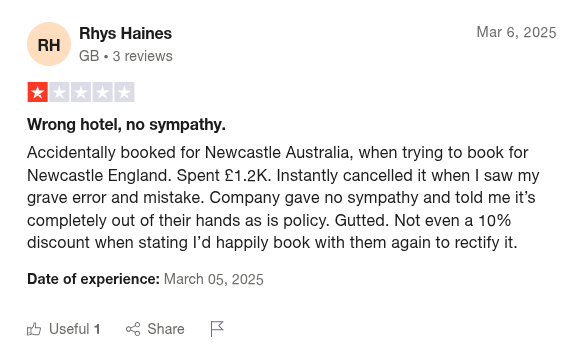
I was eating breakfast this morning at the Mercure in Warsaw and because I’m really exciting, I thought I’d look at reviews of Accor Hotels on Trustpilot. I saw this review and thought that this must be nearly impossible to do and I was initially sceptical how someone could do that.
But I did a dummy booking and, actually, I can see exactly how someone would do this. Accor displays the price in GBP as standard for customers in the UK and as their hotels have similar external designs globally, I don’t see anything in the photo that would immediately stand out. I feel quite sorry for the guy, if he spent over £1,000 on room bookings for a hotel he couldn’t use, that’s really quite sub-optimal and I’d certainly be disappointed as it’s obviously not completely out of their hands. It’s actually very much in their hands.