This is a little sad, although I least I got to experience my first Great British Beer Festival this year. Difficult it to see it ever coming back now, but who knows…..
|
|
|

HOME · LATEST 100 POSTS · BAR BILLIARDS · GOOD BEER GUIDE · NORWICH MARKET · FLIGHTS · RAILWAYS · INDIAN MEALS · CONTACT
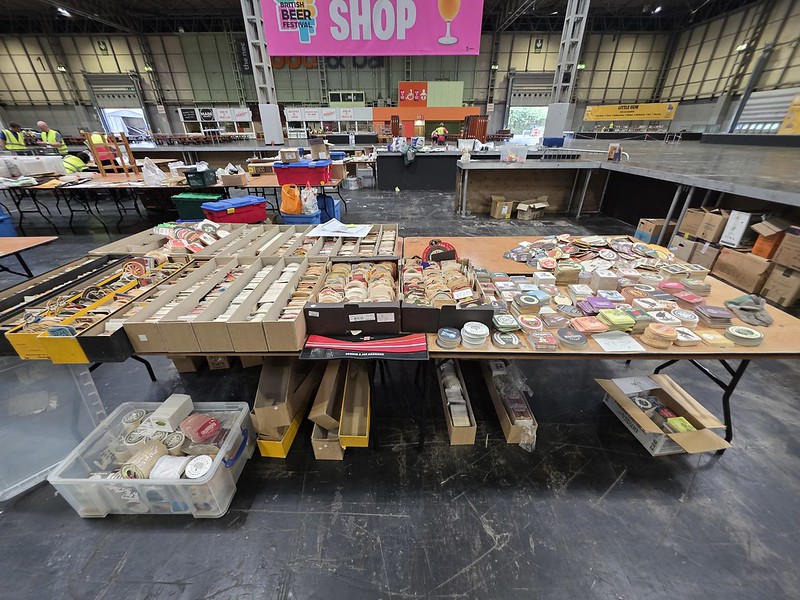
This is a little sad, although I least I got to experience my first Great British Beer Festival this year. Difficult it to see it ever coming back now, but who knows…..
|
|
|
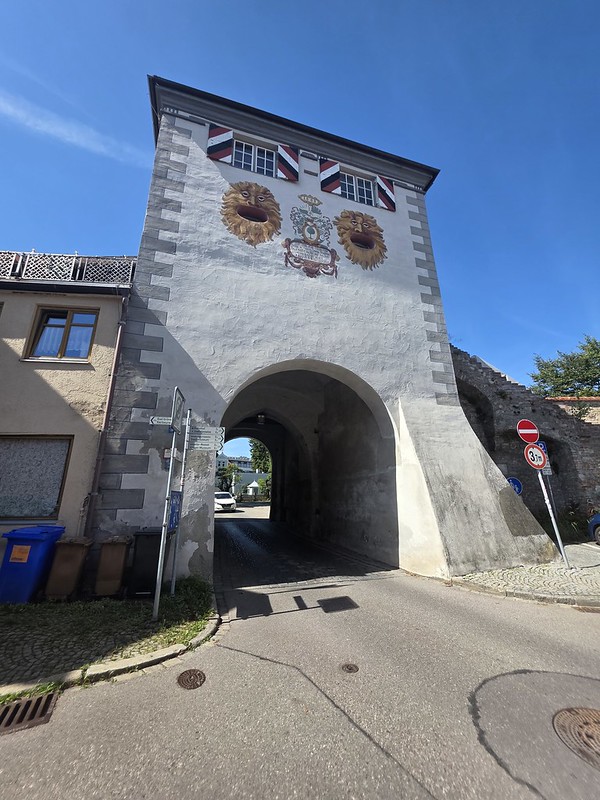

Going back a couple of weeks to the short visit that Richard and I made to Memmingen, in Germany. This is the Lindau Gate, named after the town of Lindau on Lake Constance which the road once led to. The gate was originally constructed in 1371, but it got a bit damaged to say the least during the 1647 siege of the town.

A cannonball from that siege is still lodged in the gate. I suppose that they might as well leave it there now….

The gate as seen from within the city centre and it’s quite a chunky arrangement, but it did have to keep undesirables and foreign armies out.

Today, the rooms above the gate are used by the Fishermen’s Day Association and the Christian Scout Association Crossbearers group, with traffic still passing through the gate itself. Indeed, Richard drove through and fortunately didn’t hit or cause any damage to it.
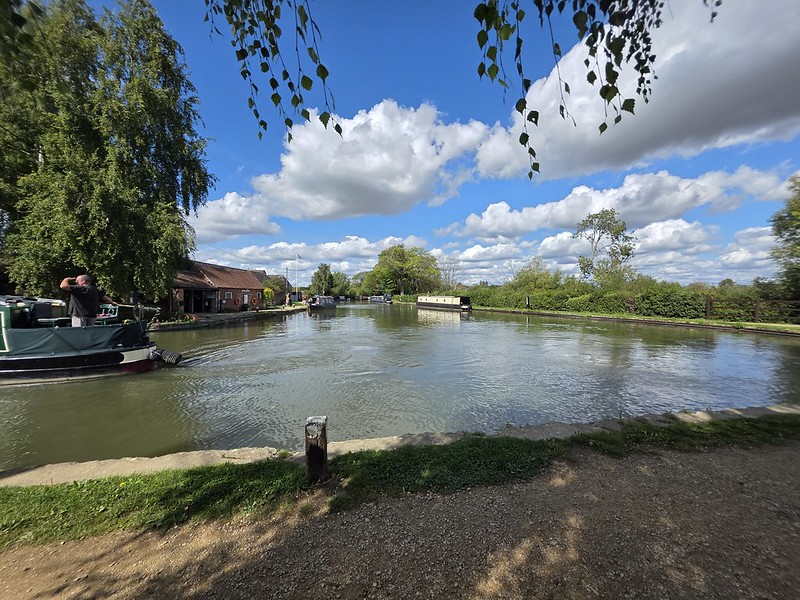

The first walk of the LDWA weekend was along the canal routes into Oxford and we boarded a train to Tackley railway station.

The station is on the Cherwell Valley Line which runs from Banbury to Didcot Parkway, although the station here was added to the line relatively late, opening on 6 April 1931.

Andy gave us an introduction before starting the walk, although he likely could have done without someone keep asking when lunch was.

A lock and old bridge a short distance away from the start of the walk in Nethercott.

There was lots of pleasant canal walking, although at first the path was a bit ropy and I did wonder if someone would fall in, but there were fortunately no incidents. We saw a grass snake, or it might have been a rattlesnake, gliding across the water. This annoyed me, I wish they’d stop letting snakes out unattended.

Wild hops, I don’t often see those, although that’s mainly because I’m usually looking for blackberries.

Beautiful surroundings and we were fortunate with the weather, it was warm with no rain, but there was also a pleasant breeze.

Sarah, blazing a trail.

A rather lovely little church by the river, this is the Church of Holy Cross at Shipton-on-Cherwell. There was a medieval church at this site, but it was mostly rebuilt in 1831 when it was all reworked and a new tower was added by William Turner.

The lunch spot at Thrupp.

This bridge pivots up and can be operated by just one person, but there was nearly an incident here when a car tried to drive onto the now rather vertical bridge. Shortly afterwards, a pedestrian tried to do the same thing.

A rather clever piece of engineering.

An old stone bridge near Kidlington. It’s number 223 and known as Sparrow Gap Bridge

A heron.

We waited here for Sue to join us.

Walking into Oxford.

The Toblerhome river boat.

Into the city centre and then a quick pub stop before I traipsed to my thrifty hotel which was nowhere near the centre of Oxford. Memories of the dangerous snake we saw swimming in the canal had faded away, with me looking forwards to the pubs in the evening (which I’ve already written up….).
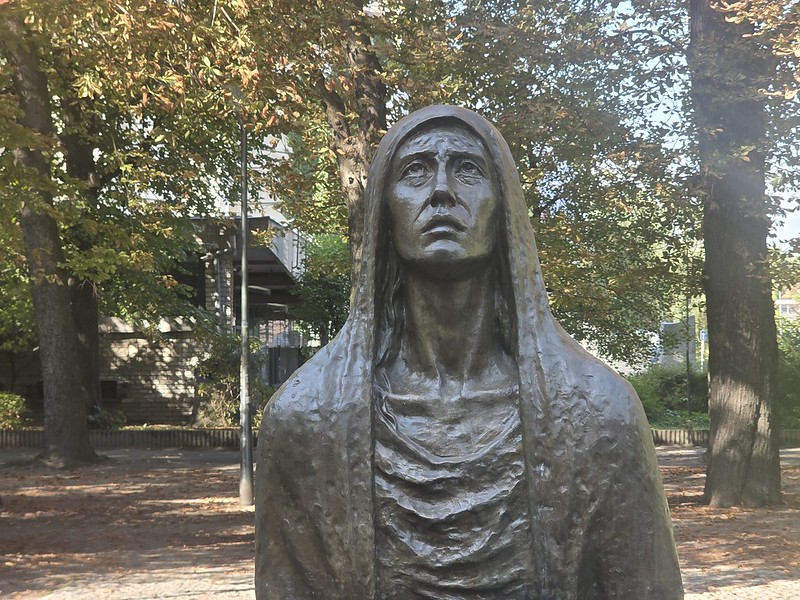

This is the memorial to the massacre at Katyn, or to give its full name “the Memorial to the Victims of Katyn, Kharkov and Mednoye Massacres and Camp Prisoners in Kozelsk, Starobelsk and Ostashkov.” It commemorates the 1940 massacre of thousands of Polish officers and intellectuals by the Soviet NKVD, one of those bleak moments of twentieth-century history where humanity was entirely and completely absent. It was a desperate attempt by the Soviets to destroy the Polish military leadership and an attempt to erase statehood. The Soviets had been humiliated by the Poles in the years after World War One with the Polish-Bolshevik War and I can understand their complete terror about needing to face another conflict.

The memorial, which is rather substantial, was erected in Juliusz Słowacki Park in 1999 and the official unveiling was on 22 September 2000. At the rear of this photo is the representation of the Angel of Death.

This represents the Mother of the Polish state cradling an executed prisoner who has a bullet hole in the back of his head and his arms tied together behind his back.

A small plaque notes that Tadeusz Tchórzewski was the sculptor. The monument is now under the care of the Lower Silesian Katyn Family Association which comprises of family members and descendants of those who were murdered. Wrocław was still Germany during the Second World War, when it was Breslau, so the impact in the city during these years were very different from other parts of Poland.

Powerful. There’s an information board nearby which reads:
“In the spring of 1940, on Stalin’s orders, 22,000 Polish officers, policemen and other prisoners of war from the Kozelsk, Ostashkov and Starobelsk camps were murdered with a shot in the back of the head in Katyn, Mednoye, Kharkov and in unknown places in the former USSR. In tribute to the murdered, this monument was founded by the compatriots of Wrocław in 1999 on the initiative of the “Lower Silesian Katyn Family” association.”
The Soviets covered up evidence of their executions after the end of the Second World War as they sought to bring Poland under their control. After 1990 and the collapse of the USSR the truth outed and evidence of the war crimes became much clearer after a series of exhumations. It’s evident that this powerful sculpture was needed in the 1990s to start spreading information about Katyn, something that had been kept from the Polish population by the Soviets. The Soviets never really convinced the Polish population that they were somehow their protectors in the post-war period, the collapse of the communist state in Poland was perhaps always inevitable and it’s maybe surprising that it lasted as long as it did.

It was a very enjoyable weekend in Oxford with the LDWA, but it was time to get a National Express coach from this historic city to the charms of Luton Airport.

Parked up in Milton Keynes Coachway and I wonder whether travel can get any more exciting than this. I was pleased that I got the emergency exit row seat on this coach as it has more legroom, although it wasn’t particularly busy on board. The one excitement about sitting in this seat is that it seems to require the occupant to assist anyone who can’t work out that the coach toilet door slides rather than opens inwards or outwards.

I accept I didn’t try too hard to get an outstanding quality photo here, but safely at Luton Airport on time.

I cut this incredibly fine by arriving at the airport just three hours before my flight. Mine was the third last scheduled departure from Luton Airport that day.

Using my Priority Pass card to get some chicken tenders and a pint in Big Smoke.

And a Limoncello Spritzer in Nolito with the same card. I felt really quite decadent.

The screens indicated for a while that the flight would be 20 minutes late, but all ended up operating on time.

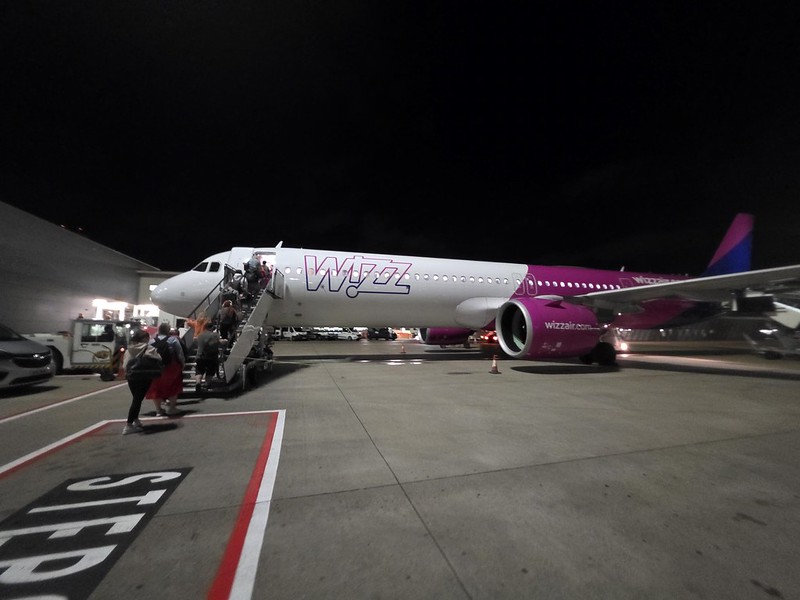
The boarding process was yet again efficient and free from drama, despite it being a relatively full flight. The aircraft is 9H-WBU which I don’t think I’ve been on before.

Here’s a nice blurry photo of London. I had a window seat assigned by the seating Gods, although astute readers will have guessed that because of the photos taken out of the window. The crew was efficient and they seemed to have very few sales when they walked up and down the aisle, but perhaps passengers were just tired.

I don’t know if the Blood Moon impacted this, but the water had a strange sort of glow.

We landed safely on time and I was ready to catch my bus to the airport.

I didn’t catch the intended bus to the airport as I then had an exciting hour-long wait in the airport whilst there was a detailed check of the stamps in my passport. The end conclusion was that I had lots more days left in the EU as they thought some countries hadn’t stamped their stamps very clearly, but the wait was sub-optimal when I wanted to be in my hotel.

And finally on the bus to the hotel, where I arrived at just before 03:00. Marvellous….

Unlike in the UK, most Indian restaurants seem to open for lunch in Poland and this was a well reviewed option that I thought I’d try. It’s also next to PINTA which is perhaps my favourite craft beer bar in the city.

The interior felt modern and welcoming, with the design feeling on-trend and the atmosphere inviting. It’s part of a small chain and the delivery element of the business seemed to be thriving.

As it’s now getting colder and I’m less likely to be attacked by insects, I accepted the offer of sitting outside. The service during the meal was particularly friendly and the menu was clearly presented. There was a small group of Germans, an Italian and someone who seemed to be French, with English being the offered language for everyone, although I think that was just what the customers spoke in rather than anything else.

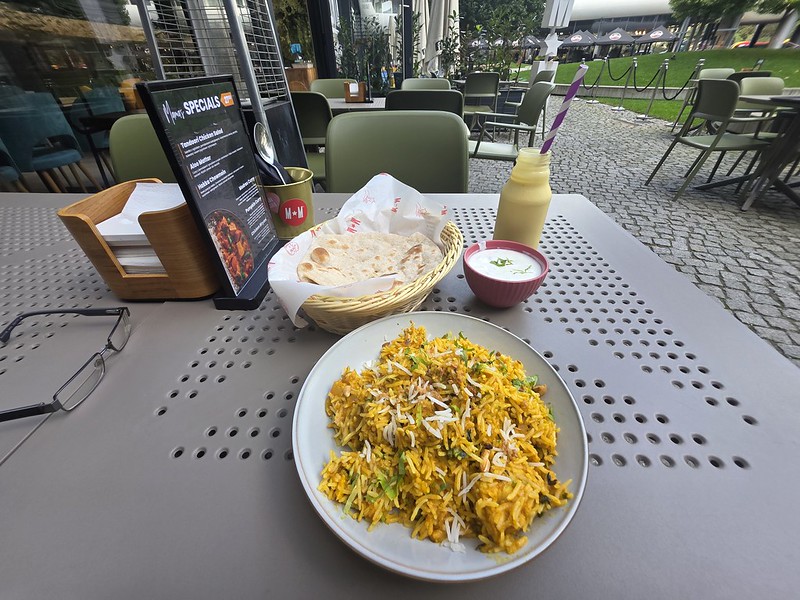
I went for the special of chicken biryani which was 27zl (or around £5) along with some roti and a mango lassi. The portion of biryani was generous, as was the chicken which was tender and full of flavour. The rice was cooked appropriately, the roti had a depth of flavour and the mango lassi was creamy and fruity. The whole arrangement came to around £9 which I thought was really rather decent value for a city centre restaurant.
I was surprised and delighted with the whole experience, with the staff being friendly, the service efficient, the food being decent and the prices being reasonable. I’d certainly come here again, but there is so much choice in Wrocław that it’s becoming ever harder to know where to go and I’m forever getting distracted by new shiny places. I suspect my two loyal blog readers have no idea just how much stress is involved with making such decisions…

As the weekend drew to a close, I had time for one final Good Beer Guide pub visit. Regarding the history, CAMRA notes:
“First built in 1820 and rebuilt in 1879, this is a rare Victorian pub in the city centre. There is a single narrow panelled room, with the bar on one side and seating on the other. The glazed timber screens have been removed to give more room. In the entrance there is some original tiling, mostly obscured. After being run by St Austell Brewery for a while the pub reopened under West Berkshire Brewery ownership in April 2019 but the brewery went into administration.”

There was an extensive and interesting selection of real ales which covered a range of beer styles, it actually felt curated. The service was slightly sluggish, but it was friendly and efficient, with the general environment being inviting and comfortable. Everything felt clean and tidy, with power outlets available for those who might need them.

There was also an excellent range of craft beers and if I had longer then I would have started to work my way down a couple of these, I had no idea that they would have 40 keg lines.

It wasn’t very busy, although there was some drama when the 15:00 national phone emergency testing alarm went off.

I went for half a pint of the Bliss Point from Thornbridge, which I haven’t had before. It was well-kept, light and had flavours of hedgerow (this isn’t an official term), pine and citrus. The price was towards the lower end of the scale for Oxford, although some of the decadent craft beers are of course more decadently priced.

Although I didn’t eat, there was food available and the only customer I saw order a meal came over to the bar to say how much they’d enjoyed it. The menu isn’t overly extensive, it contains small plates, traditional pub classics, burgers, pizzas and the like.

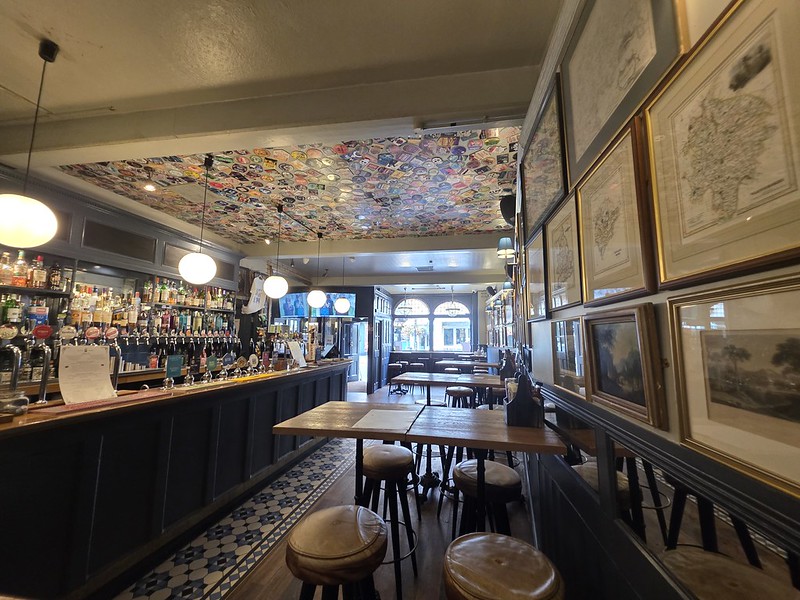
Some beermat decoration on the ceiling of the pub. There are also some vinyl records near to the door which I think can be played, with sports being shown on the TV. Neither of those latter two points particularly engage me, but it all adds to a rounded pub and I’d be happy just with the beer selection. The recent online reviews are very positive and I can imagine that this venue will soon get busier as its reputation spreads as it certainly surprised and delighted me.
This was the best pub that I visited in Oxford and I’m very grateful to the Good Beer Guide for pointing me towards it. The venue has won numerous CAMRA awards recently and shows what can happen when a large corporate doesn’t make it formulaic and drab. There are a few offers floating about, not least the current £3.50 for any pint of real ale on Mondays.

This was an unexpected treat, being able to tick off two things at once, another Titanic pub and a Good Beer Guide pub. In terms of its history, it’s a Victorian pub which takes its name from one of the stagecoach services which used to serve Oxford.

What a lovely sight and the pub has won numerous CAMRA awards in recent years.

The keg section.

For the many and not the few.

The bar and there was a friendly welcome from the staff member. It’s always a delight to visit a Titanic pub and she was knowledgeable and engaging.

Clean and comfortable seating. The pub doesn’t serve food any more, instead focusing on its drinks trade and it clearly does that very well.

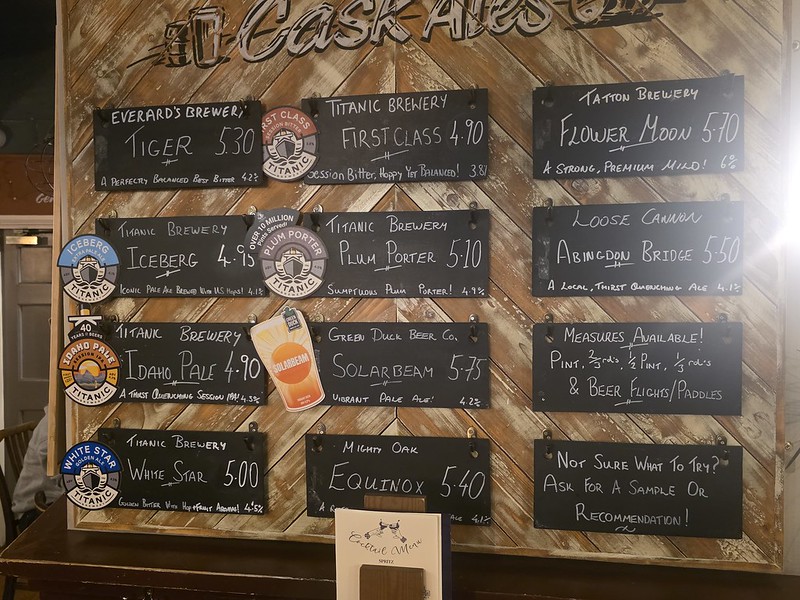
This is half a pint of the Idaho Pale, a Titanic beer that I haven’t had before. It’s 4.3% and was really rather lovely, hoppy, fluffy and rich in flavour.

My second half pint was also a first for me, the True Stout nitro, which the staff member told me is a long-standing Titanic beer, although I’ve not knowingly noticed it before. It was smooth, dark, creamy and again there was a depth of flavour. Titanic really are good at this brewing thing.

Well, indeed.
The online reviews are broadly very positive and this was one of the very few negative ones:
“Pretty unfriendly if you have kids. Great pub otherwise, but the unfriendly treatment spoiled it for me. I understand why the management might prefer to have a kids-free pub, but there are nicer ways to communicate it, even conceding this might be a tenable position to have in 2023.”
I don’t know how they communicated it, but I find it hard to believe they randomly turned on some kids that entered without them having caused a disturbance.
“There was live rugby on, but in the area we were sitting no one was watching and the sound was intrusive and distorted. Two customers, including the person I was with, asked if the sound could be turned off. The pub employee replied that it could not be turned off, and if people did not like it they should go elsewhere.”
This feels sub-optimal if true…..
Anyway, this was a pub that I thought absolutely deserved to be in the Good Beer Guide, a wide selection of real ales and keg beers, a friendly welcome, a quirky feel and something that didn’t feel formulaic. All really rather lovely.
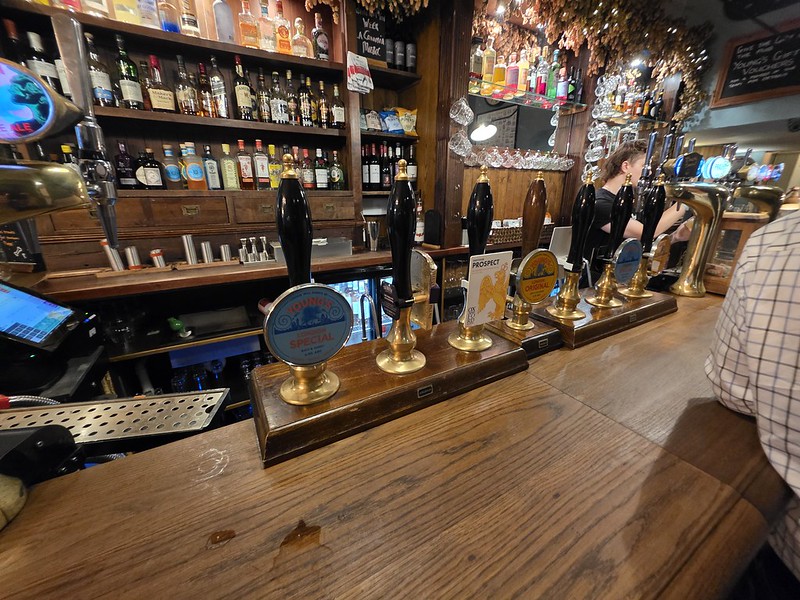

The next Good Beer Guide listed venue on our little pub crawl was St Aldate’s Tavern, a Young’s pub which makes an attempt to have a couple of local beers. The history of the venue is complex and Young’s have shown no interest in the pub’s heritage, but it’s not the original St Aldate’s Tavern which was located further down the same road. CAMRA notes that there has been an inn here since 1397, although rebuilt on numerous occasions and in 1716 it was known as the New Inn. It was then renamed as the Bulldog in 1965 before being rebranded back to St. Aldate’s Tavern in 2005.

The beer selection was dreary, although there was an attempt at having a local beer which was the Prospect from Oxford Brewery. The service was friendly and engaging, although the prices were to the higher end of the scale.

The seating was odd, a sofa that really isn’t that suitable to sit at for those wanting to drink or eat, it all felt formulaic. The online reviews here are a little poor, although I like this one:
“I went to this pub and was enjoying My self with friends when we were told to be quite? I won’t be going back as we had to be quiet”
The pub replied:
“Good evening, we are sorry you are feeling this way about your visit today. Your group were raising your voices and cursing, including raising your voice towards one of our team. You were politely asked to keep the noise level down. To give an opportunity to all of our guests so they can equally enjoy their time in our venue.”
I’m with the pub, I like them a bit more now.
“After a show in Oxford we went in the pub and Callum said to us that they were showing the World Cup Final. Great we thought! Lets stay eat drink and enjoy the match. After the match, extra time, two meals and several drinks later it was time for a penalty shootout. Lots of people in the pub in a good mood. Took to France missing second penalty and calum decided to switch all the TVs off in a huff. Plus the upstairs projector.”
I quite like Callum 🙂

The DEYA is decent, there’s a slight effort to offer some craft beer options here.

I went for the Prospect as it was the local option and it’s named after the story of when the unfortunate prospective Balliol scholars were set upon by the College Fellows and carried to College Hall where they were forced to tell stories to entertain them. The beer is 3.7% and was hoppy, a slight taste of toffee and was well-kept. It was slightly challenging to battle off all the flies in the venue, a slightly sub-optimal situation.

It was dark when we left…. Although it’s an interesting venue historically, I thought it was all just a little soulless, corporate and formulaic, perhaps fortunate to be listed in the Good Beer Guide.