Author: admin

  • Trier – Flixbus

    Trier – Flixbus

    [I originally posted this in June 2018, but have reposted it to fix the broken image links]

    20180627_181126

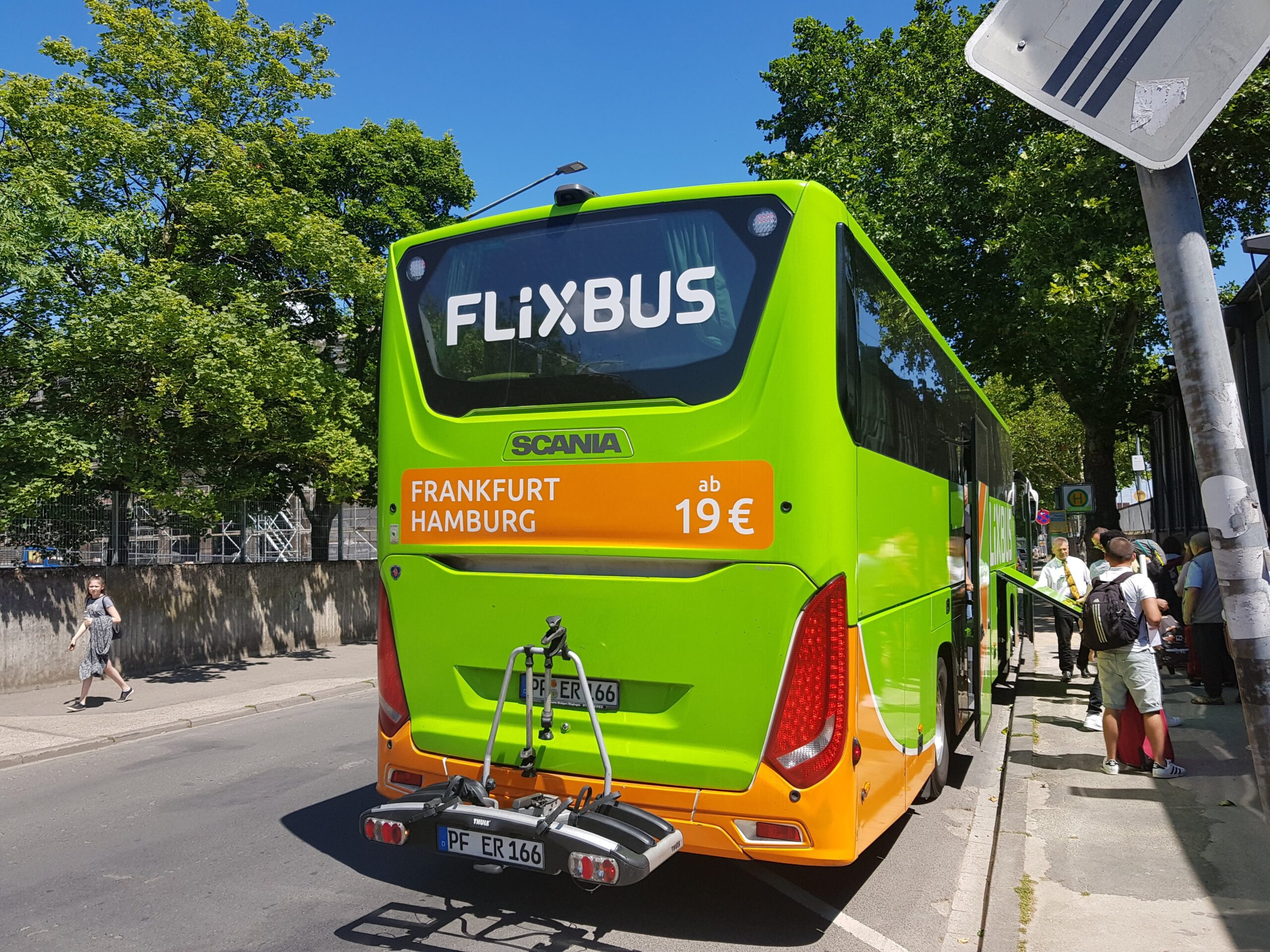
    On the same day I tried both Wizzair and Flixbus for the first time, breaking a habit from my usual budget options of Ryanair and the rail network. I’ve used Polskibus and Megabus many times before, although the former and the international routes of the latter are now part of Flixbus. I’ll do a review of Wizzair shortly, but I was suitably impressed and will use them in the future.

    I’ve heard many bad things about Flixbus, but then again, I’ve heard many bad things about Ryanair and Greyhound buses. It’s usually the case that the majority of people who leave reviews have negative experiences, so I pretty much ignored the poor reviews of Flixbus.

    As an advance note, I very rarely complain about public transport, usually it’s my confusion which causes issues. However, for this journey, the customer service wasn’t functioning as it should, so this whole splurge of text will sound a bit whingy and complainy.

    Anyway, back to the positives. The Flixbus bus network is exciting to me, it’s vast and spreads across Europe. The prices are very reasonable, so I was really hoping that this was an enjoyable experience, as I’d be very keen to explore more destinations using it.

    The web-site is well designed and it’s easy to find out routes and to find out the times of buses. The payment process was entirely broken though for me, or at least it was on my devices, as just before the final screen it reported a “system error” and returned me to the front page. However, I resolved this by switching to a mobile device, and that worked. I’m sure this bug has been fixed now, as I noticed a few complaints on-line at the time, and very little since.

    Undeterred, the first part of my journey was from Cologne to Trier, with a stop-over before going from Trier to Luxembourg. The first bus was around 20 minutes late, but I liked the automated update on the app and by e-mail, so I was happy that I knew where the bus was. I couldn’t find a coach tracking facility, but this update via the app and by e-mail was really useful, and it’s one of the best I’ve seen from a coach operator.

    20180627_095759

    My first thoughts about Flixbus started to get just a little negative when I saw the driving of another one of their coaches. The driver turned into Cologne airport bus station and then stopped in a random place. blocking everyone else. He then stood outside of the bus on his phone whilst taxis sounded their horns and struggled to get by. Eventually another Flixbus turns up behind him and since that’s now blocked, the driver of the bus gets off, says something to the first Flixbus driver, and he finally moves. All is well again.

    So, ignoring that, the bus pulls up right to where I’m standing, as I consider myself excellent at judging this. This made me very pleased with the driver, and I’m confident that we’ll have a rapport based on my being very pleased at where he stopped.

    The driver’s customer service though was simply inadequate, and the way he spoke to some American passengers was unacceptable to me. I take offence on behalf of other people more readily than I take offence myself, I’ll never understand why…. The Americans call him an idiot, the driver doesn’t hear, so again, all is well.

    I’m always very conscious that there’s a language barrier here, but the driver’s lack of engagement, lack of smiles and general lack of interest caused more confusion than understanding. It was a shoddy piece of service, and my impressions of Flixbus were dented. However, I’m conscious that the driver had probably had a long drive and perhaps had other things on his mind, so I didn’t want one thing to damage my perceptions of the brand.

    The coach itself was much better, the seats were clean, functional and all of the power points worked. The bus could have done with an information card to help passengers understand that the driver sold drinks, etc, but there was nothing in the seat pockets to explain the entire service. The driver did though play a pre-recorded announcement which gave the appropriate safety information.

    20180627_124303

    The bus arrived into Trier on time, and I liked how the driver explained that passengers staying on had 25 minutes in the city. He mentioned where the toilets and cafe were, and I liked that he gave that information in a clear and concise manner. The driver’s driving was fine and the views of Bonn and the countryside en route were rather lovely. This is one of the advantages of travelling by coach, it can sometimes (although obviously not always) offer much better views than would be possible by rail.

    Anyway, after my few hours in Trier, I returned to the same point to catch the next Flixbus to Luxembourg. I was aware that the coach was an hour late, as again there were updates on the e-mail and on the app.  I’d far rather the driver was late than felt forced to rush to meet deadlines, so the wait didn’t matter. The facilities at the bus stop were limited, well, limited to the fact there weren’t any. But, I’m used to that with Greyhound (although they seem to be investing in new coach stations), Megabus, and just about every other low fare long distance coach company. Low fares means that the coach operators don’t use the premium coach stations in many cases, but that’s all fine because of that reasonable pricing.

    There was a board at the bus stop which gave the stopping times of all of the Flixbus services. This is often simply not there with other operators, and it’s confusing for customers who aren’t sure where to stand. But Flixbus seemed to do this well, there’s been some investment in information boards to ensure customers know that they’re in the right place.

    The coach pulls up an hour late, which was exactly as the app suggested. There were two staff members and they appeared to be engaging and helpful, so my impressions were quite positive. Well, until it was clear that they were being engaging and helpful to four female customers. It was a muddled piece of customer service as these four didn’t have tickets, so it would have seemed best to board those who did. However, they didn’t, but such is life.

    So, I’m waiting quite excitedly to board with my ticket showing on my phone. I held it out and smiled in the hope that the driver might be happier than the last one. He did appear mildly happier but he then told me that my ticket was wrong and I needed the next bus. I queried this with the other staff member, who said that the next bus would be here soon. I thought this was a particularly impressive piece of intuition as neither felt it necessary to look at the ticket I had held out.

    I decided that this wasn’t an ideal situation as I was sure that this was the right bus. The driver said that he didn’t go to Luxembourg, which was where I was heading, and that the next bus did. However, the bus had Luxembourg on the front of it, so I was pretty confident that he did go there. I double checked the route number and it was quite clear that I did have the right coach.

    Anyway, I put it down to a translation issue and explained again that I had the ticket on my phone. The staff member didn’t believe me and decided to show me the passenger manifest on his phone as evidence that I had the wrong ticket. The passenger manifest had my name on it. The driver let me on.

    To be fair again to Flixbus, the service into Luxembourg was timely, well driven and comfortable. The power sockets worked again, the temperature was appropriate and the interior was clean. The driving seemed safe and we arrived into Luxembourg at the time I had expected, given that the coach came in an hour late. I didn’t use the wi-fi, but I heard another customer say that they thought that the connection was fast, so I’m sure that it was fine.

    20180627_174823

    20180627_174834

    I found that there was one information card in a seat pocket on the coach, and this was surprisingly well laid out. I wasn’t sure that I’d be leaving the driver a tip as the card suggested, but it was written in an informal manner which gave the appropriate information.

    20180627_174903
    The professionally printed information card informs customers that coffee costs €1.50. The rather less professional signage on the bus suggests that it’s €2.50.

    So, overall, the service is entirely usable for passengers, as it’s clean, comfortable and the infra-structure seems well managed. However, the infra-structure is that of a centralised set-up from Flixbus, whereas the actual driving is franchised out to local coach companies. Which is clearly leading to all manner of issues.

    My biggest disappointment is that I was a very big fan of Polskibus, I thought that they were world class and their pricing was excellent. Their drivers were, in my experience, happy, helpful and keen to engage when they could. However, Flixbus have taken over Polskibus, and I fear that they will decimate it and their excellent customer service.

    So, would I use Flixbus again? No. I’ve learned my lesson, I’m going to revert to travelling by rail and plane again, I feel safer with those. I’ve had some excellent experiences with rail in Europe over the last few years, such as the Polish rail conductor who last week showed me across the railway station to ensure I caught the right train.

    Although having said (written) that, Flixbus also operate a parallel service, conveniently called FlixTrain which is an open access operator. For all manner of reasons I think that’s exciting and appealing, so I might perhaps try their rail services in the future.

  • Trier – St. Anthony’s Church

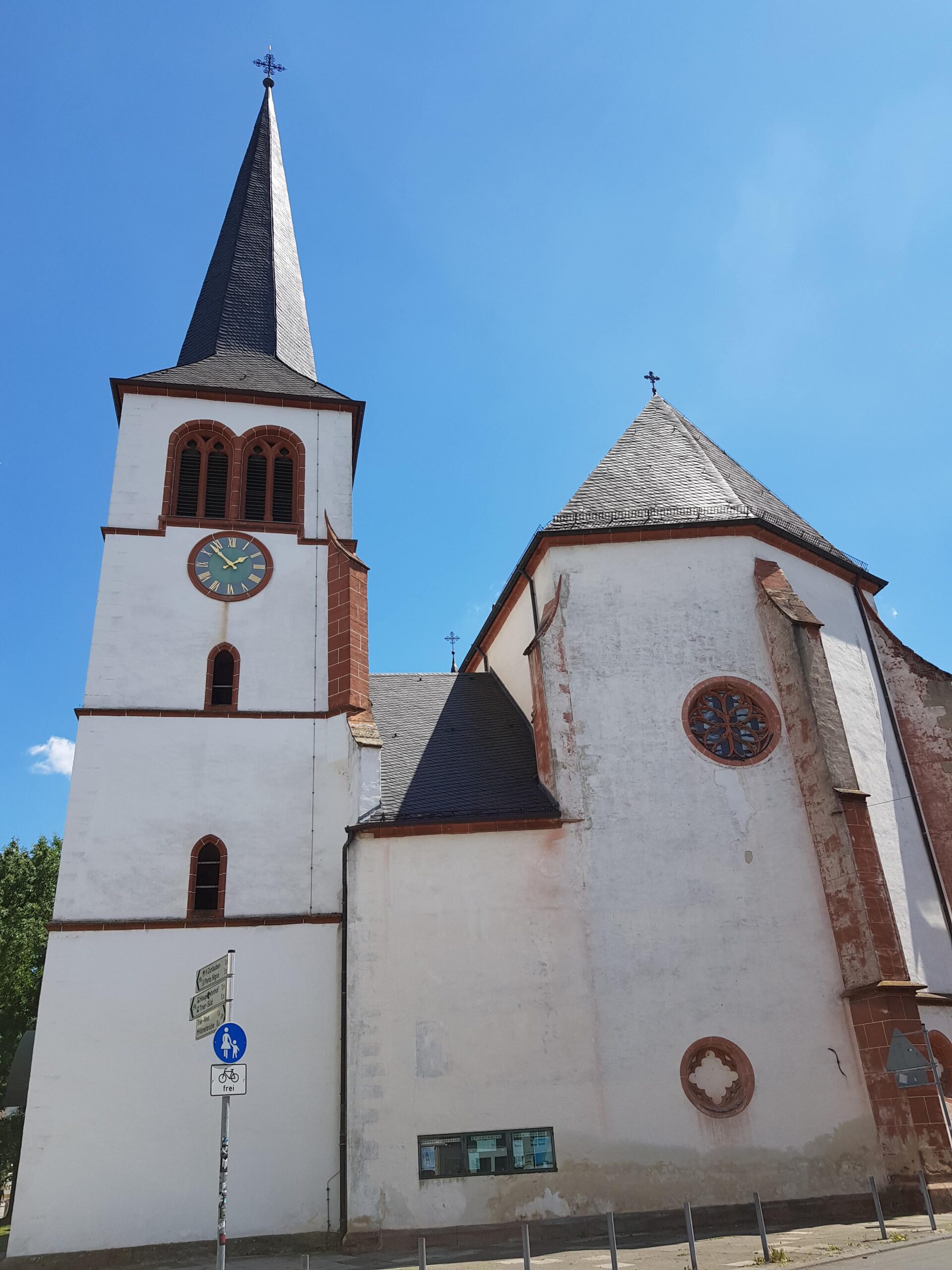
    Trier – St. Anthony’s Church

    [I originally posted this in June 2018 but have reposted it to fix some broken image links. There is now more information about this church online….]

    20180627_134531

    This church was a little bit of a mystery, as it was marked as either not existing on Google or as closed on some other sites. TripAdvisor reviews also suggested that the church was closed outside of mass times, and so visiting it seemed rather unlikely.

    There was a sign outside saying that visits were possible at mass, but since access seemed possible I did what Jonathan would do and wandered on in. Since I didn’t see anyone during my visit, I wasn’t quite sure what their intentions were, but the doors were lodged open, so I’m sure it was meant to be open.

    20180627_135322

    I couldn’t find out much about this church’s construction, but from the side it looked like there have been numerous extensions over the years. Indeed, I can’t really post much of interest at all about this church given the lack of information that I’ve found….

    20180627_134703

    The beautiful nave. I’m still puzzled as to how little information there is about this church on-line, but there were two photos inside the church which show how ornate the interior was before the Second World War, and how plain it was afterwards. So, I can only assume that it suffered serious bomb damage during the conflict.

    20180627_134729

    The rather ornate pulpit.

    20180627_134715

    Sculptures around the walls of the nave.

    20180627_134734

    The organ at the rear of the church.

    20180627_135243

    These were inside the main door of the church, with most of the individuals (although not all) having died during the war. One day I’ll work out more about this church….

  • Trier – Porta Nigra

    Trier – Porta Nigra

    [I originally posted this in June 2018, but have reposted it to fix some broken image links]

    20180627_125719

    [Since writing this I came back to take a look inside the structure]

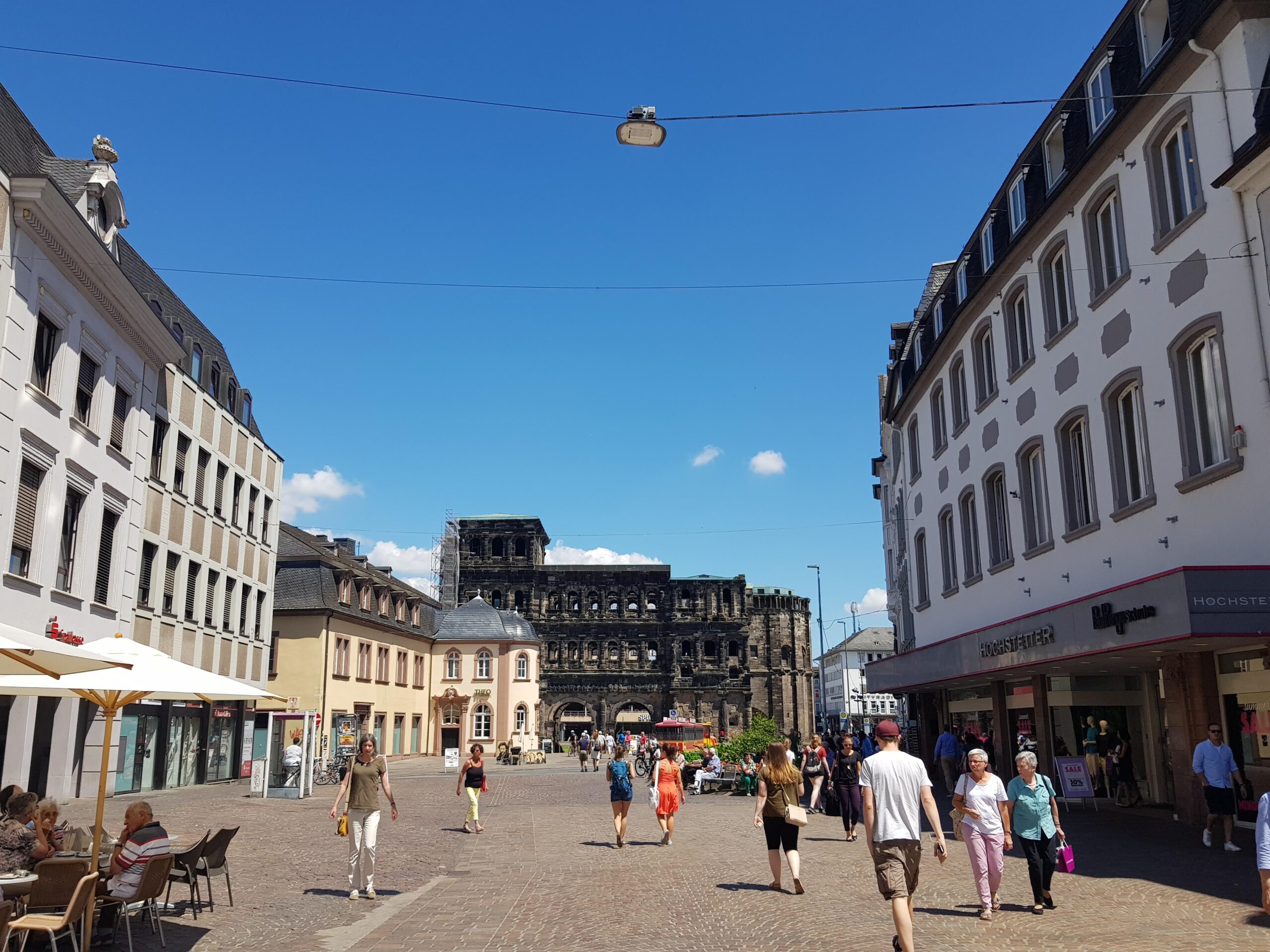
    Porta Nigra (meaning Black Gate) looks a little like a burnt out Second World War building, but is actually a Roman gate, and one of the largest in northern Europe. It was originally constructed in around the second century AD, although it fell into disuse when the Romans left.

    The name of the gate comes from the blackness of the stone, although this wasn’t original, it’s through centuries of pollution and weathering to the structure. What the Romans originally called the gate is unfortunately lost to history, and for a long period there was no certainty of when it had originally been constructed. This puzzle was only solved when recent dendro-chronological dating found that it was constructed in around 170AD.

    20180627_125758

    Although slightly hard to imagine now, the structure was turned into a church after it had fallen into a state of disrepair. A tower was added to the building and numerous extensions were added on, with the photo above showing where the nave once was. Napoleon suppressed the church in the first few years of the nineteenth century and it was at this stage that it was returned to its Roman appearance.

    20180627_125739

    The original entrance to the gateway and visitors can go inside, and also go onto the upper levels if they enter the attached museum. Like everything else in Trier, I had to miss this as I didn’t have enough time. The structure looked fascinating though, with its so many different usages over the centuries.

    20180627_130609

    A view of the gate from further down the main street, it certainly dominates the local street scene.

  • Trier – Galeria Kaufhof

    Trier – Galeria Kaufhof

    [I originally posted this in June 2018, but I’ve reposted it to fix some broken image links]

    20180627_140118

    OK, I don’t like shops or shopping (although I like shopping malls), but Trier was packed at lunch-time and I fancied a quiet snack. And I’ve discovered that department stores nearly always have cafes on their top floors, so off I headed….

    20180627_131835

    The view from my table. Not quite as exciting as I had anticipated, but still rather lovely.

    20180627_131844

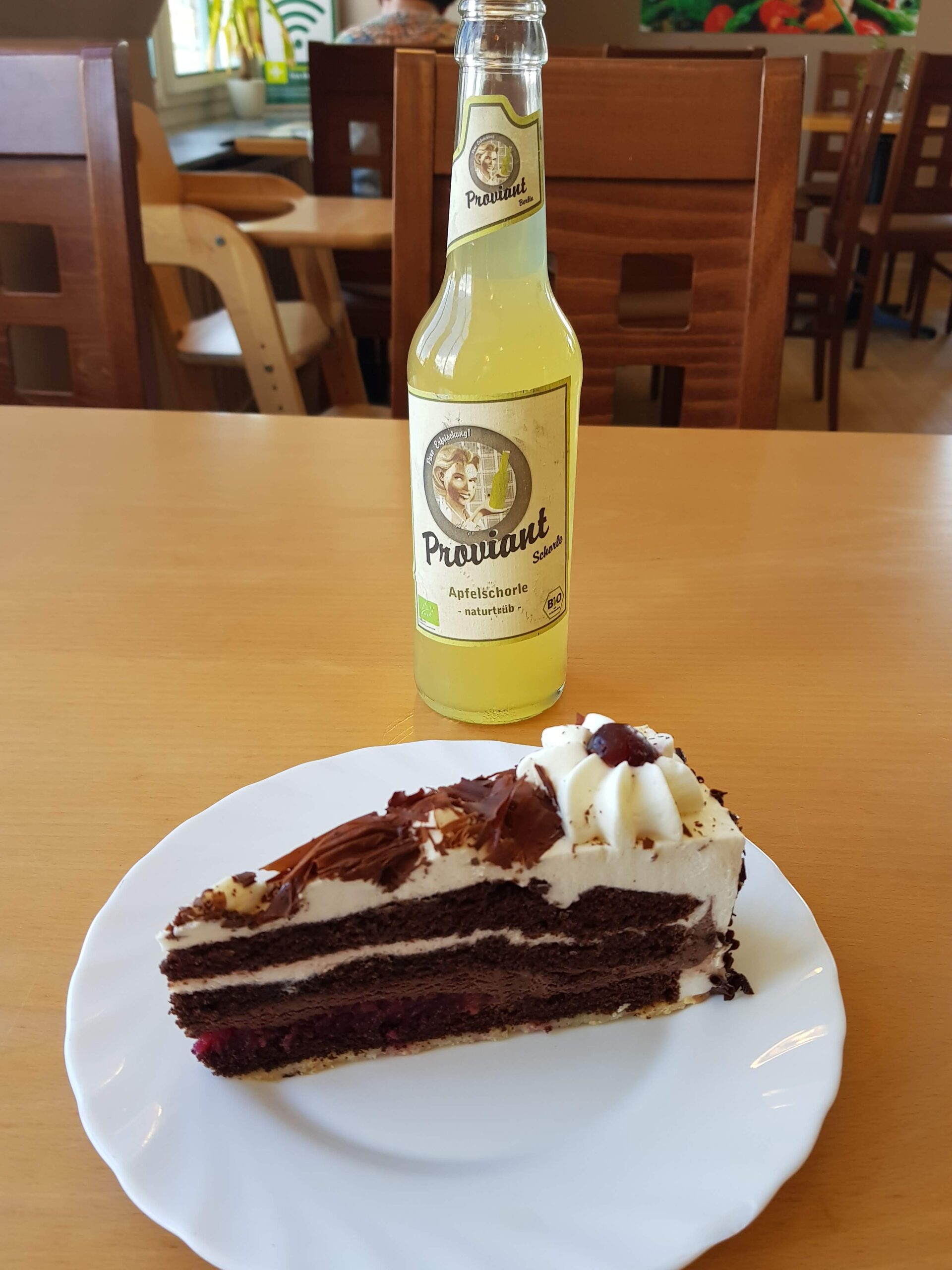
    When in Bavaria it’s essential to have Black Forest Gateau! Actually, Trier is in the Rhineland, but it’s sort of near Bavaria. Anyway, I like Black Forest Gateau, and this was rather lovely.

    There’s a slight back story to this. The cake is self-service, and I was keen to have a nice photo for this blog. So I didn’t want the slice of cake to fall over and look like a mis-shapen dollop. This was particularly difficult for me and I was watched by a staff member who seemed to think I was trying to massacre their cake. Anyway, all was well.

    20180627_132742

    The table decoration. It’s always important to set the scene.

  • Trier – Kaufland

    Trier – Kaufland

    [I originally posted this in June 2018, but have reposted it to fix some broken image links]

    20180627_155749

    20180627_155927

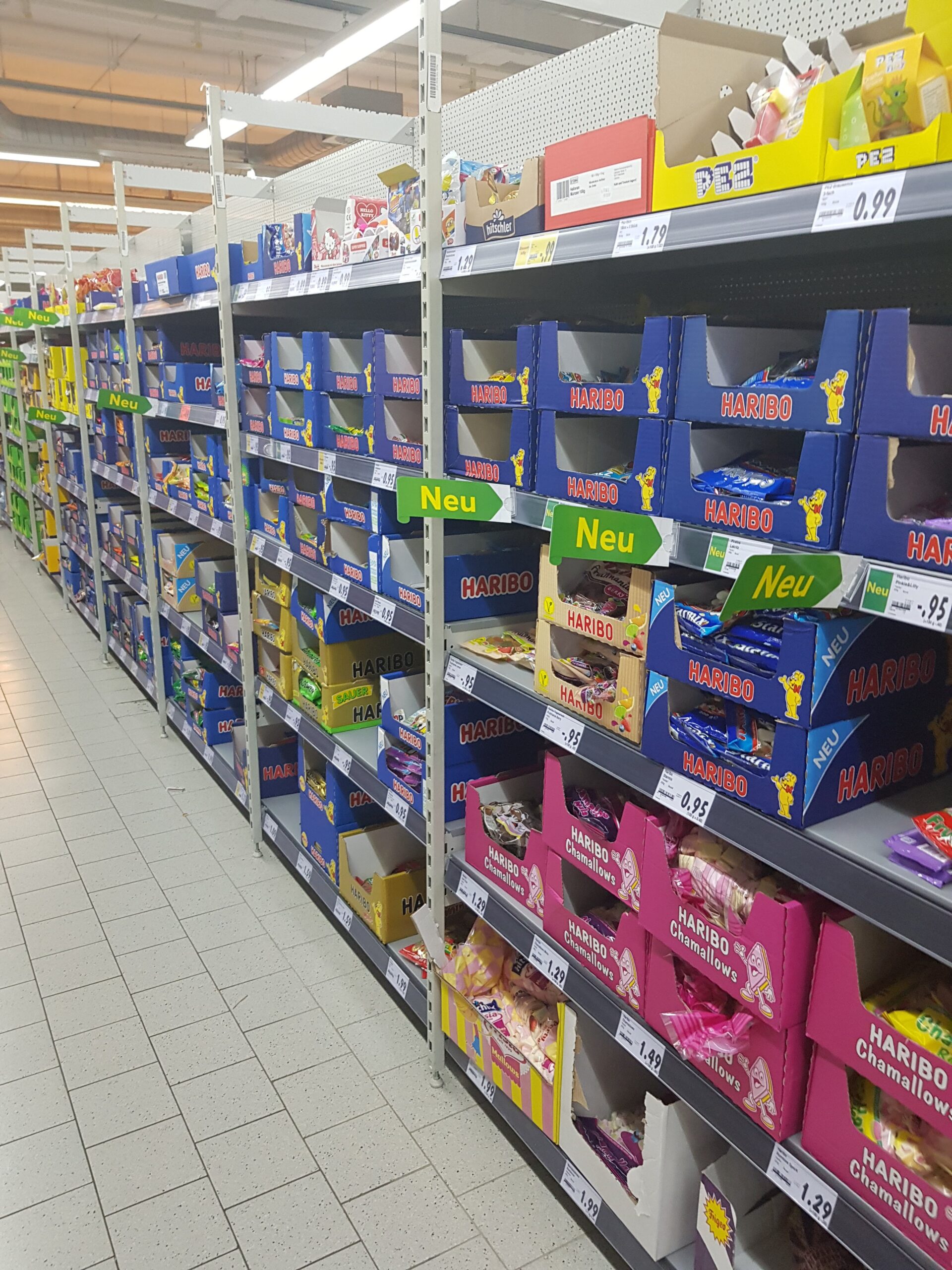
    Not entirely of relevance to anything, but I was very impressed at the German supermarket Kaufland. I’ve visited their branches in Poland before, and their prices are very cheap.

    Anyway, I quickly checked some core products to compare the prices with the UK. They didn’t sell Greggs chicken bakes, but to be fair, only Greggs and Iceland sell those, so I couldn’t mark them down for that. They did though sell a vast array of different Haribos and an excellent selection of Milka bars.

    So, the cost I’m sure everyone is desperate to know…. Is anyone actually bothered? Probably not, but anyway. The Haribos were all €0.95, which is around 85p and the Milka bars were €0.65, which is just over 50p. What a bargain…. Lucky I had a bag to put my purchases in….

  • Trier – Cathedral of Saint Peter

    Trier – Cathedral of Saint Peter

    [I originally posted this in June 2018, but have reposted it to fix some broken image links]

    20180627_140546

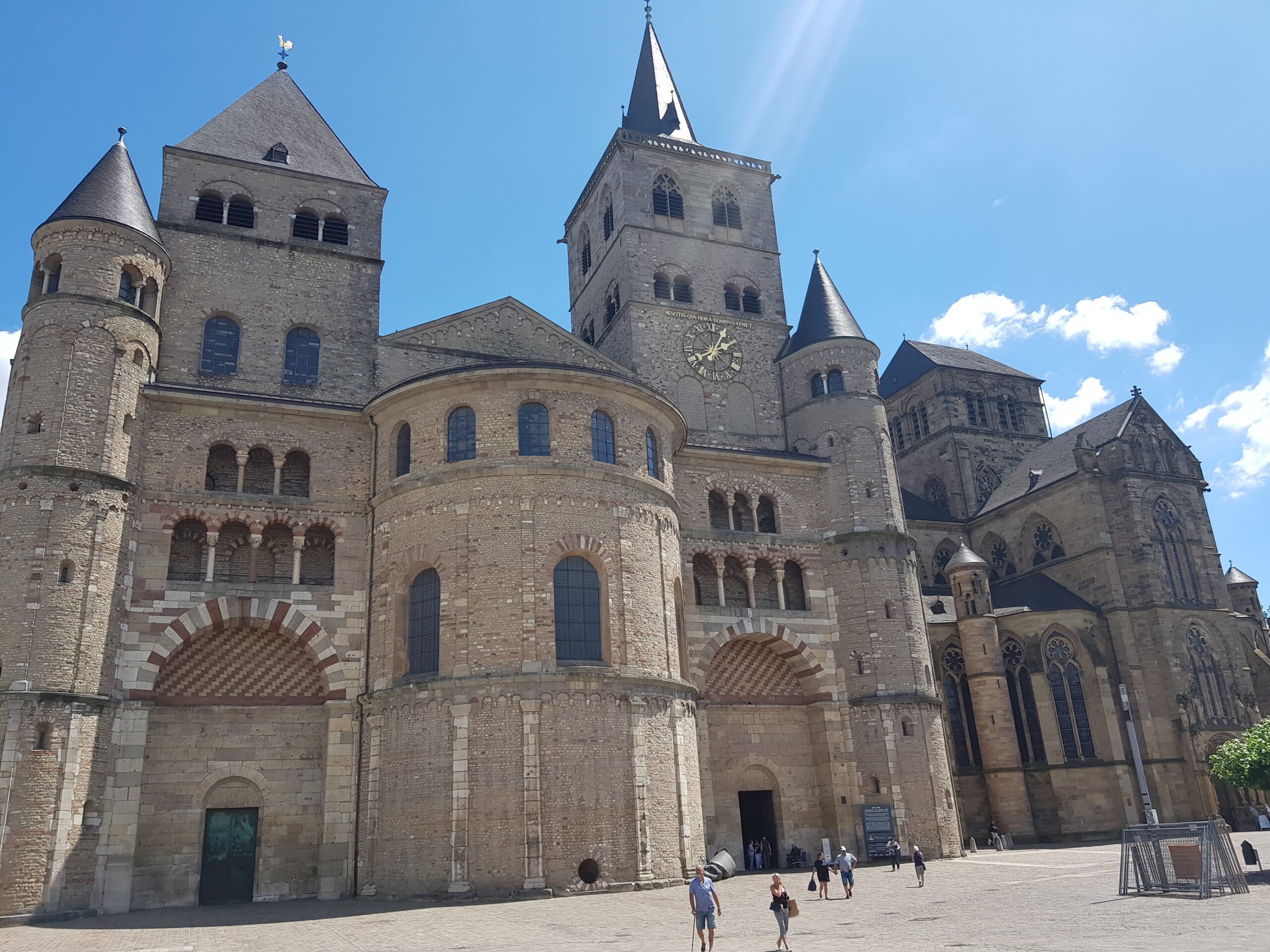
    I had to limit myself to just one hour in the city’s cathedral, but it’s one of the most complex religious buildings that I’ve seen. It has numerous chapels and churches added on to it over time, which explains the look and architecture of the building.

    The cathedral, or the seat of the bishop, dates to the third century and this makes it the oldest in Germany. There was substantial damage done to the cathedral in 882 during a Viking attack on Trier and the building was restored and expanded over the following two centuries.

    There was another large expansion of the cathedral in the early fourteenth century, when the two east towers were completed. Until the nineteenth century the Archbishop of Trier was also one of the heads of state government, making them a powerful and influential individual.

    20180627_141325

    The old pulpit.

    20180627_145928

    The cathedral’s rather substantial font.

    20180627_143432

    Above is the Holy Robe chapel, the home of the Seamless Robe, although the chapel is only open on Holy Robe Days. The Seamless Robe of Jesus, which is said to have been the clothing worn at his crucifixion, is very rarely displayed to cathedral visitors. Unfortunately a ridiculously botched preservation attempt in the nineteenth century, which involved covering it in rubber, has destroyed any chance of being able to carbon date it. The take the relic out of storage only once every few years, with tens of thousands of people taking the opportunity to see it.

    20180627_141112

    Another photo of the Holy Robe Chapel, from in front of the seat of the Archbishop.

    20180627_140638

    The “Cathedral stone” which is outside of the main door, and is part of one of the original Roman columns in the church. There is also a legend that the builders told the devil that they were building a large pub (which is a very lovely idea) and needed four columns. When the devil brought the fourth column he (or she, I don’t assume that the devil is male) was so angry that they threw it at the cathedral and it has remained there ever since.

    20180627_143732

    View of the cathedral from the cloisters.

    20180627_143833

    This photo shows the rear part of the cathedral building and the towers.

    20180627_143712

    And another cloisters shot, again showing the complexity of the building. The main building in this photo is the Church of Our Lady, which is connected to Trier Cathedral, although is a separate structure. This church and the cloisters date from between the thirteenth to fifteenth centuries.

    20180627_143553

    The cloisters, which were very peaceful compared to the main part of the cathedral.

    20180627_145823

    All Saint’s Altar, which is also where Archbishop Lothiar von Metternich is buried. He served as Archbishop from 1599 until 1623 and one of his descendants was Klemens von Metternich of early nineteenth century political fame.

    20180627_141117

    The church’s main organ, which looks a bit precarious, but I’m sure has been there for many years and so is entirely safe.

    20180627_145922

    A look towards the eastern end of the cathedral, on the left is St. Agnes’ Altar and on the right is St. Catherine’s Altar. They’re not in their original location, they were moved to their current spots in the 1970s.

    20180627_143324

    The nave of the cathedral, very beautiful. It was a real shame that I couldn’t spend longer in the cathedral, as there was much more to see. There were some areas that you could pay to go in, and if I returned I’d like to see those as well. Maybe one day I’ll even see the Seamless Robe…..

  • Trier – Karl Marx

    Trier – Karl Marx

    [I originally posted this in June 2018, but have reposted it to fix the broken image links]

    20180627_130350

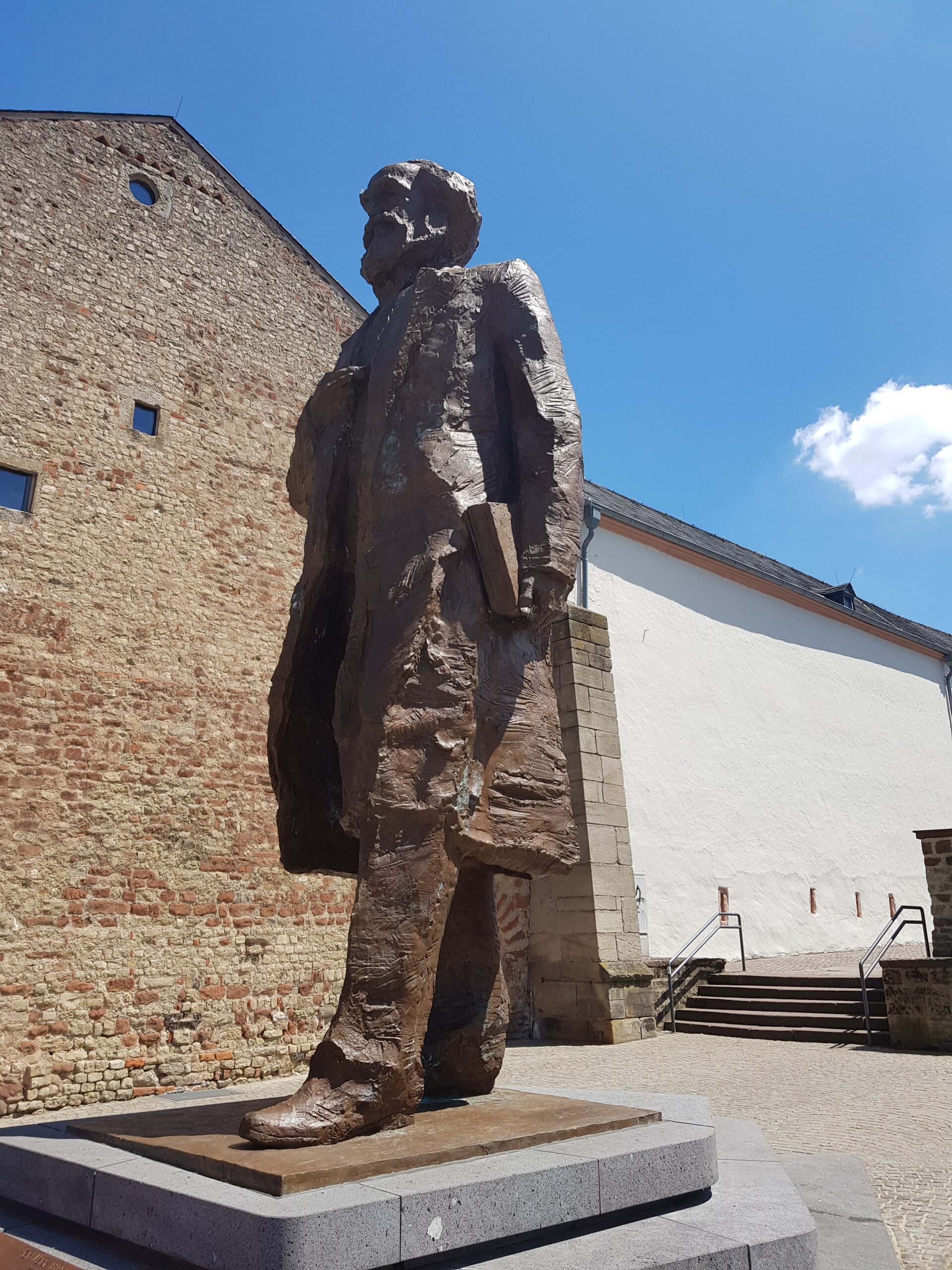
    Trier is the birthplace of Karl Marx, the political philosopher and economist, and the city is rather proud of that historical link. A limited amount is known about his childhood in the city, although it’s known that he went to Trier High School before he went on to study at the University of Bonn.

    20180627_135557

    The birthplace and childhood home of Marx can be visited and is now a museum dedicated to him. My limited time in the city rather precluded me from making a visit, but the reviews of it seem rather mixed. The German SDP party purchased the property in 1928 in a bid to protect it and to ensure that its significance was retained for future generations. Although that plan nearly failed, as the Nazi party seized it and using it as a printing house, but the property was restored and has since been expanded on numerous occasions.

    20180627_130414

    The tablet underneath the main statue of Marx in Trier.

  • Trier – Basilica of Constantine

    Trier – Basilica of Constantine

    [I originally posted this in June 2018, but have reposted it to fix some broken image links]

    20180627_151051

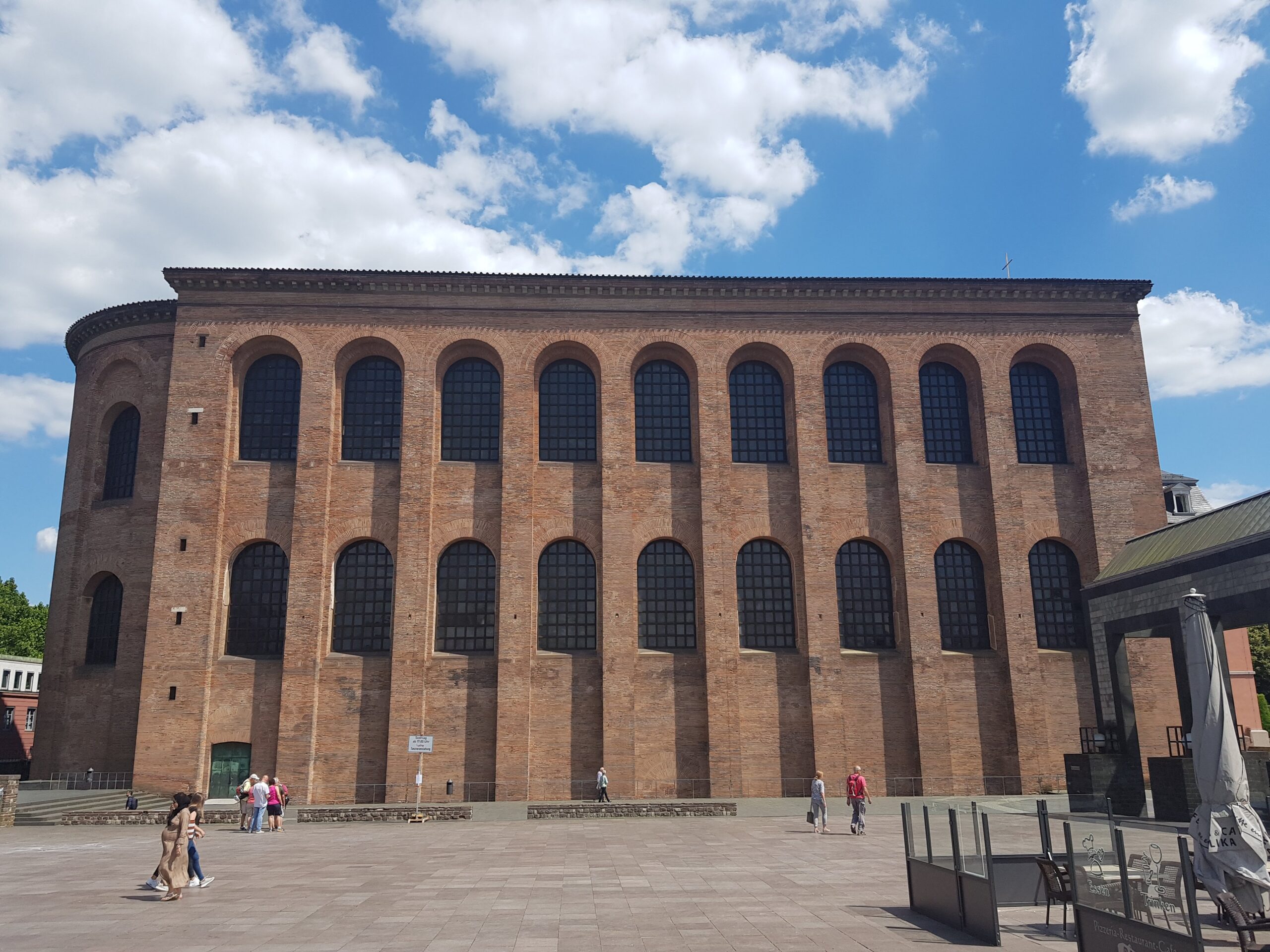
    I was rather intrigued as to who could have built such a Roman building in the middle of Trier, and my question was soon answered when I entered. The Romans built it. I should have perhaps guessed that. But, to be fair, this is an enormous building and that it is still standing is a testament to many generations of locals who never found a reason to tear it down.

    20180627_151143

    The external brickwork is exquisite, it looks and feel like a beautiful building with some considerable history to it.

    20180627_151426

    On entering, it became apparent that the building is today used as a church, run by the Evangelicals and known as the Church of the Redeemer. It’s a rather under-stated interior, with exposed brickwork, although this is a more recent innovation.

    20180627_151432

    The roof is twentieth century, re-constructed following the end of the Second World War, but it is deliberately designed to look as it might have done in the Roman period. What is interesting, well to me anyway, is that the current altar is where it is thought that the throne of the Roman Emperors once stood.

    20180627_151738

    The church’s grand organ is post-war, but has been designed to perform different types of music from over the last four hundred years. The church gets 1.5 million visitors per year, and is also a popular destination for those wanting to watch musical performances.

    20180627_151502

    The light comes flowing into the building because of the sheer amount of glass in the walls. The building was originally conceived by Emperor Constantine the Great in the early fourth century as a palace, assembly and ceremonial hall. It also had its own hypocaust to ensure that it remained warm, and there are still some traces of this visible.

    The building wasn’t completed until the reign of Constantine as he shifted power to what is now Istanbul. It is thought that the building was finally finished in 379AD, under the emperorship (is that a word?) of Gratian.

    20180627_152525

    There are numerous information boards, with English translations, which tell the history of the building. This is perhaps one of the building’s saddest periods, when it was badly damaged during the Second World War. One of the information boards explains that the fire-fighters during the war could do nothing to save the cedar roof, as their fire hoses only reached half way up the building.

    The building had received a grand restoration in the nineteenth century, but this has swept away much of the Roman tradition that had survived. When the war time damage was repaired, it was decided to revert back to the Roman period, with the internal walls remaining stripped.

    There is no admission charge to enter the church.

  • Gdansk – Arrived

    Gdansk – Arrived

    It’s a delight to arrive in Gdansk, a city where I spent a couple of weeks in late 2016. My first impressions are that there seems to be more development taking place, and the railway station appears to be being modernised. Well, either that or it’s falling apart, and it does seem to be improvement work rather than random demolition.

    Since I’m here for a stag weekend, it might prove inappropriate to take too many photos, but I will inevitably have to take photos of bars and restaurants. I’ll also really excite everyone by uploading photos from my November 2016 visit to add even more content, fully aware that lots of people have already had to trawl them the first time….

  • Grudziądz

    Grudziądz

    [I originally posted this in June 2018, but have reposted it to fix some broken image links]

    That’s the end of my time in Grudziądz, having now left for a trip to Gdansk, which is a little to the north of the city. It’s a rather understated and delightful place, although I didn’t see much evidence of tourists in the city during my three days there.

    It’s relatively accessible from Bydogoscz and Gdansk, although probably not for a day trip. There seem to be an increasing number of restaurants catering for different tastes, with the prices being reasonable given the off the beaten track location of the city. Hotel provision seems sufficient, with the prices again being reasonable.

    The level of English spoken is one of the lowest I’ve experienced in Poland, which isn’t a complaint, just an observation of how few tourists they might be getting. As is usual, the younger generation speak much better English, and the signage at the museums was usually available in English.

    There’s been a large amount of European Union investment in the city, which has helped to repair some of the neglected historic monuments. Unfortunately, the railway station seems to have missed either regional or EU funding, and is need of some considerable investment.

    But as a location to visit in Poland, there’s plenty of history, and the bridge which covers the Vistula River makes for a particular impressive river scene. The city’s former fortifications are also partly in place, with some offering extensive views of the surrounding area.

    On that note, I’m now off to Gdansk for a return visit….

    Grudziądz Index:

    Railway Station

    Ibis Styles

    Rynek

    Grudziadz Museum

    Klimek Tower

    Solidarity Memorial

    American Burger

    Level Restaurant

    Wall Art

    Church of the Immaculate Heart of Mary

    St. Francis Xavier Church

    Banks of the River Vistula

    Bronislaw Malinowski Bridge