Tag: Torun

  • Torun – Home Army Monument

    Torun – Home Army Monument

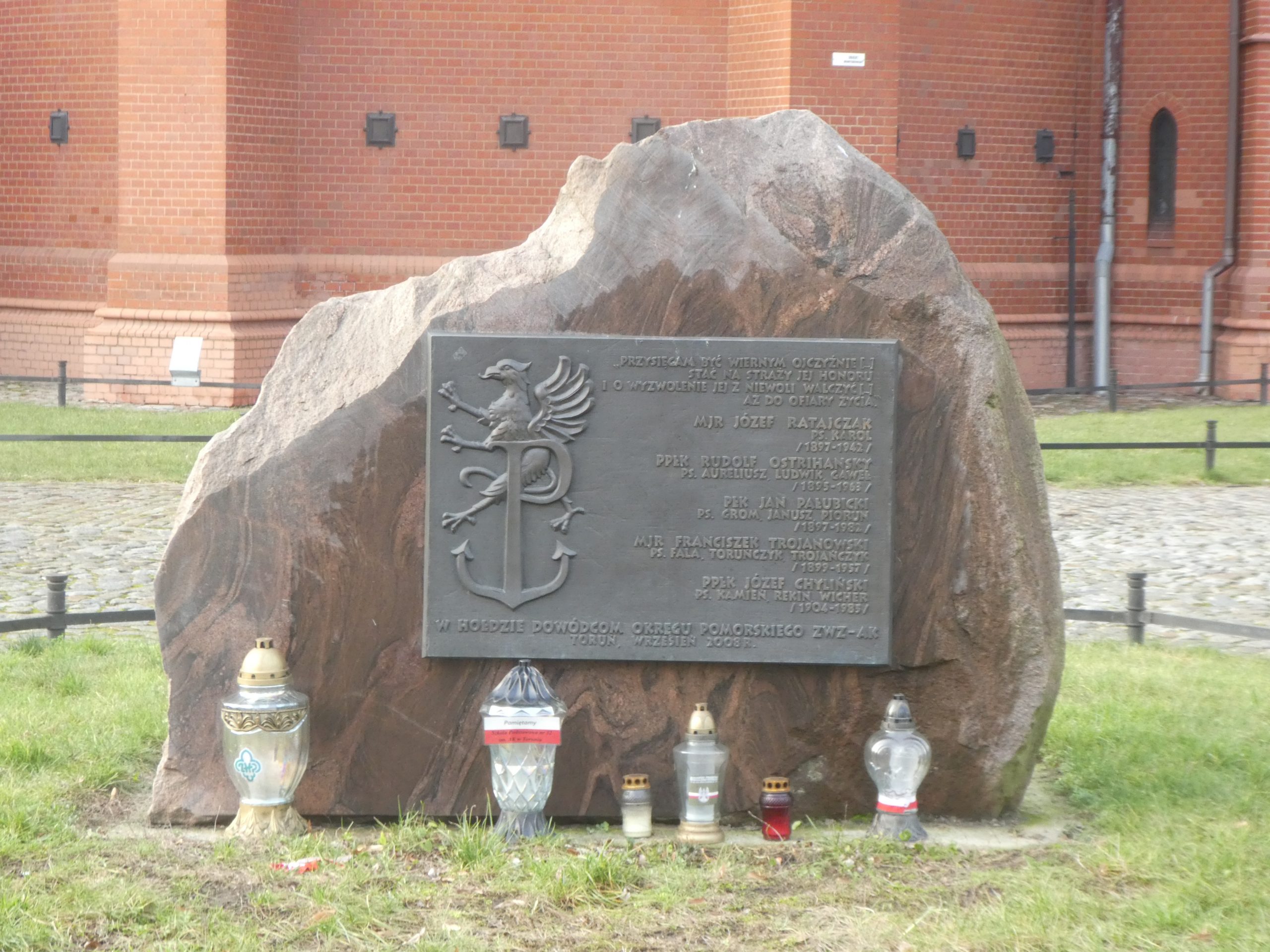
    If I’ve understood this correctly, this is a monument to the organisers of the Pomeranian Home Army District during the Second World War. This was the Polish underground army during the period of German occupation, which caused significant disruption to Nazi rule.

    The names on the memorial are:

    Józef Ratajczak (1897 – 1942) was born in Poznan and in 1910 he travelled to Krakow to celebrate the 500th anniversary of the Battle of Grunwald. He was drafted into the German army in 1917, but joined the Polish Army during the inter-war period. He was tortured at Powiak in Warsaw during the Second World War, but didn’t reveal anyone in the Home Army. Along with 230 others, he was taken to a forest near Warsaw and was executed.

    Rudolf Ostrihansky (1895 – 1963) was involved in the First World War, fighting against the Bolsheviks and in defence of Lviv. He remained in the Polish Army in the inter-war period and was Commander of the Home Army in the district between 1940 and 1943. He was arrested in 1943, was sent to Stutthof concentration camp in 1944 and he survived the war, later becoming a farmer.

    Jan Pałubicki (1897 – 1982) was involved in the First World War, fighting on the Russian front. He remained in the Polish army in the inter-war period, but was seriously injured early on during the war, on 23 September 1939. He worked in Torun during most of the Second World War and remained part of the Home Army, managing to avoid arrest, for a while he hid in nearby forests when the Gestapo were close to arresting him. He survived the war, but struggled with his life somewhat, dying in 1982 in Poznan.

    Józef Chyliński (1904 – 1985) was too young to fight during the First World War, but he joined the Polish army and remained heavily involved in the resistance movement. His wife died in the Warsaw Uprising and he found himself imprisoned by the new communist authorities between 1945 and 1947. He emigrated to Toronto in Canada after his release from prison, remaining there until his death.

    Franciszek Trojanowski (1899 – 1957) joined a young military group towards the end of the First World War and was involved in the defending of Lviv. He remained in the Polish army and fought in numerous areas of the country during the Second World War, fleeing to the coast at one point to avoid arrest. He died in Lublin in March 1957.
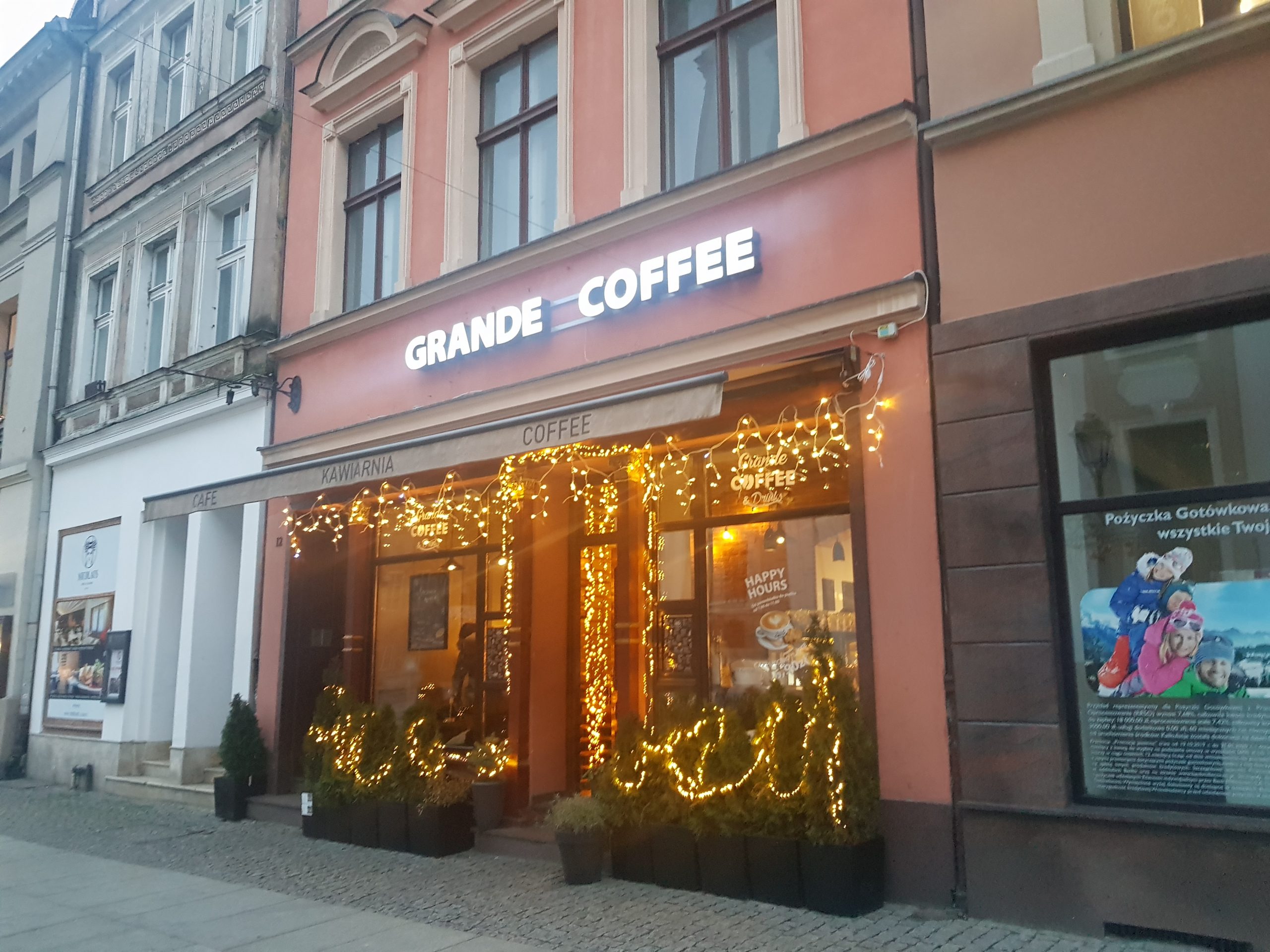
  • Torun – Grande Coffee

    Torun – Grande Coffee

    This centrally located cafe looked welcoming and inviting, as well as being well reviewed.

    I think I got the ordering process correct, which was ordering at the counter and having the food and drink brought over. This whole process still makes no sense to me though, there’s no clear logic as to which places offer table service and which don’t. Anyway, perhaps there is no logic….

    The interior of the cafe.

    Books, very lovely.

    This was better than I expected, a tasty pavlova type meringue which was served as a large portion. The coffee was fine, although not exceptional as it wasn’t packed with flavour, with the prices being a little expensive. However, it was worth it for the cake and the staff were friendly and helpful. The environment felt quite contemporary as well, with the drinks menu having quite an extensive selection to choose from.

  • Torun – Jan Olbracht Browar Staromiejski

    Torun – Jan Olbracht Browar Staromiejski

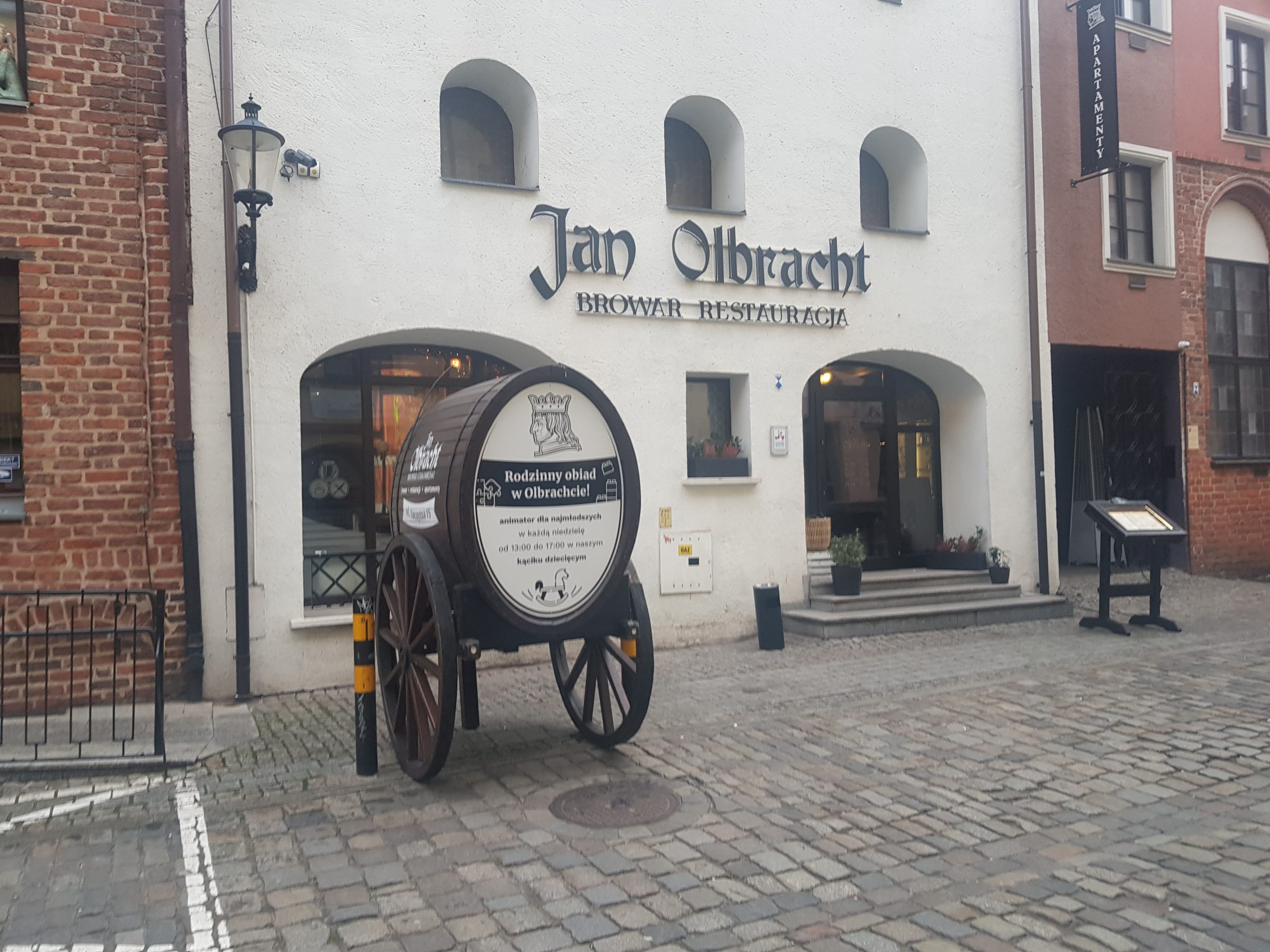
    This is a brewery, bar and restaurant all in one, something of a traditional Bavarian beer-house. The building that it’s located in also has some heritage, its a Gothic fifteenth century tenement house.

    The brewing equipment.

    Barrels above the bar.

    The beers which are brewed in-house.

    I got the tasting set selection, the gingerbread beer was the best out of these with a pleasant initial taste, although a surprisingly weak aftertaste. All of the beers had some interesting flavours, but they didn’t have the depth or richness of flavour that I’d ideally like. All of the beers which are made here are also unfiltered and non-pasteurised.

    However, the bar doesn’t fail in terms of its beer offerings, this is a really decent selection of different beers from around Poland. I went for the Sourtime Blueberry, because it’s from a brewery that I visited last week in Poland and they have some really innovative offerings. The beer was excellent, a depth of flavour, some sourness and a rich aftertaste, so a really good option.

    One of the seating areas in the pub, which was relatively busy during my visit. They seemed to miss me coming in as they welcomed other diners, but the service at the bar was always polite. The service wasn’t always entirely attentive, but the environment was welcoming and the atmosphere was relaxed. There’s quite a large food menu to choose from as well, although it was just the beer experience for me today.

    All in all, there’s a well thought out selection of different beers to cater for most tastes, including mine. A relaxing environment and I can imagine it has quite a vibrant atmosphere in the evenings.

  • Torun – Torun Castle (Masks of Shame)

    Torun – Torun Castle (Masks of Shame)

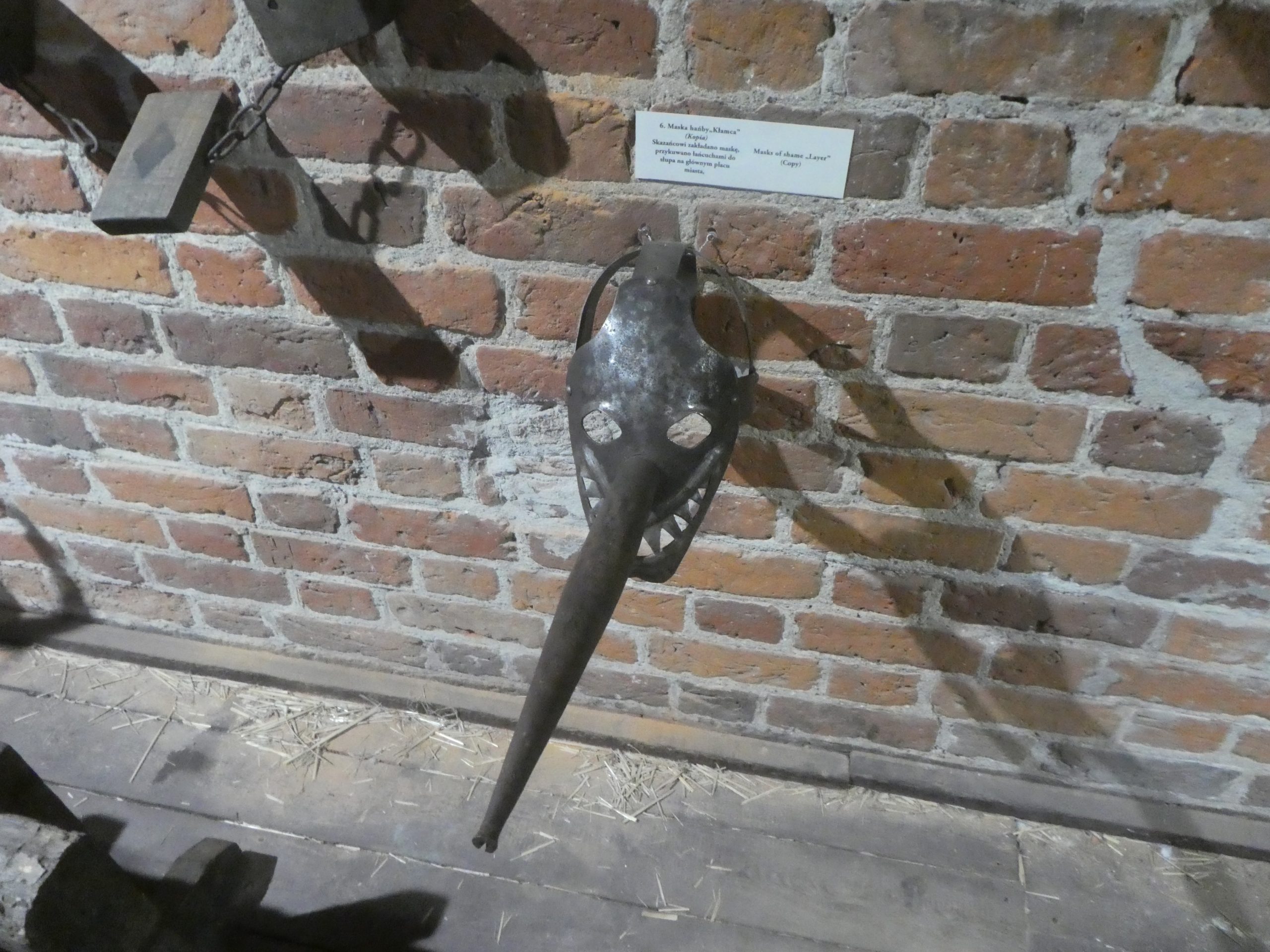
    These are modern copies in Torun Castle, but they’re intriguing nonetheless, they’re masks of shame (known as Schandmaske in German and Maski Wstydu in Polish) which were used during the medieval period. They were worn by those being punished for various misdemeanours, from gossiping to married couples arguing. The masks were designed to humiliate and encourage others not to behave in the same manner, with the victim sometimes also being placed in stocks at the same time. The practice went on until the eighteenth century in a few places, with some masks also being designed to cause significant discomfort and pain.

    And some more….

  • Torun – 100 Years Since Returning to Free Poland

    Torun – 100 Years Since Returning to Free Poland

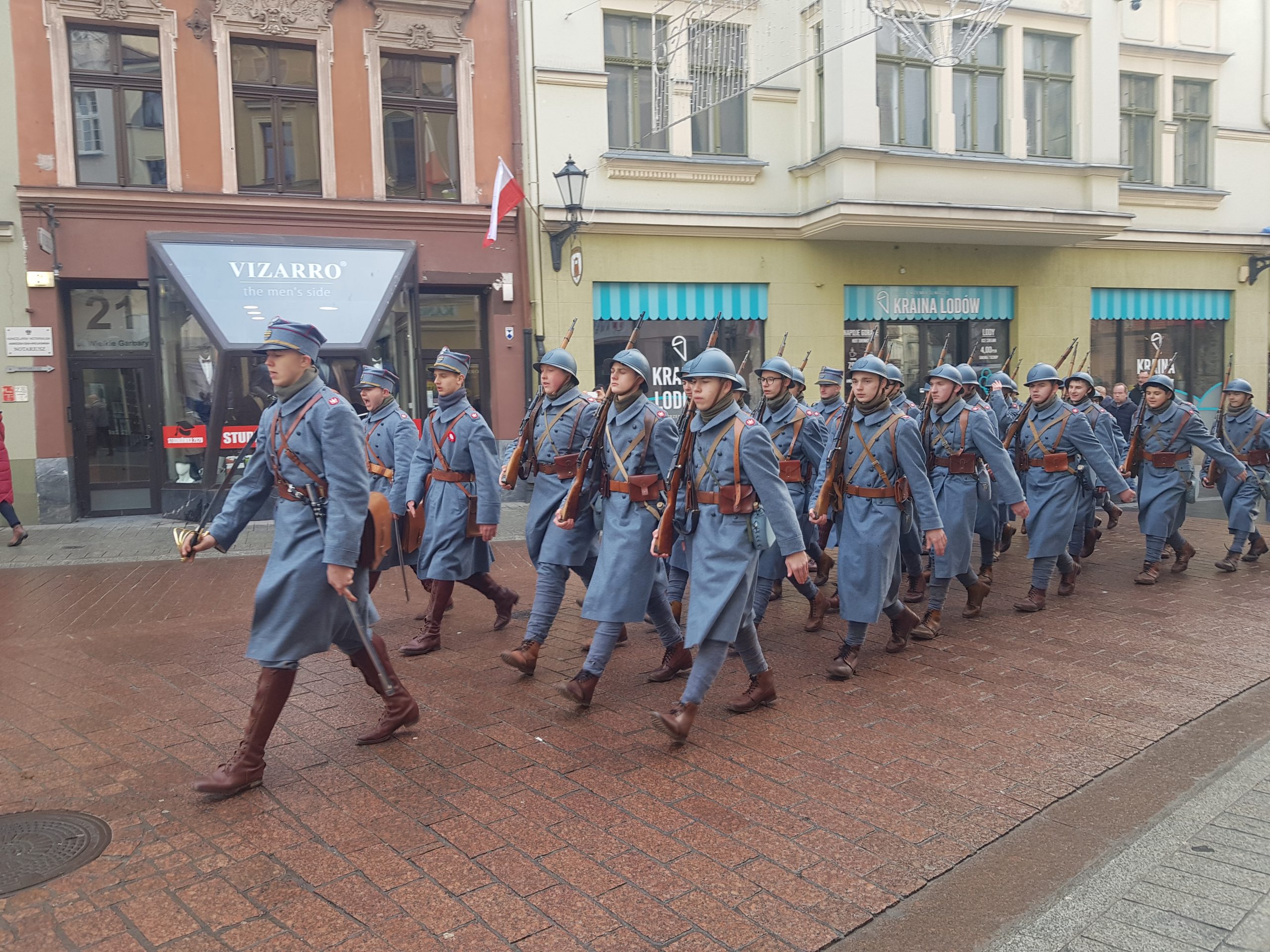
    There are a series of events taking place today in Torun, marking the return 100 years ago of the city to Free Poland and the Second Polish Republic. One of the events which was held was a reconstruction parade using re-enactment societies of when Polish troops walked into the city to be given the keys to the gates.

  • Torun – Litter Situation

    Torun – Litter Situation

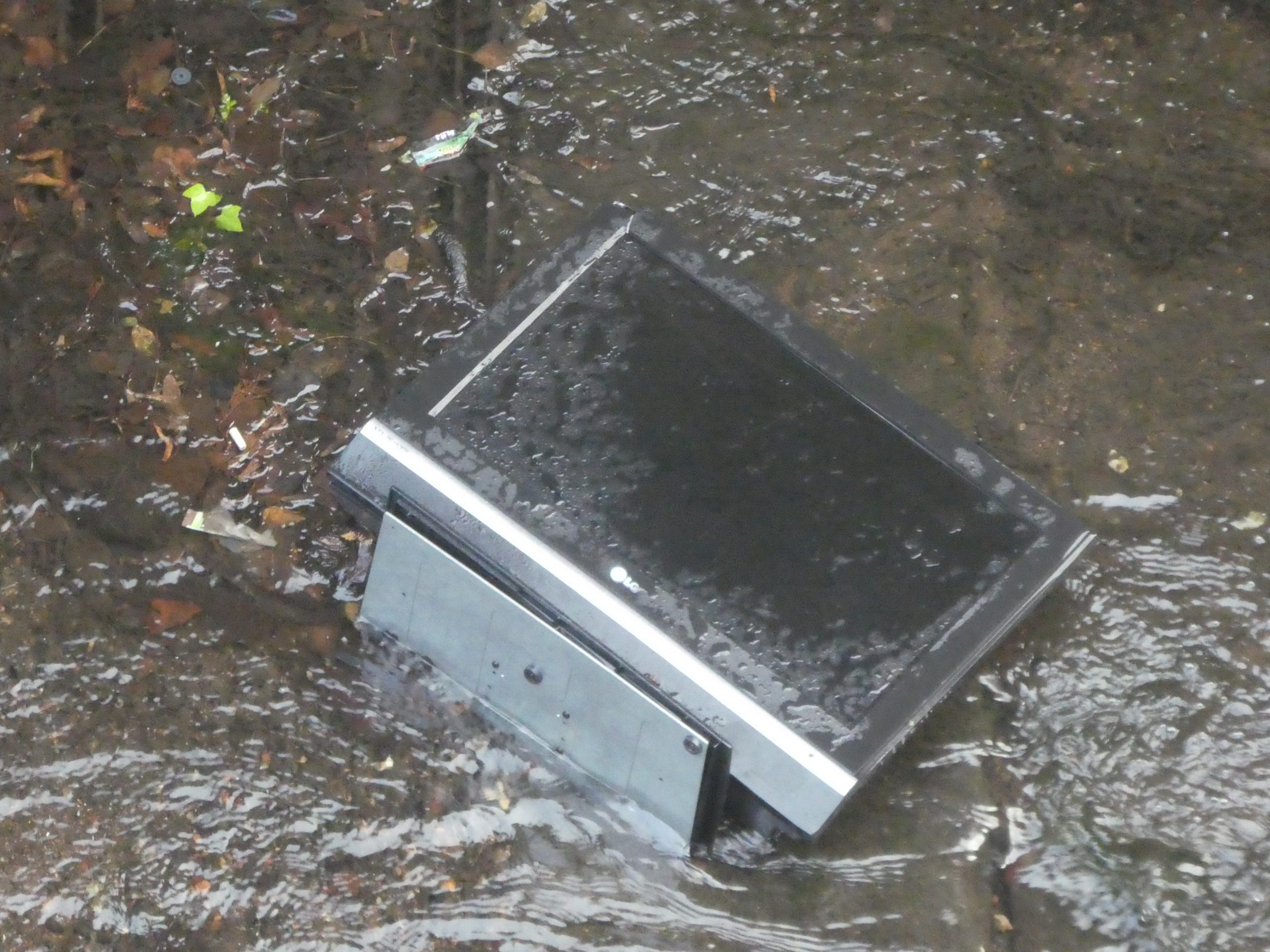
    Torun is one of the cleanest cities that I’ve visited, although that isn’t rare within Poland where litter doesn’t seem to be a substantial problem. So, I thought it was rare to see something dumped in a water course.

    Otherwise a pretty little area of the city. However, note the white van driving towards the area.

    Two men jumped out of the van, peered over at this dumped television and looked bemused, before ensuring that it was removed. All very efficient.

  • Torun – River Vistula

    A view of the River Vistula from near Torun.

  • Torun – Pomnik Stefana Łaszewskiego (Monument to Stefana Łaszewskiego)

    Torun – Pomnik Stefana Łaszewskiego (Monument to Stefana Łaszewskiego)

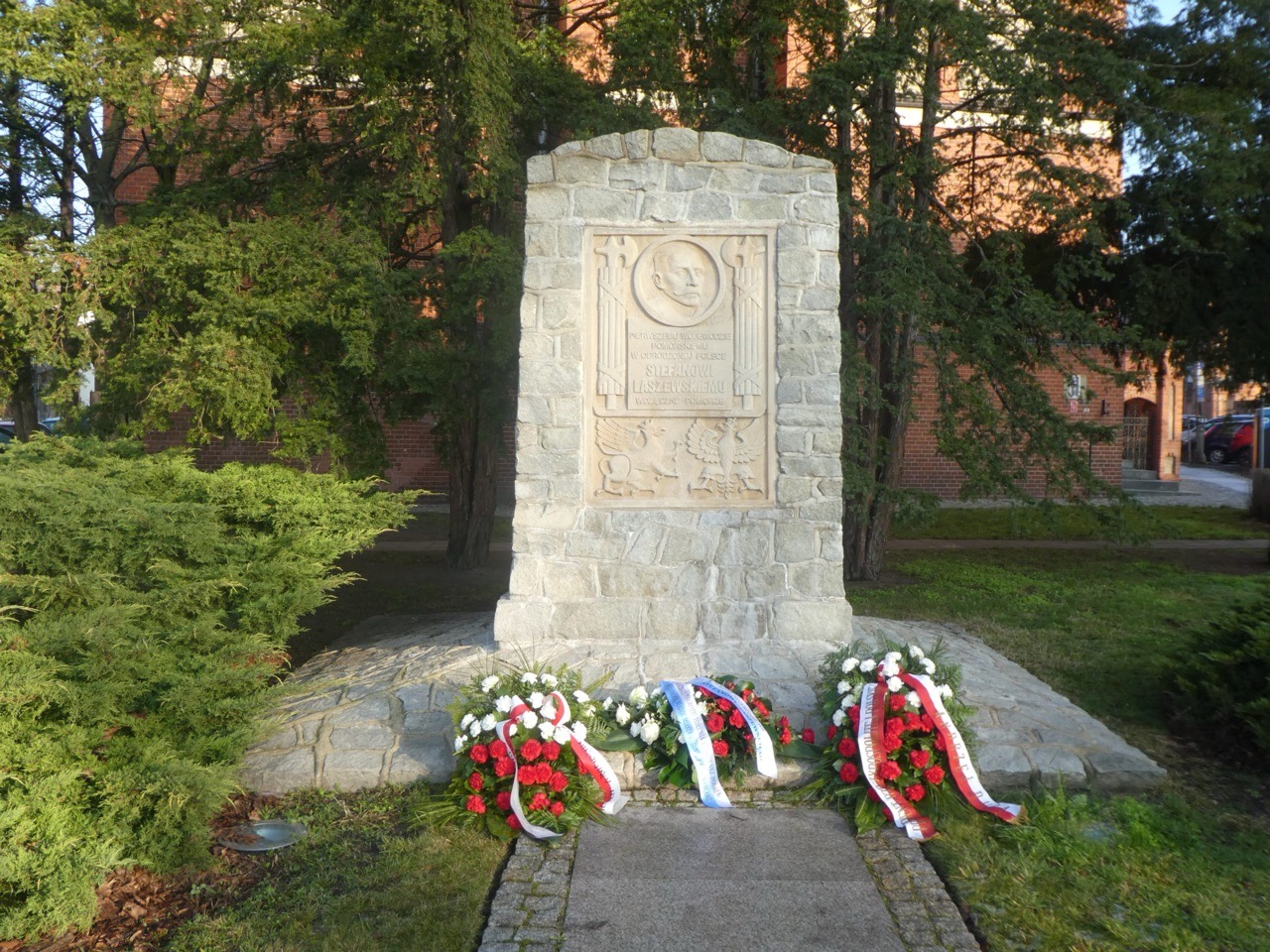
    This monument commemorates the life of Stefana Łaszewskiego, a Polish lawyer and politician who also served as the first head of the new Pomeranian Voivodeship in the Second Polish Republic. The Voivodeship, or region, existed only between 1919 and 1939 and its capital city was Torun, in the area that had previously been part of West Prussia.

    Łaszewski held the role from 1919 until 1920 and he later went on to become one of the Presidents of the Supreme Administrative Court. The first monument was installed in May 1925, but was destroyed by the Germans soon after they invaded the city in 1939. This current replacement memorial was installed in 1997 and is made of granite with a sandstone tablet in the centre.

  • Torun – Ruins of St. Nicholas Church

    Torun – Ruins of St. Nicholas Church

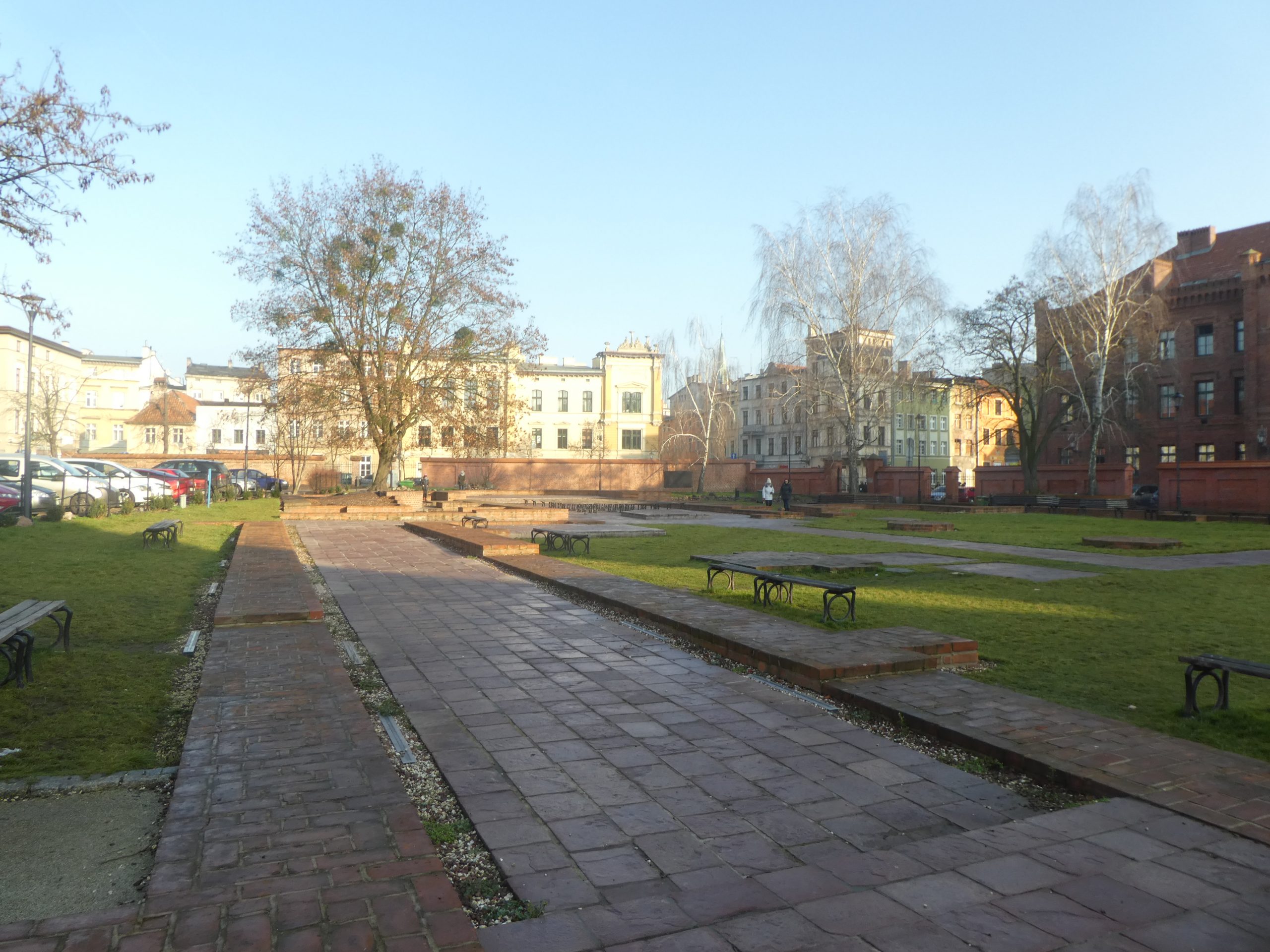
    Work started on the Church of St. Nicholas in 1263 on land given to the Dominicans by the Teutonic Knights. The church was located just outside of the city walls, although it later came within the boundaries of the new town area of Torun. It was expanded in the 1430s, but had a difficult time over the centuries due to location near the city walls, which made it vulnerable to attack.

    The church was the only one in Torun which remained Catholic and it was a wealthy institution which was well funded. There were over twenty altars and there were monastic buildings attached to the main part of the church. It was damaged during sieges in 1658 and 1703, by fires in 1423 and 1764 and then, most seriously, during the Napoleonic Wars in the early nineteenth century. The Benedictine order left in 1820, with the church buildings then turned into a warehouse, although a decision was made to demolish it entirely in 1834. The valuables of the church were carefully transported to other religious institutions, with some of the stained glass now on display in one of the city’s museums.

    Brickwork has been added to make it easy to understand the original layout of the building, with the chancel above.

    A side chapel leading to the chapter house doors.

    The nave, with access to the monastery at the rear from what was St. Katherine’s Chapel.

    And this is what it used to look like. All nicely done, with a small park area where people can sit and ponder what used to be here. Or, indeed, think about their lunch, whichever they prefer.

  • Torun – Camino de Santiago

    Torun – Camino de Santiago

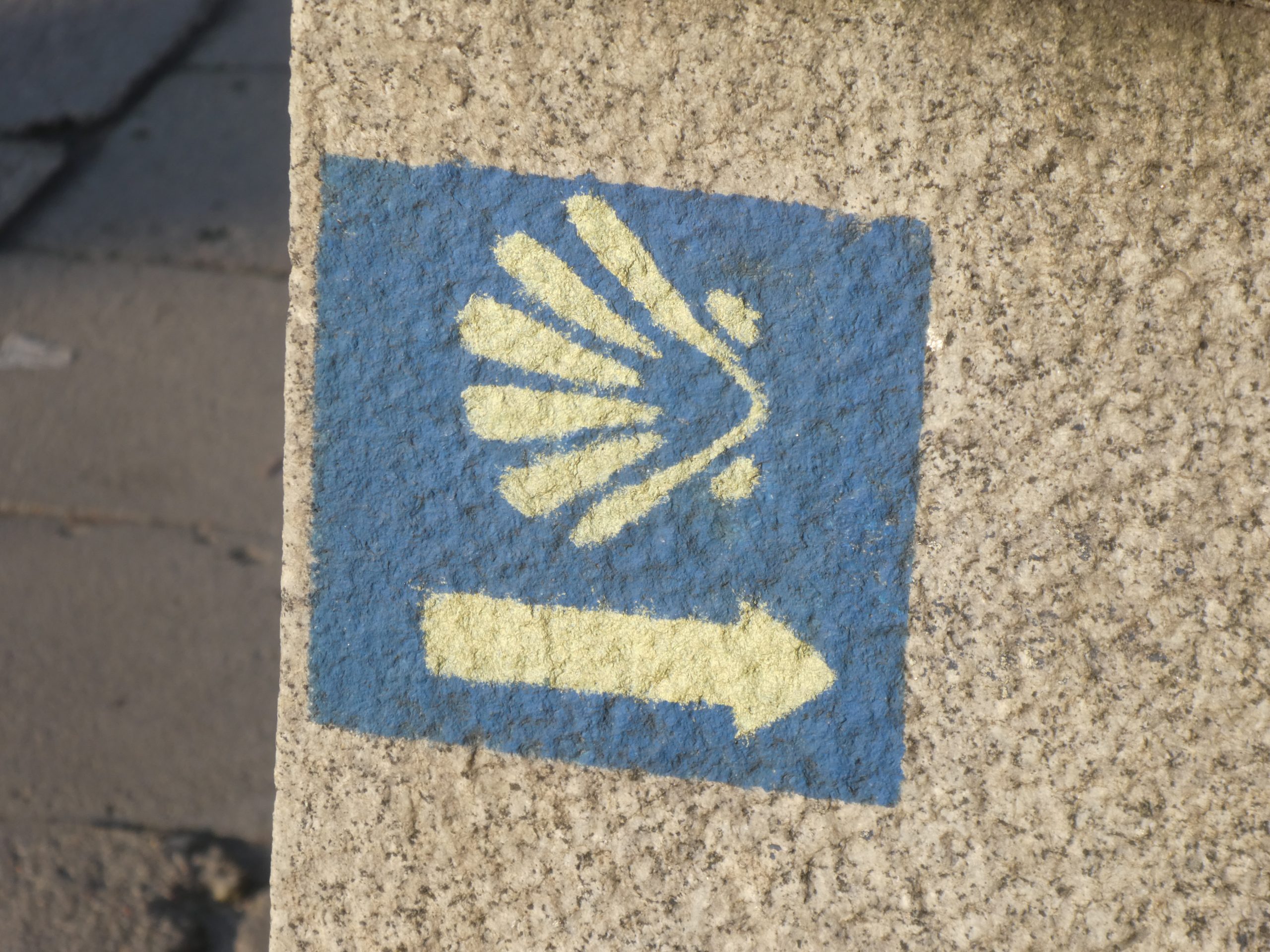
    It’s quite a way from Santiago in Spain from here in Torun, but the authorities in the city have been making efforts recently to publicise the route. There are now markings throughout the city and Torun is on the Polish Way, one of the routes of St. James. There was a decline in pilgrimages following the Reformation, but it would have been a substantial act of self-sacrifice for anyone to walk from Poland to Santiago. For those wanting to walk a quieter section of the Camino, this is certainly a part of the route to consider.

    The route in Torun is:

    ul. Turystyczna,
    ul. Winna,
    ul. Winnica,
    ul. Traugutta,
    ul. św. Jakuba.
    Rynek Nowomiejski,
    ul. Browarna,
    ul. Piernikarska,
    Bulwar Filadelfijski,
    Monastery Gate,
    ul. Pod Krzywą Wieżą,
    Rapacki Square,
    Józef Piłsudski Bridge,
    ul. Dybowska.