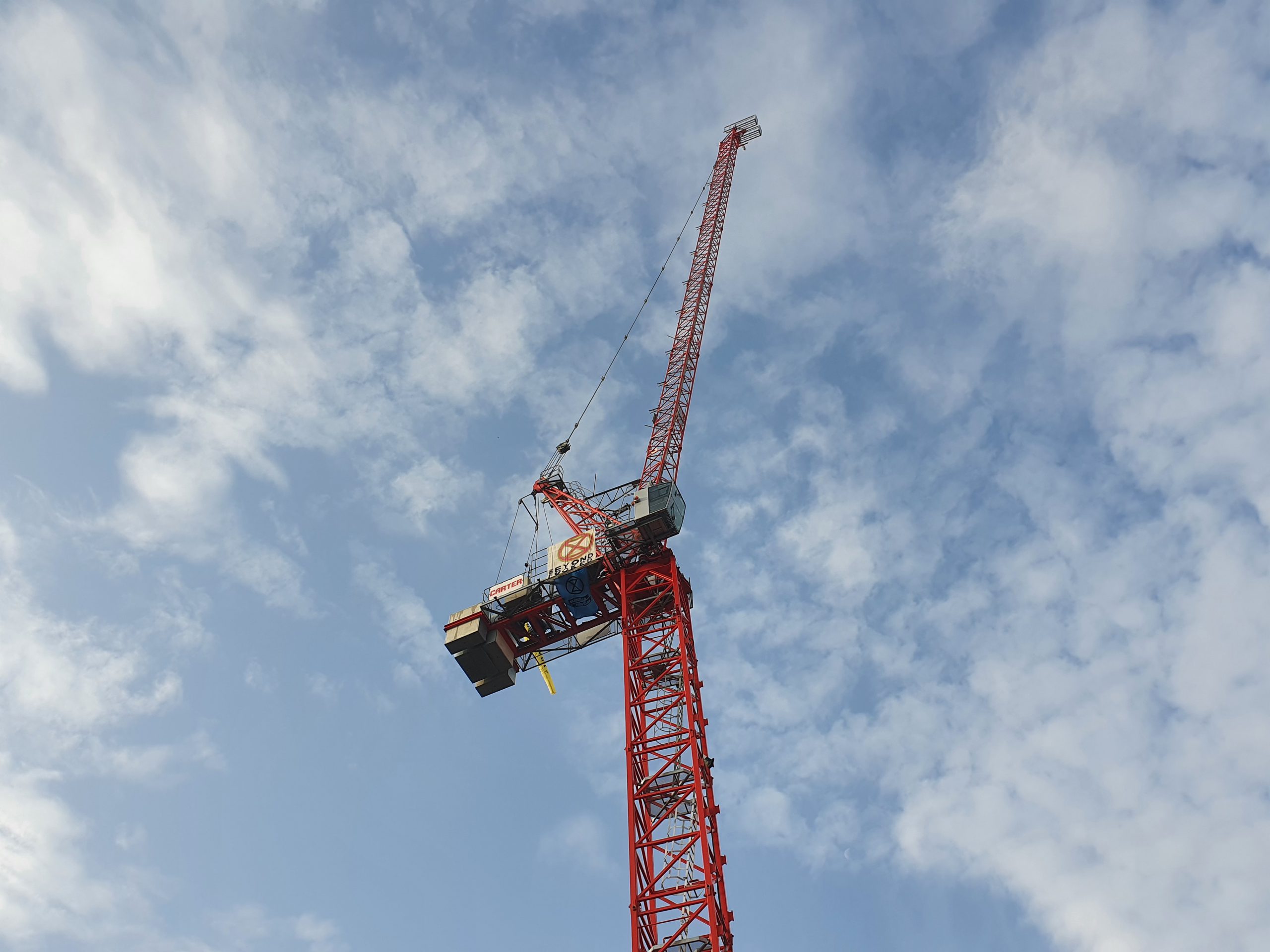
There’s a little protest going on up a crane in Duke Street in Norwich.
Apparently, it’s a teenager called Alex Sidney from Dereham who has rather bravely (and I must confess, I wouldn’t be that brave) shinned up this crane. Three others have been arrested and they were apparently pleased that there was no security, although I’m sure construction project managers were hopeful that they didn’t have to employ teams of security 24 hours a day to guard things.
And this is the result, a substantial police, fire and ambulance presence at the scene.
The EDP have reported that Alex said:
“If I get arrested now or if I get arrested in nine hours the consequences will be the same so I might as well stay out for a bit longer.”
The Prime Minister’s announcement at the weekend meant that I abandoned my travel plans for the month, and indeed the rest of the year, so this was my trip back to Norwich. It was another £10 fare even though I booked it quite late.
It wasn’t the busiest of trains, just a few people in each carriage. Everything functioned as it was meant to, the power worked and this was a train with tables (Greater Anglia sometimes operate Stansted Express trains on the London to Norwich route, which are annoyingly missing tables).
And back into Norwich at 23:30, just a couple of minutes late. The railway station was quiet, the barriers were open and I imagine there will be few passengers over the next month.
At least the next few weeks gives me some time to finish all the blog posts that I never quite got around to writing over the last few months……
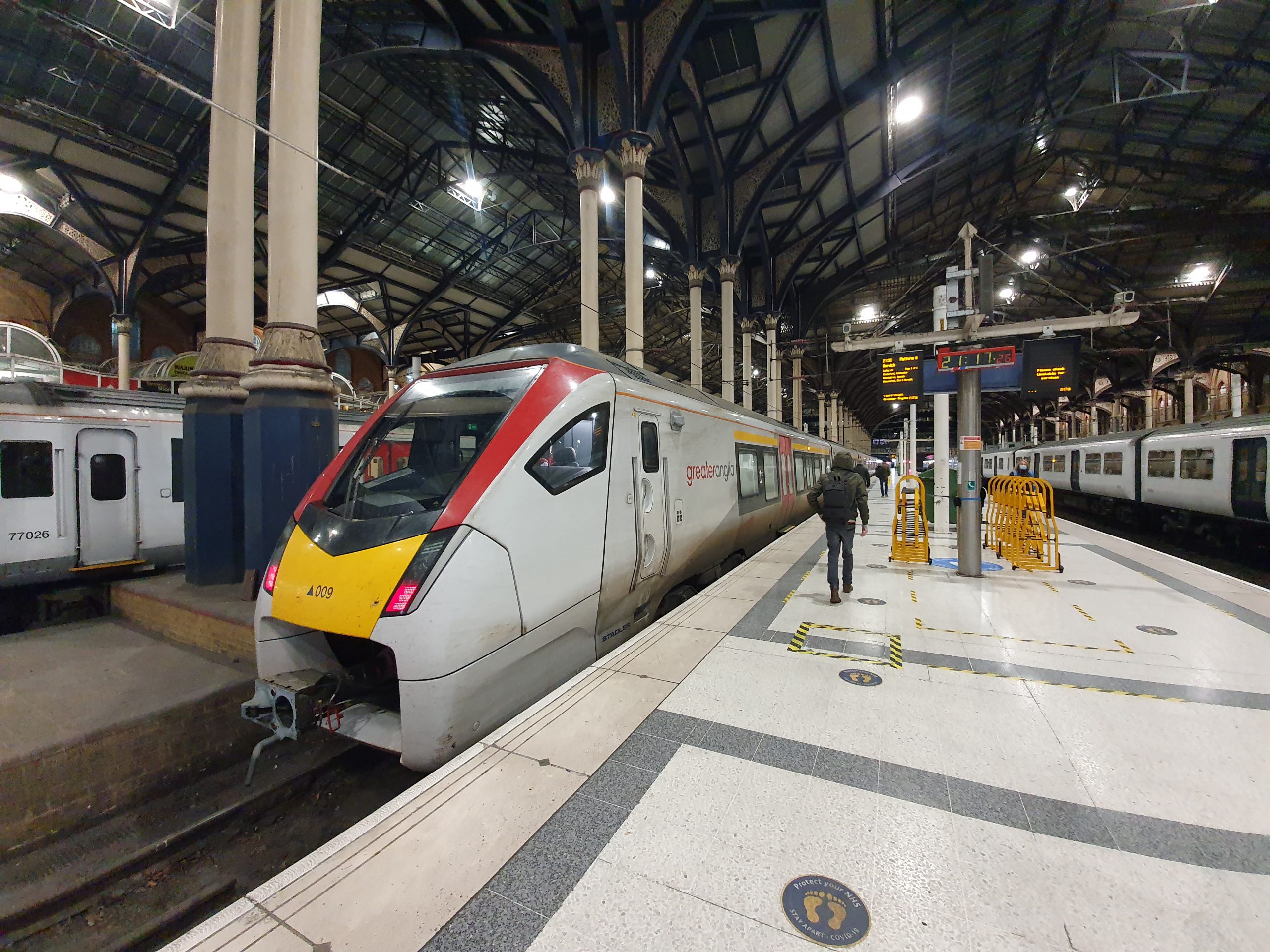
So, back to London Liverpool Street today, and this is my train having safely arrived into the capital.
This wasn’t ideal when I arrived at Norwich railway station at 11:05, my train had been cancelled. I say not ideal, I wasn’t that displeased, as that means a delay repay gets triggered.
I was travelling First today, which wasn’t some decision to switch to a more decadent lifestyle, but just because the price was pretty much the same as standard. I don’t think I’ve been in First on the new trains, they look all smart and tidy.
The individual seats and I like these raised ones, there’s a ledge for my bag and also easily accessible power points. Despite the service having to cater for the 11:30 passengers as well as the 12:00 passengers from Norwich, it wasn’t overly busy.
First class passengers get free snacks and drinks, so I merrily meandered to the cafe bar to collect my refreshments for the journey. There was a very friendly staff member at the cafe bar, although he told me something which I’ve suspected, which is that the InterCity 125s now removed from the route were more stable than the current new trains. He mentioned this as he was being flung about, as was I, and I can’t imagine how difficult it is to try and work like that. I had wondered if the trains were going faster and that was the problem, but he thought not. So, all that money and Greater Anglia have bought more rickety trains than the ones they already had.
These new trains don’t really seem to be perfect in numerous ways, it was a train fault that caused the cancellation of my 11:30 journey. The automatic announcements also went wrong as it kept repeating that we were stopping at stations that we clearly weren’t (stations such as Goodmayes and Romford are not stops which this service ever calls at to my knowledge), which led to the driver (or guard, whoever does the announcements) having to clarify the situation. The train was though clean and all was comfortable.
The fare for this journey was £18, more than the usual £10 that I pay. The train delay means that I get 50% back, so the journey cost me £9, which is entirely agreeable to me. So, all rather lovely.
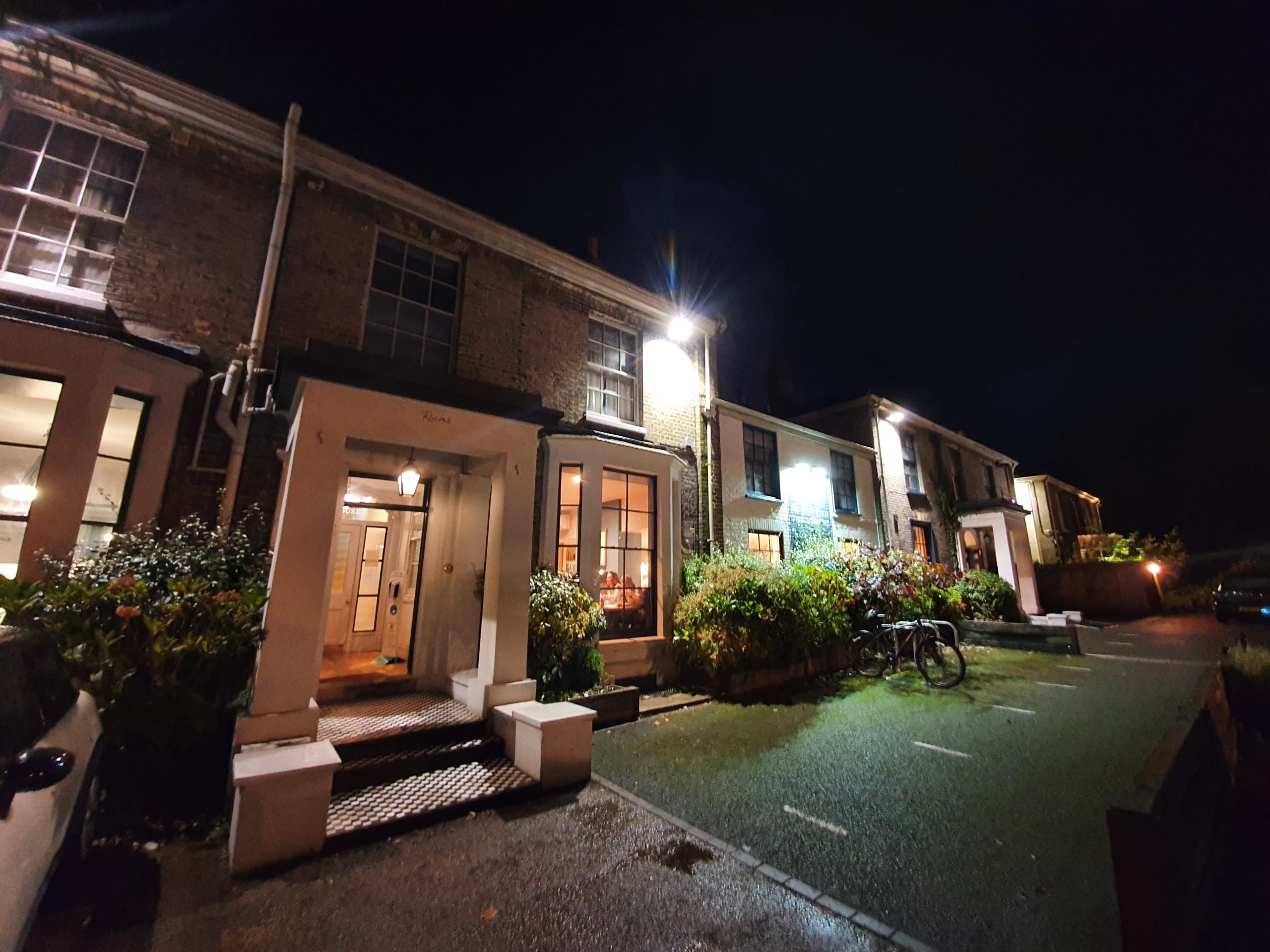
This is a City Club venue, a chain that is relatively new to me, but I rather like. I’ve been to some of their venues without realising such as the Bath Brew House, but recently have gone to the Old Ticket Office and the Cambridge Brew House, both in Cambridge. I had looked at going to some of their London pubs, although the ones I have been looking at haven’t re-opened yet.
Anyway, this City Club venue was still doing their version of Eat Out to Help Out until the end of October, with food half price before 18:30, which is very generous. There weren’t many tables left, although we only booked the day before, so we were fortunate to get a table with the offer still going.
The welcome was friendly, although the staff member tried to take our order very quickly and then didn’t re-appear for eleven minutes (yes, I did time it, although only because we wanted to be sure we got our order in before 18:30, although I don’t think it mattered). The beer selection was limited to two, neither overly exciting, but the Norfolk Topper was Barsham Brewery is local and was well-kept. I noticed then writing this that I also had this at the Old Ticket Office and was pleased to note I gave it the same score on Untappd which shows some consistency. I understand that these are difficult times for pubs, but I’m hoping that there might be a little more innovation in their beer selections in 2021.
I was dining with my friend Richard, who bought a wine that was more expensive than my main. He’s very decadent though. The environment was all clean and comfortable, with the venue also being quite a large hotel, so there was a formal element to proceedings, but nothing that was too frightening for me…… Being a creature of habit, I went for my usual dishes, not least because Richard was very adventurous and had venison carpaccio with crispy parsnip beignets. Apparently it was lovely, but I’m not into eating raw deer, so he had the more exotic dishes.
My starter of salt and pepper squid, which was served on a dollop of chilli mayonnaise. The salt and pepper element was a little lacking, but the squid was well cooked and wasn’t chewy, which is rather a good sign. All very acceptable as a starter.
This batter on the haddock and chips looks burnt, although it didn’t taste like that and I like some crispiness to the batter anyway. It was a large portion, well presented and had been drained well so that the chips weren’t all moist and annoying. Tartare sauce is one of my favourite things and I think this was home-made, and if it wasn’t, I liked it anyway. The fish was tender and everything was cooked well, so all entirely acceptable again.
The starter, after discount, was £3.50 and the main was £6.50, so I thought that was sufficiently good value for money. I would come here again, and likely will, as it’s a comfortable environment and I’ve got some confidence that they’ll ensure everyone is satisfied. Richard and me faffed about with their app, but it does pretty much work and let us split the bill and pay separately, without needing to hassle the staff. Applying the discounts involved staff intervention, but this was done efficiently.
I thought I’d have a little look at TripAdvisor to amuse myself, and the restaurant isn’t quite as well reviewed as I would have thought. Primarily, it’s got the first review that I’ve seen marked by TripAdvisor as “a serious safety incident” and I’m moderately surprised that the hotel hasn’t replied to this. The more recent review of 1/5 for refusing entry to customers coming in at 21:55 seems harsh, if they’re closing at 22:00 it’s not entirely sensible to serve a round at that point. Anyway, having read the reviews I’m less tempted to come back, but I think we still left happy with the price we’d paid. And Richard forgot to apply his £5 welcome discount, so he has to go back to get a free drink. Well, I would, no point in not getting that.
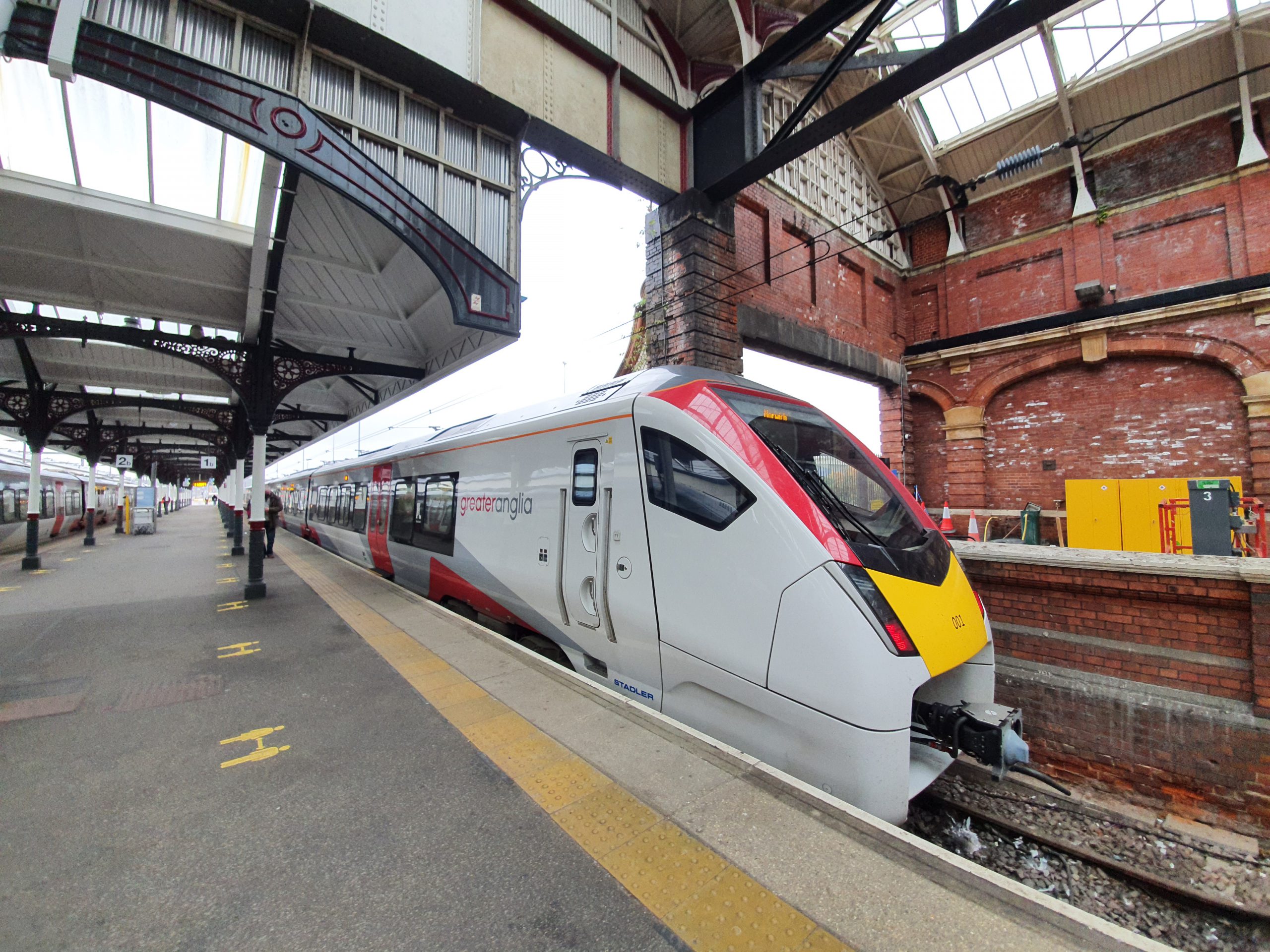
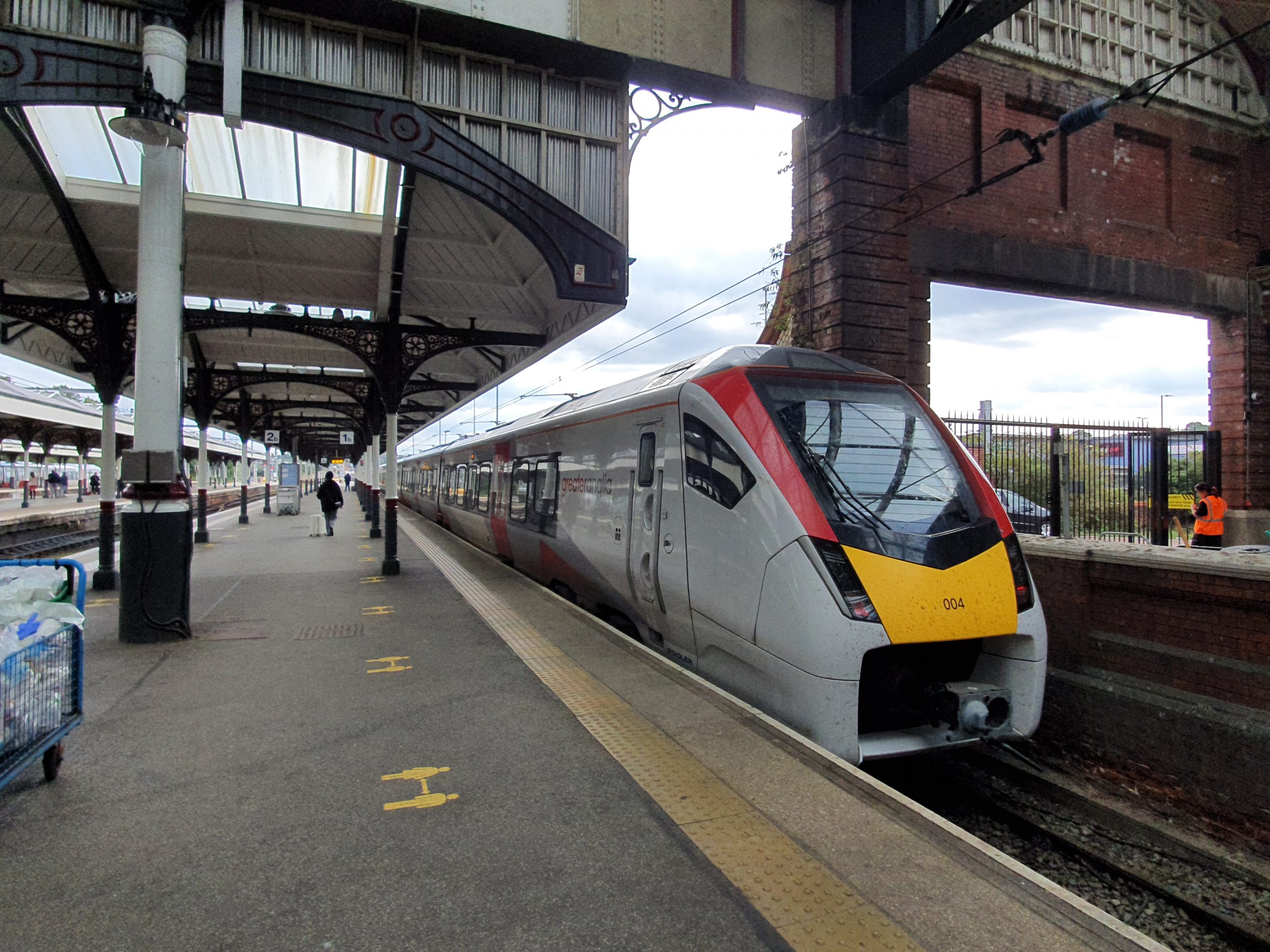
And off again from Norwich railway station, to the exotic climes of Chelmsford and the shiny new (well, newish) train was sitting ready at platform 1.
The train was packed in Norwich……
There was a little confusion as the platform information screens were displaying conflicting information and then the train lights and power went out. The doors were locked shut for around ten minutes, although I did wonder whether they could be opened from the inside if required. The passengers on board looked suitably confused, but I remained hopeful that I was on the right train. Fortunately, about ten minutes before departure, the lights came back on and other customers could get on.
The train did get busier on the way to Chelmsford and this is the busiest that I’ve seen the London train over recent months. It was still possible for customers to get a table to themselves, but only just. The refreshments trolley is back going up and down the train, although something strange has happened to the prices. A confused customer opposite was charged £1 for his coffee and when he queried it, the staff seemed equally confused as to why he was questioning this. £1 is way below the publicised price, but if there’s an offer on, perhaps that should be advertised. Anyway, the journey was all smooth and otherwise uneventful.
And arriving at Chelmsford railway station on time, the first time that I’ve ever visited this city. I’ve also discovered today that it’s the only city in Essex and also the county town, which I would say is a fun fact, but I’m not sure how fun it actually is. The fare was £8 for a single which is very reasonable, especially since that’s cheaper than going from Norwich to much nearer destinations such as Great Yarmouth, Cambridge and Ely.
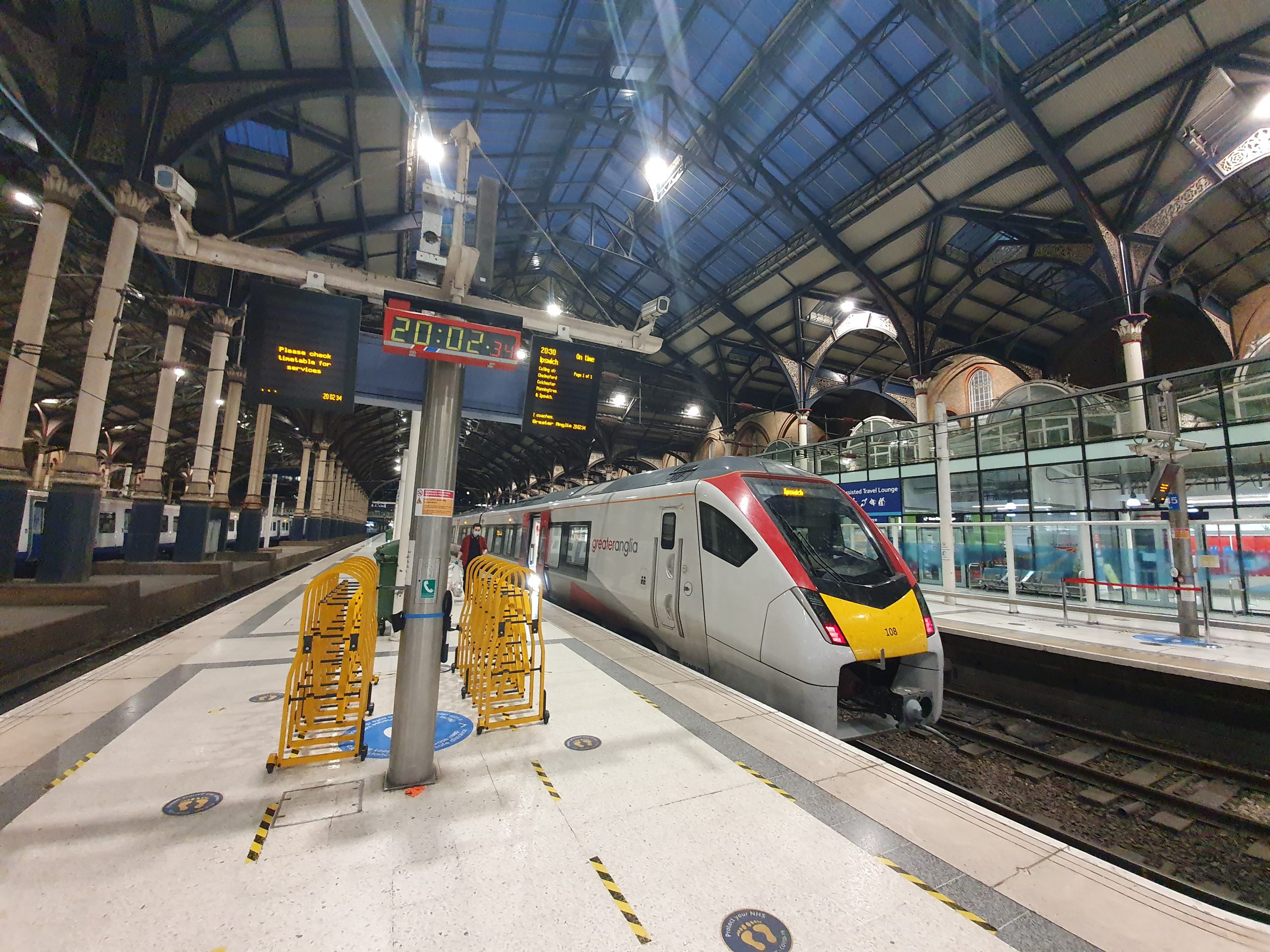
And, here we are again, at London Liverpool Street with a rail service back to Norwich. Or, in this case, a service to Ipswich and a bus took me the rest of the way. I was placed to note that the toilets are back open at London Liverpool Street, all newly remodelled and still free of charge.
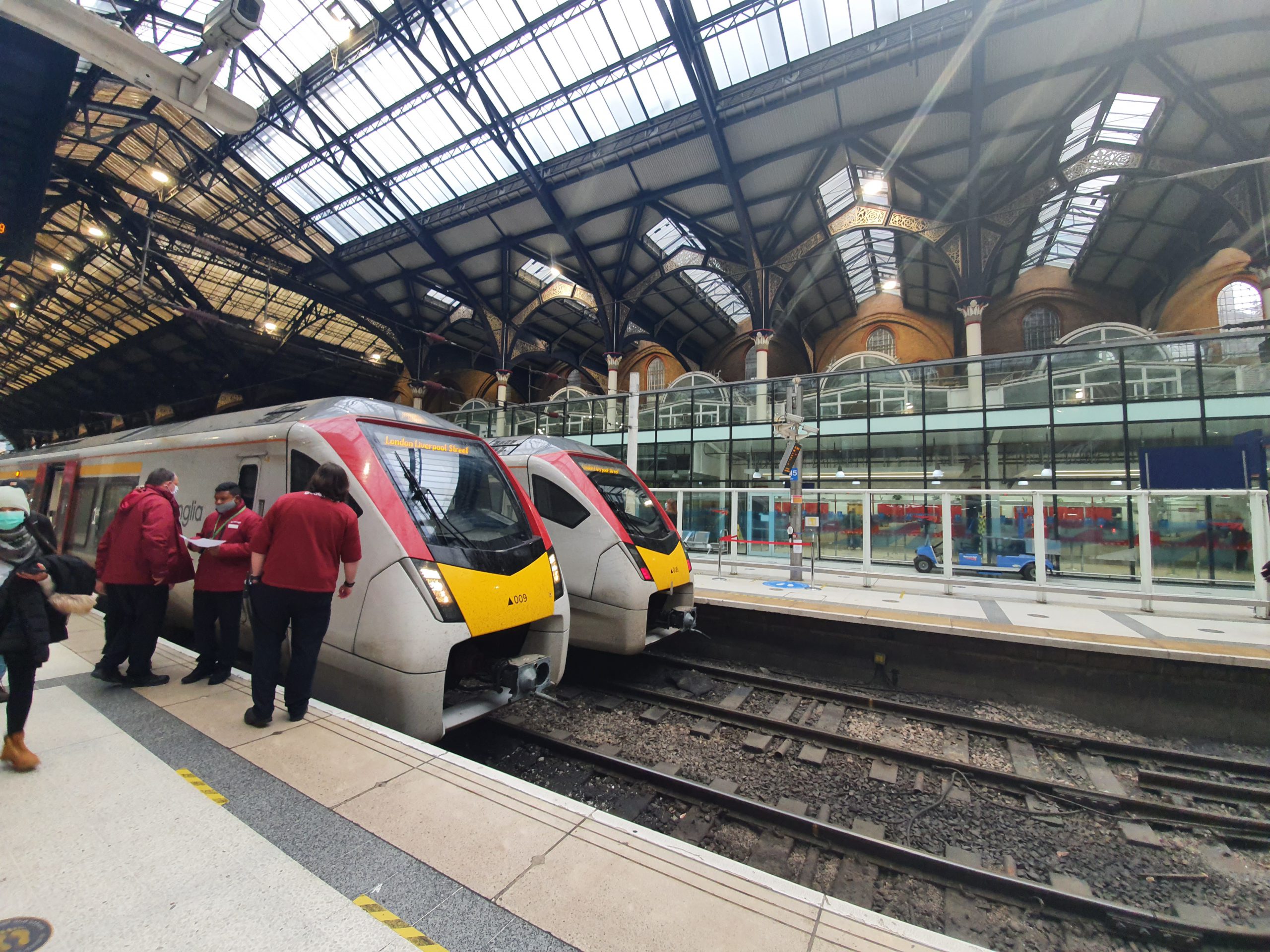
The trains are announced much earlier than they used to be, half an hour before the departure time in this case. I was one of the first couple of people to board, as is evident in the above photo.
The carriages were from the Stansted Express service, the 745/1 FLIRT cars, which I think are the same (with one caveat below) as the standard services from Norwich to London Liverpool Street. But, I don’t know my trains well enough to say (write) that with any certainty.
One difference is evident inside, there are no tables at any of the seats and there is some extra space for cases. I don’t know why there are no tables, it’s a bloody nuisance, and I imagine it’s another one of Jamie Burles’s good ideas. There are though power sockets and everything worked as it should, with the train being clean and well presented.
Another shot of the carriages. The service ran to schedule and the conductor seemed friendly enough in his announcements, although they kept breaking up. He said when we were near to Ipswich that the bus replacement service would depart from Platform 1, which entirely confused me. He changed this when we pulling into Ipswich to say that the bus service was now operating from outside the front of the station and this did make more sense. He’d probably had a long day. There were only two of us in the end carriage and although the other carriages were a little busier, it was still a relatively quiet service.
I’ve moaned, indeed moaned quite a lot sometimes, about how bus replacement services can be really badly managed. Although at least there were staff around, unlike the little incident that Nathan and I had with Deutsche Bahn last year. This was really rather good, there were staff making clear announcements that customers going to Stowmarket and Diss needed to get a certain bus, with those going to Norwich needing another. All very clear. The service was operated by Wrights Coaches, who I haven’t heard of, and everything seemed professional with them.
I think there’s a vague plan to try and get buses fitted with seatbelts when they’re used on bus replacement services, but there’s no such requirement at the moment. Ideally, perhaps, there would be. But, the bus was clean and not over-filled, it was all comfortable enough.
And back safely into Norwich, four minutes ahead of schedule. The fare was the usual £10 (I say usual, it isn’t always that price, but it’s the price that I’m prepared to pay, so it’s become my usual) which I think is pretty decent value for money. The bus section of the journey is always a faff, but it was handled as well as it could have been, and full marks to Greater Anglia. Although they need tables on their trains, as I like them.
This is the third time that I’ve taken the Greater Anglia service from Norwich to London Liverpool Street over the last month, another £10 bargain fare. Although the first train service into London for that price left at 13:00, arriving under two hours later.
As with my previous journeys, the train was quiet in Norwich. It was also clean and well presented, with all of the power points working well.
The train became busier towards London, although it was nowhere near packed. There were frequent announcements that made warning that customers might be fined £100 if they didn’t wear a face mask, but I’m not exactly sure who was meant to be doing this enforcement. I haven’t seen any presence from the British Transport Police on any of my recent journeys, so I suspect it’s just said more out of hope than anything else. There was high compliance with the rule though, with customers not moving around the train much.
The train arrived into London Liverpool Street on time and, unfortunately (or probably fortunately really), it was all rather uneventful. I still think that this new train looks beautiful and graceful, just a slight shame that there are so few people on the bloody thing.
And, that’s the end of my little adventure in Cambridge. The National Express pick-up is clearly signed at the edge of Parker’s Piece and there’s a covered bus stop there.
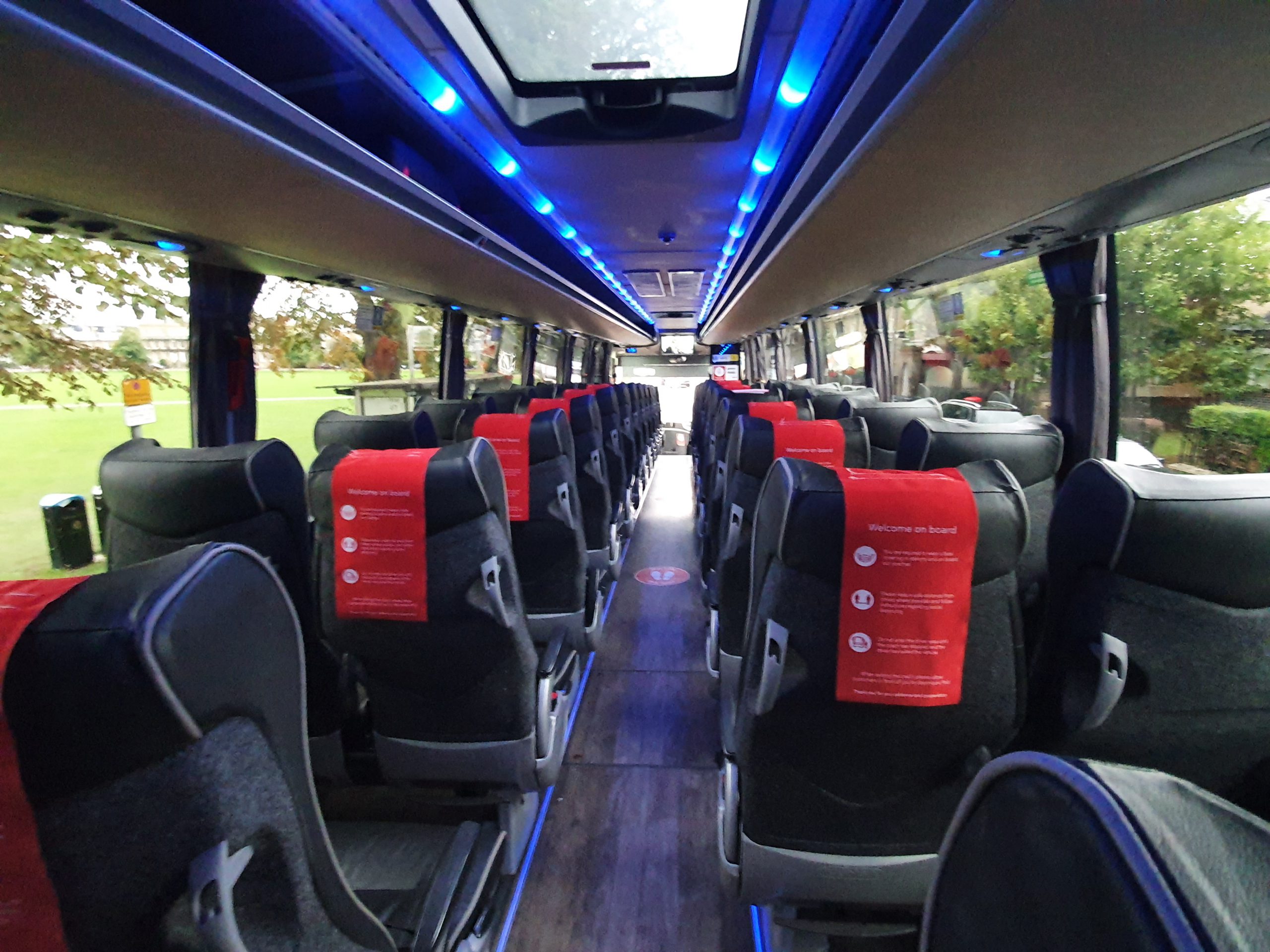
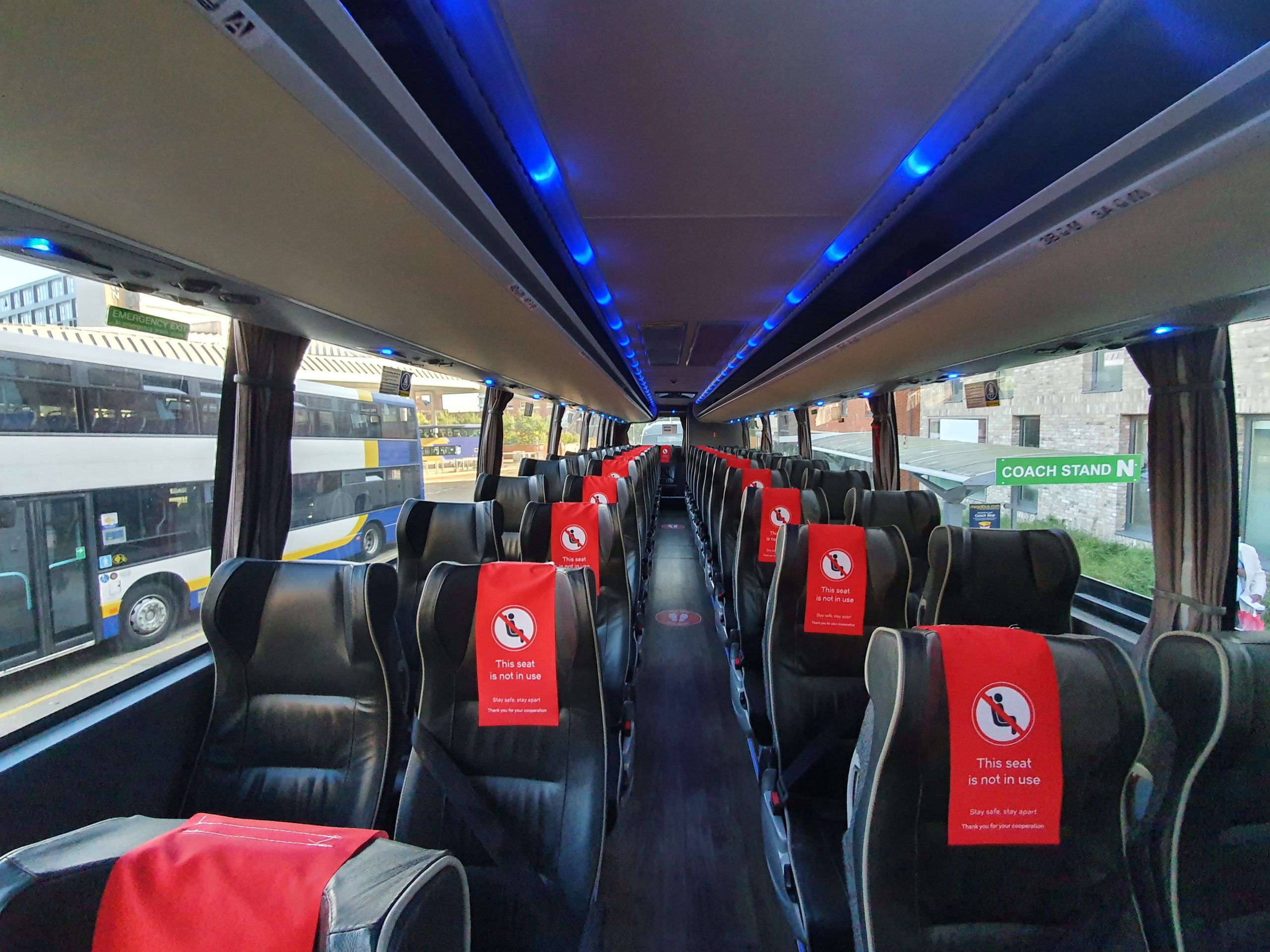
Another packed service….. I think there were five people on board, including the driver. Unlike the coach on the way to Cambridge, there was no hand sanitiser on this coach, it looks like it has got knocked off the panel where it was behind the driver’s seat. There were also no announcements to passengers, although I joined mid-journey, so perhaps they’d already done it. My wrist wasn’t checked on entry this time, instead my forehead was measured for temperature. I still have no idea if that actually works, but I’m happy with it if the driver is.
It’s not quite as exciting as getting the exit row on an aircraft.
This is the television screen at the front of the coach, which I quite enjoy watching. Even when I could just look out of the front window, I still find myself watching the screen. Anyway, the driver was more than competent and the journey was trouble-free. The power worked, the toilet was clean and the temperature was a little cold, just as I like it.
And safely into Norwich, a few minutes ahead of time. The journey cost around £10 including the booking fee, which is good value compared to the price of the train.
As an aside, and something I forgot to mention before. I try to avoid coaches because I prefer trains, but I find National Express just a little odious with their NX Rewards scheme (and here’s the Trustpilot reviews about it). I know some people (well two – and they were idiots to fall for it) caught by this, they try and get people to claim a discount of £17 off their next National Express fare, but there’s then a charge of £15 per month for anyone who forgets to cancel as it’s a subscription thing. And the cancellation system is rather unusual, involving a PDF form rather than an on-line cancellation. Having never joined up, I’m not quite sure what people get for their £15, but not a great deal is the sound of it, it seems to be less a loyalty scheme and more some Quidco type set-up. It looks though like anyone who complains on Trustpilot is getting a refund, but this isn’t really the look of a professional company.
National Express can do what they like, but I think it cheapens their brand and if Flixbus (OK, I’ve grown to like them) include Norwich in their expansion plans, I can switch entirely away from them.
Incidentally, Flixbus currently have these routes in the UK:
London – Birmingham
London – Bristol
London – Portsmouth
Guildford – Portsmouth
London – Brussels
London – Paris
And just in time to get to Tesco in time for their discounting. How lovely.
One of the very exciting things that Jamie Burles has done in his tenure of Greater Anglia is to oversee a near-doubling of the price of the rail rover ticket in just a few years. I’ve never understood this and the Greater Anglia press office admitted he had no answer or comment, because that rover ticket can helpfully fill trains up a bit during quieter periods of the day. As it stands now, Greater Anglia need people on the trains during the quieter periods of the day, but I’m sure Burles knows what he’s doing so I’ll stay positive. But, it has meant that the cost of an open return ticket to Cambridge has reached such levels as to make it much cheaper by coach.
So, here’s the National Express coach from Norwich bus station, moved over to its new boarding location by the YMCA. The driver was jovial and welcoming, but it wasn’t a particularly packed service with only four of us boarding. The driver measured the temperature of each customer’s wrist, which I didn’t know was a thing. Anyway, he seemed happy with the results, so that made me happy.
A packed service. The automated announcement went wrong and so the driver did his own version, still in his friendly style. All very welcoming.
The coach was spotlessly clean and there were hand dispensers on board, all pointed out by the driver. The temperature on the coach was also just as I would want it, slightly chilled, although I note that the seat-back tables have all been removed. A customer was complaining on the coach before ours, which went to London, that he wanted to sit next to his wife but the seating didn’t allow. The driver was helpful, as apparently people can’t manage to sit on their own for more than three minutes.
Megabus have taken out a lot of their seats, on the grounds of they can’t use a lot of them, so they might as well make customers feel more comfortable. National Express haven’t done this. The leg-room on these coaches really isn’t very good and it would be unbearable for many if sitting behind someone who reclined. Fortunately, this isn’t a problem on a service with four customers.
And safely into Cambridge, all on time. It’s not the faster service as we went through Thetford, Mildenhall, Newmarket and some random stops along the way, but it all took less than two hours. The fare was £10, which seems reasonable to me, although I’d still preferred to have got the train as it’s infinitely more comfortable. The bus was the NX727 service which went to the airports and I was a little jealous of the customers going there….