Tag: Hamburg

  • Hamburg – Hamburger Kunsthalle (Bildelf by Georg Baselitz)

    Hamburg – Hamburger Kunsthalle (Bildelf by Georg Baselitz)

    And another post in Julian’s seemingly endless photos of artworks of which he understands very little, but comments anyway.

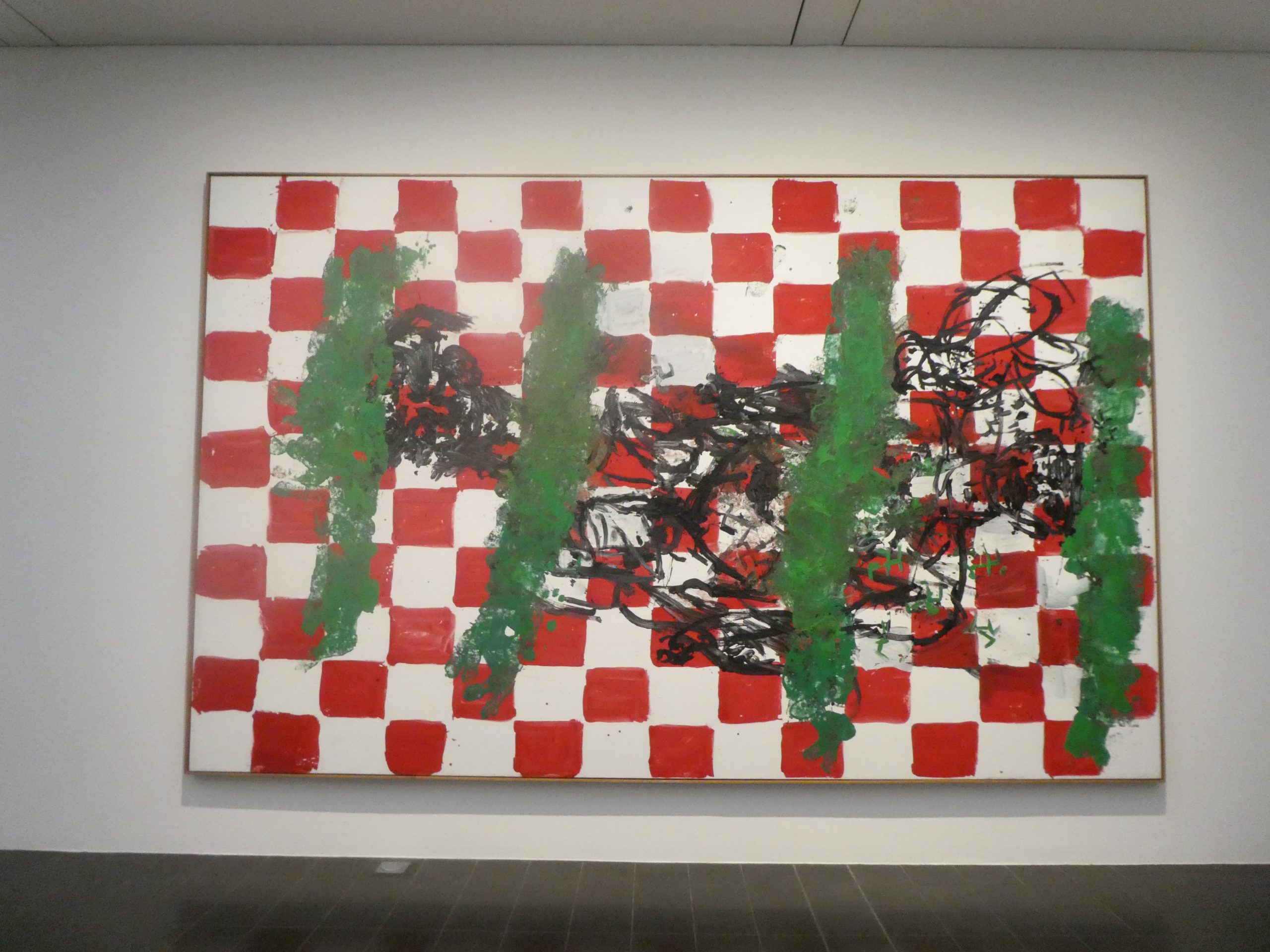
    This delicate little thing is called “paintingeleven” which isn’t the most revealing title. Painted in 1992 and purchased in 1997, this artwork is by Georg Baselitz who was born in 1938 and is still alive today. Wikipedia note that this artist “is seen as a revolutionary painter as he draws the viewer’s attention to his works by making them think and sparking their interest”. I can spend some time looking with my unexpert eye at a painting and try to put some meaning to it, but it’s fair to say that I didn’t understand this at all.

    However, the Kunsthalle is prepared for this, and has made an huge effort to add narrative to artworks for those who want to get some understanding of them. So, Baselitz started in 1991 to paint large canvasses and the painting name is simply the order in which he created his works. I like that sense of order. The gallery seem to struggle from here, they describe the red and white fields on which two figures (the black lines) are painted. I’m not convinced, although apparently he painted them with his fingers. Anyway, from here the four green lines are dripped from a higher platform, with the paint transferred to them by Baselitz getting into a tub of green paint with his shoes on.

    I still have no idea, although it occurs to me that this would fit into the Five Guys red and white background style….

  • Hamburg – Hamburger Kunsthalle (Forgery by Óscar Domínguez)

    Hamburg – Hamburger Kunsthalle (Forgery by Óscar Domínguez)

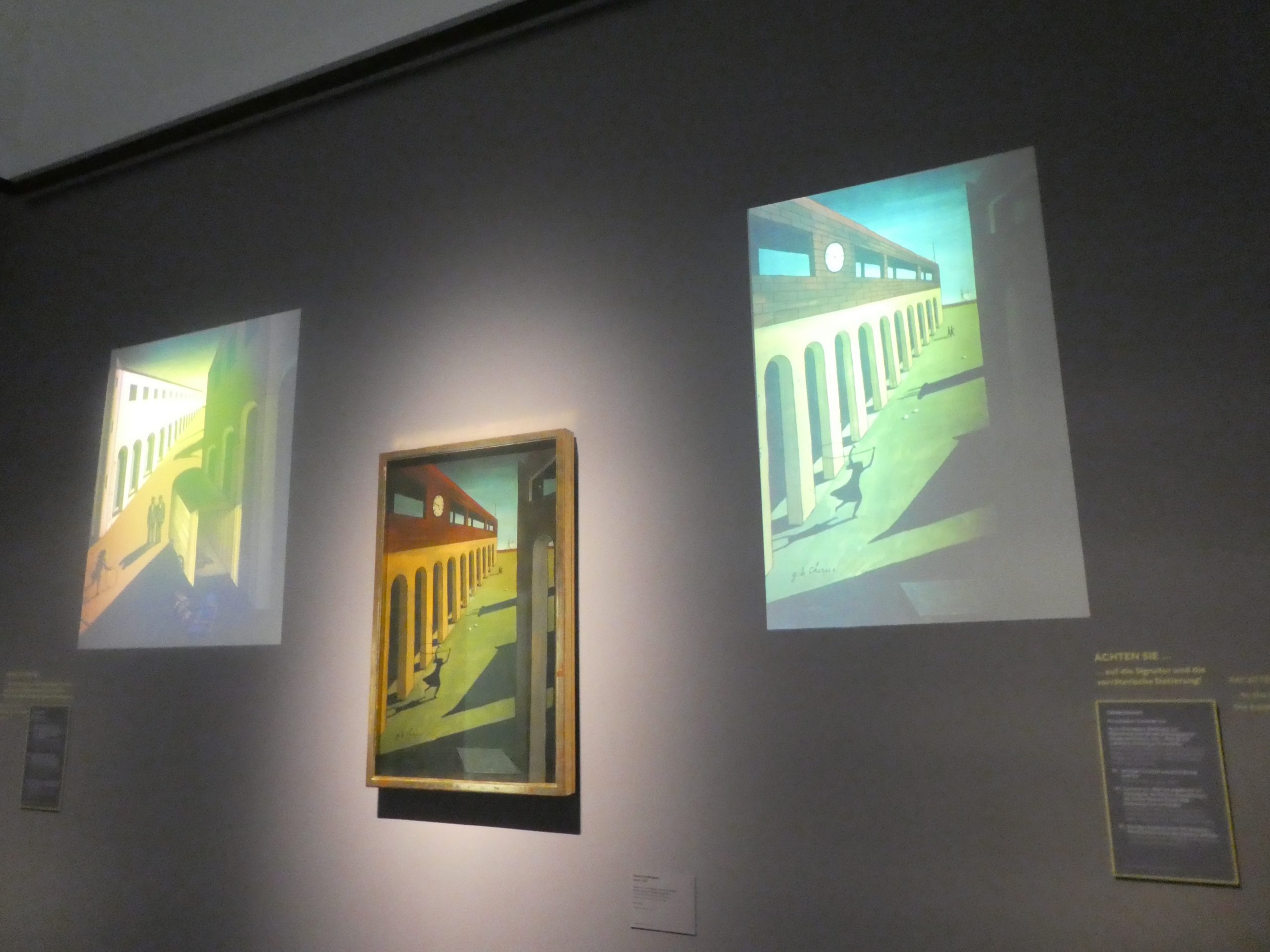
    The gallery has now made a little exhibit about this painting, which is a forgery that they managed to accidentally buy. I suppose it’s easier for galleries to do this in retrospect, they can blame a previous curator more easily…

    The gallery purchased this painting in 1957, which was meant to be ‘Mystery and Melancholy of a Street’ by Giorgio de Chirico. Now, this shouldn’t have been too difficult, as de Chirico (1888-1978) was still alive, but there was a little problem and that was that he had seemingly got a bit confused. This had led to him painting artworks and dating them incorrectly to a previous date, as well as declaring perfectly authentic works as fakes. Anyway, he declared this painting as fake in 1970, which I can imagine moderately irritated the curators.

    On this occasion though, he was correct, he hadn’t painted it. Someone called Óscar Domínguez had faked it, but that was only discovered after the gallery had conducted numerous tests. Perhaps those tests might have been better before they bought it, but I imagine scientific advances made that much easier in the 1980s. Anyway, now the gallery has a different story to tell, which is that through careful analysis they are able to prove that some works are fakes and not as they might seem. And since every artwork has a story, this made this perhaps more interesting than it would have been if de Chirico had actually painted it.

  • Hamburg – Hamburger Kunsthalle (Self-Portrait by Franz Nölken)

    Hamburg – Hamburger Kunsthalle (Self-Portrait by Franz Nölken)

    Visiting art galleries in Germany is interesting to me as they have to deal with the challenges of the Second World War, but often in a different way to those in Poland and other occupied territories. I’ve visited tens of galleries and museums in Poland, most of which were raided by the Nazis and their collections either pinched by corrupt officials and sold for profit, destroyed or shipped back to the Fatherland. Even today, there are tens of thousands of paintings, artworks and collectables which haven’t been found or which are residing in collections where they probably shouldn’t be. Poland isn’t alone, this happened throughout Europe and the level of destruction was enormous, but over 500,000 Polish artworks were looted and many are still in Germany.

    In Germany, this all presented a different problem, which was that artworks were bring procured cheaply or just given to galleries. Sometimes it’s the case that artworks were forcibly taken from Jewish families, or brought back from occupied territories, other times it’s less clear cut, Jewish families selling property as they wanted to flee Germany. But very rarely were artworks willingly sold by anyone at this time, it became a necessity for many families.

    This was a huge problem for curators at German museums, they had seen some of their collections raided as the Nazis considered it ‘degenerate art’, but it was clear they didn’t particularly want their artworks destroyed. So, rather than see them burnt as happened on some occasions, other galleries such as the Basel Museum in Switzerland tried to buy artworks up. Much else was sold at auction, some legitimate sales from galleries who were told to dispose of items, other times it was that of families forced to sell their belongings.

    So, this left museums and galleries such as the Hamburger Kunsthalle in a dilemma, as they saw paintings and artworks arriving into their building. I’m sure at the time there wasn’t much that could be done, but as the decades have gone by, the gallery has wanted to do the right thing.

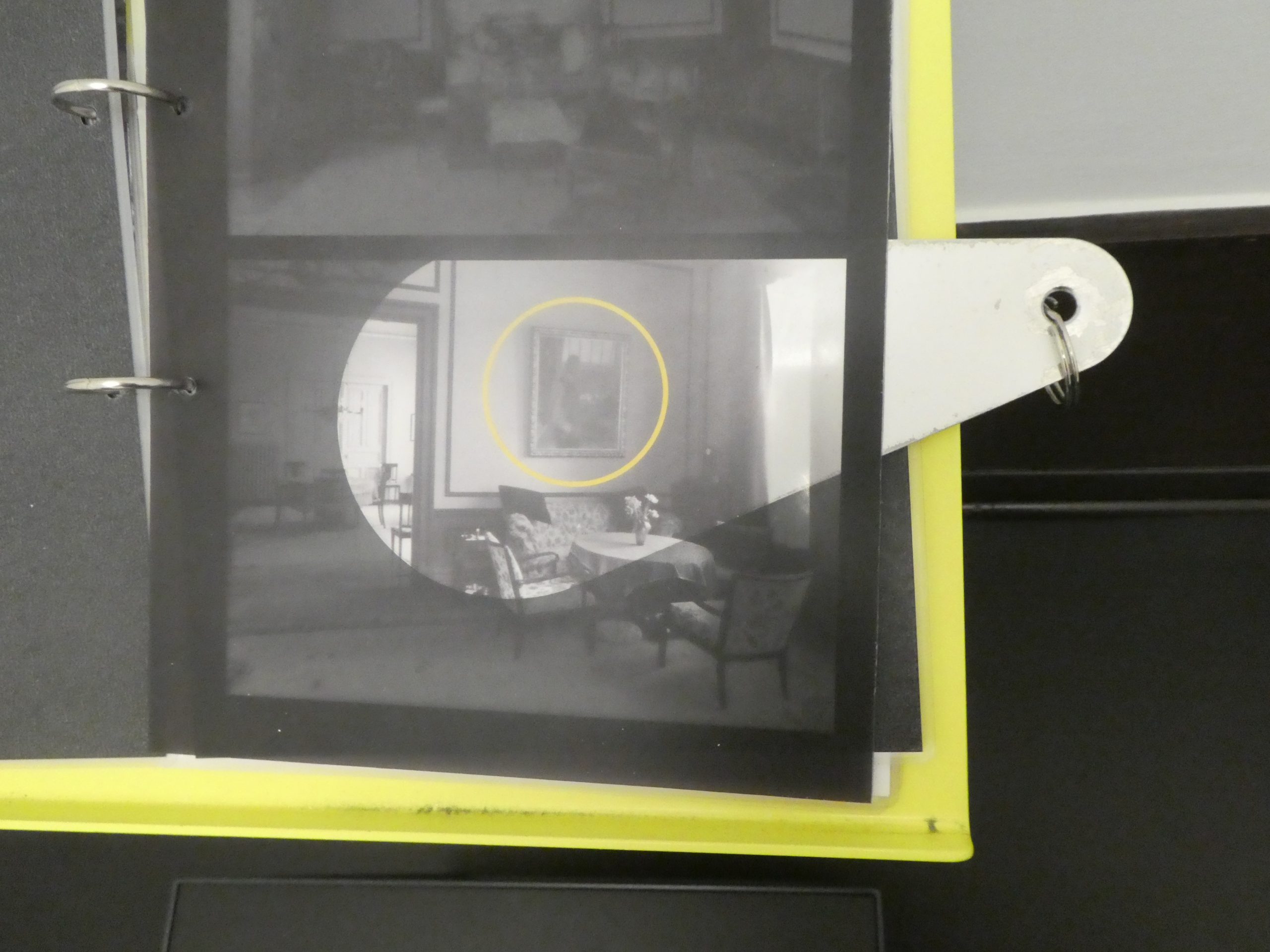
    This is the self-portrait painted by Franz Nölken, a German artist who was killed just before the end of the First World War. The artwork was painted in 1904 and it was owned by a Jewish family named von der Porten. They decided to flee to Belgium in 1938 and they tried to sell this painting to the Kunsthalle, who rejected it. However, in 1939, the gallery acquired it from a private dealer in exchange for another artwork by the same artist that they had in their collections. It’s not known how much the art dealer paid for it, but it was likely only a fraction of its worth at the time.

    This is a photo of the artwork when it was owned by the von der Porten family, who were able to flee Hamburg. Sadly, Frieda von der Porten and Dr. Ernst von der Porten both killed themselves in 1940 when the Nazi hatred they thought they had escaped from engulfed them once again.

    With both of the owners dead, this artwork remained in the collections of the gallery. But it has recently decided to pro-actively find ancestors of these artworks, as part of the country’s “fair and just settlement”. With this artwork, the gallery has been unable to find any descendants, although its work continues.

  • Hamburg – Hamburger Kunsthalle (Portrait of a Sergeant by Ernest Meissonier)

    The French artist painted this artwork in 1874, towards the end of his career. This appears to be a painting of the French military from the end of the eighteenth century, with the soldiers wearing the chenille helmet from the period. The artist was also notable for his paintings of Napoleon himself, as well as the military during the Napoleonic Wars.

    The Kunsthalle put it much better than I ever could:

    “Meissonier, whose history painting enjoyed great popularity in France, as the early impressionism still met with widespread rejection, presented here six soldiers from the period after the French Revolution. They still wear the uniform of the Ancien Régime, while their helmet already with the badge the Republic is provided. The casual incident on the barracks yard shows a draftsman with a soldier standing in full gear and proud pose model. While the artist and the dog sitting next to him are staring at the sergeant with his saber, four other uniformed men are spellbound in the creation of the sketch. Noteworthy is Meissonier’s finely painted depiction, which impresses with its level of detail and the convincing reproduction of various textures.”

  • Hamburg – Old Elbe Tunnel

    The Old Elbe Tunnel was opened in September 1911 and there are two tunnel tubes, one of which is used by pedestrians and cyclists, with the other used by cars. It’s quite a complex set-up, with car drivers needing to use elevators to transport their cars down to the tunnel, and then lifts to get the car back up on the other side.

    I decided to walk down (it’s 24 metres), even though I slightly regretted that as there’s quite a drop on either side of the steps and I’m not very good with heights.

    The steps used to be escalators, but these were too expensive to keep maintained and so they’re back to steps. I could have just got the elevator down to the bottom of the tunnel, but that felt like cheating.

    I thought I’d just walk through the tunnel as an experience and I didn’t bother coming back out the other side, instead just walking straight back. It’s about a six minute walk each way (it’s 426 metres) and it seemed very well used given the number of people I saw. Although car drivers have to pay to be transported, it’s free of charge for pedestrians and cyclists.

    There are some ceramic reliefs along the tunnel walls, with a variety of different images.

    The plaque at the entrance to the tunnel.

    As an experience, it’s something rather different and it was an engineering marvel at the time that it was constructed. When they were building the tunnel the effects of Caissons Disease, linked to decompression, weren’t fully understood and three men died with hundreds more suffering from the effects.

  • Hamburg – St Nicholas’s Church (Museum)

    There isn’t much of St. Nicholas’s Church which is still left standing, but the crypt did survive and there is now a museum located within it. It’s not a large museum, but it tells the story of how and why the bombing of Hamburg took place, which was in reprisal for the German bombing of historic British (and other countries) cities. The museum also explains about how the previous church was lost to fire and how the replacement church was built.

    The previous church had burnt down during the great fire of Hamburg of 1842, so they reused some of the copper to make commemorative coins to help raise funds for the new building.

    This is an invite to the laying of the cornerstone of the new church on 24 September 1846. The church was designed by George Gilbert Scott, responsible for many Gothic churches in the UK and beyond.

    Parts of the shattered altar, which destroyed both the interior and exterior of the church during the Second World War.

    Items found during the demolition of the church.

    Some of the interior of the museum. The ticket includes both the elevator to the top of the tower and this museum, with the staff member at the entrance desk being particularly engaging and conversational. All in all, a fascinating site.

  • Hamburg – Hamburger Kunsthalle (Capriccio with Roman Ruins by Canaletto)

    I didn’t know what a Capriccio was and I just assumed it was just some place in Italy (although it also sounds like a delicious dish from Prezzo), but it’s actually a collection of buildings or ruins just placed together for the purpose of a artwork. Apparently this was a popular art form during the seventeenth and eighteenth centuries, although I’m surprised people didn’t want something a little more realistic.

    Canaletto painted this in 1740, pretty much in the middle of his career, and it seems that there is a problem throughout many of his works in establishing what was real and what was artificial. This is the only work of this artist that the Kunsthalle hold, other than a series of 31 etchings which I don’t think are on display.

    I think I prefer his paintings of Venice, Rome and London…..

  • Hamburg – Ibis Budget Altona

    Firstly, in fairness to the hotel, I did have a quick lie down before taking this photo, this wasn’t how they presented the room. It’s a typical Ibis Budget room, pretty much the same the world over. The room, including breakfast, was around £50 per night, which seems entirely reasonable to me as Hamburg isn’t necessarily the cheapest of cities to stay in.

    The breakfast selection, which was more generous than some other Ibis Budgets that I’ve stayed in. There isn’t always a great deal of consistency about the breakfasts, certainly compared to the very tight brand standard of what is offered in the rooms. The meat selection wasn’t great, so I went for the rolls, salad items, pastries and jams during the week. The bread selection was marvellous though, with some really nice rolls.

    A breakfast on one of my five mornings in the hotel. I particularly liked that the breakfast room never got too busy, it can be mildly frustrating trying to get breakfast and all of the tables are full. So, all in all, better than I had expected from the breakfasts.

    The staff were all friendly and helpful, all speaking perfect English and the atmosphere in the hotel was always relaxed and informal. It didn’t feel very busy during the early part of the week, but it felt slightly busier towards the end of my stay.

    There was no noise disturbance either internally or externally during my stay, with the room always being at a reasonable temperature. There isn’t a great deal of control over the temperature as it seems to be centrally set, but there was cold air circulating throughout.

    This is the Altona location from the chain, as Ibis do have other hotels in the city, and it’s around a sixty-minute walk to the city centre. I did that a few times, but other times I just got the subway, which is around a five-minute walk from the hotel. That gets into the city centre in around ten minutes, so the hotel is as central as I needed it to be.

    All told, I’d stay here again, there were no problems and the service was always friendly. It’s also one of those hotels which is keyless, with entry to the room being via a six-digit code number.

  • Hamburg – Hamburg Airport Lounge

    Located towards the top of the airport terminal, this lounge was one of the airiest and open that I’ve been in, all very comfortable.

    That’s Haribo in the middle, unlimited Haribo. Inwardly I was beyond delighted, but externally I hope no-one else noticed just how wonderful I consider unlimited sweets to be.

    Unlimited bananas. Can’t say I was particularly excited about these.

    A soup machine, and next to this was a cooker which had hot dogs in, which isn’t unusual in lounges in Germany and Poland. Perhaps it should be more common in lounges in the UK, but I’d rather they introduced unlimited Haribo first.

    A selection of rolls, cold meats, olives and pastries, and they were all fresh and tasted of a decent quality.

    I liked these tables, although there was a choice of different seating types. These tables had power available and comfortable chairs, being at the perfect height to use a computer.

    My first plate of snacks, very moreish, so I had several more plates.

    As airport lounges go, this was towards the better end of the scale. The lounge wasn’t particularly busy, it was comfortable and it seemed organised. As for cleanliness, it would have been hard for the staff to have made it any cleaner. They were busy vacuuming the floors, cleaning tables and collecting plates for the entire time that I was there. Indeed, I’d say this was the cleanest lounge that I’ve been to.

    There are toilets within the lounge complex and a selection of magazines and newspapers (I don’t mean these are in the toilets, the magazines and newspapers were in the main part of the lounge). I didn’t partake in the alcohol options, but there was a suitable range of beers, wines and spirits. There were juices and also a self pour soda machine which I took a particular liking to. By this I mean I liked the soda that came out of it, I wasn’t that interested in the machine itself.

    I had access to the lounge through Oneworld status, although it’s also part of lounge schemes such as Priority Pass. The signage isn’t brilliant to get there, but it’s on the top floor, it’s probably easier to get there by lift, but there are also two sets of escalators which got up there. All in all, entirely satisfactory.

  • Hamburg – Hamburg Airport (Button on Screen)

    I get excited by the most ridiculous of things, but this information board was very useful because of that button at the bottom of the screen. It can be a little frustrating to stand in front of these when it’s on screen 4 of 4 and I want the information that will be on screen 3 of 4. The Germans have solved this issue by putting a button onto the screen to allow passengers to skip screens, quite marvellous.