
[This is from August 2018, but I’ve reposted it to fix the broken image link for the photo that amused me at the time….]

This isn’t particularly amusing, but this is certainly my sort of superstore 🙂
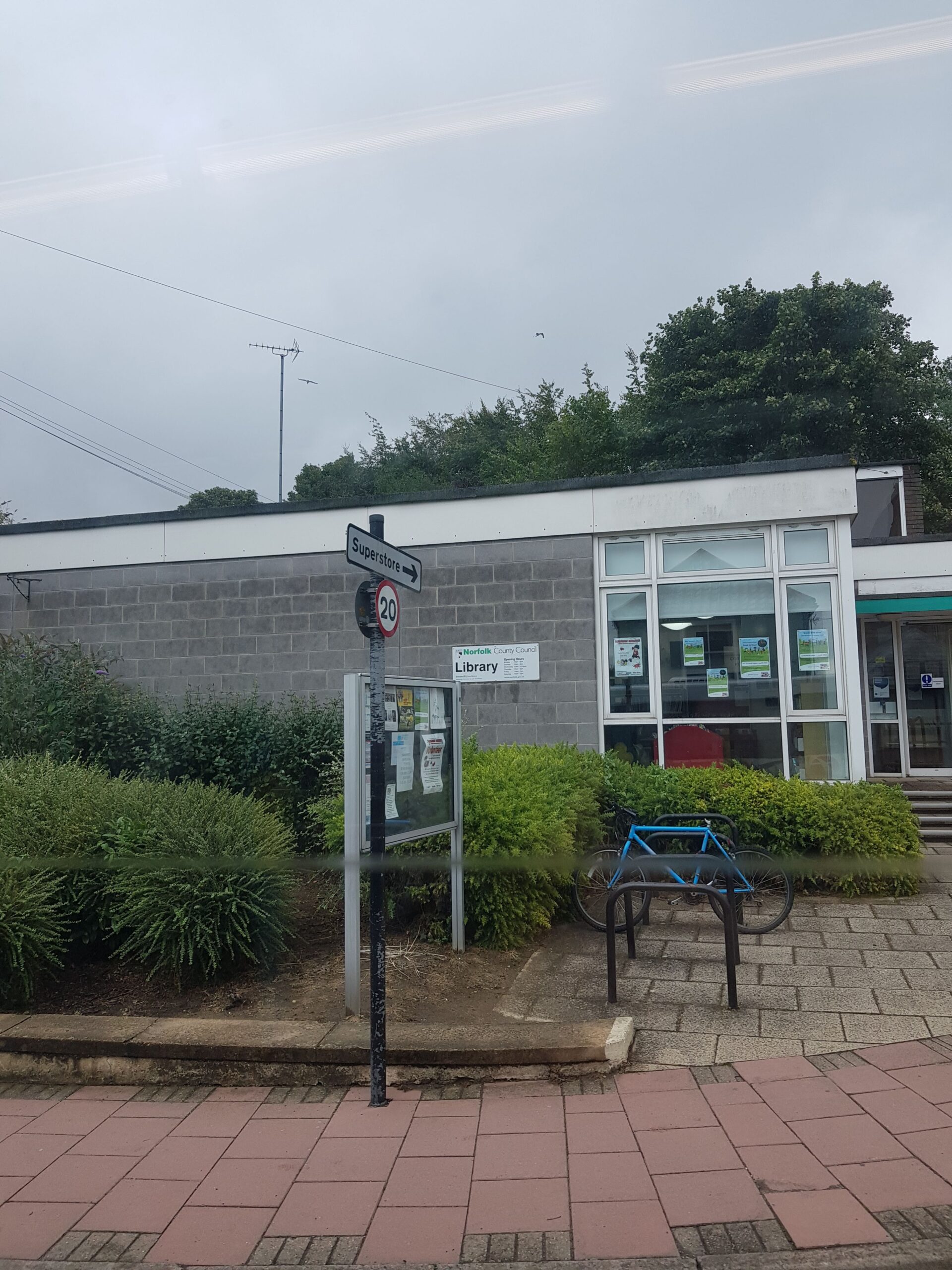
[This is from August 2018, but I’ve reposted it to fix the broken image link for the photo that amused me at the time….]
This isn’t particularly amusing, but this is certainly my sort of superstore 🙂
[I originally posted this in August 2018, but have reposted it to fix the broken image links]

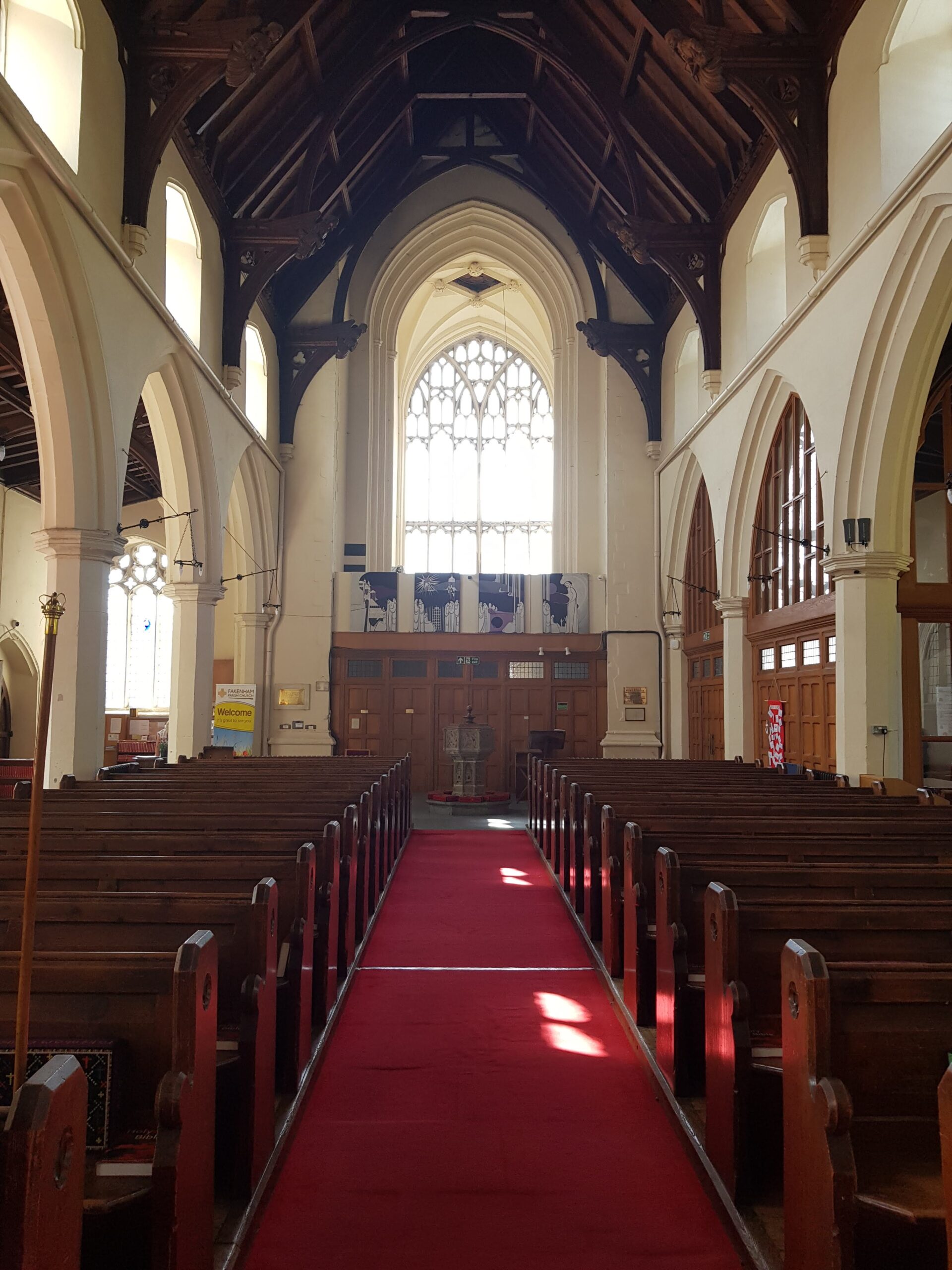
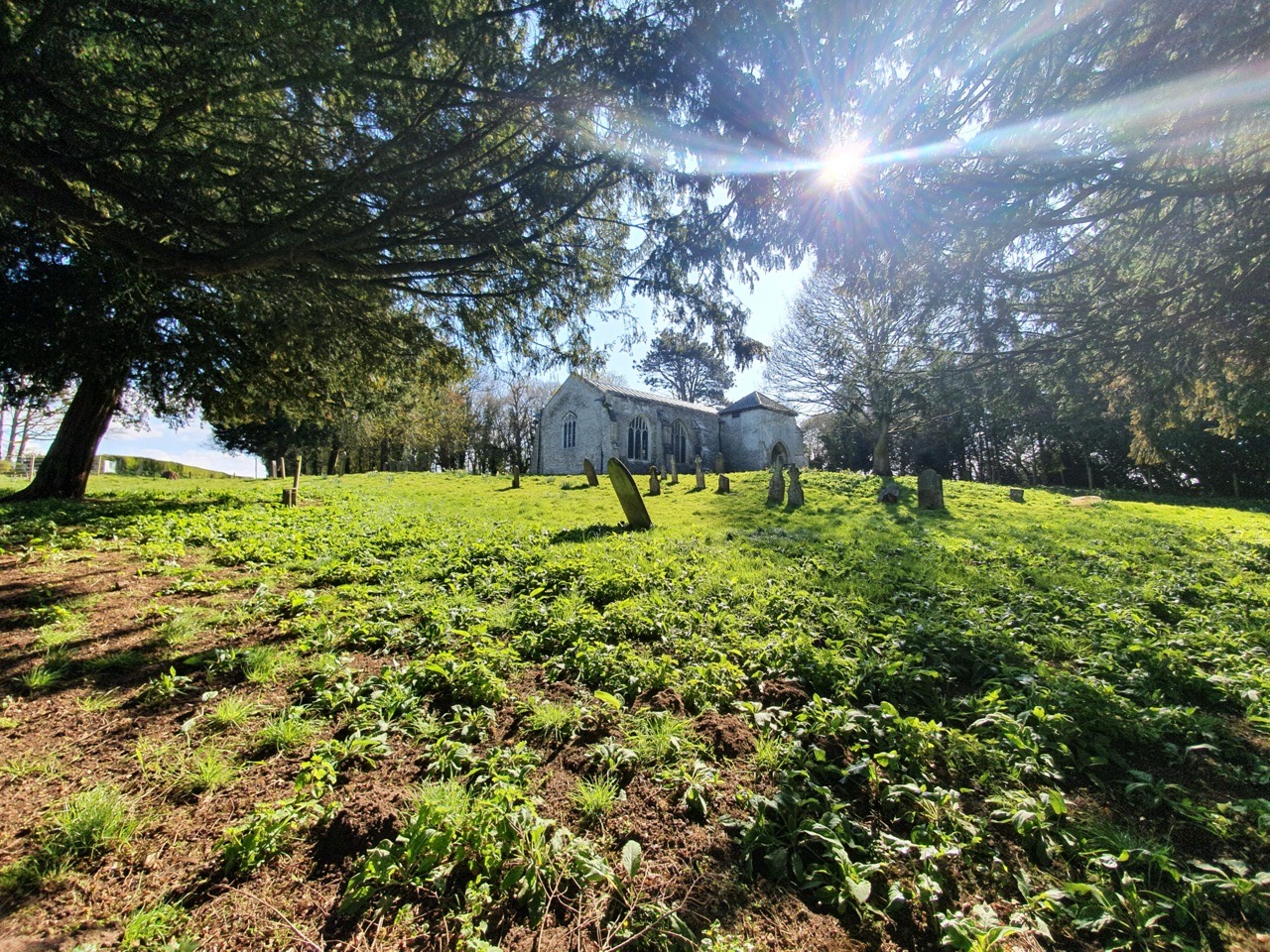
Fakenham’s parish church is centrally located in the town and there has been a religious building here since Saxon times. The main structure of the church dates to the fourteenth century, with the tower having been added in the fifteenth century.

The doorway.

The bright and open nave. The local newspaper in November 1863 wrote about the church’s extensive restoration and commented that the two aisles were formerly two chapels, the one on the south was dedicated to St. Mary and the one on the north was dedicated to St. Thomas.
The paper added that “the church has a noble appearance externally and it is to be deeply regretted that such a fine edifice well situated on high ground should be hidden by high buildings which stand between it and the public market place, from which it would be so noble a spectacle.

The grand wooden roof which dates from the Victorian restoration.

One of the sculptures within the wooden roof.

The fourteenth century chancel.

The font dates to the fifteenth century, although one of its panels has been removed and it’s thought that this happened at the time of the Reformation.

Some rather colourful kneelers on the Victorian pews.

A memorial to Private William Daniel Blomfield, a local resident who died on active service. He died of illness at Bloemfontein in South Africa during the Boer Wars.
[I originally posted this in August 2018, but have reposted it to fix the broken image links]

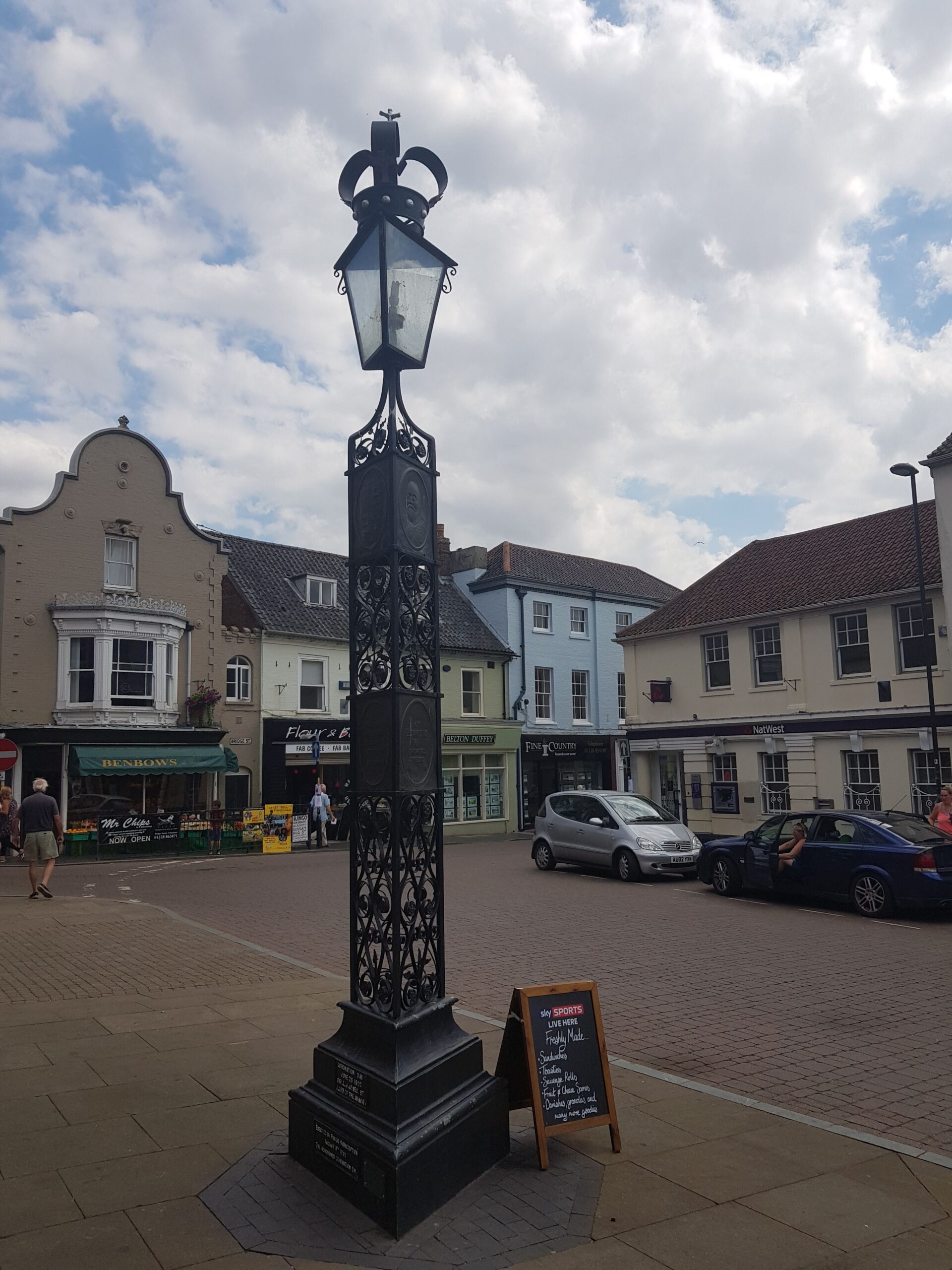
This lamp-post, which was funded by public subscription, was erected in 1902 to mark the coronation of King Edward VII as the country’s new Monarch.

The coronation date for the King was originally set to be held on 26 June 1902, but King Edward got an abscess and it had to be delayed. I can imagine the irritation that this caused to the people of Fakenham, who then had to go and buy a second plaque. All was well though for the second date, and the Coronation went ahead on 9 August 1902.

This panel notes the creation of the Royal Manor of Fakenham, linking the town to the Royal Family.
[I originally posted this in August 2018, but have reposted it to fix the broken image links]

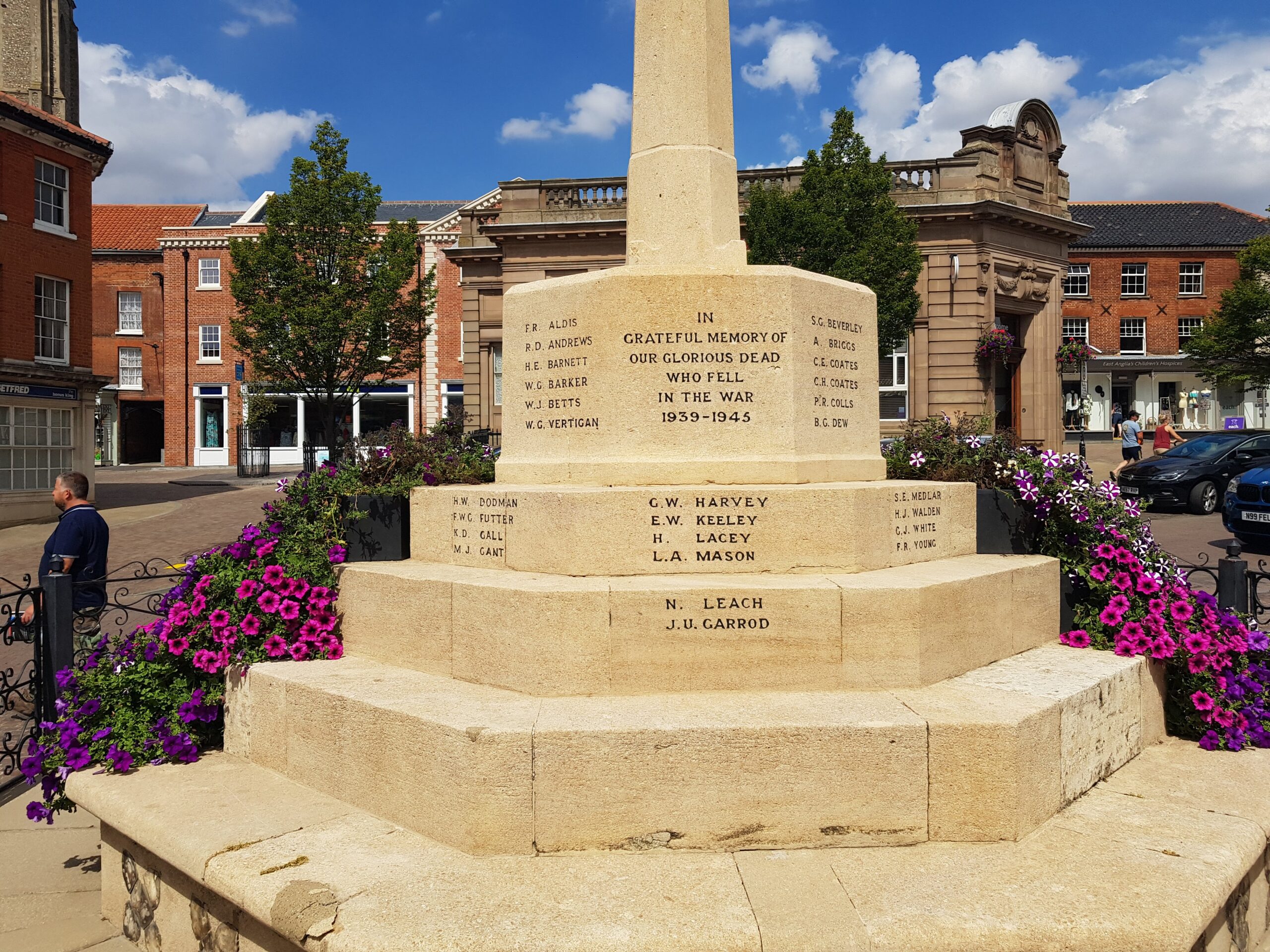
The town’s war memorial was unveiled in August 1921 to mark those who had died during the First World War.

There are 96 names of those who died during the First World War, 27 names for the Second World War, 2 names of those who died during the Korean War and 1 name from the Iraq War in 1954. There’s a full list of those who died at http://www.roll-of-honour.com/Norfolk/Fakenham.html with five names having been added later (two from World War Two and those who died during the Korean and Iraq conflicts). Details of these five men are listed at http://www.edp24.co.uk/news/the-heroic-tales-behind-the-new-names-on-fakenham-war-memorial-1-2963865.

It’s a nicely presented war memorial and it’s centrally located in Fakenham.
This was our fifteenth walk in preparation for the 2021 LDWA 100.
WALK NUMBER: 15 (Wells and Fakenham Railway and Shut Pubs Meander)
DISTANCE COVERED: 19 miles
NUMBER OF NATHAN’S FRIENDS WE “ACCIDENTALLY” BUMP INTO: 0
SUFFICIENT BEER CONSUMED: No (but better than previous visits)
PUBS VISITED: 2 that were open, 3 that were closed
WEATHER CONDITIONS: Warm and too sunny
ATTACKED BY ANIMALS: No
NUMBER OF SNAKES SEEN: 0
This was our last longer walk before the LDWA 100, we’ve got just one short walk to recce part of our 100 route left now. It’s getting really quite close, but more about that on this progress update of LDWA entrants.

I arrived at the bus stop at Anglia Square nice and early, giving me chance to have a Greggs, have a little sit down and then calmly wait for the bus. Nathan turned up about eight seconds before the bus arrived. I don’t know how people don’t get stressed doing that, my friend Liam is the same.

We had decided that we’d have a Wetherspoons meal to start the day off, which is a traditional breakfast and refillable coffee in The Limes in Fakenham. I was very annoyed that the egg wasn’t particularly good on my breakfast, primarily as Nathan’s egg was far better. But, life’s too short to dwell on such things and I’d calmed down within three hours which shows just how I’m able to put these things into perspective (although I’ve got post-annoyed now writing about it).
Nathan was keen to get going after we’d finished our meals (his with a delicious egg and mine with a less delicious egg) so I didn’t even get a second coffee, but I didn’t say anything. Nathan of course had more energy than I did as he had been given a very delicious egg for breakfast. Incidentally, and of relevance to nearly no-one, you don’t get a tomato (or half a tomato as Dave Morgan would point out) on the traditional breakfasts anymore, unless you order the vegetarian option.

The walk started by going through Fakenham and this little arrangement didn’t seem ideal near to the church.

Robins, which I decided were a sign of something. I was hoping they were a sign at the spirit world’s annoyance that Nathan got a better egg than me at breakfast, but I think they were guiding us in a different way. Nathan mentioned that ideally I’d only take five photographs, and I thought he meant in any one spot. But he meant all day. Anyway, I ignored that as I’ve got a blog to write.

I’m not entirely sure what delights this once held.

We had some good fortune here, and perhaps that’s related to the robins. Komoot had failed us and tried to send us down some paths that weren’t public rights of way, and indeed, which had big signs saying that they were private. We wondered whether we could sneak through this gate, but thought we probably shouldn’t as it appeared it might be the garden of this former railway crossing building. By good fortune though, the property owner shouted over that we could walk down there, which meant that we got to see the delights of the former Wells to Fakenham railway line.

And here it is, the track has been lifted, but the route is clear.

This is a map from the 1920s (ignore the cursor) and Fakenham is in the south and Wighton (where we were heading) is towards the top of the map. Wells is just to the north and that stretch of the line is still in place to Walsingham, which is used by a heritage railway. The line had opened in 1857 and was closed to passenger traffic in 1964, although remained open to freight until the 1980s. If it had remained open as freight just a few years longer, then it might perhaps have had a chance of being returned to passenger usage, but that ship has most definitely sailed now.

Some rather major construction work has taken place here to plough the line through one of Norfolk’s hills, I have a lot of respect for the speed in which the Victorians built these lines.

The line carried on and we saw pretty much no-one all day walking down here. I can’t think that this line would ever be reinstated, but there are very few technical obstructions that would prevent it.

This is the ford that crosses over to North Barsham, fortunately with a little footbridge option. There’s a short stretch of railway line that is inaccessible here, as Nathan discovered on the way back when he tried to walk down it. I didn’t bother trying, it looked too thorny for me.

All Saints Church at North Barsham, which I wrote about separately.

Some of the bridges along the former railway line were still in place, but this one has been removed.

The Catholic Basilica of Our Lady of Walsingham.

As noted on this sign, part of the former railway line has now been turned into the Pilgrim Way, a permissive footpath.

This is the location of Walsingham railway station, which was in use between 1857 and 1964. There’s another railway station in Walsingham now, used by the heritage railway.

The railway station was purchased by the Russian Orthodox Church in the 1960s and they still use it today for services.

I had hoped that we could walk down a footpath by the side of this narrow gauge heritage railway, but there isn’t a footpath and the railway has locked the gate. But, this is the start of the heritage line that goes from Walsingham to Wells. That meant the section of the walk to Wighton was on the road, which wasn’t the most exciting stretch of the expedition. We had anticipated that the walk might be a little colder as there would be some wind from the North Sea, but there wasn’t and I thought it was too hot.

Nathan had planned our walk to end at Wighton, and although we had wanted to walk further, we were confined by the times of the buses. This gave us time to look at All Saints Church in the village, which I’ll write about separately as there’s a lot I want to say. There was a little incident here when the tower fell down in 1965 and collapsing towers seemed a common theme of the churches we saw on this walk. The cost of repair was simply too high for the church, so the tower (or what was left of it) was made safe and normally that would have been that. However, a man named Leeds Richardson in Canada noticed what had happened as he had traced his ancestors to the church, and he decided (with ridiculous generosity) to fund the repairs.

The interior of the church.

We then popped into the Carpenters Arms in Wighton, where the service was friendly and the beer was refreshing. There’s perhaps more that can be done with the beer options, but they proved sufficient for our purposes. We were tempted by the food options, as they looked delicious judging from other tables, but we decided we’d see what was available in other pubs. That wasn’t perhaps our greatest ever choice.

This is something of a remarkable survivor as a pub, so many are lost because they’re turned into residential properties. Even more surprisingly, the village had three pubs in 1910, but for a period in the early 1980s it didn’t have any. The Carpenters Arms then re-opened in the mid 1980s as the Sandpiper, but was renamed back again in 1997. The pub has shut for another two periods since then, but has been transferred from being an Adnams pub to being free trade.

We then walked back along the road and I’m not sure when I last visited Walsingham, but it’s not in recent years, and it’s an attractive place. It’s a place of pilgrimage and I can imagine that it gets much busier in the summer months.

The well at the The Shrine of Our Lady of Walsingham. I hadn’t particularly planned to go in here and I mentioned this to Nathan, who a little too sardonically for my liking said “but yet, here we are”. This doesn’t translate to text very well, but it was one of his better quotes if I’m being honest.

The Bull Inn in Walsingham, which was closed.

This was listed on the town’s map as a pump. It might well be a pump, but that’s a clearly lock-up for raucous locals (in the past, I think Walsingham is a bit too salubrious for that today).

The Black Lion Hotel in Walsingham, which was closed.

I didn’t say anything about Nathan’s sun protection device.

This is the rather delightful, and entirely not understated, East Barsham Hall which is a Tudor mansion house that was ruined by the nineteenth century. Against the grain, as this was a period when country houses were being knocked down at a rate of one per week, this hall was fixed up again in the 1920s and has remained as a substantial residence since then. David Mitchell wrote a Guardian article about it, I can imagine it’s not the worst place to live, but the upkeep isn’t going to come cheap.

This is the former Primitive Methodist chapel in East Barsham which opened in 1887 and I struggle to see how they managed to get enough people to attend given the limited number of people who lived in the village. The history of the Primitive Methodists, which I’ll drone on about another time, is intriguing and they did attract many agricultural workers, which is perhaps how this worked. Anyway, this chapel didn’t last into the second half of the twentieth century and it is being heavily reconstructed into what I assume is a residential property.

The Barsham Arms, who decided not to open, but not update their web-site or correct their hours on Google as most other pubs have managed to do. I consider this a little unfortunate, it makes it hard for people to support the pub trade. Anyway, this caused a problem for our plans, although it gave us more time in Fakenham.

The closure of the Barsham Arms also gave us more time to look around All Saints church in East Barsham, but more about that in another post as this was another church with some considerable history.

Retracing our route along the former railway line, that meant we arrived back into Fakenham with a couple of hours to spare, and we wondered how busy the Wetherspoons would be on a Friday evening. Quite busy was the answer, but there were tables spare, so we decided that this was our best option. The fish & chips with a pint came in at £8 each, a price point that it’s hard to complain about and the food was perfectly acceptable. All rather lovely.

Brewdog Punk IPA and this is quite a suitable drink after having walked 20 miles or so, refreshing and with some tropical fruit tastes.
On another matter, there was then the exciting bus debacle on the way back, but I’m satisfied with First’s response on that so we won’t dwell on that.
As mentioned earlier, this is the last long walk that Nathan and I are doing before our LDWA 100 effort on the first weekend in May. We’re trying not to think about it too much, but I wouldn’t say that we’re particularly excited about walking the bloody thing. We haven’t done any very long distances as training, as the lockdown made that too difficult to organise, so whether we can make the step up to 100 (excuse the pun) is perhaps unlikely. But we’ll try our best…..
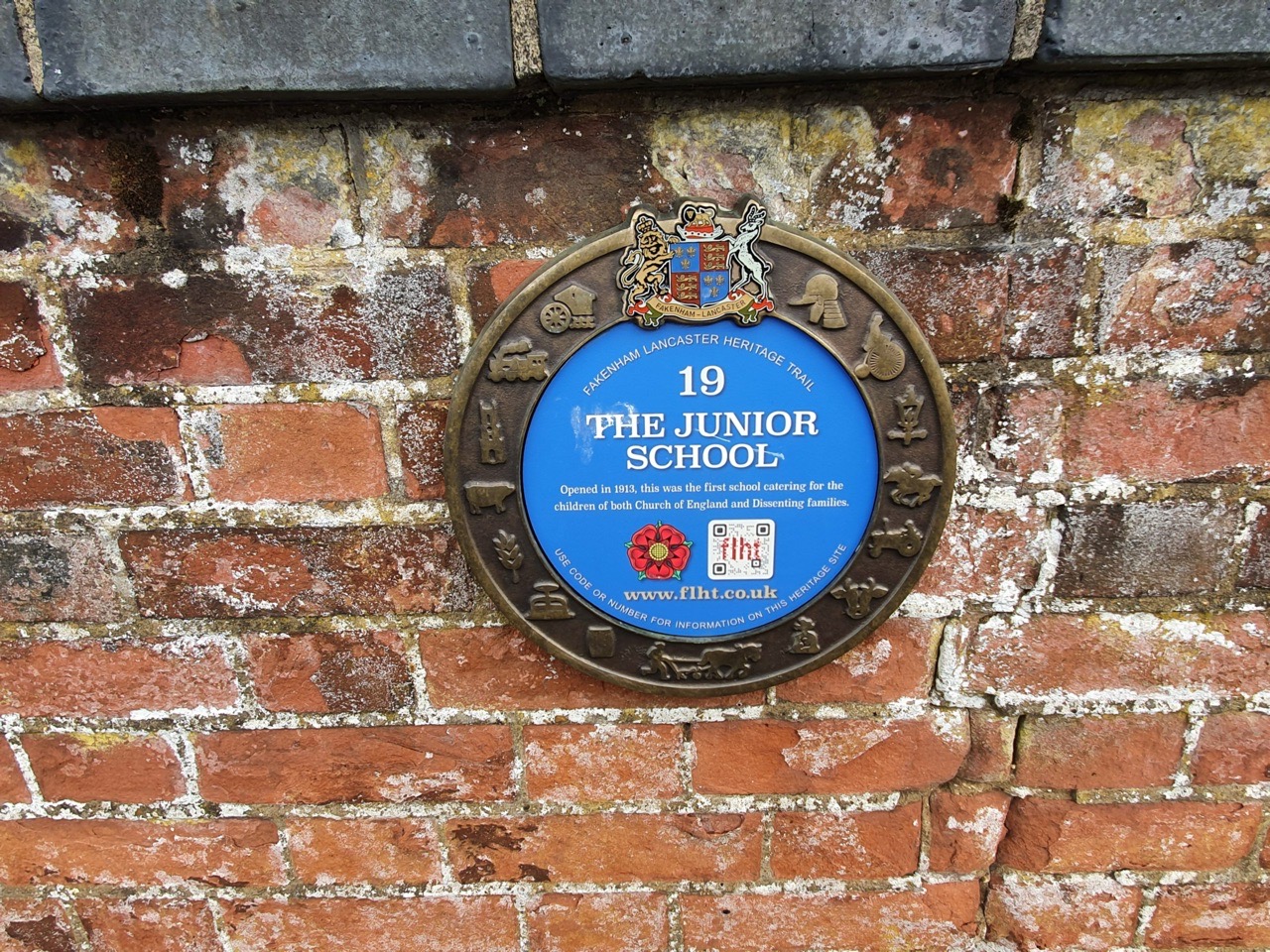

Part of the Fakenham Heritage Trail that I’m working my way slowly around, this is number 19. The school was built in 1913 as a school for boys, girls and infants, with a big dividing wall between the boys and girls. This was removed in 1935 and now serves as Fakenham’s junior school.

This is part of the marvellous railings project that was designed by the children to mark their centenary and there’s a full text of the wording at the heritage trail’s page at https://www.flht.co.uk/19-junior-school.html. As a little side, I’m a little disappointed that the school’s web-site manages to make no reference to their history and a search term of the word ‘history’ produces no results on their pages at all.
Another event to mark the centenary was the appearance of Michael Palin, whose grandfather Dr Edward Palin was present at the opening of the school on 21 May 1913. Palin’s father was also born in Fakenham, so there something fitting about his presence at the event.
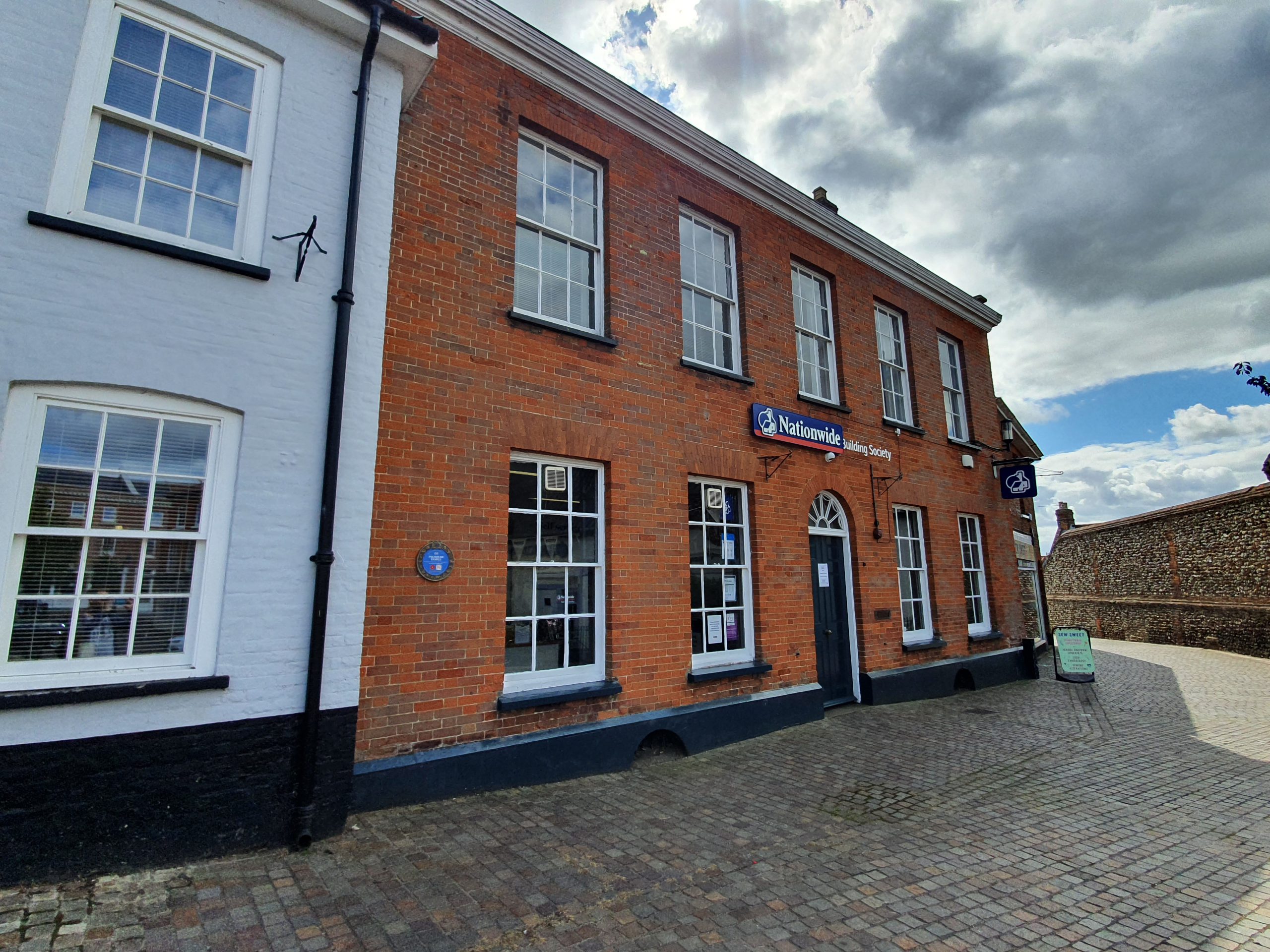

Working around Fakenham’s heritage trail, this is number 9 and it represents the Peckover family. The property that the plaque is located on is 14, Market Place and was originally known as 14, The Square. Used today by the Nationwide bank, it’s an eighteenth-century building which was owned by the Peckover family.
The Peckover family were Quakers who became important business people in Fakenham and Wisbech and owned much property in both locations. Peckover’s Bank was created in what is today’s the town’s Boots, which later became merged with Gurney’s Bank and then in turn this became part of Barclays Bank. Some of the family moved to Wisbech to set up banking operations there, with Peckover House being a large country estate which is now managed by the National Trust.
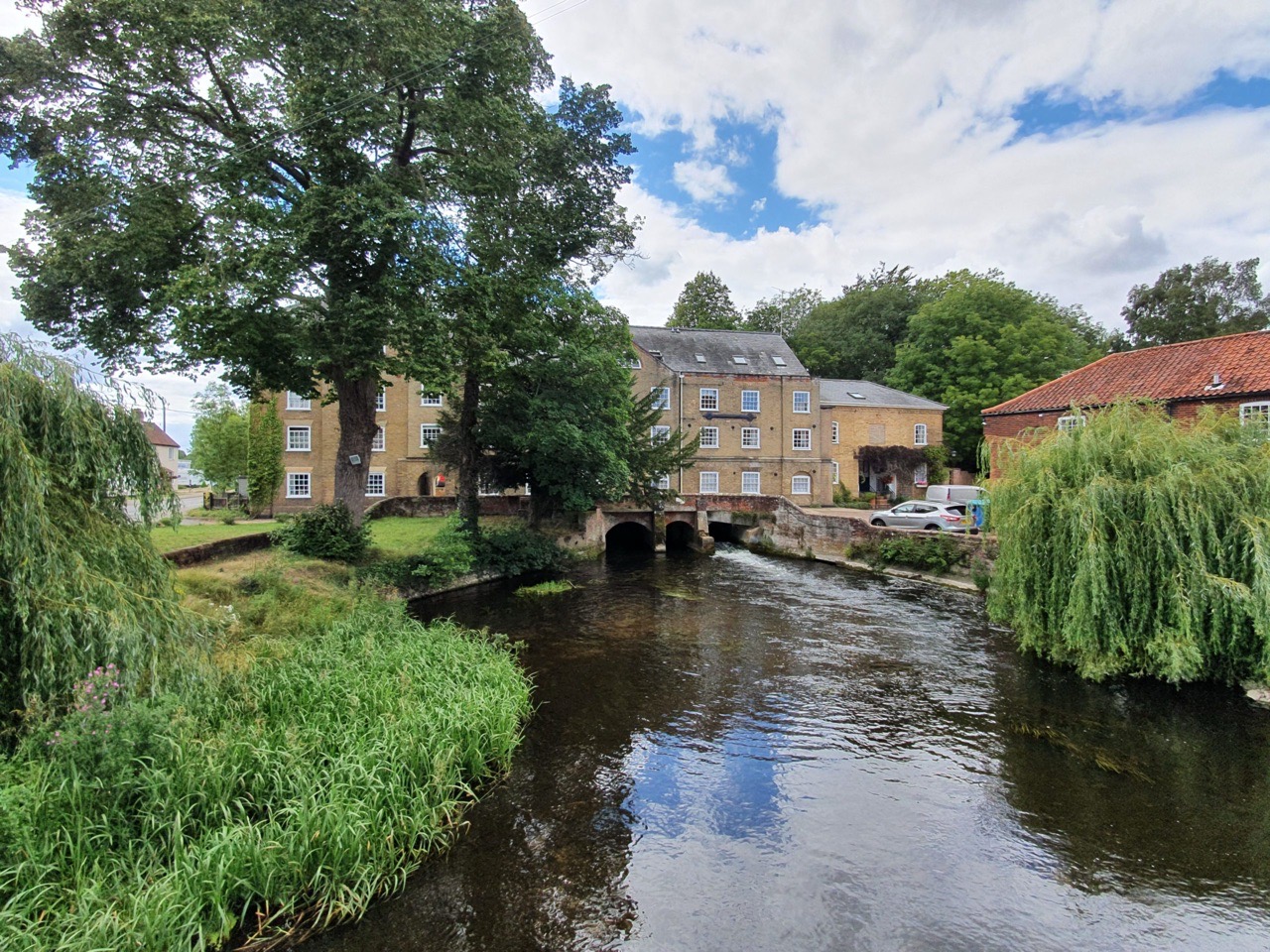

Slowly, but surely, I’m getting around the Fakenham heritage trail by visiting a few locations on it every time I come to the town. This is Fakenham Mill and there has been a mill here since at least 1240. A new building was constructed in 1620 and the route of the River Wensum was altered to suit the new structure.

The current building dates to 1720 and is now converted into residential properties. There’s plenty more about this mill at http://www.norfolkmills.co.uk/Watermills/fakenham.html.

Marked as the corn mill in this 1900 map, it was nearby to the town’s now closed railway station.
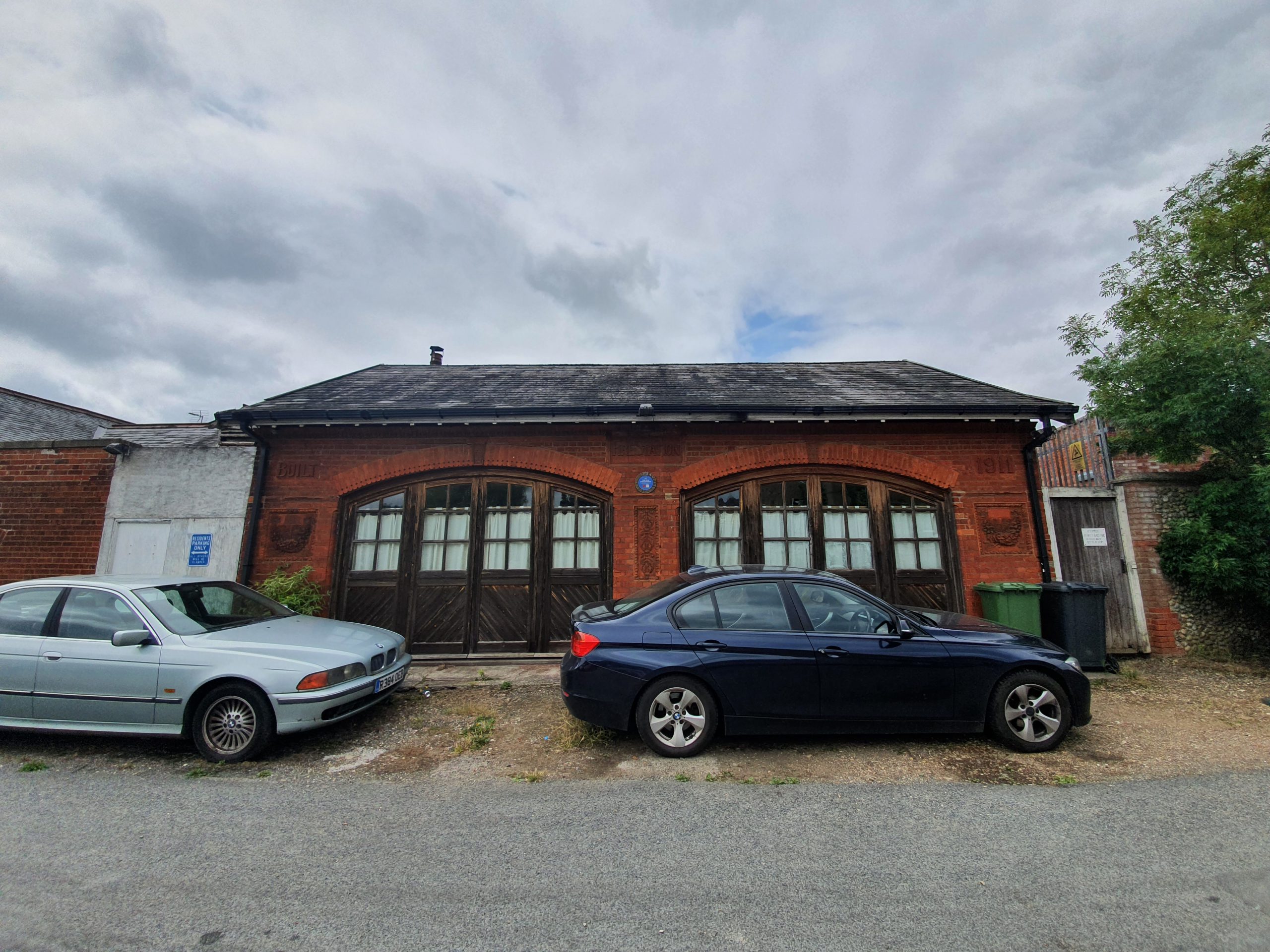
Since I was back in Fakenham today, I thought I’d tick off a few more heritage trail sights. Not that I took much care in this, I meandered about until I had found a few, it’s more exciting that way to stumble across stuff.

Some care has gone into this fire station building at Hall Staithe, which was constructed out of brick in 1911 (the fire station, not the staithe). The cars parked in front make it a little harder to see the building clearly, but it was clearly a functional structure. Well, functional for the height of fire engines at the time, probably not quite so useful for the current ones.

The decorative effort that has gone into the building and the heritage trail sign is also visible, noting that both then and now, the fire station is manned by volunteers. The new replacement fire station is much larger and it’s now located on Norwich Road in the town.
The heritage trail’s web-site has some glorious photos of how it used to look when it was in use.

I posted about the Fakenham Heritage Trail a few weeks ago, which is something new to the town to encourage locals and visitors to find out more about the town’s history. It is in my opinion an undeniably good idea, but unfortunately the trail has already been damaged.
One trail number plaque was stolen last week Gogg’s Mill, with a local councillor offering a reward for its return.


The above photos were posted on Facebook by Norfolk Orbital Railway, showing vandalism to their signage and also to the new plaque which was part of the trail.
What’s particularly sad is that the trail hasn’t even been formally launched yet. I hope that the council commit to replacing them and the police are able to do something about it.