Tag: Elbląg

  • Elbląg – Centrum Sztuki Galeria EL (former Dominican church of the Blessed Virgin Mary)

    Elbląg – Centrum Sztuki Galeria EL (former Dominican church of the Blessed Virgin Mary)

    There has been a church on this site since 1239, the same time as the Teutonic Knights came to the city and I remember visiting their castle in Torun. The Dominicans founded their monastery and they extended the building in the late thirteenth century. A large fire destroyed much of the building in 1504, but it was rebuilt and later that century a pulpit was constructed which is today in the city’s cathedral.

    The Dominicans had left the building in 1542, when they gave it to the city authorities, who then handed it to an Evangelical church. There was some reconstruction in the late nineteenth century, but there was major devastation in 1945 and a fire swept through the building. Much was lost and the building remained in ruins until 1959, when it was decided to turn it into an art gallery.

    There are still some ruined buildings to the side of the churchyard.

    The member of staff at the desk was helpful, but I think she was surprised to see anyone visiting, I suspect I was their first visitor of the day and they’d been open for a couple of hours. She showed me which bits of the building that I could visit, although first she had to rush around turning all of the lights on. There was a friendly atmosphere to the whole arrangement and the admission fee was low.

    I had seen a photo of this before and after the war in the city’s museum earlier in the day, sadly badly damaged during the Second World War.

    There is now a two floor metal structure within the church which is relatively recent, with this holding the art collections.

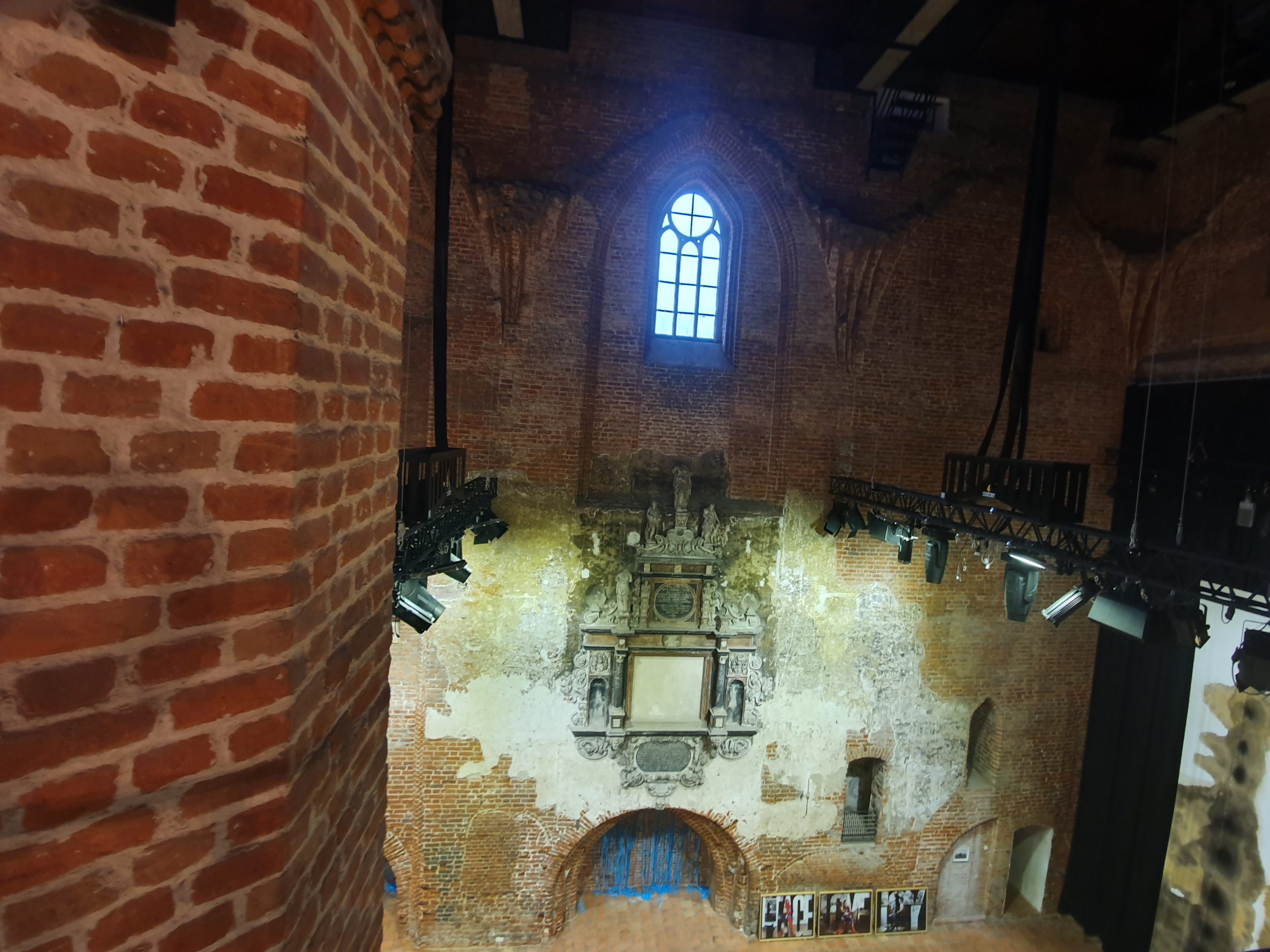
    The former nave of the church, with the two new floors visible on the right. I probably should have used the lift, as the metal steps are see through and I realised just how high I was by the time I reached the second floor. I’m not great with heights, but I bravely battled on.

    Looking past the blue, that’s a very Germanic arch.

    Without being negative, as I understand that the art gallery arrangement has secured the building, but I didn’t engage with the artistic collection at all. I thought in places that it intruded on the building, the heritage of the church just undermined the works within it, they weren’t strong enough to cope with their environment. This artistic installation of water dripping into buckets (or I assume it’s an installation, it’s just randomly placed there) is rendered pointless because of the grand nature of what is around it, there’s no point trying to find meaning in an artwork when it’s surrounded by a building entirely dripping, if I can verge from literal to metaphor meanings, with stories. As a balance, I did try and find out more about this exhibit on the gallery’s web-site, but there’s nothing.

    Many of these tombstones are damaged, but they’ve at least survived in some form.

    When I went into this huge space the lights were off, and it had more of a charm and atmosphere to it. I understand the need for lights with regards to an art collection, but they take away from the space a little. I’m trying not to sound negative about the art collection, because that is what saved the building and makes it viable and accessible today, but it’s an uneasy mix in places. I’d imagine that, like me, a fair number of people are really visiting to see the building itself, not necessarily to see the galleries. With the exception of a sign externally giving the history of the church, there’s nothing internally giving further information about the building’s heritage. Nor either is there anything on the gallery’s web-site, which is perhaps a little disappointing.

    One of the aisles (which is perhaps the side of a former cloister) is also accessible, all carefully restored.

    Some of the tombstones and memorials which are located in the aisle of the church, all safely preserved now. I don’t know enough about the church locally to know if this could have remained an active religious building if it wasn’t for the Second World War, but I’m pleased that it has been saved. Given that the church was Protestant, the transition from Germany to Poland certainly meant it would have had a very different future. The building remained derelict until 1959, as this city took some time to recover, and the former church could easily just have been bulldozed. I like that there are many festivals and events that take place here, it’s a really thought provoking environment. I didn’t engage much with the artworks here today, but I like what the whole place has become, but I still feel as if I could have been told more about the art collection and the building itself.
  • Elbląg – Photos at Night

    Elbląg – Photos at Night

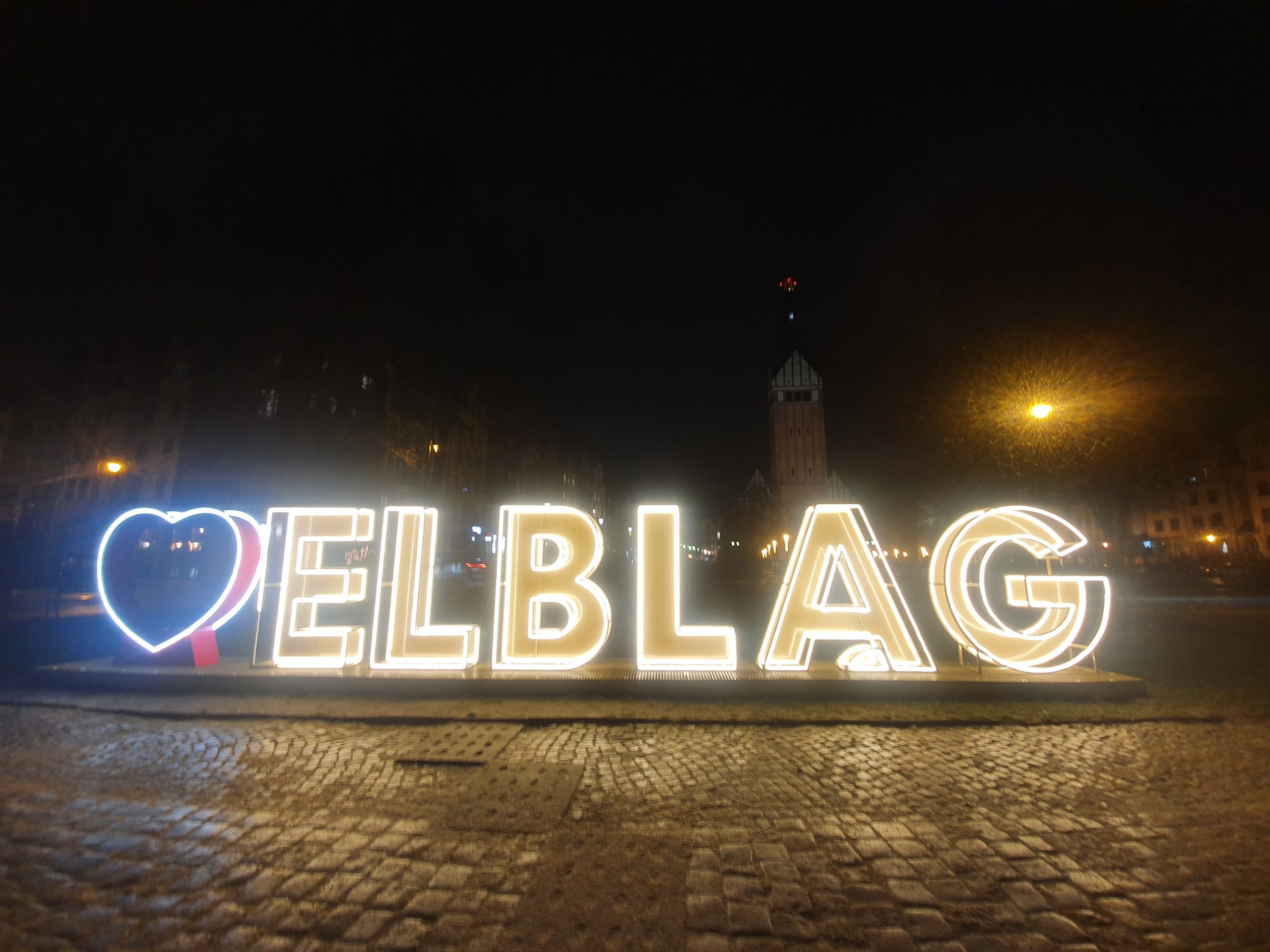
    I’m not intending to win any prizes with these photos, a couple of which aren’t quite level, but an initial indication of the city of Elbląg in the evening. The city is quiet tonight on a January evening and the restaurants all look nearly empty. It’s reasonably warm and although there’s more snow on the ground than in Gdansk, most has melted. I haven’t seen much lit up beyond what’s in these photos, which is the old market square area.

    As I mentioned in a previous post, I can’t quite capture in my mind the medieval charm of this once Hanseatic city, so much has been destroyed over the centuries, not least during the Second World War. There are some photos of the city as it was before the war at https://fotopolska.eu/zdjecia/m37662,Elblag.html?zakres=3&zdjeciaOd=1900&zdjeciaDo=1917.

  • Elbląg – Molto Bene

    Elbląg – Molto Bene

    I wasn’t sure what to expect from Elbląg, but it became evident immediately just how repaired it needed to be following the destruction of the Second World War. A fair amount of imagination is needed to picture the Hanseatic city as it once was and much of the reconstruction took place towards the end of the twentieth century and that is noticeable. Anyway, those initial impressions aside, my first place to visit in what is a new location for me was the cafe of Molto Bene which is in the historic old market area of the city.

    There was an old world charm to the interior and the staff member was welcoming and friendly. I was the only customer she had during my visit, with the exception of someone who purchased a coffee to takeaway. These places are doing well to open with all the limitations that they have at the moment, but it’s sad to see any cafe with such little lunchtime trade.

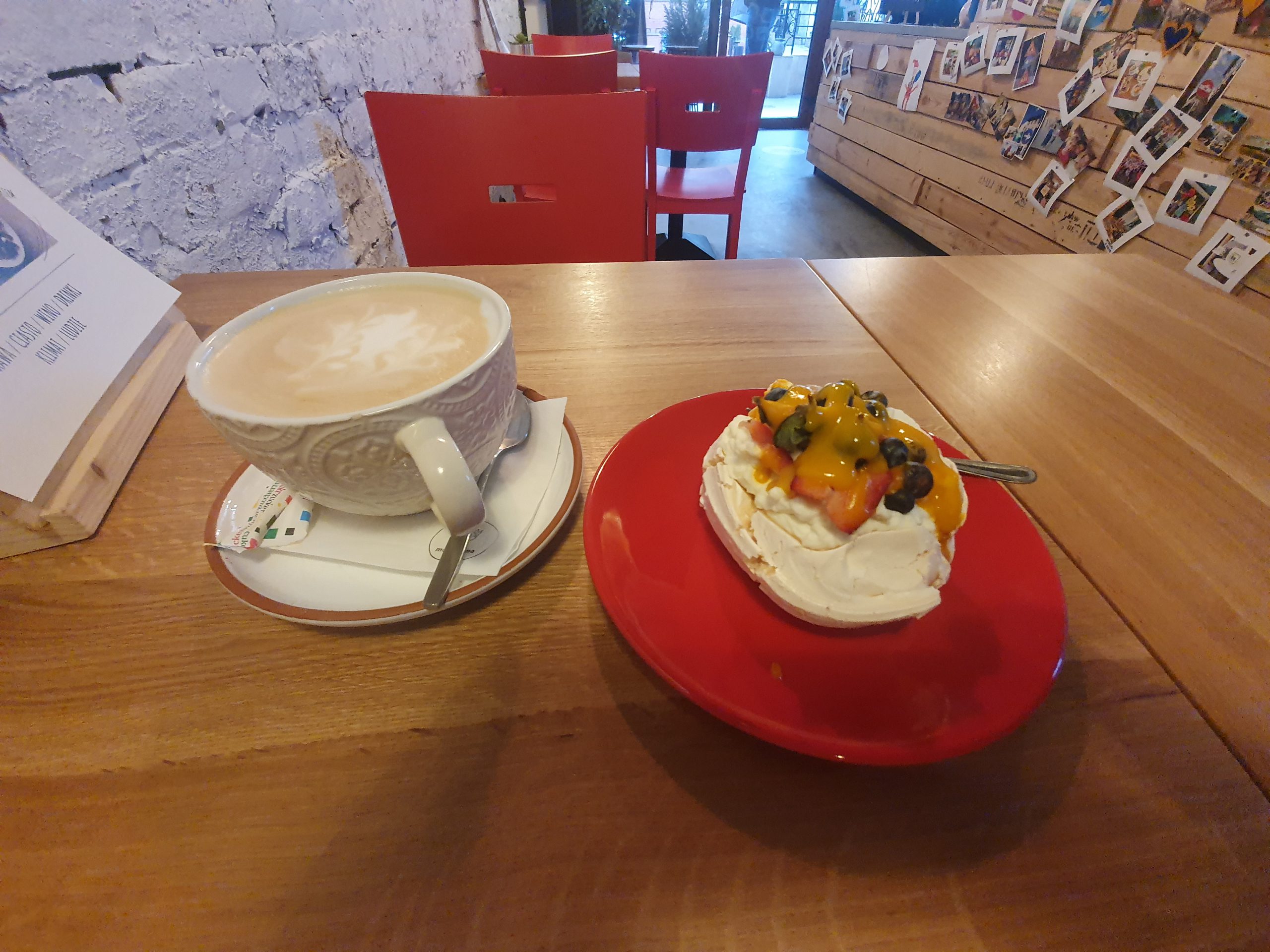
    I went for a large latte and a rather delicious meringue with fruit on top. I was entirely delighted with my healthy fruit option, with what I think was a mango puree and the firm exterior of the meringue and the melt away inside added some sweetness to the arrangement. All nicely presented, although they probably need new cups as they’re slightly chipped.

    There was certainly no issues with the quality of the food and drink here, nor was the welcome anything other than friendly. I hope that they get a suitable surge of custom in the summer months to make up for these challenging times.

  • PKP – Gdańsk Główny to Elbląg

    PKP – Gdańsk Główny to Elbląg

    This was meant to be a straightforward rail journey of just under one hour from Gdańsk Główny to Elbląg, using a PKP Intercity service.

    I’ve mentioned before that I find this to be the easiest way of seeing rail departures and arrivals, regularly updated yellow and white sheets. It’s far better than the UK system, with every stop listed so that it’s easy to understand where the trains are departing from and at what time. It’s surprisingly hard to get such clarity about the rail times and options when at a railway station in the UK.

    As an aside, this was the train to Berlin, which I had expected to be a little grander.

    And then to my slight disappointment, my 09:41 train started to show as delayed for nearly an hour. But just under it is a 09:44 train which is going to the same destination of Elbląg, it just takes a little longer. This gives me a dilemma as I don’t understand the Polish rail system well enough to know if I can transfer trains to that one, as I have a ticket for a specific train. It’s also a rural train (Przewozy Regionalne  or PR) which used to be part of PKP, but they’ve been given to the regional governments to operate, so it’s not the same company or set-up.

    As everyone got on the platform got on the train, I guessed that I could likely use this service. However, I’m not taking risks like that, so I went and asked the guard if I could get on his lovely train. He was friendly, grinned and pointed to get on. I was concerned whether he was grinning because he was excited that he could fine a passenger, but it transpired he was just keen to help. That friendliness seems to be path of the course in Poland, so it didn’t come as a complete surprise.

    What didn’t help was having my ticket checked a further two times by different guards, although they seemed satisfied with my ticket for the wrong train. The train itself was clean and modern, running to schedule and the signage on board was clear and timely.

    And safely into Elbląg, on time and without being fined or being told that I had the wrong ticket.

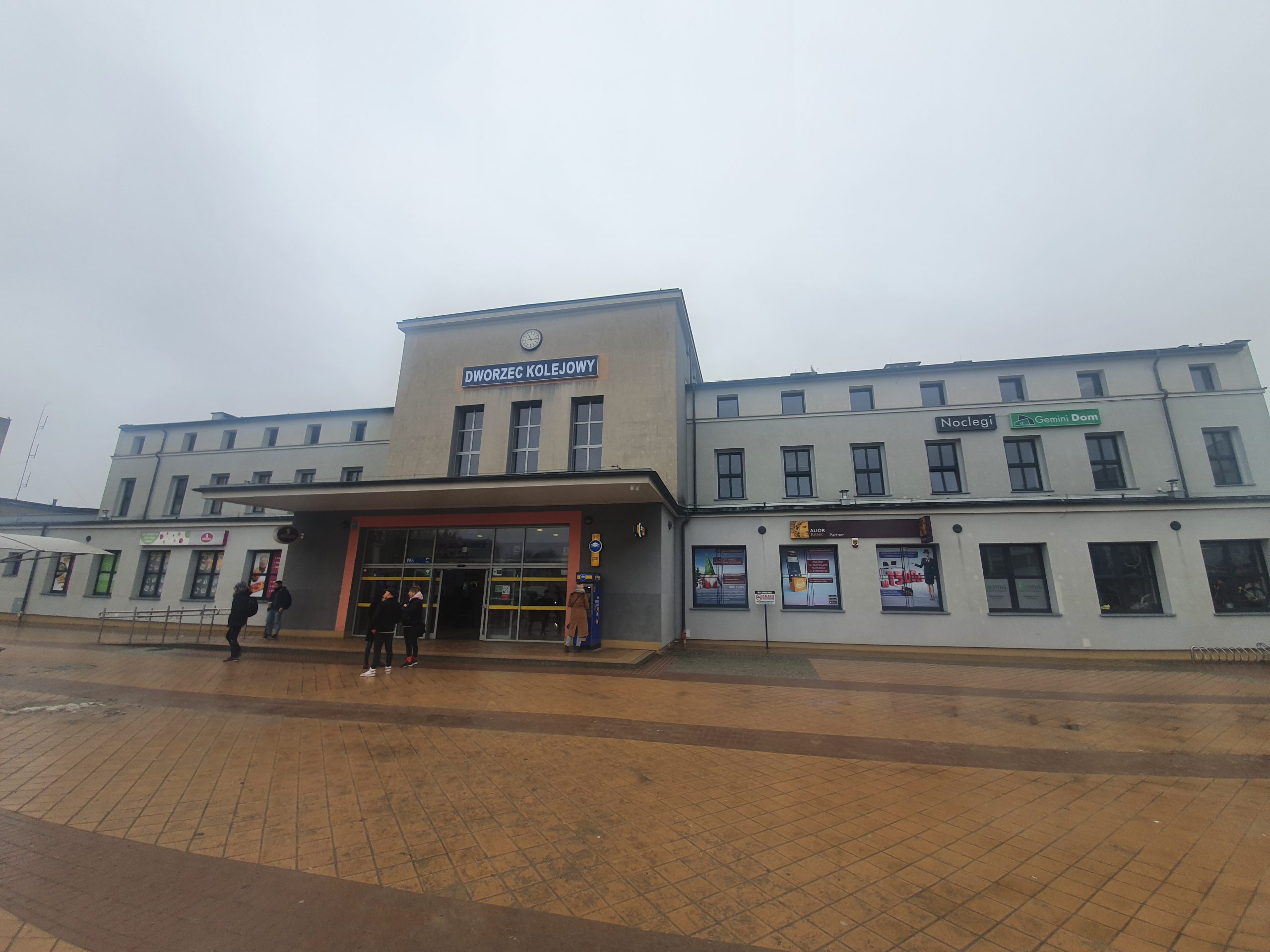
    It’s not the most glamorous of railway stations, but I was pleased to get there. There has been a railway station here since 1845, but it was rebuilt in 1937 and then repaired again following the end of the Second World War. On May 26, 1916, the German Emperor, Wilhelm II, arrived at the railway station on a visit to the city. Back then, the city was known as Elbing and was the second largest in East Prussia, the section of Germany which wasn’t connected to the rest of the country because of the Polish corridor.

    And the frontage of Elbląg railway station. Fortunately, everything went well, although I could have done without all of the confusion with the train delay. But I’m glad that I didn’t wait for my heavily delayed service, Gdansk railway station is undergoing modernisation and there’s not a great deal to do there at the moment.