Tag: Chiltern Railways

  • Chiltern Railways : Warwick to Royal Leamington Spa

    Chiltern Railways : Warwick to Royal Leamington Spa

    Off on a little day trip to Royal Leamington Spa, which cost just over £2 return, which seemed a fair price for the rail journey. This is Warwick railway station, opened in October 1852 on the Oxford to Birmingham rail line, which is a surprisingly basic and tatty arrangement at the moment (the station, not the rail line). The railway station isn’t a listed building and there’s little to excite anyone in terms of the architecture.

    Not much has changed in the area over the last 120 years, although the footpath that meandered across the railway tracks has now been replaced by a tunnel.

    The delightful (well sort of) tunnel under the railway track.

    This is the main set of buildings on the Birmingham side, but there were once station buildings on the London platform side as well, but these have been demolished for customer comfort (or whatever excuse they used) and replaced by a rickety old outdoor waiting room area. The buildings on the Birmingham side are reduced from when the railway station was reconstructed after a fire in 1894. That fire was substantial and had been caused by the overheating of a stove in the booking office, with the fire brigade being able to save some of the structure. The staff were able to smash down some of the internal wooden partitions in a bid to save paperwork and a large stock of railway tickets. The local press noted:

    “During the time that the fire was raging, Police Inspector Hall and a staff of constables preserved admirable order, and effectively prevented the quickly gathering crowd from interfering with the efforts of the Fire Brigade and station officials”.

    I slightly wonder what they through the crowd were going to do. The press also added that the debris was quickly removed and that:

    “The old station was built from designs by Brunel and was principally of wood. It is is hoped by the townspeople that the Railway Company will now take the opportunity of erecting a handsome station, with every convenience for the travelling public”.

    They did get a new station, but I’m not sure it had every convenience….

    Welcome to Warwick for a great day out.

    It’s about a ten minute walk into the Warwick town centre.

    An old milestone noting that it was 108 miles to London Paddington, although this is a little irrelevant now as the trains don’t go to Paddington.

    There are nearly no facilities at this station, there’s a taxi office, a very small waiting room and not much else, with no proper shelter on this side of the lines. There are no toilets either, which seems an omission for what should be a relatively important station.

    A Great Western Railways bench, probably from the 1930s.

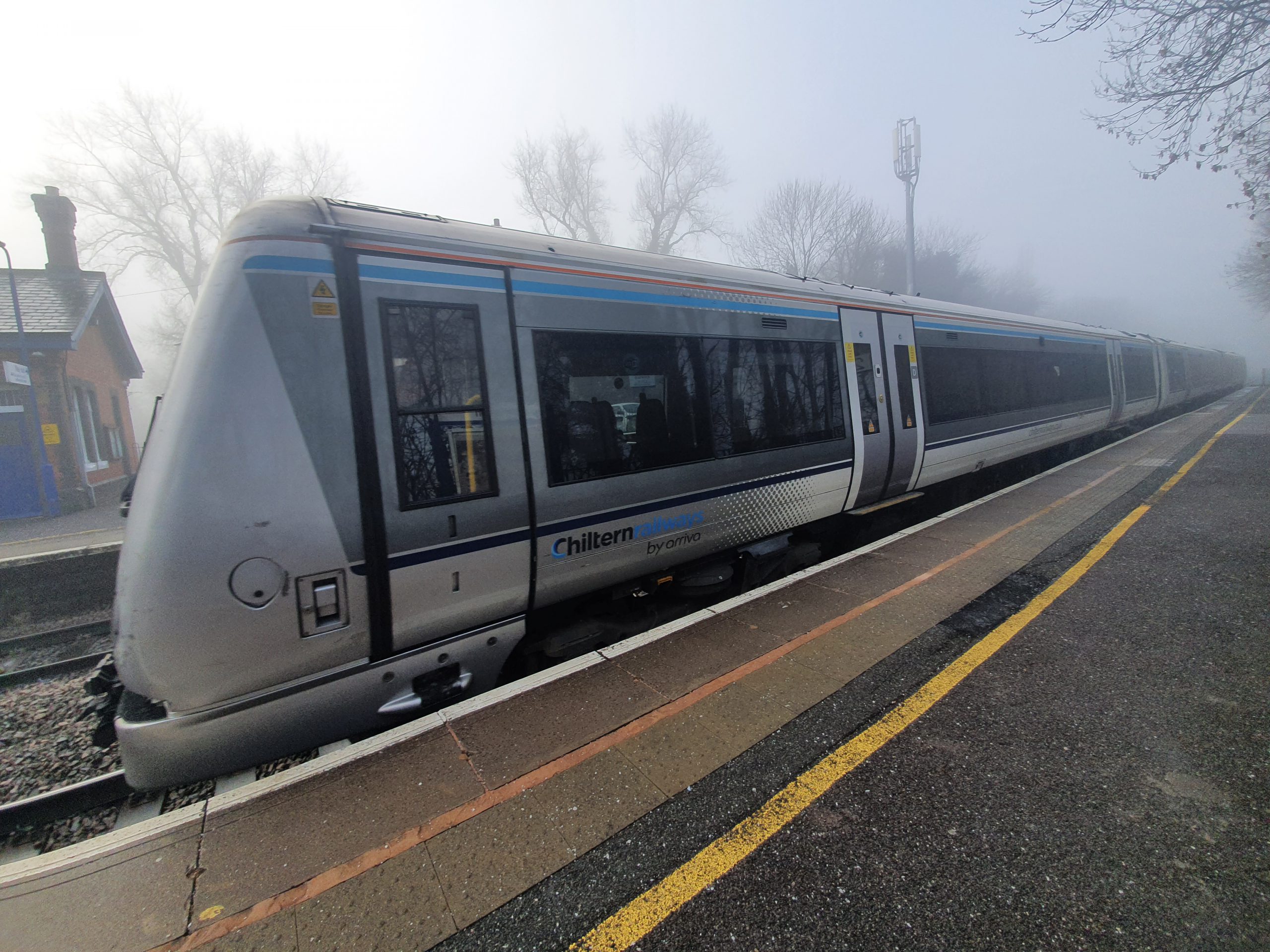
    The train came creeping into the station on time.

    The train was comfortable for the four minute journey…. There’s little of note really about this service, other than the train was clean, there were plenty of seats and there was power available (I managed to get my phone charge up by 2%). Everything was on time, although I didn’t see any staff during my four mintes.

    And after my long four minute journey, here’s Royal Leamington Spa, or just Leamington Spa in the eyes of the railway network.

    One of the waiting rooms at the station, this was restored in 2011 and is a useful space, with power, heat and doors that keep opening randomly. Unlike Warwick, there are toilet facilities at this station.

    It’s fair to say that Royal Leamington Spa railway station is much more architecturally impressive than the one that Warwick has. The first station here was also built in 1852, at the same time as the one at Warwick was constructed, but this grand Art Deco construction dates from between 1937 and 1939. But more on this another time as I’m back in Royal Leamington Spa in a few weeks for the LDWA AGM weekend.

    As a rail service, all was well and everything ran on time. I wonder though about what they can do with Warwick railway station, as the facilities are very poor compared to Leamington Spa. I know that Leamington Spa gets nearly five times as many passengers as Warwick, but something a little more exciting would be nice here. Anyway, I was once again entirely satisified with Chiltern Railways.
  • Chiltern Railways : London Marylebone to Warwick

    Chiltern Railways : London Marylebone to Warwick

    Back in London Marylebone, this time for a trip up to Warwick.

    I’ve written about Marylebone numerous times before, but I hadn’t noticed how much housing was demolished to construct it at the beginning of the twentieth century. The concourse of the railway station is where Harewood Square is on this map which is from just before the station was constructed.

    I was as early as ever arriving at the railway station, mine was the 12:34 to Birmingham Snow Hill.

    The platform number wasn’t announced until ten minutes before departure, which I didn’t think was ideal. It’s quite a pleasant little railway station to wait in and I meandered across to Pret to use my coffee subscription. There are numerous other coffee providers, free toilets, plenty of seating and a small selection of shops.

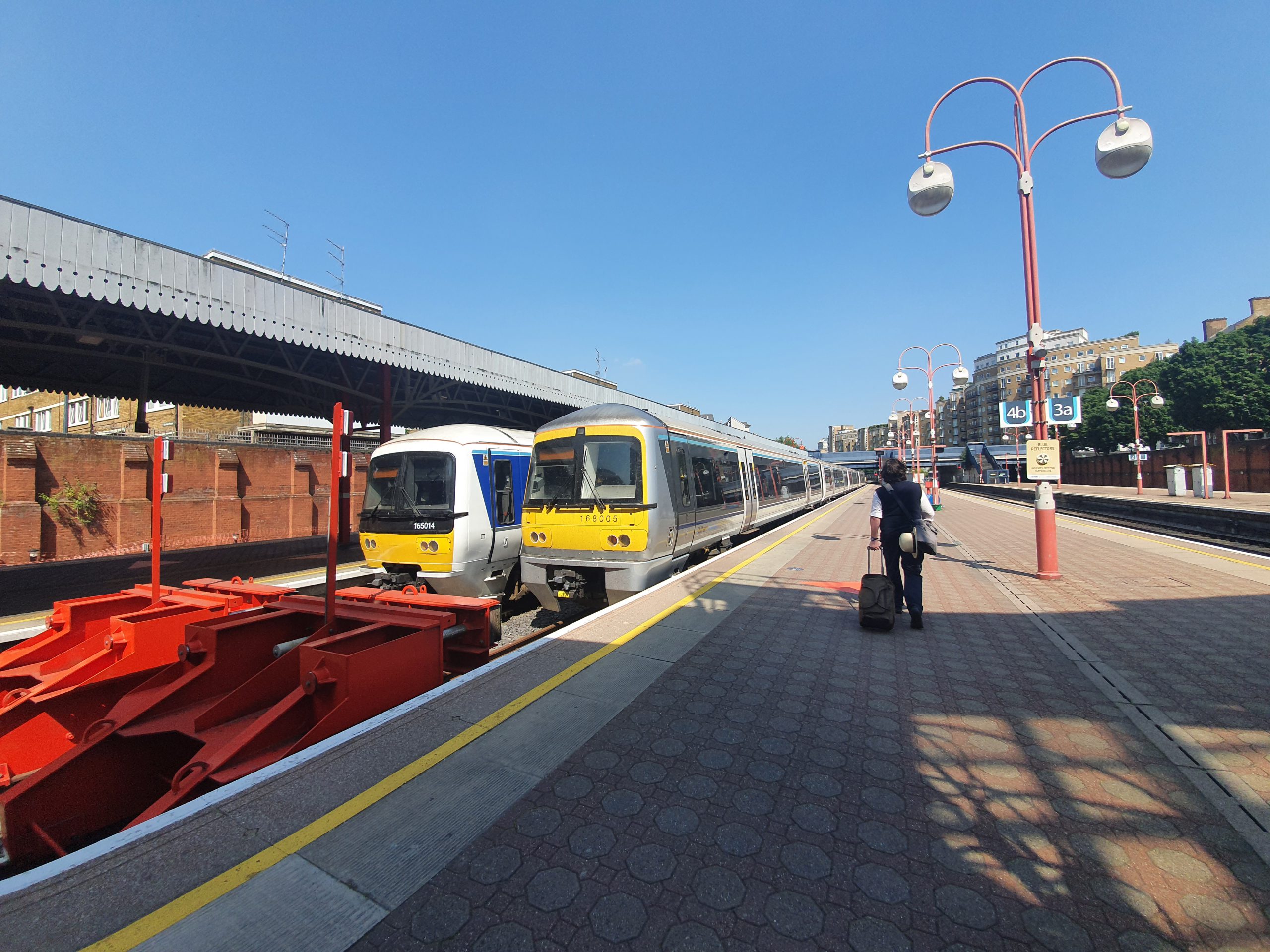
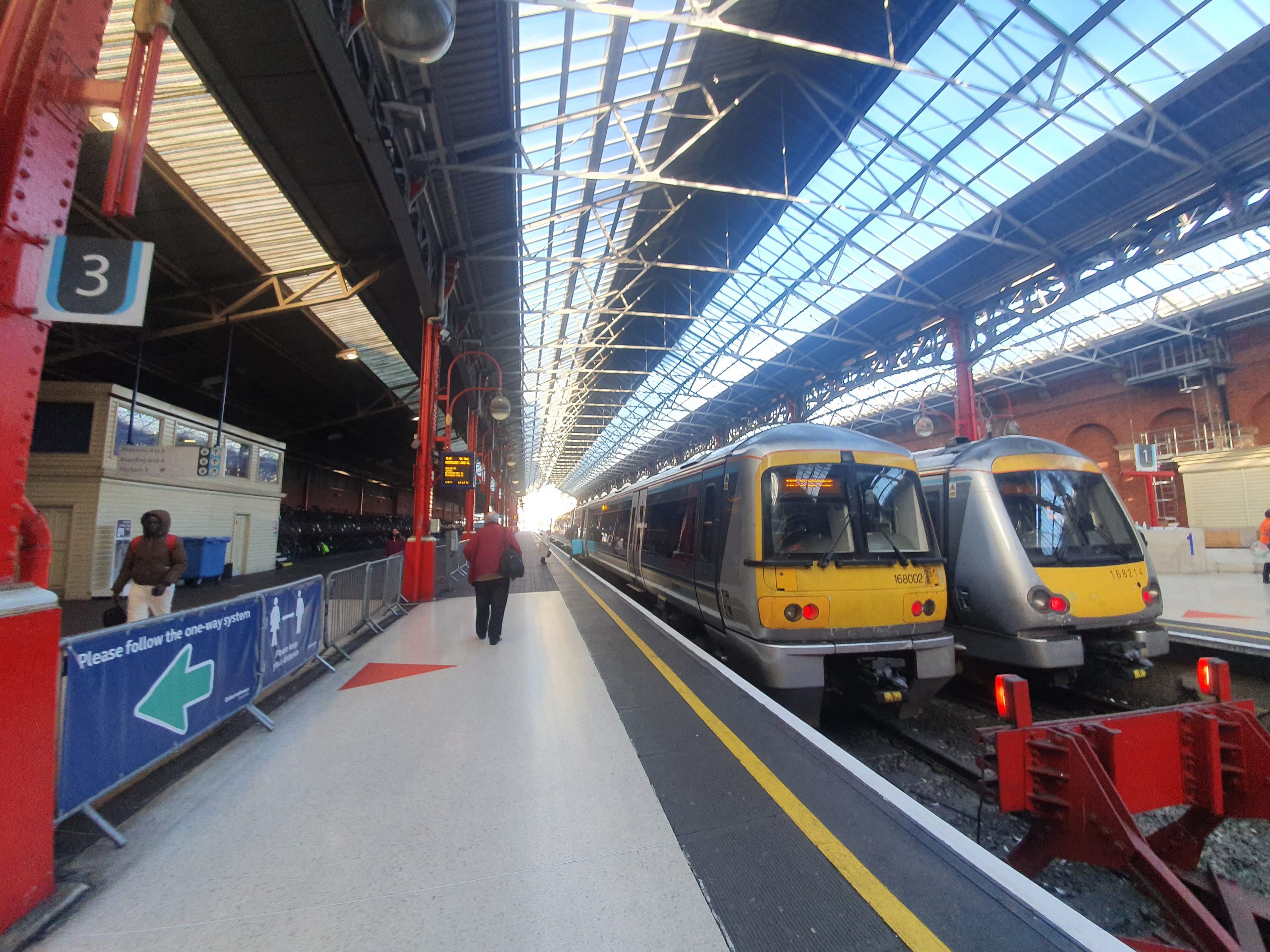
    There’s the Marylebone Thunderbolt on the left (my name for the service, it’s not the official name). Apparently this train is a British Rail Class 168 DMU train, but I had to look that up as I know nearly nothing about these matters. The trains though date from after privatisation, they were built from 1998 to service this route.

    The train was never really that busy and there were plenty of seats available. I got a table and access to a power supply which was handy. My ticket was checked by two different train guards, slightly unusual as I’ve recently rarely been asked to show my ticket at all. It’s a comfortable train, with spacious seats and it was clean throughout.

    And having safely arrived after a journey of just under 1 hour and 30 minutes. The railway station is located a ten-minute walk from the town centre, although there are buses for those who can’t be faffing about.

    And off the train goes to Birmingham.

    I was surprised that Warwick railway station wasn’t a little grander, it’s quite a minimal affair with limited facilities for customers.

    As for the service, it was on time, the train was clean, the staff were polite and the seats were comfortable. The fare cost £10, so I have no cause to be anything other than happy with the arrangement.

  • Chiltern Railways : Wembley Stadium to London Marylebone

    Chiltern Railways : Wembley Stadium to London Marylebone

    And another in my niche series of rail journeys around the UK, which are primarily for me to remember what rail companies I’ve travelled with, primarily with an interest in how they do things differently.

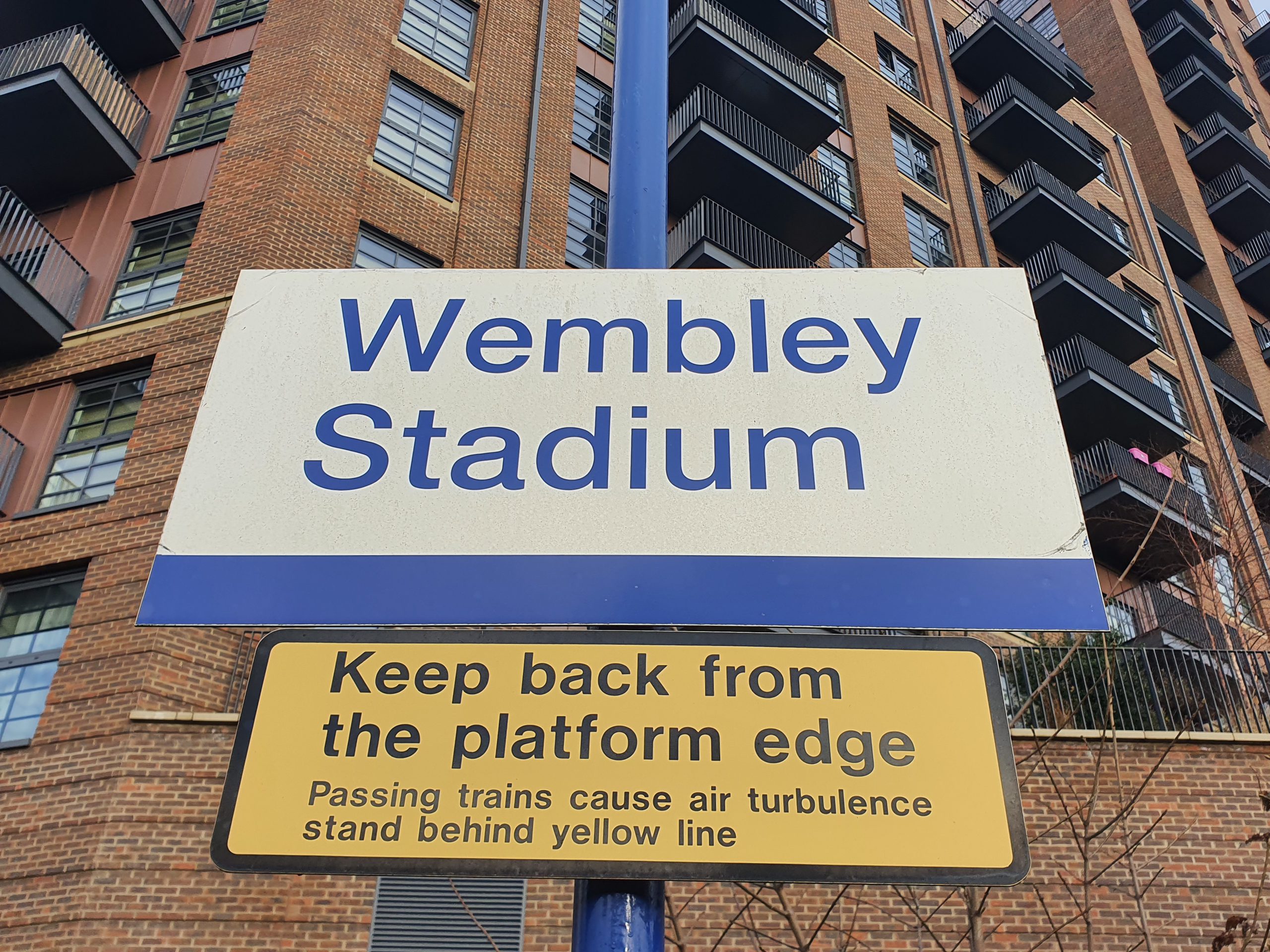
    Wembley Stadium isn’t the most exciting of railway stations and the history of railways around here is confused, as there was a different station with the same name at one point. This station opened in 1906 as Wembley Hill, was renamed Wembley Complex in 1978 and took its current name of Wembley Stadium in 1987. Incidentally, the Wembley Complex isn’t what I would consider to be a traditional way of naming British railway stations (and sounds more like a psychological conjecture) so I’m pleased that it was changed. The railway station is around a five minute walk away from Wembley Stadium, so the naming is appropriate.

    In the above photo, at the back is the White Horse Bridge, opened in 2008 and replacing the old concrete footbridge which was built for the British Empire Exhibition in 1925.

    The railway station is solely used by Chiltern Railways on their mainline to Birmingham and it’s a fast connection into the city centre as it gets into London Marylebone in only around ten minutes. I stood here and then realised that the train stops a little back way, with the platform being longer than it needs to be as occasionally they bring in longer trains when there are matches or events taking place at Wembley Stadium.

    The train was about a third full, not overly busy. I don’t know if there was a guard on board the train, but if there was, I didn’t see him or her at any stage of the journey. Legroom isn’t ideal and the interior of these trains probably need a more modern refit soon with a return to 2+2 seating rather than 3+2 which doesn’t really fit.

    And here we are ten minutes later in London Marylebone. There are usually two services which operate between Wembley Stadium and London Marylebone every hour, so the service is relatively frequent.

    As I’ve written about before, Marylebone is the smallest London mainline railway station, and also the last one to be completed.

    And the station’s frontage. Everything ran to time, the train was clean and the service was easy to get a ticket for as it just uses contactless at each end. Looping back to the start, there’s not a lot that Chiltern Railways seem to do differently of particular note, especially for a short journey such as this, but they’ve invested considerably in the infra-structure of this route over the last couple of decades. Only a few weeks ago a new franchise was given to the company to operate this route and this lasts until the end of 2027, but with the proviso that the contract might change with the introduction of Great British Railways in 2025ish.

  • Chiltern Railways : London Marylebone to Birmingham Snow Hill

    Chiltern Railways : London Marylebone to Birmingham Snow Hill

    I can’t recall travelling with Chiltern Railways before, but they offered a £12 fare to get from London Marylebone to Birmingham Snow Hill, which seemed excellent value to me. Marylebone Railway Station is a fascinating location and one I rarely go to, and it nearly closed entirely in 1986 and was saved only at the last minute. It opened late for a mainline railway station, starting service in 1899 and it was 100 years before another entirely new station of its size was to be built again. It’s compact compared to the other London mainline railway stations, which means that there’s a limited amount of seating and facilities.

    I sat down to check Facebook for the eighth time in an hour, just as the platform number was called, number 4, which was around twenty minutes before the train departed.

    It’s the train on the right and I’m not much into trains or train spotting, but for anyone interested, it’s a Class 168 Clubman diesel. This route between London and Birmingham hasn’t been electrified and it’s a route that was nearly lost in parts, but like Marylebone, it has managed to survive.

    The train was never that busy, so I had my bank of four seats to myself for the entire journey.

    Nicely functional seats, with a pull-out section of the table for laptops and two power points. All comfortable and practical for anyone who wants to get work done. There was a ticket check from a friendly and cheerful guard midway through the journey, although he said he had no scanner to check my digital ticket and so he wouldn’t need to verify it. That seems to be a slight flaw in the ticket checking process, but there we go……

    I wasn’t in a rush, so I was happy to stay on the train for a little longer getting things done if there was a delay. This came to pass as the train in front of ours broke down and we were delayed for 20 minutes at Banbury. This meant that I was getting hopeful of a 30-minute delay so that I would get half my fare back. Unfortunately (for me), the train’s delay was limited to 20 minutes and, as Chiltern don’t operate compensation for 15 minute delays, I didn’t have a Delay Repay claim to make this time.

    And here we are safely in Birmingham Snow Hill. There’s a theme in this post of things nearly being shut down, but with this railway station it was closed in 1972 and demolished in 1977. It was then realised that this was something of a mistake and a new railway station, which was smaller and less architecturally interesting, was built and opened in 1987.

    I had a look at the Birmingham Daily Post from 13 March 1970, when there was some excitement that there would be four tower blocks on the site of the station that they were demolishing, as well as two hotels and a cinema. They were looking at using the rail tunnels to be used by buses instead to help city transit. A completely idiotic decision, as was clear given they had to rebuild the railway station not much more than a decade later.

    Anyway, I was very impressed by Chiltern Railways as they delivered a cheap fare, a comfortable train, friendly staff, updates when there was a delay and there were no issues. All rather lovely and it’s a convenient way of getting between London and Birmingham. It’s not clear what will happen after HS2 opens, but I assume that this service will continue in the same form.