Tag: Bucharest

  • Bucharest – National Museum of Art (Catholic Church in Câmpulung)

    Bucharest – National Museum of Art (Catholic Church in Câmpulung)

    This artwork of a Catholic Church in Câmpulung was painted by Theodor Aman in 1875. The Romanian artist lived from 1831 until 1891, when he died in Bucharest and the house he lived in is now a museum which commemorates him and his work. I did try and find the same location on Google Streetview and the only Catholic Church looks different and the streetline has changed too much. I like the painting though, although I suspect that the town was more prosperous then than it is now if the characters and their formal wear are anything to go by.

  • Bucharest – National Museum of Art (The Revolutionary Romania by CD Rosenthal)

    Bucharest – National Museum of Art (The Revolutionary Romania by CD Rosenthal)

    This artwork, entitled The Revolutionary Romania, is by Constantin Daniel Rosenthal and was painted in 1850. Rosenthal lived from 1820 and 1851 and had an involvement in the 1848 Revolution, which later cost him his life when he was tortured to death by the French for refusing to give information about his contacts. There’s something tragic about looking at an artwork which was painted by someone who was so relatively young, but yet was about to be confronted with his death.

    Rosenthal painted numerous artworks on the theme of Romanian nationalism and he seems to have been quite active in the later part of his life. This painting was part of the Pinacoteca București collection which had been established by King Carol II, with many of the artworks being taken over by the National Gallery. It shows Marie Rosetti who was a friend of the artist and the wife of the author Constantin Alexandru Rosetti. She was dressed in traditional Romanian clothing and she has a dagger in one hand and a Romanian flag in the other hand.

  • Bucharest – National Museum of Art (Icon of Saint Nicholas by Mihail)

    Bucharest – National Museum of Art (Icon of Saint Nicholas by Mihail)

    I thought that this looked modern when I first saw it, given that it has something of a cartoony feel to it. Tempera on wood, it was painted by Mihail in 1754 and is a representation of St. Nicholas. I didn’t know this before looking it up, but St. Nicholas is often painted with a codex in his hand, as it is here, and has representations of Jesus and the Virgin Mary behind him, which is what I assume is also happening with this artwork. He’s also portrayed as an Orthodox bishop, as he is here, and often with three gold balls, which isn’t shown here. He was known for giving gifts to the poor and from that he evolved into being effectively better known as Father Christmas.

  • Bucharest – National Museum of Art (Grigorie Brâncoveanu)

    Bucharest – National Museum of Art (Grigorie Brâncoveanu)

    I liked this painting, there seems to be quite some depth to it, which is of Grigorie Brâncoveanu (1764 – 1832), who was the Great Ban (or regional leader) of Wallachia. The family had been important during the seventeenth and eighteenth centuries, but it came to an end with Grigorie.

    It’s not known who painted the artwork, nor its date, other than it was from the first half of the nineteenth century. History could have easily be just slightly different and Wallachia could be its own country, rather than subsumed into Romania. It was only the constant threat of Russia which led the leaders of Wallachia into wanting to unite with neighbouring countries.

  • Bucharest – National Village Museum (Half Buried House)

    Bucharest – National Village Museum (Half Buried House)

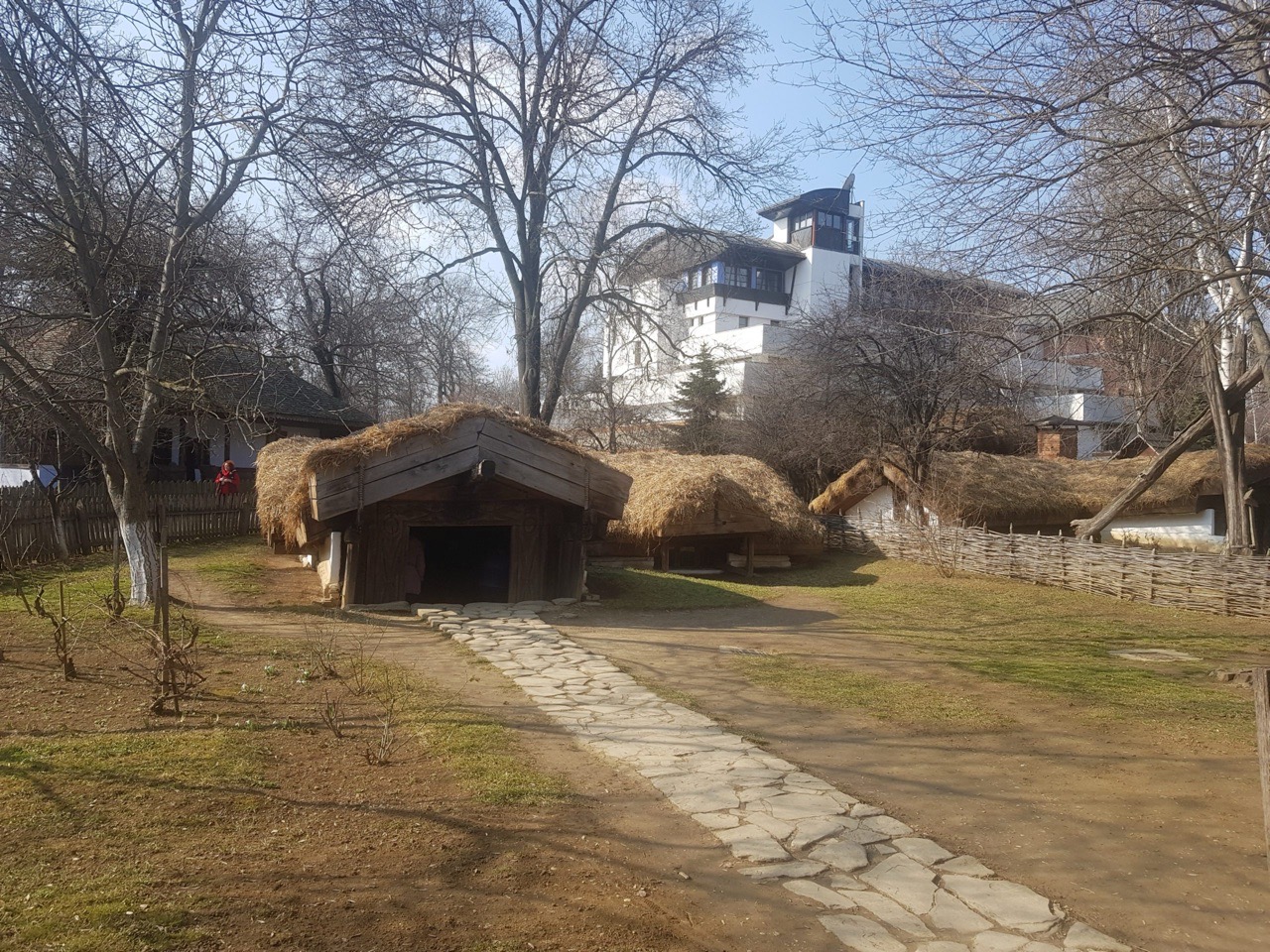
    This half-buried house dates to the beginning of the nineteenth century and it was brought to the museum in 1949 from Drăghiceni, a town in the south-west of Romania. There are two functions to this sort of property, with the primary one being that this helps with keeping the temperature under control, so it would preserve the cold in summer, but also the warmth in winter. I’d note that Ibis have some hotels like that, although they preserve the heat in winter and the heat in summer, which can be most annoying. There was also a defensive element as well though (to the half-buried house, not Ibis), there were occasional Turkish raids and this sort of property was easier to defend. It wasn’t though a cheaper construction option, as building a half-buried property apparently uses more wood than building a traditional structure.

    This house was popular with children at the museum, who enjoyed climbing down into the property. The roof was constructed with oak planks and there would be a straw type finish on the top.

    That’s the step down.

    And there’s the entrance room. Behind this would have been the kitchen, and further into the structure would have been the living room. It seems to me to be quite a fun place to live as well, something a little different.

  • Bucharest – People’s Salvation Cathedral

    Bucharest – People’s Salvation Cathedral

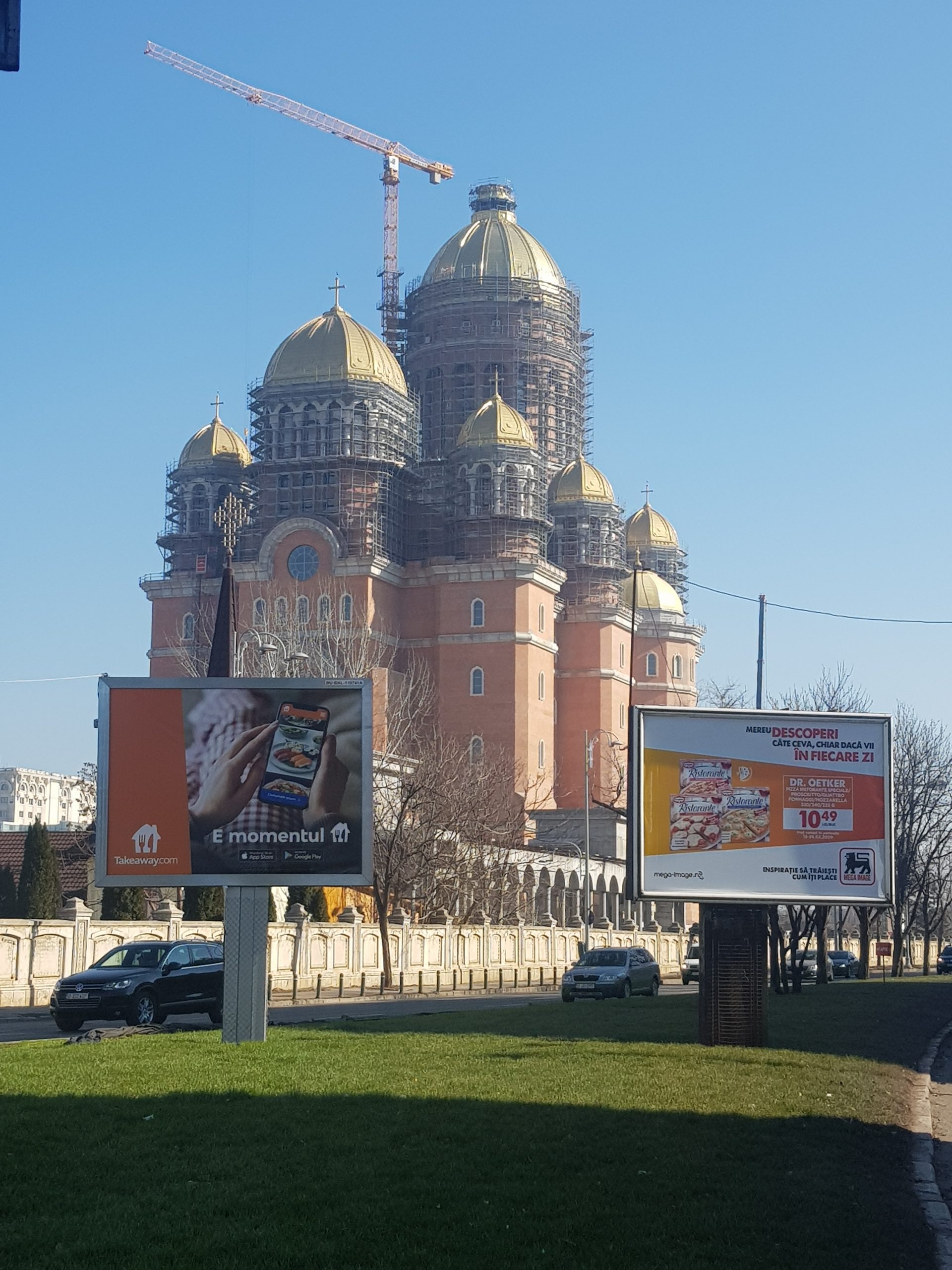
    Work on this religious building started in 2007 and it’s starting to come to an end now and it will be the Romanian Orthodox Church’s Patriarchal Cathedral, replacing the current Metropolitan Church in Bucharest. It’s an enormous building and is visible from throughout the city, standing at 135 metres in height and it will be the largest Orthodox Church in the world by area. It has cost €400 million all told, a significant sum of money for any religious building.

    Its location is next to the ridiculous Palace of the Parliament building that was the pet project of Nicolae Ceaușescu, with this being a deliberate choice. Nicolae Ceaușescu had demolished great chunks of the city to build his new building, which included the demolition of three Orthodox churches and the moving of two other Orthodox churches. It’s sited on Spirea’s Hill, which is for the same reason that the Palace of the Parliament was built there, it’s at a high point of Bucharest and the project can be seen from far and wide.

    The cathedral is though controversial, there have been links made with the excesses of the Palace of the Parliament building and the cost is not insubstantial for a country that still has a long way to go on its economic road. However, there has long been a demand for this building within the church, they’ve faced economic difficulties, the Second World War and then communism, so it’s not as though they haven’t been patient.

    Inside the cathedral is going to be impressive as well in numerous ways, not least because it will have the world’s largest free-swinging church bell in it, but also because of a one-million piece mosaic standing 16 metres in height. The Pope came to visit the cathedral on 31 May 2019, and it will likely be a popular site to visit for tourists and locals. The cathedral will be able to seat 7,000 people, or 10,000 people can stand within it, with the wider site being able to cope with 125,000 visitors. There’s still a lot to do though, the full opening isn’t expected until 2023 or 2024, when this enormous construction project finally comes to an end.

  • Bucharest – National Village Museum (Swing)

    Bucharest – National Village Museum (Swing)

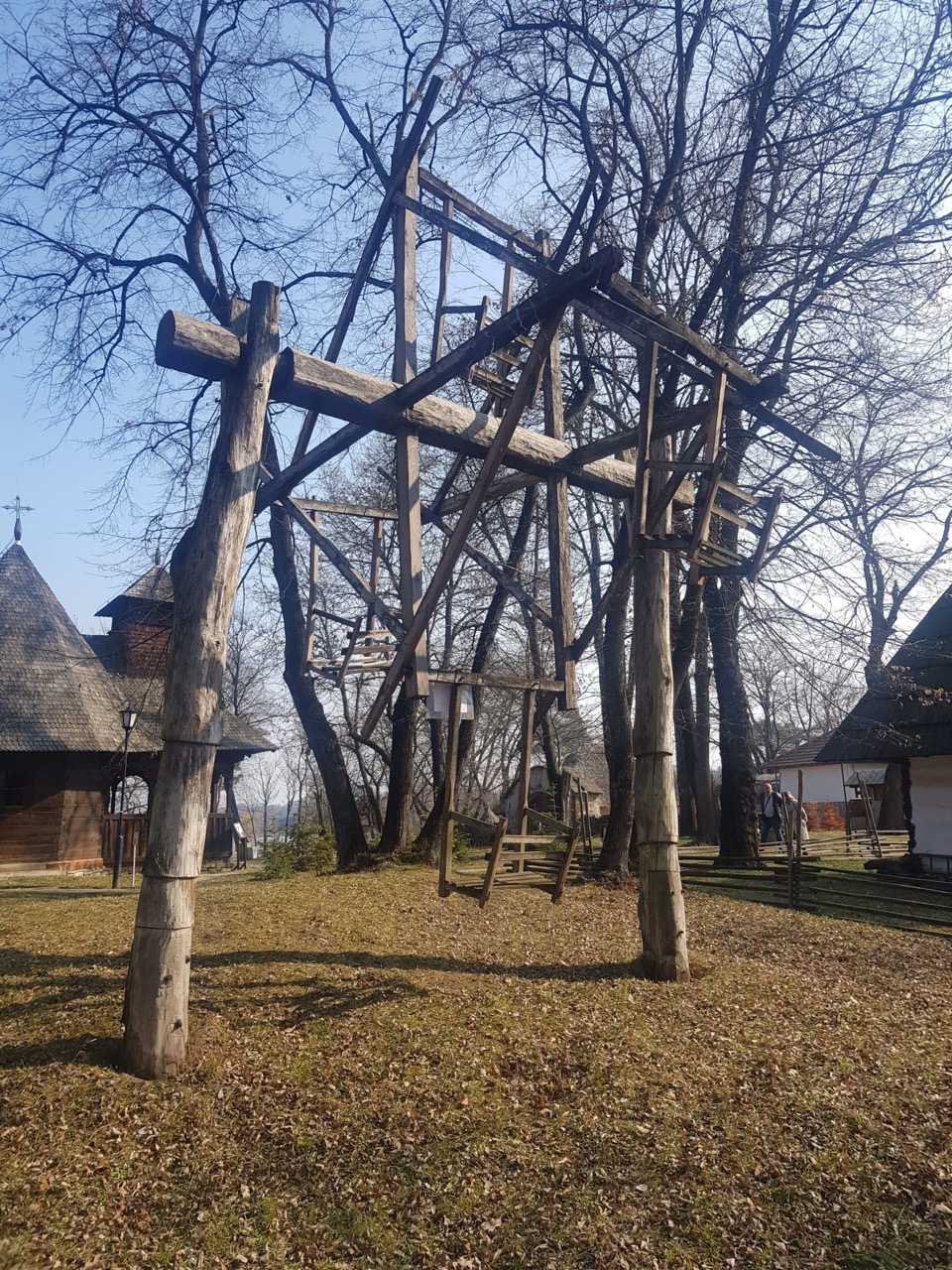
    This nifty swing is from Zăpodeni, in eastern Romanian near to the border with Moldova. It’s relatively modern for this museum, dating to the early twentieth century, and it was primarily used on major holidays. Traditionally, two boys would start the contraption going and they’d be rewarded with a gift, such as Easter Eggs at Easter. If I had a garden, perhaps I’d create something like this for Dylan and Leon, although I suspect they’d take one look at my handiwork and refuse to go on it.

  • Bucharest – Capitoline Wolf Statue

    Bucharest – Capitoline Wolf Statue

    Known locally as the Statuia Lupoaicei, this statue was given to the people of Romania in 1906 by the Government of Italy and is a copy of a similar one in Rome. The Italians gave statues like this to numerous countries and it depicts a wolf nurturing Romulus and Remus, the founders of Rome.

    For many years this was located at the Piata Romana (the Roman Square seemed an appropriate place for it), but it’s now at the intersection between Bulevardul Ion C. Brătianu and Strada Lipscani. There are over twenty-five Capitoline Wolf statues across Romania and I can’t imagine that any other country, with perhaps the obvious exception of Italy, has more.

  • Bucharest – Bucharest Airport (TAROM Business Lounge)

    Bucharest – Bucharest Airport (TAROM Business Lounge)

    There seem to be two airport lounges that Oneworld status customers can use, but apparently they’re very similar and this is the one that I found first. It’s clearly signed when walking towards the gates, up one set of escalators. The staff member at the reception desk was helpful and the sign-in process was quick and easy.

    The main corridor of the lounge, there is food and drink on both sides with the seating area at the rear.

    The lounge interior, all quite modern and airy in its decoration. I thought that the temperature was just a touch too hot when I visited, which was mid-February, so I suspect that it might be quite challenging in the summer months, unless they have some excellent air conditioning.

    There were some spirits, wines and soft drinks.

    The bulk of the food offering was really crisps and snacks, with a choice of three different flavours of crisps.

    I didn’t turn the crisps down, that would have been rude. The coffee was rather bitter, but the orange juice was flavoursome. There were also some sandwiches, which weren’t particularly a taste sensation if I’m being honest.

    This was the only beer available and I decided to give Ursus just one more chance, having had it at the Ibis hotel as the welcome drink. I’m pleased that it is consistent, it’s a truly awful beer in a can as well as on draught. Entirely devoid of flavour, taste or any complexity at all, it’s slightly pointless.

    In terms of dining, the airport has quite a strong array of options in their food court, so anyone wanting something more substantial would probably be better heading there. However, the selling point of this lounge is the relaxing environment and a place to get work done, with some excellent views of the runway. There weren’t very many power points around the lounge, although they did have charging stations where people could leave their phone to charge. Unfortunately, I’m not very good at leaving my phone, I worry about it…..

    There’s a smoking room at one end of the lounge, which was fortunately nowhere near me, although for reasons unknown to me, they allow vaping anywhere in the lounge. There aren’t any toilets within the lounge, but they are just a short walk around the corner and given that closeness, I’m surprised that they weren’t part of the lounge’s footprint to save guests leaving and returning.

    Anyway, the lounge was clean and comfortable, although certainly not exceptional in many other ways. The staff all seemed friendly and helpful, that added to the warmth of the atmosphere somewhat, so it was a comfortable place to spend a couple of hours. I’m not sure that I would have paid to get in the lounge though, unless someone wants a little privacy and quiet, it would probably be better to find a table at one of the restaurants in the airport’s food course. But, since this was free (well, as part of my ticket), I was entirely content.

  • Bucharest – National Museum of Art (Beheading of St. John the Baptist)

    Bucharest – National Museum of Art (Beheading of St. John the Baptist)

    This cheery little number was painted in the fifteenth century in the Tuscan area of Italy, later becoming part of the collection owned by King Carol I of Romania. I assume that the viewer of the artwork is meant to appreciate the sacrifice made by St. John the Baptist when he was killed by Herod Antipas, but it’s all a bit unpleasant for my liking.

    Caravaggio painted a well known artwork on the same subject, which is in St. John’s Cathedral in Valletta, Malta, but at least that one is a little less dramatic in terms of the head being cut off. Unfortunately, as with many other artworks in this gallery, there’s nearly no background information to the painting.