Tag: Bonn

  • Bonn – Haus der Geschichte (Willi Schulz Shirt)

    Bonn – Haus der Geschichte (Willi Schulz Shirt)

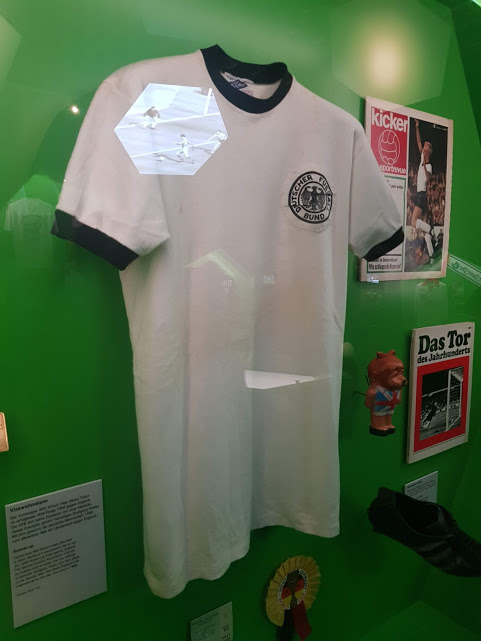
    According to Nathan, who studied this shirt in some detail (I’m not really into looking at old clothing), this is quite important for those interested in football. And, I must admit, it’s an interesting display item to have, which is a football shirt which was worn in the 1966 World Cup Final. It was worn by Willi Schulz, a German, er, footballer, who would have run up and down the field whilst wearing it. That’s all I can really write about football if I’m being honest.

    I was interested to read though that eight of the eleven England football players who received a winning medal felt the need to sell it to raise money. Certainly different times in terms of how much players received in wages. And, also, the majority of players seem to have suffered from Alzheimer’s, it’s suggested that might have been linked to how players used to head what would have been an heavier ball than is used now.
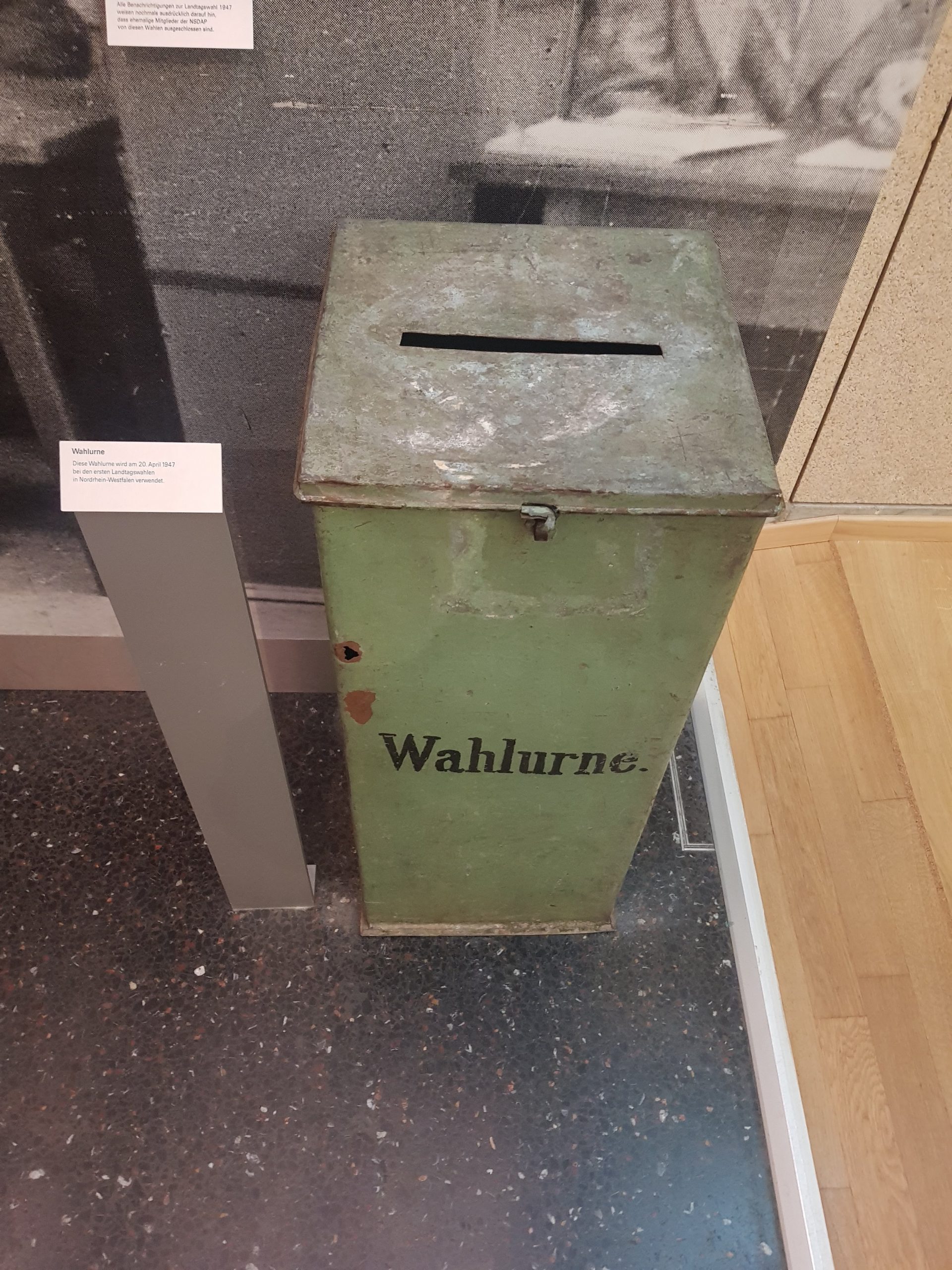
  • Bonn – Haus der Geschichte (Ballot Box)

    Bonn – Haus der Geschichte (Ballot Box)

    In an attempt to be topical since today is a General Election, here’s a ‘wahlurne’, or ballot box, which was used in German elections on 20 April 1947. After the years of Nazi rule, it must have been something of a relief to be able to vote once again in a democratic election.

    And that’s all I’m going to say about today’s General Election…..

  • Bonn – Haus der Geschichte (1714 State Crown of King George I)

    Bonn – Haus der Geschichte (1714 State Crown of King George I)

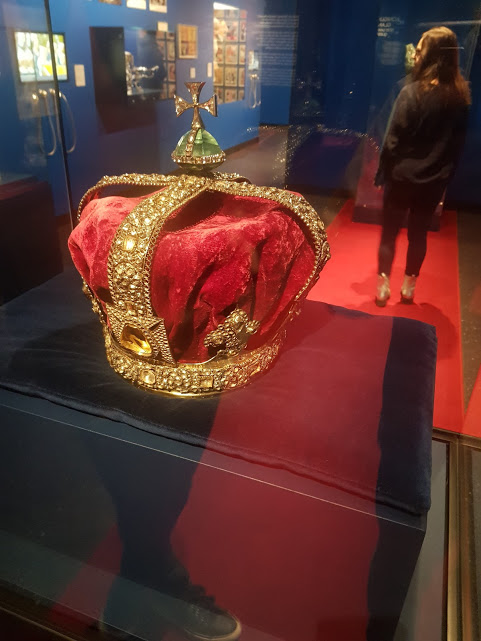
    I had wondered why there were so many staff at the UK exhibition at the Haus der Geschichte, but having seen the exhibits, I’m sure that many were actually security guards. Given some other little incidents at German museums recently, this seems a very wise precaution. HM Queen Elizabeth II has lent this 1714 State Crown from the Royal Collection, first used for the crowning of King George I. This is of course highly relevant to the museum, since King George I was German, the first Monarch from the House of Hanover.

    Only the empty gold frame of the crown now remains as the stones were used in a lighter replacement for Queen Victoria, so King William IV was the last to use it as his Coronation. The crown was discarded by the Royal Family and it somehow came into the hands of the Amherst family who placed it on long-term loan at the Museum of London. Later acquired by the Prince of Brunei, it was returned back to the Royal Collection as a generous donation, with apparently an estimated value of a little over £500,000, but it’s of a much more important historical value.

    The crown is usually on display at the Tower of London, where I assume it will be returned after this temporary exhibition ends. But what a rather lovely item to send to Bonn, although its importance was perhaps not as clearly described as it could have been on the small information panel at the museum.

  • Bonn – Haus der Geschichte (Fawlty Towers)

    Bonn – Haus der Geschichte (Fawlty Towers)

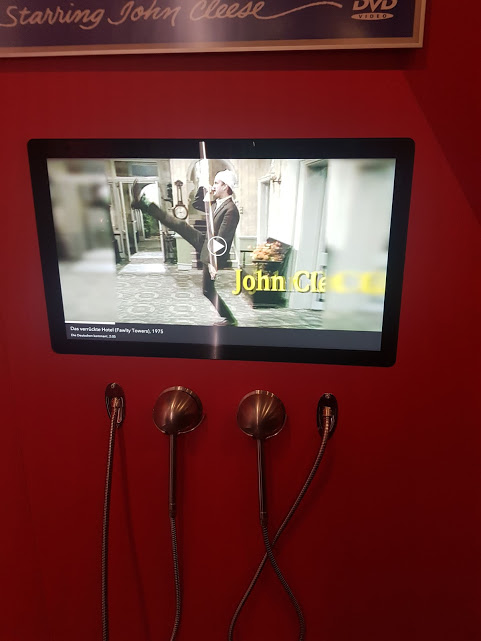
    Part of the exhibition on British-German relations at the special UK exhibition being held at the Haus der Geschichte. The curators seem to have amused themselves in finding cultural references to how the British view the Germans and vice versa.

    The light-hearted approach from British and German newspapers…..

  • Bonn – Haus der Geschichte (9/11 Girder from World Trade Center)

    Bonn – Haus der Geschichte (9/11 Girder from World Trade Center)

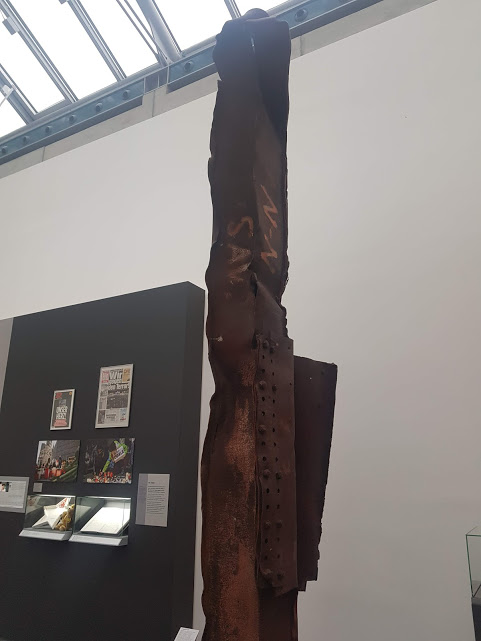
    This is one of the girders from the collapsed World Trade Center which was destroyed during the 9/11 attacks in 2001. The Port Authority of New York and New Jersey made available 2,200 of these pieces of steel to be used in museums and public buildings around the world. I’m not sure that a list exists of where they currently all are, but I must have seen tens of them over the years.

    Eleven Germans were killed during the attack and this is the museum’s memorial to them.

  • Bonn – Namen und Steine

    Bonn – Namen und Steine

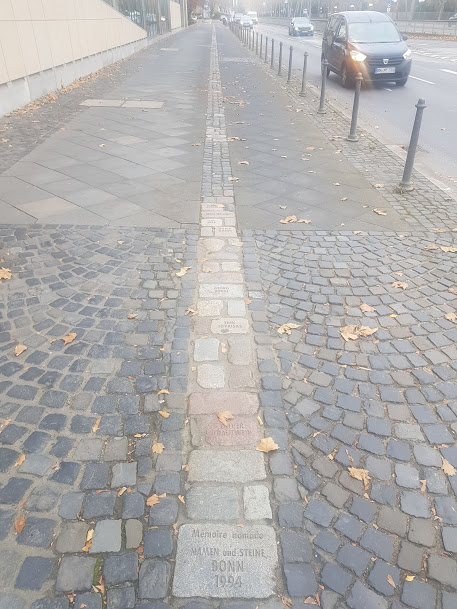
    I wasn’t quite sure as to the meaning of this installation as it looked like some random names mixed with celebrities, but it transpired that this is deliberate. It’s located next to the Haus der Geschichte and is a timeline of when people have died from AIDS and it’s part of a series of similar installations, all entitled Names and Stones, across Germany.

    The Freddie Mercury stone, with this installation having been created in 1994.

    Ralf Kuklinski, aged 26 years old at the time, wrote to the press on World AIDS day in 1992:

    “I’m tired of the fact that every year a few people try and promote understanding for people with HIV and AIDS, but hardly anyone cares. Anyway, except lip service, nothing comes – or say almost nothing. I tell you, 10 000 domestic dogs with an infectious disease and the nation would rage, the animals would not be saved from love.”

    I like these projects, they give a voice back to the people who might otherwise been forgotten when only the celebrities are remembered.

  • Bonn – Cafe Orange

    Bonn – Cafe Orange

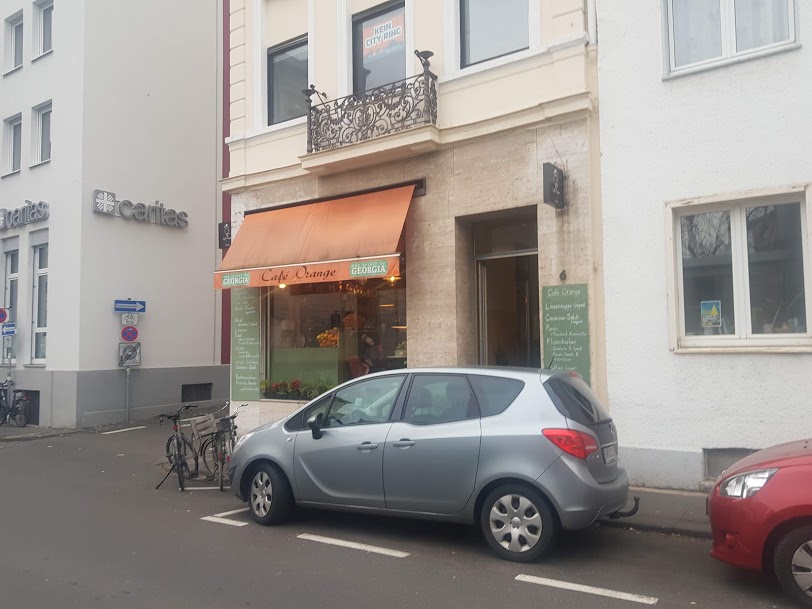
    I’m not sure whether this cafe is on-trend or not, but it’s certainly quirky and is located in what appears to have been a residential unit at one stage. The ordering process, something I often get confused about, isn’t entirely logical, but there’s table service offered which keeps things simple. The service incidentally was attentive and friendly, the cafe had a welcoming feel.

    The cafe looks relatively small when entering, but there are two larger rooms at the rear. The counter has some sufficiently tempting options available, not least all that lovely chocolate.

    The atmosphere in the cafe was laid-back and I liked that there were some customers using laptops, some reading, some drawing and some meeting friends. All very much a home from home, which is what a traditional cafe should really be about.

    The cherry cheesecake, which was a little heavy, but had a pleasant taste to it. Due to some translation issues I ended up with a small freshly squeezed orange juice, but this was entirely lovely, albeit small. The prices for the food and drink were moderate, with the cafe being located near to the maths museum, Arithmeum.

    Bonn doesn’t have a widespread acceptance of credit and debit cards, but this cafe did accept cards and there were also plenty of power points around.

  • Bonn – Model Railway

    Bonn – Model Railway

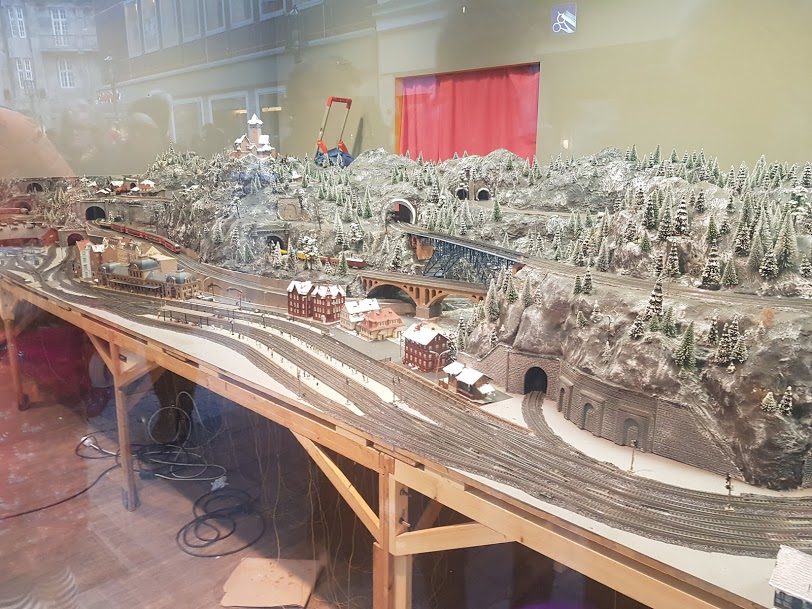
    I don’t have any background on this, but what a lovely little set-up in a shopfront in the centre of Bonn. It was proving very popular with children, a little bit of Christmas magic…..

    And the control mechanism, I can imagine that the volunteers behind this get a lot of pleasure out of it as well.

  • Bonn – Martinsbrunnen

    Bonn – Martinsbrunnen

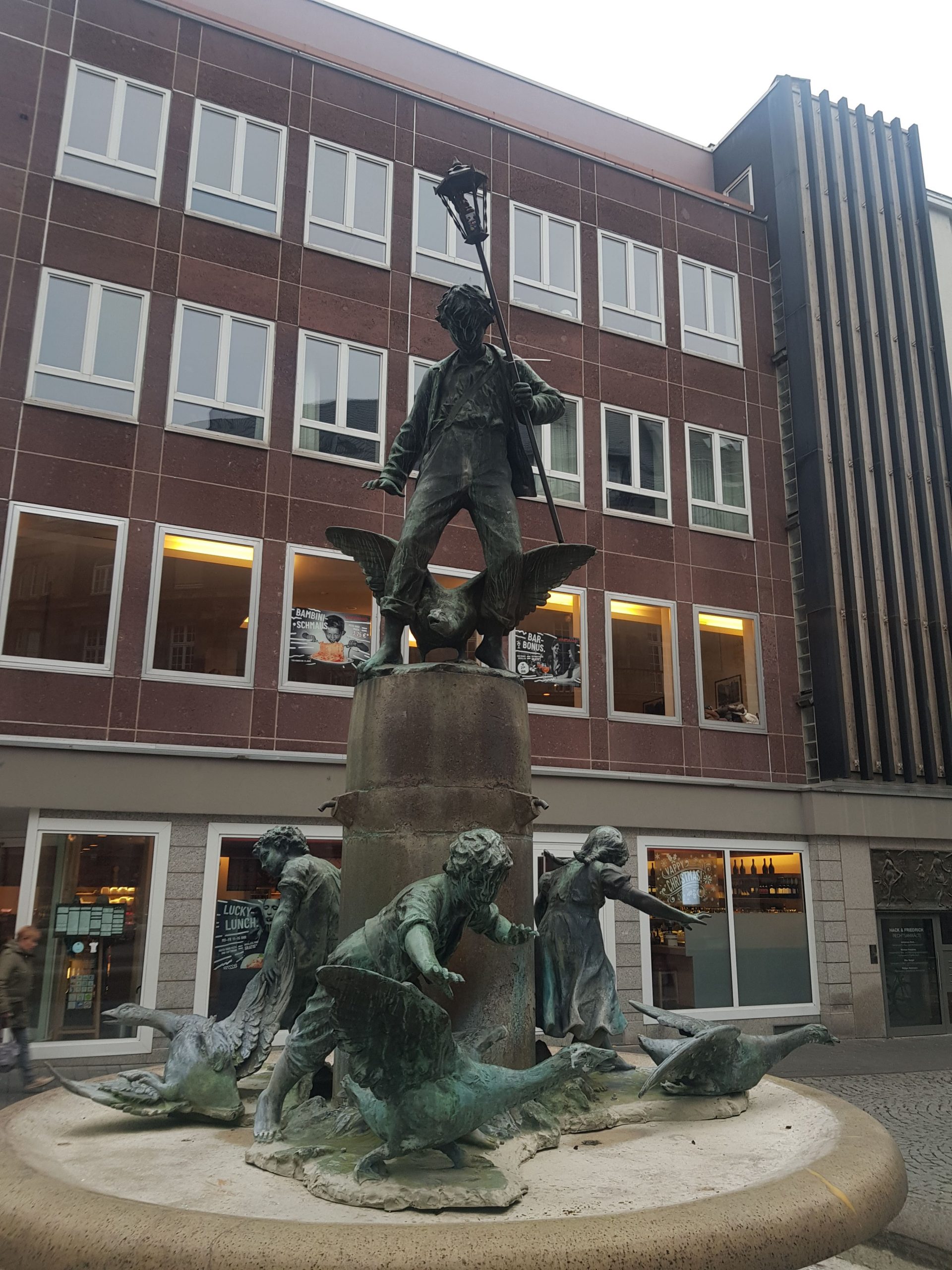
    This fountain celebrates St. Martin’s Day, where children would often collect geese for the celebration meal, which in itself was probably not the easiest of challenges…. The fountain, located outside Bonn Minster, was designed by Heinrich Götschmann and was installed here in 1902, with a restoration taking place in 1958.

    St. Martin’s Day is commonly celebrated throughout much of Europe, although less so in the UK, and takes place on 11 November each year, with parades of lanterns through many German cities. Although Remembrance Day is the primary event in the UK on that day, there are some historic traces of Martinmas, particularly in Scotland where it’s still used to describe term times in schools.

    I hadn’t realised that there’s apparently a fountain season in Bonn which runs from May to September, which explains the lack of water when we visited in December….

  • Bonn – Mean Average by Tony Cragg

    Bonn – Mean Average by Tony Cragg

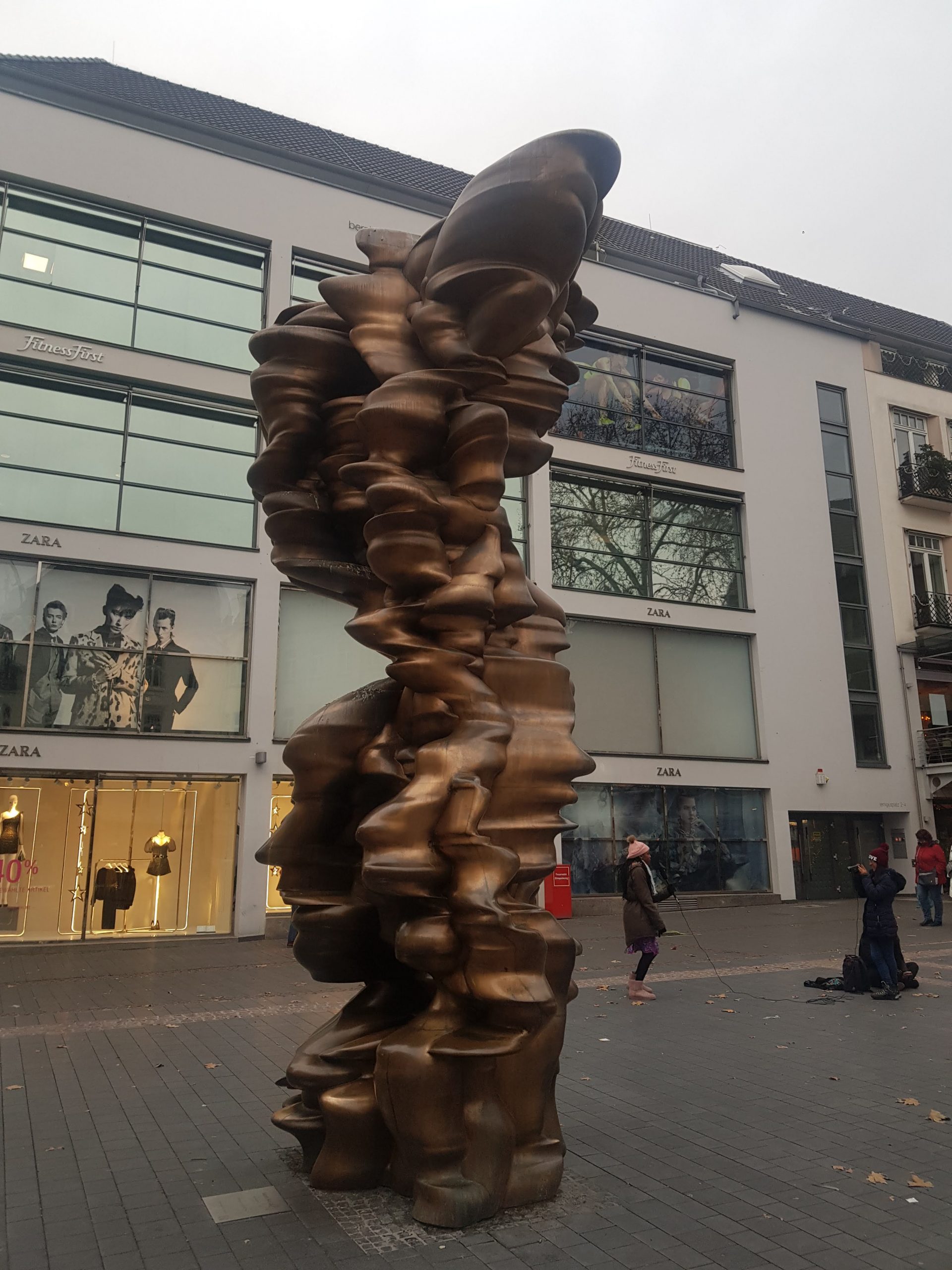
    This installation by Sir Tony Cragg is located at Remigiusplatz and was unveiled in 2014. Cragg is a British sculptor, but he has lived in Germany for long periods, having being knighted in 2016 for not just his artworks, but also for improving Anglo-German relations.

    Apparently, the artwork is meant to highlight the “mediocrity of the economically orientated environment”, so its presence is a boost for the square in which it resides. It also has no correct angle for viewing, although I’d claim that the descriptive panel in front of the sculpture undermines that a little as, by necessity, it has created a front to the sculpture.

    I have no in-depth knowledge of sculpture, or indeed any knowledge of sculpture, but it’s an interesting piece of artwork from which I can derive little meaning at all.