
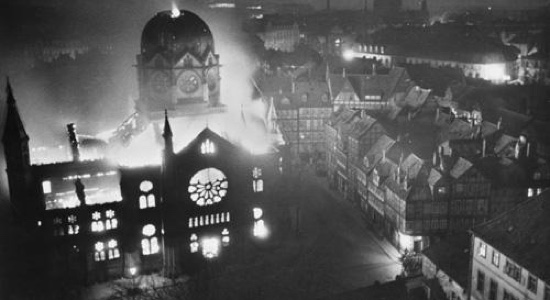
The New Synagogue in Hanover, designed by architect Edwin Oppler and completed in 1871, stood as one of the most impressive synagogues in Germany. On the night of 9 November 1938, during what became known as Kristallnacht, the New Synagogue burned and fire fighters were ordered only to ensure that no neighbouring buildings were damaged. On the morning of 10 November, emergency services blew up the dome of the burned-out building, and its ruins were later dismantled at the expense of the Jewish community. The destruction was photographed by Wilhelm Hauschild who was able to climb a church tower to be able to take a photo of the synagogue on fire.
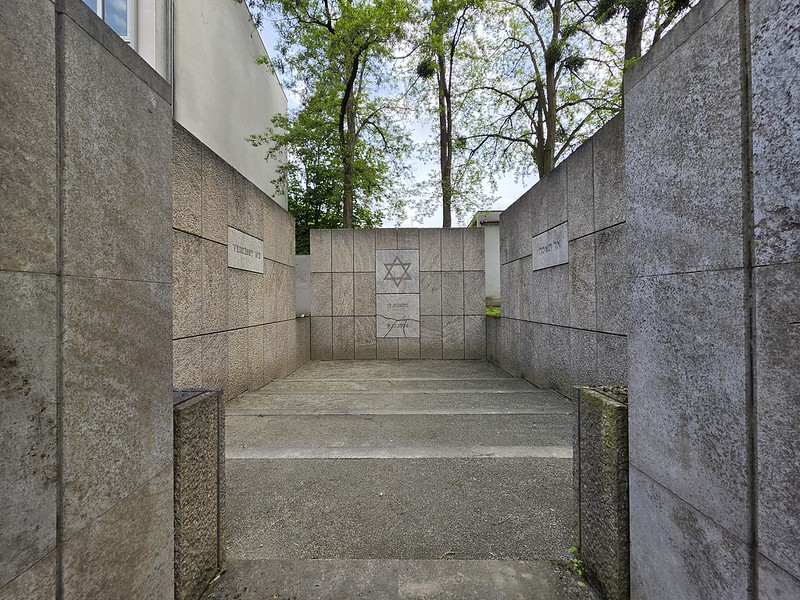
This is what is left today, just a small memorial that stands as a reminder of the former grand synagogue that was once here. In the early hours of 11 November, 275 detainees from Hanover and the region were taken to the railway station and transported to Buchenwald concentration camp. The large majority of the Jewish population of Hanover were killed by the Nazis over the course of the war and of those who survived, many didn’t want to return to the city after the end of the Second World War.
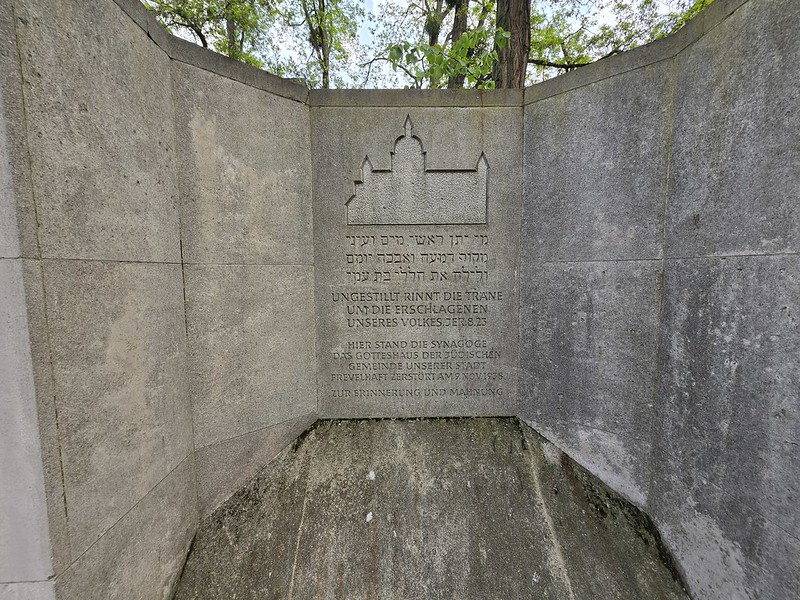
This monument was added to the site in 1978 to prevent the location being forgotten about and it’s a stark and minimalist affair.
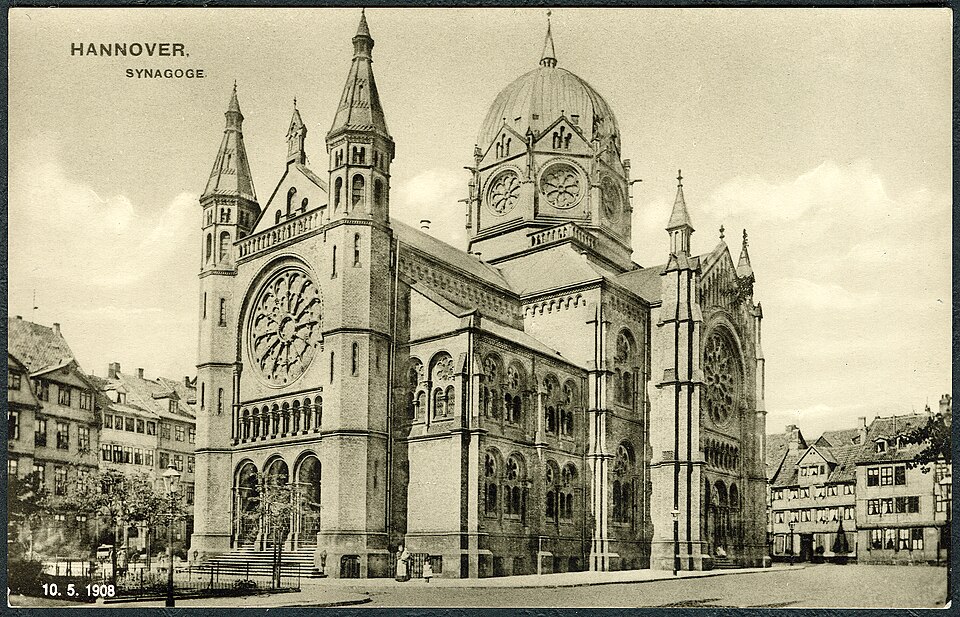
This is what the building once looked like, it’s hard to imagine this in the modern landscape and it was a quite beautiful structure.