Category: Scotland

  • Glasgow – Bus to City Centre More Expensive than the Flight

    Glasgow – Bus to City Centre More Expensive than the Flight

    20250604_033308

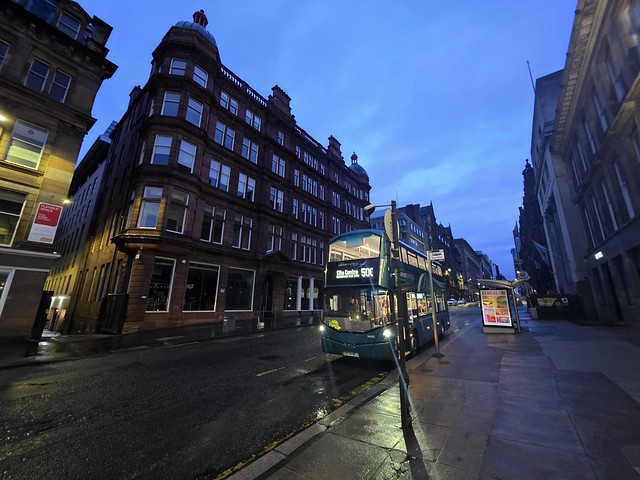
    I experienced earlier today what might best be described as one of the more decadent bus journeys of my life, from Glasgow Airport to the city centre, courtesy of First Bus.

    20250604_035317

    The excited passengers waiting to board.

    20250604_033331

    This cost the not-so-bargain price of £11. Now, I don’t want to sound dramatic, but I did briefly wonder if I’d accidentally bought the seat. Not rented. Bought and perhaps provided with a free First fleece. As a  comparison, my flight all the way from Budapest, roughly 1,200 miles and including a safety demonstration and a view of some clouds, was under £9. In short, it was cheaper to fly across a continent than to endure 20 minutes of pleasant Scottish tarmac.

    20250604_035625

    That said, the opulent bus itself was clean, punctual and, dare I say, convenient with the driver neither shouting nor hitting any of the passengers so there were lots of positives. Within moments of leaving the airport, I was whisked through the drizzle with wifi and a USB port and it was all very smooth.

    20250604_041549

    Still, I arrived safely, albeit financially rattled and maybe they should offer a laminated certificate to commemorate my participation in the UK’s most disproportionately priced transport experience (well, other than the Luton DART). It does though run 24 hours, so you can be overcharged day and night.

  • Wizz Air (Budapest to Glasgow)

    Wizz Air (Budapest to Glasgow)

    20250603_194145

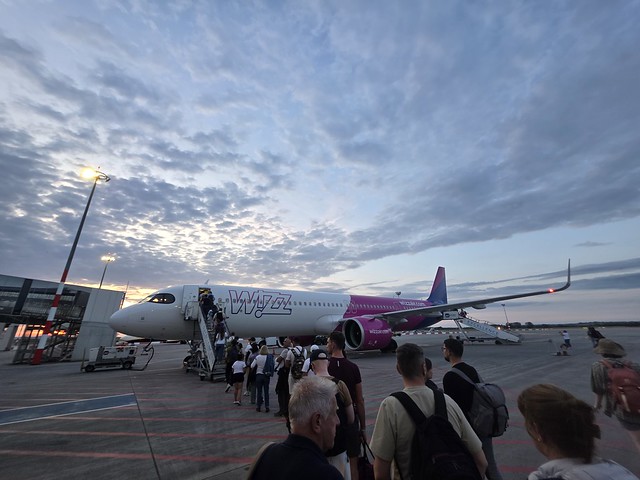
    I thought that the tropical heat of Budapest was getting a bit much, so I decided to go somewhere rather more suited to my preferred temperature range, so I opted for Glasgow. The flight was just under £9 with the Wizz Air Multipass that I bought last December and I remain very pleased with.

    20250603_202231

    Slightly blurred, well very blurred, but I was zooming in to check that I was at the correct gate. The flight was delayed by an hour, but I was in no rush at the other end so I appreciated the extra time in the airport lounge. The boarding process was efficient and the gate staff were polite and helpful, although a couple of customers being charged for oversized bags might not have agreed with that.

    20250603_202949

    Boarding the aircraft 9H-WDR, an A321 which has been in the Wizz Air fleet since June 2023. The seat Gods had unfortunately given me a middle seat and I had decided to accept my fate with my usual heap of downloaded YouTube videos lined up. However, the delight of hearing “boarding complete” with no-one in the aisle seat meant that the seating Gods had looked at me favourably after all. And then I noticed that the woman opposite and forward one row had eyed up the seat and was wildly flapping for her husband (or male companion, I shouldn’t judge) to come back about six rows and sit there to be near her. Anyway, that plan was foiled as I had already moved when she was mid-flap.

    And then another little situation occurred when numerous people applauded the pilots for landing the plane. I don’t know a huge number of pilots (well, two) but both of them I know hate this practice and I’m not sure if it’s from the Hungarians who know more about their national airline than I do (I accept that it might not be the official national airline, but it has far more aircraft than any other Hungarian airline).

    Anyway, that was the first little situation, with the second being the lady in the window seat being determined to barge past me after the aircraft arrived at the gate to get to the aisle. Now, I’m a firm believer in the “where exactly do you think you’re going?” philosophy of post-landing etiquette. I’ve got nowhere to go or stand. Are we suddenly going to a surprise party on the air bridge? No, we’re not, so I wasn’t moving in the period between the aircraft being at the gate and the aircraft door opening. The whole mad dash is truly a marvel and it happens nearly every flight. You’ve got people practically dislocating shoulders trying to yank their bloody carry-ons down, then forming a chaotic queue in the aisle, all while desperately trying to outmanoeuvre each other for a coveted spot only to then shuffle along at the pace of a heavily sedated snail once they hit the terminal.

    20250603_224637

    And safely back in Glasgow post rushoffplanegate, around forty minutes later than expected. I have a few hours at the airport but I’ll report back on this riveting exercise a little later on.

  • Gretna – Rail Disaster and History Walk

    Gretna – Rail Disaster and History Walk

    20230719_102154

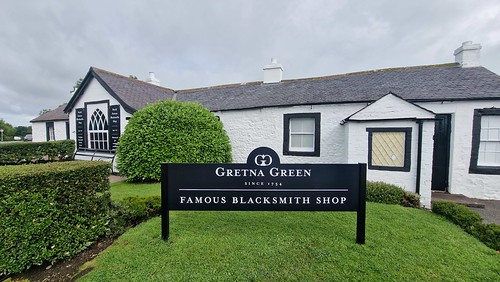
    Our walk started at the Famous Blacksmith Shop in Gretna Green, where marriages used to take place because of legislation which meant that English couples aged under 21 needed their parents’ consent to wed. So, where that permission wasn’t given, the young love turned up at the border of Scotland, handily Gretna Green, and got married here. The blacksmith was able to legally perform the marriage and so everyone, assuming other than the parents of the couple, were happy with the arrangement.

    20230719_104318

    I was excited to discover that raspberries were growing wild, I’m more used to just seeing blackberries in hedgerows. The walk was a total of 8 miles in length and is in a figure of eight centred around Gretna Green, so it’s possible to just do half of the walk.

    20230719_104448

    A memorial to the Quintinshill rail disaster which killed over 200 people, the worst ever to occur in the UK.

    20230719_111400

    A little further along the walk there’s an information panel about the railway disaster as this point, with the rail line at the rear being where the accident took place. More on this in a separate post as it’s something I hadn’t really been aware of before.

    20230719_113829

    The railway line plays an important part during the first section of the walk with numerous crossings under the track. What I think is an Avanti West Coast mainline train went over at a convenient time for this photo. It wasn’t overgrown at all and was quite a simple walk in technical terms.

    20230719_114430

    Unfortunately, the main pub in the town didn’t open until the evening and it doesn’t serve food at any time. The Queen’s Head has been trading since 1760 and is relatively unchanged, with this being one of the pubs operated by the state between the First World War and 1971.

    20230719_120347

    There’s the motorway in the background which added some brief noise to proceedings.

    20230719_120640

    The motorway road sign welcoming people to Scotland.

    20230719_121408

    The Old Toll Bar Cafe, noting that 10,000 marriages have been performed here since the building was opened in 1830. Originally a toll house for the new bridge, it meant that it was the first house that was reached in Scotland and was even nearer to the border than Gretna Green. In 2014, it was turned into a cafe and the historic marriage room is open to the public.

    20230719_121550

    And the old road bridge which was constructed in 1830 that led to the building of the toll house.

    20230719_121753

    There was a short piece of river walking which was pleasant, but notable was that this is the River Sark which is the border between England and Scotland.

    20230719_125950

    After a quick lunch at the Spar, where I gorged on half price strawberries and a full price Feast ice cream, we proceeded on with the rest of the walk. There’s an information board near to this sculpture which explains that it is known as the ‘Gretna Girl’ memorial in honour of the local women who worked in the HM Factory Gretna. At its peak, there were 30,000 workers employed at the works and it was producing 1,100 tons of cordite per week, a dangerous and powerful explosive.

    20230719_130921

    I felt the need to climb the steps to have a look at Gretna railway station.

    20230719_131516

    Gretna’s old parish church, which was unfortunately closed so we couldn’t look in the interior. It did though have a beautiful and sizeable graveyard, more on which in a later post. The current church dates from the early nineteenth century, but was constructed on the site of an older building and the listed building record shows that there was likely a Saxon church here.

    20230719_132027

    The town’s war memorial.

    We were fortunate that the rain at the start of the walk died away relatively quickly, so we were faced with near perfect weather for the bulk of the expedition. It’s not a long walk, but it covers a variety of terrain and I hadn’t realised before about the scale of the rail crash that took place at Gretna Green. I was also surprised just how many people were at the Gretna Green visitor attraction, but how few left the confines of that site to visit Gretna itself. And there were no pubs open either, something which felt entirely sub-optimal to me.

  • Annan – Blue Bell Inn

    Annan – Blue Bell Inn

    20230719_151059

    Annan isn’t a place that I had expected to visit, but various circumstances combined and it seemed wrong not to visit a Good Beer Guide pub which also has a CAMRA historic interior. For me, knowing that Annan is where Thomas Carlyle was educated was excitement enough, but Liam and Ross seemed slightly less enthused by the whole arrangement.

    20230719_150919

    There’s wood panelling throughout which is a legacy of when this pub was part of the Gretna State Management Scheme. There were three of these schemes in the UK which were designed for the state to take control to ensure that local defence workers didn’t get too drunk. They were successful in their aim and there were schemes in Carlisle, Gretna and Enfield, although the latter was short lived. They lasted from 1916 until Edward Heath’s Government privatised them, bringing the scheme to an end in 1973.

    20230719_144204

    There’s more about the pub’s traditional look on CAMRA’s web-site. It has a long history, it has been standing since 1770 and was for a long time a popular coaching inn. It stands at a prominent location near to the entrance to the town and was built by William Stewart, a vintner from Lockerbie.

    20230719_144115

    There were three real ales and a cider to choose from. The service was polite although it was evident that this was a community pub where much of the trade was from locals, but it didn’t feel unfriendly. With no disrespect to Annan, I’m not entirely sure how many tourists they get, there did seem some slight surprise when we entered. But, perhaps they just thought Liam looked odd, who knows….

    20230719_144332

    I went for a pint of the Swan Blonde from Bowness Bay Brewing, a well-kept light beer with a touch of citrus to it.

    20230719_143948

    The pub stables are still visible at the rear of the building, but the highlight is perhaps the view over the bridge which was designed by Robert Stevenson (not to be confused with the railway engineer of the same name). As a final titbit, it’s suggested that Hans Christian Anderson stayed at the hotel, although I’m not sure how much truth there is in that tale.

  • Paisley – Causeyside Street Pavement

    Paisley – Causeyside Street Pavement

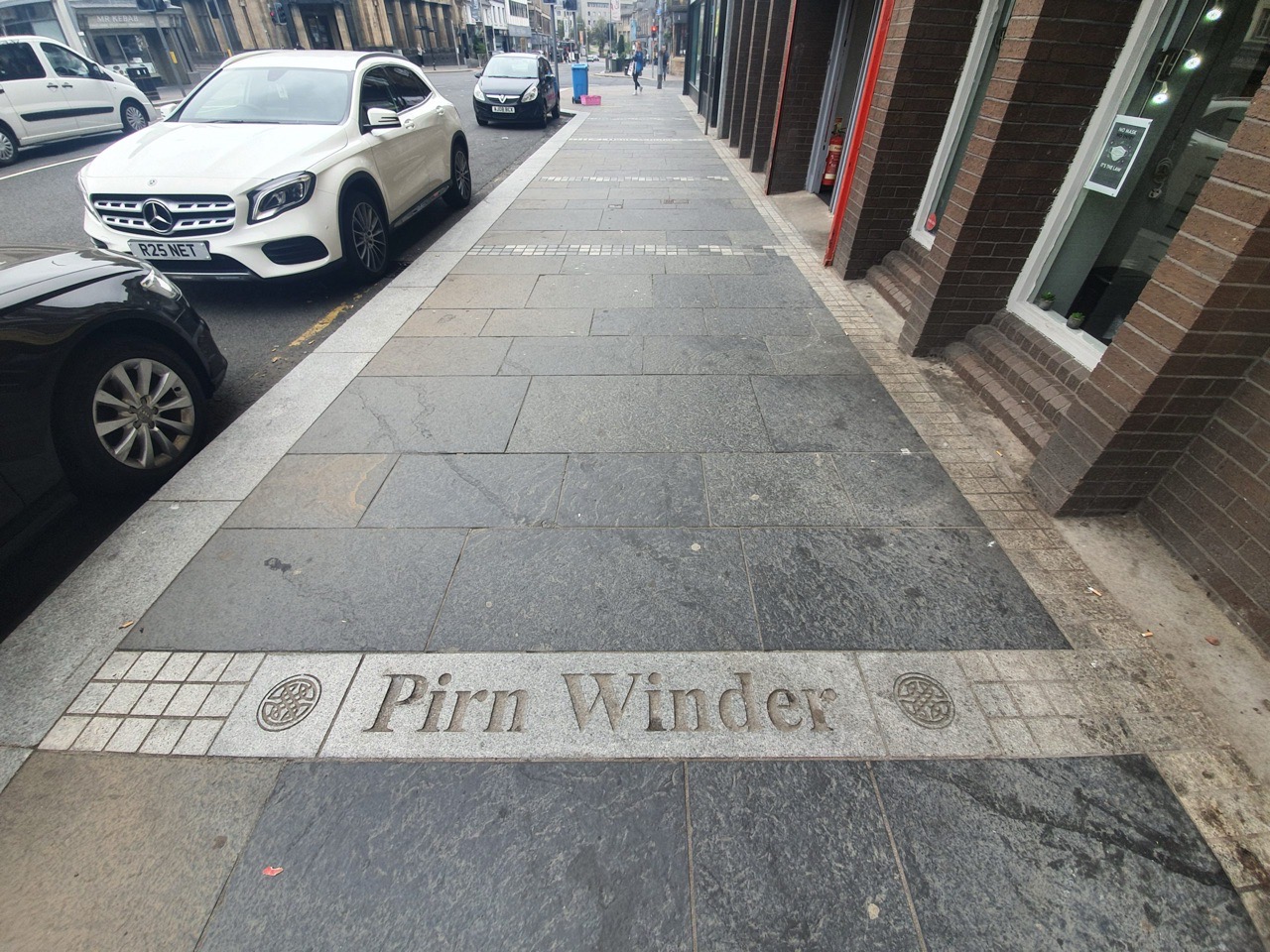
    I was intrigued by these inscriptions along the pavement on Causeyside Street in Paisley and I thought at the time that they indicated the jobs that residents living in the properties had. However, it seems that they’re simply random, giving a list of some of the jobs that existed in Paisley in the past.

    I’m not very knowledgeable about textiles, weaving and clothing manufacturing, but it seems that a pirn winder was a job that a child could do (and frequently did) as it was winds the yarn onto pirns (a pirn is a rod onto which weft thread is wound). There are still advertisements in the UK for loom tuners, so that role has persisted (although I don’t understand it). As for hank winders, there’s a chat at https://www.rootschat.com/forum/index.php?topic=487070.0 about that….

    It’s all a bit beyond me, but it does make me think about what sort of job these workers would have had today in the current labour market. Many of these jobs were routine and very dull roles, but a necessary part of the weaving process and some of the few forms of employment that might have been open to many women and children (there don’t seem to be many men doing these roles) at the time.

  • Paisley – The Last Post

    Paisley – The Last Post

    As I was walking through Paisley yesterday, I thought I’d visit one last Good Beer Guide pub before my flight back to London. This is the JD Wetherspoon operated Last Post, which I chose as the other pubs listed appeared to be primarily sports led and I wasn’t going to risk that.

    It’s a grand building that JD Wetherspoon have converted, what was formerly the main Post Office in Paisley, hence the pub name.

    The upstairs in the pub, which wasn’t overly busy, just as I like it, nice and peaceful.

    And the downstairs area, which was a little busier.

    A half pint of Buffalo from Fire Island organic craft beer.

    And the large bottle of Elvis Juice, which came with the meal.

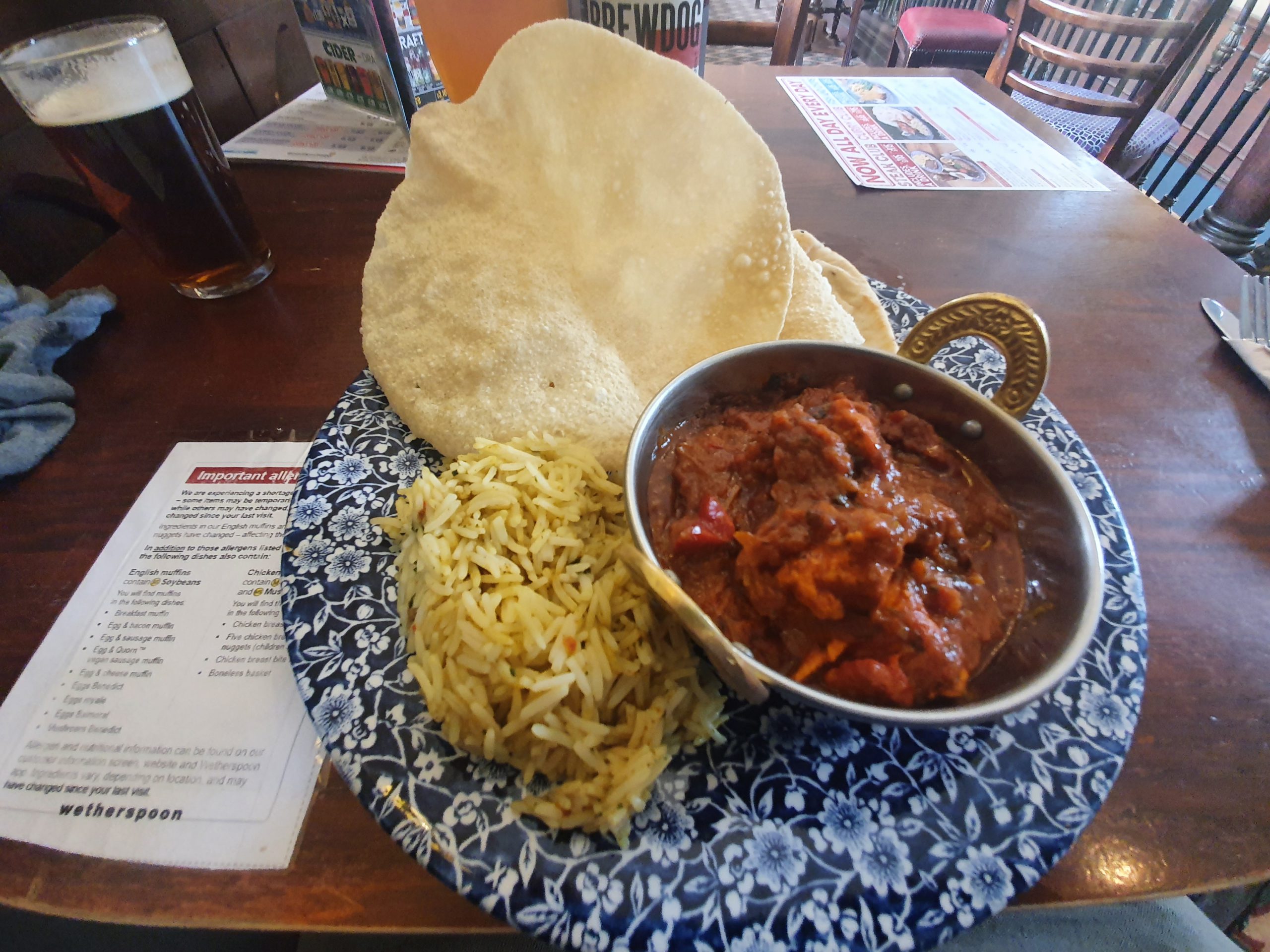
    With the meal being the chicken jalfrezi curry, which was very reasonably priced and towards the lower end of the price bands that the chain has. The food was all fine and cooked well, with everything at the appropriate temperature, so the usual value for money. Service was excellent, with a friendly team member bringing the drink and food, they offered a check back and also checked if I had enjoyed the meal. The environment was clean and comfortable, with team members visible cleaning tables down on a regular basis.

    I’ve noticed that the average Wetherspoon pub seems to score around 4.1 on Google reviews (I accept that I really need to get out more….), so this one is a little more negatively reviewed than the usual. Many of the reviews are the general complaints about slow service or tables not being clean, although I didn’t experience that. The complaint:

    “Went for breakfast, sold out of poached eggs but could still get eggs on a fried breakfast, so basically who ever is in the kitchen can’t poach an egg!”

    I’ve seen a few times from customers who don’t realise that JD Wetherspoon just reheat pre-cooked poached eggs that are shipped straight in. Another angry customer left them 1/5 noting:

    “They have my favourite poached eggs Benedict on the menu but they don’t serve it, something to do with the poached eggs being cooked off site!!??”

    For a busy kitchen, I like this approach, there’s a consistency to the process and it should be impossible to get a hard poached egg, although Richard has managed a couple of times. Anyway, I’ve digressed into writing about poached eggs in Wetherspoons, which is a bit pointless as I didn’t even order that. Back to the reviews, one customer commented “I got two camping chairs stolen in the pub” which sounds an exciting story as the criminal “grabbed them and ran straight past me”.

    There was a choice of five different real ales, so I can see why the pub has been listed in the Good Beer Guide, and since the interior also has some historic interest, I’m pleased that it has been listed. All rather lovely.

  • British Airways (Glasgow to Heathrow T5)

    British Airways (Glasgow to Heathrow T5)

    This is the return flight, I went from Heathrow T5 to Glasgow last week. To my considerable annoyance, this journey wasn’t available for anywhere near the same price using the rail network, I try to avoid using aircraft for domestic flights.

    I started from the Travelodge at Glasgow Airport and was pleased to note that they’ve made it easy to walk to the terminal by providing clear signage.

    And the terminal at around 6am.

    The list of departures, mine is the 08:15 flight. Note that I arrived only 2 hours 15 minutes before the flight, which was cutting it very fine indeed as far as I was concerned.

    There’s already a JD Wetherspoons landside, so it seems that there will soon be one airside as well. It was at this point that I popped into the British Airways lounge.

    I liked the artwork here, some interesting Scottish scenes.

    And some information about it, a really lovely idea to help promote the work of an airport security officer, Christopher Marr.

    The minor problem with air bridges is that I can’t photograph the aircraft, this was the nearest that I could get, but the back of it is pointing out at least. It’s aircraft registration G-EUUI, which I haven’t flown on before (I don’t remember the aircraft I fly on, I have to search my own blog, although that’s good for the access numbers….) but has been in the British Airways fleet since 2002. The aircraft went to Dubrovnik after it landed at Heathrow, I must admit to being slightly jealous of it….

    Lots of people in boarding groups 1 to 3, a lot more than my flight to Glasgow last week. The boarding gate staff were helpful and cheerful, which I thought was impressive for an early Tuesday morning. The cabin crew were equally engaging, so first impressions were all very positive again. The pilot sounded chirpy and happy as well with his announcements during the flight, so my general impressions remained positive.

    The view from the window, although I was more engaged in watching some customers in the aisle trying to put their bags into the overhead lockers. Children often have a toy where they try and fit a shape through a hole, I suspect some of these customers didn’t have that game when they were younger. They will try and fit a bag that clearly doesn’t go in the space provided and look endlessly surprised.

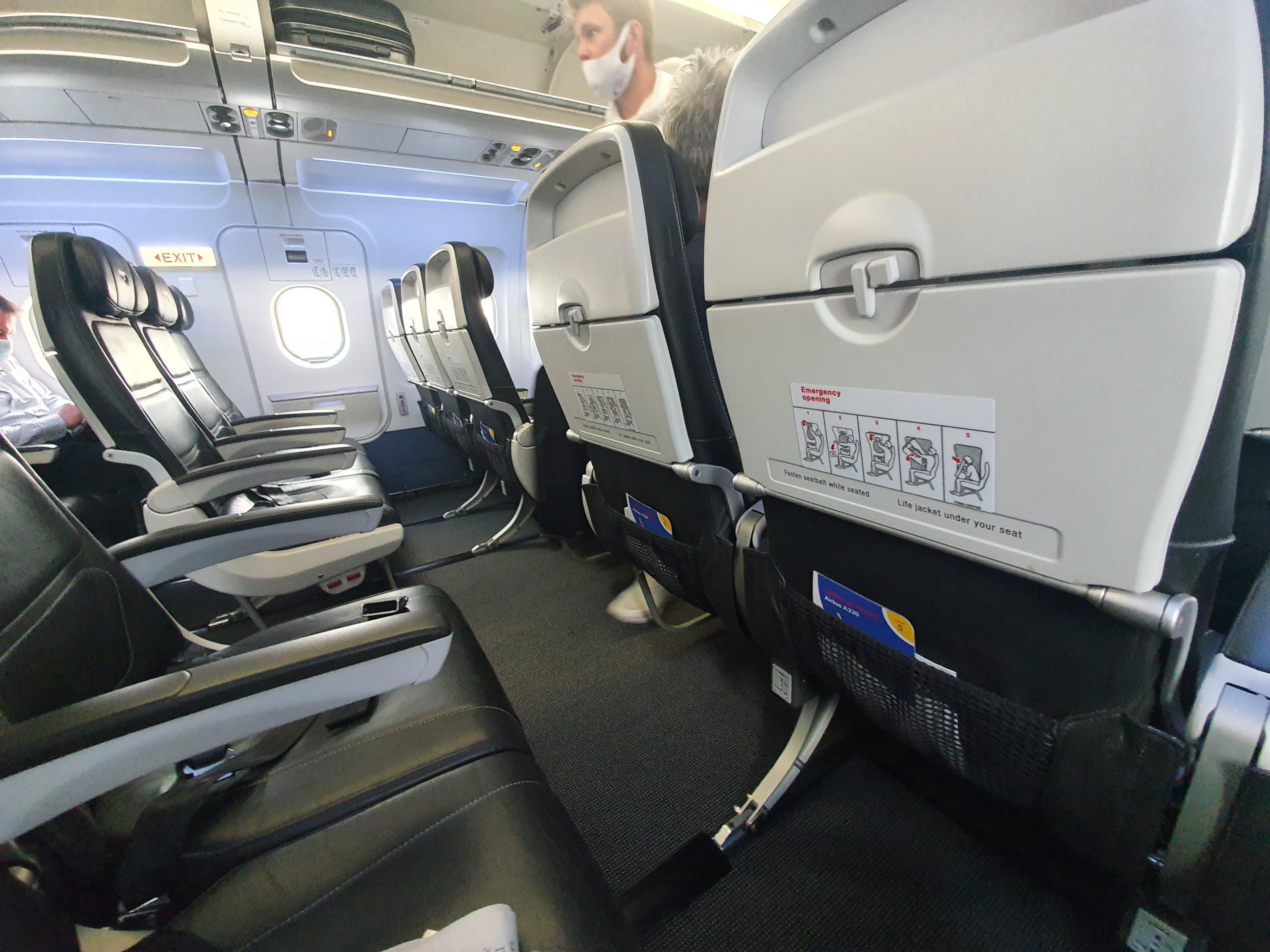
    I had an exit row seat by the window, but the aircraft was full and I didn’t see any empty seats at all on the flight. The aircraft felt very clean, but everyone was handed a cleansing wipe if they wished to do a bit more cleaning.

    Flying over Glasgow and what I assume is the River Clyde.

    The free food and drink was a bottle of water and a Nutri-Grain bar, entirely sufficient for an hour long flight. The newspaper was free at the airport, I’m not into paying for them.

    The aircraft arrived 29 minutes early at the airport, but arrived at the gate one minute later than anticipated, with a half hour wait on the runway for a gate to become available causing that delay. The pilot made regular announcements, so it all felt professionally managed and I wasn’t in a rush anyway. Customers seemed content (no-one was tutting or grumbling anyway) and the disembarkation process was well managed, with five rows being called to leave the aircraft at a time.

    And this is where the domestic passengers are tipped out, right down the end of the terminal.

    13 minutes?!?!?! This Piccadilly service back into central London was every ten minutes a couple of years ago, apparently now reduced to every 20 minutes. For most parts of the country a 13 minute wait would be normal for public transport, but in London it stands out as feeling a long time.

    Anyway, this was another perfectly operated flight from British Airways, I remain entirely pleased at their service. All rather lovely.

  • Glasgow – British Airways Lounge

    Glasgow – British Airways Lounge

    I wasn’t sure if this lounge would be open, as British Airways have closed some of their outstation lounge facilities, and also there are a few third party contracts that they haven’t yet renewed at other European airports. However, the facility was open and there was a friendly welcome from the staff member at the desk.

    It was busy when I entered, as the previous flight was about to depart, but it soon emptied out to this. I like this style of desk seating, but there were a range of higher chairs and lower seating as well, which should offer a suitable option to nearly everyone.

    There were plenty of power points dotted around the place and efforts made to put some artwork on the wall.

    Looking down the lounge back towards the entrance. The lounge was clean throughout and the staff seemed to be trying to thoroughly clean it after the first wave of customers left. There are also toilet facilities available directly from the lounge, so customers don’t need to go back out to use those in the main terminal.

    The food and drink section was closed off, so customers were served by staff. Unlike the system that BA have in their London lounges, there’s no app provision here, just helpful staff pouring coffees and the like.

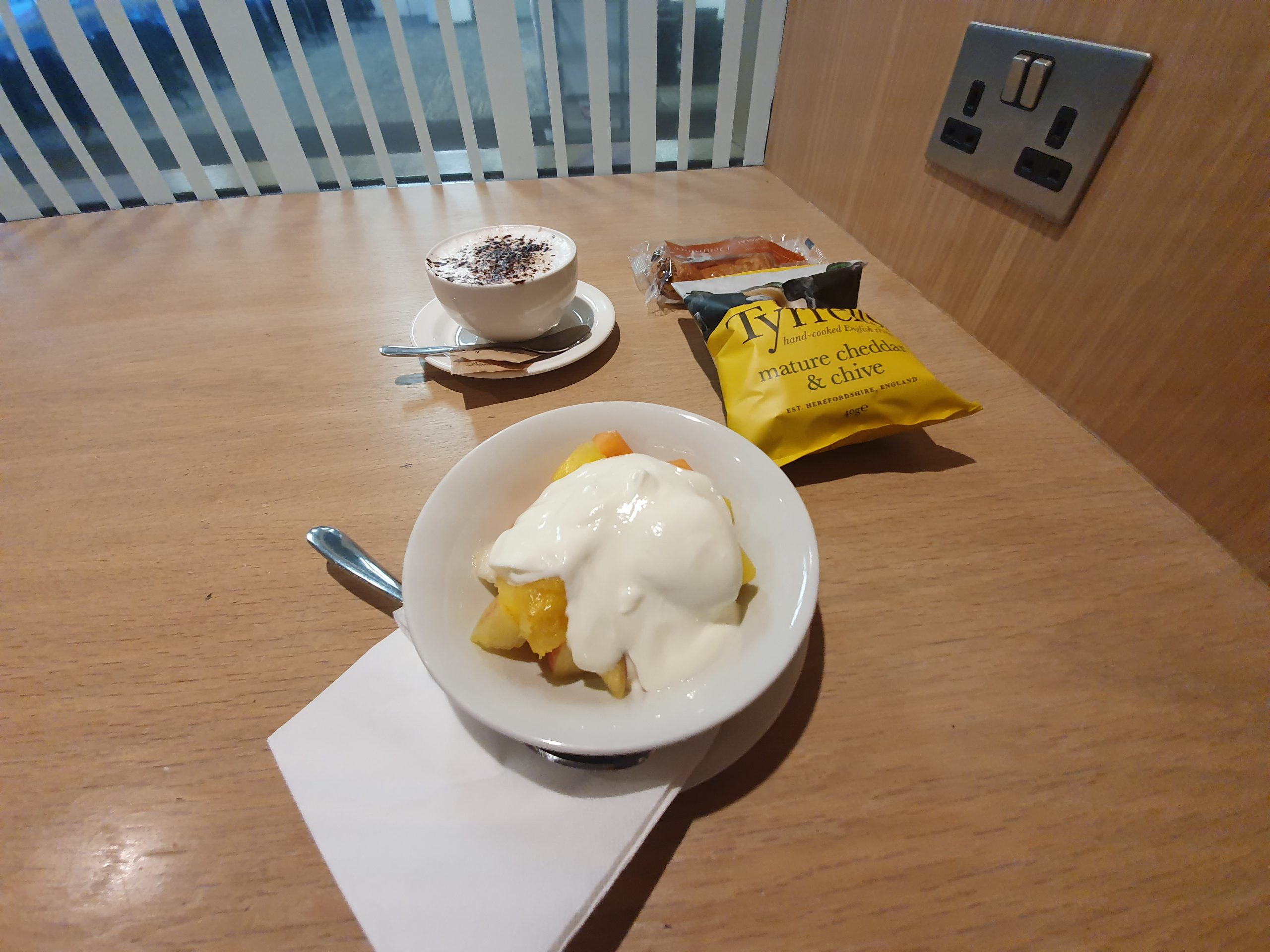
    The menu wasn’t very broad, although I was there for breakfast time. They seemed to be mainly providing porridge to customers, that was certainly the most popular option. I went with the yoghurt and fruit, as the thought of porridge or muesli didn’t appeal. That was complemented by crisps and a pastry, along with a latte. The food and drink was all quite basic, but given the size of the lounge and limitation of the facilities, it seemed a reasonable offering.

    Announcements are made when it’s time for customers to go and get their flight, but there are numerous screens around the lounge so it’s easy to know when and where to go. It never got very busy during my visit, so there was always plenty of seating available for those who wanted it. It was also evident just how many customers knew the lounge staff, I imagine they must commute on a regular basis. As a lounge, it’s perfectly sufficient with food, drink, helpful staff, wi-fi and lots of power points, so a positive start to the day.

  • Glasgow – Glasgow Cathedral

    Glasgow – Glasgow Cathedral

    I’ve done that annoying thing I do (one of many to be fair) of taking way too many photos of an historic location and then struggling to fit it all into a blog post without it becoming overlong. So, I’ll keep this short and if I ever get time start to add some of the other historic elements into other posts. It’s an important building as it’s the only medieval cathedral in mainland Scotland that has remained relatively intact since it was constructed. Well, other than when the Victorians knocked down the two towers at the western end in the mistaken belief that they were more recent constructs. They weren’t.

    The history of this building dates back to 614 when St. Mungo (also known as Kentigern) buried a holy man named Fergus at this site, building a small church. When St. Mungo died, he was buried here and that was the end of the matter for some centuries. Then, a decision was made in 1136 to build a cathedral on the site of the church, which was later replaced by a more substantial thirteenth century building.

    Back to my visit, visitors had to pre-book a ticket on-line, although there was no charge for doing so. I was saddened a little to see an elderly gentleman at the entrance to the door who was trying to explain that he didn’t know he needed a ticket and he was really keen to visit as he had been to some other historic abbeys and churches in Scotland and had been looking forwards to this one. They didn’t let him in.

    As for the Covid handling, the cathedral is managed by Historic Environment Scotland and I’m entirely puzzled who has come with the idea that they’ve had to introduce a one-way system which huddles everyone close together. They have an enormous cathedral and they’ve created little aisles to corral visitors into, making social distancing as hard as they possibly could. Anyway, I had an exciting building to look around so just waited patiently in the queue that they’ve created.

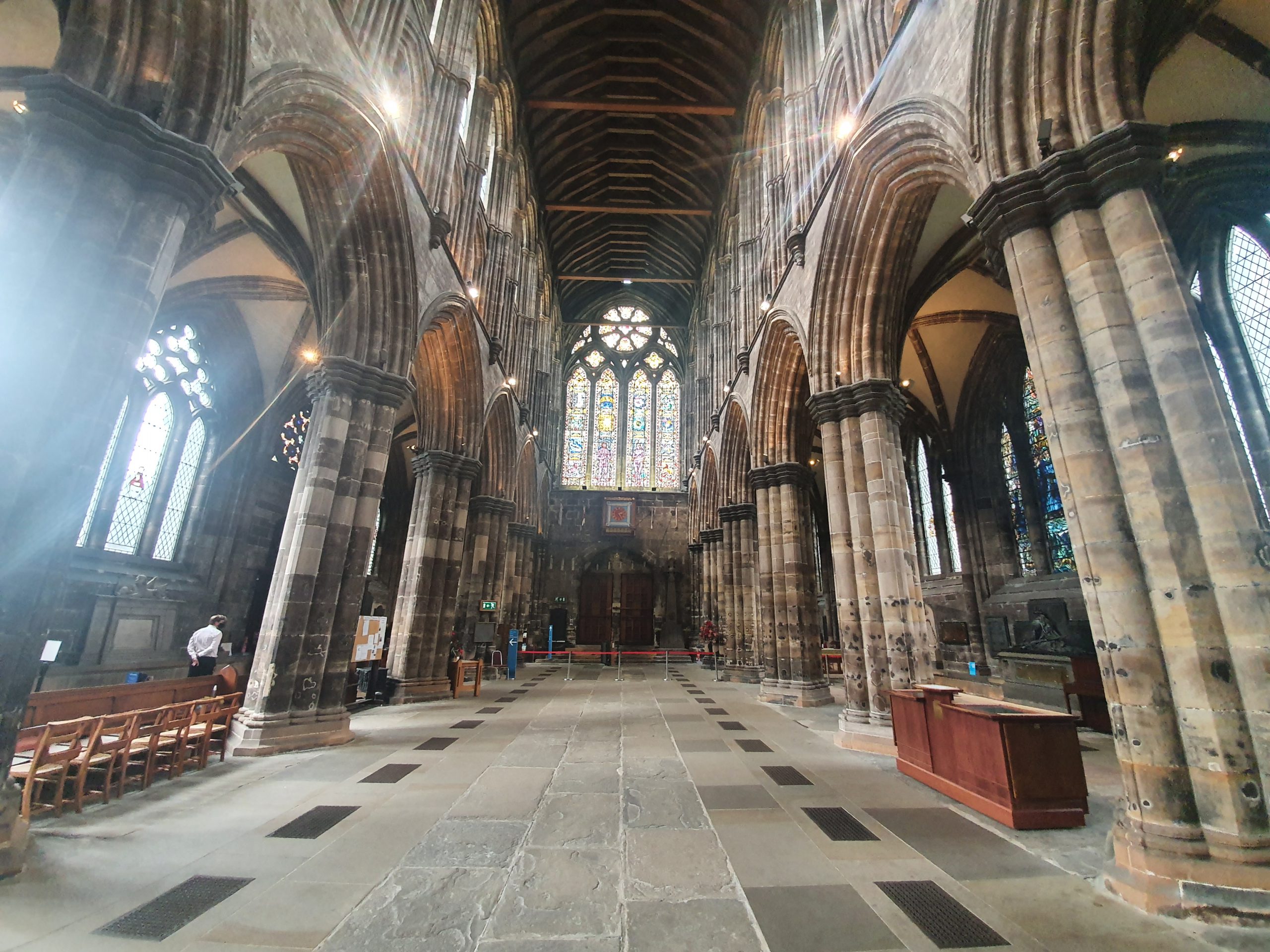
    The nave, which was an open area of the cathedral where visitors could walk where they wanted. Out of the photo and behind me there were about fifteen people crammed into one small section of the building working through the cathedral’s one way system.

    Back to my little history. Following the Reformation in Scotland, the cathedral started to fall into disrepair (not helped when someone pinched all of the lead) and there was talk of it being entirely demolished as an unnecessary structure. To be fair, the talk was likely from someone who planned to sell the stone off or similar, a fate that led to the destruction of the neighbouring castle. Then it was decided that it would be a handy place for Protestant worship and repairs were put in hand, but not much beyond that. The Victorians knocked the building about a bit, but there hasn’t been a reason for any major changes since the Reformation, hence the survival of the main fabric of the medieval cathedral.

    The chapter house and whilst visiting I had a little dilemma here. I waited patiently at the top of the stairs as the signage said one household group only could look around it at the same time. Then the helpful volunteer told me to go down as one more person would be fine. I think I then annoyed the couple who had also patiently waited to go down that I looked impatient and was trying to hurry them.

    The cathedral’s crypt.

    In the 1860s, it was decided to make a major investment and the stained glass in the nave and choir was removed and replaced with glass from Munich. This seemed a good idea, but the Munich glass started to fade and it was agreed that this wasn’t ideal, so it was taken out in the 1930s. Some of it has been placed around the crypt where it’s dark and won’t fade.

    The centrepiece of the cathedral is the burial place of St. Mungo. In medieval times, this was a place of pilgrimage and I was amused to note that the authorities at the time created a complex one-way system to add anticipation to a visit to the tomb. These pilgrims created a substantial amount of wealth for the cathedral, a revenue which was lost following the Reformation in Scotland.

    Anyway, this is a beautiful building with a complex history, but with much original structure from the thirteenth century. I’m not entirely sure that the cathedral’s social distancing is working as well as it could, but the staff were friendly, helpful and engaging. There were also numerous interpretations boards around the cathedral which gave useful information about the history of the structure. It was certainly worth getting a ticket to visit the building, although I’d add that I got muddled up near the end of the visit and went the wrong way to try and exit. The staff member told me not to worry as lots of visitors got confused there, although they probably didn’t and she was just being polite.

  • Paisley – Travelodge Glasgow Airport Hotel

    Paisley – Travelodge Glasgow Airport Hotel

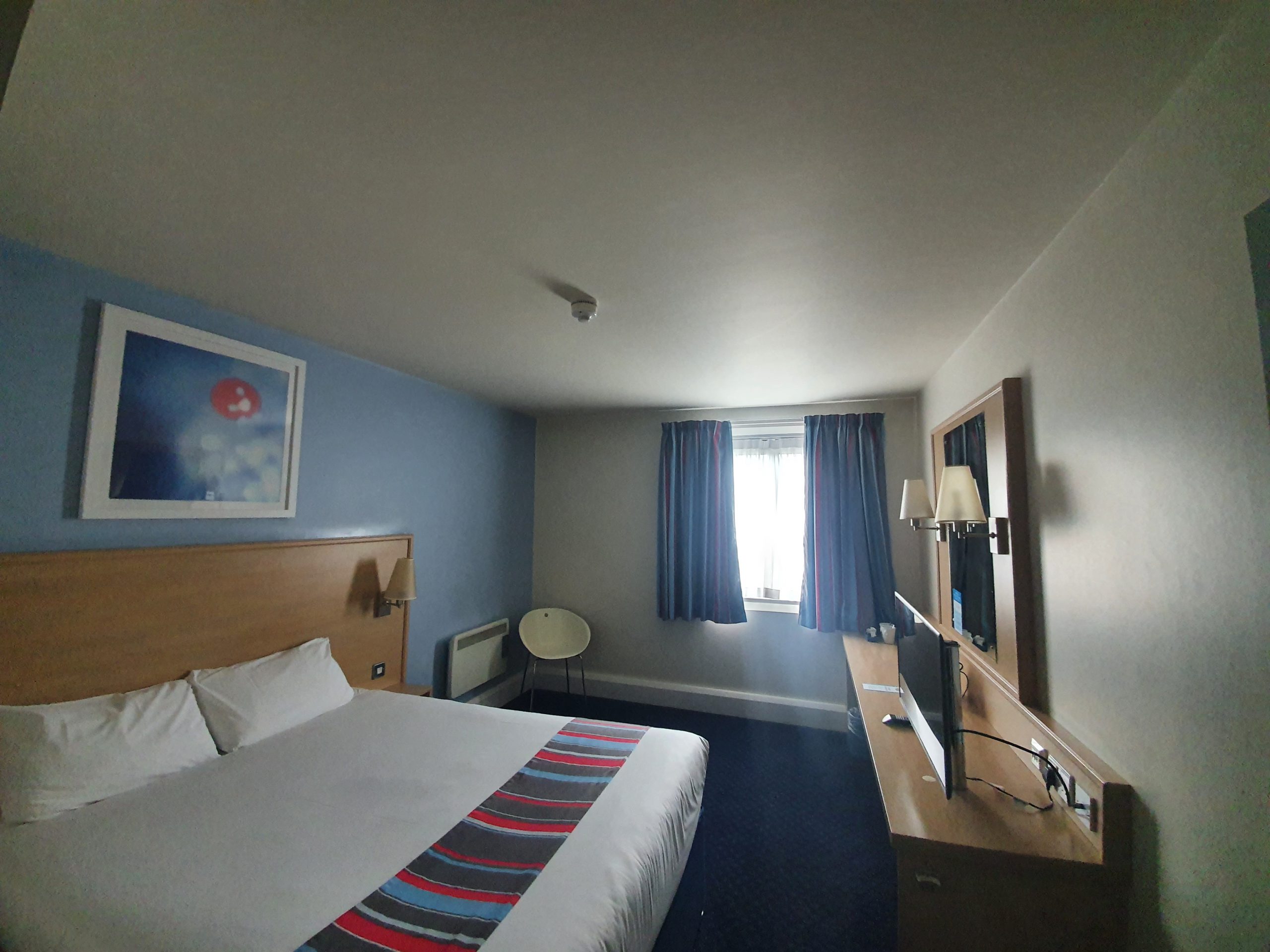
    Having stayed at the Premier Inn hotel at Glasgow airport last week, I thought I’d try the Travelodge this week. As an aside, it seemed an odd way to build a hotel on prime real estate, with such a large footprint but only having two floors, but everything seemed modern and functional. There isn’t much to do in the immediate area, but it’s possible to walk to the airport in about ten minutes (although the options there are more expensive) or walk into Paisley in about twenty minutes for all the action that anyone could possibly want. What was useful was the clear walking instructions that the airport has installed so that it was easy to get from the hotel to the terminal.

    One day after my muttering about the potential problem (which fortunately didn’t become a problem) of connecting doors between rooms, this hotel had them as well, the first time that I’ve seen them in a Travelodge. They were firmly constructed and so noise intrusion wasn’t a huge problem, but I do hate the things and I notice that they’ve had a number of negative reviews about them.

    I slept well and didn’t encounter any noise internally or externally, with the hotel being clean and comfortable. The staff member at reception was helpful and friendly, so I felt welcome, with the check-in process being efficient. There were plenty of plug sockets in the room, although none near the bed, although I’m sure that this will be fixed at a future refurbishment. However, given how much I dislike connecting doors, I wouldn’t stay here again and would instead book the Premier Inn or IHG options.