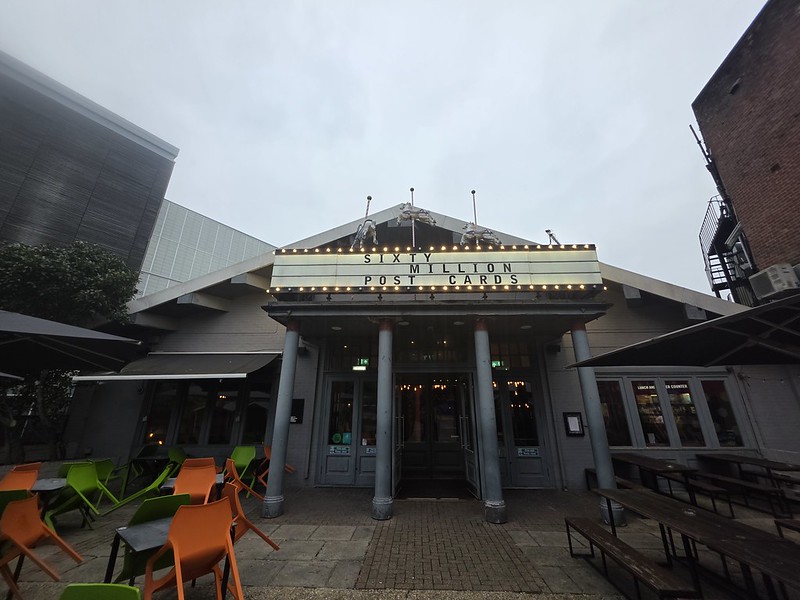
This looked like an interesting and quirky venue, although it wasn’t initially clear to me whether it was primarily a food venue or more of a bar.
They use beach huts as external seating to add some character to proceedings.
The food menu and the chicken schnitzel looked tempting…. But I had already eaten (not that this always stops me) and decided not to.
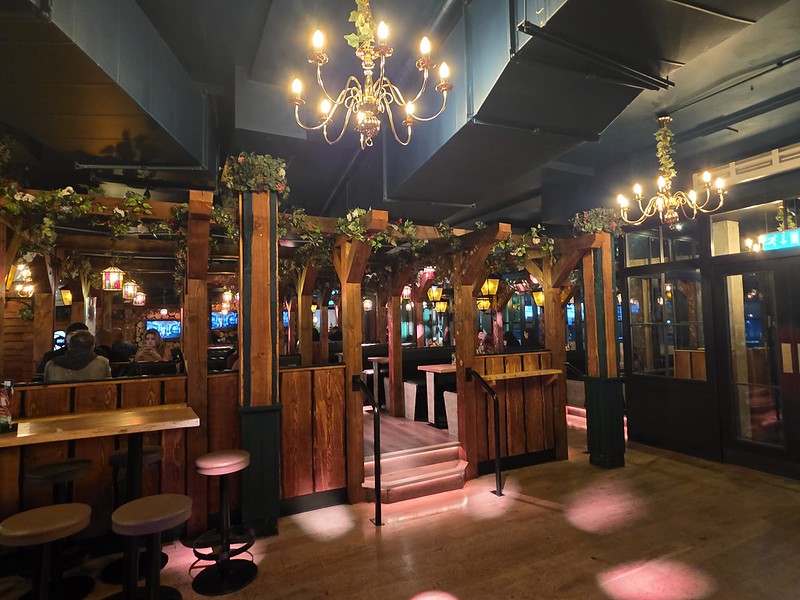
It was a pleasant interior and it transpired that it was a bar as well as a restaurant, although it wasn’t overly busy when we were there.
The postcard theme is evident here.
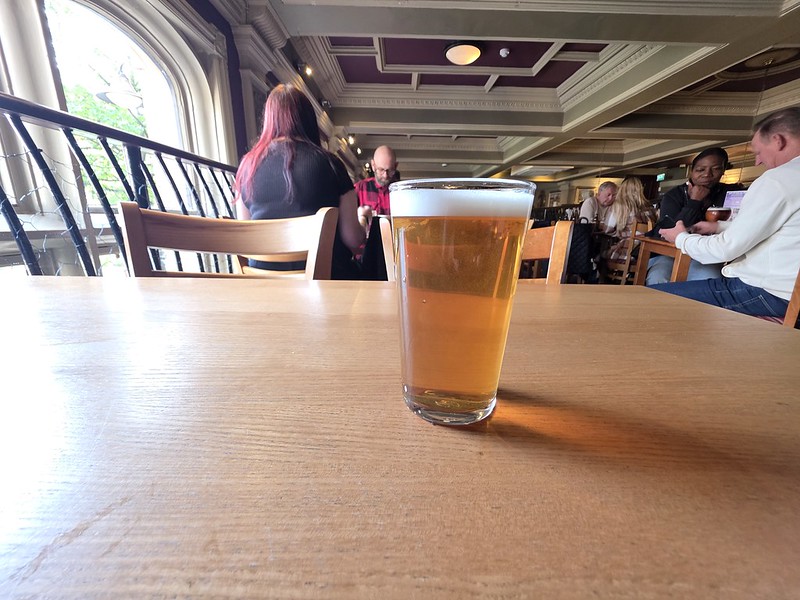
They had the Follow the Green Line from Round Corner Brewing and I was pleased to see something a little different on keg. It ran out near the top and the helpful team member said that they were changing the keg, although I was slightly doubtful that they’d have another as it’s not a mainstream beer. It transpired that they didn’t, so usually this beer would be discarded and another choice offered. But, I wanted this beer as I hadn’t had it and I’m happy with the end of a keg line, although not at the end of a cask line….. So, I asked to keep this and they could just pour some Asahi in another glass to make it up. I was glad that I did, it was a decent limey beer, citrusy and smooth.
It probably didn’t help their stock control, but there’s the Asahi which tasted as expected.
Some more postcards.
The venue had a welcoming atmosphere, the team members were friendly and I liked their beer selection as it made an effort to be wide-ranging. I hadn’t visited this bar when I’ve been in Bournemouth before, but they’ve been going for over a decade. All rather lovely.
We hadn’t intended on going in here, but it looked intriguing and so we popped in en route to the railway station to get to Christchurch. It’s part of a small chain of four bars, the others being in Bristol, Birmingham and Cardiff.
I rather like the decor and general theme, it’s suitably quirky and informal.
The food seemed affordable, here’s the hot dog menu.
And the pizza menu.
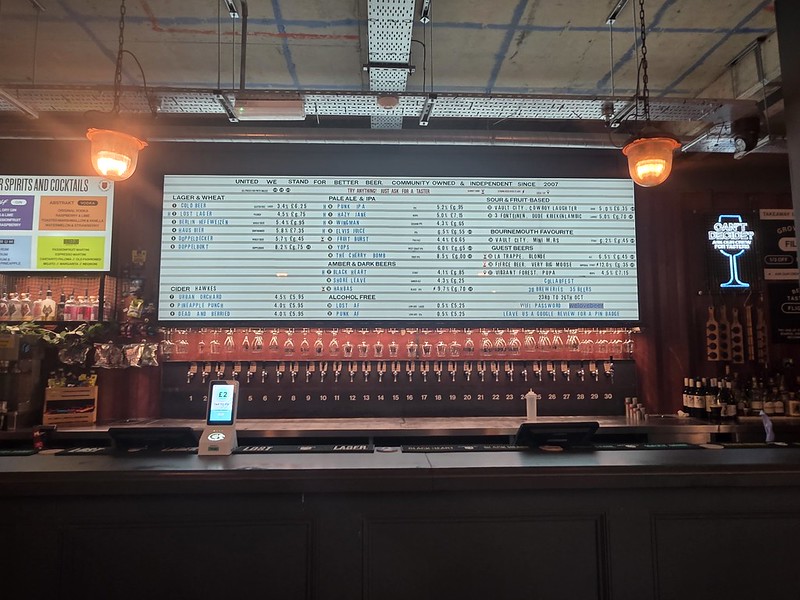
The beer list and that’s quite an impressive beer tower with the seven pint option.
There was a singer, but he wasn’t deafeningly loud so that was rather lovely.
I think it’s aimed primarily at students, but it seemed welcoming to everyone.
The bier lift is a nice touch.
I might have ordered half a pint of Hooch, which is sweet, delicious and I accept not a craft beer. Well, actually, I think it comes close.
The online reviews were very positive and the team members were friendly, welcoming and personable. Although I felt that this review seemed a little sinister, there should be no excuse for exclusion.
I was on holiday in Bournemouth for a few days and wanted to pop in for a pint on a Sunday night. I was told by the door staff that the company policy was that no individuals may enter. This was because it took them ‘over capacity’. As a 52 year old man travelling alone, on a Sunday evening and with no more than 30 people inside this seemed ridiculous. I did send a message via the website as yet I have got no reply. Shame really, dismissive door staff and a poor service, could do and should do better.
I can’t find any other similar reviews, so hopefully it was the case that they were at the capacity that they wanted. Anyway, I thought that this was an informal and well managed venue, with the food and drink prices seeming reasonable. I like pub chains with an interesting theme or concept, it adds a little something to the whole arrangement.
The Thomas Shelley is the second JD Wetherspoon venue in Bournemouth, located nearby to the Moon in the Square. They used to operate the Christopher Creeke on Holdenhurst Road, but that’s now closed, although I did visit it when I was in Bournemouth in 2018.
As usual, I’ll take the history of the pub name from JD Wetherspoon:
“St Peter’s churchyard contains the grave of Mary Shelley and her husband, the romantic poet Percy Bysshe Shelley. Mary, author of the novel Frankenstein, died in London in 1851. Her body was interred in the family vault at St Peter’s by her son, Sir Percy Florence Shelley, who lived at nearby Boscombe Manor (which later became part of Bournemouth and Poole College).”
The pub was busy, this is one of the few tables that was briefly unoccupied. It’s a large venue and there are numerous different seating areas, with the bar in the centre of the whole arrangement. There were about eight real ales available and the drinks, as usual, were keenly priced. I ordered at the bar and it was all efficient and organised, with only a minimal wait.
Working through a little more of the JD Wetherspoon beer festival, this is the JDW Young Henrys Newtowner which isn’t particularly well reviewed on Untappd. I rather liked it though, it was light and citrusy.
Ross ordered Coors and I’m not judgemental at all about beer, but I know others in the pub might be, so I hid it in case anyone said anything.
The next half pint was the Root and Branch from Oakham Ales, which is a black IPA. It has an interesting flavour, roasty and quite complex.
The carpet.
As usual, I feel the need to look through the reviews as it’s a JD Wetherspoon venue and it’s quite well reviewed online.
“Popped in to get a quick whiskey and to see if I could get some ice to take away. Not a problem but had to pay a pound for the coffee cup to take it away in. Was interestingly informed by the barman serving me that it was good ice cos it’s hard and lasts ages. Information for barman, ice is ice and it lasted no longer than any other ice.”
Wetherspoon does have good ice I suppose, but seems a bit harsh to charge £1 for a takeaway cup….
“I came on steak Tuesday order a sirloin steak chips. The steak did not taste right like a sirloin. Also asked for normal peppercorn sauce and they don’t have it, ask them to make it they don’t make the sauce fresh its in a bag!”
I like the idea of the team member in the kitchen quickly making some fresh peppercorn sauce….
“During my Son’s Stag we ordered food & did not receive what we paid for. The upset member of staff took it away. He later returns and said that it was paid for anyway and dropped the 2 plates onto the bar and when I called the manager / team leader to explain and complain about he’s action I was told that she will not deal with it as I was being rude. They then refused to sale any drinks to the party of 22 people. I was told we can stay but can’t order.”
You can stay, but don’t order anything probably isn’t what a stag group wants to hear….
“Was appalled to see England supporters being told to cover up their shirts. Thought this was an English pub in an English Town in an English County where democracy exists.”
In a democracy, pubs can ask customers not to wear football shirts. Although the chain has changed their mind on this numerous times, it probably is a bit unfair on customers to work out what their current policy is.
“Didn’t stay for a drink as the men’s toilets were so far away downstairs it was like a punishment! Might be a good pub but I don’t want a marathon to the toilet”
They’re down one flight of stairs…. Anyway, the exercise is good for the soul.
“Most of the staff here are horrible.”
They’re probably not….
“Still trying to uphold some vague restrictions . Doesn’t suit virtue signalers or those that want normality . Just the usual really, pretend to be doing something for some woke points and inconvenience everyone whilst actually doing nothing of use…”
Perhaps it’s that woke Tim Martin.
Anyway, I’ve digressed once again. All seemed in order at the pub, it was clean, organised and the team members seemed friendly. It was useful to tick a couple more beers off from the real ale festival that they’re having nationally and Ross was pleased with his pizza.
I did have a plan to visit every Brewdog in the country, although they feel like they’ve lost their way recently and the whole chain has become somewhat less appealing to me. However, I thought I’d visit their Bournemouth outlet as I’d never been.
It’s a little frustrating as Brewdog pays to be listed on Untappd, but this is another one of their venues that doesn’t keep it up-to-date. So the Vault City beer that I was hoping they had, they actually didn’t have as it hadn’t been updated in a few days. The beer selection is OK, although there’s little that’s new and exciting and I’d had most of the guest beers before. The service was though friendly, warm and engaging.
For a Friday evening, the venue was much quieter than I had anticipated. I was meeting my friend Ross here, otherwise they had a grand total of five customers. Their pricing, especially for food, has kept pushing towards the higher end of the scale. As a bar though, it’s beautifully designed. I do actually also like their food, especially the chicken wings, but unless there’s some offer on, it is a little out of sync with other venues.
This is the Pupa from Vibrant Forest Brewery, a light, tropical, refreshing, hoppy and juicy beer that I rather liked. It’s from a local brewery, as Vibrant Forest are from Hardley and I’ve had a few of their beers before. One thing that Brewdog manage, unlike some other chains, is that their glasses are nearly always spotlessly clean.
There’s a sign on the top of the fridge noting that it’s a bit broken, but they have cold cans elsewhere so all is not lost. It’s a well curated beer fridge, I was tempted to have a couple in the bar rather than taking away, but there’s a £2 uplift for that and although that’s not unreasonable, it made it all just a bit expensive.
This Bournemouth location opened in 2022, so it’s one of their newer ones, and it has survived the recent cull of ten venues and so it must be doing reasonably well. I thought it felt well managed, it was spotlessly clean, the team members were friendly and it had a welcoming vibe. There’s still definitely some mileage in the brand, but it’s a shame that some of their pricing couldn’t be a little lower in places.
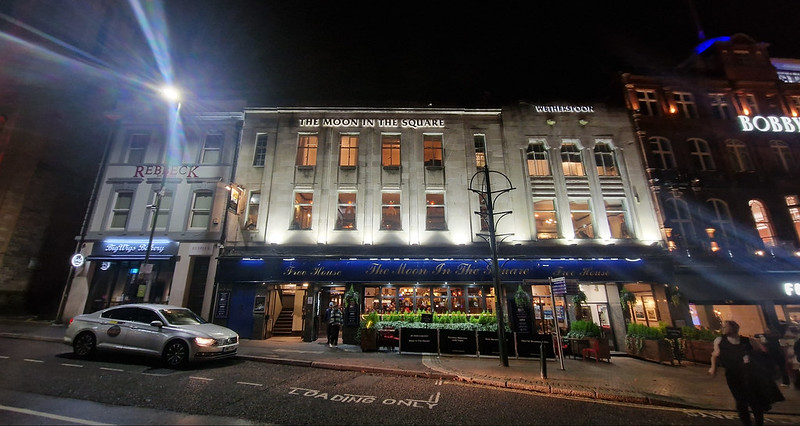
Here’s the exterior of the Moon in the Square pub from when I visited last November. I’m currently back here again, so I felt the need to write something about it. I’m always keen to surprise and delight my two loyal blog readers….
As I usually do for pubs in the JD Wetherspoon chain, I’ve taken the history of the venue from their own website:
“This is one of several Wetherspoon pubs with ‘moon’ in their name, linking them with the ideal pub described by George Orwell. He called his fictitious pub ‘Moon Under Water’. This one stands on the site of Victoria Villa and Library – the home and business premises of TJ Hankinson, who was Bournemouth’s first mayor, elected in 1890. Around that time, the buildings were replaced by King’s drapery store which traded here for several decades.”
And, courtesy of the JD Wetherspoon website, here’s the link to the area to Tony Hancock.
The interior of the pub, which was all clean, tidy and organised. It’s about half full on a Friday afternoon and it’s the tail end of the JD Wetherspoon beer festival. I still haven’t found the cucumber beer from Adnams…… They did though have seven real ales available, all reasonably priced.
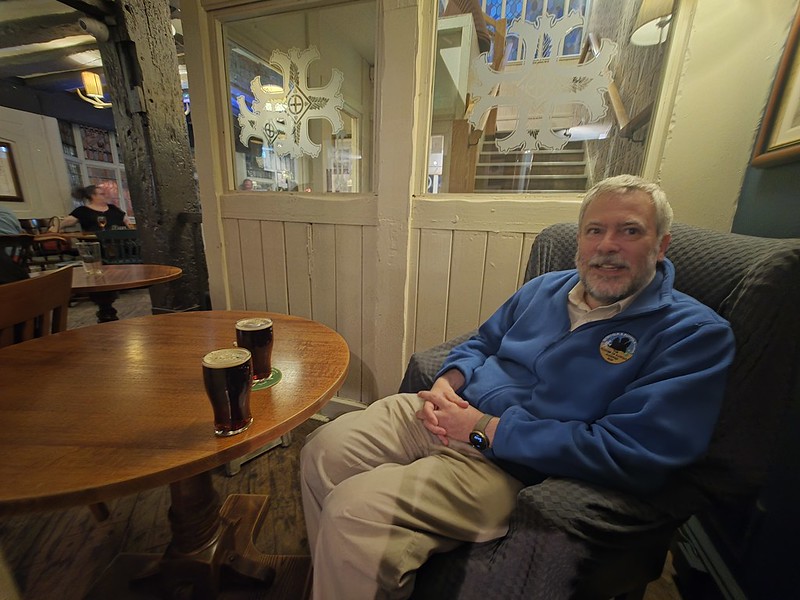
I went for half a pint of the Dark from Exmoor Ales which cost just £1.08. It was a malty and rich beer, even slightly decadent.
Also, as usual, I felt the need to have a look at the reviews for the pub, which is rated highly for the chain.
“Fully booked up. Streams people. Often over crowded. 3 nights out of 4 couldn’t eat here on our stay”
It feels unfair to rate the venue 1 out of 5 for that.
“Beer is tasteless, I had thatchers gold cider and it was tasting flat.”
They sell over 50 beers across keg, cask and can so it’s hard to understand how it’s tasteless. Unless they ordered Bud Light, but it’s meant to taste like that.
“***** is an absolute jobsworth. Because he’s got an ear piece in thinks he’s something important, runs away and hides in the kitchen, sends his bar staff out to deal with issues and hides 🤣. Nice pub, cheap and cheerful but jobsworth management”
This sounds like a former staff member who is annoyed at the manager in question…. And, as I know from Norwich Beer Festival, anyone with an ear piece is important.
“Refused to serve us at outside table, they seem to think dogs are unacceptable but smokers are OK! No dog sitting quietly ever caused lung cancer 😡”
An angry dog owner is never far away….
“We were kicked out by bar staff me wife dog out side drinking said drink up dogs not allowed”
There’s a Brewdog opposite which loves dogs to be fair….
“Terrible service, the person at the bar didnt even know how to use the till!”
God forbid they have a member of staff being trained…
“absolutely dreadful wasn’t allowed to drink my pint for some reason which i had every right to drink and paid for with my hard earnt money”
I suspect that there was a reason.
“Was locked in mens cubicle as door locks malfunctioned and used my mobile phone to call bar for help. Staff arrived with screw driver to hand to me as lock wouldn’t undo from outside of door so removed screws on lock and door fell open. All door locks on public toilets should have opening device”
This feels like a proper, valid complaint. At least it added some exciting drama to this customer’s day.
Anyway, I’ve digressed and got distracted once again. I’ve been to this pub a few times and it does get busy in the evenings, but the service always seems friendly and sort of efficient. And there’s a decent amount of real ale available, although unfortunately neither this pub nor the other nearby JD Wetherspoon have made the Good Beer Guide….
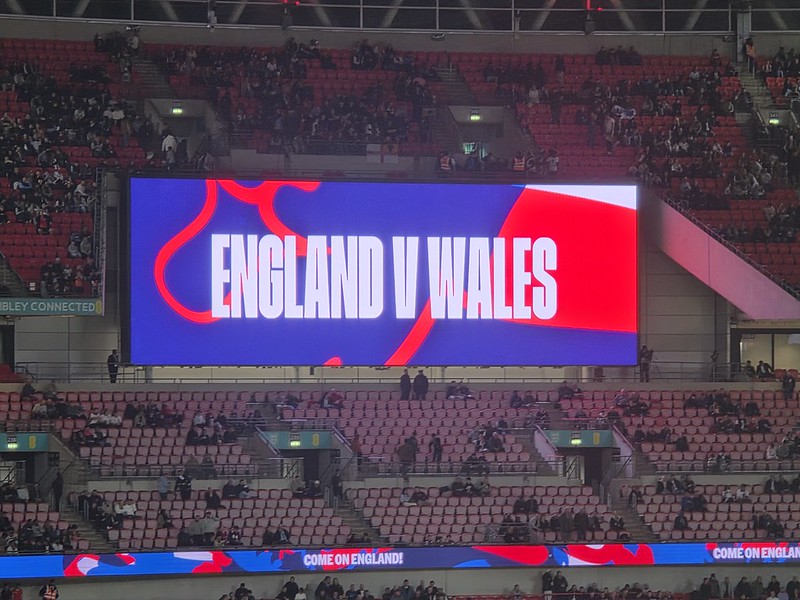
The excitement of Wembley Stadium ahead of the friendly match between England and Wales.
The crowds slowly starting to form for the match, which was in aid of the Alzheimer’s Society.
The stadium before the crowds arrived.
Getting busier. Apparently matches can have as many as 2,000 stewards and everything felt organised.
The players arrive. I hope no-one is expecting a detailed summary of the players, their performance or anything substantial about the football.
And we’re off. Well, the players came out to have a little kick about before going back in for a rest, or whatever it is that they do.
Getting ready to lay the FA flag onto the pitch. They didn’t use kids for the mascots and instead had 22 fans who were living with dementia, something that I thought was a rather lovely idea.
The flag in place. I did a video of the pre-match excitement….
Players walked onto the field and then they played the national anthems. The Welsh fans were very vocal and energetic during the match, they did their team proud.
There were three goals in quick succession at the beginning of the match, so England were 3-0 up after 20 minutes. Apparently the players who kicked the ball into the net were Morgan Rogers (3 minutes), Ollie Watkins (11 minutes) and Bukayo Saka (20 minutes) with the last one being quite good I think. I was pleased that no-one in the area near me felt the need to jump up and down a lot (or actually at all) as I find it easier to stay sitting down.
Thomas Tuchel, who I understand is the England manager. He also seems very good and I rather like this European approach of the FA.
I was puzzled as to why the players didn’t have their names on their shirts during the second half as I was sure that they did in the first half. It transpired that this was to fit into the theme of Alzheimer’s and it aimed to raise awareness of how the illness impacts memory. I must admit that is lovely, although it had the side issue that unless it was Jordan Pickford (I find it easy to identify the goalkeeper and I did learn the name of the Welsh one, but I’ve since forgotten it) I didn’t know who was kicking the ball.
The attendance at the game was 78,126 which seems like a lot of people. The stadium can in theory hold 90,000 people, but this was a higher attendance that I had been anticipating.
The final score was 3-0.
The expert football supporters might notice that I’m not really entirely knowledgeable about the current England and Wales football squads and I might have had to look up on Wikipedia who the managers were. But the venue was safe, secure and the football was interesting to watch, so I might go and do this again…..
And for anyone interested, of which I accept the number is limited, here’s the opening ceremony (as it were) of the England vs Wales match at Wembley. I feel that the person searching for their seat adds a little something to this video. More about the match (of which very little will be football related as this isn’t a sporty blog) in the next post…
I neglected to write this Good Beer Guide listed pub up when Richard and I visited in August.
The exterior is lovely. The pub seems proud of its history and notes on its website:
“The Golden Cross is the oldest pub in Coventry (One of the oldest in The Midlands). Built circa 1583, during the reign of Queen Elizabeth 1st and established as a public house circa 1661, during the reign of Charles II (The year of his coronation). The Golden Cross boasts traditional Tudor features which include: jettied upper floors with exposed beams, the pub also features a Dragon Beam which makes it possible for the jettied floors to go around the corners.”
It was fortunate to survive the Blitz which damaged so many other nearby buildings and it was extensively refurbished in 2017.
I’m less engaged about the music, but a warm welcome is always positive.
And we did receive a warm welcome from the friendly team member, although I didn’t get a chance to take a photo at the bar. I didn’t ask for a CAMRA discount but the team member pro-actively asked if we were members of CAMRA, which I suspect tied in with the Great British Beer Festival that was about to take place in the area. I realised that I had left my CAMRA card in the hotel room, but I was kindly offered the CAMRA discount anyway. Perhaps I look like a CAMRA drinker, although I’m not sure what I think about that.
I went for a pint of Titanic Plum Porter which is always a delight, it’s smooth, fruity and luxurious. This is the period from when Richard was his new slim self and looking very healthy for it. There are usually around five real ales available and the Plum Porter tasted well kept and was at the appropriate slightly chilled temperature.
This wasn’t really a venue for me though at the time that we visited, it was quite quiet in terms of the number of customers and also very loud from the live music. It was hard to have a conversation and the lack of customers gave it a slightly odd atmosphere. However, what I didn’t realise was this:
“We have live music every Saturday downstairs from 9pm – 11pm, so those who prefer a quiet drink in Coventry’s oldest pub can enjoy a relaxing evening in comfort in the bar upstairs.”
If I had realised, I would have gone upstairs. Anyway, we decided to leave soon afterwards in the hunt for a pub where we could have a conversation and gossip about the world. Nonetheless, this is a lovely pub and I think we just visited at the wrong time as there was a friendly welcome and I enjoyed the heritage of the venue itself. They also do what appears to be a good value food offering at lunchtime and in the early evenings. Hopefully I’ll get a chance to visit again at one of those rather quieter times as I did like the building, the friendliness of the team members and the beer.
I appear to have forgotten to write about this Good Beer Guide listed pub in Coventry. It’s operated by JD Wetherspoon and is nearby to their sister pub the Flying Standard. As usual, I’ll use their history of their venue:
“This is named after Leofric, Earl of Mercia, who founded St Mary’s Priory, Coventry’s first cathedral. A larger-than-life statue of Leofric and his wife (Countess Godiva) can be seen above the main entrance to the council house, opposite this pub.”
The building on High Street opened in June 1896 as the London and Midland Bank, later becoming the Midland Bank. It was turned into a public house in the early 1990s, initially being Cassidy’s until 1994, then the Phoenix Bar until 1996 and then it became part of Lloyds which was bought out by JD Wetherspoon as their more youth focused brand. The pub was renamed its current name of the Earl and Mercia in 2001.
I haven’t taken many useful photos of the pub, but as Julian (wise) says, I’m sure we’ll all cope.
This is from my visit with Richard a few months ago, I went for the Tesseract from Black Hole Brewery which was only £1.64 for a pint after the CAMRA discount. It was better than I had expected, it was rich, smooth with lots of plums to the whole arrangement.
And this is the Key Lime Pale from Hogs Back Brewery which I had this weekend as part of the JD Wetherspoon October beer festival. This was just 98p for a half and it was certainly full of lime flavour, being light, soft and hoppy.
As usual, best I have a little look at the reviews for my own amusement. It’s rated very highly for a JD Wetherspoon venue and that fits in with my experiences here, which have been positive.
“First of all, the staff discriminated against Chinese people. If you’re a local, the servers will bring the drinks to your table, but we had to go downstairs to get our drinks and bring them to our table on the second floor. The entire time, they watched us through the surveillance cameras. I told them I don’t drink alcohol, and they said I didn’t need to show my ID in that case. When we brought the drinks back to our table, I smelled the dark beer out of curiosity because I had never had it before. Then, a server came up and asked us to leave, claiming that I had drunk the beer. However, I’m allergic to alcohol, so I couldn’t have drunk it in the first place. The manager insisted that I drank it, not just smelled it. This is clear discrimination against Chinese people.”
Hmmm, they bring everyone their drinks but this reminds me though of a woman in one of the London pubs in their chain that was getting frustrated that no-one was serving her at her table, but she saw others getting their drinks delivered. She stomped out in the end after the team member refused to take her order himself and insisted she use the app.
“I feel violated, we ordered two pitchers exactly the same price, mango monster mash or something
This is the difference in ice/drink
The guy who served us was rude all night, insisted they were all the same even though I showed him the difference.
Don’t order here, wetherspoons please sack the only guy working here on 28/01/20″
Please sack a team member as he served cocktails in two different shaped jugs? Yeah, that sounds reasonable…
“We were just having lunch and the guy came up to us saying that we need to leave. We politely said that wr will leave after finishing our dinner but the guy was so rude and racist that he came back again and argued with us, forcing us to leave the place which is totally not accepted. He was the shift manager for the day 20/11/2023. I never expected this kind of behaviour as we have already paid for the food and atleast accept a decent service from the employees. Please have a look at your team and recruit people who are not racist.”
I wish reviewers would give a bit more information about why a team member actually came up and asked them to leave.
“Discrimination on a young adult with SEN needs. We come to this pub as young person finds atmosphere friendly and welcoming. Not today. Bully tactics by staff. 1 day we forgot passport she is 18. We have been served lots of time by staff at wetherspoons without ID. 1 staff member followed me to the table. Hassled me about her drinking alcohol beverage. Very abrupt, unfriendly and aggressive. He watched us for 5 minute’s and came over and said she had taken another sip for a drink. He snatched all the drinks from the table. They would not accept a photo on my phone, which I’ve used previously. Young person was upset and distrraught. Went to the toilet and was physically sick. We went onto have our food dropped on the table by the disgruntled staff member. Duty Manager was unsympathetic and crude. No training given how to deal with people with disabilities. All disabilities are not visible. Shame on wetherspoons we will not be going there again. Wasted £20.00. The food was cold and disgusting. Refused a refund.”
If this story is as it’s told, it’s not clear to me what the team member could have done other than been more polite and engaged better. Someone without valid ID has seemingly been drinking alcohol, the pub’s licence is at risk if they don’t check ID.
“I came here on Saturday, had one drink with my friend and decided to go outside in the seating area as it was too hot inside. There were empty glasses on our table which we just moved to the side, and while me and my friend were talking one of the staff (man with long hair) came over and asked if the glasses were finished with, I said they weren’t ours. About 5 minutes later we realised he had put 4 shot on our table, so we were confused and asked the people next to us if they were their shots, which they weren’t. So I assumed someone had bought them for us on the Wetherspoons app, and had 1 shot out of the 4, then the man came back over shouting at me for having a shot and demanding that I pay for it. I told him that he put them on our table so we assumed they have been bought for us, which he then said I said they were mine when he took them over to us (I didn’t, I didn’t even realise he bought them over as I was having a conversation with my friend). This staff member then started arguing with me and was SO rude to me over £2.50, which I did pay. I will not be coming back, as he was so rude to me and was shouting at me.”
It might have been easier not to take one of the drinks that they hadn’t ordered.
“I didn’t go there!!”
Another helpful review.
“Another wetherspoon which is more expensive than the Gosford Arms for a pint of Stella. No good for sight seeing as all you can see are bill boards of things that won’t necessarily come true in the eye of the public.”
Probably best to go to the Gosford Arms.
“I mean as most know they dont have music so that’s one sad thing.”
At least that makes me happy 🙂
Anyway, this seemed like a a well-run and organised JD Wetherspoon venue, although it does get very busy and although it’s over two floors it’s not the largest. Keenly priced, popular with students and a decent selection of real ales.
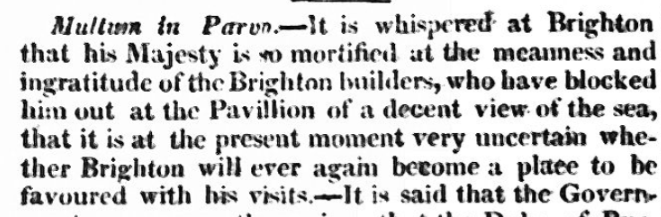
Another article in the Norwich Mercury of 200 years ago this week. Now, I accept this has little to do with Norwich, but it’s some early form of royal gossip of which there has been plenty more over the last 200 years. The story is likely true, as King George IV made only one more visit to Brighton following this story and he had made huge efforts to make the Brighton Pavilion a decadent and suitable home.
Its future as a residence for the Monarch was already reaching its end. King William IV did use it, but Queen Victoria wasn’t that surprised and delighted with it, so she sold it to the City of Brighton in 1850.