
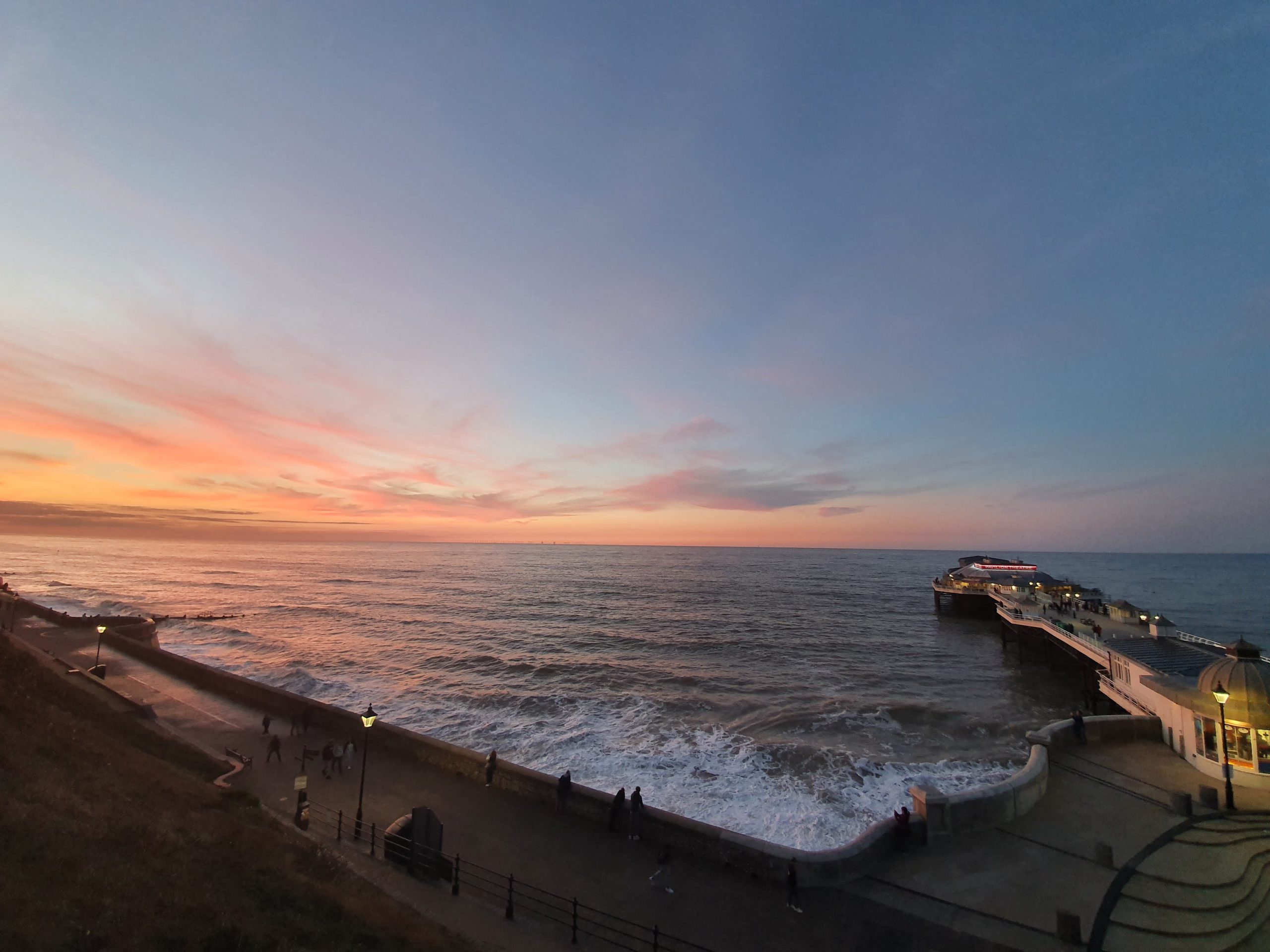
Just photos…. From Bank Holiday Monday evening in Cromer.


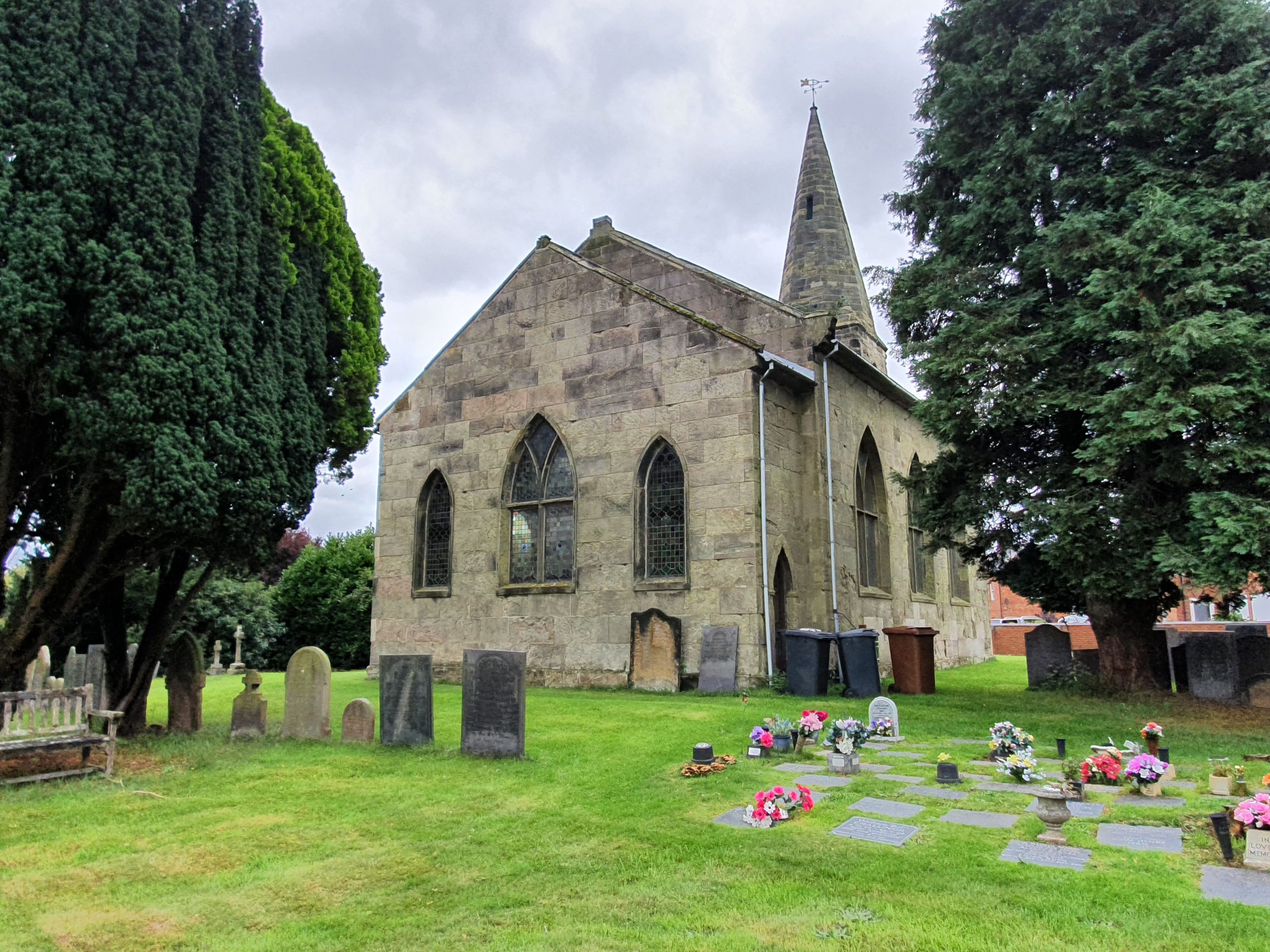

St. Mary’s Church in Rosliston doesn’t look at first sight the sort of place where a huge controversy took place at the end of the nineteenth century, when the Bishop called his own vicar “cruel and wicked”.

There has been a church here since either the late Saxon or early Norman period. The current structure partly dates to the fourteenth century, although it was restored in 1802 and the nave and chancel were then rebuilt in 1819 using some of the same materials. There was an advert in the Staffordshire Advertiser in early January 1820, which offered two pews, in the eastern corner of the church, for sale at auction which is a rather different situation to religious services today.

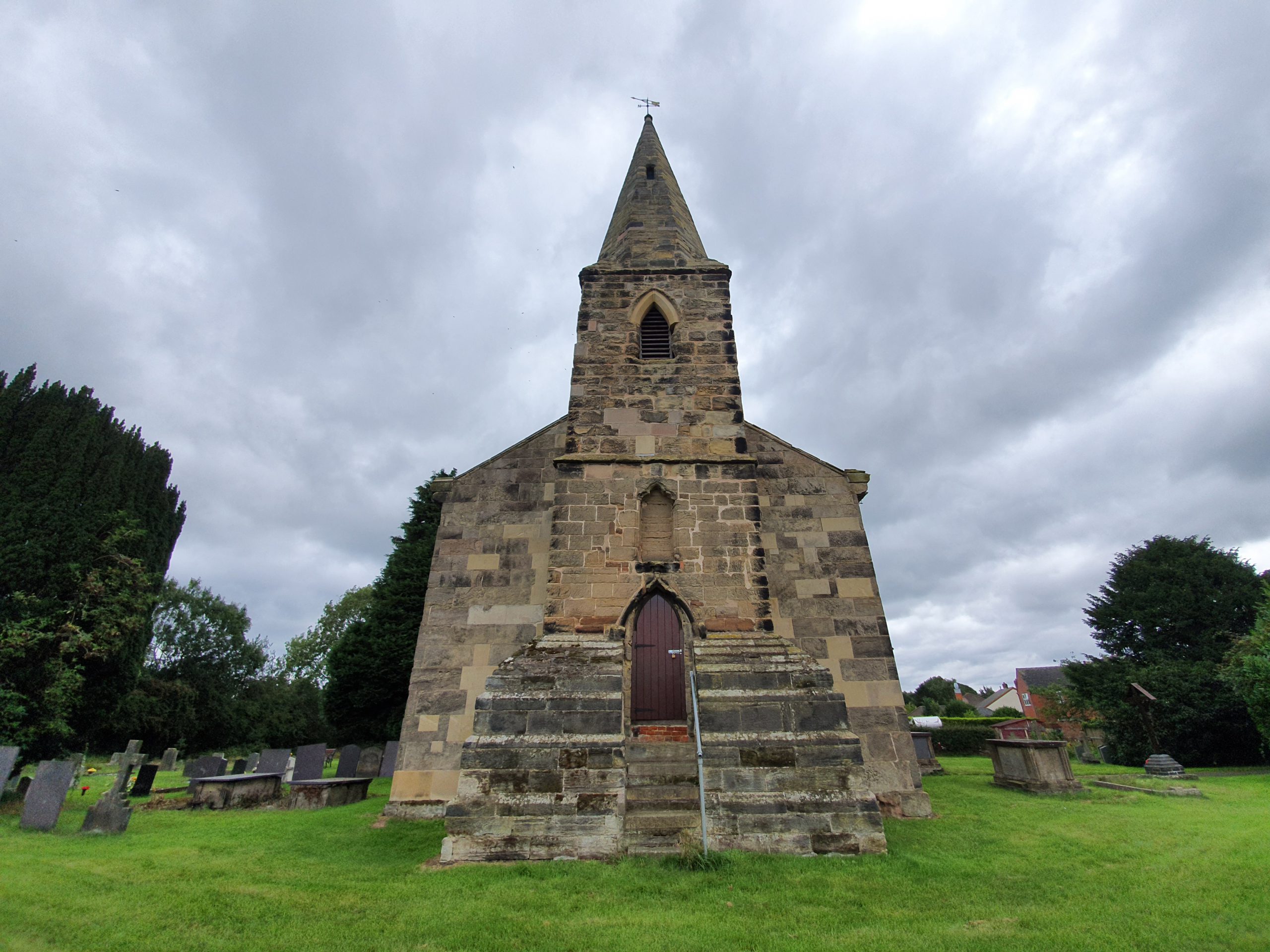
Most of the tower, including the doorway and steeple, date to the fourteenth century.

Unfortunately, the interior of the church was closed, although most of the contents appear to date from the late nineteenth century. It does feel peaceful today, but I can imagine the build-up of anger towards the rather wayward vicar which the parishioners once had to deal with.
It’s hard to find a history of St. Mary’s Church in Rosliston which doesn’t mention John Vallancy (1843-1906), the village’s vicar at the end of the nineteenth century.
It was reported by the Reynolds’s Newspaper in July 1894 that:
“The Rev. John Vallancy, the representative of Christ at Rosliston, near Burton, teaches us the meaning of Christianity as interpreted by the Church established by Parliament in that part of the kingdom called England. Miss Mary Wright and her father placed flowers on the grave of a relative, after being warned by the state-manufactured ‘reverend’ against this display of affection. The representative of Christ swept the tributes away from the grave and brought an action for trespass against the lady, claiming 1s 6d in the special ‘mansion’ in the Father’s House which will be allotted to the Rev ‘Vallancy’, he is likely to be the sole tenant. Boarders will not stay, and in vain will be exhibit a notice ‘apartments to let’”.
This was a devastating attack on Vallancy, but matters were to get worse. The Derby Mercury reported on 13 May 1896:
“At the Swadlincote Petty Sessions on Tuesday before Mr. L Barber and a full bench of magistrates John Holden, of Rosliston, appeared in answer to a summons taken out by the Rev. John Vallancy, perpetual curate of Rosliston, who complained that he was in bodily fear of the defendant, and asked that he should be bound over to keep the peace. Mr. Vallancy conducted his own case, and Mr. Capes represented the defendant.
From the evidence, it appeared that on the 18th April the defendant went to the complainant’s house and asked Mr. Vallancy where the cross had gone that had been placed on his brother’s grave, and why it had been removed. Upon that the complainant ordered him off the premises, but defendant refused to go until he got the information required.
Complainant said that the defendant threatened to “do” for him, that he had “one wing broken” and that he would break the other. He also stated that the defendant threatened to strike him with a stick which he carried. Mr. Vallancy called four witnesses, whose evidence was most contradictory when under cross-examination.
Mr. Capes submitted that there was no case for him to answer, but the Bench decided that he must proceed. Mr. Capes then addressed the Court, and called a witness and the defendant himself, who denied either threatening the complainant or using bad language.
The Bench retired, and after a brief absence, Mr. Barber said they had come to the conclusion that the case must be dismissed for they did not think Mr. Vallancy was in need of any protection.”
The church authorities had to act as allegations against Vallancy started to pour in and the Bishop of Southwell summoned Vallancy to the consistory (or church) courts in April 1897. The vicar had been accused of holding a revolver in the air against a parishioner, which he denied and said “it was a large church key”. Some parishioners responded by burning an effigy of their vicar outside the church, which isn’t really an ideal state of affairs.
Vallancy had been so incompetent in role that he was starting to threaten the church’s reputation in the region, with the Bishop noting that:
“He has been cruel and wicked, utterly unworthy of his position and fatal to any usefulness in the parish of which he was at the present moment the incumbent”.
There’s no easy way of coming back from that allegation from the local Bishop and Vallancy was suspended from his position for eighteenth months. Vallancy was fortunate that the tabloids didn’t exist then in the same way that they do today, he would have found himself getting international attention.
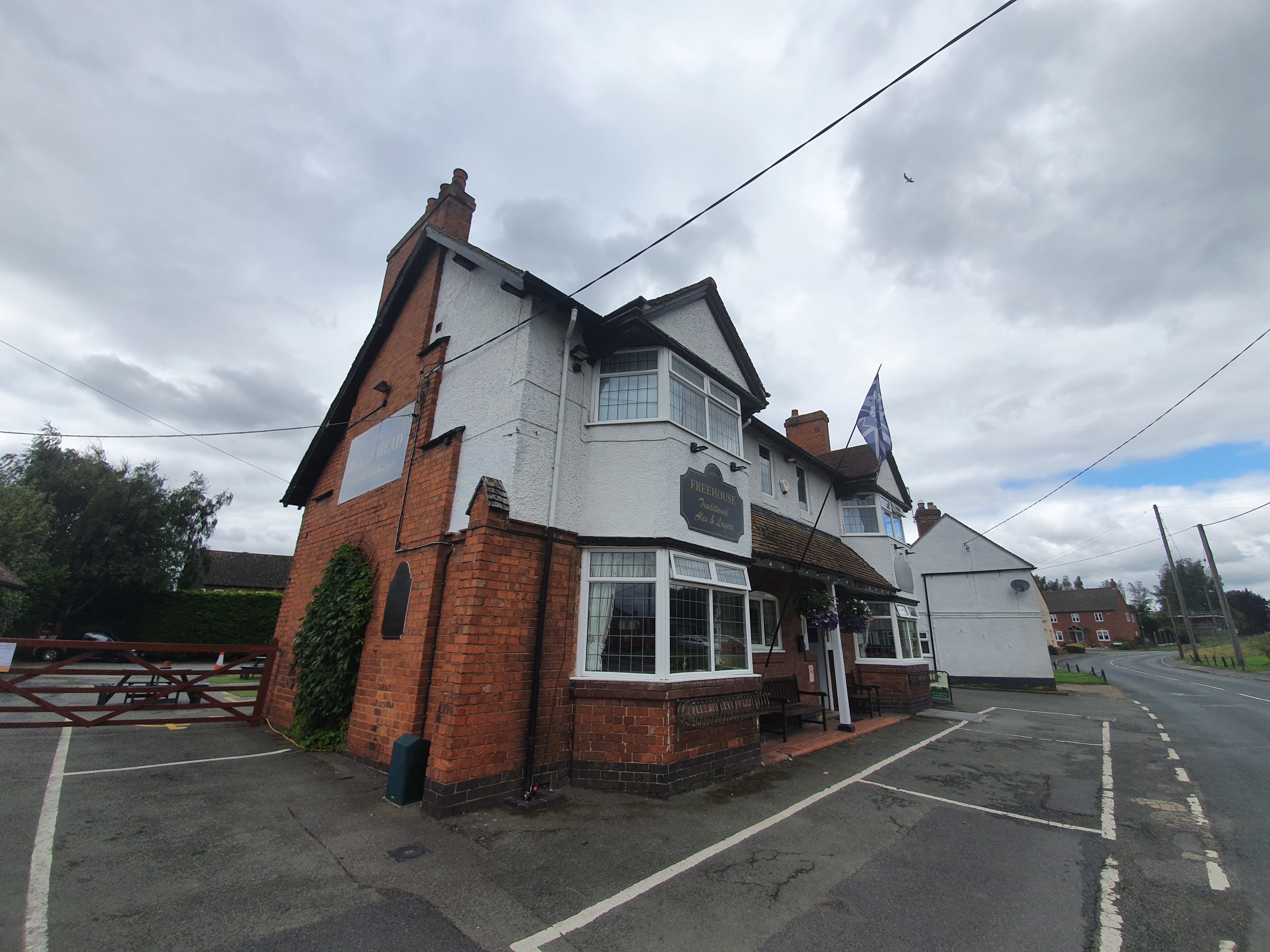

To provide a little context, we visited this pub in Rosliston whilst on our sixth LDWA 100 training walk.

We didn’t want to look eager, but we had arrived in the village before the pub opened and we faffed about a bit, so were pleased that they opened on time. The pub is operating on slightly reduced opening hours at the moment (late August 2020), 14.00 until 23.00 on Mondays to Thursdays and 12.00 until 23.00 on Fridays to Sundays.

There were two real ales available, Pedigree from Marston’s and Bass from, well, Bass. For a country pub, especially given the current crisis, this was an entirely suitable proposition for us. For those who prefer ciders, they had Happy Daze and Yuzu Marmalade on, along with some lager things.

The Pedigree. The pint wasn’t served like this, I just liked the glass and only realised that after drinking some of the beer….. It was at the appropriate temperature and tasted well-kept. We seemed to be the first customers of the day and there’s always a danger that a pub won’t have pulled through the beers, but they had here.

One side of the pub, which might not be exactly on-trend, but it looks warm and comfortable. It was notable that they hadn’t had to nail (or glue) all of the items on display down, which says something positive about the pub. Well, it also says something about a number of the pubs that I go to as well…..

And the other side…. There’s a real fire on each side of the pub, which must make it a homely place during the colder months of the year.
This is a free house and they look like they try to please as much of the local community as they can, with darts, pool (currently suspended), food, entertainment and a range of drinks. The service was friendly and this felt a welcoming place to be, with the pub being clean and organised. The pub does probably need to bring its web-site back on-line, although their Facebook presence has been kept updated.
So, as country pubs go, this was a convenient mid-day stop for us and it’s worth a little trip for anyone visiting the nearby Rosliston Forestry Centre. Or indeed, anyone walking along the National Forest Way, as this goes by the front of the pub.

The reason I pondered this painting is that I’m not sure that by today’s standards that Sir Henry Raeburn (1756-1823) has portrayed Glendonwyn well. There’s not much to be readily found out about Raeburn’s subject, other than Glendonwyn was a wealthy Scot and his surname is linked to the Glendinning family.
The notes by the painting mention that the light falling on his forehead is deliberate, it’s meant to show that the subject has intelligence. I’m not sure that this effect still holds, although this was painted in the 1790s and things were just a little different then and now he looks more aloof. Raeburn, who became the official portrait painter in Scotland to King George IV, painted over 1,000 artworks during his career and he rarely used preliminary sketches.
The painting came up for sale at Christie’s on 22 February 1890 and was then in turn acquired privately by the Fitzwilliam Museum in 1892. At the same auction in 1890 the accompanying portrait to this, that of Glendonwyn’s wife, was sold, but the whereabouts of that are unknown.

This artwork was painted by LS Lowry (1887-1976) in 1939 and as the name suggests, it’s themed around the wedding that is taking place. Well, and the Corner House pub. Lowry had started to paint these matchstick men in the early 1920s and they became the imagery that is mostly now seen to define his career. I’ve been meaning to visit the Lowry Gallery in Salford, but have never quite got round to it.
I can’t add much to this as the Fitzwilliam’s image database is down for security issues, so all I know is that it was given to the gallery by Mrs FJ Collard in 2002. I don’t know whether the Corner House pub actually exists, or whether it was a figment of Lowry’s imagination. I like that, despite the overall theme, the top half of the artwork is all about pollution and industry, the wedding isn’t given automatic prominence here. And, indeed, even the wedding party aren’t seen as the main central characters, everyone seems to have a purpose here and is no more important than anyone else.
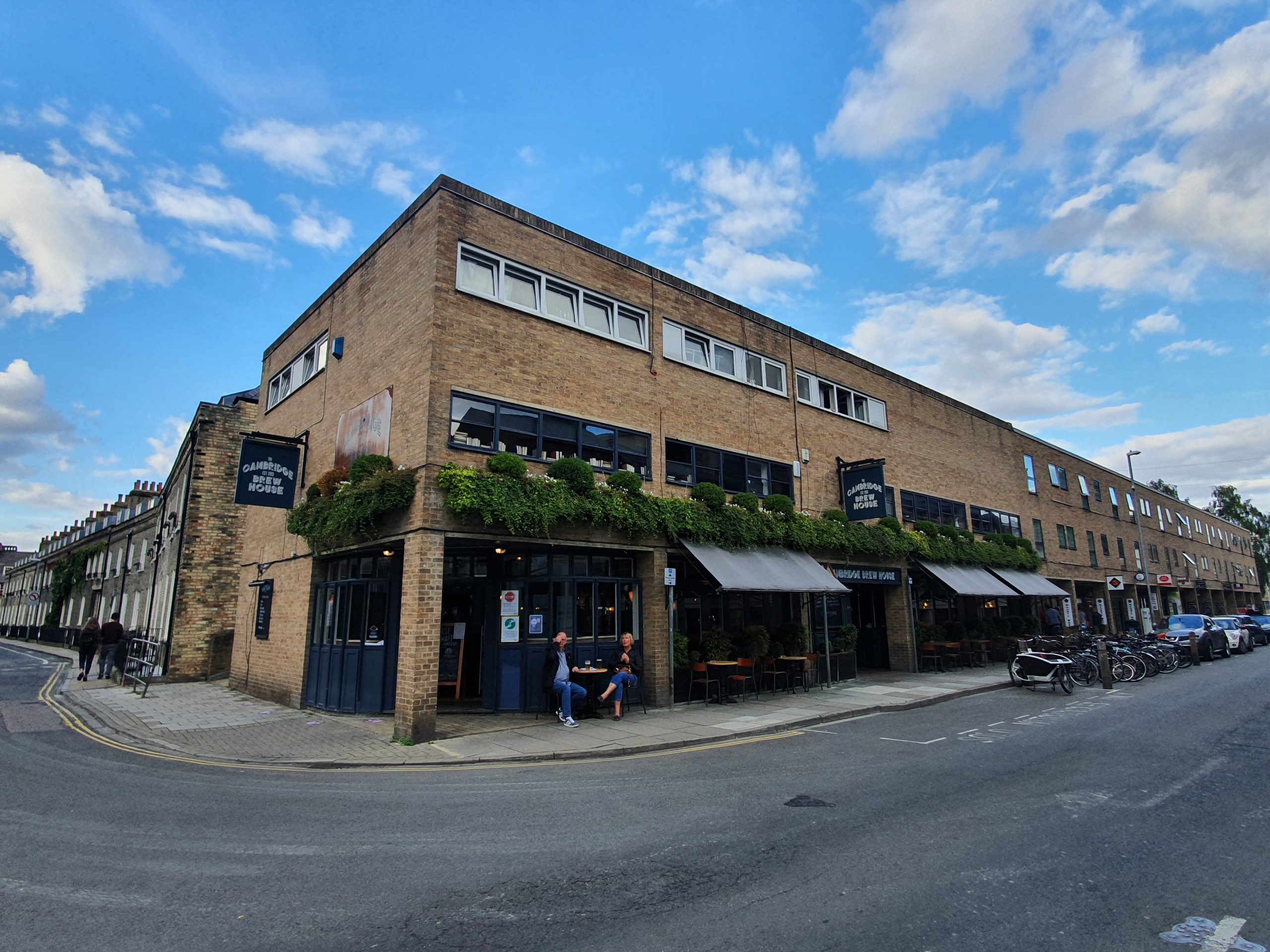

The Cambridge Brew House is another of the pubs which is operated by the City Pub Company, which includes the Old Ticket Office in the city, and it has obtained itself a decent reputation. I decided to book a table for myself and had to make sure I got there, as there’s a £10 deposit per person which is charged for no-shows. I can understand why they do that though, it must be a nightmare to get a heap of no-shows.

I wasn’t entirely thrilled at this as, personally, I think this is a slightly unbalanced choice of beers with nothing remarkable. I’m sure others would disagree and I’m conscious at least they’re making their own beer.

The decor is all modern in its style, with everything feeling clean and organised. Incidentally, I liked the table I was given as it gave a vantage point over the pub. It reminded me that recently pubs and restaurants have been very good at giving me a decent table despite sometimes booking just for me. I’m hoping gone are the days that sole diners are shoved in a corner near the toilets on a wonky and rickety table.
The strong point of the pub was though the staff, they were exceptional in terms of their engagement, helpfulness and welcome. There were certainly no issues with customer service that I noted during my visit. I was also pleased to note that the City Pub Company were giving customers £5 off if they used the pub’s app, so along with the Government’s ‘eat out to help out’, this was making it a good value expedition.

The King’s Parade from Cambridge Brewing Company, which is the brewery that is attached to the pub. It was fine and had a malt flavour of some depth which let me pretend that I was eating biscuits, although there was a limited depth of aftertaste.

The starter of crispy salt and pepper squid with chilli mayonnaise. The squid was well cooked and evenly coated, although there was no evident salt and pepper taste to it that I could discern. The mayonnaise was rich and the squid did have that melt in the mouth texture, with the dish being well presented.

OK, I probably didn’t need fish and chips for the second time in one day. The fish was slightly over-cooked, but at least they’d drained it properly and so it didn’t make the chips greasy. The fish was of a high quality, but I’m not convinced that batter was fresh, it was lacking in flavour and was quite bland (and the batter should be the tastiest bit as far as I’m concerned). The mushy peas were though decent and the tartare sauce was marvellous, I liked the chunks of capers and gherkins, two of my favourite items.
As mentioned, the service was excellent and the environment was clean and comfortable. I liked the whole relaxed feel to the proceedings, a service style which was informal and that suited the environment. The total bill came to £10.50 (although that’s after the food was made half-price and they gave me £5 off), for two courses and a pint of beer, which I considered to be entirely reasonable. Other than the customer service, I’m not sure though that there was anything exceptional here as there were no beers I’d particularly mention to others and the starter was above average, but the main was firmly just average.
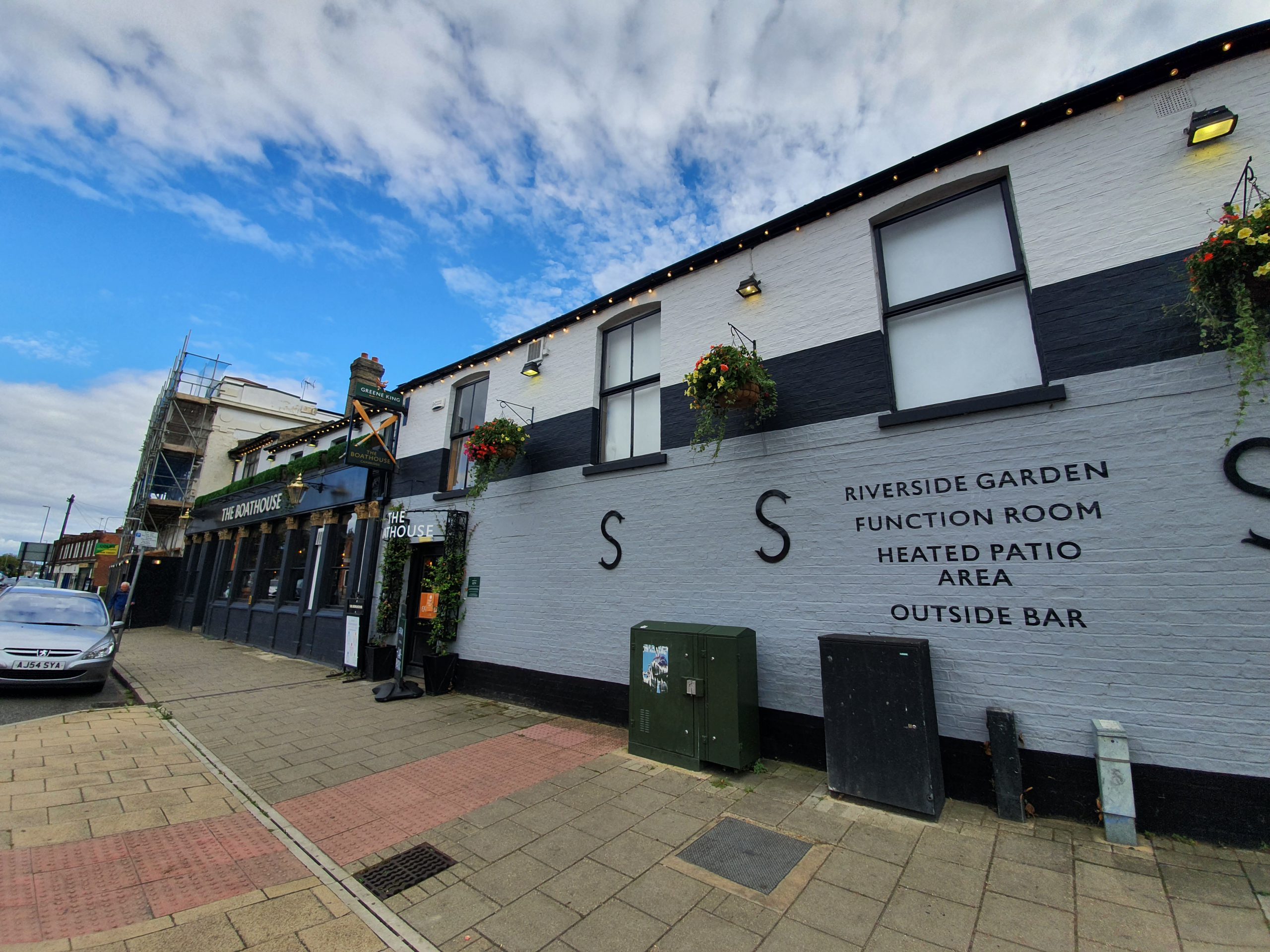

Another Greene King pub and as Nathan said when I told him, “I’m not angry, I’m just disappointed”. This one has a beautiful location by the river and it’s also next to the boarded-up Tivoli (visible in the above photo) which is the JD Wetherspoon outlet that caught fire and never re-opened.

Fortunately, this isn’t the pub’s name given what I think about snakes.

I can’t keep going on about the dreadful choice of beer at Greene King venues. But here, once again, is the best choice of drink that I could find. A half-price, thanks to eat out to help out, Coke. It was fine.
The staff were friendly and the track and trace procedures were being followed, with a staff member guiding me towards a seat outside after I expressed a preference for that. Which was very brave given that I’m normally attacked by wasps or other insects. I didn’t get any photos of the interior of the pub, but it’s quite a modern decor that looks like Greene King has paid a fair sum to a design agency. I wish they’d pay a fair sum to someone who would install some decent beer, but I’m labouring that point now unnecessarily.

I braved the outside area, which has its own bar, although this was rarely used as most people seemed to be paying via the app. The river is off to the right, and that’s the much-missed (well, by me anyway) Tivoli behind, which would have at least had likely had some decent beer. Anyway, I’ve veered into that again. I have to be fair to Greene King though, at least they’ve given the pub a better name than when it was called the Rob Roy.

The new temporary entrance to the pub, where they’ve built a little obstacle course of having a mini river of what smelled like beer in front of the steps up.
The reviews for the pub aren’t great, indeed, they’re towards the lower end of licensed premises in Cambridge on that front. I was amused by the review, and this is the entirety of it, which said:
“Ordered a mixed grill which says two sausages. Only came with one. Serving staff lied and are rude, avoid!!!”
I love listening to drama like that, I wish I’d been there. And, yes, I need to get out more.
All told, this is a perfectly acceptable pub for sitting and watching life go by on the river, with the staff being friendly and helpful. But, as I keep finding myself writing, there’s nothing particularly exceptional about the pub and it’s all a bit generic and formulaic.
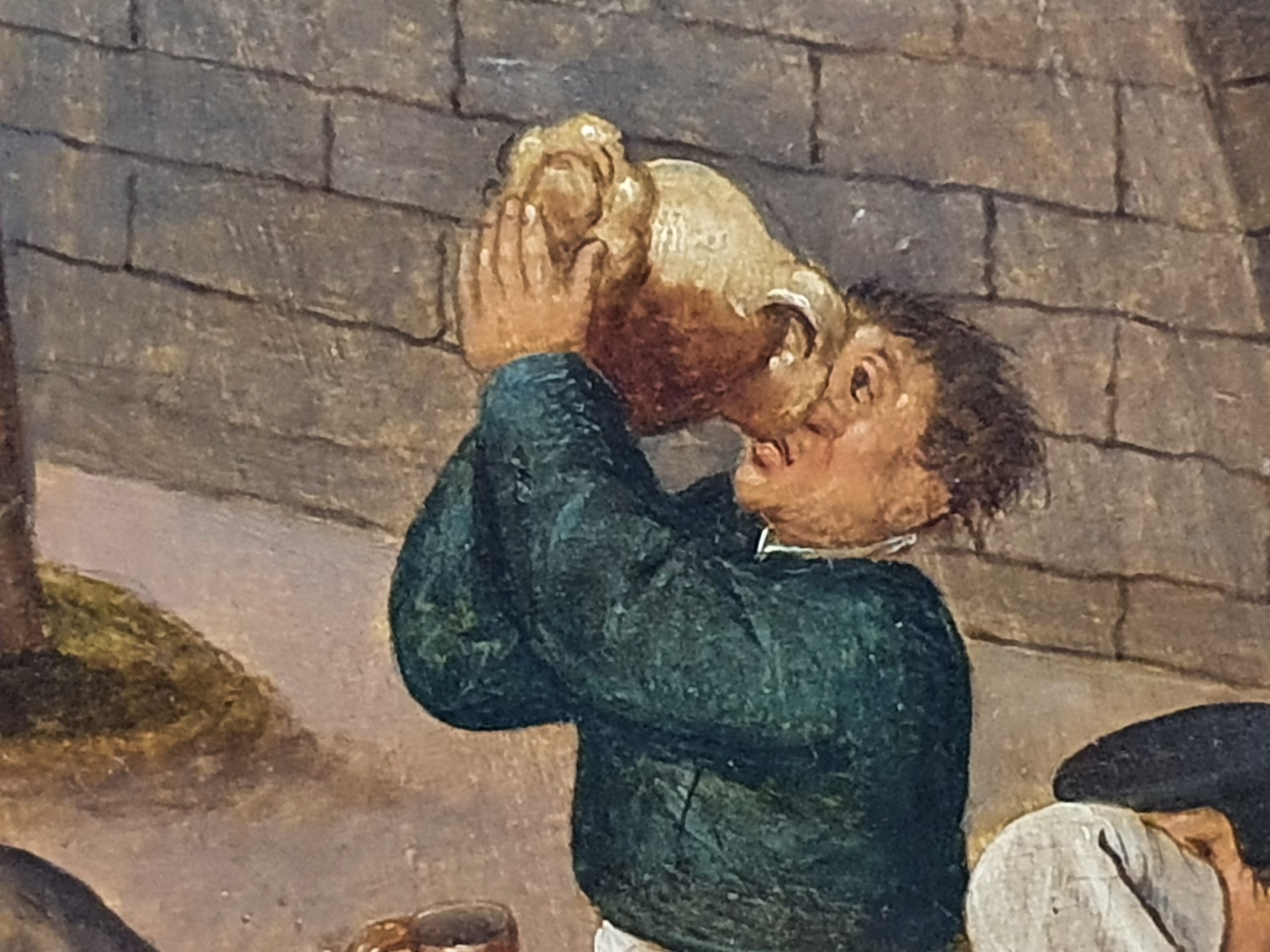

This painting by Pieter Brueghel the Younger (1564-1638) is my favourite in the Fitzwilliam Museum, with its full title being “a village festival with a theatrical performance and a procession in honour of St. Hubert and St. Anthony”. It was painted in 1632 and came into the collections of the Fitzwilliam in 1927 when it was donated by the first Viscount Rothermere. Actually, that’s an awkward thing for the museum, as the politics of Rothermere are controversial to say the least, but there’s not much that can perhaps be done by the museum about that now.
My photo of the painting isn’t great, but there’s so much going on that it’s like some epic by William Hogarth. It looks like a night out in the city centres of today, but then again, that’s often what fairs were like and the authorities were frequently appalled at what people got up to at them.


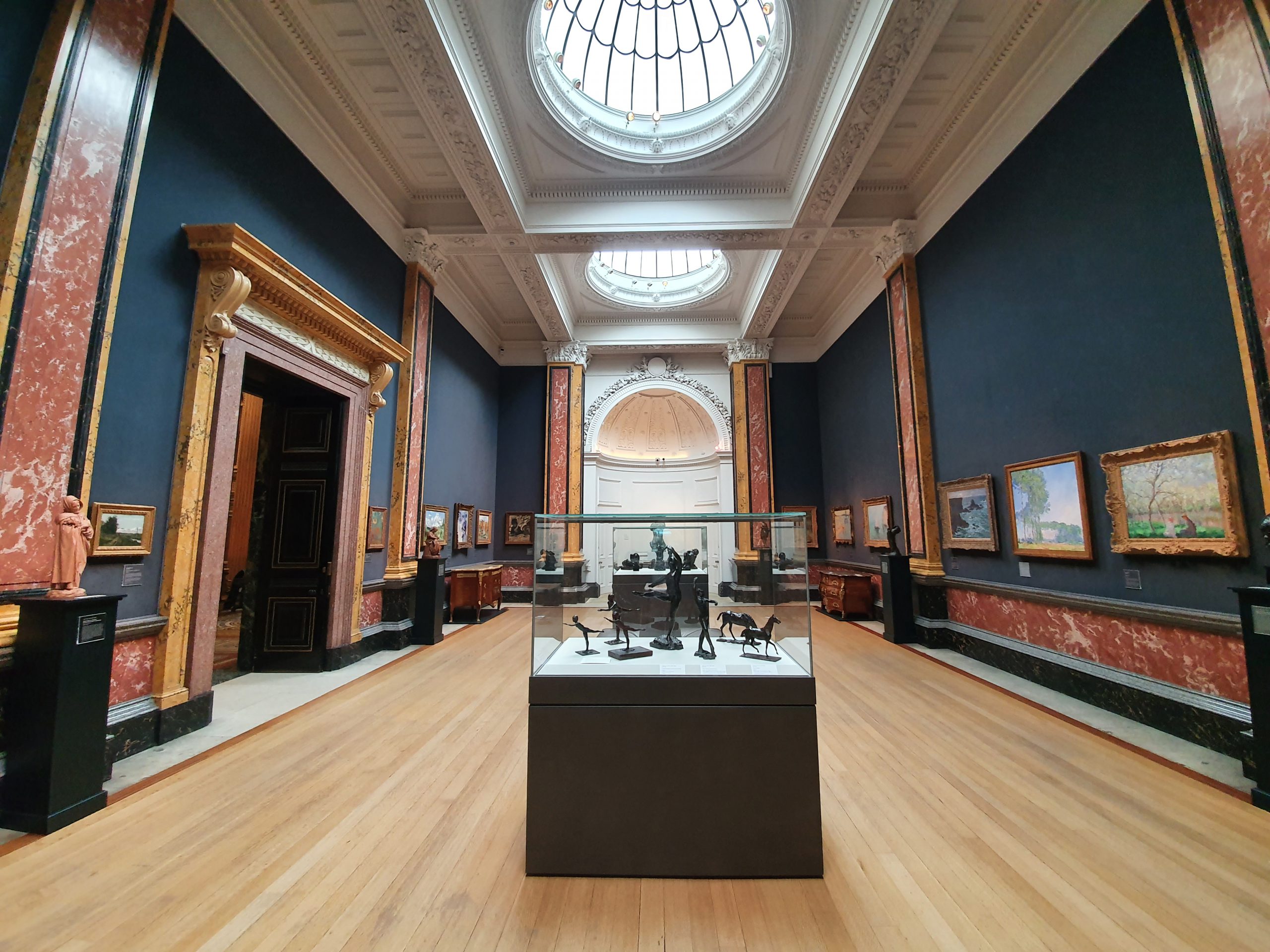
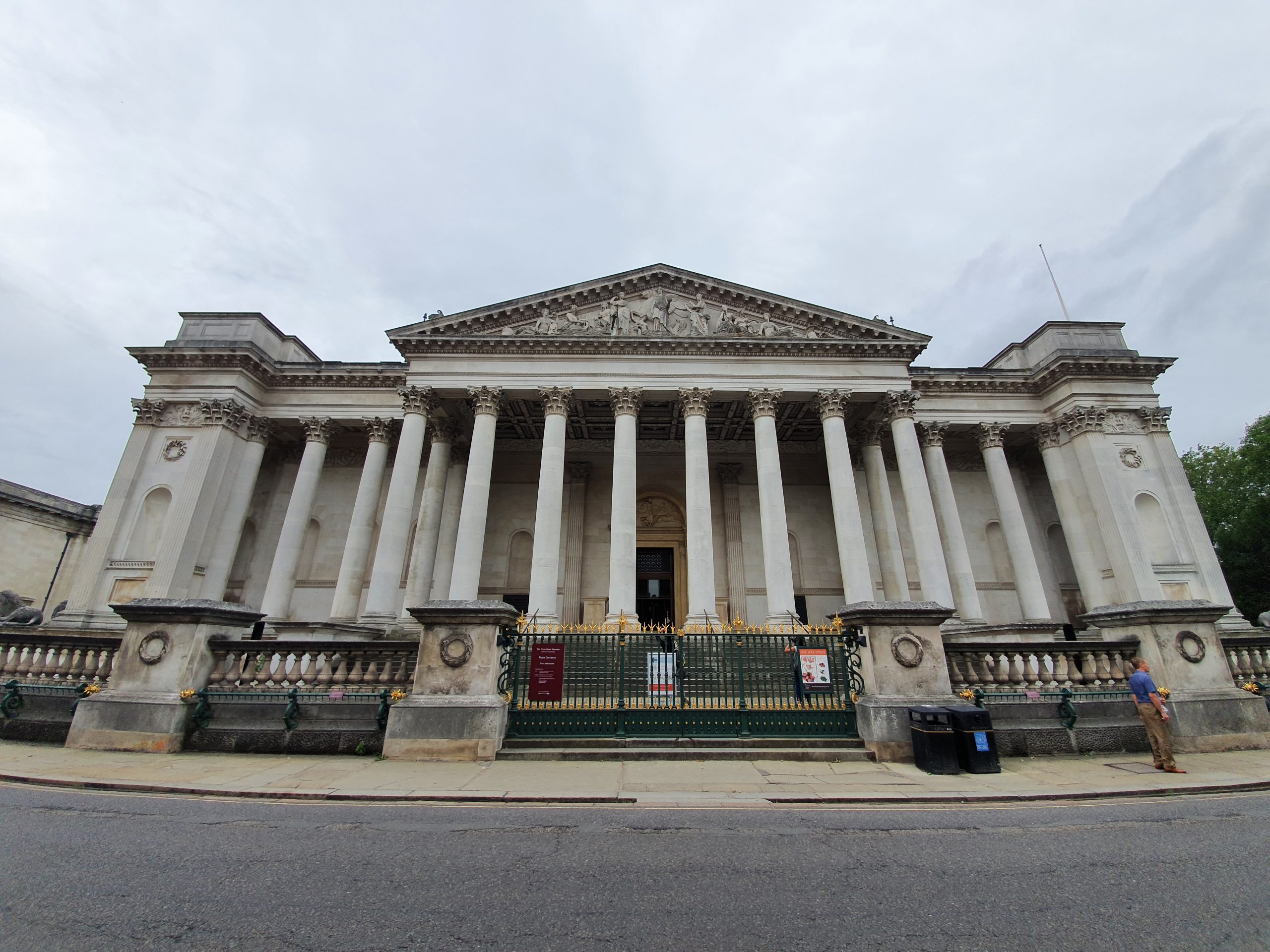
I’ll write about some individual items in the collection that I think are interesting in separate posts (everyone should contain their excitement….) but it’s fair to say that the Fitzwilliam Museum in Cambridge was as quiet this morning as I’ve ever seen it before.
I had a ticket, which are free of charge, to get in at 10:00 and the staff here are really very friendly and most welcoming. Some visitors were turned away as they didn’t have tickets and the museum clearly wanted to be very much in control of the numbers. I noted that backpacks had to be carried by hand, which would have been fine, but the most helpful lady near to the entrance was more than happy for me to use their free lockers and that made things much easier.
I spent a couple of hours in the museum and, certainly, for the first hour, there were more staff members than there were visitors. Everything was spotlessly clean and it’s clear that great efforts have been made to try to work out the visitor flow. It’s not always obvious, but it mostly is, with the entrance being shifted to the courtyard rather than the standard main entrance area.
Anyway, some photos of how the museum looked……


