Category: UK

  • Norwich – Rosary Cemetery (Isaac Wiseman)

    Norwich – Rosary Cemetery (Isaac Wiseman)

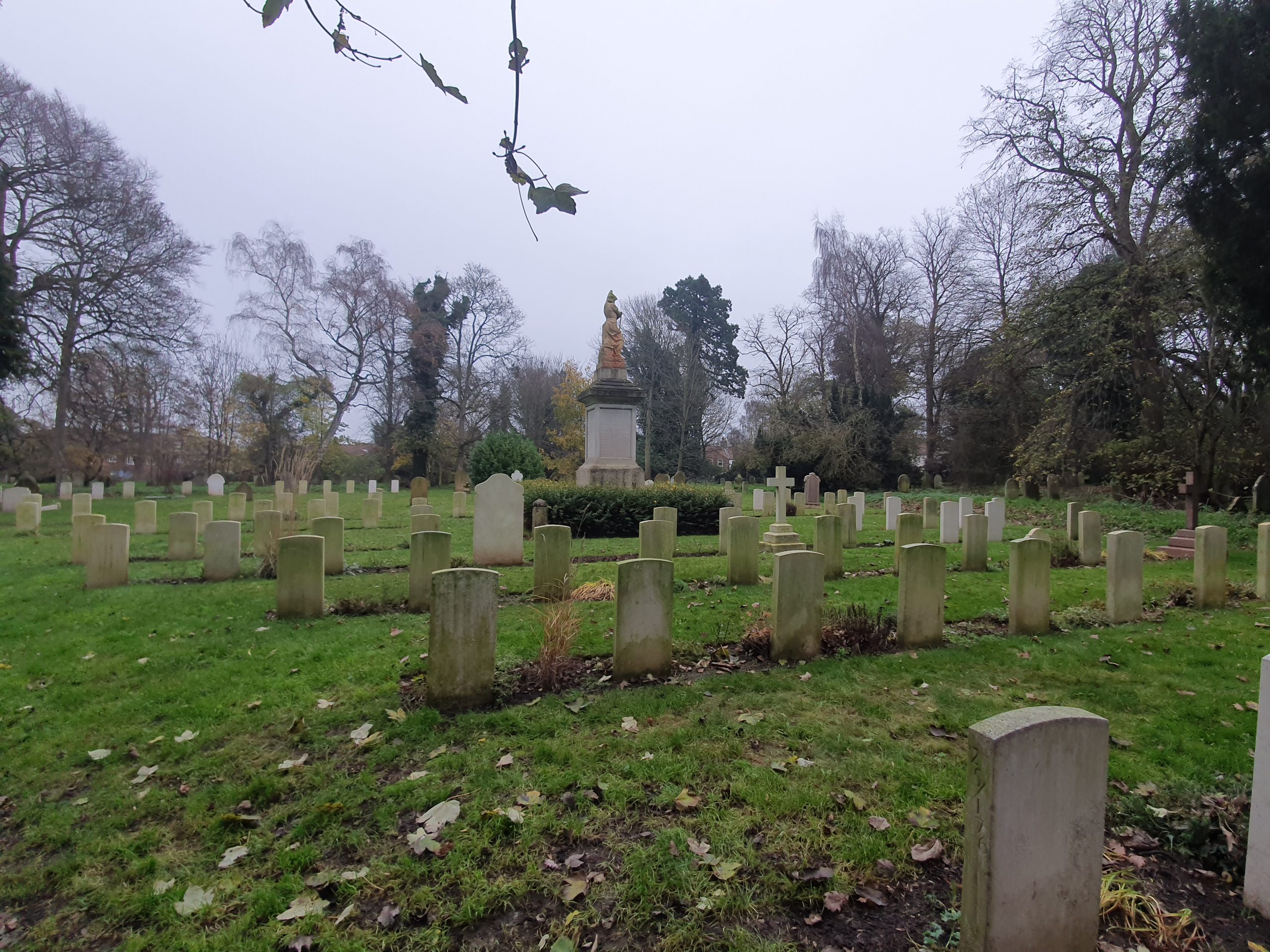
    Since I’ve been grounded again by the Government, I thought I’d meander around the Rosary Cemetery located near to me in Norwich, in an attempt to see what stories lie there. It might not be the most fascinating blog content, but it’ll keep me quiet for a few weeks….

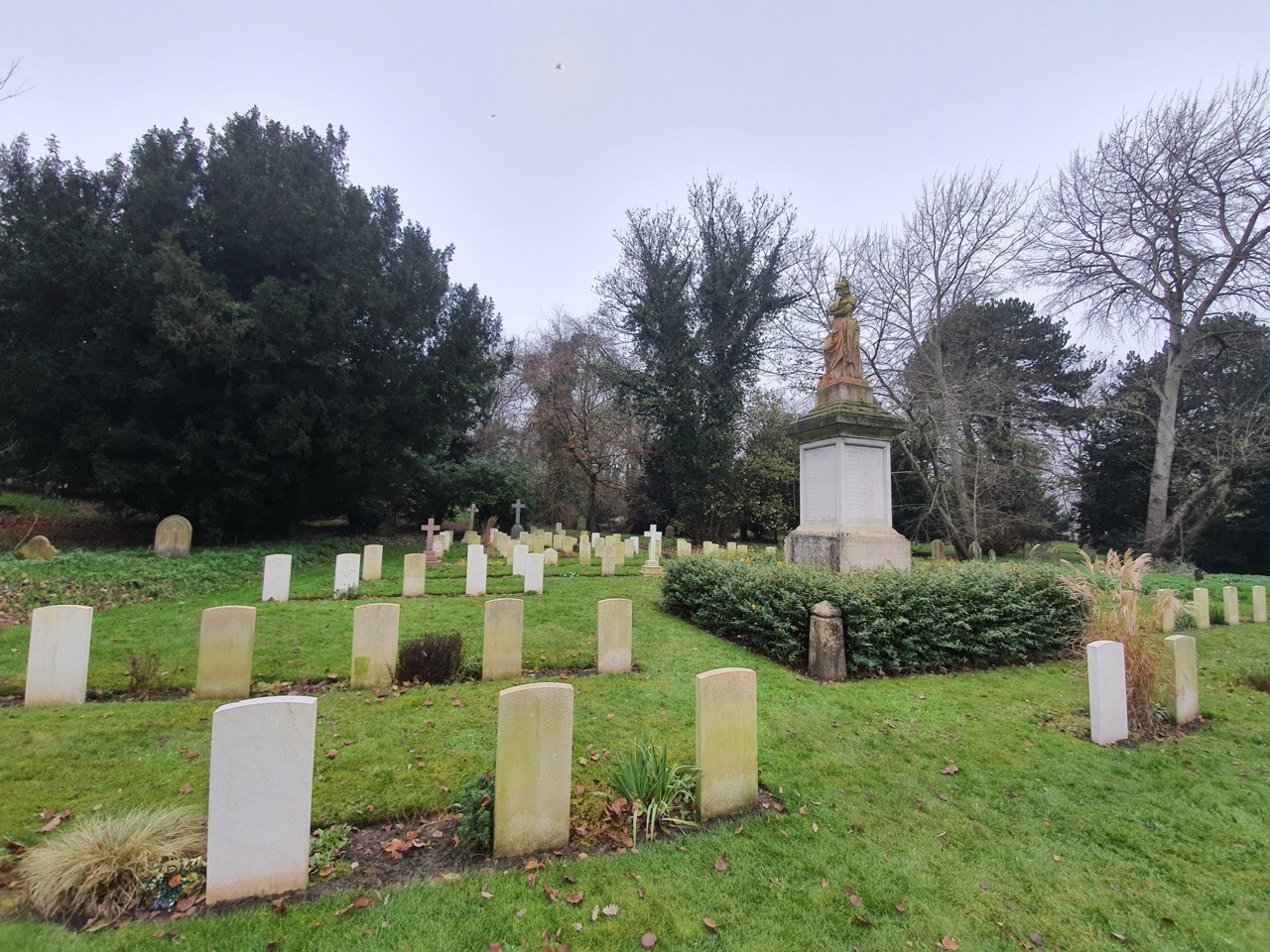
    I’m not normally drawn to these larger monuments, as they’re often of wealthier people whose stories have been told many times before. But, this is one of the handful of monuments which the cemetery have placed a little board by, so it would seem remiss to ignore it.

    The memorial is to Isaac Wiseman, who was a wine merchant who died in 1863 at the age of 64. What is perhaps of most note is that he had two wives and eight children who pre-deceased him, a terrible reminder of how high mortality was in the nineteenth century.

    Isaac was born on 25 February 1799, the son of Quakers William Wiseman and Ann Wiseman. Isaac married Sarah Ladell at St. Saviour’s in Norwich on 17 May 1821. In 1830, Isaac became the elected Sheriff of Norwich, beating Charles Middleton to the role and he married Caroline Amelia on 15 January 1856 in Kenninghall.

    But, all of this is already well recorded and can be found on a basic Google search. The story that is more interesting to me is what his brother wrote about him in the Norfolk News following Isaac’s death.

    “He was well known to many as a man of considerable natural abilities, and of scientific attainments and power above the ordinary level of his fellow-men.

    The position which such as one takes in religious matters is of deep interest and importance to all – to those who reject, and to those who receive divine revelation, and for each it has an outspoken testimony. Whatever former days may have produced, the latter days of a man’s life become a test of much significance – so it was with my brother. Whatever were his former opinions, his latter days were marked by a gradual approach to the gospel of Christ; and his last days brought forth proofs of his full and thankful acceptance of gospel salvation.

    I had watched the change which, for several years, was evidently passing in his inner life. This change was noticeable in what he frequently said concerning what he heard at the Sunday morning services at the Cathedral, which services he had attended, with great regularity, for several years before his death.

    During his last affliction I had the pleasure of being with him repeatedly. I watched with deep interest, not only what he said, but the look, and the tone, and the countenance, which accompanied those utterances. On the day that he died I had an interview with him in the morning. I had not seen him for ten days, having been from home. On taking my leave of him prior to that journey, I told him that I should not forget to pray for him. On entering his room on the last day of his life, I found his mind to be clear and vigorous, but his bodily sufferings were intense.

    After the usual salutations of such an interview, he took hold of my hand, and with a marked significance of voice and manner, and with an unmistakeable meaning in the grasp of my hand, he said “I have felt your prayers though I did not hear them; my sins are forgiven”. This all took place in the presence of his two servants, and a sister of his first wife.

    At twenty minutes past eight, on that evening, he closed his eyes upon all earthly things, and passed the barrier by which the dead are separated from the living until the morning of the resurrection.

    I am, dear Sir, yours truly, Samuel Wiseman. Mount Pleasant, Newmarket Road, Norwich”.

    It’s very rare to get such an account of someone’s final few hours, I doubt there will be many more like this amongst the thousands of burials at the Rosary Cemetery. I’m a little surprised that Samuel didn’t really mention the loss that his brother had faced losing two wives and so many children (although perhaps this was hinted at with Isaac moving away from God), but it was a touching letter describing the day. And, I feel that I know much more about Isaac from what his brother wrote than from any number of census reports…

  • Basildon – Campanile Hotel

    Basildon – Campanile Hotel

    This stay was a few weeks ago, before everything was shut back down.

    One thing I’ve noted is that motels don’t tend to do very well in the UK, there’s something that the British don’t seem to like about having open and external corridors. There was a little bit of a building frenzy of them in the UK in the 1960s and 1970s, but that ebbed away. They work well in the United States and they seem more common across mainland Europe, with Campanile being a French chain (and they seem to have lots of locations in Poland amongst others). Anyway, I stayed here as it was the cheapest option, I can eschew luxury.

    The room was actually clean and comfortable, although dated. The welcome at reception was one of the best I’ve had in a hotel, a very enthusiastic staff member explaining everything he could. So, there was nothing really wrong with the room’s cleanliness or the staffing.

    The plug sockets are hidden away, I can’t recall a sign in a hotel room helping customers to find them. This could, and probably should, be remedied even with the use of extension leads. They can be nailed in (not through the wire, even my limited electrical knowledge knows that) if customers keep pinching them.

    Hmmm, this lamp should have just been thrown away. This is doing nothing for the room.

    I was moderately puzzled at this. It is in keeping with what is being offered, a room with en-suite bathroom. But, I’m not entirely sure that it’s the best image to offer as the first thing a customer sees.

    The hotel has sunk to the bottom of the reviews and has collapsed its prices as well, which is usually a freefall for a location that it can’t recover from. The difficulty is that groups on a night out often book the cheapest option as they’re just looking for somewhere to stay. And, unfortunately, sometimes these groups cause issues for the hotel and their guests.

    And…. The hotel dealt with this little crisis well, it was a birthday party coming back which got out of hand very quickly in terms of noise. The police were called immediately (I assume by the hotel, although a guest might have reported them I suppose) and came in about six vans. The group were not the politest to the police, but the law won out here quite quickly. Anyway, this is just what the hotel didn’t need at 01:00 (although I quite like drama like this, as I was awake anyway), and this sort of problem is riven through its reviews. Along with the rooms which need refurbishment.

    But, the staff here seem determined to turn things around, with the recent reviews for their food being positive and customer service was way above average. Other than policegate, the location was quiet and everything was clean, so I’d stay again if I went back to Basildon. Although, I’m not sure why I’d need to go back to Basildon, but the town’s main attraction is just around the corner from this hotel.

  • Norwich – Rosary Cemetery (William Henry Watson + Ann Watson)

    Norwich – Rosary Cemetery (William Henry Watson + Ann Watson)

    Since I’ve been grounded again by the Government, I thought I’d meander around the Rosary Cemetery located near to me in Norwich, in an attempt to see what stories lie there. It might not be the most fascinating blog content, but it’ll keep me quiet for a few weeks….

    This would have been one of the first burials at Rosary Cemetery, William Henry Watson who lived from 1803 to 1832 and Ann Watson who lived from 1817 to 1844. William was also born into a non-conformist family, with the cemetery being one of the few options to the family at the time given those beliefs.

    William was born on 30 December 1803, the son of John Watson and Susanna Watson, in the St. Clement’s area of Norwich and he was baptised on 24 January 1804 by Samuel Newton who was a long-serving non-conformist minister. William died on 8 March 1832 and was buried on 13 March 1832, still listed as a dissenter.

    Ann Watson was William’s sister, born on 1 December 1817 and baptised on 28 August 1818. This baptism was performed by William Hull, a minister at St. Gregory’s Church who wrote numerous books on religious matters.

    And this story judders to a halt here, in a little run of my struggling to get much of interest beyond birth and death dates. Finding anything on William was always likely to be difficult, he was seemingly unmarried, died relatively young and before national censuses were taken. And there’s not much on Ann either, she died in 1844, but I can’t find her on the 1841 census. In addition, there are two more names on the gravestone, that of Mary Starling and Joseph George Flower, so there some stories here hidden ready to be uncovered at some point in the future….

  • Norwich – Rosary Cemetery (John Beaney + Elizabeth Beaney)

    Norwich – Rosary Cemetery (John Beaney + Elizabeth Beaney)

    Since I’ve been grounded again by the Government, I thought I’d meander around the Rosary Cemetery located near to me in Norwich, in an attempt to see what stories lie there. It might not be the most fascinating blog content, but it’ll keep me quiet for a few weeks….

    Firstly, this surname has presented the enumerators for the census problems in the nineteenth century, as well as modern transcribers. We’ve got Beeney, Beany, Beeny and Beaney as the names here, just to make things more exciting….

    John Beaney and Elizabeth Beaney (nee Candler) married on 18 September 1837 at St. Clement’s Church in Norwich, with Elizabeth having been born in Ringland, Norwich. I can’t find his birth records, although John was born in around 1818. Elizabeth was born on 20 April 1814 and was baptised on 22 May 1814 at Ringland Church, with her parents being James Candler and Ann Candler (nee Collins).

    At the 1841 census, the couple were living with William Collins and William Collins (I assume father and son since one was 71 and the other 50) on Cowgate Street in Norwich. Unless it’s by chance, they would have been living with some of Ann’s relatives.

    For reasons I cannot quite understand, as this would have been quite a distance to move in the nineteenth century, the couple were listed as living alone at 10 Elizabeth Place, Walsoken near Wisbech at the 1851 census. John was listed as working as a lath render. I’m not really a DIY expert, but he would have been the person who constructed the laths on walls ready for a plasterer to, well, plaster.

    Clearly now back in Norwich, John also got himself in the Norwich Mercury in July 1854, although not for fortunate reasons. A Thomas Brooks pinched five bundles of lath from John, which resulted in the offender being sentenced to six months in prison with hard labour. There’s nothing to suggest in the records that John would have had much money, so this would have likely been a significant problem for him.

    At the 1861 census, John and Elizabeth lived alone on St. Faith’s Lane in Norwich, with John still working as a lath render. John died on 15 June 1862 and Elizabeth died in the first quarter of 1863.

    So, this is another gravestone without a huge amount of back story. I can’t find evidence of any children, so the couple likely just lived a quiet life which has mostly been lost to the record. It’s a little strange that the nearest that we can come to knowing a bit more about John from the newspapers is because he was a victim of crime. The stone, which is a little damaged now, was updated following the death of Elizabeth and I wonder who arranged for that to take place.

  • Norwich – Rosary Cemetery (Robert Foulger + Mary Foulger)

    Norwich – Rosary Cemetery (Robert Foulger + Mary Foulger)

    Since I’ve been grounded again by the Government, I thought I’d meander around the Rosary Cemetery located near to me in Norwich, in an attempt to see what stories lie there. It might not be the most fascinating blog content, but it’ll keep me quiet for a few weeks….

    This gravestone commemorates the life of Robert Foulger who was born in Harleston on 22 March 1807 and his wife, Mary Foulger (nee Wright). I didn’t notice Mary’s name at first as it’s at the base and it appears that this stone has been damaged and put back in the ground and it’s much shorter than those around it.

    The couple married on 17 April 1828 at St. John’s Church in Old Lakenham, and although this is no relevance to anyone, this is a church which I’ve been meaning to visit. At the 1841 census, Robert and Mary were living on Ber Street in Norwich, along with a 20-year old male called James Welch.

    There’s a strong chance that the Robert Foulger listed as being the landlord of the Jolly Butchers pub briefly in 1836 is the same person, since this pub (which became known much later on for the landlady Antoinette Hannent) was located on Ber Street and only closed a few years ago. What Robert was doing running this pub, I don’t know…

    At the 1851 census, Robert and Mary were still living at a yard located off of Ber Street, where Robert is listed as a gig maker, but I have no idea what that is. He did though employ one other person and he’s listed on the electoral register as operating a shop and owning his own residential property. We also know that at the by-election for the Norwich constituency held on 29 December 1854 that Robert voted for Samuel Bignold, who was the winner (and the youngest son of Thomas Bignold, who founded Norwich Union).

    Robert died the day before his birthday, on 21 March 1865, at the age of 57. But there are big gaps in all of this, I can’t find either Robert or Mary on the 1861 census, but Mary is listed as living at St. Catherine Plain in Norwich, as a lodger with Thomas and Elizabeth Lamb, along with their daughter who was also called Elizabeth.

    Mary died on 23 August 1885 at the age of 78. Her death was reported in Norfolk News on 29 August 1885, noting that she had died suddenly at her home at 193 Queen’s Road, Norwich. This property still stands, it’s rather a decent home.

    This is another situation where I’m sure there’s much more of a story, I just can’t quite work out what it is yet.

  • Norwich – Rosary Cemetery (William Fitt)

    Norwich – Rosary Cemetery (William Fitt)

    Since I’ve been grounded again by the Government, I thought I’d meander around the Rosary Cemetery located near to me in Norwich, in an attempt to see what stories lie there. It might not be the most fascinating blog content, but it’ll keep me quiet for a few weeks….

    20201109_104043

    This is quite a simple gravestone, commemorating the life of William Fitt, who was born in 1822. Unfortunately, I’ve been able to find out very little about William, nor can I understand why his wife wasn’t listed on the gravestone.

    He appears in the 1841 census as living with his parents on Ber Street, Robert and Mary, along with his brothers and sisters Bartholomew (that’s a name that should come back into usage), James, Barnard, Mary and Maria.

    Soon after this, he was married in Lakenham Church in 1842 to Susan Fitt (nee Barham) with her father being Stephen Barham. At the 1851 census, William was living with his wife on Ber Street, he listed as a pipe maker, whilst Susan was a shopkeeper. They had two children, Eleanor aged 8 and Stephen, aged 7.

    And the next I can find of William, other than him being listed in a city directory as a butcher in 1858 was at the 1861 census, when he was living with his wife and two children from before, as well as new arrival, his daughter Emma, aged 3. That’s a very large gap in ages, William and Susan now had an 18 year old, a 16 year old and a 3 year old. I wonder whether some children died there…. He was also listed as a butcher on the census.

    At the 1871 census, William was still in the same place and still working as a butcher, living with daughter Eleanor (called Ellen) and Emma, as well as Laura Hindes, who was his 9-year old niece. William died at the age of 58 on 28 August 1876.

    I can’t find out anything to tell a better story here and I can’t work out much about William. I’ve tried to work out where he lived on Ber Street to see if the building is still there, but it appears to be near what is now called Submarine Way, where all of the older buildings have been demolished.

    Susan died on 11 April 1897. Her assets of £90 were given to her daughter Eleanor, listed as a spinster.

    So, I’m disappointed I can’t tell a more interesting tale here, but maybe someone will know something more and let me know in future years.

  • Norwich – Rosary Cemetery (Elizabeth Arthurton + James Arthurton)

    Norwich – Rosary Cemetery (Elizabeth Arthurton + James Arthurton)

    Since I’ve been grounded again by the Government, I thought I’d meander around the Rosary Cemetery located near to me in Norwich, in an attempt to see what stories lie there. It might not be the most fascinating blog content, but it’ll keep me quiet for a few weeks….

    This grave  rather stood out given the amount of text on it, including the marriage date which is a little unusual. But, Elizabeth and James Arthurton were married for over fifty years, so I imagine that James was very proud of that and wanted it to be remembered. Those last words spoken by Elizabeth were written by Nicolaus Ludwig Graf von Zinzendorf, with his works translated by John Wesley.

    The details of Elizabeth’s life are handily put onto the gravestone, so we know that she was born on 27 June 1799, that the couple were married on 11 August 1825 and that she died on 26 December 1876 at the age of 77. This makes it easy to discover that she was born in North Walsham as Elizabeth Woodhouse, with the couple being married at St. Stephen’s Church (the one next to the shopping centre formerly known as Chapelfield which a few years ago had a footpath ploughed through the middle of the churchyard to get to it).

    At the 1841 census, the couple were living alone on Black Swan Lane in Costessey (which was listed as Cossey in the census, and is still how the location is pronounced) in the Forehoe Hundred. It was a slight faff to find this, the street was named after the now closed Black Swan pub and it took me a while to locate this, but it’s on the main street in the village, roughly where Folgate Close pokes through.

    At the 1851 census, the couple were living alone on Mill Lane in New Catton, near to Norwich, and that James was working as a grocer. They were trickier to find at the 1861 census, as the transcriber has mis-spelt their surname, but they were living in Costessey again and James was working as a school-teacher. The couple were now living with two lodgers, William Fuller (a 69-year old retired grocer) and Edwin Garrington (a 66-year old retired clerk).

    Just James is listed as living on Palace Street near to Norwich Cathedral in 1871, which is because by this time Elizabeth (listed now as a seamstress) was living as “an inmate” at the Great Hospital, which is a little way down the road on Bishopgate Street. Following her death at the hospital, a notice in the Norfolk News noted that “she was the zealous assistant to her husband in raising the Church Protestant Sunday and Day Schools at Cossey in 1836”.

    And the picture unfolds enough here for this gravestone to make a little more sense (I’m sounding like the archaeologists in Time Team now, desperate to find enough of a story here to conclude with). This couple were married for over 52 years and had clearly gone through a long life together. In the final few years of Elizabeth’s life, they were separated and I can imagine James standing by the grave with perhaps no other family members. I’m guessing his wanting the details of their marriage on the gravestone was because he was very proud of their time together.

    It’s a bit hidden behind foliage now on the stone, but James lived until 16 June 1882, when he died at the age of 77 at Bethel Hospital in Norwich. The gravestone also notes his date of birth, which was 21 July 1804, although I wonder who arranged to get his details added to the stone. As an aside, James voted for John Parry at the 1847 General Election, although he wasn’t elected. This was an interesting political movement, as Parry was standing for the Radicals, who were important in establishing the new Liberal Party from the Whigs.

  • Norwich – Rosary Cemetery (Thomas Poole + Mary Poole)

    Norwich – Rosary Cemetery (Thomas Poole + Mary Poole)

    Since I’ve been grounded again by the Government, I thought I’d meander around the Rosary Cemetery located near to me in Norwich, in an attempt to see what stories lie there. It might not be the most fascinating blog content, but it’ll keep me quiet for a few weeks….

    I find myself drawn to gravestones such as this, which have been knocked out of position by a large tree growing up amongst them. There’s something quite reassuring about the circle of life that a body can provide nutrients to a tree like this, it’s almost as though the remains here are an integral part of the tree. Anyway, that’s a bit too figurative I think, so back to normality.

    This is the grave of Thomas Poole and his wife Mary Poole (nee Daniel). Thomas was born in around 1796 in Witham which was marked in the 1851 census as being in Cambridgeshire (there’s a Witham in Essex and in Lincolnshire, I’m not sure which one it refers to). Mary was born in around 1788 in Rollesby and Thomas and Mary married in Fakenham on 19 April 1813.

    At the 1851 census Thomas was living with his wife Mary and their servants Mary Southgate (aged 22, a cook born in Swardeston) and Susan Cullings (aged 15, a housemaid born in Poringland). They were living at 5, The Crescent, which is a grand house which still stands near to the Chapelfield Shopping Centre or whatever it’s called now.

    Thomas died in Lakenham on 19 December 1860 at the age of 64. His probate was completed on 24 August 1861 and showed he had assets of up to £4,000 (about £240,000 in today’s money).

    So far, this story doesn’t seem to be too out of the ordinary. However, the Norwich Mercury ran a story on 22 December 1860 with the title of “An extraordinary suicide”. This took place at Harford Bridge Meadows, somewhere near I think to where the Marsh Harrier pub is today.

    There were a couple of witnesses, with the first being Arthur John Codling. He noted that Thomas was “behaving himself in a very singular manner by the water” and he partly dressed and then undressed, before jumping in the water. Codling said “he fell into the water and when we got to the place, in about three or four minutes, we saw the body sinking in the middle of the stream. We did not go in the water to attempt to get it out, but we gave an alarm. None of us ventured into the stream. I am not a swimmer myself, and should not be able to render assistance in an emergency of this description”.

    The coroner, William Wilde, was furious with this witness, saying that “if he had been there, old as he was, he would have rescued the deceased from the water and not left him there to drown”. He added that “this was a most extraordinary and painful case and one that no-one would have supposed would have been permitted to occur anywhere else in England”.

    It’s fair to say that Codling and Wilde then had an argument. Wilde asked why Codling hadn’t rescued him, to which he replied that “it was an oversight”. If reported correctly, that’s some bloody oversight. He added in his defence that he had helped to get the body out, to which Wilde replied “if the same amount of exertion had only been made at first, the deceased would in all probability be alive now”. The coroner’s jury agreed that this would be recorded as a suicide by drowning, whilst in an unsound mind.

    Mary died on 2 April 1863 in what must have been a difficult few final years for her. In the 1861 census, she remained in the same property on The Crescent, this time living with servants Sarah Harbone (aged 29) and Hannah Daines (aged 17). Her own probate, published on 20 May 1863, listed a wealth now of just £200, considerably lower than when her husband had died.

    As an aside, only in the last few years has the Church of England allowed burials in its graveyards for suicides, so locations such as the Rosary Cemetery would have been important in cases such as this. More importantly perhaps, this is an early example of what must have been a mental health problem. I don’t know why Thomas was in this state of mind, as at first sight, he seemed to be financially well-off. But, history hides many things, and this was certainly a tragic case as the coroner noted.

    It’s a reminder about the stories there are in cemeteries, I only looked into this as I was intrigued by the tree growing by the grave. A sad story, but one that happened and shouldn’t be forgotten.

  • Norwich – Rosary Cemetery (Robert Calver + Ann Calver)

    Norwich – Rosary Cemetery (Robert Calver + Ann Calver)

    Since I’ve been grounded again by the Government, I thought I’d meander around the Rosary Cemetery located near to me in Norwich, in an attempt to see what stories lie there. It might not be the most fascinating blog content, but it’ll keep me quiet for a few weeks….

    This is the grave of Robert Calver who was born on 14 January 1796, and he was baptised at Banham Church on 28 January 1796. He was the third son of Samuel Calver and Judith Calver (nee Ludkin) of Banham, who married at the same church on 15 August 1787.

    Robert married Ann (although I’m unsure when) and at the 1841 census they were living at Mill Hill in the parish of St. Clement, Norwich. Robert had been running the mill, but had suffered financial issues in 1826 when he was declared bankrupt. He had been working with his younger brother Thomas Calver and had a link with both the Catton and Sprowston mills.

    On the 1851 census, Robert and Ann were living at Rosary House on the Thorpe Road, with his occupation being listed as a mill sawyer. They lived alone, other than for their servant Amelia Cooke, who was aged 18. He was still living in Thorpe at the time of his death and he was listed on the electoral roll, so they had at least some property or wealth.

    The grave notes that “he bore a long affliction with great fortitude & resignation” and he died on 18 August 1852 at the age of 56. His death notice appeared in the Bury and Norwich Post the week after, but didn’t give any other information about his family, but does mention (as does the grave) that he was the third son of Samuel Calver of Banham. I’m not entirely sure why this is particularly relevant, unless his father had some important role that I haven’t discovered.

    Ann died on 27 December 1855, at the age of 60 years old.

  • Norwich – Rosary Cemetery (William Webster + Maria Webster)

    Norwich – Rosary Cemetery (William Webster + Maria Webster)

    Since I’ve been grounded again by the Government, I thought I’d meander around the Rosary Cemetery located near to me in Norwich, in an attempt to see what stories lie there. It might not be the most fascinating blog content, but it’ll keep me quiet for a few weeks….

    This grave intrigued me because it’s likely that it’ll be impossible to read in a few years if the damage to the stone continues, with some of the writing already unreadable.

    The grave is, I think, that of William Webster who was born in 1779 and died on 19 February 1834 at the age of 55 years, being buried on 26 February 1834. He married Maria Baston in London in April 1826.

    He was the master of the Maid’s Head hotel (which is still trading) in Norwich in the parish of St. Simon, although the hotel is located opposite Norwich Cathedral. It seems that William had taken over in the late eighteenth century and he held the role at the Maid’s Head until his death in February 1834. He had been ill in 1812, with his son, also named William, taking over the running of the Maid’s Head. The licensing records show that the hotel was then taken over by Andrew Webster, who was William’s son, and Maria, but they held the license only until October 1834, when it passed to Edward Howell following Maria’s retirement. The younger William Webster took some form of running of the pub later on in the 1850s and 1860s.

    Maria, William’s wife, died on 4 February 1851 at the age of 70 years.

    I’m sure there’s a lot more to this story, and the references to William Webster at the pub are hard to unpick as father and son shared the same name (and job), with information about Maria being hard to find.