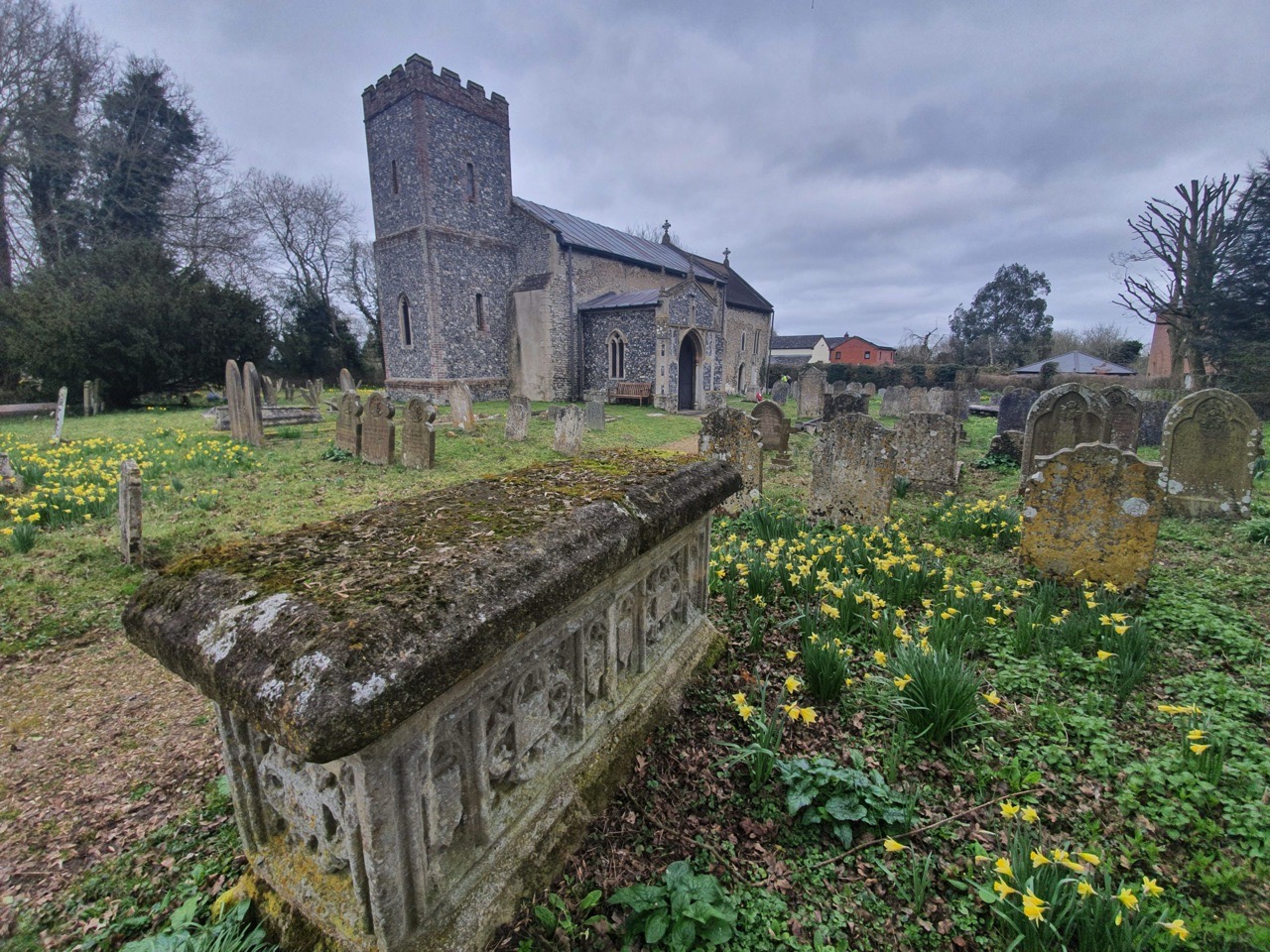
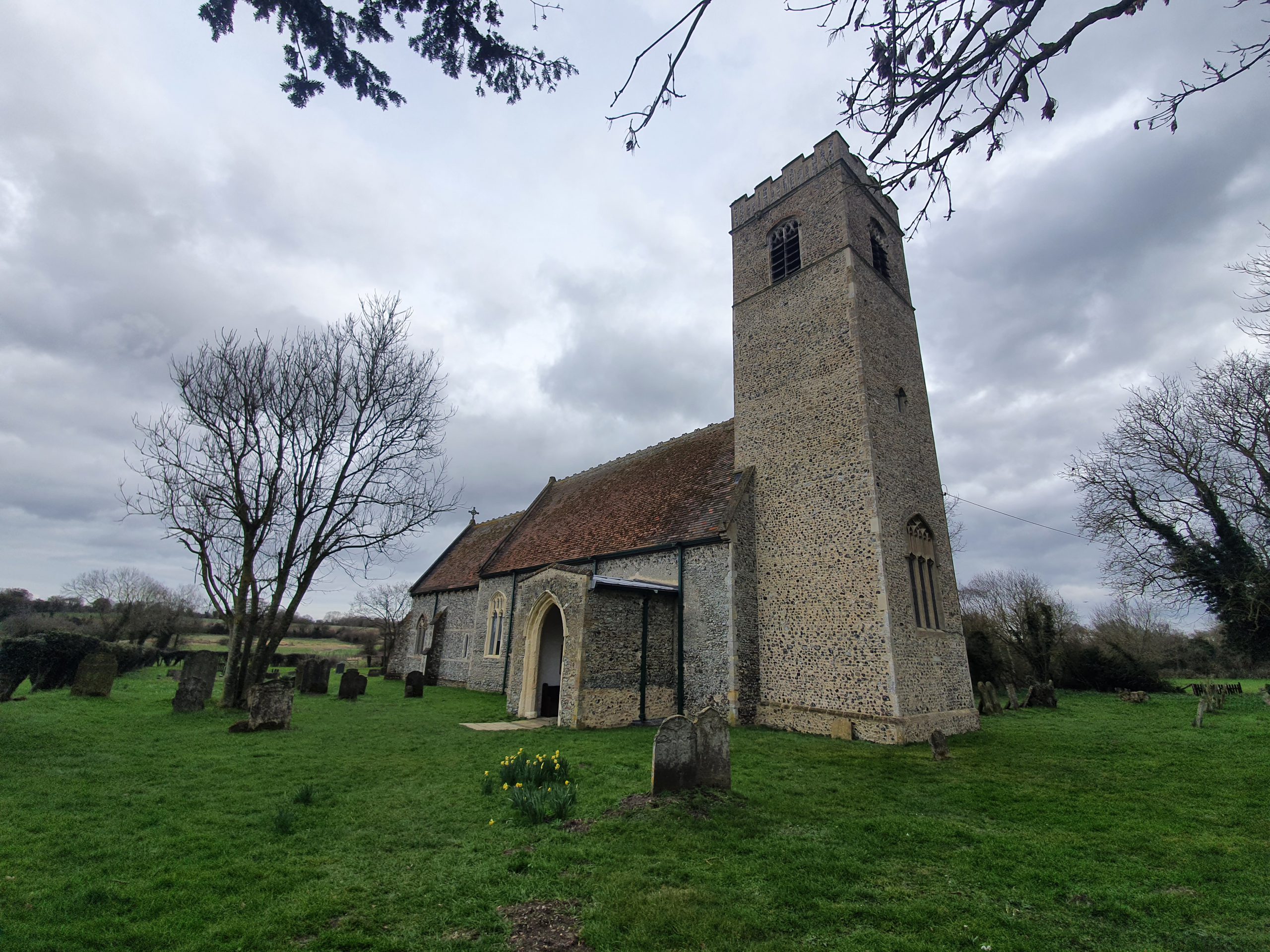
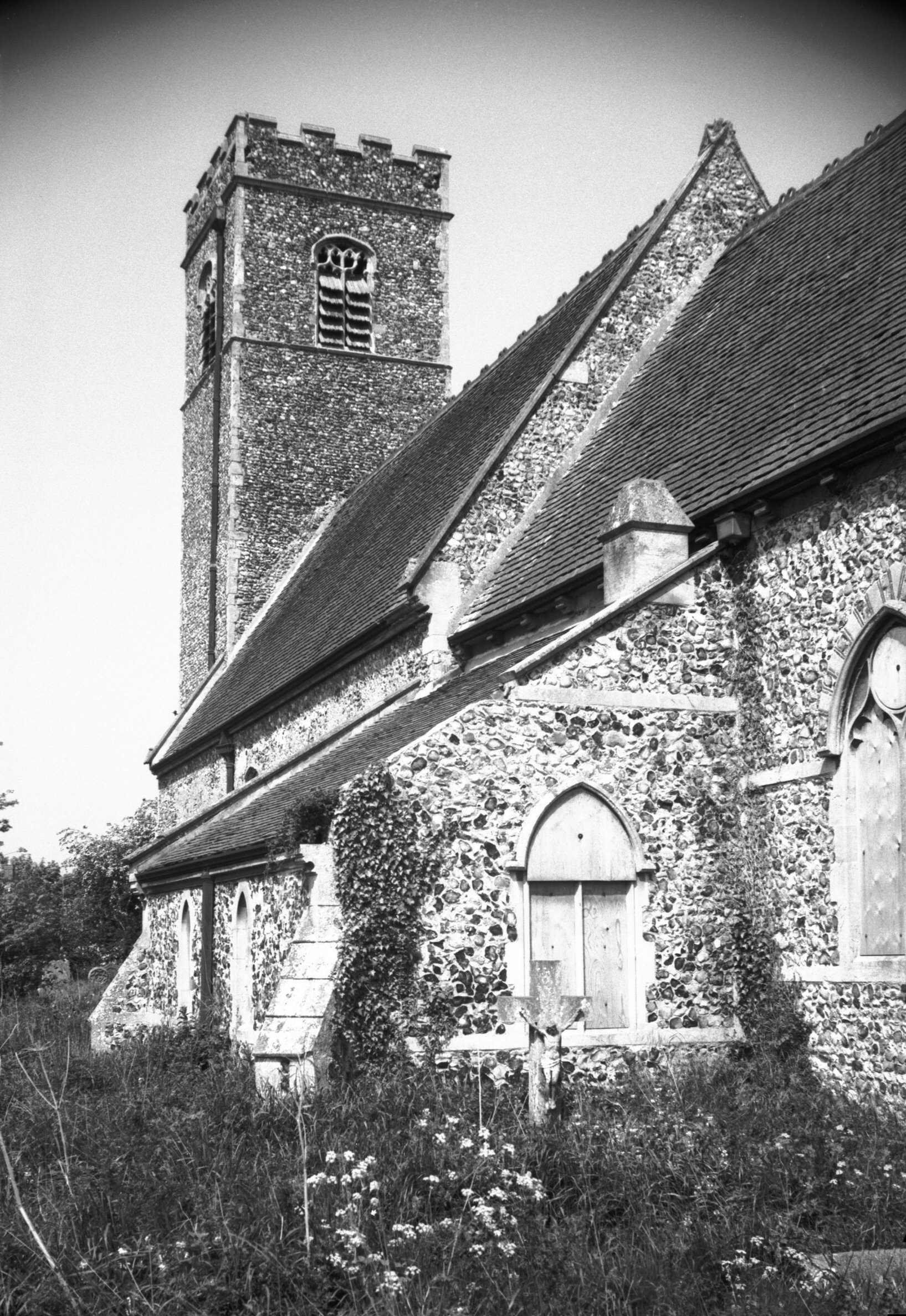
The church of St. Michael and All Angels in the village of Great Moulton and the bulk of the building dates from the twelfth and fifteenth centuries. It’s reached by going down a relatively narrow lane and the church is set back some way from the road.
The tower is neat, but unexceptional, and it was reconstructed in 1887.
Although the core of the walls is older the Victorians faffed about here quite a lot with their restoration work, led by the architect Herbert Green and constructed by Grimwood & Bullen.
This does though mean that the Victorian floor plan gives some indication about the interior of the building, which was reconfigured to seat 76 in the nave, 44 in the north aisle and 17 in the chancel.
A bricked up early medieval window on the side of the nave and it can also be seen where the walls have been raised during a later stage of building work.
A complex array of windows on the chancel, and this section of the church predates the nave.
The chancel end of the church.
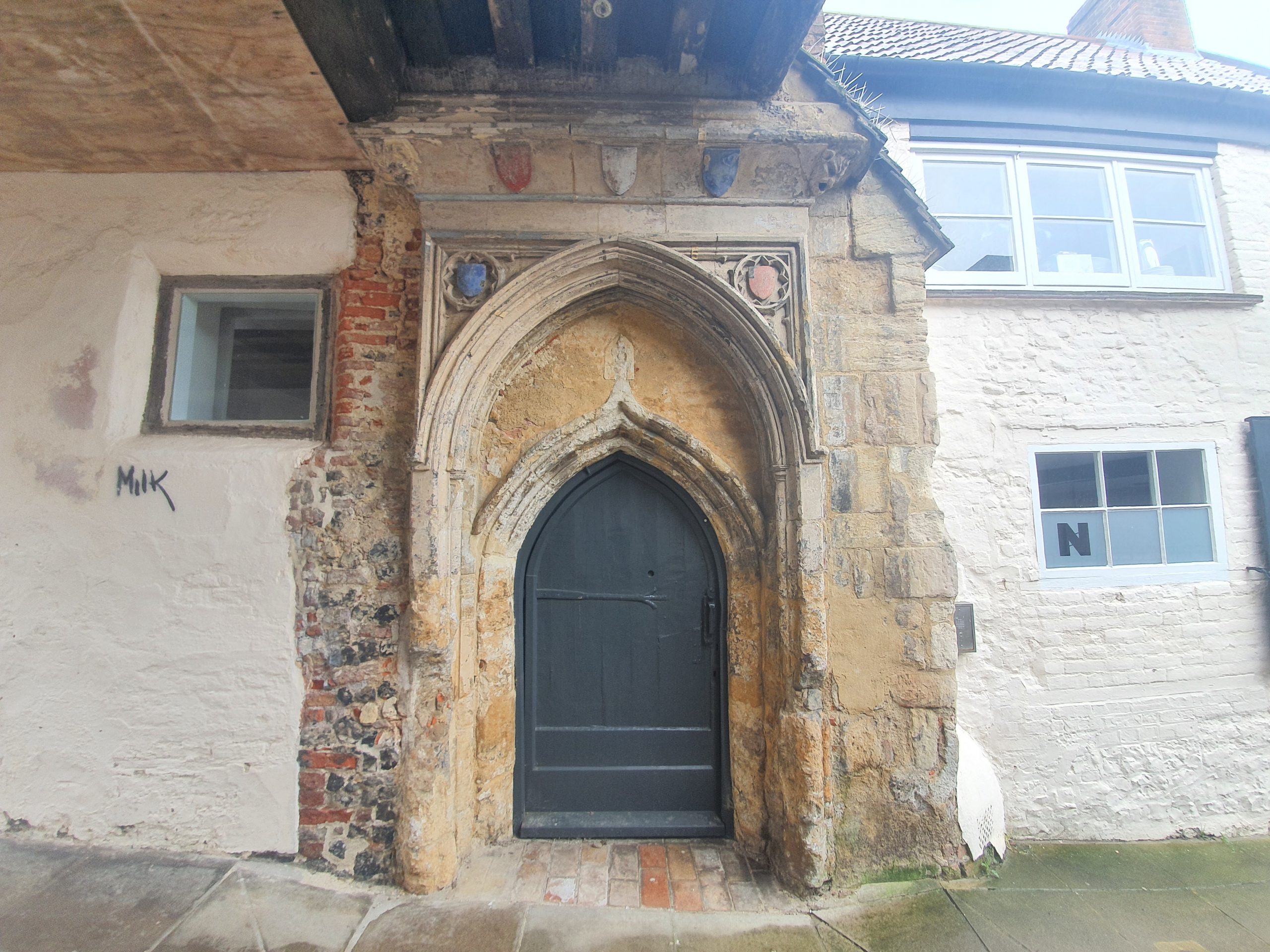
Unfortunately, this was another locked church. The doorway is medieval and the porch itself is from the fifteenth century.
A board inside the porch with the names of past rectors and vicars.
This is a repurposed tomb from the fourteenth century, likely moved from inside the church. Norfolk Heritage mention that this was investigated and taken apart in 1999, but there is no burial beneath the tomb as there was natural clay. All slightly puzzling. Such is my poor knowledge of historic religious structures that I merrily walked by this without noticing it, it was only the listed building record that explained that it was there.
It’s a rather attractive and spacious graveyard with daffodils abound.
I took this photo from the churchyard and for anyone who is so minded to click on the above photo to enlarge it will see the wires of the London to Norwich mainline.
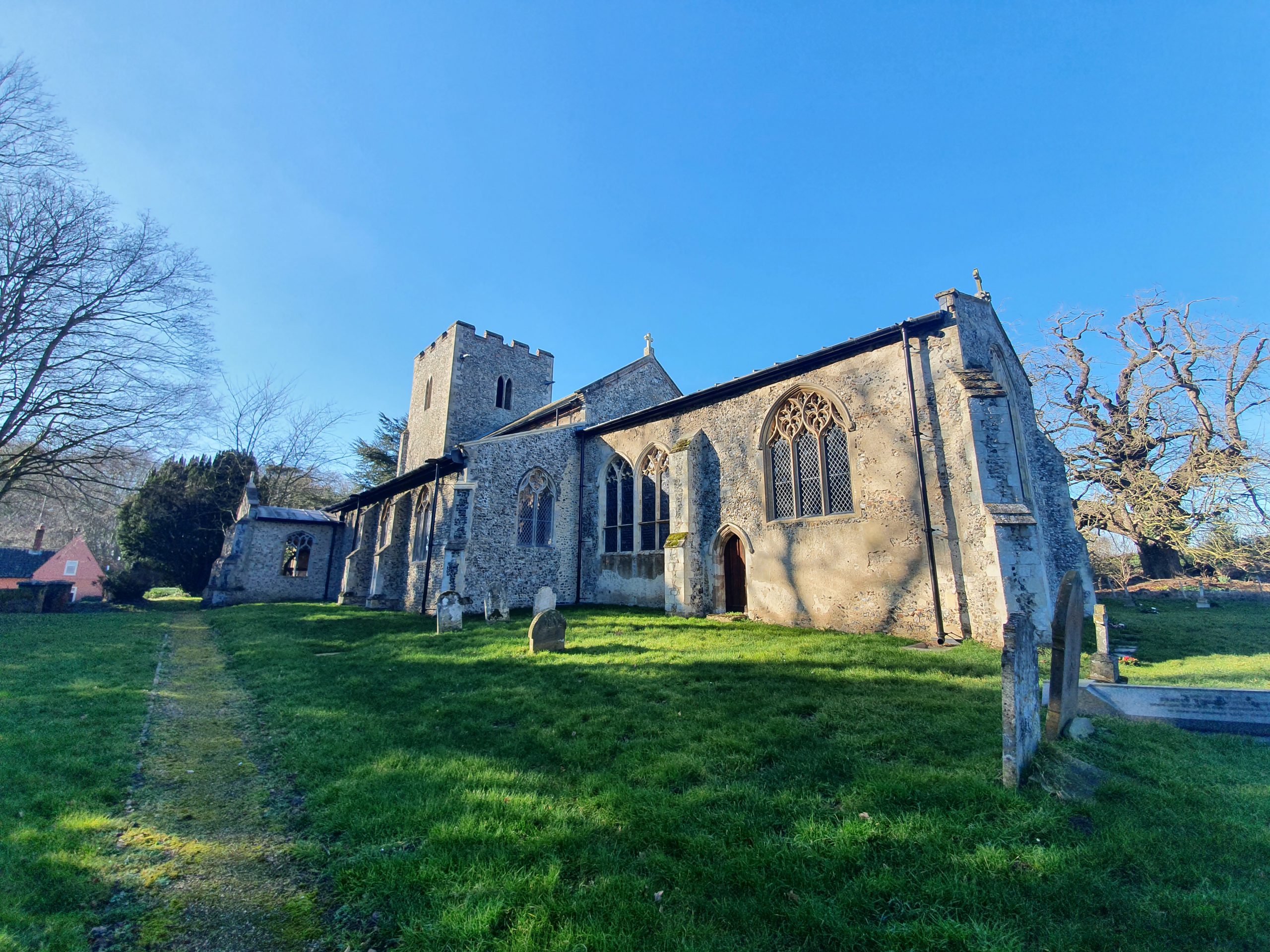
The Grade I listed All Saints Church in Wacton looks a little bit odd, a grand fourteenth century combined nave and chancel (which were once thatched), alongside a tower which is possibly late Saxon and which was reconstructed in the twelfth century.
The south side of the church. This village was once known as Wacton Magna, and there was a smaller settlement nearby called Wacton Parva, which both had their own churches. However, the latter settlement became smaller following the Black Death and their church stopped being used for services in around 1500 and it fell down in the decades that followed.
The north side of the church and the join between the tower and the nave.
The tower has an odd two tier arrangement going on, where the top section is narrower.
It’s not entirely clear to see on the photo, but a fair chunk of the glasswork is bent out of shape.
The chancel window, which was altered in the seventeenth century and restored in the nineteenth century.
The chunky south door with some old ironwork, but, no porch. This also isn’t a situation where the porch fell down, or someone pinched it or whatever, the church just never had one. This whole building is a mystery to me and there doesn’t seem to be that much history of the structure available on-line. So, this means I’ll have to make it up based on my very sketchy knowledge of church history.
We know that the church was rebuilt in the fourteenth century, not least as the earlier tower is still standing. There’s also the not inconsequential matter of the Black Death which took place between around 1350 and this caused a slowdown in church building, as there was less money to pay for things and a lack of craftsmen to build things. Church towers were often replaced when finances allowed and the local residents would have wanted a decent one to look better than neighbouring villages, and it’s clear that there was some money to pay for the grand new nave and chancel.
This all suggests to me (and, this is likely entirely nonsense, but it’s a theory and I’m sticking with it) that the tower would have been replaced in the late fourteenth century if the Black Death hadn’t taken place. By the time that it had, there wasn’t the money available and there was some steady depopulation in this area, evident by the subsequent merging of the two Wacton parishes into one. This suggests that the planned porch and the planned new tower just never got built, and then money wasn’t available. There was often relatively little substantial work done to churches between the late Tudor period and the Victorian period, which meant that All Saints was never entirely completed. What was there in around 1350 is still there over 650 years later, which is the speed that the Anglia Square project in Norwich seems to be moving at. But that’s another story.
Simon Knott notes that this church is not easy to get into, although there was a sign which mentioned that private prayer was possible on Thursdays between 09:00 and 16:00. I hope that when normality resumes the building is flung open to the community in the way that the Church of England ask for their churches to be.
As an aside, there was a tragedy in 1934 when workmen were repairing the tower and had a length of cable sprawled out across the road for whatever reason. This little arrangement wasn’t conducted with much care and a local man and grocer, William Humphrey Grimble, was killed when he drove into the cable on his motorcycle.
There is something rather peaceful about the church of St. Mary’s at Tharston, seemingly in the remote Norfolk countryside. It’s in reality sandwiched by the London to Norwich rail mainline and the Norwich to Ipswich main road, but even given this all was quiet.
It’s all quite idyllic, although the metropolis of Long Stratton is starting to overspill into the Tharston suburbs, so I wonder how long these fields will remain free from housing.
The tower and church feel well proportioned, coming together like a fine stout and a chicken pie. These aren’t incidentally words that I’ve carefully crafted whilst writing, my mind wandered earlier on when I was at the church. The Harvey Mausoleum is located in the churchyard, but more on that in another post. The churchyard is also raised up from the road, partly due to the number of burials which have taken place here over the centuries, but the site is also deliberately built on a hill (not a very big hill, but a hill nonetheless).
The four stage tower, completed in the early sixteenth century, not long before the Reformation.
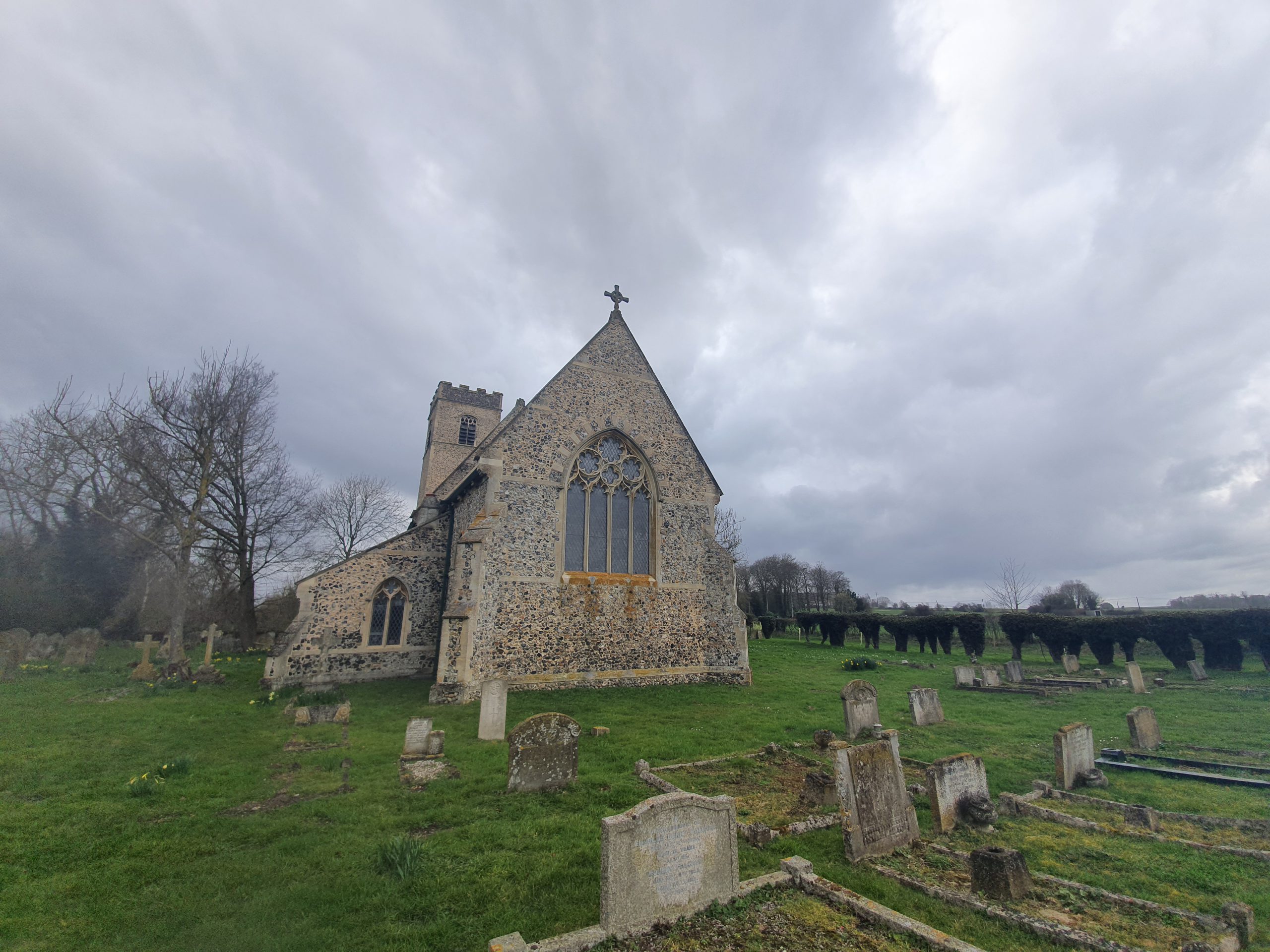
The chancel end of the church.
The church’s scratch dial, for telling the time of services.
The chancel, which is primarily from the beginning of the fourteenth century has been lowered and one of the windows filled in. The late Paul Cattermole, who I met a few times, wrote a history of this church and he suggested that this took place in 1723, when finances were not necessarily at their greatest.
The filled in window. Cattermole also notes that damage was done to the church during the English Civil War, and in Tharston’s case this wasn’t down to the officials who often visited churches to smash stained glass and whitewash over colourful imagery. That was because Tharston had been lumbered up with a Mr T Trunch who took over during the English Commonwealth, and he destroyed numerous items in the church himself, which included removing the medieval altar slab.
Putting the date on things does help later generations understand what happened when…..
A trig mark at the base of the church tower.
The doorway, with the church being locked unfortunately. There is though a list of keyholders that visitors can contact to gain access when normality returns to the country. The porch dates to the sixteenth century, although it was renovated and restored in the middle of the nineteenth century, as were numerous others parts of the building.
The current church in Swannington primarily dates to the thirteenth century, although it’s known that there was an older building on the site before this. It’s location is deliberate, placed on the highest point in the village, but it’s not clear whether the earlier building was late Saxon or early Norman.
The chancel end of the church, with a couple of tombstones built into the wall.
The scratch dial, once used to tell the time for services in the church. The top half is decorative and doesn’t perform any known function.
The holy water stoup in the church’s porch, which likely all dates from 1457.
This feels like a proper medieval porchway and it’s full of character, or at least as much as a porch can be.
The medieval doorway.
The inside of the doorway which leads into the porch.
I’m not particularly knowledgeable about medieval graffiti in churches so it was fortunate that there was a printed guide inside the building to make visitors aware of where it was located. This was inside the entrance to the porch.
And some medieval graffiti carved into the stone inside the church.
Looking down the church along the nave and into the chancel.
There’s no separate tower within the church, it has been incorporated into the nave. There are three bells in the tower, one from 1621 and the other two are from 1674.
The church’s font which is from the thirteenth century, although the marble leg bits are Victorian. It’s conceivable that this pre-dates the current church, but, either way, this has been used in the Christening of tens of generations. When this font was first used the language used would have been Middle English, which would be hard for someone from today to understand. So, this font has been here for so long that the entire language of a nation has changed around it, whilst it has continued to be used. I feel I’m verging into the realms of being rather too loquacious now, so enough about how old the font it.
The south aisle is visible on the left of the above photo. This would have once been a busy church, or at least relatively busy, with pilgrims as Swannington was on the route of the Norwich to Walsingham pilgrimage trail.
The removal of the pews from the church is recent and deliberate, it returns the interior to more as it would have looked during the medieval period.
I was never quite sure about whether Victorian pews should be taken out and sold off, but the more I see of church interiors like this, the more that I like them. It’s open, it’s easier to hold events and it makes the church look more welcoming.
The old entrance to the rood stairs, removed after the Reformation.
This is a Norman piscina which was discovered in the church during the First World War, although there are numerous questions about this, as it’s unlikely to actually be from here as it’s perched in front of a later piscina from the fourteenth century. Anyway, this older one shows St. George slaying the dragon.
The chancel, and the church originally had three, as there were smaller set-ups at the end of the two aisles as well.
There are some areas of the church which need a little work, as is evident from this damp area.
The north doorway, with the Royal Arms of George III above the door. This is now the entrance to an extension added in the 1970s which provides some kitchen and toilet facilities.
The church is rightly rather proud of this, an old wall painting of St. Christopher which dates to the medieval period. Although more commonly known today as the patron saint of travellers, he was once revered for the security and protection that he could offer to everyone, so his image was often painted in churches. The wall painting was rediscovered in the 1840s and there are currently fundraising efforts to protect this so that it can survive into the future. In some ways, it might have been better if it hadn’t been discovered in the early Victorian period, as their attempts to protect it have perhaps not been ideal against modern standards.
As an aside, I’ve contacted Historic England to correct the spelling mistake in the listing of this church as their spelling of Margaret is incorrect. I bet they’ll be thrilled (although, to be fair, they do ask people to contact them if they spot things like this…..).
There’s one Commonwealth War Graves Commission grave at St. Mary’s Church and it commemorates the life of Thomas Edward Green.
Thomas was born in 1908, the son of John Green (1867-1952) and Emily Green (1870-1944), both of whom are also buried in the churchyard.
At the 1911 census, the family were living in Forncett St. Mary, with John working as a railway labourer and this was a large family, Maurice aged 17, Emily aged 15, Irene aged 14, Jack aged 9, Bernard aged 7, Thomas Edward aged 3 and Joyce aged 1. Maurice was working as a farm labourer, which was likely the limit of employment options for many younger people at that time. John and Emily hadn’t lost any children at a young age, but one had left home by the 1911 census. Maurice fought in the First World War, but he returned home safely.
Thomas married Alexandra Nell Turner, who had been born in 1906, of Wreningham in 1932. During the Second World War, he joined the Royal Navy with service number P/JX 518572 and was sent to HMS Collingwood, a land based training centre used by the navy.
Thomas died on 18 June 1943, at the age of 35. There’s no mention in the local newspapers of any accident at HMS Collingwood, so this was perhaps a natural death. His body was brought back to Forncett St. Mary and buried a few days later. Alexandra died on 21 October 1979, having lived at Wymondham Road in Wreningham and I assume that she didn’t remarry since she had the same surname of Green.
As an aside, there is perhaps a limited amount of relevance in my posts such as this, as I haven’t been unable to discover any new story to excite and delight the Internet. Thomas was just one of at least eight children that John and Emily had, with no doubt many stories to be told there as well. But, I still find the stories of those who fought and died in the First and Second World Wars to be captivating, and their retelling in whatever form keeps the memory of the lost and damaged generations alive in at least some way.
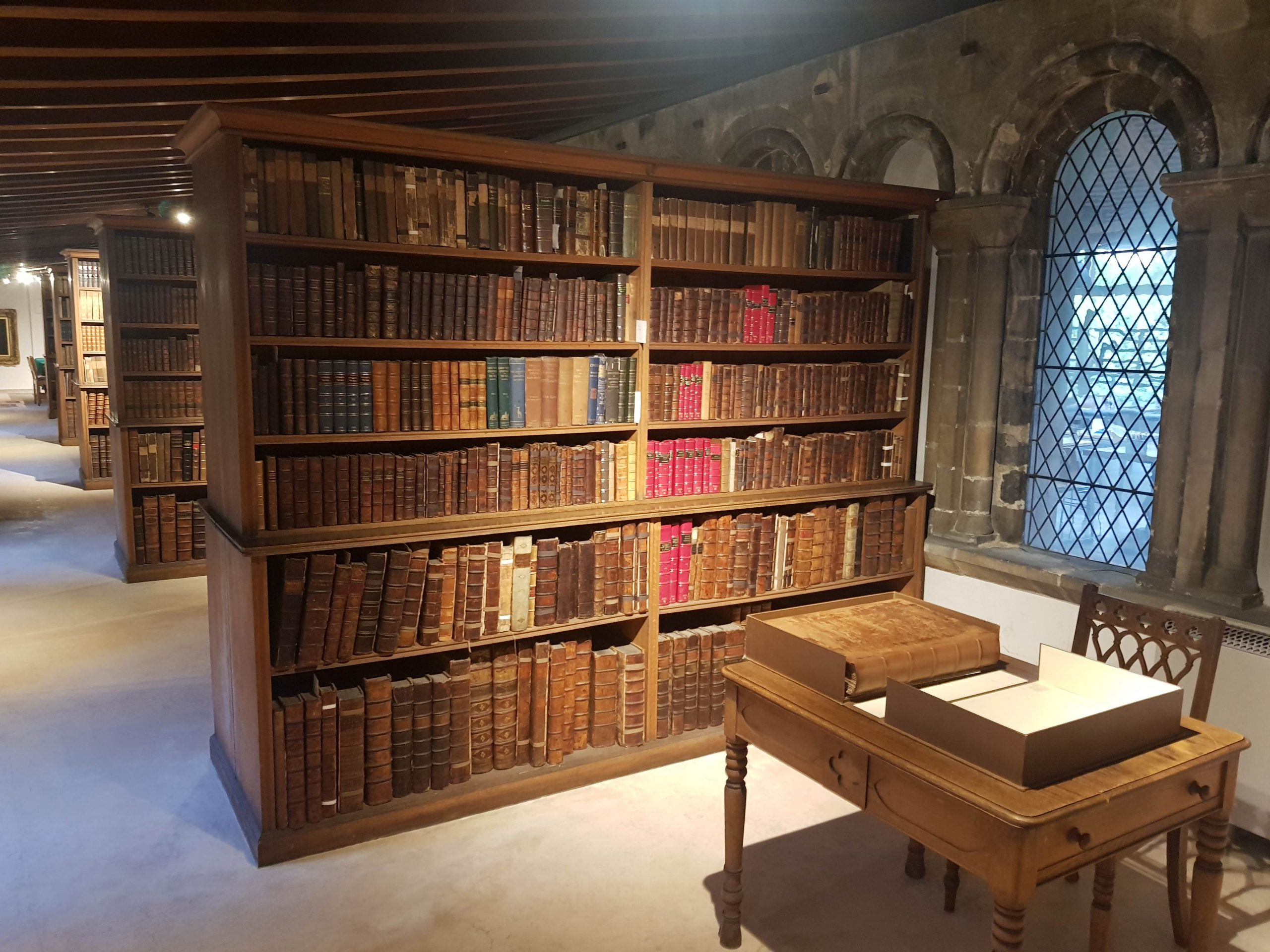
This photo is from one of my visits to Norwich Cathedral Library, a beautiful part of the building that I’d very much recommend. Anyway, the reason for this blog post is because of the rather lovely virtual tour that the cathedral has unveiled.
Available for free at https://www.cathedral.org.uk/visit/virtual-cathedral-tour, it allows people to use their phones or laptops to explore the Cathedral. The quality of the imagery is excellent and it’s a quite marvellous alternative since sections of the building aren’t currently open to the public. It would be really positive if more historic buildings could be shown in this way, especially if some more behind the scenes sections were also shown.
A recent wooden carving of Colenso which is on display at St. Mary’s
It’s clear from items around St. Mary’s Church in Forncett St. Mary that they’re rather proud of John William Colenso, their former rector who went on to become the first Bishop of Natal.
One of the displays at St. Mary’s.
Colenso was born in Cornwall in 1814 and was educated at St. John’s College, although this whole process required some considerable financial initiative to self-fund. He was the Second Wrangler at Cambridge University, meaning that he received the second highest marks for maths, so there’s little doubt he had lots of academic ability. Anyway, after some time spent teaching, he decided to take on the role of rector at St. Mary’s Church in 1846.
It was reported in the local press that Colenso had taken over the Rectory at Forncett St. Mary and become rector, with a value of £979. The position of rector back then wasn’t one which required any religious qualifications, it was more a way of living and the role had to be purchased. It wasn’t essential then for rectors to be ordained, although Colenso was, he had been ordained by the Lord Bishop of Ely in May 1840.
Colenso spent seven years at St. Mary’s, before being invited to become the first Bishop of Natal, a post he took up in June 1853. His interest in the well-being of the Zulu ethnic group was notable, and caused some local opposition. Another issue was that Colenso had a mathematical background and was interested in fact and logic, so he had some issues with some of the text in the Bible. He wrote in his book “Pentateuch and Book of Joshua Critically Examined” that he had concerns and he also stated that he opposed the idea that sinners should be eternally punished.
There were attempts to remove him from his post and Robert Gray, the Bishop of Cape Town, the man who had encouraged Colenso to go to Natal, now decided that he should be charged with heresy. The situation wasn’t, to be honest, entirely ideal for the church. Colenso was found guilty of heresy, then the Church of England decided that they had no jurisdiction and so reversed their decision. Colenso was sort of sacked in 1869, but also sort of retained his role, all caused by creating a dual system and a divided church. The Cathedral of Natal today recognises both sides in the whole debate, so healing has finally taken place.
Colenso was interested in the matter of polygenism, a belief that different races were created separately by God at the same time. Often used to promote racial inequality, Colenso came from the angle that everyone should be equal because they were created equal. Although this field has been rejected now by science, Colenso did much work on ensuring that the rights of everyone in South Africa were looked after, and that wasn’t universally accepted at the time (nor indeed for a long time after).
Colenso died on 20 June 1883 in Durban at the age of 69, still in his role as the Bishop of Natal. This takes me back to the church in Forncett St Mary, which feels a very long way from South Africa. Colenso had married Sarah Frances Bunyon in 1846, the same year he took over the rectorship at St. Mary’s, and they had five children. One of those children, Harriette Colenso, became a Christian missionary in South Africa, and another, Frances Colenso, became an historian of the Zulu Wars.
On 22 June 1883, the Eastern Daily Press published an article on Colenso’s life, noting how the Church in South Africa had been split into two following the debates that he had raised. The newspaper noted that he was “an ardent defender of the African against the white man” and how “his sympathies often lay with the Africans”. The parish register for the church of St. Mary is in the possession of the Norfolk Record Office and Colenso’s name is present at nearly every baptism that took place during the years he was there, a seemingly very meticulous rector. And he could have had a good living in Forncett St. Mary for very many years, but he decided to spread the Christian message in South Africa, so I can imagine that he was quite a character.
This is the pretty little church of Forncett St. Peter’s, located a short distance away from St. Mary’s. The fortunes of these churches have perhaps been reversed over recent years, with St. Mary’s going from being derelict to now being repaired and restored, whilst St. Peter’s is literally falling apart.
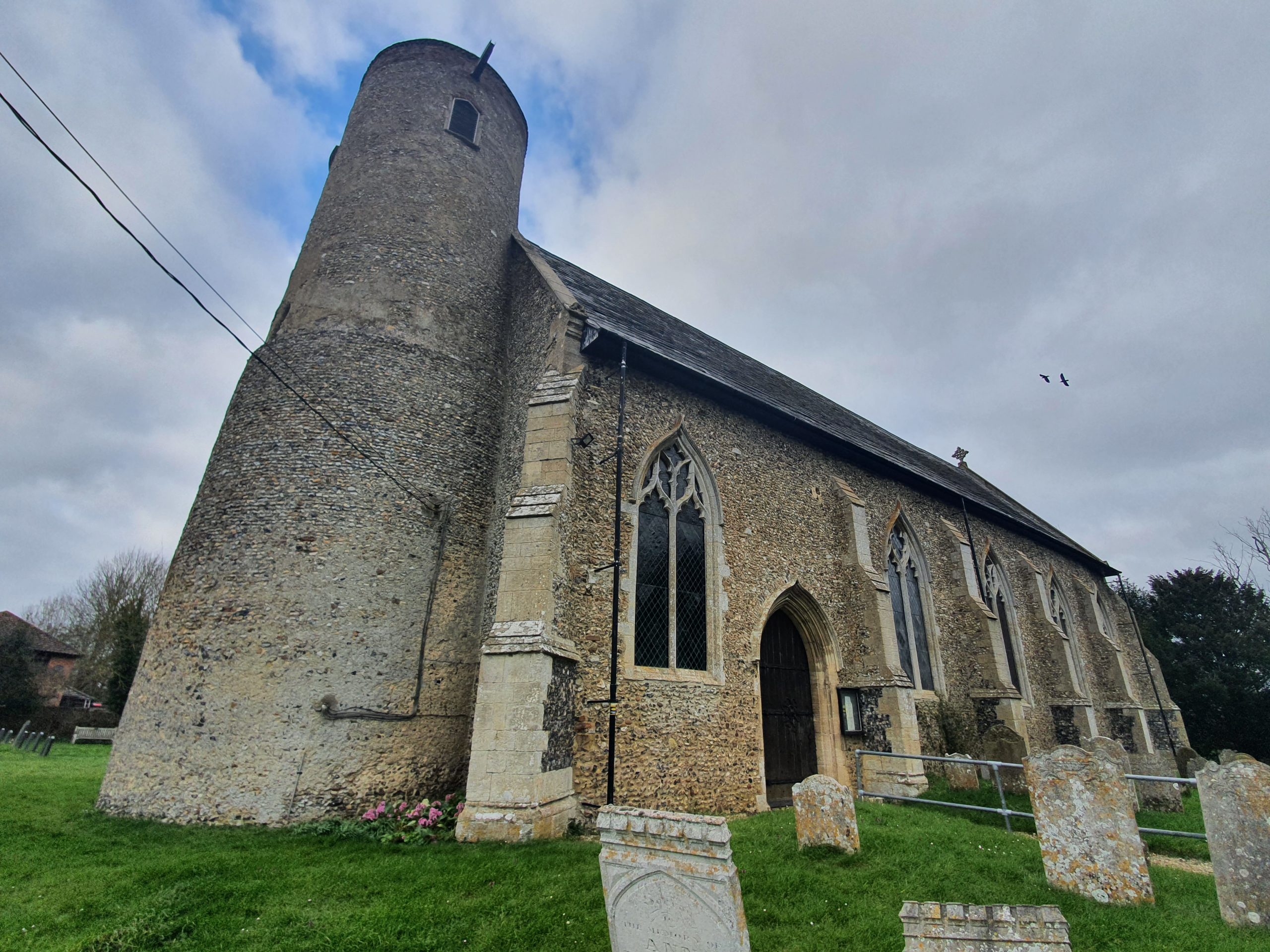
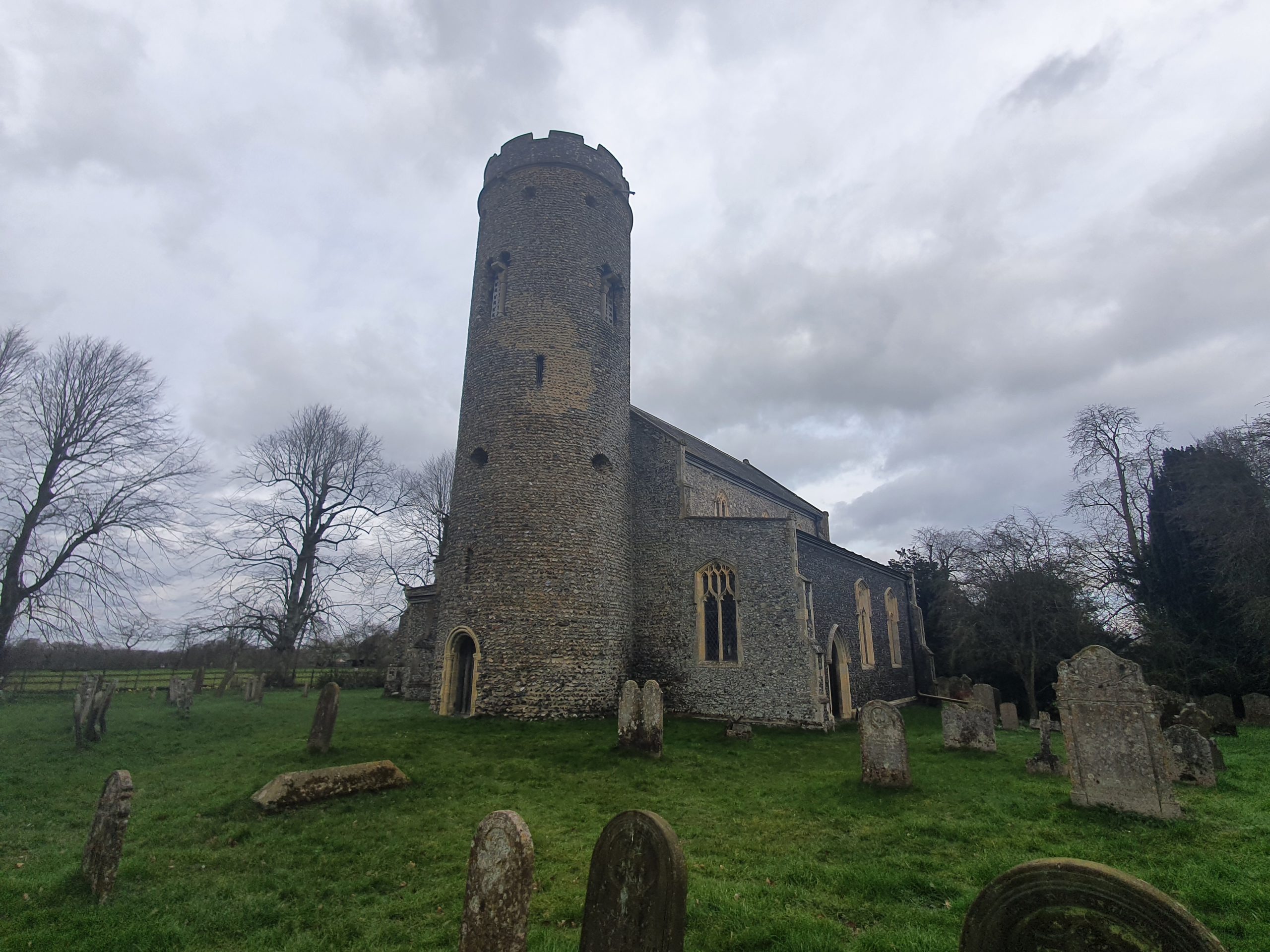
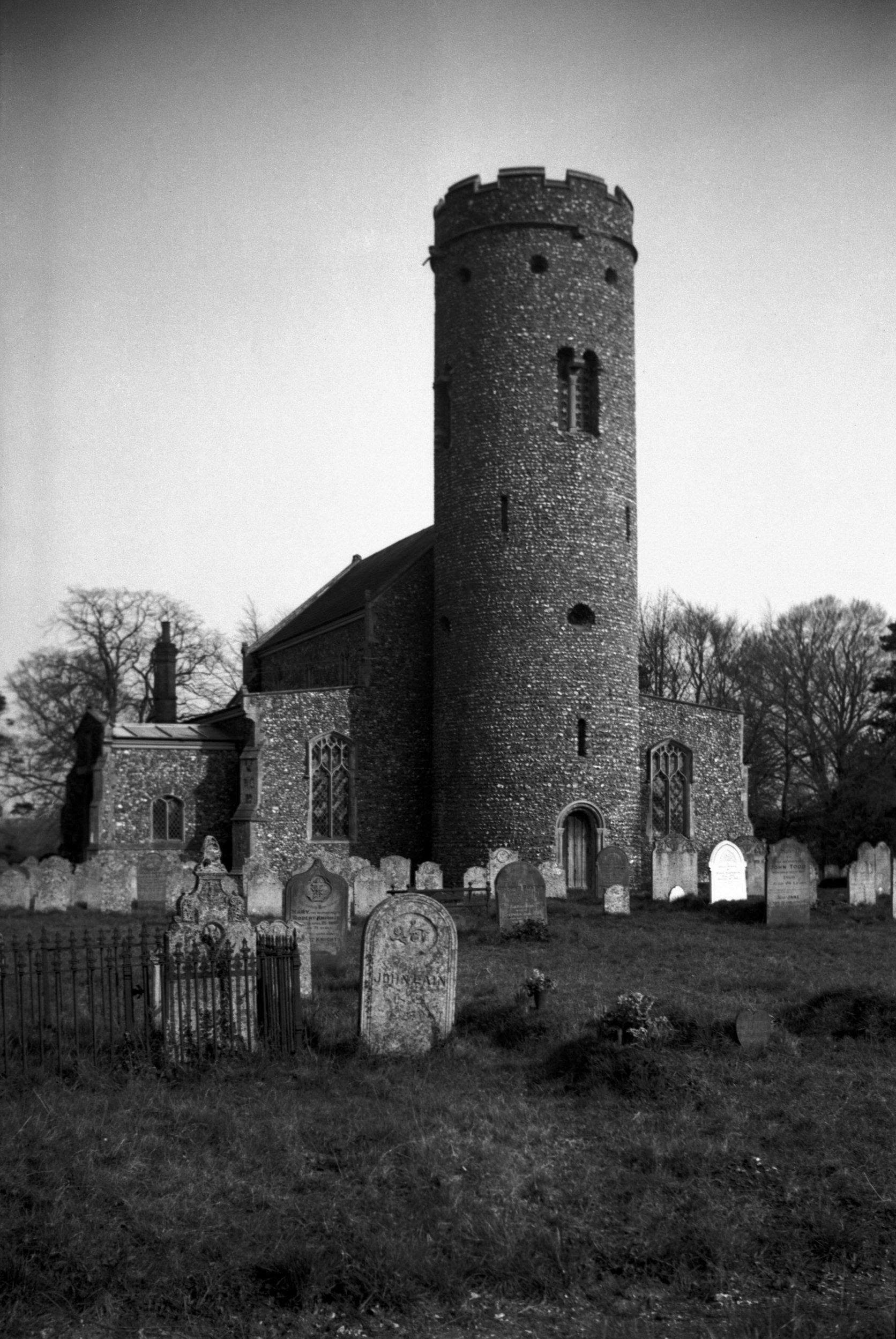
What is clearly evident when approaching this stone tower is that it’s remarkable, and very different to other round towers in Norfolk. There are Saxon windows visible within it, there’s a Norman style door at the base and it doesn’t look overly repaired. Indeed, this tower dates from around 1000AD (that’s what the church think, other historians place it a bit later, but I like the church’s guess), making it over 1,000 years old, another remarkable survival. This heritage means this is one of the best preserved Saxon round towers in the entire country, with the church noting there’s an old medieval staircase inside that can be viewed by appointment.
The side of the round tower, with the Saxon window visible in the middle, and the listed building record also notes that the upper windows have evidence of reused Roman brick. George Plunkett took a photo of the church shortly before the beginning of the Second World War and, unsurprisingly, not much has changed since then. I should have noted the existence of this photo earlier, as I could have taken a photo from the same place to see if any of the gravestones had been lost (I need to get out more….), but that treat can be for another day. I thought it was quite evocative just thinking that 1,000 years ago that there were workmen standing in this exact place on ladders and wooden scaffolding who were building this tower.
The chancel of the church and for anyone who finds these things interesting, take a closer look at that chancel wall for something……
The church has some makeshift ways of dealing with drainage and those areas are out of bounds for safety reasons.
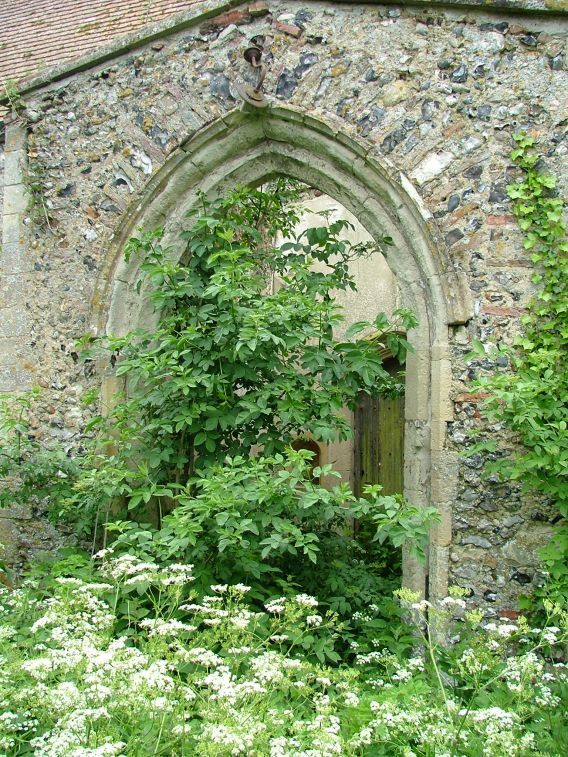
I didn’t note this when walking around the church, only when reading the listed building record did I go back to take photos. But, there’s the old window, with the Priest’s Door having been punched through in the thirteenth century.
There’s the outline of it.
Unfortunately, the church has been closed since 2020, as sections of plaster fell off the wall and the building wasn’t considered safe. The damp evident in the porch is perhaps the least of their problems at the moment, as the church needs £750,000 for its restoration efforts.
Although the damage to the porch isn’t ideal, but the church’s web-site mentions it’s much wider than this:
“The church is now in desperate need of major repairs and renovations. Most important is the need to make the building watertight – extensive areas need re-roofing, failing lead work needs replacing and faulty gutters, down-pipes and surface drains need repair or replacement. Structural deterioration and cracking of external stone and flint-work has meant that areas of the churchyard have had to be cordoned off in case of falling masonry. Windows, cracked internal masonry, collapsing floor surfaces and areas of death-watch beetle all pose major challenges. The wonderful 15th century Drakes Tomb is suffering from cracking and discolouration. Once the structural work has been completed redecoration will be essential and the remarkable set of carved pew ends can be repaired.”
The church’s fund-raising efforts are underway, but this sounds like a project that will take many years to bring to a conclusion, but I hope that they are able to make progress in securing donations.
An 1857 sign from the Incorporated Society for Building and Churches, an organisation which has been providing grants for churches since 1818. It was an unfortunate situation that many churches at this time decided that they would go in for pew rental to raise money, an opportunity for the wealthy to get places in church at the front whilst the poorer were shoved at the back somewhere. The tide on this started to turn in the middle of the nineteenth century and churches started to end the practice, although some parishes were rather more forward thinking than others.
The Norfolk Chronicle had noted in July 1849 that the interior of the church had been “much improved by the removal of the old pews and the substitution of new oak benches”. There’s an old plan of the church from the mid-nineteenth century on the Lambeth Palace Library archives web-site, but their database has been down for a few hours, so I can’t link directly.
I didn’t really understand this church when looking around it, there was a feel of some rather stark and blunt repairs to the building and an interior which seemed a little whitewashed. But, equally, it was in a good state of repair, a big effort had been made to put up some boards with some history and it all seemed in order. The true story of this church is though remarkable, it has been saved by the community after having fallen derelict. I’m deeply impressed at what has been done here over the last few years, and it explained why so many repairs had been needed. All really quite wonderful. Simon Knott has some photos of the state that this church was in just a few years ago and George Plunkett has a photo from 1992.
The church on an old tithe map and it’s set back a fair way from the road.
The church had fallen into a state of disrepair even though it is Grade I listed, with the bulk of the building dating to the thirteenth century, but the tower is a fifteenth century replacement from what stood before. The listed building record notes though that some elements of the nave are from the eleventh century, survivors of the earlier church.
The chancel, which was repaired during an extensive 1869 restoration, led by the Reverend J Cooper. There were no end of events that took place in 1868 to raise funds for the repairs, showing some of the community effort that has again been notable in recent years.
The Norwich Mercury reported in April 1870 about the reopening of the church and I like their general comment that “advantage has been taken of the necessary alterations and re-buildings which churches require to graft upon them the whims and fancies of architects, so that we have had a series of abominations perpetrated, at which none are now more ashamed than the clergymen themselves”.
Fortunately, the newspaper liked the work that had been done at St. Mary’s, commenting that the architect JP Pearce had “followed and adhered to the plan of the original building”. The work had cost £1,000 and the chancel in particular had been heavily restored and a new chancel arch added, with new carvings and stoneworks throughout the church. The newspaper remarked that the thatched roof which “gave the church a poverty stricken look” had been replaced and new Staffordshire tiles had been laid in the chancel and nave.
A blocked-up window, perhaps a victim long ago of wanting a window with a more modern design.
The porchway has now been repaired and is in a good state of repair given how it looked just a few years ago in Simon Knott’s photo.
The church was open and it one of those atmospheres which just felt welcoming, and I liked how there were some history boards up giving further information about John William Colenso. He was the rector of this church between 1846 and 1853 and he went on to become the first Bishop of Natal, in South Africa, a role he remained in until 1883.
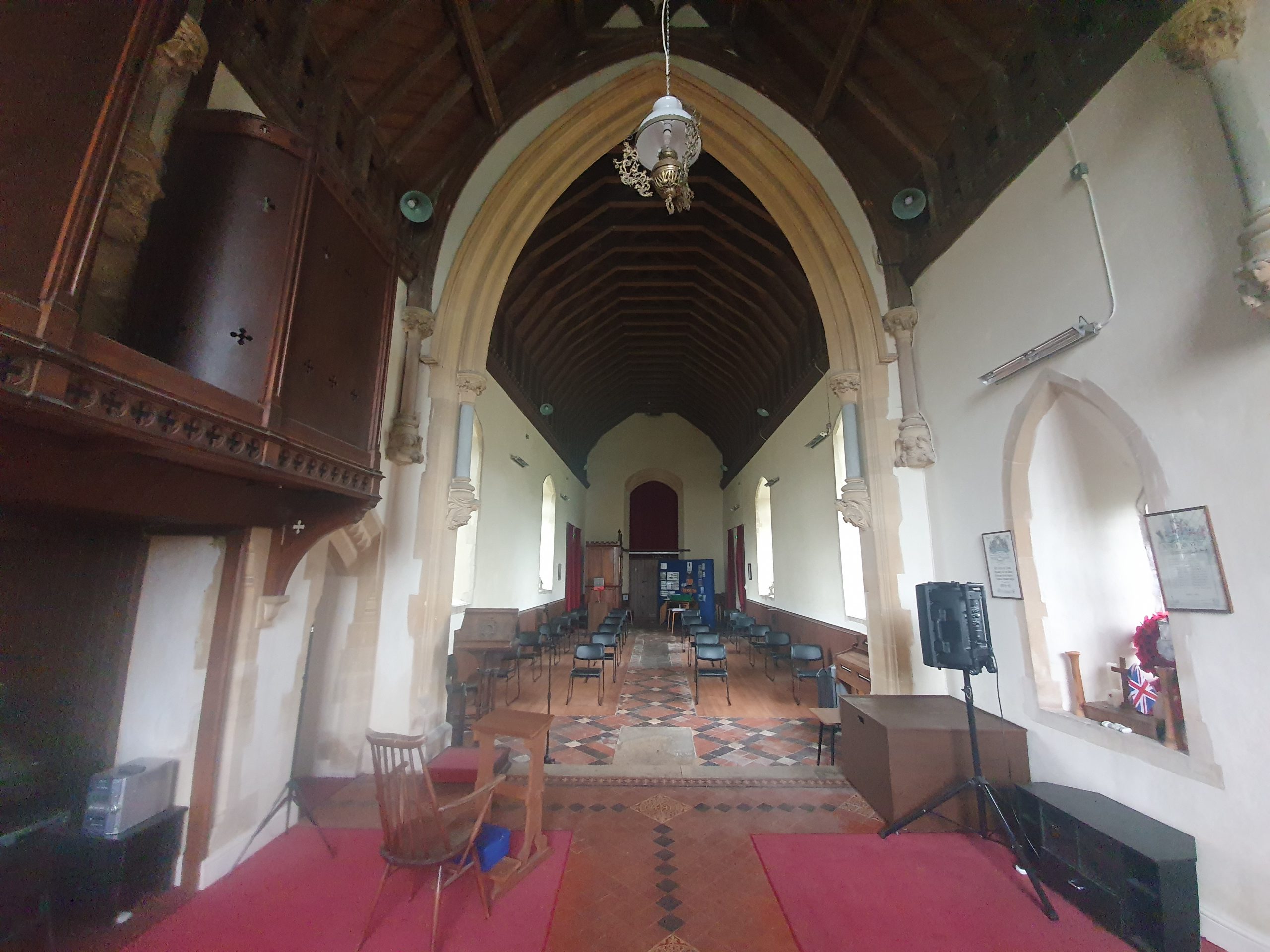
The inside of the church, looking towards the tower. The floorboards have had to be replaced as they had become damaged during the period that the church was derelict, but some of the tiles from the 1869 restoration are still visible.
And looking along the nave into the chancel.
There’s something really quite environmental (if that’s the right word there, perhaps not) about how someone’s remains can help the growth of a fine tree. I didn’t notice any early burials, so everything was from the nineteenth century onwards, but there’s an interesting note at the Heritage Norfolk web-site which mentions:
“Burials did take place prior to this period but headstones were rarely used and multiple burials often occupied the same plot.”
This helps answer my ongoing question about why are there are often so few headstones in churchyards in Norfolk, and perhaps it’s for the same reason here, that headstones were rarely used and the graves not always carefully marked.
The new lych gate, with a chunky bench, all of which offers a positive first impression for visitors to the church.
All in all, this is a glorious restoration and saving of a church which had become redundant in 1985 and then sadly vandalised in the years that followed. It’s disappointing that the Church of England abandoned this church, and they were talking about turning the building into a holiday cottage at one stage. Fortunately, things are much better again today, and what a marvellous community effort to bring this church back from the brink.
And a new little project that Jonathan and I are undertaking because this lockdown is clearly here for at least a few more weeks. It’s a bit niche (our project I mean, not the lockdown), I’ll accept that, but there we go. Effectively, it’s walking around Norwich, ancient parish by ancient parish and seeing what is there now compared to a map from the 1880s (the map above is from 1789, but the one from the 1880s is more detailed, which is why we used that). There’s a PDF of these boundaries to provide some extra background to this whole project.
St. Julian is the eight parish we’ve visited and as can be seen from the above PDF, it’s split into two separate areas, with St. Etheldreda in the middle. Given the complexity of that, this post is just about the most northern of the two sections of the parish and the one containing St. Julian’s Church. The other half we’ll do next week (I can imagine the excitement that everyone has already…… or perhaps not…..).
This is the Waterfront on King Street, a live music venue and club, with this artwork at the front giving some examples of bands and singers who have performed there.
This is the Waterfront’s riverside drinking area, which is all rather lovely, and it’s on the site of the old mortuary.
This is Abbey Lane (formerly known as Cockey Lane), with the Waterfront on the left-hand side, looking back towards King Street. It’s also where St. Clement’s Church once stood, in the former parish of St Clement at Conesford. It was united with the parish of St. Julian in 1482, but the church remained open, but fell out of usage in the 1560s. The building was still there in the eighteenth century and it’s though some parts of it might remain underneath the nineteenth century structure of the Waterfront. To add to the mortuary situation, there were numerous burials found here in the 1960s in the former churchyard.
This is the next street along, Hobrough Lane, and this would have once led down to a ferry which crossed the River Wensum. Once the frontages on King Street would have had residential properties that the wealthy lived in, but over the centuries it all became more of an industrial area.
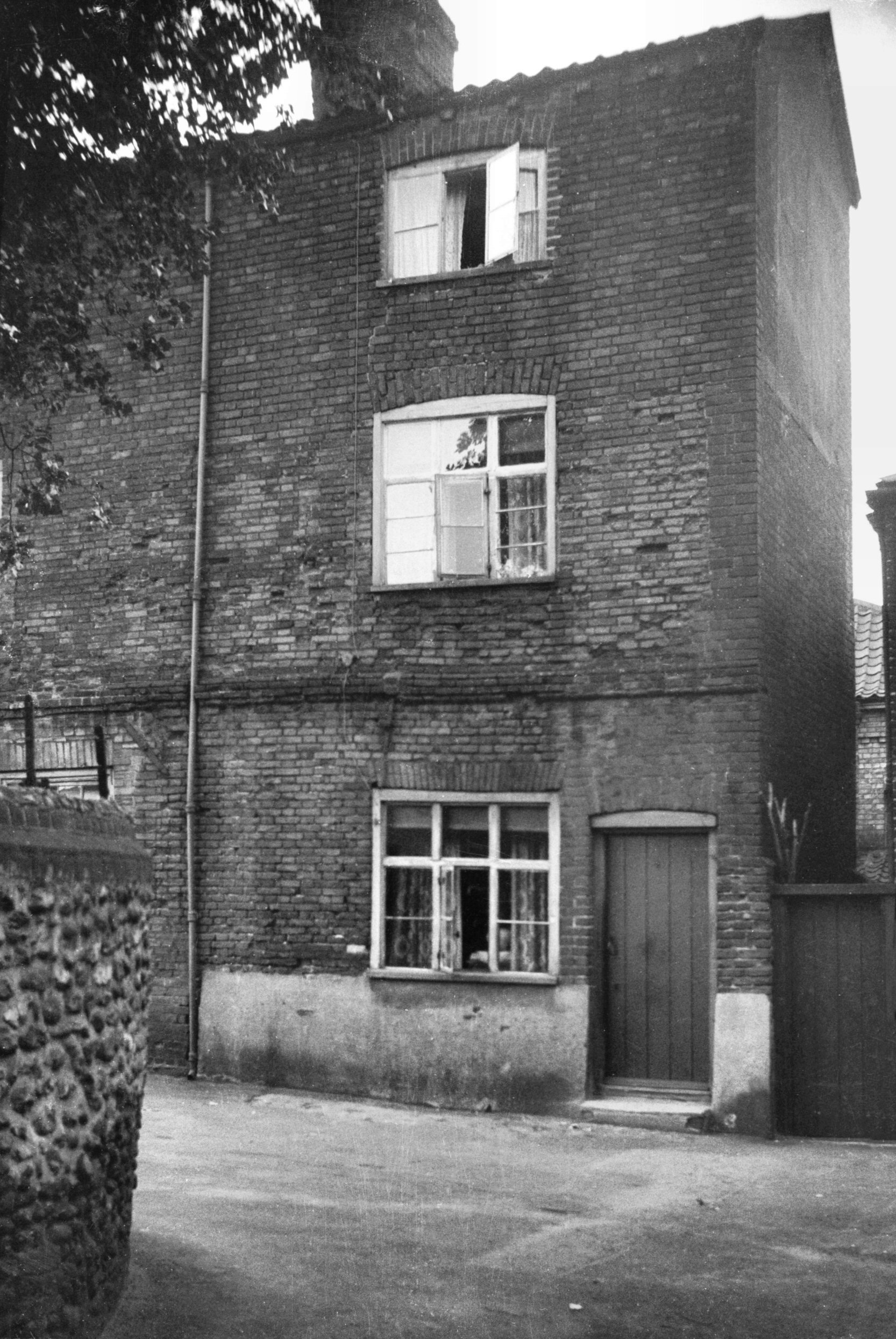
This area has now been cleared, but this would have been Greenman Yard and there was a pub, the Green Man, standing where that wall is. This was a pub from the mid-eighteenth century until it was demolished just before the war and George Plunkett took a photo of it in 1936. I’ve written this before, but Norwich is so very fortunate to have had George Plunkett, as I can’t imagine there would have been many other photos taken of this pub.
Much has been written elsewhere about Dragon Hall (not least this rather lovely volunteer guide from 2005), so there’s little need for me to add a great deal here. It’s a former medieval hall of national importance which was constructed in the early fifteenth century. Although it was constructed as a grand hall for a wealthy man, Robert Toppes, it got sub-divided up over the centuries as King Street became a place more for industry than decadent living. It’s a slight miracle that the building didn’t fall down by the early twentieth century and it was in quite a state. Properties behind the building were removed as part of slum clearance, but the council had the foresight to save Dragon Hall (a name it was given in the 1980s) and take it into their own ownership. Some forward thinking individuals turned this into a museum and its change into the National Centre for Writing is a slightly retrograde step in my view (I’d have liked the building to have remained a museum so its fine interior was accessible to the public), but in all fairness, the new organisation does allow visits to see inside.
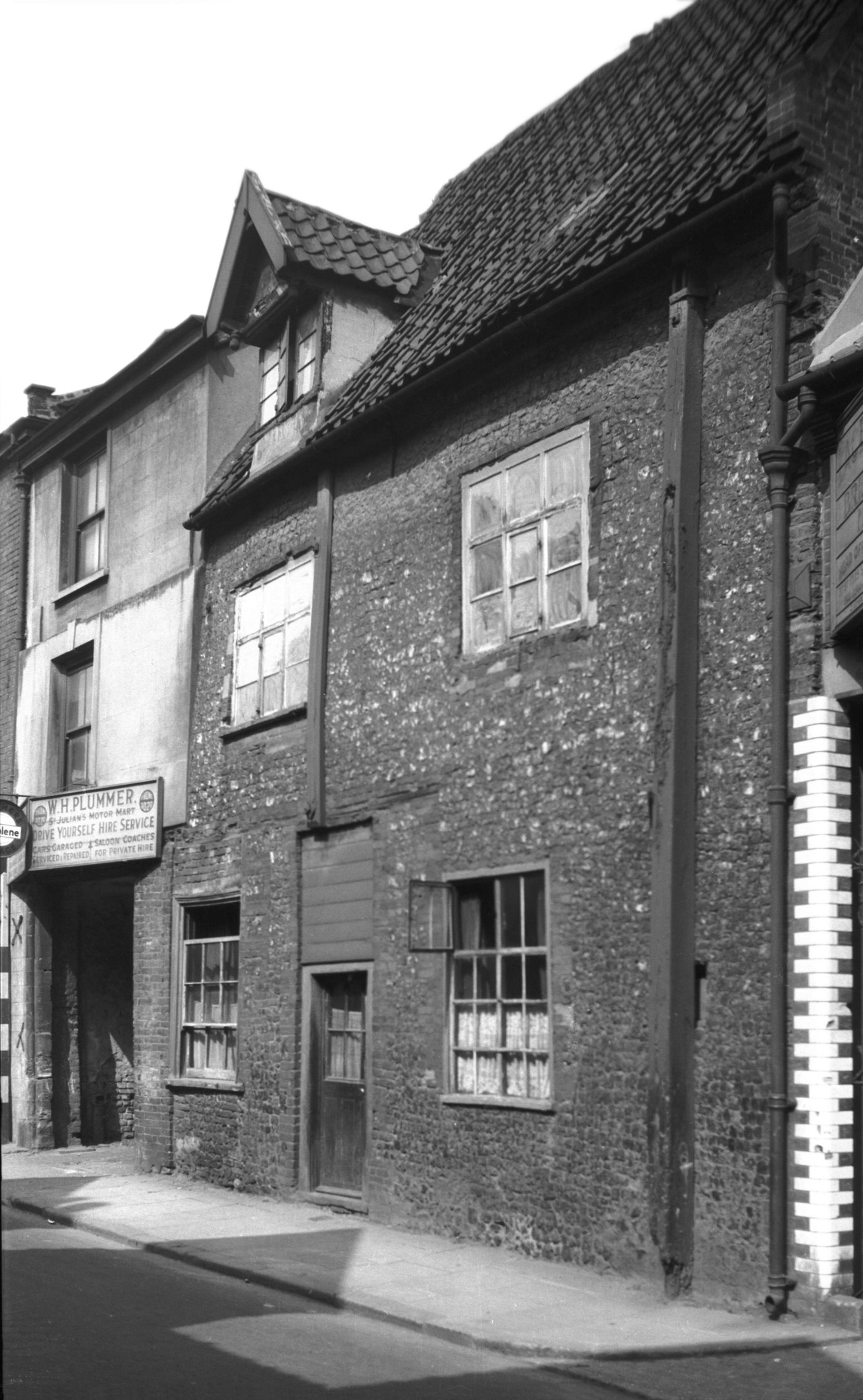
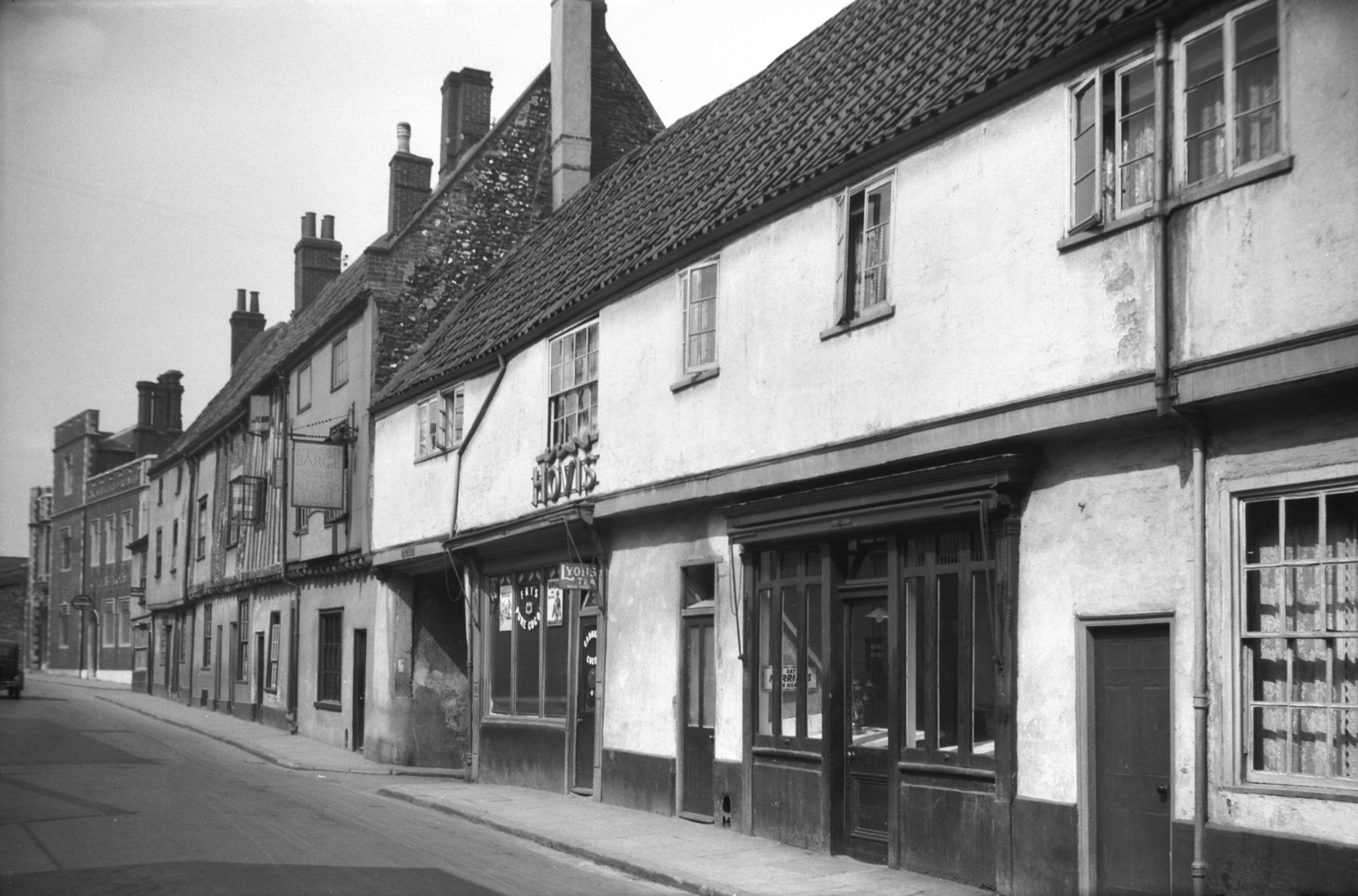
The building to the right (125-129 King Street) on the above photo is historically interesting, but it has been rather marred by the lower floor windows that have been punched into it. I remember this building as BB Adams, the electrical retailer, but it’s been boarded up for some time now. It looked much better as it was in this 1936 photo from George Plunkett.
The entrance to Old Barge Yard, which takes its name from the pub which traded here from the middle of the nineteenth century until it closed in 1969. The window seats from the Old Barge Yard pub are apparently still visible inside the building.
Old Barge Yard, which did lead to the River Wensum, although it has now been blocked off.
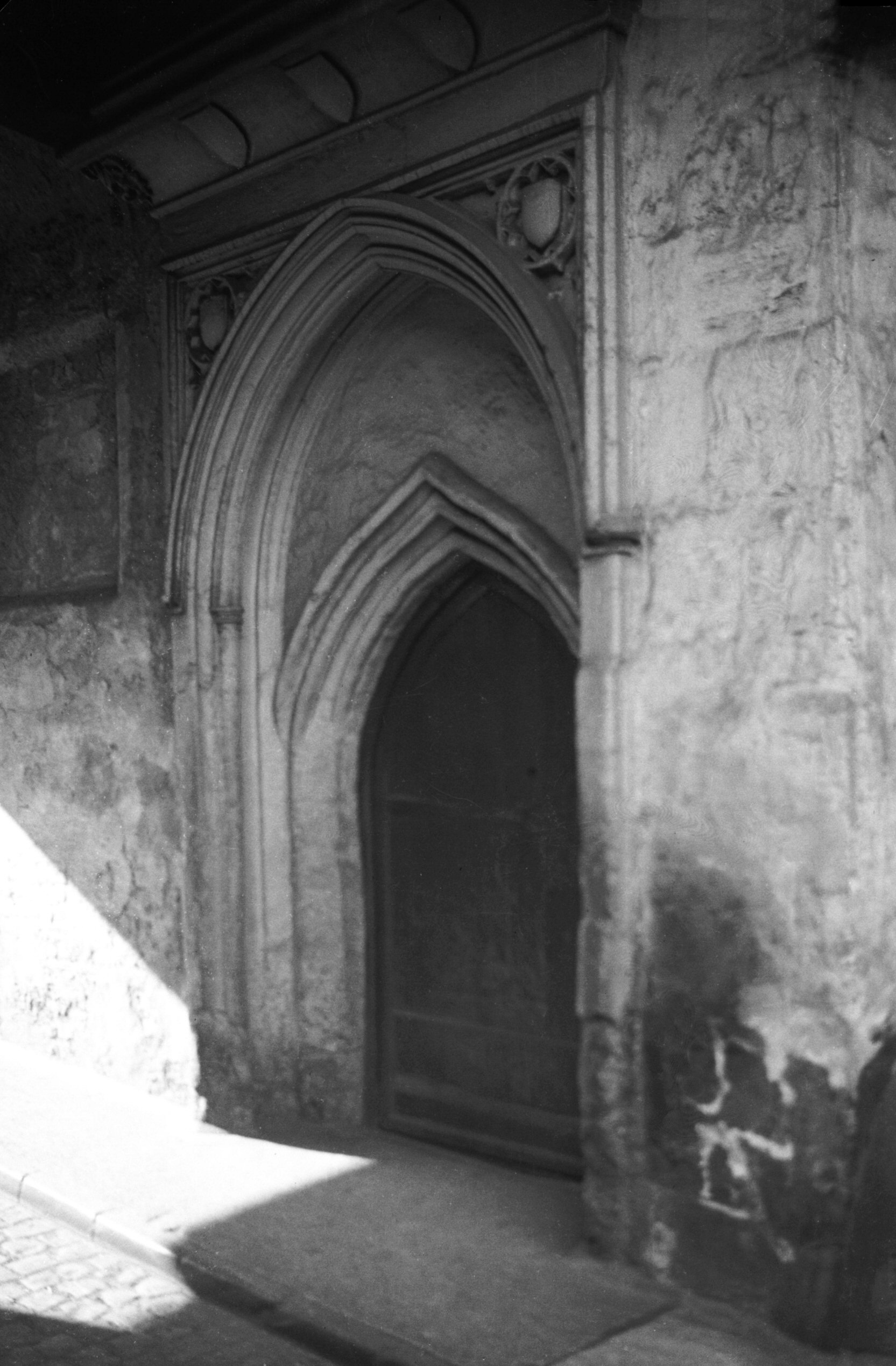
One of the old doorways into Dragon Hall and this dates to the early fourteenth century when the building was being constructed, although the decoration is from the fifteenth century. George Plunkett has a photo of the doorway taken in 1935.
Looking back along Old Barge Yard, towards King Street.
This was the area behind Dragon Hall which was cleared during the slum removals of the 1930s. The entire site, including the flats behind, are now part of the Saint Anne’s Quarter project.
Back on King Street, opposite Dragon Hall, is this entrance to Drays Yard. Although it has an historic sounding name, this isn’t original and is a new construct.
St. Julian’s Alley and that wall to the left is a bit of a survivor. It isn’t the former wall of a building, just something that was built around a property boundary, so it’s done well to be kept and integrated into the newer structure behind it.
This area hasn’t changed much over the centuries, it’s the churchyard of St. Julian’s Church and the alley named St. Julian’s Alley goes off to the left, straight ahead and to the right. George Plunkett has a photo from 1938 of the building which is behind where I’m standing, although this has now gone and there’s a modern residential property there now.
St. Julian’s Church, from which the parish takes its name. As I visited here a few weeks ago, I’ll just link into that blog post. George Plunkett has a photo from 1946 which shows the damage which had been done to the building during the air raids, and the city is fortunate that this church was reconstructed.
This is St. Julian Alley which now ends at Rouen Road, a poorly designed area of the city which has seen housing replaced by car parking and uninspiring buildings. This alley once led on to Crusoe Street.
This is the view when standing outside of St. Julian’s Church, along what is now Kilderkin Way, but which was once the King Street Old Brewery. Thorn Lane used to stretch from Ber Street to King Street, so would have run through the middle of this site, but only the upper end of Thorn Lane remains. Most of this lies in another parish, so I’ll come back to this in the future. But, as an example, this is what Thorn Lane used to look like in 1938. This is a nicely designed street though which fits into the area well.
Walking back to King Street, this is a former entrance to the school which sat behind St. Julian’s Church. More on this in a moment.
Looking back down to King Street.
This is the same alley as in the above photo from the other end, and it’s called St. Julian’s Alley, which complicates things a little as that’s also the name of the neighbouring alley mentioned earlier.
This is the site of the school behind St. Julian’s Church, and the one that was accessed through the bricked up gate. I’m not entirely sure why the school is no longer here, perhaps destroyed by the bombing during the Second World War which destroyed most of the church. This is now a housing development called King’s Gate on the map, but is named as St. Cecilia’s Court on the road sign. I imagine that the latter is correct.
There were two school buildings within the complex, a larger one and a smaller one, the latter survives. It’s now used by the Sue Lambert Trust, a charity who help those who have suffered from sexual abuse.
The photos of the school site were taken on what is now Music House Lane, named after the historic building in the parish of St. Etheldreda. This is a new name, as this street was once the lower part of Horn Lane, which stretched from Ber Street to King Street.
This photo is taken from Rouen Road, the new road that was built ploughing through housing that was torn down, looking towards King Street. Someone standing here 100 years ago would have seen St. Julian Street to the left, Horn Lane in front of them (and behind them) and Burleigh Street to the right.
This is the former route of Horn Lane, and also the edge of the parish boundary. It’s now been blocked off and turned into a walkway, although Horn Lane does continue on the other side. That section of the lane has retained its name, but that’s in a different parish and a story for another day.
It’s hard to imagine that this was once a thriving community, with people living on what was Garden Street, Bartholomew Street, St. Julian Street and Crusoe Street.
Walking back down to King Street, that concluded this little meander. King Street is in pretty decent shape in historic terms, so much has been saved there, although there are numerous clumsy planning decisions which have led to some incongruous buildings popping up. The buildings on the site of the King Street Old Brewery are also decent and have retained some interesting architecture, but the area the council decided they’d demolish to build a giant car park is really an eye sore as it stands.