Category: UK

  • Horstead – All Saints’ Church (Alfred Jackson)

    Horstead – All Saints’ Church (Alfred Jackson)

    This is one of two Commonwealth War Graves at Horstead Church, commemorating the life of Alfred Jackson, born in 1914. He served in REME (the Royal Electrical and Mechanical Engineers) and was a driver, with service number 10595326.

    Alfred was the son of James W. Jackson (1876-1951) and Alice S. Jackson (also, 1876-1951), who are listed in the 1939 register as living at 2, Station Cottage on Station Road in Hoveton. James worked as a heavy worker for the LNER and Alice was a housewife. This term of heavy worker is important (or would have been for those who had it) as it entitled him to extra rations for his hard work. I expect I would be designated as a heavy worker if there was a similar set-up now (I’d find a way….).

    Alfred was married to Maud (Babs) Jackson of Ludham. He died at the age of 29 on 8 February 1943, but I can’t find out what happened. Also, Alfred isn’t listed on the war memorials in Horstead, Ludham, Wroxham or Hoveton and I also don’t know why he’s buried in Horstead. There was a military set-up at nearby Horstead Hall, but I don’t know if Alfred was stationed there.

    I’m sure that there’s a story here, I just haven’t worked out what it is….

  • Colchester – Three Wise Monkeys

    Colchester – Three Wise Monkeys

    This visit was from a few weeks ago, when we went to this craft beer bar and BBQ restaurant, which is certainly not a bad little combination. It’s well reviewed, indeed one of the best rated locations in Colchester, both for the food and beer. This venue, which also incorporates a gin bar, opened in 2014 and they’ve also now opened a sister outlet in the centre of Ipswich.

    Some of the beer options, with a suitably interesting range of different beer styles. The staff here were engaging and efficient, although we were wise to book a table as they seemed to be quite full. There was a minor error with one drink in the evening, but the staff cleared that problem up promptly, so all was well. Everything was clean and organised and they were taking the appropriate health precautions.

    The ‘We Oat to Know Better’ from Wild Weather Ales of Reading in Berkshire in conjunction with Brew York, this was rather lovely, a fruity flavour and suitably sweet. It’s marketed as an imperial strawberry milkshake, something which sounds tempting to me at the best of times. It was perhaps too sweet to drink a lot of this, so I switched to something a little darker.

    This is the ‘Black Sow’ from the White Hag brewery, perfectly acceptable as a milk stout, although I thought it lacked some richness and strength of flavours.

    My phone camera’s wide angle has rather squished this image so that the portion size looks small, but there’s more here than the photo might suggest. It’s the smoked meat combo of beef brisket, sausage and pulled pork, which was all rather lovely, although the brisket was just a little too fatty for me. The sausage was though excellent with a richness of flavour and the pulled pork was tender. The chips were crunchy on the exterior and fluffy inside, the gherkins added texture and flavour and everything was well cooked and flavoured.

    I like the whole concept of this restaurant, and also liked that it was clearly working given how many people were dining and drinking there. They do take deposits before reserving tables, which is probably a sensible idea, although might put some customers off. They don’t reply to TripAdvisor reviews, which is a shame as I would have liked to have known what happened to cause this recent review:

    “We paid a deposit to have a table at 9:15 and we got here 15 minutes early. All we done was walk in and ask if we could sit down early and the minute we walked in the general manager was so disgusting to us he spoke to us disgusting. When my partner asked if there’s somewhere we can sit whilst we are waiting for our table the general manager Charles Gregory all of a sudden got so rude to my partner started telling him under no circumstances can he accommodate us even though he let two other girls sit down inside the bar. What a bunch of contemptuous rude disgusting people running an establishment you should be ashamed of. I will be taking this further to the owners of how DISGUSTING AND OBNOXIOUS the general manager is he should be ashamed of how he treated us. Why he felt the need to look down at us like he was so smug and better than us. Disgusting hope he gets fired”

    I’m sure there are two sides to the story there, or disgustinggate….

    Anyway, I like the venue and thought that the craft beer selection was varied and interesting, especially given the limitations of trade at the moment. The staff were also knowledgeable about the beer options and keen to engage, always a positive sign in a venue such as this. Perhaps they’ll get to opening a venue in Norwich one day….

  • Horstead – All Saints’ Church

    Horstead – All Saints’ Church

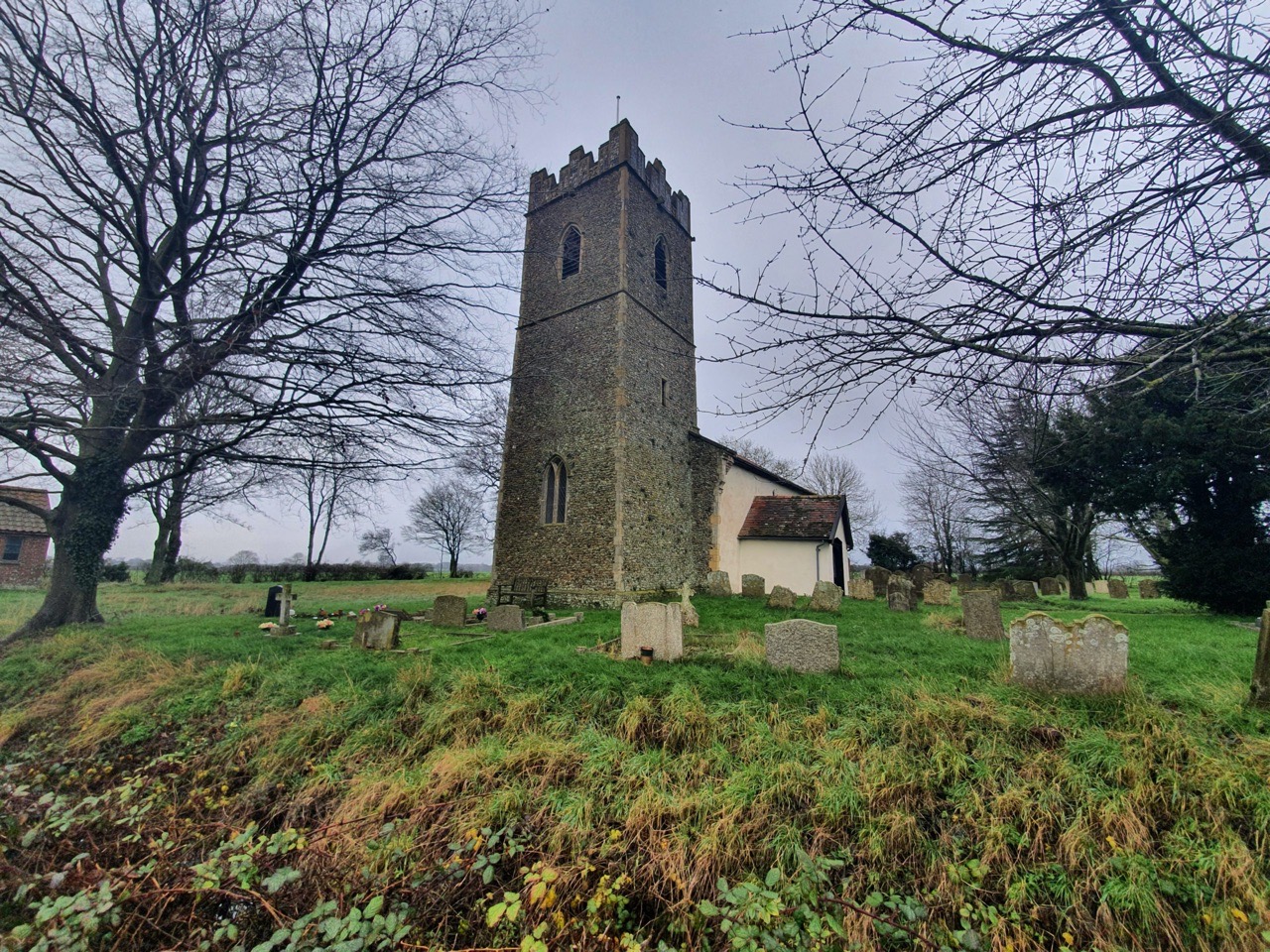
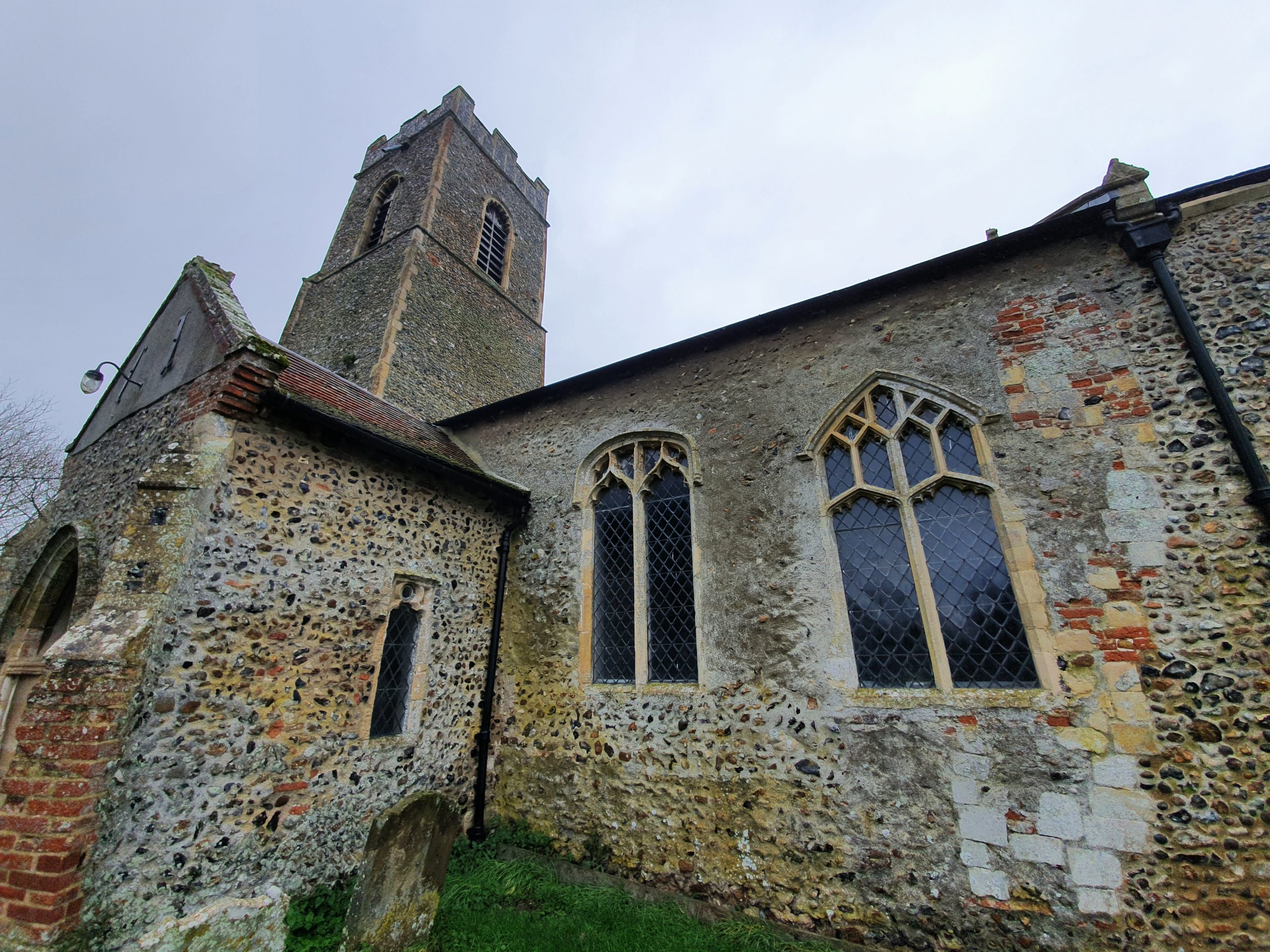
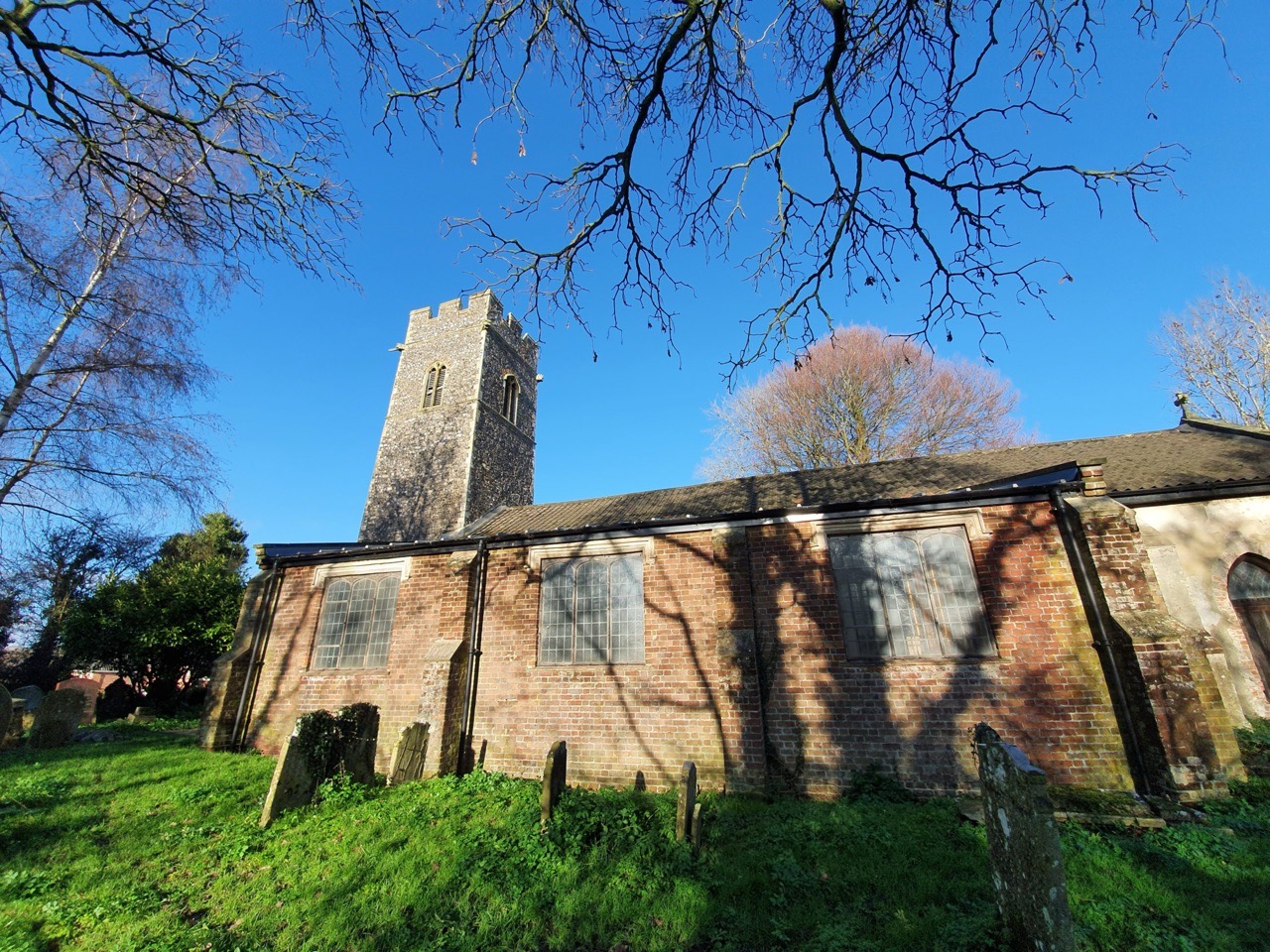
    What looks like a quirky and intriguing church is actually somewhat less exciting (although just a little), it’s a rebuild from 1879 incorporating some older parts of the building. The four-stage tower, chopped off vertically and looking rather out of proportion, is the only substantial older part still standing, dating from the fourteenth century.

    It seems that the building wasn’t in a great state by the mid-nineteenth century (the Bury and Norwich Post said that it “was in a very bad state of repair from age and decay”, so the restoration overseen by Richard Makilwaine Phipson, the Diocesan architect, perhaps saved the building. The rebuilding work was undertaken by Messrs Cornish and Gaymer of North Walsham at a cost of £2,100 (equivalent to around £140,000 in today’s money). It also didn’t go over budget, a testament to the efficiency of the architect and the builders.

    The tower, showing the vertical amendment, something rather different to the more commonly seen chopping the entire top half off. The Norfolk Chronicle noted in 1879 about this restoration:

    “Architecturally the old lines have been carefully followed and novelties and innovations judiciously eschewed. Previously the piers and arches and nearly the whole building were of brick in a tottering condition. These have all been rebuilt, with the exception of the tower, the belfry, the north wall, which have, however, been repaired where necessary. The church, the outer walls of which are faced with flint, with stone dressings, now consists of a nave, chancel, south aisle, south chapel (an old chapel, dedicated to St. Nicholas, and forming a portion of the chancel) and south porch. Its roof is of pitch pine, waggon-headed, with curved trusses at intervals over the pillars. Open benches of pitch pine supersede the old seats in the nave, and the fittings of the chancel are of oak; but the chancel is not yet benched, and the old pulpit is a dreadful eyesore which it is satisfactory to know only awaits a sufficiency of funds to be replaced.”

    The chancel and side aisle, unlikely to have been an original layout.

    It’s still quite an imposing building

    There’s a relatively substantial churchyard, although I could only find mostly stones dating from the nineteenth century onwards. The churchyard felt unusually damp, with the gravestones not in the best of condition.

    The part of the tower which is still looking like it did when constructed. The interior of the church, which is closed at the moment, apparently has interesting stained glass (some by Edward Burne-Jones) and an historic rood screen.

    There are also two Commonwealth War Graves here, commemorating the lives of Alfred Jackson and Vincent Noel Giri.

  • Norwich – Rosary Cemetery (Amey Goldsworth + Edmund Goldsworth)

    Norwich – Rosary Cemetery (Amey Goldsworth + Edmund Goldsworth)

    Since I’ve been grounded again by the Government, I thought I’d meander around the Rosary Cemetery located near to me in Norwich, in an attempt to see what stories lie there. It might not be the most fascinating blog content, but it’ll keep me quiet for a few weeks….

    There are three names on this gravestone, that of Amey Goldsworth at the top (c.1822-1878), her husband Edmund (1819-1890) and their son Edmund (1846-1926). Edmund, son of Edmund and Susan, was baptised on 18 May 1819 in St. Mary in the Marsh church in Norwich, which is interesting as this parish church was pulled down some centuries ago. Instead, baptisms and the like took place in St. Luke’s Chapel within Norwich Cathedral (this is the chapel next to Edith Cavell’s grave site).

    This name of Amey is rare, few children are called this, and it has been mis-spelt by numerous organisations during her lifetime and by transcribers since.

    At the 1841 census, the family lived at Number 10, Granby Yard located on Bishopgate Street in Norwich. I can’t find this yard on the map, but it’s very likely that it’s the one next to the Marquis of Granby public house. This has long since been demolished and this yard probably lies underneath what is now Cotman Fields. At this time there were four in the family, Edmund Goldsworth and Amey Goldsworth, along with their 2-year old child Susanna and their new-born baby boy, also called Edmund. At this time, Edmund was working as a bricklayer and Amey was the housewife.

    At the 1851 census, the family were still living at Granby Yard and Edmund was still a bricklayer. He had been a little busy though during the intervening years, since he now had a 2-year old son Frederic and a new-born baby girl, called Sarah, as well as his older two children who were still at school.

    I can’t find the older Edmund or Amey listed in the 1861 or 1871 censuses, which isn’t ideal…. But Edmund, the elder, was certainly doing OK for himself financially, he was listed as being a freeholder from 1863, which entitled him to vote in elections. The younger Edmund married Ann Maria Elliott on 27 December 1869, at St. Peter Parmentergate Church, which is now sadly redundant although work is in hand to get tenants.

    In 1864, Edmund was in court (there will be a theme of this) when Frederick Hall, a butcher on King Street, summoned him to court complaining that Edmund had threatened to “smash him up”. It transpired there was a dispute between Hall and Edmund about the bricklaying work which he had done for the shopkeeper. He was found guilty and Edmund had to provides two sureties of £10 and £5 to keep the peace for three months.

    There was a strange case in May 1868, when the older Edmund accused William Tooley, a waterman of Bishopgate Street, of stealing his property. The case was dismissed when the magistrates decided that Tooley owned the items in question.

    The older Edmund managed to find himself in court again in May 1877, summoned to attend by John Mackley jnr of Barrack Street. Edmund was found guilty of abusing and threatening behaviour, but it seems to have been a family affair, as the younger Edmund was found guilty of the same crime against Mackley. The older Edmund was ordered to find sureties and keep the peace for six months, whilst the younger Edmund was fined £1 with costs of 18s 6d. Amey died the year after, in 1878, I’m not sure what she would have thought about the behaviour of her husband and son, although I get the impression that she was used to it.

    Family arguments continued here though, when Edmund the younger was summoned to court by his sister-in-law, Sarah, who was married to Frederic, for physical assault. By all accounts, it looks like the older Edmund pulled his son away from the incident, with the younger Edmund hitting his head when falling. The younger Edmund was fined 1 shilling for his behaviour and promised that he would be well behaved.

    Trouble continued though with the younger Edmund, but in 1882, it was him who summoned a Richard Mackley to court for an unlawful assault. Edmund said that he want to Mackley’s garden to retrieve some gardening implements, but the defendant refused to give them to him and instead hit Edmund and knocked him down. After hearing evidence, the case was dismissed as there was some confusion about whether Edmund had any right to take the implements that he wanted.

    Not that this debacle finished here, in 1897, the younger Edmund was assaulted again, this time he summoned a special constable to court, a man called John Watson. Frederic, who was Edmund’s brother, and Edmund testified that he had done nothing wrong and that Watson had shown aggression. In this case, Watson was found guilty, but the magistrates said that he had faced a lot of provocation from Edmund. Next to be heard in the court was Edmund, who had been summoned by John Watson for using threatening language. This case was ultimately dismissed, as was a separate case made against Edmund.

    I would say, if not being rude, that there’s a pattern of behaviour taking place here that wouldn’t seem out of place on Jeremy Kyle. Bishopgate is today a serene and peaceful street, goodness knows what it was like in the late nineteenth century with all this going on.

    The older Edmund is listed in the 1881 census and is listed as living at the Goldsworths Building on Bishopgate. This is rather appropriate in terms of his surname, although I’m unsure of whether there’s any link in terms of the name. He’s listed as still working as a bricklayer, now living alone and it’s mentioned on the census that he’s a widower.

    I didn’t expect this gravestone to tell quite the story of crime and drunken behaviour that it has, although I was disappointed not to find out as much about Amey as I would have liked. I wonder whether she was supportive of her husband and his issues, or whether she was annoyed at his drunken behaviour.

  • Norwich – Rosary Cemetery (John Carsey)

    Norwich – Rosary Cemetery (John Carsey)

    Since I’ve been grounded again by the Government, I thought I’d meander around the Rosary Cemetery located near to me in Norwich, in an attempt to see what stories lie there. It might not be the most fascinating blog content, but it’ll keep me quiet for a few weeks….

    John Carsey was born in 1776, marrying Ann who was born in Mulbarton in around 1767. As to where their marriage record has gone, I have no idea. There’s something quite intriguing about looking at graves of people who were born before the United States was independent. Well, there is to me….

    John was the sole executor of the will of Jabez Chittock (1805-1831) in 1831 and he also showed potential purchasers around properties in the Lakenham area. I’m assuming from these two facts that John worked as a solicitor or something similar, but he did amass some money.

    At the time of the 1841 census, John and Ann were living alone at 3 Grove Road, West End Place in Lakenham. As a freeholder, John was entitled to vote, and at the July 1847 General Election, he voted for the Marquis of Douro (Tory) and Samuel Morton Peto (Liberal). Peto was one of the great railway engineers of his time and this was the first time that he was elected to the House of Commons (he later represented Bristol and Finsbury) and he held this seat until 1852.

    John died on 24 August 1849, at the age of 78. Beckwith, Dye and Kitton, the solicitors for John’s estate, advertised in the Norfolk News in December 1849 asking for anyone who had a claim on his estate to contact them. John’s wife, Ann, died on 7 May 1851, at the age of 84. She had remained living at the same property in Lakenham following John’s death, living just with her servant Sarah Parnell.

    There’s some link, which I might come to understand later on, between this grave and the neighbouring grave of Alfred Spooner. Spooner’s sister married Timothy Chittock and they had a child in June 1838 which was named John Carsey Chittock.

  • Norwich – Rosary Cemetery

    Norwich – Rosary Cemetery

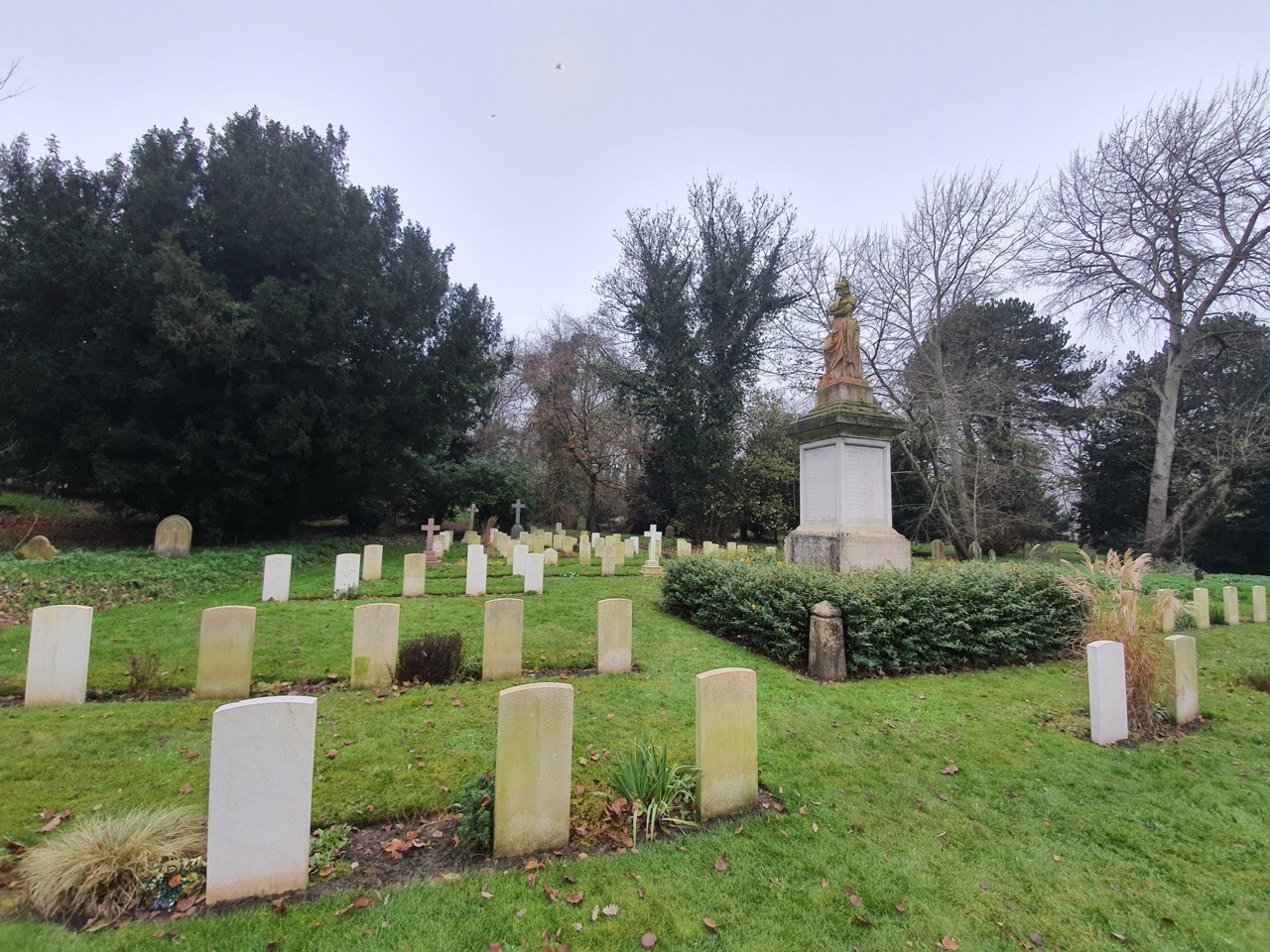
    The Rosary Cemetery was founded in 1819 by Thomas Drummond (1764-1852), a Presbyterian minister who recognised that churchyards had become overcrowded and there was a need for more space. The first section of land was five acres in size and had previously been used as market gardens. The first burial took place in 1824, the reinterring of the remains of Drummond’s wife, moved from the Octagon Chapel in the city.

    Initially, the cemetery wasn’t much used and the Church of England were none too keen on it, it was all a bit non-conformist for them. There was also the problem, until the 1832 Anatomy Act, of bodies being stolen by body-snatchers, especially so at this slightly remote location. As the nineteenth century progressed, the cemetery became more popular and there had been 18,000 burials by 1884.

    The project was inspirational, as the Rosary was the first non-denominational cemetery in England and many more followed the model which was established here. Drummond was sensible enough to appoint a body (no pun intended) of trustees to look after the affairs of the cemetery and he insisted on the land being freehold, so that it would be much harder to change its usage later on.

    The mortuary chapel, redesigned by Edward Boardman in 1879, replacing a previous building which had been erected here in 1830.

    This is some of the older part of the cemetery, but an extension was purchased in 1903, although wasn’t brought into use until 1924.

    In 1954, the oldest part of the cemetery was taken over by Norwich City Council and they decided to abandon it, or, as they called it, returned it to nature. I’m not sure whether this stone was damaged by their efforts, but there are a few gravestones which have unfortunately been damaged in this manner. Fortunately, there’s an active Friends of Rosary Cemetery which was established in 1998 and they have helped to transform the site and they hold numerous walks, site clearances and events to highlight the history of the cemetery.

  • Norwich – Rosary Cemetery (Alfred Wilmot Spooner)

    Norwich – Rosary Cemetery (Alfred Wilmot Spooner)

    Since I’ve been grounded again by the Government, I thought I’d meander around the Rosary Cemetery located near to me in Norwich, in an attempt to see what stories lie there. It might not be the most fascinating blog content, but it’ll keep me quiet for a few weeks….

    This is the grave of Alfred Wilmot Spooner, located in one of the oldest parts of the cemetery. He was baptised on 6 January 1813 at St. Andrew’s Church in Norwich and was the son of Edward Spooner and Sophia Spooner (nee Gunton) and they had married at St. Peter Mancroft church in April 1807.

    Edward is listed on Alfred’s baptism record as being a straw manufacturer, although I’m not entirely sure what that entailed, with Sophia being a bonnet maker. I can’t be certain, as there are multiple names, but I suspect Edward had been baptised in the same church on 29 August 1784, himself the son of Edward Spooner and Eliza Springale. Edward (Alfred’s father) died at the age of just 49 and was buried at St. Peter Mancroft church on 3 June 1834.

    Alfred died on 21 August 1840, at the age of 27 years old. Unfortunately, for the purposes of my writing this post, this means that he didn’t appear on the first national census which took place in 1841. At this point, his mother was still alive though (now aged 60), living on Day’s Yard in St. Peter Mancroft, which was also called Day’s Court. This yard has long since gone, it’s now pretty much under the treasury counters in Norwich City Hall. She lived with Hannah Bensley, aged 65, and Matilda Stratford, aged 14.

    And, that’s as much as this story as I can find. I don’t know what happened to Alfred during his life. Sophia, Alfred’s mother, died in 1860, having moved to Lakenham to live with the Chittock family, with Hannah Chittock being Edward and Sophia’s daughter. Hannah (so Alfred’s sister) and Timothy married in St. Peter Mancroft church on 8 March 1837.

    So, using my imagination a bit here. The burial of Alfred took place at Rosary Cemetery, at that time still relatively empty, and was likely attended by his mother Sophia, his sister Hannah and his brother-in-law Timothy, amongst others. It might have been a communal effort to pay for the gravestone, as it’s a nice one which has lasted well. The family had gone through the sadness of Alfred’s father dying in 1834, the excitement of Alfred’s sister’s wedding in 1837 and then this sadness in 1840. Quite why Alfred died at such a young age, I sadly don’t know….

  • Norwich – A Little Protest Up a Crane

    Norwich – A Little Protest Up a Crane

    There’s a little protest going on up a crane in Duke Street in Norwich.

    Apparently, it’s a teenager called Alex Sidney from Dereham who has rather bravely (and I must confess, I wouldn’t be that brave) shinned up this crane. Three others have been arrested and they were apparently pleased that there was no security, although I’m sure construction project managers were hopeful that they didn’t have to employ teams of security 24 hours a day to guard things.

    And this is the result, a substantial police, fire and ambulance presence at the scene.

    The EDP have reported that Alex said:

    “If I get arrested now or if I get arrested in nine hours the consequences will be the same so I might as well stay out for a bit longer.”

    And, to be fair, he’s probably right.

  • London – Newham (Borough of) – Stratford – Goldengrove

    London – Newham (Borough of) – Stratford – Goldengrove

    There aren’t many photos of my visit to this JD Wetherspoon pub last week, as I must admit to popping in solely to benefit from the 50p half pints of real ale that were available. However, I’ve now realised that the pub is in the Good Beer Guide, and so that’s another one for my list….

    I’ve visited here before several times over the last decade, it’s a large pub which goes back further than its frontage might suggest. The pub name is a bit niche, it’s from the poem Spring and Fall by local man Gerard Manley Hopkins. Before it became a pub, the building was being used as a clothes shop.

    As for the 50p half pints, I did have six of them over the course of the night, which was a little excessive, but I knew that pubs were closing for a month…. They were the Cowcatcher from East London Brewing Company, Old Hooky from Hook Norton Brewery, Black Stallion from Arundel Brewery, Pure UBU from Purity Brewing Company, Gold from Exmoor Ales and Hobgoblin from Wychwood Brewery. The Pure UBU was the one that I liked the most, but it’s an interesting selection across different beer types and all of the ales were well-kept. I can imagine the annoyance that JD Wetherspoon had in having to get rid of all of this at 99p, but, as they said in their signage, it saved it from being thrown away.

    This photo is from a previous visit, the London Thunder which is a chocolately porter from Rooster’s Brewery.

    And, just for another photo, a chicken wrap that I’ve had here on a previous occasion. On that point, I’ve always thought that this feels like a safe pub, although there was an argument between a customer and a staff member last week, but that all adds to the drama and excitement. The pub was opened by JD Wetherspoon back in 1993 and things have changed substantially for the area, with the construction of Westfield around the corner and then the Olympics, as well as the company, which is now much bigger.

    The reviews are pretty much average for a JD Wetherspoon outlet, although several complaints are for when service is slow during football match days. West Ham moved to their new stadium in Stratford from the Boleyn Ground in 2016, shifting trade from the Millers Well pub to Goldengrove for those fans who wanted a cheap pint. At least the app makes ordering somewhat easier for customers, so although there might be a wait it does avoid standing at the bar getting annoyed when other customers are served out of turn.

    Anyway, all rather lovely during my visit (although the toilets probably need more reconstructing than cleaning), and JD Wetherspoon did well to start shifting their stock early to avoid it needing to be destroyed.

  • Sudbury – The Brewery Tap

    Sudbury – The Brewery Tap

    This visit dates back to August 2020 to the Good Beer Guide listed pub The Brewery Tap in Sudbury.

    Nathan was relieved to see that the bar billiards table was out of action, as he didn’t have his cue and he’s apparently out of form. I’ve rarely seen him in form, but there we go.

    It’s a sizeable pub, although it was nearly entirely empty when we visited on a Saturday afternoon.

    The community weren’t in the pub when we were there, but there was still a sense that this was a community-led pub, albeit welcoming to all. The landlord was helpful and tolerant that one of our group ordered some cheap lager, with table service being offered due to the current health situation. Everything felt clean and safe, so was well-managed. There are usually board games, books and the like to further amuse customers, although these had been temporarily removed for cleanliness reasons.

    This is a Mauldons tied pub, apparently the oldest brewery in Suffolk. They had four beers from the brewery on, the Mole Trap, the Silver Adder, the Suffolk Pride and what I consider to be their best known, the Black Adder. That’s the one that I went for and it was well-kept, at the appropriate temperature and had a suitably rich taste. It’s not as full-bodied as some stouts, but it’s slightly bitter and rather drinkable. And it’s also reasonably well distributed, I had one at the JD Wetherspoon operated Ledger Building in London a few weeks ago. Given the limitations on trade that existed when we visited, having four real ales was a real effort and they also have mini beer festivals here during the year.

    I can’t remember whether Liam or Ross were trying to play with the dog (I don’t know the name, but someone on a review is saying it’s called Silver) here, but this is one beautiful border collie. He kept us amused throughout the visit and we did think about whether we could trade Ross for the dog, but we decided we’d better not ask. He was also immaculately behaved (the dog, not Ross), poking his head out of the window to see other people and dogs go by. Every pub should have a border collie….

    I’m pleased to see that the pub has been relisted in the 2021 Good Beer Guide, all very much deserved.