Category: UK

  • Norwich – Rosary Cemetery (Hannah Swindell)

    Norwich – Rosary Cemetery (Hannah Swindell)

    Since I’ve been grounded again by the Government, I thought I’d meander around the Rosary Cemetery located near to me in Norwich, in an attempt to see what stories lie there. It might not be the most fascinating blog content, but it’ll keep me quiet for a few weeks….

    This gravestone, which is leaning forwards hence the slightly strange camera angle, commemorates the life of Hannah Swindell. It’s in rather good condition, other than where the weeds have attacked the base, and also commemorates Hannah’s husband, the Reverend Thomas Swindell and his second wife, Caroline Swindell. More on these two other individuals in separate posts, as I find it a little unusual that they’re all on one grave.

    Hannah was born on 20 March 1819, the daughter of Thomas Witter and Mary Witter. She was baptised at the Baptist Church in Knutsford on 25 April 1819 and she met her husband Thomas Swindell and they were married on 4 February 1843 in the same church (I mean the same church she was baptised in, obviously the husband and wife were married in the same church….).

    Hannah and Thomas had five children, Mary, Thomas, Theophilus (a marvellous name), Frederic and Arthur. Hannah died on 23 January 1876, at the age of 56. The inscription on her grave reads “she was a Christian of unblemished reputation, considerable usefulness and eminent piety, and now sleeps in Jesus till the morning without clouds shall dawn”.

    There’s one thing that’s evident here, which is that there is reams of material on Thomas Swindell, her husband, and his work and contribution to society. There’s nearly nothing relating to Hannah, so I’d say that in terms of who she was as a person, the best we have to go on is that inscription on her gravestone and that she seems rather dutiful. Thomas travelled extensively during his career, and perhaps that “usefulness” was in supporting him with his work. Too often women are a footnote in history, and that’s happened here as well, so hopefully I’ll find out at some point in the future some more information about her as a person. Indeed, I’m quite intrigued as to what she would have thought about Thomas’s second wife being added to her headstone.

  • Scottow – Scottow Cemetery (Tadeusz Szymanski)

    Scottow – Scottow Cemetery (Tadeusz Szymanski)

    The grave of this Polish airman who served in the City of Warsaw Squadron (No. 316 Polish Fighter Squadron) is located at Scottow Cemetery, and there’s an excellent biography of this man, Tadeusz Szymanski (1917-1992), at http://aircrewremembered.com/szymanski-tadeusz.html. His record as an aircraft pilot is exceptional, with more details at http://polishsquadronsremembered.com/316/44/Mustangs1944.html.

    Tadeusz married his wife Betty (nee Kay) in 1942, and she is now buried next to her husband.

    The wonderful Imperial War Museum have a photo (© IWM FRE 14842) of Tadeusz, this was taken on 12 July 1944 and he was checking the wing of his P-51 Mustang.

    A photo from the same day (© IWM FRE 14843) of Tadeusz carrying the damaged wing tip from his aircraft.

    The Air Crew Remembered web-site linked above mentions:

    “We knew that he had been a pilot and was rumoured to have invented the technique of flying along side V1 rockets and ‘flipping them over’ with a wing tip so that they crashed into the North Sea, rather than landing in England. However if you asked him he would just shrug it off with a smile.”

    So, this is perhaps why his wing tip was damaged in these photos. By all accounts, this was a heroic individual.

  • Norwich – Rosary Cemetery (Richard Andrews)

    Norwich – Rosary Cemetery (Richard Andrews)

    Since I’ve been grounded again by the Government, I thought I’d meander around the Rosary Cemetery located near to me in Norwich, in an attempt to see what stories lie there. It might not be the most fascinating blog content, but it’ll keep me quiet for a few weeks….

    This is the grave of Richard Andrews, and I’m guessing (from the damaged section of the stone) also that of his wife Ann Andrews, the parents of James Andrews whose gravestone is nearby. I don’t feel that I could really tell the story of James, there’s just not enough information I can find beyond when he was born and died.

    Richard Andrews was born in 1786 and I mentioned when writing about their son, James, where Richard and Ann were at the 1841 and 1851 censuses. James was born on 14 August 1814 and died on 18 August 1837.

    I can find details of only one Richard Andrews born anywhere near Norwich in 1786, a child baptised on 12 February 1786 at Great Hautbois church. He was the son of William Andrews, who worked as a farmer, and the christening was probably at St Theobald’s, a church now in ruin. I can’t write with any certainty that it’s the same Richard Andrews though….

    Richard married Ann (nee Long) on 25 November 1812 at Taverham. The actual marriage register, still visible at Norfolk Record Office, notes her name as Anne, but we know from later censuses that the wife of Richard was born in Taverham, and Richard’s home parish is noted as St. Michael Coslany Church, which is where his son was christened a couple of years later.

    Richard died on 11 October 1861 at the age of 75, with this being reported in the Norwich Mercury the week after, noting his address as Lame Dog Road, which matches with the census records. Unfortunately, the newspaper didn’t report anything else about his life, so I feel that this is yet another story where nearly everything of note  is left untold.

  • Colchester – Queen Street Brew House

    Colchester – Queen Street Brew House

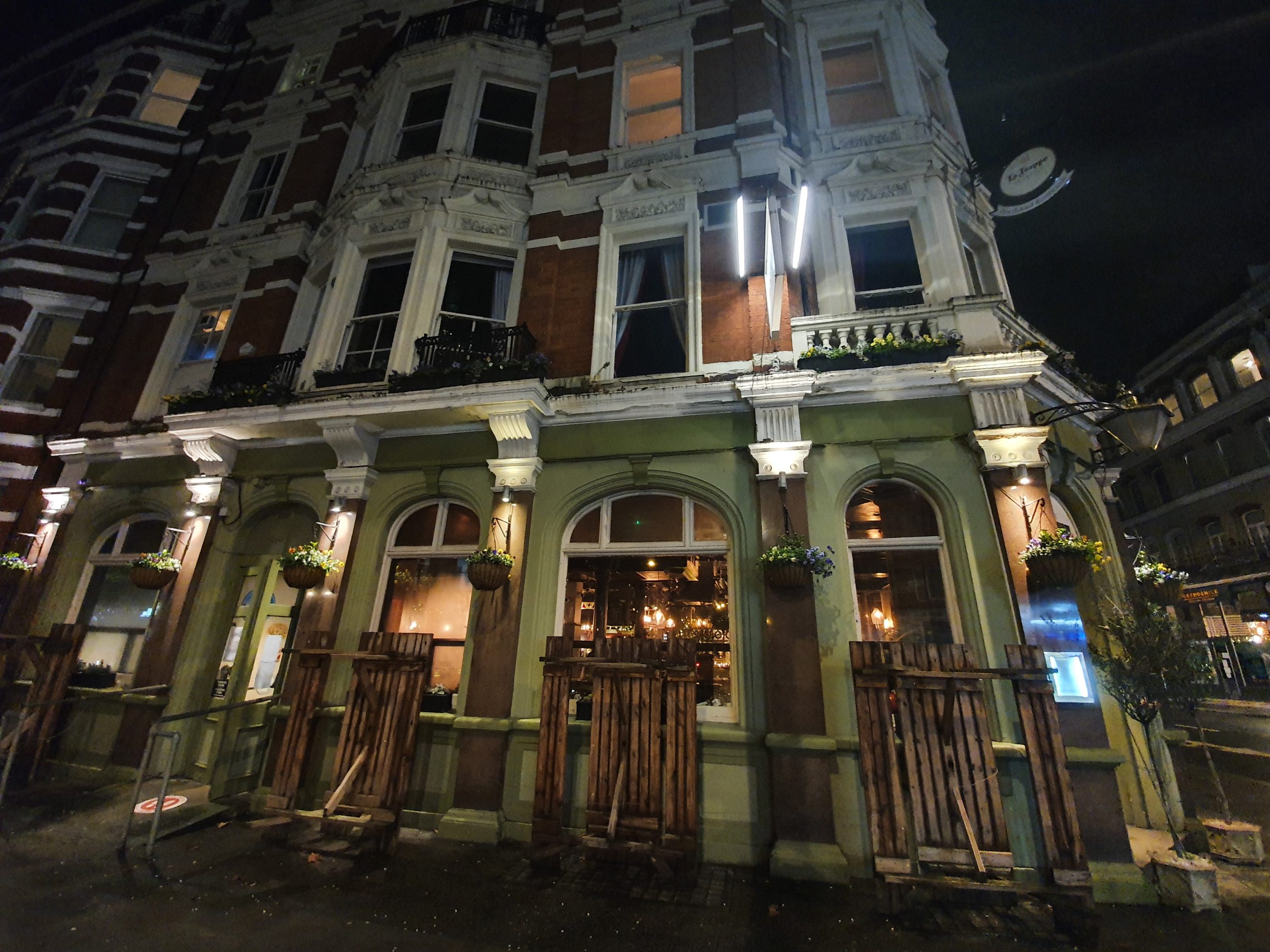
    This visit was a few weeks ago, this isn’t a pub staying open during the lockdown…..

    The pub is very well-reviewed in numerous places on-line and there are comments about its quirkiness running throughout those reviews. When we arrived, it also had the most onerous health related rules that I’ve seen in a pub in terms of what they had on posters by the door. They required a face mask when moving around (not required at the time, so they were ahead of the curve here), they required temperature checks, address details and had a complex toilet procedure involving spades. The pub then proceeded to not really enforce these rules, although I’d add that everything still felt safe and they were following what they needed to do.

    I think quirky is an appropriate word for this set-up, which looks like I’ve done it (hence, I approve). It also didn’t serve any obvious point, as customers walked in both directions on both sides, so it more corralled people together if anything. But, then again, it did remind people to be careful and that was useful.

    It’s cheaper than plastic screens and just as effective, so why not? I didn’t buy the round here, so I’m not sure exactly how friendly the service was, but apparently it was all polite and welcoming from what I was told.

    I had an Old Man and The Sea from Mighty Oak Brewing, which I thought was served at a temperature which seemed to me to be nearer to frozen than chilled. It knocked the entire taste out of the beer, there were no flavours evident at all, and I think that’s the first time I’ve experienced that with a beer of this type. There are meant to be flavours of espresso coffee, dark chocolate and dark fruit, but they were indiscernible and the nearest I’ve tasted to this is Guinness Extra Cold (which in itself has rather died away). Rather awkwardly, the pub toasted my rating on Untappd…

    I do know that Mighty Oak Brewing are a decent brewery, they’re local to this pub being from Maldon, and I’ve had their beers at the Hop Beer Shop, United Brethren and the Duke of York, all in Chelmsford.

    Anyway, back to this pub, which was beautifully quirky in very many ways and it clearly had a loyal clientele. It had a community feel to it, with an impressive range of Belgian bottled beers and a number of ciders. Even though some of their arrangements might have felt quirky, it still seemed safe to me, it’s all rather different to what the chains were doing at the time. So, I think I quite liked this pub and the reviews on Untappd don’t suggest any issues with the beer, so I’ll pop back again at some time as their choice of beer and ciders looked innovative and intriguing.

  • Norwich – Rosary Cemetery (James Andrews)

    Norwich – Rosary Cemetery (James Andrews)

    Since I’ve been grounded again by the Government, I thought I’d meander around the Rosary Cemetery located near to me in Norwich, in an attempt to see what stories lie there. It might not be the most fascinating blog content, but it’ll keep me quiet for a few weeks….

    I found this grave a little difficult to read (and I can’t make out the bottom section), but it commemorates the life of James Andrews, the son of Richard (born 1786) and Ann Andrews (born 1788). James was christened at St. Michael Coslany Church in Norwich on 14 August 1814, a church which is now redundant but is still standing.

    James died on 14 August 1837 (the same date as his christening), at the age of just 23, and he was buried on 18 August 1837, with his death record noting that he was a dissenter. His burial here was one of the cemetery’s earliest, and his family wouldn’t have had much choice as they weren’t members of the Church of England congregation.

    James died a few years before the first national census, but in 1841, his parents lived alone at Charing Cross, by St. John Maddermarket in Norwich. In 1851, they were living on Pottergate Street in the same part of Norwich, this time with Sarah Ann Cordy, who was listed as their 30-year old daughter and a widow.

    By the time of the 1871 census, Ann was still alive, living at Lame Dog Road in Norwich with her daughter, now listed as Sarah Ann Johnson, and her two grandchildren Richard Frank Johnson and Fanny Johnson. This was because, in 1851, Sarah Ann had married a Francis Johnson, from Redlingfield Hall.

    Something has gone wrong in my telling of this story so far, as I don’t know why Sarah Ann Cordy was living with Richard and Ann in Norwich back in 1841. She wasn’t their daughter, so I had wondered whether she had married their son, James Andrews. But, I can find no record of that. Which gives me a problem in trying to picture who would have stood at this spot when James was buried, certainly his parents, Richard and Ann, but I’m unsure who else might have been there. And, I can find nothing about the life of James, just when he was born and when he died (but no knowledge of why he died), a total lack of a story which I find quite saddening. Hopefully, someone somewhere knows more…..

  • Scottow – Scottow Cemetery (Illegitimi non Carborundum)

    Scottow – Scottow Cemetery (Illegitimi non Carborundum)

    This ‘Latin’ phrase was on a relatively recent grave in Scottow Cemetery, and I’ve never heard of it, but it’s apparently in relatively frequent usage. It’s not an actual Latin phrase, just a deliberately badly corrupted version of it, and it effectively means ‘don’t let the bastards grind you down’. The phrase was first during the Second World War and I’m not sure how I haven’t heard of it before…..

  • Scottow – Scottow Cemetery

    Scottow – Scottow Cemetery

    I’m not sure that I’ve been here for over thirty years, this is the combined parish and war cemetery at Scottow. I remember when visiting as a child the slightly confusing nature of the war graves here (more of which in later posts) as there were servicemen buried here from all over Europe, including from the German military.

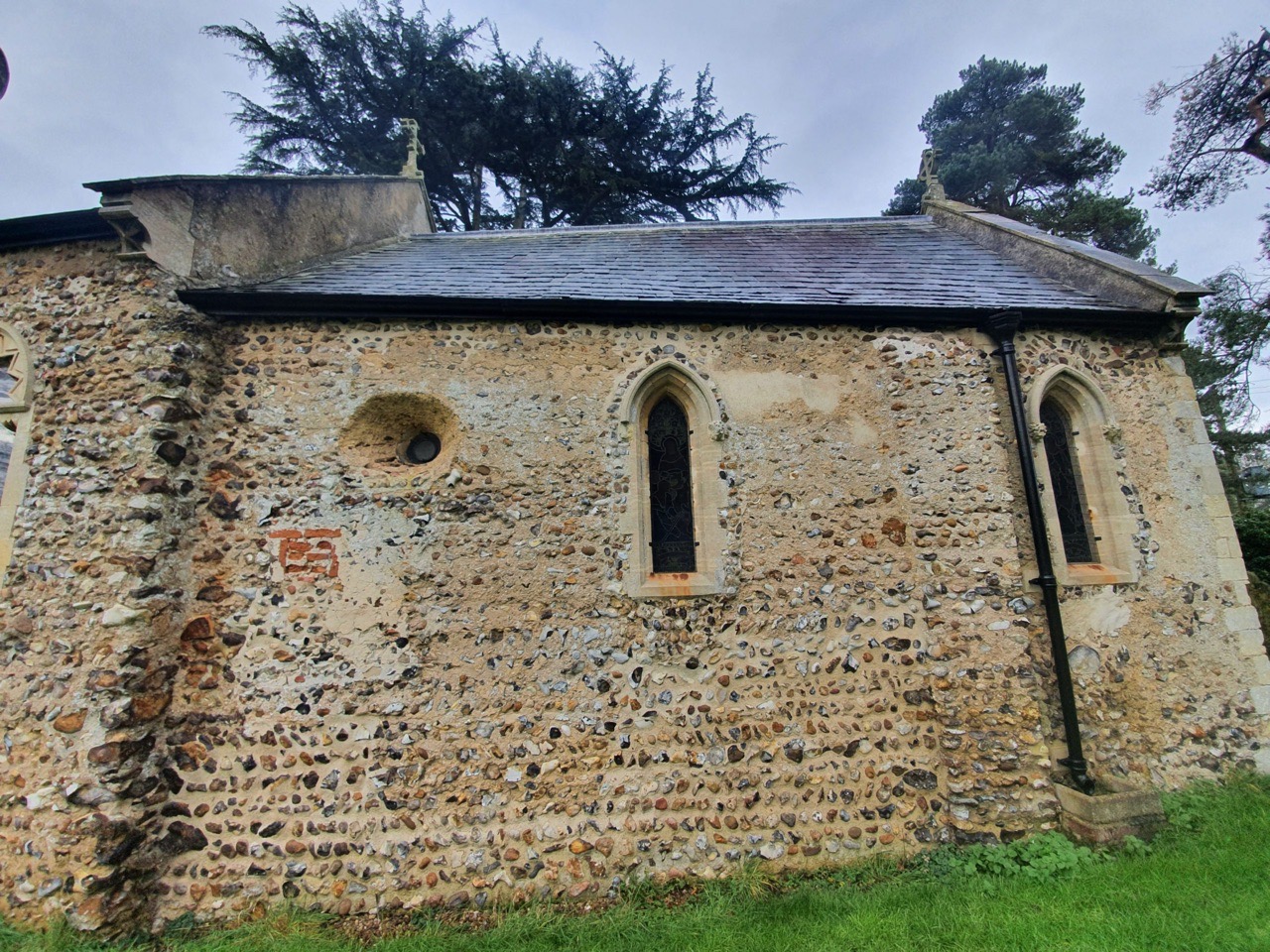
    The cemetery and mortuary chapel were opened in 1902, I assume as Scottow Church had no more spaces for burials.

    War graves from RAF Coltishall were placed here until September 1943, when space became short and then those who died were laid to rest in North Walsham church. Later on, further military burials returned here and continued to be until the airfield’s closure a few years ago.

    As an aside, it was tradition for new air bases to be named after the local railway station, but RAF Buxton wouldn’t work because of the similarly named town in Buxton. Instead they went for another nearby railway station, choosing Coltishall as their air base name. This is why the air base was never called RAF Scottow, even though the site had previously been known as Scottow Aerodrome before the RAF got there. Buxton and Coltishall railway stations still sort of exist, but they’re now on the Bure Valley heritage railway line which operates between Hoveton & Wroxham and Aylsham.

    A purchase of some more land has recently been made and this is the new cut through into this additional space.

    This is the new space that has been opened up for future burials, which should prove sufficient in size for at least another couple of generations. There’s something quite peaceful about this spot, and there was in many ways even when RAF Coltishall was operating. Perhaps there was something quite appropriate about former airmen being buried so near to the landing strip of a military airbase, but tranquility will hopefully now take over.

  • Norwich – Rosary Cemetery (Edward Nursey)

    Norwich – Rosary Cemetery (Edward Nursey)

    Since I’ve been grounded again by the Government, I thought I’d meander around the Rosary Cemetery located near to me in Norwich, in an attempt to see what stories lie there. It might not be the most fascinating blog content, but it’ll keep me quiet for a few weeks….

    This gravestone commemorates the life of Edward Nursey, who was born in 1864 and this interested me because of the reference to the Metropolitan Police.

    At the 1871 census, Edward was staying (or living) with his aunt and uncle on Unthank Road in Norwich, along with an Elizabeth Nursey. She is also listed on the gravestone and I think this was Edward’s mother. He seems to have been living with another aunt and uncle at the 1881 census, on Surrey Street in Norwich. He left though to work for the Metropolitan Police and the National Archives web-site shows he started work on 12 March 1883 and was warrant number 67553. It also appears that he was briefly a detective in the Special Branch in 1887, just a few years after that had been started.

    Edward is listed as giving evidence at the Old Bailey a few times, including reporting on the finding of a dead child when he was a sergeant at Hampstead police station in 1890. This was one of the most notorious crimes of the late nineteenth century and Edward was a key police witness in the trial of Mary Pearcey.

    At the 1901 census, Edward was working as a sergeant in the Metropolitan Police and was lodging with Henry and Susan Carey at their house at 59, William Street in Woolwich, London. This street is still there, but is now known as Calderwood Street and the properties along it have been demolished over the last 100 years.

    Edward died on 2 February 1903, aged only 39, at this point still working for the Metropolitan Police. And why he died, I don’t know, although he wasn’t killed in the line of duty.

  • Norwich – Rosary Cemetery (Isaac Wiseman)

    Norwich – Rosary Cemetery (Isaac Wiseman)

    Since I’ve been grounded again by the Government, I thought I’d meander around the Rosary Cemetery located near to me in Norwich, in an attempt to see what stories lie there. It might not be the most fascinating blog content, but it’ll keep me quiet for a few weeks….

    I’m not normally drawn to these larger monuments, as they’re often of wealthier people whose stories have been told many times before. But, this is one of the handful of monuments which the cemetery have placed a little board by, so it would seem remiss to ignore it.

    The memorial is to Isaac Wiseman, who was a wine merchant who died in 1863 at the age of 64. What is perhaps of most note is that he had two wives and eight children who pre-deceased him, a terrible reminder of how high mortality was in the nineteenth century.

    Isaac was born on 25 February 1799, the son of Quakers William Wiseman and Ann Wiseman. Isaac married Sarah Ladell at St. Saviour’s in Norwich on 17 May 1821. In 1830, Isaac became the elected Sheriff of Norwich, beating Charles Middleton to the role and he married Caroline Amelia on 15 January 1856 in Kenninghall.

    But, all of this is already well recorded and can be found on a basic Google search. The story that is more interesting to me is what his brother wrote about him in the Norfolk News following Isaac’s death.

    “He was well known to many as a man of considerable natural abilities, and of scientific attainments and power above the ordinary level of his fellow-men.

    The position which such as one takes in religious matters is of deep interest and importance to all – to those who reject, and to those who receive divine revelation, and for each it has an outspoken testimony. Whatever former days may have produced, the latter days of a man’s life become a test of much significance – so it was with my brother. Whatever were his former opinions, his latter days were marked by a gradual approach to the gospel of Christ; and his last days brought forth proofs of his full and thankful acceptance of gospel salvation.

    I had watched the change which, for several years, was evidently passing in his inner life. This change was noticeable in what he frequently said concerning what he heard at the Sunday morning services at the Cathedral, which services he had attended, with great regularity, for several years before his death.

    During his last affliction I had the pleasure of being with him repeatedly. I watched with deep interest, not only what he said, but the look, and the tone, and the countenance, which accompanied those utterances. On the day that he died I had an interview with him in the morning. I had not seen him for ten days, having been from home. On taking my leave of him prior to that journey, I told him that I should not forget to pray for him. On entering his room on the last day of his life, I found his mind to be clear and vigorous, but his bodily sufferings were intense.

    After the usual salutations of such an interview, he took hold of my hand, and with a marked significance of voice and manner, and with an unmistakeable meaning in the grasp of my hand, he said “I have felt your prayers though I did not hear them; my sins are forgiven”. This all took place in the presence of his two servants, and a sister of his first wife.

    At twenty minutes past eight, on that evening, he closed his eyes upon all earthly things, and passed the barrier by which the dead are separated from the living until the morning of the resurrection.

    I am, dear Sir, yours truly, Samuel Wiseman. Mount Pleasant, Newmarket Road, Norwich”.

    It’s very rare to get such an account of someone’s final few hours, I doubt there will be many more like this amongst the thousands of burials at the Rosary Cemetery. I’m a little surprised that Samuel didn’t really mention the loss that his brother had faced losing two wives and so many children (although perhaps this was hinted at with Isaac moving away from God), but it was a touching letter describing the day. And, I feel that I know much more about Isaac from what his brother wrote than from any number of census reports…

  • Basildon – Campanile Hotel

    Basildon – Campanile Hotel

    This stay was a few weeks ago, before everything was shut back down.

    One thing I’ve noted is that motels don’t tend to do very well in the UK, there’s something that the British don’t seem to like about having open and external corridors. There was a little bit of a building frenzy of them in the UK in the 1960s and 1970s, but that ebbed away. They work well in the United States and they seem more common across mainland Europe, with Campanile being a French chain (and they seem to have lots of locations in Poland amongst others). Anyway, I stayed here as it was the cheapest option, I can eschew luxury.

    The room was actually clean and comfortable, although dated. The welcome at reception was one of the best I’ve had in a hotel, a very enthusiastic staff member explaining everything he could. So, there was nothing really wrong with the room’s cleanliness or the staffing.

    The plug sockets are hidden away, I can’t recall a sign in a hotel room helping customers to find them. This could, and probably should, be remedied even with the use of extension leads. They can be nailed in (not through the wire, even my limited electrical knowledge knows that) if customers keep pinching them.

    Hmmm, this lamp should have just been thrown away. This is doing nothing for the room.

    I was moderately puzzled at this. It is in keeping with what is being offered, a room with en-suite bathroom. But, I’m not entirely sure that it’s the best image to offer as the first thing a customer sees.

    The hotel has sunk to the bottom of the reviews and has collapsed its prices as well, which is usually a freefall for a location that it can’t recover from. The difficulty is that groups on a night out often book the cheapest option as they’re just looking for somewhere to stay. And, unfortunately, sometimes these groups cause issues for the hotel and their guests.

    And…. The hotel dealt with this little crisis well, it was a birthday party coming back which got out of hand very quickly in terms of noise. The police were called immediately (I assume by the hotel, although a guest might have reported them I suppose) and came in about six vans. The group were not the politest to the police, but the law won out here quite quickly. Anyway, this is just what the hotel didn’t need at 01:00 (although I quite like drama like this, as I was awake anyway), and this sort of problem is riven through its reviews. Along with the rooms which need refurbishment.

    But, the staff here seem determined to turn things around, with the recent reviews for their food being positive and customer service was way above average. Other than policegate, the location was quiet and everything was clean, so I’d stay again if I went back to Basildon. Although, I’m not sure why I’d need to go back to Basildon, but the town’s main attraction is just around the corner from this hotel.