Category: UK

  • Morley St. Botolph – St. Botolph’s Church (Stanhope William Howard Sholto Douglas-Willan Memorial)

    Morley St. Botolph – St. Botolph’s Church (Stanhope William Howard Sholto Douglas-Willan Memorial)

    Inside St. Botolph’s Church in Morley St. Botolph is a memorial to Captain Stanhope William Howard Sholto Douglas-Willan, a name which suggests some substantial aristocratic pedigree.

    Sholto, which appears to be the name that he went with, was born in December 1897 was living with Ferdinand Howard and Agnes Hilda Louise Douglas-Willan, residing in Bexhill at the time of the 1901 census, although he was born in Dover. The family had three servants at the time of the census, so there certainly seems to have been some money, with numerous members having served in the armed forces during the nineteenth century. He was though the son of Reverend John Alfred Douglas-Willan, Rector of Morley.

    He was a leader in the 4th Battalion of the South Staffordshire Regiment and as the plaque notes, he was mentioned in Despatches, although his medal card doesn’t give an exact date for that or what he did, but it appears to have been awarded posthumously.

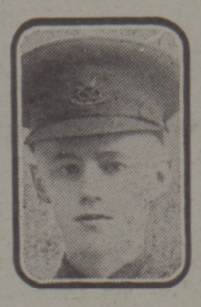
    His photo appeared in the Daily Mirror on 6 March 1917 as a missing soldier, with anyone with information encouraged to write to his father at Morley Rectory, although the press reported the week later that details of his death had been confirmed. Sadly, he had been killed in action on 17 February 1917 and his name is commemorated at the Thiepval Memorial.

  • Morley St. Botolph – St. Botolph’s Church

    Morley St. Botolph – St. Botolph’s Church

    This was our final church visit of the afternoon and Morley St. Botolph is certainly very different to the church at Morley St. Peter.

    There is some evidence of a Norman church on this site and it’s possible that they constructed on a pre-conquest building. The church that stands today is mostly from the thirteenth and fifteenth centuries, although there was an extensive Victorian restoration. And a more recent disaster that I’ll come to a moment.

    This illustration is from the middle of the nineteenth century, before the church was restored.

    The chancel window, likely put in here quite early, perhaps in the thirteenth century.

    The three stage tower, likely from the later part of the fifteenth century.

    The blocked up priest’s door.

    The vestry was a medieval addition, although it was in ruins by the nineteenth century and subsequently needed rebuilding by the Victorians.

    The porch, probably thirteenth century, but heavily restored.

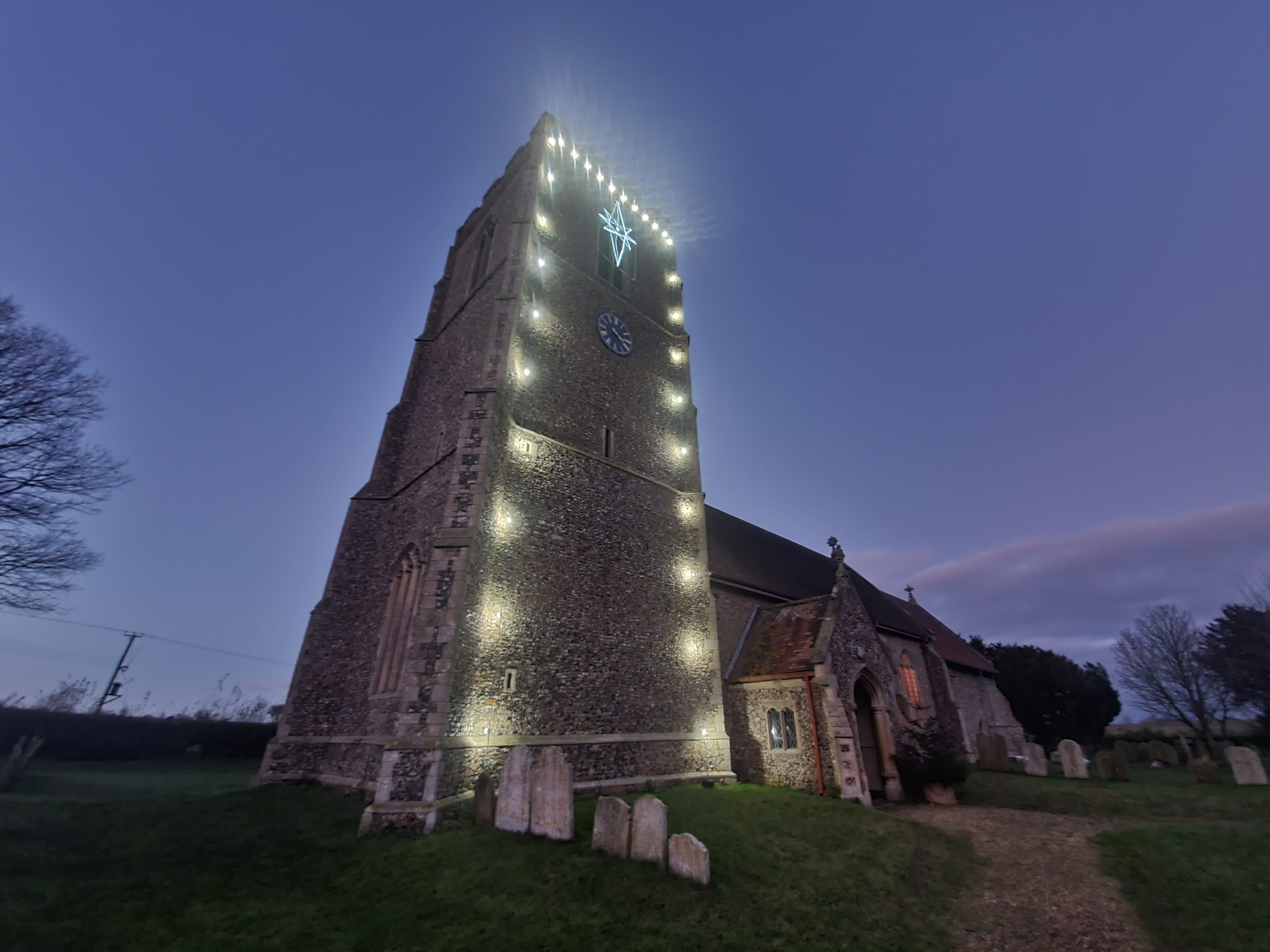
    It was getting dark and as part of their festive celebrations, the church turned the lights on.

    And another photo of after we had left the church’s interior, I thought that this was rather lovely.

    The interior of the church was accessible as there’s a Christmas tree competition going on and the community had been invited to come and visit.

    The interior of the church is mostly modern as there was a devastating fire in 1959 which destroyed most of the nave. The building was left derelict for a few years, but it was needed by the community and so a reconstruction project was started. The architect was James Fletcher Watson and he has ensured that the church has retained its medieval feel, with some quite attractive new wooden pews. I haven’t yet found any photos of the church in ruins, but the chancel section survived, albeit heavily fire damaged.

    Nicely decorated and there’s the selection of raffle prizes to one side. As an aside, Richard paid £1 to enter and he’s hoping to win the slime.

    Some of the Christmas trees from the competition, all from local community organisations.

    A friendly volunteer turned on the main lighting after we said that we were looking around and he gave us a brief history to the history of the building. The lighting before this though was minimal, but the glow from the heating gave it a strangely warm feel. There was a warm welcome offered by the volunteers, with free hot drinks available which Richard partook in. Members of the community had come to look at the Christmas trees and I liked the enthusiasm of the volunteer at the little desk near to the door who was encouraging people to join in some fund raising projects next year.

    It appears that this church is something of a hub for a number of local congregations and it has a welcoming feel to the whole arrangement. If it hadn’t of been that important cluster church then it might never have been rebuilt in the early 1960s and it could have been left to fall into ruins.

  • Deopham – St. Andrew’s Church

    Deopham – St. Andrew’s Church

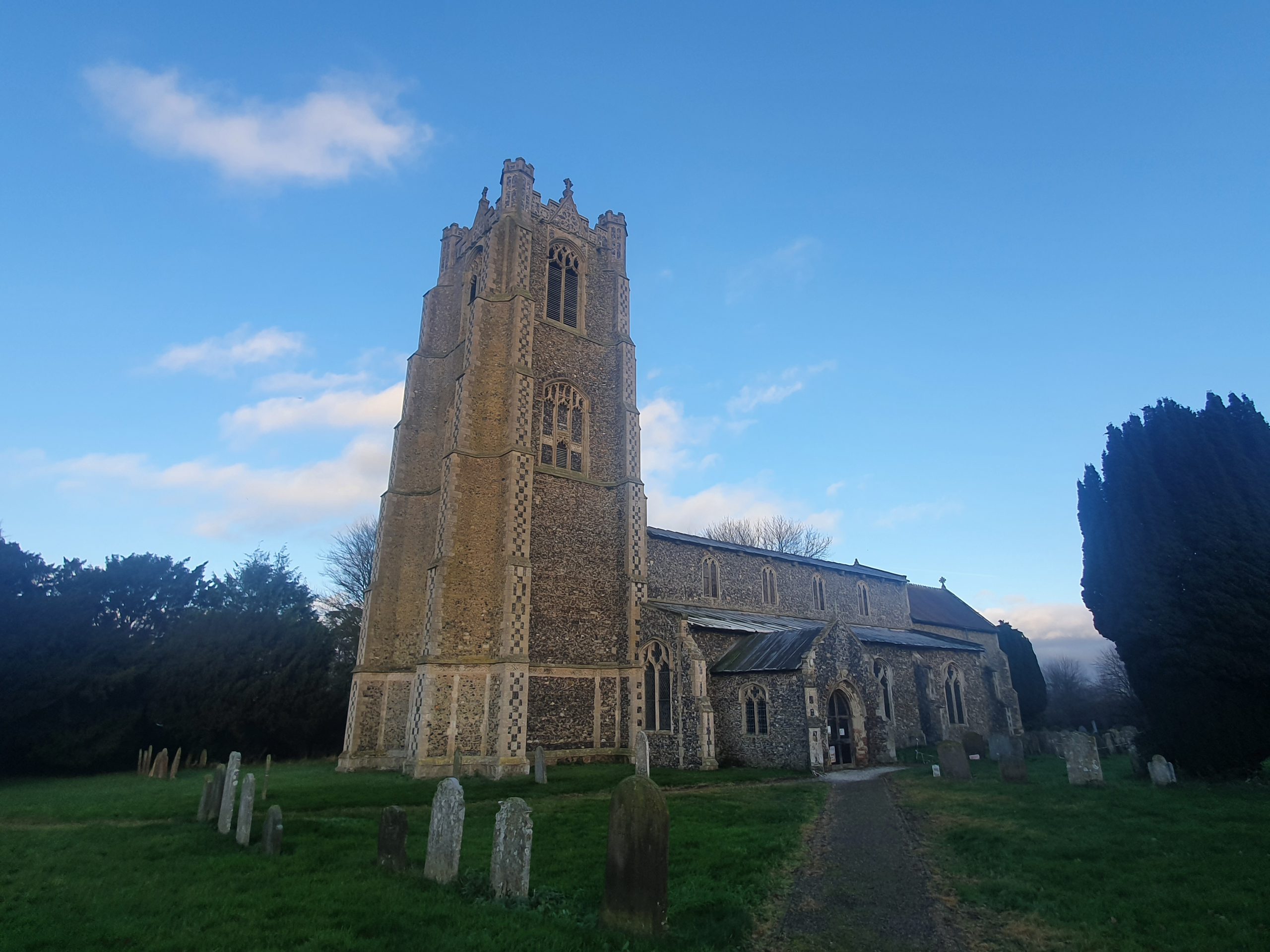
    Deopham is a Norfolk village with just over 500 people and it’s fair to say that it has a church which speaks more to past wealth and prosperity.

    St. Andrew’s is a Grade I listed church, but it’s not in the best of condition following thefts and attacks on the building over recent decades. It was constructed between the late fourteenth century and the early sixteenth century, with the four stage tower literally towering over the area. There was though a church here before that date, of which nothing visibly remains.

    This explained why some of the churchyard was taped off like it was a crime scene, bits of the masonry are falling off.

    It’s a grand building, but it felt damp everywhere. The chancel used to be thatched until the Victorian modernisation, although the main nave had long since been roofed with lead.

    Unfortunately there have been some relatively recent lead thefts from the roof and it is some need of general repair.

    The boarding-up clerestory windows, clearly not ideal.

    However, going back to a book written in 1858, the church has been in this position before, although it’s not entirely evident from the illustration in the publication. The author Raphael Brandon noted:

    “The noble tower of this church is perhaps not excelled by any in Norfolk. Both within and without, this church is in a sad state of decay: most of the windows in the tower are blocked up, also those in the porch, and the east window of the Chancel, a fine piece of Perpendicular tracery”.

    The chancel window issue is fixed now, although it’s been visibly altered. There was a major restoration by the Victorians about twenty-five years after the book was written which restored the church to its former glory. That was a hard fought battle though, it took until 1882 and by then “a sadly dilapidated church” before finance was found to fix the issues. The Ecclesiastical Commissioners had fixed the chancel and opened the window in the 1860s, but they weren’t responsible for fixing the nave. Some of the windows are still filled in, but the church was given a comprehensive makeover and a new hammerhead roof during these changes. One slight disgrace to the process was that they discovered numerous murals and medieval wall paintings during the renovation, but they decided that they wouldn’t bother keeping them.

    The porch, which was open, although the church itself wasn’t. There was though keyholder information for those who wanted to access the building.

    The once grand porch which now just feels damp.

    Oh well, what’s classy, let’s go and scratch some initials into the church’s stone….. Grrrr.

    It’s not a perfect repair on the porch.

    The churchyard is sizeable and it’s still generally well maintained and cared for.

    And rather an attractive grave, with the church in the background.

    This was clearly once a magnificent church and it still is something special, but it’s in desperate need of funding to fix the problems. Having windows boarded up in the clerestory is hopefully a relatively short-term issue, a church of this stature deserves the decadence of at least being intact. But, at least the windows weren’t mostly bricked up as they had been in the eighteenth century, the current situation is relatively easy to reverse.

    Protecting the church from crime is also clearly going to be a challenge as it’s relatively remote and it has been targeted before. The last twenty years might not have been favourable for the church, but with some good fortune and positive input from the authorities, maybe I’ll return here in a few years to a very different building. There remains the challenge though, which was evident in the mid-nineteenth century as well as today, that the church is a very substantial building for such a small congregation and village.

  • Morley St. Peter – St. Peter’s Church (William Henry Beaumont)

    Morley St. Peter – St. Peter’s Church (William Henry Beaumont)

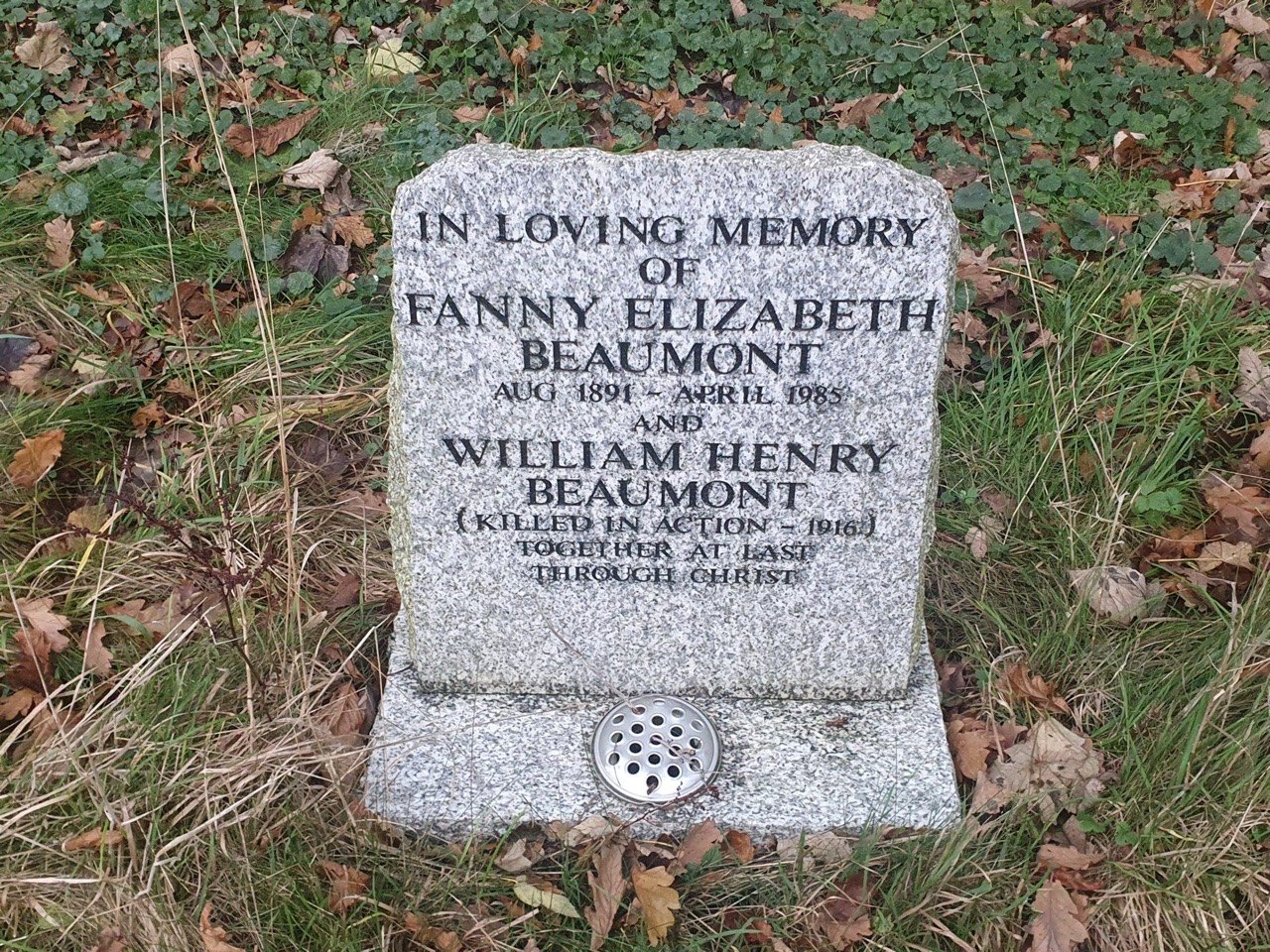
    The graveyard at St. Peter’s Church in Morley St. Peter.

    Richard noticed this, which was of interest as it named William Henry Beaumont was killed in action in 1916. However, there was no record on the CWGC web-site of a war grave at the church and no-one from a local regiment of that name. Fanny (nee Burrows) had been born on 1 August 1891 and she died on 9 April 1985, just under 70 years after her husband.

    William was the son of Kate Beaumont of 21 Huntsworth Terrace in Marylebone in London, located near to Baker Street. William was in the 8th Battalion of the Royal Fusiliers and his service number was 18864. He died on Friday 7 July 1916 at the age of 25 and his name is recorded on the Thiepval Memorial, although his military records seem to have been amongst those which have been lost. He died in the Mash Valley area during the bloody battle to capture Ovillers.

    The neighbouring grave gave something of a clue, what appears to be the son of Fanny and William, namely William Henry James Beaumont, who was born in Marylebone on 16 January 1917 after his father’s death. By the time of the 1939 register, mother and son were still living at 30 Caithness Road in Mitcham, which was where William and Fanny had been living before he went to war. Of relevance primarily only to me, I’m fairly sure that I haven’t walked down that road at any point in the past, although I’ve been very near to it.

    The younger William lived until 30 November 2003. Which doesn’t really solve why any of the three have gravestones in this church, but I assume that the younger William moved up to Norfolk at some stage after the end of the Second World War (or the decades after it). Fanny’s death records are from near to Morley, so I assume she moved with her son and settled in this area.

    It’s hard to imagine what it must have been like having a husband die nearly 70 years before in such tragic circumstances, although it’s a shame that I can’t find William’s military records.

  • Morley St. Peter – St. Peter’s Church

    Morley St. Peter – St. Peter’s Church

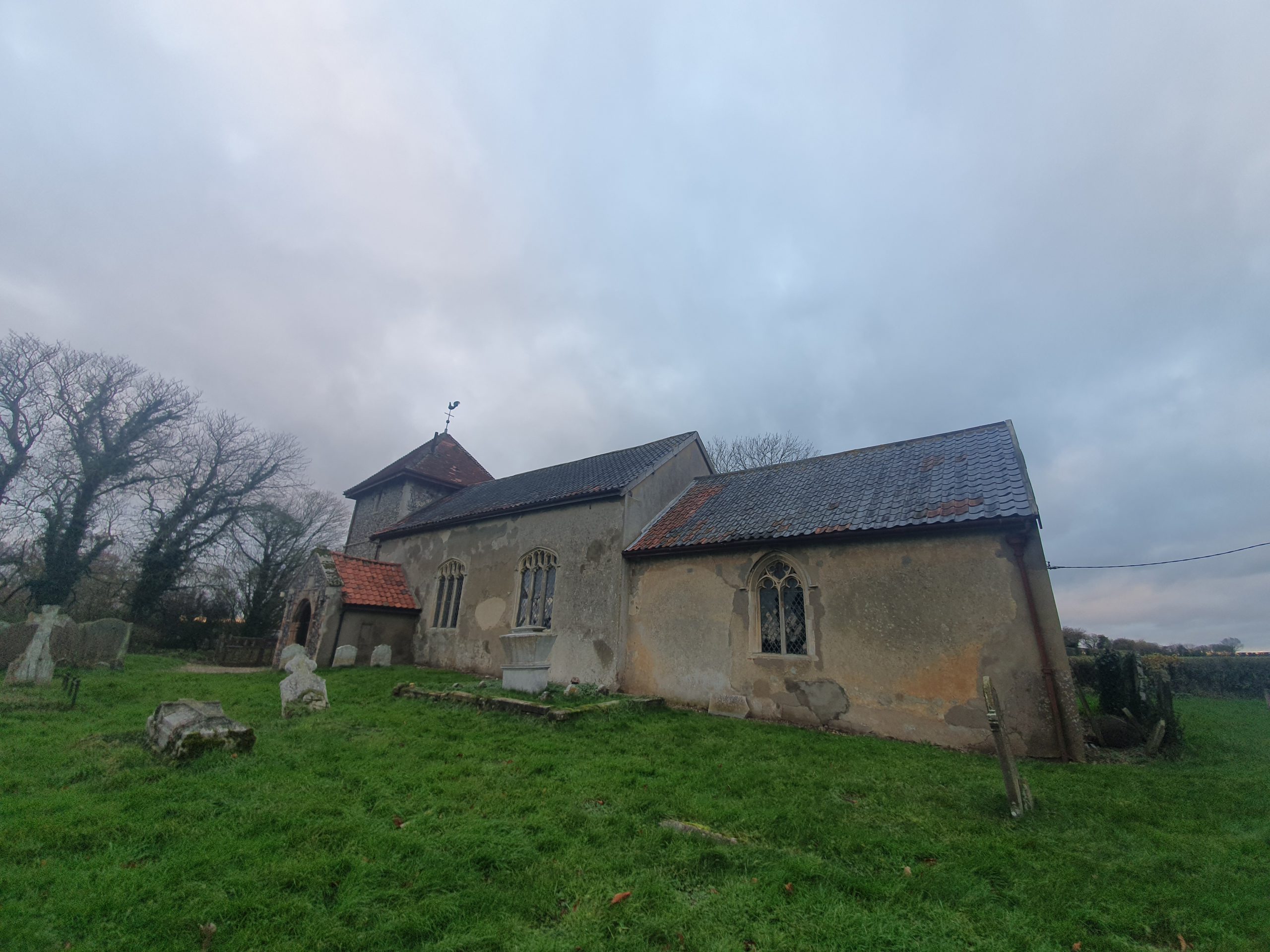
    St. Peter’s Church in Morley St. Peter (it’s by the Y of Morley in the above map from 1900) stands pretty much alone at the corner of a field, with no evidence of the village that perhaps once stood nearby. The wooded areas in the above map have mostly been ripped out over the last century, so it’s a relatively barren landscape.

    St. Peter’s has historically been the chapel of ease to St. Botolph’s Church which is situated nearby and it’s substantially smaller. The stone has been rendered over to protect it and it’s not in the best of condition.

    The tower is medieval and has lost at least one section, likely due to collapse than anything intentional although that event seems to have been lost to history. It now has a pyramid roof over the top, although the steps inside remain. There is apparently a traditionally held view that the church is pre-conquest, dating from around the late tenth century, although all of the current structure is medieval or later. The local church seem less convinced judging from their web-site and they believe that the church was constructed as a chapel at ease in the thirteenth century.

    The east window of the chancel, which was all reconstructed during the Victorian period.

    The porch is from the early sixteenth century and has seen better days.

    The dilapidation of the porch is more visible from the side.

    The church was locked, but to be fair, the keyholder details were provided on the noticeboard.

    An extension to the side chancel, likely from the nineteenth century. I suspect the Victorian renovators hoped for something of a religious revival to boost the attendance in the church, but the congregation size around here is highly limited.

    The repairs aren’t what I would call invisible.

    The churchyard is relatively substantial and there is a small section of recent burials.

    This path ploughs through the middle of the cemetery and then stops dead, but old maps suggest that it connected into an old path which has long since gone.

    The church is clearly in a bit of a state, but also seems well loved and peering in it seemed reasonably well maintained internally. It dips down quite a bit though, which means that the ground outside and the chancel are a little higher. The nave is aisleless and other than for the Victorians renovations, the church seems relatively untouched since it was built in the medieval period. All really quite charming.

  • Wymondham – Green Dragon

    Wymondham – Green Dragon

    Just a brief post, as I’ve written about the Green Dragon before.

    As an aside, this is Wymondham Abbey which is very near to the pub and we had a very quick walk to.

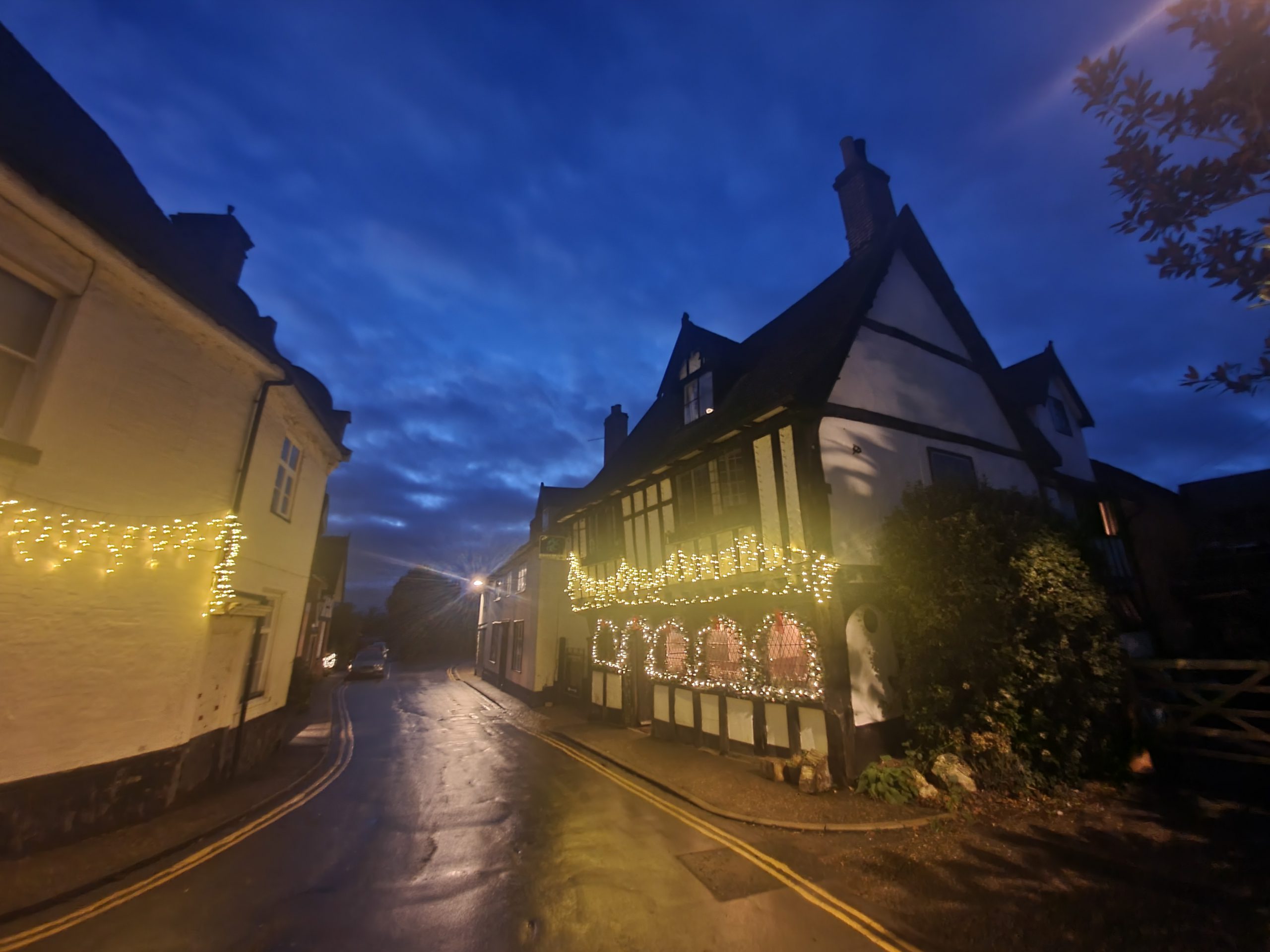
    And here’s the pub itself, looking quite festive.

    When I last visited it wasn’t possible to sit inside due to national restrictions in force at the time. That meant this time I was able to have a look at the interior and it’s certainly rich with history. It’s worth a visit for anyone interested in pub history and this is a CAMRA recognised pub interior. The room in which we were seated is at the front of the pub and was originally a separate shop area with its own fireplace. There’s a small hatch through to the main bar, which is a compact arrangement despite there being a relatively recent expansion to it.

    The beer tasted well kept, although the choice wasn’t as decadent as I would have ideally liked. However, the Farmers Blonde I had from Bradfield Brewery was acceptable and at the appropriate temperature. The service at the bar was attentive and polite, so the environment felt comfortable and welcoming. It wasn’t that busy in the pub, although they had a couple of larger groups in who were dining at what I assume were some sort of festive gatherings.

    We didn’t order food on this occasion, but I repeatedly hear that it’s of a decent quality and I can imagine that’s the case given the professionalism of the service that we had. It’s a lovely historic environment and definitely worth a visit, all really rather lovely.

  • Wymondham – Shapla

    Wymondham – Shapla

    After some meanderings around some nearby historic churches, in an attempt by Richard and I to complete our project of visiting every one in Norfolk (which I suspect will be never-ending as we have to work out how to get inside some churches as well as walking around them), we thought we’d sample some culinary delights in Wymondham.

    The Shapla seemed to be the best reviewed Indian restaurant in the town, so we opted for that and it has apparently been trading for over thirty years. We were welcomed promptly and although we didn’t have a reservation, we were found a suitable table. The interior decor was modern and appropriate, with the venue being clean and organised. Menus provided and the selection looked comprehensive, with traditional dishes that an Indian might have, as well as some chef specials. They didn’t have any lassi which I had hoped for, so I made do with a Coke to drink.

    The poppadoms were really rather lovely, or at least the assorted dips were. There was mango chutney, onion salad, tamarind sauce, apple pickle and mint sauce, all of which were decent and the apple pickle was a particular favourite as I haven’t had that before.

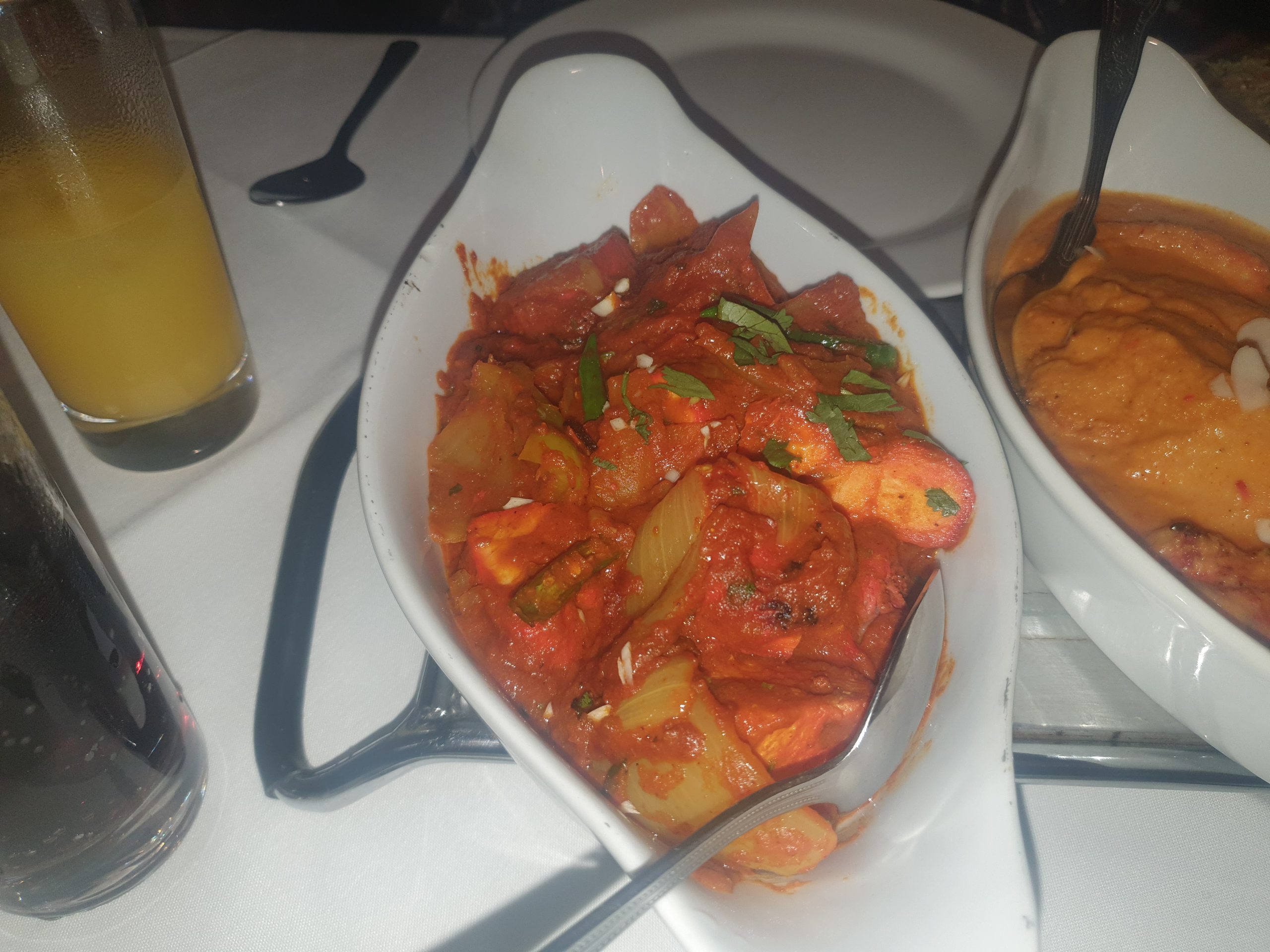
    The Roshoni Chilli Chicken Tikka which had some real heat to it from the chillies, but it wasn’t overpowering, nicely balanced. The chicken was tender and had a depth of flavour, with the shallots adding texture and the portion size being sufficiently generous. There was no lemon rice, my personal favourite, but the pilau rice I ordered was cooked well.

    Service was attentive throughout and it was a friendly environment, with the restaurant being relatively busy for a Sunday evening. I suspect that reservations are usually required for weekend evenings and there were a steady stream of customers picking up takeaway orders. All really rather lovely and I think that I’d come back here again.

  • Norwich – 2021 Hike Norfolk Christmas Party at St. Andrew’s Brew House

    Norwich – 2021 Hike Norfolk Christmas Party at St. Andrew’s Brew House

    We didn’t get to hold the Hike Norfolk Christmas party last year due to national restrictions, even though of course Downing Street managed to do so. But anyway, we won’t get dragged into politics here. The Hike Norfolk event was being held at St. Andrew’s Brew House in Norwich, formerly Delaney’s and now operated by City Club. I won’t linger on the beer brewed here as it’s some of the more pointless that I’ve tasted in terms of flavour and taste (we’re not talking Goose Island), but it’s well kept to be fair to them.

    There was a mix-up or something with rooms, but Steve was in charge of that and the venue gave us a perfectly good space so all was well. We also had a private bar which was handy, although I ended up drinking water as the service downstairs was all over the place and the beer selection was weak. I won’t linger on the service though, it’s Christmas, there was a home match for Norwich City and there are national staffing shortages, so these are difficult times and it doesn’t feel very festive to be negative. The staff were helpful throughout as well, so the ambience was all comfortable and relaxed.

    Liam looking at the arrangements in the private room before the masses came up. There were crackers and I of course promptly lost the hat as I don’t like frivolities.

    There was an awards ceremony for later on in the evening, which Steve and I had written in the afternoon. It’s an important event in the Hike Norfolk calendar and we couldn’t let it not happen. Here are the eight trophies carefully lined up.

    Richard waiting at the bar in his Christmas jumper.

    The starter of ham terrine was really rather good, I liked this.

    The turkey main course was less exciting and the pub didn’t burden themselves providing the promised stuffing and pigs in blankets. It was adequate though and all hot.

    The Christmas pudding in brandy sauce was also perfectly acceptable. Portion control across meals was a bit all over the place as well, but the service was efficient and seemed well managed.

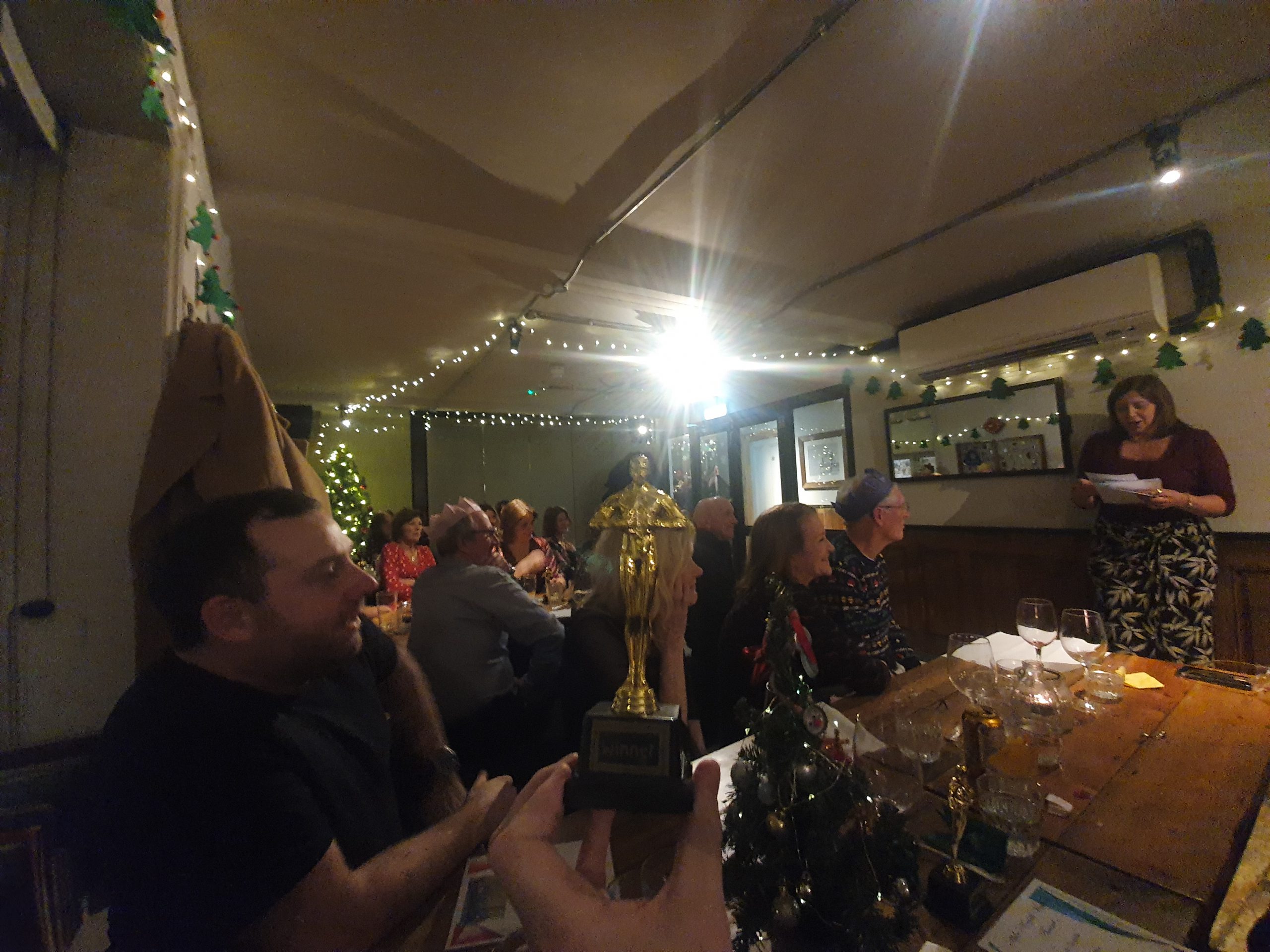
    And then came the awards ceremony that Steve and I presented and is evident from this photo (look at that trophy!), I’m delighted to have won the most prestigious award which is “Bravest Walker”. That was for my very brave walking the 100 that I’ve hardly mentioned this year…… I’d add that I didn’t write that award, although I too would have selected myself as the winner if I had of done. I was very pleased that Susanna didn’t get annoyed at me for her very special prize, so that was a result. It was good to look back on the year and the camping weekend in the Peak District of course gave us many happy memories.

    After Steve and I had done our amateur bit of presenting the awards and taking quite a while over it, Rachel took over to be rather more professional. Rachel presented the awards for distance walked during the year on Hike Norfolk walks and to be fair, mine was a little limited since I’ve been away so much. Although I was also distracted photographing my trophy which I shall be finding a prime spot for. I think we had 29 people at the event and it all went well, so here’s to a year of walking with more gossip and stories ahead…. And thanks to Steve to organising the event.

  • Norwich – Spice Valley

    Norwich – Spice Valley

    A couple of years ago I was able to get some free food at Spice Valley in Norwich as part of their opening weekend, so I felt it was only fair to come back and try their food. It’s taken me two years to do so, but we meandered along to see how they were getting on. Firstly, it wasn’t particularly busy, they had one large Christmas party, and just Liam and me. The environment is clean, bright and really quite comfortable, they’ve done a decent job there. As I mentioned on my post about the Dog House, I’ve got a little out of touch with the restaurants in Norwich and since Indian cuisine is my favourite, I need to get back up to date.

    The soft drinks are over-priced and nearly the same cost as alcohol. Not ideal and I was disappointed at the lack of lassi and this is the first Indian I can recall in some time that doesn’t have it.

    The poppadoms and dips. These were inadequate and generic, with one of them having so much garlic taste as to be inedible. As Will said in the Inbetweeners, “I’m not expecting sparkling”, but I want something slightly interesting…..

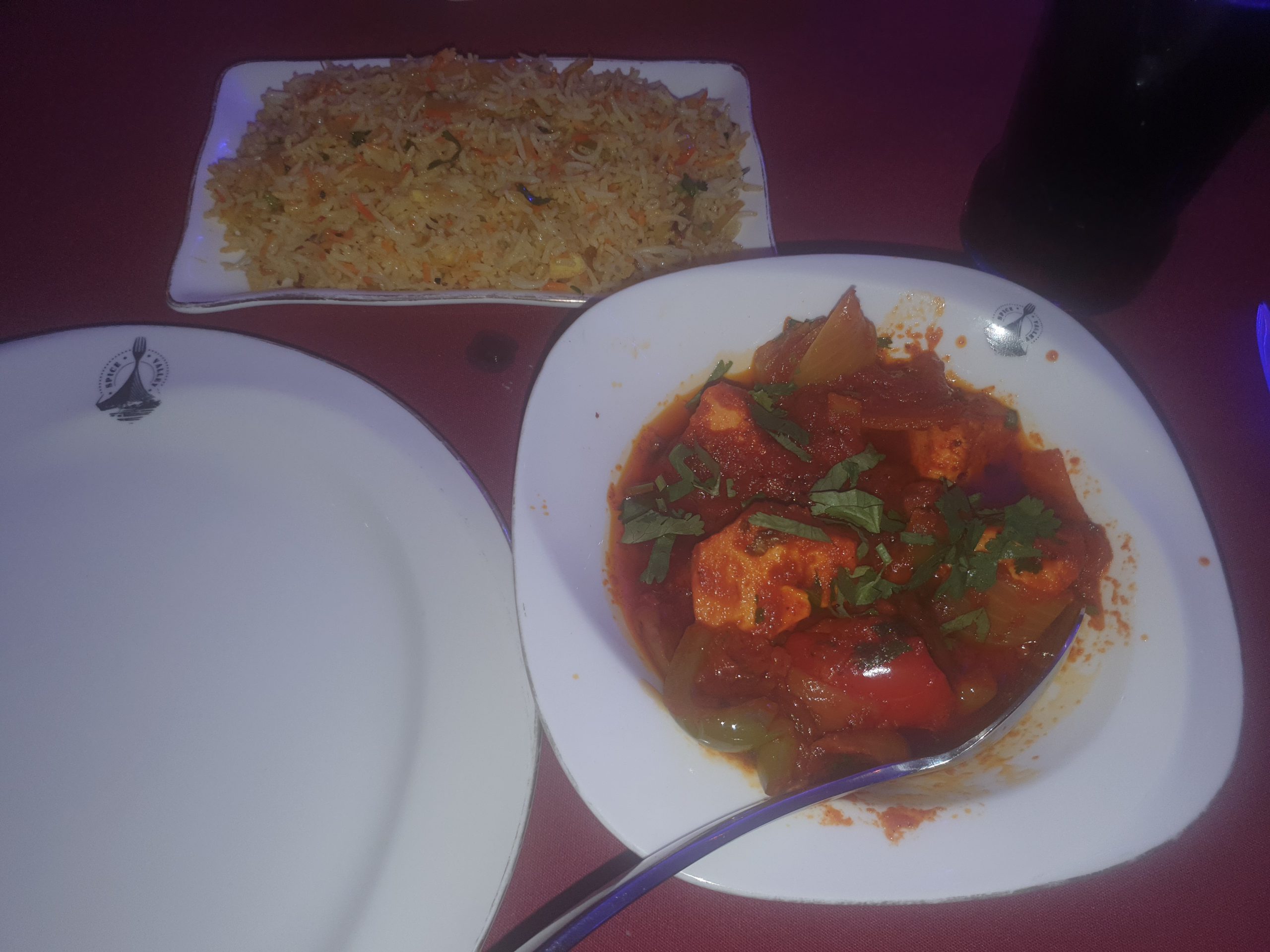
    The lemon rice was excellent, actually one of the best of its kind that I’ve had. I went for the Chicken Dopiaza and the sauce was pretty decent, although a little too oily. The chicken was tender, but tasteless, I’m not convinced by the quality of the meat they’re using here. It was all at the appropriate temperature and was pleasant tasting overall though, so I don’t want it to sound like I didn’t enjoy the food. The service was attentive throughout and always professional, with everything being well managed and we weren’t left waiting at any stage.

    Another annoyance was that the restaurant was listed on Amex’s Shop Small which should have got me £5 off, and despite their card machine branding noting the American Express logo, they said they didn’t accept it. I was also annoyed that I wasn’t allowed to keep the receipt and nor were they able to produce a copy other than just a total of the bill which wasn’t itemised. I had already taken a photo of the bill and it was entirely accurate, but it’s shoddy to refuse a customer a copy of the receipt and actually quite brave in case there’s a query over the total.

    Overall, attentive service and a clean environment, but nothing of real note beyond that. I feel though that I’ve returned the favour of the free food of a couple of years ago now, but the quality they had at opening seems to have dipped. It’s fair to say that I won’t be back though and I will continue my little quest to find my favourite Indian restaurant…..

  • Norwich – Lucy’s Fish and Chips

    Norwich – Lucy’s Fish and Chips

    My friend James and I have been testing chip options in Norwich for over 20 years and we continue on our quest for perfection. The quality of Grosvenor is still high, but their pricing is becoming just a little decadent, especially with the new eat-in surcharge. So, we’ve spent more time on the market in recent months and the standard here is high, meaning we are having to do a lot of testing to pick our favourite. I suspect this testing might last for another three or four years at least. This is Lucy’s fish and chips, a friendly location although they always seem to misunderstand James when he’s making the order. Always a warm welcome though.
    The advantage of Lucy’s is that they have seating and that’s really quite useful in Norwich market as there are few places to sit. There are some exposed areas at the fringes where diners are at risk of the elements and the rather bigger risk of seagulls. So this seating within the market is warm and safe from the elements and seagulls.

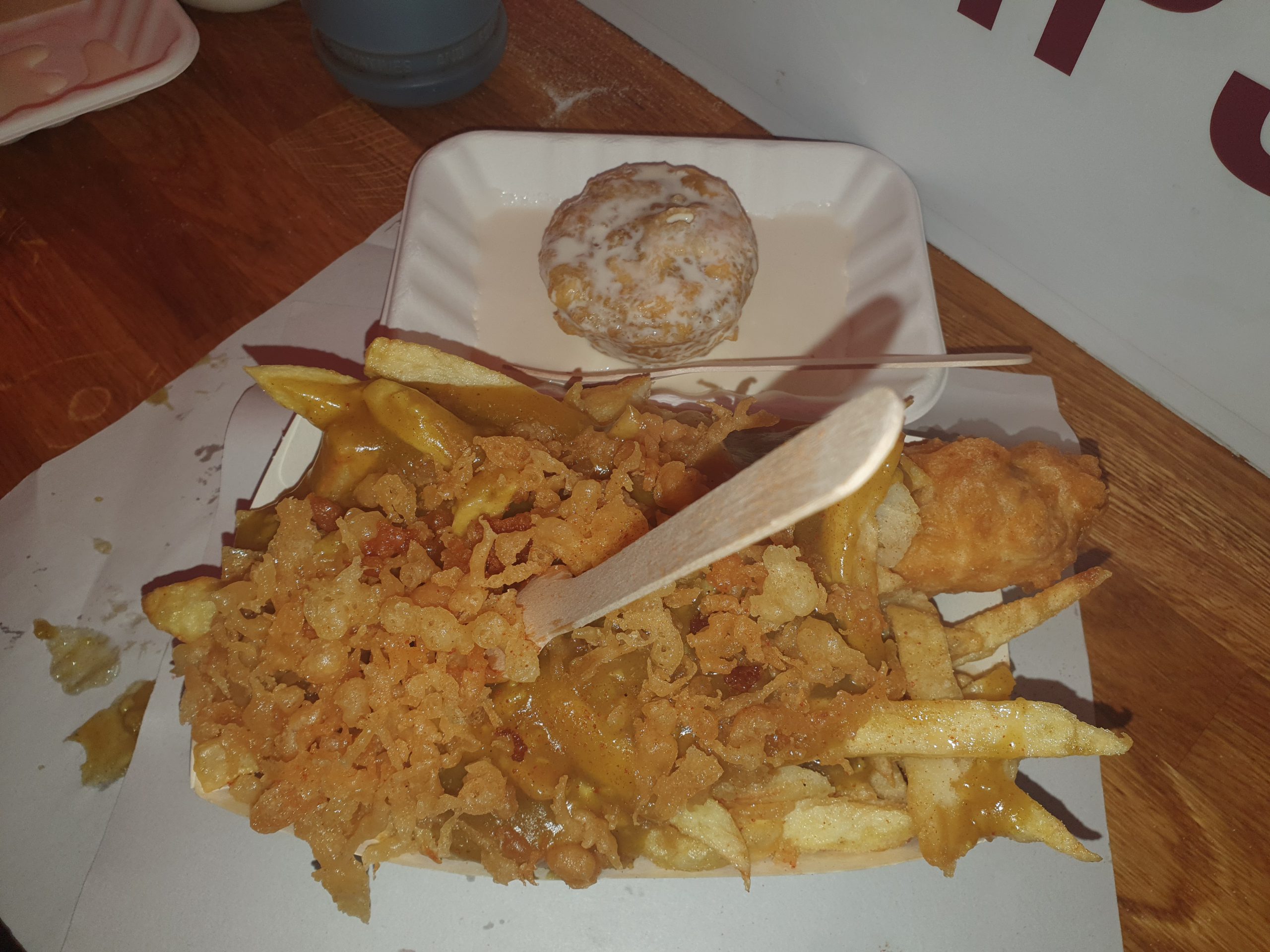
    I understand that not everyone has such decadent food orders here, but this is pretty much as good as it gets I think. A main course of chips, battered sausage, curry sauce and scraps, with the sausage being a proper butcher’s sausage. The portion size of chips is generous and they always have scraps available to add texture to the arrangement. And the dessert of battered mince pies in a brandy sauce, this is all clearly Masterchef standard and it’s also evidently very healthy.

    Incidentally, for those who don’t like mince pies, there are also battered Jaffa cakes and battered Cherry Bakewells for a dessert treat. Oh, and mince pies taste much better when they’re battered, a nice extra flavour to them. The cost of this was just over £4 each, a veritable bargain. A traditional Norfolk Christmas meal, how very lovely…..