Category: Norfolk

  • Brundall – Church of St Michael and All Angels

    Brundall – Church of St Michael and All Angels

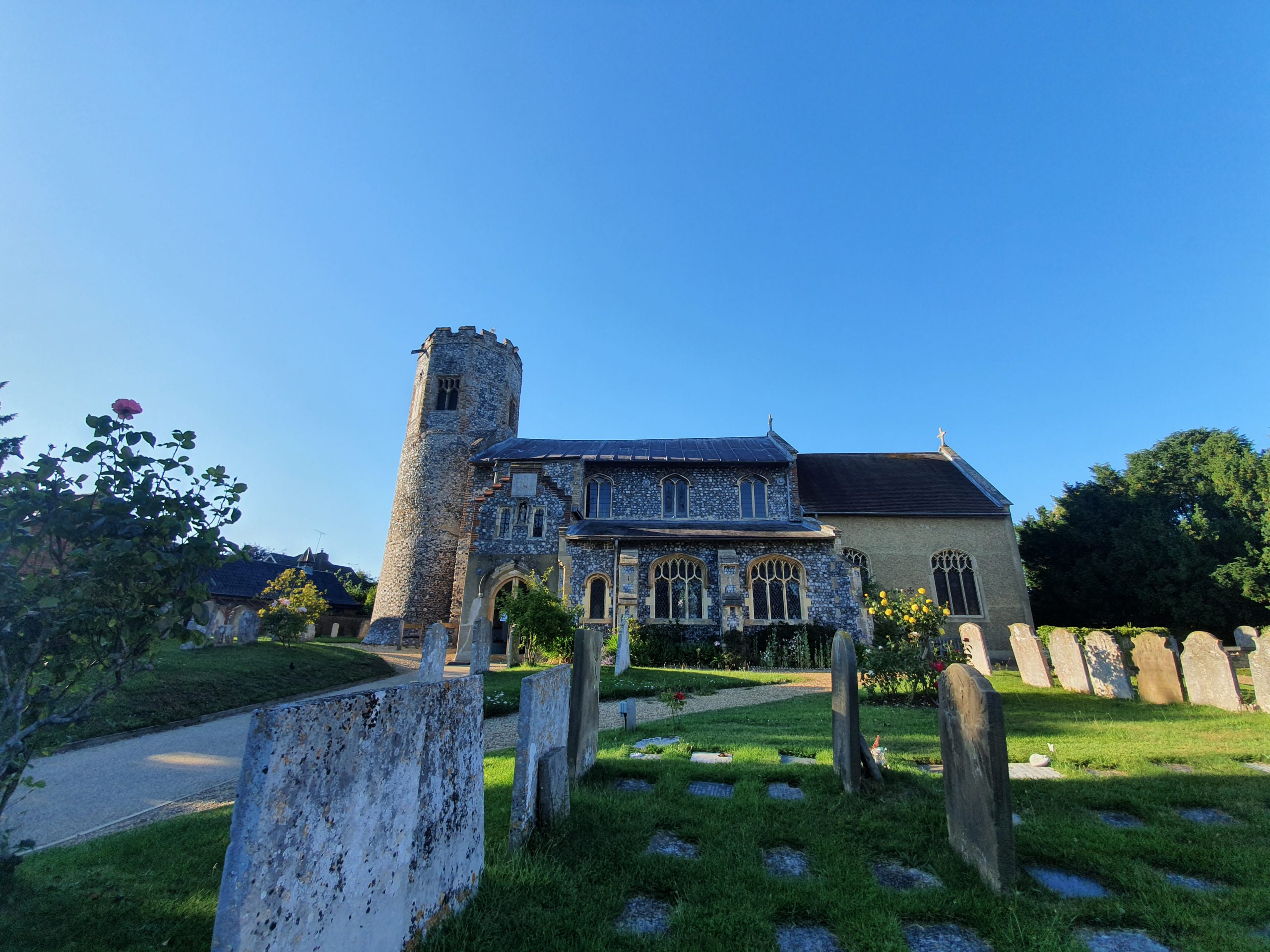
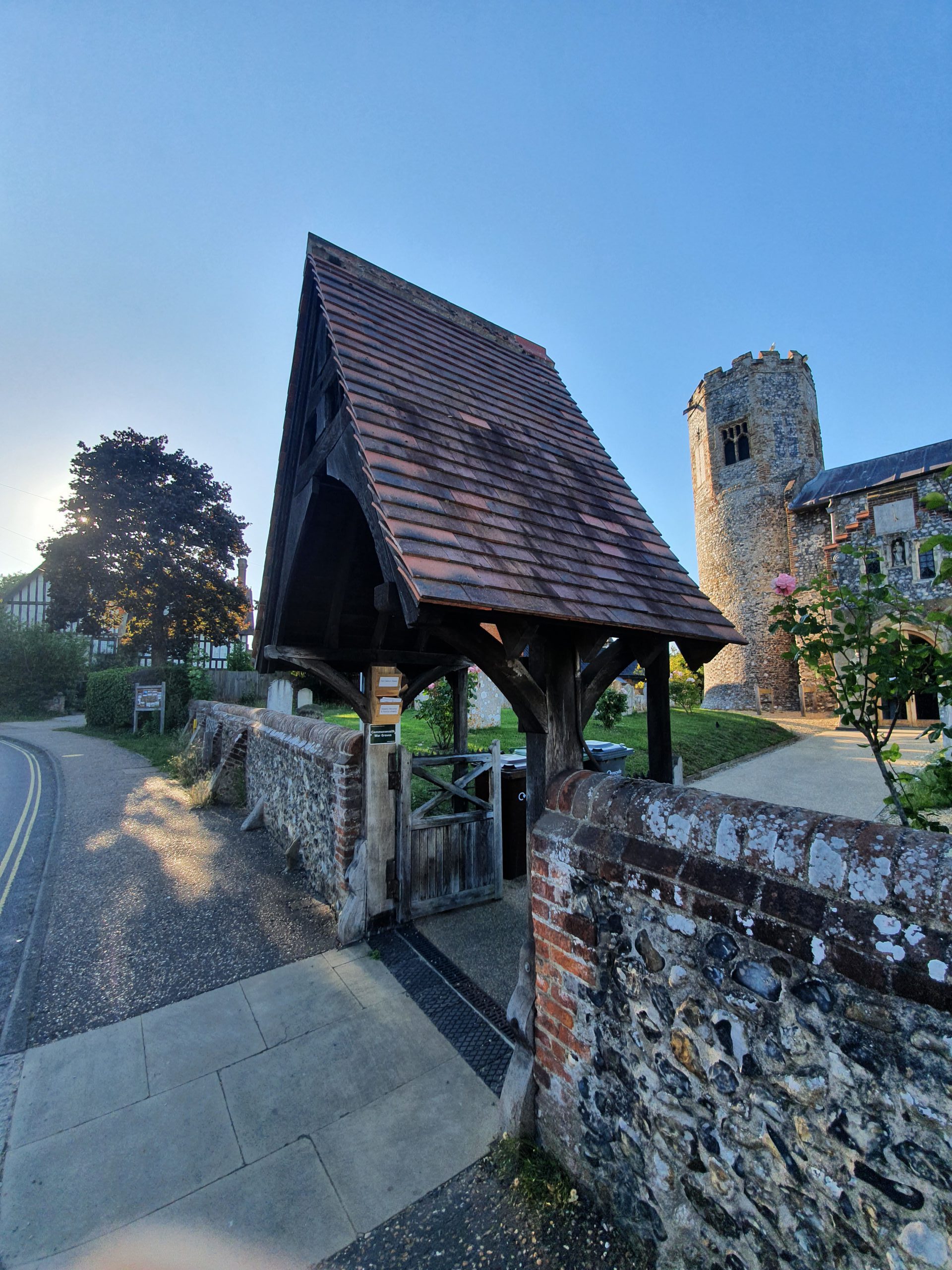
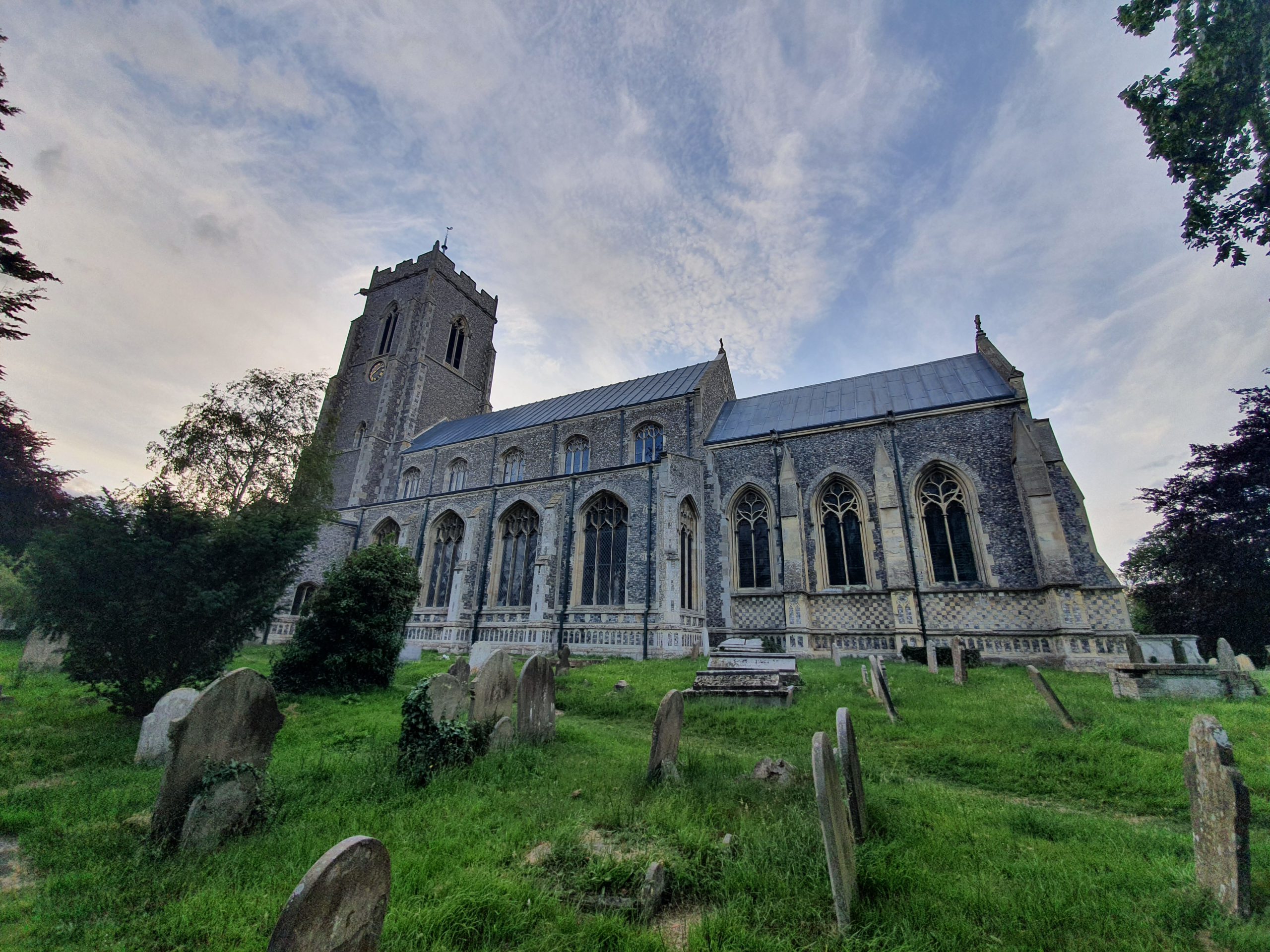
    We visited here on our third training walk for the LDWA 100 next year, and it’s the Church of St Michael All Angels on the edges of Brundall, in what is the deserted medieval village of Braydeston. Although nothing now remains of Braydeston, this settlement was listed in the Domesday Book in 1086 and it’s known that there were ten households here in 1428. The date of this means that the village wasn’t abandoned due to the Black Death, it was probably just a change in either the fishing or farming needs of the local community.

    The village of Braydeston was located in the field by the church and this building dates to the thirteenth century, although has some Saxon structure within it. For such a relatively small settlement, it’s a substantial church and the tower was added later following a bequest from John Berney in 1440. The roof line of the church was also lifted at the same time at what appeared to be the height of the building’s fortunes.

    Due to the current situation, there was no access to the interior of the church, but it does hold one of the few bread ovens which remain in church buildings.

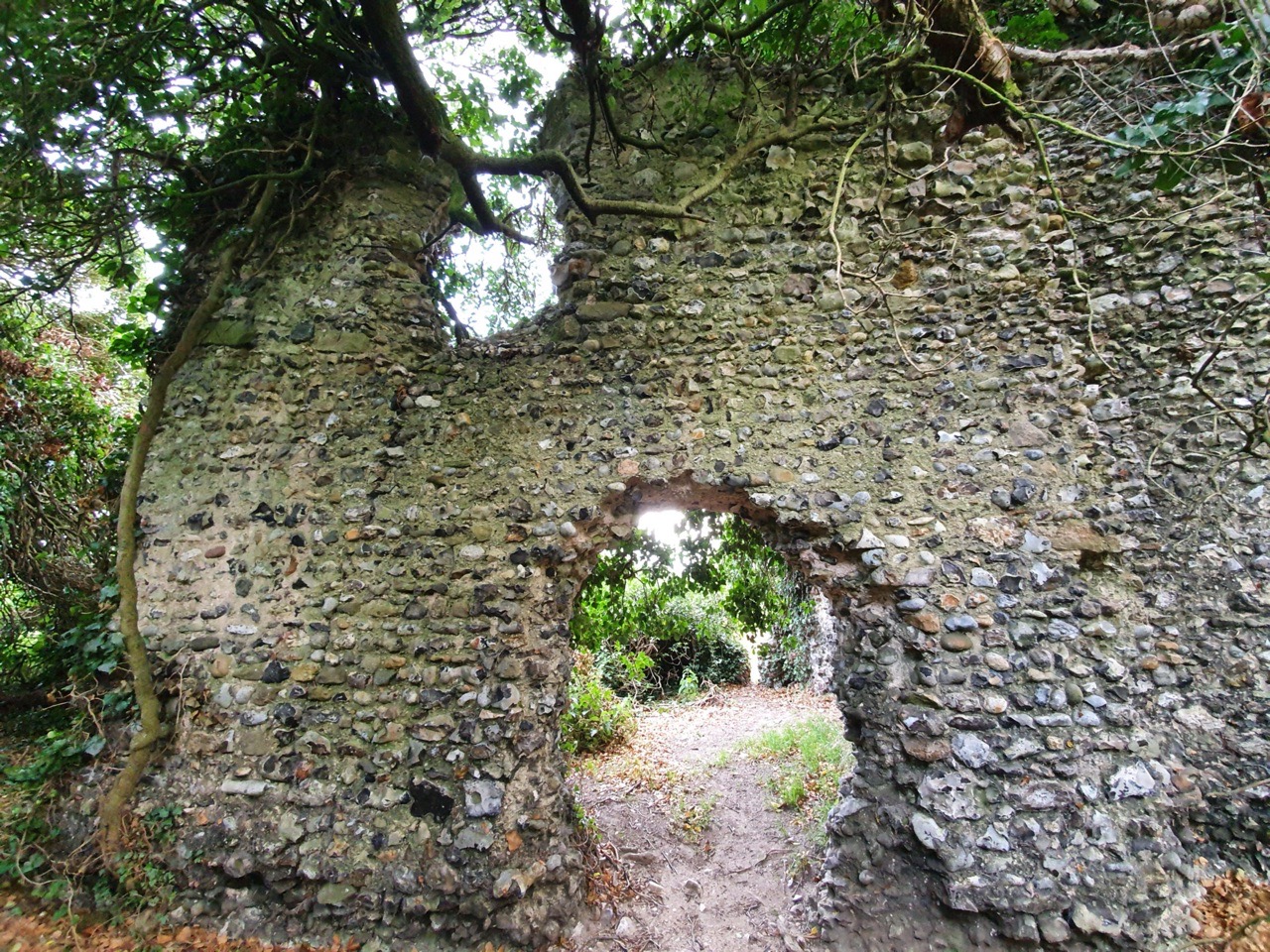
    An early medieval doorway which was bricked up in the nineteenth century. The church had fallen out of usage in the seventeenth century, but as part of the Victorian resurgence of religion, services were again held here and a new organ was installed.

    One of the railed-off tombs.

    I’ve seen many grave markers like this, although they’re normally older. This one commemorates the life of Elizabeth Mary Theobald and Harold Thomas Theobald.

    At the front of the church, there was a footpath query in the early twentieth century, something a little rarer then. This related to the meadow path which crosses into Brundall and although it was defined as a footpath, cars started to use it, not least hearses getting to the church. The local council said that cars could use the track, although wiser heads have since prevailed and it’d be quite difficult to get a hearse along that track today.

  • Caistor St Edmund – War Memorial (Walter Ellis)

    Caistor St Edmund – War Memorial (Walter Ellis)

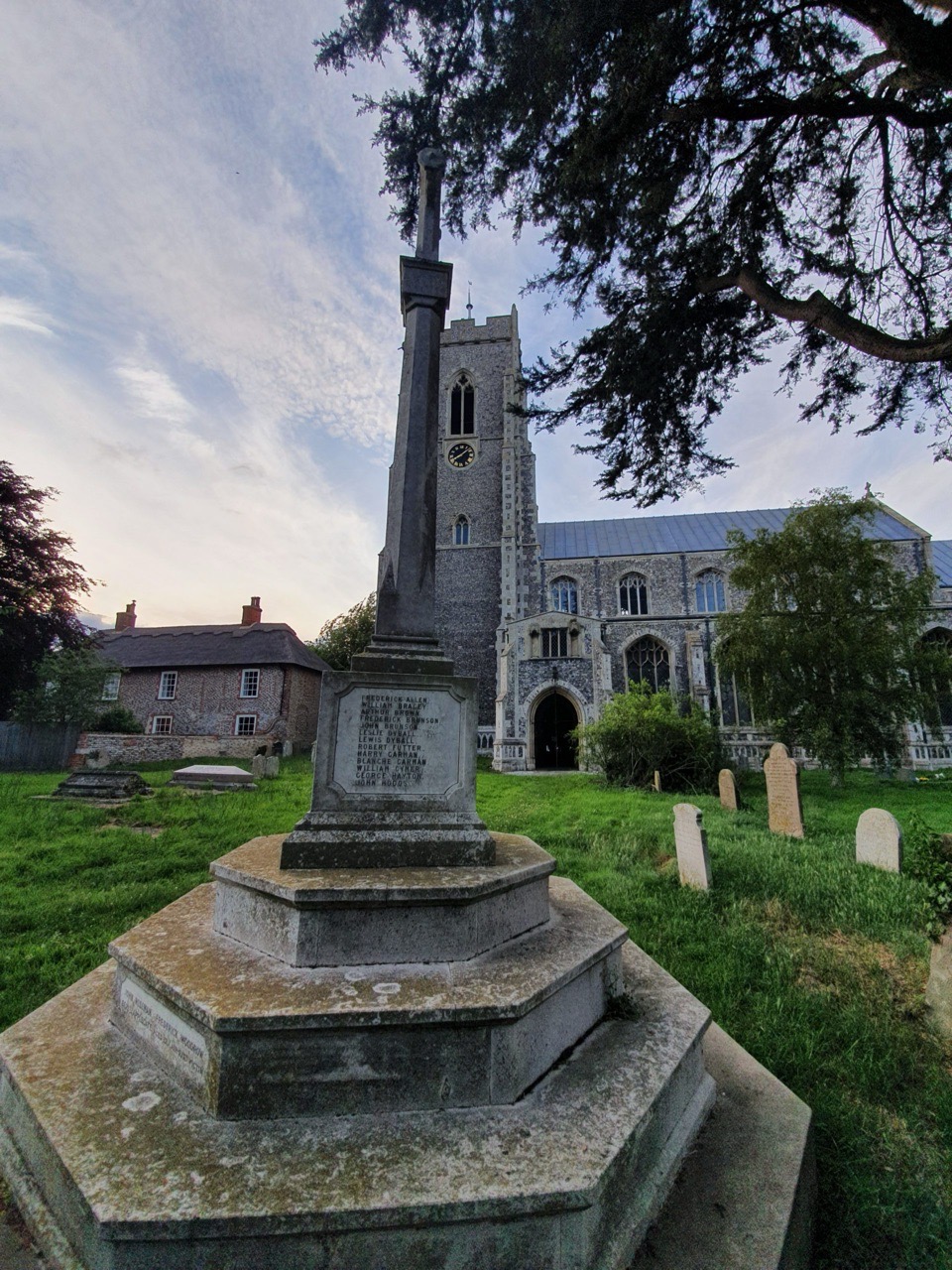
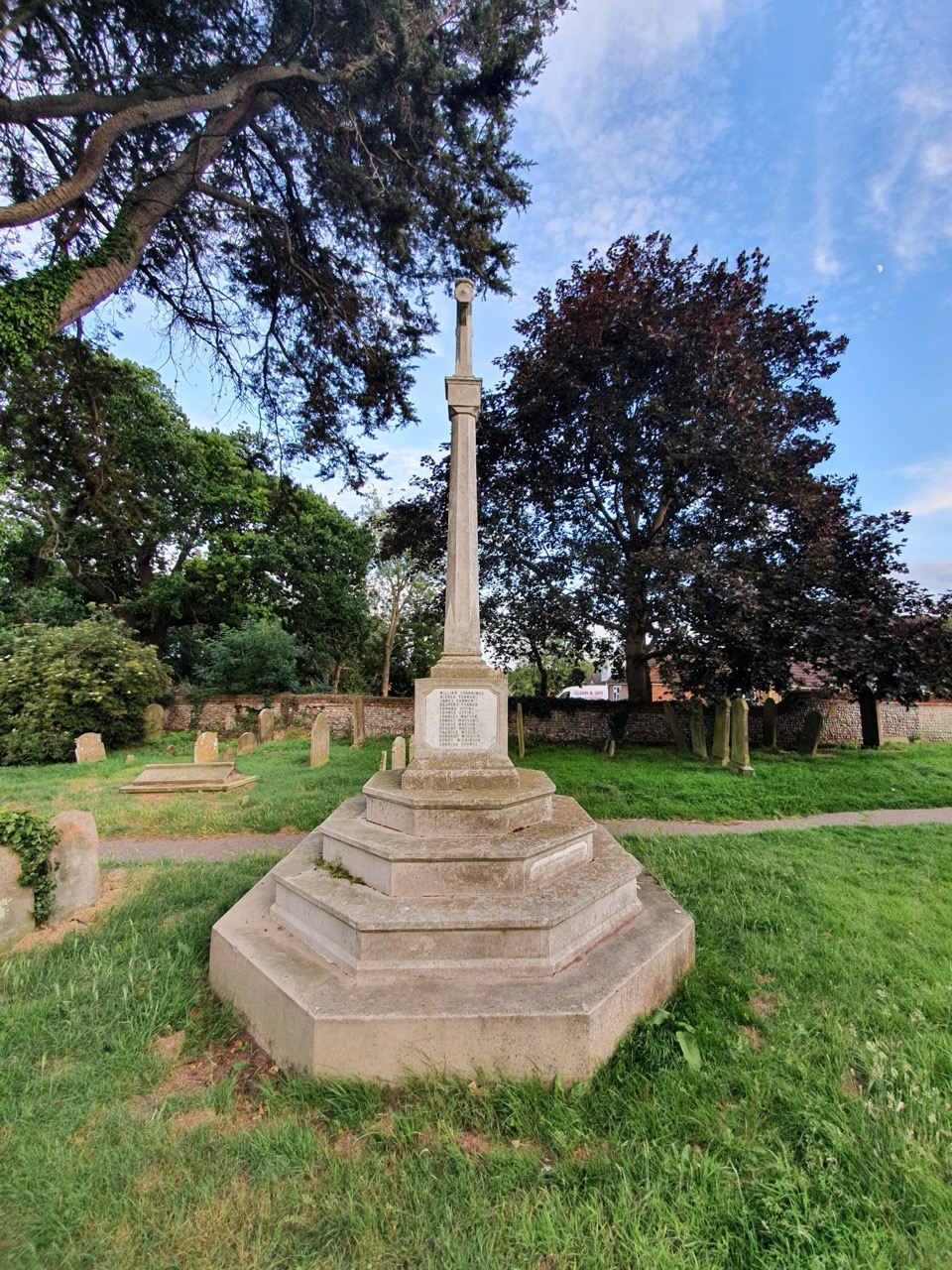
    Walter Ellis is one of the names listed on the war memorial in Caistor St Edmund.

    Walter Ellis was born in 1897, the son of George and Eliza Ellis who lived in Markshall which is effectively part of Caistor St Edmund. He joined the 5th Battalion of the Norfolk Regiment and was killed in action in Palestine, on 19 April 1917.

    There was a major action, which was the Second Battle of Gaza, which took place between 17 and 19 April 1917 between the British Empire and France against the Ottoman Empire and the Germans. The 54th (East Anglian) Infantry Division were part of the military force, with the Norfolk Regiments losing a large number of men.

    I’m not sure that Walter lies entirely at peace at Gaza War Cemetery, which is in the troubled Gaza Strip and which has been damaged twice by Israeli bombs over recent years, although they paid for the repairs to be completed to the graves. He’s a long way from home here in a place that he perhaps hadn’t even heard of when he was sent to fight there.

  • Streets of Norwich – St. John’s Street

    Streets of Norwich – St. John’s Street

    Part of my Streets of Norwich project….

    There’s not much to write about St. John’s Street, which is located off of Mountergate. The current St. John’s Street used to be called Orchard Street (named after the Orchard Tavern pub), and the rest of it has since been lost to development.

    The buildings that were either side of what was Orchard Street have also gone, with car parking on the right-hand side and Parmentergate Court housing project on the left-hand side.

  • Streets of Norwich – St. Martin at Palace Plain

    Streets of Norwich – St. Martin at Palace Plain

    Part of my Streets of Norwich project….

    I’ve realised today how little bloody attention I pay to things, given that I’ve been calling a road I thought that I knew by the wrong name. It’s only a marginal error, but I’m moderately irritated that I hadn’t realised, Bishopgate ends earlier than I thought and becomes St. Martin at Palace Plain. Now, this is hardly of much relevance to anything of global importance, but the quirky layout is due to how things have shifted over the last century.

    In the above map, St. Martin at Palace Plain covers part of the square, then the road down to where it looks like there is a pub in the middle of the road, before going up to another pub. Today, that is the entrance to the courts and the road and Worldsend Lane have all gone, so St. Martin at Palace Plain is effectively just the stump of road between the church and the entrance to the Bishop’s Great Gate and not that much further. Indeed, I’ve noticed that some properties have been moved out of St. Martin at Palace Plain on the listed buildings register and placed under other streets.

    But, despite this street now just being a bit of a stump, it has a tremendous amount of history packed into it.

    This is the view from the end of St. Martin at Palace Plain, looking down towards Bishopgate.

    The sun gave me problems taking this photo, but this is the Bishop’s Gate, a structure constructed in 1436 to give access to the Bishop’s Palace. I’ve been in the chapels at the top of the Erpingham Gate and the Ethelbert Gate, but I don’t know what the set-up is with this one. The old Bishop’s Palace is now used by Norwich School, but there’s a new palace used by the bishop which is just the other side of this gate.

    This is St. Martin’s Church, which has spent its lifetime literally overshadowed by the cathedral. No longer really having any congregation of its own as the nearby housing had gone, the church stopped being used for services in 1971. Since then it has been used to store church furniture, as offices for the Probation Service and is now used by the Norwich Historic Churches Trust. More on this in another post as I’ve been on a guided tour of this church, and it’s one of my favourites in the city.

    This was once the wall of the Bishop’s Palace, although there has been some building just inside of it over the last century.

    On the wall in the previous photo is this plaque, which marks where Lord Sheffield was killed during Kett’s Rebellion in August 1549.

    The Kett’s Rebellion was started by the desire of some landowners to enclose land for their own financial benefit. That’s a slightly shortened version of the enclosure process, but that’s the upshot of it. The locals didn’t like that, so on 8 July 1549 some denizens at Wymondham ripped up the landowners’ lovely new fences. The owner of the manor of Wymondham was Robert Kett, who should have been most aggrieved at the damage done to property. But, he decided to back the rebels and he became their leader.

    Kett decided that he would march on Norwich to show the authorities that the locals weren’t happy and that it was the poorest who would suffer the most. Perhaps unfortunately for him, he had thousands of people with him, turning a little local dispute into one of the largest protest marches that East Anglia had ever seen. He reached Bowthorpe, a suburb of Norwich today, on 9 July 1549 and Sir Edmund Wyndham, the Sheriff of Norwich, popped out to tell Kett that he should perhaps go home. Kett ignored that.

    Instead of going home, Kett led his men to set up camp at Mousehold Heath, on the edges of the city centre, on 12 July 1549. Although this location was outside of the city walls, it offered views into Norwich and this is where they established their camp for six weeks whilst issuing their demands for a fairer society. By now, there were 16,000 people at this camp, which was presenting a problem for Norwich, as although it was the second-largest city in the country at the time, it still only had a population of 12,000.

    The authorities agreed to listen to the demands that Kett had, which took some time, as there were 29 grievances that Kett wanted dealing with. Some of these were fiercely ambitious and only one related to the enclosure process, which is what had started this all off. During this time, the city hadn’t closed off its gates, so the people at the camp could enter Norwich to buy food and supplies, with something of a party atmosphere going on at Mousehold Heath by all accounts.

    On 21 July 1549, the city authorities got fed up with this and they shut the gates. Faced with the camp having to break up due to a lack of supplies, Kett led an attack on the city. Despite having a strong artillery and city defences, Kett’s rebel forces won and took control of the city. This was a serious threat to King Edward VI now, so he ordered 1,500 troops led by the Marquess of Northampton to retake Norwich.

    The relevance of this story to the street I’m writing about is that one of the military leaders was Lord Sheffield. He had had what I assume was a lovely breakfast at the Maid’s Head, a hotel which is still trading today, and led a mounted attack on rebels to force them back along St. Martin’s at Palace Plain to Bishopgate and then back out of the city. Unfortunately, he fell off his horse into a ditch. The rules of engagement at the time said that in such circumstances, the fallen man should be taken and held for ransom. Unfortunately for Lord Sheffield, a butcher decided to hit him on the head and kill him. And, today the location of Lord Sheffield’s death is marked by the plaque on the wall.

    Just to finish the tale, the rebels could never win this, the Monarch was too strong. He despatched the Earl of Warwick and 14,000 men, including some rather rough mercenaries, to take back control (there’s a phrase….) and after a series of battles, the rebels lost. Although the Earl of Warwick’s army lost 250 men, there were over 3,000 rebels killed during the fighting. Many surviving rebels were promptly executed and Robert Kett and his brother William were taken to the Tower of London to face trial. They were, unsurprisingly really, found guilty and Robert Kett was sent back to Norwich to be hanged on the walls of Norwich Castle, whilst his brother was hanged on the west tower of Wymondham Abbey.

    Was the rebel sacrifice worthwhile? Probably not. Little changed, other than the city announced it would mark a day of celebration every year on 27 August to celebrate the defeat of the rebels, with this party carrying on for well over a century.

    Anyway, after that story, back to St. Martin’s at Palace Plain. The other building that is now situated off this road is the modern court complex, which has one of the city’s oldest buildings in its cellar, the Norman House. But more of this when I find those photos….

  • Caistor St Edmund – Origins of Village Name

    Caistor St Edmund – Origins of Village Name

    Further to my riveting post about Caistor St. Edmund (by riveting, I mean not especially riveting), I like that the village has retained its full name. This is primarily likely because of the other Caister in Norfolk, so although the spelling is different, differentiating the two locations has probably proved useful over the centuries, so there’s Caistor St. Edmund and Caister-by-the-sea.

    Both places are named Caistor/Caister for the same reason, it’s the old English word for a Roman fort, although it might once have been spelled in different ways, such as caester or castre. The Romans themselves called it Venta Icenorum, meaning the ‘marketplace of the Iceni’.

    The surname Caister, and its variants, derives from the same meaning and it’s most common in England, Canada, the United States, Italy, South Africa, New Zealand, and for reasons unknown, Ecuador. What’s even more interesting, to me anyway, is that by looking at a map of England and its surnames, there is a basic correlation between where Roman sites once were and where people live today with the surname Caister.

    The St. Edmund bit is because the parish was owned by the Abbey of Bury St. Edmunds, with the village church also dedicated to St. Edmund. The village is also commonly known as St. Edmunds, although I’m not sure that anyone much minds which one is used. But, I’m sticking to St. Edmund since it seems to be the official version.

  • Caistor St Edmund – War Memorial (J. Derek Corrould Warren)

    Caistor St Edmund – War Memorial (J. Derek Corrould Warren)

    J. Derek Corrould Warren is one of the names listed on the war memorial in Caistor St Edmunds.

    John Derek Corbould Warren, who was known as Derek, was born in Surrey in 1899, the son of the Rev. John Corbould Warren of Caistor Hall and Agnes Elizabeth Corbould Warren. This was a wealthy family, and although the father was the vicar, he was actually also the Lord of the Manor and owner of much of the village. There was a set-up at the time where the land-owner could appoint whatever vicar that they wanted, hence his appointment was likely partly self-awarded. But, more about him in another post, as he was one of the most important figures in the village over the last century.

    Derek was killed at the age of 18 following a riding accident whilst training at Sandhurst, dying at Surbiton Cottage Hospital on 10 July 1917. His name doesn’t appear on the Commonwealth War Graves web-site, likely because the circumstances of his death meant that his body could be brought back to be buried in the churchyard at Caistor St Edmund. He joined the army early on during the war, serving as a cadet at the Royal Military Academy in Sandhurst. It must have been a difficult day for his father, the Reverend John Corbould Warren, as when he conducted the service at the unveiling of the war memorial in 1922, he knew that his son’s name was on it. Derek was his only son, although he had a daughter, Enid, who later married and lived at Caistor Hall.

  • Caistor St. Edmund – Forged Coin

    Caistor St. Edmund – Forged Coin

    This coin is in the collections of the British Museum, and the image is copyright of the Trustees of the British Museum.

    It was found at Caistor St Edmund in 1978 and was purchased by Charles A Hersh, who donated it to the British Museum following his death in 1999. The denarius silver coin is a forgery, but not a recent copy, but instead made in antiquity. And, because it’s a forgery, the museum can’t easily date it, but it’s probably from around the end of the second century.

    Forged coins were a problem for the authorities throughout the Roman period and some people only collect these ancient forgeries. I like that at some point that this was being used at Caistor St Edmund, evidence of a fraud committed nearly 2,000 years ago. Fortunately for my understanding, the museum has also indicated what is on each side of the coin:

    On the reverse, there is Fortuna seated on the left, holding a rudder in right hand and cornucopia in left hand. On the obverse there is a Laureate head of Septimius Severus, the Emperor from 193 until 211.

    This coin isn’t on display at the British Museum, but neither are 99% of items in its collections. I hadn’t previously realised though that anyone can make an appointment to have a look at one of their items, so they do remember at least partially accessible.

  • Caistor St Edmund

    Caistor St Edmund

    The village of Caistor St Edmund is located around three miles from Norwich and today has a population of a little under 300. The village is perhaps best known for being next to Venta Icenorum, the Iceni and Roman town which was once of some considerable importance. More about the origins of the village’s name here.

    The village’s church, St. Edmund’s, is located by the remains of the Roman settlement and the war memorial is also located there, which is a walk of around 200 metres from the village itself.

    Here’s the village in 1900 and it’s pretty much unchanged today. The Roman settlement is in the bottom-left of the map and the important large buildings of Caistor Old Hall, Caistor Hall and the Rectory are visible, along with Markshall Farm in the north.

    Caistor Hall.

    Caistor Old Hall.

    Visible in the centre of the above map is a crossroads, with the north-south road being Stoke Road, the road to the west being Markshall Lane and the road to the east is Caistor Lane.

    There’s the entrance to Markshall Lane.

    There’s a row of three cottages at the heart of the town, near the crossroads, with the building in the distance, with the white edge to the roof, being the former Post Office.

    This is today’s Post Office.

    There’s not much more to the village, Caistor Lane continues to the left, whilst the road to the right leads to villages such as Stoke Holy Cross and Poringland.

    This is the only listed building in the heart of the village, which is Queen Anne Cottage, formerly known as Caistor Cottage. The property was constructed in 1729, for the Cogman family.

    But, more about all of this in other posts…. Since I haven’t worked out most of what I need to write yet  🙂

  • Caistor St Edmund – Village Sign

    Caistor St Edmund – Village Sign

    This didn’t come out as clearly as I hoped, I’ll take another photo at some point. But, it’s a decent village sign with its columns and portico arrangement, a link to the Roman and Iceni settlement which effectively founded Caistor St. Edmund.

    It’s 100 years ago last month that Prince Albert, who became King George VI, gave a speech at the Royal Academy which promoted the introduction of village signs. He was inspired by some local examples that he had seen around the Sandringham Estate and there developed a bit of a national craze in ensuring that nearly every village had one.

    I have no idea when the village sign was erected here and I’m not an expert in such things (or indeed about anything of use), but it’s probably from around the 1970s.

  • Caistor St Edmund – War Memorial (Walter John Blake)

    Caistor St Edmund – War Memorial (Walter John Blake)

    Walter William John Blake is one of the names listed on the war memorial in Caistor St Edmund.

    Walter served in France and Flanders during the First World War, dying of his wounds on 29 March 1918 at the age of 19. He was born on 26 November 1898 and was the son of Mrs Eliza Blake, who lived in Hall Cottages, Wacton Common in Long Stratton.

    In the 1911 census, he was living in Kimberly, near Wymondham, when he was listed as being a 12-year old still at school, living with his younger brother Leonard who was aged 9, along with his mother Eliza and his father Walter Blake, who was a farm labourer.

    He’s commemorated today at the Pozieres Memorial, which is around five miles from the French town of Albert.  There are 14,700 casualties recorded here and many of those are listed only on a panel as the bodies were never recovered, but they were men in the Allied Fifth Army (renamed the Fourth Army on 2 April 1918) which was driven back by the Germans. As Blake is listed only on a tablet, I’m assuming that his body was never found.

    I haven’t ascertained where he lived before going to war, it must have been in the village as I can’t see any other connections that he had to Caistor St. Edmund.